Cemetery Book Review: Love Cemetery

February is Black History Month, so for this month’s cemetery book review, I wanted to talk about Love Cemetery: Unburying the Secret History of Slaves by China Galland. Galland, an award-winning author and lecturer, tells a compelling story of rediscovery and reconciliation.

Love Cemetery follows Galland’s journey to restore Love Cemetery, a forgotten burial ground for enslaved people in Texas, and uncovers a painful history of racism, land theft, and environmental destruction.

Here is a snippet from the book synopsis on Goodreads:

“By the eve of the Civil War, there were four million slaves in North America, and Harrison County was the largest slave-owning county in Texas. So when China Galland returned to research her family history there, it should not have surprised her to learn of unmarked cemeteries for slaves. “My daddy never let anybody plow this end of the field,” a local matron told a startled Galland during a visit to her antebellum mansion. “The slaves are buried there.” Galland’s subsequent effort to help restore just one of these cemeteries—Love Cemetery—unearths a quintessentially American story of prejudice, land theft, and environmental destruction, uncovering racial wounds that are slow to heal.”

I read the paperback edition that I got secondhand, which contains a smattering of black-and-white photos that add to the emotional weight of the story. It took me a bit of time to finish this one because the material is a bit heavy, but I was completely invested in the journey and how the story would unfold.

Galland’s personal quest to restore Love Cemetery reveals a painful history of racial injustice. It digs into hard truths, but it’s also a story about finding hope and connection in the face of that history.

I was drawn to how Galland handled these difficult subjects with care and determination. The efforts made to restore the cemetery are a powerful example of how remembering the past—and confronting it—can be a step toward reconciliation. It really is a thought-provoking read.

I recommend Love Cemetery to anyone interested in learning about the history of slavery, the ongoing impact of racial injustice, and the importance of remembering and confronting the past.

Thanks for reading! 


I am always on the hunt for cemetery-related book recommendations. If you are an author and have a cemetery-related book you would like me to review, please reach out at hello@chantallarochelle.ca. I would love to hear from you.
Cemetery Book Review: Forgotten Bones

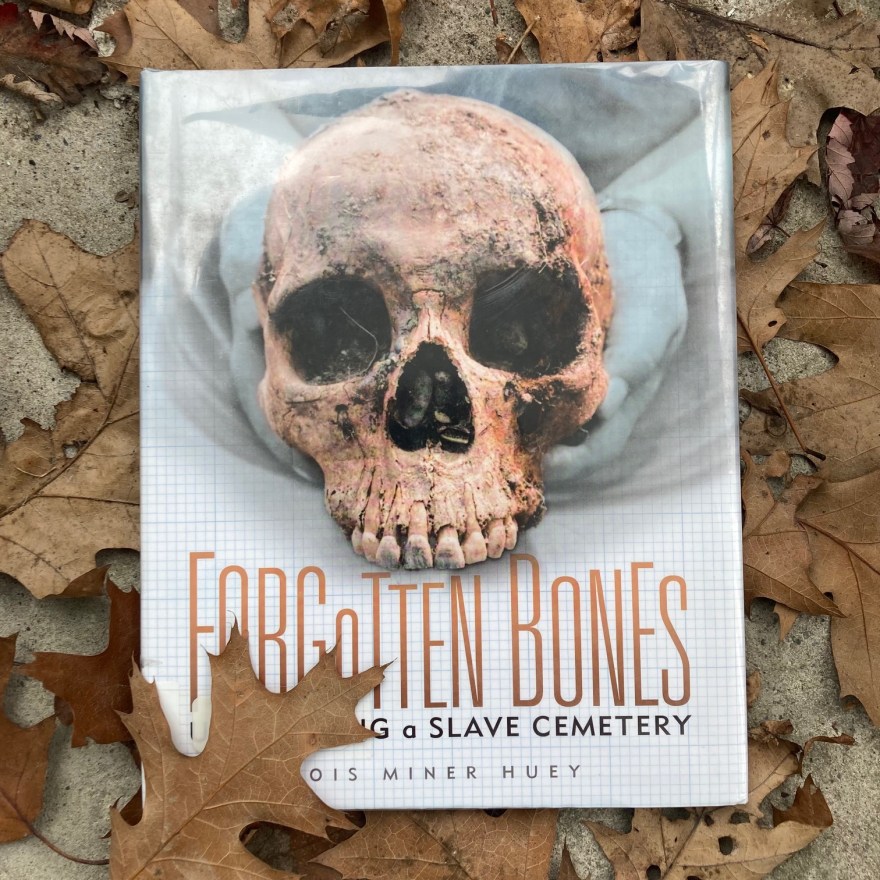
This past month, my book club announced the reading list for this year. Being proactive, I ordered almost everything on the list and have been enjoying the excitement each time a package arrives. When I received Forgotten Bones in the mail a week ago, I knew I wanted to read it right away. So for this month’s cemetery book review, I wanted to share my thoughts on Forgotten Bones: Uncovering a Slave Cemetery by Lois Miner Huey.

February is Black History Month, so I thought this is the perfect time to read this and share it with others who might be interested in learning more as well.

Forgotten Bones is written by Lois Miner Huey, an archaeologist for the state of New York.1 Published in 2016 by Millbrook Press, this book looks at the excavation and research that went into uncovering a lost slave cemetery that was accidentally discovered near Albany, New York in June of 2005. 

Here is the book synopsis from Goodreads:

“Imagine you’re watching a backhoe dig up the ground for a construction project when a round object rolls down a pile of dirt and stops at your feet. You pick it up, brush off some dirt, and realize you’re holding a skull! This is exactly what happened in Albany, New York, in 2005. Workers were putting in new sewer line when a backhoe driver dug up a skull. After police declared the skull wasn’t connected to any recent crimes, a team of archaeologists took a closer look. They determined the skull was from an African American who had died more than one hundred years earlier.”

The copy of Forgotten Bones I was able to find is a slim hardcover that once belonged to the Denver Public Library, but it looks like this book is also available in softcover. It’s a short read, packing a lot of information into 50 pages. I wasn’t aware when I ordered this book, that it is intended for children. It’s a Junior Library Guild Selection and is written at a grade four reading level.2

That being said, it is a pretty interesting read that breaks down the discovery, excavation process, and research that went into learning more about the lost cemetery. When I was a little girl, I wanted to be an archaeologist when I grew up. That didn’t happen, but I still find archaeology to be incredibly interesting, and that probably plays into my love of cemeteries. I found the section on the excavation particularly interesting and enjoyed looking at the photos and sketches from the dig. 

There is also a section on facial reconstruction, how it’s done, and the results of the construction based on some of the skulls that were discovered during the dig. There are also two chapters on research, comparing this newly found cemetery to previously discovered slave cemeteries, as well as briefly touching on slave life and what close inspection of the remains concluded. 

Because of the age level this book is intended for, it uses simple language. Regardless, Forgotten Bones does a good job of objectively looking at the history discovered during the excavation of the cemetery. Because it’s intended for a young audience, I think the book does gloss over the implications of what the discovery of a lost slave cemetery means.

I think this book could be a good starting point for those interested in talking to their children about what slavery is, and what discoveries like this mean. It could also be a good starting point for those interested in other slave cemeteries and the work that goes into excavating, documenting, and preserving them. 

After reading this book, I have been inspired to look to see if there are more lost cemeteries like this one, that have been discovered since this book’s writing. I want to see where they are located and hope to one day visit them to pay my respects and learn more about their history. 

Have your read Forgotten Bones? I would love to read your thoughts in the comments.

Thanks for reading!


I am always on the hunt for cemetery-related book recommendations. Please feel free to share yours in the comments. If you are an author and have a cemetery-related book you would like me to review, please reach out at hello@chantallarochelle.ca. I would love to hear from you.


References:

  1. Forgotten Bones: Uncovering a Slave Cemetery by Lois Miner Huey | Book
  2. Forgotten Bones | Lerner Books