Cemetery Recipes: Jono’s Jack Daniel’s Marinade
Summer is barbecue season!

It’s the perfect time to fire up the grill, gather friends and family, and enjoy long summer evenings filled with good food and good company. So while researching gravestone recipes online, I came across what felt like the perfect summer cemetery recipe to try.
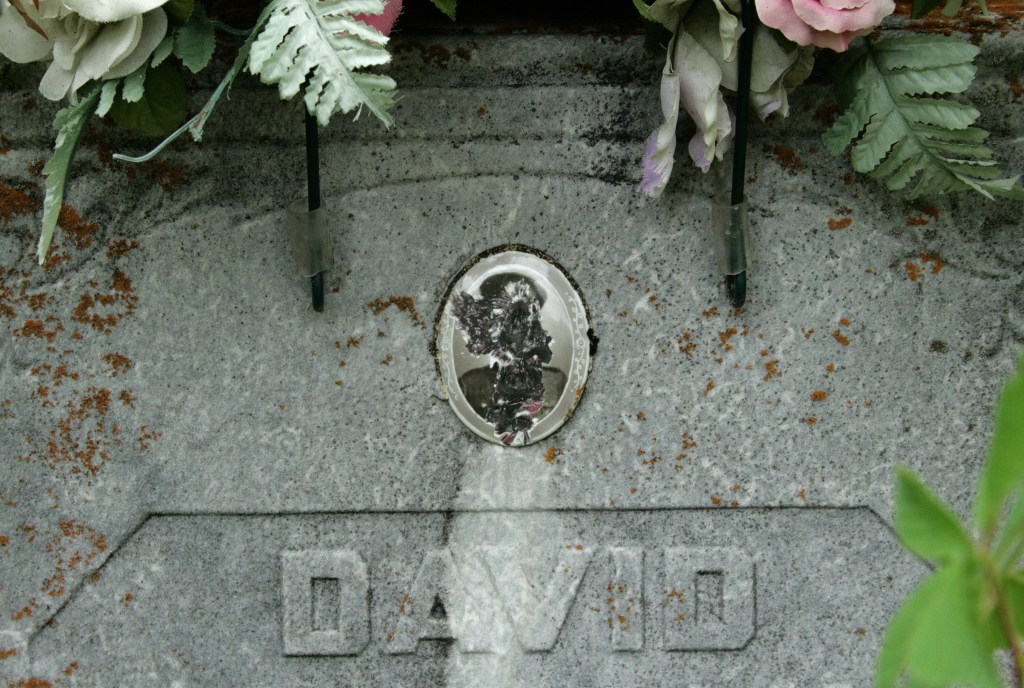
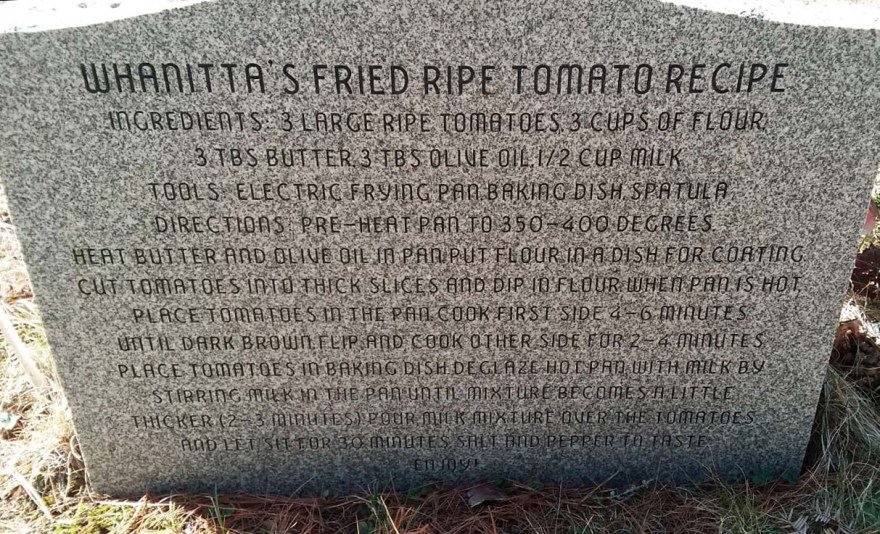
The grave of Jono Bot features more than just his name and dates. His monument also includes one of his favourite marinade recipes, permanently etched in stone. It features an airbrushed image of Jono grilling at a barbecue, with a recipe inscribed in his own handwriting.1
The Story Behind the Stone

Jon Breen “Jono” Bot was born on January 26, 1956.² He grew up near Luverne, Minnesota, before building a name for himself in nearby Sioux Falls, South Dakota. There, he owned several restaurants and bars that became gathering places for good food, live music, and spending time with friends and family.3

One of his best-known contributions was JonoFest, a music event named after him that celebrated local bands and became a Sioux Falls tradition.3 The festival drew thousands of people over the years and reflected his strong connection to the local music scene and community.

That love of food and hospitality comes through clearly in his memorial. Instead of choosing a traditional design, Jono’s gravestone celebrates something he genuinely loved doing. The result is a very personal memorial that immediately catches your attention.

Recipe gravestones are always fascinating because they preserve something from everyday life. Some memorials focus on careers, hobbies, or favourite quotes. Others, like this one, celebrate the simple moments that bring people together.

Jono passed away on September 25, 2018, at the age of 62.2 He is laid to rest at Saint Catherine Cemetery in Luverne, Minnesota. His obituary opens with the line, “After the band finished the final encore and the house lights came up, Jono Bot left the show and stepped out into the hands of God.”3 It feels especially fitting considering how connected he was to music, community events, and bringing people together.

Here is the recipe exactly as it appears on the gravestone:

Jono’s Jack Daniel’s Marinade

  • 1 1/2 cup water
  • 2/3 cup soy
  • 1/2 cup bourbon
  • 3 tb spoon Worch
  • 2 “ lemon juice
  • 1/4 cup brown sugar

A couple things stood out to me right away. First, “Worch” is shorthand for Worcestershire sauce. Second, despite the title mentioning Jack Daniel’s, the recipe itself simply says “bourbon.”

Since this is a marinade, I assumed the meat should sit for at least a couple of hours, or ideally overnight, before cooking. I decided to try it on pork chops.

In the Kitchen

This recipe was incredibly easy to put together. I only needed to pick up a few things from the grocery store. I had run out of soy sauce, needed a fresh lemon, and, of course, I needed the whiskey.

That sent me down an interesting rabbit hole about the difference between bourbon and whiskey.

The recipe is called Jono’s Jack Daniel’s Marinade, but the ingredients on the gravestone simply list bourbon. Since I was curious about the difference, I stopped by my local LCBO and asked one of the staff members for some advice.

There was one small problem right away. At the moment, American alcohol has been removed from LCBO shelves as part of Ontario’s response to the ongoing trade dispute between Canada and the United States. That meant Jack Daniel’s wasn’t an option.

Instead, the staff member recommended Jameson’s Irish Whiskey. He explained that, because Jack Daniel’s is made using the sour mash process, Jameson’s would be one of the closest alternatives currently available.

I also asked about the bourbon versus whiskey question.

He explained that all bourbon is whiskey, but not all whiskey is bourbon. It turns out that bourbon has to meet some specific legal requirements, including being made in the United States from a mash containing at least 51% corn and aged in new, charred oak barrels. Even though he suggested another whiskey that was a little closer to a traditional bourbon, I decided to stick with something closer to Jack Daniel’s since that’s what the recipe is named after.

Once I had all the ingredients, making the marinade couldn’t have been easier. I grabbed a large bowl, measured out all the ingredients, and mixed them in the same order as they appear on the gravestone.

The first thing I noticed was the smell. With half a cup of whiskey in the recipe, it definitely had a strong aroma. The marinade was also very dark, which made it a bit tricky to photograph.

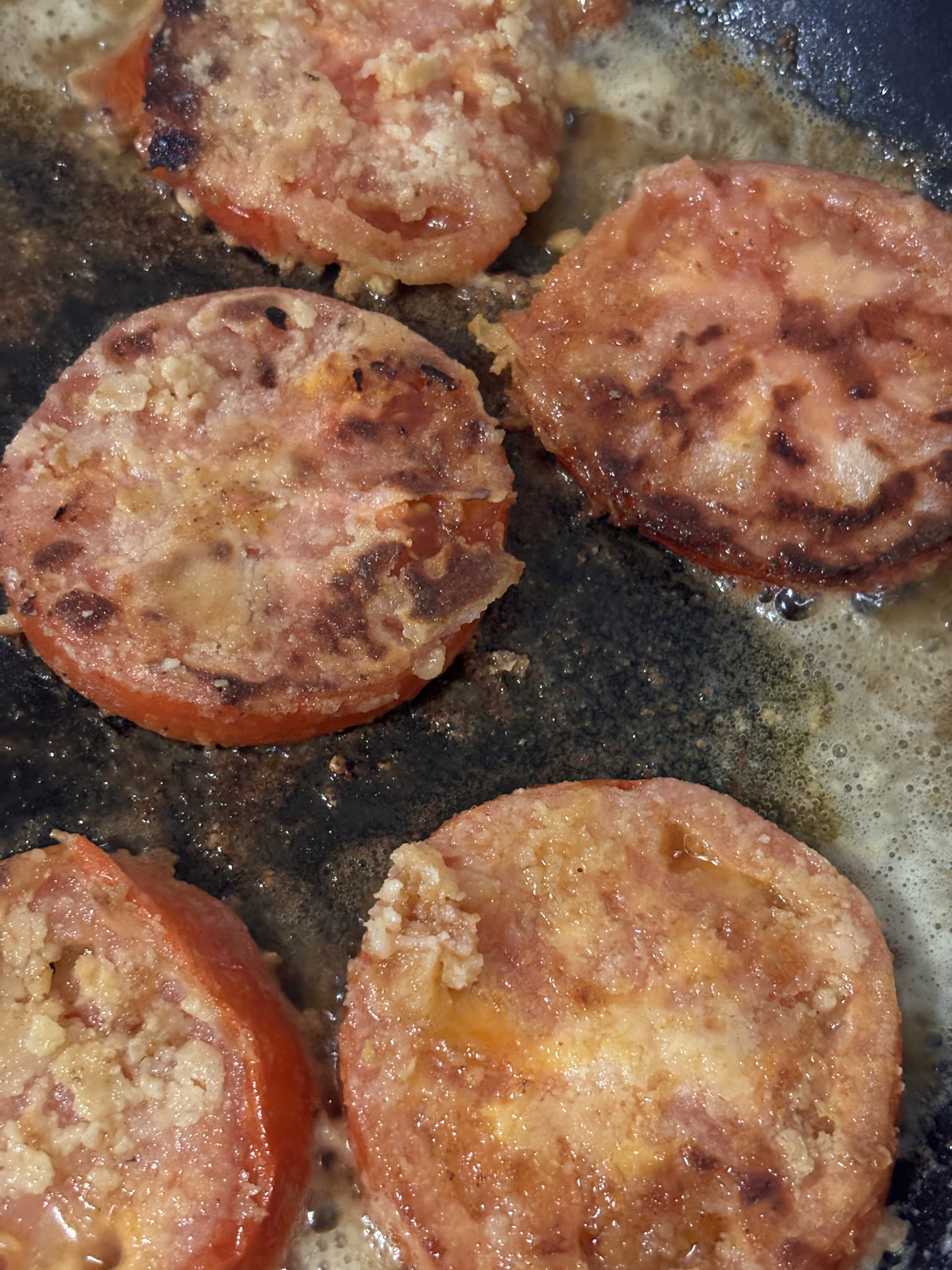
To test it out, I thawed two pork chops from my freezer and let them marinate overnight. They were completely submerged, so I probably could have added another piece or two of meat, but that’s all I had. The next morning, I flipped them over and let them continue marinating until it was time to barbecue after work.

Dinner almost went exactly as planned.

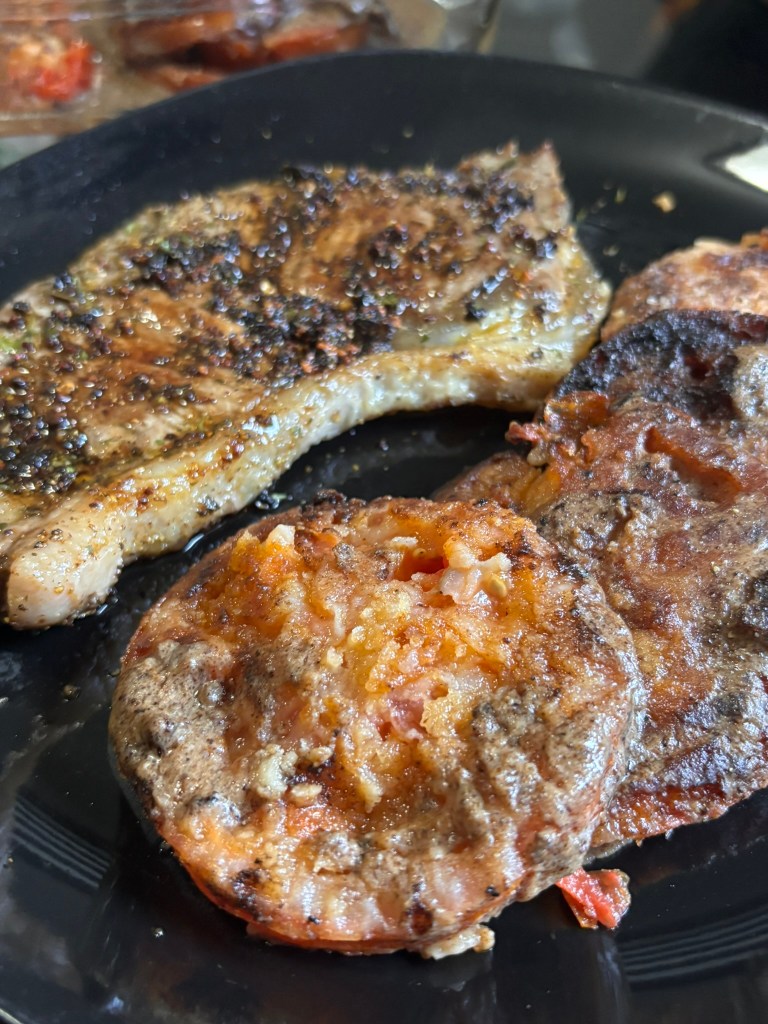
I fired up the barbecue and added the pork chops, along with some corn and green beans. Then, halfway through cooking, I ran out of propane! Thankfully, I was able to finish everything off in the oven. My mom also shared some of her potato wedges, that she had made, to round out the dish.

Despite the unexpected interruption, the pork chops turned out fantastic. They were flavourful, juicy, and had just the right balance of sweetness and savoury flavour. This is definitely a recipe I’ll be making again. It’s so simple to prepare, perfect for summer barbecues, and one I can easily see serving to friends and family.

A favourite barbecue recipe may seem simple, but it can say a lot about a person and the memories they shared with others.

Jono’s gravestone does exactly that. Even years later, it still encourages people to fire up the grill and try something that clearly meant a lot to him.

Thanks for reading!


References:

  1. To Die For: A Cookbook of Gravestone Recipes by Rosie Grant | Book
  2. Jon Bot | Find a Grave
  3. Jon “Jono” Bot (Obituary) | Legacy.com

Cemetery Road Trip: Cemeteries & Metal in Matane

At the beginning of June, my fiancé and I packed up the car and headed east to Matane, Quebec, for the Gaspesian Metal Fest. Since it’s about a 14-hour drive from home, we decided to turn the trip into a full cemetery road trip adventure!

Our first stop was Gatineau, where we stayed with an old friend for the night. While we were there, he took us to a very cool spot in Ottawa called Pub Italia. The place had such an interesting vibe. The decor was full of vintage church pieces and religious items, most of them apparently thrifted over the years. It honestly felt like wandering through an old church basement, mixed with a pub. They also have something called the Beer Bible, which was a massive menu packed with beer choices from all over the place. It was fun flipping through and seeing the huge variety they offered. They don’t serve flights, but they were happy to offer samples so you could try a few different beers before deciding.

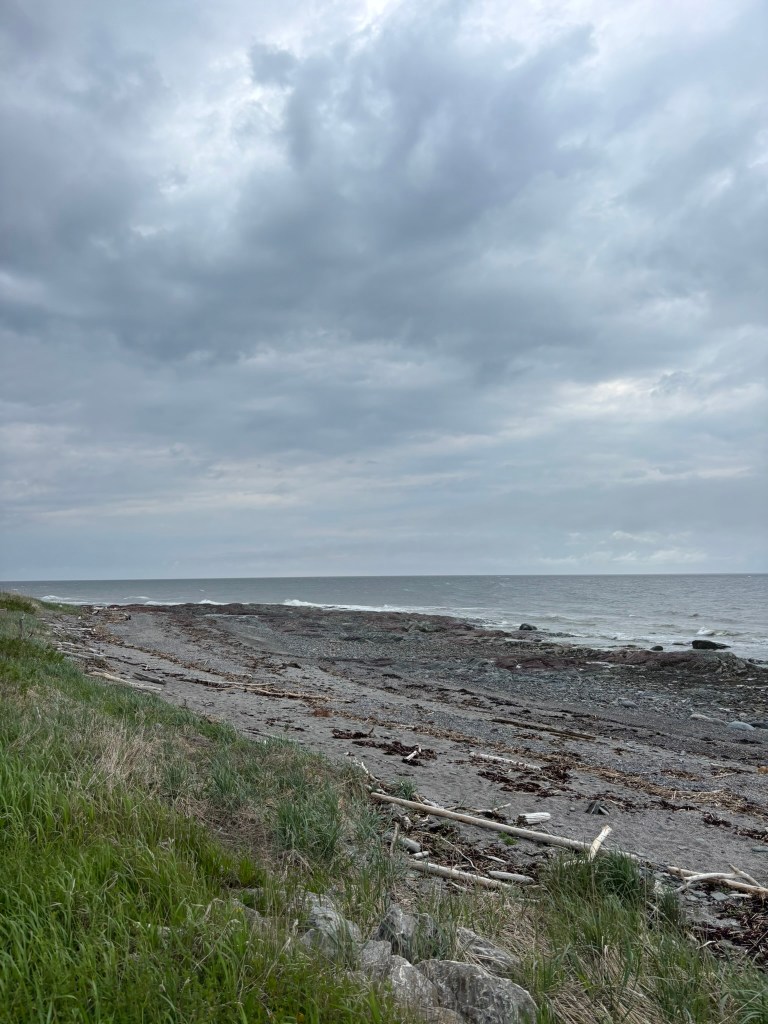
The following morning, we hit the road again and made the long drive the rest of the way to Matane. After spending so many hours in the car, we were more than happy to stretch our legs once we arrived. Matane sits right beside the St. Lawrence River where it meets the Atlantic Ocean, so the entire town has beautiful seaside views.

The tide was out when we stopped along the shore, so we wandered out across the rocks and walked the beach for a little bit. Chris found a piece of sea glass, and I found a couple of empty crab shells that absolutely came home with me. I can’t resist bringing home little nature treasures from road trips.

After checking into our hotel, we headed downtown to visit the local craft brewery and grab supper. We ordered deep fried pickles that we both agreed were some of the best we’ve ever had. We also had a couple of beer flights so we could sample different brews.

The next morning was dedicated to cemetery exploring.

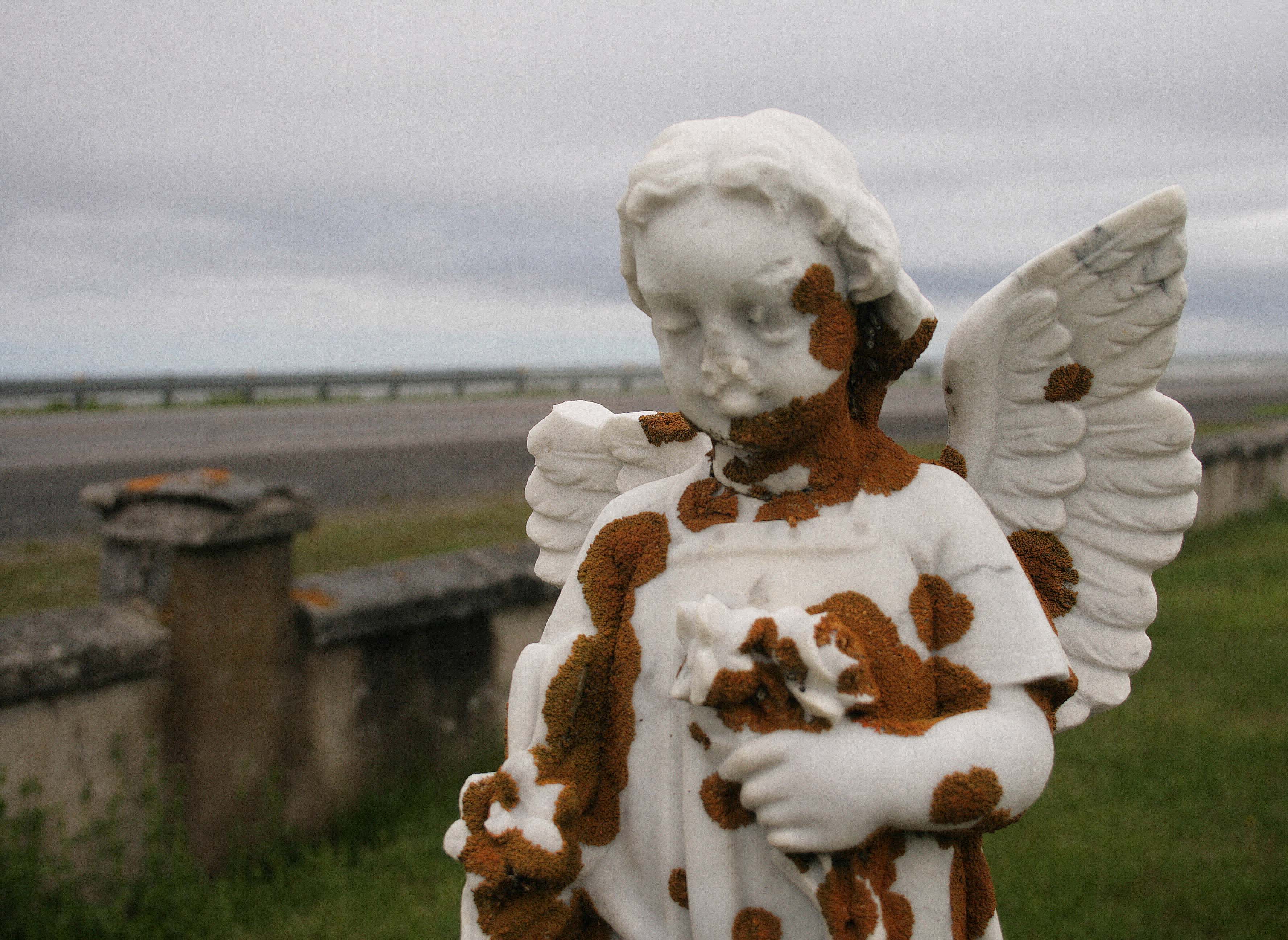
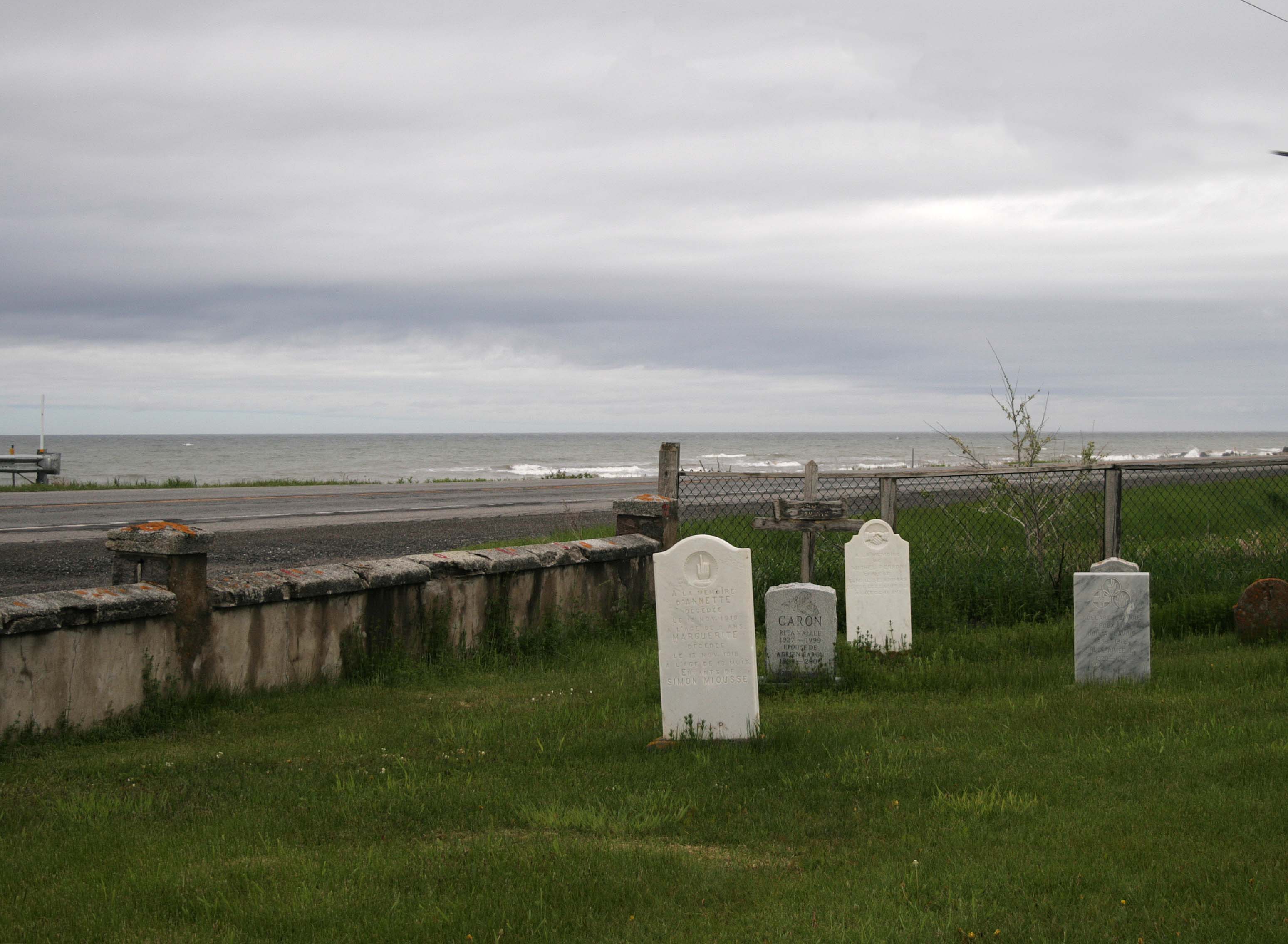
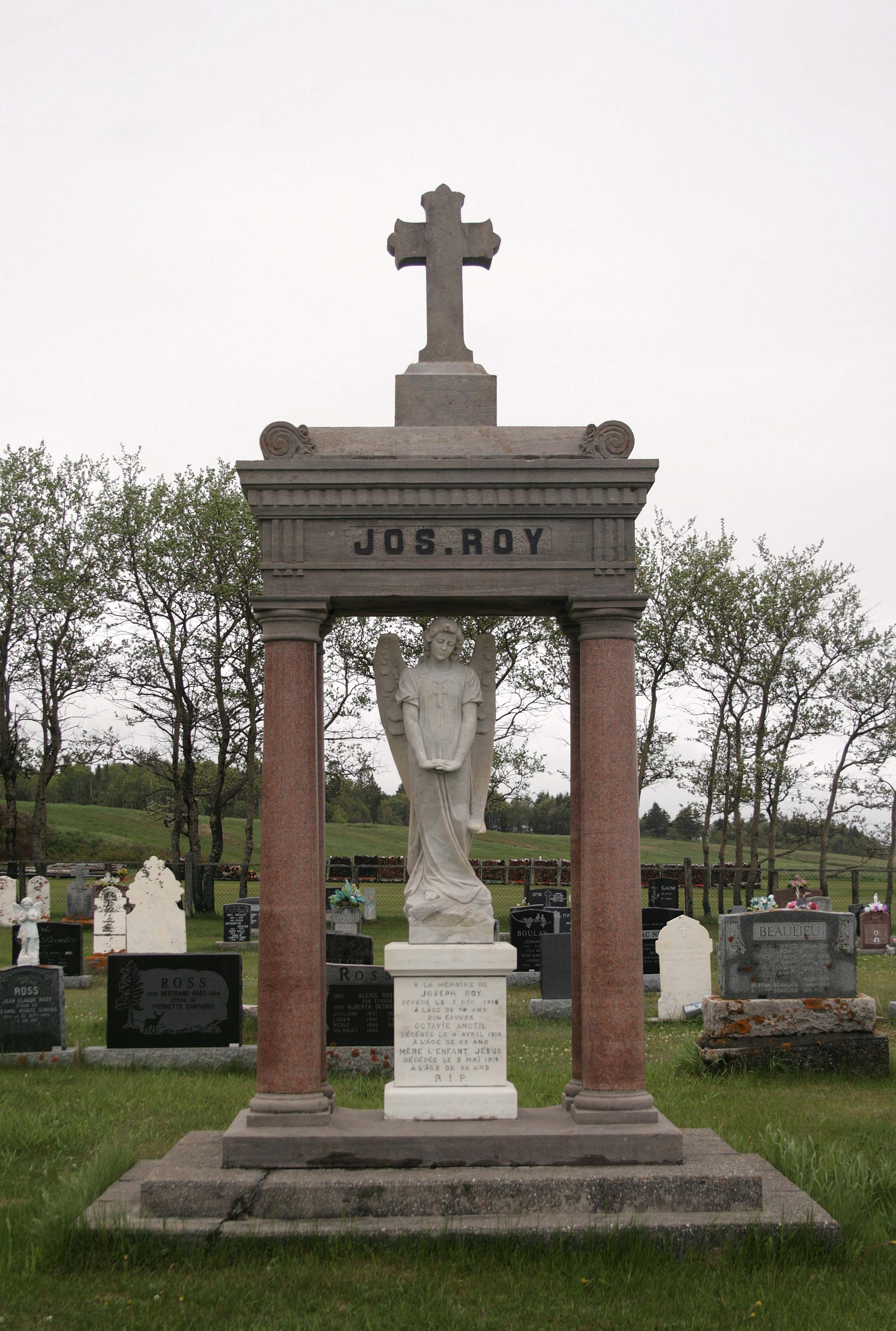
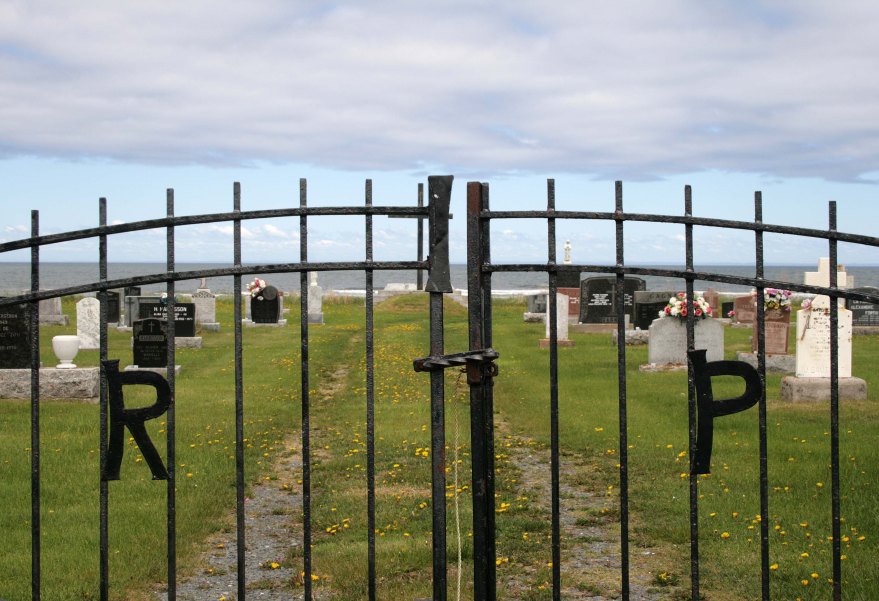
The first cemeteries we visited were right along the coast, and the ocean views were beautiful. Some of them had large statues, mixed in with smaller obelisks and older gravestones. I also started noticing similarities in the cemetery gates as we visited more places. A couple of them had “R.I.P.” worked directly into the gate designs, which I thought was an interesting detail.

Cemetery gate with the letters "R.I.P."

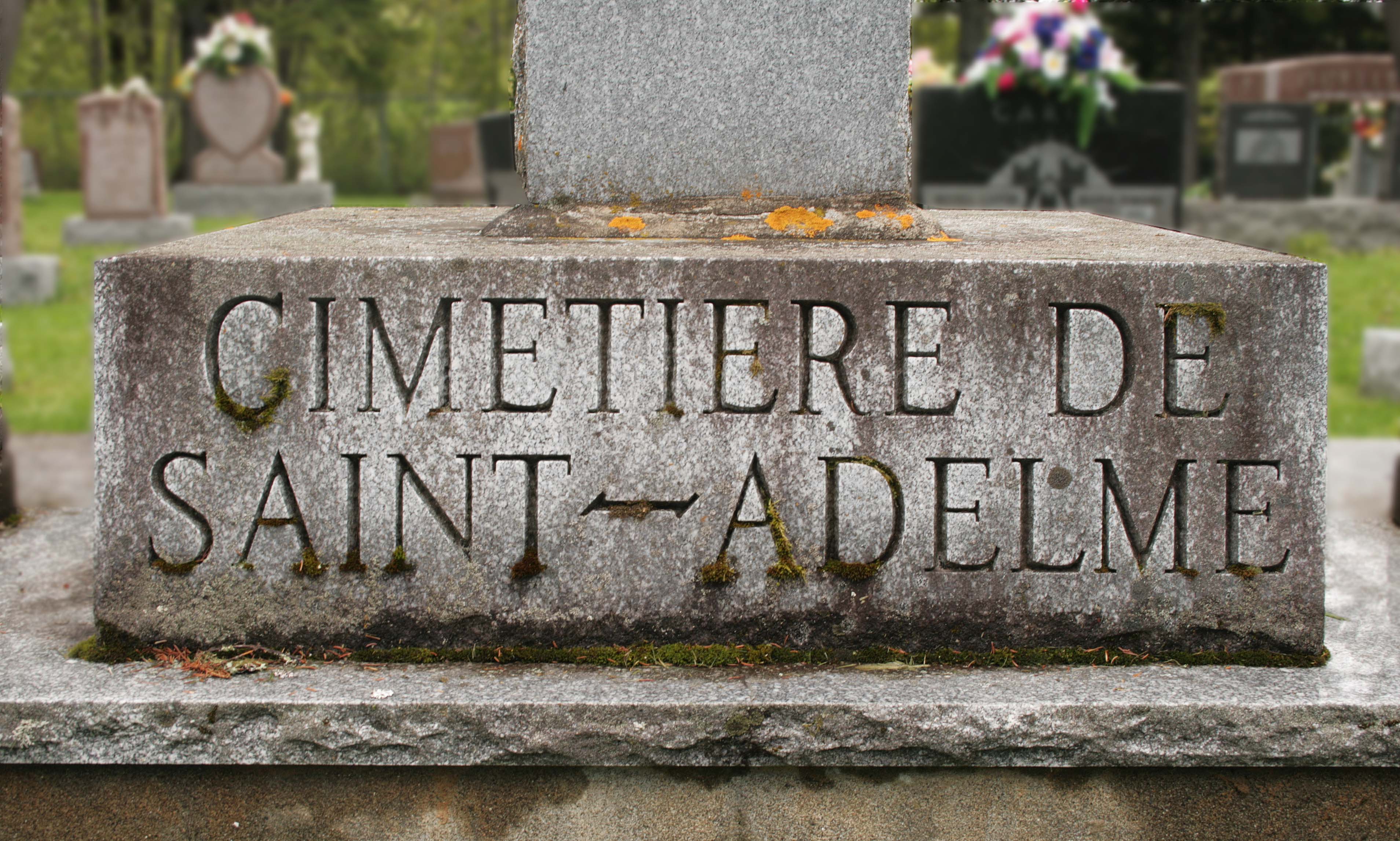
One thing I noticed on my last Quebec cemetery road trip was that many cemeteries seem to simply take the name of the town they are located in instead of having distinct names like Woodland Cemetery or Parklawn Cemetery. That seemed to be true in eastern Quebec as well. Most of the cemeteries didn’t have signs at the entrances. Instead, I found a few stones deeper inside the cemeteries that had the cemetery names carved into them.

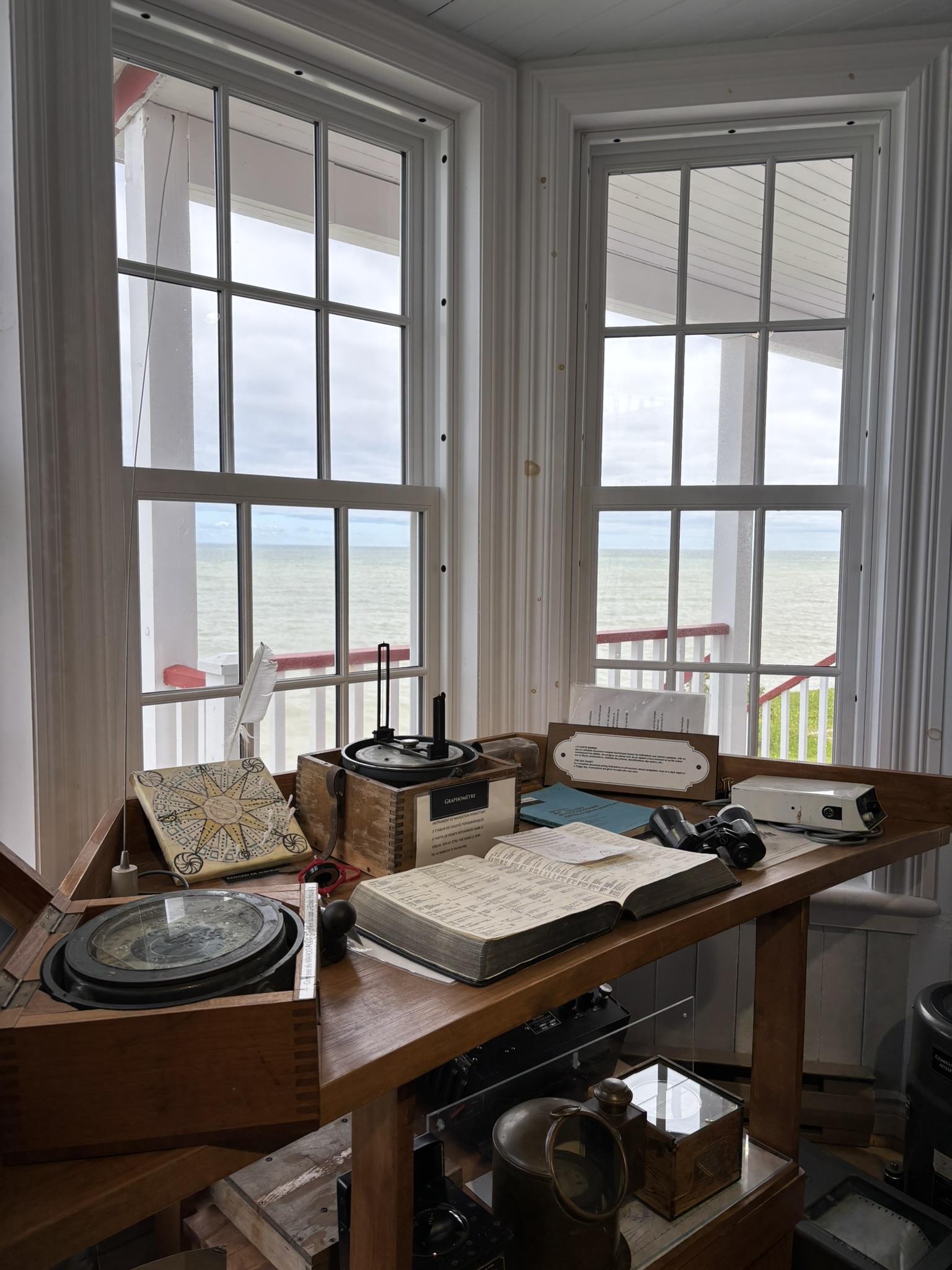
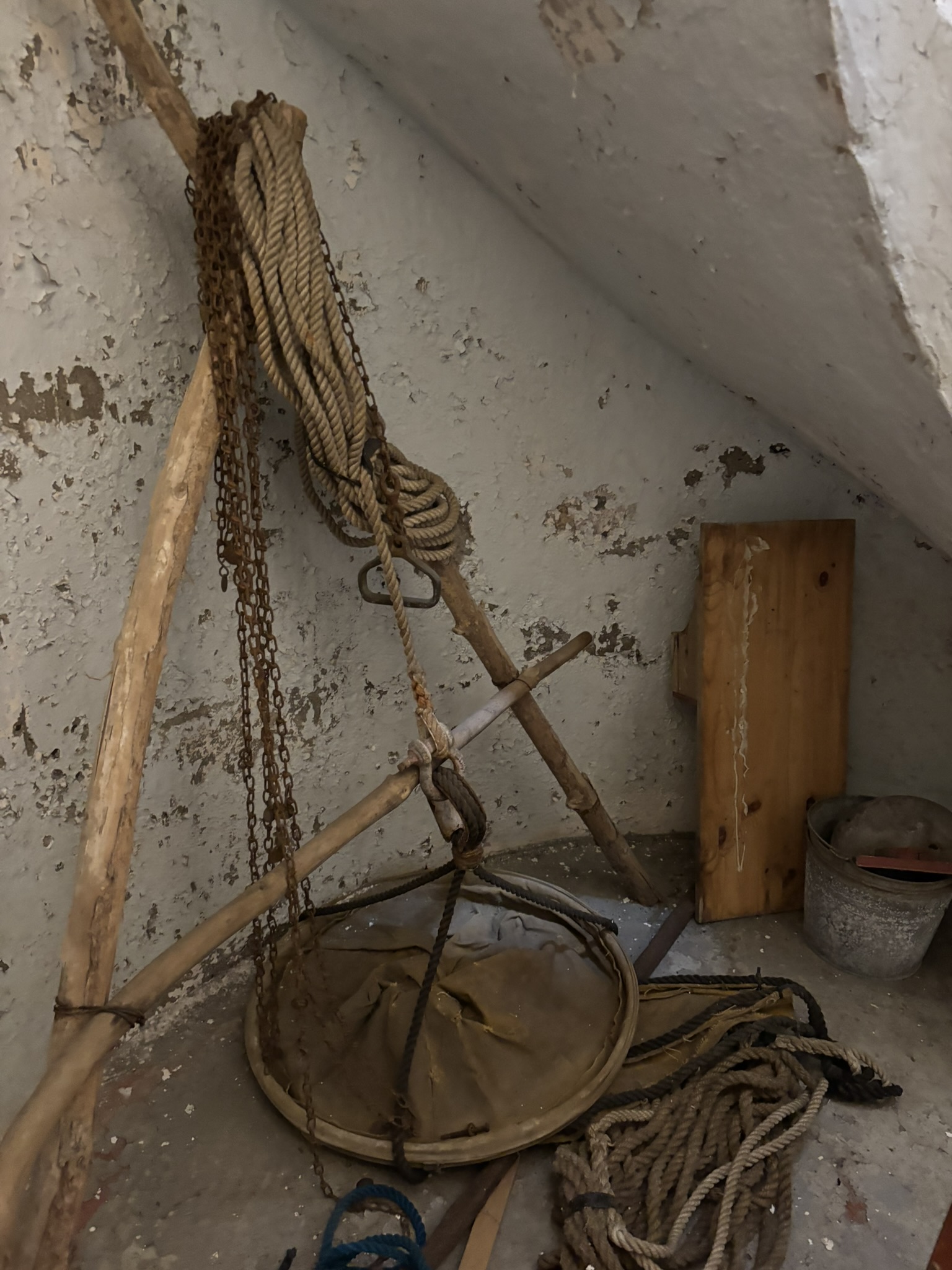
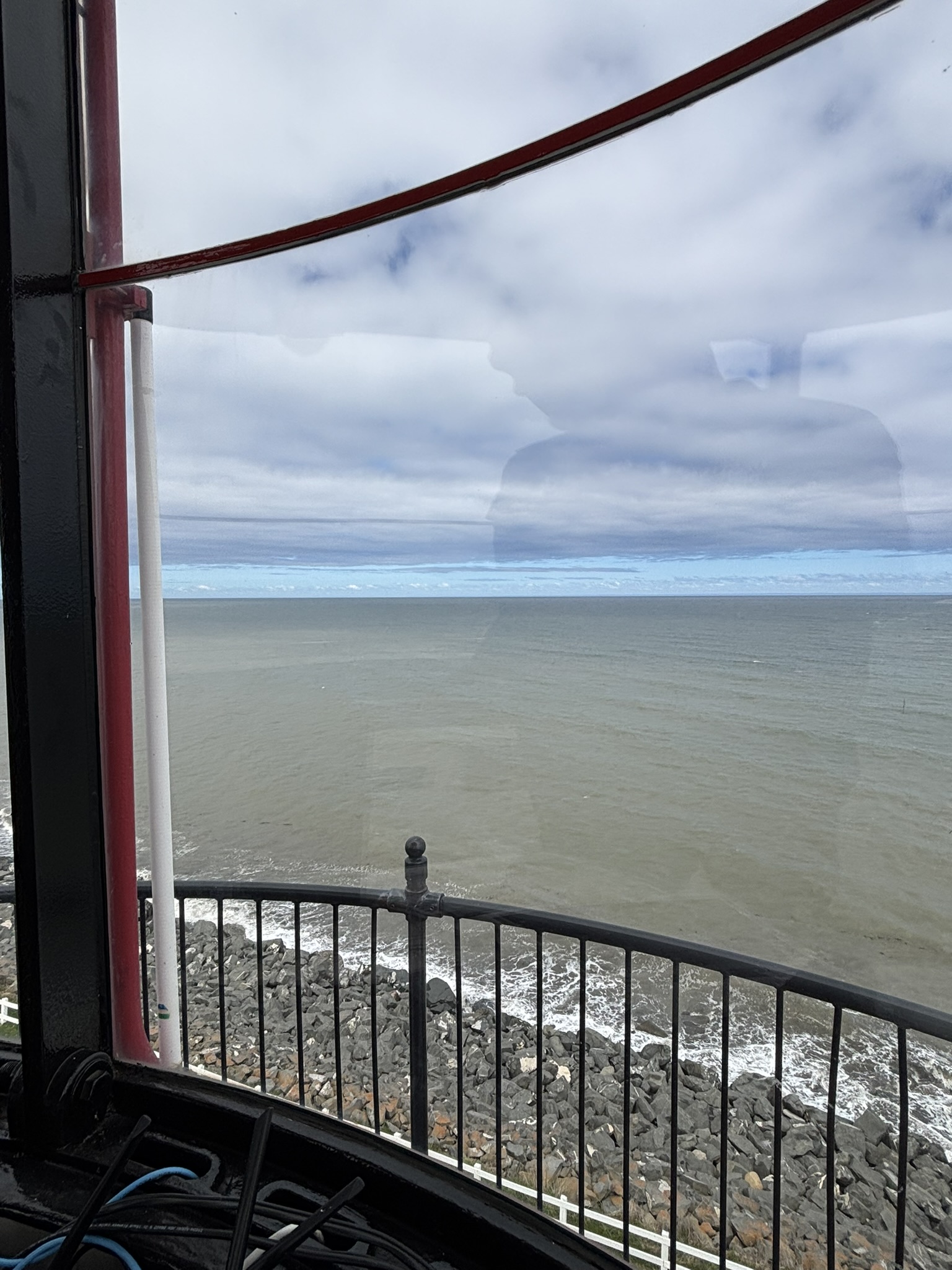
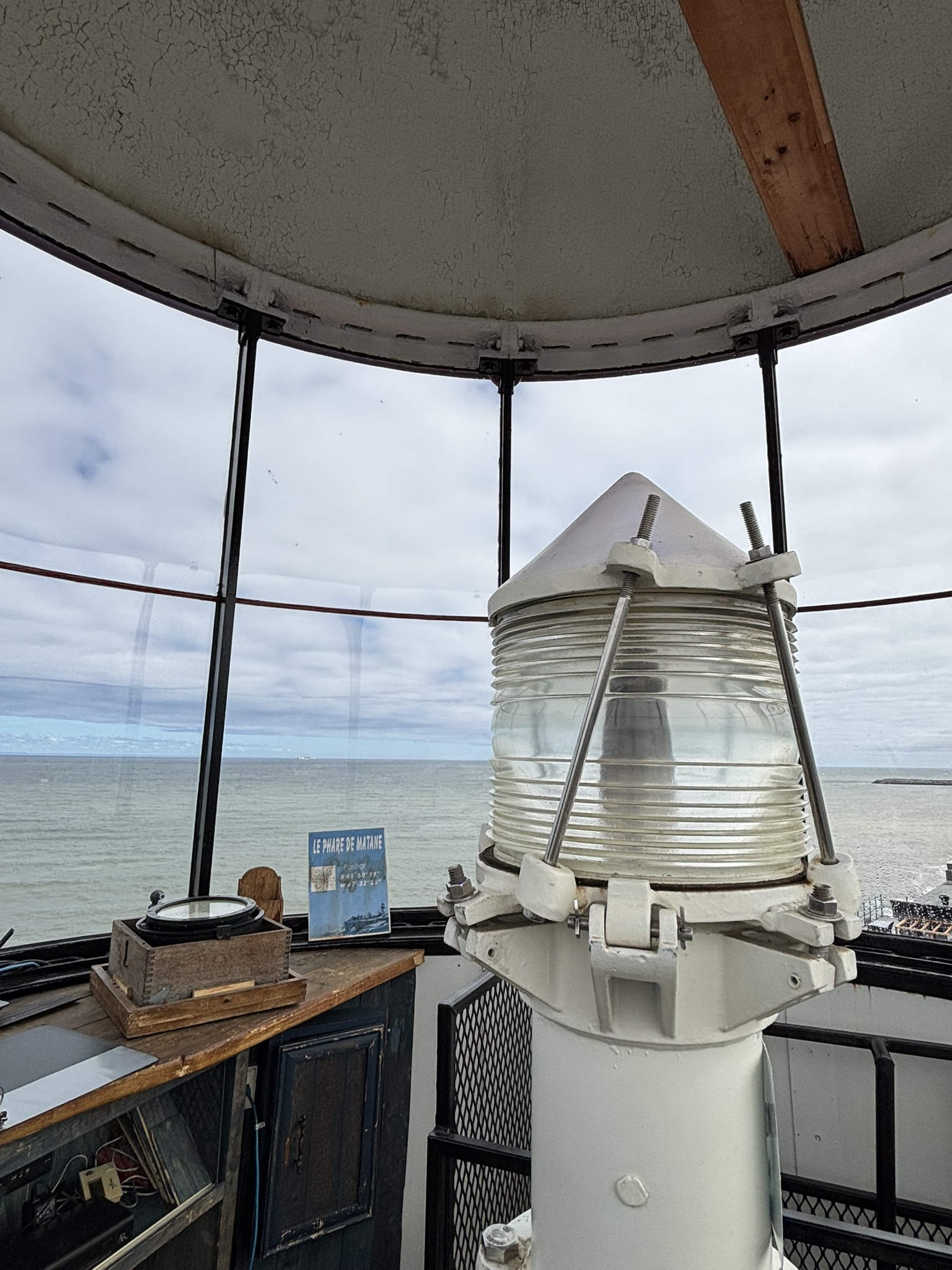
Between cemetery stops, we visited the Matane Lighthouse and Maritime Museum. This ended up being one of the highlights of the trip for me. Built in 1907, the lighthouse still overlooks the shoreline and has become one of Matane’s best-known landmarks. We practically had the whole place to ourselves, so we wandered through the exhibits before climbing to the top of the lighthouse.

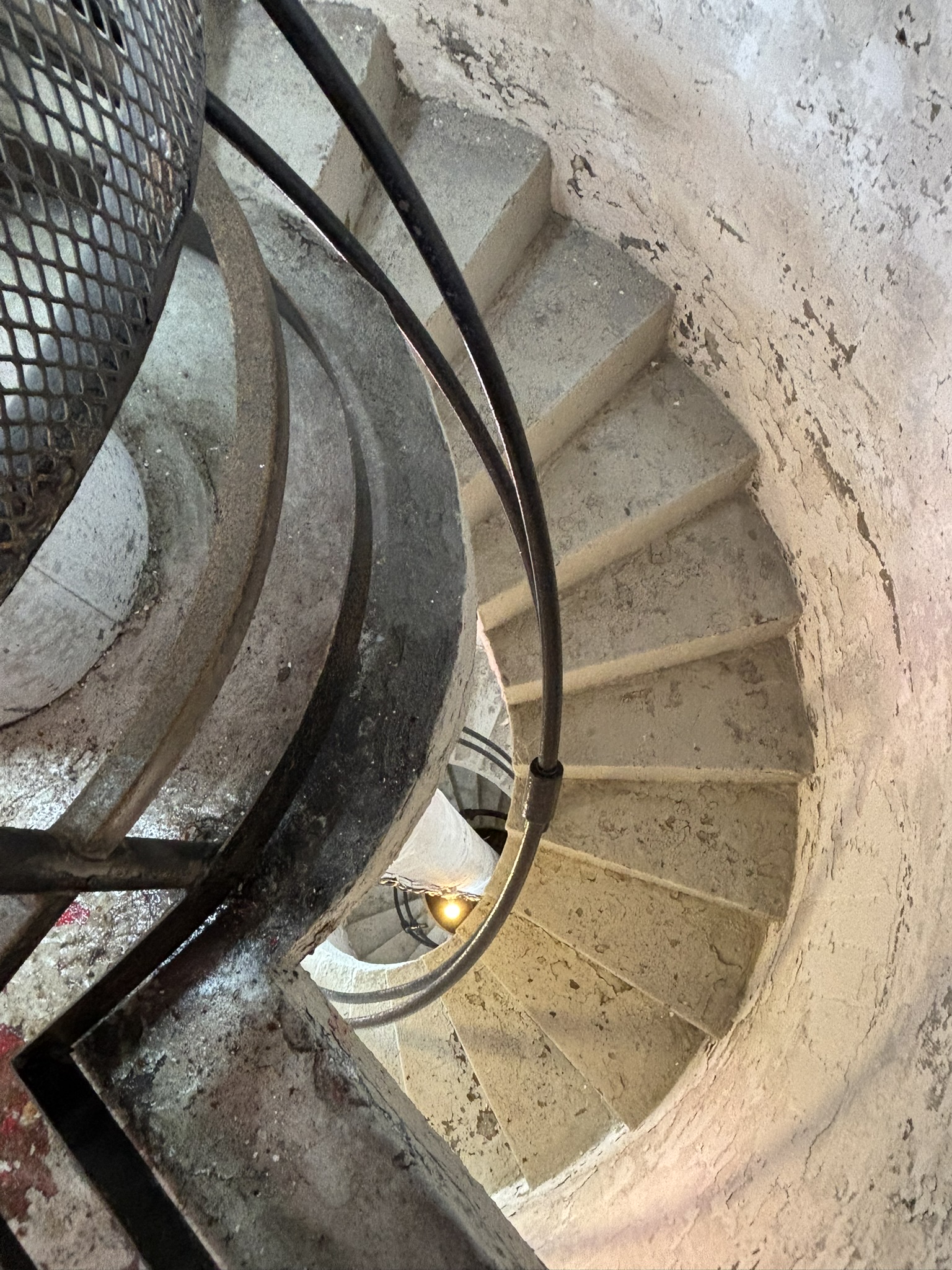
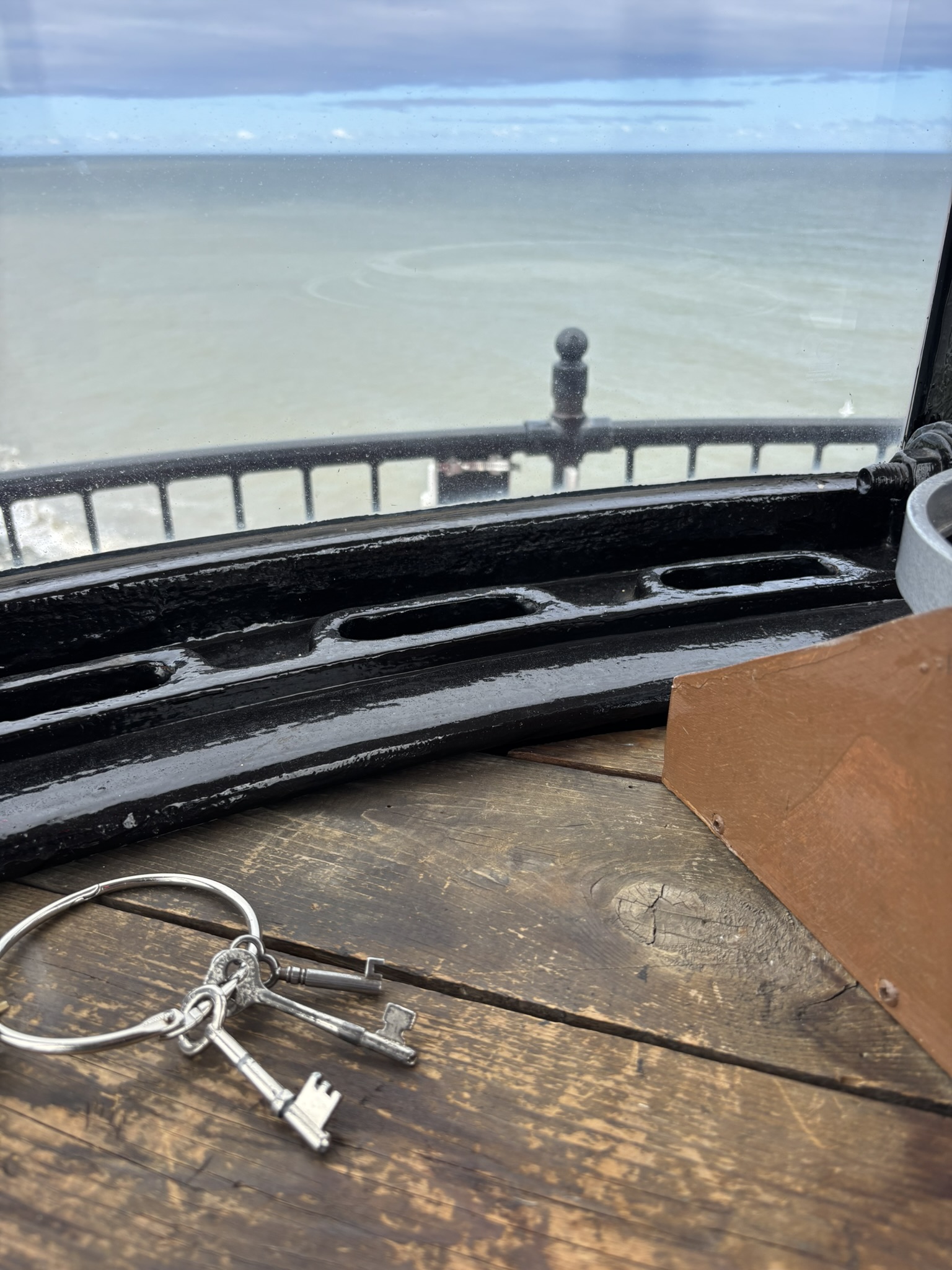
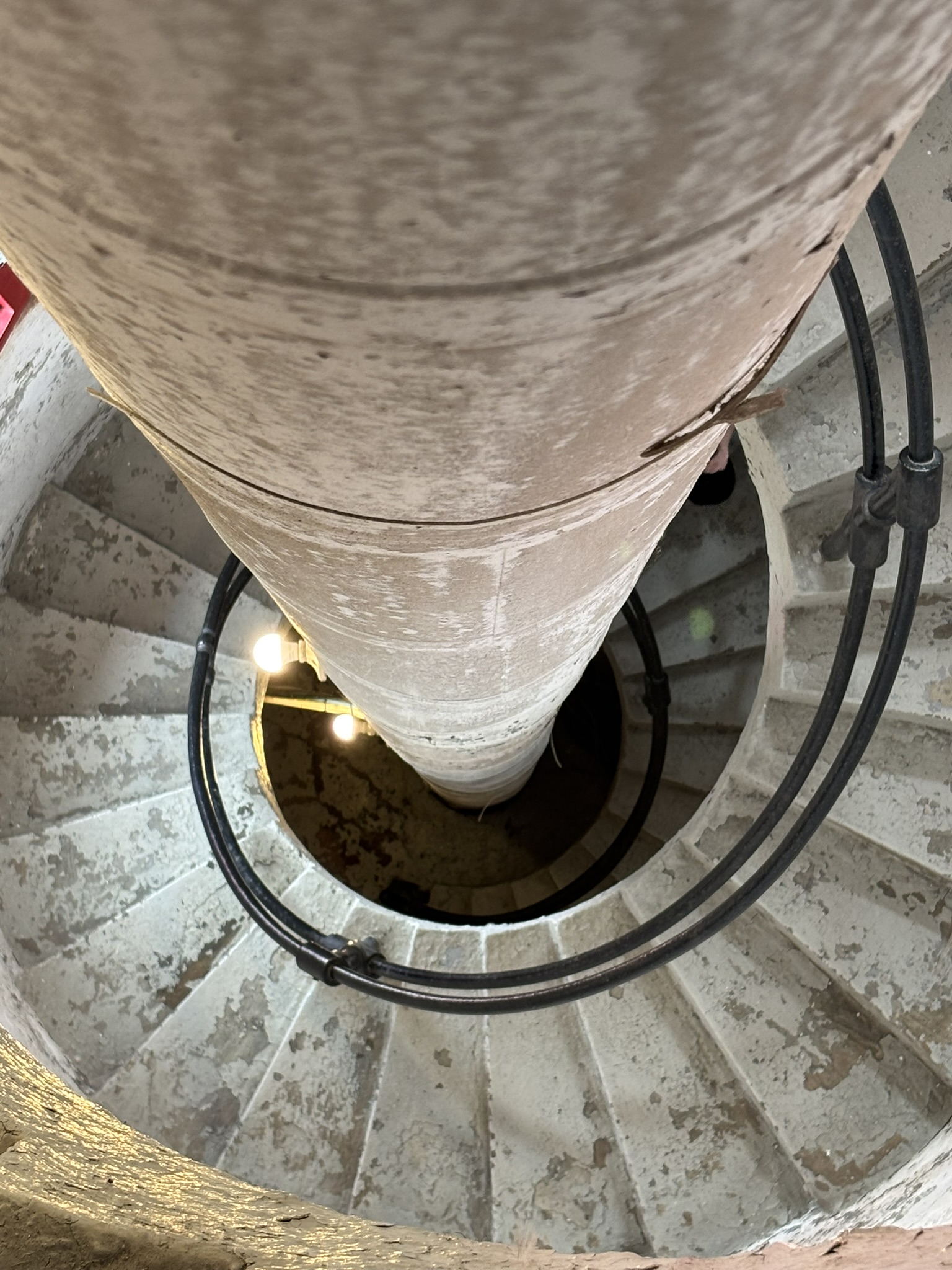
The audio tour was well done, and part of the experience included carrying a large keyring filled with old skeleton keys to the lighthouse tower itself. Since the tower stays locked, you need the key to make your way up the spiral staircase, which honestly made it feel like we were lighthouse keepers heading up to check on the light.

The tour ended with a local folktale about mermaids that claimed sea glass was actually mermaid tears. That felt especially fitting since Chris had found a piece of sea glass the day before. Folklore can be such a fun part of travelling because every area seems to have its own stories and legends.

After the lighthouse, we visited a few nearby villages and stopped at a couple more cemeteries before grabbing lunch. The last cemetery we visited was right across the street from a Dixie Lee, so it felt like a natural place to stop and grab something to eat after exploring. We ended up learning it was actually a chain restaurant, but it hit the spot after a busy morning on the road.

Matane is pretty well known for its shrimp and seafood. We had been hoping to try shrimp poutine and lobster rolls while we were there, but unfortunately we were a little too early in the season. I still managed to get some popcorn shrimp at Dixie Lee though, so at least I got a small taste of the local seafood.

Later that afternoon, we freshened up and headed to the Gaspesian Metal Fest. The venue is right on the waterfront, so it was easy to settle in on the patio with a drink, listen to the bands, and watch the waves roll in at the same time.

That night, we had supper with the guys from Sandveiss, who we had travelled specifically to see. They were super cool, and we had some good conversations throughout the evening. Their set was fantastic and completely worth the drive.

Before leaving, we grabbed some band merch and said goodbye to everyone. The only disappointing part was missing out on the festival t-shirt because they had completely sold out by the time we got there. The design featured a shrimp throwing the horns, which honestly sounds perfect for a metal festival in Matane.

The next day was spent driving the 14 hours back home. Since the trip back was so long, we didn’t stop at any cemeteries along the way, though I definitely took screenshots on Google Maps for future trips.

By the time we finally got home, we were both exhausted, sore, and very ready to sleep. Still, it was such a fun trip, and I am really glad we turned a concert weekend into a full cemetery road trip adventure.

Thanks for reading!

My files may be a mess, but the cemeteries are calling

Well…it’s been a little quiet around here lately.

Last month, I ran into some pretty devastating technical issues that threw a major wrench into both my workflow and my organization system. Thankfully, I’ve managed to sort out most of the big problems, but now comes the long process of going through files, reorganizing folders, and figuring out exactly where everything ended up. That is definitely shaping up to be a winter project.

Right now, though, summer is calling.

Around here, nice weather never lasts long enough, and I fully intend to take advantage of every road trip, cemetery visit, and photography adventure I can before the snow flies again and I retreat into hibernation mode at my computer.

The good news is that while the blog may have been quiet, I certainly haven’t been.

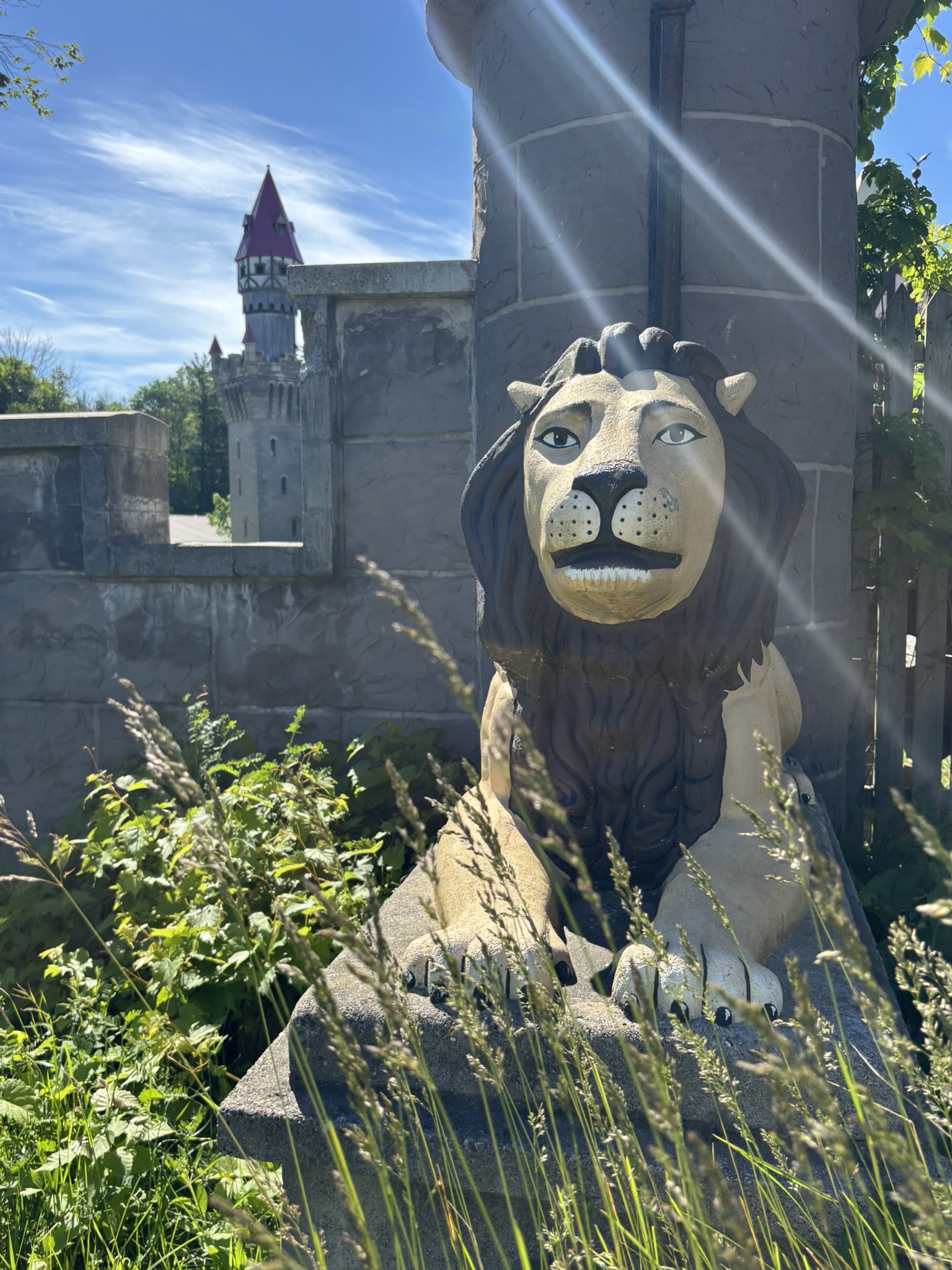
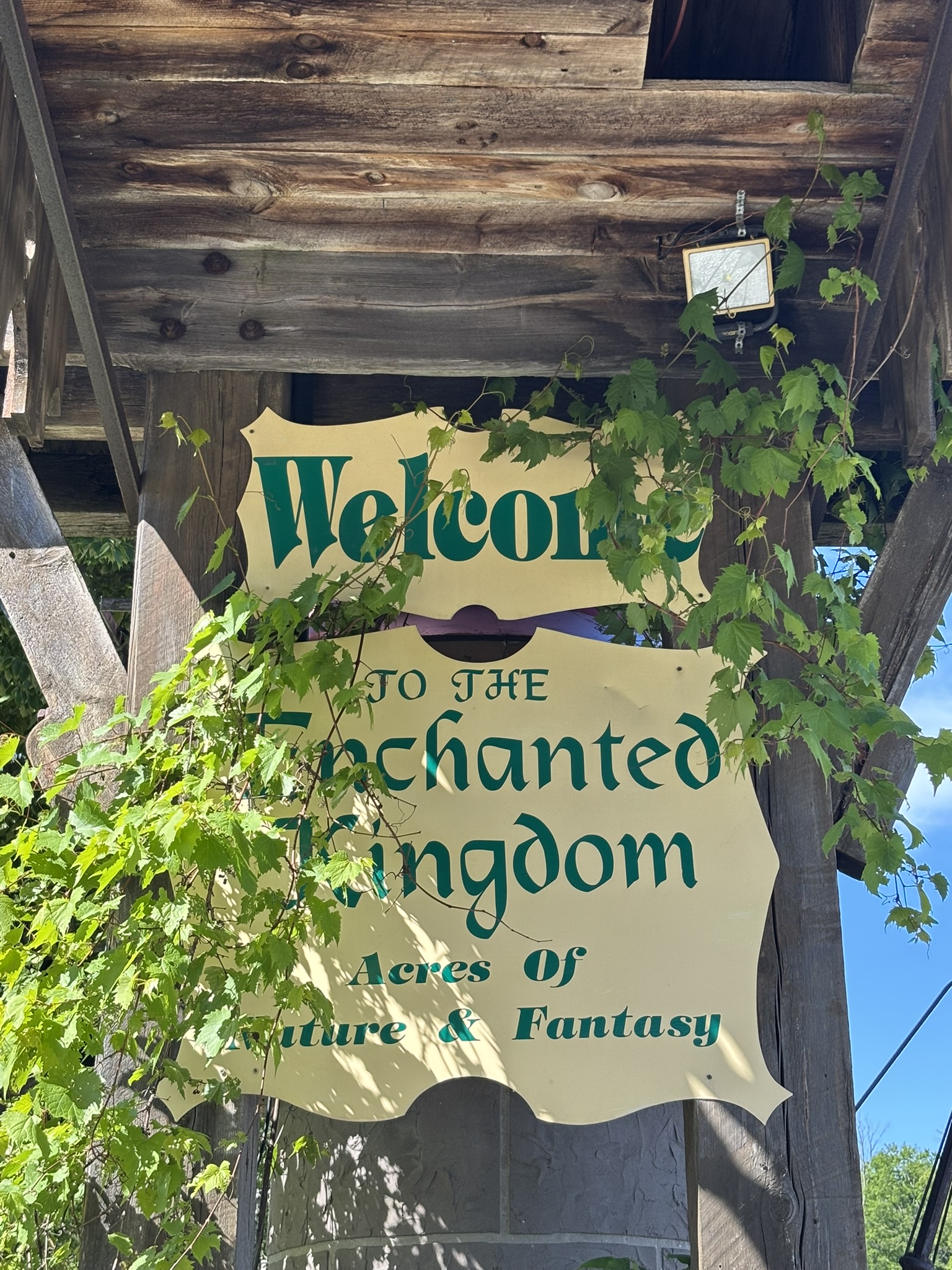
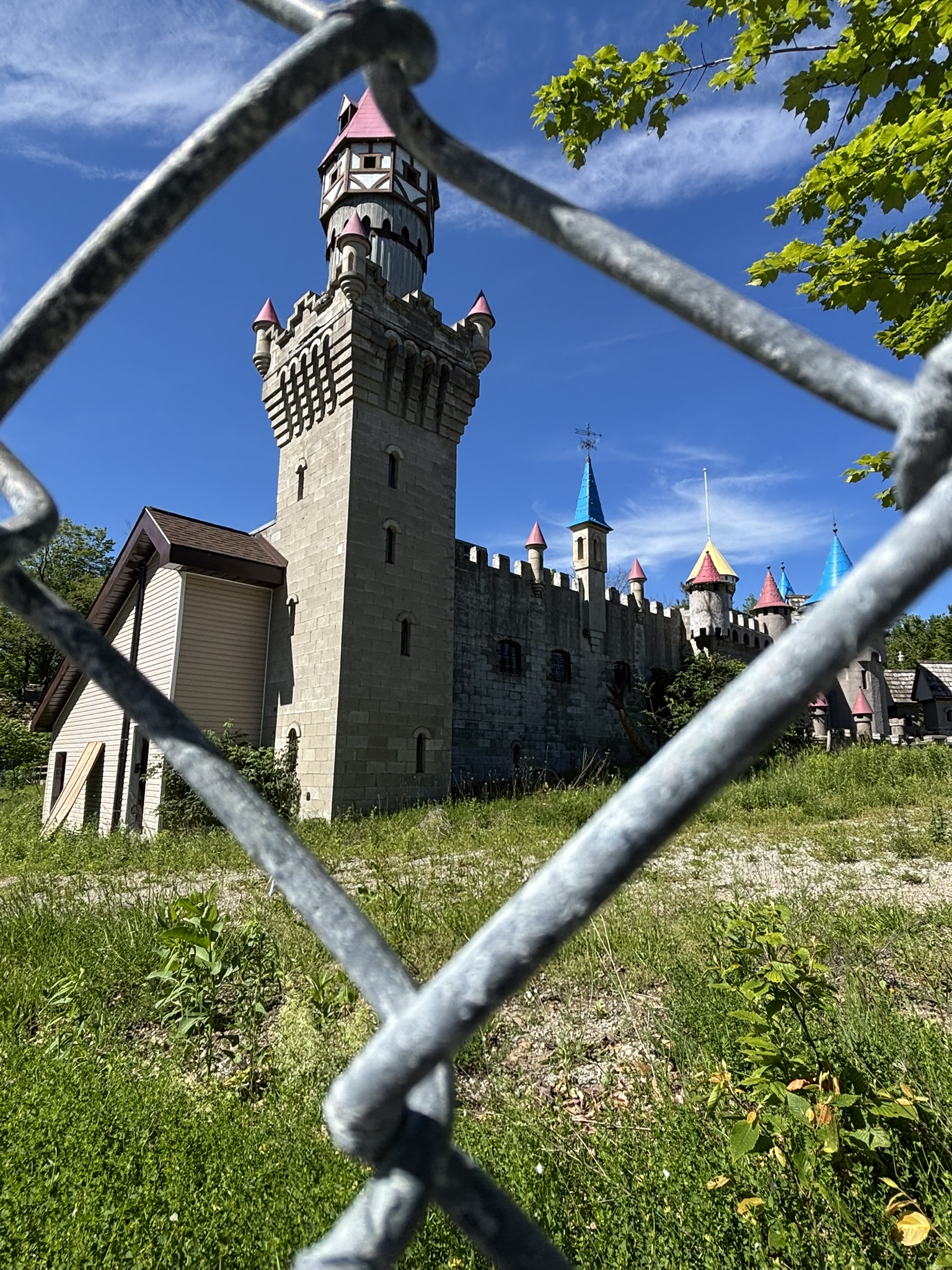
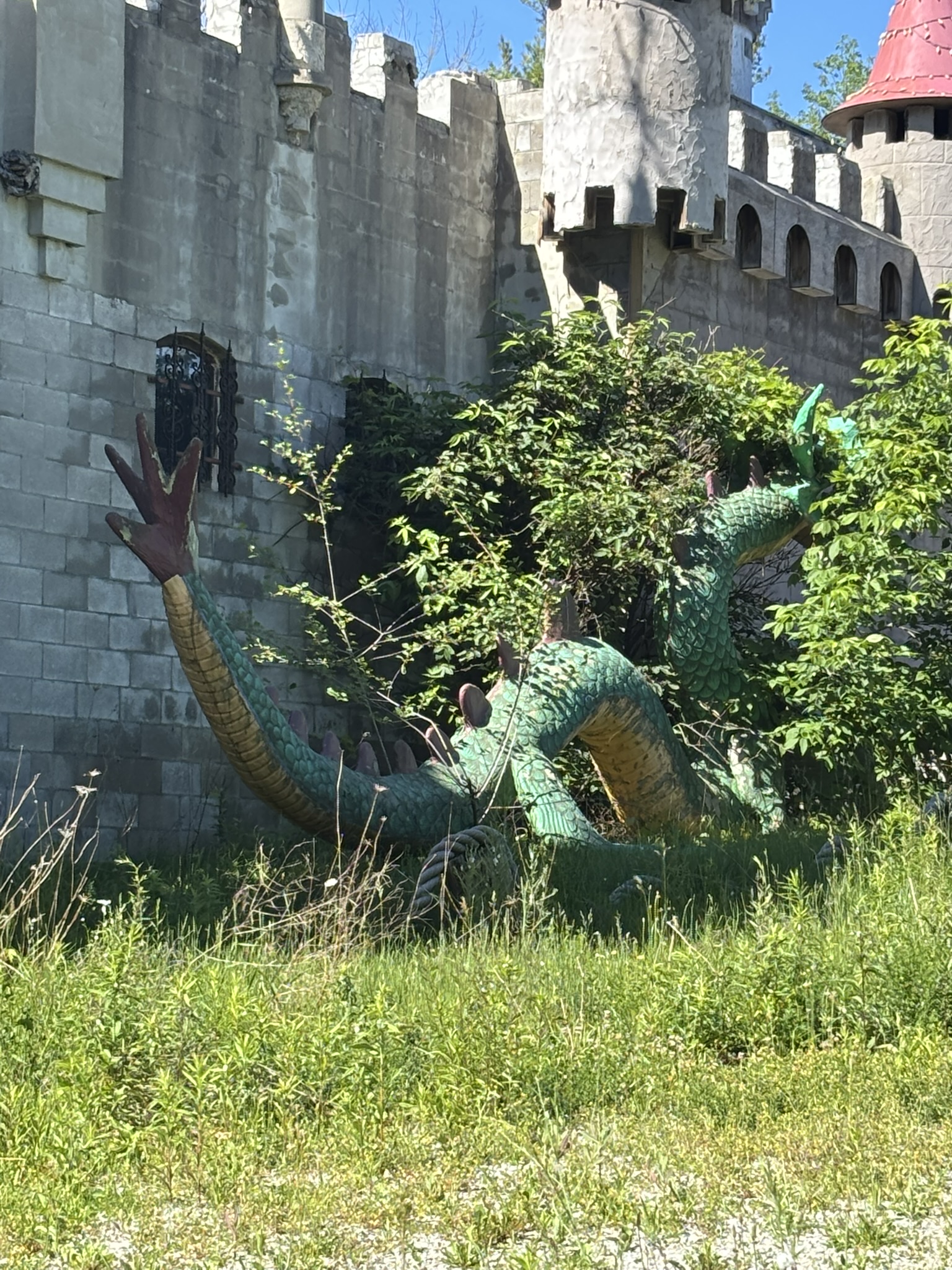
Over the past few weeks, I’ve collected a lot of stories, photos, and cemetery experiences that I’m excited to finally start sharing. There are seaside cemeteries overlooking the water, historic burial grounds filled with fascinating history, and even an enchanted kingdom that felt like something straight out of a storybook.

I’ve also visited some beautiful small towns, discovered hidden details tucked away in old cemeteries, and stumbled across a few unexpected stories that I can’t wait to dive deeper into. Honestly, that is one of my favourite parts of cemetery photography. You never really know what you’re going to uncover until you start exploring.

So, consider this my official “I’m back” post.

I’m looking forward to getting back into a regular posting schedule again, sharing more road trips, more history, more photography, and probably a few odd little discoveries along the way, too.

Thanks for hanging around while I worked through the technical mess behind the scenes. I’m happy to be back and can’t wait to share more cemetery adventures soon.

As always, thanks for reading!

A Very Rough Week Behind the Blog

This week’s blog post is going to look a little different.

Earlier this week, my cat stepped on my keyboard and somehow managed to delete my entire cemetery photography folder. Years of cemetery photos, research, blog drafts, and organizing work disappeared in an instant. Needless to say, it has been a stressful few days.

Thankfully, I do have a backup from early 2025, so not everything is gone. I’ve also been working through recovery software trying to salvage as much as possible from my hard drive. So far, I think I’ve managed to recover most of it, but there are still around 800 files missing, and I’m not yet sure exactly what was lost.

Right now, my main focus is rebuilding and reorganizing everything. Once I finish recovering what I can, I’ll need to merge those files with my backup and basically piece my archive back together folder by folder. It’s going to take some time.

Unfortunately, that also means the post I had planned for this week is going to be delayed while I sort everything out.

This has been a painful reminder about the importance of backups. I had actually planned to buy a new terabyte drive earlier this year and start doing more regular backups, but I kept putting it off.

I definitely regret that decision now.

Once everything is stabilized again, I’ll be setting up a much cleaner backup system and doing monthly backups moving forward.

I’m not going to pretend this week has been easy. I’ve lost sleep over it, and seeing years of work suddenly disappear was honestly heartbreaking. But I’m trying to stay hopeful. I think most of the archive can be recovered, even if rebuilding everything will take a while.

So if things seem a little quieter here over the next little bit, that’s why. And if there’s one thing I can pass along from this experience: back up your files.

Seriously. Don’t wait until something goes wrong.

Thanks for sticking with me while I get things back in order.

Cemetery Recipes: Sharon’s French Silk Pie

Some cemetery stories come from wandering through the rows of gravestones in person, but others show up through research, photographs, and the unexpected things people choose to leave behind on a memorial.

This is one of those stories.

A French Silk Pie recipe engraved on a gravestone somehow manages to feel sweet, funny, personal, and a little unexpected all at once. It turns a memorial into something that feels almost like a family recipe card left behind for anyone curious enough to stop and read it.

Sharon Kay Edwards is remembered in a way that feels very real and relatable. The front of her memorial carries the line: “Well, that didn’t go how I thought it would…” which genuinely made me laugh the first time I read it.

She is buried in Friends Cemetery, a cemetery that also holds the graves of baseball brothers Clete Boyer, Cloyd Boyer, and Ken Boyer.¹

Sharon’s obituary talks about her life, family, and the people she loved, but there is absolutely no mention of French Silk Pie.² No hints. No baking references. Nothing that prepares you for what is carved onto the back of her headstone.

On the back of her tombstone is a full French Silk Pie recipe, engraved into the stone as though it was always meant to be shared and passed around.

Here is the recipe exactly as it appears on the stone :

Sharon’s French Silk Pie

  • 1 Stick butter
  • 3/4 C. Sugar
  • 2 Squares Choc.
    • Unsweetened. Melted. Cooled
  • 1 Tsp. Vanilla
  • 2 Eggs

Cream Butter. Add sugar gradually. Cream well. Blend in choc. and vanilla. Add eggs 1 at a time. Beat 5 min after each egg.

Crust

  • 2 Cups flour
  • 1 Cup chopped pecans
  • 1 Tsp. Vanilla
  • 2 Sticks butter (1 cup)

Melt butter. Add 1st 3 ingredients. Press into pie plate. Bake at 400 degrees until brown.

In the Kitchen

This recipe has a surprisingly small ingredient list, so pulling everything together was pretty easy.

The raw eggs were the first thing that piqued my interest. I had to look into that a little bit. Traditional French Silk Pie recipes often relied on them for that smooth, rich texture, but modern versions usually recommend pasteurized eggs or other safer methods while still aiming for that same silky finish.³

I was not able to find pasteurized eggs at my local grocery store, so I decided to live dangerously and use regular eggs.

I started with the crust first.

I mixed everything into a rough dough and pressed it into a pie plate. I have long acrylic nails, so this was a bit more difficult than I thought it would be. I ended up using my knuckles and the palm of my hand to flatten everything out and get it somewhat even.

The recipe doesn’t mention pie weights, but some of my research had suggested them. I don’t have any pie weights anyway, so instead I just poked holes in the crust with a fork and hoped for the best.

Into the oven it went for 15 minutes. After checking on it, I put it back in for another five. It probably could have baked a little longer, but I was scared of burning it and ruining the whole thing.

After 20 minutes total, I pulled it out and left it on a wire rack to cool while I started the filling.

The filling definitely took more effort. I followed the instructions exactly as written and used my hand mixer to save my wrists a bit, but beating each egg for five full minutes still felt like an upper-body workout.

As soon as I added the first egg, the texture noticeably changed and became lighter and fluffier. It actually reminded me a bit of making meringue. I kept scraping down the sides of the bowl while mixing to make sure everything blended properly.

Once it looked smooth enough, I spread the filling into the crust with a spatula and hoped for the best.

The crust was buttery and flaky, and the filling was rich with that smooth, silky texture French Silk Pie is known for. And so far, no ill effects from the raw eggs, which feels like a win.

Trying it once felt worth the risk for the experience, though I think I would want pasteurized eggs before tempting fate a second time.

It’s funny how a recipe like this can also reflect how cooking habits and food safety awareness have changed over time, while still hanging onto the comfort and nostalgia of a classic dessert.

At the end of the day, this whole story comes back to something pretty simple: pie.

It is the kind of dessert that probably showed up at family gatherings, holidays, and kitchen tables for years. The kind people went back for seconds, even when they claimed they were full.

Seeing a recipe like this engraved on a gravestone adds a completely different layer to that idea. It turns a dessert into part of someone’s legacy, which is kind of amazing.

And somewhere out there, Sharon’s pie recipe is still being made.

Thanks for reading!


References:

  1. Friends Cemetery | Find a Grave
  2. Sharon Kay Edwards (obituary) | The Joplin Globe
  3. Chocolate French Silk Pie | Barley and Sage

Cemetery Book Review: Hillside Cemetery

Ever wandered through a cemetery and wished you could hear the stories hidden beneath the headstones? That’s exactly the experience Hillside Cemetery, Middletown, New York: Beyond the Graves by JoEllen Hundeland offers.

I had planned to share a cemetery recipe post this week, but I didn’t get a chance to do any baking. So instead, I’m switching things up with a cemetery book review. This little book blends history, photography, and storytelling, taking you into one of New York’s most historic cemeteries and introducing the people who shaped the community.

Hillside Cemetery was established in 1861, right in the middle of the Civil War.1 Spread across more than 50 acres in the Hudson Valley, it was designed as a rural cemetery, a place where the living could visit, reflect, and honour the dead.1 Hundeland’s book captures the cemetery’s charm and history, highlighting its large obelisks, mausoleums, and winged angels that watch over the graves. The book explores the stories of some of Middletown’s early settlers, war heroes, and influential families, showing how their lives shaped the area.

Here is the book synopsis, from Goodreads:

“Established in 1861 during the Civil War, Hillside Cemetery in Middletown, New York, is bountiful in history, art, and unique beauty. Nestled on over 50 acres in the Hudson Valley, Hillside is both peaceful and charming. Originally, it was designed as a “rural” cemetery where the living could come to grieve and honor their dead in their eternal slumber. 160 years later, Hillside continues to be a place of remembrance and solitude, but it has evolved into so much more. Moving away from the traditional churchyards and family cemeteries, Hillside welcomed all. The grand obelisks, prominent mausoleums, and the towering, winged angels pointing to the heavens continue to honor Middletown’s former residents, many who were pillars of their community almost two centuries ago. Buried here are some of the area’s first settlers, war heroes, industry pioneers, influential families, and countless others who left vital contributions in their passing. Middletown has a colorful history, and Hillside reflects this. Under these headstones lie people who lived lives filled with heroism, determination, tragedy, and triumph, just like us. Within the gates of idyllic Hillside Cemetery, the dead have stories to tell, and their legacies live on beyond the grave.”

Hundeland is originally from Orange County, New York, and developed an interest in local history at an early age.2 With family and friends rooted in Middletown, she became especially drawn to Hillside Cemetery.2 She later combined this love for history with her passion for photography, which shines through in the book.2

This book is part of the Buried America series by America Through Time. Other authors in the series include Tui Snider and Jane Hopkins, whom some of you may recognize from other cemetery-related books I’ve reviewed on the blog. This series focuses on historic cemeteries across the United States, uncovering the stories of those laid to rest and their cultural and historical significance.

I really enjoyed Hundeland’s photography. Her style reminded me of my own approach to cemetery photography. The book is short and easy to read, which makes it approachable even for someone just browsing for inspiration or history. I did feel like the layout could be improved a little bit. A lot of the text appears first, with the photos coming afterward. The layout might flow better if the graves of the families mentioned appear directly after their stories. Despite this, the book still succeeds at showing what makes Hillside Cemetery unique and historically important.

If you enjoy learning about local history, exploring cemeteries, or simply appreciating beautiful photography, this book is worth a look. It’s a light read that offers both stories and visuals. This makes it a great addition to any cemetery lover’s collection or for anyone interested in historic cemeteries in the United States. After reading this one, I’m definitely looking forward to picking up more books from the Buried America series.

Next week, I’m planning to make up for the missed baking and share a new cemetery recipe, so stay tuned.

Thanks for reading! 


I am always on the hunt for cemetery-related book recommendations. If you are an author and have a cemetery-related book you would like me to review, please reach out at hello@chantallarochelle.ca. I would love to hear from you!


References:

  1. Hillside Cemetery, Middletown, New York: Beyond the Graves by JoEllen Hundeland | Goodreads
  2. JoEllen Hundeland biography | America Through Time

Rethinking Gravestone Rubbings

If you have ever wandered through a cemetery with me, you already know I tend to slow right down. I look at everything. The lettering, the symbols, the little details that most people walk right past. It’s one part curiosity, and one part appreciation.

Gravestone rubbing is one of those things I have heard about for years but never actually tried, and after looking into it more, I don’t think I will. It always sounded kind of fun in theory. A little bit of history, a little bit of art. But once I started digging into it, I realized it might not be as harmless as it seems.

Gravestone rubbing is the process of placing paper over a headstone and gently rubbing it with charcoal, crayon, or graphite to capture the inscription and design underneath.1 The raised lettering and carvings transfer onto the paper, and the results can be surprisingly detailed.

The practice has been around for a long time and really took off in the 19th and 20th centuries as a way to record older or hard-to-read stones.2 It was especially popular with historians and genealogists trying to preserve inscriptions before they faded away.

One of the most well-known examples comes from Daniel and Jessie Lie Farber.3 Over several decades, they created thousands of gravestone rubbings between 1938 and 1969, documenting early American gravestone art in incredible detail. The Farber Gravestone Collection is still referenced today, and even without seeing the stones in person, you can get a real sense of how intricate and expressive these carvings can be. Some of the rubbings feel almost like artwork on their own, capturing not just names and dates, but patterns and symbolism that would otherwise be easy to miss.

Know Better, Do Better

This is where things get a little tricky.

Even though gravestone rubbing was once seen as helpful, it’s now widely frowned upon.

The biggest reason is pretty simple: it can cause damage.

Even a gentle rubbing puts pressure on the surface of a stone. Many older stones, especially ones made of slate, sandstone, or marble, are already fragile after years of weather exposure.4 When you add repeated rubbing into the mix, it can lead to flaking, cracking, or losing those fine details altogether.

A really good example of this is the Bean Puzzle Tombstone. It’s a unique and popular stone that has had a lot of hands on it over the years, including people doing rubbings.5 You can actually see how all that attention has added up over time.

Because of concerns like this, gravestone rubbing is now illegal in some U.S. states and restricted in others.6 In Canada, it’s not outright illegal, but many cemeteries have their own rules against it or require permission first.

Groups like Cemetery Conservators for United Standards have also spoken out about it.7 Their focus is on protecting these stones for the long term, which usually means limiting physical contact as much as possible.

Alternatives

The good news is you don’t have to miss out on those details.

One method I always find kind of clever is the mirror method. You use a mirror to reflect sunlight across the surface of the stone at an angle, which helps bring out the lettering and carvings.7 It’s simple, but it works. If you don’t have a mirror handy, even a flashlight can do the trick.

And of course, there is photography.

This is my go-to. You can capture everything you need without ever touching the stone. Changing your angle or adjusting the lighting can reveal details you might not have noticed at first glance.

The more I learn about cemetery practices, the more I realize how much things change over time. What once seemed like a good idea does not always hold up, especially when preservation is involved.

As much as I love the idea of gravestone rubbings, it’s not something I see myself trying.

For me, it always comes back to that same mindset I bring into every visit: respect the space and leave it as you found it. Do no harm.

There are so many ways to document and share these stories without causing damage. Sometimes all it takes is a little patience and a different way of looking at things.

Thanks for reading!


References:

  1. How To Do A Proper Monument Rubbing | Summit Memorials
  2. Headstone Rubbing: Can It Preserve History? | Legacy Headstones
  3. About | The Farber Gravestone Collection
  4. Gravestone Rubbings | Connecticut Gravestone Network
  5. Bean Puzzle Tombstone | Atlas Obscura
  6. Grave Rubbings: Etiquette, Permission, and Technique to Protect Historic Stones | Funeral.com
  7. Reading Stones Basics | Cemetery Conservators for United Standards

Stone Stories: Stompin’ Tom Connors and a Sudbury Saturday Night

“The glasses they will tinkle while our eyes begin to twinkle, and we think no more of Inco on a Sudbury Saturday Night”1

If you are familiar with these lyrics and catchy tune, you might be from Northern Ontario. 

Sudbury Saturday Night, released in 1967, just might be Northern Ontario’s signature song. It was written in the mid-1960s by legendary country and folk singer Stompin’ Tom Connors.2 I grew up listening to this and other Stompin’ Tom songs, having been born and raised in Sudbury.

So, when I saw that a road trip with my mom would take me close to the final resting place of this music icon, I knew we had to make the small detour and pay our respects.

Thomas Charles Connors

Thomas Charles Connors was one of Canada’s most recognizable folk and country storytellers. Born in Saint John, New Brunswick to a young single mother, his early years were shaped by poverty and constant moving as he and his mother moved from place to place, often struggling to get by.3 After being placed in the care of the New Brunswick Children’s Aid Society, he was eventually sent to live with a family in Skinner’s Pond, Prince Edward Island.3 By the age of fourteen, he had left and begun hitchhiking across Canada, starting the journey that would define much of his life.3

With his guitar and a growing collection of songs, he spent years travelling from town to town, writing about the people he met and the places he passed through.4 Those experiences would go on to shape the storytelling style he would become known for, rooted in everyday Canadian life, small towns, and working people.4

He earned the nickname “Stompin’ Tom” because of his habit of stomping his boot on a piece of plywood during his shows to keep rhythm, which became part of his signature sound and stage presence.3

What really set him apart was how strongly he stayed rooted in Canada. At a time when many artists were pushed toward the American music industry, he deliberately chose to stay north of the border and write about Canadian places, people, and experiences.5 His songs often feel like snapshots of everyday life, from rail yards to hockey rinks, and that grounded storytelling is a big part of why he is still so widely remembered.

One of his most iconic songs, Sudbury Saturday Night, captures the feeling of a working-class weekend in Northern Ontario and continues to be closely tied to Sudbury’s identity.2

Stompin’ Tom passed away from natural causes in 2013 at the age of 77.6 In the days leading up to his death, he wrote a handwritten letter to his fans, thanking them for the support they had shown him throughout his career and life.6

Erin Cemetery

Stompin’ Tom Connors is buried at Erin Cemetery in Erin, Ontario, alongside the ashes of his mother.7 It’s a small rural cemetery in a town southwest of Toronto, surrounded by rolling countryside where life moves at a slower, more peaceful pace.

On a road trip that took me through the area, I knew this was a stop I couldn’t pass by. There’s something powerful about standing in front of a name you have heard in music your whole life, now carved into stone in a quiet place like this. It shifts the experience from listening to someone’s story to standing directly in the space where part of it now rests.

It was a beautiful summer day when we visited back in July 2024. The sun was bright, and there really was not much shade anywhere in the cemetery. It’s a very open space, except for a small tree-lined area in the west corner. That just happens to be where Connors is laid to rest, which felt like a bit of quiet luck on a hot day.

His black granite gravestone immediately stands out, both for its design and for everything left around it. The stone features a portrait of Connors in profile with his guitar, set in front of an outlined map of Canada, a simple but meaningful tribute. There is also a Bible verse inscribed on the stone, adding another personal layer to the memorial.

What really caught my attention were the items people had left behind. There was an assortment of coins and small stones, some inscribed with place names like P.E.I. and Timmins, which made it feel like visitors were leaving a piece of where they came from. There was also a small wooden guitar, a bottle opener, and a guitar pick, among other things. Each item felt intentional, like a quiet nod to who he was and the stories he told through his music.

There was no one else in the cemetery when we were there, but it did not feel empty. It felt like a place that is visited often, where people stop in, leave small tokens behind, and take a moment before moving on. It doesn’t feel like a tourist stop. It feels like a place where people keep a quiet conversation going with his music and memory.

A Sudbury Connection

Even though Stompin’ Tom Connors is buried in Erin, his connection to Sudbury runs deep.

Sudbury Saturday Night is arguably one of his most well-known songs, painting a picture of workers heading out to unwind after a long week.2 Over time, it has become closely tied to Sudbury’s identity and is often treated as an unofficial local anthem. The song continues to appear in community projects and tributes that celebrate both the city and its working-class roots.8

There is also a long-standing legend tied to the Townehouse Tavern, where Connors was performing in the mid-1960s. According to local accounts, he was playing a multi-week run at the bar when he wrote Sudbury Saturday Night, inspired by the energy of the room and the people around him.9

That connection is also visible in the bronze statue of Stompin’ Tom outside the Sudbury Community Arena. The statue, sculpted by Tyler Fauvelle, captures him mid-performance.6 His left hand is positioned for a C chord, one of the main chords used in Sudbury Saturday Night.10 It reflects how deeply his music has become part of the city’s identity and landscape.

Sudbury’s live music scene still carries that same spirit forward, especially at places like The Townehouse Tavern. The venue has long supported Canadian talent, regularly welcoming both local musicians and touring artists from across the country. In many ways, it continues the same spirit Connors championed, giving Canadian voices a stage and keeping grassroots music culture alive in the city.

Together, the song, the statue, and the local music scene show how one artist’s work can become part of a place’s identity in a lasting way.

Visiting Stompin’ Tom Connors’ grave feels like stepping into a quieter side of a very loud legacy. His music is still deeply present in Northern Ontario, and standing at his resting place adds a different kind of weight to songs that already feel familiar.

It made that small road trip detour feel completely worth it, and reminded me just how closely music, memory, and place can be connected.

Thanks for reading


References:

  1. Sudbury Saturday Night lyrics | Lyric Find
  2. What’s Ontario’s signature song? The case for ‘Sudbury Saturday Night,’ by Stompin’ Tom Connors | TVO Today
  3. The Icon | Stompin’ Tom Centre
  4. Stompin’ Tom Connors | The Canadian Encyclopedia
  5. How Timmins gave Stompin’ Tom Connors his first break | TVO Today
  6. Stompin’ Tom Connors dies at 77 | CBC
  7. Tom Connors | Find a Grave
  8. And we’ll all make a music video … on a Sudbury Saturday Night | Sudbury.com
  9. Memorial Stomp for Tom, Saturday |Sudbury.com
  10. Stompin’ Tom Connors statue unveiled in downtown Sudbury | CBC

Cemetery Book Review: Titanic Victims in Halifax Graveyards

April always makes me think of the Titanic. It’s hard not to, with the anniversary of that tragic sinking approaching. This year, I spent some time reading Titanic Victims in Halifax Graveyards, a book my mom found while thrifting. She’s always been fascinated by Titanic history, and after finishing it, she knew I would love it too, so she passed it along.

Written by Blair Beed and first published in 2001, this book is a deep dive into the stories of Titanic victims who ended up in Halifax, Nova Scotia. Beed, a Halifax resident, brings his experience as a tour guide and tourism professional to the page, giving the book both historical context and local insight.

Here is the synopsis from Goodreads:

“For eighty-five years dozens of victims of one of the most famous ships in history rested quietly in Halifax, Nova Scotia, until the 1997 film Titanic created a renewed interest in the burial sites. Visitors to Halifax have many questions about the city’s connection to the infamous ship. Of the 328 bodies found, why were some buried at sea? Why were 59 bodies sent elsewhere for burial and the rest buried in Halifax? Titanic Victims in Halifax Graveyards answers those questions while telling the intriguing and little-known story of the 150 passengers and crew who were buried in the port city of Halifax. Using official reports and newspaper articles, author Blair Beed provides an outline of life on board the Titanic, describes society as it was in 1912, and highlights the care for the dead taken by the crews of the recovery ships and those who met them on arrival in Halifax. This revised edition, with two new chapters and an updated design, is an important addition to any Titanic library.”

I love that my copy still had the receipt tucked inside. It was purchased at the Maritime Museum in Halifax, which houses many Titanic artifacts. It may seem odd, but I’ve kept the receipt with the book. It feels like a small, tangible connection to the city and the history it preserves.

The book is meticulously researched, walking readers through the victims’ stories with care and detail. It would make an excellent companion if you’re planning to visit the Halifax cemeteries, which I hope to do someday. I’d love to take my mom along too, since she shares my fascination with this history.

The details blew me away! From the recovery mission itself, to how every piece of clothing and even tattoos were documented to help identify the victims. I also appreciated how Beed organizes the book: part historical narrative, part cemetery guide, making it easy to follow the locations and stories of each burial site.

I absolutely loved this book. I’d recommend it to anyone interested in Titanic history, Halifax’s maritime past, or even just those with a morbid curiosity. It’s incredible to realize how much there is still to learn about this tragic event, even 114 years later.

Thanks for reading! 


I am always on the hunt for cemetery-related book recommendations. If you are an author and have a cemetery-related book you would like me to review, please reach out at hello@chantallarochelle.ca. I would love to hear from you!

Cemetery Recipes: Sugar Cookies

Some gravestones tell stories through symbols, epitaphs, or carvings. Others share something even sweeter.

Gravestone recipes are one of those rare connections between memory and tradition, offering a way to bring the past into your kitchen.

Fleda Jane Osburn Shearer’s sugar cookies are a perfect example. They were more than just cookies; they were a way to bring people together, share comfort, and create memories that last. Known affectionately by some as “Funeral Cookies,” Fleda often baked them for gatherings in Arkansas.1

Visitors to her grave can now sit at a bench engraved with her recipe and bake a batch themselves, keeping her warmth and hospitality alive.2

Fleda was born on March 5, 1934, and passed away on June 3, 2017, at the age of 83.3 One of the most memorable ways she touched her community was through her baking. Her sugar cookies were served at funerals, family gatherings, and casual visits alike.1

After she passed away, her family honoured her by placing the recipe for these cookies on a bench at her grave in Magness Cemetery in Heber Springs, Arkansas.² At her funeral, the cookies were served alongside lemonade beneath a large tree, just as she would have done in life.2 The bench near her grave even features a small starburst design, echoing the pattern she pressed into each cookie, inviting visitors to sit and remember her.2

The recipe engraved at Fleda’s grave is simple, classic, and delicious, exactly the kind of cookie that just melts on your tongue.

Here is the recipe, as engraved on the stone bench at her graveside:

Sugar Cookies

  • 1 cup granulated sugar
  • 1 cup confectioners sugar
  • 1 cup margarine
  • 1 cup cooking oil
  • 2 eggs
  • 1 T vanilla extract
  • 1/2 tsp. lemon extract (optional)
  • 4 1/2 cup all purpose flour
  • 1 tsp. baking soda
  • 1 tsp. cream of tartar
  • 1/4 tsp. Salt

Combine sugars, margarine & oil. Add eggs – stir in flavorings. Add all dry ingredients, mix well. Use 3/4 oz cookie scoop. Flatten with cookie press or glass dipped in sugar. Bake at 350 degrees for 12-15 minutes. ENJOY!

In the Kitchen

These cookies were surprisingly simple to make, which honestly makes them even more special. The ingredients were basic and easy to pull together, which made the whole process feel really approachable. I did have to make one small substitution. I didn’t have lemon extract, so I used lemon zest instead.

Once everything was ready, the dough came together easily. There was nothing complicated about it, which made the process feel relaxed and enjoyable from the start.

Portioning the dough was a bit of a guessing game. I don’t have a cookie scoop, so I used a loose-leaf tea measuring spoon, which probably made my cookies larger than intended. They did spread quite a bit in the oven, so even though I spaced them out, some ended up touching. It wasn’t a big issue, just something to keep in mind if you try out this recipe.

One of my favourite parts was stamping the cookies. I didn’t have a decorative drinking glass at home, so I borrowed one from my mom that had a patterned base. I dipped it in sugar and used it to press each cookie before baking. It added such a fun and unique touch, and it’s an easy way to change up the look of the cookies depending on what you use.

I baked them for 12 minutes, which turned out to be just right. Nothing burned, which always feels like a win. Since it’s Easter weekend, I wanted to give them a bit of a spring feel. Since I didn’t have any yellow sanding sugar, I sprinkled a little extra lemon zest on top of the cookies after baking. It worked really well, and the helped the lemon flavour come through.

This recipe made a big batch. Even with making larger cookies, I ended up with about 40 cookies across four trays.

Right out of the oven, the cookies were soft, fluffy, and tender. They were lightly sweet without being overpowering, exactly what you want from a classic sugar cookie. The lemon flavour was not that noticeable when I had one straight out of the oven. But Later on, the lemon flavour became more pronounced.

I brought some of the cookies to a game night that same evening, and everyone agreed they were very tasty.

Overall, these are easy, comforting, and fun to make. I can absolutely see why they became such a meaningful part of Fleda’s legacy.

Gravestone recipes like Fleda’s show that memory can be sweet, simple, and deeply personal. Each batch of cookies is more than flour and sugar. It is a little piece of someone’s life and hospitality that can be enjoyed anywhere.

You can make the cookies at home, share them with family and friends, and continue a tradition of comfort and connection that Fleda started in her kitchen long ago.

Thanks for reading!


References:

  1. Quarantine Kitchen post | Facebook Group
  2. To Die For A Cookbook of Gravestone Recipes by Rosie Grant | Book
  3. Fleda Jane Shearer Obituary | Arkansas Online