Stone Stories: Remembering Cole Howard Through Art

Last Summer, while I was on my way to visit some cemeteries in Southern Ontario, we made a special stop along Highway 69. Not for a gravestone, but for a different kind of memorial.

The Cole Howard Memorial Sculpture is a roadside landmark that’s both beautiful and deeply moving.

We had started our day early, and the road was relatively quiet when we got close to the sculpture. Taking advantage of the slow traffic, we pulled over, and I was able to hop out and cross the highway to photograph this beautiful and artistic memorial.

Though I didn’t know Howard personally, this is a memorial I always look out for when I’m travelling down Highway 69. It’s my small way of saying ‘hello’ to Cole, a gesture of remembrance for a young life lost too soon.
Cole Howard was only 19 years old when he was killed in a car crash on January 3, 2012.1 He was a passenger in a vehicle that crashed due to icy road conditions.1 The accident also claimed the lives of Jessica Chamberland, Alyssa McKeown, and Torry McIntyre.1

It’s important to also remember the others who tragically lost their lives in the same accident. Howard, Chamberland, McKeown and McIntyre were all taken far too soon. Each of them left a lasting impact on their families, friends, and community. The grief of such a loss has reverberated through the lives of all who knew them, and their legacies are now forever intertwined.

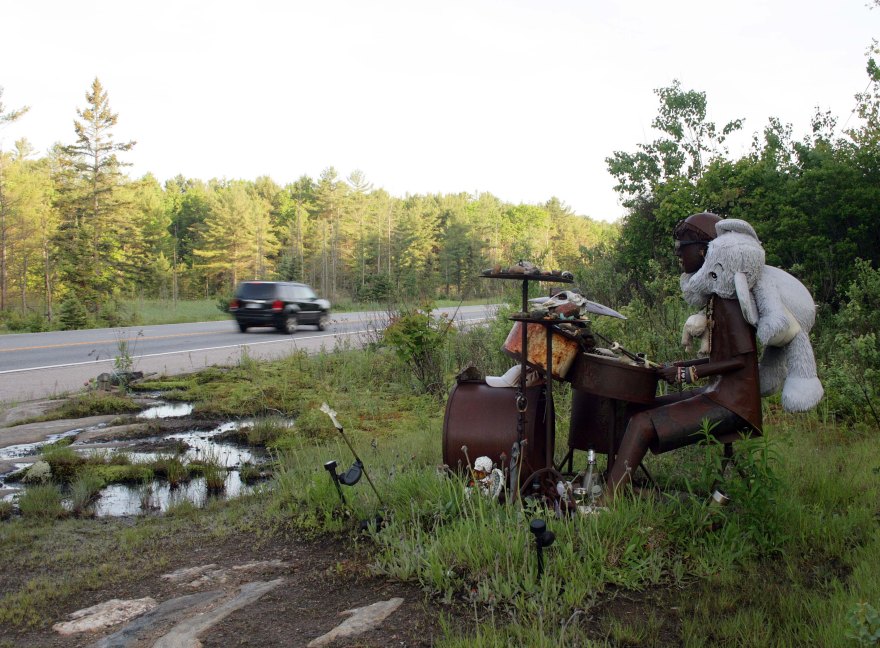
In the wake of this tragic accident, Howards family wanted to create a lasting tribute that would not only honour Cole’s life but also reflect his love of music. The result is a life-sized sculpture, crafted from steel and placed on the side of the highway, at the site of the accident.

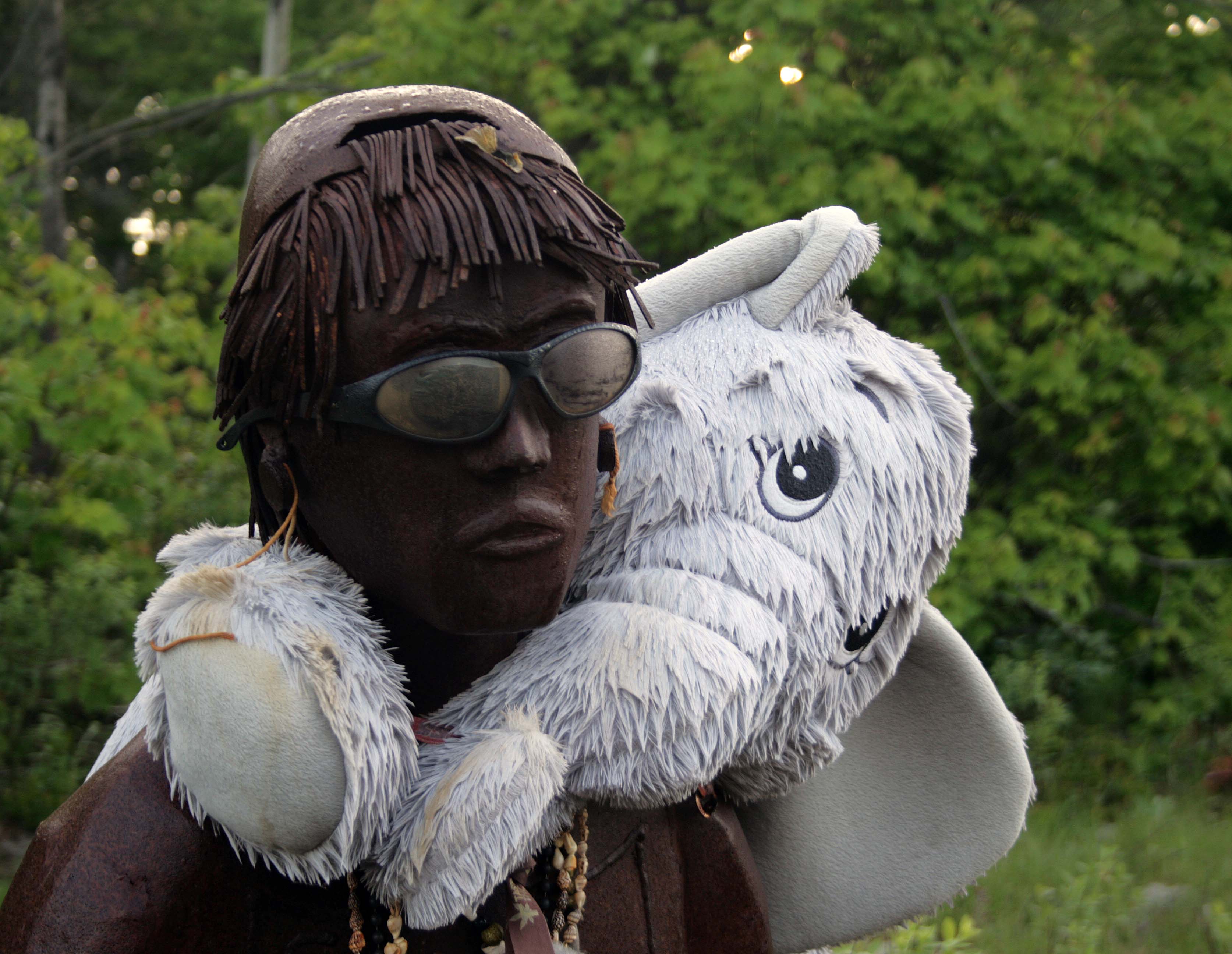
Sculptor and welder, Laval Bouchard created the image of Howard with remarkable accuracy.1 He is depicted sitting behind his drums, barefoot, wearing a backward hat—just as he often did in life. Howard had been the drummer for the local metal band Sanctuaries, and his sculpture even features him wearing one of their band shirts.1

The memorial sculpture was installed at the crash site the day after what would have been Howard’s 22nd birthday, in 2014.1 For his family, it must have been a deeply emotional moment—transforming a place of tragedy into one of remembrance. Unlike many who have a traditional grave marker in a cemetery, Howard was cremated, and his ashes were not buried in one place. Some were spread at Abbey Road in London, England—an iconic location for music lovers.2 The rest of his ashes remain in a drum-style urn in his family’s home.2

Without a conventional grave site to visit, this roadside memorial serves as a place where friends, family, and even strangers can stop to pay their respects and remember Cole. In a way, it acts as both his monument and gathering place for those who continue to hold him in their hearts.

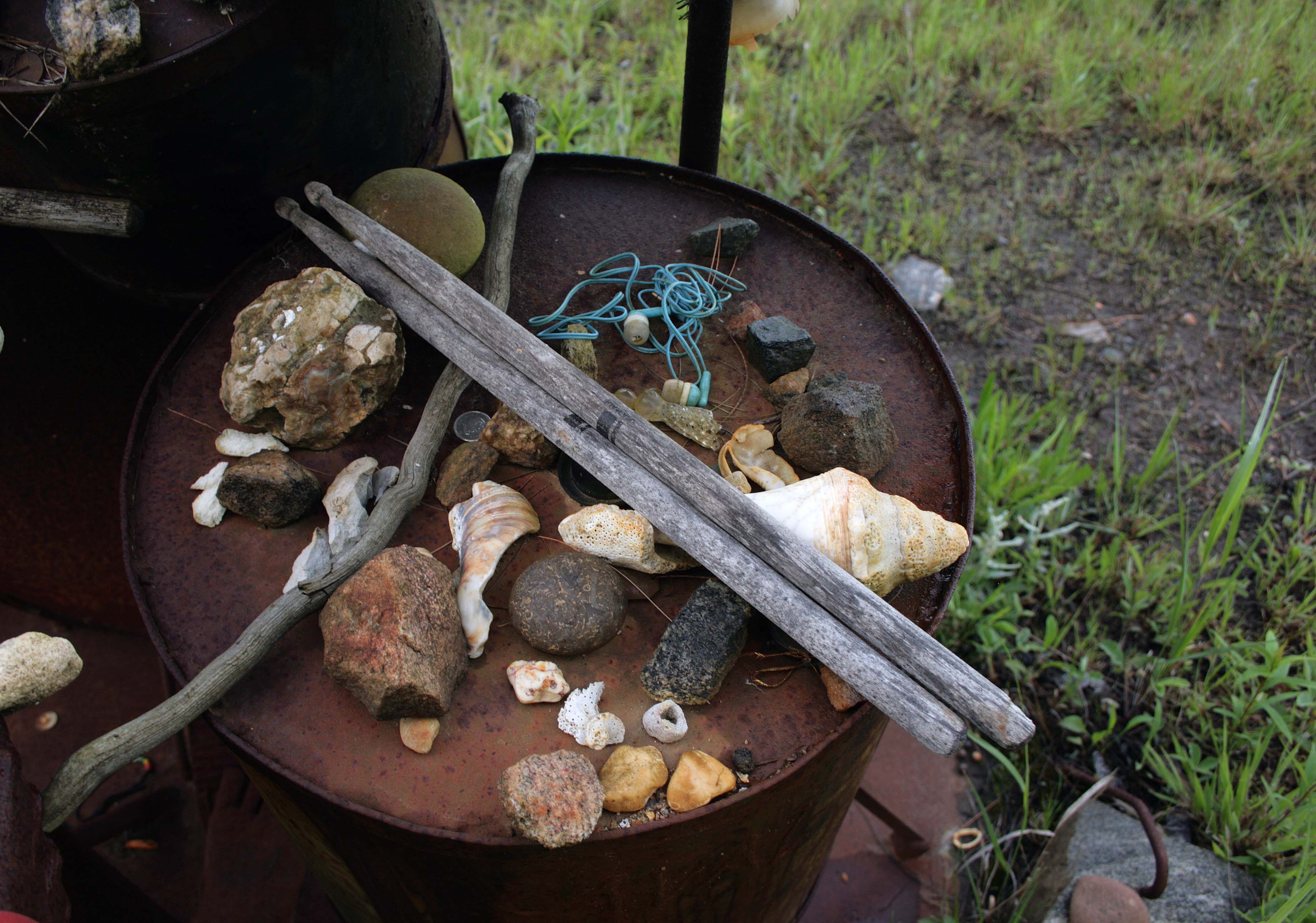
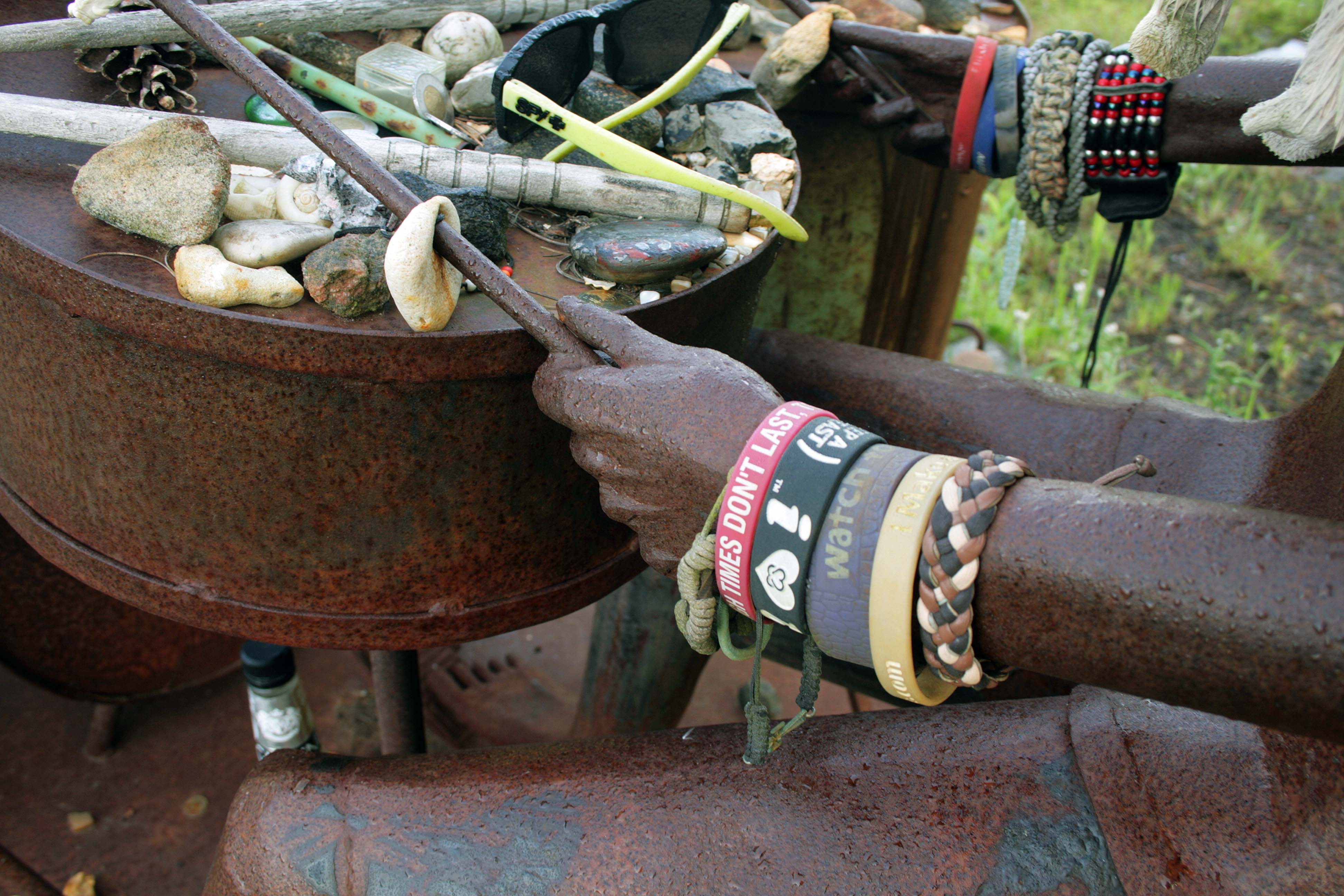
When I visited, the sculpture was wearing a pair of sunglasses, and its shoulders were draped with a large stuffed elephant. There were so many grave goods left around the memorial, including stones, beer cans, and even a couple of drumsticks. It was a moving reminder of just how much Howard is still loved.

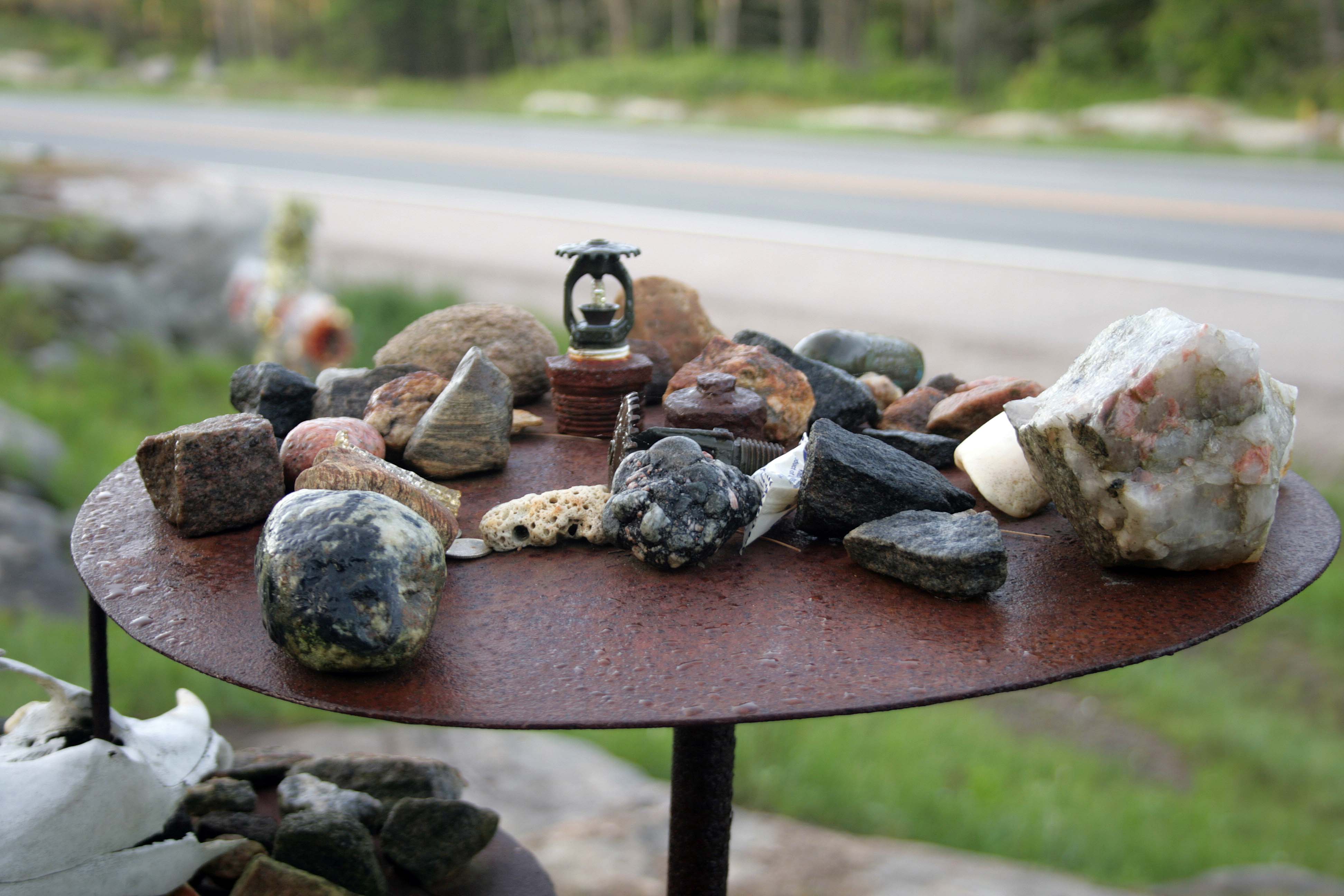
What I love about roadside memorials like this is that they’re not just a spot for remembrance—they’re a statement. They’re a way for families to make sure their loved one is never forgotten, even as time goes on. For Howard’s family, the sculpture was a way to turn their grief into something positive, something that would last. It’s clear from the visitors and mementos left at the sculpture that the community feels the same way. Even years after the accident, the memorial continues to be a place for people to honour him.2

The Cole Howard Memorial isn’t just a tribute—it invites you to pause and reflect on life, loss, and the power of music. Roadside memorials like this also serve as powerful reminders of the dangers of the road and raise awareness about the importance of road safety.

Have you ever passed by a roadside memorial that made you stop and reflect? I’d love to hear your experiences in the comments.

Thanks for reading!


References:

  1. Sudbury family honours beloved son | Sudbury Star
  2. Remembering Cole Howard | Sudbury.com
Stone Stories: Coniston Train Crash Memorial

Last February, I learned about a local tragedy that has left a hole in the community of Coniston. A heart-felt roadside memorial was erected, to ensure that the men who were lost that day are never forgotten. This monument sits at the train crossing where the tragic events took place. Last spring, my mother and I visited the memorial to pay our respects. 

This past Thursday, February 9th, marked the 72nd anniversary of the train crash in Coniston.

The monument reads: “This monument has been / erected to remember the / nine men who lost their / lives, and the many who were / injured at the train / crossing in the tragic / bus and train accident / on February 9, 1951. / Primo Creama / Herbert Conlon / Alex Beauparlant / David Martin / Eugene Leclair / Joseph Tremblay / Paul Sharko / Ernie Cooper / Never to be forgotten”

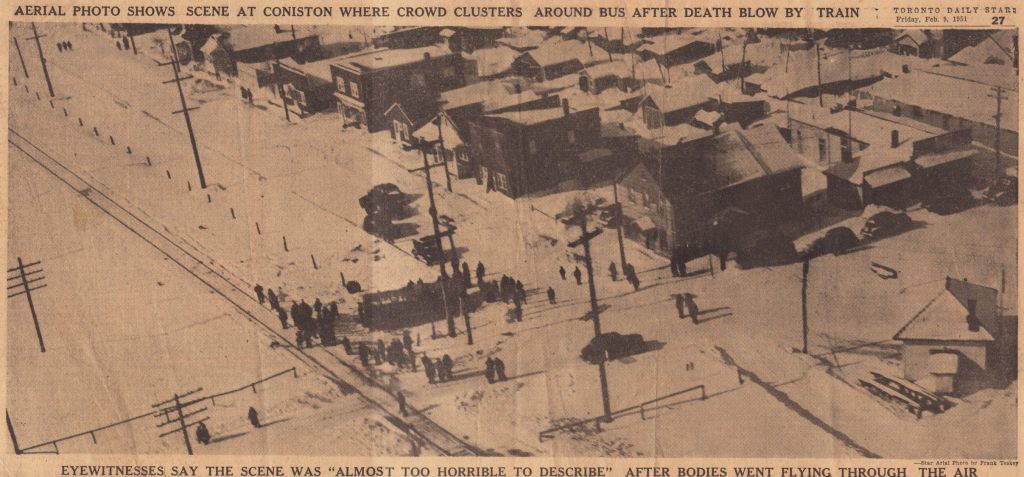
The early morning, of February 9th, had been incredibly cold. According to the Coniston Historical Group, the temperature had dropped to 48 degrees below zero that morning, which caused low visibility. The passenger train was also running late that morning.1 Between 8 and 8:15 a.m. tragedy struck—a CPR passenger train collided with a local bus at the railway crossing in Coniston. 31 people were injured, and 9 were dead.2 The bus had been carrying residents as well as smelter workers on their way home from a graveyard shift. The 9 men who lost their lives that day were from the same shift at the INCO smelter.1 

The monument sits beside the railway tracks on the corner of Government Road and Edward Avenue, at the site where the horrific accident took place. I haven’t been able to determine exactly when the monument was erected, but from what I have read it was possibly erected by the Lions Club, in the early 2000s, and is now maintained by the Coniston Historical Group.

On the anniversary of the accident, a candlelight vigil is erected in the early morning at the monument. A custom-made INCO triangle candle holder, holds nine lit candles, one for each of the men who sadly lost their lives that day. 

Alex Beauparlant 

Herbert Conlon 

Ernie Cooper 

Primo Crema 

Lucien Landriault 

Eugene Leclair 

David Martin 

Paul Sharko 

Joseph Tremblay 

At the peak of the triangle is a 10th candle, that is lit in memory of the 31 who survived the crash, and for those in the community who were left behind, to mourn their friends’ families, and colleagues. It’s a beautiful memorial, that brings the community together, to share memories of their loved ones and make sure that they will never be forgotten. 

My mother and I visited the memorial in late May of 2022. It was a very sunny and beautiful day. As we drove to Coniston, only a short drive away from our home, I remember wondering why I had never heard of this tragic event before. I had only learned about it after having seen a Facebook post from the Coniston Historical Group, earlier that year. 

The monument sits very close to the railway tracks, if you didn’t know it was there—you might miss it. There is a small parking area right next to the monument, with a little walkway that leads up to the memorial. The site is very well taken care of, and you can feel the love the community has for this memorial and what it symbolizes. I think what makes this memorial a bit surreal, is the fact that it sits right next to the train tracks where the accident happened so many years ago. I know it must have looked a lot different then, but it’s a very somber feeling to look at the railway tracks just behind the monument and know that that is where it happened.

This monument is a cenotaph, a marker where the deceased have been laid to rest elsewhere. As I read and researched I became curious as to where these 9 men now rest. I have been able to locate the resting place of three of them; Alex Beauparlant, David Martin, and Paul Sharko. I hope to find the other 6 and visit them this summer to pay my respects.

I always find roadside memorials incredibly moving. This was a tragic accident that changed the fabric of the small town of Coniston forever, but it will never be forgotten. I’d like to thank the Coniston Historical Group for all the good work they do to maintain this memorial, and for their educational posts on Facebook, as they continue to share the history and story of Coniston. So much history could be lost if it wasn’t for groups like theirs.

Thanks for reading.


References:

  1. Canadian Disaster Database | Government of Canada
  2. Facebook post | Coniston Historical Group
  3. Toronto Star
  4. Madera Tribune

Crosses for Change

A few weekends ago I visited Crosses for Change, a large roadside memorial that has been making headlines in the local news. 

It started with one white wooden cross, representing a life taken by opioid addiction. More and more white crosses are added almost every day. 

This sea of white crosses can be found in the downtown core, on the corner of a busy intersection. It stands as a memorial to those lost to the current opioid crisis.

This haunting memorial has definitely made an impression on people, in some very different ways. For some it stands as a call to action against the opioid crisis. For others, it is a place of mourning—a place to grieve for lost loved ones. For our cities homeless population, it is a grim and constant reminder of their current struggles. 

I am reminded of a quote I heard a long time ago, although I don’t remember where I heard it from; “Cemeteries are not for the dead, they are for the living”. I think about this almost every time I visit a cemetery. This roadside memorial to me, is a good example of this. These crosses represent the memory of a person, but there are no bodies here. They are buried in cemetery plots, within cemetery gates. But this little field of white crosses, for all intents and purposes is a cemetery—in downtown Sudbury. 

For further reading on Crosses for Change and the opioid crisis in Sudbury: