Cemetery Book Review: Graves of the Great & Famous

For this month’s book review, I want to share Graves of the Great & Famous. I actually received this book as a Christmas gift from my nephew last year, and I have to say, it was a perfect gift! It’s the kind of book that immediately made me want to start flipping through the pages.

The book, written by Alastair Horne and published in 2022, is a fairly recent release. It’s a fresh addition to any collection for those who enjoy exploring history through graves.

Here is the synopsis from Goodreads:

“From Abraham Lincoln, Martin Luther King, and Princess Diana to Napoleon Bonaparte, Eva Peron, and John Gotti, this book provides a guide to the graves of some of the most renowned figures (good and bad) throughout history. Some, such as communist leaders Ho Chi Minh and Vladimir Lenin, are interred in great mausoleums, where they are visited by millions each year; others are buried in little-known country graveyards.”

One of the first things that stood out to me about this book is just how beautiful it is. It’s filled with full-colour photographs of graves from around the world, making it as much fun to flip through as it is to sit down and read.

It’s a fairly compact guide, but it manages to pack in a lot of detail without ever feeling overwhelming. The only thing I didn’t love was the way it breaks up the main entries with small grave highlights, which sometimes meant flipping back and forth between sections. Not a huge issue, but a bit distracting at times.

Overall, I found it to be a quick and engaging read. It’s one of those books you can pick up for a few minutes and still feel like you’ve learned something new. The stories themselves are fascinating! Some are scandalous or mysterious, while others are deeply heartfelt. One that really stayed with me was the story of Diane Fossey, the primatologist who dedicated her life to studying mountain gorillas. She’s buried in the graveyard she established for the gorillas she worked so closely with, which feels both moving and fitting. The book is filled with stories like that. Some you may already know, and others you might never have heard before.

I think anyone curious about where famous people are buried would really enjoy this book. Cemetery enthusiasts, history buffs, or even casual readers who love a good grave story will find something to appreciate here. For me, it’s the kind of book I know I’ll return to again, to flip through the photos and rediscover the stories.

Have you read Graves of the Great & Famous? I’d love to hear your thoughts in the comments.

Thanks for reading! 


I am always on the hunt for cemetery-related book recommendations. If you are an author and have a cemetery-related book you would like me to review, please reach out at hello@chantallarochelle.ca. I would love to hear from you!

Cemetery Book Review: Cemetery Stories

I’ve been reading cemetery-related books for a long time now, so when I spotted this one on Amazon, I was immediately intrigued. The title promised a fascinating dive into graveyards and everything connected to them—a must-read for anyone interested in the eerie, mysterious, and macabre side of cemeteries.

Today, I’m sharing my review of Cemetery Stories: Haunted Graveyards, Embalming Secrets, and the Life of a Corpse After Death by Katherine Ramsland.

Ramsland, a professor of forensic psychology and author, what happens after death—how society deals with it, the process of burial, and what takes place in and around cemeteries. She interviews a range of people in the American death industry, covering topics from embalming and funeral practices to more unusual and supernatural stories.

Here is the synopsis from Goodreads:

“Admit it: You’re fascinated by cemeteries. We all die, and for most of us, a cemetery is our final resting place. But how many people really know what goes on inside, around, and beyond them? Enter the world of the dead as Katherine Ramsland talks to mortuary assistants, gravediggers, funeral home owners, and more, and find out about: If you’ve ever scoffed at the high price of burying the dead, or ever wondered how your loved ones are handled when they die, or simply stared at tombstones with morbid fascination, then take a trip with Katherine Ramsland and learn about the booming industry — and strange tales — that surround cemeteries everywhere.”

Despite the title, I found the actual cemetery content surprisingly sparse. The stories and interviews are interesting, but each topic is covered quickly before moving on to the next. The book feels more like a broad overview of the funeral industry, with only a small portion devoted to cemeteries.

If you’re already familiar with the basics of the death industry, you might find it too surface-level to offer anything new. That being said, I think Cemetery Stories would be a good fit for readers who are just starting to explore funeral practices and cemeteries.

One section I struggled with was the final chapter, which discusses necrophilia. In my opinion, it was unnecessarily graphic and didn’t match the tone of the rest of the book. It felt gratuitous and didn’t really add anything meaningful to the overall discussion.

That said, if you’re new to the subject or curious about the behind-the-scenes aspects of death care, this book is a decent introduction. It covers a wide range of topics and provides some memorable glimpses into the industry. Just be aware that it’s not in-depth by any means—and you might want to skip that last chapter if you’d rather avoid reading explicit material.

Thanks for reading!


I am always on the hunt for cemetery-related book recommendations. If you are an author and have a cemetery-related book you would like me to review, please reach out at hello@chantallarochelle.ca. I would love to hear from you!
Cemetery Book Review: Forgotten Bones

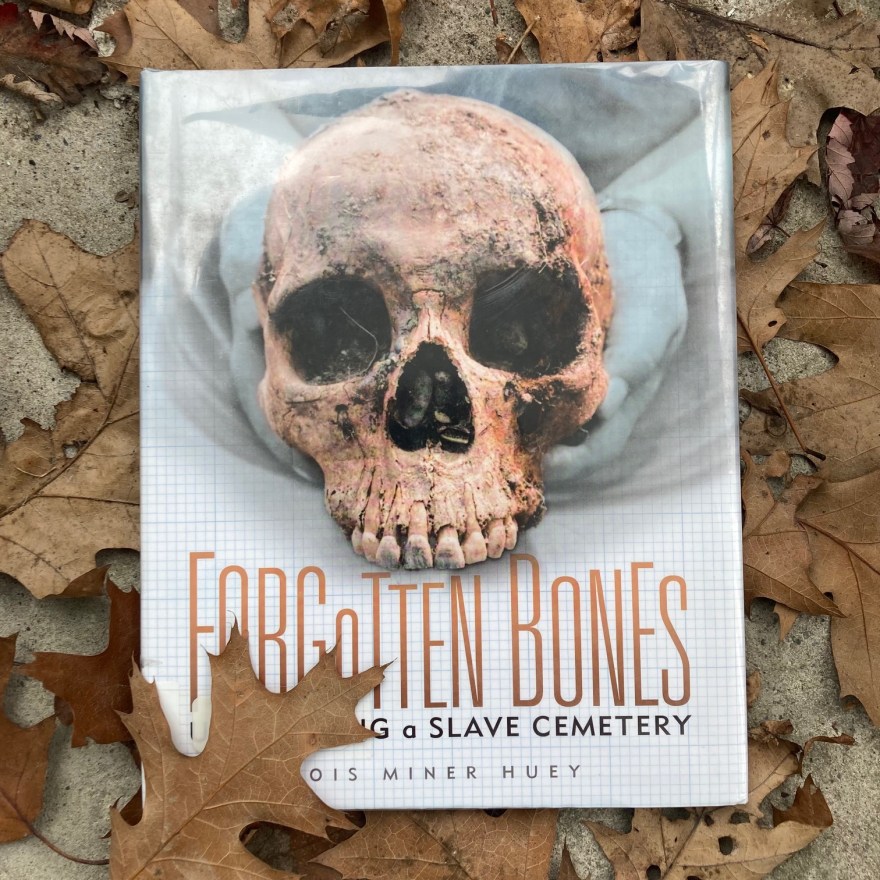
This past month, my book club announced the reading list for this year. Being proactive, I ordered almost everything on the list and have been enjoying the excitement each time a package arrives. When I received Forgotten Bones in the mail a week ago, I knew I wanted to read it right away. So for this month’s cemetery book review, I wanted to share my thoughts on Forgotten Bones: Uncovering a Slave Cemetery by Lois Miner Huey.

February is Black History Month, so I thought this is the perfect time to read this and share it with others who might be interested in learning more as well.

Forgotten Bones is written by Lois Miner Huey, an archaeologist for the state of New York.1 Published in 2016 by Millbrook Press, this book looks at the excavation and research that went into uncovering a lost slave cemetery that was accidentally discovered near Albany, New York in June of 2005. 

Here is the book synopsis from Goodreads:

“Imagine you’re watching a backhoe dig up the ground for a construction project when a round object rolls down a pile of dirt and stops at your feet. You pick it up, brush off some dirt, and realize you’re holding a skull! This is exactly what happened in Albany, New York, in 2005. Workers were putting in new sewer line when a backhoe driver dug up a skull. After police declared the skull wasn’t connected to any recent crimes, a team of archaeologists took a closer look. They determined the skull was from an African American who had died more than one hundred years earlier.”

The copy of Forgotten Bones I was able to find is a slim hardcover that once belonged to the Denver Public Library, but it looks like this book is also available in softcover. It’s a short read, packing a lot of information into 50 pages. I wasn’t aware when I ordered this book, that it is intended for children. It’s a Junior Library Guild Selection and is written at a grade four reading level.2

That being said, it is a pretty interesting read that breaks down the discovery, excavation process, and research that went into learning more about the lost cemetery. When I was a little girl, I wanted to be an archaeologist when I grew up. That didn’t happen, but I still find archaeology to be incredibly interesting, and that probably plays into my love of cemeteries. I found the section on the excavation particularly interesting and enjoyed looking at the photos and sketches from the dig. 

There is also a section on facial reconstruction, how it’s done, and the results of the construction based on some of the skulls that were discovered during the dig. There are also two chapters on research, comparing this newly found cemetery to previously discovered slave cemeteries, as well as briefly touching on slave life and what close inspection of the remains concluded. 

Because of the age level this book is intended for, it uses simple language. Regardless, Forgotten Bones does a good job of objectively looking at the history discovered during the excavation of the cemetery. Because it’s intended for a young audience, I think the book does gloss over the implications of what the discovery of a lost slave cemetery means.

I think this book could be a good starting point for those interested in talking to their children about what slavery is, and what discoveries like this mean. It could also be a good starting point for those interested in other slave cemeteries and the work that goes into excavating, documenting, and preserving them. 

After reading this book, I have been inspired to look to see if there are more lost cemeteries like this one, that have been discovered since this book’s writing. I want to see where they are located and hope to one day visit them to pay my respects and learn more about their history. 

Have your read Forgotten Bones? I would love to read your thoughts in the comments.

Thanks for reading!


I am always on the hunt for cemetery-related book recommendations. Please feel free to share yours in the comments. If you are an author and have a cemetery-related book you would like me to review, please reach out at hello@chantallarochelle.ca. I would love to hear from you.


References:

  1. Forgotten Bones: Uncovering a Slave Cemetery by Lois Miner Huey | Book
  2. Forgotten Bones | Lerner Books

Cemetery Book Review: Stories in Stone

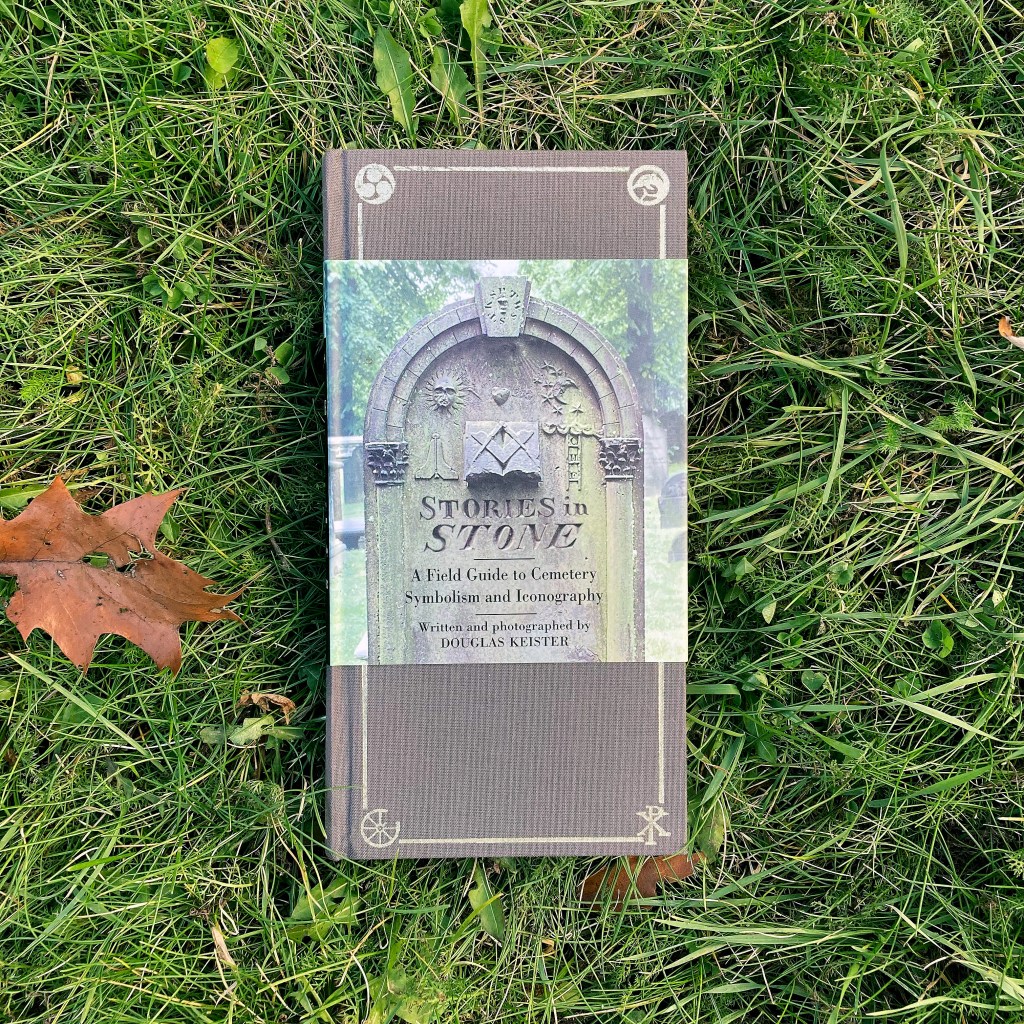
For this month’s cemetery book review, I wanted to talk about Stories in Stone: A Field Guide to Cemetery Symbolism and Iconography by Douglas Keister. I have been meaning to share this one for a while now. This is one of my favorite cemetery books, and one of my go-to reference books when it comes to looking up symbolism. I see it pop up now and then on the cemetery side of Instagram and Facebook and thought I should finally share my thoughts on it. 

This book has been on my bookshelf for a very long time and it is something I go back to over and over again. It is a great resource for explaining the meaning and history behind most of the symbolism and iconography you will come across in a cemetery. Every symbol has a meaning, and the descriptions can range from simple to quite in-depth. The book itself is compact, so it’s easy to slip it into your hiking or camera bag if you want to take it with you on your cemetery travels. It’s filled with full-color photos as well to help identify all the variety of symbols you might come across. 

Here is a snippet of the book synopsis from Goodreads.com: “Stories in Stone provides history along with images of a wide variety of common and not-so-common cemetery symbols and offers an in-depth examination of stone relics and the personal and intimate details they display; flora and fauna, religious icons, society symbols, and final impressions of how the deceased wished to be remembered. Douglas Keister has created a practical field guide that is compact and portable, perfect for those interested in family histories and genealogical research.”

I don’t recall where I picked up my copy, but it is a reference I use often. I never bring mine with me on my cemetery travels, but my cloth-bound hardcover copy has a special place at my desk for easy access when I need to look something up. This book covers iconography from A to Z, as well as the different art styles and architecture that can be found in cemeteries. It covers everything from religious and military symbols to fraternal organizations and secret societies. Douglas Keister is also an amazing photographer and his beautiful color photos of detailed gravestone symbols add depth to the descriptions. It also has a very thorough index at the back, which is very handy for moving back and forth throughout the book. 

The name Douglas Keister may sound familiar to you. This is not the first book of his that I have reviewed. Back in July 2022, I reviewed his book Going out in Style: The Architecture of Eternity. You can read that review here. Douglas is no stranger to cemeteries and has written quite a few books about them. He is a photographer, author, and co-author of forty-five critically acclaimed books, twenty-five of which are on architecture.2

I highly recommend this book to any budding taphophiles and those interested in learning more about cemetery symbolism and history. This book would be a handy tool for genealogists as well, as many interesting and thoughtful things can be learned about the deceased based on what is on their gravestone.

This book has been an invaluable resource for me. I have always loved learning more about the stories that gravestones can tell us, and finding new symbols to research and learn about is one of my favorite things. It’s a beautiful, high quality book, that I think is an essential addition to any taphophiles library. 

Have your read Stories in Stone? I would love to read your thoughts in the comments.

Thanks for reading! 


I am always on the hunt for cemetery-related book recommendations. Please feel free to share yours in the comments. If you are an author and have a cemetery-related book you would like me to review, please reach out at hello@chantallarochelle.ca. I would love to hear from you.


References:

  1. Stories in Stone: A Field Guide to Cemetery Symbolism and Iconography | Goodreads.com
  2. About Douglas Keister | DouglasKeister.com

Cemetery Book Review: Going out in Style

Have you heard of #mausoleummonday?

It’s a trend on social media in the cemetery community that uses that hashtag, to showcase the beauty of mausoleums. Unfortunately, mausoleums are not a common sight here in Northern Ontario, so I have not had the chance to visit or photograph very many. This is one of the reasons I found Doug Keister’s book Going out in Style: The Architecture of Eternity so interesting. For this month’s book review, I wanted to share it with you. 

Douglas Keister is a photographer, author, and co-author of forty-five critically acclaimed books, twenty-five of which are on architecture.1 Going out in Style, published in 1997, showcases some of America’s most beautiful and unusual mausoleums. This coffee-table book is filled with gorgeous full-color, glossy photos, each accompanied by short descriptions that give a small taste of their stories and histories.

“From a nationally renowned photographer and author team, Going Out in Style: The Architecture of Eternity provides an engaging and at times surprising look at America’s forgotten architecture: the mausoleum.

Elegant, full-color photographs display the grandeur of the mausoleum, documenting the work of some of America’s most noted architects and in some cases the only remaining examples of a particular architect’s work. Additionally, photographs of the interiors of some mausoleums show rarely seen Tiffany stained-glass windows.

Going Out in Style takes readers into beautiful and historic cemeteries in such cities as New York, Philadelphia, Buffalo, Boston, Chicago, New Orleans, Los Angeles, San Francisco, and many others.” – Synopsis from Amazon.ca

This is a beautiful book! I was lucky enough to find a first edition hardcover copy, with glossy pages. All the photos are beautifully shot, really showcasing what makes each mausoleum unique. I loved that they took advantage of the book’s large size by including full-page images. There is also a paperback edition available, that is printed on uncoated paper. I have been told the uncoated paper dulls and muddies the photography. That just seems wrong for a photography book! 

I enjoyed exploring the histories of all the beautiful mausoleums presented, but it did feel like much more could have been written about them. Sometimes I found the descriptions to be just too short! I’m sure whole books could be written on some of them. Because I am not very familiar with mausoleums and their architecture, I did enjoy learning more about the different styles and periods and found myself trying to figure them out before it was noted in the description. 

One of my favorite aspects of the book, was when we were given a look inside the mausoleums. That was by far my favorite chapter. Some of them are just as ornate on the inside, as they are on the outside, while others are very plain compared to their exterior. Some mausoleums hold amazing pieces of art, like Tiffany stained glass windows. It was lovely to peek inside, into what we often don’t get a chance to explore.

I would highly recommend this book and think it would make a great addition to any taphophile’s library. I would especially recommend it to those who love mausoleums or those interested in learning more about architecture. My only note would be to make sure you get the hardcover edition! 

__

I am always on the hunt for cemetery-related book recommendations. Please feel free to share any in the comments. If you are an author and have a cemetery-related book you would like me to review, please reach out at hello@chantallarochelle.ca. I would love to hear from you.

Thanks for reading!

References

  1. About Douglas Keister | DouglasKeister.com

Cemetery Book Review: Tales and Tombstones of Sunset Cemetery

I haven’t posted a book review in a little while, so I thought I would review this month’s AGS book club pick: Tales and Tombstones of Sunset Cemetery: Tracing Lives and Memorial Customs in a Southern Graveyard by June Hadden Hobbs and Joe DePriest. Having just come out this year, 2022, this book takes a look specifically at the stories and tombstones of those buried in Sunset Cemetery in Shelby, North Carolina. Here is the book synopsis:

“This book relates the stories of the people buried in Shelby, North Carolina’s historic Sunset Cemetery, a microcosm of the Southeastern United States. The authors, an academic and a journalist, detail the lives and memories of people who are buried here, from Civil War soldiers to those who created the Jim Crow South and promoted the narrative of the Lost Cause. Featured are authors W.J. Cash and Thomas Dixon, whose racist novel was the basis for The Birth of a Nation. Drawn from historical research and local memory, it includes the tales of musicians Don Gibson and Bobby Pepper Head London, as well as a paratrooper who died in the Battle of the Bulge and other ordinary folks who rest in the cemetery. A bigger responsibility is to give a voice to the silenced, enslaved people of color buried in unmarked graves. Cemeteries are sacred places where artistry and memory meet–to understand, we need both the tales and the tombstones.” – Goodreads 

I enjoyed this book. Although I have never visited this cemetery in person, I feel like I have spent many hours walking among its stones. This book is very well written and the photos by Hal Bryant that accompany the stories are beautiful. What I found really interesting about this book is that it’s almost like 2 books in one. One is a journalistic look at the stories of the people behind, or should I say beneath the tombstones. This storytelling dives deep into the history of Shelby and its residents, painting a bright and sometimes dark picture of life there and its community members. The second is a look through the lens of gravestone studies, examining the tombstones themselves; looking at the different types of monuments, the symbolism chosen for the stones, and how different time periods would reflect those choices. When visiting a cemetery we often don’t know who the people are, that the tombstones represent. This book sheds light on the diverse cross-section of stories that are buried beneath the tombstones. 

I read this book in early April when my local cemeteries were still covered in snow. I loved being able to “walk” around Sunset Cemetery via this book. This would be a great read for those looking to cemetery travel, without actually traveling. This book touches on many interesting facets of history, accompanied by beautiful tombstone photos that accent the storytelling. Because of this, I highly recommend it to anyone interested in gravestones, history, or good storytelling.  

Have you read this book? Have you visited Sunset Cemetery? I would love to hear your thoughts in the comments.

Thanks for reading!

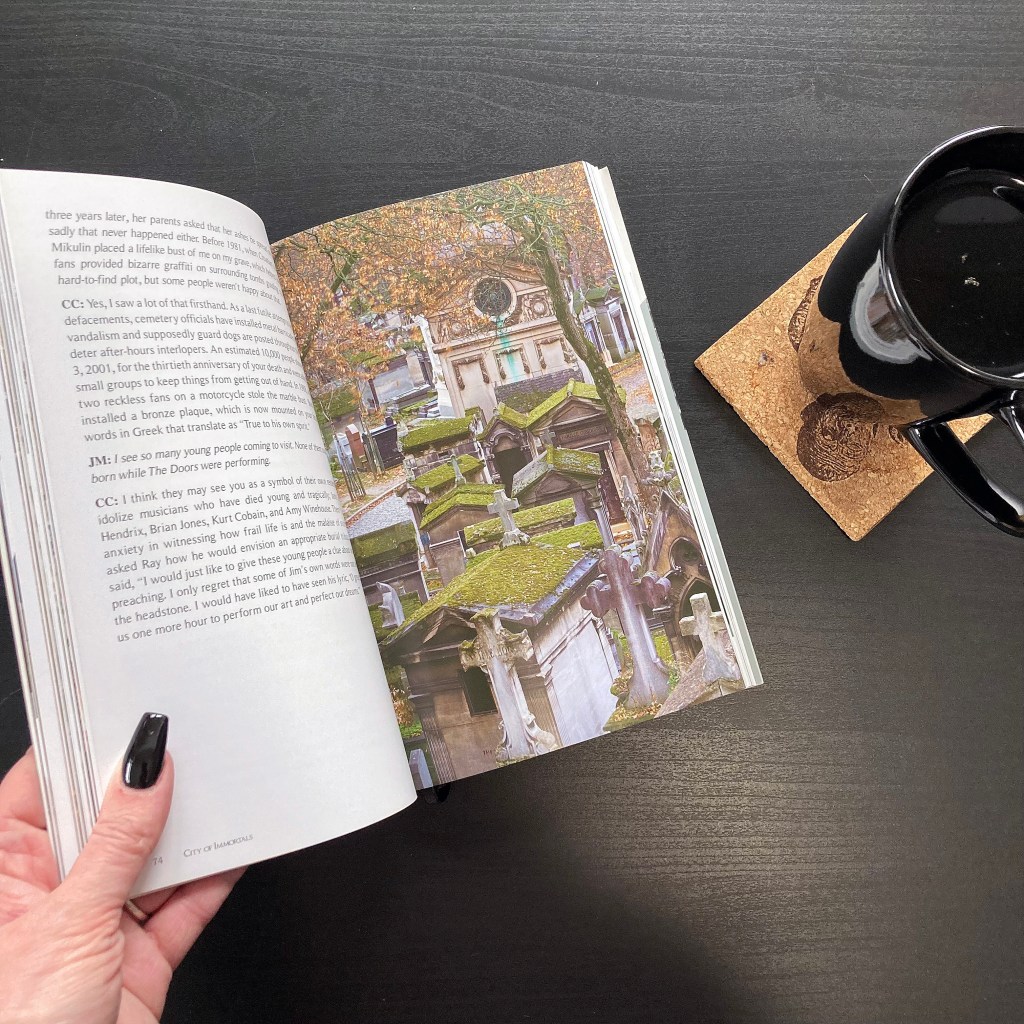
Cemetery Book Review: City of Immortals Père-Lachaise Cemetery, Paris

For this month’s book review, I wanted to look at Carolyn Campbell’s debut book, City of Immortals Père-Lachaise Cemetery, Paris. I found out about this book through the Association for Gravestone Studies. It is February’s book, for the AGS book club. 

City of Immortals is in part history, a first-person account, and a guided tour. Carolyn takes us through the rich history of this legendary necropolis, while also sharing her connections to it. She also sheds light on the stories of the most notable figures laid to rest at Père-Lachaise. This book also includes 3 guided tours and an illustrated map, with detailed directions to take you throughout the cemetery.

“This first-person account of a legendary necropolis will delight Francophiles, tourists, and armchair travelers while enriching the experience of taphophiles (cemetery lovers) and aficionados of art and architecture, mystery, and romance. Carolyn Campbell’s evocative images are complemented by those of renowned landscape photographer Joe Cornish.” – Book synopsis 

This is a beautiful book. It boasts a built-in ribbon bookmark, a satin finish cover, glossy pages, and a pull-out illustrated map of the cemetery. The illustrated map was a lovely surprise. I enjoyed this book, for the most part. I loved exploring the rich history of the place. The only aspect of the book I didn’t like was Chapter 3 – Conversations with the immortals. In this chapter, Carolyn holds Q&A conversations with some of the more notable figures buried in the cemetery. I assume she did her research to come up with the answers to her interview-style questions, but these notable figures have passed on—some over a hundred years ago. It sometimes comes across as she is putting words into these people’s mouths. I understand it as a narrative device, but I think it may have been a poor choice. That chapter could have been better used to describe more of the rich history of the cemetery, while the information gleaned from her “conversations” could have been included in the tours. That being said, the walking tours are very well directed and had me feeling like I was wandering the graves in person. This book would be a great resource to bring along if I were to ever visit in person. I also have to mention the gorgeous photography in this book. It runs the gamut from detailed shots of individual tombs while also showcasing the beauty of the landscape as a whole. 

Overall, I did enjoy this book. Especially now, during a pandemic, it’s a great way to travel without leaving the comfort of my couch. It also is a good starting point for planning a future trip when things return to a more comfortable state of normal. I would say this is a great addition to any cemetery or travel library and would be a valuable resource as a guide to visiting Père-Lachaise Cemetery.

Have your read this book? What did you think? Have you ever visited Père-Lachaise Cemetery? Tell me about it in the comments.

Thanks for reading!

Cemetery Book Review: Understanding Cemetery Symbols by Tui Snider

I mentioned in a previous post, that I wanted to add book reviews to the blog. I am an avid reader, of both fiction and non-fiction, and I think this platform will be a great way for me to share some of my favorite cemetery-related books. I am hoping to share some great resources, and good reads that you may want to add to your own book collections. 

Understanding Cemetery Symbols: A field guide for historic graveyards by Tui Snider

I discovered Tui Snider through another blog that I follow – Spooky Little Halloween. Tui had done a guest article: 5 common cemetery symbols and what the mean. I wanted to read more of her work and found her book Understanding Cemetery Symbols.

This book is a great resource for learning more about symbols that you may find in your local cemeteries. It’s filled with photos to help you visualize the symbols for easy recognition. It also goes in-depth on a variety of symbols that can be found; like the different meanings for hands, and the many varieties of statues. The book is also laid out in a way that makes referencing it very easy.

I only purchased this book this year, but it has become a go-to when trying to decipher the symbols I come across.

You can read more from Tui at her website. She also puts out a weekly newsletter every Sunday, detailing new articles and what’s new on her youtube channel. 

I look forward to reading some of her other works in the future! 

Have you read this book? Let me know your thoughts in the comments.

Thanks for reading!