Cemetery Book Review: Abandoned and Forgotten Cemeteries
Cemeteries are meant to be permanent places of remembrance, but history shows that isn’t always the case.
As cities grow and land becomes more valuable, burial grounds are sometimes neglected, relocated, or even erased. It’s a reminder that the places around us are constantly changing, and that some stories can easily be lost if no one takes the time to document them.
That’s what drew me to the work of cemetery photographer and writer Ed Snyder. I’ve been following Snyder on Instagram for a while, and I’ve also enjoyed reading his blog, The Cemetery Traveler. I even included his blog in a previous post about some of my favourite cemetery bloggers.

So, when I heard that he had released a new book, Abandoned and Forgotten Cemeteries of Philadelphia and its Environs, I was excited to check it out.

Here is the synopsis, from America Through Time:

“Since its inception, Philadelphia has created spaces for its dead. Some still exist, but many are gone or have been neglected and teeter on the edge of oblivion. Between 1850 and 1950, cemeteries across the nation disappeared as cities grew—developers wanted the land. Accompanied by Snyder’s photographs, the reader is taken through Philadelphia and surrounding areas, examining cemeteries of all sizes and eras—many that were destroyed in the name of progress.”

Published in 2025, as part of the America Through Time series, the book explores cemeteries in and around Philadelphia that have been abandoned, neglected, or even erased over time. Snyder explains that as cities expanded between 1850 and 1950, many cemeteries across the United States disappeared as developers sought land for growing communities.1

The book takes readers on a tour of these forgotten places.

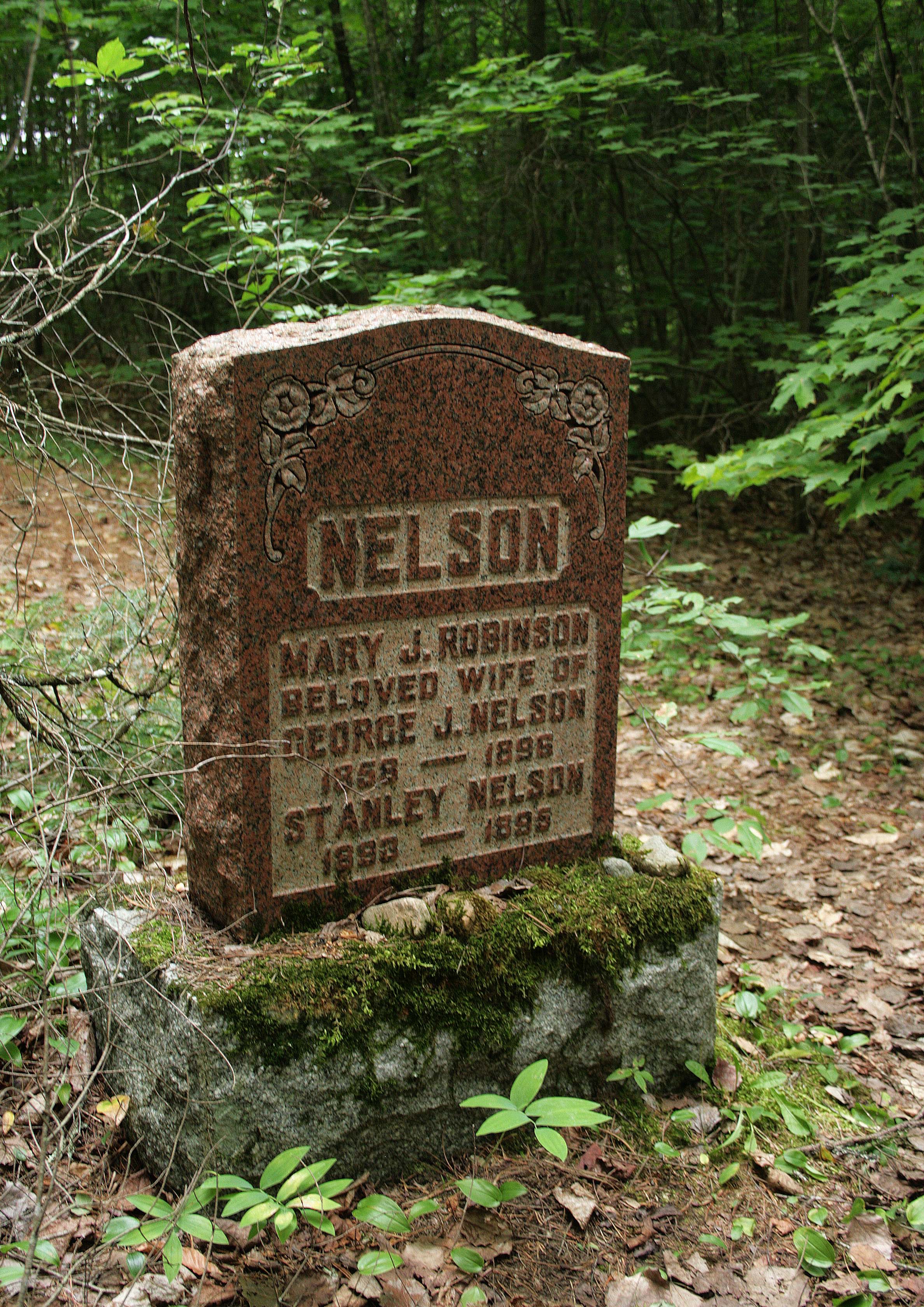
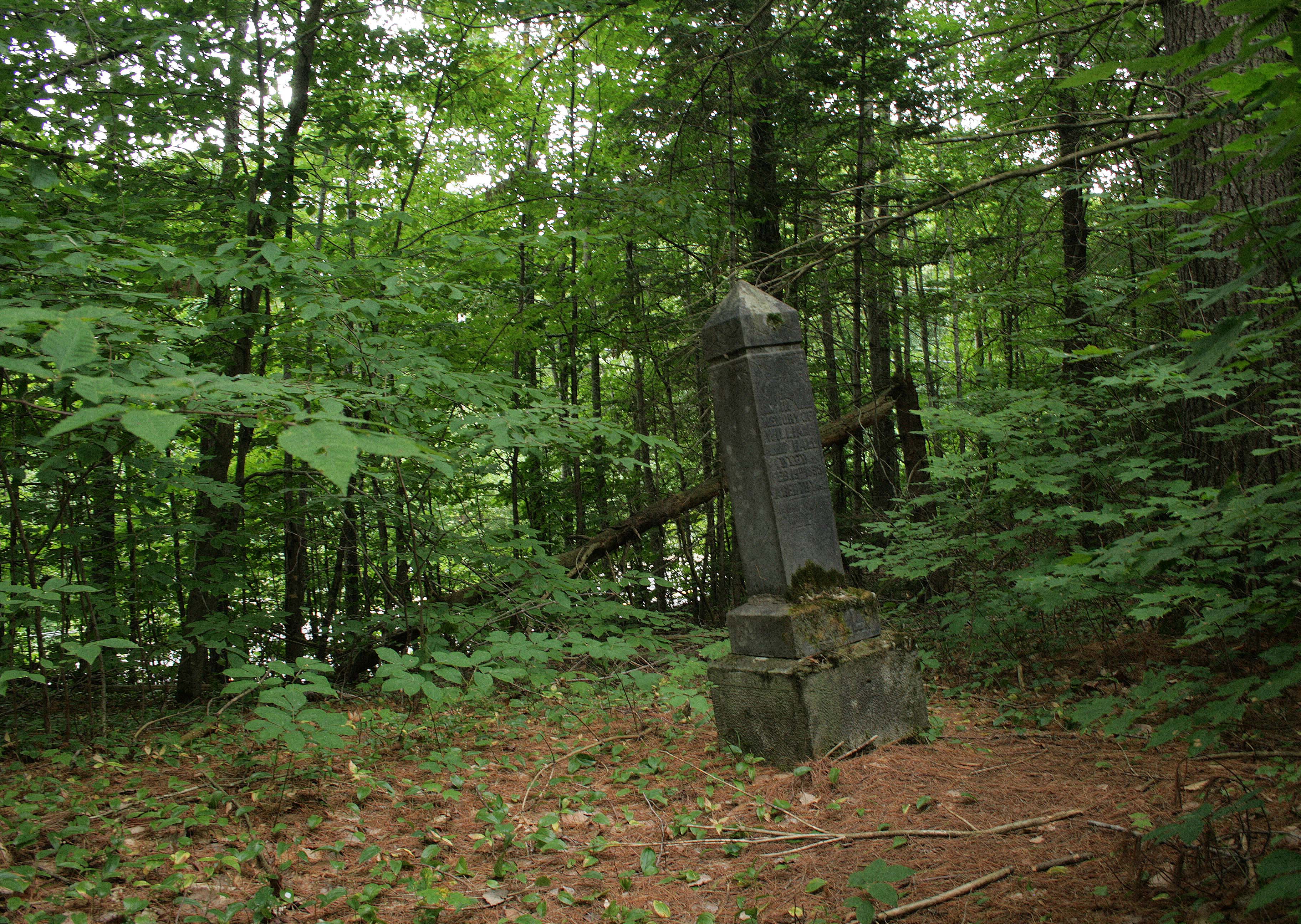
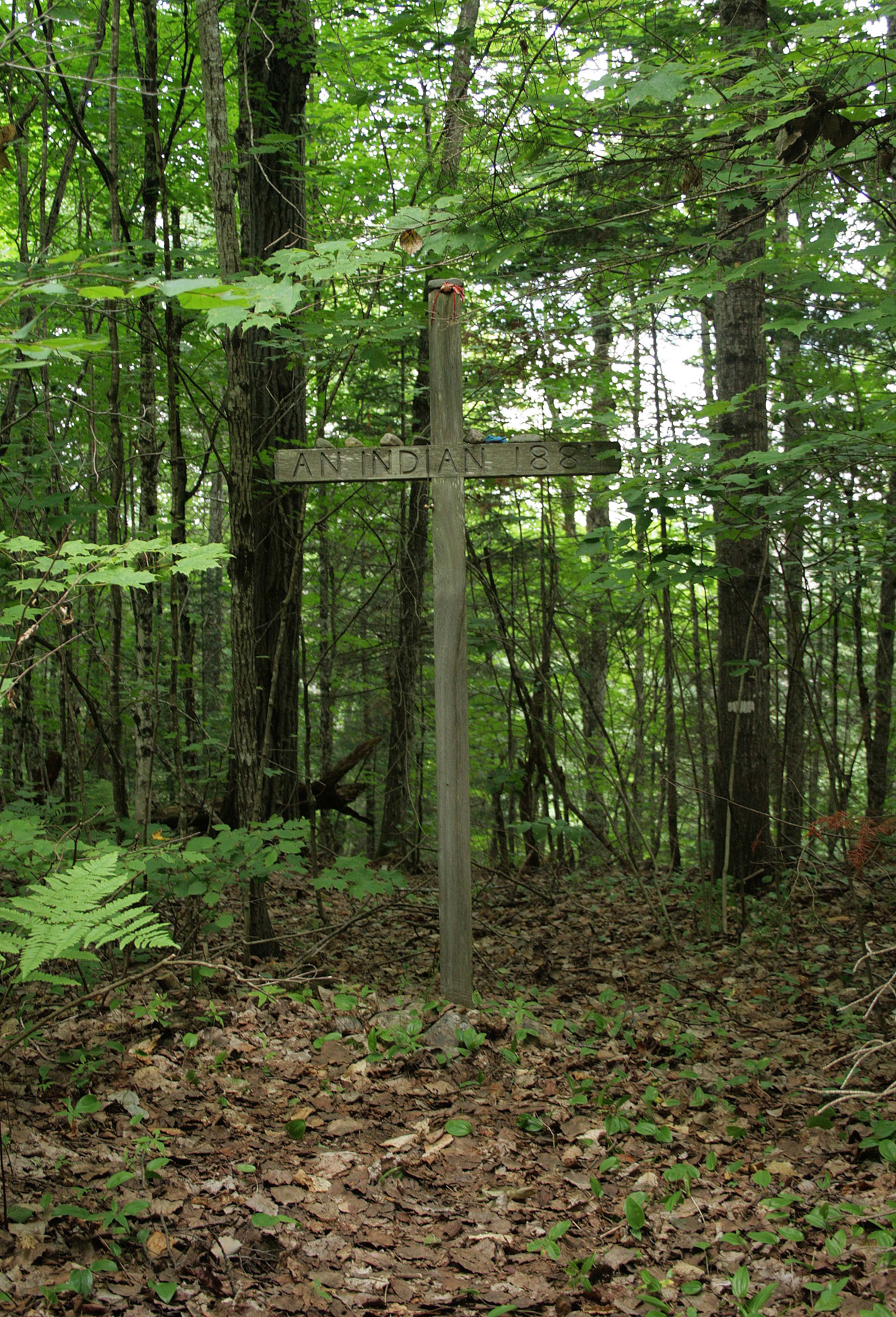
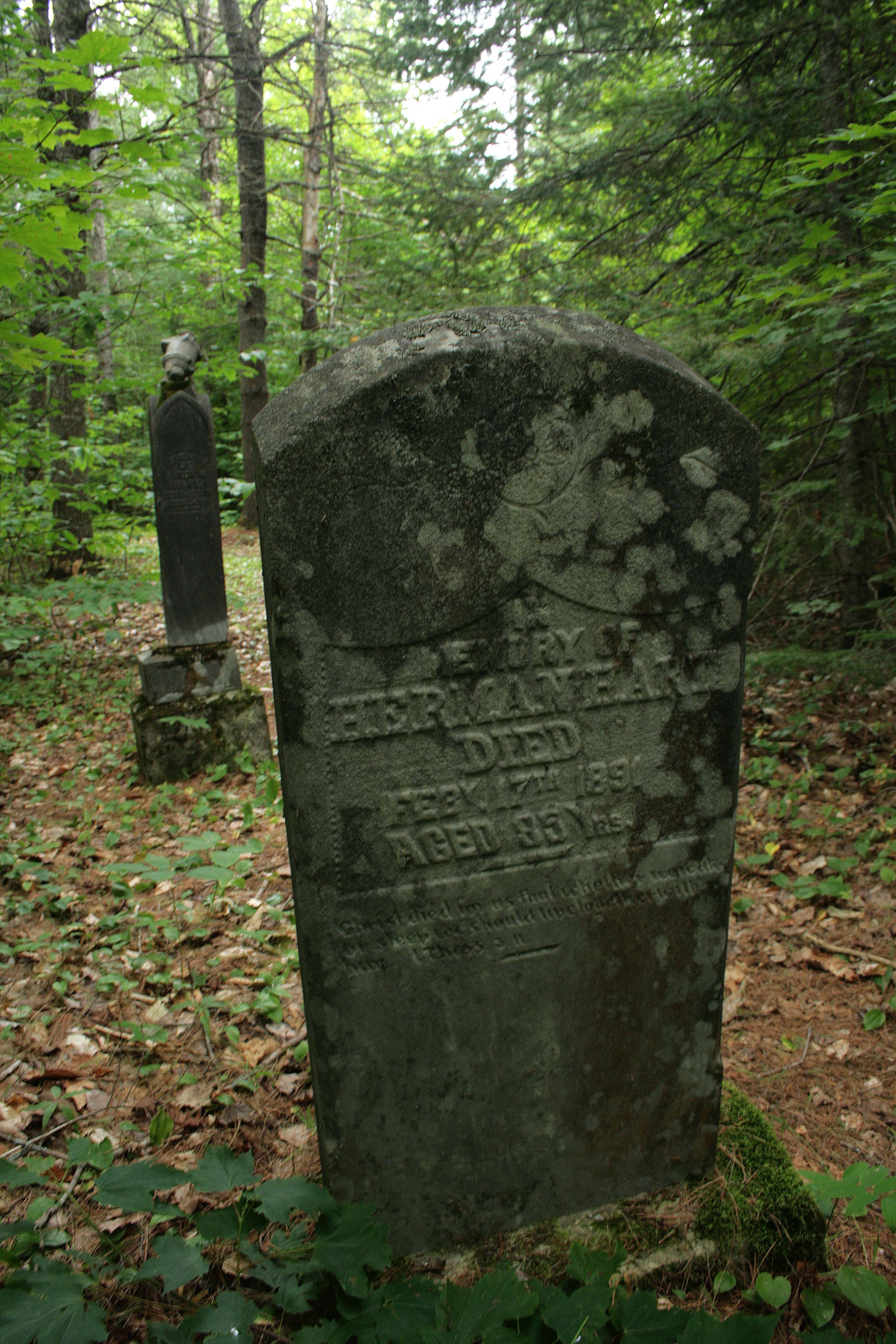
Some of the stories are surprising, including a graveyard that now sits beneath a playground, tombstones discovered in the Delaware River, and an abandoned burial ground hidden in the woods. While some stories are frustrating, others are encouraging. In a few cases, volunteers have stepped in to restore them.

Of course, the highlight of the book is the photography.

Snyder’s full colour images are beautiful and really help tell the story of each cemetery. The photos show both the beauty of these places and the reality of their condition. It’s obvious that he cares about documenting them before they disappear completely. Snyder approaches each one with curiosity and respect, which makes the book enjoyable even if you’re not already familiar with Philadelphia’s cemetery history.

Overall, Abandoned and Forgotten Cemeteries of Philadelphia and its Environs is a great read for anyone who enjoys history or has an interest in cemeteries. If you like forgotten places, local history, and cemetery photography, I think it’s worth adding to your reading list.

Thanks for reading! 


References:

  1. Abandoned and Forgotten Cemeteries of Philadelphia and its Environs | America Through Time

I am always on the hunt for cemetery-related book recommendations. If you are an author and have a cemetery-related book you would like me to review, please reach out at hello@chantallarochelle.ca. I would love to hear from you!

Cemetery Recipes: Jono’s Jack Daniel’s Marinade

Summer is barbecue season!

It’s the perfect time to fire up the grill, gather friends and family, and enjoy long summer evenings filled with good food and good company. So while researching gravestone recipes online, I came across what felt like the perfect summer cemetery recipe to try.

The grave of Jono Bot features more than just his name and dates. His monument also includes one of his favourite marinade recipes, permanently etched in stone. It features an airbrushed image of Jono grilling at a barbecue, with a recipe inscribed in his own handwriting.1

The Story Behind the Stone

Jon Breen “Jono” Bot was born on January 26, 1956.² He grew up near Luverne, Minnesota, before building a name for himself in nearby Sioux Falls, South Dakota. There, he owned several restaurants and bars that became gathering places for good food, live music, and spending time with friends and family.3

One of his best-known contributions was JonoFest, a music event named after him that celebrated local bands and became a Sioux Falls tradition.3 The festival drew thousands of people over the years and reflected his strong connection to the local music scene and community.

That love of food and hospitality comes through clearly in his memorial. Instead of choosing a traditional design, Jono’s gravestone celebrates something he genuinely loved doing. The result is a very personal memorial that immediately catches your attention.

Recipe gravestones are always fascinating because they preserve something from everyday life. Some memorials focus on careers, hobbies, or favourite quotes. Others, like this one, celebrate the simple moments that bring people together.

Jono passed away on September 25, 2018, at the age of 62.2 He is laid to rest at Saint Catherine Cemetery in Luverne, Minnesota. His obituary opens with the line, “After the band finished the final encore and the house lights came up, Jono Bot left the show and stepped out into the hands of God.”3 It feels especially fitting considering how connected he was to music, community events, and bringing people together.

Here is the recipe exactly as it appears on the gravestone:

Jono’s Jack Daniel’s Marinade

  • 1 1/2 cup water
  • 2/3 cup soy
  • 1/2 cup bourbon
  • 3 tb spoon Worch
  • 2 “ lemon juice
  • 1/4 cup brown sugar

A couple things stood out to me right away. First, “Worch” is shorthand for Worcestershire sauce. Second, despite the title mentioning Jack Daniel’s, the recipe itself simply says “bourbon.”

Since this is a marinade, I assumed the meat should sit for at least a couple of hours, or ideally overnight, before cooking. I decided to try it on pork chops.

In the Kitchen

This recipe was incredibly easy to put together. I only needed to pick up a few things from the grocery store. I had run out of soy sauce, needed a fresh lemon, and, of course, I needed the whiskey.

That sent me down an interesting rabbit hole about the difference between bourbon and whiskey.

The recipe is called Jono’s Jack Daniel’s Marinade, but the ingredients on the gravestone simply list bourbon. Since I was curious about the difference, I stopped by my local LCBO and asked one of the staff members for some advice.

There was one small problem right away. At the moment, American alcohol has been removed from LCBO shelves as part of Ontario’s response to the ongoing trade dispute between Canada and the United States. That meant Jack Daniel’s wasn’t an option.

Instead, the staff member recommended Jameson’s Irish Whiskey. He explained that, because Jack Daniel’s is made using the sour mash process, Jameson’s would be one of the closest alternatives currently available.

I also asked about the bourbon versus whiskey question.

He explained that all bourbon is whiskey, but not all whiskey is bourbon. It turns out that bourbon has to meet some specific legal requirements, including being made in the United States from a mash containing at least 51% corn and aged in new, charred oak barrels. Even though he suggested another whiskey that was a little closer to a traditional bourbon, I decided to stick with something closer to Jack Daniel’s since that’s what the recipe is named after.

Once I had all the ingredients, making the marinade couldn’t have been easier. I grabbed a large bowl, measured out all the ingredients, and mixed them in the same order as they appear on the gravestone.

The first thing I noticed was the smell. With half a cup of whiskey in the recipe, it definitely had a strong aroma. The marinade was also very dark, which made it a bit tricky to photograph.

To test it out, I thawed two pork chops from my freezer and let them marinate overnight. They were completely submerged, so I probably could have added another piece or two of meat, but that’s all I had. The next morning, I flipped them over and let them continue marinating until it was time to barbecue after work.

Dinner almost went exactly as planned.

I fired up the barbecue and added the pork chops, along with some corn and green beans. Then, halfway through cooking, I ran out of propane! Thankfully, I was able to finish everything off in the oven. My mom also shared some of her potato wedges, that she had made, to round out the dish.

Despite the unexpected interruption, the pork chops turned out fantastic. They were flavourful, juicy, and had just the right balance of sweetness and savoury flavour. This is definitely a recipe I’ll be making again. It’s so simple to prepare, perfect for summer barbecues, and one I can easily see serving to friends and family.

A favourite barbecue recipe may seem simple, but it can say a lot about a person and the memories they shared with others.

Jono’s gravestone does exactly that. Even years later, it still encourages people to fire up the grill and try something that clearly meant a lot to him.

Thanks for reading!


References:

  1. To Die For: A Cookbook of Gravestone Recipes by Rosie Grant | Book
  2. Jon Bot | Find a Grave
  3. Jon “Jono” Bot (Obituary) | Legacy.com

Cemetery Recipes: Sharon’s French Silk Pie

Some cemetery stories come from wandering through the rows of gravestones in person, but others show up through research, photographs, and the unexpected things people choose to leave behind on a memorial.

This is one of those stories.

A French Silk Pie recipe engraved on a gravestone somehow manages to feel sweet, funny, personal, and a little unexpected all at once. It turns a memorial into something that feels almost like a family recipe card left behind for anyone curious enough to stop and read it.

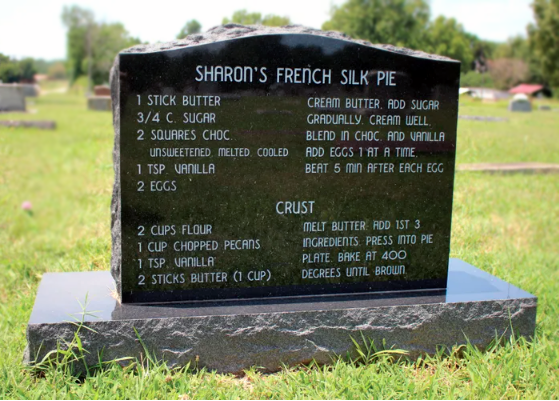
Sharon Kay Edwards is remembered in a way that feels very real and relatable. The front of her memorial carries the line: “Well, that didn’t go how I thought it would…” which genuinely made me laugh the first time I read it.

She is buried in Friends Cemetery, a cemetery that also holds the graves of baseball brothers Clete Boyer, Cloyd Boyer, and Ken Boyer.¹

Sharon’s obituary talks about her life, family, and the people she loved, but there is absolutely no mention of French Silk Pie.² No hints. No baking references. Nothing that prepares you for what is carved onto the back of her headstone.

On the back of her tombstone is a full French Silk Pie recipe, engraved into the stone as though it was always meant to be shared and passed around.

Here is the recipe exactly as it appears on the stone :

Sharon’s French Silk Pie

  • 1 Stick butter
  • 3/4 C. Sugar
  • 2 Squares Choc.
    • Unsweetened. Melted. Cooled
  • 1 Tsp. Vanilla
  • 2 Eggs

Cream Butter. Add sugar gradually. Cream well. Blend in choc. and vanilla. Add eggs 1 at a time. Beat 5 min after each egg.

Crust

  • 2 Cups flour
  • 1 Cup chopped pecans
  • 1 Tsp. Vanilla
  • 2 Sticks butter (1 cup)

Melt butter. Add 1st 3 ingredients. Press into pie plate. Bake at 400 degrees until brown.

In the Kitchen

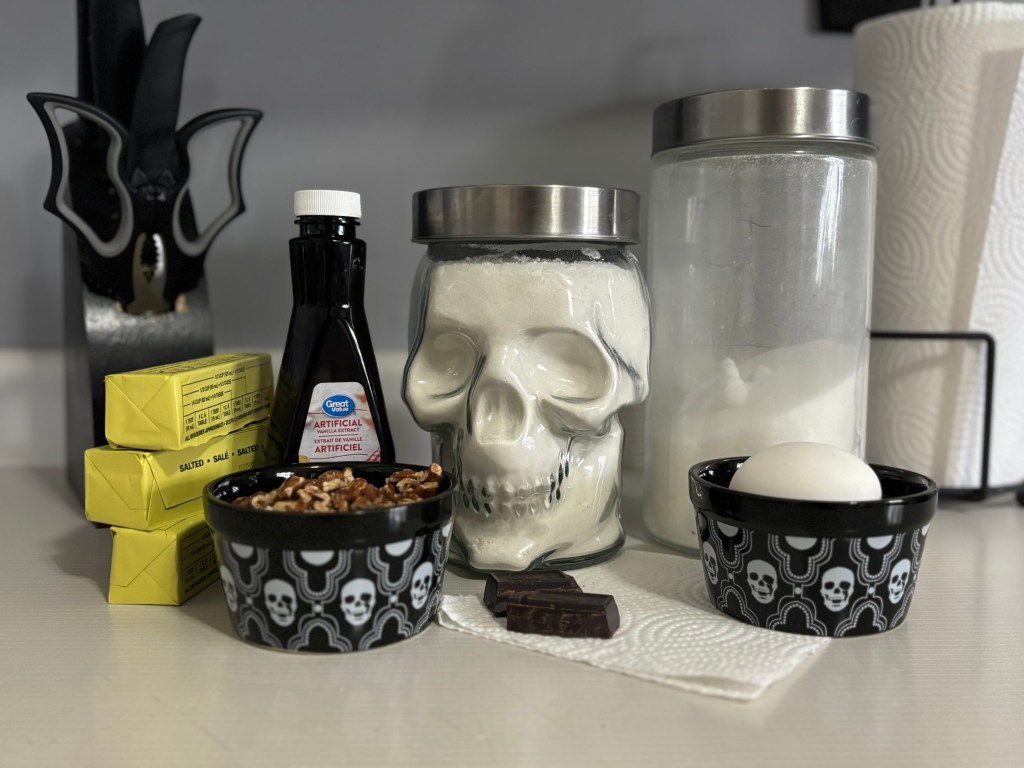
This recipe has a surprisingly small ingredient list, so pulling everything together was pretty easy.

The raw eggs were the first thing that piqued my interest. I had to look into that a little bit. Traditional French Silk Pie recipes often relied on them for that smooth, rich texture, but modern versions usually recommend pasteurized eggs or other safer methods while still aiming for that same silky finish.³

I was not able to find pasteurized eggs at my local grocery store, so I decided to live dangerously and use regular eggs.

I started with the crust first.

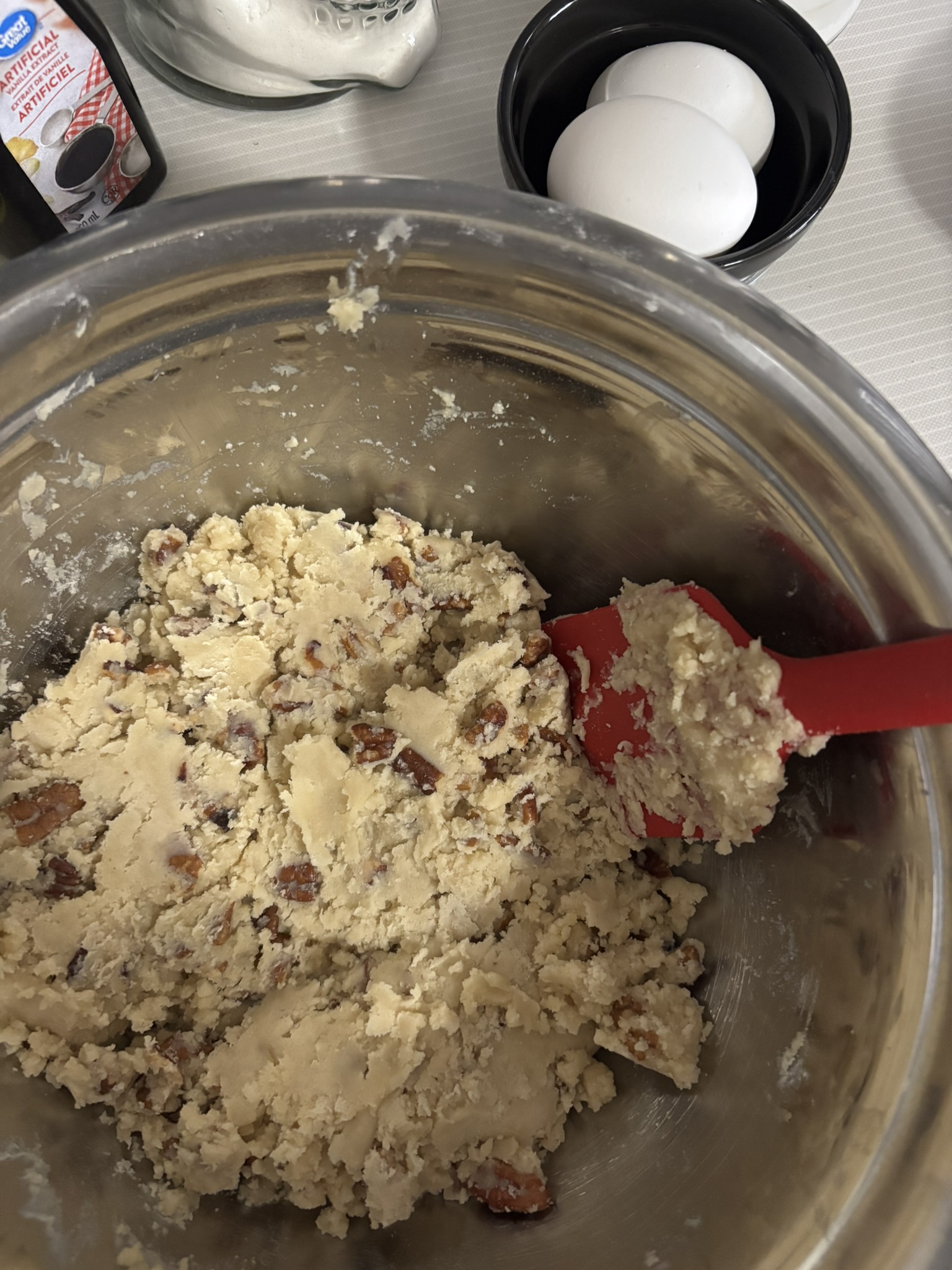
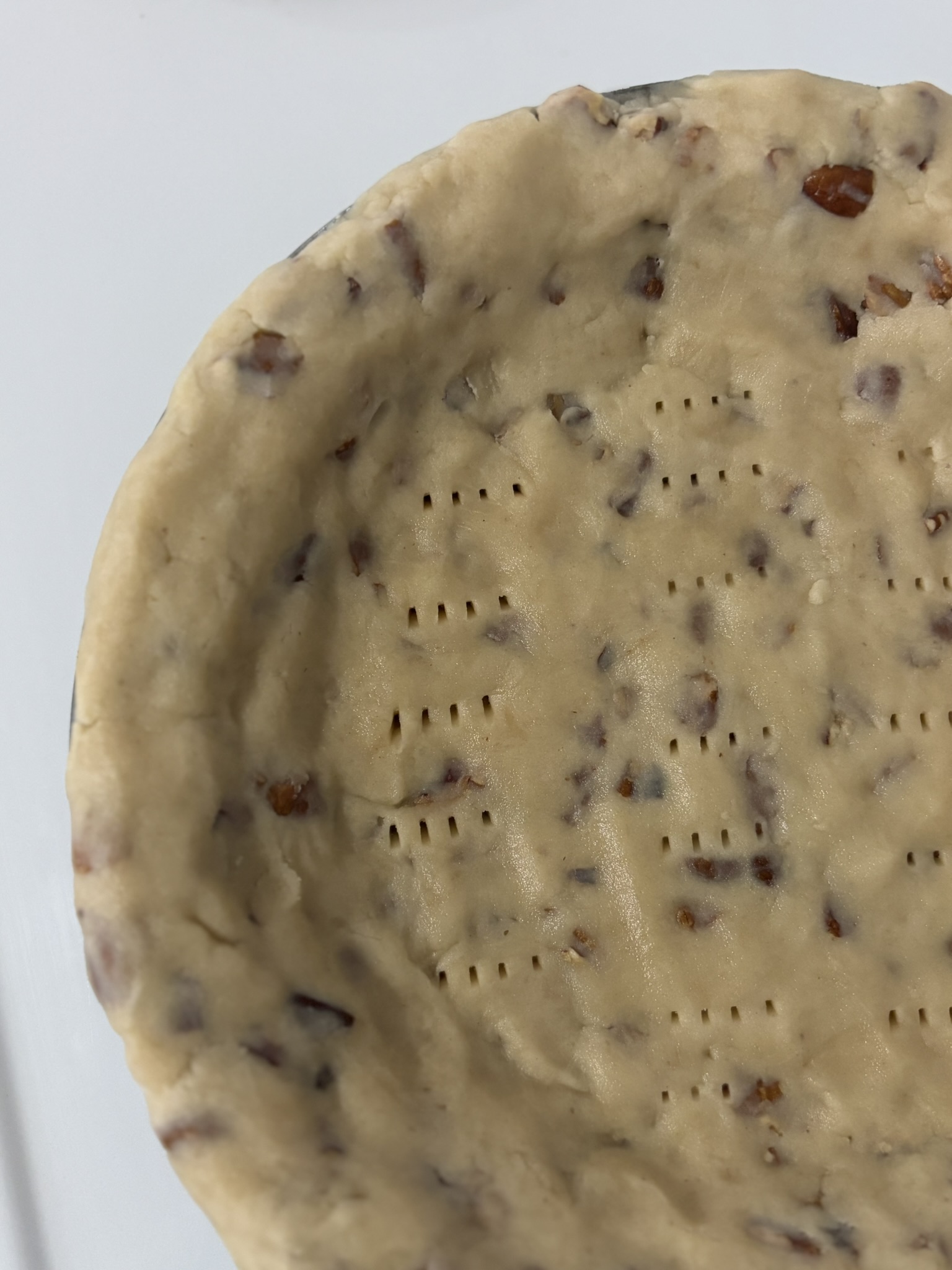
I mixed everything into a rough dough and pressed it into a pie plate. I have long acrylic nails, so this was a bit more difficult than I thought it would be. I ended up using my knuckles and the palm of my hand to flatten everything out and get it somewhat even.

The recipe doesn’t mention pie weights, but some of my research had suggested them. I don’t have any pie weights anyway, so instead I just poked holes in the crust with a fork and hoped for the best.

Into the oven it went for 15 minutes. After checking on it, I put it back in for another five. It probably could have baked a little longer, but I was scared of burning it and ruining the whole thing.

After 20 minutes total, I pulled it out and left it on a wire rack to cool while I started the filling.

The filling definitely took more effort. I followed the instructions exactly as written and used my hand mixer to save my wrists a bit, but beating each egg for five full minutes still felt like an upper-body workout.

As soon as I added the first egg, the texture noticeably changed and became lighter and fluffier. It actually reminded me a bit of making meringue. I kept scraping down the sides of the bowl while mixing to make sure everything blended properly.

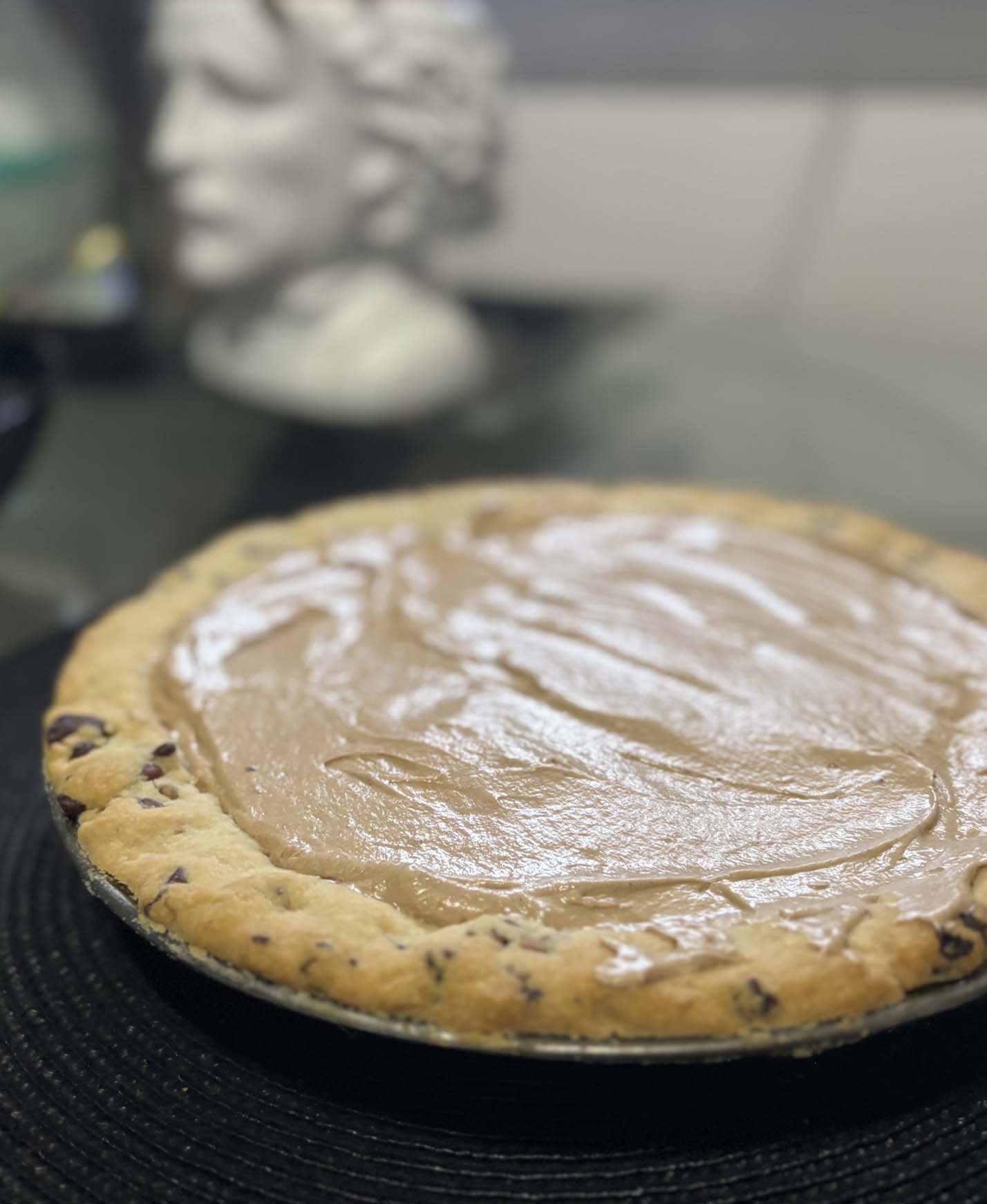
Once it looked smooth enough, I spread the filling into the crust with a spatula and hoped for the best.

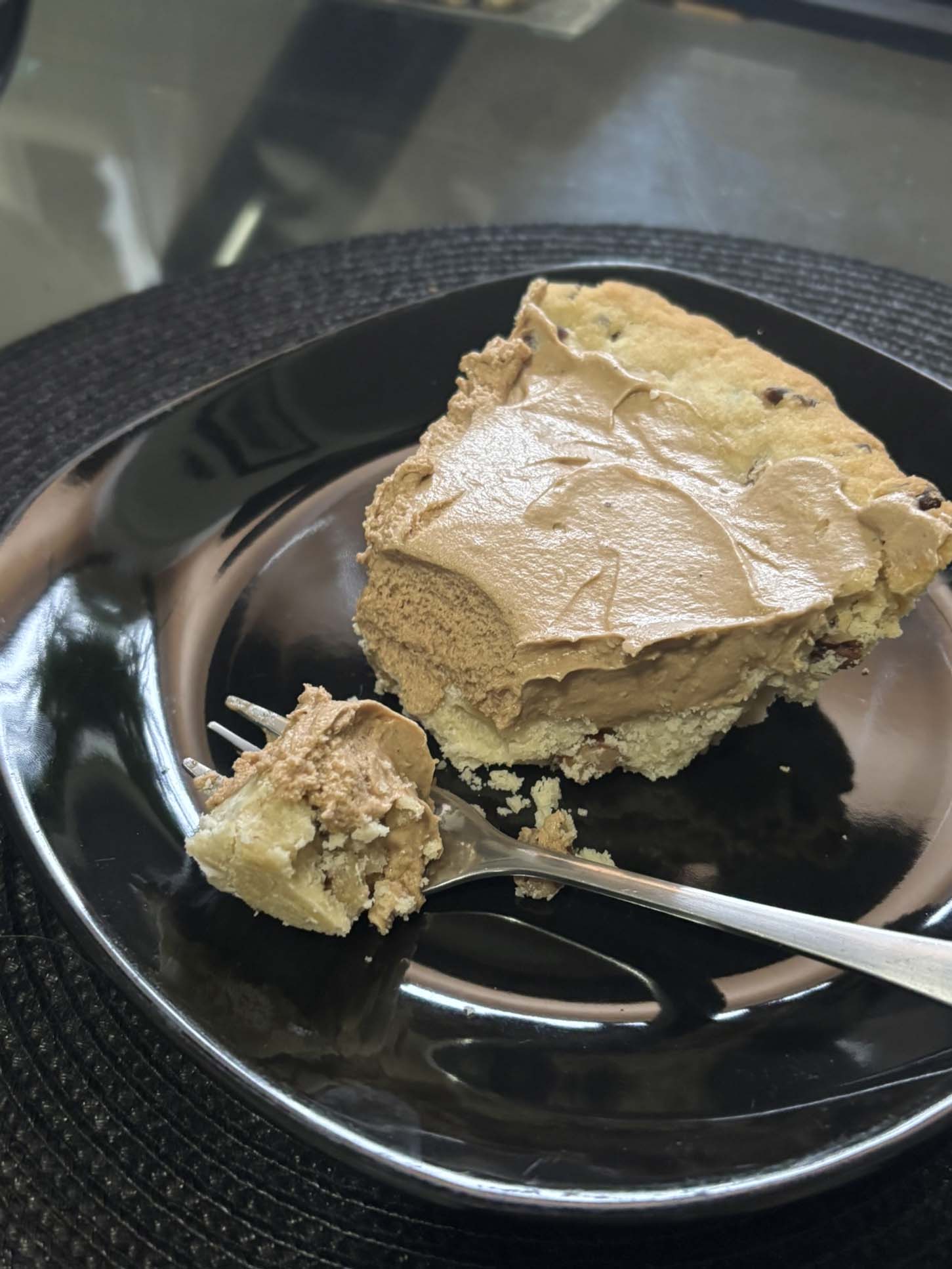
The crust was buttery and flaky, and the filling was rich with that smooth, silky texture French Silk Pie is known for. And so far, no ill effects from the raw eggs, which feels like a win.

Trying it once felt worth the risk for the experience, though I think I would want pasteurized eggs before tempting fate a second time.

It’s funny how a recipe like this can also reflect how cooking habits and food safety awareness have changed over time, while still hanging onto the comfort and nostalgia of a classic dessert.

At the end of the day, this whole story comes back to something pretty simple: pie.

It is the kind of dessert that probably showed up at family gatherings, holidays, and kitchen tables for years. The kind people went back for seconds, even when they claimed they were full.

Seeing a recipe like this engraved on a gravestone adds a completely different layer to that idea. It turns a dessert into part of someone’s legacy, which is kind of amazing.

And somewhere out there, Sharon’s pie recipe is still being made.

Thanks for reading!


References:

  1. Friends Cemetery | Find a Grave
  2. Sharon Kay Edwards (obituary) | The Joplin Globe
  3. Chocolate French Silk Pie | Barley and Sage

Rethinking Gravestone Rubbings

If you have ever wandered through a cemetery with me, you already know I tend to slow right down. I look at everything. The lettering, the symbols, the little details that most people walk right past. It’s one part curiosity, and one part appreciation.

Gravestone rubbing is one of those things I have heard about for years but never actually tried, and after looking into it more, I don’t think I will. It always sounded kind of fun in theory. A little bit of history, a little bit of art. But once I started digging into it, I realized it might not be as harmless as it seems.

Gravestone rubbing is the process of placing paper over a headstone and gently rubbing it with charcoal, crayon, or graphite to capture the inscription and design underneath.1 The raised lettering and carvings transfer onto the paper, and the results can be surprisingly detailed.

The practice has been around for a long time and really took off in the 19th and 20th centuries as a way to record older or hard-to-read stones.2 It was especially popular with historians and genealogists trying to preserve inscriptions before they faded away.

One of the most well-known examples comes from Daniel and Jessie Lie Farber.3 Over several decades, they created thousands of gravestone rubbings between 1938 and 1969, documenting early American gravestone art in incredible detail. The Farber Gravestone Collection is still referenced today, and even without seeing the stones in person, you can get a real sense of how intricate and expressive these carvings can be. Some of the rubbings feel almost like artwork on their own, capturing not just names and dates, but patterns and symbolism that would otherwise be easy to miss.

Know Better, Do Better

This is where things get a little tricky.

Even though gravestone rubbing was once seen as helpful, it’s now widely frowned upon.

The biggest reason is pretty simple: it can cause damage.

Even a gentle rubbing puts pressure on the surface of a stone. Many older stones, especially ones made of slate, sandstone, or marble, are already fragile after years of weather exposure.4 When you add repeated rubbing into the mix, it can lead to flaking, cracking, or losing those fine details altogether.

A really good example of this is the Bean Puzzle Tombstone. It’s a unique and popular stone that has had a lot of hands on it over the years, including people doing rubbings.5 You can actually see how all that attention has added up over time.

Because of concerns like this, gravestone rubbing is now illegal in some U.S. states and restricted in others.6 In Canada, it’s not outright illegal, but many cemeteries have their own rules against it or require permission first.

Groups like Cemetery Conservators for United Standards have also spoken out about it.7 Their focus is on protecting these stones for the long term, which usually means limiting physical contact as much as possible.

Alternatives

The good news is you don’t have to miss out on those details.

One method I always find kind of clever is the mirror method. You use a mirror to reflect sunlight across the surface of the stone at an angle, which helps bring out the lettering and carvings.7 It’s simple, but it works. If you don’t have a mirror handy, even a flashlight can do the trick.

And of course, there is photography.

This is my go-to. You can capture everything you need without ever touching the stone. Changing your angle or adjusting the lighting can reveal details you might not have noticed at first glance.

The more I learn about cemetery practices, the more I realize how much things change over time. What once seemed like a good idea does not always hold up, especially when preservation is involved.

As much as I love the idea of gravestone rubbings, it’s not something I see myself trying.

For me, it always comes back to that same mindset I bring into every visit: respect the space and leave it as you found it. Do no harm.

There are so many ways to document and share these stories without causing damage. Sometimes all it takes is a little patience and a different way of looking at things.

Thanks for reading!


References:

  1. How To Do A Proper Monument Rubbing | Summit Memorials
  2. Headstone Rubbing: Can It Preserve History? | Legacy Headstones
  3. About | The Farber Gravestone Collection
  4. Gravestone Rubbings | Connecticut Gravestone Network
  5. Bean Puzzle Tombstone | Atlas Obscura
  6. Grave Rubbings: Etiquette, Permission, and Technique to Protect Historic Stones | Funeral.com
  7. Reading Stones Basics | Cemetery Conservators for United Standards

Cemetery Recipes: Sugar Cookies

Some gravestones tell stories through symbols, epitaphs, or carvings. Others share something even sweeter.

Gravestone recipes are one of those rare connections between memory and tradition, offering a way to bring the past into your kitchen.

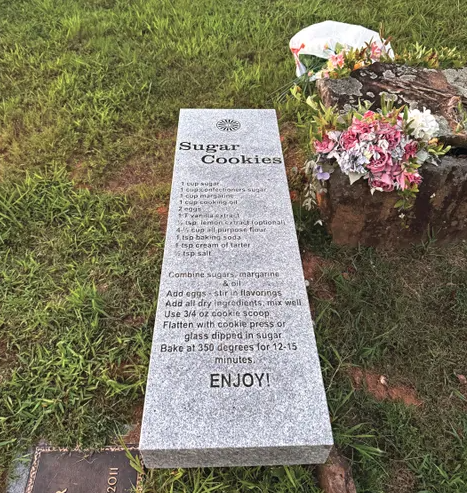
Fleda Jane Osburn Shearer’s sugar cookies are a perfect example. They were more than just cookies; they were a way to bring people together, share comfort, and create memories that last. Known affectionately by some as “Funeral Cookies,” Fleda often baked them for gatherings in Arkansas.1

Visitors to her grave can now sit at a bench engraved with her recipe and bake a batch themselves, keeping her warmth and hospitality alive.2

Fleda was born on March 5, 1934, and passed away on June 3, 2017, at the age of 83.3 One of the most memorable ways she touched her community was through her baking. Her sugar cookies were served at funerals, family gatherings, and casual visits alike.1

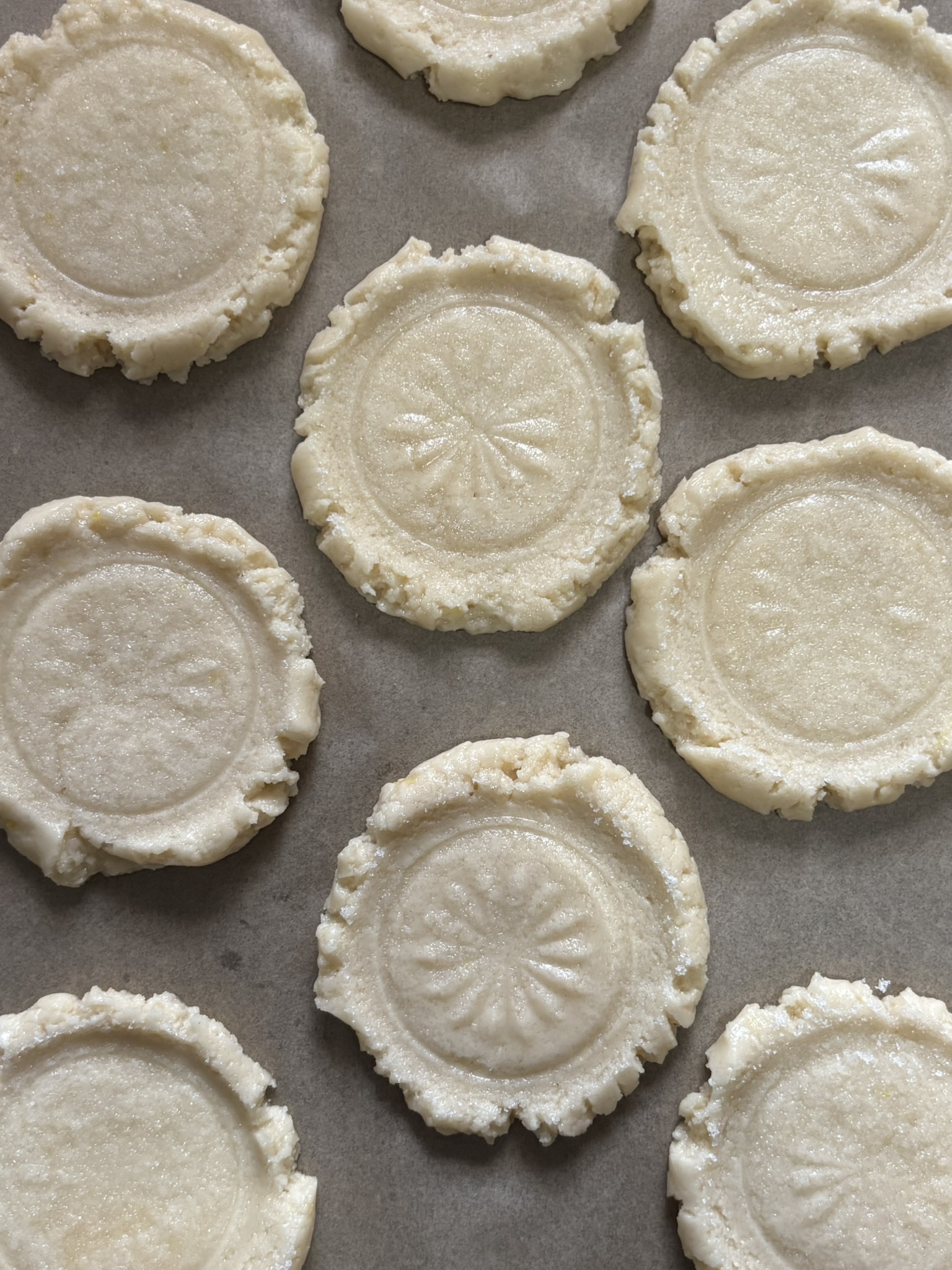
After she passed away, her family honoured her by placing the recipe for these cookies on a bench at her grave in Magness Cemetery in Heber Springs, Arkansas.² At her funeral, the cookies were served alongside lemonade beneath a large tree, just as she would have done in life.2 The bench near her grave even features a small starburst design, echoing the pattern she pressed into each cookie, inviting visitors to sit and remember her.2

The recipe engraved at Fleda’s grave is simple, classic, and delicious, exactly the kind of cookie that just melts on your tongue.

Here is the recipe, as engraved on the stone bench at her graveside:

Sugar Cookies

  • 1 cup granulated sugar
  • 1 cup confectioners sugar
  • 1 cup margarine
  • 1 cup cooking oil
  • 2 eggs
  • 1 T vanilla extract
  • 1/2 tsp. lemon extract (optional)
  • 4 1/2 cup all purpose flour
  • 1 tsp. baking soda
  • 1 tsp. cream of tartar
  • 1/4 tsp. Salt

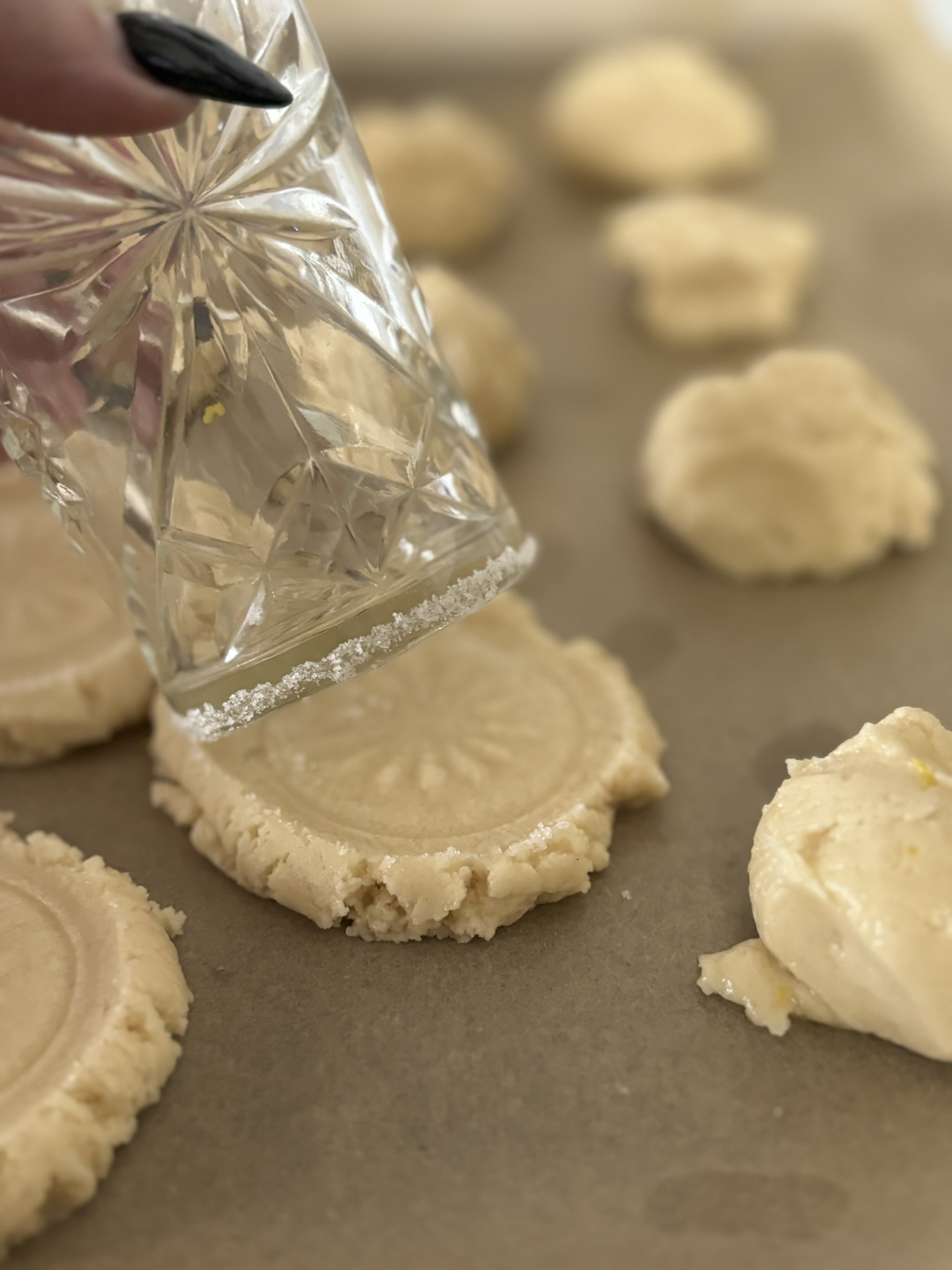
Combine sugars, margarine & oil. Add eggs – stir in flavorings. Add all dry ingredients, mix well. Use 3/4 oz cookie scoop. Flatten with cookie press or glass dipped in sugar. Bake at 350 degrees for 12-15 minutes. ENJOY!

In the Kitchen

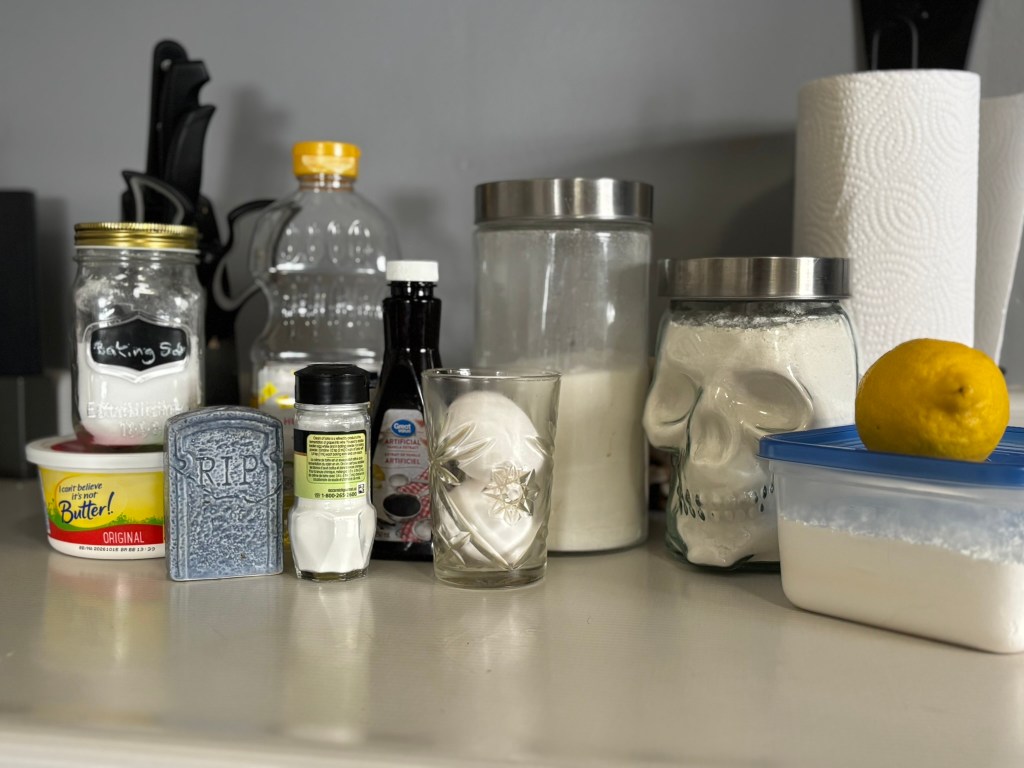
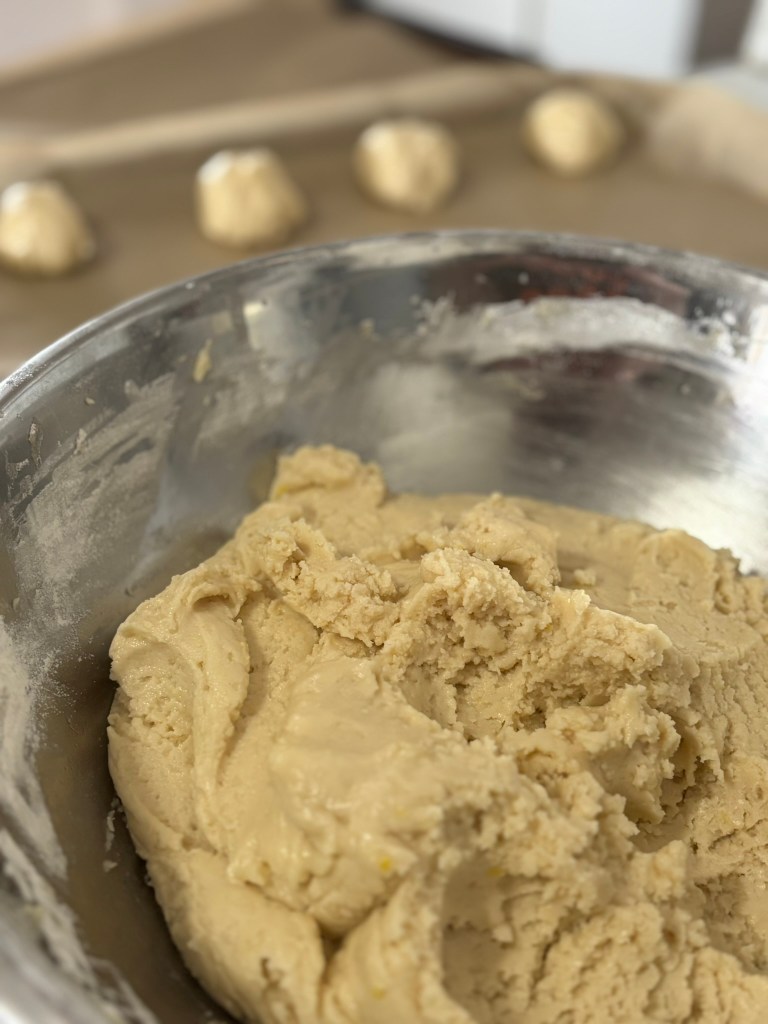
These cookies were surprisingly simple to make, which honestly makes them even more special. The ingredients were basic and easy to pull together, which made the whole process feel really approachable. I did have to make one small substitution. I didn’t have lemon extract, so I used lemon zest instead.

Once everything was ready, the dough came together easily. There was nothing complicated about it, which made the process feel relaxed and enjoyable from the start.

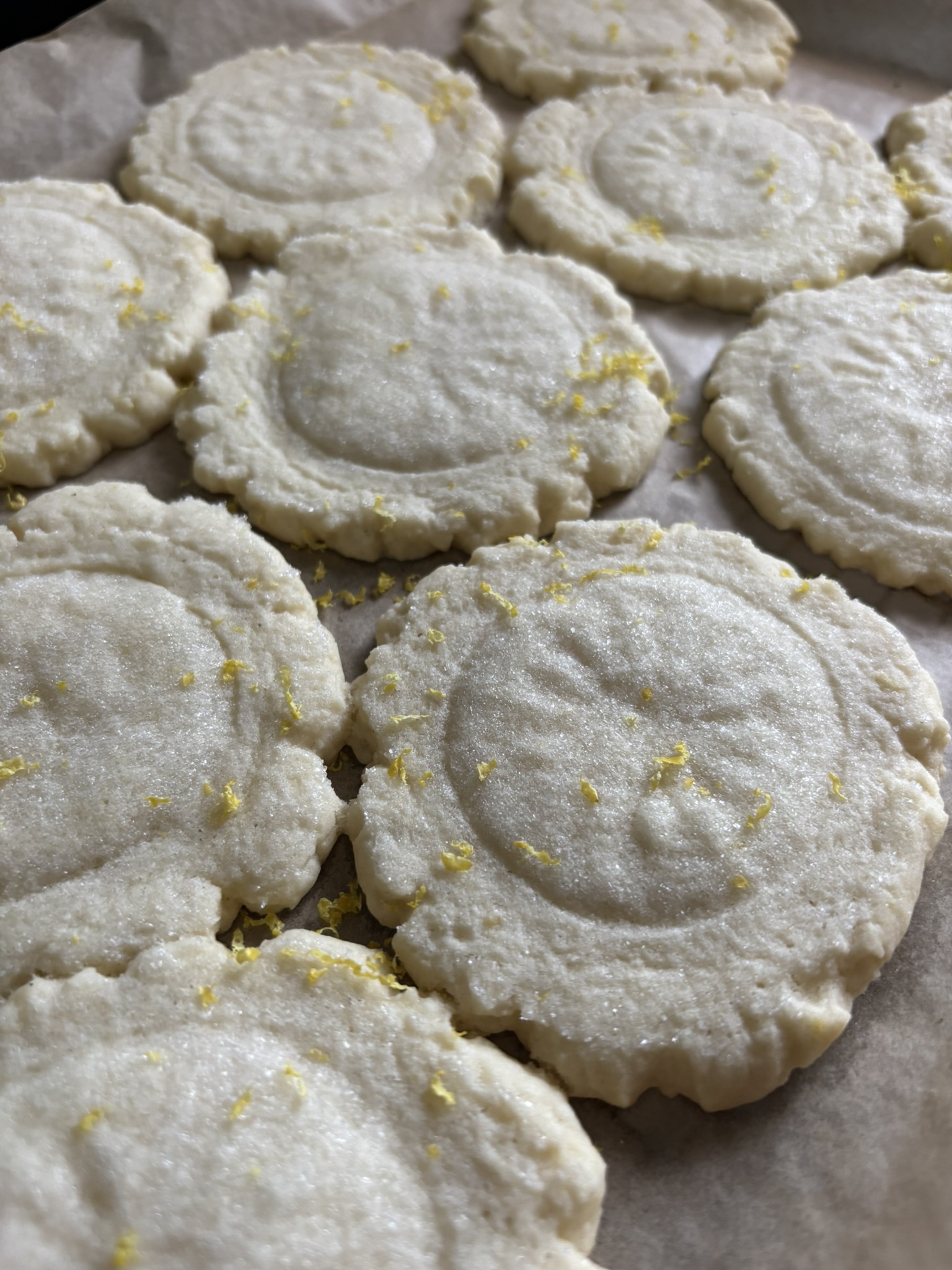
Portioning the dough was a bit of a guessing game. I don’t have a cookie scoop, so I used a loose-leaf tea measuring spoon, which probably made my cookies larger than intended. They did spread quite a bit in the oven, so even though I spaced them out, some ended up touching. It wasn’t a big issue, just something to keep in mind if you try out this recipe.

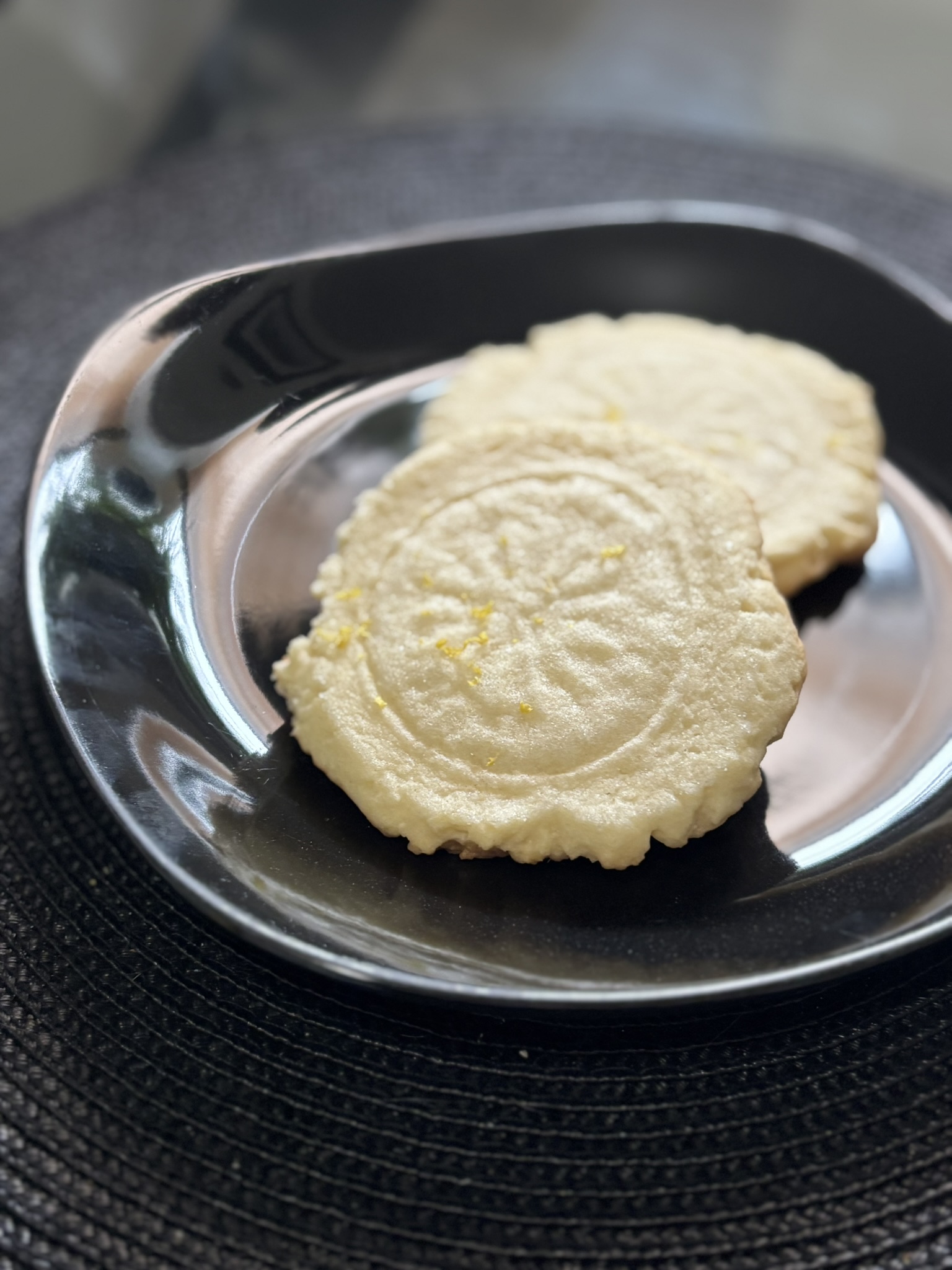
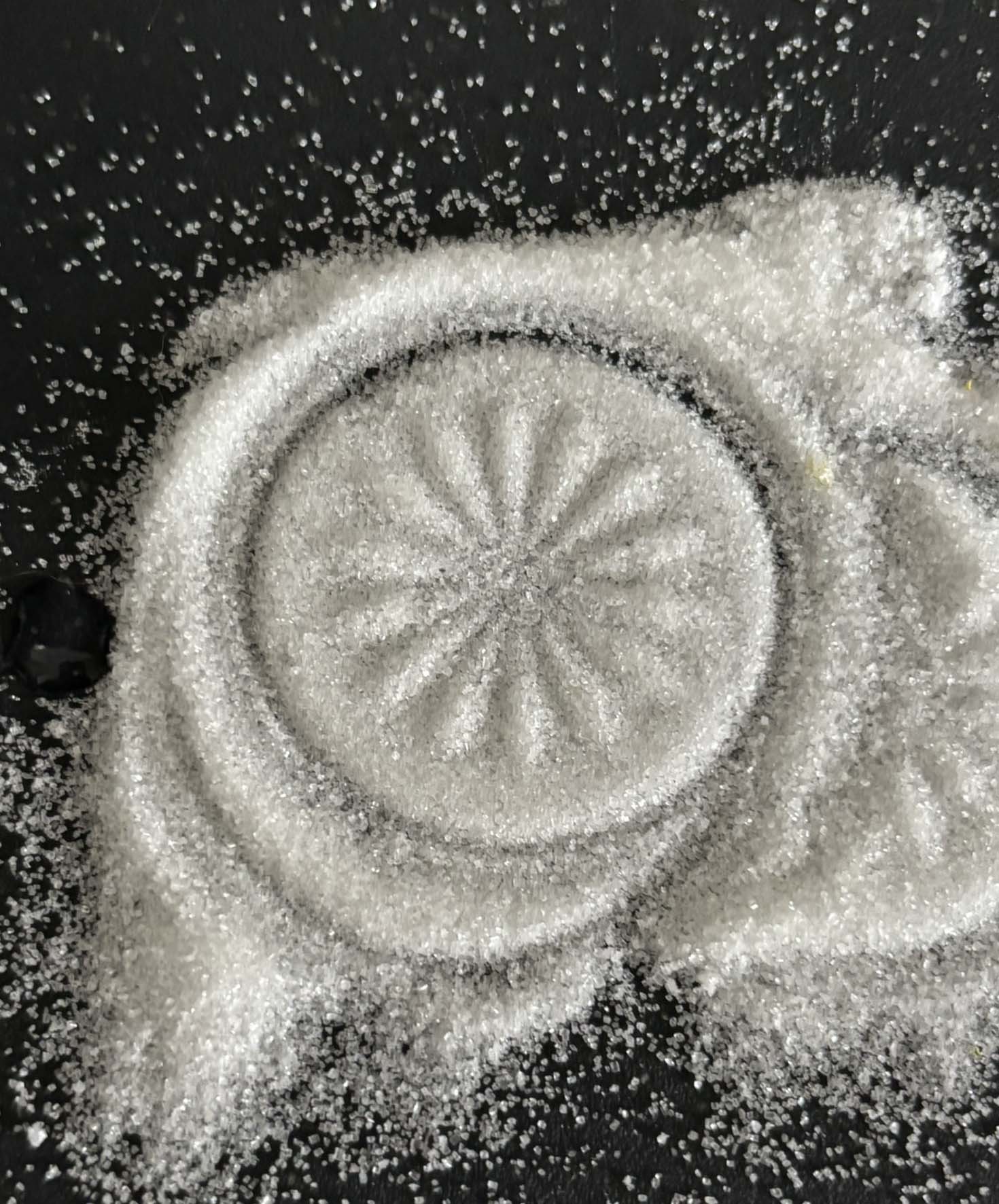
One of my favourite parts was stamping the cookies. I didn’t have a decorative drinking glass at home, so I borrowed one from my mom that had a patterned base. I dipped it in sugar and used it to press each cookie before baking. It added such a fun and unique touch, and it’s an easy way to change up the look of the cookies depending on what you use.

I baked them for 12 minutes, which turned out to be just right. Nothing burned, which always feels like a win. Since it’s Easter weekend, I wanted to give them a bit of a spring feel. Since I didn’t have any yellow sanding sugar, I sprinkled a little extra lemon zest on top of the cookies after baking. It worked really well, and the helped the lemon flavour come through.

This recipe made a big batch. Even with making larger cookies, I ended up with about 40 cookies across four trays.

Right out of the oven, the cookies were soft, fluffy, and tender. They were lightly sweet without being overpowering, exactly what you want from a classic sugar cookie. The lemon flavour was not that noticeable when I had one straight out of the oven. But Later on, the lemon flavour became more pronounced.

I brought some of the cookies to a game night that same evening, and everyone agreed they were very tasty.

Overall, these are easy, comforting, and fun to make. I can absolutely see why they became such a meaningful part of Fleda’s legacy.

Gravestone recipes like Fleda’s show that memory can be sweet, simple, and deeply personal. Each batch of cookies is more than flour and sugar. It is a little piece of someone’s life and hospitality that can be enjoyed anywhere.

You can make the cookies at home, share them with family and friends, and continue a tradition of comfort and connection that Fleda started in her kitchen long ago.

Thanks for reading!


References:

  1. Quarantine Kitchen post | Facebook Group
  2. To Die For A Cookbook of Gravestone Recipes by Rosie Grant | Book
  3. Fleda Jane Shearer Obituary | Arkansas Online

Cemetery Stories: Canada’s Largest Cemetery

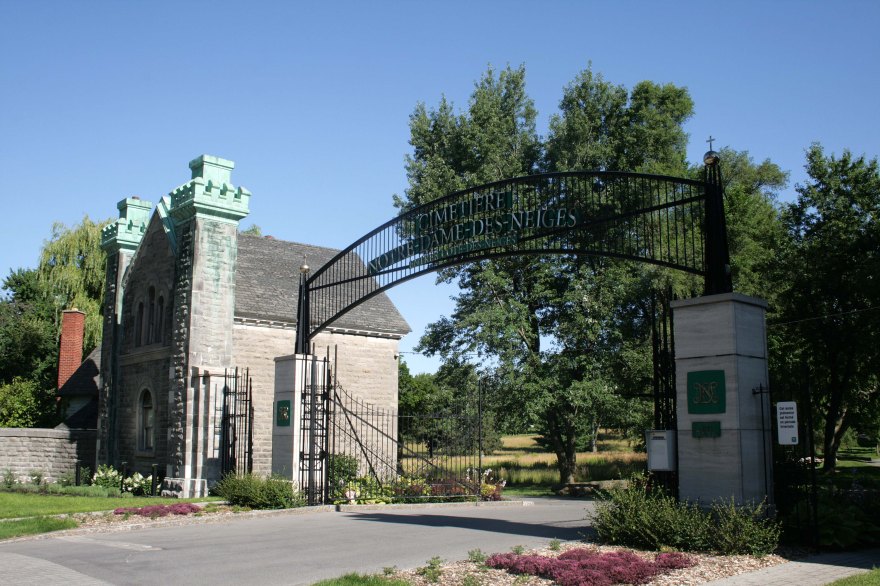
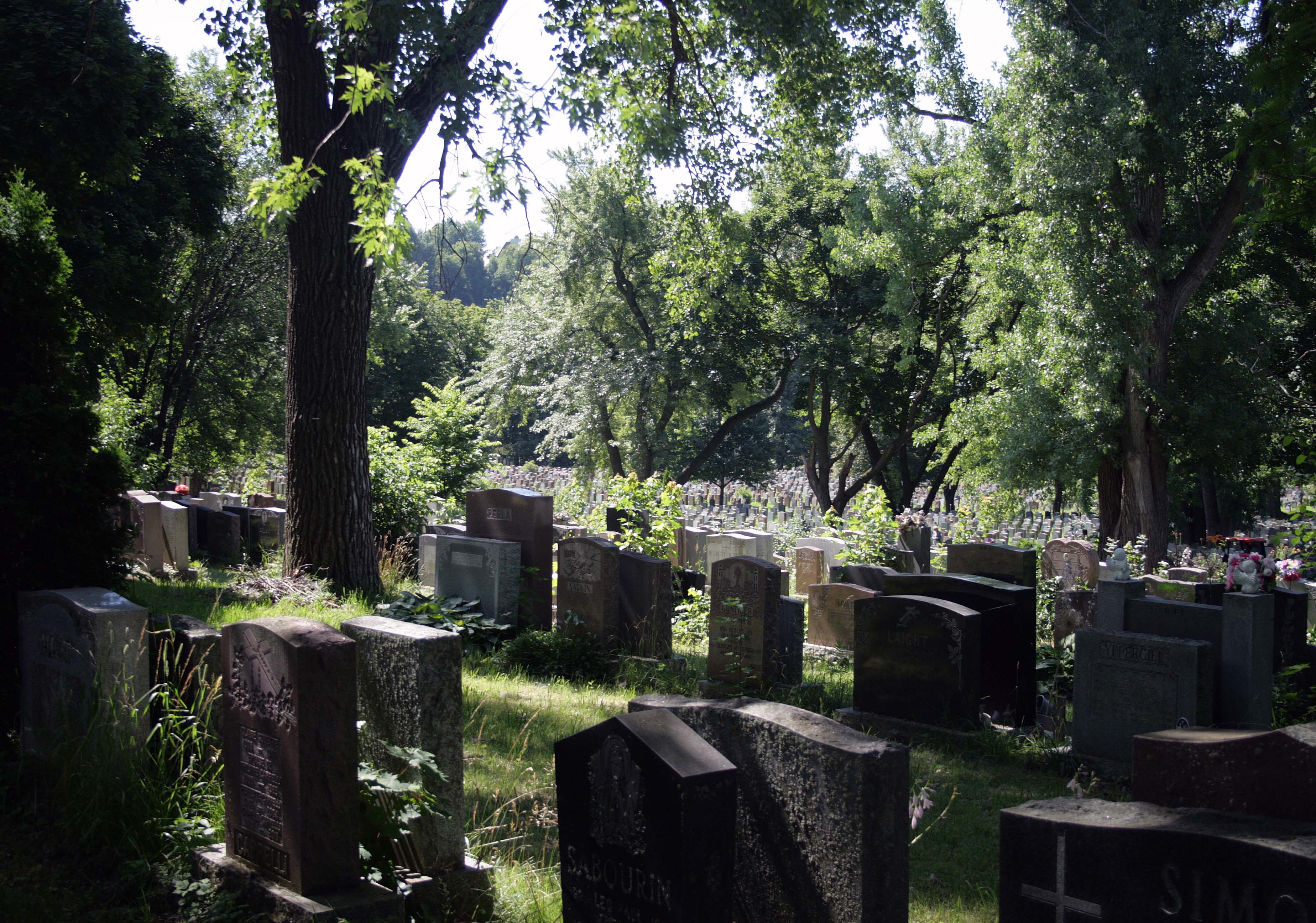
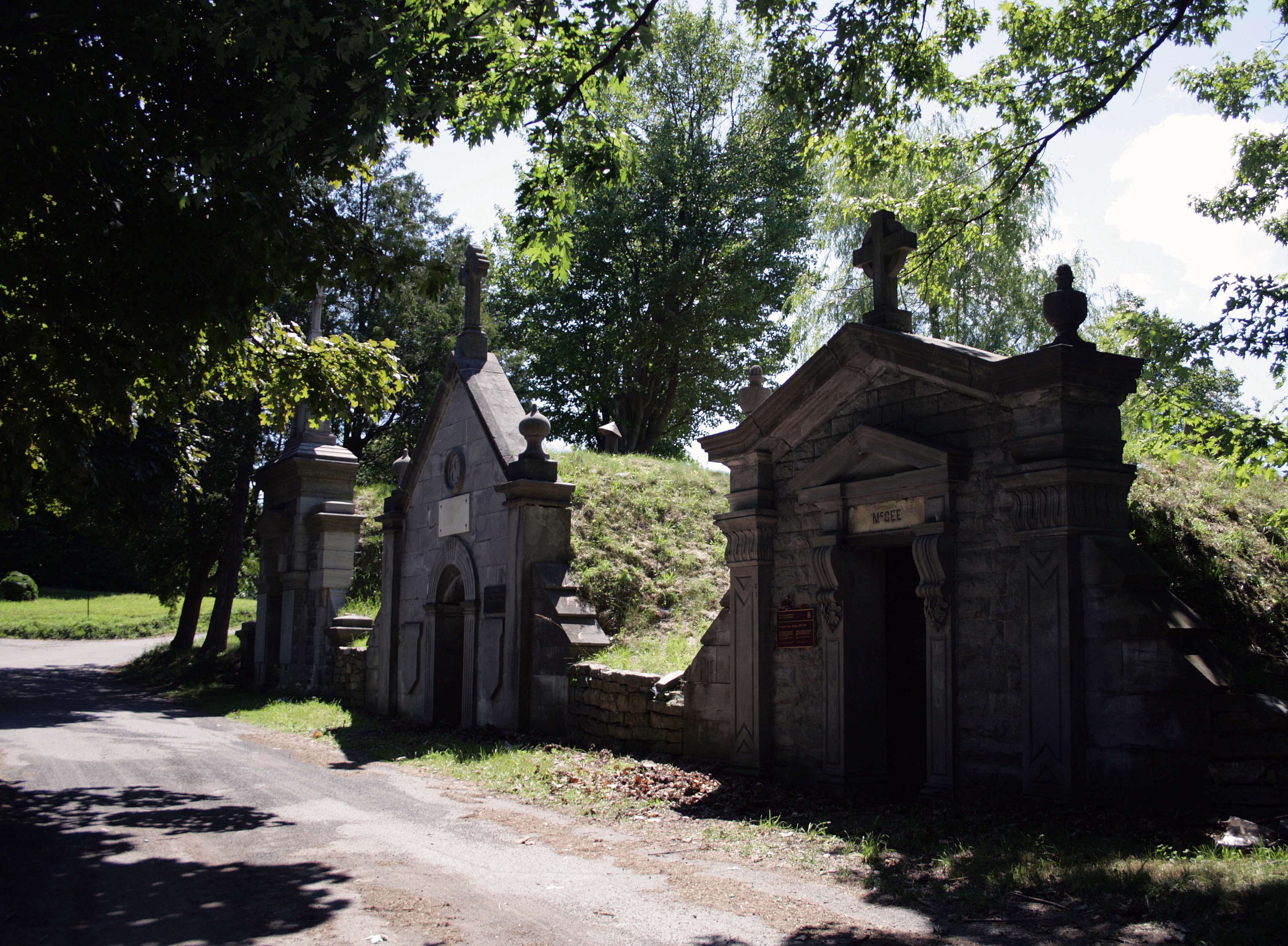
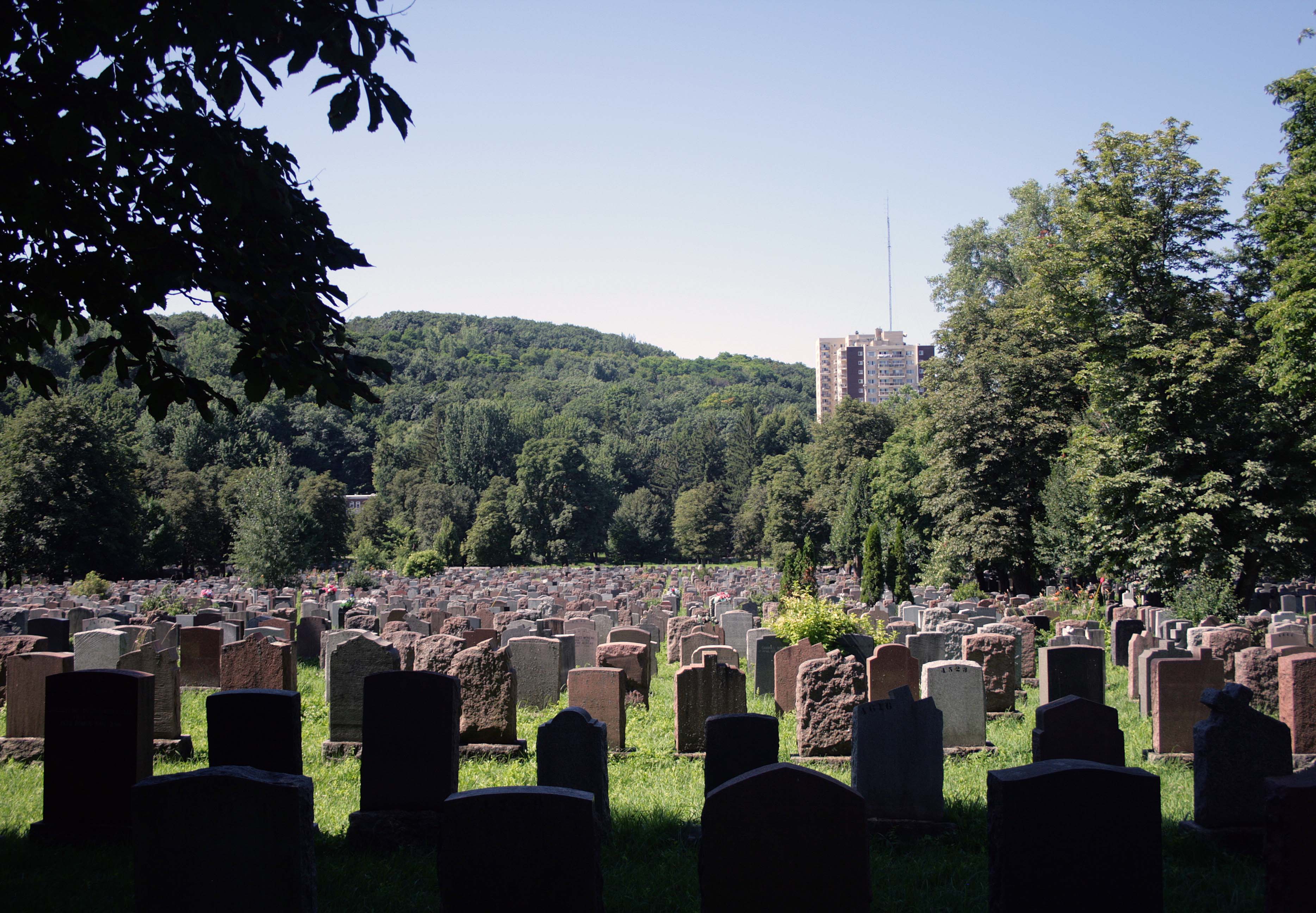
Some cemeteries are small and quiet, tucked behind a church or hidden along a country road. Others are so large they feel more like cities for the dead. Cimetière Notre-Dame-des-Neiges in Montreal definitely falls into that second category.

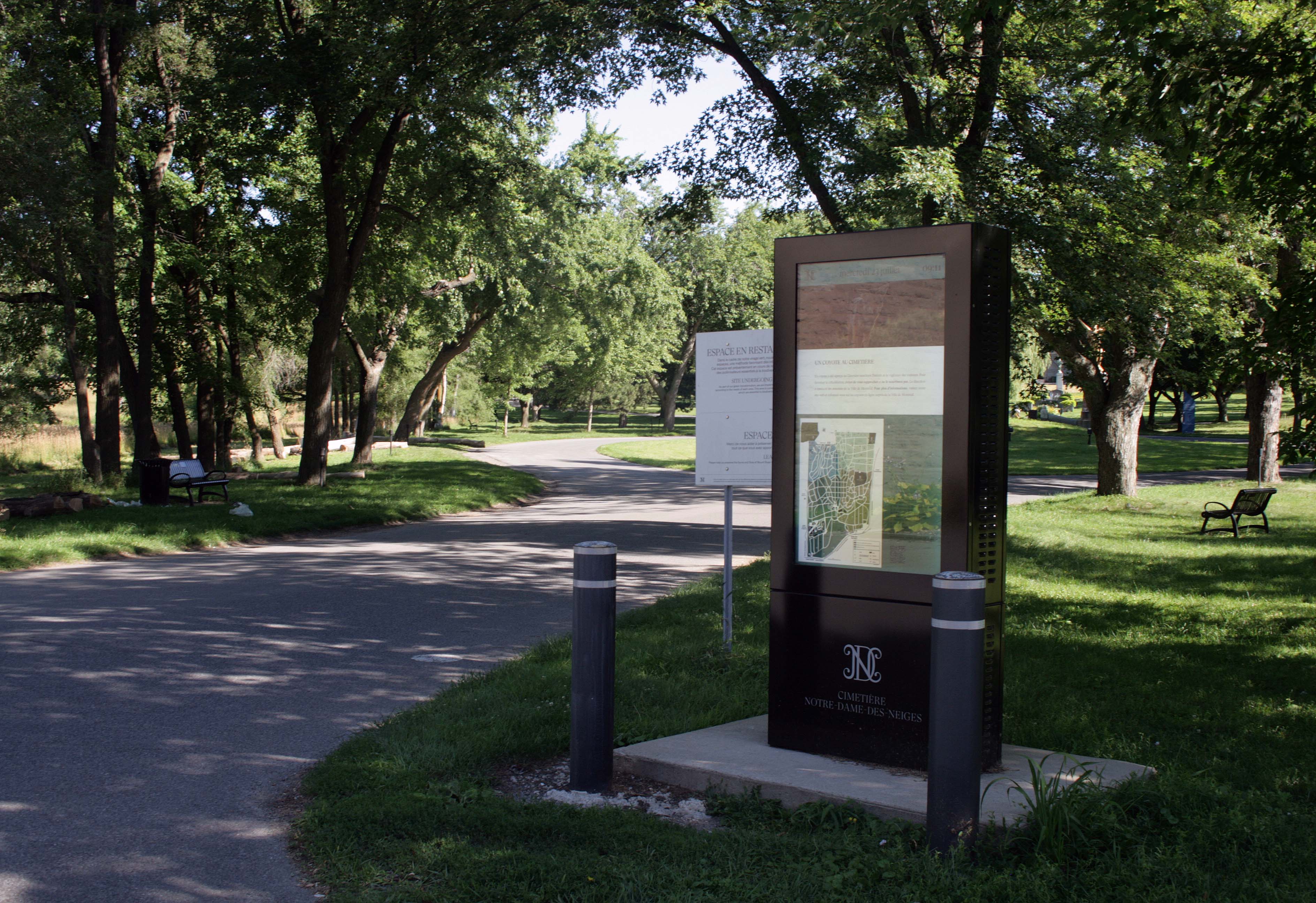
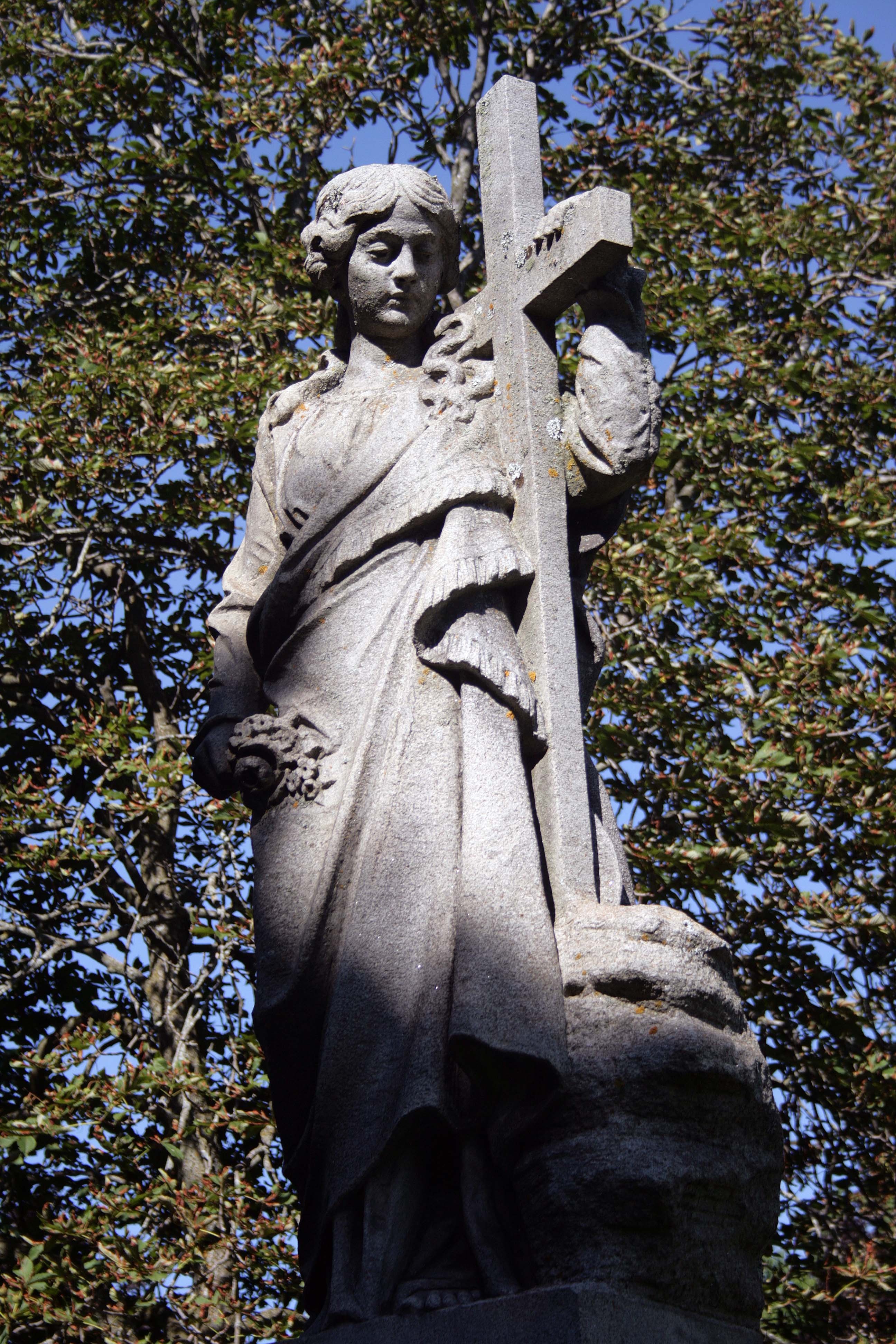
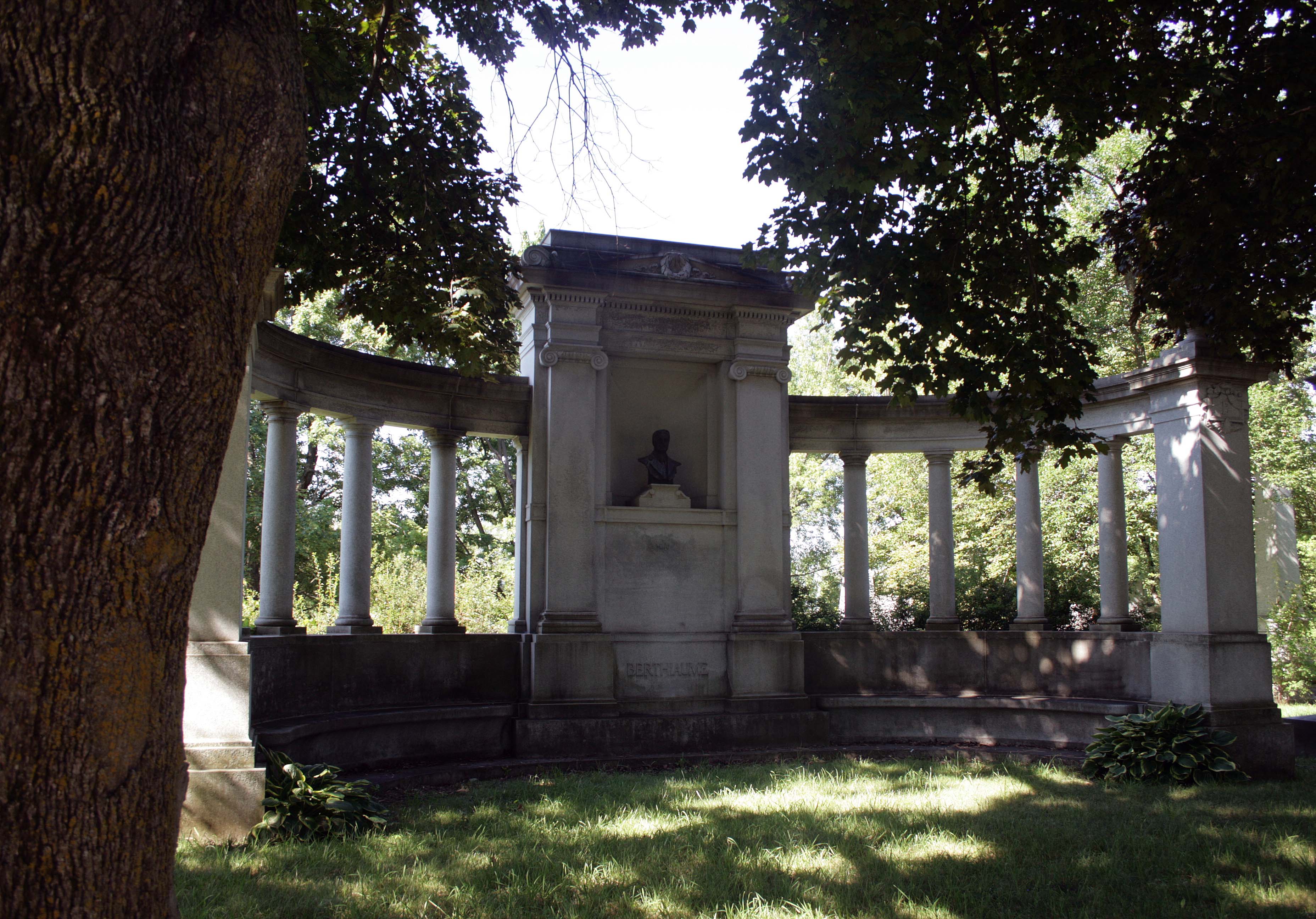
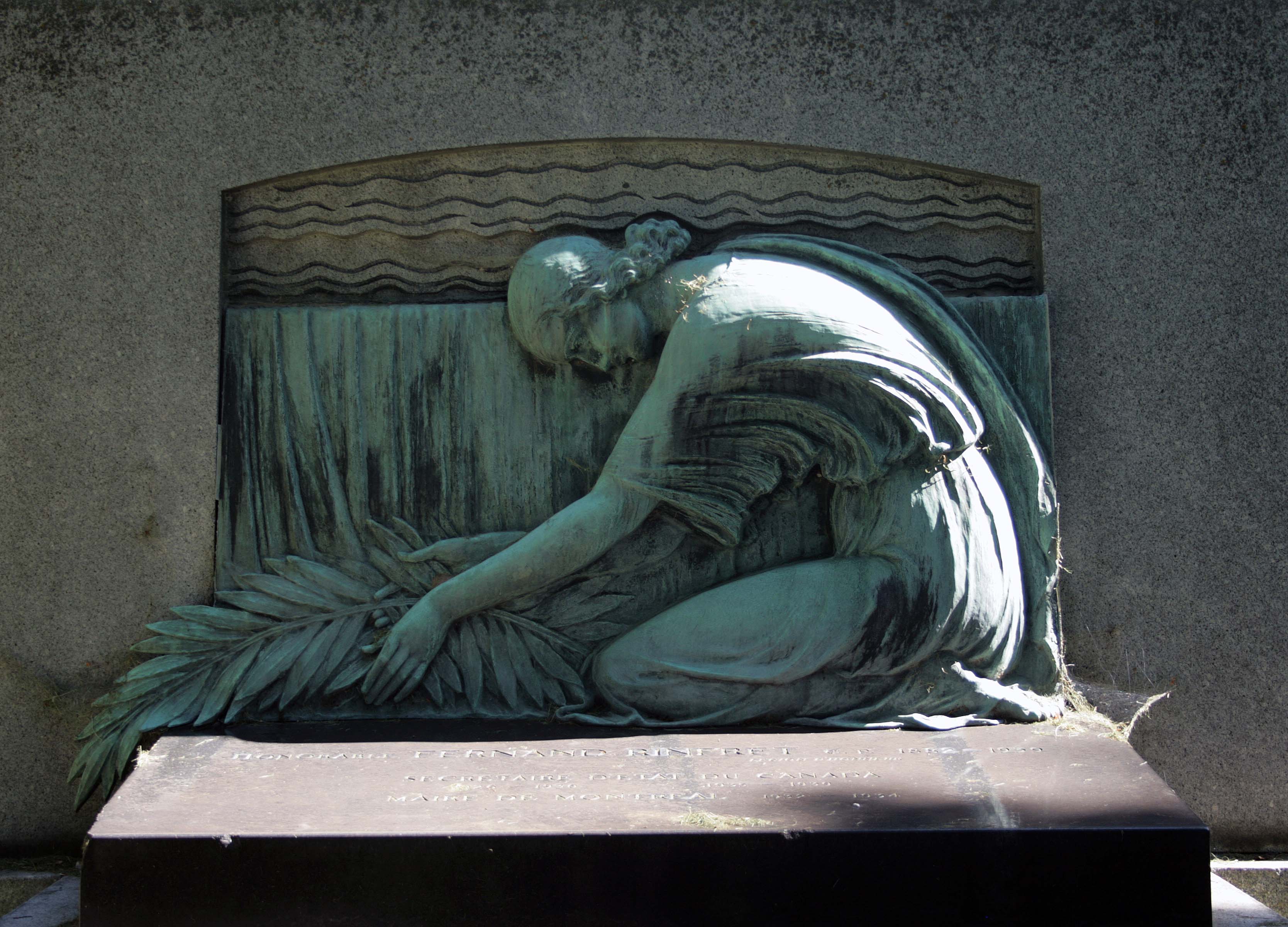
Located on the slopes of Mount Royal, this cemetery is the largest in Canada and one of the largest in North America. With winding roads, towering monuments, and thousands of trees, it feels less like a cemetery and more like a historic park filled with stories.

History

Cimetière Notre-Dame-des-Neiges was founded in 1854 by the parish of Notre-Dame in Montreal. The first burial took place on May 29, 1855, for a 35-year-old Irish woman named Jane Gilroy.¹ Earlier cemeteries had been located near churches, but space and hygiene concerns, along with a 1853 city bylaw, forced a move to Mount Royal.1

Sitting on the mountain gives the cemetery symbolic meaning in Catholic tradition, representing hope for the promised resurrection. Surrounded by nature, it also offers a quiet place for reflection. Walking among the trees and winding paths, visitors can feel the combination of history, art, and natural beauty all at once, which also makes it a great spot for photography.

Today, Notre-Dame-Des-Neiges is recognized as the largest cemetery in Canada and the third largest in North America.²

The cemetery was designed during a time when burial grounds were being reimagined as peaceful landscapes rather than crowded churchyards. Its layout was influenced by the famous Père Lachaise Cemetery in Paris, with winding paths, scenic views, and carefully planned monuments.³

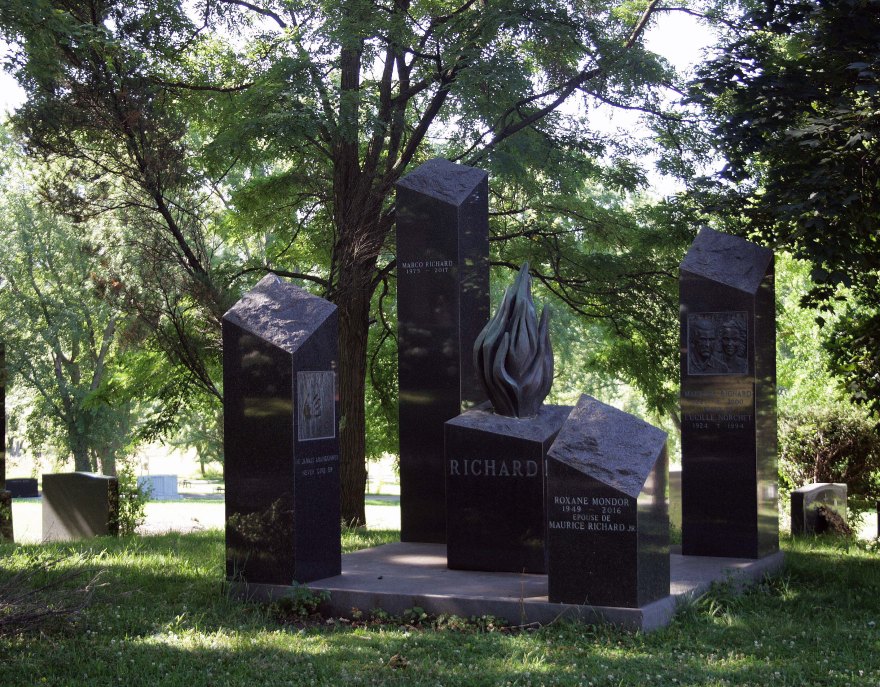
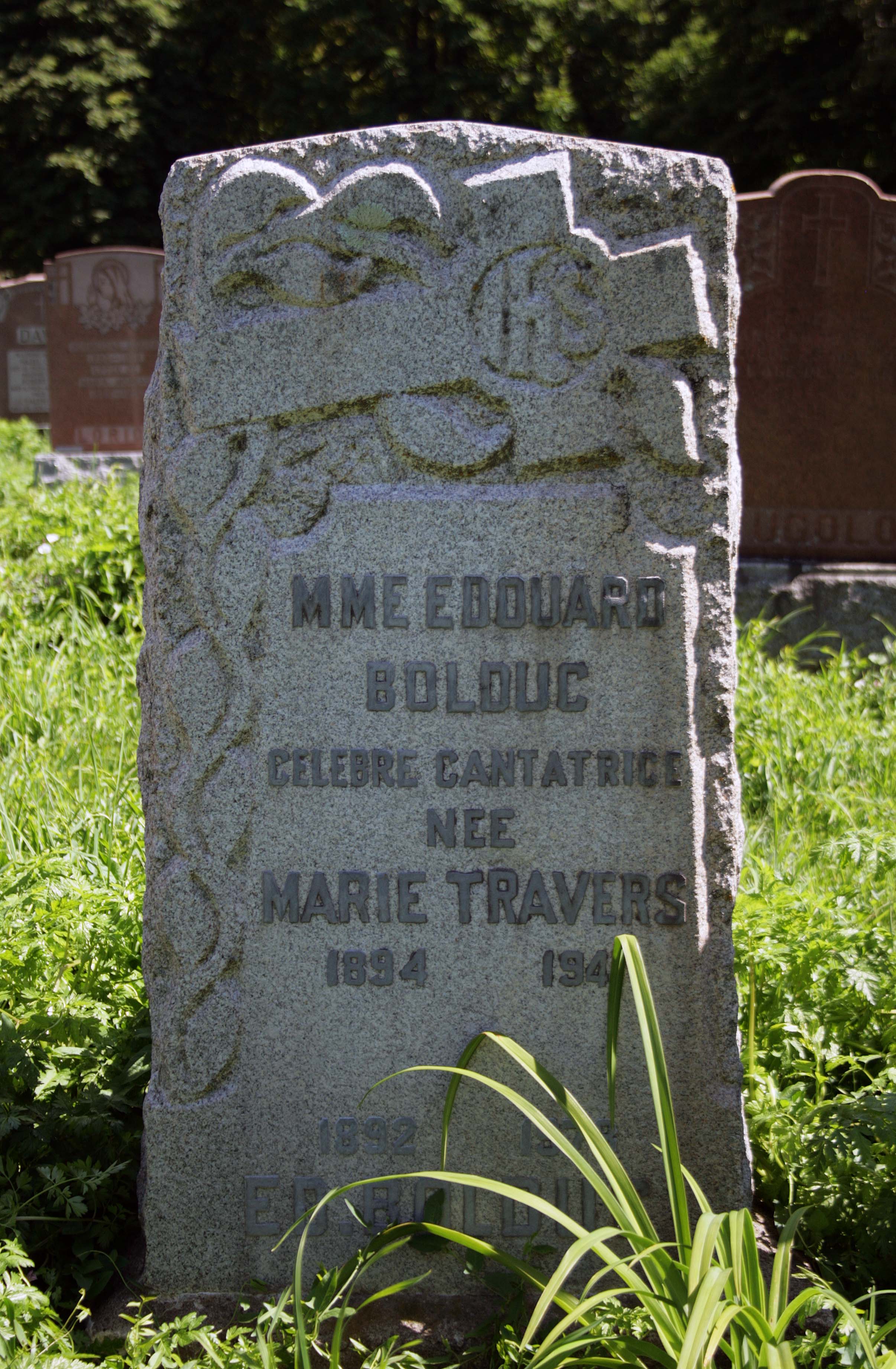
Over the years, the cemetery has become the final resting place for many notable Canadians, including hockey legend Maurice “The Rocket” Richard, beloved folk singer La Bolduc, music producer and talent manager René Angélil, and Sir Georges-Étienne Cartier, one of the “Fathers of Confederation”.⁴

The cemetery also functions as a large natural park, with more than 13,500 trees spread across its grounds.3 Because of its historical, cultural, and artistic importance, the cemetery was designated a National Historic Site of Canada in 1999.5

Haunted

With a cemetery this old and this large, it probably comes as no surprise that there are plenty of ghost stories attached to it.

One of the most well-known spirits is that of Sarah Ellen Page King, also called Sadie. Witnesses say her grave site is haunted by the sounds of a woman and infant weeping and crying.6 Sadie’s story is a tragic one. After losing her infant son George, she was sent to the Saint-Jean-de-Dieu Lunatic Asylum, likely for depression, and remained there for 24 years until she died in 1946.6 Her family never visited or even acknowledged her, and when she was buried beside her son, no tombstone was placed in her memory.6

While other alleged spirits haunt the cemetery, Sadie’s story is the one most often told for its tragic and haunting presence.6

Whether you believe in ghosts or not, it’s easy to see how the atmosphere of such a large and historic place could spark a few spooky legends.

My Visit

I visited in July of last year while I was in Montreal with my fiancé. He had a tattoo appointment, which meant I had some time to myself.

Naturally, I decided to spend it wandering around the cemetery.

Before I arrived, I made a short list of graves I wanted to visit, including “The Rocket” Richard and La Bolduc.

Even with Google Maps to guide me, I still got completely turned around. At one point, I wandered over to the maintenance office just as a bus full of workers was about to head out for the workday. I asked them for directions to the main office, and they kindly offered me a ride. I accepted and took a seat near the front.

They were the grass crew heading out to cut grass and clean up weeds around the cemetery. I happened to be wearing a T-shirt with my logo on it, which sparked a few curious questions. When I told them I was a cemetery photographer, they seemed genuinely interested. Everyone was very kind, and after a short drive, they dropped me off at the main office before heading off to start their workday.

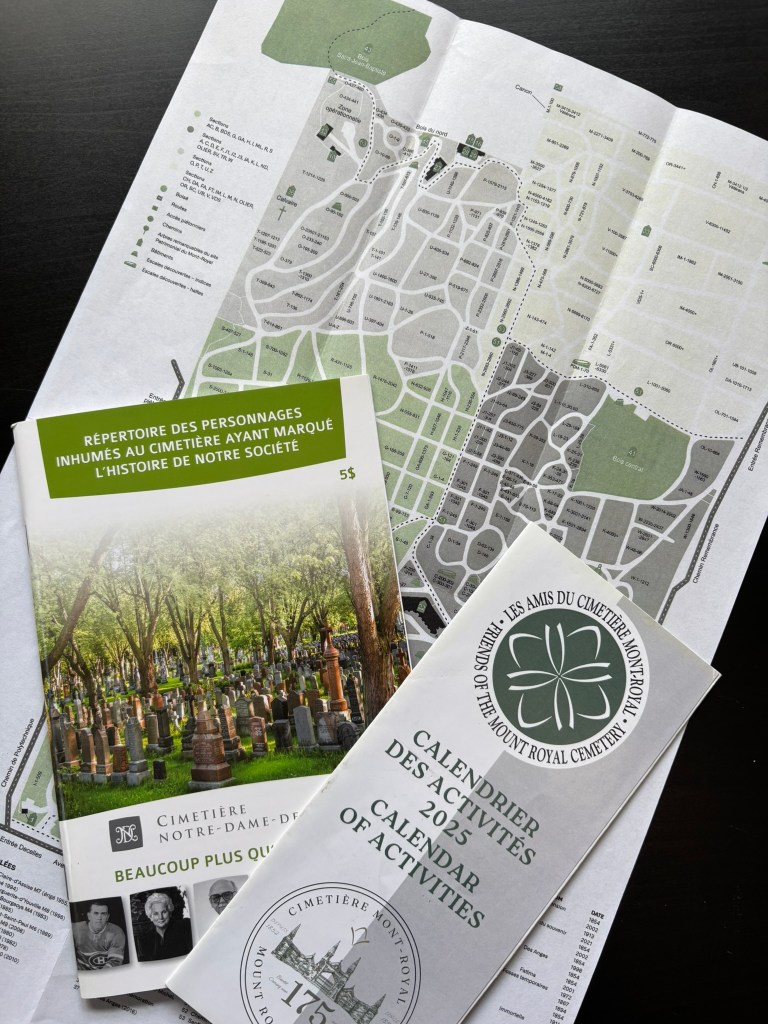
I always try to visit the cemetery office, when there is one, because you never know what kind of interesting things they might have. The office was fairly busy, so I didn’t want to take up too much of their time. I asked if they had any brochures or maps, and they were able to give me a few pamphlets and they had a small booklet for sale. The only booklet they had left was in French, but I happily bought it anyway, since my mother speaks French and could translate it for me later.

To say the cemetery is big is an understatement.

I spent several hours walking the grounds and still only saw a small portion of it. It also happened to be an extremely hot day, so I took plenty of breaks in shady spots to cool down and catch my breath.

I did not manage to visit every grave on my list, but that just means I will have to go back and explore another section of the cemetery.

Even after several hours of walking, I felt like I had only scratched the surface of Cimetière Notre-Dame-des-Neiges. The size alone makes it an adventure, and every path seems to lead to another interesting monument or historic grave.

Next time I visit Montreal, this cemetery will definitely be on my list again. After all, there are still plenty of stories waiting to be discovered.

Thanks for reading!


References:

  1. History and Heritage | Cimetiere Notre-Dame-Des-Neiges
  2. Cimetière Notre-Dame-des-Neiges | Find a Grave
  3. Notre-Dame-des-Neiges Cemetery | Tourisme Montreal
  4. Notre-Dame-des-Neiges Cemetery | Atlas Obscura
  5. Notre-Dame-des-Neiges Cemetery National Historic Site of Canada | Parks Canada
  6. Haunted Montreal Blog #96 – Notre-Dame-des-Neiges Cemetery | Haunted Montreal

Cemetery Book Review: Graveyards

Ever wondered what graveyards really say about us?

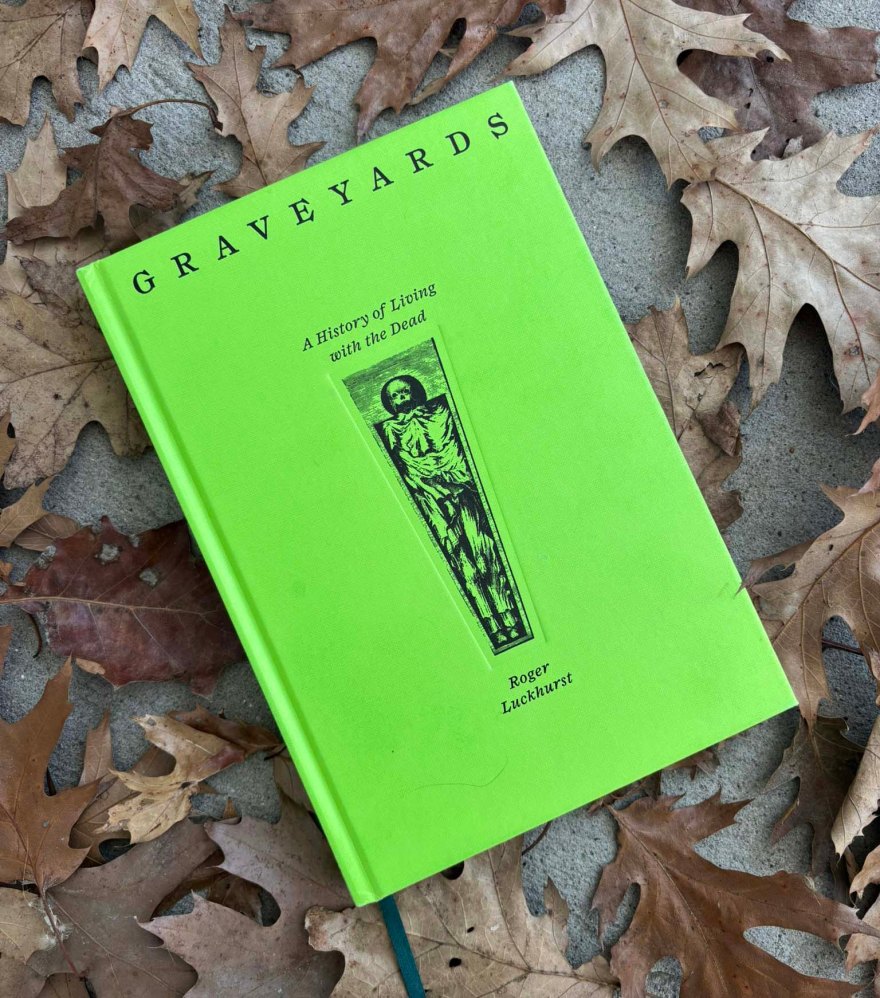
Graveyards: A History of Living with the Dead explores that question in a really interesting way. From ancient burials to modern memorials, Roger Luckhurst looks at how people have dealt with death, remember people they’ve lost, and even turned cemeteries into places of art and culture. This book isn’t just about stones and bones. It’s about history, creativity, and the many ways the dead continue to shape the living.

Luckhurst takes readers on a global tour of burial traditions. He moves through early human burials, ancient civilizations like Egypt and Rome, religious grave sites, garden cemeteries, and modern memorials. Along the way, he also shows how graveyards appear in literature, film, and art, revealing how these spaces have inspired storytelling for centuries.

Here is the synopsis, from Goodreads:

“Why, how, and where do we inter our dead? How have people throughout history responded to the problem of laying their dead to rest? Roger Luckhurst sets out in search of answers in this arresting book. Taking readers on an unforgettable tour of the rich and unusual visual culture of the grave, he visits locales such as the pyramids of Giza, the catacombs and columbaria of Rome, and the cenotaphs erected to the world’s war dead. Along the way, he examines the diverse roles of graveyards in literature, art, film, and television.

In engaging chapters that look at all aspects of the treatment of the dead, Luckhurst covers topics ranging from early burials and the emergence of necropolises and catacombs to grave robbing, garden cemeteries, the perilous overcrowding of the urban dead, and the emergence of modern funerary culture. Exploring the cultural afterlives of burial and memorial sites in the popular imagination, he shows how graves have served as guides to the underworld, poignant dedications to those we have lost, as reminders of our own mortality, and settings in gothic horror.”

Graveyards is filled with beautiful images. You’ll find photos of memento mori, monuments, symbols, and even scenes from films that use graveyards to explore human fears and hopes. The mix of history and visuals makes the topic easy to connect with.

I thought this was a gorgeous book. It feels almost like an art book, thanks to the thoughtful layout and high-quality photos. The writing leans a little academic, but the references to pop culture and movies help keep things interesting and easier to follow. The book is packed with facts about the history of burial, paired with striking examples of memorial art.

Graveyards: A History of Living with the Dead is both engaging and thought-provoking. It ties together the history of burial with art, literature, and modern culture. It shows that graveyards are more than places of rest. They reflect the values, beliefs, and stories of the people who created them.

Even though it’s a bit academic, the images and cultural references make this an enjoyable read. I would especially recommend this book to cemetery enthusiasts, history buffs, or anyone curious about the stories behind graves and memorials.

Thanks for reading! 


I am always on the hunt for cemetery-related book recommendations. If you are an author and have a cemetery-related book you would like me to review, please reach out at hello@chantallarochelle.ca. I would love to hear from you!

A Collection of Clover & Shamrocks

With Saint Patrick’s Day coming up, it felt like the perfect time to share some clovers and shamrocks that I have photographed over the years.

I love the variety you can find in cemetery symbols, and although clovers and shamrocks are not super common in Ontario, I have come across a few interesting examples.

Clovers and shamrocks often get mixed up, but they are actually two distinct symbols.

Shamrocks

A shamrock has three leaves and is closely connected to Irish culture and identity.¹ It also carries an important religious meaning. According to tradition, Saint Patrick used the three leaves of the shamrock to explain the Holy Trinity: the Father, the Son, and the Holy Spirit.¹ Because of that story, the shamrock became a symbol of both Irish heritage and Christian faith.¹ When it shows up on a gravestone, it can sometimes hint that the person buried there had Irish roots or a connection to Christian faith.

Four Leaf Clovers

Clovers are most often recognized in their four-leaf form. Unlike the shamrock, the four-leaf clover is not tied to Saint Patrick or religious teaching. Instead, it has long been linked with luck and good fortune.¹ The fourth leaf is actually a rare natural mutation, which is one of the reasons people began to see it as a lucky find.¹ In some traditions, the four leaves are said to represent faith, hope, love, and luck.¹

So if you ever find one in the wild, congratulations! You must be very lucky.


For me, finding these little details is all part of the fun of exploring cemeteries with my camera. Sometimes the smallest carvings end up being the most interesting discoveries.

Thanks for reading!


References:

  1. Shamrocks vs. Clovers by Tui Snider | American Cemetery & Cremation Magazine

Cemetery Book Review: A State of Wonder and Serenity

I first heard about A State of Wonder and Serenity: Mount Pleasant Cemetery in February when Norman S. Track reached out to me last year via email. He asked if I’d like to review his new book. I was happy to say yes, not only because Mount Pleasant is a beautiful cemetery, but also because I have visited it myself.

It was so fun to see some of the headstones I recognized covered in snow. That made the winter scenes feel even more special and personal.

Here is a bit about the book, from Track himself, from Blurb:

“Mount Pleasant Cemetery is a Toronto landscaped cemetery with an arboretum. H.A. Engelhardt’s design followed Loudon’s concept that the atmosphere of a cemetery should be solemn, uplifting and educational. The cemetery opened 4 November 1876…Early February, the cemetery was transformed into a winter wonderland. Fresh snow, bare trees, and a clear blue sky produced a quiet, ethereal atmosphere. The sun being lower in the winter sky created long, dramatic shadows. After a heavy snow, time seemed to be wrapped in a white silence.

I listened to the silence and peered deeply into the shadows—I had entered Glenn Gould’s State of Wonder and Serenity at Mount Pleasant Cemetery in February.”

Norman S. Track is a photographer and writer who really knows how to capture the quiet beauty of cemeteries. This is one of his new works, published in 2025.

A State of Wonder and Serenity takes you through Mount Pleasant Cemetery in Toronto, which has an arboretum and was opened in 1876. Track explores the cemetery in February, highlighting the fresh snow, clear blue skies, and Victorian monuments casting long shadows. His photos beautifully capture the calm and quiet of the cemetery.

I read a PDF version of the book, which I think took a little away from the joy of experiencing this book. Some photos span multiple pages, and that didn’t translate as well on a screen. I think the physical book would make a much bigger impact.

Even in PDF form, though, I loved the photos that Track includes. He shows different sections of the cemetery, each with its own character. Seeing headstones I recognize in those snowy scenes made it feel more personal and special. Because it’s a photography book, it’s very easy to pick up and reflect on, so it’s perfect to look at slowly or come back to in sections.

It’s a beautiful look at cemeteries in the winter, especially for someone like me who tends to stay indoors during the colder months. Being able to experience the lovely winter views while staying cozy was a lot of fun.

I would recommend this book to anyone who loves cemeteries, photography, or quiet places to think. Track’s photos and words make it easy to feel like you are walking through Mount Pleasant, even if you’ve never been there. It’s a great book for photographers, history lovers, or anyone who enjoys peaceful winter scenes.

Thanks for reading! 


I am always on the hunt for cemetery-related book recommendations. If you are an author and have a cemetery-related book you would like me to review, please reach out at hello@chantallarochelle.ca. I would love to hear from you!

Cemetery Stories: The Oro African Church & Cemetery

Some of the most meaningful burial places are also the easiest to overlook. Sometimes they appear as nothing more than a quiet patch of land, easy to pass by if you do not know what you are looking at. The land beside historic churches often holds space for final resting places, even when there are no stones to signal them.

The Oro African Methodist Episcopal Church and Cemetery was the first cemetery I have visited where there are no visible gravestones. At first glance, there is little to suggest a burial ground is even here. Just open grass and quiet trees.

Standing there, it quickly becomes clear that this is not a forgotten place. It is a deeply significant one. The lack of grave markers does not mean a lack of stories.

Instead, it invites you to look closer and ask questions. In many ways, it makes the stories feel weightier and even more important to share.

The Oro African Methodist Episcopal Church

The Oro African Methodist Episcopal Church was built between 1846 and 1849, by members of the Oro African community.1 Many of them were Black veterans of the War of 1812 and their families, who had been granted land in Oro Township by the British government.1 These families were building new lives here, often under difficult circumstances, and the church quickly became a cornerstone of that effort.2

For these families, the church became more than a place of worship. It served as a central gathering place for worship, education, and community life, especially at a time when Black settlers faced widespread discrimination and exclusion elsewhere in Upper Canada.3 The African Methodist Episcopal faith offered a space of autonomy, spiritual support, and leadership within the community.3

The church itself is a modest wooden structure, but its historical importance is immense. Its simplicity makes it easy to underestimate at first. For years, local folklore suggested that Oro may have been a terminus of the Underground Railroad.4 Later research clarified that many of the earliest Black settlers were retired soldiers from Captain Robert Runcie’s Coloured Corps or free Black individuals from the northern United States.4

It is one of the oldest surviving African Methodist Episcopal churches in Canada and is recognized as a designated heritage site at both the provincial and federal levels.3 That recognition helps ensure the stories tied to this place are not lost, even as the surrounding landscape continues to change.

The adjacent cemetery is believed to contain the graves of early members of the Oro African community, including church founders, families, and descendants of the original settlers.5 Contemporary accounts recall several burials taking place here, with the last known burial being that of James Thompson around 1950.4 The exact number of graves remains unknown.4

Today, no individual graves are visibly marked, but the burial ground itself remains protected and acknowledged as sacred space.

The Cemetery

While the church often receives the most attention, the cemetery is just as historically important. The Oro African Methodist Episcopal Cemetery quietly holds the same story of community, faith, and perseverance.4 The burial ground developed alongside the church and served the Oro African community for decades.4 Those buried here are believed to include Black settlers, War of 1812 veterans and their families, and later members of the congregation who remained connected to the site even as the community dispersed over time.4

Early burials were likely marked with wood rather than stone, a common practice in the mid-19th century, especially in rural and marginalized communities.4 As years passed and markers weathered away, the cemetery slowly returned to the landscape around it.

The absence of headstones does not mean the site was forgotten. In fact, the continued care of the land tells a story of respect and remembrance in its own way. The cemetery is formally recognized as part of the historic church property and is protected as a heritage site.3 This protection helps ensure that the land is treated with care, even when individual names are no longer visible. Preserving the space acknowledges both the individuals buried there and the broader history of Black settlement in Oro Township.3, 5

This was my first time visiting a cemetery with no visible headstones. The absence of stones gave the place a sombre feeling, and the forested area behind the church presented a mystery. How far does the burial ground go? I found myself looking closely at the landscape and noticing little details like yellow daffodils in bloom. Could they be marking a grave?

This is a place of history, and that carries its own weight. The cairns, historic plaques, and information at the site make it very clear that these stories have not been forgotten. One sign even had a QR code, but for whatever reason, we could not access the website. That only encouraged us to really take in our surroundings, including the cairns, the beautiful historic building, and the quiet field in front of us.

I left wishing we could have peeked inside the church. Even from the outside, it was easy to feel the presence of the community that built this place, the generations who worshipped here, and the lives that rest quietly in the field beyond the building.

Visiting a cemetery without traditional headstones really changes how you experience the space. There are no rows of stones with carved names or dates. But that does not mean the stories are missing. The stone cairn lists the surnames of the families buried here, almost like a quiet roll call of the community. A historic plaque nearby shares a short version of the church’s importance and the role it played in the lives of Black settlers in Oro Township.

Remembrance here feels different. Instead of focusing on individual graves, you find yourself looking at the land as a whole. The trees. The open field. The quiet. You slow down without even meaning to. You think about the people connected to this place, even if you cannot stand in front of a stone with their name on it.

The lack of headstones does not take away the meaning. It simply invites you to remember in another way.

The Oro African Methodist Episcopal Church and Cemetery stands as a reminder of resilience, faith, and community in the face of systemic barriers. It encourages visitors to slow down, to notice the land beneath their feet, and to recognize the lives that shaped this place even when their names are no longer etched in stone.

Thanks for reading!


References:

  1. Oro African Methodist Episcopal Church | Township of Oro Medonte
  2. Oro African Methodist Episcopal Church National Historic Site of Canada | Historic Places
  3. The Oro African Methodist Episcopal Church | County of Simcoe
  4. The Oro African Church: A History of the African Methodist Episcopal Church, edited by Tim Crawford, Published by The Township of Oro-Medonte | Book
  5. Oro African Methodist Episcopal Church | Carleton University