Are you a taphophile?
If you’re a regular reader of my blog, you very well might be!
You may have noticed that I use this term a lot, and often refer to myself and others in the cemetery community as taphophiles. For today’s blog post, the first of the new year, I wanted to take a closer look at the word, and what it means to be a taphophile.
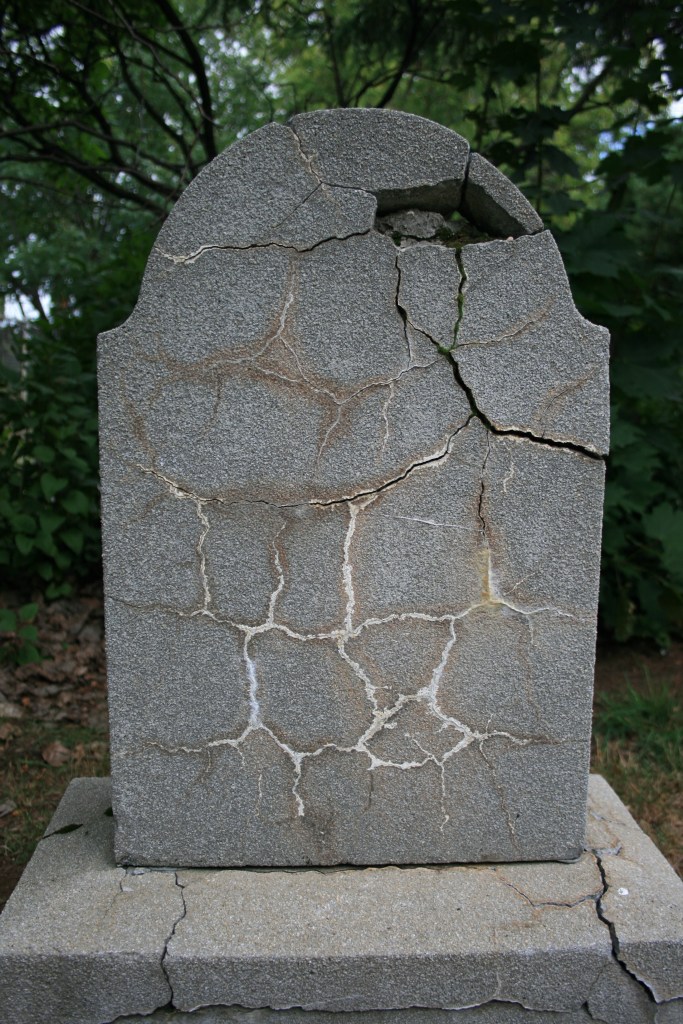
Eyre Cemetery, Sudbury ON ©2011
The origin of the word taphophile comes from the Ancient Greek word taphos and phile. Taphos meaning funeral rites, burial, wake, or grave, and phile meaning dear or beloved.1 Curiously, if you look up the word in the Oxford English dictionary or Merriam-Webster online, the word does not come up. Although the latter did bring up the word typophile, similar but not quite right.
Taphophile is defined as a person who is interested in cemeteries, funerals, and gravestones.2 To me that is a very flat and vague definition, as there is so much it entails. I was curious as to how others in the cemetery community would define the term, so I reached out to a few friends. The responses I received were very mindful and thought-provoking.
Tui Snider, speaker and author of Understanding Cemetery Symbols shared this thoughtful reflection:
“To me, being a taphophile means understanding that cemeteries are for the living. Not only do burial grounds provide a place for grieving, cultural expression, and contemplation, but they offer a direct connection to nature, something that is often missing from people’s lives.
Visiting graveyards throughout the year exposes us to cycles of life and death that are the foundation of our world. Many cemeteries are wildlife corridors that nurture vital pollinators as well as migrating birds and other animals. By visiting cemeteries, taphophiles gain a unique appreciation for all that burial grounds offer, not just to humans but to the plants and animals they sustain as well.”
Tasha Westby Tietz, also known as Graveyard Girl on Facebook shared this insight:
“Being a taphophile means to me, an unusual intense interest in cemeteries and all that is related. A way to remember and respect those that have gone on before. Endless adventures.”
Loren Rhoads, cemetery traveler and author of 199 Cemeteries To See Before You Die shared this interesting perspective:
“I don’t really think of myself as a taphophile, because the word seems academic and cold to me.
I’ve always thought of myself as a cemetery aficionado, because my love of burial places is much more about appreciating their beauty and ambience as a whole than it is about studying the stones individually.
To be honest, I love that everyone defines taphophile for themselves.”
I couldn’t agree more! Each of these responses showcases the many reasons why visiting cemeteries is so important. I really appreciate Loren, Tasha, and Tui taking the time, and want to thank them for sharing their thoughts with us.
It makes sense that everyone who would call themselves a taphophile has their own definition of the word since we all have our own unique interests and reasons for visiting cemeteries.
For me, the term taphophile names that connection I feel to those who have come before me and are now laid to rest. It means they will not be forgotten, and that there is still much that they can teach us. It means that I love the experience of wandering through beautiful cemeteries and reading the names out loud. I love to admire the uniqueness and craftsmanship of gravestones, while also learning more about art, architecture, and symbolism. I am curious about the person below the gravestone. I also love the adventure of finding and exploring cemeteries.
I always say that cemeteries are for the living, that they are open-air art galleries and museums, and that they should be explored.
Do you call yourself a taphophile? What is your definition? I would love to keep the discussion going in the comments.
Thanks for reading!
References:
- Taphophile | Wikipedia
- Taphophile Definition | Your Dictionary
 Cemetery Photography by Chantal Larochelle