
Did you know that May is Cemetery Appreciation Month?
I first found out about this observance in 2021 when I saw similar posts circulating on social media from others who frequent cemeteries. I have been celebrating ever since!
I’m not sure when this celebratory month was first recognized. But, I did learn that in May 2009, the Iowa Governor proclaimed the month of May to be Cemetery Appreciation Month, to honor the importance of cemeteries:
“Whereas, pride and respect for our pioneers leads to an interest in and concern for the future. It is with this thought in mind that we dedicate this month to the care of our pioneer cemeteries:”1
Many others have since followed suit, with other counties, historical societies, and even cemeteries making similar proclamations that apply to all cemeteries.
In the past, I have celebrated by making myself a bucket list of fun things to do that can be completed during the month. Last year, I created a set of 4 Cemetery Bingo Cards (PDF) that you can print out and take with you on your next cemetery visits.
This year I wanted to do something a little different to celebrate, by making a little cemetery terrarium that I can hopefully keep year-round.
A cute little reminder of the places I love so much.

A true terrarium is a miniature, self-sustaining garden ecosystem that is usually contained in a small sealable glass jar. Placed in the sun, it becomes self-watering through a cycle of condensation and evaporation. Once sealed, there should be no need to re-open the jar again, although it doesn’t hurt to give it a little spritz if needed.
Things you’ll need:
- a sealable glass container
- plants (moss, ferns, etc.)
- gravel or lava rock
- sand or activated charcoal
- mesh screen
- soil
- cemetery decor
Tools:
- tweezers
- spray bottle filled with water
How to make a Cemetery Terrarium
First things first, you will need to choose the container that will house your little cemetery.
Look for a sealable glass container that has a wide mouth. This will make it easier to build your cemetery within it.
I found my container at a local thrift store, but you can also look for the perfect container at your local dollar store as well. If you are going for a specific look, you might get lucky at Michael’s Craft Store, but they can be on the more expensive side, so if you do go that route make sure to check their website for a coupon.

Next, you will need some plants!
To best mimic the look of a cemetery I am going with moss, but you can go with whatever you like best. Keep in mind that a closed terrarium creates a high-humidity environment, so you want to choose plants that will do well in that setting. Ferns and mosses both do well in a terrarium.
The benefit of using moss is the ability to build up your little landscape in chunks, to create a more natural-looking terrain. This will come in handy when placing your gravestones and other decor as well.
Now we can start building our terrarium from the bottom up.
First, add about an inch of gravel or lava rock to the bottom of your glass container. This layer will act as your drainage, creating space for any excess water. This will also help prevent root rot.
Next, fill in the spaces between the gravel with sand or activated charcoal. This will add an extra layer of filtration.
After that, lay the mesh screen on top. This screen will allow water to pass through but will stop the soil from mixing into the drainage layer. This will also create a barrier to slow down roots, and help prevent root rot.


Now that we have a strong foundation for our terrarium, it’s time to start adding the soil.
The type of soil you use is up to you. There are soil mixes made specifically for terrariums, such as ABG mix or Terrarium mix, but potting soil can work just as well.
You want to add enough soil to contain the plant roots comfortably.
To add dimension to your landscape, and if you have the space in your container, you can create different elevations by adding a slope or valley into your soil layer.

Now it’s time to start building our miniature landscape.
To start, give the soil a light misting. This will make the soil a bit easier to work with. Now you can start arranging your plants.
Break apart your moss into manageable chunks. This will help make placement easier, as well as working around your gravestones and other decor.
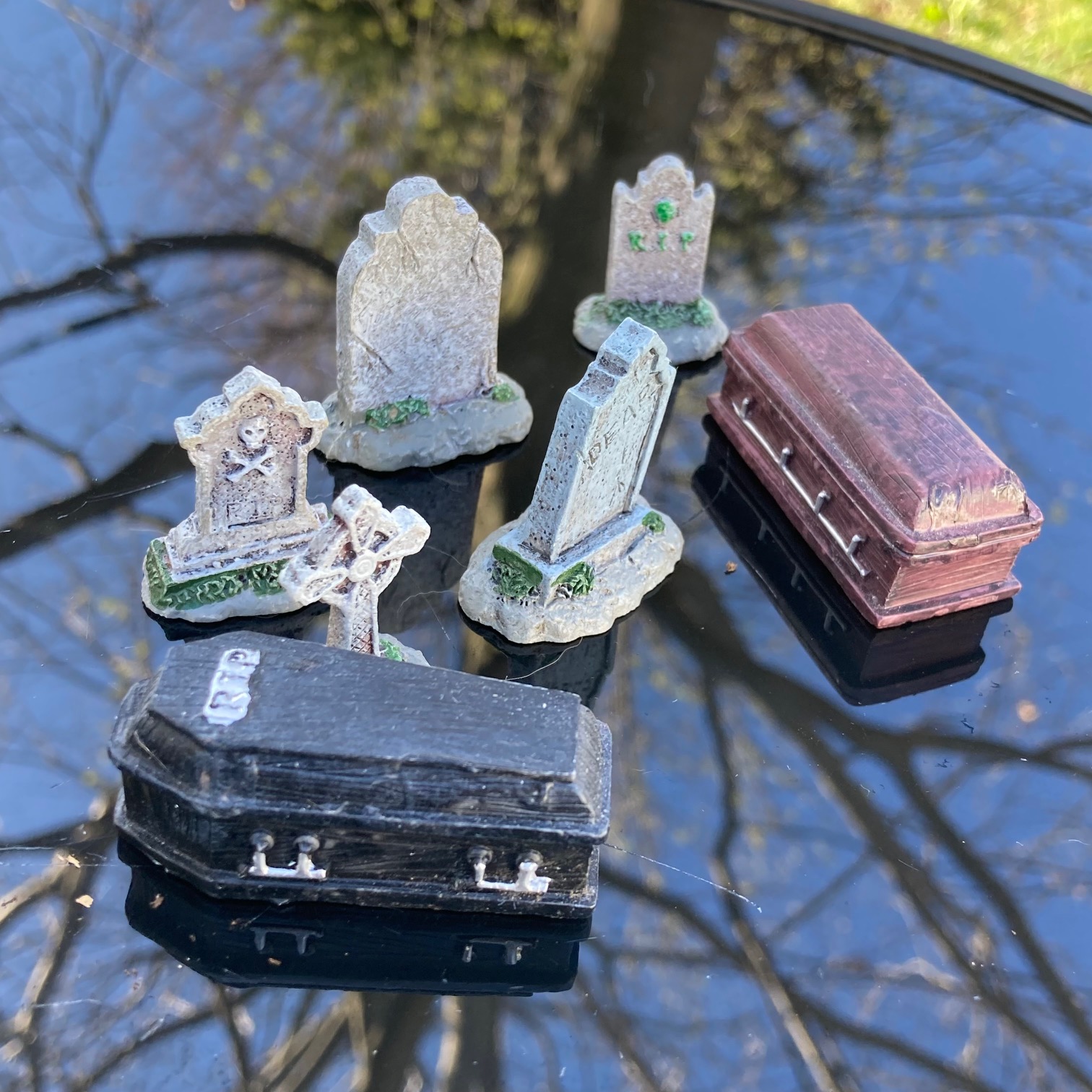
Using the tweezers to place and build up my moss, I incorporated some miniature gravestones and a coffin to flesh out my cemetery.
Add moss until all the soil is covered.
I used gravestones and coffins from the Lemax Spooky Town Collection that I purchased from Michaels a few years ago. These are pre-painted and stand about 1 inch tall. But there are other cemetery sets out there for purchase, some that are 3D printed and unpainted so you can customize your cemetery.
For an added touch, you can add small branches to your terrarium to create the illusion of trees.
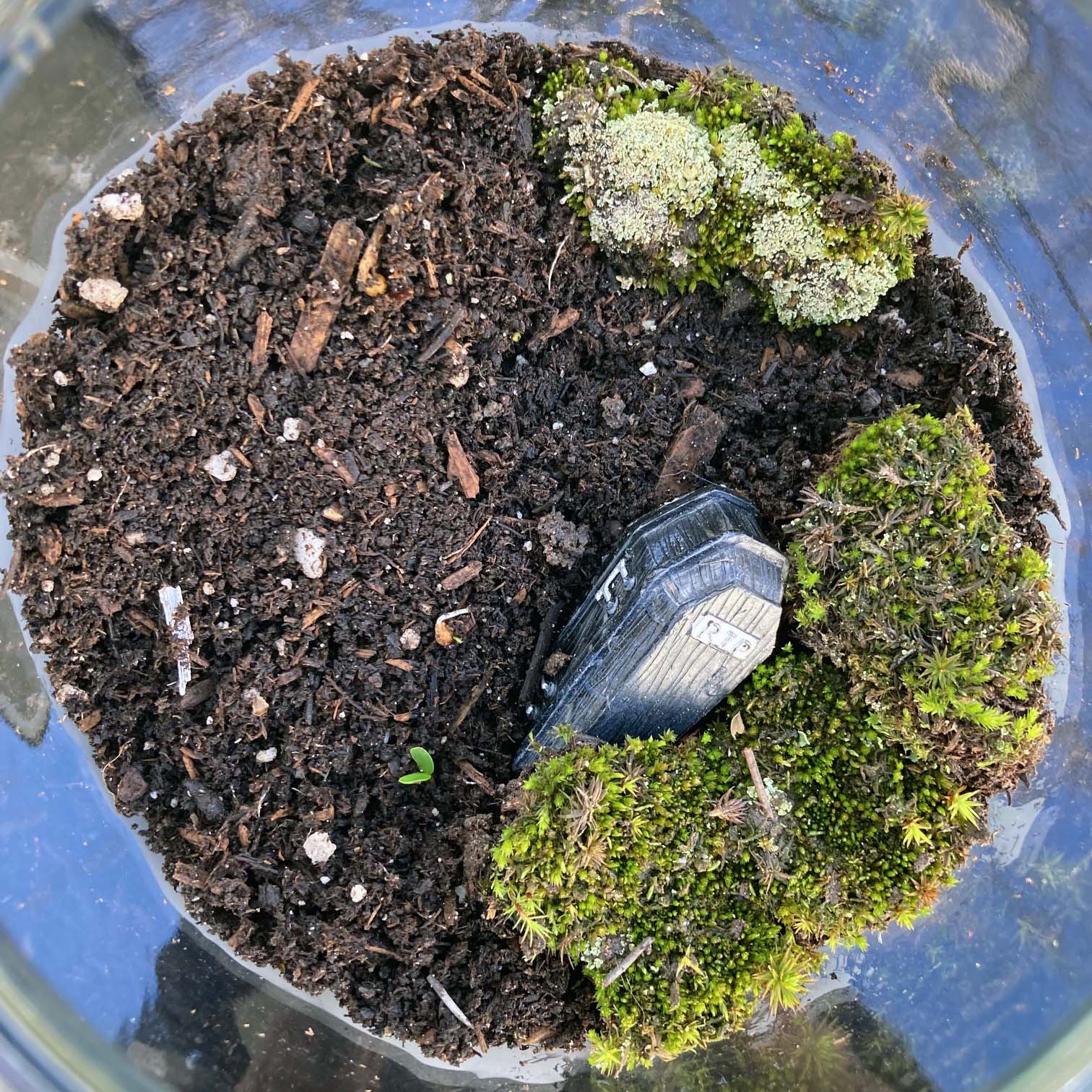

Now that your cemetery is ready, it’s time to give it one last watering before sealing it up. Give your cemetery a light spray, with just enough water to make the soil damp.
Then go ahead and put the lid on, to seal your container, and admire your new miniature cemetery!
Your new mini cemetery should be pretty self-sustaining, but to get the most life out of your terrarium, make sure to place your terrarium somewhere that gets plenty of bright, indirect sunlight. Infrequent direct sunlight won’t hurt it, but too much direct sunlight can burn your plants. If you notice your cemetery looking too dry, or your plants look wilted—give your terrarium a light watering, making sure not to soak it.


I hope you enjoyed this little tutorial on how to make your own cemetery terrarium. I had a lot of fun creating mine and putting this little how-to together. It was a little out of my comfort zone, but I had fun experimenting and exploring the world of terrariums.
I found it particularly fun designing my cemetery landscape and thinking about what my favorite elements of a cemetery are and trying to incorporate that into my final design.
I can’t wait to see what you create! Make sure to tag me on Instagram and Facebook.
Happy Cemetery Appreciation Month!
Thanks for reading!
References:
- May is Cemetery Appreciation Month | Newton News
 Cemetery Photography by Chantal Larochelle