

After visiting both of Tom Thomson’s graves, I was inspired to visit the graves of all the members of the Group of Seven.
As a graphic designer, I have a little background in art history and I have long admired their work. Standing at Thomson’s first resting place at Canoe Lake sparked a desire to pay my respects to the others who also helped shape Canadian art.
So today on the blog, I want to share my visit to the grave of Franklin Carmichael in Orillia, Ontario.
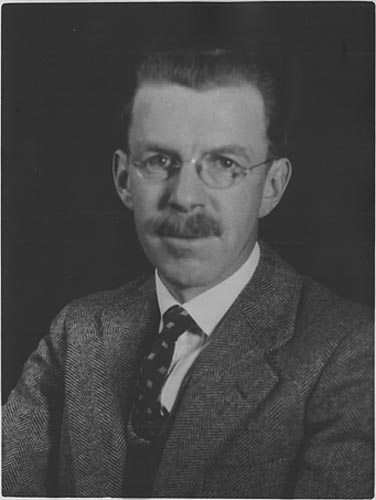
M.O. Hammond (1876–1934), Public domain, via Wikimedia Commons
Franklin Carmichael
Born in 1890 in Orillia, Franklin Carmichael showed early signs of artistic talent, which his mother quickly nurtured by enrolling him in music and art lessons.1 In his teenage years, he worked in his father’s carriage-making shop, where he honed his skills as a designer, striper, and painter.1 By 1910, Carmichael moved to Toronto to attend the Ontario College of Art, where he studied under renowned instructors.1
In April of 1920, Carmichael found his place within the emerging Group of Seven, joining artists like A.Y. Jackson, Lawren Harris, and J.E.H. MacDonald in their mission to capture Canada’s untamed wilderness.1 Despite being the youngest member of the group, Carmichael’s work, particularly his depictions of Ontario’s northern landscapes, were just as striking and bold as those of his peers.1 His travels to Lake Superior and the La Cloche Mountains were the backdrop for some of his most celebrated works, where watercolors became the defining feature of his style.1
Carmichael would go on to teach at the Ontario College of Art and later founded the Canadian Group of Painters, after the Group of Seven disbanded in 1933.1
Orillia Museum of Art & History
The Orillia Museum of Art & History sits in the heart of downtown Orillia and is housed in the historic Sir Samuel Steele Memorial Building. My mother and I parked the car on a side street and slowly walked along the sidewalk to the museum as we took in the views of the downtown core. It was a beautiful fall day when we visited, so the streets were bustling with activity.
We began our museum visit on the top floor and slowly made our way back down, through the myriad of exhibits. The museum’s collection intertwines local history with artistic expression.
When we visited, the Teachers and Their Enduring Impact—The Legacy of Jose Salas exhibit had just opened. This exhibit featured artwork by Jose Salas, an art teacher at the local college, as well as artwork from of his students.2 It was a lovely exhibit that showcased the profound influence a teacher can have on their student’s creative journeys.
While viewing this exhibit, I couldn’t help but think about Carmichael and what kind of influence he had on his students when he taught at the Ontario College of Art. Having taken quite a few art classes myself, I wondered what it may have been like to be taught by one of the famous Group of Seven.
The museum also has a permanent exhibit that features some of the more prominent figures from Orilla, like Gordon Lightfoot, Stephen Leacock, and of course—Franklin Carmichael.

Untitled (Waterfall, South River) by Franklin Carmichael. 1990.2.1 Watercolor, n.d 12.75 x 11 Donated by the Simcoe College Foundation. Orillia Museum of Art & History
After taking in everything the museum had to offer, it was time to make our way to the cemetery to pay our respects.
St. Andrews and St. James Cemetery
Franklin Carmicheal passed away in Toronto, on October 24, 1945, following a regular day of teaching classes. As he began his drive home, he suffered a heart attack in his car; he was only 55 years old.3
Carmichael is laid to rest in St. Andrews and St. James Cemetery in his hometown of Orilla. His final resting place is marked with an elegant grey granite stone, that is engraved with ivy and crosses. He is laid next to his beloved wife, Ada Lillian Went Carmichael, who passed away in 1964.

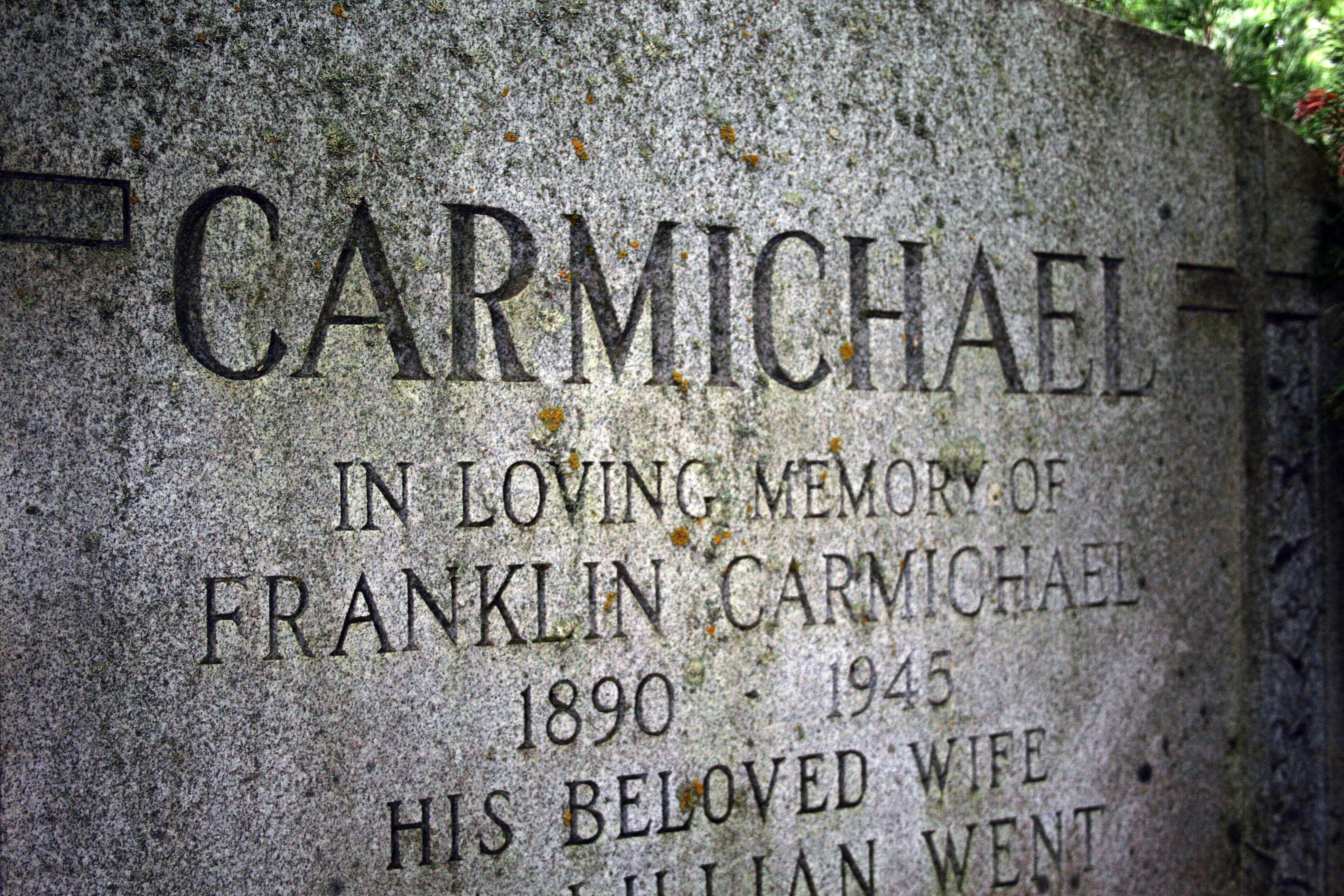

The Carmichael family plot. St. Andrews and St. James Cemetery, also known as St. Andrews Cemetery, St. James Cemetery, Orillia ON ©2024
Buried alongside Carmichael in the family plot, are his daughter Mary Franklin Carmichael Mastin, and her husband. Mary dedicated much of her life to preserving her famous father’s legacy.4 She was also a writer and journalist, writing about nature and conservation.4 She passed away in 2012, at the age of 91 at St. Gabriel’s Villa, in Chelmsford, Ontario.4
In contrast to the busy streets, the cemetery was very quiet. My mother and I were the only visitors. As I stood at Carmichael’s graveside, I reflected on how his contributions to the art world have influenced and inspired countless generations of Canadian artists. I was a little surprised, though, to find that no flowers or grave goods had been left at his grave, something I had expected for an artist of his caliber. It made me think about how a person’s life story can sometimes be quietly forgotten, and the importance of remembrance.
I really enjoyed my visit to Orillia. Exploring Franklin Carmichael’s legacy was a unique opportunity to reflect on the power of art and how it connects us to the land and each other. From the Orillia Museum of Art & History to his gravesite, it was a lovely trip that gave me a deeper appreciation for Carmichael’s work and the lasting impact he had on Canadian art.
Thanks for reading!
References:
- Franklin Carmichael | The Group of Seven
- Teachers and Their Enduring Impact—The Legacy of Jose Salas | Orillia Museum of Art & History
- Franklin Carmichael | Roberts Gallery
- Mary Franklin Carmichael Mastin | Find a Grave
 Cemetery Photography by Chantal Larochelle
One thought on “Stone Stories: The Youngest Member of the Group of Seven”