Last Summer, my mother and I took a trip to Wellington County, thanks to a surprise road trip from Guess Where Trips. You might remember the blog post I wrote about the whole experience last year.
One of the most memorable stops on our adventure was the Wellington County Museum and Archives, a place that doesn’t just preserve history, but really brings it to life. Nestled between the charming towns of Fergus and Elora, this museum isn’t just a collection of artifacts—it’s a storyteller, sharing the life stories of the people who once walked its halls.
But the museum wasn’t the only thing that left an impact on us. Today, I want to share a bit more about our experience—both visiting the museum, and the cemetery were some of the House of Industry and Refuge residents were laid to rest.
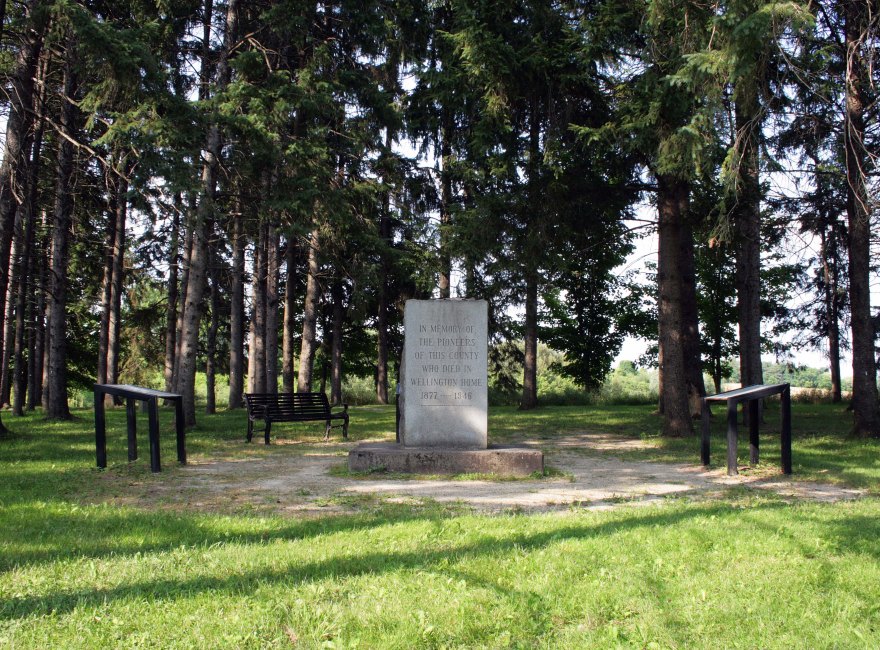
House of Industry and Refuge Cemetery, Fergus ON ©2024
Wellington County Museum and Archives
The Wellington County Museum and Archives is housed in a building with a fascinating and, at times heartbreaking history.
Designated as a National Historic Site, this building holds the title of the oldest remaining rural House of Industry and Refuge in Canada.1 Established in 1877, it originally provided a home for the poor, homeless, and destitute of Wellington County. Over the years, approximately 1,400 men, women, and children sought refuge within these walls.1
Today, the museum has taken on a whole new role. Instead of providing shelter, it now shares knowledge, offering programs, exhibits, and resources that dive into local history, art, and culture.2
And the grounds? Well, they have their own stories to tell.

Wellington County Museum and Archives, Fergus ON ©2024
When my mother and I visited, we started exploring the top floor and made our way down. Although there were many exhibits at the time, including one about 19th-century fashion, I was most drawn to the history of the Poor House itself and the people who had lived there.
Wellington County Poor House
Back in the 19th century, poverty was seen as a moral failing rather than an unfortunate circumstance. That’s where places like the Wellington County House of Industry and Refuge came in.3 Also known as the Poor House, it was one of several institutions across Ontario designed to provide shelter and work for those in need. Life here wasn’t easy, but the goal was to make the Poor House as self-sufficient as possible.3
The facility operated as an industrial farm, with thirty acres of land used to grow oats, turnips, wheat, and even apples from a 100-tree orchard.3 Livestock provided eggs, meat, and fresh butter, while any surplus goods were sold in town to help cover the cost of necessities like sugar, coffee, and bread.3
Life in the Poor House was structured and demanding. Residents—often referred to as “inmates”—had to work to earn their keep.3 The strict rules and expectations reflected the era’s attitudes toward poverty and self-sufficiency. It wasn’t until 1947 when the facility was renamed the Wellington County Home for the Aged, that things started to shift.3 The term “inmate” was finally dropped and replaced with “resident”—a small but important change.3
The Home remained in operation until 1971 when its last residents were moved to Wellington Terrace, a new senior home in Elora.3 Just a few years later, in 1975, the building reopened as the Wellington County Museum.3
Walking through the museum, I couldn’t help but feel the weight of its history. Panels line the walls, sharing stories of past residents, and exhibits display artifacts that once belonged to them. Although the items were simple—a worn bed, an old suitcase—they evoked so much emotion. These weren’t just objects, they were pieces of someone’s life.


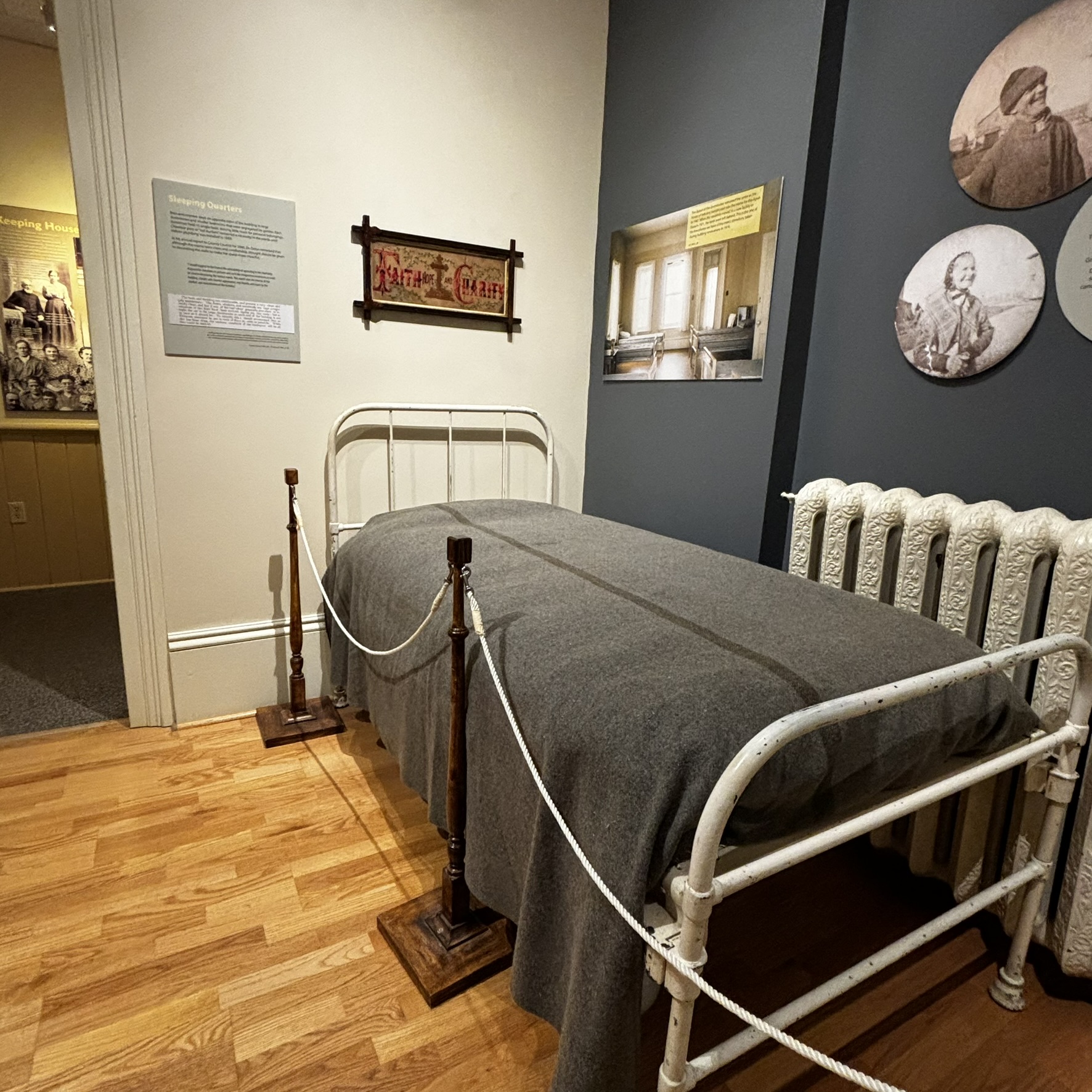
Wellington County Museum and Archives, Fergus ON ©2024
Considering the hardships experienced by its former residents, it’s no surprise that some people believe the museum is haunted. Visitors and staff alike have reported seeing shadowy figures, hearing unexplained footsteps, and even witnessing elevators moving on their own.4
The most well-known spirit is said to be that of a former resident named Anna. People have claimed to hear women arguing in empty rooms, or furniture being rearranged.4 Is it just an old building settling? Or is history lingering in more ways than one?
House of Industry and Refuge Cemetery
When the museum closed for the day, my mother and I made our way to the cemetery—a quiet but powerful reminder of the lives that once filled the Poor House.
A short drive took us to a small parking lot near the cemetery entrance. From there, a scenic trail led to a repurposed train bridge that spans the highway. It was a beautiful day, and the surrounding forest was lush and green. After crossing the bridge, we descended a staircase with informational panels that peeked out from behind the foliage. The staircase led us down to a clearing, where tall trees provided shade over a few gravestones.
The cemetery is the final resting place for 271 men, women, and children who had no family to claim them.5 Originally, the graves were marked with simple wooden crosses, but over time, those markers deteriorated and disappeared. Today, small gravestones mark the sections of the cemetery, and a larger central monument lists the names of those buried here.
James Burk was the first to be buried in the cemetery on December 21, 1877.5 Often only the gravedigger, clergyman, and undertaker were present for the burials.5 The oldest person to be buried in the cemetery was 106 years old, while the youngest was under a year old.5 The last burial to take place here was for Samuel Nichols who passed away on December 14, 1946.5
Standing in that clearing, surrounded by the names of those who had lived and died here was quite moving. The stories of some of these individuals might have been lost to time, but the community has worked hard to ensure that they are remembered.


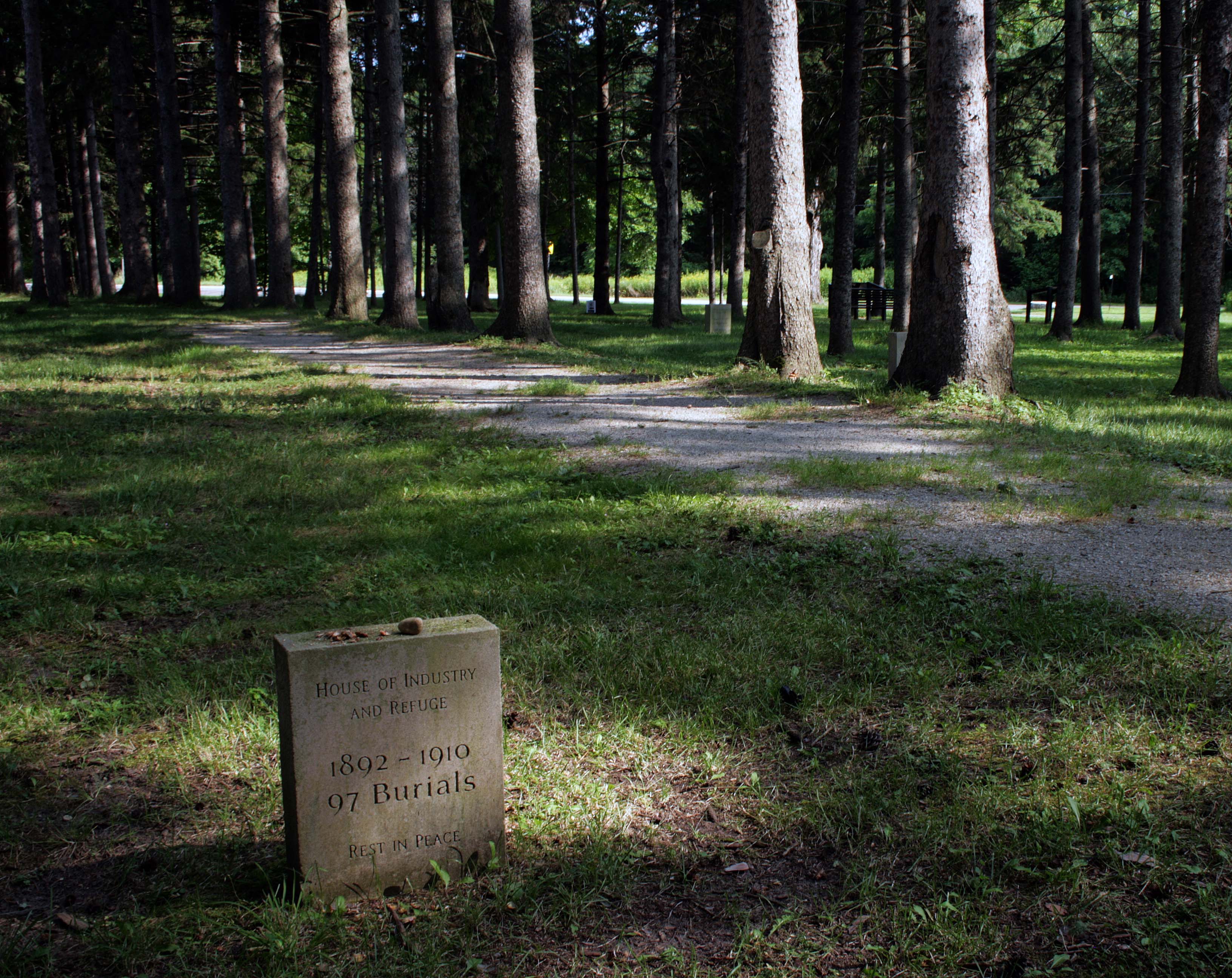

House of Industry and Refuge Cemetery, Fergus ON ©2024
Visiting the Wellington County Museum and the House of Industry and Refuge Cemetery was like stepping back in time. It gave me a glimpse into a world where life was unimaginably hard, but also where people persevered against the odds.
The transformation of the Poor House into a museum and cultural hub is a great example of how we can honour the past while also moving forward. History isn’t always easy to confront, but it’s essential to remember—because it shapes who we are today.
Have you ever visited a historic site that really stuck with you? I’d love to hear your thoughts in the comments. If you’re ever in Wellington County, I highly recommend stopping by this museum and its cemetery. It’s a place that truly brings history to life.
Thanks for reading!
References:
- About Us | Wellington County Museum and Archives
- Plan a Visit | Wellington County Museum and Archives
- The Poor House Story | Wellington County Museum and Archives
- Historic Haunts Tour | Guess Where Trips
- House of Industry & Refuge Cemetery | Find a Grave
 Cemetery Photography by Chantal Larochelle