
Some of the most meaningful burial places are also the easiest to overlook. Sometimes they appear as nothing more than a quiet patch of land, easy to pass by if you do not know what you are looking at. The land beside historic churches often holds space for final resting places, even when there are no stones to signal them.
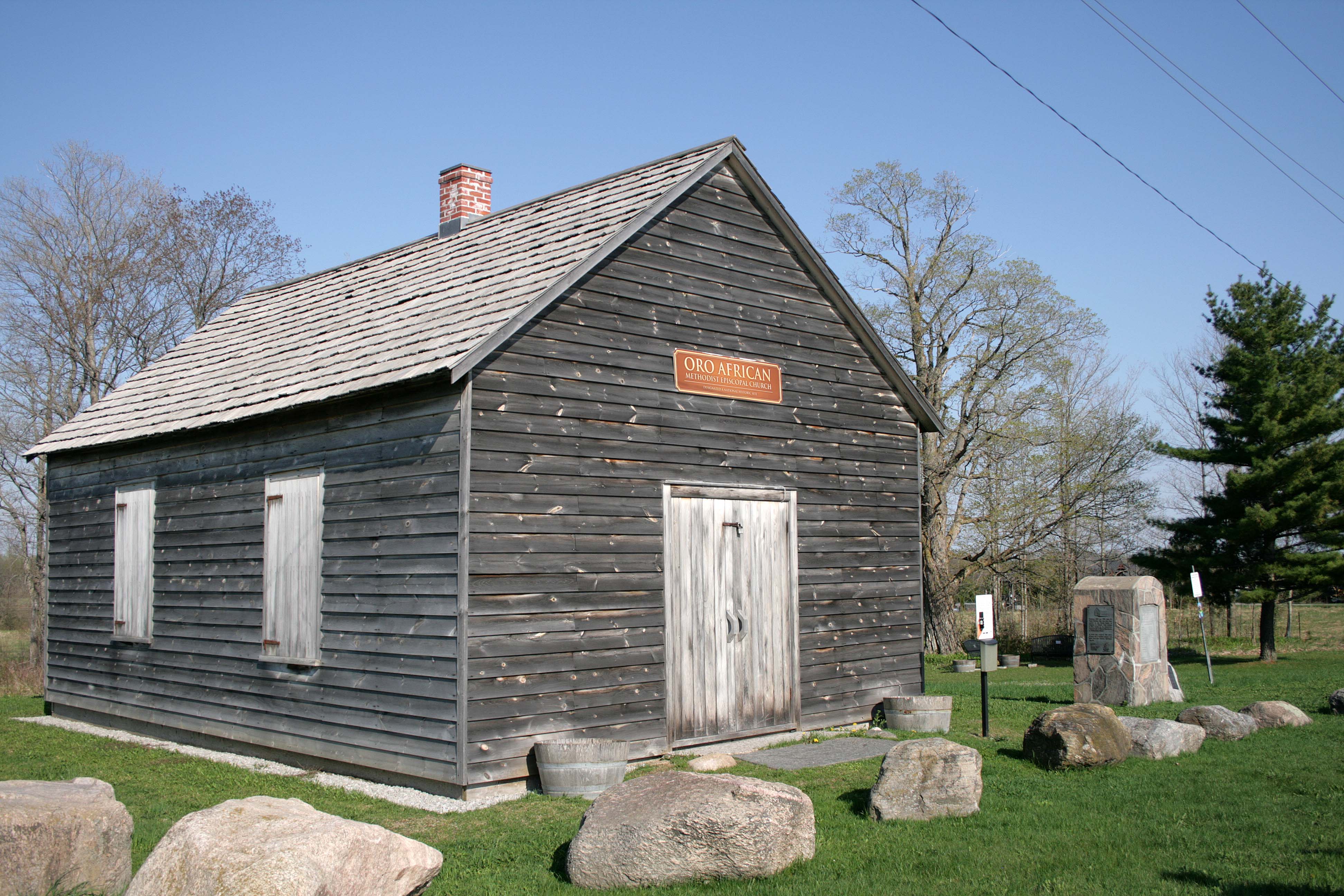
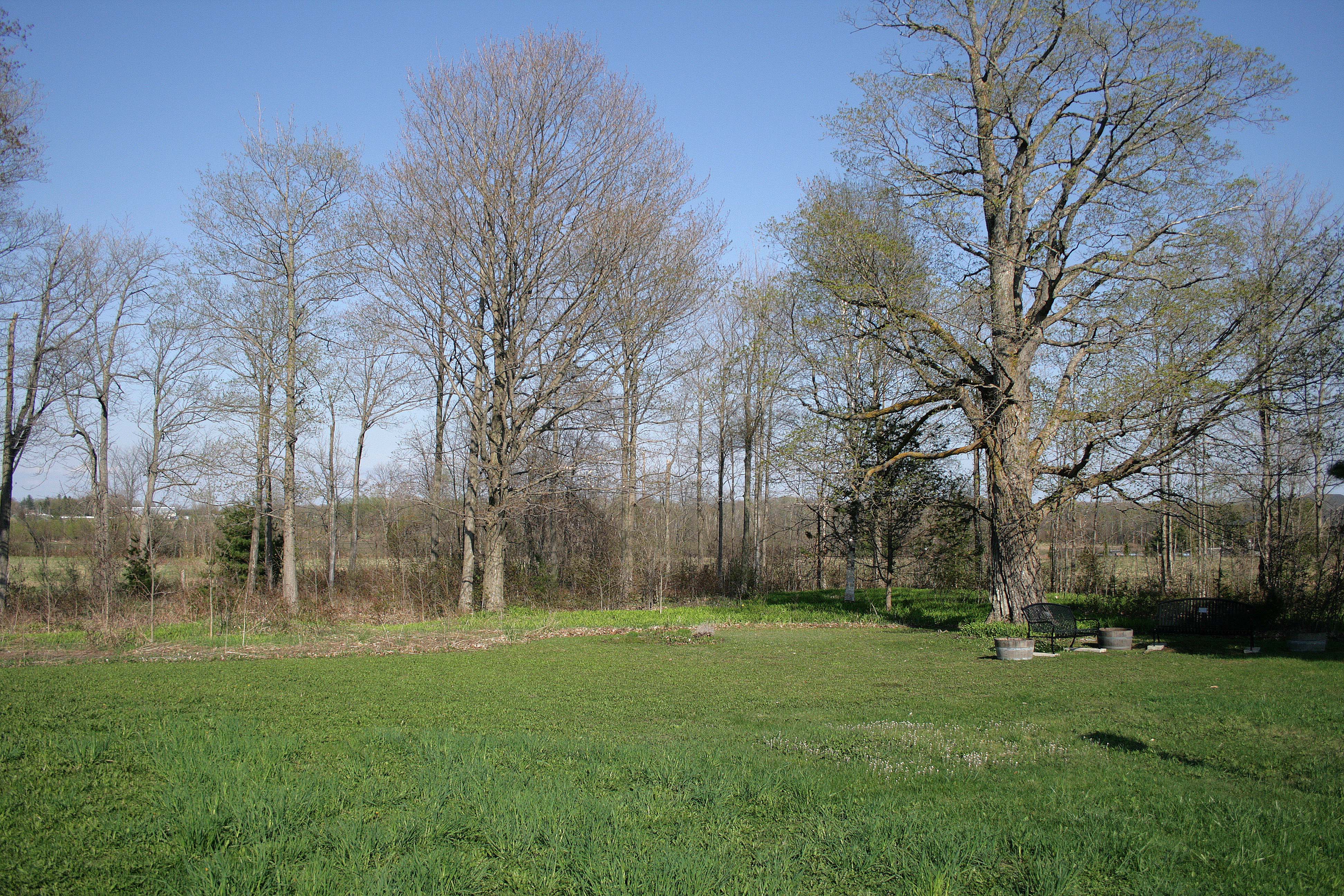
The Oro African Methodist Episcopal Church and Cemetery was the first cemetery I have visited where there are no visible gravestones. At first glance, there is little to suggest a burial ground is even here. Just open grass and quiet trees.
Standing there, it quickly becomes clear that this is not a forgotten place. It is a deeply significant one. The lack of grave markers does not mean a lack of stories.
Instead, it invites you to look closer and ask questions. In many ways, it makes the stories feel weightier and even more important to share.
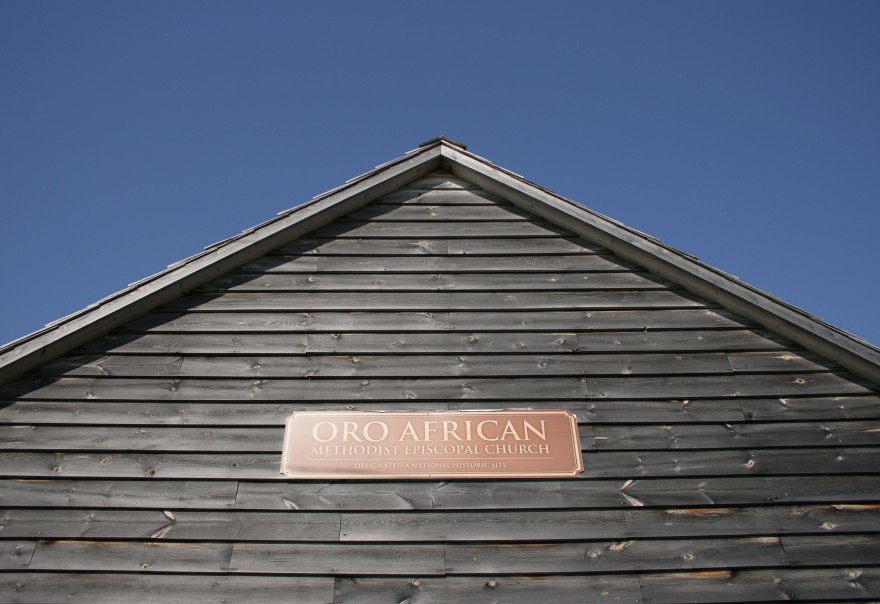
Oro African Methodist Episcopal Church, Oro-Medonte ON ©2024
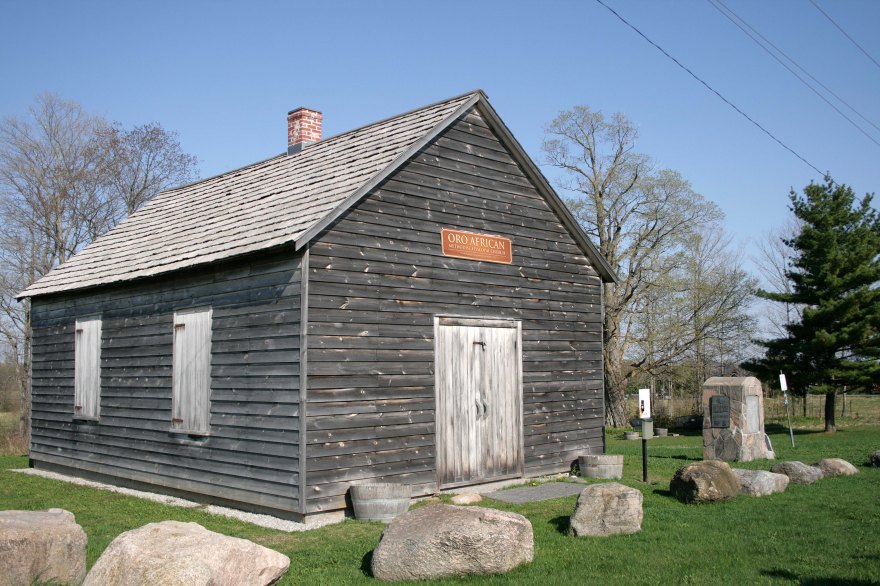
The Oro African Methodist Episcopal Church
The Oro African Methodist Episcopal Church was built between 1846 and 1849, by members of the Oro African community.1 Many of them were Black veterans of the War of 1812 and their families, who had been granted land in Oro Township by the British government.1 These families were building new lives here, often under difficult circumstances, and the church quickly became a cornerstone of that effort.2
For these families, the church became more than a place of worship. It served as a central gathering place for worship, education, and community life, especially at a time when Black settlers faced widespread discrimination and exclusion elsewhere in Upper Canada.3 The African Methodist Episcopal faith offered a space of autonomy, spiritual support, and leadership within the community.3
The church itself is a modest wooden structure, but its historical importance is immense. Its simplicity makes it easy to underestimate at first. For years, local folklore suggested that Oro may have been a terminus of the Underground Railroad.4 Later research clarified that many of the earliest Black settlers were retired soldiers from Captain Robert Runcie’s Coloured Corps or free Black individuals from the northern United States.4
It is one of the oldest surviving African Methodist Episcopal churches in Canada and is recognized as a designated heritage site at both the provincial and federal levels.3 That recognition helps ensure the stories tied to this place are not lost, even as the surrounding landscape continues to change.
The adjacent cemetery is believed to contain the graves of early members of the Oro African community, including church founders, families, and descendants of the original settlers.5 Contemporary accounts recall several burials taking place here, with the last known burial being that of James Thompson around 1950.4 The exact number of graves remains unknown.4
Today, no individual graves are visibly marked, but the burial ground itself remains protected and acknowledged as sacred space.
The Cemetery
While the church often receives the most attention, the cemetery is just as historically important. The Oro African Methodist Episcopal Cemetery quietly holds the same story of community, faith, and perseverance.4 The burial ground developed alongside the church and served the Oro African community for decades.4 Those buried here are believed to include Black settlers, War of 1812 veterans and their families, and later members of the congregation who remained connected to the site even as the community dispersed over time.4
Early burials were likely marked with wood rather than stone, a common practice in the mid-19th century, especially in rural and marginalized communities.4 As years passed and markers weathered away, the cemetery slowly returned to the landscape around it.
The absence of headstones does not mean the site was forgotten. In fact, the continued care of the land tells a story of respect and remembrance in its own way. The cemetery is formally recognized as part of the historic church property and is protected as a heritage site.3 This protection helps ensure that the land is treated with care, even when individual names are no longer visible. Preserving the space acknowledges both the individuals buried there and the broader history of Black settlement in Oro Township.3, 5
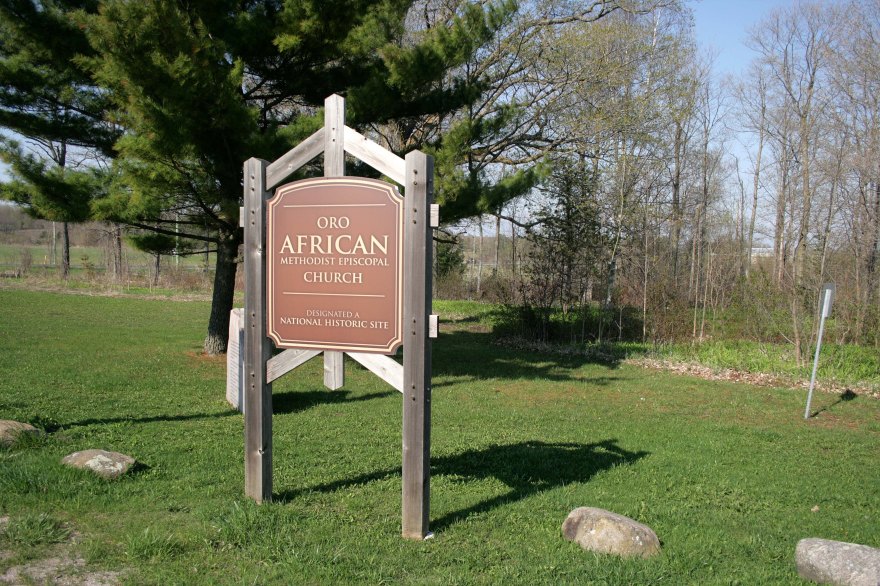
Oro African Methodist Episcopal Church Cemetery, Oro-Medonte ON ©2024
This was my first time visiting a cemetery with no visible headstones. The absence of stones gave the place a sombre feeling, and the forested area behind the church presented a mystery. How far does the burial ground go? I found myself looking closely at the landscape and noticing little details like yellow daffodils in bloom. Could they be marking a grave?
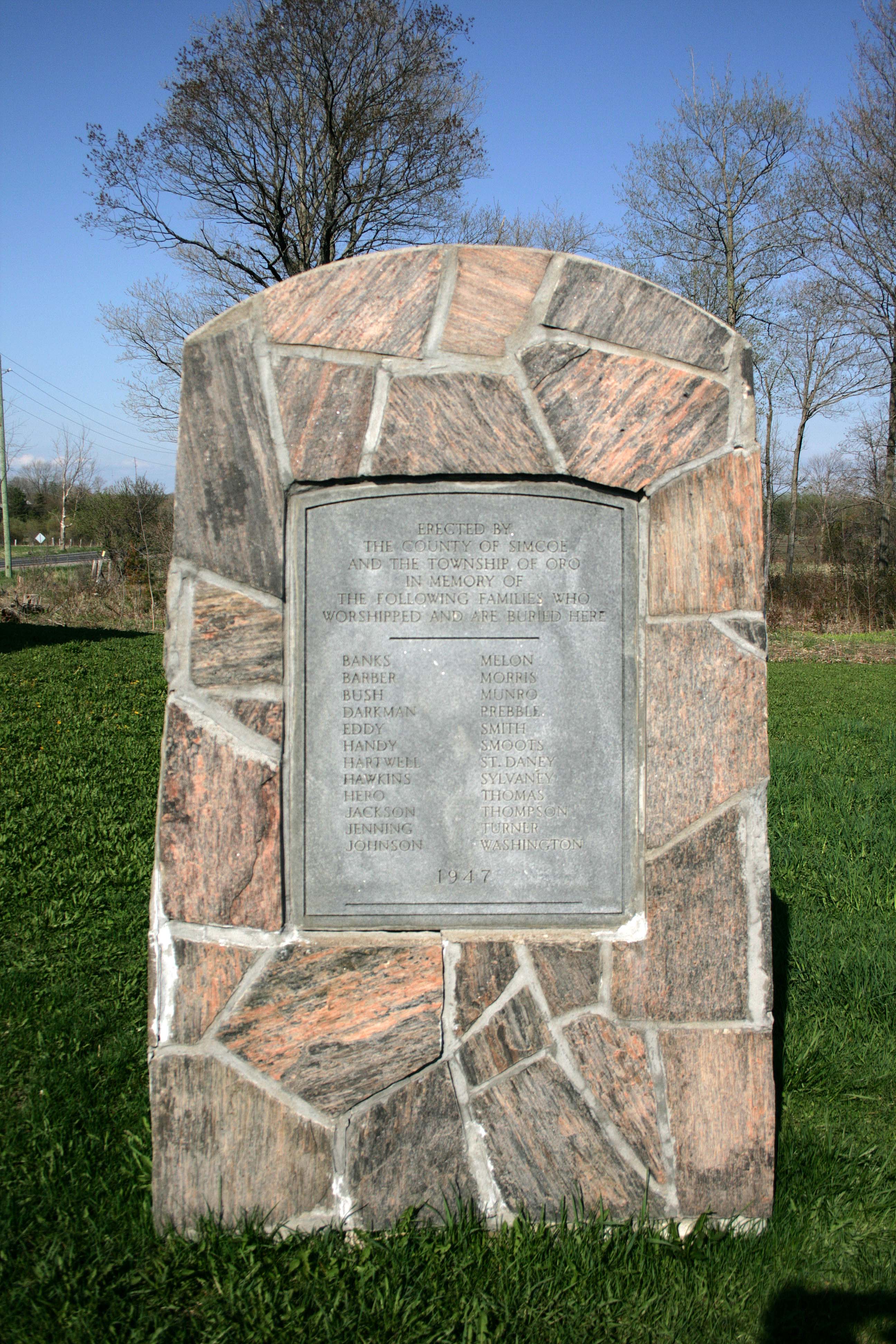
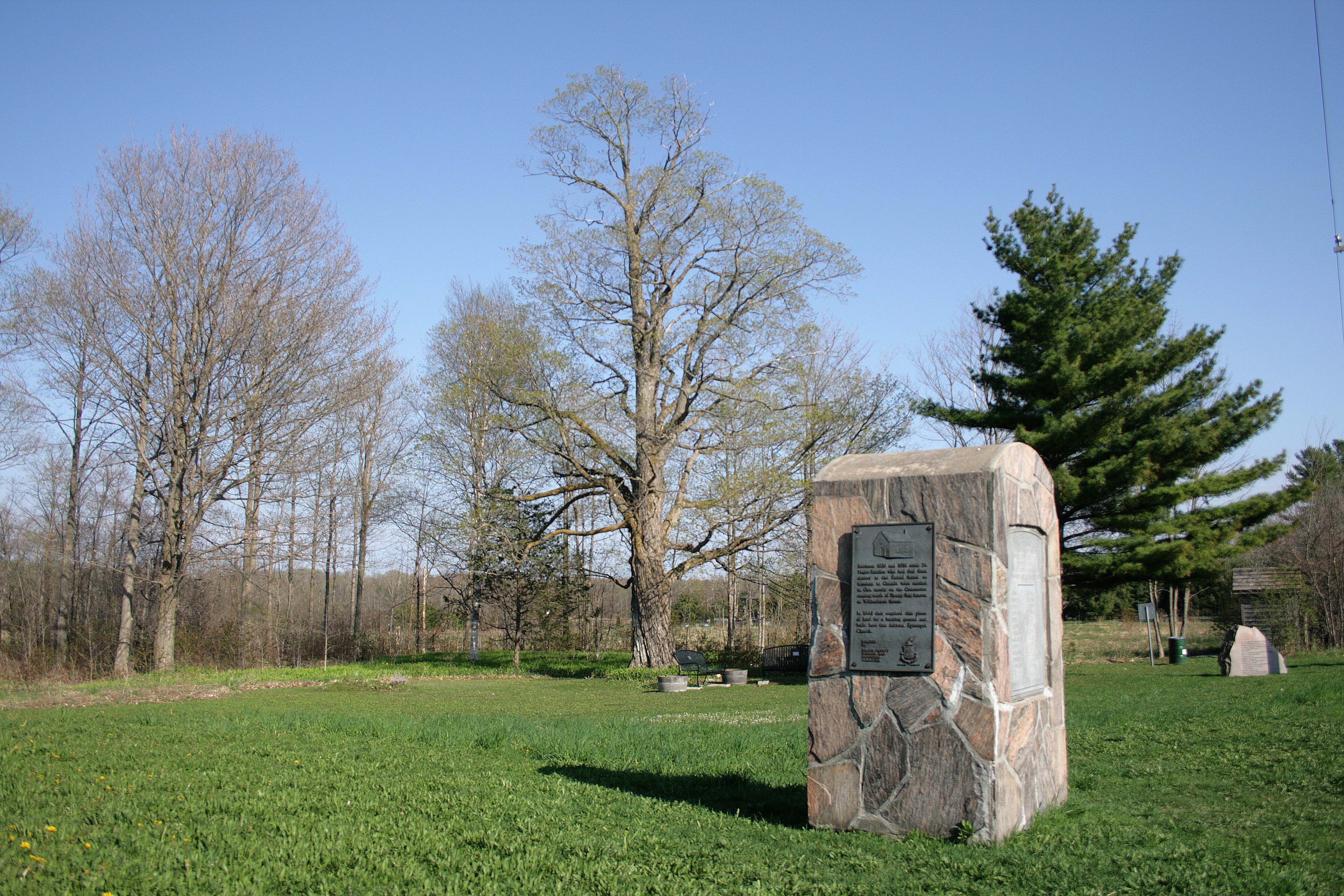
This is a place of history, and that carries its own weight. The cairns, historic plaques, and information at the site make it very clear that these stories have not been forgotten. One sign even had a QR code, but for whatever reason, we could not access the website. That only encouraged us to really take in our surroundings, including the cairns, the beautiful historic building, and the quiet field in front of us.
I left wishing we could have peeked inside the church. Even from the outside, it was easy to feel the presence of the community that built this place, the generations who worshipped here, and the lives that rest quietly in the field beyond the building.
Visiting a cemetery without traditional headstones really changes how you experience the space. There are no rows of stones with carved names or dates. But that does not mean the stories are missing. The stone cairn lists the surnames of the families buried here, almost like a quiet roll call of the community. A historic plaque nearby shares a short version of the church’s importance and the role it played in the lives of Black settlers in Oro Township.
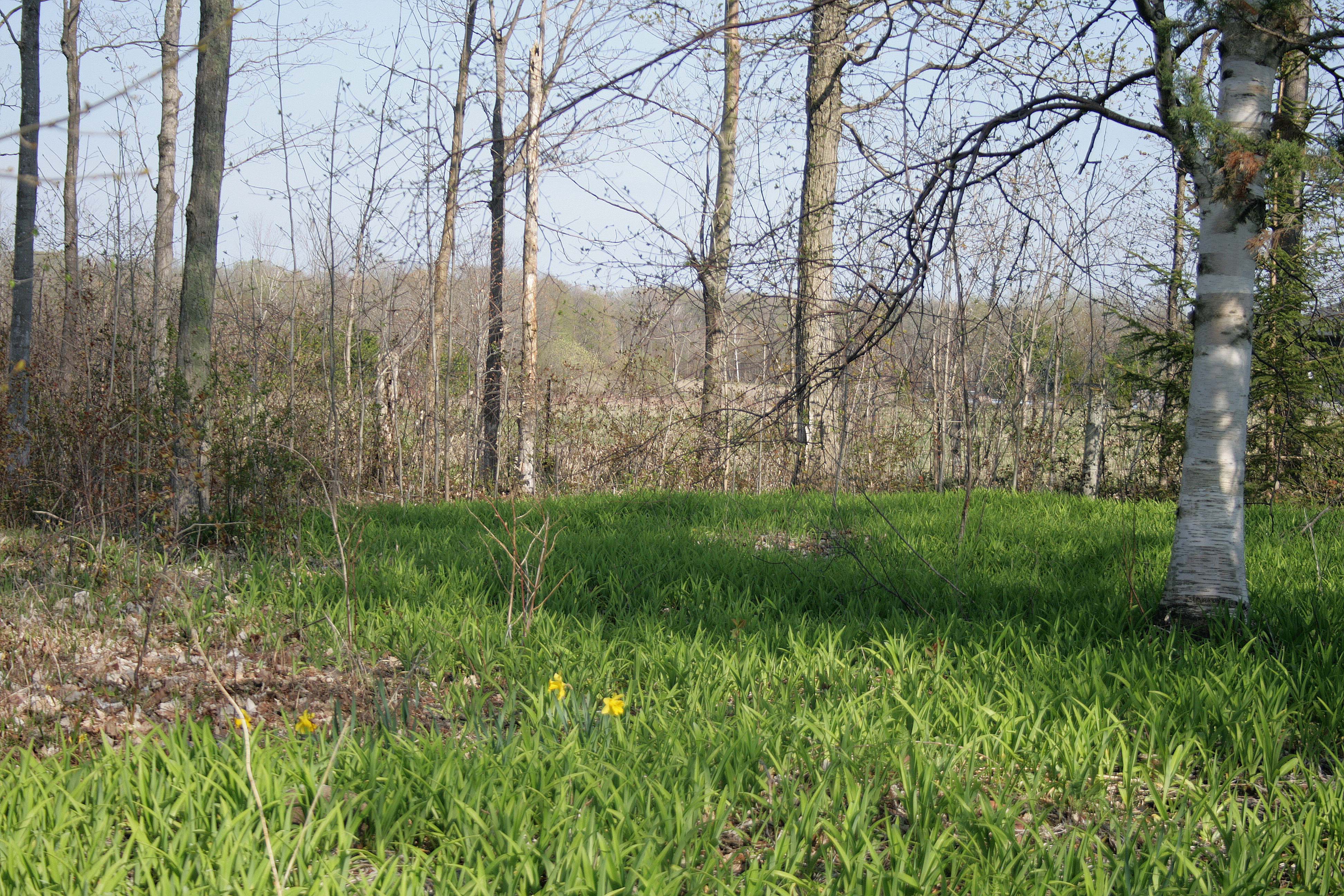
The Oro African Church & Cemetery, Oro-Medonte ON ©2024
Remembrance here feels different. Instead of focusing on individual graves, you find yourself looking at the land as a whole. The trees. The open field. The quiet. You slow down without even meaning to. You think about the people connected to this place, even if you cannot stand in front of a stone with their name on it.
The lack of headstones does not take away the meaning. It simply invites you to remember in another way.
The Oro African Methodist Episcopal Church and Cemetery stands as a reminder of resilience, faith, and community in the face of systemic barriers. It encourages visitors to slow down, to notice the land beneath their feet, and to recognize the lives that shaped this place even when their names are no longer etched in stone.
Thanks for reading!
References:
- Oro African Methodist Episcopal Church | Township of Oro Medonte
- Oro African Methodist Episcopal Church National Historic Site of Canada | Historic Places
- The Oro African Methodist Episcopal Church | County of Simcoe
- The Oro African Church: A History of the African Methodist Episcopal Church, edited by Tim Crawford, Published by The Township of Oro-Medonte | Book
- Oro African Methodist Episcopal Church | Carleton University
 Cemetery Photography by Chantal Larochelle