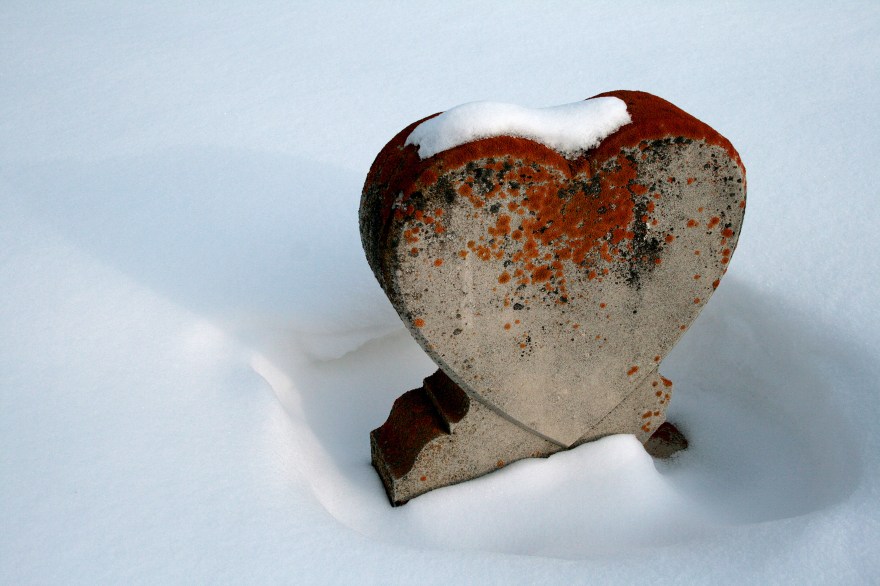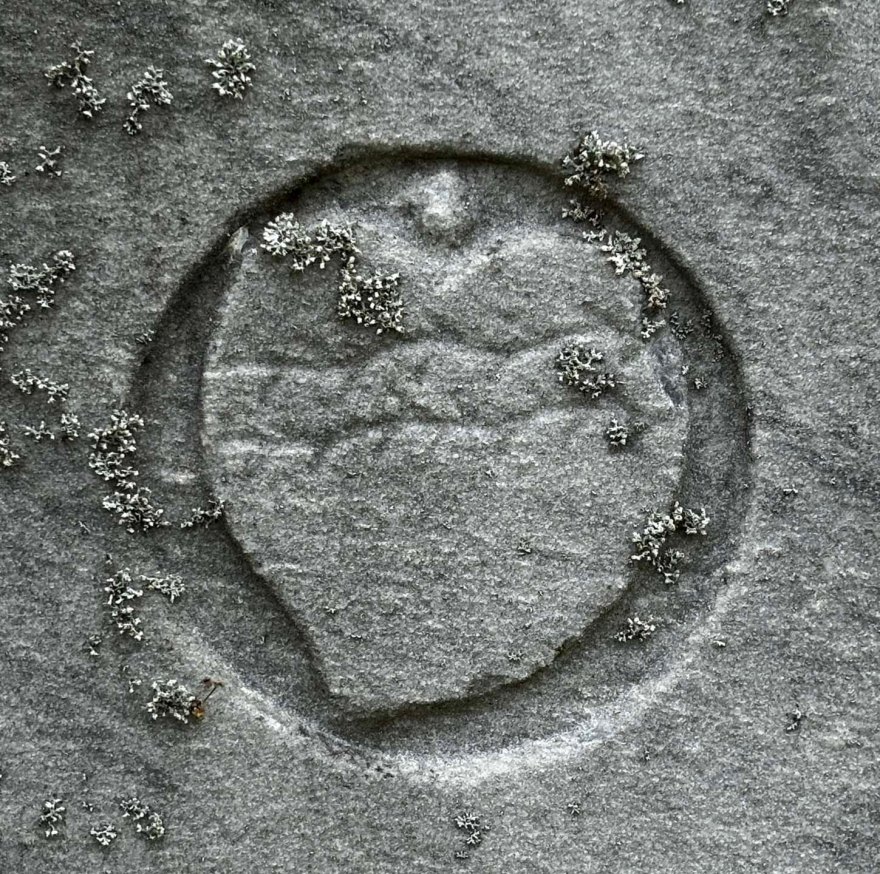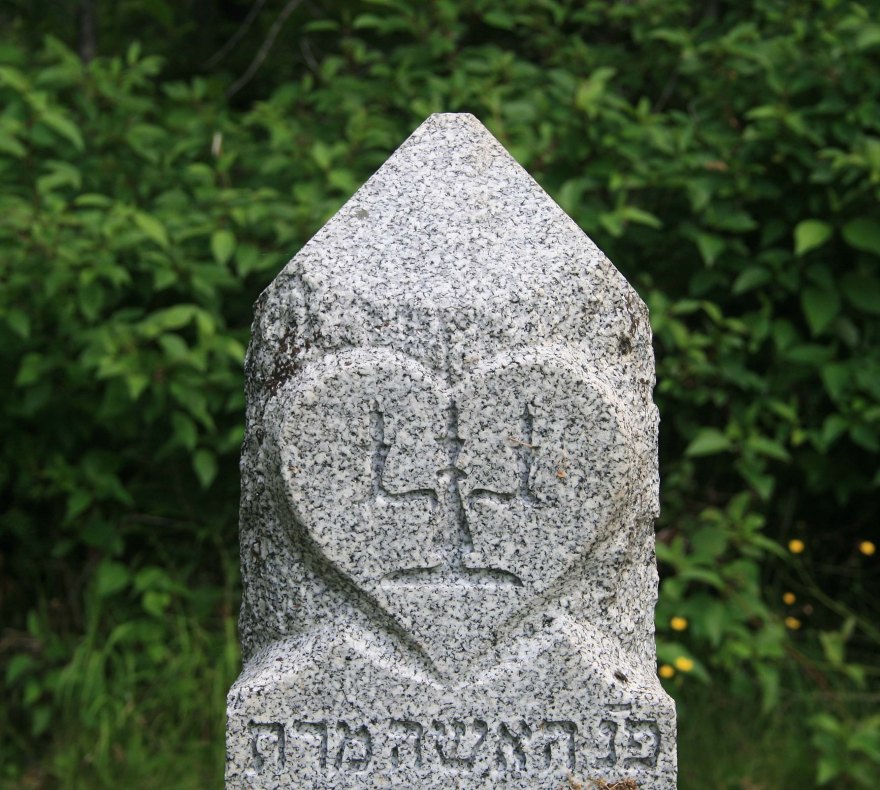
A Collection of Canadian Military Markers

With Remembrance Day coming up on November 11, I have been thinking a lot about the quiet way we honour those who have served.

One of my favourite ways to reflect is by visiting military graves. There is something powerful about finding these simple, dignified markers in cemeteries across the country.

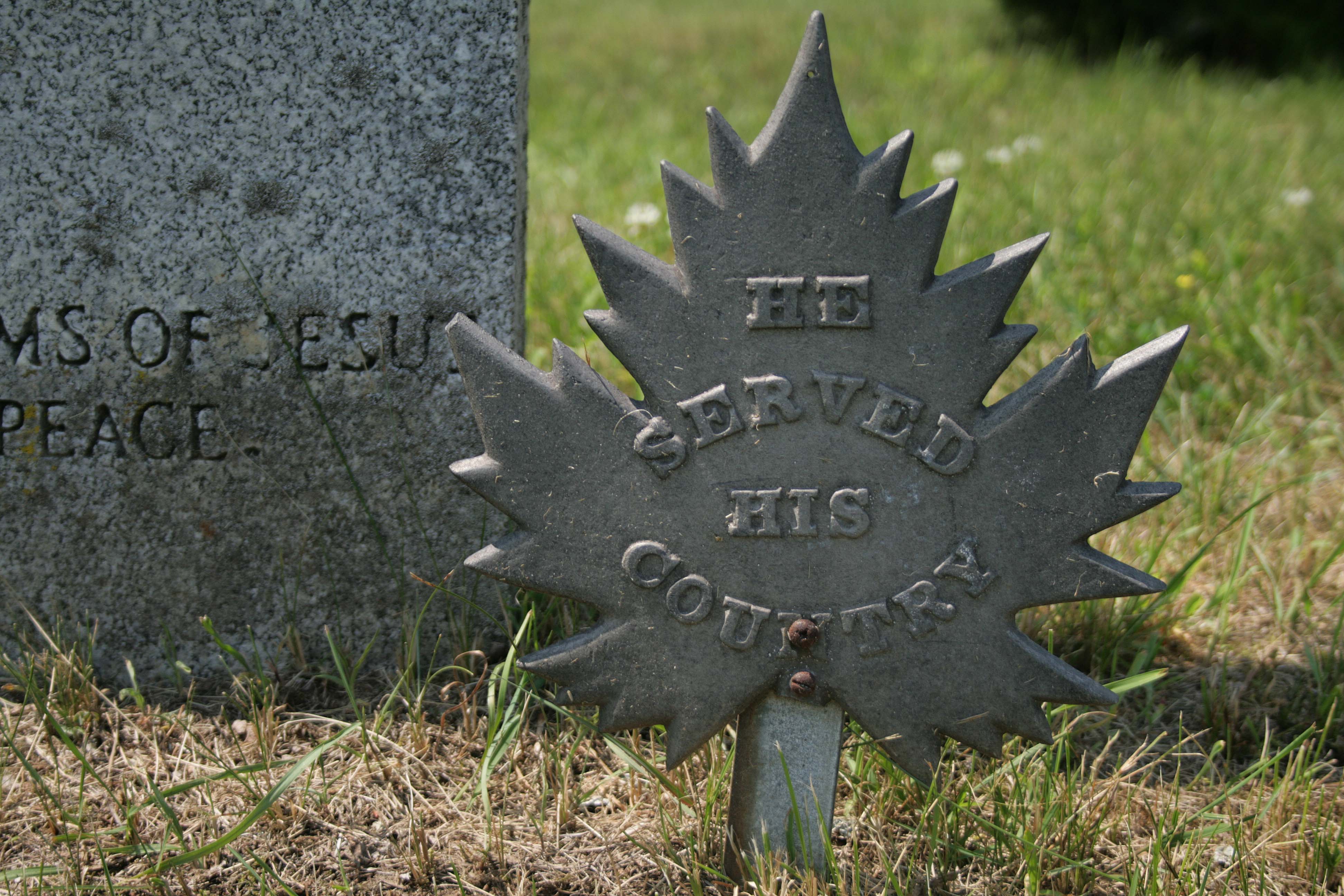
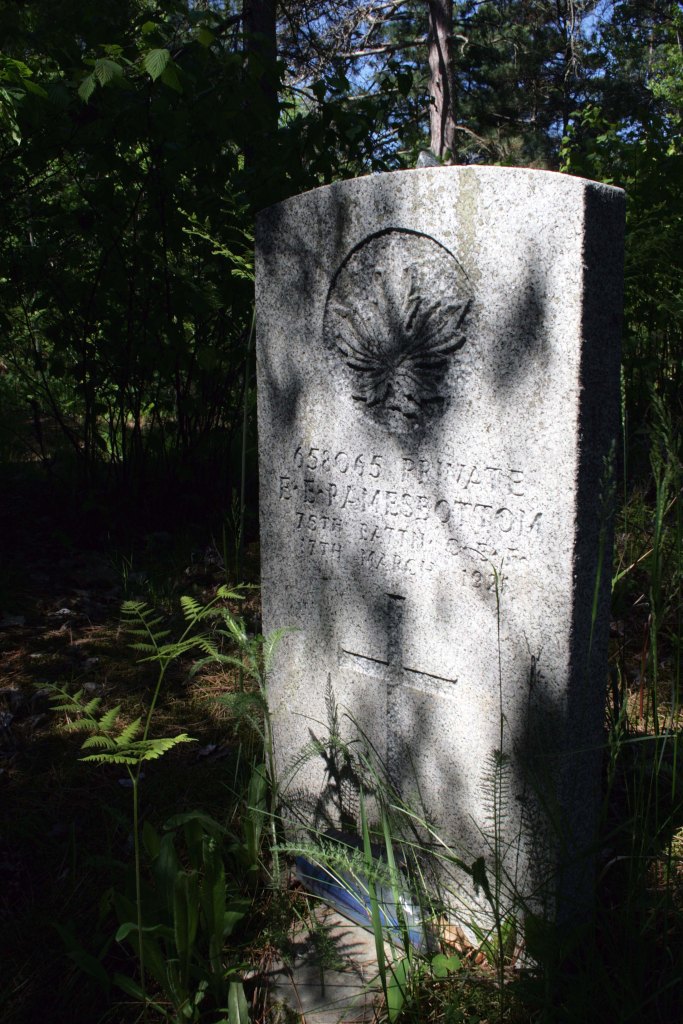
So, I thought this would be a meaningful time to share a collection of Canadian military gravestones that I have photographed over the years. Each one tells a story, and together they remind us that service and sacrifice are never forgotten.

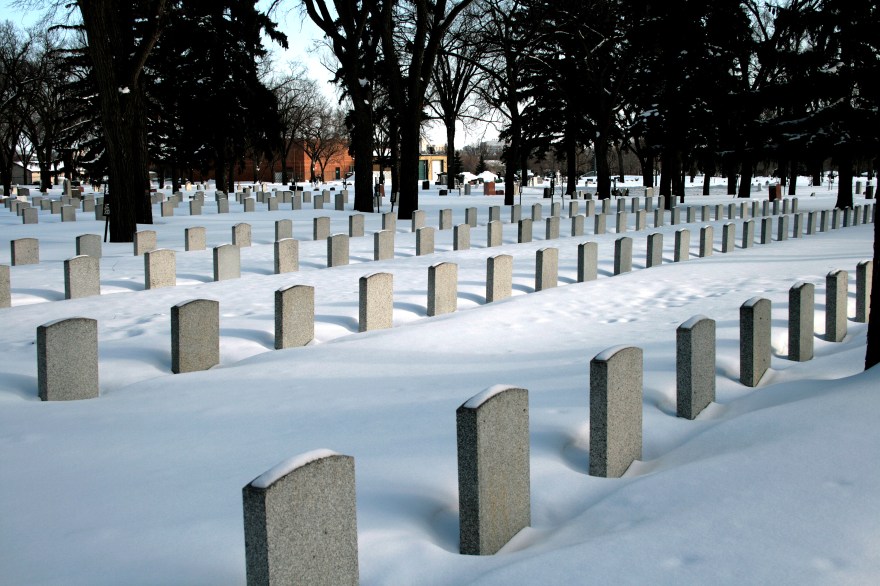
Canadian Armed Forces members who pass away during service are honoured with a standard military tombstone. These gravestones are arranged through the Department of National Defence and placed by the Commonwealth War Graves Commission when the marker is in one of their cemeteries, or by Public Works and Government Services Canada when it is in a civilian cemetery.1 The goal is to maintain a consistent style and honour each member with the same level of care.1

Veterans who are buried in civilian cemeteries can also receive grave marker support. Veterans Affairs Canada runs a Grave Marker Maintenance Program that repairs, cleans, and restores veteran markers across the country.2

In 2023 alone, more than 110,000 repairs were carried out in communities big and small.3 It is pretty incredible to think about how much work goes into preserving these stones and their stories.

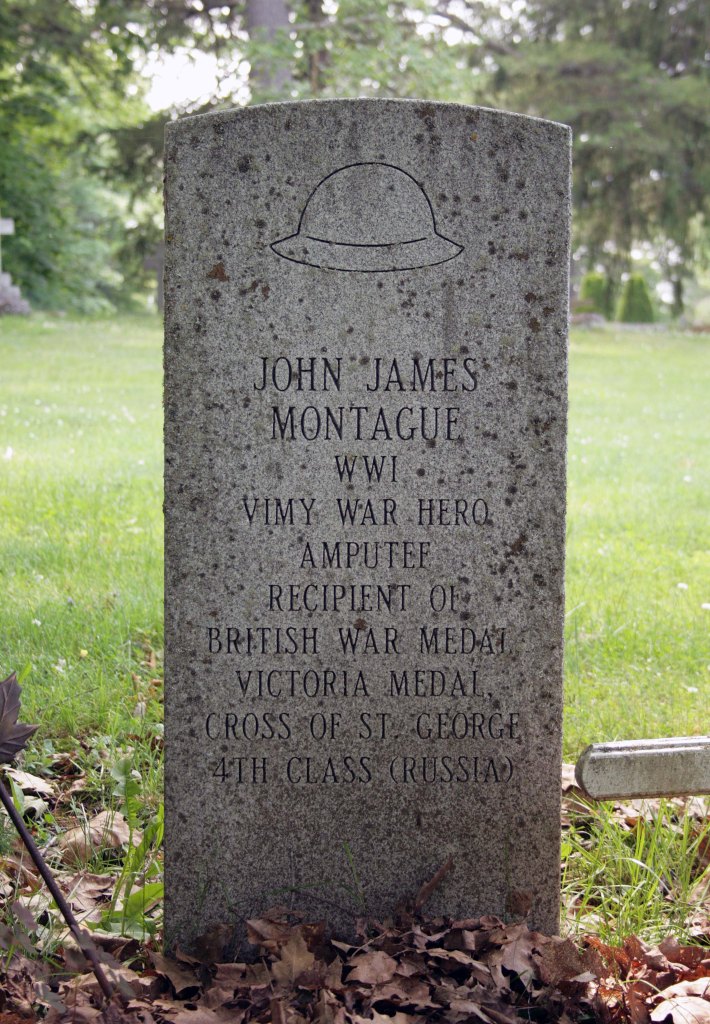
There are clear rules that guide what goes on a military gravestone. The design is simple and respectful. Each one includes the person’s name, rank, service number, unit or branch, and date of death. If the family wishes, an approved religious emblem or a personal inscription can be added. The stones are all made in the same style and materials, so they stay uniform and recognizable.1

Military graves remind us that history is not just something in books. It’s carved in stone and tended with care. Next time you are exploring a cemetery and you see one of these markers, take a moment to pause.

Lest we forget.

Thanks for reading!


References:

  1. Military headstones | Government of Canada
  2. Grave marker maintenance | Veterans Affairs Canada
  3. Over 110,000 repairs made to Veteran grave markers across the country | Government of Canada

A Collection of Freemason Symbols

After visiting countless cemeteries, you start to notice patterns. Symbols that repeat in different styles and settings. Some are subtle, while others are bold, but each carry its own meaning.

For today’s collection, I want to take a closer look at the symbols associated with the Freemasons and share some examples I’ve photographed over the years.

Freemasonry is one of the oldest and most widespread fraternal organizations in the world. It began with stonemason guilds of the late Middle Ages.1 Over time, it became a society that focuses on moral integrity, personal growth, and helping the community, all while keeping rituals and symbols that have been passed down for centuries.1 Membership was traditionally men only, and lodges operate under larger governing bodies called Grand Lodges.1

Although often secretive, Freemasonry is not a religion. It is a system of moral and ethical teachings that encourages members to live good lives, help others, and seek knowledge.1 Its symbols, which appear in cemeteries, and historic buildings, serve as reminders of ethics, morality, and brotherhood.2

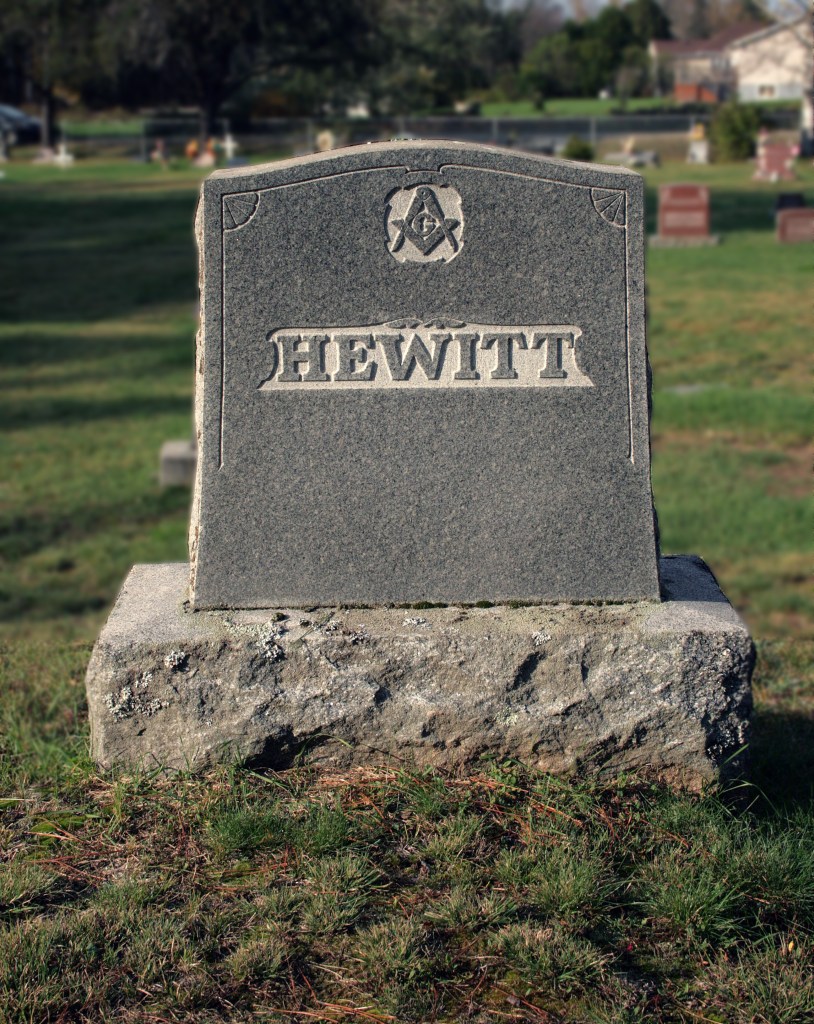
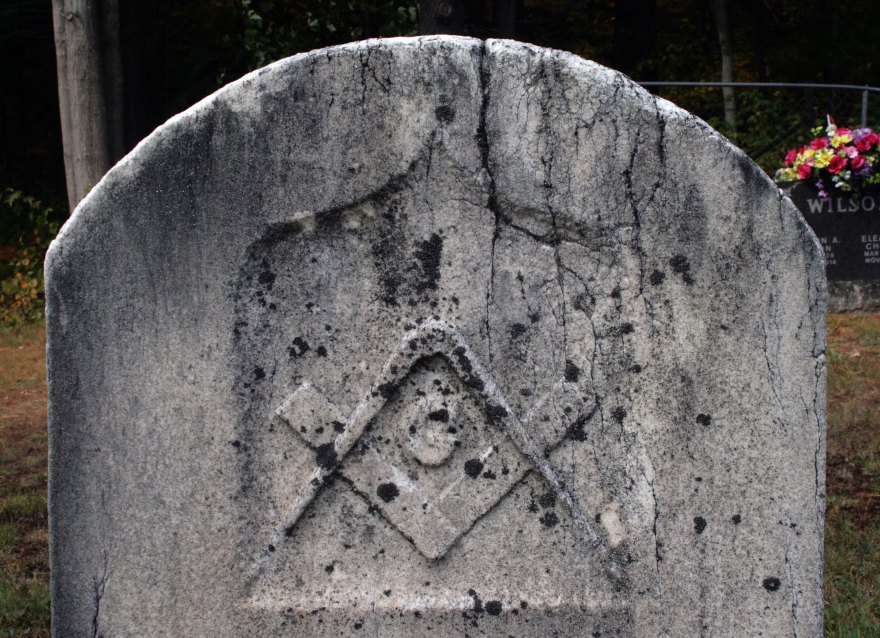
Possibly the most iconic symbol of Freemasonry is the square and compass, tools once used by stonemasons. In Masonic teachings, the square represents acting morally and treating others fairly.3 The compass symbol reminds members to control their desires.3 The “G” in the center is thought to represent Gnosis (the Greek word for knowledge), Generations (passing knowledge down through the ages), and God.3

Another common gravestone symbol shows two hands clasped in a handshake. If both hands have suit cuffs, it is a fraternal handshake, symbolizing brotherhood.3

If one hand points a finger down, it is a Masonic handshake, showing that the deceased was a Freemason.3

A rare version, the double Masonic handshake, shows both hands pointing a finger down, mimicking the square and compass symbol.3

The Freemasons also have a sister organization called the Order of the Eastern Star (OES). It was created to allow female relatives of Master Masons to join in Masonic activities. Today, both men and women can become members.

The OES symbol is an inverted five-pointed star, with each point representing one of the five Biblical heroines and the different roles that a woman can play in life.3 Some people mistake the inverted star as evil or witchcraft, but it actually stands for humility and sacrifice. It’s a reminder of the organization’s values: charity, loyalty, and moral integrity.4

Symbols used by the Freemasons and the Order of the Eastern Star offer us an interesting way to look at history, values, and community. Whether carved in stone or hidden in plain sight, each symbol tells a story and encourages reflection.

Thanks for reading!


References:

  1. What is Freemasonry | The Grand Lodge of Ohio
  2. Behind the Masonic Symbols: The Square and Compasses | The Grand Lodge of Ohio
  3. Understanding Cemetery Symbols: A Field Guide for Historic Graveyards by Tui Snider | Book
  4. Behind the Masonic Symbols: The Eye of Providence | The Grand Lodge of Ohio
  5. The Pentagram: Masonic? Satanic? Or What? | Freemasons for Dummies

A Collection of Gates Ajar

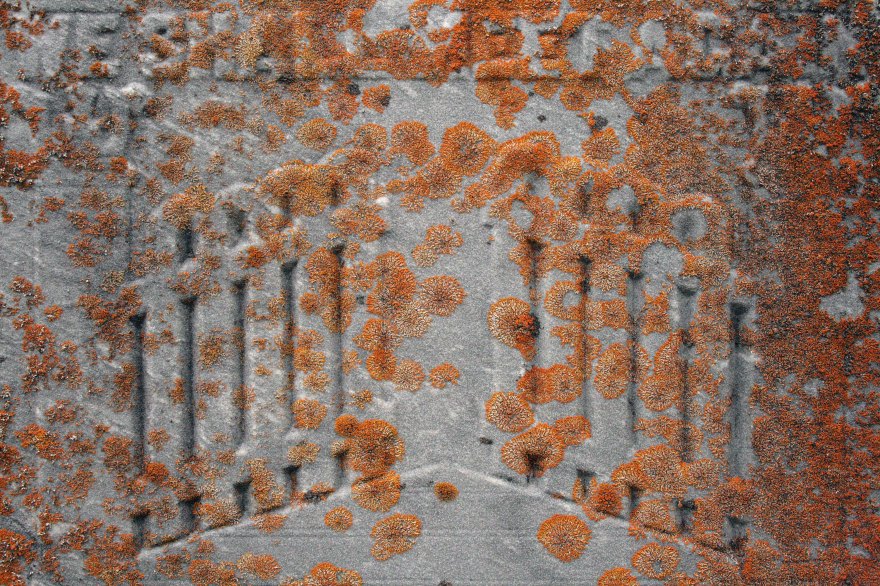
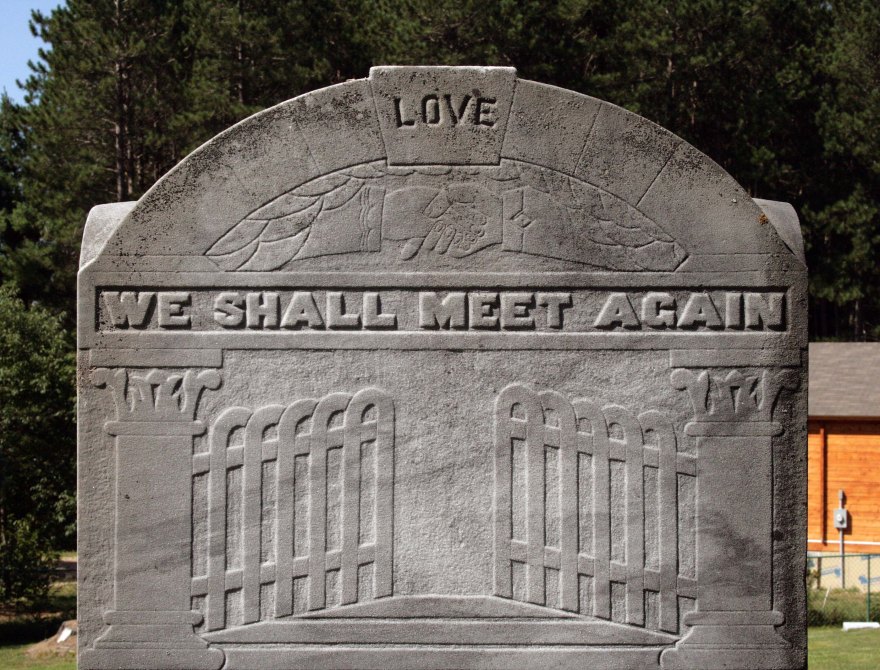
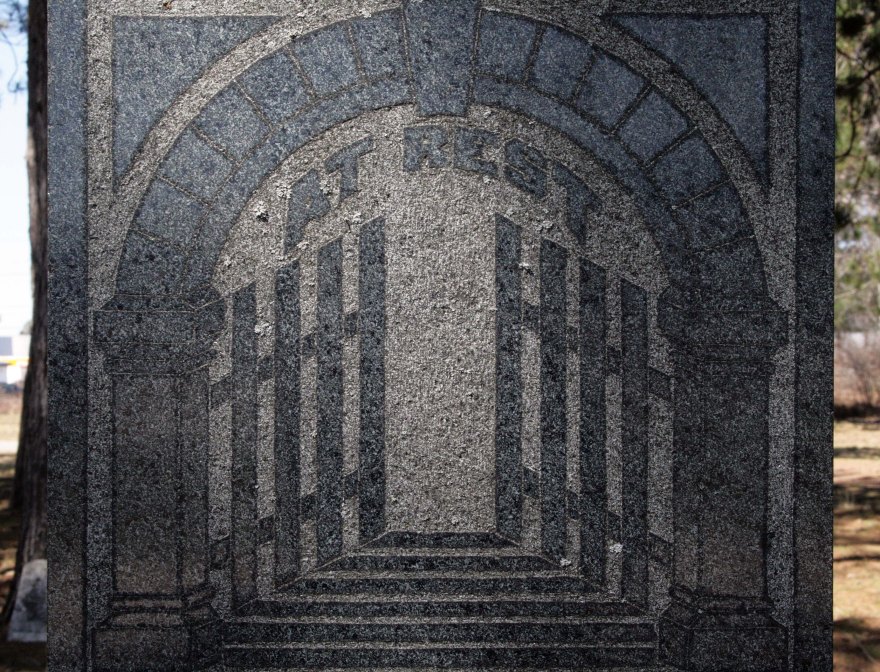
If you spend a lot of time in cemeteries, you’ll notice certain symbols popping up again and again—some are familiar, others are a bit more unusual. One symbol I’ve come across often in my cemetery travels is a set of open gates, standing slightly ajar.

So today on the blog, I wanted to take a closer look at this symbol: what it means, where it comes from, and share a few of the interesting examples I’ve photographed over the years.

There’s something poetic about the image of an open gate. It feels like an invitation or a sign that something—or someone—is waiting just beyond. Sometimes the symbols are ornate, with intricate columns on either side, while others are much simpler.

The “gates ajar” motif has been around for more than a hundred years and was especially common in Victorian and early 20th-century cemeteries. It reflects a comforting belief that death is not the end, but a passage. These gates represent the soul entering Heaven or the afterlife, offering hope and comfort to those left behind.1

Interestingly, this symbol became even more popular after the release of a novel called The Gates Ajar by Elizabeth Stuart Phelps. Published in 1868, just after the U.S. Civil War, the book follows a young woman grieving her brother. In the book, her aunt explains that the gates of Heaven are never fully closed. Instead, they stay slightly open, allowing souls to move between this world and the next. The book was controversial for its ideas but became a bestseller, inspiring everything from sheet music to flower arrangements…and gravestone symbolism.2

Next time you’re walking through a cemetery, take a look around. You might spot a gate carved in stone, just slightly open—and find yourself thinking about what might be on the other side.

Thanks for reading!


References:

  1. Gravestone symbols and their meanings (PDF) | Wolf Memorial
  2. Headstone Symbols: Gates Ajar | Save the Graves

A Collection of Chalices

One of my favorite things about wandering through cemeteries is discovering unique gravestone symbols. Over the years, I have noticed that certain motifs pop up again and again. It’s so interesting to see how these symbols can change depending on where you are.

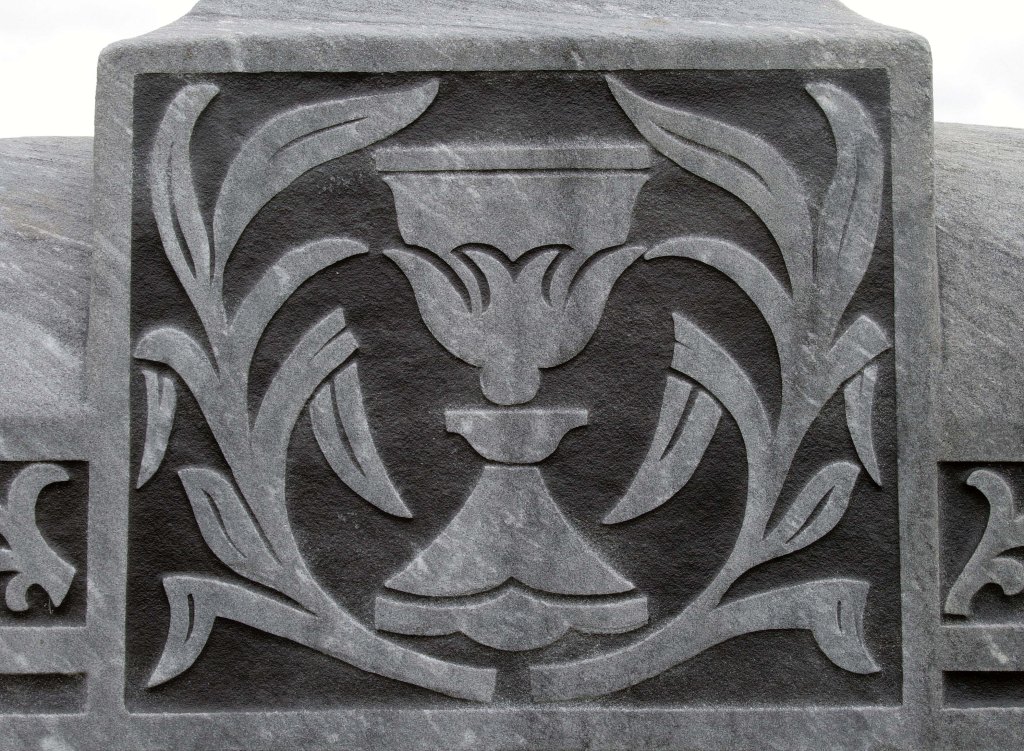
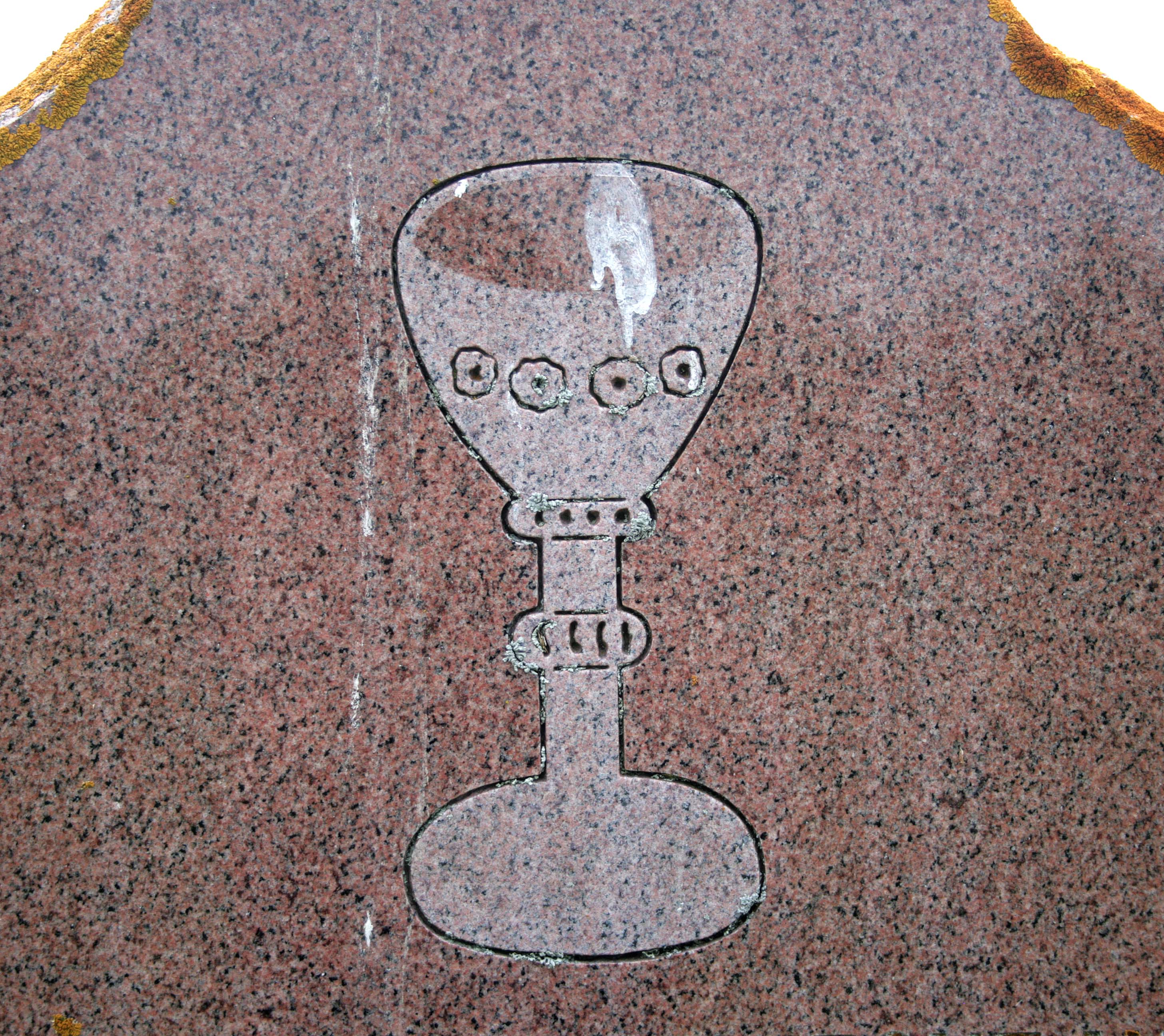
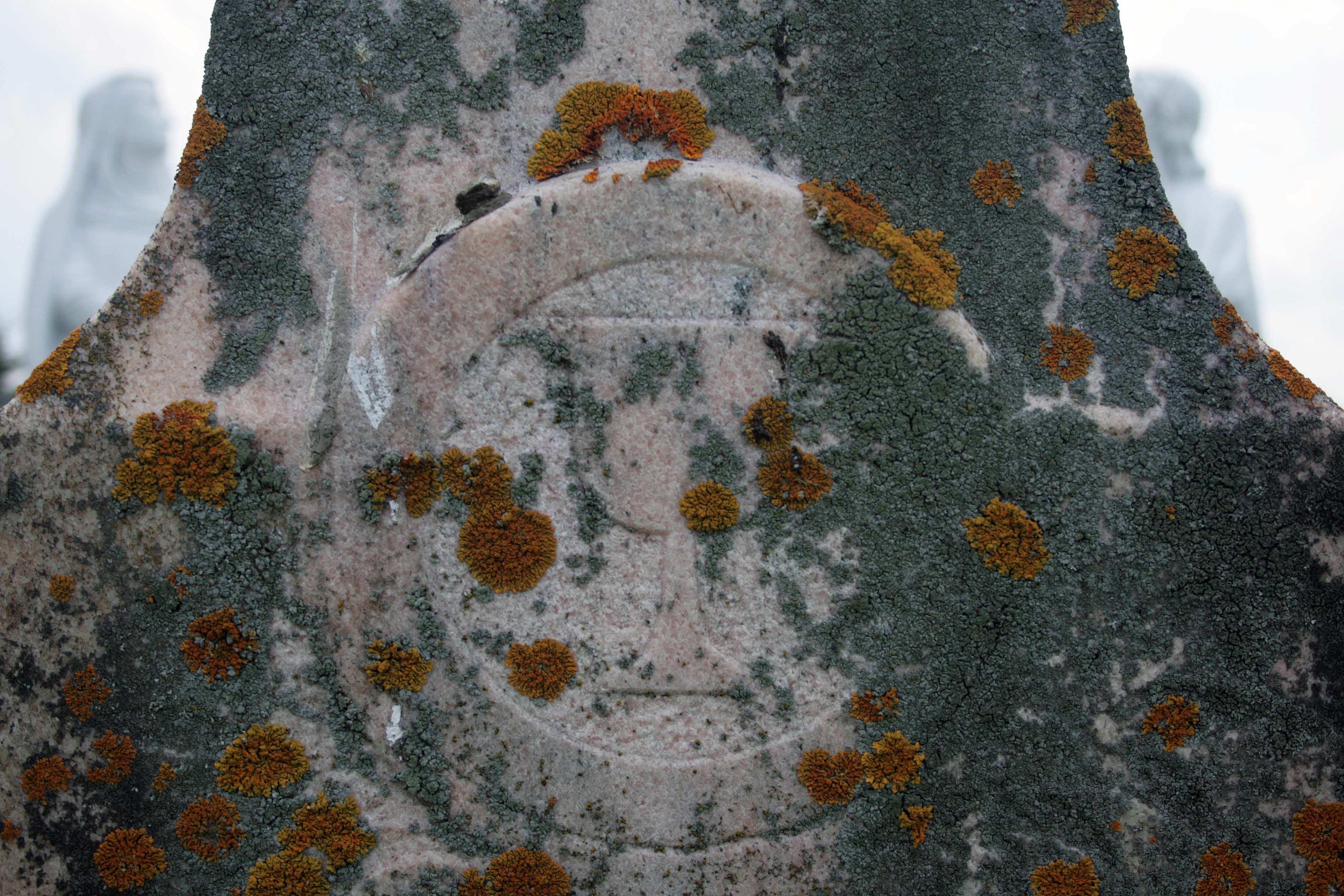
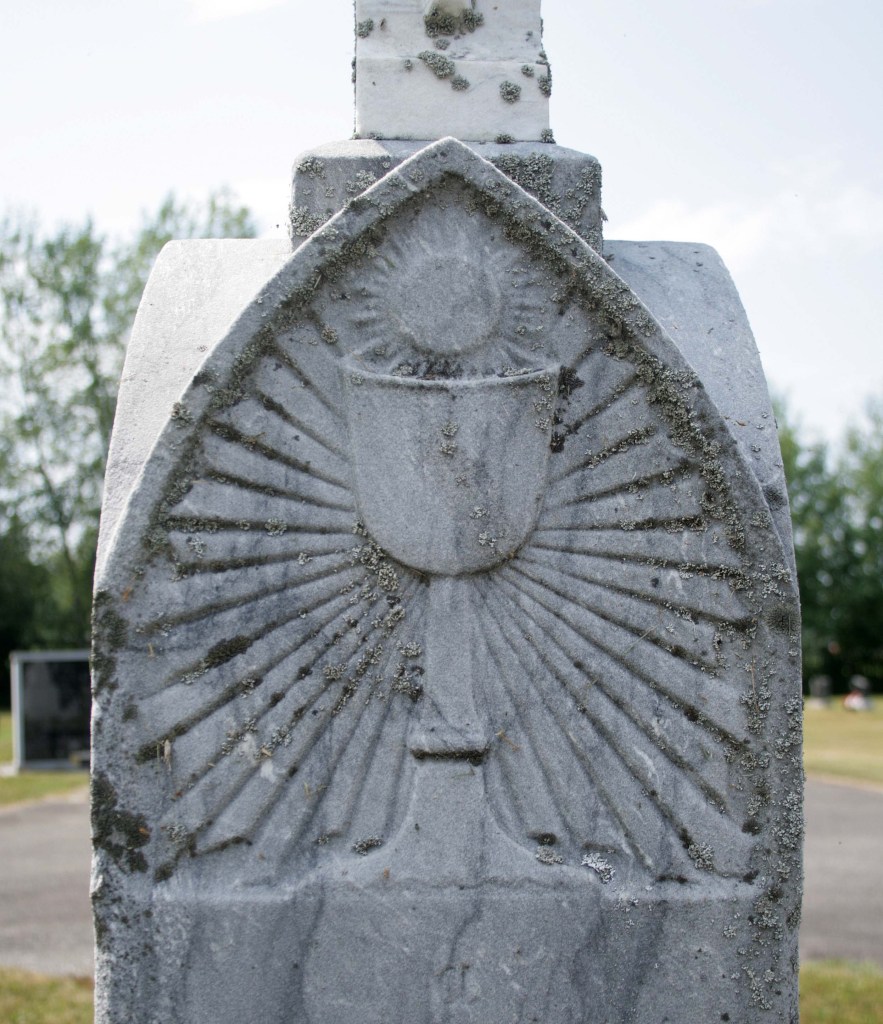
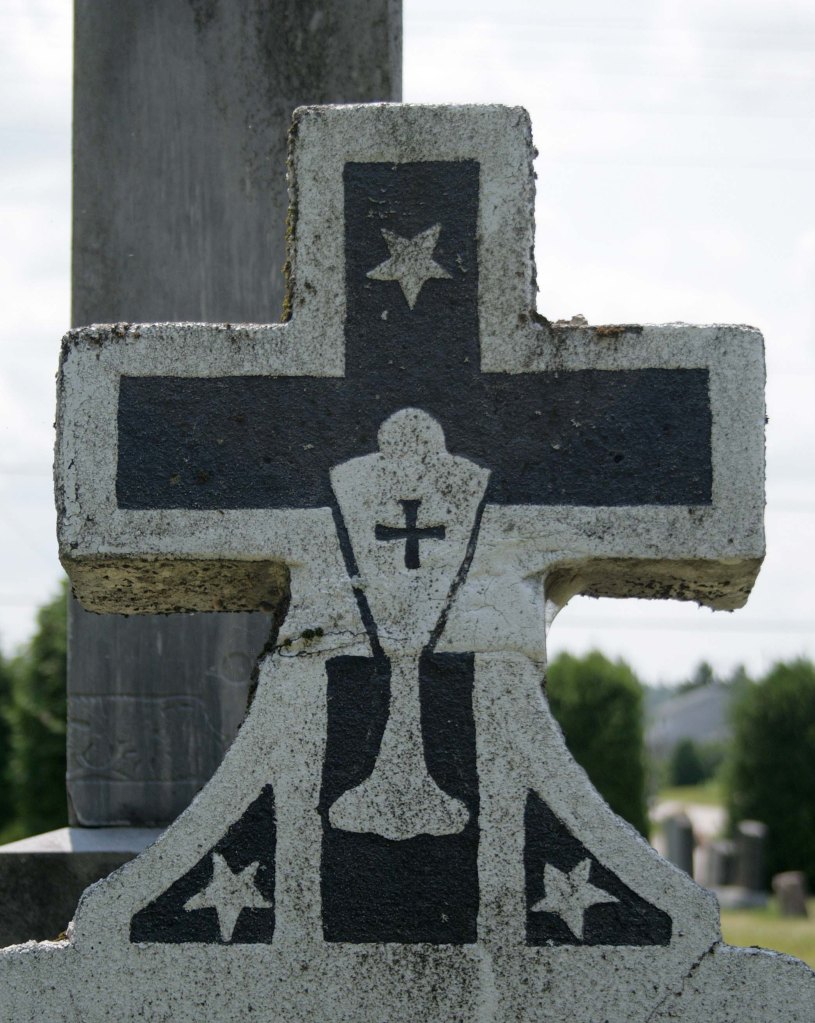
Today, I want to take a closer look at the chalice as a gravestone symbol—what it represents and how it’s been depicted in different places. The variations I have found over the years show just how much it can change depending on location. It’s interesting to note that the chalice is a very common symbol in the Abitibi-Temiscamingue region of Quebec.

The chalice is a Christian symbol, that is commonly depicted as a cup with a stem, similar to a wine glass. It is thought to symbolize Christianity’s holy sacrament and the act of communion. It can also represent mankind’s deep yearning to be filled with Christ’s divine teachings and grace.1

Sometimes the chalice is depicted with a circle above it, symbolizing the consecrated Eucharist, which represents the Catholic rite of Holy Communion. This combination of symbols is often found on the gravestones of priests.2

Have you come across a chalice symbol on your cemetery walks? Or noticed any other symbols that pop up often in your local cemeteries? I’d love to hear about it in the comments.

Thanks for reading!


References:

  1. Understanding Cemetery Symbols: A Field Guide for Historic Graveyards by Tui Snider
  2. Headstone Symbols: Understanding Cemetery Symbolism | Everlife Memorials

A Collection of Anchors

Every gravestone symbol and motif tells a story.

If you spend a lot of time in cemeteries, you will often start to notice the repetition of certain symbols. Throughout my travels, I have seen the shift in common cemetery symbols. What might be a common motif found in one area might be uncommon in another.

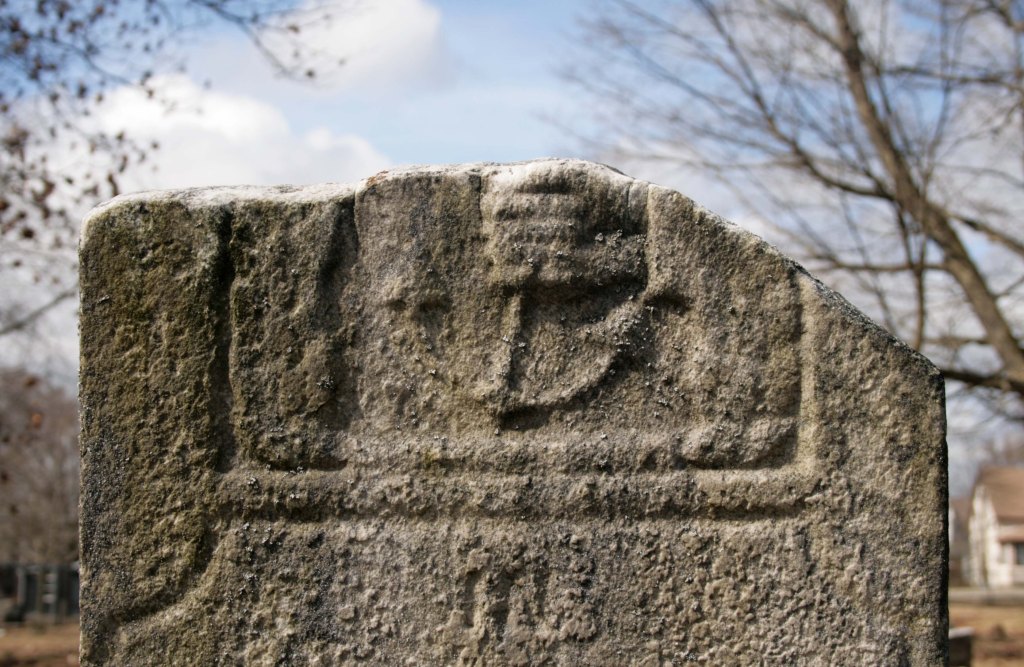
As I travel Ontario more frequently, I have noticed more and more anchor symbolism. So today on the blog, I wanted to look a little closer at this symbol, what it represents, and some of the examples I have photographed in my travels.

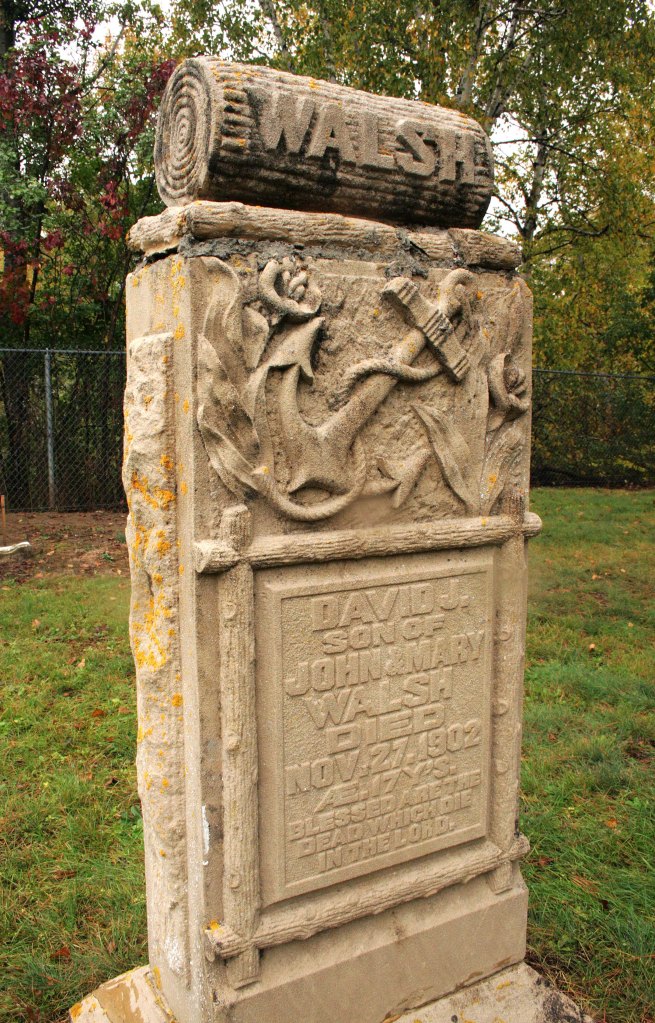
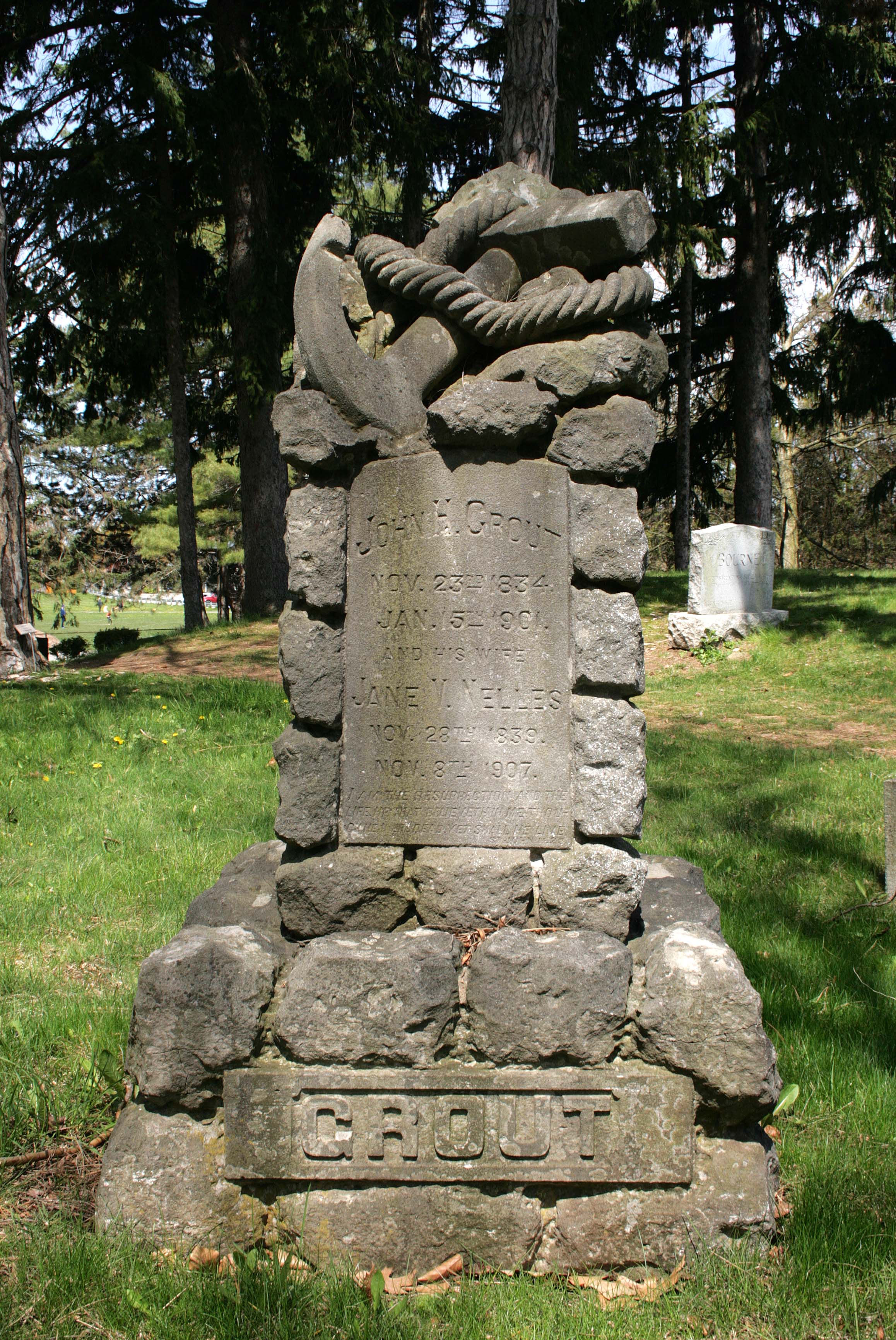
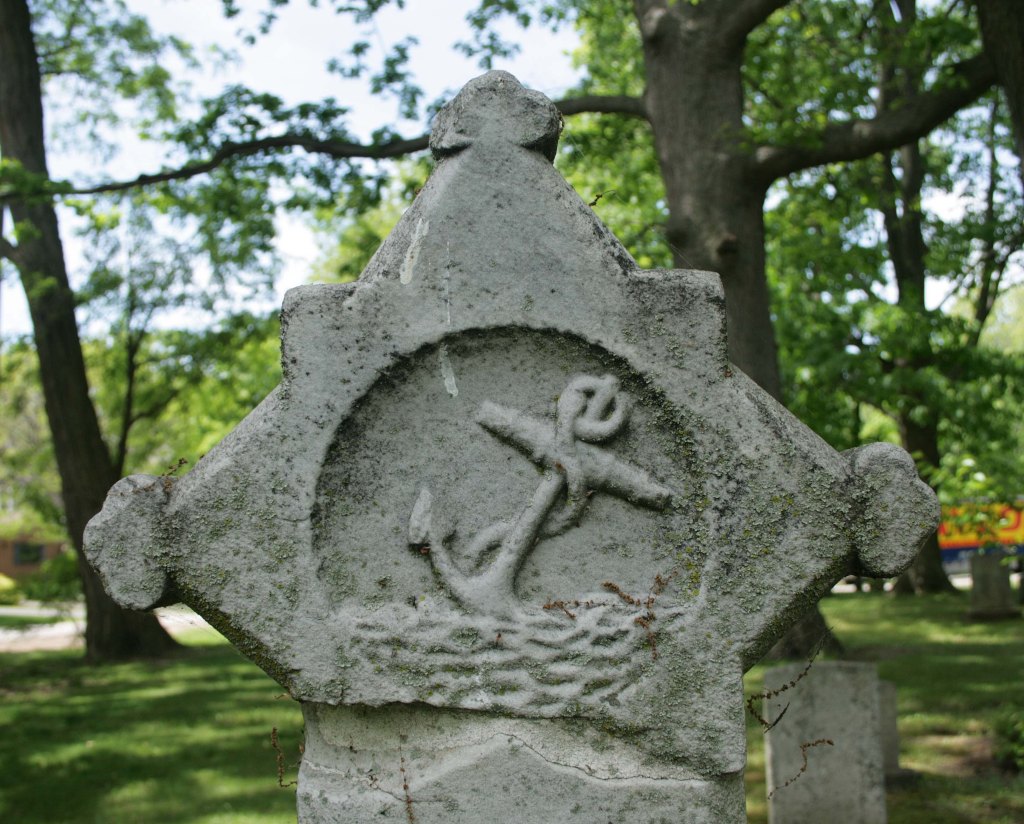
Sometimes anchors are found on the graves of sailors or those who have died at sea, but this is rare. The anchor is a Christian symbol and represents hope, steadfastness, and calm.

The symbolism is thought to come from passages in the bible, “Which hope we have as an anchor of the soul, both sure and steadfast, and which entereth into that within the veil;” 

“Those without hope may be like a ship tossed on the sea…”

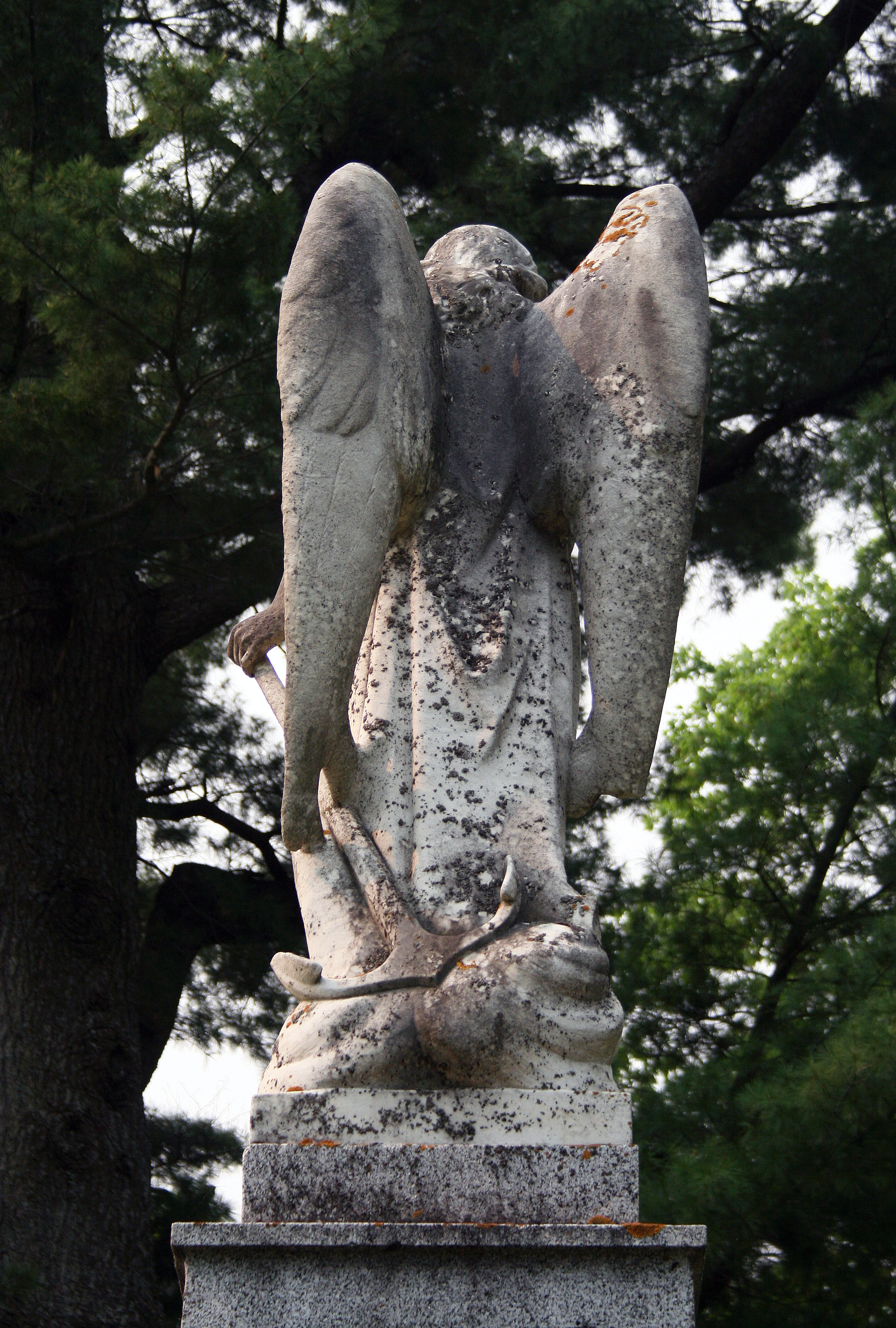
You might also come across a female figure holding an anchor. The anchor signifies that this is Hope, one of the Seven Virtues.

The Seven Virtues are traits that some of those of the Christian faith aspire to. According to Tui Snider’s book Understanding Cemetery Symbols, this list of traits was created by Greek philosophers and then adopted by Christian scholars. Sometimes the virtues are labeled on the statue’s pedestal, but you must look closely at their design for clues.

Have you ever found a unique version of an anchor symbol? I would love to read about your finds in the comments.

Thanks for reading!


References:

  • Understanding Cemetery Symbols: A Field Guide for Historic Graveyards by Tui Snider | Book
  • Stories in Stone: The Complete Guide to Cemetery Symbolism by Douglas Keister | Book

A Collection of Mourning Figures

One of my favorite things about cemeteries is the variety of symbolism you can find. After so many years wandering cemeteries, I have noticed some common motifs. An interesting thing I have also noticed is that depending on where you are in Northern Ontario, those common symbols will be different. I’d wager that the same could be said for other parts of the world as well.

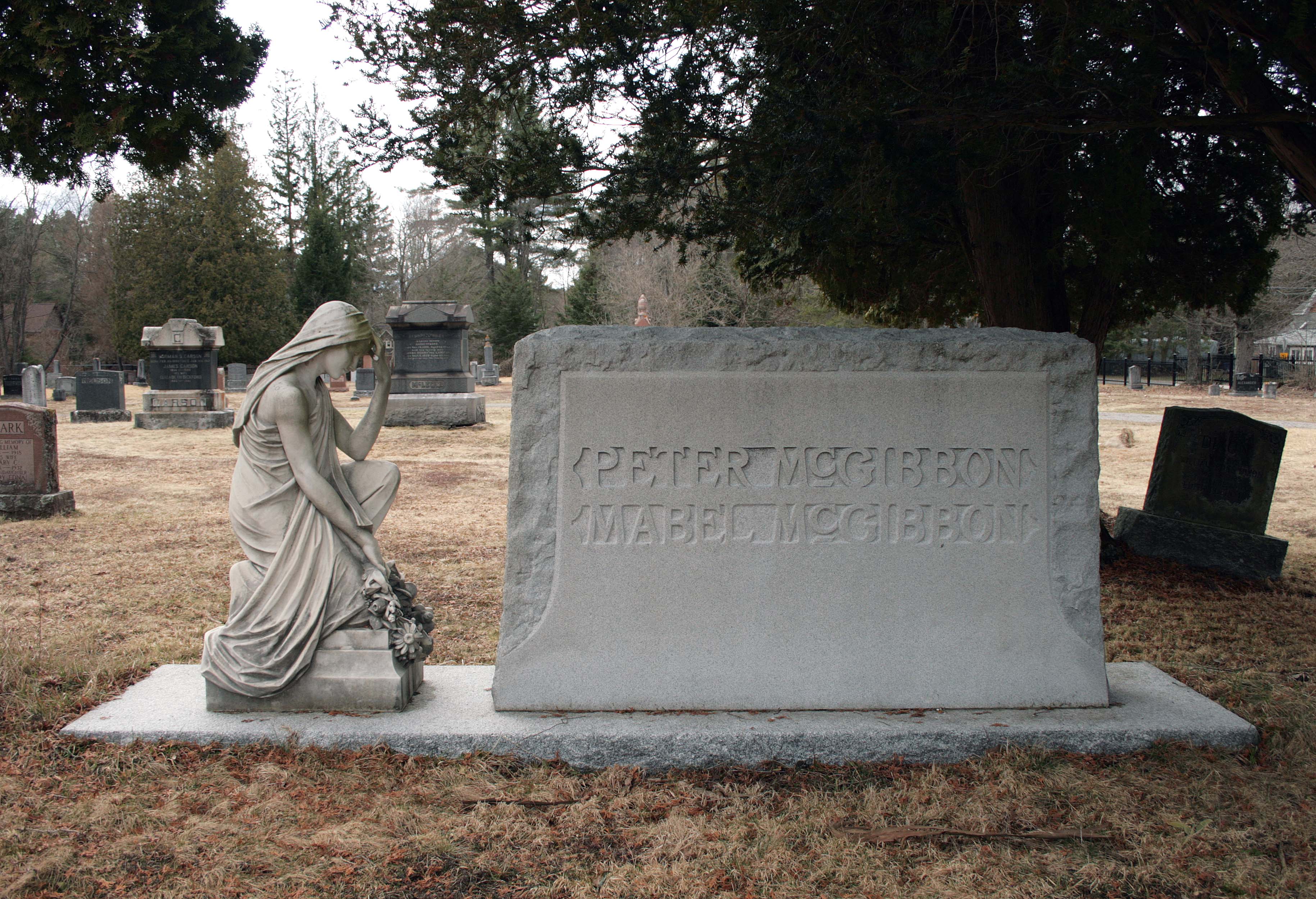
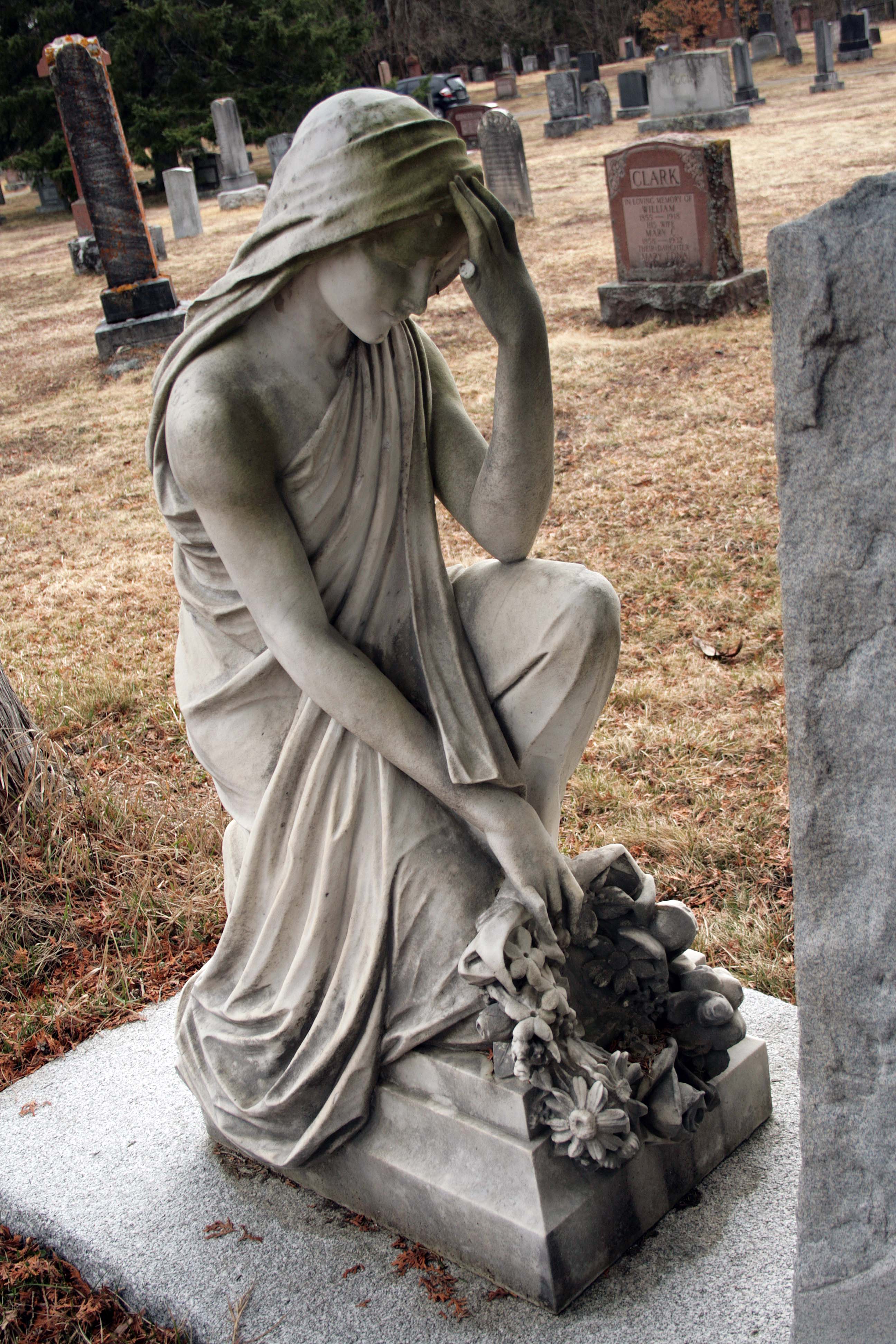
On some recent cemetery road trips in Simcoe County and the Muskokas, I noticed many different forms of mourning figures. This symbol is not very common in my local cemeteries. So today on the blog, I wanted to look deeper at this symbol and share some of the examples I have come across so far this year.

Grief and mourning were popular grave motifs in the Victorian era. As death was such a big part of life in that time, it affected everything from fashion and jewelry to of course funeral practices and gravestones.1 

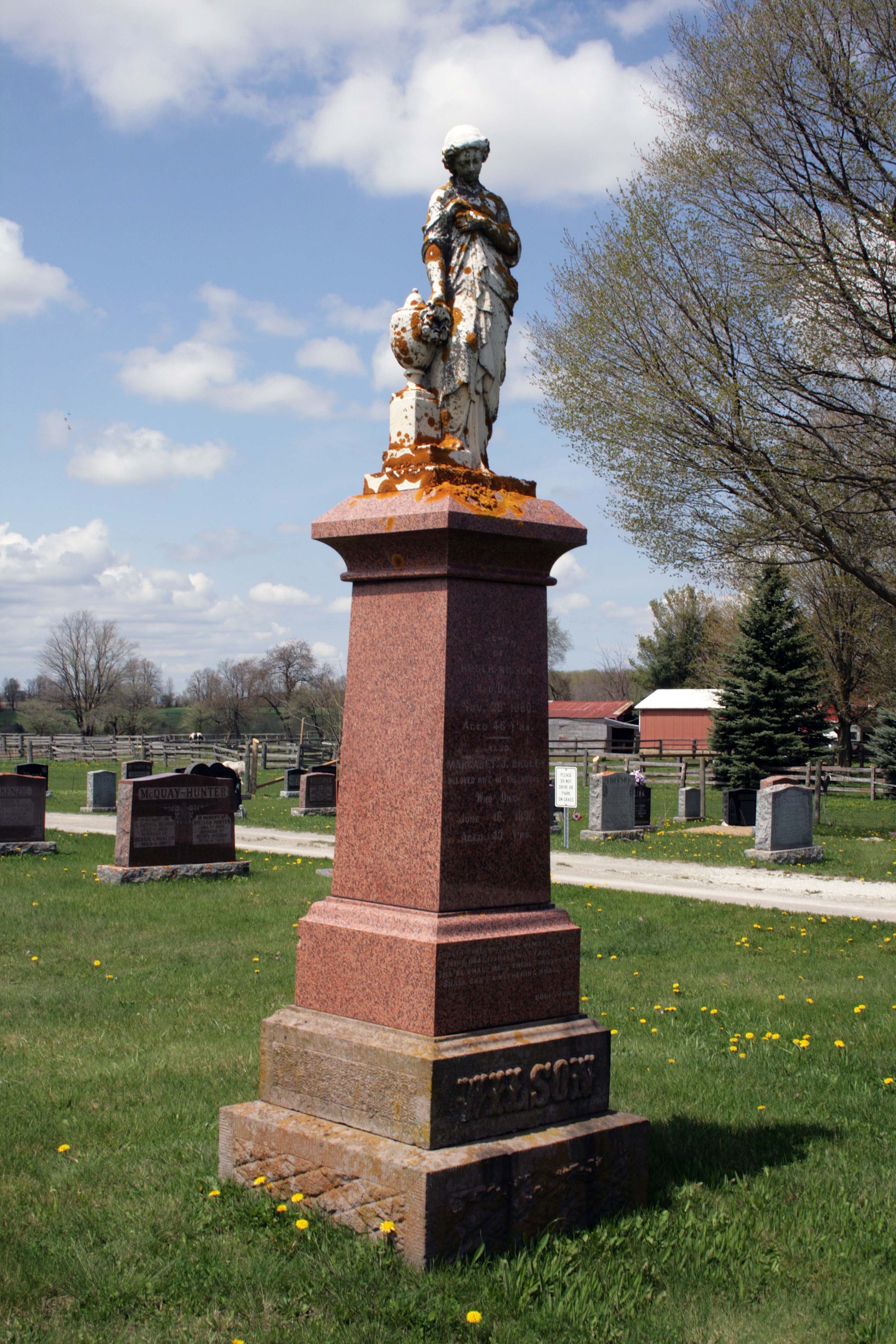
One of the many ways that grief was expressed was through the use of mourning or weeping figures. These figures were often depicted as kneeling or standing over a grave in a display of deep grief and mourning. Sometimes a mourning figure can also symbolize an early or sudden death.

Mourning figures are sometimes depicted holding wreaths or flowers. Flowers are thought to represent that life is fleeting, while the circular wreath is thought to symbolize eternal memory and immortality.2

Urns are another common Victorian grave symbol that sometimes accompanies a mourning figure. Borrowed from the Ancient Greeks who often cremated their deceased, urns represent the physical body being reduced to its barest elements as the soul ascends to Heaven.2

Sometimes weeping willows also appear with mourning figures. Weeping willows are strongly associated with grief and mourning, as their name suggests. They are another grave symbol adapted from the Ancient Greeks.2

I am always in awe and inspired by the art I find in cemeteries. It’s one of the reasons I love walking among the gravestones.

Have you come across any similar mourning figures in your local cemeteries? I would love to read about your findings in the comments.

Thanks for reading!


References:

  1. Cemetery Symbolism: What Do Those Mysterious Monuments Mean? | Laurel Hill
  2. Understanding Cemetery Symbols: A Field Guide for Historic Graveyards by Tui Snider

A Collection of Urns

If you spend a lot of time in cemeteries you will often start to notice the repetition of certain cemetery symbols and motifs. In Ontario, more so in southern Ontario, urns tend to be a common gravestone symbol.

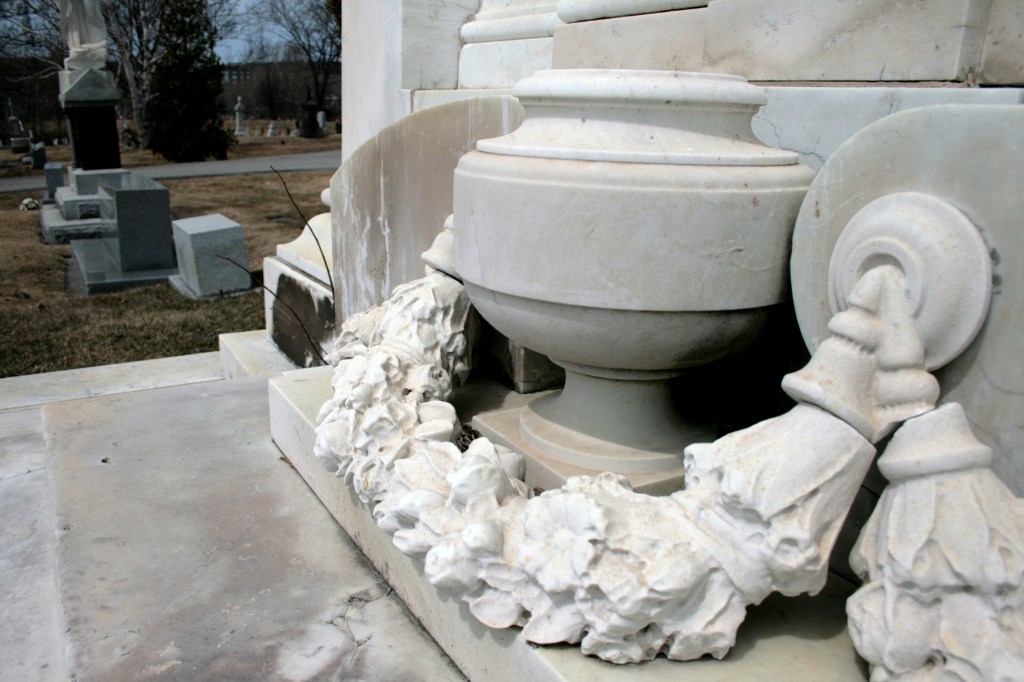
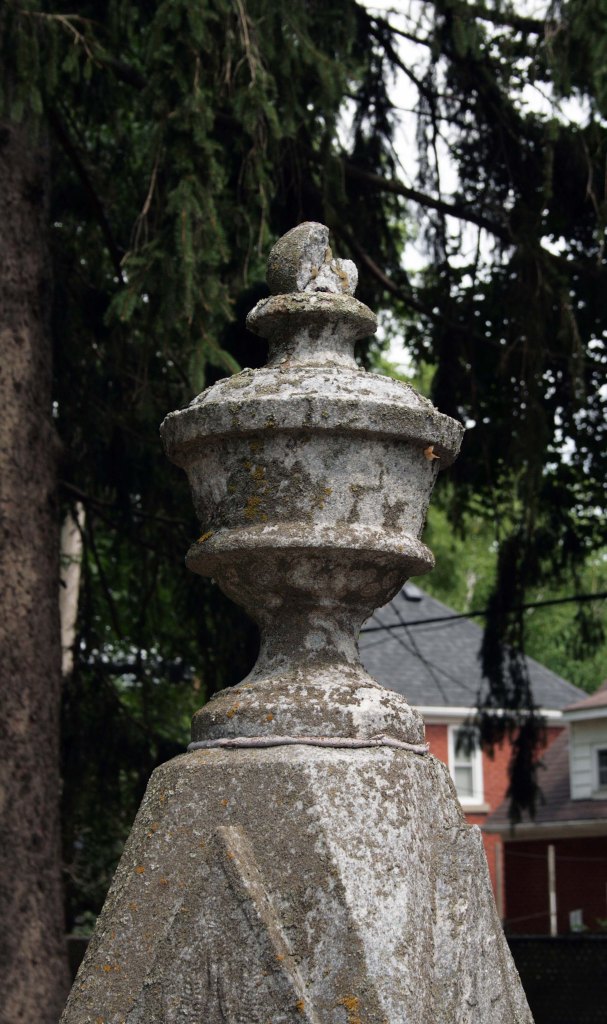
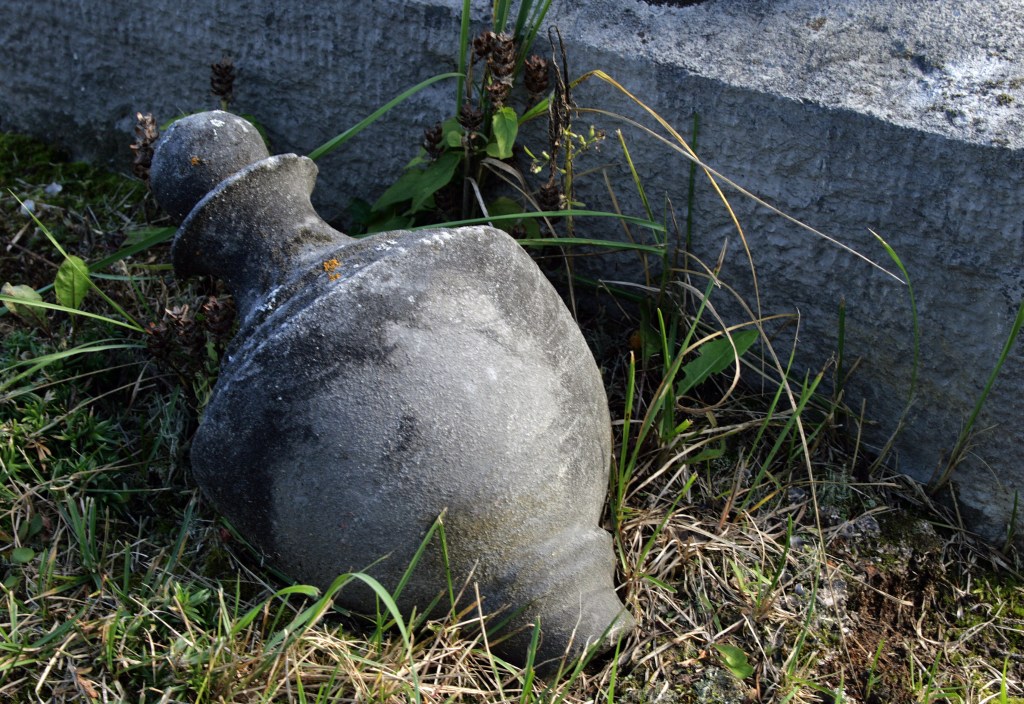
Although cremation was rarely practiced in North America at the time, the urn became a popular symbol in the Victorian era. Urns as a funerary symbol were adapted from Ancient Greece. Cremation was commonly practiced by the Ancient Greeks, who used ceremonial urns. As a gravestone symbol, the urn represents the body reduced to its most basic elements and the ascension of the spirit to heaven. Today cremation is a common practice, having started its climb to popularity in the 1980s.

I have found and photographed many urns during my cemetery walks, so today I wanted to share some of them with you.

Like many graveyard symbols, the urn can be found depicted in a variety of ways. Each version of the symbol has a slightly different meaning. This is one of the reasons I find cemetery symbolism so interesting. It is a language unto itself. 

The Victorians were very fond of drapery, and you might come across what looks to be a fabric made of stone draped over an urn. Fabric draped over a gravestone is often thought to symbolize the veil between life and death. The fabric might also represent the shedding of earthly clothes as the deceased moves from this life to the afterlife. 

Have you ever found a unique version of an urn symbol? I would love to read about your finds in the comments. 

Thanks for reading!


References:

  • The History of Cremation in North America | Une Belle Vie Memorial Urns
  • Understanding Cemetery Symbols: A Field Guide for Historic Graveyards by Tui Snider 
  • Stories in Stone: The Complete Guide to Cemetery Symbolism by Douglas Keister

A Collection of Cemetery Statues

For today’s blog post, I wanted to share a collection of cemetery statues. I find this type of funerary art beautiful, and always enjoy finding detailed sculptures. I do often say that cemeteries are open-air art galleries, and statues are just one example of artistic works that can be found when you visit a cemetery. 

Angel statues are sometimes a very common sight in a cemetery, especially in Catholic cemeteries and graveyards. But, you might also find representations of saints, virtues, and other biblical figures. 

To decipher which saints or figures are being depicted, it’s important to look at the details. Little details like something at the statue’s feet, or what they are holding or doing with their hands can be a big indication of who the statue is representing. 

ANGELS

The most common figures you might find in a cemetery are angels. The winged statues can symbolize many things, most commonly that the deceased is now in heaven. They can also represent a connection between earth and heaven, comfort and mourning. 

An angel statue holding a book, for instance, suggests that this statue is a representation of a celestial scribe, a recording angel. Recording angels are thought to be tasked with recording historic events, actions, and prayers of everyone on earth.

You might also come across an angel holding flowers. There are many variations of angels with flowers, ranging from full bouquets to single-stemmed flowers. The flowers are thought to represent how fleeting life is. 

Some angel statues are depicted holding a wreath. This symbolizes memory and eternity, an indication that the deceased will not be forgotten. This example below also shows the angel holding their chin as if they are deep in thought, emphasizing the idea of remembrance. 

Virtues

The Seven Virtues are traits that some of those of the Christian faith aspire to. According to Tui Snider’s book Understanding Cemetery Symbols, this list of traits was created by Greek philosophers and then adopted by Christian scholars. Sometimes the virtues are labeled on the statue’s pedestal, but most often you must look closely at their design for clues. In this example, we can tell this is Hope, by the large anchor she is dragging behind her. 

Saints

Based on the details, we can tell that this statue is a representation of Saint Joseph. The carpenter’s square represents his trade, as well as the concept of truth. The lilies represent purity. Saint Joseph is the patron saint of many things, including families, fathers, craftsmen, engineers, and common workers.

Jesus

Statues of Jesus can also be a common find in Catholic cemeteries. He is often depicted as a young child or an adult. When depicted as a young child he can sometimes be found in the arms of Saint Joseph. He is also sometimes depicted as a young boy, with both Saint Joseph and the Virgin Mary.

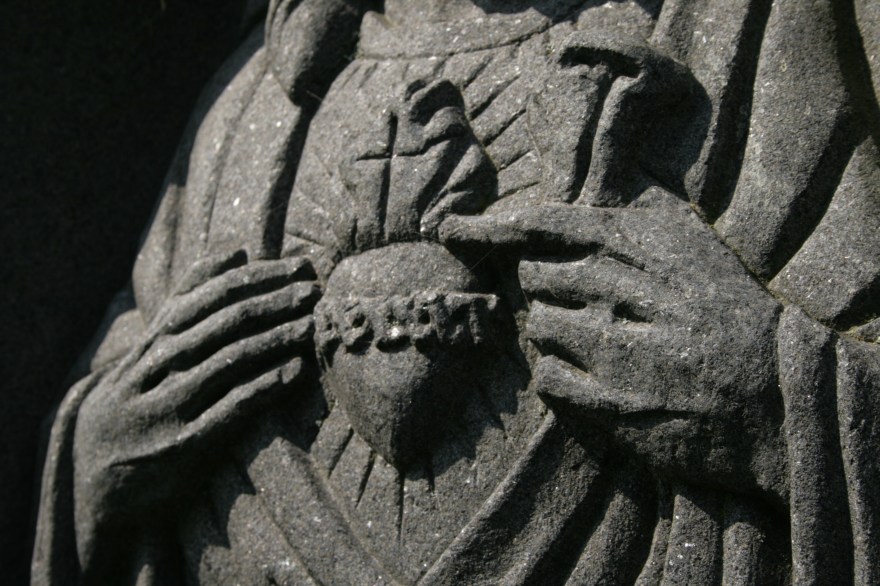
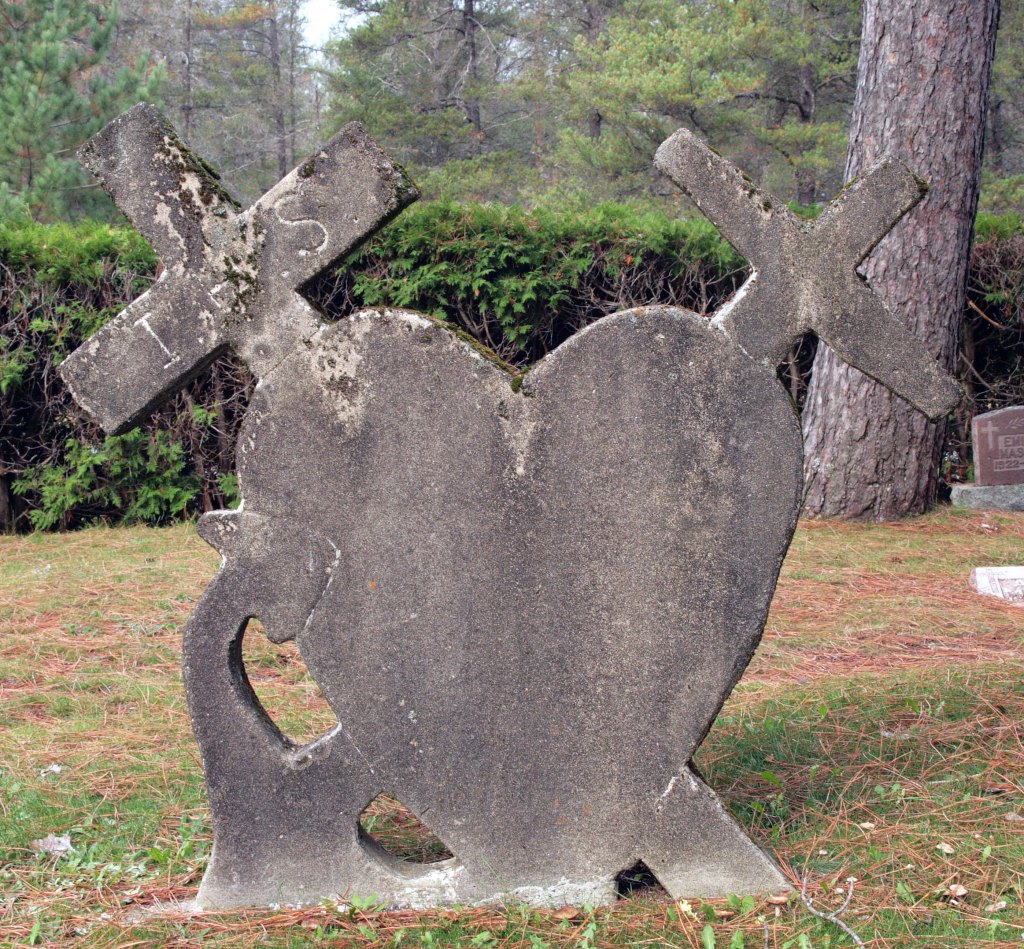
Jesus is also commonly depicted as an adult, his hands pointing to a flaming heart with thorns, that have rays emanating from it in his chest. This is often called the scared heart, and also sometimes has the addition of being topped with a Latin cross. There is a lot of symbolism here to unpack. The flame represents Jesus’ love for God and humanity, while the thorns represent his passion. The rays emanating from it represent the glory of God. Jesus’s hands point towards his heart, encouraging the viewer to look at it and reflect.

One of the more somber depictions of Jesus you might come across is a scene after the crucifixion. A thin and wounded Jesus is cradled in his mother Mary’s arms. He might be still wearing the crown of thorns, or it can sometimes be found lying by his side.

Statuary always seem to stand out to me, when I visit cemeteries. They are beautiful expressions of art and emotion, often made even more moving with the passage of time. Do you have a favorite cemetery statue? I would love to hear about some of your cemetery statue finds in the comments.

Thanks for reading!


References:

  • Understanding Cemetery Symbols: A Field Guide for Historic Graveyards by Tui Snider 
  • Stories in Stone: The Complete Guide to Cemetery Symbolism by Douglas Keister

A Collection of Interesting Epitaphs

Can you believe we’re already 3 weeks into November? Field season seemed to just fly by this year! We had our first snowfall last week, which solidified the end of the season for me. 

That being said, it’s time to turn my attention to my photo archive and research. That includes some heavy reading and crawling through the Find a Grave website. I am currently working on my next cemetery book review, but it’s not quite ready yet. So to tide you over this week, I wanted to share a collection of interesting epitaphs. 

An epitaph is an inscription found on a gravestone that accompanies the name, birth, and death dates. These short verses and poems are inscribed to the memory of the deceased. The word epitaph comes from the Greek word “epitaphion” which means funeral oration. “Epi” meaning upon and “taphos” meaning tomb.1

Epitaphs became more popular in the 19th century, as a way to honor and memorialize the dead, but also share a little about the deceased’s life and personality.1 The most common epitaph you will find in a cemetery is the phrase “Rest in Peace”, or the Latin “Requiescat in Pace”. But you might also come across bible verses, poetry, or short sentiments proclaiming everlasting love for the deceased. You might also find a variation of a momento mori poem, a reminder that death is inevitable:

“Remember me as you pass by, / As you are now, so once was I, / As I am now, so you will be, / Prepare for death and follow me.”

So for today’s collection, I wanted to share some of the more interesting epitaphs I have come across on my cemetery travels. 

Have you come across some interesting epitaphs on your cemetery walks? Do you have a favorite? Or maybe you have something you would like written on your own gravestone? I would love to read your thoughts in the comments.

Thanks for reading!


References:

  1. What is an Epitaph? | Columbia Gardens Memorials

A Collection of Wooden Grave Markers

I had the idea for this collection when I was wandering through Maple Ridge Cemetery in Thessalon. I found some very interesting wood markers there, and it reminded me of some other interesting wood markers I have found in the past. So, for today’s blog post, I wanted to share a collection of wooden grave markers.

In North America, there was a time when wooden markers were more common. Between 1861 and 1873, wood markers would have been common for graves of Civil War soldiers, but over time marble became more favorable because of its durability.1 Due to the nature of the material, wood is more susceptible to natural decomposition and wood-boring insects. Over a long period of time, the wood just rots away. 

Today, wood markers are not a very common sight in Northern Ontario cemeteries. They often tug at the heartstrings, as wooden markers are usually handmade, and you can see they were made with love. Unfortunately, if they are not used as a temporary marker the wood can become hard to read, and eventually falls apart.

I would argue that this is one of the best reasons why photographing gravestones is important. Over time, these wooden grave markers will be lost to time, so documenting them helps preserve the memory of the deceased. It creates records for those looking to piece together their family history and become great resources. 

Have you found wooden grave markers in your local cemeteries? I would love to read about your finds, in the comments.

Thanks for reading!


References:

  1. The History of Headstones Across Cultures and Religions | Milano Monuments