A Collection of Interesting Epitaphs

Can you believe we’re already 3 weeks into November? Field season seemed to just fly by this year! We had our first snowfall last week, which solidified the end of the season for me. 

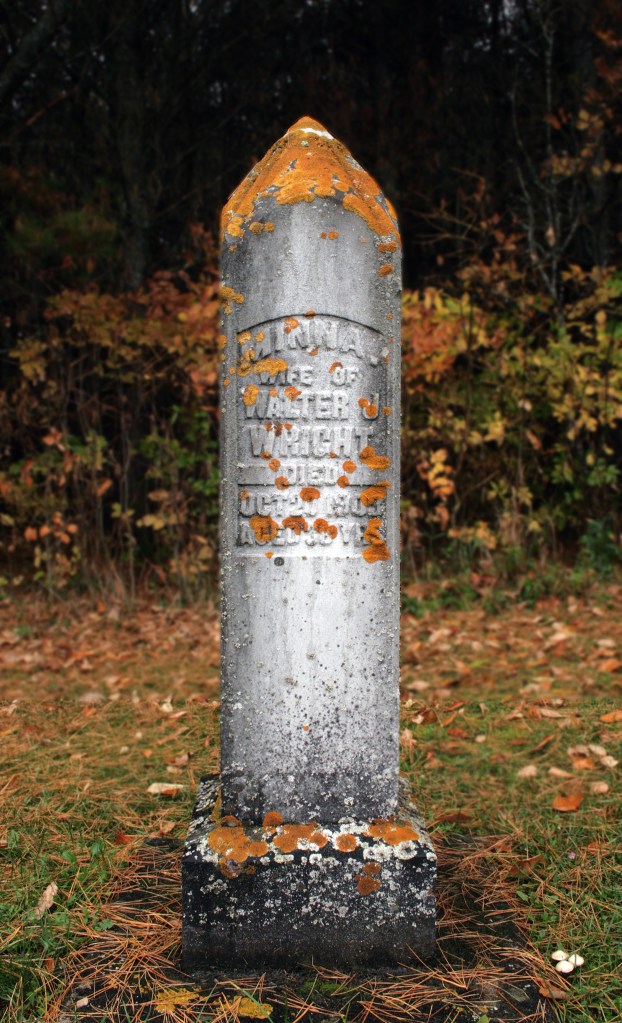
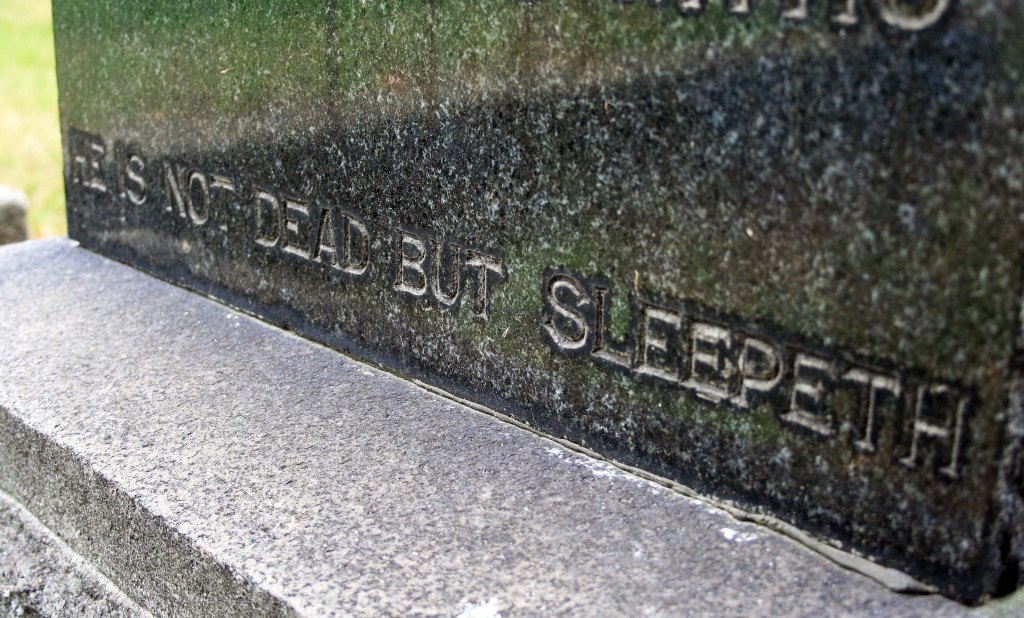
That being said, it’s time to turn my attention to my photo archive and research. That includes some heavy reading and crawling through the Find a Grave website. I am currently working on my next cemetery book review, but it’s not quite ready yet. So to tide you over this week, I wanted to share a collection of interesting epitaphs. 

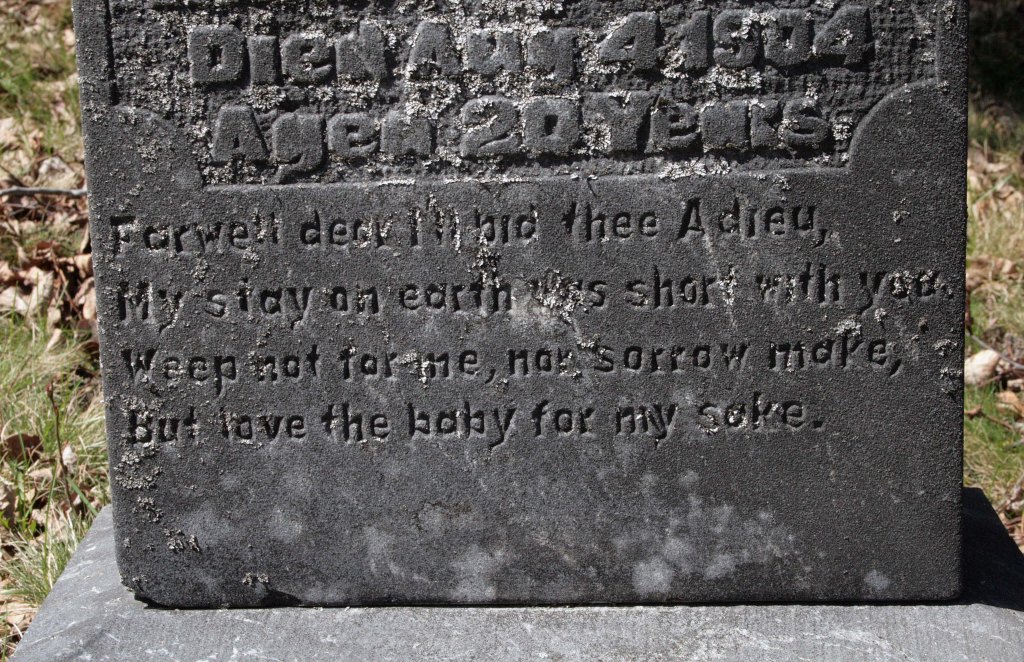
An epitaph is an inscription found on a gravestone that accompanies the name, birth, and death dates. These short verses and poems are inscribed to the memory of the deceased. The word epitaph comes from the Greek word “epitaphion” which means funeral oration. “Epi” meaning upon and “taphos” meaning tomb.1

Epitaphs became more popular in the 19th century, as a way to honor and memorialize the dead, but also share a little about the deceased’s life and personality.1 The most common epitaph you will find in a cemetery is the phrase “Rest in Peace”, or the Latin “Requiescat in Pace”. But you might also come across bible verses, poetry, or short sentiments proclaiming everlasting love for the deceased. You might also find a variation of a momento mori poem, a reminder that death is inevitable:

“Remember me as you pass by, / As you are now, so once was I, / As I am now, so you will be, / Prepare for death and follow me.”

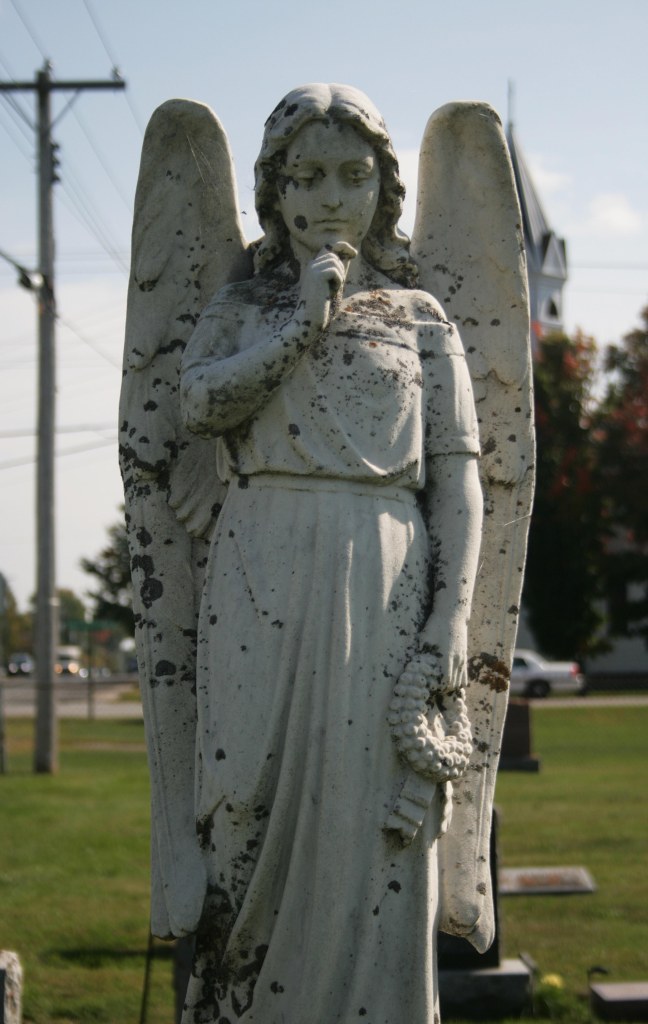
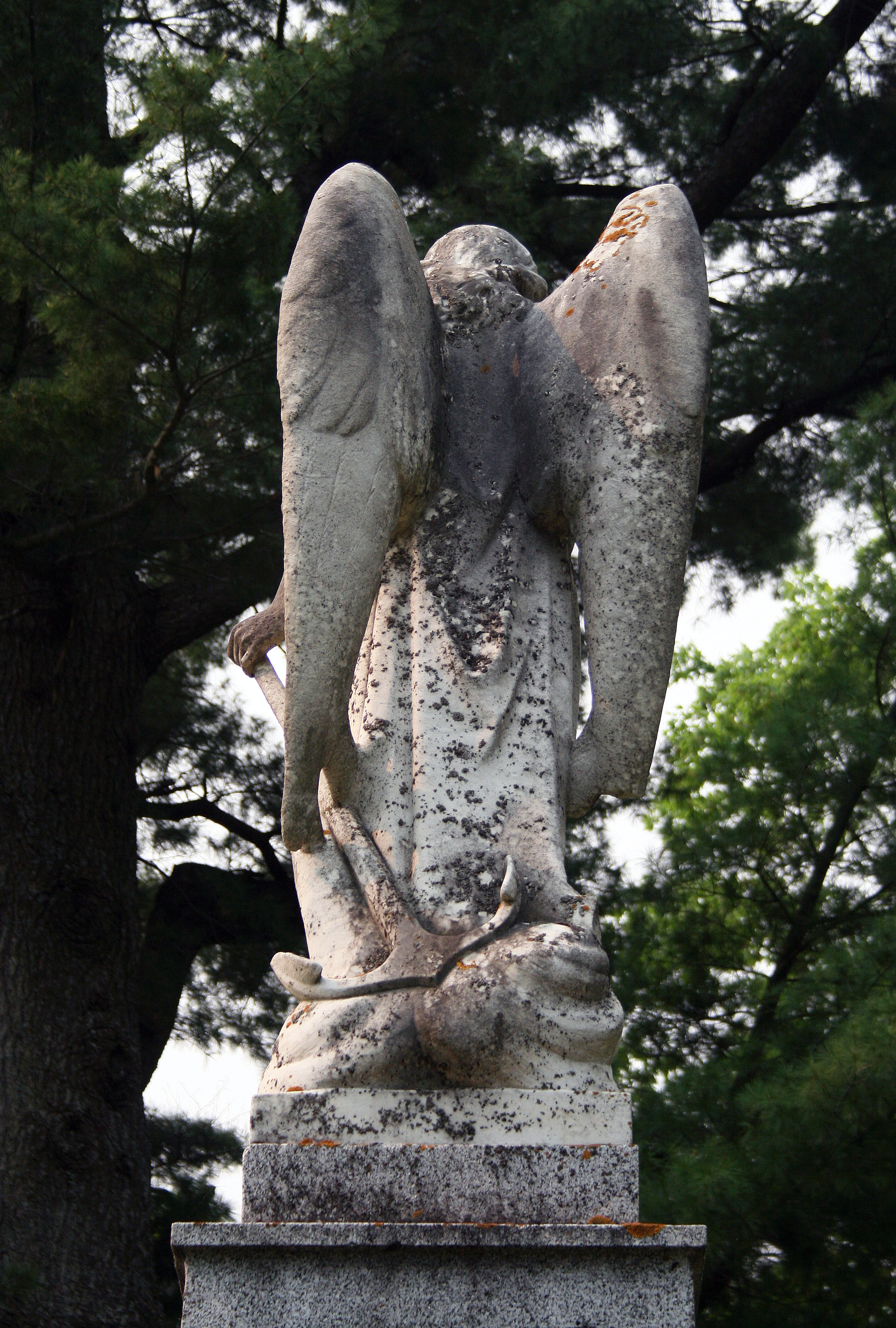
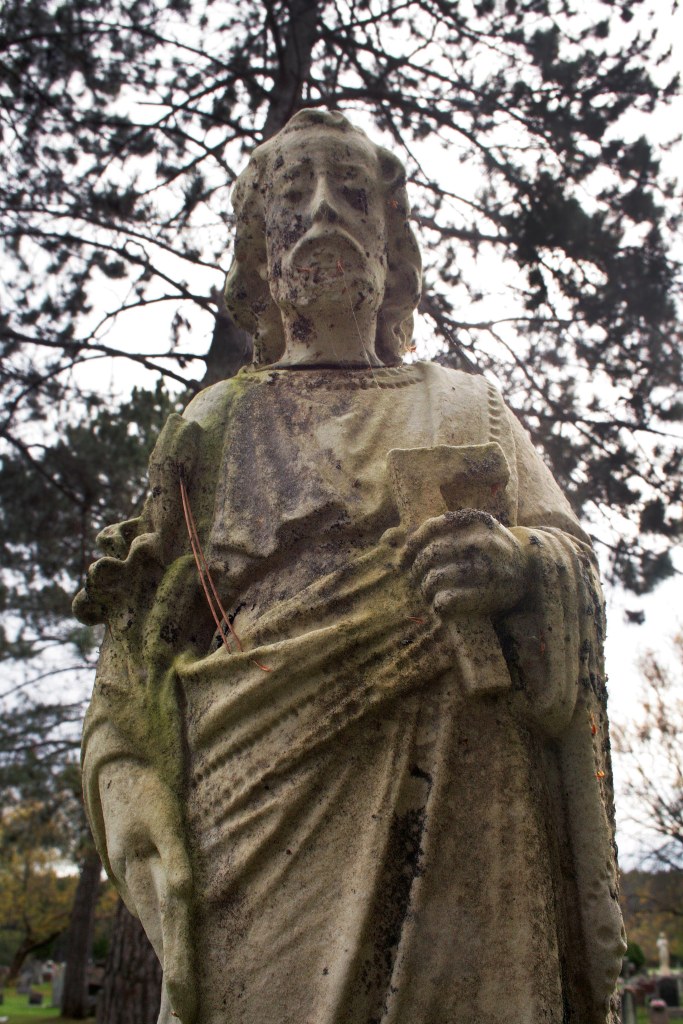
So for today’s collection, I wanted to share some of the more interesting epitaphs I have come across on my cemetery travels. 

Have you come across some interesting epitaphs on your cemetery walks? Do you have a favorite? Or maybe you have something you would like written on your own gravestone? I would love to read your thoughts in the comments.

Thanks for reading!


References:

  1. What is an Epitaph? | Columbia Gardens Memorials

A Collection of Wooden Grave Markers

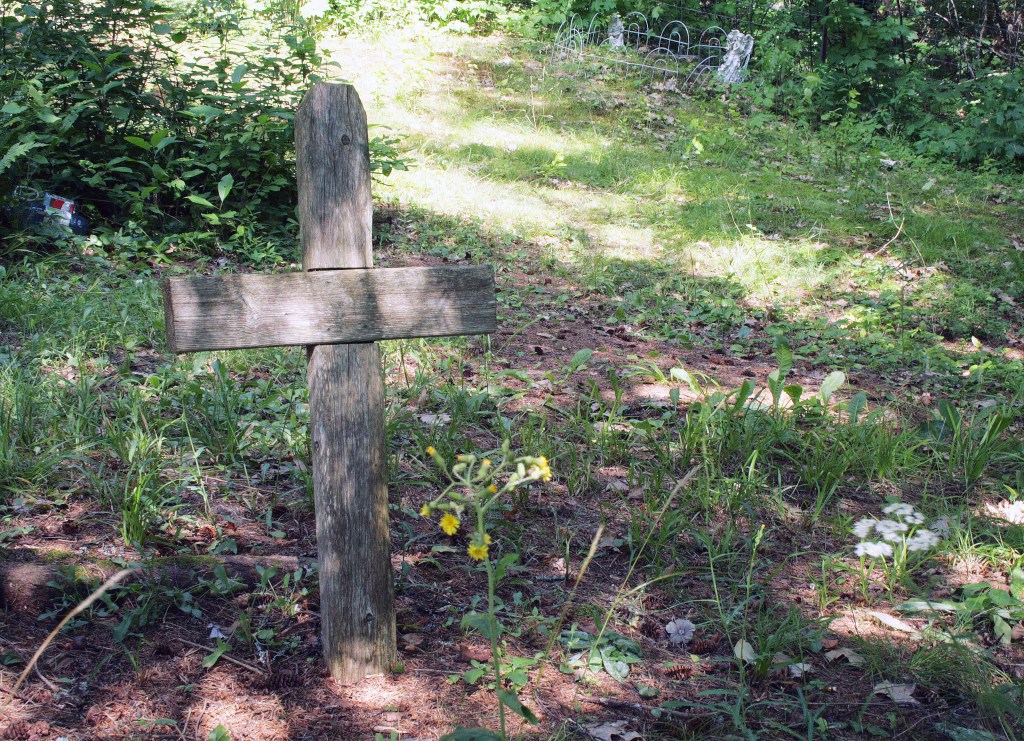
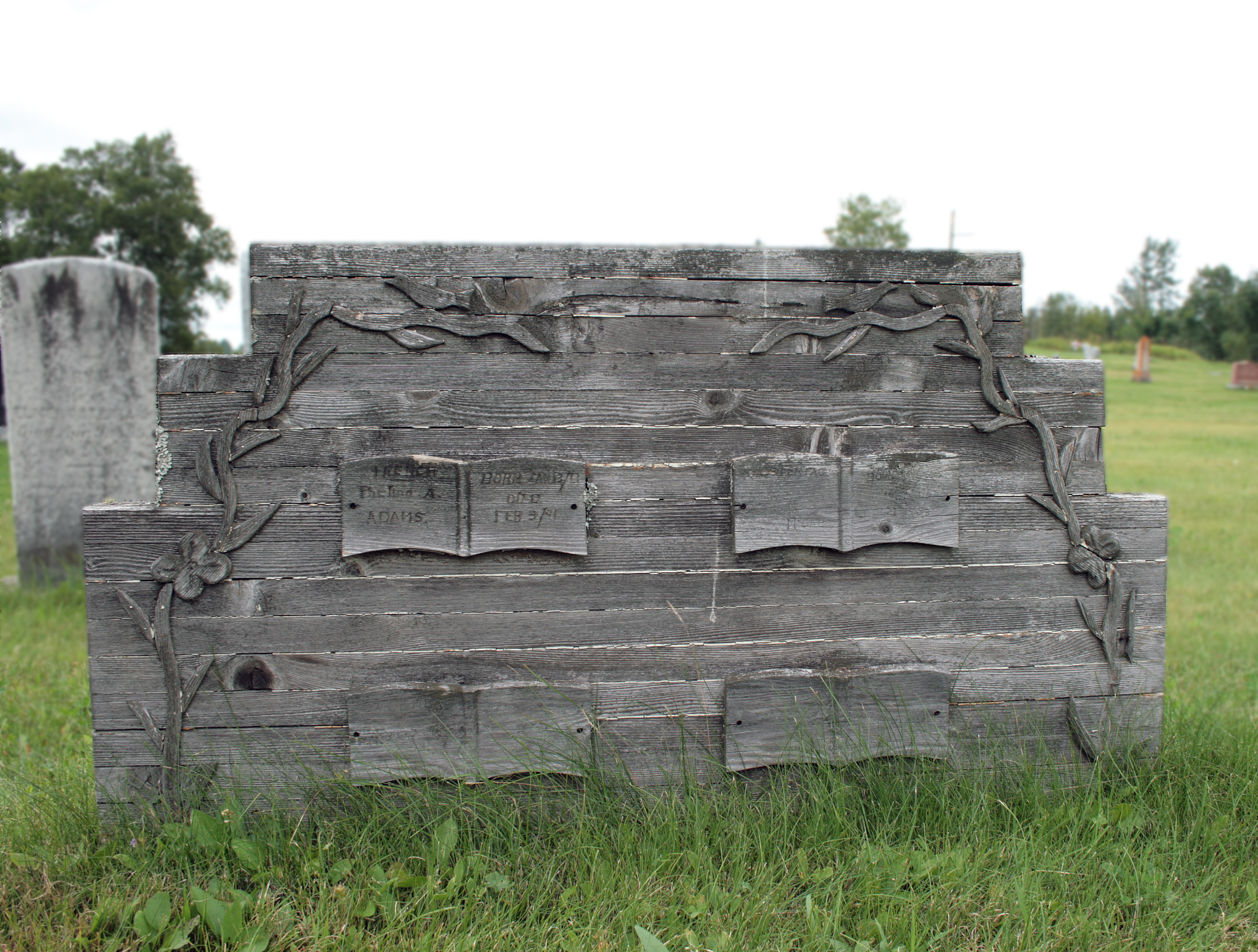
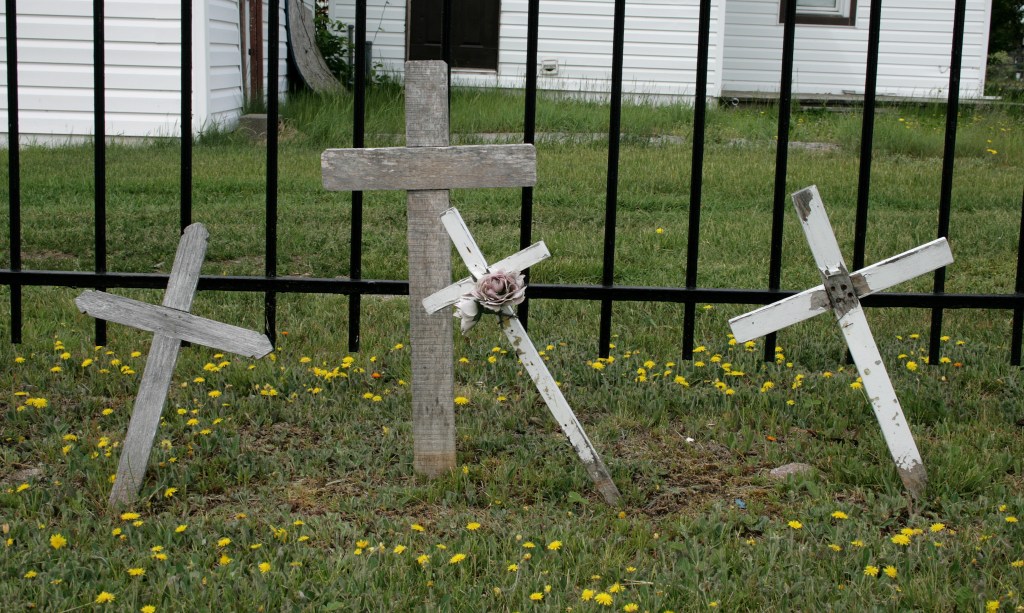
I had the idea for this collection when I was wandering through Maple Ridge Cemetery in Thessalon. I found some very interesting wood markers there, and it reminded me of some other interesting wood markers I have found in the past. So, for today’s blog post, I wanted to share a collection of wooden grave markers.

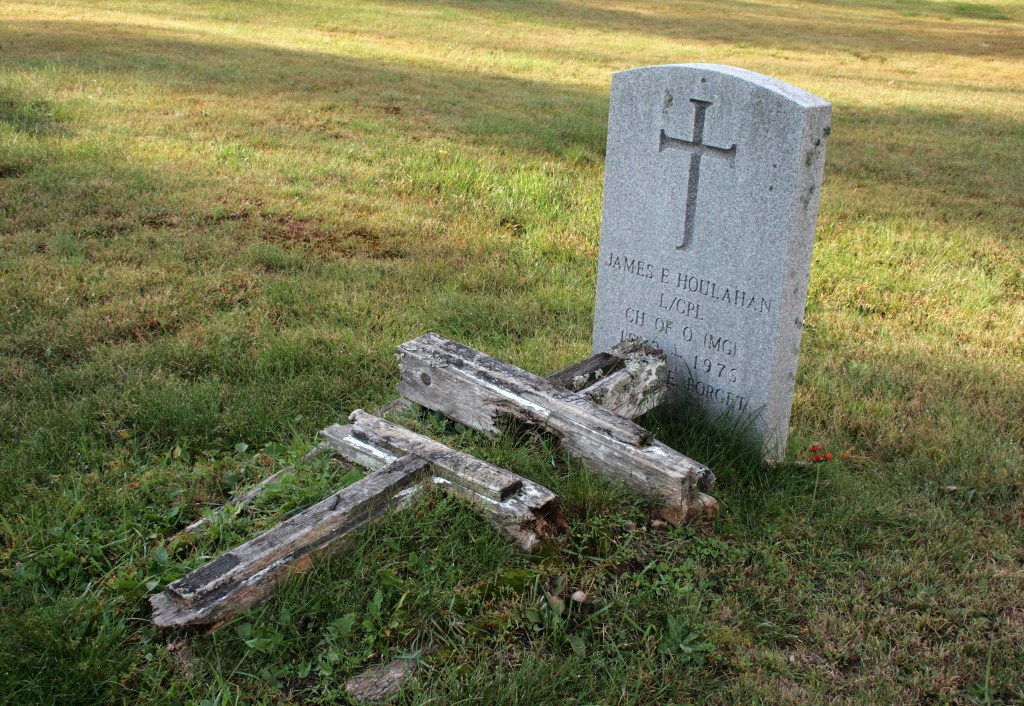
In North America, there was a time when wooden markers were more common. Between 1861 and 1873, wood markers would have been common for graves of Civil War soldiers, but over time marble became more favorable because of its durability.1 Due to the nature of the material, wood is more susceptible to natural decomposition and wood-boring insects. Over a long period of time, the wood just rots away. 

Today, wood markers are not a very common sight in Northern Ontario cemeteries. They often tug at the heartstrings, as wooden markers are usually handmade, and you can see they were made with love. Unfortunately, if they are not used as a temporary marker the wood can become hard to read, and eventually falls apart.

I would argue that this is one of the best reasons why photographing gravestones is important. Over time, these wooden grave markers will be lost to time, so documenting them helps preserve the memory of the deceased. It creates records for those looking to piece together their family history and become great resources. 

Have you found wooden grave markers in your local cemeteries? I would love to read about your finds, in the comments.

Thanks for reading!


References:

  1. The History of Headstones Across Cultures and Religions | Milano Monuments

A Collection of White Bronze

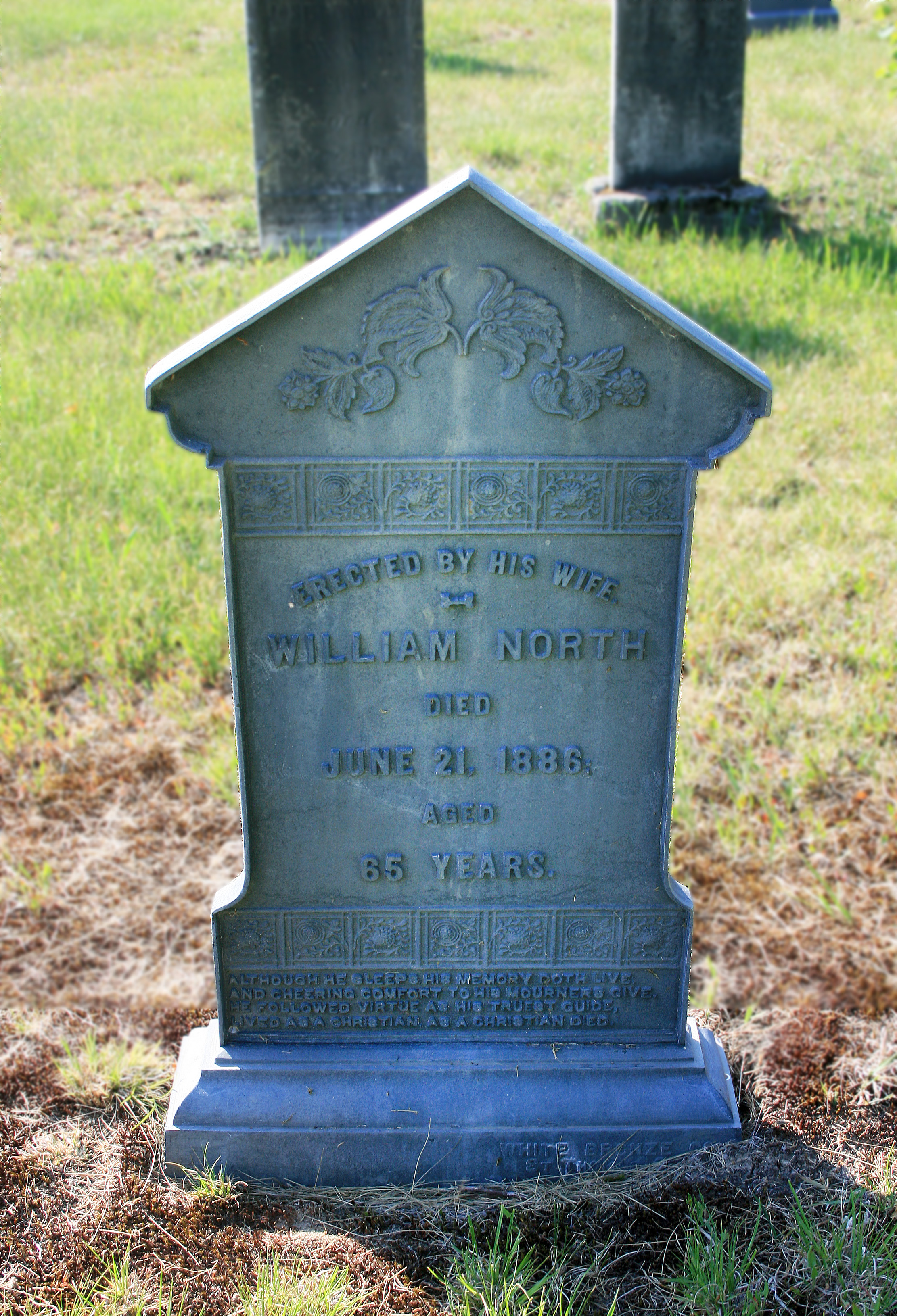
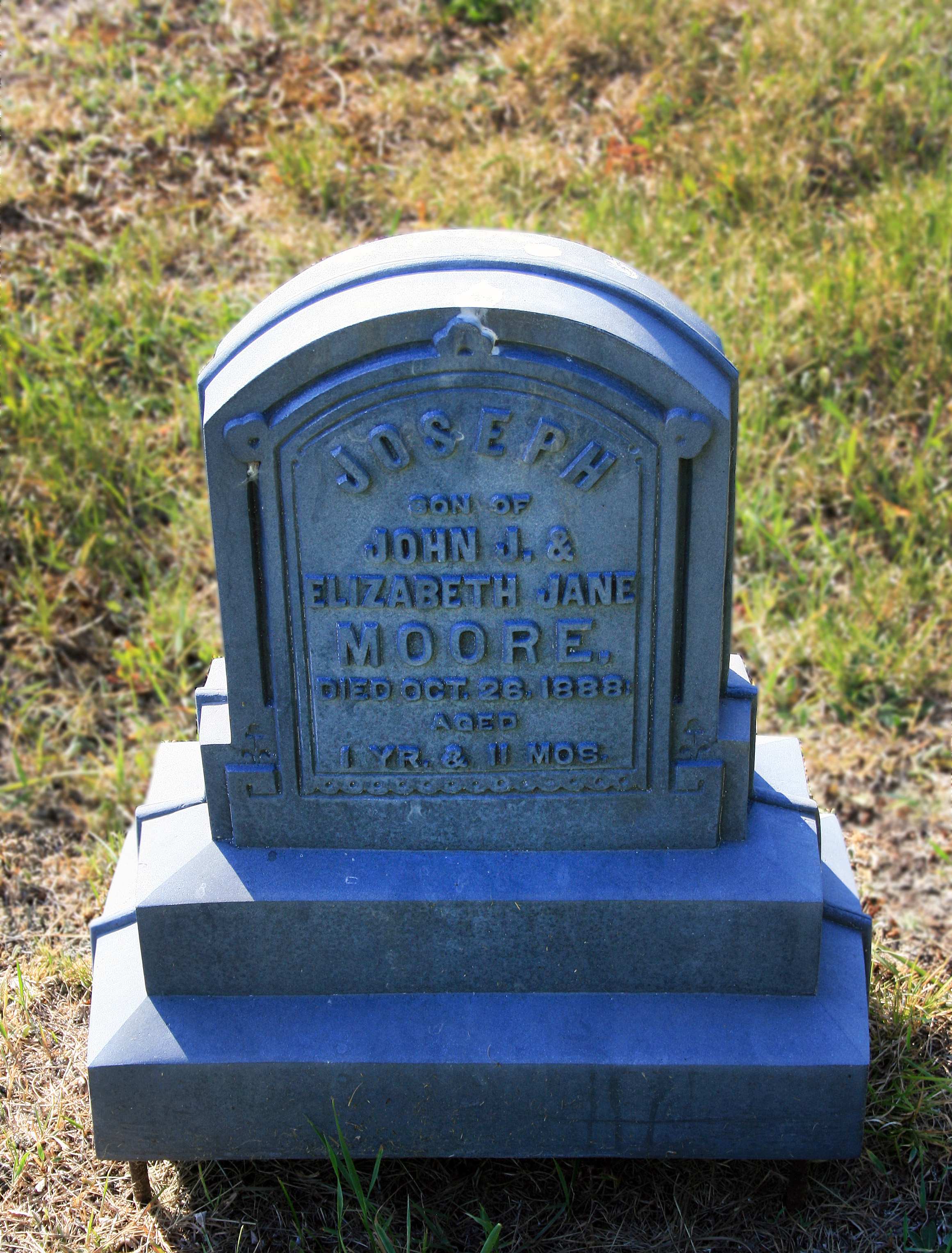
Last weekend, some friends and I went on a cemetery road trip in the Burks Falls area. I was really surprised at the amount of white bronze markers that we found. Almost every cemetery we visited had 1 or more zinkys. I had never come across that many before. They are not a common sight in my local Sudbury cemeteries. 

So for today’s blog post, I thought I would share a collection of white bronze markers. 

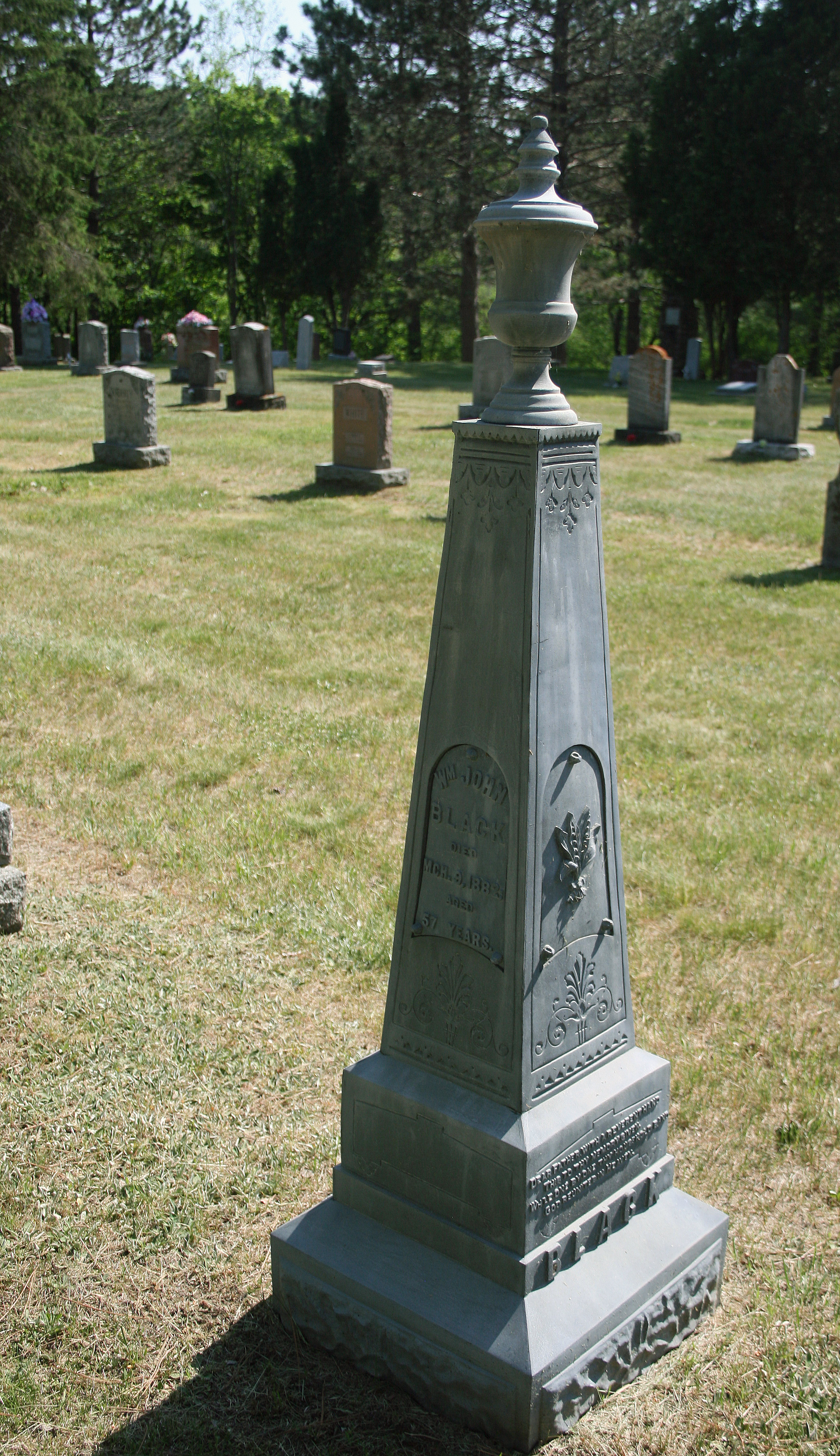
In January 2022, I wrote a post that looked more into the history of these unique gravestones. Zinkys as they are lovingly referred to, are also known as white bronze. You can recognize these types of headstones by their bluish-grey color, and if you give them a gentle tap, it should produce a hollow metallic sound.

These types of gravestones never came back into fashion after World War I, but because of their durability, you can still find them in great condition.

Spence Cemetery, Magnetawan ON ©2023

Fairholme Cemetery also known as Dunchurch-Fairholme Cemetery, Dunchurch ON ©2023

Although these markers are very durable, they do sometimes get damaged. According to Understanding Cemetery Symbols by Tui Snider, in the United States during the prohibition era, it was claimed that bootleggers would pry the panels off of these monuments to hide their contraband booze. I am curious if this was also a practice in Canada, as I have found some markers with their panels pried off. 

Have you found some of these unique gravestones in your local cemeteries? Do you have a favorite design? I would love to read about it in the comments. 

Thanks for reading!


References:

  1. Understanding Cemetery Symbols: A Field Guide for Historic Graveyards by Tui Snider

A Collection of Weeping Willows

While working on an upcoming project, I was going through my photo archive and found myself frequently stopping on the images of weeping willows. I have captured an interesting variety in the last few years. I love weeping willows, they have a very unique look. They are not common in my area, in the forests, or on graves. 

So for today’s collection, I wanted to take a closer look at this cemetery symbol and share some of the different versions I have found and photographed during my cemetery walks.

As the name implies, weeping willows commonly symbolize grief and mourning. They are a very common Victorian-era cemetery symbol. Adopted from the Ancient Greeks, the weeping willow can represent immortality and life after death. Weeping willows are sometimes associated with the Underworld because, in Greek mythology, Orpheus brought with him a willow branch on his travels to the Underworld to save Eurydice from Hades.1 The symbolism of immortality stems from the fact that willow trees are very hardy, and can survive heavy damage.

A variety of the weeping willow motif you might find is a weeping willow standing beside a gravestone. I love the idea of a gravestone on a gravestone. 

Another variation you might come across is of a weeping willow and urn. The urn represents death itself, and the willow again symbolizes grief.2 This motif was a popular gravestone symbol of the late eighteenth and early nineteenth century. You might also see weeping willows paired with a lamb or a cross.3 I have yet to come across these variations. 

I noticed that the majority of the ones I found were in Southern Ontario. As I explore more Ontario cemeteries this summer, I hope I will come across a few more to photograph. I would love to find some more variations on the symbol. If you have any suggestions for where I might look, I would love to hear about them in the comments. 

Thanks for reading!


References:

  1. Understanding Cemetery Symbols: A Field Guide for Historic Graveyards by Tui Snider
  2. Mastering Cemetery Iconography | The Academy at Penguin Hall
  3. Stories in Stone: The Complete Guide to Cemetery Symbolism by Douglas Keister

A Collection of Cemetery Flowers

The winter weather seems to be dragging on this year. We got a lot of snow this winter in Northern Ontario, which I think is adding to this feeling. It feels like it will never all melt. I am trying to be optimistic, and am hoping to be hiking and visiting cemeteries soon. For the last couple of weeks, I have been focused on planning cemetery road trips, near and far. I am ready to get outside, it’s supposedly Spring after all!

The official first day of Spring was March 20th, so I wanted to share something a bit more colorful to help ring in the Spring season. Flower arrangements are often found on gravestones, in plastic, or made of fresh blooms. You might also find bright and vibrant cemetery flowers planted on graves or cemetery grounds. Each variety of flower holds a special meaning, that also varies by color. So for today’s collection, I wanted to share some cemetery flowers I have photographed over the years and take a look at what they might symbolize.

These delicate light blue hydrangeas symbolize regret, apology, and forgiveness.1 Seeing them at a graveside or planted on a grave intensifies that meaning for me. 

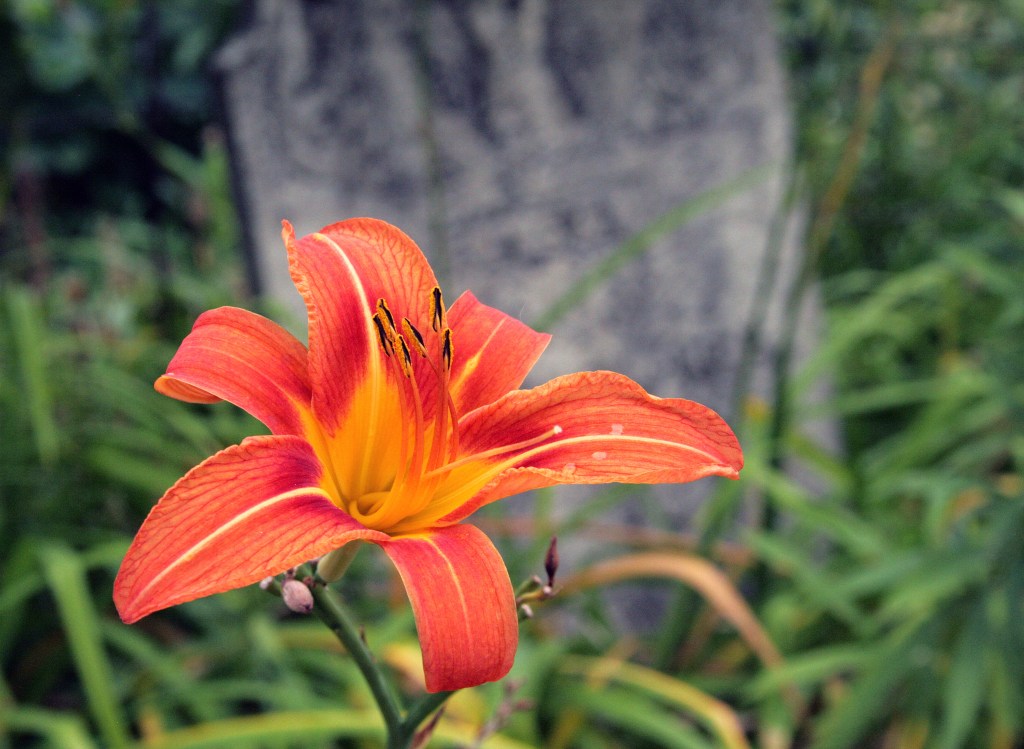
Daylilies bloom during the day and close up at night. Orange or yellow daylilies commonly symbolize love and devotion, as well as joy, beauty, and courage. A dark orange, or redder daylily like the one pictured, may symbolize a deep passion.2

Lilac shrubs are one of the earliest plants to bloom in the Spring, and because of this, are thought to symbolize a fresh start and renewal.3 Pink lilacs commonly symbolize first love.4 I was able to capture this yellow swallowtail visiting this lilac bush. Yellow swallowtail butterflies represent grace and the free nature of the soul.5 Fitting since this photo was taken in a cemetery. 

Black-eyed Susans are a common sight here in Northern Ontario. They are also sometimes called brown-eyed Susans because of their dark brown-to-black centers. Black-eyed Susans are thought to symbolize resilience and endurance as well as justice and truth.6

Begonias have a lot of symbolism tied to them, but are commonly seen as a symbol of uniqueness, gratitude, and harmony, but can also be a symbol of caution. Yellow begonias are thought to be a representation of hope, kindness, or friendship.7

I am still working on learning to identify different types of plants, in bloom and on gravestones. I find it fascinating that there is a meaning for practically everything! Looking at all these colorful blooms has got me excited to be visiting cemeteries and enjoying the sunshine soon. 

I hope wherever you are, you will be enjoying the sunshine soon as well if you’re not already. Happy Spring! 

Thanks for reading!


References:

  1. Hydrangea Meaning and Symbolism | Fresh Trimming
  2. Interesting Daylily Flower Meaning And Symbolism You Want To Know | Florgeous
  3. Lilac Flower Meaning And Symbolism | Florgeous
  4. Language, Significance And Symbolism Of The Beautiful Lilacs For Sale | Agriforest Bio-Technologies Ltd.
  5. Swallowtail Butterfly Natural History | Bug Under Glass 
  6. Black-eyed Susan Symbolism and Meaning | Symbolsage
  7. Ultimate Guide to Begonia Flower Meaning and Symbolism | Petal Republic

A Collection of Doves

This week, I had originally planned on posting a cemetery recipe for Red Lantern Cheese dip, from the gravestone of Debra Ann Nelson. But, I had some issues finding the correct ingredients and the recipe didn’t turn out as expected. So I will continue my hunt for the elusive ingredients. 

Instead, this week I will share a collection of Dove’s. If you have been following this blog for a little while, you may have noticed that I sometimes like to share collections of my favorite photos of some of the cemetery symbols I find on my cemetery walks. I have been photographing cemeteries for over 15 years, and in that time I have noticed some repetition of certain symbols and motifs. I find cemetery symbolism so interesting and love looking at what the different variations of a symbol mean.

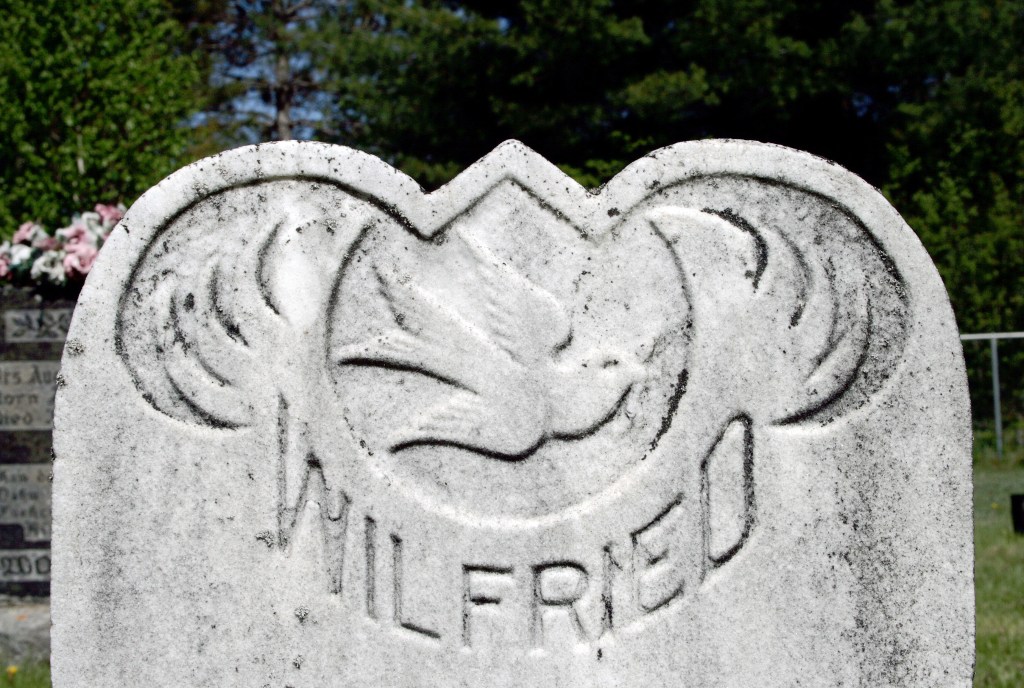
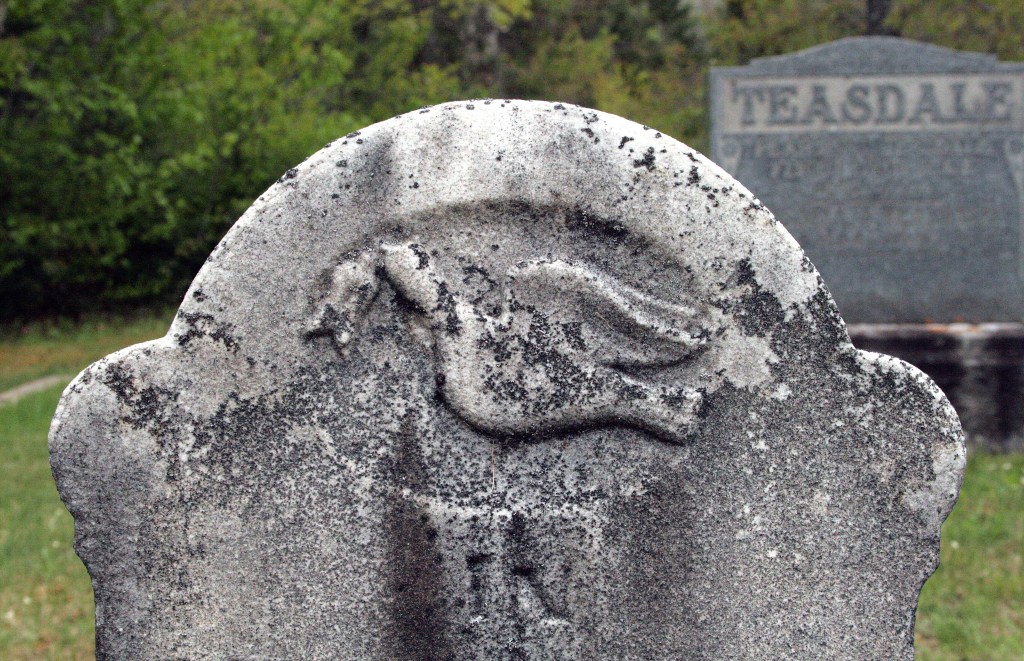
Doves are not as common a symbol as lambs in Northern Ontario, but they represent similar ideas. Doves commonly are a symbol of peace, but when used in funerary art, they also represent innocence and the Holy Spirit. Doves may appear in many forms, such as sculpture or bas-relief. There are also different variations of doves, and each carries additional meaning.

Sometimes a dove may be depicted carrying something in its mouth. A dove with an olive branch in its mouth may represent peace. This symbolism also can be traced to Ancient Greece. A dove carrying a broken flower bud in its mouth often symbolizes a life cut short. 

The position and angle of the dove may have some significance as well. A dove flying downward is thought to represent the Holy Spirit coming down from heaven.

Another variation of a dove you might find, is a dove that looks like it might be dead. A dead dove sadly represents a life cut short. This variation may also be found lying in front of, or on top of a tree stump; which is also a symbol of a life cut short.

Have you come across a different variation of this symbol? I would love to hear about it in the comments.

Thanks for reading!


References:

  1. Understanding Cemetery Symbols: A Field Guide for Historic Graveyards by Tui Snider
  2. Stories in Stone: The Complete Guide to Cemetery Symbolism by Douglas Keister
A Collection of Tree Stones

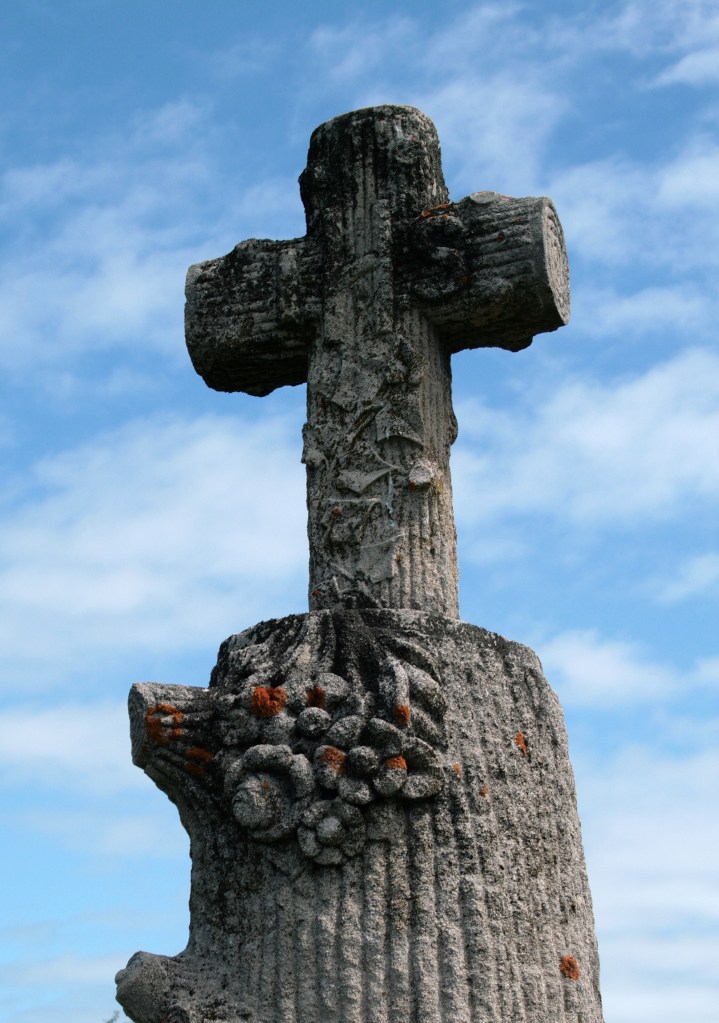
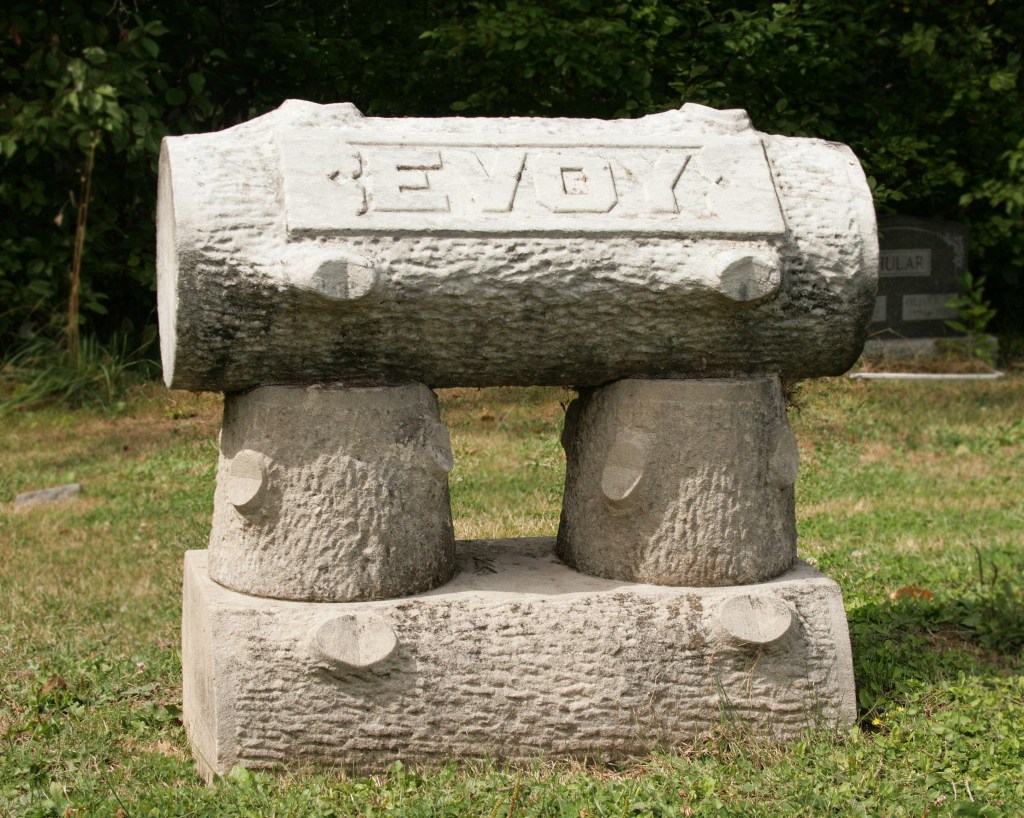
While wandering a cemetery, have you ever come across a monument that is shaped and textured to look like a tree? Today, I want to take a closer look at these types of grave markers, called tree stones. Although they are a bit harder to come by in Northern Ontario, you can find them, and they are usually very easy to spot since they are so unique!

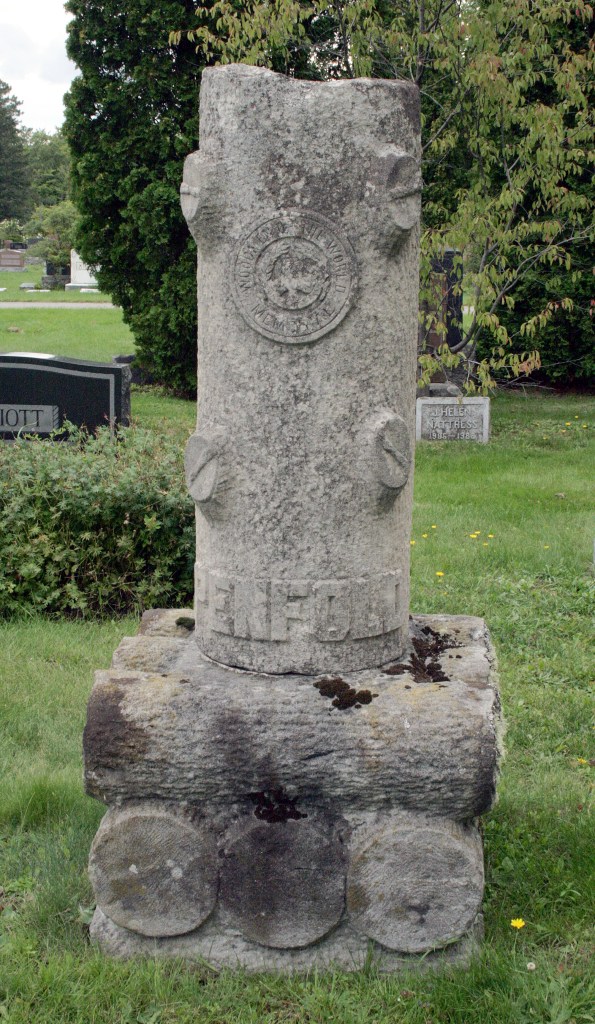
Tree stones are often used as memorials for members of the Woodmen of the World, a fraternal organization. This fraternal order was started in 1890, and membership included those who worked in particularly dangerous professions. The organization offered health insurance and death benefits to its members, which included a tree stone tombstone.1

Woodmen of the World tree stones, often bare the Woodmen crest, as well the tools of the trades like an axe and sledgehammer, representing the works of man. You may also find other symbols on tree stones like ivy or doves, representing friendship and peace, respectively.

The severed branches or tree stump of a tree stone, Woodmen of the World or otherwise, often represents a life cut short. We often see this combined with other symbolism, like a lamb or dove laying in front of a stump. Lambs and doves are often found on the graves of small children, symbolizing innocence and purity.

Sometimes the number of logs on a tree stone can be symbolic of the number of children the deceased had. A tree stone can also be seen as a representation of the tree of life, symbolizing knowledge. 

Have you ever come across a tree stone? Or maybe a Woodmen of the world memorial? I would love to hear about your finds, in the comments. 

Thanks for reading! 


References:

  1. Understanding Cemetery Symbols: A Field Guide for Historic Graveyards by Tui Snider

A Collection of Obelisks

I am in the midst of working on a blog post about my adventures searching for the grave of Tom Thomson in Algonquin Park. I’m hoping to have it up in the next week or two. In the meantime, I thought I would take a look at some Egyptian revival architecture that can sometimes be found in cemeteries, more specifically—obelisks.

Obelisks are Egyptian in origin, but became a popular Christian funerary symbol. They are now a common sight in most cemeteries. I have found quite a few in my cemetery travels and wanted to share some of them with you today. 

In Understanding Cemetery Symbols, Tui Snider notes that obelisks became popular symbols after Napoleon invaded Egypt in the late 1700s. An obelisk is thought to represent a ray of light, but it can also symbolize focused spiritual goals, with the wide base narrowing to a point, symbolizing the deceased reuniting with God at death, and the two becoming one. 

Different variations of obelisks can be found throughout a cemetery. For example, Truncated obelisks do not come to a sharp point at the top, but are flat or topped with another symbol like a cross, urn or an orb. 

Obelisks can sometimes be found at the center of a family plot, representing the family’s connection to God. They are particularly well suited for this, as there is generally a lot of room on all four sides of the stone to inscribe the names of family members. 

You might also find vaulted obelisks. These stones have points on all four sides at the top instead of coming to one point.


References:

  1. Understanding Cemetery Symbols: A Field Guide for Historic Graveyards by Tui Snider
  2. Stories in Stone: The Complete Guide to Cemetery Symbolism by Douglas Keister

A Collection of Crosses

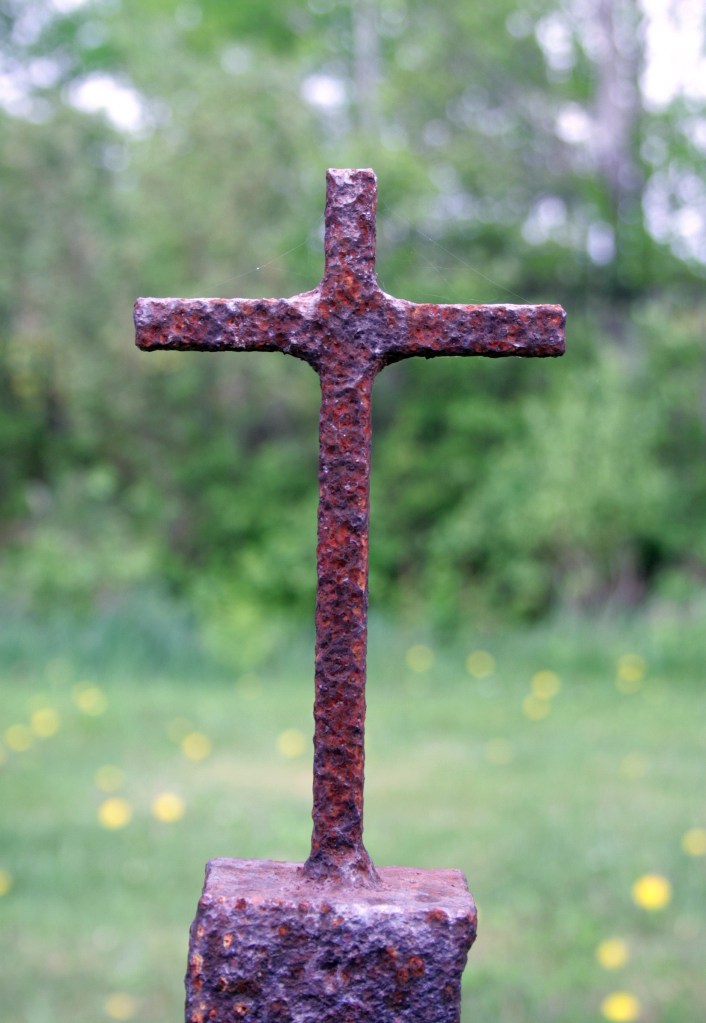
Crosses have to be the most easily recognizable and common symbol found in cemeteries and funerary art. There are so many variations of this Christian religious symbol. Since crosses are so common, you may think if you have seen one, you’ve seen them all—but I would beg to differ!

Today I wanted to take a closer look at this funerary symbol and share some of the many crosses I have photographed over the years.

First off, let’s look at the difference between a cross and a crucifix, as they are not the same thing. A crucifix shows the body of Jesus nailed to it, while a cross does not.

A Latin cross is probably the most common cross found in cemeteries. This cross has no embellishments. It is sometimes called a Protestant cross, because it can represent Jesus as risen, instead of focusing on his suffering on the cross.

A Botonee cross has a trefoil, three lobes, at each end that symbolizes the holy trinity.

A Celtic cross is easily recognizable. It usually has a Celtic knot pattern engraved on it and also includes a nimbus, a distinctive circle that represents the union of heaven and earth. These crosses are often found at the graves of those with Irish heritage.

In the example below you can also see the letters IHS in the center. This is sometimes called a Christogram. There are a couple of different theories about what the letters IHS stand for. One theory is that it is an abbreviation of the Latin phrase “in hoc signs vines” (In this sign you will conquer), another line of thought is that it’s an abbreviation of the Latin phrase “Jesus Hominum Salvator” (Jesus, Saviour of Men). According to Doug Keister’s book Stories in Stone: A field guide to cemetery symbolism and iconography, these letters are the first three letters of Jesus’ name using the Greek alphabet.

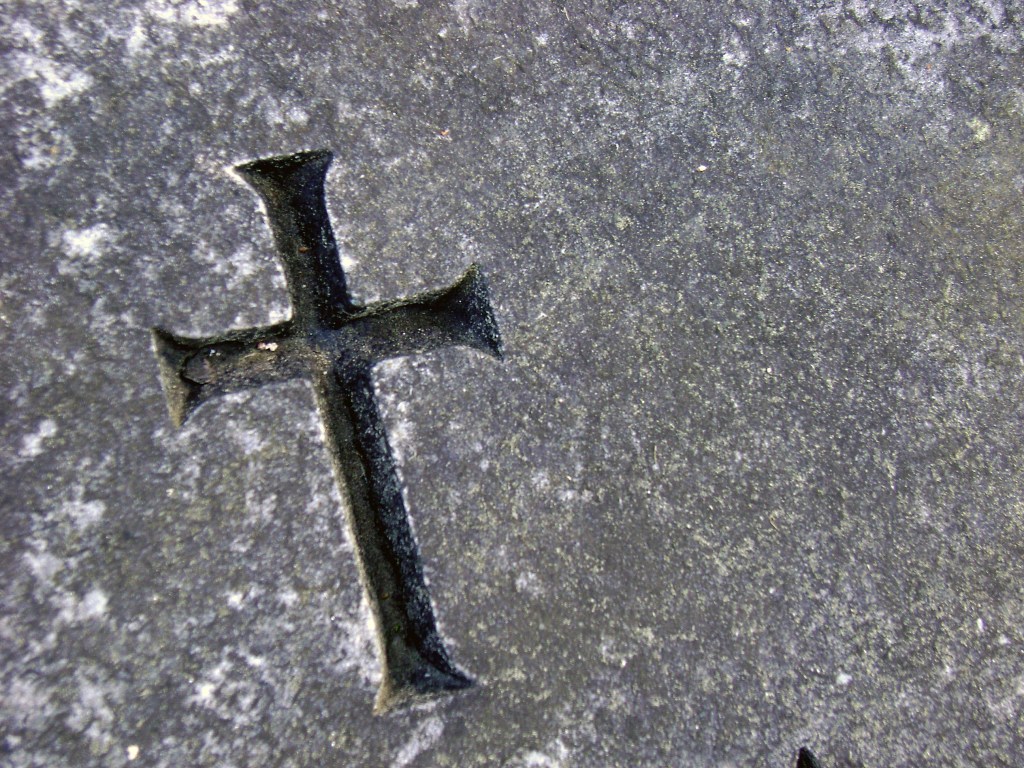
A Congé cross is a variation of the Latin cross, where the ends of the arms flare out slightly.

A Glory cross, sometimes called a Rayed cross, has rays emanating from its center that symbolize the glory of God.

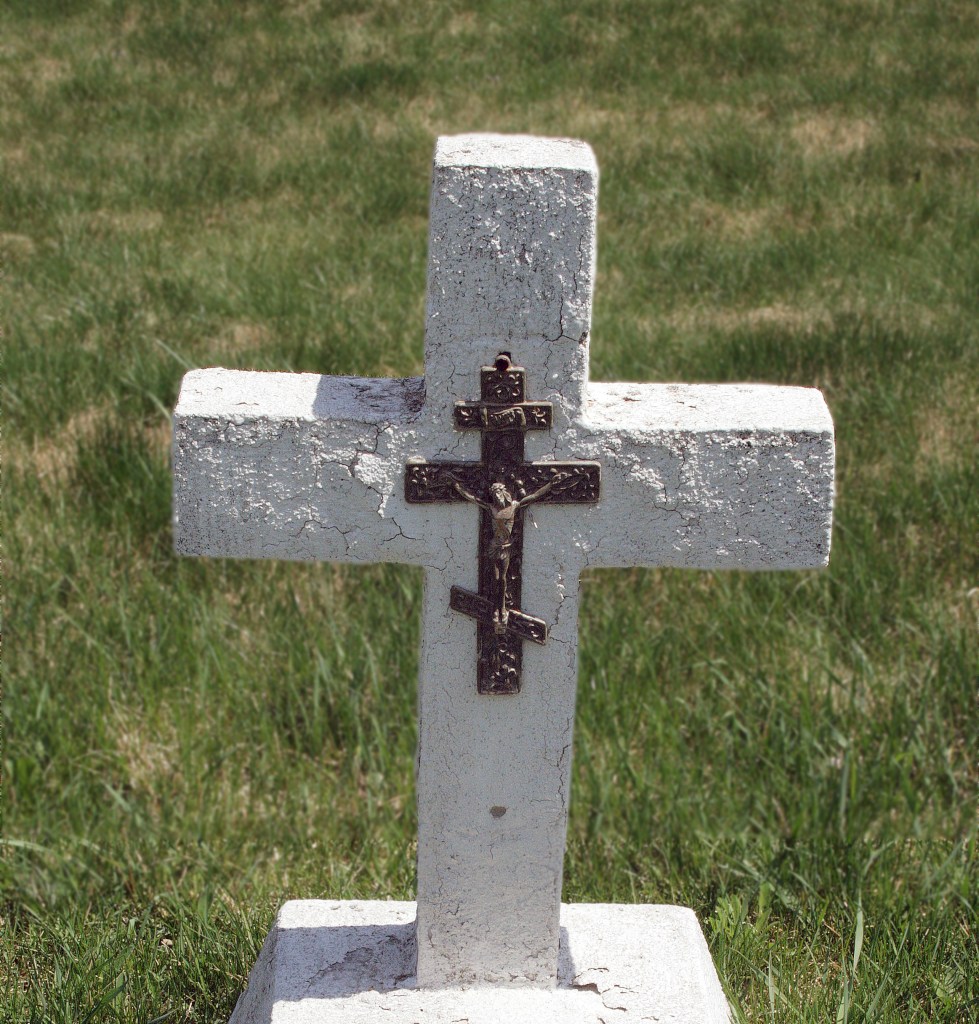
Below is an example of an Eastern crucifix on a white Latin cross. The Eastern cross is easily recognizable by its two horizontal cross bars, and one slanted one. This cross is a symbol of Eastern Orthodox religions. This one would be considered a crucifix, as it has the tortured body of Jesus nailed to it.

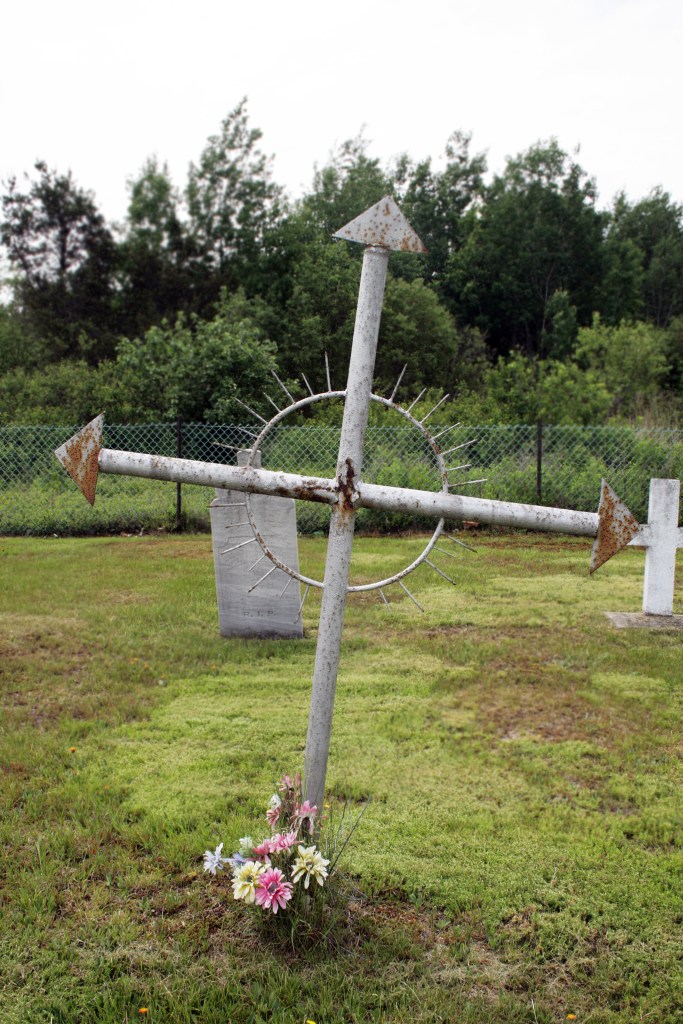
An Agony cross has sharp points at the end of each arm. This is said to represent the suffering or agony, that Jesus endured. This cross is sometimes called a pointed cross or a cross of suffering.

A Portate cross is a cross that is angled diagonally. It’s angled the way someone would carry it over their shoulder to drag it.


References:

A Collection of Books

I love books! I am a big reader and have a large book collection at home, but I love finding stone books among the tombstones while wandering a cemetery. I find them very interesting and love trying to interpret what they mean.

Books can be both decorative or a representation of something. You can sometimes find a book being used as a decorative device to display the name of the deceased along with the birth and death dates. An open book can sometimes represent the human heart, as in it’s emotions are open to the world. An open book may also symbolize a life that has been cut short, before getting to the last page. Another variation of this is an open book with a cloth draped across it. This also represents a life cut short, the veil of death having bookmarked the person’s last chapter before the book is finished being written. A closed book might represent a long life, lived to the last chapter.

Any book found in a cemetery may represent the bible. Sometimes you may even find the words “Holy Bible” engraved on the book.

In my experience, books are not as common as some other funerary symbols, like hands and lambs. I love to photograph them when I do find them. I wanted to share some of my favorites with you today.


References:

  1. Understanding Cemetery Symbols: A Field Guide for Historic Graveyards by Tui Snider
  2. Stories in Stone: The Complete Guide to Cemetery Symbolism by Douglas Keister