
Some places just have a presence.
You can’t help but notice them. The Bell Mansion in Sudbury, Ontario, is one of those places. It’s grand, full of history, and, if the stories are true, maybe even haunted.
Despite its spooky reputation, it’s also been a popular spot for wedding photos, with its striking architecture offering a mix of romance and a touch of haunted charm.
But while the mansion still stands for now, its future is uncertain, and its past lingers in more ways than one.
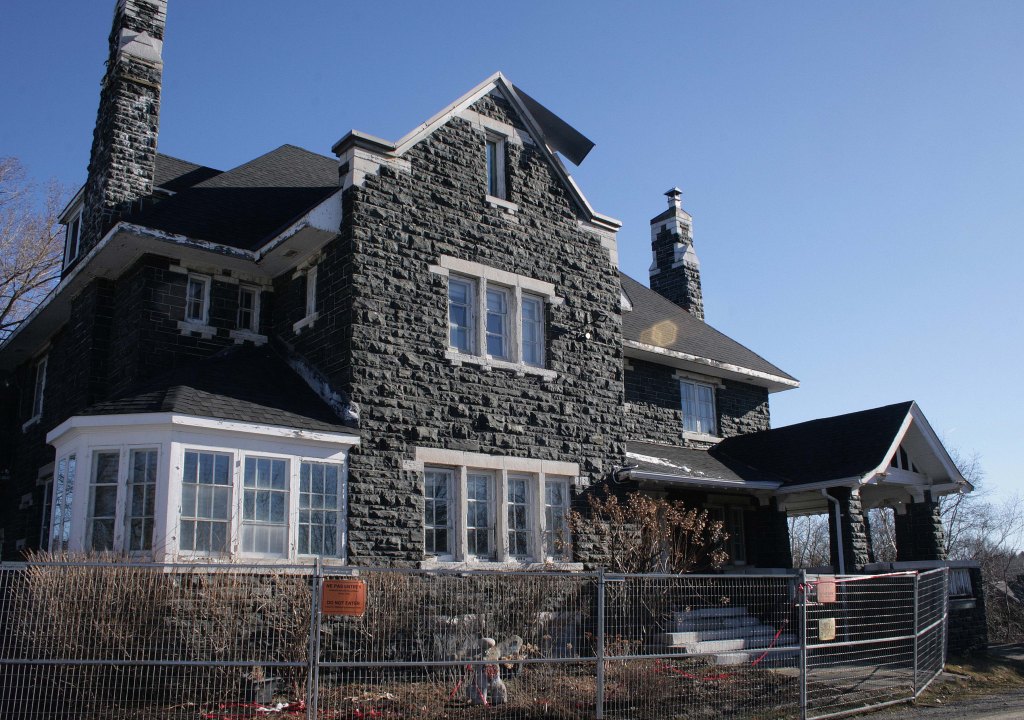
The Bell Mansion. Sudbury, ON ©2024
The Bell Family
William Joseph Bell, better known as Willie Joe, was born in Pembroke, Ontario, in 1858.1 He started in the lumber industry at just 18, working as a scaler and lumberjack in Quebec.1 By the time he moved to Northern Ontario in 1896, he had already made a name for himself.1 He quickly climbed the ranks, becoming Vice-President and General Manager of the Spanish River Lumber Company in 1901.1 His influence didn’t stop there; he also ran a hardware company and sat on the board of National Grocers Ltd.1
In 1886, he married Katherine Skead, the daughter of an Ottawa senator, and the couple eventually settled in Sudbury.1 Beyond business, they were generous community builders. Their greatest gift may be Bell Park, a beautiful green space on Ramsey Lake, which they donated in 1926.2 A gift that continues to benefit Sudbury today.
The park remains one of the city’s most beloved gathering spots, offering accessible recreation for people of all ages. Just as Bell Park connects residents with nature, the Bell Mansion connects them with the city’s past, standing as a reminder of the Bells’ influence and Sudbury’s early growth.
The Bell Mansion
Built in 1907, the Bell Mansion, also known as Belrock, is beautiful. Made from local stone in the Arts and Crafts style, the house once sat on 155 acres, stretching from Elizabeth Street down to Ramsey Lake.3,4 That land is now Bell Park, but back then it was all part of the Bell’s massive estate. The mansion itself is a 6,000-square-foot beauty, complete with a coach house, greenhouse, and a separate house for the servants.4
On December 3, 1955, disaster struck when a fire gutted the home, leaving little more than stone walls standing.5 Only one room survived—the conservatory.5 The Nickel Lodge Masons bought the property, but their rebuilding plans never came to life.5 For more than a decade, the mansion sat empty until the Centennial Committee of the Chamber of Commerce led renovations in 1966.5 Two years later, ownership was transferred to Laurentian University, which leased the space to the Art Gallery of Sudbury.5
For decades, the gallery displayed countless exhibits within the mansion’s walls. But what fascinates people just as much as the art are the ghost stories.
Over the years, people have reported eerie sounds such as rustling skirts, heels clicking across the floor, and even ghostly horses neighing outside.6 Many believe Katherine Bell still keeps watch over her home.6 Staff and security have both described phantom footsteps, loud crashes with nothing disturbed, and objects disappearing only to reappear days later.5
The most memorable stories involve a woman’s voice that can be heard eerily singing throughout the house. It’s seems to be loudest in the conservatory, the only room spared by the fire.5 Some say Katherine is still rehearsing for one last ghostly concert.5
She may not be alone. Visitors claim William Bell also makes his presence known, through heavy footsteps and sightings of a tall figure in a dark suit and top hat, quietly watching over the gallery.5
Another mystery once puzzled visitors: the sound of children laughing and playing inside the house, even though the Bells never had children of their own.5 The voices eventually faded, but the questions remain. Who were they, and what tied them to the mansion?5
In 2024, I visited to photograph the exterior. Though currently closed to the public and sadly in visible disrepair, the mansion still has an undeniable elegance, and definitely still has stories to tell.


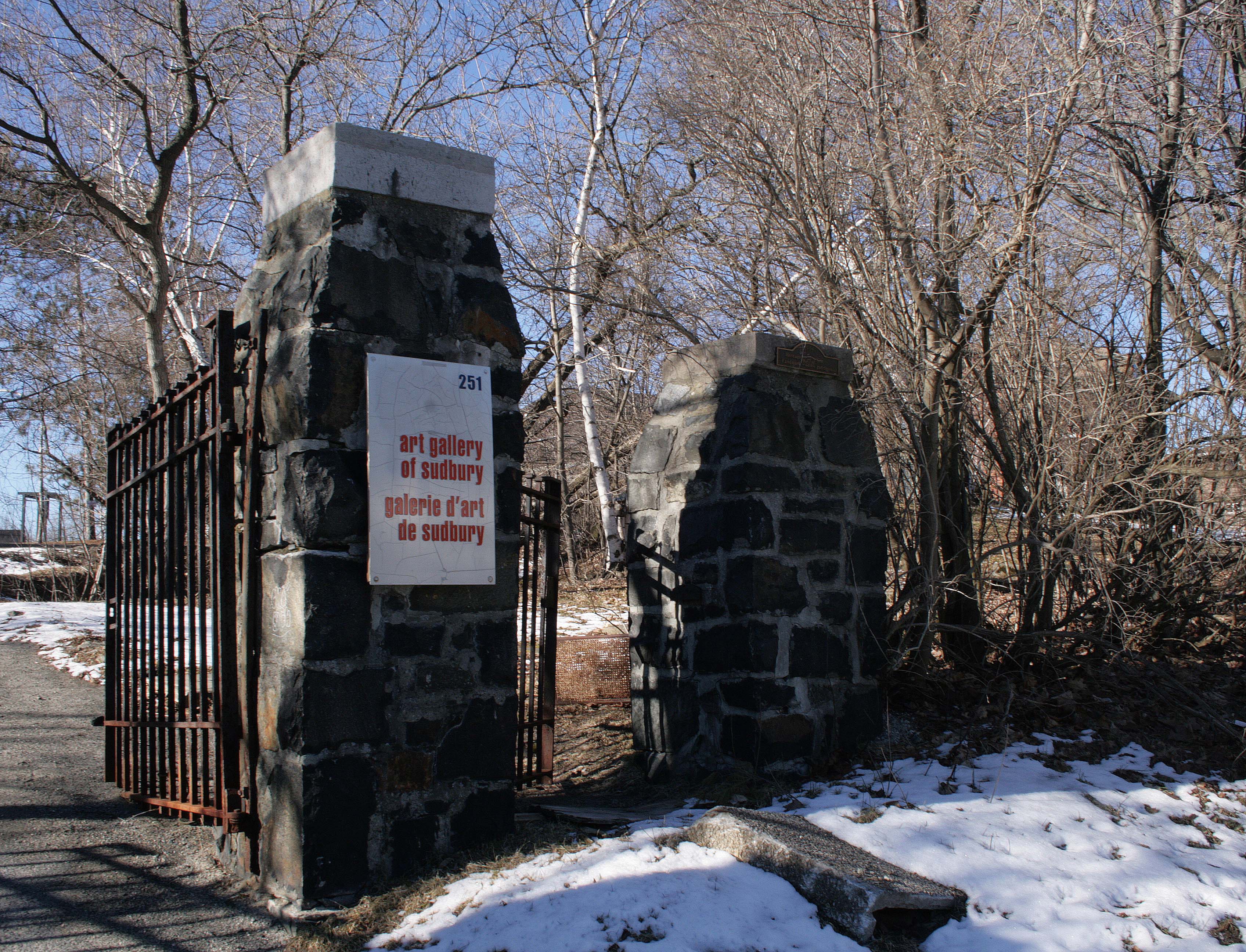

The Bell Mansion. Sudbury, ON ©2024
Calvin United Church Cemetery
For all their ties to Sudbury, the Bells aren’t buried there.
Instead, they rest in Calvin United Church Cemetery in Pembroke, Ontario, a peaceful spot along Boundary Road East where six cemeteries line the street.
William Joseph Bell died in January 1945 at the age of 87 from complications of a leg injury, and was buried in the family plot.5 When Katherine Bell passed away in her home at age 90 in 1954, she was laid to rest beside him.7 William’s parents and three siblings are also buried in the family plot. Their large pink granite monument is simple and understated. It’s a sharp contrast to the grandeur of the mansion they left behind.
On my way back from Ottawa in 2024, I stopped in to visit their graves. Despite their prominence in Sudbury, I was surprised they weren’t buried there. With the help of reference photos, I eventually found their gravestone and was able to pay my respects.
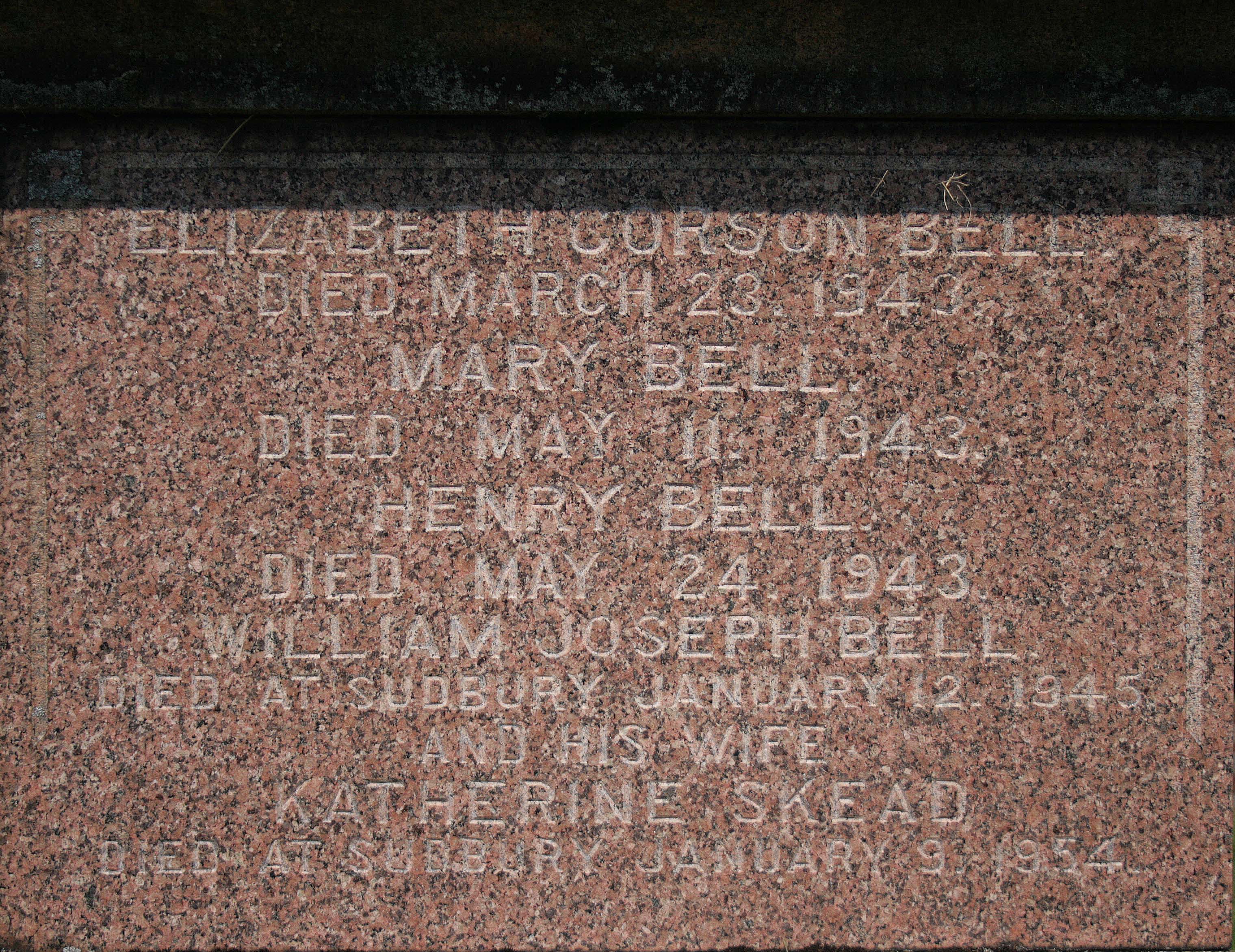
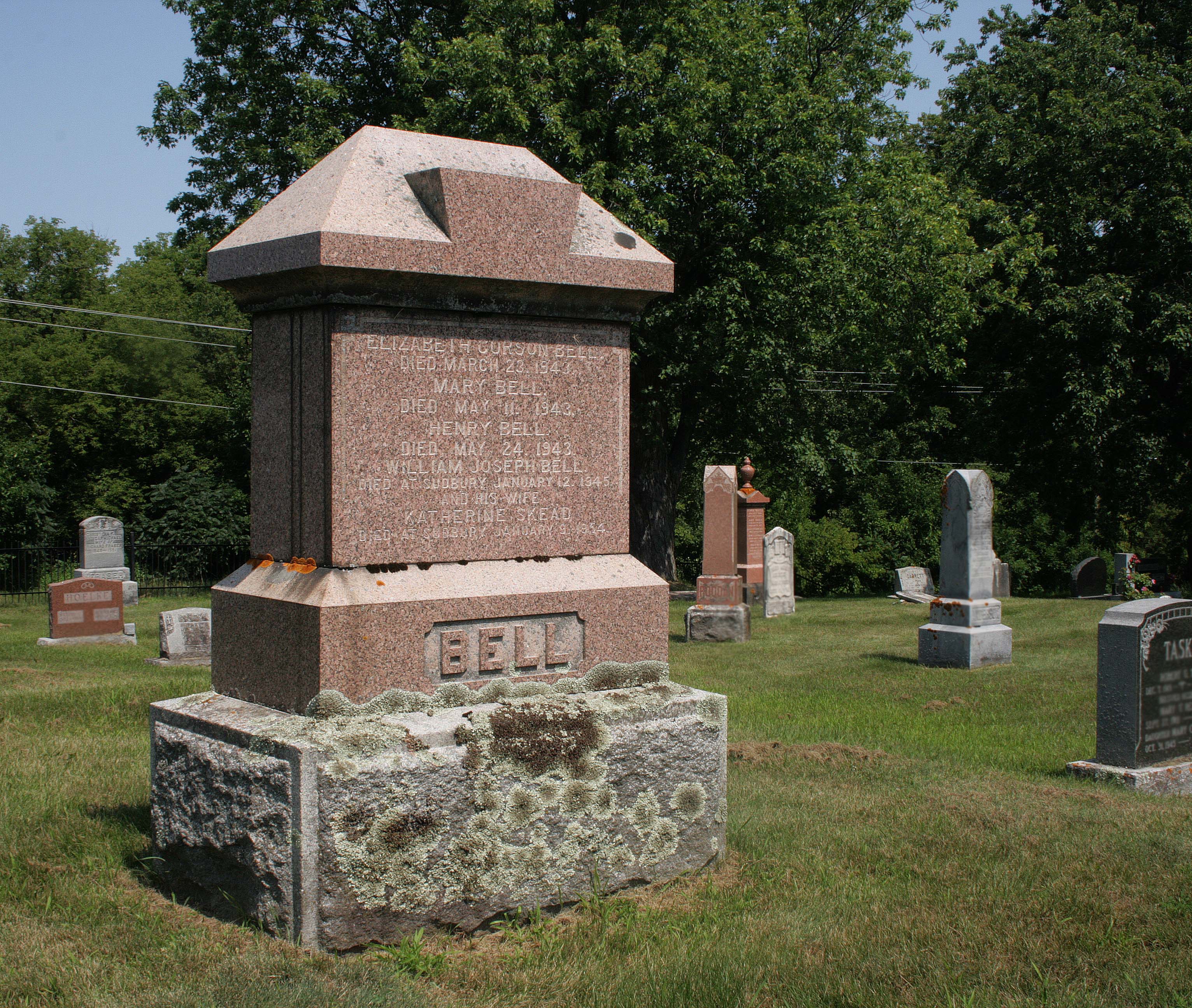

Bell family plot. Calvin United Church Cemetery, Pembroke ON ©2024
Today, the fate of the Bell Mansion is uncertain.
In late 2024, Laurentian University announced it would list the property for sale, saying repairs were too costly.8 The Art Gallery of Sudbury, which had long occupied the mansion, has already relocated as part of Laurentian’s insolvency process.8
In response, local advocates launched a petition urging that the grounds remain open to the public and that the heritage designation be respected.9 Many argue the mansion is too important a piece of Sudbury’s history to lose.10 That is one of the reasons I felt it was important to photograph it and share its story.
Whether you believe in ghosts or not, there’s no denying that this house has a past worth remembering.
Thanks for reading!
References:
- The History of Bell Rock | Local Color
- Appreciating the legacy of Bell Park | Sudbury.com
- Bell Mansion provides touch of elegance | Northern Ontario Business
- Turning Bell Mansion into a historical teaching tool | Sudbury.com
- Haunted Museums & Galleries of Ontario by Andrew Hind | Book
- Ten haunted habitations and spooky sites in Greater Sudbury | Sudbury.com
- The History of The Bell Mansion | Art Gallery of Sudbury
- Historic Bell Mansion in Sudbury, Ont., listed for $1M | CBC
- Sale shouldn’t limit access to Bell Mansion grounds, petition states | Sudbury.com
- Bell Mansion’s heritage should be protected, local history buffs say | Sudbury.com




 Cemetery Photography by Chantal Larochelle