Cemetery Book Review: Stories in Stone

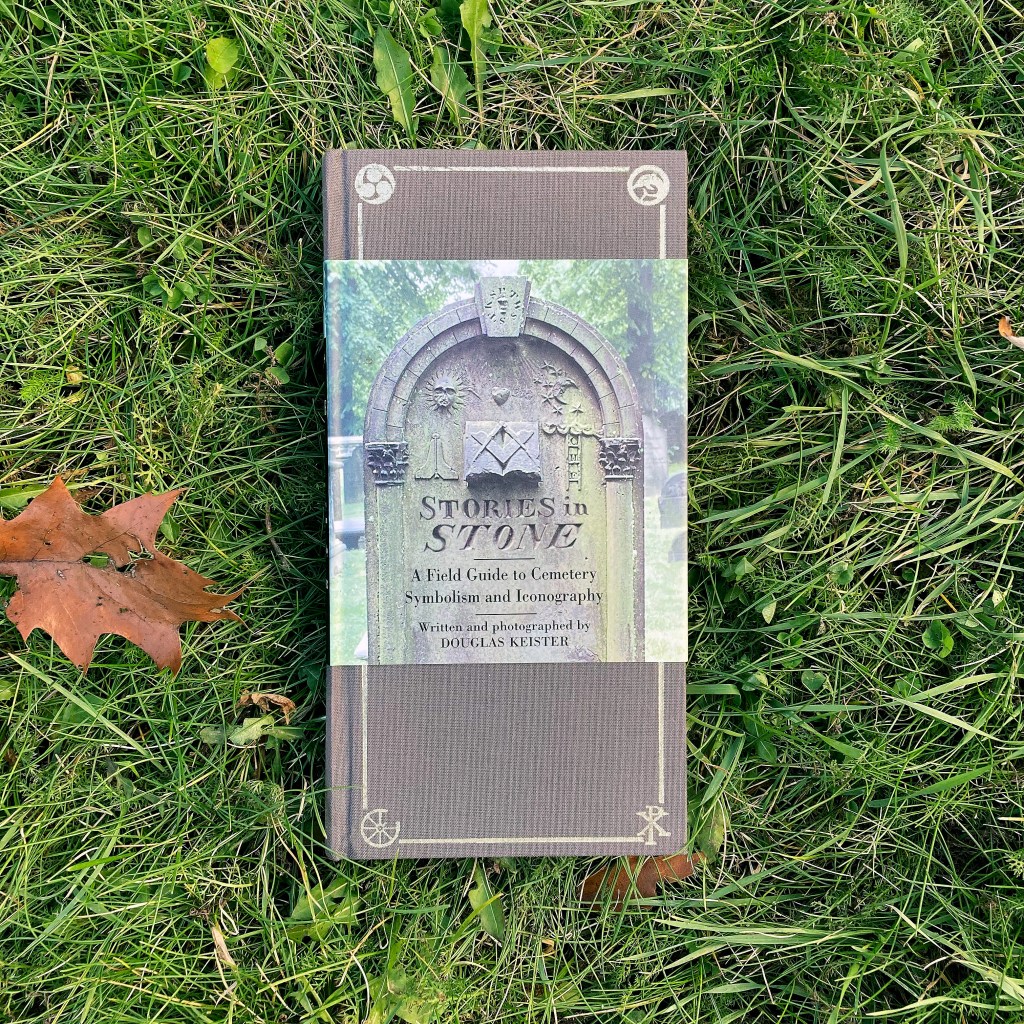
For this month’s cemetery book review, I wanted to talk about Stories in Stone: A Field Guide to Cemetery Symbolism and Iconography by Douglas Keister. I have been meaning to share this one for a while now. This is one of my favorite cemetery books, and one of my go-to reference books when it comes to looking up symbolism. I see it pop up now and then on the cemetery side of Instagram and Facebook and thought I should finally share my thoughts on it. 

This book has been on my bookshelf for a very long time and it is something I go back to over and over again. It is a great resource for explaining the meaning and history behind most of the symbolism and iconography you will come across in a cemetery. Every symbol has a meaning, and the descriptions can range from simple to quite in-depth. The book itself is compact, so it’s easy to slip it into your hiking or camera bag if you want to take it with you on your cemetery travels. It’s filled with full-color photos as well to help identify all the variety of symbols you might come across. 

Here is a snippet of the book synopsis from Goodreads.com: “Stories in Stone provides history along with images of a wide variety of common and not-so-common cemetery symbols and offers an in-depth examination of stone relics and the personal and intimate details they display; flora and fauna, religious icons, society symbols, and final impressions of how the deceased wished to be remembered. Douglas Keister has created a practical field guide that is compact and portable, perfect for those interested in family histories and genealogical research.”

I don’t recall where I picked up my copy, but it is a reference I use often. I never bring mine with me on my cemetery travels, but my cloth-bound hardcover copy has a special place at my desk for easy access when I need to look something up. This book covers iconography from A to Z, as well as the different art styles and architecture that can be found in cemeteries. It covers everything from religious and military symbols to fraternal organizations and secret societies. Douglas Keister is also an amazing photographer and his beautiful color photos of detailed gravestone symbols add depth to the descriptions. It also has a very thorough index at the back, which is very handy for moving back and forth throughout the book. 

The name Douglas Keister may sound familiar to you. This is not the first book of his that I have reviewed. Back in July 2022, I reviewed his book Going out in Style: The Architecture of Eternity. You can read that review here. Douglas is no stranger to cemeteries and has written quite a few books about them. He is a photographer, author, and co-author of forty-five critically acclaimed books, twenty-five of which are on architecture.2

I highly recommend this book to any budding taphophiles and those interested in learning more about cemetery symbolism and history. This book would be a handy tool for genealogists as well, as many interesting and thoughtful things can be learned about the deceased based on what is on their gravestone.

This book has been an invaluable resource for me. I have always loved learning more about the stories that gravestones can tell us, and finding new symbols to research and learn about is one of my favorite things. It’s a beautiful, high quality book, that I think is an essential addition to any taphophiles library. 

Have your read Stories in Stone? I would love to read your thoughts in the comments.

Thanks for reading! 


I am always on the hunt for cemetery-related book recommendations. Please feel free to share yours in the comments. If you are an author and have a cemetery-related book you would like me to review, please reach out at hello@chantallarochelle.ca. I would love to hear from you.


References:

  1. Stories in Stone: A Field Guide to Cemetery Symbolism and Iconography | Goodreads.com
  2. About Douglas Keister | DouglasKeister.com

Cemetery Book Review: The Rural Cemetery Movement

Today’s cemetery-related book review is another AGS Bookclub pick; The Rural Cemetery Movement: Places of Paradox in Nineteenth-Century America by Jeffery Smith. I found this one very fascinating and wanted to share my thoughts. 

I was looking forward to reading this one. I am very interested in the different types of cemeteries and graveyards that exist. I haven’t had the chance to visit many rural cemeteries, also sometimes called garden cemeteries. I have visited only a handful of them, but I look forward to visiting more after having read this.  

The Rural Cemetery Movement was published in 2017 and is available in three different formats; hardcover, softcover, and a kindle edition. I was able to find a paperback edition on Amazon.ca. It’s filled with lovely black-and-white photos as well as some detailed cemetery maps. 

Here is a snippet of the book synopsis from Goodreads.com: “The Rural Cemetery Movement: Places of Paradox in Nineteenth-Century America breaks new ground in the history of cemeteries in the nineteenth century. This book examines these “rural” cemeteries modeled after Mount Auburn that were founded between the 1830s and 1850s. As such, it provides a new way of thinking about these spaces and a new paradigm for seeing and visiting them. While they fulfilled the sacred function of burial, they were first and foremost businesses. The landscape and design, regulation of gravestones, appearance, and rhetoric furthered their role as a business that provided necessary services in cities that went well beyond merely burying bodies. They provided urban green spaces and respites from urban life, established institutions where people could craft their roles in collective memory, and served as prototypes for both urban planning and city parks.”

This fascinating book is incredibly well-researched and takes an in-depth look into the rise of the rural cemetery movement. It details the gradual shift and impacts it had on urban planning and ultimately the business of cemeteries. Essentially this is a book of essays that look at different aspects of the rural cemetery and its effects on burial and cemeteries worldwide. It’s full of fascinating history about the creation and layout of garden cemeteries and the effect they had on other landscapes, such as what we know today as public parks. I found it also fascinating to read about the effort that went into creating the look of rural cemeteries and how the rules and regulations evolved to maintain that look. There is also an interesting section on cemetery tours and how some were created as marketing tools before a cemetery was even opened!

I found the content so interesting that I devoured this one pretty quickly. It’s well-researched and written at a high level but still very graspable which made it an excellent read. I found the added photographs and maps a nice touch as well. There are also extensive notes and a bibliography if you are interested in further reading. 

I extremely enjoyed this book. It’s a great resource for those looking for information specifically about garden cemeteries. This would also be a good read for those interested in learning more about different styles of cemeteries, or anyone interested in a behind-the-scenes look at how cemeteries operate and the business of cemeteries. 

There are not many garden cemeteries in my local area, but I know I will be thinking about this book the next time I do visit one. Have you read The Rural Cemetery Movement? If not, will you be adding it to your reading list? Do you have a favorite garden cemetery? I would love to read your thoughts in the comments. 

Thanks for reading! 


I am always on the hunt for cemetery-related book recommendations. Please feel free to share yours in the comments. If you are an author and have a cemetery-related book you would like me to review, please reach out at hello@chantallarochelle.ca. I would love to hear from you.


References:

  1. The Rural Cemetery Movement | Goodreads.com

Cemetery Book Review: The Dead Die Twice

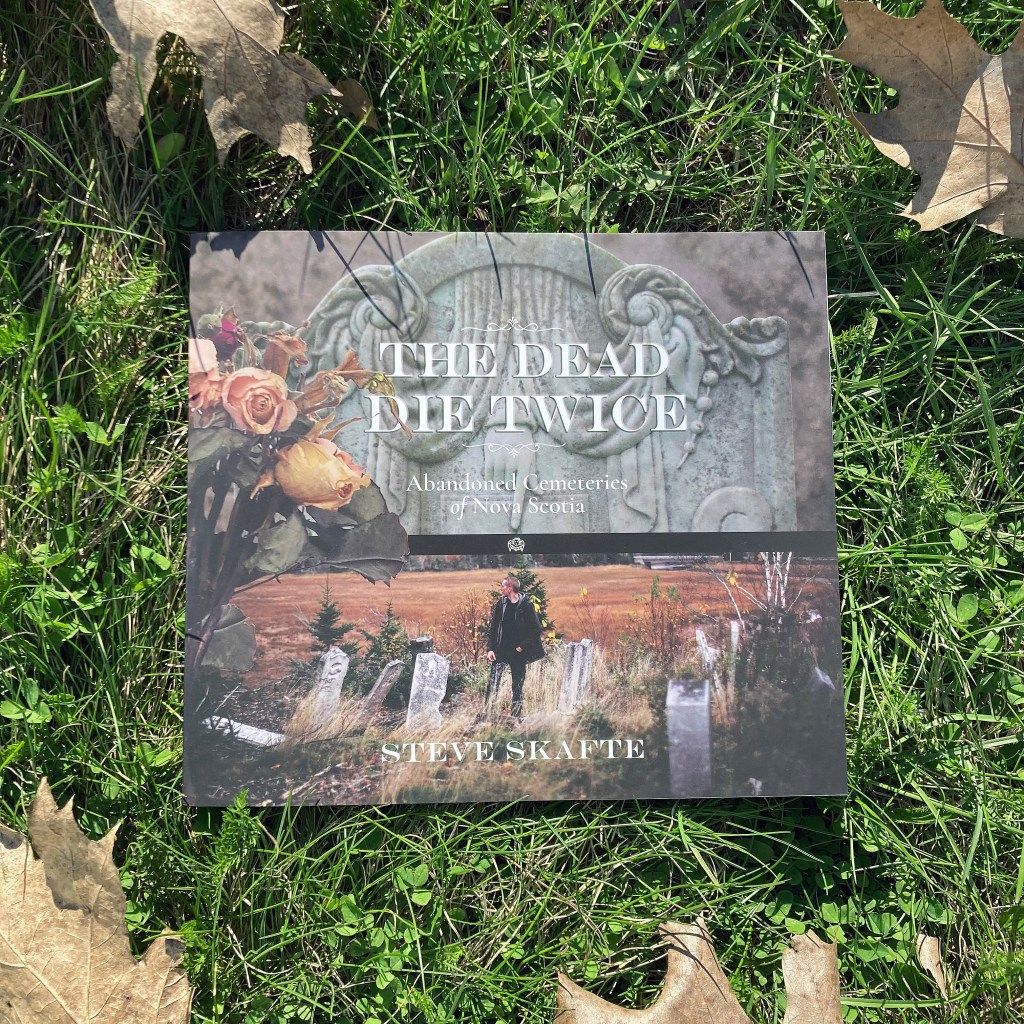
Back in March of this year, I was scanning some news sites when I came across an interesting article titled This N.S. photographer is saving the province’s abandoned cemeteries. It spoke about an upcoming new book that I knew I just had to read! I find books on Canadian cemeteries are somewhat rare, so I made my way to Steve’s Etsy shop and bought myself a signed copy. I was thrilled when it came in the mail a week or so ago. So, for this month’s book review I wanted to talk about The Dead Die Twice: Abandoned Cemeteries of Nova Scotia by Steve Skafte.

The Dead Die Twice is a beautiful little book. It’s filled with gorgeous full-color photography and beautiful prose. The author, Steve Skafte, is a fellow Canadian taphophile, who has been exploring, photographing, and cleaning up old abandoned cemeteries in Nova Scotia. The book is broken up into 3 seasons; Autumn, Winter, and Summer. Each section showcases several abandoned cemeteries and burial grounds, each with an assortment of stunning and moody photography, paired with eloquent musings.

Here is a snippet of the synopsis from Goodreads: “Steve Skafte has lived his entire life in Annapolis County—or what he calls “The Dead Centre”—a place with more forgotten history than anywhere else in the country. In search of those forgotten stories, Skafte stumbled over a couple of overgrown cemeteries and began his quest for what was hiding in the hundreds of cemeteries and burial grounds that lie abandoned in the woods all over Nova Scotia. En route, he discovered twisting trails of indifference, forgetfulness, and desecration. Featuring 80 haunting color images and more than 20 deeply poetic tales of discovery, The Dead Die Twice: Abandoned Cemeteries of Nova Scotia chronicles Skafte’s year of exploring abandoned cemeteries, pushing through walls of scratching brush, cutting a path to the past, and unearthing buried stones and half-forgotten stories.”

Reading this book is a rich experience, starting from the soft satin finish of the cover, the saturated moody photographs, to the beautiful and sometimes whimsical writing. Steve is a very talented photographer, and it’s easy to get lost in the photographs. The accompanying stories also paint a picture, revealing heartbreak and sometimes intrigue. 

While I read The Dead Die Twice, I found myself trying to slow down and take my time with each location. I didn’t want to rush it, even though I easily could have read the whole thing in one sitting. I wanted to explore each place as I would if I were there in person. The accompanying text added to that. I love that the coordinates to each cemetery have also been included in the book, with helpful tips on how to find them. If you’re like me, you’ll want to pin these spots on a map for future cemetery travels, or maybe just use Google Maps to take a closer look at the area.

I think any Canadian taphophile would be excited about this book. As I’ve mentioned before, Canadian cemetery books are a little harder to find. I believe this is also the first book I have read specifically about abandoned cemeteries, which some might find particularly interesting. This gorgeous book would be an excellent addition to any art and photography library as well. 

For those interested in purchasing a copy, you can find it pretty much anywhere books are sold. But, if you would like the bonus of a signed copy, I would order it directly from the source, the author’s Etsy shop.  

Thanks for reading! 


I am always on the hunt for cemetery-related book recommendations. Please feel free to share yours in the comments. If you are an author and have a cemetery-related book you would like me to review, please reach out at hello@chantallarochelle.ca. I would love to hear from you.


References:

  1. This N.S. photographer is saving the province’s abandoned cemeteries | CTV News Atlantic
  2. The Dead Die Twice: Abandoned Cemeteries of Nova Scotia | Goodreads

Cemetery Book Review: Cemetery Reflections

I recently had an author reach out to me, asking if I would be interested in reviewing her book Cemetery Reflections and if it would be a good fit. She described her book as a pairing of photographs with epitaphs, poetry, and prose; giving a slightly different slant to a typical walk through a cemetery. I thought it would be a perfect fit! So for this month’s cemetery book review, I wanted to share my thoughts about Cemetery Reflections by Jane Hopkins.

Cemetery Reflections looks at the beauty and emotion that accompanies cemetery visits and is meant to be read in bits and pieces, as a cemetery walk would be. This new book was published in the fall of 2022, by Headstone Press. This is Jane’s first cemetery photography book, but she is no stranger to photography. Her fine art photography has been exhibited and sold since 2002, at many venues including the Memorial Art Gallery in Rochester, New York, and the Dyer Arts Center at the Rochester Institute of Technology.1 

I was already familiar with Jane’s work, having seen her beautiful photographs on various cemetery social media accounts that I follow. I was very excited when she reached out and asked me to review her book. She was also very gracious and provided me with a beautiful paperback copy to read. 

Here is the book synopsis from Goodreads: “Stroll through three centuries of American cemeteries through photographic images, historic poetry, and memorable prose. The reader will find stunning photos in both black-and-white and color. Paired with the images are poignant passages drawn from timeless literature and sensitive recollections of family losses. The cemetery emerges as a place of solace, where final and loving farewells may rest safely among the tombstones.

This book offers a compassionate context that deepens awareness of the experience of death. Devotees of art, history, poetry, and philosophy will find Cemetery Reflections a mesmerizing journey. Grief is intense and lonely, dying can be frightening and sometimes painful beyond expectation, and the “great beyond” remains a mystery. The pandemic and recent violence in the US have brought issues of death to the forefront. People are searching for ways to better understand and cope with challenges that once seemed far distant. Cemetery Reflections can provide a valuable assist in this process.”2

This is a beautiful, high-quality softcover photography book. It’s filled with full-color and black-and-white photographs alongside beautiful poetry, epitaphs, and musings. It is very different than the books I have been reading lately. I loved that it showcases American cemeteries alongside Canadian ones. I also love the variety of the photography, from detailed shots of grave goods to lovely cemetery landscapes, and everything in between. 

Cemetery Reflections feels like a contemplative walk through a cemetery. I found each epitaph, poem, and beautiful photograph encouraged self-reflection and exploration of my own understanding of grief and remembrance. At times it is a very emotional read.

I would highly recommend this book to anyone interested in fine art photography, poetry, and cemetery walks. Because of the self-reflective nature of this book, I would also recommend it to those who may be grieving a loss, as well as those who might find cemeteries and death uncomfortable. They might find its heartfelt and thoughtful messages to be healing.

Have you read Cemetery Reflections? Do you agree with my review? Or will you be adding it to your reading list? I would love to read your thoughts in the comments. 

Thanks for reading! 


I am always on the hunt for cemetery-related book recommendations. Please feel free to share yours in the comments. If you are an author and have a cemetery-related book you would like me to review, please reach out at hello@chantallarochelle.ca. I would love to hear from you.


References:

  1. Author Bio | Cemetery Reflections
  2. Cemetery Reflections | Goodreads.com

Cemetery Book Review: Corpses, Coffins and Crypts

For this month’s cemetery book review, I wanted to talk about Corpses, Coffins, and Crypts: A History of Burial by Penny Colman. This was the October selection of the AGS book club last year. I had never read this author before and was excited to dive into this one.

Here is the synopsis from Goodreads:

“Drawing on extensive historical and anthropological research, personal accounts, and interviews with people who work in the funeral industry, Penny Colman examines the compelling subjects of death and burial across cultures and societies. The text, enriched with stories both humorous and poignant, includes details about the decomposition and embalming processes (an adult corpse buried six feet deep without a coffin will usually take five to ten years to turn into a skeleton) and describes the various customs associated with containing remains (the Igala people in Nigeria have a custom of burying people in as many as twenty-seven layers of clothing). Intriguing facts are revealed at every turn; for example, in Madagascar winter was considered the corpse-turning season.

This comprehensive book also includes a list of burial sites of famous people, images in the arts associated with death, fascinating epitaphs and gravestone carvings, a chronology, a glossary, and over a hundred black-and-white photographs, most of which were taken by the author.

Penny Colman writes with compassion and intelligence and humanizes the difficult subjects of death and burial. The result is a powerful look at an inevitable part of life—death.”

This book touches on so many facets of death and burial. I enjoyed the way the author weaved in her own personal stories and experiences with death. It added a very personal touch. This book is also filled with beautiful black-and-white photographs that accentuate the content. I was lucky enough to find a reasonably affordable copy on Thrift Books. My copy is a previously loved hardcover library book, that is beautifully laid out. It has a wonderful flow that makes it a very easy read, and hard to put down.

This would be a great introduction for those who are interested in death and burial but may be bit intimidated by heavy reading. Colman touches on so many different aspects of death and burial, in a way that holds your attention and connects you to the history. I love that a handy chronology and glossary is also included at the back of the book. 

I would highly recommend this book for those who are curious about death and burial practices, as well as seasoned taphophiles! It has a little something for everyone.

Have you read this book? Did you enjoy it? I would love to read your thoughts in the comments.

Thanks for reading!


I am always on the hunt for cemetery-related book recommendations. Please feel free to share in the comments. If you are an author and have a cemetery-related book you would like me to review, please reach out at hello@chantallarochelle.ca. I would love to hear from you.


References:

  1. Corpses, Coffins, and Crypts: A History of Burial | Goodreads.com

Cemetery Book Review: Death’s Garden Revisited

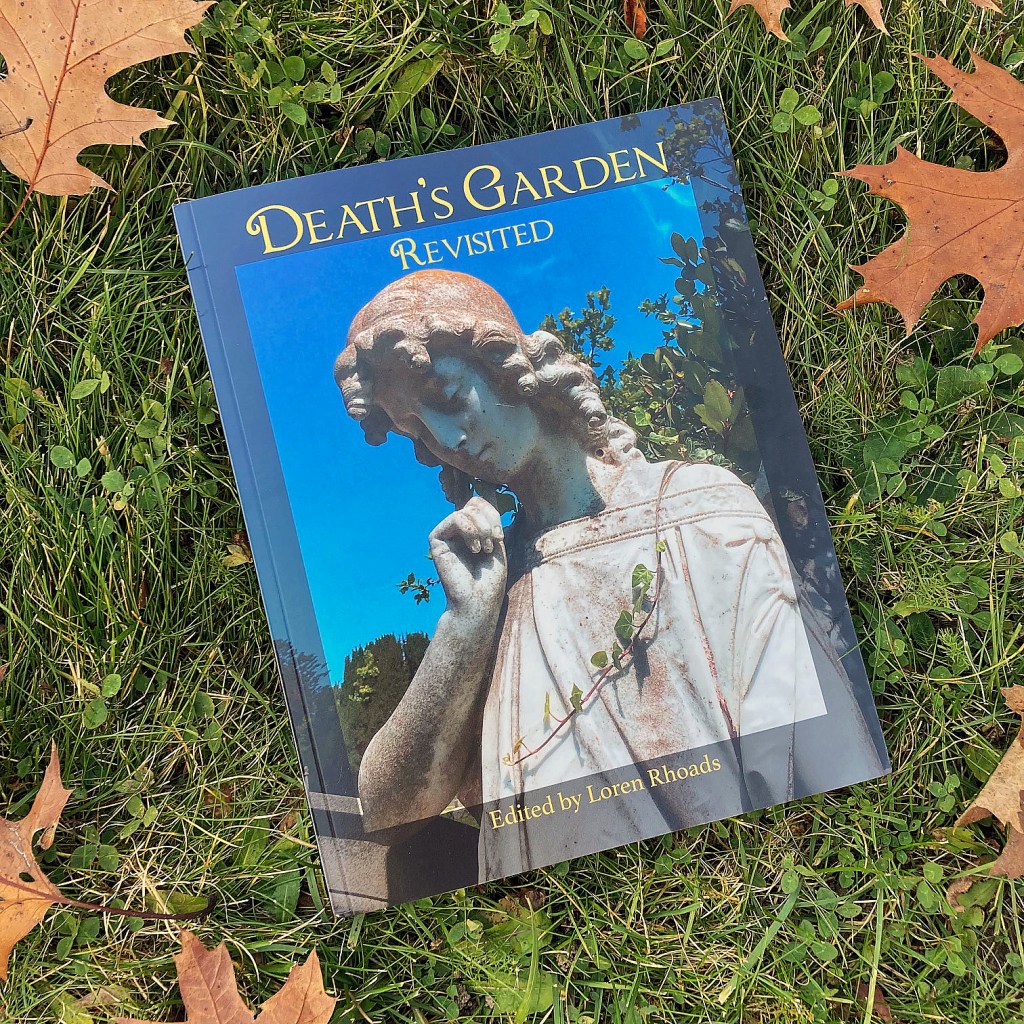
For my first book review of 2023, I wanted to talk about Death’s Garden Revisited, edited by Loren Rhoads. I’ve been looking forward to reading this book since early last year. I follow Loren on social media and was excited to hear she was editing another installment of Death’s Garden. I was an early backer for the Kickstarter campaign to bring this book to life. It was so fun to follow along on its journey. 

Here is the synopsis from Blurb.com: “Death’s Garden Revisited collects 40 powerful personal essays—accompanied by full-color photographs—to illuminate the reasons people visit cemeteries. Spanning the globe from Iceland to Argentina and from Portland to Prague, Death’s Garden Revisited explores the complex web of relationships between the living and those who have passed before. Genealogists and geocachers, travelers and tour guides, anthropologists, historians, pagan priestesses, and ghost hunters all venture into cemeteries in these essays. Along the way, they discover that cemeteries don’t only provide a rewarding end to a pilgrimage, they can be the perfect location for a first date or a wedding, the highlight of a family vacation, a cure for depression, and the best possible place to grasp history. Not to mention that cemetery-grown fruit is the sweetest.”

I received my copy, a beautiful softcover edition, in early November of last year. It’s 8 x 10 size really shows off the full-color photography that accompanies each essay. The short essay format, and writing styles create an enjoyable, and easy reading experience. If you are short on time, it’s easy to pick up and read an essay or two. I also enjoyed the range—from first-date stories to geocaching expeditions—each story shares personal insights into how easy it is to fall in love with cemeteries. Each personal story is so unique and at the same time so relatable, in my opinion. I loved these glimpses into others’ relationships with cemeteries. It made me feel less alone, and more comfortable in the fact that my own relationship with cemeteries isn’t that out of the ordinary. 

There was also one essay that I found pleasantly surprising! As a Canadian taphophile, I rarely read stories about Canadian cemeteries, as there seems to be much more literature on the historic cemeteries of Europe and the United States. So I was caught off guard when I found myself reading about a small cemetery that I had visited this past summer, in the small town of Massey, Ontario.

That particular essay did make me realize that not all the photos correspond to the essays they precede and follow. I had started reading the book with that assumption in mind, and when I read that essay, the photos that accompanied it made me question whether or not I had missed some stunning statuary when I had visited. After referring to the photo credits, it turned out that the image was indeed from a different cemetery. Just something to keep in mind as you read.

This is such an enjoyable read that runs the gamut of emotions. I think there may be a story for everyone in here. This would be a great book for someone interested in learning more about why people are so drawn to cemeteries. It’s also a great read for taphophiles, especially for those who are looking for kinship. You are not alone. There is a whole community of people who love cemeteries, each for their own unique reasons. 

Have you read Death’s Garden Revisited? I would love to read your thoughts in the comments. I am also always looking for cemetery-related book recommendations. Please feel free to also share any book suggestions in the comments. 

If you are an author and have a cemetery-related book you would like me to review, please reach out at hello@chantallarochelle.ca. I would love to hear from you.

Thanks for reading!


References:

  1. Death’s Garden Revisited | Blurb

Cemetery Book Review: The American Resting Place

It’s been a little while since I shared a book review on the blog. I have some catching up to do on my reading. There are a lot of cemetery-related books in my to-be-read pile! Now that October has come to an end, I should have a bit more time to read through them. There are quite a few I am really looking forward to getting into. 

I did manage to get some reading in last month, so today I wanted to talk about The American Resting Place, by Marilyn Yalom, with photography by Reid S. Yalom. “Four hundred years of history through our cemeteries and burial grounds.” This book, published in 2008, by Houghton Mifflin Company, boasts 64 pages of beautiful black and white cemetery photographs and traces a path across America, looking closely at the ever-changing ideologies on death, burial practices, and history.

Here is the book synopsis from Goodreads

“Cemeteries and burial grounds, as illuminated by an acclaimed cultural historian, are unique windows onto our religious, ethnic, and deeply human history as Americans.

The dedicated mother-son team of Marilyn and Reid Yalom visited hundreds of cemeteries to create The American Resting Place, following a coast-to-coast trajectory that mirrors the vast historical pattern of American migration.

Yalom’s incisive, often poignant exploration of gravestone inscriptions reveals changing ideas about death and personal identity and demonstrates how class and gender play out in stone. Rich particulars include the story of one seventeenth-century Bostonian who amassed a thousand pairs of gloves in his funeral-going lifetime, the unique burial rites and funerary symbols found in today’s Native American cultures, and a “lost” Czech community brought uncannily to life in Chicago’s Bohemian National Columbarium.

From fascinating past to startling future–DVDs embedded in tombstones, “green” burials, and “the new aesthetic of death”–The American Resting Place is the definitive history of the American cemetery.”

The first 64 pages of the hardcover version of The American Resting Place consist of glossy black-and-white photos. They range from lovely landscapes to detailed close-ups. It’s a feast for the eyes before you even get into the meat of the book. The book chapters are broken down into geographical locations, but there are also a couple of chapters on the history and evolution of death and burial practices. Because the photos are presented at the front of the book, it requires some flipping back and forth to reference them when they are mentioned in the text. That would be my only negative critique of the book. 

Otherwise, Marilyn and her son Reid take the reader on a very well-researched and informative trip across the state, taking us along with them on their journey, as they explore funerary art and burial practices. I was a little afraid when I started reading this book that it would be incredibly dry and academic, but the information is presented in a tone that is relatable and keeps you interested. I would love to see something similar written about Canadian cemeteries and burial grounds. 

This would be a great read for anyone looking for information specifically on American burial rites and practices. It is very fascinating stuff, so I think any taphophile would love this book for their bookshelf. The copy of The American Resting Place I found was a previously loved library book. I am a bit sad it was retired and will no longer be discovered by curious readers, but I am very happy to have it now in my collection. I hope there are many more copies of it out there, in other libraries that are piquing the interest of budding taphophiles.

As usual, I am always on the hunt for cemetery-related book recommendations. Please feel free to share in the comments. If you are an author and have a cemetery-related book you would like me to review, please reach out at hello@chantallarochelle.ca. I would love to hear from you.

Thanks for reading!

Cemetery Book Review: In the Land of Long Fingernails: A Gravedigger’s Memoir

For this month’s cemetery book review, I wanted to share an old favourite of mine. I first found out about Charles Wilkins’s book In the Land of Long Fingernails: A Gravedigger’s Memoir, in the book section of Rue Morgue MagazineRue Morgue has always been a great resource for discovering new authors. 

This book, first published in 2008, is a coming-of-age memoir set in a Toronto cemetery in 1969. It’s filled with weird-but-true events, that could only happen while working in a cemetery.

Here is the full book synopsis: “During the hazy summer of 1969, Charles Wilkins, then a student at the University of Toronto, took a job as a gravedigger. The bizarre-but-true events of that time, including a midsummer gravediggers’ strike, the unearthing of a victim of an unsolved murder, and a little illegal bone-shifting, play out amongst a Barnum-esque parade of mavericks and misfits in this macabre and hilarious memoir of mortality, materialism, and the gradual coming-of-age of an impressionable young man.” – Goodreads.com, In the Land of Long Fingernails

I enjoyed this book immensely, I couldn’t put it down! It’s a very easy read with great pacing. I found I devoured it quickly. I think it also helped that I felt a connection to this story because it takes place so close to me, in Toronto, Ontario. The specific Toronto cemetery is never named in the book, but being that I live about 4 hours away, I know I can visit it someday. There are some incredibly funny moments, but also some somber ones, creating a balance between the anecdotal stories. It’s a fascinating memoir but also a great insight into the everyday work life of a gravedigger in the late 60s.

I highly recommend this book if you’re looking for a light read, that could also fall into the feel-good read category. It’s also a quick read, which would make it a perfect choice if you need a break from heavier or academic content.  

I am always on the hunt for cemetery-related book recommendations. Please feel free to share yours in the comments. If you are an author and have a cemetery-related book you would like me to review, please reach out at hello@chantallarochelle.ca. I would love to hear from you.

Thanks for reading!

Cemetery Book Review: Going out in Style

Have you heard of #mausoleummonday?

It’s a trend on social media in the cemetery community that uses that hashtag, to showcase the beauty of mausoleums. Unfortunately, mausoleums are not a common sight here in Northern Ontario, so I have not had the chance to visit or photograph very many. This is one of the reasons I found Doug Keister’s book Going out in Style: The Architecture of Eternity so interesting. For this month’s book review, I wanted to share it with you. 

Douglas Keister is a photographer, author, and co-author of forty-five critically acclaimed books, twenty-five of which are on architecture.1 Going out in Style, published in 1997, showcases some of America’s most beautiful and unusual mausoleums. This coffee-table book is filled with gorgeous full-color, glossy photos, each accompanied by short descriptions that give a small taste of their stories and histories.

“From a nationally renowned photographer and author team, Going Out in Style: The Architecture of Eternity provides an engaging and at times surprising look at America’s forgotten architecture: the mausoleum.

Elegant, full-color photographs display the grandeur of the mausoleum, documenting the work of some of America’s most noted architects and in some cases the only remaining examples of a particular architect’s work. Additionally, photographs of the interiors of some mausoleums show rarely seen Tiffany stained-glass windows.

Going Out in Style takes readers into beautiful and historic cemeteries in such cities as New York, Philadelphia, Buffalo, Boston, Chicago, New Orleans, Los Angeles, San Francisco, and many others.” – Synopsis from Amazon.ca

This is a beautiful book! I was lucky enough to find a first edition hardcover copy, with glossy pages. All the photos are beautifully shot, really showcasing what makes each mausoleum unique. I loved that they took advantage of the book’s large size by including full-page images. There is also a paperback edition available, that is printed on uncoated paper. I have been told the uncoated paper dulls and muddies the photography. That just seems wrong for a photography book! 

I enjoyed exploring the histories of all the beautiful mausoleums presented, but it did feel like much more could have been written about them. Sometimes I found the descriptions to be just too short! I’m sure whole books could be written on some of them. Because I am not very familiar with mausoleums and their architecture, I did enjoy learning more about the different styles and periods and found myself trying to figure them out before it was noted in the description. 

One of my favorite aspects of the book, was when we were given a look inside the mausoleums. That was by far my favorite chapter. Some of them are just as ornate on the inside, as they are on the outside, while others are very plain compared to their exterior. Some mausoleums hold amazing pieces of art, like Tiffany stained glass windows. It was lovely to peek inside, into what we often don’t get a chance to explore.

I would highly recommend this book and think it would make a great addition to any taphophile’s library. I would especially recommend it to those who love mausoleums or those interested in learning more about architecture. My only note would be to make sure you get the hardcover edition! 

__

I am always on the hunt for cemetery-related book recommendations. Please feel free to share any in the comments. If you are an author and have a cemetery-related book you would like me to review, please reach out at hello@chantallarochelle.ca. I would love to hear from you.

Thanks for reading!

References

  1. About Douglas Keister | DouglasKeister.com

Cemetery Book Review: Sacred Ground Loyalist Cemeteries of Eastern Ontario

Last month, I was pleasantly surprised when an author reached out to me and asked if I would be interested in reading and reviewing his new book. Based on the title alone, I was very interested!

The book is called Sacred Ground: Loyalist Cemeteries of Eastern Ontario, Volume One by Stuart Lyall Manson. This book, published in 2021, focuses on Loyalist cemeteries in Eastern Ontario, and the stories behind the Loyalists buried there. 

For the book review this month, I wanted to share my thoughts about Sacred Ground. Canadian cemeteries and history is something I am always interested in reading about. I will also admit that while I read along, I created a map of all the cemeteries explored in this book. I would love to visit them all one day! So who or what are loyalists, you may be asking. Loyalists were American colonists who supported and fought for the British cause in the American Revolutionary war. Thousands of these Loyalists settled in British North America during and after the war. They left an indelible mark on Canada.

From Global Genealogy: “This book describes six notable loyalist cemeteries situated in the Eastern Ontario counties of Stormont, Dundas and Glengarry. They are: Trinity Anglican (Cornwall); St. Andrew’s Roman Catholic (St. Andrew’s West); Iroquois Point (Iroquois); Knox-St. Andrew’s United (Bainsville); Maple Grove (Cornwall), and the Pioneer Memorial (South Dundas). 

In each chapter the author discusses in depth, an individual cemetery containing United Empire Loyalist mortal remains. Numerous cemeteries in this region contain many such burials… all of the sites described in this book also contain non-loyalist burials. An historical overview of each of these burial grounds, along with biographical information on specific loyalists with particularly-remarkable stories. The locations chosen for this volume are based on geographic distribution, religious diversity, and other factors. The book is based on rigorous primary and secondary source research.

Sacred Ground: Loyalist Cemeteries of Eastern Ontario complements other publications that list burials or transcribe tombstone inscriptions. Those publications are important resources. This book supplements that basic data with greater historical context and additional research into the lives and experiences of these men, women and children who laid the foundations of modern Ontario.” 

As mentioned above, the book is broken down into six chapters, each focusing on one loyalist cemetery. Each chapter provides an interesting look at the cemetery itself, and it’s history, along with the history of the notable loyalists buried within it. The stories of the cemeteries themselves are fascinating, and made me want to visit them to experience them for myself. The history of the cemeteries are deeply explored, delving into the history of the Loyalists laid to rest within them. In the life stories of the loyalists, we also get a look at broader historical aspects, such as slavery and colonialism. This book is extensively researched and it shows; it’s filled with old illustrated maps, letter samples, and many lovely gravestone photographs. 

I enjoyed this book immensely, and found it very engaging. There are some incredibly interesting histories and stories in this book, like the Pioneer Memorial in South Dundas. It isn’t a cemetery per say, but a memorial made from bricks collected from the buildings demolished before the flooding for the Seaway project. This memorial is the new home for the tombstones of those who are buried in the now sunken cemeteries. They moved the headstones, but didn’t move the bodies! There are quite a few historical gems like that to be found in this book. I am looking forward to the next volume. I would highly recommend this book to those interested in Canadian and Loyalist history, as well as genealogists and those interested in tombstone mysteries. 

I am always searching for cemetery-related book recommendations. Please feel free to share in the comments. If you are an author and have a cemetery-related book you would like me to review, please reach out at hello@chantallarochelle.ca. I would love to hear from you.

Thanks for reading!