Last October, My mother and I took a little road trip to Mattawa. We planned on doing some hiking, visiting cemeteries, and enjoying the fall colors. We always like to visit local museums when we visit new places, and the Mattawa Museum did not disappoint. We had a great time touring the grounds and learned a lot about the history of the city, including that it has the distinction of having Canada’s first elected Black mayor.
Mattawa, located in northeastern Ontario is a little over two hours drive from me. Mattawa is located where the Mattawa and Ottawa Rivers merge, in Nipissing District. The name Mattawa means “Meeting of the Waters” in Ojibwa.1 It is the oldest settlement in the Nipissing District, and today showcases that historic past with beautiful wooden sculptures. Many wooden sculptures of historic figures, important to Mattawa’s history, can be found scattered throughout the town.1
It was an overcast day when we visited Mattawa, but it didn’t deter us from exploring. We admired the two wooden sculptures on the museum grounds and looked for the three white crosses, that stand high on Québec Hill across the Mattawa river. The three crosses were erected in 1686 by missionary priests to mark the place where the two rivers meet.2


(Left) Wooden sculpture outside the Mattawa Museum. (Right) The three crosses. Mattawa ON ©2023
Inside the museum, we found a treasure trove of artifacts; paintings by a well-known Mattawa painter, many indigenous artifacts, and a large exhibit about Canada’s first Black Mayor, Dr. S. F. Monestime. The exhibit features large panels with many photos and a history of what brought Monestime to Mattawa, and how he changed the community for the better. The exhibit also includes some of his personal items, like his signature fedora and a medical skull used in his practice. My Mother and I were both interested in this exhibit the most, and were surprised that we had never heard of him before. We made it a point to pay our respects at the cemetery.


Photo and items from the Dr. Monestime exhibit at the Mattawa Museum. Mattawa ON ©2023
Dr. Saint Firmin Monestime
Saint Firmin Monestime was born in Cape Haitian, Haiti in December of 1909. Monestime grew up during the United States occupation of Haiti, which took place from 1916 to 1935. He graduated with a medical degree from the University of Haiti Medical School, and after graduation was named Medical Officer for the International Route between Haiti and the Dominican Republic.3 He experienced a lot during his medical career in Haiti, living through mass casualty events. He received the Knight of the National Order of Honor and Merit, awarded to those of distinguished excellence. He wrote four books around this time, about rural medicine.3
After becoming frustrated with the politics and what he called “deplorable conditions”, Monestime quietly left Haiti for Quebec. He was part of the first small group of Haitian professionals to come to Quebec in the 1940s. Unfortunately, this meant starting over as he had to train and intern for several years to get his full Canadian medical accreditation.3
Monestime found his way to Mattawa almost by chance. He and another colleague were traveling through Mattawa on their way to Timmins to see about setting up a medical practice. They stopped in for lunch at Chez Francois in Mattawa, and it just so happened that the restaurant owner recognized Dr. Monestime, as he had been operated on by the Doctor in Ottawa. The timing was right. The long-standing doctor in Mattawa had recently passed away and the town needed a new doctor. The restaurant also had a vacant room to rent and office space. Monestime agreed to stay, temporarily, but ended up staying indefinitely.3

Dr. Saint Firmin Monestime, Mattawa Museum Exhibit. Mattawa ON ©2023
Monestime found the community to be very welcoming and their generosity encouraged him to stay. His medical practice was booming with a busy office as well as on-call work with the hospital. That’s not to say that he didn’t experience racism in his time there.3 In 1972, he was asked by a reporter if race ever came into play, Monestime replied:
“My practice was booming in no time and from then until now I’ve had no serious problems. You might find a very few—and not the most intelligent—who may say they won’t come to see me because of my race. But very few.”3
Three months after Dr. Martin Luther King gave his “I Have a Dream” speech in 1963, Dr. St. F. Monestime also made history by being elected the first Black mayor in Canada. An active political figure in good standing within the community, regarded for his sense of justice and equality, he was elected mayor nine times.3 Today, the legacy of Dr. Monestime continues and is still felt vibrantly within the community as his family continues to do good works. The most notable of these works is the Algonquin Nursing Home, a project championed by Monestime in his last years.

Newspaper clipping, part of the Mattawa Museum exhibit about Dr. Monestime. Mattawa ON ©2023
On October 27, 1977, Dr. Monestime passed away at the age of 67, most likely from pancreatic cancer, which he battled multiple times throughout his life. His Russian Orthodox funeral service took place at St. Anne’s Roman Catholic Church in Mattawa.3 He is buried in the Petschersky Monestime family plot at Pine Hill Union cemetery.
He is laid to rest beside his son Fedeor, who sadly was accidentally shot and killed a year earlier on February 29, during an altercation outside of Chez Francois.3 Monestimes’ wife, Zena, and her mother are also laid to rest in the family plot, which features a large Eastern Cross. The Eastern Cross or Orthodox Cross has a tilted bar at the base of the cross; a tilted footrest. This is meant to illustrate that the thief crucified on the left side of Christ, thought to be the wise thief, went up to heaven, while the thief crucified on the right side was thought to be unrepentant, and went down to hell.4
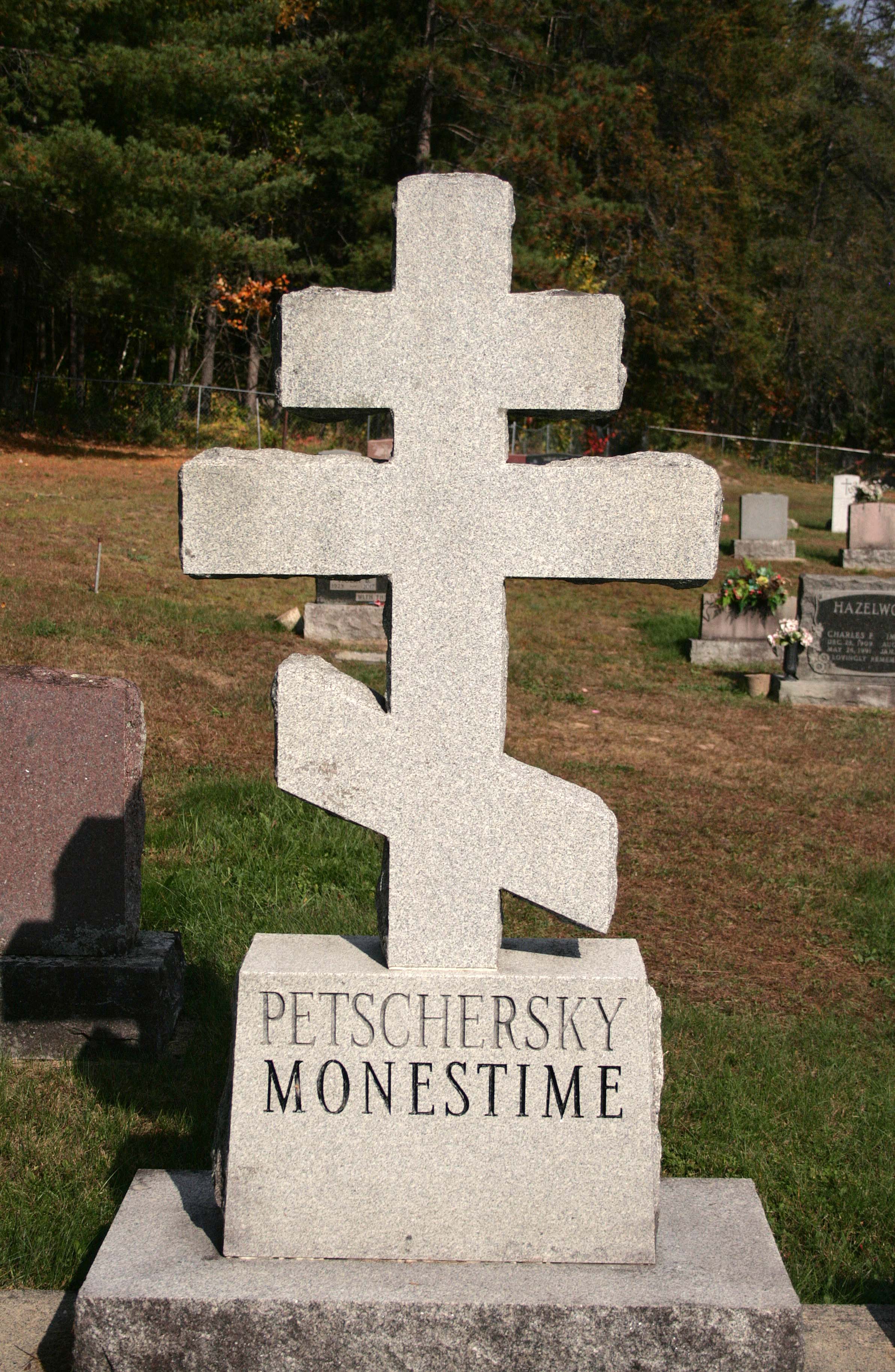

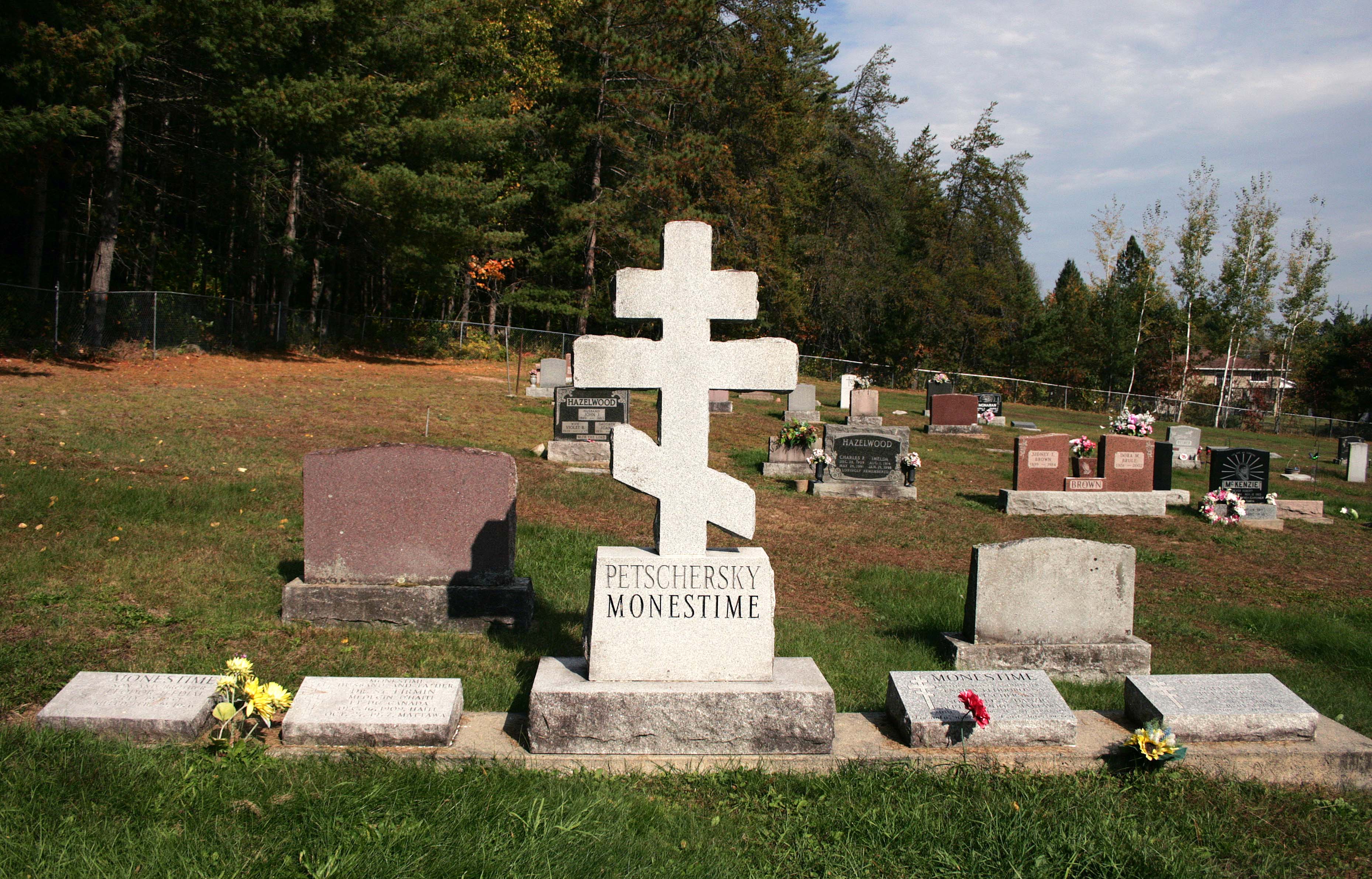

The Petschersky Monestime family plot. Pinehill Union Cemetery, Mattawa ON ©2023
My visit to Mattawa was an eye-opening trip. After exploring the exhibit at the museum, we stopped at the gift shop and spoke with the museum curator after buying a few things. We had a great conversation about the museum contents and how sometimes history is hidden in plain sight.
If you’re interested in learning more about Dr. Monestime, I highly recommend a visit to the Mattawa Museum and also picking up a copy of Where Rivers Meet by Doug Mackey. It’s a well-researched look at the life of Dr. Monestime and also explores life in Haiti as well as Black history in Canada.
Thanks for reading!
References:
- What About Mattawa? | Town of Mattwa
- The Three Crosses | Mattawa Museum
- Where rivers Meet: The Story of Dr. S. F. Monestime, Canada’s First Black Mayor by Doug Mackey | Book
- Understanding Cemetery Symbols: A Field Guide for Historic Graveyards by Tui Snider | Book
 Cemetery Photography by Chantal Larochelle