Cemetery Road Trip: The Walkerton Water Tragedy

I rarely stop to think about where our drinking water comes from, let alone whether it’s safe.

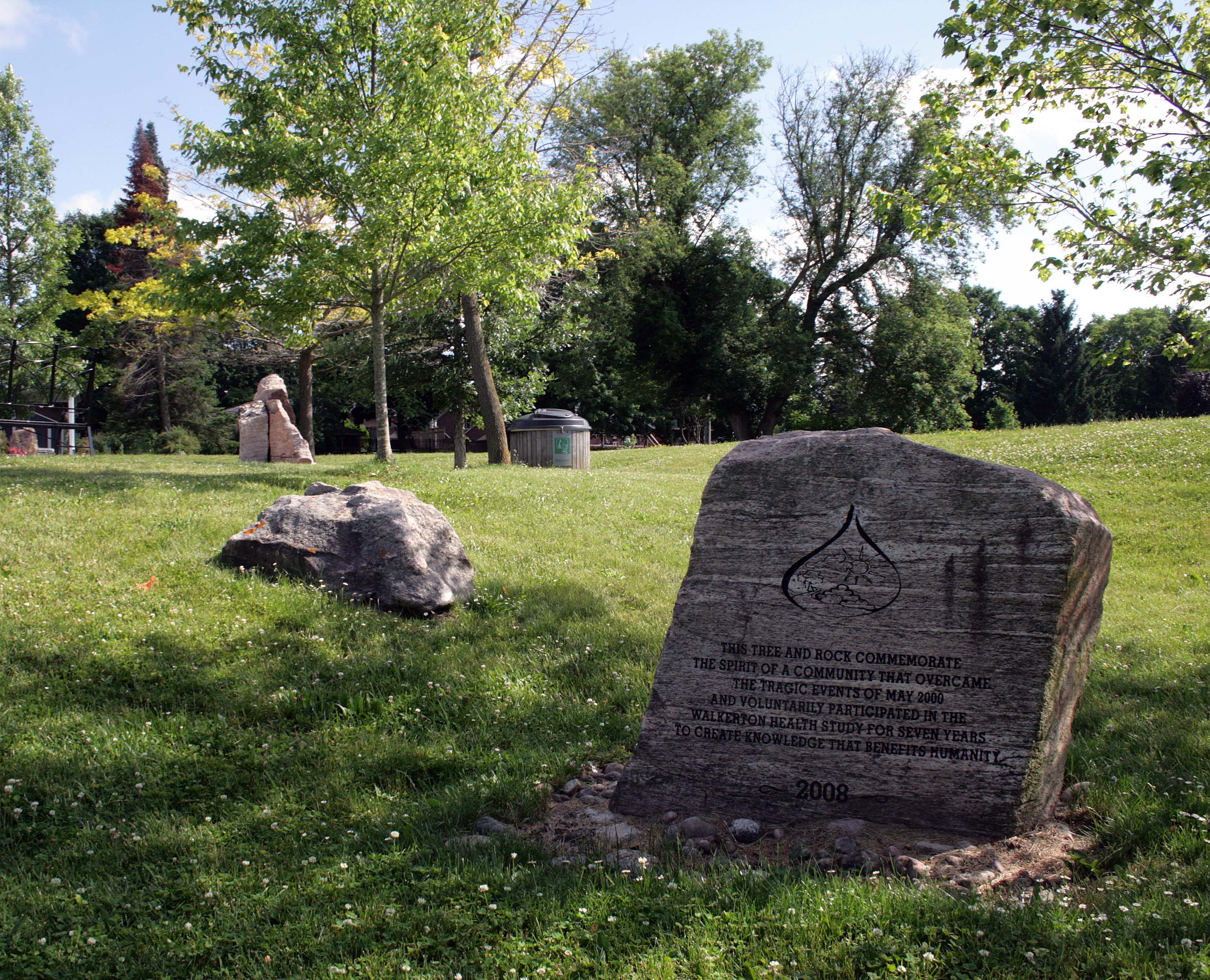
In May 2000, the small town of Walkerton, Ontario, faced one of Canada’s worst public health disasters. Contaminated water led to the deaths of seven people and made more than 2,300 people sick.1

Walkerton is about a four-hour drive from where I live, and this year marks the 25th anniversary of that tragedy. In June, my mother and I took a road trip there to visit some of the sites connected to the outbreak and to pay our respects to the lives that were lost.
What Happened in Walkerton

You might remember hearing about this on the news. Walkerton’s drinking water became contaminated with E.coli.1 The source of the contamination was traced back to Well #5, where runoff from a nearby farm had entered the groundwater. Heavy rainfall in early May 2000 carried manure into the well, and the danger was made worse by human error and poor safety practices at the time.1

For days, residents kept drinking the water, completely unaware of the risk. Once it was realized what was happening, it was too late. Within weeks, seven people had died and more than 2,300 others became seriously ill.1 Many survivors continue to live with lasting health problems even today.

The Walkerton Inquiry, led by the Honourable Dennis R. O’Connor, later showed that this wasn’t just one bad well—but a series of failures. Training was inadequate, oversight was weak, and protocols weren’t followed the way they should have been. Out of this tragedy came stricter water safety regulations for Ontario, which eventually shaped how drinking water is managed across Canada.2

Visiting Walkerton

When we arrived in Walkerton, our first stop was the Walkerton Clean Water Centre. It first opened in 2004, and since then has trained over 23,000 water system operators.3 The new state-of-the-art building, which we visited, was opened in 2010. It features a demonstration water distribution system for hands-on training, more room to host seminars, and space to conduct research.3

In May of this year, they offered tours of the facility, close to the anniversary of the tragedy. The timing didn’t work out for us to take a tour, but I still wanted to take a look at the building.

It’s a modern building, with a lovely koi pond just outside its main doors. The large windows have a nice view of the pond, and let in a lot of natural light. There is also a small pond across from the entrance, overgrown with tall grass and cattails, that is surrounded by a little trail loop. I imagine the staff take advantage of that little walking trail on their lunch breaks. I think the water features, while also being pretty, act as little reminders of how important water is to our ecosystem and us.

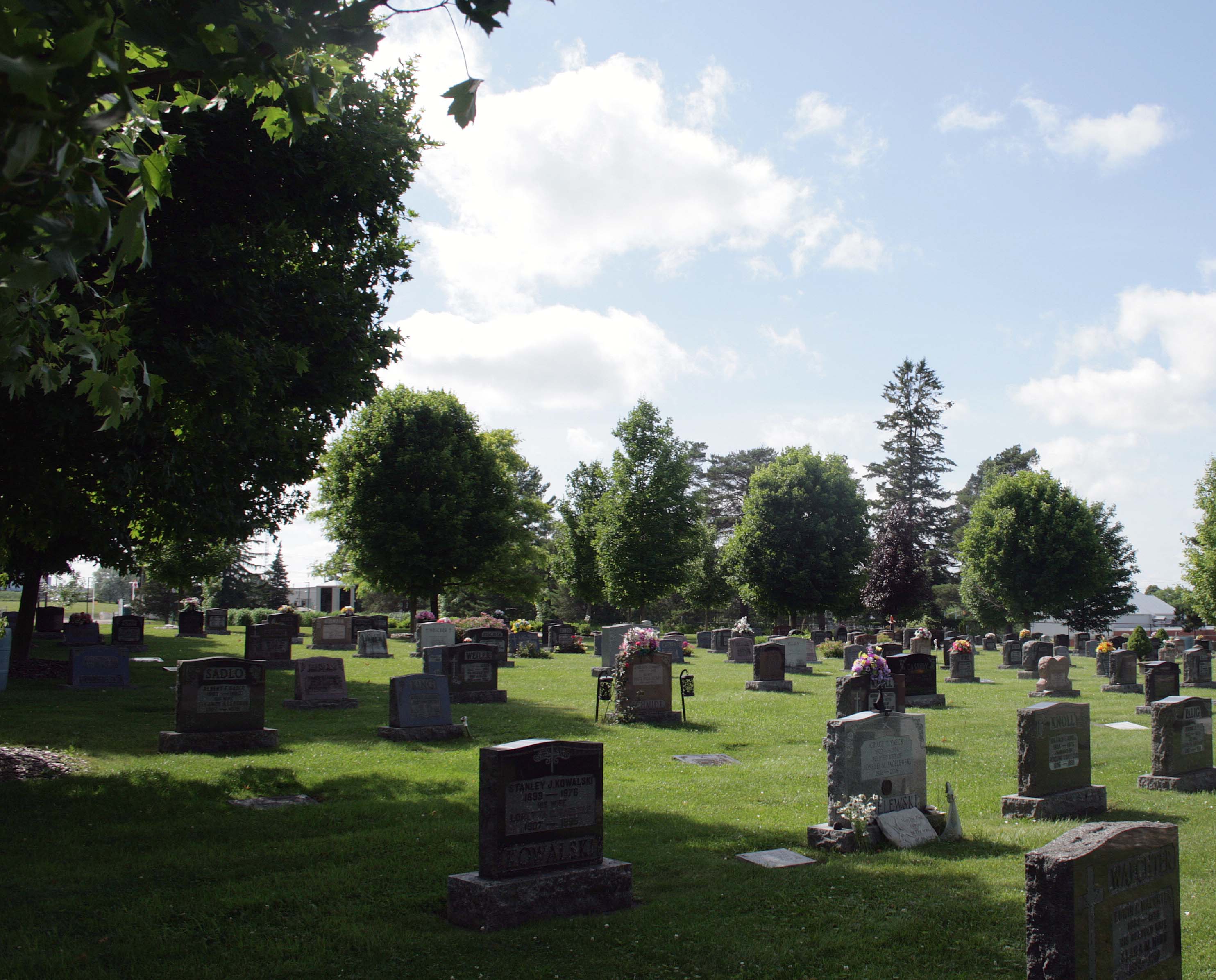
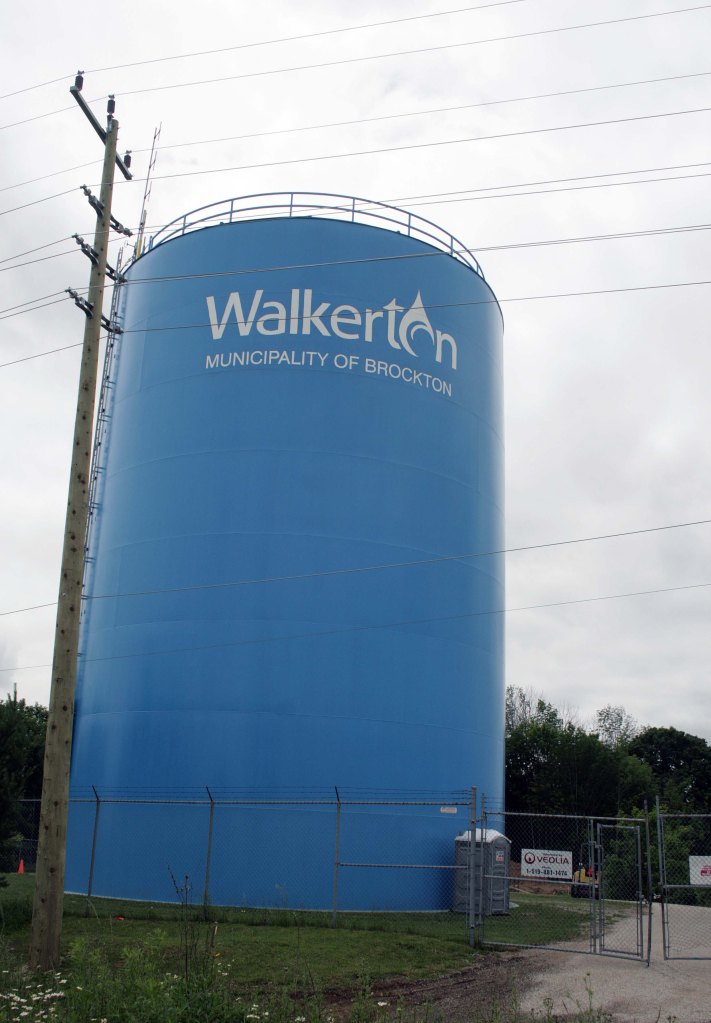
Our next stop brought us to a small cemetery that wasn’t connected to the tragedy. I am not one to pass up a cemetery visit though, so we made our way to visit. It just so happened to be very close to the Walkerton water tower. After that, we decided to visit a few more cemeteries, the last one of the day being Calvary Cemetery.

Calvary Cemetery is on the outskirts, just south of the town. This cemetery visit was important for our journey, as it is the final resting place of two people who died in the water tragedy.

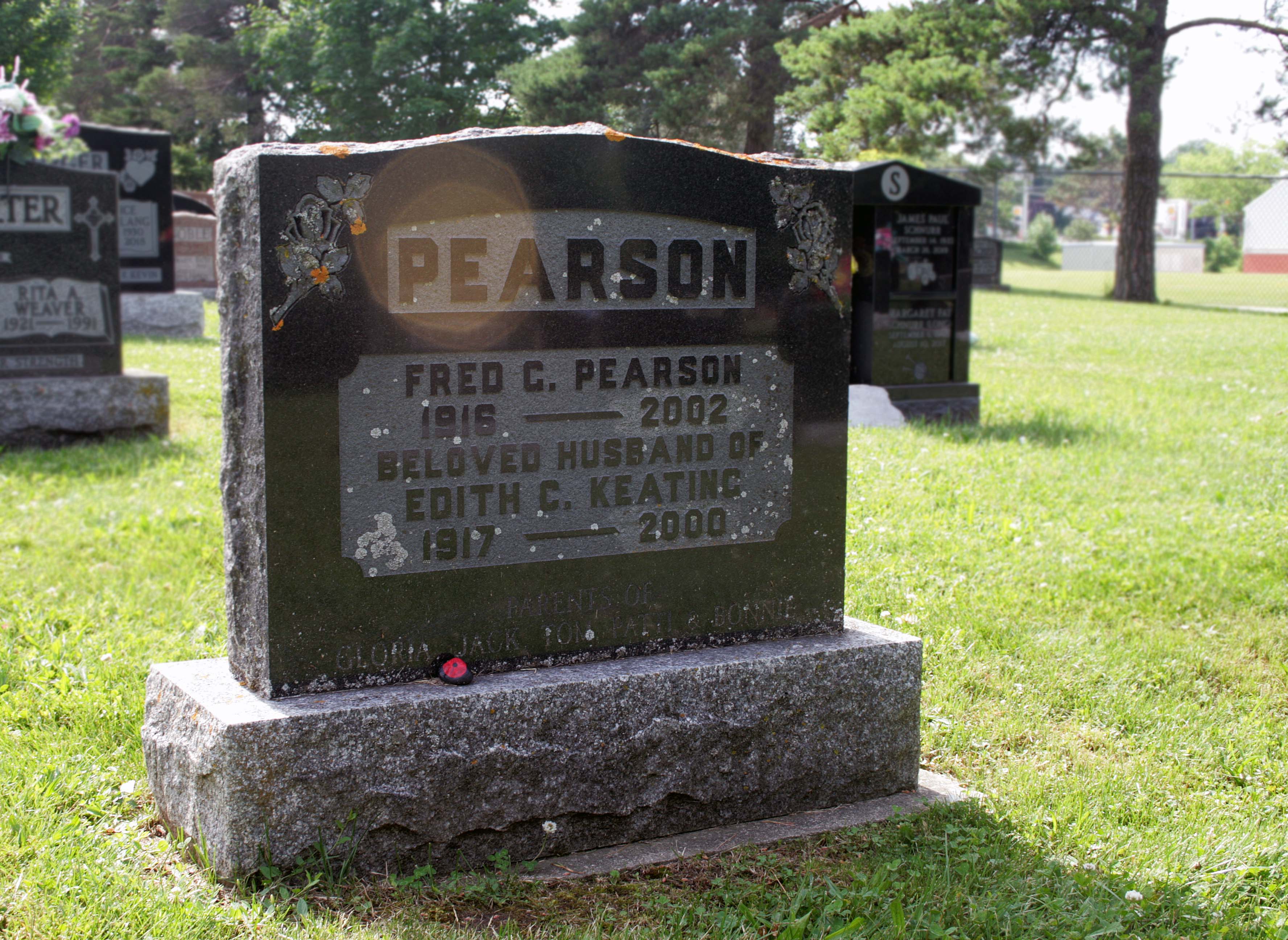
Edith Pearson, a mother of five and a grandmother of 13, passed away at the age of 82.4 Not far from her rests Lenore Al, a retired part-time librarian, who passed away at the London Health Sciences Centre at the age of 66.4 Their memorial services were held both during the same week.5

It was a very reflective visit, as my mother and I walked the rows searching for these specific graves. It was a scary thought to think what could happen by just drinking a glass of water. Standing in front of their graves also made their story real, bringing it off the page and into reality.
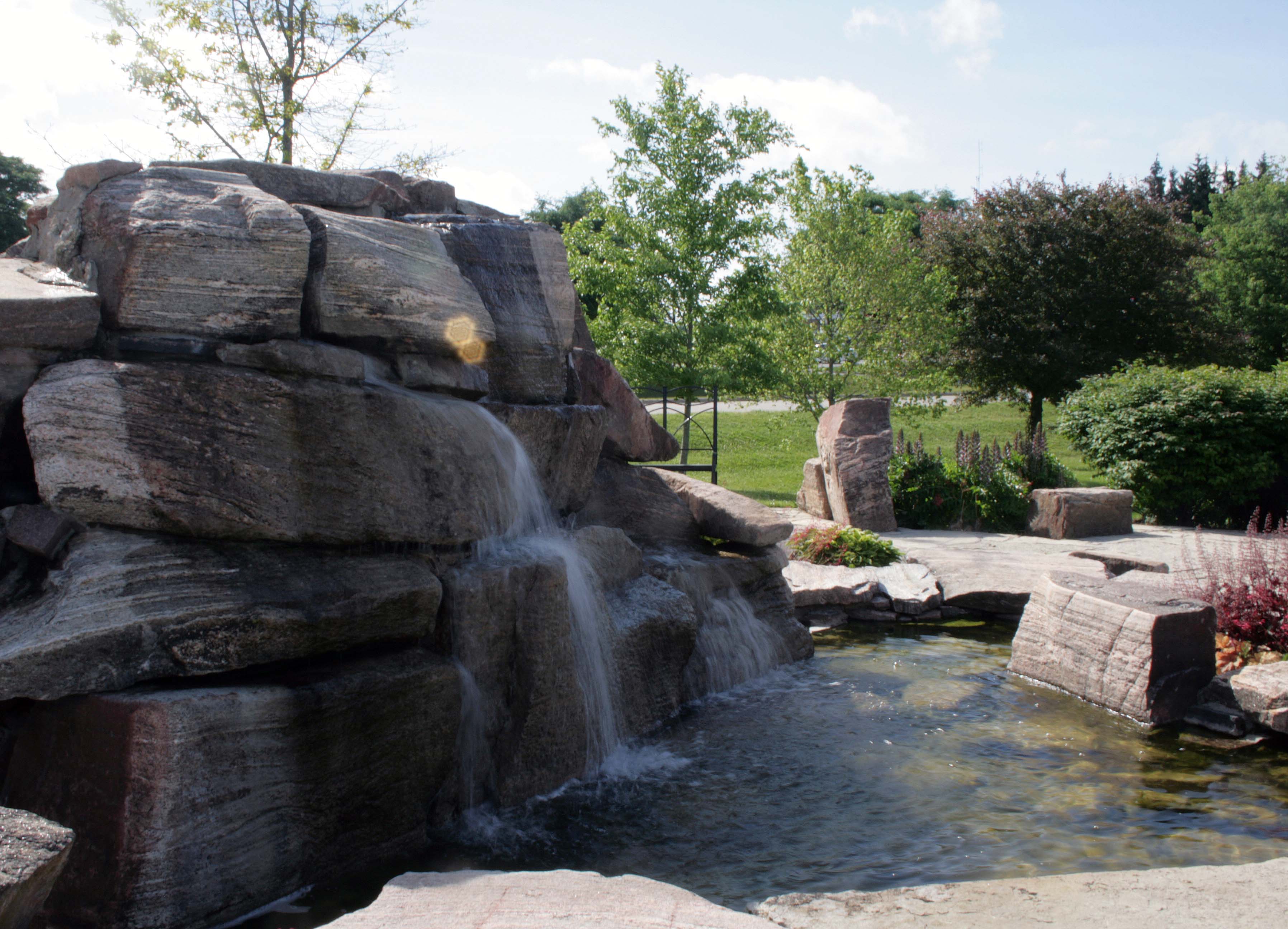
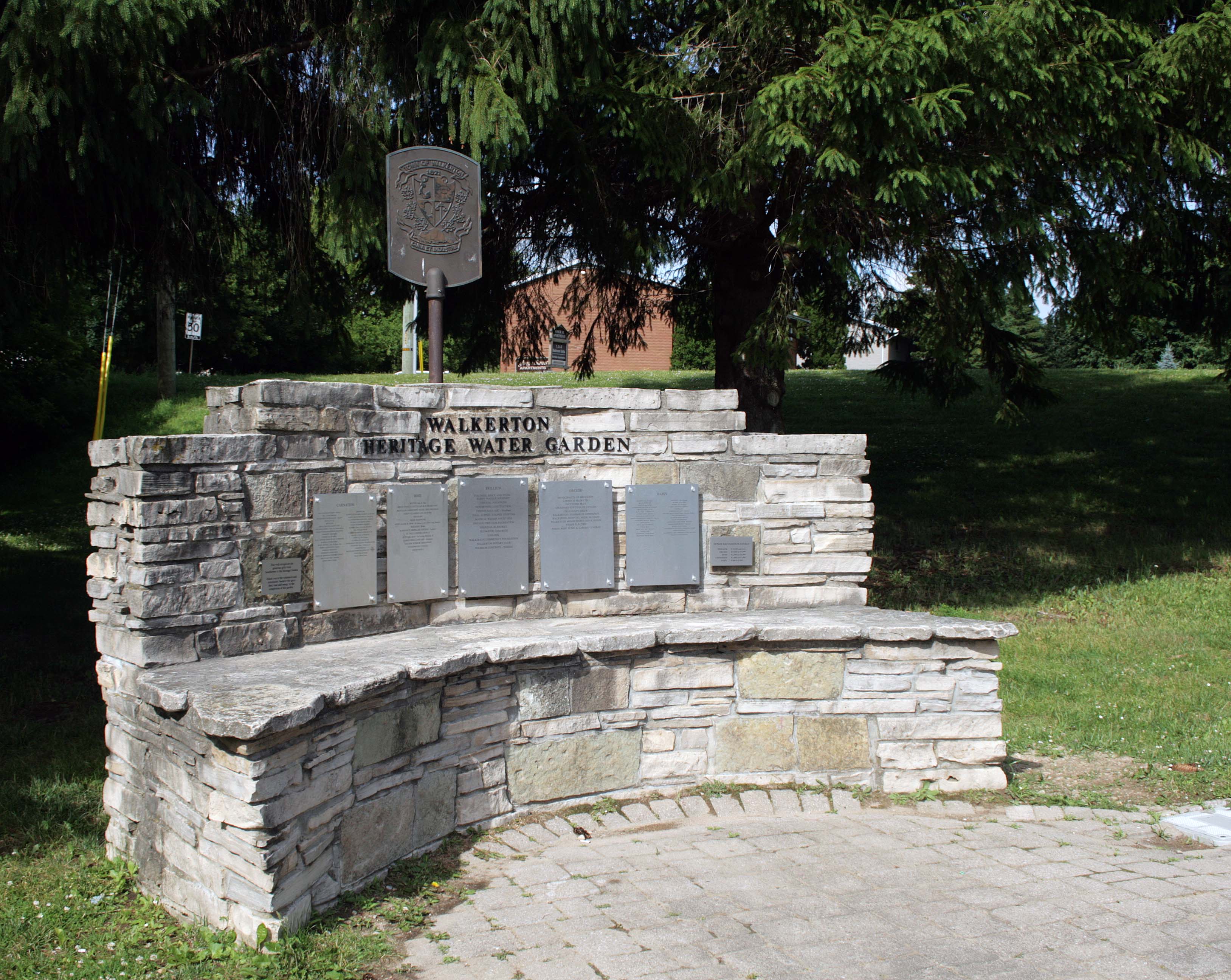
After that somber visit, I thought it might be a good idea to visit something a little more hopeful. The Walkerton Heritage Water Garden features a waterfall that gushes out from a crack in a large rock formation. It’s inspired by the biblical story of Moses, who struck a rock in the desert to bring water to the Israelites.6 It represents water as a positive symbol of life, healing and renewal. The waterfall pours into a small pond that is surrounded by a larger walking trail. There are benches and small clusters of flowers and tall grass that dot the path that leads you back to the memorial fountain.

It was a hot day when we visited, so the occasional cool spray from the waterfall was very welcome. It was a nice little spot for a small walk, but the constant running water made it hard to forget why it was there.

Our first day in Walkerton was a long one. Shortly after our walk, we found something to eat and then settled in to our motel for the night. We had one more site we had to visit.

The next morning, after a good breakfast, I wanted to find Well #5.

Sometimes while planning and researching, it can be tricky to find exact locations, even in this digital age. But I thought we have to give it a try. So with only a street name in my GPS we headed out.

Slowly driving down the dirt road, we kept our eyes peeled for signs of the well. I was getting worried as we reached the end of the road, but I caught the glimmer of what looked like a silver plaque.

We found the well, which has since been capped off, tucked in behind a small building on the edge of a farmer’s field. Today, it’s just a large cement pad with a small silver plaque. If you didn’t know what you were looking at, you may think nothing of it, but the plaque tells the whole story.

“Well 5 Memorial / This plaque marks the location of Walkerton’s former Well 5 / which supplied a portion of the town’s drinking water from / 1978 into the spring of 2000. In mid May of the year 2000, / extremely heavy rains washed a toxic blend of biological / pathogens through the soils and into the vulnerable shaft of / Well 5 and ultimately into Walkerton’s Municipal drinking / water system. The resulting contamination of the town’s / drinking water system lead to the deaths of seven people and / caused thousands of others to fall ill. It is hoped that all those / who visit this location will reflect upon the multiple causes of / this tragedy and will be filled with a renewed reverence for the / comprehensive stewardship of the waters that sustain us all.”

Finding the well was a moving moment, and as the plaque suggested, my mother and I took some time to reflect as we looked into the farmer’s field and at the old well.

Lasting Impact

The story of Walkerton didn’t end in 2000. For many survivors, the contamination left behind long-term health complications that they will carry for the rest of their lives. One of those people was Robbie Schnurr, who became seriously ill during the outbreak.7 The illness damaged his kidneys and digestive system, leaving him to cope with constant pain and health struggles for nearly two decades.7

In May of 2018, Robbie made the heartbreaking decision to end his life through Medical Assistance in Dying (MAID).7 He was just 51 years old. The illness caused by Walkerton’s poisoned water was just too heavy a toll.7 Robbie’s story is a reminder that the impact of what happened in Walkerton wasn’t confined to the weeks of the outbreak. It rippled out for years, forever altering lives and families.

Moving Forward

One of the outcomes of the Walkerton Inquiry was a complete overhaul of Ontario’s drinking water regulations. New laws were brought in to ensure public accountability, proper testing, and better training for those operating municipal water systems—all with the goal of making sure something like this never happens again.2

And yet, even in 2025, not every community in Canada can count on that promise. Some First Nation reserves continue to struggle with unsafe drinking water, some living under boil-water advisories that have lasted for years.8

It’s a frustrating and heartbreaking reality. Safe drinking water should be a basic human right, not a privilege.

Visiting Walkerton was an educational and somber experience. Standing at the memorial fountain, walking through the cemetery, and pausing at Well #5 all carried more weight than just stops on a road trip. It was a chance to reflect on a tragedy that forever shaped this small town, and to see how its lessons continue to make Ontario’s communities safer today.

Twenty-five years later, the Walkerton water tragedy remains a powerful reminder of what’s at stake when safety is ignored. It also reminds us of the resilience of a community that continues to honour those lost, while moving forward with a commitment to never forget.

Thanks for reading!


References:

  1. Inside Walkerton: Canada’s worst-ever E. coli contamination | CBC
  2. Commemorating Walkerton – 20 Years Later | Drinking Water Source Protection Quinte Region
  3. New Walkerton Clean Water Centre Opens | Ontario.ca
  4. The Walkerton Tragedy | Globe and Mail
  5. Second funeral held in town with tainted water | CBC
  6. Walkerton Heritage Water Garden | Bruce Grey Simcoe
  7. In 2000, Walkerton’s poisoned water ruined his life. He decided it was time to end it | Toronto Star
  8. 30 years under longest boil-water advisory in Canada, Neskantaga First Nation pushes for new treatment plant | CBC

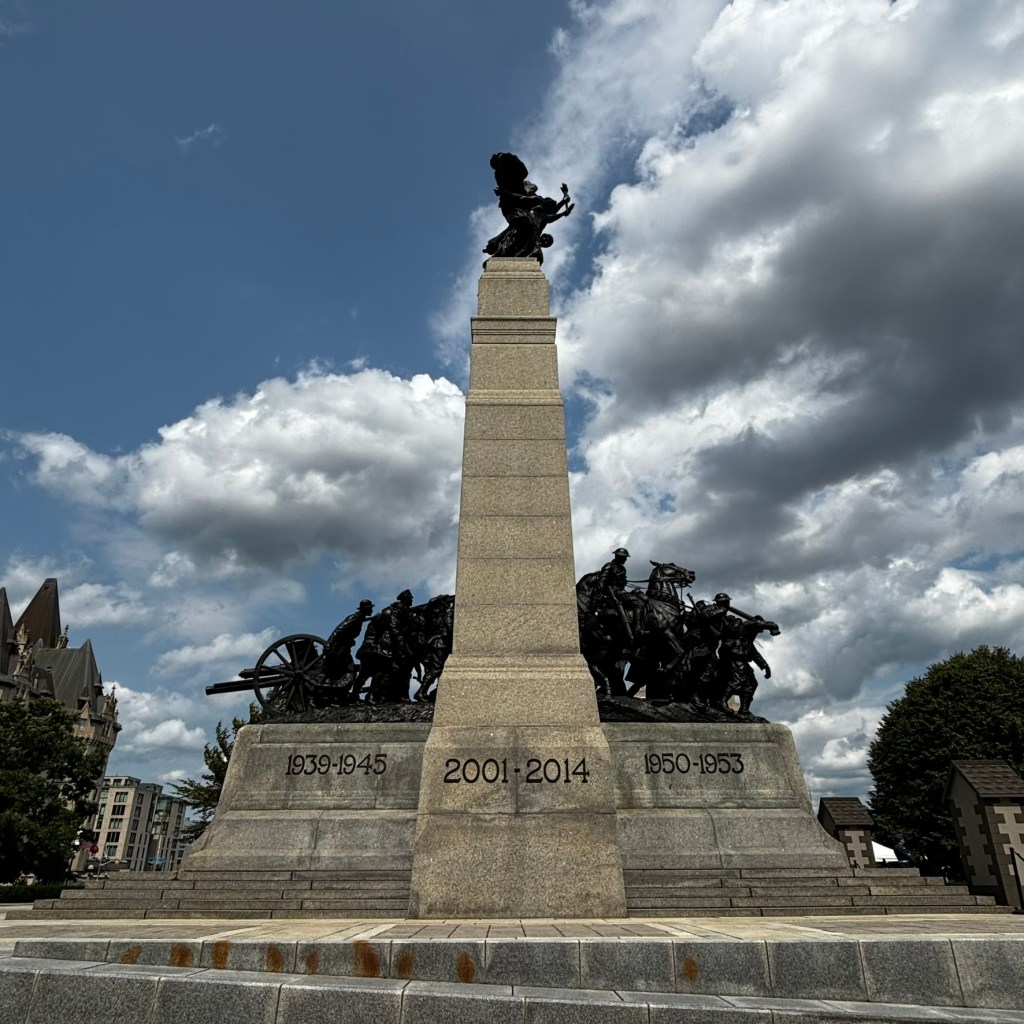
Stone Stories: The Tomb of the Unknown Soldier

In honor of Remembrance Day this year, Monday, November 11th, I want to take a moment to reflect on the significance of this solemn occasion and the powerful symbol of sacrifice that is the Tomb of the Unknown Soldier.

This day, which marks the end of hostilities during the First World War and honors all who have served in times of conflict, holds deep meaning for Canadians. While Remembrance Day has been observed since 1919, its evolution over the years—from its origins as Armistice Day to the shift in date and name in 1931—demonstrates its lasting importance in our collective memory.1 In this week’s post, I want to delve into the history behind the Tomb of the Unknown Soldier, a tribute that today stands as a symbol of the many soldiers who gave their lives without recognition.

The Unknown Soldier

The tomb of the unknown soldier lies in front of the National War Memorial at Parliament Hill. The large monument, a cenotaph, was unveiled in 1939 to commemorate the Canadian response to the First World War. It has grown to symbolize the sacrifice of all Canadians who have served in times of war.2

The Royal Canadian Legion, with help from Veteran’s Affairs Canada, began work to bring the Unknown Soldier home in the spring of 1998.3 As a Millenium project, this undertaking was not an easy task and many veterans were anxious to see this tomb built, as a reminder for new generations of the cause and consequences of war.3,4

Exhaustive work was completed to choose the remains that would be repatriated. The remains were selected from among 6,846 unknown soldiers of the First World War.5 The set of remains that now lie at rest in the sarcophagus at the base of the war memorial comes from Cabaret-Rouge British Cemetery, in Souchez, France.4

The Unknown Soldier’s remains were exhumed on May 25, 2000, by the Commonwealth War Graves Commission. The remains were then repatriated to Canada in a Canadian Forces aircraft, where they would lay in state for three days in the Hall of Honor in the Centre Block of Parliament.5 On May 28, 2000, the remains were laid to rest in a sarcophagus made of granite, during an interment ceremony. Soil from each Canadian province and territory was placed on the casket. They also included some soil from France.6

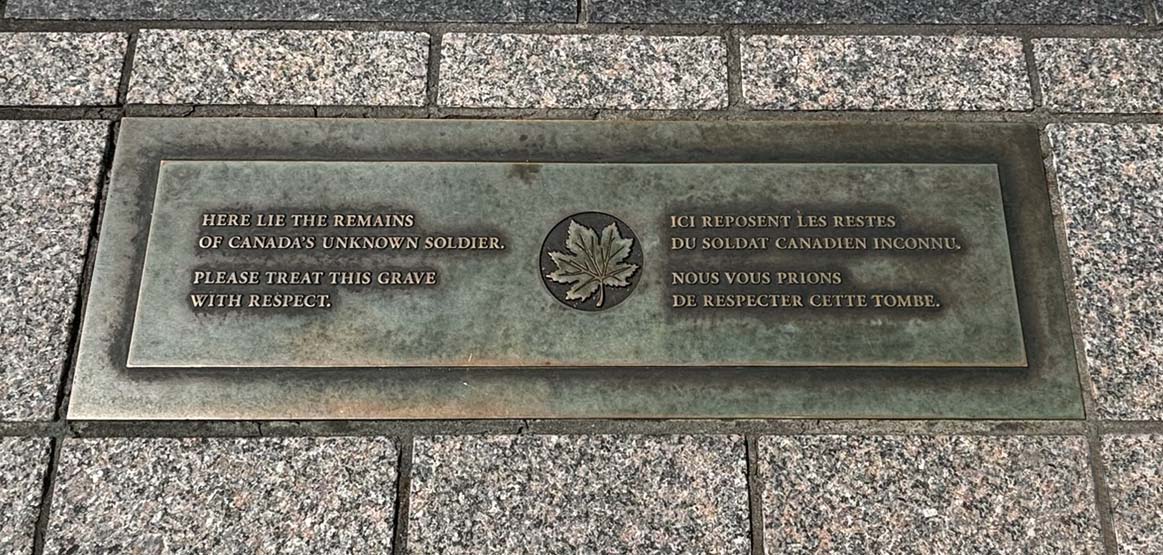
The inscription on the tomb reads “The Unknown Soldier / Le Soldat inconnu”. There is also a brass plaque embedded in the ground in front of the tomb which reads: “Here lie the remains / of Canada’s Unknown Soldier. / Please treat this grave / with respect.”

The tombstone marking the first resting place of our unknown soldier, in France, was also brought to Canada and now hangs in the Memorial Hall of the Canadian War Museum in Ottawa.

The inscription reads: “A Soldier / of the Great War / A Canadian Regiment / Known Unto God”

The Memorial Hall of the Canadian War Museum has a unique design feature, where every year on November 11th, at 11 a.m. the sun filters through a window in the hall, directly illuminating the headstone.7

A new gravestone was placed to mark the original burial site, now empty, in Cabaret-Rouge British Cemetery. The stone, similar in appearance to the original gravestone, is engraved with a maple leaf and the following epitaph, “The Former Grave Of An / Unknown Canadian Soldier / Of The First World War. / His Remains Were Removed / On 25 May 2000 And Now / Lie Interred At The / National War Memorial / In Ottawa Canada.”4

The Changing of the Guard

This summer, while I was visiting family in Ottawa, I had the opportunity to visit the Tomb of the Unknown Soldier and witness the changing of the guard.

Since 2007, the Canadian Armed Forces have posted sentries to stand guard at the tomb, with a rotation of personnel from the Royal Canadian Navy, Canadian Army, Royal Canadian Air Force, and Canadian Ranger units from across the country.8 During the summer months, the changing of the guard ceremony occurs every hour, on the hour, between 9 a.m. and 5 p.m.

The ceremony is a somber occasion that reflects respect for Canada’s fallen soldiers. As the sentries execute their precise and disciplined movements, the atmosphere was heavy with reverence. The ceremony serves as a powerful reminder of the sacrifices made in the name of freedom and those who gave their lives in service.

While visiting the tomb, I was struck by the weight of history and felt the significance of honoring those whose identities may be lost, but whose sacrifices will never be forgotten.

We will never know the identity of the Unknown Soldier—but that’s the point.

In war, the remains of soldiers may be badly damaged, or destroyed. Even though a great effort was made to find and identify remains, many were not found at all. Almost 20,000 Canadians who died in the First World War have no identifiable graves.4 Some could only be identified as Canadians, by uniform buttons or badges, and were buried with a simple military marker, like our unknown soldier.4

So this Remembrance Day, as we pause to honor the sacrifices of those who served, remember also the unknown soldier—the many who gave their lives, whose identities are now lost to history.

Lest we forget.


References:

  1. Remembrance Day| Canadian War Museum
  2. National War Memorial | Veterans Affairs Canada
  3. Bringing the Unknown Soldier Home | Legion
  4. Questions and Answers | Veterans Affairs Canada
  5. The Unknown Soldier | Canadian War Museum
  6. Tomb of the Unknown Soldier | Government of Canada
  7. Canadian History Ehx’s Post | Facebook
  8. National Sentry Program | Government of Canada

Stone Stories: Mattawa’s Master Painter

One of my favorite things to do on cemetery road trips is visit small local museums. They are often filled with beautiful antique artifacts as well as fascinating stories. Brimming with local history, they often lead me down interesting research rabbit holes. They are great places to learn about interesting local figures to seek out while visiting cemeteries.

For today’s stone story, I want to talk about another Mattawa local that I learned about while visiting the Mattawa Museum, Mattawa’s own Master Painter, Gordon Dufoe.

The Artist

Gordon Dufoe was born in Mattawa in October 1891. You could say that artistic talent runs in his family. His father would often draw animals to the delight of Gordon and his brothers.1 Although Dufoe never had any formal art training, he would go on to be known as the “Master Painter of the Ottawa Valley”.2

Dufoe did a tour of duty in Europe, during World War I, where he was sometimes moved from the lines and given orders to sketch the cathedrals, historic buildings, and other locations—to document them in case they were destroyed.3

In 1919, Dufoe returned to Mattawa and married Irene Leclaire. They would go on to have nine children together, seven sons and two daughters. Frank, the oldest of the Dufoe children, inherited his father’s artistic talent. Talent that was also passed down to Frank’s son Gordon, named after his Grandfather.2 

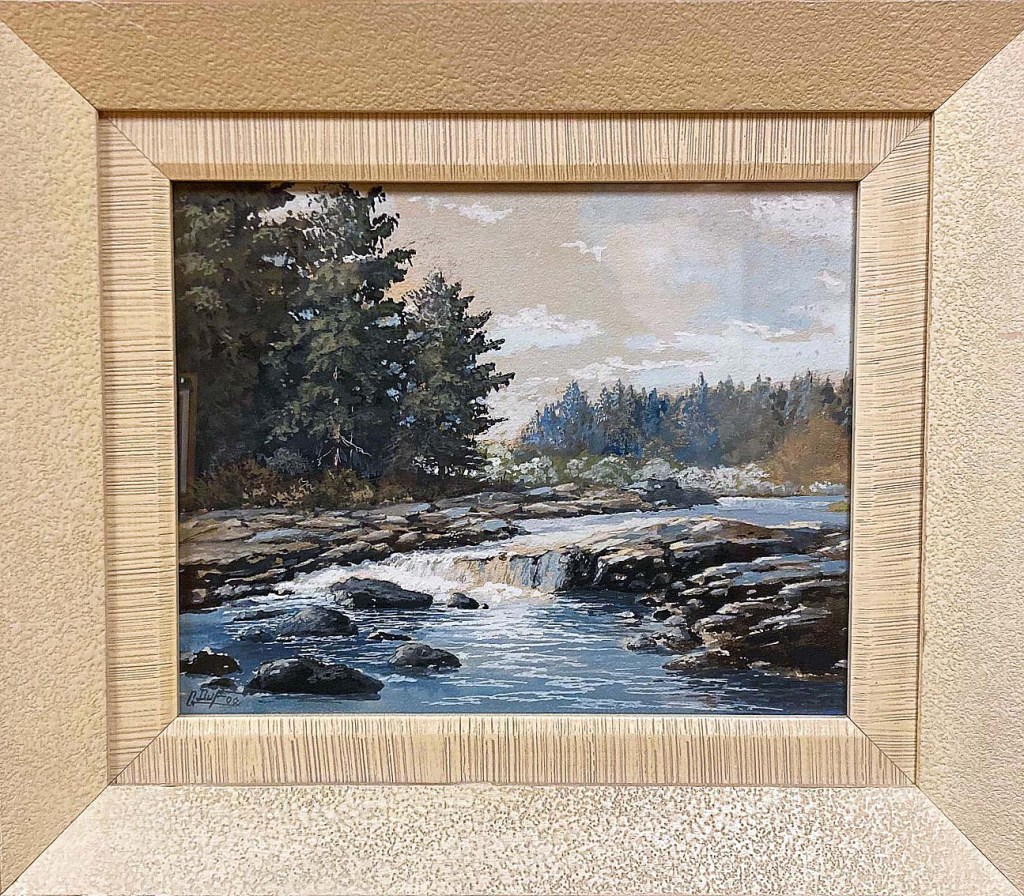
Dufoe eventually set up a home studio and began to paint professionally.1 His background as a trapper and guide shines through his work, which is largely focused on landscapes and animals. He had a beautiful eye for capturing the essence and movement of his subjects. 

The Mattawa Museum exhibit includes a Ricohflex – Model VI camera that was used by Dufoe. An avid photographer, he would often take photos that he would reference when creating his paintings. He also dabbled in building his own cameras, as well as building radios and telescopes.2 

His paintings can be found in North America, and around the world.1 Today, a painting can sell for more than Dufoe made in his lifetime as a living painter. He was known to give his paintings away or even throw them away if he was not happy with them.2 After his death in 1975, many of his works were donated to the Mattawa Museum2, and are on display for all to see.

In 1993, Dufoe’s family worked with Douglas Pollard at the Highway Book Shop to posthumously publish a book Dufoe had written. Canadian Animals I Have Known by Gordon Dufoe is a collection of stories from Dufoes life in the bush and contains many of his animal sketches.2 Today, the book is now out of print. 

Visiting the Cemetery

After visiting the museum, my mother and I made our way to the cemetery to pay our respects.

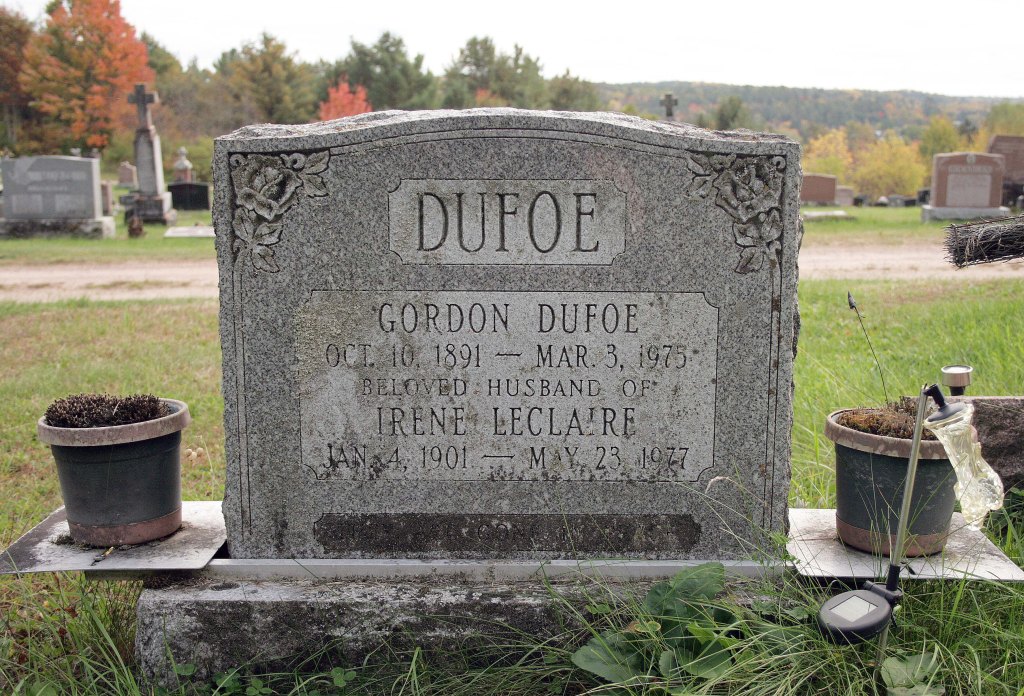
Dufoe passed away on March 3, 1975, at the age of 83. He is laid to rest in Saint Annes Cemetery beside his wife, Irene who passed away in May of 1977. Beside a large grey granite tombstone for both Gordon and his wife, stands a Canadian military grave marker, in honor of Dufoe’s military service. 

It reads: “ Gordon E. Dufoe / Private / 130 Battn. C E F / 3 March 1975 / Aged 83”

The Dufoe family plot is also the final resting place of Albert and Norman Dufoe, and Stella Dufoe Brunette, children of Gordon and Irene. 

It took my mother and I some time to find Dufoe’s plot as the cemetery is quite large. Saint Annes Cemetery, also known as Saint Annes Catholic Cemetery was established in 1883 and has approximately 2,246 memorials according to Find a Grave. The cemetery has not been fully photographed yet, and it is still an active cemetery. 

If we had not visited the Mattawa Museum before visiting the cemetery, we would not have known that this simple grey marker was the final resting place of one of Mattawa’s finest painters. 

The Museum and cemetery are not the only places in Mattawa where you can find a memorial to Dufoe. There is a park that sits between 10th and 11th streets that was dedicated to the local painter many years ago.1 In 2016, a new sign and a memorial bench that lists the names of all of his children was installed.4

The inscription on the memorial park sign reads: 

“Gordon Dufoe (1891-1975) an outstanding artist, craftsman, outdoorsman, soldier, family man, and friend is hereby remembered for the beauty and pleasure he brought to many and for his contributions as an exemplary citizen.”1

Thanks for reading!


References:

  1. Gordon Dufoe | Mattawa Museum
  2. Mattawa’s ‘Renaissance Man’ Remembered | Past Forward Heritage Limited
  3. Mattawa Park bench and sign honours artist | Bay Today
  4. Park bench will honour local painter | Bay Today

Stone Stories: Canada’s First Black Mayor

Last October, My mother and I took a little road trip to Mattawa. We planned on doing some hiking, visiting cemeteries, and enjoying the fall colors. We always like to visit local museums when we visit new places, and the Mattawa Museum did not disappoint. We had a great time touring the grounds and learned a lot about the history of the city, including that it has the distinction of having Canada’s first elected Black mayor. 

Mattawa, located in northeastern Ontario is a little over two hours drive from me. Mattawa is located where the Mattawa and Ottawa Rivers merge, in Nipissing District. The name Mattawa means “Meeting of the Waters” in Ojibwa.1 It is the oldest settlement in the Nipissing District, and today showcases that historic past with beautiful wooden sculptures. Many wooden sculptures of historic figures, important to Mattawa’s history, can be found scattered throughout the town.1

It was an overcast day when we visited Mattawa, but it didn’t deter us from exploring. We admired the two wooden sculptures on the museum grounds and looked for the three white crosses, that stand high on Québec Hill across the Mattawa river. The three crosses were erected in 1686 by missionary priests to mark the place where the two rivers meet.2

Inside the museum, we found a treasure trove of artifacts; paintings by a well-known Mattawa painter, many indigenous artifacts, and a large exhibit about Canada’s first Black Mayor, Dr. S. F. Monestime. The exhibit features large panels with many photos and a history of what brought Monestime to Mattawa, and how he changed the community for the better. The exhibit also includes some of his personal items, like his signature fedora and a medical skull used in his practice. My Mother and I were both interested in this exhibit the most, and were surprised that we had never heard of him before. We made it a point to pay our respects at the cemetery.

Dr. Saint Firmin Monestime

Saint Firmin Monestime was born in Cape Haitian, Haiti in December of 1909. Monestime grew up during the United States occupation of Haiti, which took place from 1916 to 1935. He graduated with a medical degree from the University of Haiti Medical School, and after graduation was named Medical Officer for the International Route between Haiti and the Dominican Republic.3 He experienced a lot during his medical career in Haiti, living through mass casualty events. He received the Knight of the National Order of Honor and Merit, awarded to those of distinguished excellence. He wrote four books around this time, about rural medicine.3

After becoming frustrated with the politics and what he called “deplorable conditions”, Monestime quietly left Haiti for Quebec. He was part of the first small group of Haitian professionals to come to Quebec in the 1940s. Unfortunately, this meant starting over as he had to train and intern for several years to get his full Canadian medical accreditation.3

Monestime found his way to Mattawa almost by chance. He and another colleague were traveling through Mattawa on their way to Timmins to see about setting up a medical practice. They stopped in for lunch at Chez Francois in Mattawa, and it just so happened that the restaurant owner recognized Dr. Monestime, as he had been operated on by the Doctor in Ottawa. The timing was right. The long-standing doctor in Mattawa had recently passed away and the town needed a new doctor. The restaurant also had a vacant room to rent and office space. Monestime agreed to stay, temporarily, but ended up staying indefinitely.3

Monestime found the community to be very welcoming and their generosity encouraged him to stay. His medical practice was booming with a busy office as well as on-call work with the hospital. That’s not to say that he didn’t experience racism in his time there.3 In 1972, he was asked by a reporter if race ever came into play, Monestime replied:

“My practice was booming in no time and from then until now I’ve had no serious problems. You might find a very few—and not the most intelligent—who may say they won’t come to see me because of my race. But very few.”3

Three months after Dr. Martin Luther King gave his “I Have a Dream” speech in 1963, Dr. St. F. Monestime also made history by being elected the first Black mayor in Canada. An active political figure in good standing within the community, regarded for his sense of justice and equality, he was elected mayor nine times.3 Today, the legacy of Dr. Monestime continues and is still felt vibrantly within the community as his family continues to do good works. The most notable of these works is the Algonquin Nursing Home, a project championed by Monestime in his last years.

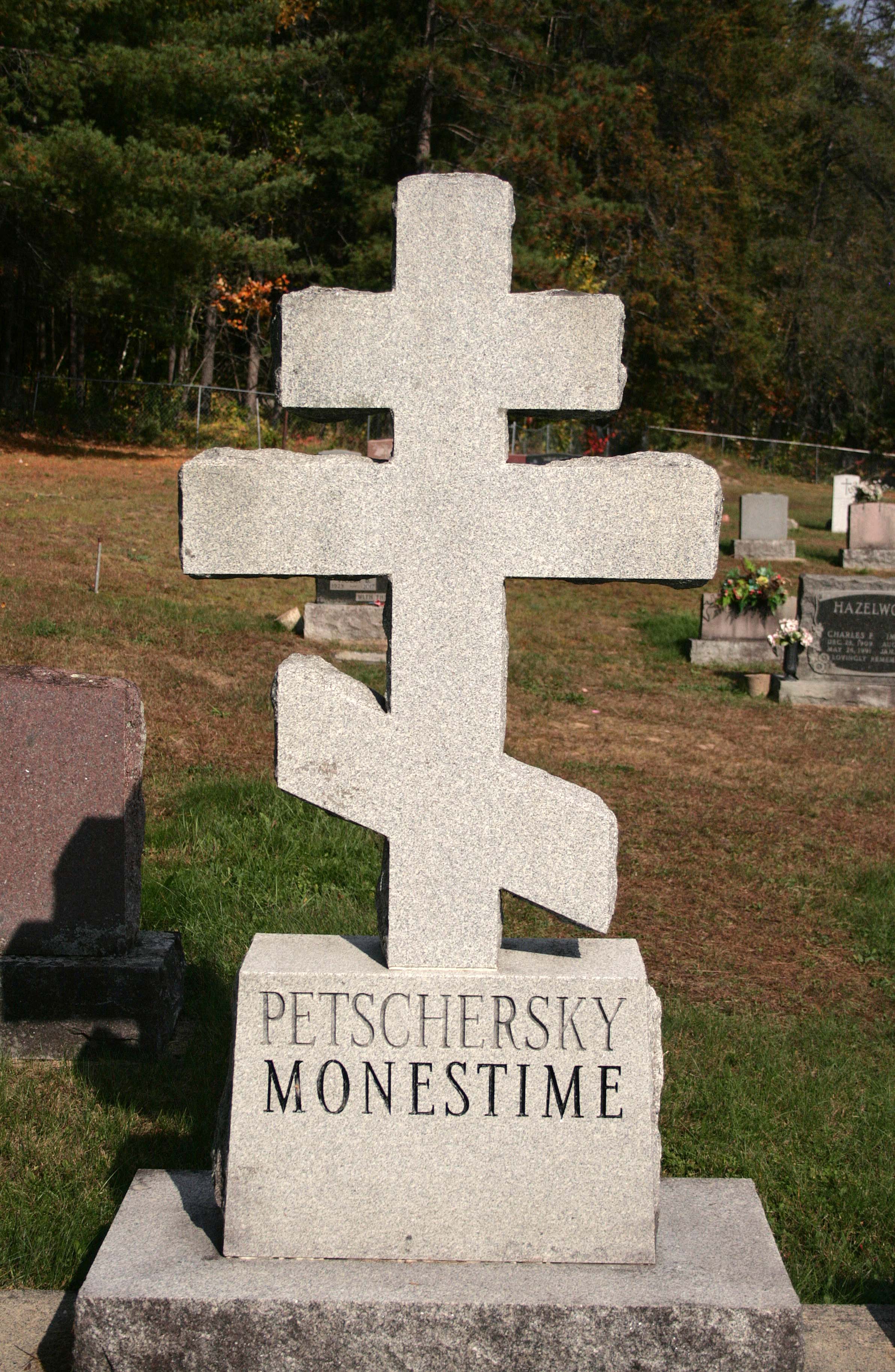
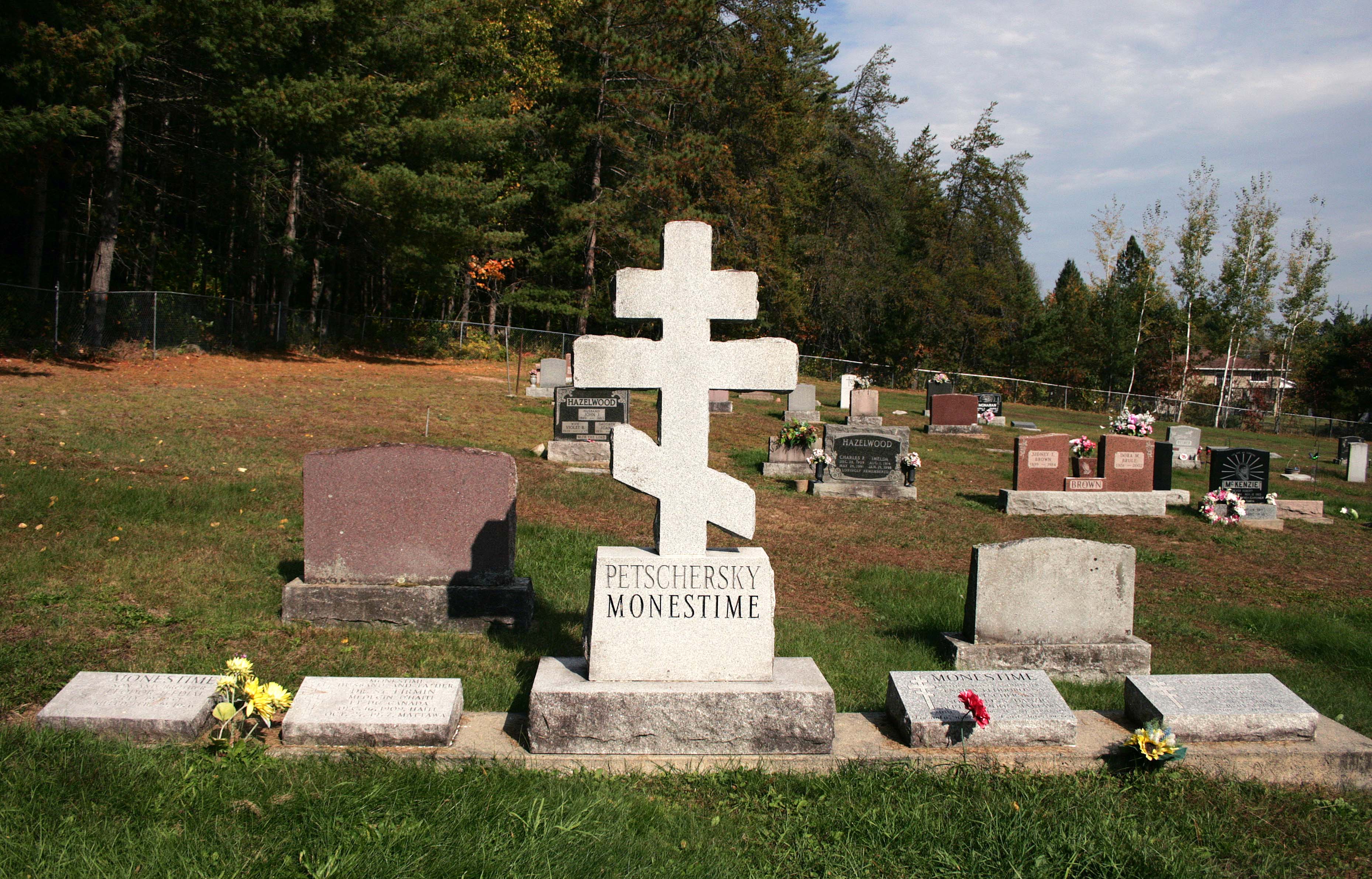
On October 27, 1977, Dr. Monestime passed away at the age of 67, most likely from pancreatic cancer, which he battled multiple times throughout his life. His Russian Orthodox funeral service took place at St. Anne’s Roman Catholic Church in Mattawa.3 He is buried in the Petschersky Monestime family plot at Pine Hill Union cemetery.

He is laid to rest beside his son Fedeor, who sadly was accidentally shot and killed a year earlier on February 29, during an altercation outside of Chez Francois.3 Monestimes’ wife, Zena, and her mother are also laid to rest in the family plot, which features a large Eastern Cross. The Eastern Cross or Orthodox Cross has a tilted bar at the base of the cross; a tilted footrest. This is meant to illustrate that the thief crucified on the left side of Christ, thought to be the wise thief, went up to heaven, while the thief crucified on the right side was thought to be unrepentant, and went down to hell.4

My visit to Mattawa was an eye-opening trip. After exploring the exhibit at the museum, we stopped at the gift shop and spoke with the museum curator after buying a few things. We had a great conversation about the museum contents and how sometimes history is hidden in plain sight. 

If you’re interested in learning more about Dr. Monestime, I highly recommend a visit to the Mattawa Museum and also picking up a copy of Where Rivers Meet by Doug Mackey. It’s a well-researched look at the life of Dr. Monestime and also explores life in Haiti as well as Black history in Canada. 

Thanks for reading!


References:

  1. What About Mattawa? | Town of Mattwa
  2. The Three Crosses | Mattawa Museum
  3. Where rivers Meet: The Story of Dr. S. F. Monestime, Canada’s First Black Mayor by Doug Mackey | Book
  4. Understanding Cemetery Symbols: A Field Guide for Historic Graveyards by Tui Snider | Book

Stone Stories: Canada’s World War I Flying Ace

Have you ever flown out of the Billy Bishop airport, in Toronto? Were you curious as to who the airport was named after? I was, but I never got around to looking into it, not until I stumbled upon the grave of William Avery “Billy” Bishop.

In the Summer of 2023, My mother and I stumbled across the Bishop family plot, while visiting Greenwood Cemetery in Owen Sound. We had come to Owen Sound to search for the second grave of Tom Thomson, but the trip ended up being just as much about Bishop.

Billy Bishop

William Avery “Billy” Bishop was born in 1894, in Owen Sound, Ontario. During his stint as a cadet at the Royal Military College in Kingston, World War I broke out. He enrolled in the 9th Mississauga Horse, Canadian Expedition Force and later transferred to the Royal Flying Corps.1 He received his pilot’s certificate in 1917, although some considered him a mediocre pilot, he was an expert shot with great shooting skill and extraordinary eyesight.2

Bishop became the first Canadian Airman to be awarded the Victoria Cross, the highest award for acts of bravery in wartime. Bishop was awarded the cross for his solo early morning attack on an enemy airfield in June, 1917.1 He single-handedly attacked a German aerodrome, destroying seven airplanes on the ground and shooting an additional four airplanes down, before running out of ammunition.2 Billy Bishop was the British Empire’s second-highest-scoring flying ace, with 72 official victories.1

Greenwood Cemetery

When we visited Greenwood Cemetery, we didn’t have any specific graves we wanted to see. I visited the cemetery office when we first arrived, as I had read online that they offered a self-guided walking tour. They were very friendly in the office and gave me a brochure with the walking tour details. There are a couple of different tours to choose from, that take you to different areas in the cemetery. 

Greenwood is quite large, covering approximately 40 acres of land in the southwestern part of the city. It also has a long history, having opened to the public in 1854. It’s a traditional cemetery, with both upright and flat markers, a large mausoleum, memorial gardens, and a potter’s field memorial.3 

We unexpectedly came upon the Bishop family plot after getting out of the car. I had parked in the heart of the cemetery. A small Canadian flag marked the grave, the flag blowing in the wind had caught our eye. There is a large upright stone that lists the family members buried there, with names on both sides of the stone. There are smaller flat markers laid in the earth surrounding it, marking where each family member is laid to rest. There is also a Canadian military marker for Bishop that stands apart from the rest. The upright grey granite marker lists his military designations alongside the emblem for the Royal Canadian Air Force and the Victoria Cross.

Bishop passed away at the age of 62, on September 11, 1956, in Palm Beach, Florida. His funeral service was held at the Timothy Eaton Memorial Church in Toronto, the same church that he was married in. 25,000 people lined up outside the church to pay their respects. He was cremated, and his ashes were buried in the family plot, in Greenwood.4 He is laid to rest with his family; including both his parents, his sister Mary, and his brothers Hiram, and Reginald Bishop.

Bishop’s wife Margaret remarried after his death, and is buried with her second husband in Beachwood Cemetery in Ottawa. She passed away in 1981 at the age of 83.5 

The Billy Bishop House

The next morning, we decided at breakfast to visit one more thing before we left Owen Sound. My mother loves history, so I figured she would enjoy touring a historic home, The Billy Bishop House. She loved the suggestion, it seemed only appropriate to stop since we had already paid our respects at his grave. 

The house, built in 1884, is the childhood home of Bishop and has been preserved as a historic site and museum. The first floor has been decorated with period-appropriate antiques and items owned by the Bishops. It looks very similar to what it would have looked like when Bishop was growing up. There is a timeline in the parlor that details all the major milestones in Bishop’s life. I found this floor to be the most interesting. There is a lot of information to take in, but also lots to look at; like Bishop’s uniform, personal items, and a copy of Winged Warfare, a book Bishop wrote in 1918 that details his experiences in the air.2

The second floor looks more modern and houses changing exhibits. When we visited there was an exhibit of interviews with veterans from the war in Afghanistan. In what would have been Bishop’s boyhood room, there is a wooden framed airplane for children to explore, and the room is decorated with film posters and other memorabilia.

The staff are incredibly knowledgeable and friendly. I had a nice chat with them about Bishop, as well as the haunted history of the house. I can’t help but ask when I visit a historic location! They were not phased by my line of questioning at all, and I’m sure it’s something they get asked often. The museum runs a ghost walk in the summer months.

Unfortunately, I wasn’t able to attend one of the walks, but I did get to hear some of the stories. The house is reportedly haunted by two spirits, an older woman and a young child. The spirit of the young child is thought to be Hiram Kilbourn Bishop, who died of diphtheria at the age of 4 years old, in 1892.6 People say they have seen a small child wandering the house, wearing what looks like a dress. Young children, regardless of gender, often wore dresses during that time period, which leads the staff to think it is the spirit of young Hiram. 

We didn’t experience anything paranormal on our visit, but we did enjoy exploring the house and learning more about life in that era, Bishop’s personal life, and his legacy.

My mother and I both love history and getting to explore Bishop’s childhood home was a great way to end our Owen Sound adventure. We traveled to Owen Sound to learn more about art, but we ended up also learning more about our Canadian Military history. That’s one of the reasons why I love road trips, you can plan as much as you want but it’s often the spontaneous finds that end up being the most interesting. What do you think?

Thanks for reading!


References:

  1. Billy Bishop Toronto City Airport | Government of Canada
  2. William Avery “Billy” Bishop | Find a Grave 
  3. Greenwood Cemetery | Owensound.ca
  4. Billy Bishop, VC by W.D. Mathieson | Goodreads
  5. Margaret Eaton Burden Hughson | Find a Grave
  6. Hiram Kilbourn Bishop (1887 – 1892) | WikiTree

Cemetery Book Review: Sacred Ground, Volume Two

I hinted last week that I had been working on another cemetery book review for you. For this month’s book review, I wanted to share Sacred Ground, Loyalist Cemeteries of Eastern Ontario, Volume Two by Stuart Lyall Manson.

Sacred Ground, Volume Two continues the author’s exploration of United Empire Loyalists buried in loyalist cemeteries in Canada. This volume looks at five cemeteries in the Eastern Ontario County of Glengarry, and one other in Cornwall, Ontario. I was very excited when Stuart reached out, asking if I would be interested in reviewing his second book on loyalist cemeteries. You might remember a previous blog post I wrote, reviewing his first book, Sacred Ground: Loyalist Cemeteries of Eastern Ontario, Volume One 

Stuart Lyall Manson is a professional research historian with over 25 years of experience and is also a heritage cemetery advocate.1 His second book Sacred Ground, Volume Two just came out in September of this year. He graciously provided me with a PDF version of his book to review. This book, also available in softcover, is 214 pages and contains color as well as black and white images. 

Here is the book synopsis from Goodreads:

“The second volume of the book series Sacred Ground: Loyalist Cemeteries of Eastern Ontario continues the approach of the first volume, describing notable loyalist cemeteries situated in Eastern Ontario. This volume covers cemeteries in the counties of Stormont and Glengarry. It is a collection of detailed profiles of a selection of these historical locations in the region. In each chapter, the author discusses, in-depth, a single cemetery containing the mortal remains of at least one loyalist. A historical overview is provided of each of these burial grounds, along with biographical information on specific loyalists with particularly remarkable stories. The locations were selected based on geographic distribution, religious diversity, and other factors. The book is based on rigorous primary and secondary source research. It complements other publications that list burials or transcribe tombstone inscriptions. Those publications are important resources. This book supplements that basic data with greater historical context and additional research into the lives and experiences of these men, women, and children who laid the foundations of modern Ontario. This volume includes the following cemeteries:

  • St. Andrew’s United Cemetery (Williamstown)
  • St. John’s Presbyterian Cemetery (Cornwall)
  • Falkner Settlement Cemetery (South Lancaster)
  • Salem United Cemetery (Summerstown)
  • St. Raphael’s Cemetery (St. Raphael’s)
  • Gleninore Cemetery (Charlottenburgh)”

I enjoyed this book. The author digs deep to uncover the lives of those who have been forgotten by many. I liked the fact that the author does not shy away from explaining that this type of research can be quite difficult when many people have the same names and full details are not always written out. I can just imagine the rabbit holes of research one had to go down to pull it all together.

As well as providing life stories and timelines of those buried, Volume Two also looks at the story of the cemeteries themselves. The one that stands out the most to me is St. John’s Presbyterian Cemetery in the city of Cornwall. A beautiful cairn was constructed with the remaining gravestones in the 1930’s. In 2017, with hardly any notice the cairn was demolished, destroying most of the remaining gravestones. Today there is only an empty lot where this cemetery sits. Without this kind of research and documentation, these sites may be lost to time, but the author has done an amazing job of collecting old photographs and piecing together the history of this site for future generations. 

As I’ve mentioned before, I always jump at the chance to read about Canadian cemeteries. There is so much history to be found here, and you don’t have to travel far to find it. Accompanying each chapter is a smattering of maps, letters, and photographs of interesting gravestones and beautiful ruins. At the end of each chapter, I found myself saying “I have to visit this one!”. For this reason, I also loved that the locations of each cemetery were included as an appendix at the back of the book. Cemetery name, location, and even coordinates are included.

Just as I recommended the first book in this series, Volume Two would be a valuable read to anyone interested in learning more about Canadian history and the indelible mark left by United Empire Loyalists. This would also be a good book to pick up if you are planning some cemetery road trips in the future. As I did with Volume One, I have already added these cemeteries to my Google maps for future trip planning. 

Will you be adding this book to your TBR list? Or better yet, have you already read it? I would love to hear what you think in the comments.

Thanks for reading! 


I am always on the hunt for cemetery-related book recommendations. Please feel free to share yours in the comments. If you are an author and have a cemetery-related book you would like me to review, please reach out at hello@chantallarochelle.ca. I would love to hear from you.


References:

  1. Home | Stuart Lyall Manson’s website