Stone Stories: Remembering Cole Howard Through Art

Last Summer, while I was on my way to visit some cemeteries in Southern Ontario, we made a special stop along Highway 69. Not for a gravestone, but for a different kind of memorial.

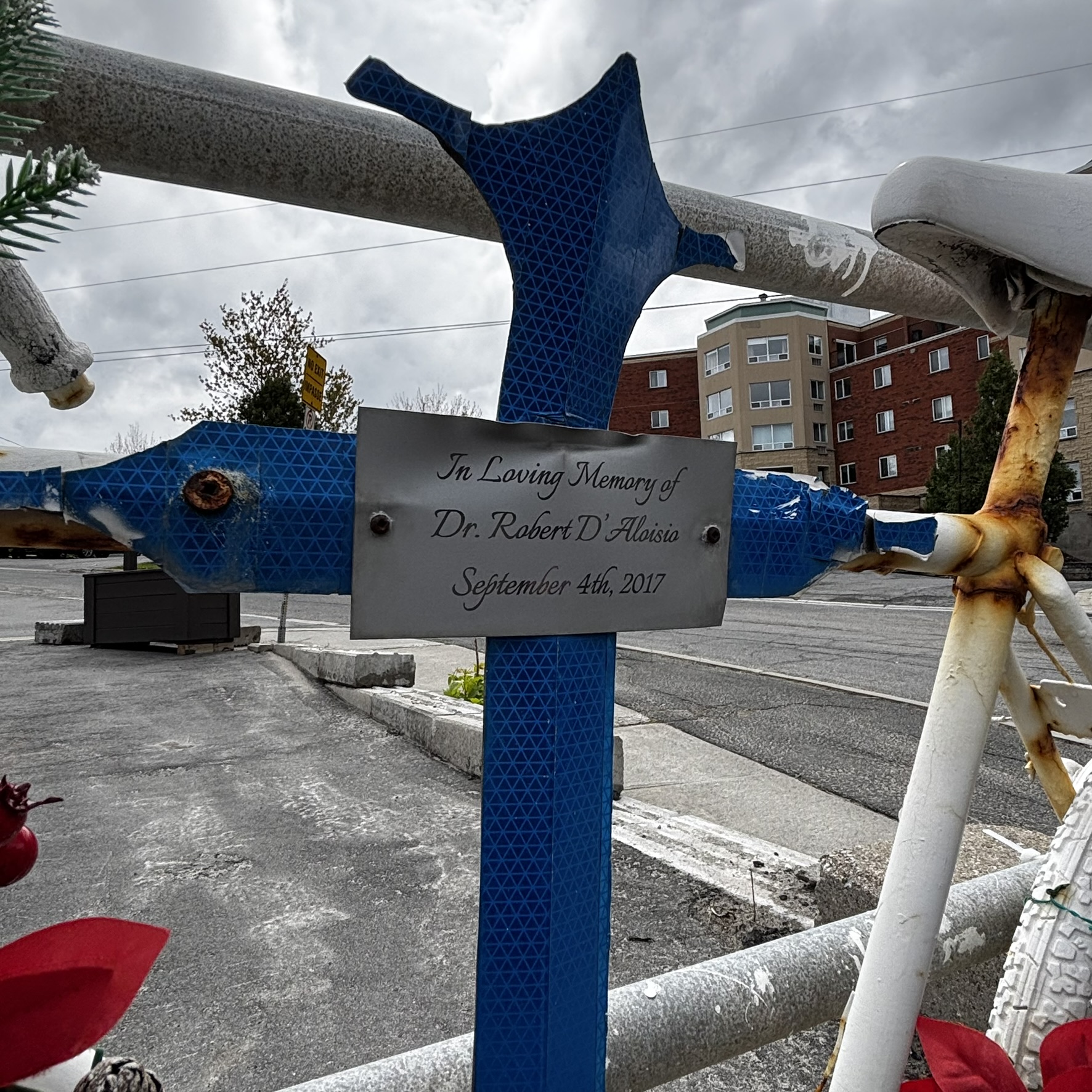
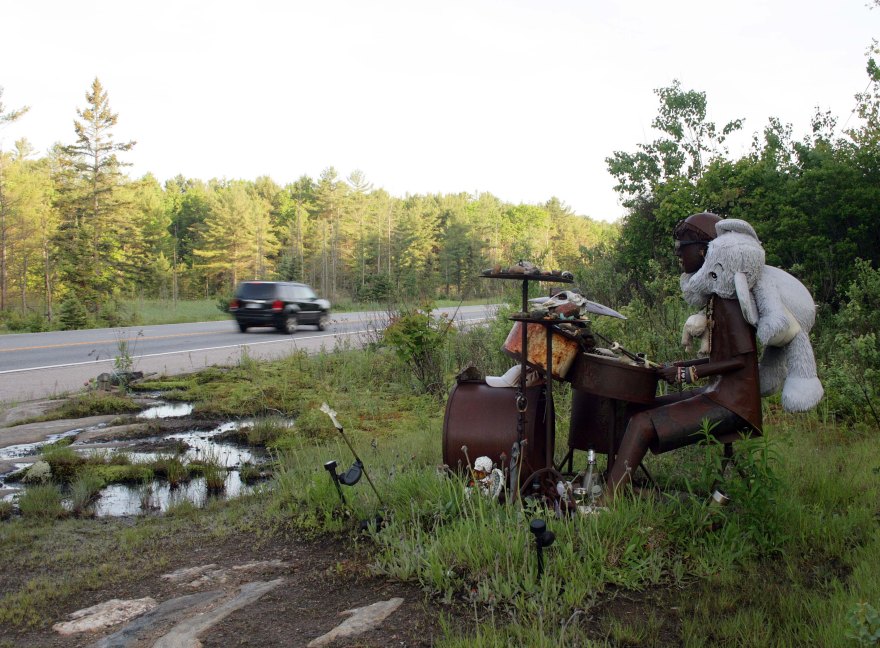
The Cole Howard Memorial Sculpture is a roadside landmark that’s both beautiful and deeply moving.

We had started our day early, and the road was relatively quiet when we got close to the sculpture. Taking advantage of the slow traffic, we pulled over, and I was able to hop out and cross the highway to photograph this beautiful and artistic memorial.

Though I didn’t know Howard personally, this is a memorial I always look out for when I’m travelling down Highway 69. It’s my small way of saying ‘hello’ to Cole, a gesture of remembrance for a young life lost too soon.

Cole Howard was only 19 years old when he was killed in a car crash on January 3, 2012.1 He was a passenger in a vehicle that crashed due to icy road conditions.1 The accident also claimed the lives of Jessica Chamberland, Alyssa McKeown, and Torry McIntyre.1

It’s important to also remember the others who tragically lost their lives in the same accident. Howard, Chamberland, McKeown and McIntyre were all taken far too soon. Each of them left a lasting impact on their families, friends, and community. The grief of such a loss has reverberated through the lives of all who knew them, and their legacies are now forever intertwined.

In the wake of this tragic accident, Howards family wanted to create a lasting tribute that would not only honour Cole’s life but also reflect his love of music. The result is a life-sized sculpture, crafted from steel and placed on the side of the highway, at the site of the accident.

Sculptor and welder, Laval Bouchard created the image of Howard with remarkable accuracy.1 He is depicted sitting behind his drums, barefoot, wearing a backward hat—just as he often did in life. Howard had been the drummer for the local metal band Sanctuaries, and his sculpture even features him wearing one of their band shirts.1

The memorial sculpture was installed at the crash site the day after what would have been Howard’s 22nd birthday, in 2014.1 For his family, it must have been a deeply emotional moment—transforming a place of tragedy into one of remembrance. Unlike many who have a traditional grave marker in a cemetery, Howard was cremated, and his ashes were not buried in one place. Some were spread at Abbey Road in London, England—an iconic location for music lovers.2 The rest of his ashes remain in a drum-style urn in his family’s home.2

Without a conventional grave site to visit, this roadside memorial serves as a place where friends, family, and even strangers can stop to pay their respects and remember Cole. In a way, it acts as both his monument and gathering place for those who continue to hold him in their hearts.

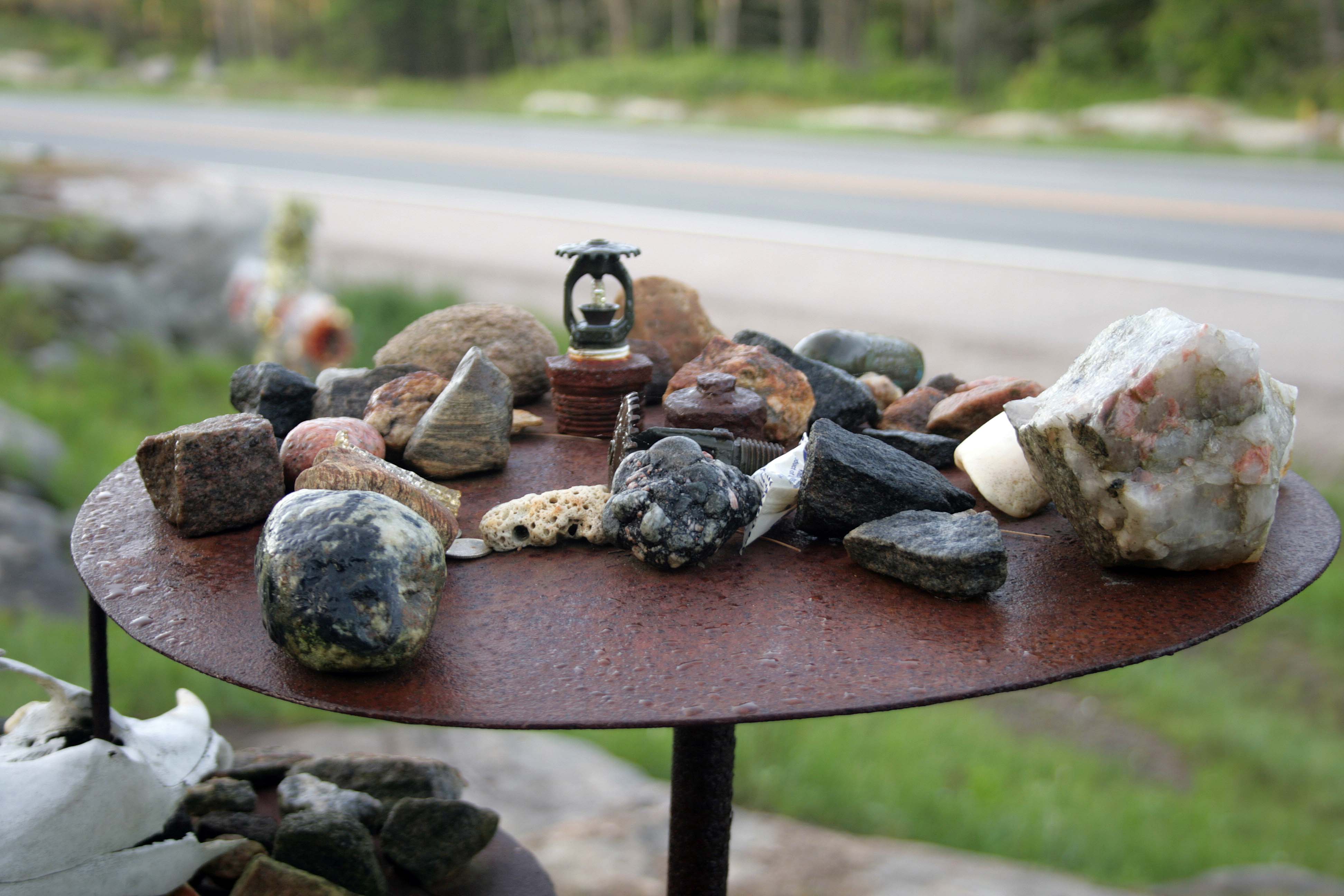
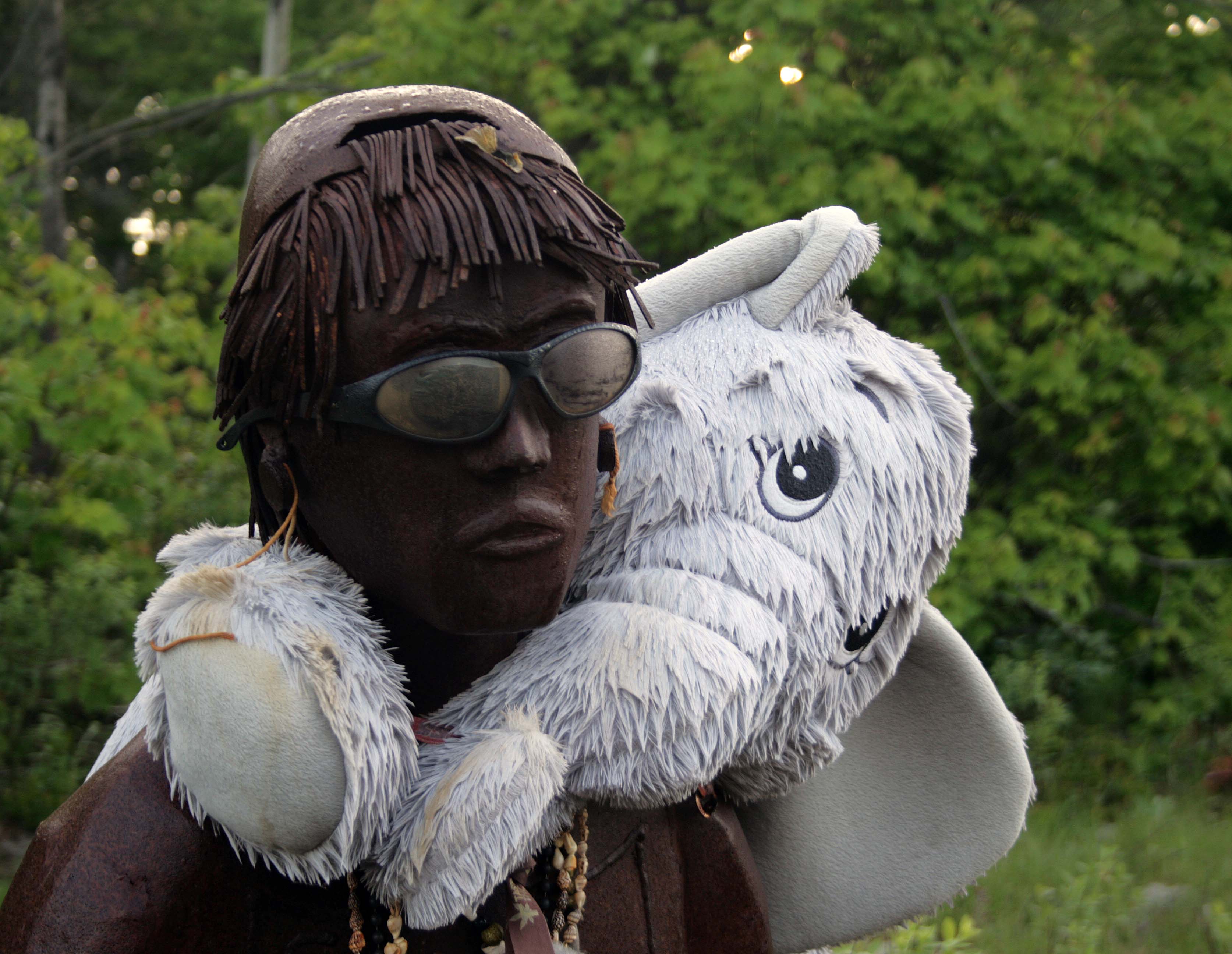
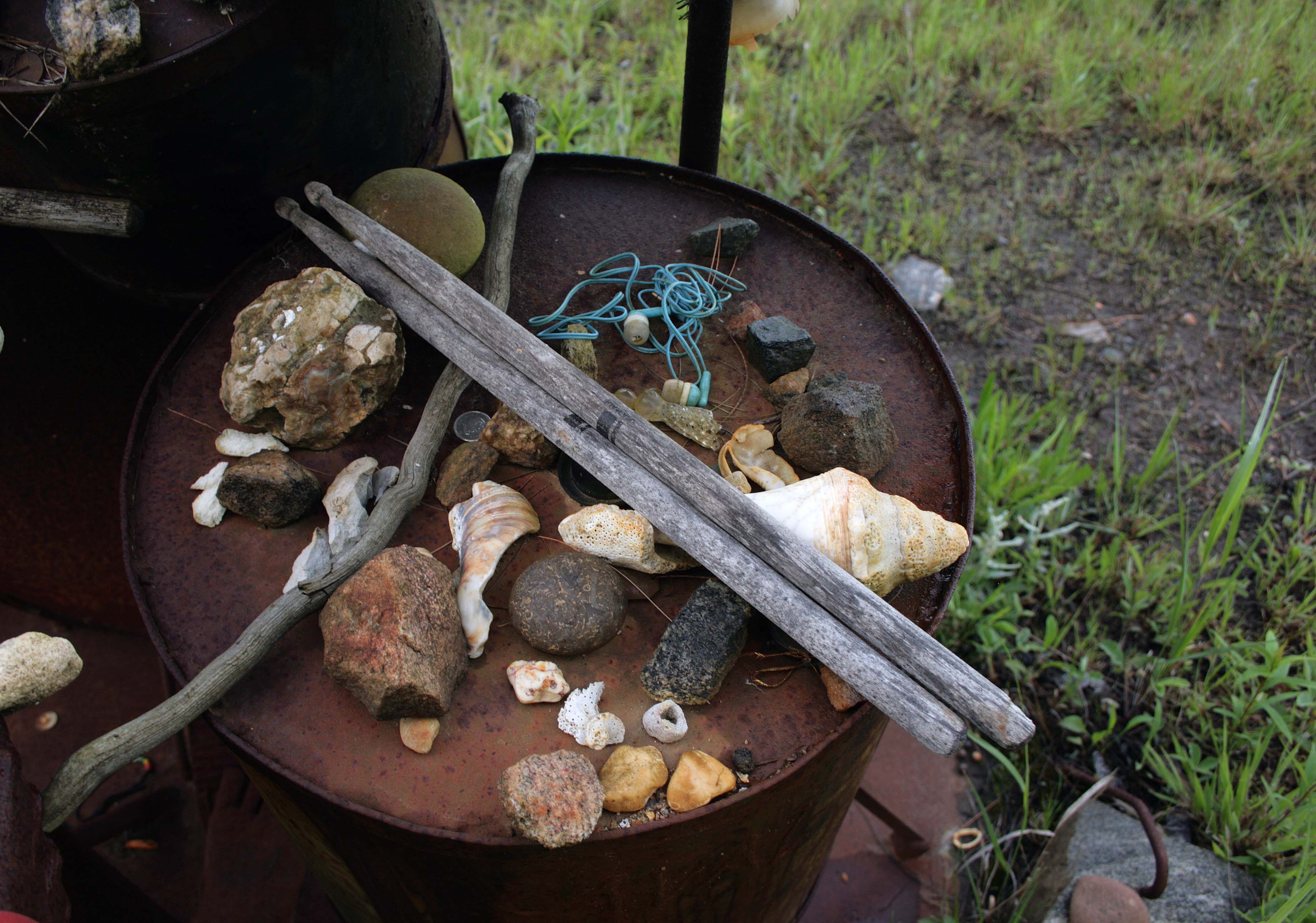
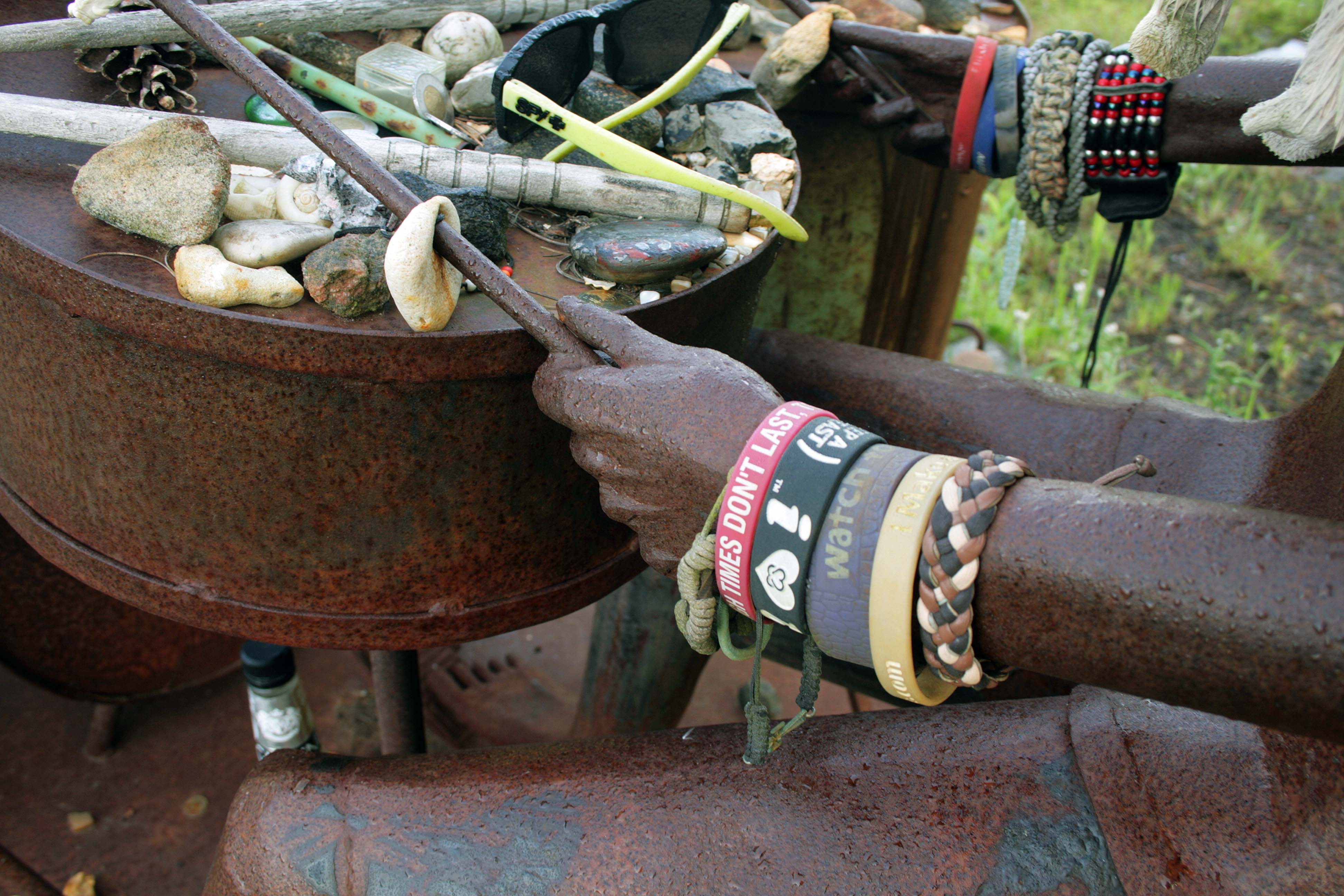
When I visited, the sculpture was wearing a pair of sunglasses, and its shoulders were draped with a large stuffed elephant. There were so many grave goods left around the memorial, including stones, beer cans, and even a couple of drumsticks. It was a moving reminder of just how much Howard is still loved.

What I love about roadside memorials like this is that they’re not just a spot for remembrance—they’re a statement. They’re a way for families to make sure their loved one is never forgotten, even as time goes on. For Howard’s family, the sculpture was a way to turn their grief into something positive, something that would last. It’s clear from the visitors and mementos left at the sculpture that the community feels the same way. Even years after the accident, the memorial continues to be a place for people to honour him.2

The Cole Howard Memorial isn’t just a tribute—it invites you to pause and reflect on life, loss, and the power of music. Roadside memorials like this also serve as powerful reminders of the dangers of the road and raise awareness about the importance of road safety.

Have you ever passed by a roadside memorial that made you stop and reflect? I’d love to hear your experiences in the comments.

Thanks for reading!


References:

  1. Sudbury family honours beloved son | Sudbury Star
  2. Remembering Cole Howard | Sudbury.com

Cemetery Stories: House of Industry & Refuge Cemetery

Last Summer, my mother and I took a trip to Wellington County, thanks to a surprise road trip from Guess Where Trips. You might remember the blog post I wrote about the whole experience last year.

One of the most memorable stops on our adventure was the Wellington County Museum and Archives, a place that doesn’t just preserve history, but really brings it to life. Nestled between the charming towns of Fergus and Elora, this museum isn’t just a collection of artifacts—it’s a storyteller, sharing the life stories of the people who once walked its halls.

But the museum wasn’t the only thing that left an impact on us. Today, I want to share a bit more about our experience—both visiting the museum, and the cemetery were some of the House of Industry and Refuge residents were laid to rest.

Wellington County Museum and Archives

The Wellington County Museum and Archives is housed in a building with a fascinating and, at times heartbreaking history.

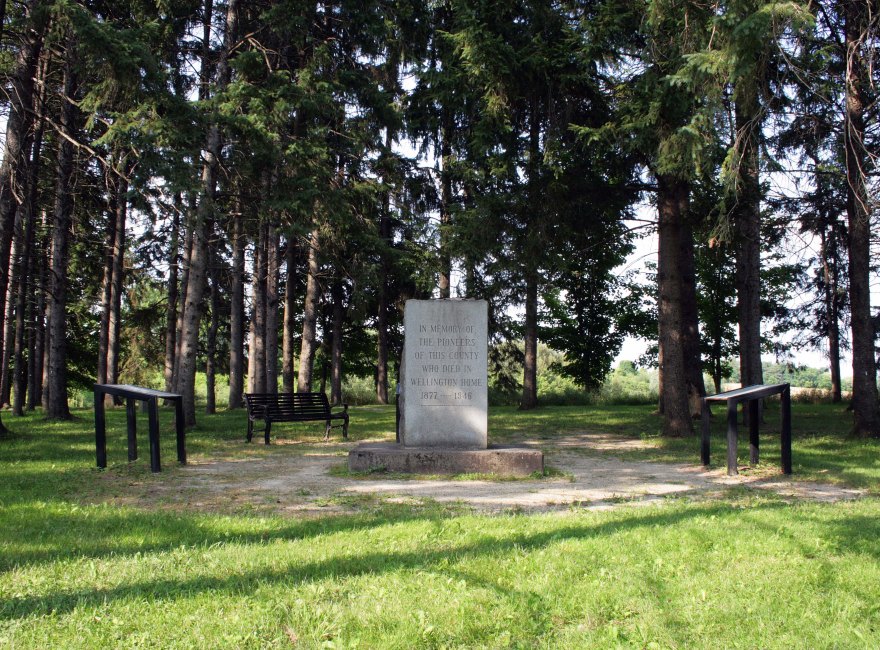
Designated as a National Historic Site, this building holds the title of the oldest remaining rural House of Industry and Refuge in Canada.1 Established in 1877, it originally provided a home for the poor, homeless, and destitute of Wellington County. Over the years, approximately 1,400 men, women, and children sought refuge within these walls.1

Today, the museum has taken on a whole new role. Instead of providing shelter, it now shares knowledge, offering programs, exhibits, and resources that dive into local history, art, and culture.2

And the grounds? Well, they have their own stories to tell.

When my mother and I visited, we started exploring the top floor and made our way down. Although there were many exhibits at the time, including one about 19th-century fashion, I was most drawn to the history of the Poor House itself and the people who had lived there.

Wellington County Poor House

Back in the 19th century, poverty was seen as a moral failing rather than an unfortunate circumstance. That’s where places like the Wellington County House of Industry and Refuge came in.3 Also known as the Poor House, it was one of several institutions across Ontario designed to provide shelter and work for those in need. Life here wasn’t easy, but the goal was to make the Poor House as self-sufficient as possible.3

The facility operated as an industrial farm, with thirty acres of land used to grow oats, turnips, wheat, and even apples from a 100-tree orchard.3 Livestock provided eggs, meat, and fresh butter, while any surplus goods were sold in town to help cover the cost of necessities like sugar, coffee, and bread.3

Life in the Poor House was structured and demanding. Residents—often referred to as “inmates”—had to work to earn their keep.3 The strict rules and expectations reflected the era’s attitudes toward poverty and self-sufficiency. It wasn’t until 1947 when the facility was renamed the Wellington County Home for the Aged, that things started to shift.3 The term “inmate” was finally dropped and replaced with “resident”—a small but important change.3

The Home remained in operation until 1971 when its last residents were moved to Wellington Terrace, a new senior home in Elora.3 Just a few years later, in 1975, the building reopened as the Wellington County Museum.3

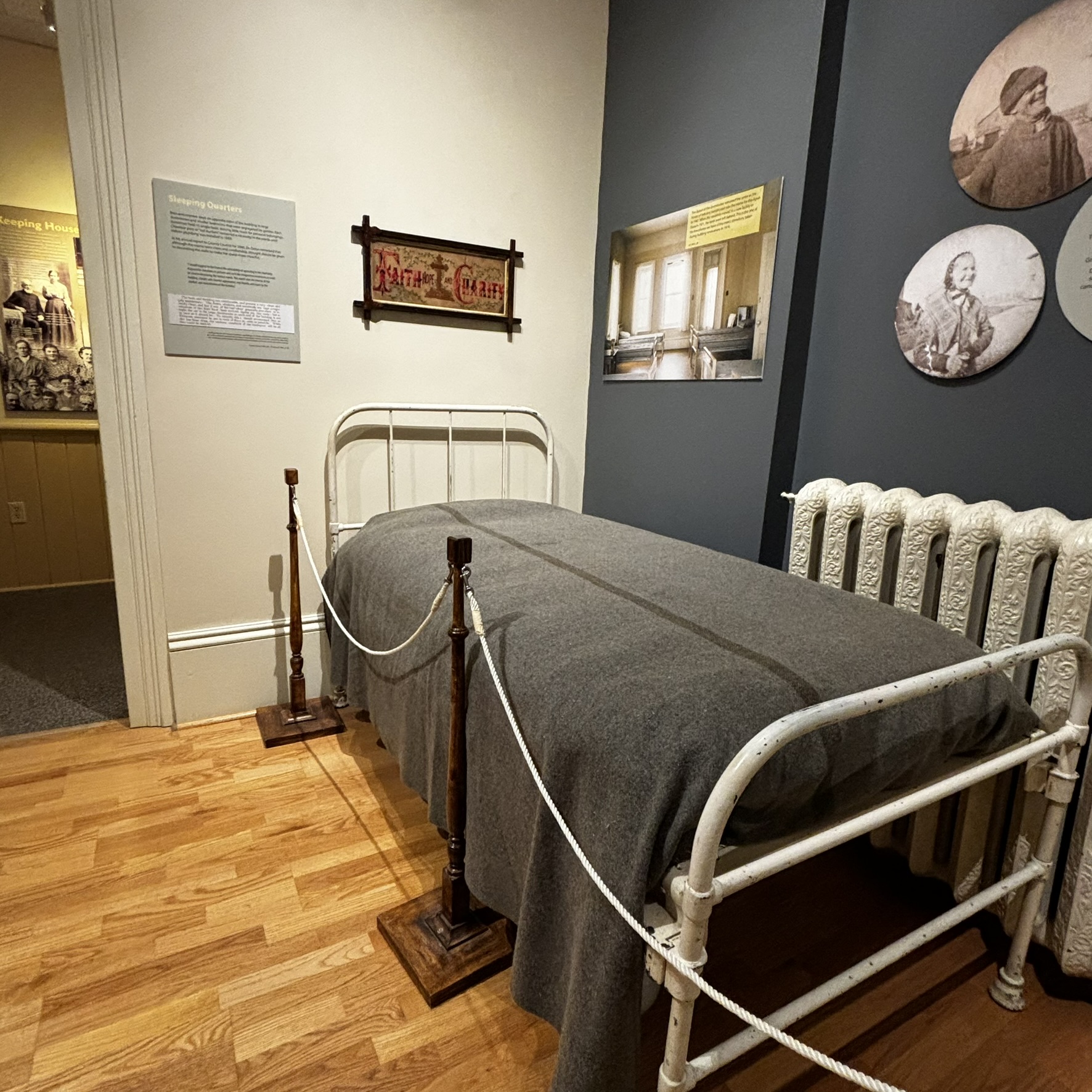
Walking through the museum, I couldn’t help but feel the weight of its history. Panels line the walls, sharing stories of past residents, and exhibits display artifacts that once belonged to them. Although the items were simple—a worn bed, an old suitcase—they evoked so much emotion. These weren’t just objects, they were pieces of someone’s life.

Considering the hardships experienced by its former residents, it’s no surprise that some people believe the museum is haunted. Visitors and staff alike have reported seeing shadowy figures, hearing unexplained footsteps, and even witnessing elevators moving on their own.4

The most well-known spirit is said to be that of a former resident named Anna. People have claimed to hear women arguing in empty rooms, or furniture being rearranged.4 Is it just an old building settling? Or is history lingering in more ways than one?

House of Industry and Refuge Cemetery

When the museum closed for the day, my mother and I made our way to the cemetery—a quiet but powerful reminder of the lives that once filled the Poor House.

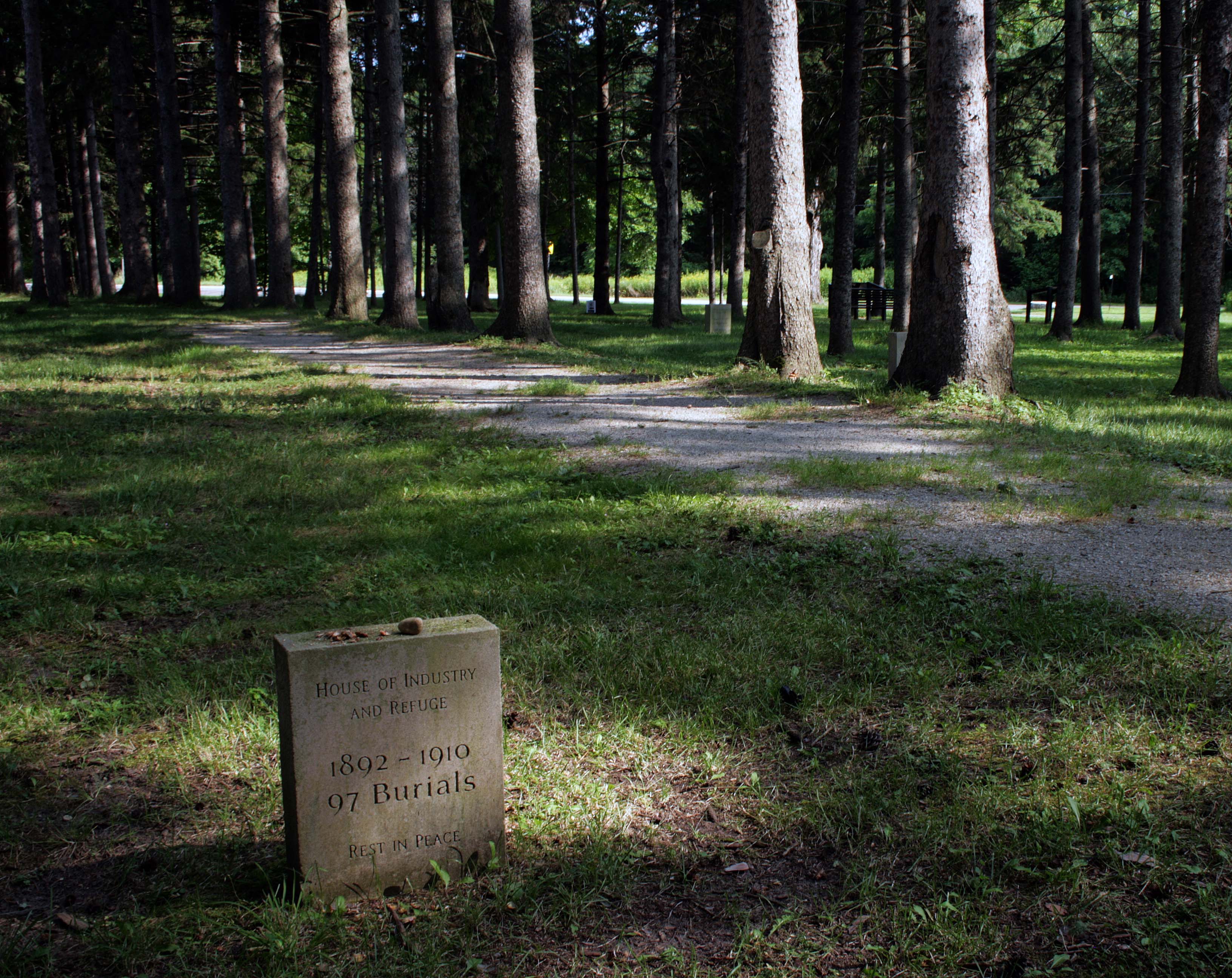
A short drive took us to a small parking lot near the cemetery entrance. From there, a scenic trail led to a repurposed train bridge that spans the highway. It was a beautiful day, and the surrounding forest was lush and green. After crossing the bridge, we descended a staircase with informational panels that peeked out from behind the foliage. The staircase led us down to a clearing, where tall trees provided shade over a few gravestones.

The cemetery is the final resting place for 271 men, women, and children who had no family to claim them.5 Originally, the graves were marked with simple wooden crosses, but over time, those markers deteriorated and disappeared. Today, small gravestones mark the sections of the cemetery, and a larger central monument lists the names of those buried here.

James Burk was the first to be buried in the cemetery on December 21, 1877.5 Often only the gravedigger, clergyman, and undertaker were present for the burials.5 The oldest person to be buried in the cemetery was 106 years old, while the youngest was under a year old.5 The last burial to take place here was for Samuel Nichols who passed away on December 14, 1946.5

Standing in that clearing, surrounded by the names of those who had lived and died here was quite moving. The stories of some of these individuals might have been lost to time, but the community has worked hard to ensure that they are remembered.

Visiting the Wellington County Museum and the House of Industry and Refuge Cemetery was like stepping back in time. It gave me a glimpse into a world where life was unimaginably hard, but also where people persevered against the odds.

The transformation of the Poor House into a museum and cultural hub is a great example of how we can honour the past while also moving forward. History isn’t always easy to confront, but it’s essential to remember—because it shapes who we are today.

Have you ever visited a historic site that really stuck with you? I’d love to hear your thoughts in the comments. If you’re ever in Wellington County, I highly recommend stopping by this museum and its cemetery. It’s a place that truly brings history to life.

Thanks for reading!


References:

  1. About Us | Wellington County Museum and Archives
  2. Plan a Visit | Wellington County Museum and Archives
  3. The Poor House Story | Wellington County Museum and Archives
  4. Historic Haunts Tour | Guess Where Trips
  5. House of Industry & Refuge Cemetery | Find a Grave

A Collection of Chalices

One of my favorite things about wandering through cemeteries is discovering unique gravestone symbols. Over the years, I have noticed that certain motifs pop up again and again. It’s so interesting to see how these symbols can change depending on where you are.

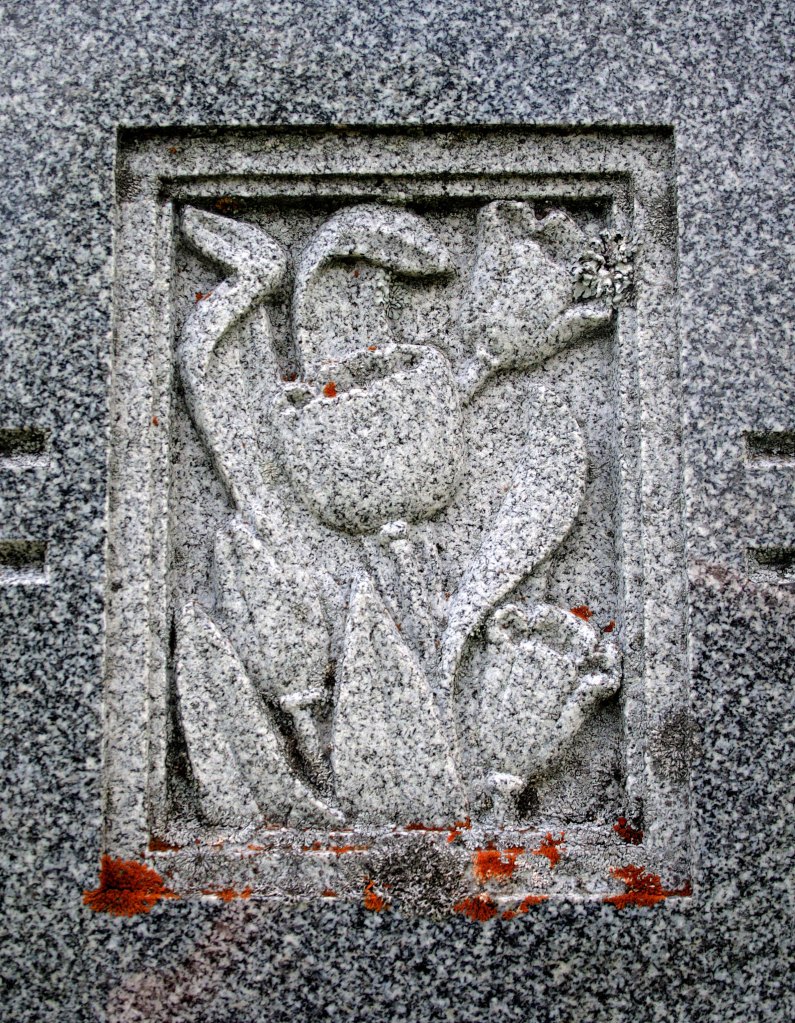
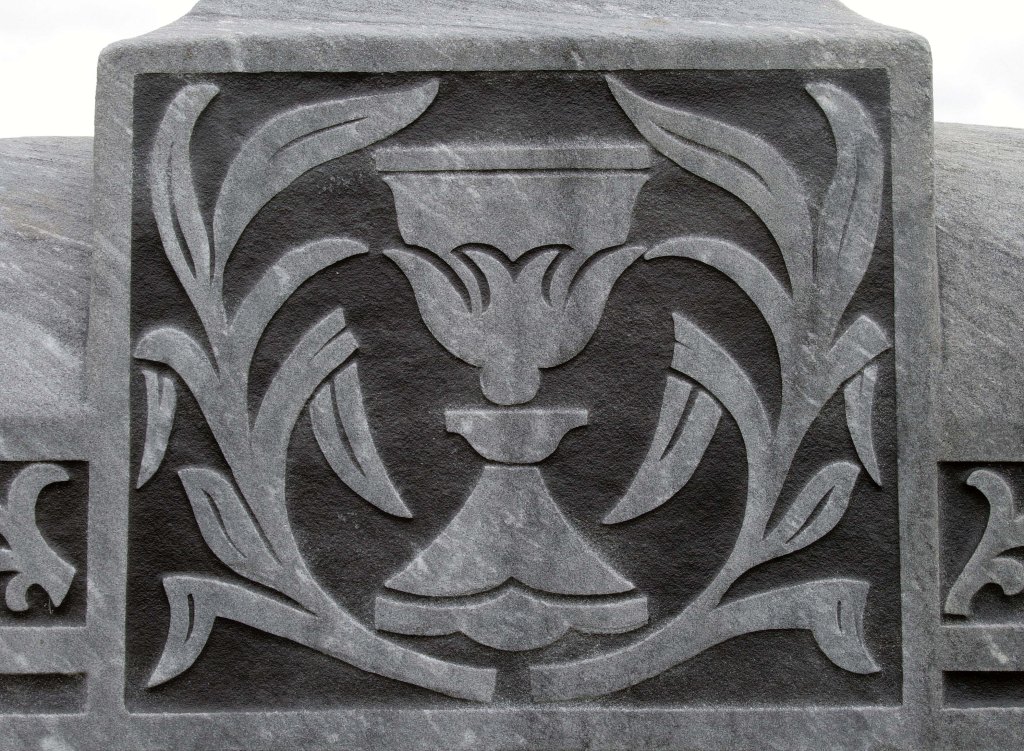
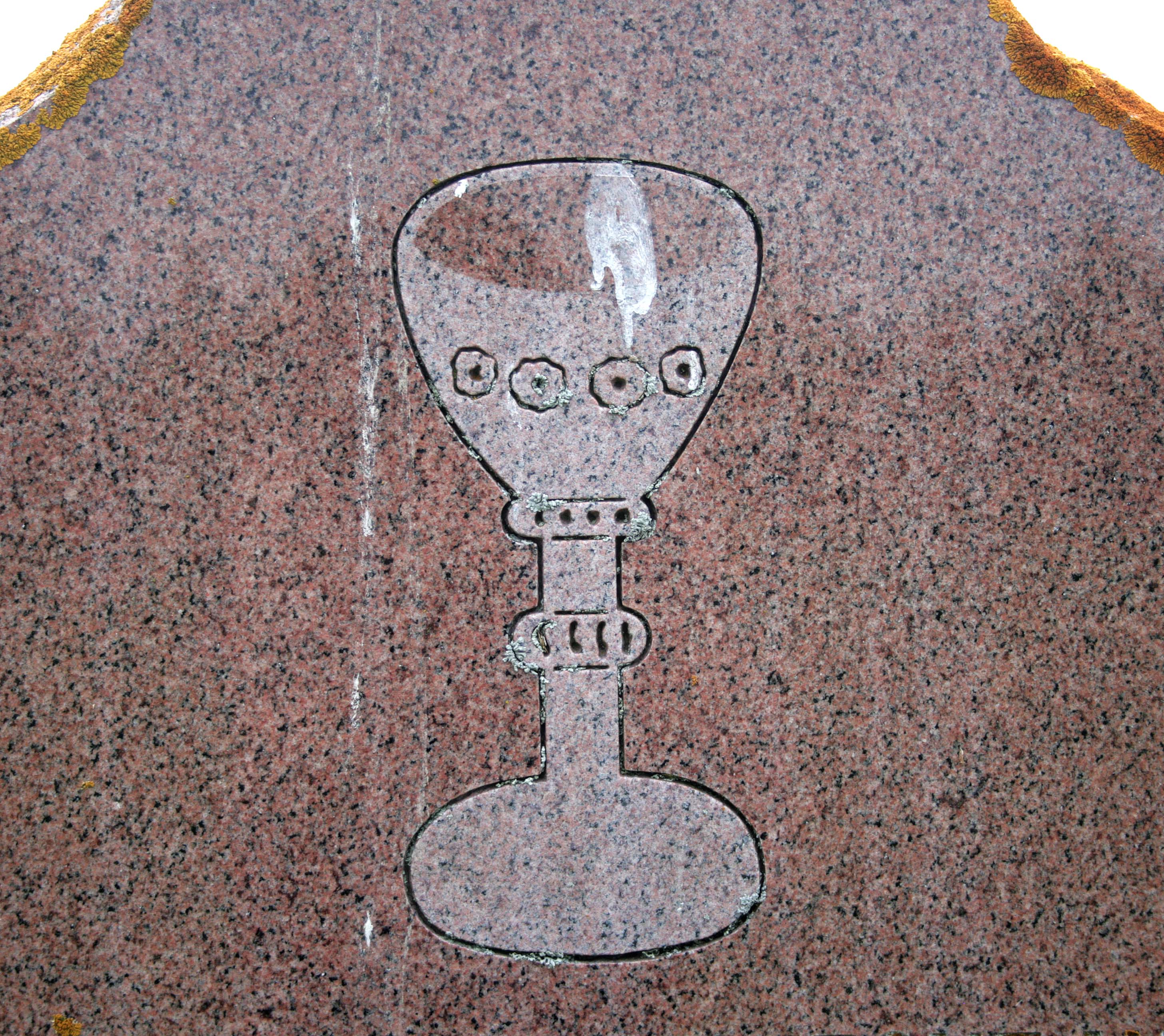
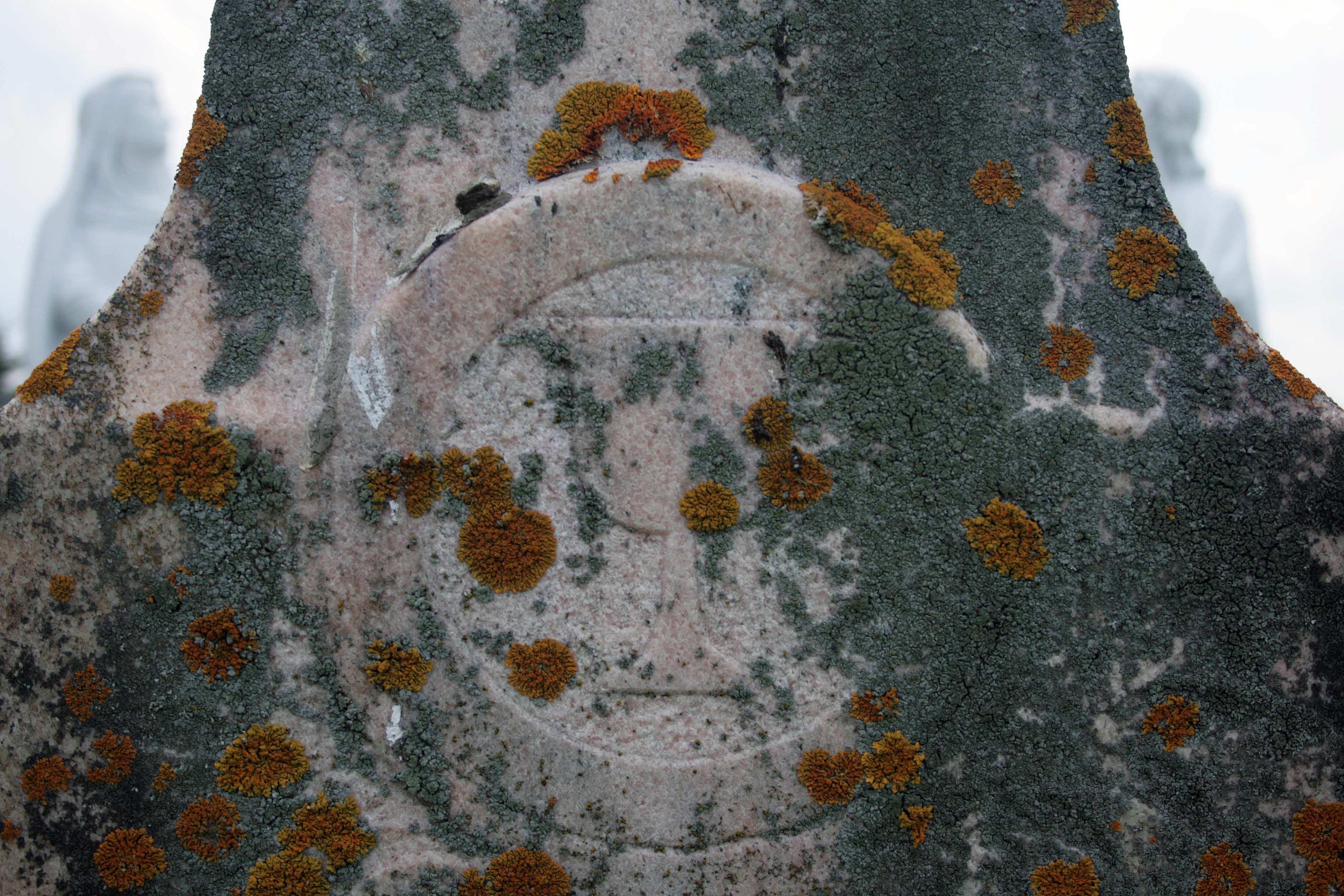
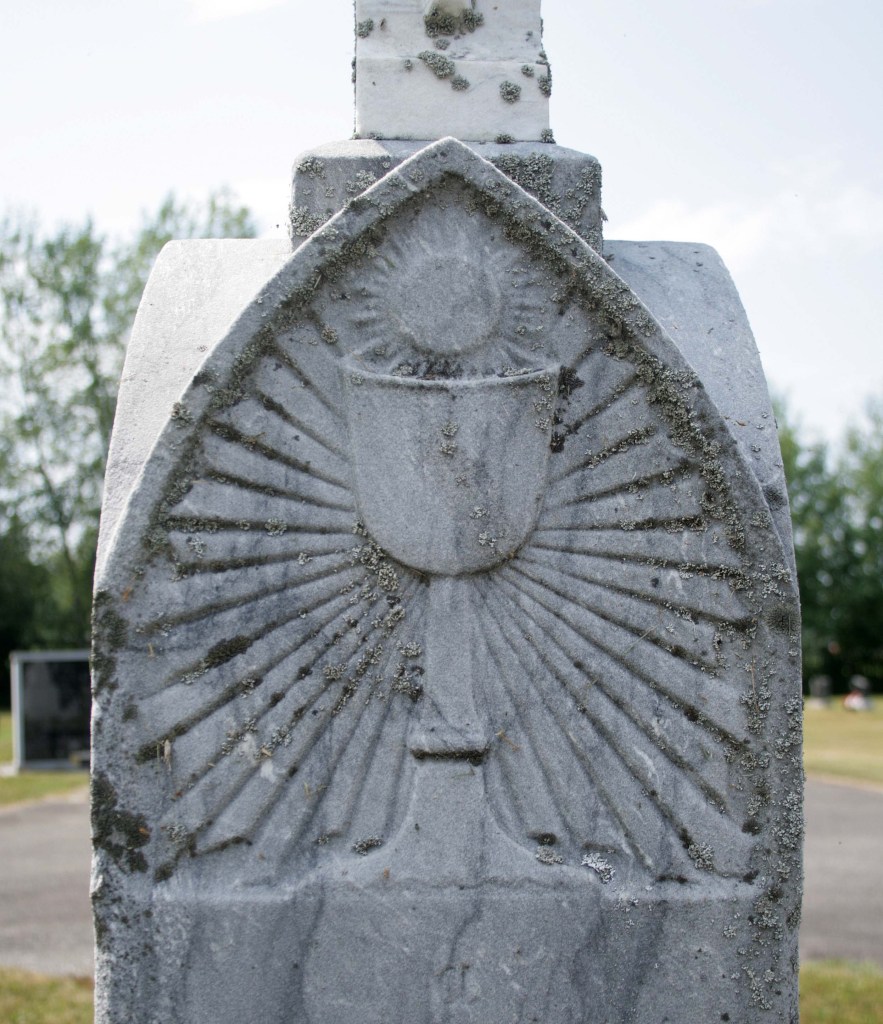
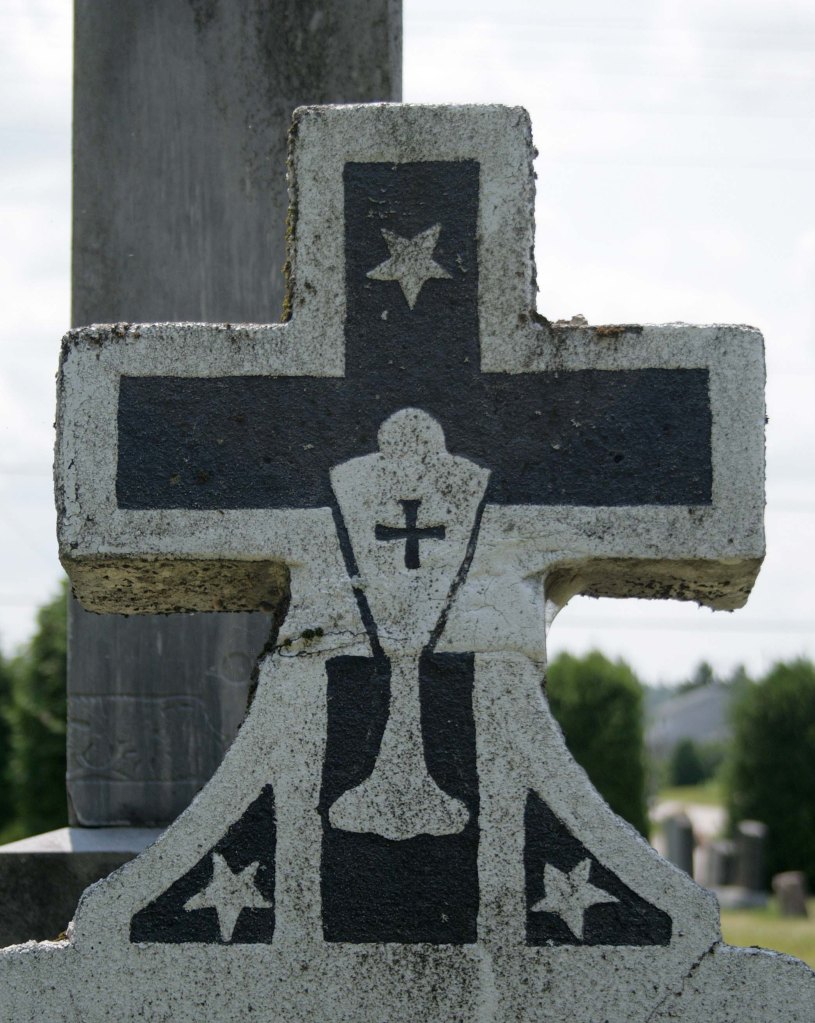
Today, I want to take a closer look at the chalice as a gravestone symbol—what it represents and how it’s been depicted in different places. The variations I have found over the years show just how much it can change depending on location. It’s interesting to note that the chalice is a very common symbol in the Abitibi-Temiscamingue region of Quebec.

The chalice is a Christian symbol, that is commonly depicted as a cup with a stem, similar to a wine glass. It is thought to symbolize Christianity’s holy sacrament and the act of communion. It can also represent mankind’s deep yearning to be filled with Christ’s divine teachings and grace.1

Sometimes the chalice is depicted with a circle above it, symbolizing the consecrated Eucharist, which represents the Catholic rite of Holy Communion. This combination of symbols is often found on the gravestones of priests.2

Have you come across a chalice symbol on your cemetery walks? Or noticed any other symbols that pop up often in your local cemeteries? I’d love to hear about it in the comments.

Thanks for reading!


References:

  1. Understanding Cemetery Symbols: A Field Guide for Historic Graveyards by Tui Snider
  2. Headstone Symbols: Understanding Cemetery Symbolism | Everlife Memorials

Stone Stories: The Youngest Member of the Group of Seven
After visiting both of Tom Thomson’s graves, I was inspired to visit the graves of all the members of the Group of Seven.
As a graphic designer, I have a little background in art history and I have long admired their work. Standing at Thomson’s first resting place at Canoe Lake sparked a desire to pay my respects to the others who also helped shape Canadian art.

So today on the blog, I want to share my visit to the grave of Franklin Carmichael in Orillia, Ontario.

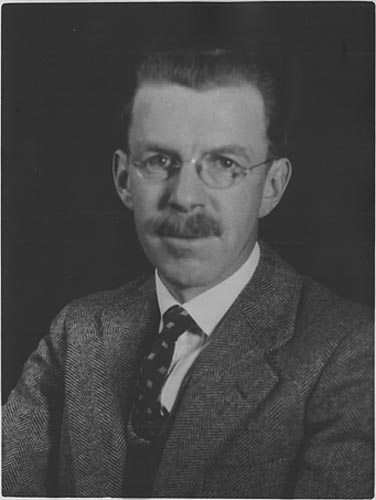
Franklin Carmichael

Born in 1890 in Orillia, Franklin Carmichael showed early signs of artistic talent, which his mother quickly nurtured by enrolling him in music and art lessons.1 In his teenage years, he worked in his father’s carriage-making shop, where he honed his skills as a designer, striper, and painter.1 By 1910, Carmichael moved to Toronto to attend the Ontario College of Art, where he studied under renowned instructors.1

In April of 1920, Carmichael found his place within the emerging Group of Seven, joining artists like A.Y. Jackson, Lawren Harris, and J.E.H. MacDonald in their mission to capture Canada’s untamed wilderness.1 Despite being the youngest member of the group, Carmichael’s work, particularly his depictions of Ontario’s northern landscapes, were just as striking and bold as those of his peers.1 His travels to Lake Superior and the La Cloche Mountains were the backdrop for some of his most celebrated works, where watercolors became the defining feature of his style.1
Carmichael would go on to teach at the Ontario College of Art and later founded the Canadian Group of Painters, after the Group of Seven disbanded in 1933.1
Orillia Museum of Art & History

The Orillia Museum of Art & History sits in the heart of downtown Orillia and is housed in the historic Sir Samuel Steele Memorial Building. My mother and I parked the car on a side street and slowly walked along the sidewalk to the museum as we took in the views of the downtown core. It was a beautiful fall day when we visited, so the streets were bustling with activity.

We began our museum visit on the top floor and slowly made our way back down, through the myriad of exhibits. The museum’s collection intertwines local history with artistic expression.

When we visited, the Teachers and Their Enduring Impact—The Legacy of Jose Salas exhibit had just opened. This exhibit featured artwork by Jose Salas, an art teacher at the local college, as well as artwork from of his students.2 It was a lovely exhibit that showcased the profound influence a teacher can have on their student’s creative journeys.

While viewing this exhibit, I couldn’t help but think about Carmichael and what kind of influence he had on his students when he taught at the Ontario College of Art. Having taken quite a few art classes myself, I wondered what it may have been like to be taught by one of the famous Group of Seven.

The museum also has a permanent exhibit that features some of the more prominent figures from Orilla, like Gordon Lightfoot, Stephen Leacock, and of course—Franklin Carmichael.

After taking in everything the museum had to offer, it was time to make our way to the cemetery to pay our respects.

St. Andrews and St. James Cemetery

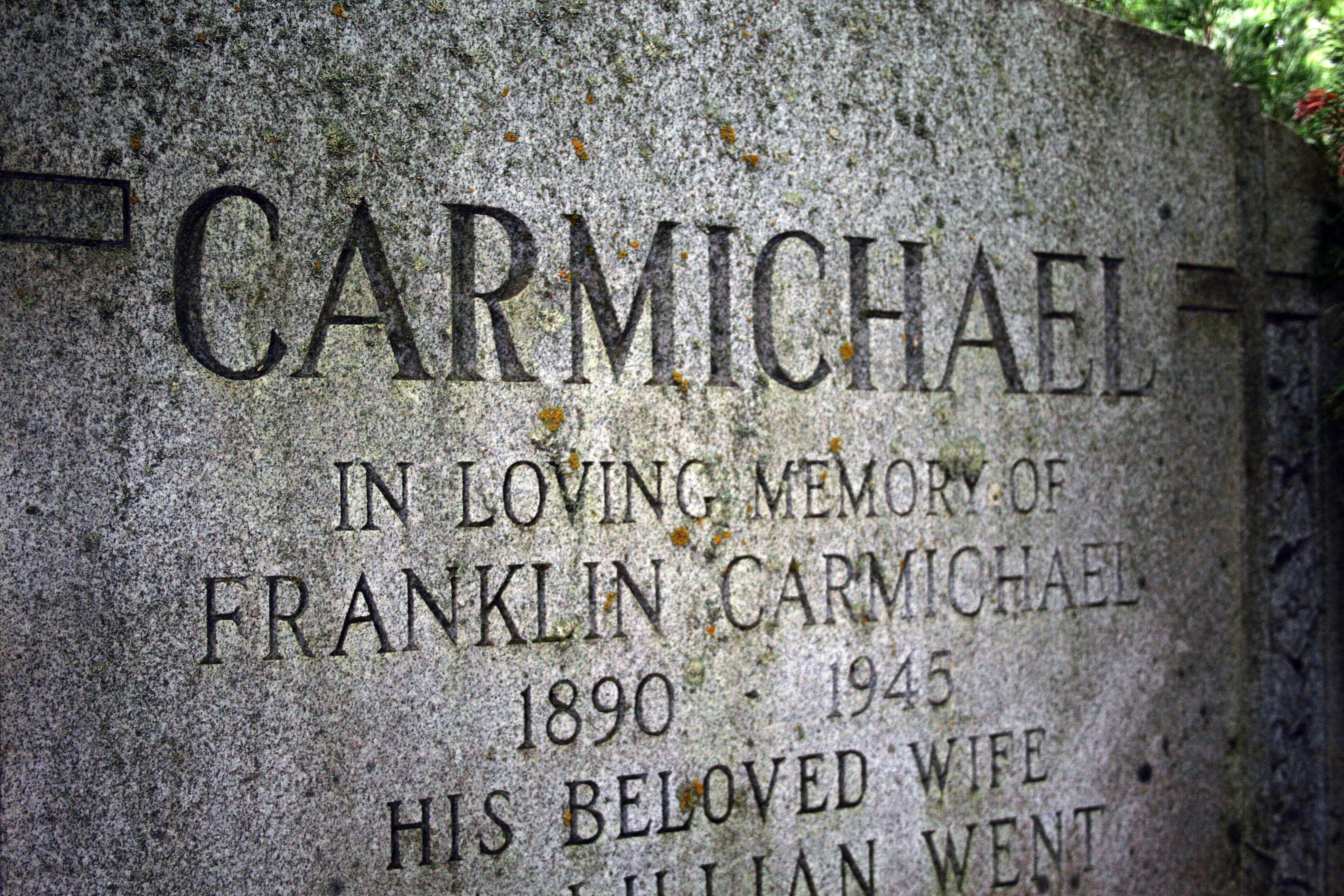
Franklin Carmicheal passed away in Toronto, on October 24, 1945, following a regular day of teaching classes. As he began his drive home, he suffered a heart attack in his car; he was only 55 years old.3

Carmichael is laid to rest in St. Andrews and St. James Cemetery in his hometown of Orilla. His final resting place is marked with an elegant grey granite stone, that is engraved with ivy and crosses. He is laid next to his beloved wife, Ada Lillian Went Carmichael, who passed away in 1964.

Buried alongside Carmichael in the family plot, are his daughter Mary Franklin Carmichael Mastin, and her husband. Mary dedicated much of her life to preserving her famous father’s legacy.4 She was also a writer and journalist, writing about nature and conservation.4 She passed away in 2012, at the age of 91 at St. Gabriel’s Villa, in Chelmsford, Ontario.4

In contrast to the busy streets, the cemetery was very quiet. My mother and I were the only visitors. As I stood at Carmichael’s graveside, I reflected on how his contributions to the art world have influenced and inspired countless generations of Canadian artists. I was a little surprised, though, to find that no flowers or grave goods had been left at his grave, something I had expected for an artist of his caliber. It made me think about how a person’s life story can sometimes be quietly forgotten, and the importance of remembrance.

I really enjoyed my visit to Orillia. Exploring Franklin Carmichael’s legacy was a unique opportunity to reflect on the power of art and how it connects us to the land and each other. From the Orillia Museum of Art & History to his gravesite, it was a lovely trip that gave me a deeper appreciation for Carmichael’s work and the lasting impact he had on Canadian art.

Thanks for reading!


References:

  1. Franklin Carmichael | The Group of Seven
  2. Teachers and Their Enduring Impact—The Legacy of Jose Salas | Orillia Museum of Art & History
  3. Franklin Carmichael | Roberts Gallery
  4. Mary Franklin Carmichael Mastin | Find a Grave

Stone Stories: The Voice of the Great Lakes

“They might have split up or they might have capsized
They may have broke deep and took water
And all that remains is the faces and the names
Of the wives and the sons and the daughters”1

These lyrics from Gordon Lightfoot’s iconic song The Wreck of the Edmund Fitzgerald have long been etched in the minds of listeners, who like me, have found themselves enthralled by Lightfoot’s masterful storytelling.

This song, along with many of his other hits, like If You Could Read My Mind and Sundown, have created the soundtrack for countless Canadians, evoking the beauty, melancholy, and vastness of our Canadian landscape.

Today on the blog, I want to share my experience from this past September. I had the opportunity to visit the Gordon Lightfoot Sculpture Park and his final resting place in his hometown of Orillia, Ontario.

Gordon Lightfoot

Gordon Meredith Lightfoot was born on November 17, 19382 in the small town of Orillia, the gateway to the Muskokas.3 From an early age, Lightfoot showed a natural talent for music, learning the piano, teaching himself to play drums, and later picking up the guitar.2 In 1957, Lightfoot left Canada, going to Los Angeles to study jazz orchestration at Westlake College of Music.2 After returning to Canada in the late 1950s, he began to sing folk songs and play guitar around Toronto.2

It didn’t take long for Lightfoot to make his mark on the Canadian music scene. His folk-infused ballads quickly captured the essence of the Canadian spirit. Throughout his career, Lightfoot released over 20 albums and was known for his blend of folk, country, and soft rock—a style uniquely his.2

Lightfoot received numerous prestigious awards throughout his music career, including multiple Juno awards, and was inducted into the Canadian Music Hall of Fame in 1986.2 He also earned honours like the Order of Canada, Order of Ontario, and a Governor General’s Performing Arts Awards.2 Lightfoot was recognized in the Canadian Songwriters Hall of Fame and received a Lifetime Achievement award from SOCAN and the Toronto Music Awards.2

One of my favorite Lightfoot songs is based on a real-life event, the tragic sinking of the S.S. Edmund Fitzgerald. The Wreck of the Edmund Fitzgerald, in my opinion, is one of his most famous and most haunting ballads.

The song is a tribute to all the lives lost in the shipwreck, on November 10, 1975. It’s estimated that between 7:20 and 7:30 p.m. on that fateful day, the ship vanished and sank with 29 men onboard.4

Gordon Lightfoot Sculpture Park

I knew my visit to Orillia would not be complete without a visit to the Gordon Lightfoot Sculpture Park and walking trail. We visited in late September, and the trees were just beginning to change. A perfect day for a walk.

The sculpture park is a beautiful and artistic tribute to Lightfoot’s music and legacy, celebrating both his achievements and his connection to the area. The park’s centerpiece is a striking, larger-than-life bronze sculpture of Lightfoot, sitting cross-legged with his guitar in hand. It captures him in his element, mid-song as his music comes alive around him, depicted on maple leaves that encircle him.
I took some time to reflect while standing before the statue. The park is not just a collection of art pieces, but a reflection of Lightfoot’s connection to the land, his music, and the people who grew up listening to his songs.

My mother and I were not the only visitors to the park that day. There were throngs of people walking the trails, many with large cameras in hand. I noticed they all took some time to admire the beautiful sculpture work and reflect on Lightfoot’s life and work as well.

I wondered if Lightfoot himself had known about this sculpture park. I was pleasantly surprised to see a large plaque that showed Lightfoot smiling as he stood beside his younger, bronze self. He was in attendance for the unveiling in 2015, and said humbly “I’m honoured, much more so than any of the honours I’ve received up to this point in time.”5

St. Andrews and St. James Cemetery

After walking the entirety of the walking trail loop, my mother and I made our way back to the car. We decided since the area was so nice that we would have our picnic lunch in the sculpture park, before heading to our next destination—the cemetery.

It was a short drive from the park to St. Andrews and St. James Cemetery. The cemetery was quiet and serene, offering beautiful views of the surrounding forest, although we were not the only living souls visiting the cemetery that day. There was an older couple who were also meandering through the cemetery paths.

Gordon Lightfoot passed away of natural causes, in a hospital in Toronto, at the age of 84.6 He was laid to rest in St. Andrews and St. James Cemetery in May of 2023, beside his mother and father. His mother, Jessie Vick Trill Lightfoot passed away in 1998 at the age of 88.7 His father, Gordon Meredith Lightfoot Sr. passed away in 1974 at the age of 63.8

The gravestone is simple, yet elegant—a testament to the quiet humility Lightfoot always embodied, despite his fame. The inscription simply reads “Together Forever”.

Visiting Gordon Lightfoot’s grave and walking the trails at the Sculpture Park in Orillia was a beautiful and memorable experience. I couldn’t help but think about how his music had been woven into the fabric of Canada’s history. More than just melodies, they’re stories that often capture the essence of the Canadian experience.

There is something special about visiting the final resting place of someone whose music has shaped the soundtrack of a country.

What is your favorite Gordon Lightfoot song?

Thanks for reading!


References:

  1. The Wreck of the Edmund Fitzgerald by Gordon Lightfoot | S.S. Edmund Fitzgerald Online
  2. Gordon Lightfoot | The Canadian Encyclopedia
  3. Location | City of Orillia
  4. The Tragedy | S.S. Edmund Fitzgerald Online
  5. Gordon Lightfoot sculpture unveiled in Orillia | Orillia
  6. Canadian singer-songwriter Gordon Lightfoot dead at 84 | NBC News
  7. Jessie Vick Trill Lightfoot | Find a Grave
  8. Gordon Meredith Lightfoot Sr. | Find a Grave

Cemetery Book Review: Old Canadian Cemeteries

I have spoken before about how there are very few books written about Canadian cemeteries. That’s why I jump at the chance to pick up new books on the subject. This month’s cemetery book review is a little different. This is a book that I have had sitting on my bookshelf, well, for years. I finally got around to reading it this past summer and I hate that I waited so long!
 
Old Canadian Cemeteries: Places of Memory by Jane Irwin and John Visser is a beautiful exploration of Canada’s vast cemeteries and graveyards.
 
Here is the synopsis from Goodreads:
 
“Canada abounds in historical burial places. Once you begin noticing their presence, old cemeteries seem to be everywhere. But these important links to the past are in danger of disappearing forever. The expansion of cities and roadways reclaim valuable land, and inscriptions are worn away by weather and time. Older cemeteries may be important records of immigration, settlement, armed forces, epidemics, class, and religious schisms, and upward mobility of ethnic groups. In Old Canadian Cemeteries, Jane Irwin invites the reader on a visual tour of historic cemeteries across Canada, examining such diverse topics Old Canadian Cemeteries is a must for anyone interested in Canadian history.”

Old Canadian Cemeteries is a beautifully put-together book that takes you on a journey through Canada’s historic graveyards. The hardcover edition is rich with vibrant, full-color images that really bring the cemeteries and their stories to life. I especially enjoyed reading about the places I’ve visited myself—it was exciting to recognize familiar spots and learn more about their history.

This book also explores the meanings behind gravestone symbols found in Canadian cemeteries, as well as how burial practices have evolved over time. It’s so fascinating to think about how cemeteries are so much more than just places where people are laid to rest—they are records of history.

I really wish I had read this book years ago, as it has added so much depth to my understanding of Canadian cemetery history. If you’re at all curious about Canada’s past or the stories cemeteries hold, this book is definitely worth picking up.

Overall, Old Canadian Cemeteries is a must for anyone interested in the history and beauty of Canadian cemeteries. Whether you’re a seasoned taphophile or just curious, this book is sure to inspire a deeper appreciaiton for these important places.
 
Thanks for reading!


I am always on the hunt for cemetery-related book recommendations. If you are an author and have a cemetery-related book you would like me to review, please reach out at hello@chantallarochelle.ca. I would love to hear from you.

Why I Love Cemeteries: Exploring Beauty and History

I am someone who has always found beauty in unexpected places. I am also a very curious person and love to uncover hidden stories. That’s why I love sharing my experiences and discoveries with you!

As we step into a new year, I thought it would be a perfect time to reflect on something I am very passionate about—cemeteries.

Whether you’re new to the blog or a long-time reader, please indulge me as I share more about why I find these spaces so fascinating.

For many, cemeteries might seem somber or even eerie places, but to me, they are so much more. They are open-air art galleries and museums. Each gravestone, mausoleum, and statue tells a story. The craftsmanship is often breathtaking, but there is beauty in everything—from the intricately carved angels to the weathered inscriptions that are just barely legible.

Some of my most memorable moments have been spent marveling at unique gravestones and wondering about the lives they represent. I have often come across a heartbreaking epitaph that has made me stop suddenly, creating an instant connection to someone from another time.

Cemeteries are like windows into history, serving as archives etched in stone. They showcase how cultures, traditions, and art have evolved through the years. Walking through an older cemetery really does feel like stepping back in time. You might find names that were once very common, family plots that tell stories of love and loss, or monuments commemorating an important historical event.

Cemeteries aren’t just places for remembering the past—they can also be vibrant spaces for the living.

Many people visit cemeteries for activities like walking, jogging, or bird-watching. The diversity of wildlife, trees, and flowers can also offer a quiet retreat for nature lovers. As an animal lover myself, I treasure the unexpected encounters with wildlife that cemeteries can provide, like watching a red cardinal perched on a gravestone, or hearing the distant gobble of a wild turkey while wandering among the tombstones.

Above all, cemeteries are filled with stories. Stories of those who are laid to rest, but also the stories we create when we visit them. Whether it’s a quiet moment of reflection, an unexpected historical discovery, or unraveling a cemetery mystery, these spaces remind us of the beauty and complexity of life.

So, if you’ve never thought of cemeteries in this way, or you already have an appreciation for them, I hope this post inspires you to see them in a new light. If you are already a seasoned taphophile, I would love to hear about your favorite cemetery experiences in the comments.

Let’s celebrate these unique spaces together as we step into the new year!

Thanks for reading!

A Year in Review – 2024

2024 is coming to a close, and I can’t help but feel incredibly thankful for all the opportunities, experiences, and connections this year has brought. From cemetery explorations to unexpected shoutouts, 2024 has been a year of gratitude, growth, and gravestone recipes!

So today on the blog, I want to reflect on some highlights that have made this year so memorable. From shoutouts and collaborations, here’s a look back at why I consider 2024 an exciting year.

Cemetery Adventures

This year, I was able to visit 117 new cemeteries, and revisited 9, bringing my total for this year to 126. Every cemetery visit is always an adventure, uncovering hidden stories and beautiful gravestones. One cemetery visit that stands out this year, was visiting the gravesite of Elizabeth Barnes, the Witch of Plum Hollow. Exploring the folklore and history surrounding this incredible woman was eye-opening. These experiences continue to remind me of the powerful connection between memory and place.

Highlights

One of my favorite projects this year was contributing a guest post to The Haunted Walk’s blog, titled Beyond the Headstones: 5 Surprising Secrets to Discover in Cemeteries. Writing this post gave me the chance to share some of the hidden stories and unexpected gems you can uncover in these places of rest.

Another exciting milestone was being interviewed for American Cemetery and Cremation Magazine. Being featured in their June issue, and sharing my passion for cemeteries and the stories they hold was such a rewarding experience.

Trying out gravestone recipes and sharing these experiences has been an ongoing passion project for me, and this year, it gained attention far beyond what I could imagine.

My gravestone recipe posts were referenced in the Bust article Take it to the Grave: Rosie Grant Went Viral for Recreating Gravetsone Recipes. Although the article features fellow taphophile Rosie Grant’s amazing work, it also linked to my Peach Cobbler and Chicken Soup recipe posts, connecting people to my blog. Seeing my blog posts highlighted as part of a broader cultural conversation about food, memory, and legacy feels a bit surreal.

Other press highlights included Funeral Basics linking to my blog post about Connie’s Date & Nut Bread, and the New York Post directing readers to the cemetery recipes on my website. These moments are heartwarming reminders of how food can connect us to the past in meaningful ways.

The international attention has been just as exciting! An Italian article explored the growing trend of gravestone recipes and referenced my work, while the Czech publication Neviditelny Pes also referenced my work and highlighted the charm of these recipes carved in stone.

Maybe the most thrilling moment for me though, was receiving a shoutout from Rhett and Link on their Good Mythical Morning episode, We Try Cemetery Food. Watching them discuss my work was an unforgettable moment that brought a whole new audience to my blog, and I am very grateful for their support.

Collaborations

This year, I loved working with my friends over at the Bereavement Authority of Ontario. I had the pleasure of contributing some freelance photography to the August issue of Beyond magazine. Their publication is filled with educational and thought-provoking content and seeing my work featured in their layout is a great milestone.

I am truly appreciative for all this recognition. None of which would be possible without the incredible community of readers, collaborators, and supporters who’ve been with me on this journey. Whether you have followed along for the recipes, the cemetery exploring, or the stone stories, thank you for being a part of this adventure.

Looking ahead to 2025, I’m excited to continue exploring, writing, and sharing these unique experiences. Here’s to another year of meaningful connections and unexpected discoveries!

How was your 2024? I’d love to hear about your highlights and plans for the coming year in the comments.

Thanks for reading!

Cemetery Recipes: Peg’s Sugar Cookies

The holidays are the perfect time for baking, so this month, I wanted to try out another gravestone recipe. This sugar cookie recipe seemed like a perfect fit.

This recipe can be found on Mitchell Edward Neal’s black granite gravestone in the Garden of Memories Cemetery in Charleston, Arkansas. Engraved on the back of the stone is a recipe for Peg’s Sugar Cookies, a sweet tribute from his wife, Peggy Sue Loughridge Neal, who is still living.

Mitchell Edward Neal passed away on March 20, 2019 after a long battle with dementia. An avid outdoorsman, Neal enjoyed hunting, fishing, and gardening.1 Based on the recipe engraved on his tombstone, it’s clear he also loved his wife’s cookie recipe. Neal met his wife Peg in high school, and they were married for 53 years, raising four children together.1 The addition of the cookie recipe is such a heartfelt way to honor their sweet memories.

Here is the recipe as inscribed on the gravestone:

Peg’s Sugar Cookies

  • 2 Cups Sugar
  • 2/3 Cup Oil
  • 2 Eggs
  • 3 Tbls. Water
  • 1 Teas. Vanilla
  • 3 1/2 Cups Flour
  • 1/2 Teas. Salt
  • 2 Teas. Baking Powder

Mix all together. May have to add more flour as rolling out. Cut into cookies. Bake on greased pan at 350 for 6-8 minutes.

In the Kitchen

This was a pretty straightforward recipe. The Ingredients are all staples, so I didn’t have to make an extra trip to the store. I love those kinds of recipes.

After gathering all my ingredients, I mixed them in the order they were engraved on the stone. I was a little worried about the amount of flour, as it seemed like it might have been too much. I did my best to mix everything with a fork, but after adding the last cup of flour, I switched to a small hand mixer, just to make things a bit easier.

This did create a really flaky dough, so I did have to spend some time working it into a smooth ball. The instructions are brief but clear, and I didn’t have any issues following along.

This recipe makes a big batch of dough. I had only prepared two baking sheets, but quickly realized I would need a couple more. I ended up baking three and a half cookie sheets full.

Since I was planning to share these cookies at a Christmas family gathering, I tried my best to make them festive. I was hoping I had some star-shaped cookie cutters, but all my cookie cutters are Halloween-themed. I settled on a gravestone and a coffin shape. Luckily, my family knows me well and probably expects this kind of thing from me by now!

I baked the cookies as instructed, for 6 minutes at 350°F, then checked to see if they were done. They needed an extra minute, so I continued baking the rest for 7 minutes.

Once they were done, I moved them to a cutting board to cool a little before frosting. I went with a red frosting to keep with the festive theme. I had hoped that I had white sprinkles for a nice contrast, but I didn’t. So, I used some colorful nonpareils instead.

I think they turned out quite pretty! They also taste pretty good, too. They did turn out a bit chewy, which I wasn’t expecting, but they still have that sweet sugar cookie taste. The frosting adds a bit of sweetness as well, perfect for pairing with a fresh glass of milk.

Christmas time always calls for something sweet, and what better way to bring a little extra sweetness than by baking cookies with a story? As I baked these sugar cookies in Mitchell’s memory, I couldn’t help but think of the love and tradition behind the recipe.

Trying out this recipe seemed like a fitting way to honor the season of giving—and of course, I’m always up for a delicious sugar cookie!

Will you be giving this recipe a try? Let me know in the comments.

Thanks for reading!


References:

  1. Mitchell Edward Neal | Find a Grave

The Beauty and Symbolism of Cemeteries in Winter

As winter settles in, it’s hard to ignore the changing of the seasons. The chilly air, shorter days, and the snow-covered gravestones mark the end of field season for me. I have always seen snow-covered cemeteries as just too risky to explore—both for me and the gravestones.

While the cold usually keeps me indoors for the next couple of months, it brings something special to the cemeteries I love so much. There is a stillness in the air, and cemeteries in winter do offer something unique that cemeteries in the warmer months just don’t have.

Winter is often seen as a time for rest and renewal. Nature takes a break during these colder months, and cemeteries seem to do the same. The chill in the air makes everything feel still.

For me, the winter season is a time to focus on rest and recharging, while also refocusing on photo editing and research. Nothing is more relaxing to me than being curled up on the couch with a good book. But winter is also a time for reflection on life’s cycles. The season reminds us that life, like death, is all part of the same cycle. Nature’s rhythms, whether still still or full of growth are always changing, just like us.

I’ll be honest, winter is not my favorite season, and I don’t have a lot of experience visiting cemeteries in the snow. The bitter cold and early darkness does not appeal to me. But I will admit that cemeteries in winter have an almost haunting beauty that I can’t ignore.

The bare trees against a pale sky, and the contrast between the dark gravestones against white snow, create a mood that’s both peaceful and a bit mysterious. It’s the kind of scene that makes you stop for a moment.

Even though this isn’t the time I usually seek out cemeteries, I made an effort this weekend to stop in to one, to appreciate the unique atmosphere it creates.

One interesting thing I found about cemeteries in the winter is the light. With the sun being lower in the sky, the light creates long and dramatic shadows, adding texture and depth to the landscape. I find the gravestones just look different in the winter light.

The unique angles of the light during winter do make it a great time to play around with shadows and textures. For anyone interested in photography, winter cemeteries offer a chance to capture the landscape in a new way.

As I think about how winter enhances the beauty of cemeteries, I realize that the symbolism of the season offers us an important reminder of the ongoing cycle of life. Winter is a time of rest and reflection, but it’s also a time to prepare for what comes next.

So will you be visiting any cemeteries this winter? Whether you’re stopping by to honor a loved one or just take in the beauty of the season, cemeteries in the winter do have a lot to offer.

Thanks for reading!