Cemetery Book Review: Graves of the Great & Famous

For this month’s book review, I want to share Graves of the Great & Famous. I actually received this book as a Christmas gift from my nephew last year, and I have to say, it was a perfect gift! It’s the kind of book that immediately made me want to start flipping through the pages.

The book, written by Alastair Horne and published in 2022, is a fairly recent release. It’s a fresh addition to any collection for those who enjoy exploring history through graves.

Here is the synopsis from Goodreads:

“From Abraham Lincoln, Martin Luther King, and Princess Diana to Napoleon Bonaparte, Eva Peron, and John Gotti, this book provides a guide to the graves of some of the most renowned figures (good and bad) throughout history. Some, such as communist leaders Ho Chi Minh and Vladimir Lenin, are interred in great mausoleums, where they are visited by millions each year; others are buried in little-known country graveyards.”

One of the first things that stood out to me about this book is just how beautiful it is. It’s filled with full-colour photographs of graves from around the world, making it as much fun to flip through as it is to sit down and read.

It’s a fairly compact guide, but it manages to pack in a lot of detail without ever feeling overwhelming. The only thing I didn’t love was the way it breaks up the main entries with small grave highlights, which sometimes meant flipping back and forth between sections. Not a huge issue, but a bit distracting at times.

Overall, I found it to be a quick and engaging read. It’s one of those books you can pick up for a few minutes and still feel like you’ve learned something new. The stories themselves are fascinating! Some are scandalous or mysterious, while others are deeply heartfelt. One that really stayed with me was the story of Diane Fossey, the primatologist who dedicated her life to studying mountain gorillas. She’s buried in the graveyard she established for the gorillas she worked so closely with, which feels both moving and fitting. The book is filled with stories like that. Some you may already know, and others you might never have heard before.

I think anyone curious about where famous people are buried would really enjoy this book. Cemetery enthusiasts, history buffs, or even casual readers who love a good grave story will find something to appreciate here. For me, it’s the kind of book I know I’ll return to again, to flip through the photos and rediscover the stories.

Have you read Graves of the Great & Famous? I’d love to hear your thoughts in the comments.

Thanks for reading! 


I am always on the hunt for cemetery-related book recommendations. If you are an author and have a cemetery-related book you would like me to review, please reach out at hello@chantallarochelle.ca. I would love to hear from you!

Cemetery Book Review: Cemetery Stories

I’ve been reading cemetery-related books for a long time now, so when I spotted this one on Amazon, I was immediately intrigued. The title promised a fascinating dive into graveyards and everything connected to them—a must-read for anyone interested in the eerie, mysterious, and macabre side of cemeteries.

Today, I’m sharing my review of Cemetery Stories: Haunted Graveyards, Embalming Secrets, and the Life of a Corpse After Death by Katherine Ramsland.

Ramsland, a professor of forensic psychology and author, what happens after death—how society deals with it, the process of burial, and what takes place in and around cemeteries. She interviews a range of people in the American death industry, covering topics from embalming and funeral practices to more unusual and supernatural stories.

Here is the synopsis from Goodreads:

“Admit it: You’re fascinated by cemeteries. We all die, and for most of us, a cemetery is our final resting place. But how many people really know what goes on inside, around, and beyond them? Enter the world of the dead as Katherine Ramsland talks to mortuary assistants, gravediggers, funeral home owners, and more, and find out about: If you’ve ever scoffed at the high price of burying the dead, or ever wondered how your loved ones are handled when they die, or simply stared at tombstones with morbid fascination, then take a trip with Katherine Ramsland and learn about the booming industry — and strange tales — that surround cemeteries everywhere.”

Despite the title, I found the actual cemetery content surprisingly sparse. The stories and interviews are interesting, but each topic is covered quickly before moving on to the next. The book feels more like a broad overview of the funeral industry, with only a small portion devoted to cemeteries.

If you’re already familiar with the basics of the death industry, you might find it too surface-level to offer anything new. That being said, I think Cemetery Stories would be a good fit for readers who are just starting to explore funeral practices and cemeteries.

One section I struggled with was the final chapter, which discusses necrophilia. In my opinion, it was unnecessarily graphic and didn’t match the tone of the rest of the book. It felt gratuitous and didn’t really add anything meaningful to the overall discussion.

That said, if you’re new to the subject or curious about the behind-the-scenes aspects of death care, this book is a decent introduction. It covers a wide range of topics and provides some memorable glimpses into the industry. Just be aware that it’s not in-depth by any means—and you might want to skip that last chapter if you’d rather avoid reading explicit material.

Thanks for reading!


I am always on the hunt for cemetery-related book recommendations. If you are an author and have a cemetery-related book you would like me to review, please reach out at hello@chantallarochelle.ca. I would love to hear from you!

Cemetery Book Review: Over My Dead Body

For this month’s cemetery book review, I want to share another pick from the Association for Gravestone Studies Book Club. Published in 2023, Over My Dead Body: Unearthing the Hidden History of America’s Cemeteries is a spirited tour through some historic cemeteries in the United States.

Written by Greg Melville, an adventure journalist, and fellow taphophile, Over My Dead Body explores the many facets of how and why we bury our dead. From history, to land use and sustainability, this book covers a little of everything.

Here is the synopsis from Goodreads:

“Melville’s Over My Dead Body is a lively (pun intended) and wide-ranging history of cemeteries, places that have mirrored the passing eras in history but have also shaped it. Cemeteries have given birth to landscape architecture and famous parks, as well as influenced architectural styles. They’ve inspired and motivated some of our greatest poets and authors—Emerson, Whitman, and Dickinson. They have been used as political tools to shift the country’s discourse and as important symbols of the United States’ ambition and reach.”

Over My Dead Body is a fun and easy-to-read exploration of some of America’s most historic cemeteries. I have the softcover edition, which is perfect for lounging with on a weekend afternoon. Each chapter focuses on a different cemetery, where Melville shares both the history of the place and his personal experience visiting it. I really enjoyed how each chapter felt like a history lesson and a travelogue rolled into one.

What made the book especially enjoyable for me was how much Melville’s passion for cemeteries mirrored my own. Even though I am exploring cemeteries here in Canada while he is in the U.S., his observations and reflections on the stories these places hold felt familiar. I felt like Melville might be a kindred spirit—someone who gets why we’re drawn to cemeteries in the first place.

The book is lighthearted for the most part, but it does touch on some darker aspects of history. It made me think deeply about how cemeteries not only reflect the past but also shape the way we remember those who came before us.

So if you are fascinated by cemeteries and the stories they hold, I highly recommend Over My Dead Body by Greg Melville. Its unique blend of history, personal reflection, and insightful exploration will appeal to both casual readers and avid taphophiles alike.

Have you read Over My Dead Body? I would love to read your thoughts about it in the comments.

Thanks for reading! 


I am always on the hunt for cemetery-related book recommendations. If you are an author and have a cemetery-related book you would like me to review, please reach out at hello@chantallarochelle.ca. I would love to hear from you.

Cemetery Book Review: Cemetery Mapping Techniques & Applications

Are you starting to think about Spring and Summer projects already? Chomping at the bit to get back out into the field, visiting cemeteries? I know I am. The snow is gone, and the weather is warming up, which has me daydreaming about cemetery road trips. Maybe you have some bigger projects in mind, like mapping out a local cemetery?

I might just have the perfect book recommendation for you!

Recently, Robert Perry, also known as the Bone Finder, reached out to me about reviewing a book. He had seen one of my previous book reviews and thought I might be interested in reviewing his new book Cemetery Mapping Techniques & Applications, an illustrated reference guide. Perry describes his book as a training manual for cemeterians and professionals that service the cemetery industry. I received a free advanced PDF copy of the book, in exchange for an honest review. 

Robert “Bob” Perry is a specialist in cemetery geophysics and has many years of experience using ground-penetrating radar to locate unmarked graves. He has worked with more than 500 cemeteries within the United States, as well as law enforcement and paranormal investigators. Perry has also been featured on the History Channel, the Travel Channel, and Destination America.1

Published in 2022 by Topo Graphix LLC, Cemetery Mapping Techniques & Applications provides readers with a hands-on approach to field mapping a cemetery, using both field-mapping techniques and the basics of mapping software.

Here is a snippet of the synopsis from the author’s website:

“This publication covers all phases of cemetery mapping, from site surveying and computerized drafting to the software applications used every day in the business. This one-of-a-kind publication includes tutorials on subjects such as field mapping, scanning, and redrafting old cemetery maps, and how ground-penetrating radar is used to locate unmarked graves and open burial spaces.”

Currently, this book is only available as a limited-edition spiral-bound field manual that can only be purchased through the author’s website, topographix.com. I’m not going got lie, it is a little pricy. The author did share with me that a less expensive perfect-bound version and PDF version will be coming out soon. The advanced PDF version I received features full-colour images, illustrations, and diagrams and is 132 pages. The book also contains four detailed cemetery map examples at the back.

Although it has a short page count, this book holds a lot of information. The chapters on how to use various mapping software are very thorough, walking readers through step-by-step. The software heavily featured in the book are CorelDRAW and AutoCAD, both software I have heard of but have never used. I am however very familiar with Adobe Illustrator—I am a graphic designer by trade. Because of my familiarity with that program, which is briefly mentioned in the book, I was able to follow along fairly easily with the walk-throughs. CorelDRAW does seem to have similar features and capabilities, albeit they are named differently. 

Although I have no aspirations to ever map out a cemetery, it is interesting to see how much work and detail goes into it. The sections I found most interesting were the pieces around the author’s background and experience, as well as the case studies explored later in the book. The how-to piece is of course the main focus of the book, but the case studies show why creating these maps and doing that work is important. They are also interesting, like the example of the vampire grave! The case studies do well to illustrate the why, but I found they were very short. I would have liked to see those examples expanded upon a little bit more. 

Overall, I found Cemetery Mapping Techniques & Applications a great introduction to the software programs used in the field of cemetery mapping. It’s an informative how-to and starting point for those looking to create their own cemetery maps. This would be a great resource for tech-savvy folks who are looking to get into the field of cemetery mapping, or cemetery groups looking to map their respective cemeteries. 

Is cemetery mapping something you are interested in getting into? Do you think there should be more resources like this available on the market? Don’t be shy to share your thoughts in the comments.

Thanks for reading! 


I am always on the hunt for cemetery-related book recommendations. Please feel free to share yours in the comments. If you are an author and have a cemetery-related book you would like me to review, please reach out at hello@chantallarochelle.ca. I would love to hear from you.


References:

1. How-To Guide on Cemetery Mapping Techniques Released | The American Surveyor

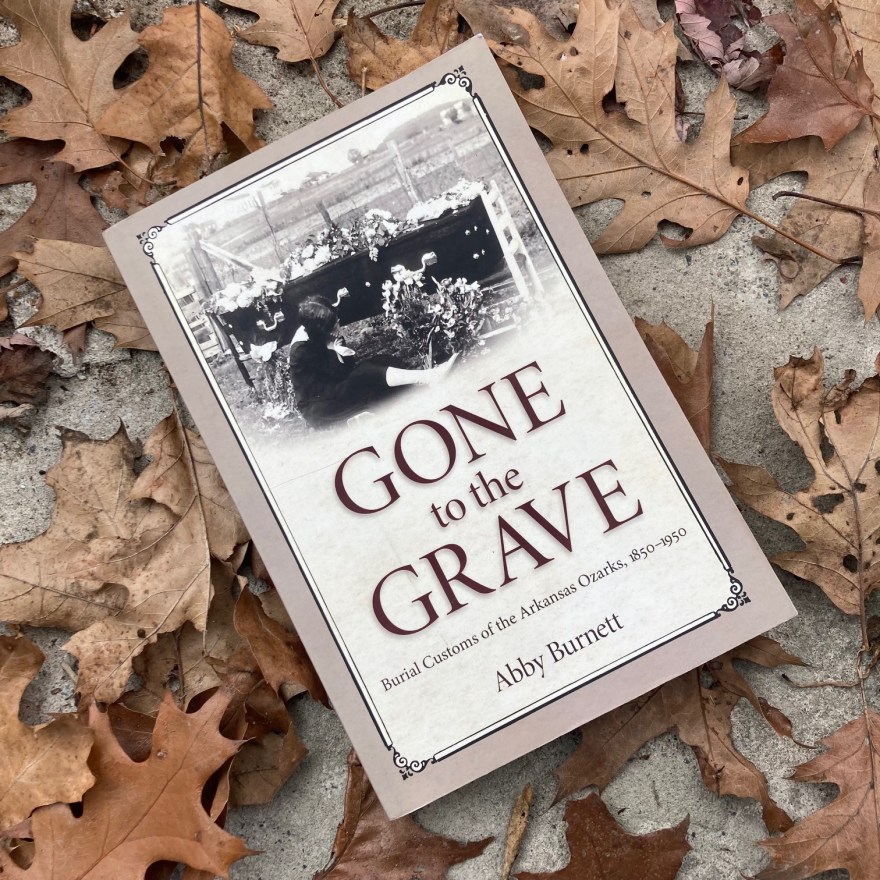
Cemetery Book Review: Gone to the Grave

Being a Canadian, I am not 100% familiar with American history and customs. Luckily, there are MANY books written about it, and I do love to read. This month’s cemetery book review is Gone to the Grave: Burial Customs of the Arkansas Ozarks, 1850—1950 by Abby Burnett. I first learned about this book through the AGS Book Club, as this book was the pick for July 2023.

Published in 2014 by University Press of Mississippi, Gone to the Grave is written by Abby Burnett, a former freelance newspaper reporter and columnist for The Springdale News. At one time, her writing was food-focused, about understanding food and learning how to cook. Over time, her focus has shifted to death and burial practices.1 In an article for the Arkansas Democrat-Gazette Burnett said, 

I’ve always loved cemeteries, and started seriously exploring ones in the Arkansas Ozarks about 25 years ago.”

Gone to the Grave is a collected work, the culmination of years of lectures, short newspaper articles, historical society journals, Arkansas Encyclopedia entries, and Gravestone Studies publications.1 It’s a very well-researched look into not only the burial customs of the residents of the Arkansas Ozarks, but also an in-depth look into deathcare and undertaking practices, health, and community life between 1850—1950. 

Here is part of the book synopsis, from Goodreads:

Gone to the Grave, a meticulous autopsy of this now vanished way of life and death, documents mourning and practical rituals through interviews, diaries and reminiscences, obituaries, and a wide variety of other sources. Abby Burnett covers attempts to stave off death; passings that, for various reasons, could not be mourned according to tradition; factors contributing to high maternal and infant mortality; and how loss was expressed through obituaries and epitaphs. A concluding chapter examines early undertaking practices and the many angles funeral industry professionals worked to convince the public of the need for their services.”

This book is fairly dense, but not the heaviest read I have come across recently. I am not going to lie, it did take me some time to work my way through it. It’s filled with black and white photos, including some post-mortem photographs. A big part of the author’s research includes diaries and interviews, with snippets printed verbatim to reveal what it was like to be a part of the funerals and burials at the time. I found these first-hand accounts fascinating. Death is a part of life, and reading about how a community would come together to sit up with the sick and dying, and everything that comes after a passing is eye-opening. Today, death is such a taboo that it’s not talked about, and we forget that it’s something that everyone goes through.

Learning more about these practices emphasizes how much things have changed. My uncle passed away in his home a few years ago. He had cancer and was spending his last days at home with his family. Two of my aunts went over to visit him, unknowingly on the day that he passed away. They knocked on his door, and his wife told them that he had just passed. They stayed to console his wife and visit with him one last time. Both of my aunts found the whole experience very surreal, as they had only ever visited deceased loved ones in a funeral home. But, that’s how wakes and funerals were done in the past, set up in the parlor of the deceased’s own home.

The practices discussed in the book are associated very specifically with the Arkansas Ozarks, it would be interesting to compare how different the practices are from other parts of the world. I often wondered as I read, if the customs described would have been much different than what customs were like here in Ontario around the same time. 

Overall, I enjoyed this book. It covers a lot of information, but I found it was well-connected and flowed together well. This book is a deep dive, and as such might be too heavy for a casual reader. I read some reviews where people compared it to a textbook, which understandably might not be for everyone. I wouldn’t go that far, but it does get close to that territory. So, if you are looking for that kind of in-depth, high-level information, this may be the perfect book for you.

Have you read Gone to the Grave? What did you think? I would love to read your thoughts in the comments.

Thanks for reading!


I am always on the hunt for cemetery-related book recommendations. Please feel free to share yours in the comments. If you are an author and have a cemetery-related book you would like me to review, please reach out at hello@chantallarochelle.ca. I would love to hear from you.


References:

  1. Gone (Back) To The Grave: Author Abby Burnett studies Buffalo River cemeteries | Arkansas Democrat-Gazette

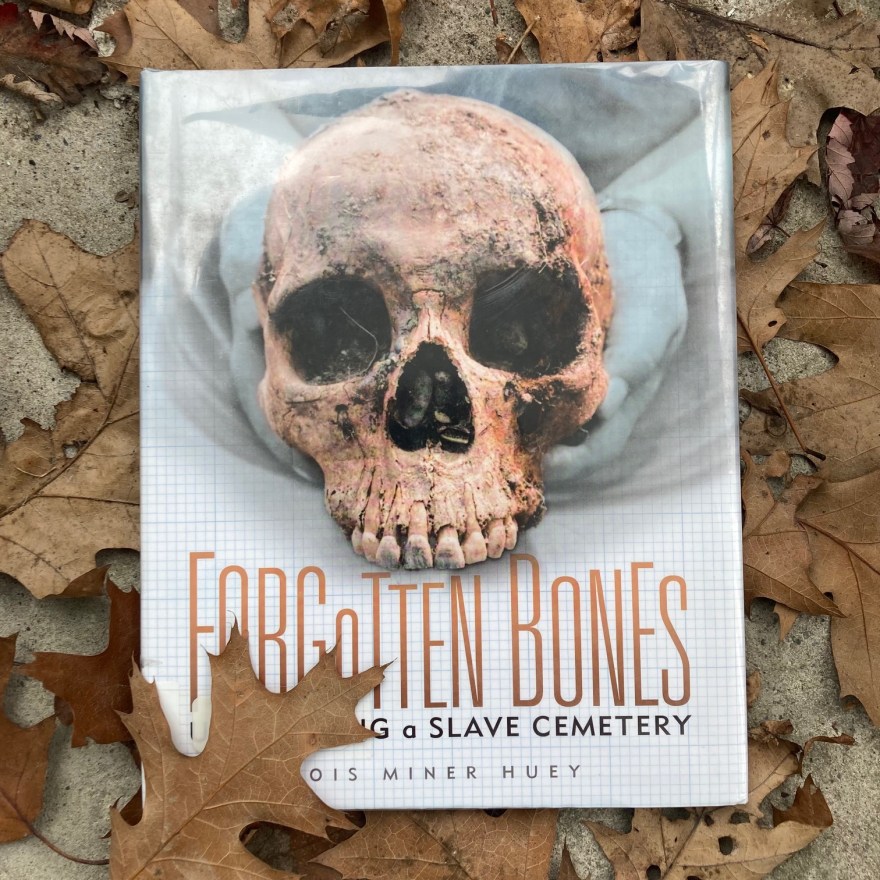
Cemetery Book Review: Forgotten Bones

This past month, my book club announced the reading list for this year. Being proactive, I ordered almost everything on the list and have been enjoying the excitement each time a package arrives. When I received Forgotten Bones in the mail a week ago, I knew I wanted to read it right away. So for this month’s cemetery book review, I wanted to share my thoughts on Forgotten Bones: Uncovering a Slave Cemetery by Lois Miner Huey.

February is Black History Month, so I thought this is the perfect time to read this and share it with others who might be interested in learning more as well.

Forgotten Bones is written by Lois Miner Huey, an archaeologist for the state of New York.1 Published in 2016 by Millbrook Press, this book looks at the excavation and research that went into uncovering a lost slave cemetery that was accidentally discovered near Albany, New York in June of 2005. 

Here is the book synopsis from Goodreads:

“Imagine you’re watching a backhoe dig up the ground for a construction project when a round object rolls down a pile of dirt and stops at your feet. You pick it up, brush off some dirt, and realize you’re holding a skull! This is exactly what happened in Albany, New York, in 2005. Workers were putting in new sewer line when a backhoe driver dug up a skull. After police declared the skull wasn’t connected to any recent crimes, a team of archaeologists took a closer look. They determined the skull was from an African American who had died more than one hundred years earlier.”

The copy of Forgotten Bones I was able to find is a slim hardcover that once belonged to the Denver Public Library, but it looks like this book is also available in softcover. It’s a short read, packing a lot of information into 50 pages. I wasn’t aware when I ordered this book, that it is intended for children. It’s a Junior Library Guild Selection and is written at a grade four reading level.2

That being said, it is a pretty interesting read that breaks down the discovery, excavation process, and research that went into learning more about the lost cemetery. When I was a little girl, I wanted to be an archaeologist when I grew up. That didn’t happen, but I still find archaeology to be incredibly interesting, and that probably plays into my love of cemeteries. I found the section on the excavation particularly interesting and enjoyed looking at the photos and sketches from the dig. 

There is also a section on facial reconstruction, how it’s done, and the results of the construction based on some of the skulls that were discovered during the dig. There are also two chapters on research, comparing this newly found cemetery to previously discovered slave cemeteries, as well as briefly touching on slave life and what close inspection of the remains concluded. 

Because of the age level this book is intended for, it uses simple language. Regardless, Forgotten Bones does a good job of objectively looking at the history discovered during the excavation of the cemetery. Because it’s intended for a young audience, I think the book does gloss over the implications of what the discovery of a lost slave cemetery means.

I think this book could be a good starting point for those interested in talking to their children about what slavery is, and what discoveries like this mean. It could also be a good starting point for those interested in other slave cemeteries and the work that goes into excavating, documenting, and preserving them. 

After reading this book, I have been inspired to look to see if there are more lost cemeteries like this one, that have been discovered since this book’s writing. I want to see where they are located and hope to one day visit them to pay my respects and learn more about their history. 

Have your read Forgotten Bones? I would love to read your thoughts in the comments.

Thanks for reading!


I am always on the hunt for cemetery-related book recommendations. Please feel free to share yours in the comments. If you are an author and have a cemetery-related book you would like me to review, please reach out at hello@chantallarochelle.ca. I would love to hear from you.


References:

  1. Forgotten Bones: Uncovering a Slave Cemetery by Lois Miner Huey | Book
  2. Forgotten Bones | Lerner Books

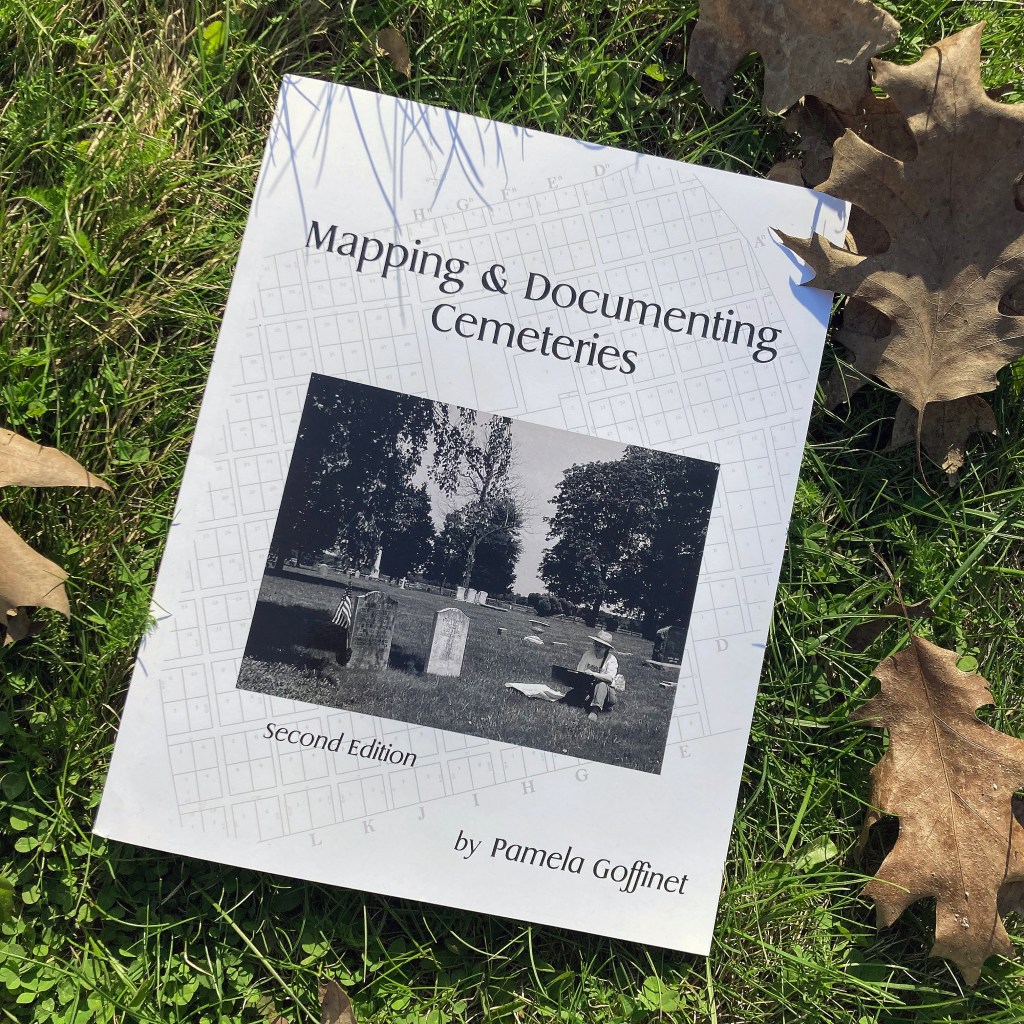
Cemetery Book Review: Mapping & Documenting Cemeteries

For this month’s book review, I wanted to share something a little different. I first learned about this book through the Association for Gravestone Studies online shop. Unfortunately, the online shop will be closing soon, but at one time this book was available as part of a Gravestone Experts package. 

I always sort of glossed over it, as I always thought that it was not a book for me. When it was announced that it would be the May 2023 pick for the AGS Book Club, it was my push to give it a read. So for today’s review, I wanted to share Mapping & Documenting Cemeteries, Second Edition by Pamela Goffinet.

This book is a little bit different than what I normally review. I have reviewed a reference book or two, but the majority of the books I have reviewed have focused on history and photography. After reading this book, I thought there might be many others who would benefit from this type of content. Mapping & Documenting Cemeteries, first published in 2013, is as its title notes, an excellent how-to guidebook for mapping and documenting cemeteries. 

Here is a short synopsis from Goodreads: “This is a practical how-to book that guides the reader through the process of mapping and documenting a cemetery with easily available tools and basic skills. Included are instructions on creating a map, gathering an inscription database, and assembling a spreadsheet of related information, such as from deeds. Lots of illustrations and easy to understand. Written by a professional cartographer, this book is a must for historians, genealogists, or anyone interested in preserving the information found in cemeteries.”

This second edition softcover packs a lot of information into a short page count, coming in at only 96 pages. It’s filled with black and white photographs and figures illustrating the mapping approaches discussed so that even those who do not have a brain for math or geography can understand. You also do not need any fancy technology to use the techniques described in the book. There is a handy checklist of all the basic items you would need to complete the project, that are also budget-friendly.

Mapping & Documenting Cemeteries covers gravestone mapping basics, working with lot maps, as well as how to draft your own map. This step-by-step guide takes you through the whole process of how to make an accurate cemetery lot map, as well as documenting gravestone inscriptions and other related data.  

Although I have no plans to map out a cemetery, I did still find this book useful, in particular the chapter on gathering gravestone inscriptions. As someone who often uploads my cemetery photographs to Find A Grave and transcribes the gravestones, there is some handy information about how to deal with partial inscriptions and the like. There are also some really handy tips on how to make gravestone inscriptions more legible when you’re in the field, to help better document them. 

The only thing I didn’t like about the book, is that there is some repetition where it talks about tools. The information is important, but I feel like it could be structured in a different way to reduce the redundancy. 

Overall, I did enjoy this book and found it interesting to learn what goes into mapping a cemetery. I think this would be a great resource for those working on cemetery projects that involve the need to map and plot out a cemetery. I think this would also be a good read for those looking to get into cemetery preservation. I realize with all our modern technology there may be apps and programs for this sort of thing, but going back to basics could be a good starting point to get fledgling projects off the ground. 

Have you read Mapping & Documenting Cemeteries? I would love to hear your thoughts about it.

Thanks for reading! 


I am always on the hunt for cemetery-related book recommendations. Please feel free to share yours in the comments. If you are an author and have a cemetery-related book you would like me to review, please reach out at hello@chantallarochelle.ca. I would love to hear from you.


References:

  1. Mapping & Documenting Cemeteries | Goodreads

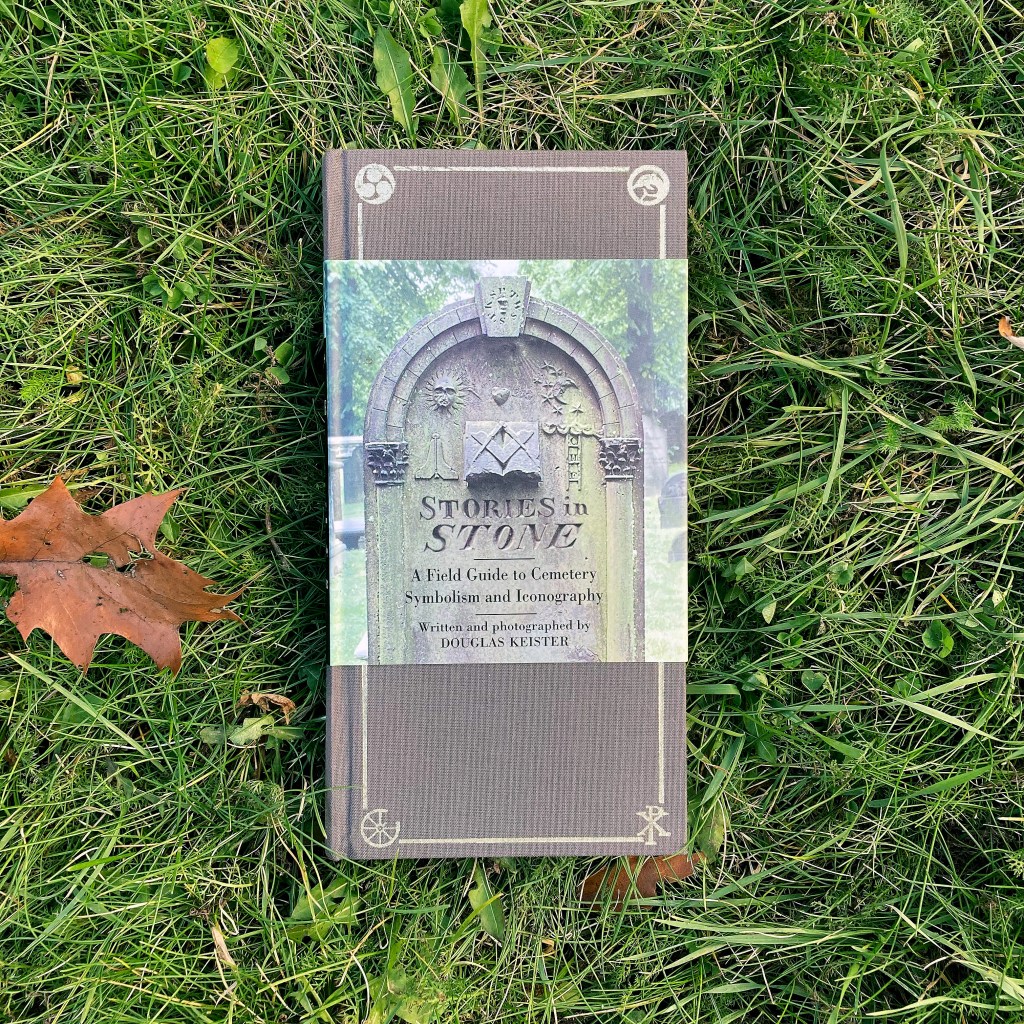
Cemetery Book Review: Stories in Stone

For this month’s cemetery book review, I wanted to talk about Stories in Stone: A Field Guide to Cemetery Symbolism and Iconography by Douglas Keister. I have been meaning to share this one for a while now. This is one of my favorite cemetery books, and one of my go-to reference books when it comes to looking up symbolism. I see it pop up now and then on the cemetery side of Instagram and Facebook and thought I should finally share my thoughts on it. 

This book has been on my bookshelf for a very long time and it is something I go back to over and over again. It is a great resource for explaining the meaning and history behind most of the symbolism and iconography you will come across in a cemetery. Every symbol has a meaning, and the descriptions can range from simple to quite in-depth. The book itself is compact, so it’s easy to slip it into your hiking or camera bag if you want to take it with you on your cemetery travels. It’s filled with full-color photos as well to help identify all the variety of symbols you might come across. 

Here is a snippet of the book synopsis from Goodreads.com: “Stories in Stone provides history along with images of a wide variety of common and not-so-common cemetery symbols and offers an in-depth examination of stone relics and the personal and intimate details they display; flora and fauna, religious icons, society symbols, and final impressions of how the deceased wished to be remembered. Douglas Keister has created a practical field guide that is compact and portable, perfect for those interested in family histories and genealogical research.”

I don’t recall where I picked up my copy, but it is a reference I use often. I never bring mine with me on my cemetery travels, but my cloth-bound hardcover copy has a special place at my desk for easy access when I need to look something up. This book covers iconography from A to Z, as well as the different art styles and architecture that can be found in cemeteries. It covers everything from religious and military symbols to fraternal organizations and secret societies. Douglas Keister is also an amazing photographer and his beautiful color photos of detailed gravestone symbols add depth to the descriptions. It also has a very thorough index at the back, which is very handy for moving back and forth throughout the book. 

The name Douglas Keister may sound familiar to you. This is not the first book of his that I have reviewed. Back in July 2022, I reviewed his book Going out in Style: The Architecture of Eternity. You can read that review here. Douglas is no stranger to cemeteries and has written quite a few books about them. He is a photographer, author, and co-author of forty-five critically acclaimed books, twenty-five of which are on architecture.2

I highly recommend this book to any budding taphophiles and those interested in learning more about cemetery symbolism and history. This book would be a handy tool for genealogists as well, as many interesting and thoughtful things can be learned about the deceased based on what is on their gravestone.

This book has been an invaluable resource for me. I have always loved learning more about the stories that gravestones can tell us, and finding new symbols to research and learn about is one of my favorite things. It’s a beautiful, high quality book, that I think is an essential addition to any taphophiles library. 

Have your read Stories in Stone? I would love to read your thoughts in the comments.

Thanks for reading! 


I am always on the hunt for cemetery-related book recommendations. Please feel free to share yours in the comments. If you are an author and have a cemetery-related book you would like me to review, please reach out at hello@chantallarochelle.ca. I would love to hear from you.


References:

  1. Stories in Stone: A Field Guide to Cemetery Symbolism and Iconography | Goodreads.com
  2. About Douglas Keister | DouglasKeister.com

Cemetery Book Review: The Rural Cemetery Movement

Today’s cemetery-related book review is another AGS Bookclub pick; The Rural Cemetery Movement: Places of Paradox in Nineteenth-Century America by Jeffery Smith. I found this one very fascinating and wanted to share my thoughts. 

I was looking forward to reading this one. I am very interested in the different types of cemeteries and graveyards that exist. I haven’t had the chance to visit many rural cemeteries, also sometimes called garden cemeteries. I have visited only a handful of them, but I look forward to visiting more after having read this.  

The Rural Cemetery Movement was published in 2017 and is available in three different formats; hardcover, softcover, and a kindle edition. I was able to find a paperback edition on Amazon.ca. It’s filled with lovely black-and-white photos as well as some detailed cemetery maps. 

Here is a snippet of the book synopsis from Goodreads.com: “The Rural Cemetery Movement: Places of Paradox in Nineteenth-Century America breaks new ground in the history of cemeteries in the nineteenth century. This book examines these “rural” cemeteries modeled after Mount Auburn that were founded between the 1830s and 1850s. As such, it provides a new way of thinking about these spaces and a new paradigm for seeing and visiting them. While they fulfilled the sacred function of burial, they were first and foremost businesses. The landscape and design, regulation of gravestones, appearance, and rhetoric furthered their role as a business that provided necessary services in cities that went well beyond merely burying bodies. They provided urban green spaces and respites from urban life, established institutions where people could craft their roles in collective memory, and served as prototypes for both urban planning and city parks.”

This fascinating book is incredibly well-researched and takes an in-depth look into the rise of the rural cemetery movement. It details the gradual shift and impacts it had on urban planning and ultimately the business of cemeteries. Essentially this is a book of essays that look at different aspects of the rural cemetery and its effects on burial and cemeteries worldwide. It’s full of fascinating history about the creation and layout of garden cemeteries and the effect they had on other landscapes, such as what we know today as public parks. I found it also fascinating to read about the effort that went into creating the look of rural cemeteries and how the rules and regulations evolved to maintain that look. There is also an interesting section on cemetery tours and how some were created as marketing tools before a cemetery was even opened!

I found the content so interesting that I devoured this one pretty quickly. It’s well-researched and written at a high level but still very graspable which made it an excellent read. I found the added photographs and maps a nice touch as well. There are also extensive notes and a bibliography if you are interested in further reading. 

I extremely enjoyed this book. It’s a great resource for those looking for information specifically about garden cemeteries. This would also be a good read for those interested in learning more about different styles of cemeteries, or anyone interested in a behind-the-scenes look at how cemeteries operate and the business of cemeteries. 

There are not many garden cemeteries in my local area, but I know I will be thinking about this book the next time I do visit one. Have you read The Rural Cemetery Movement? If not, will you be adding it to your reading list? Do you have a favorite garden cemetery? I would love to read your thoughts in the comments. 

Thanks for reading! 


I am always on the hunt for cemetery-related book recommendations. Please feel free to share yours in the comments. If you are an author and have a cemetery-related book you would like me to review, please reach out at hello@chantallarochelle.ca. I would love to hear from you.


References:

  1. The Rural Cemetery Movement | Goodreads.com

Cemetery Book Review: The Dead Die Twice

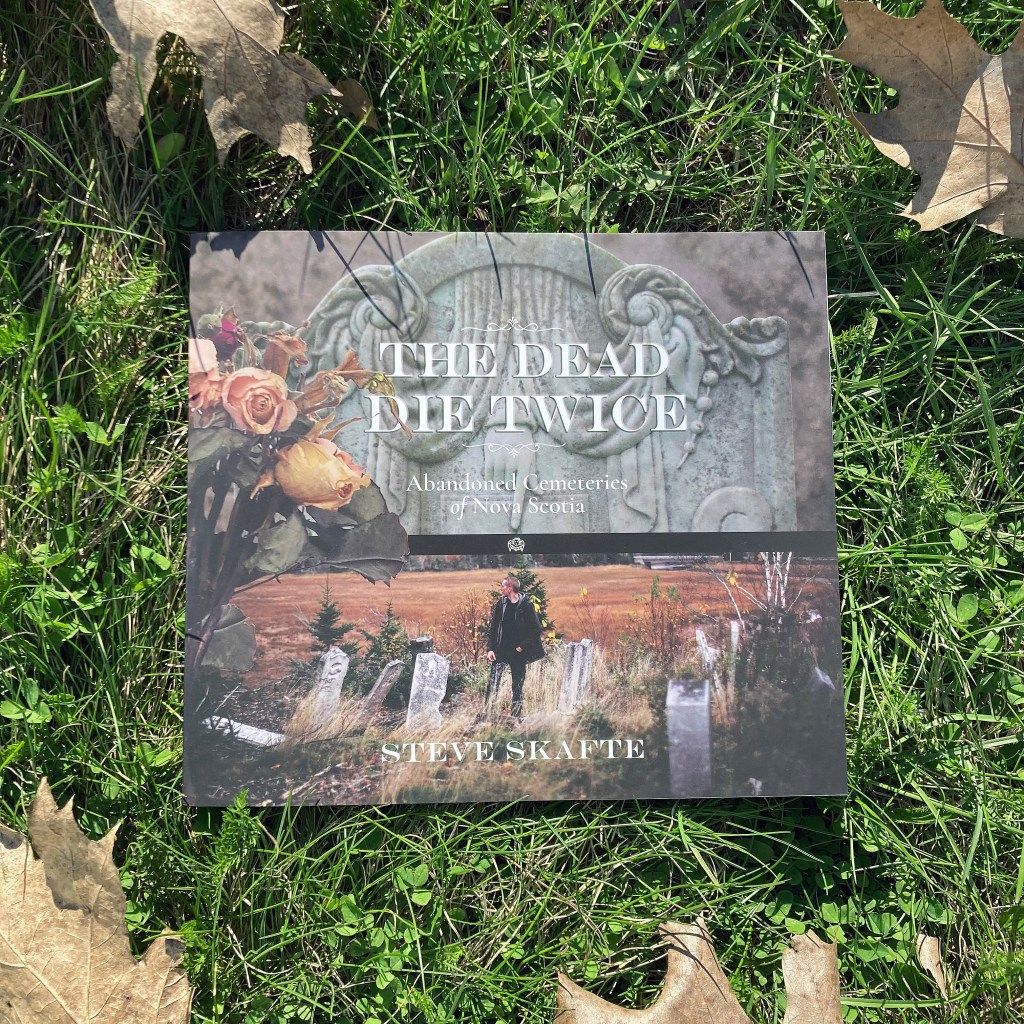
Back in March of this year, I was scanning some news sites when I came across an interesting article titled This N.S. photographer is saving the province’s abandoned cemeteries. It spoke about an upcoming new book that I knew I just had to read! I find books on Canadian cemeteries are somewhat rare, so I made my way to Steve’s Etsy shop and bought myself a signed copy. I was thrilled when it came in the mail a week or so ago. So, for this month’s book review I wanted to talk about The Dead Die Twice: Abandoned Cemeteries of Nova Scotia by Steve Skafte.

The Dead Die Twice is a beautiful little book. It’s filled with gorgeous full-color photography and beautiful prose. The author, Steve Skafte, is a fellow Canadian taphophile, who has been exploring, photographing, and cleaning up old abandoned cemeteries in Nova Scotia. The book is broken up into 3 seasons; Autumn, Winter, and Summer. Each section showcases several abandoned cemeteries and burial grounds, each with an assortment of stunning and moody photography, paired with eloquent musings.

Here is a snippet of the synopsis from Goodreads: “Steve Skafte has lived his entire life in Annapolis County—or what he calls “The Dead Centre”—a place with more forgotten history than anywhere else in the country. In search of those forgotten stories, Skafte stumbled over a couple of overgrown cemeteries and began his quest for what was hiding in the hundreds of cemeteries and burial grounds that lie abandoned in the woods all over Nova Scotia. En route, he discovered twisting trails of indifference, forgetfulness, and desecration. Featuring 80 haunting color images and more than 20 deeply poetic tales of discovery, The Dead Die Twice: Abandoned Cemeteries of Nova Scotia chronicles Skafte’s year of exploring abandoned cemeteries, pushing through walls of scratching brush, cutting a path to the past, and unearthing buried stones and half-forgotten stories.”

Reading this book is a rich experience, starting from the soft satin finish of the cover, the saturated moody photographs, to the beautiful and sometimes whimsical writing. Steve is a very talented photographer, and it’s easy to get lost in the photographs. The accompanying stories also paint a picture, revealing heartbreak and sometimes intrigue. 

While I read The Dead Die Twice, I found myself trying to slow down and take my time with each location. I didn’t want to rush it, even though I easily could have read the whole thing in one sitting. I wanted to explore each place as I would if I were there in person. The accompanying text added to that. I love that the coordinates to each cemetery have also been included in the book, with helpful tips on how to find them. If you’re like me, you’ll want to pin these spots on a map for future cemetery travels, or maybe just use Google Maps to take a closer look at the area.

I think any Canadian taphophile would be excited about this book. As I’ve mentioned before, Canadian cemetery books are a little harder to find. I believe this is also the first book I have read specifically about abandoned cemeteries, which some might find particularly interesting. This gorgeous book would be an excellent addition to any art and photography library as well. 

For those interested in purchasing a copy, you can find it pretty much anywhere books are sold. But, if you would like the bonus of a signed copy, I would order it directly from the source, the author’s Etsy shop.  

Thanks for reading! 


I am always on the hunt for cemetery-related book recommendations. Please feel free to share yours in the comments. If you are an author and have a cemetery-related book you would like me to review, please reach out at hello@chantallarochelle.ca. I would love to hear from you.


References:

  1. This N.S. photographer is saving the province’s abandoned cemeteries | CTV News Atlantic
  2. The Dead Die Twice: Abandoned Cemeteries of Nova Scotia | Goodreads