A Collection of Mourning Figures

One of my favorite things about cemeteries is the variety of symbolism you can find. After so many years wandering cemeteries, I have noticed some common motifs. An interesting thing I have also noticed is that depending on where you are in Northern Ontario, those common symbols will be different. I’d wager that the same could be said for other parts of the world as well.

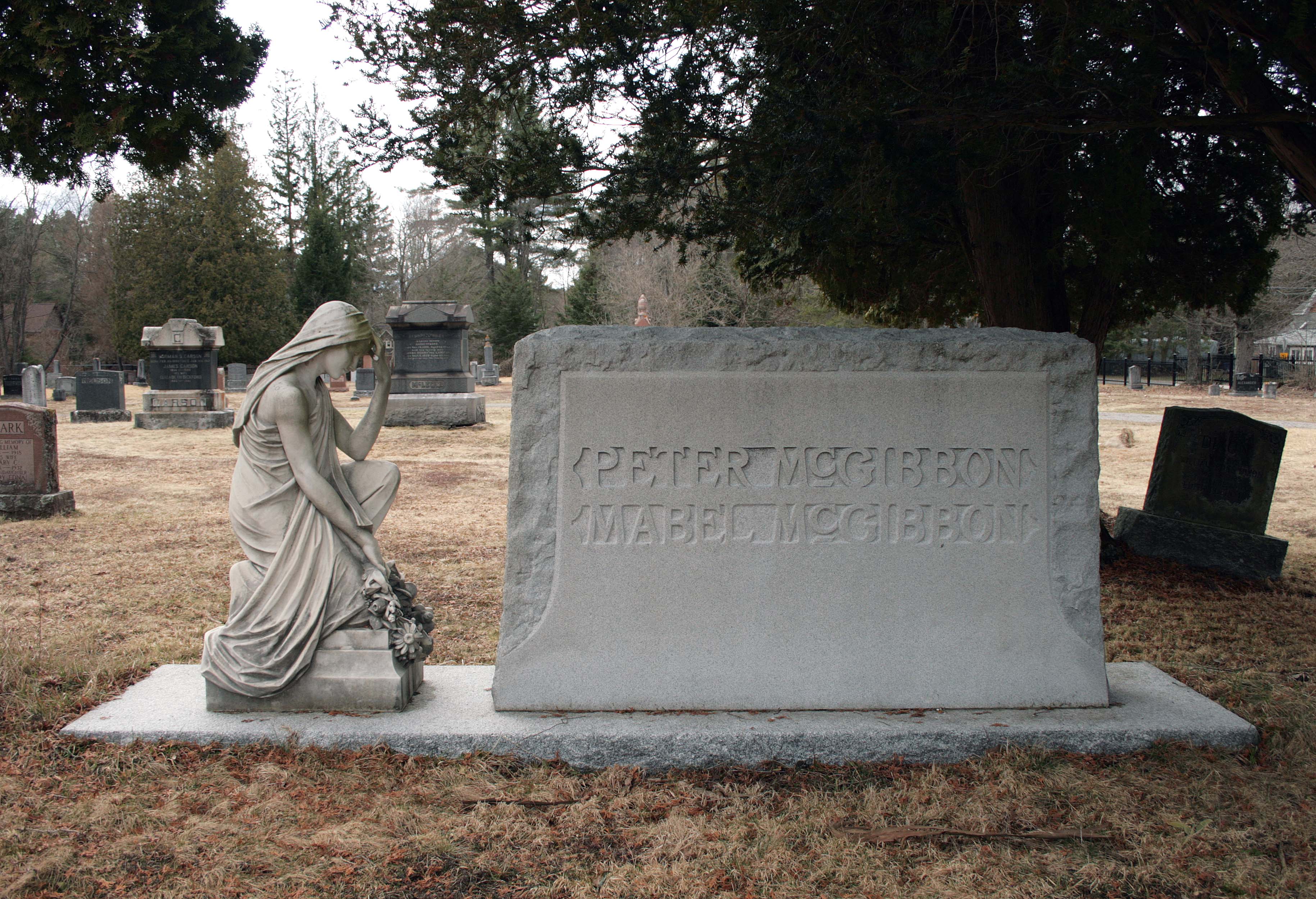
On some recent cemetery road trips in Simcoe County and the Muskokas, I noticed many different forms of mourning figures. This symbol is not very common in my local cemeteries. So today on the blog, I wanted to look deeper at this symbol and share some of the examples I have come across so far this year.

Grief and mourning were popular grave motifs in the Victorian era. As death was such a big part of life in that time, it affected everything from fashion and jewelry to of course funeral practices and gravestones.1 

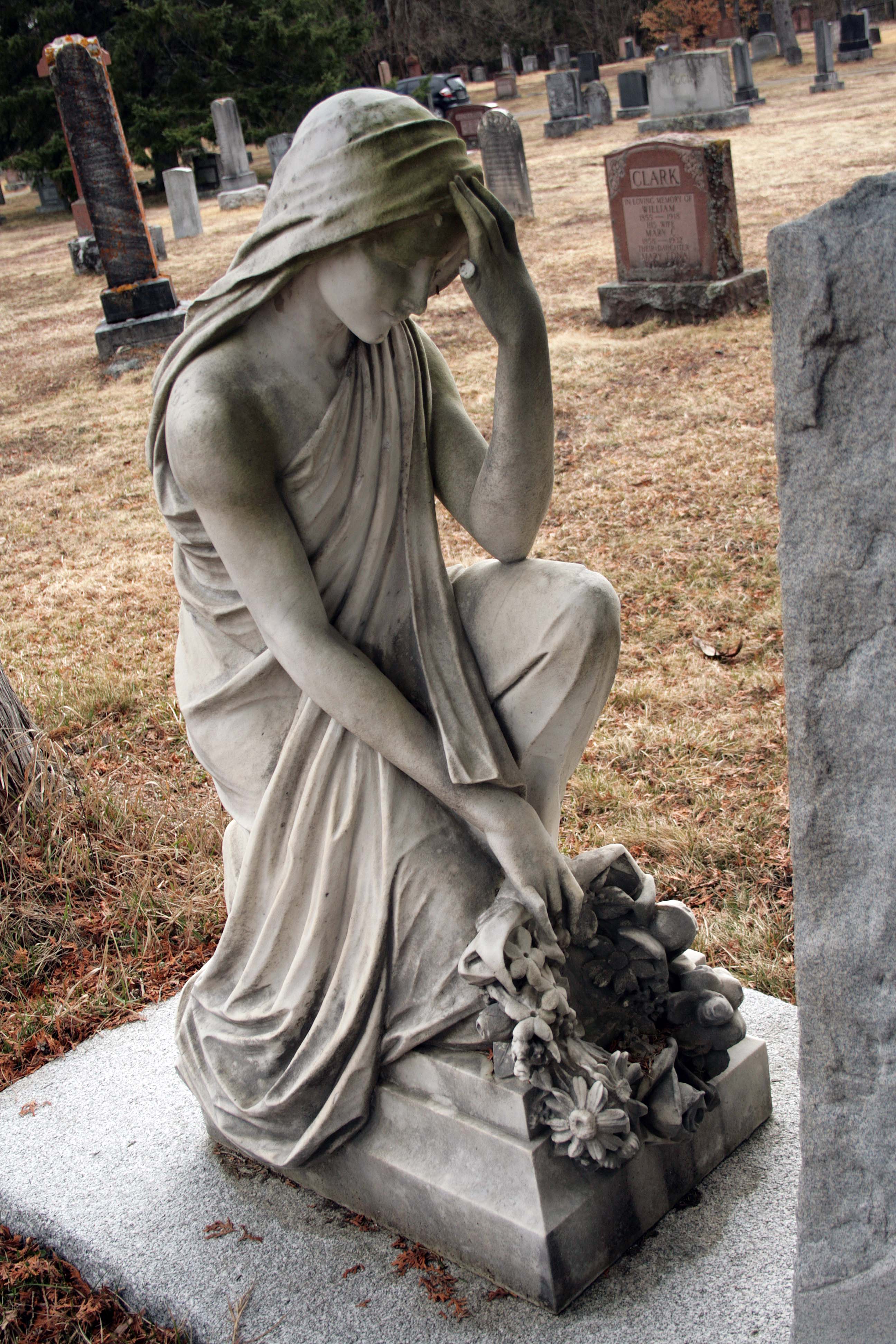
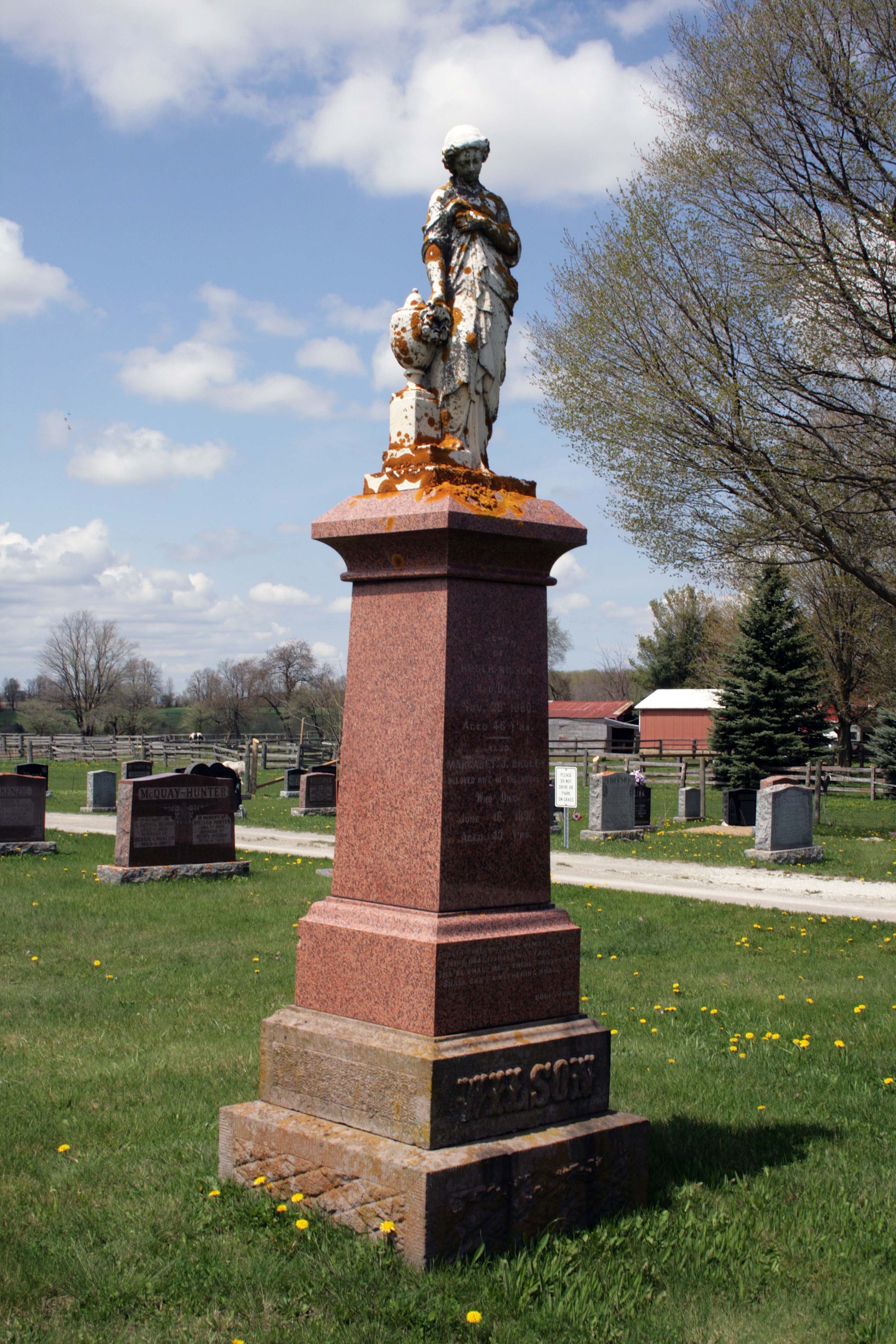
One of the many ways that grief was expressed was through the use of mourning or weeping figures. These figures were often depicted as kneeling or standing over a grave in a display of deep grief and mourning. Sometimes a mourning figure can also symbolize an early or sudden death.

Mourning figures are sometimes depicted holding wreaths or flowers. Flowers are thought to represent that life is fleeting, while the circular wreath is thought to symbolize eternal memory and immortality.2

Urns are another common Victorian grave symbol that sometimes accompanies a mourning figure. Borrowed from the Ancient Greeks who often cremated their deceased, urns represent the physical body being reduced to its barest elements as the soul ascends to Heaven.2

Sometimes weeping willows also appear with mourning figures. Weeping willows are strongly associated with grief and mourning, as their name suggests. They are another grave symbol adapted from the Ancient Greeks.2

I am always in awe and inspired by the art I find in cemeteries. It’s one of the reasons I love walking among the gravestones.

Have you come across any similar mourning figures in your local cemeteries? I would love to read about your findings in the comments.

Thanks for reading!


References:

  1. Cemetery Symbolism: What Do Those Mysterious Monuments Mean? | Laurel Hill
  2. Understanding Cemetery Symbols: A Field Guide for Historic Graveyards by Tui Snider

A Collection of Cemetery Statues

For today’s blog post, I wanted to share a collection of cemetery statues. I find this type of funerary art beautiful, and always enjoy finding detailed sculptures. I do often say that cemeteries are open-air art galleries, and statues are just one example of artistic works that can be found when you visit a cemetery. 

Angel statues are sometimes a very common sight in a cemetery, especially in Catholic cemeteries and graveyards. But, you might also find representations of saints, virtues, and other biblical figures. 

To decipher which saints or figures are being depicted, it’s important to look at the details. Little details like something at the statue’s feet, or what they are holding or doing with their hands can be a big indication of who the statue is representing. 

ANGELS

The most common figures you might find in a cemetery are angels. The winged statues can symbolize many things, most commonly that the deceased is now in heaven. They can also represent a connection between earth and heaven, comfort and mourning. 

An angel statue holding a book, for instance, suggests that this statue is a representation of a celestial scribe, a recording angel. Recording angels are thought to be tasked with recording historic events, actions, and prayers of everyone on earth.

You might also come across an angel holding flowers. There are many variations of angels with flowers, ranging from full bouquets to single-stemmed flowers. The flowers are thought to represent how fleeting life is. 

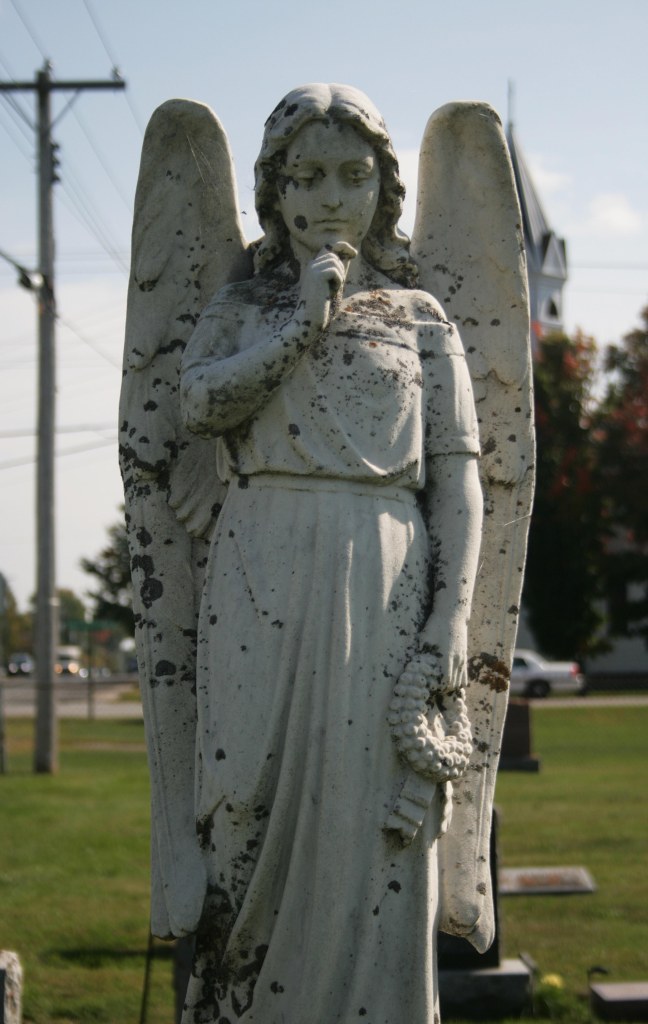
Some angel statues are depicted holding a wreath. This symbolizes memory and eternity, an indication that the deceased will not be forgotten. This example below also shows the angel holding their chin as if they are deep in thought, emphasizing the idea of remembrance. 

Virtues

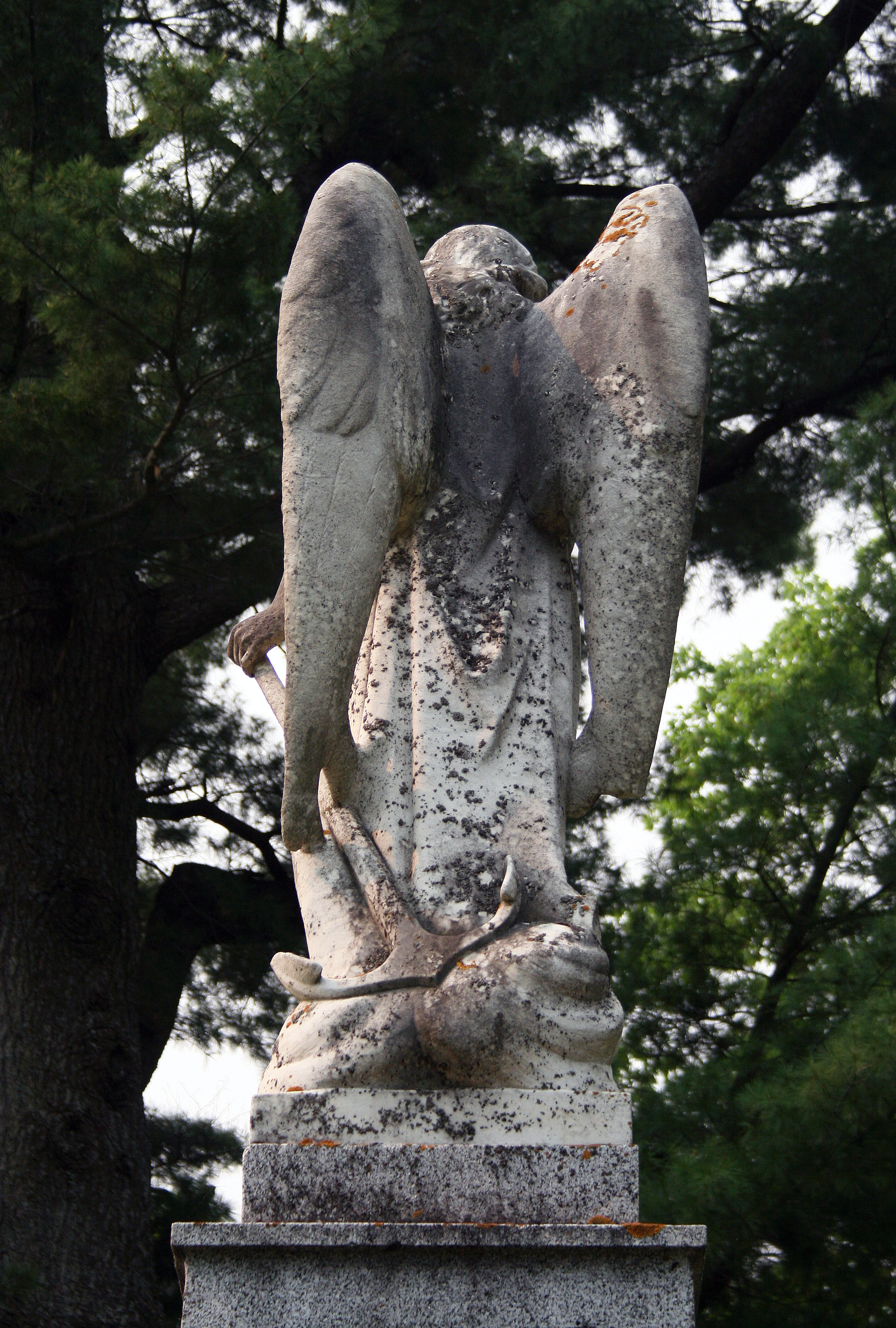
The Seven Virtues are traits that some of those of the Christian faith aspire to. According to Tui Snider’s book Understanding Cemetery Symbols, this list of traits was created by Greek philosophers and then adopted by Christian scholars. Sometimes the virtues are labeled on the statue’s pedestal, but most often you must look closely at their design for clues. In this example, we can tell this is Hope, by the large anchor she is dragging behind her. 

Saints

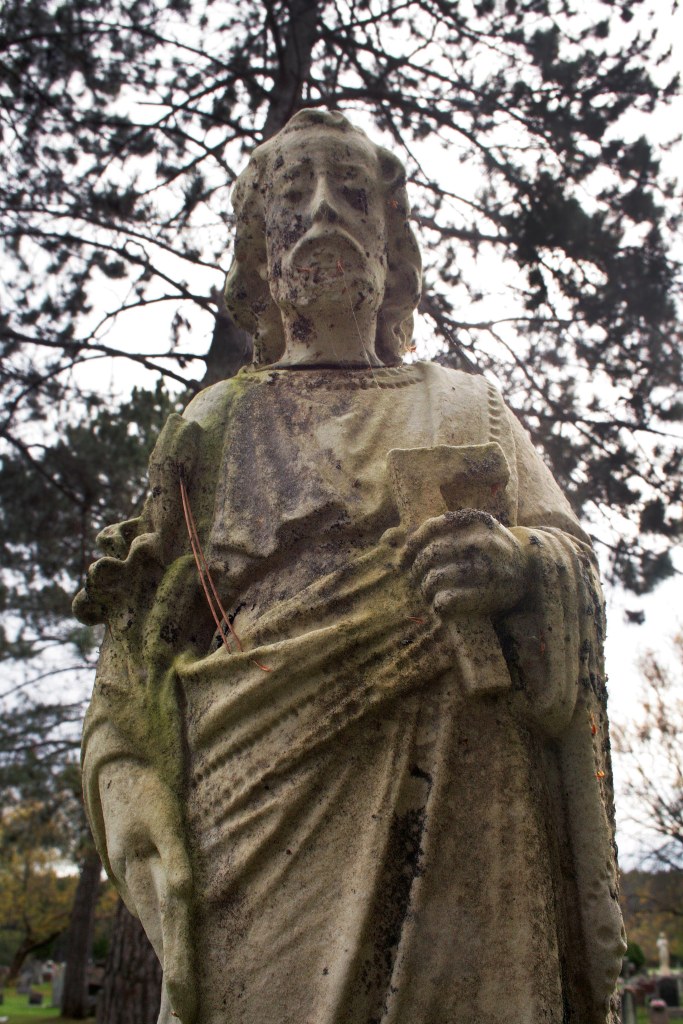
Based on the details, we can tell that this statue is a representation of Saint Joseph. The carpenter’s square represents his trade, as well as the concept of truth. The lilies represent purity. Saint Joseph is the patron saint of many things, including families, fathers, craftsmen, engineers, and common workers.

Jesus

Statues of Jesus can also be a common find in Catholic cemeteries. He is often depicted as a young child or an adult. When depicted as a young child he can sometimes be found in the arms of Saint Joseph. He is also sometimes depicted as a young boy, with both Saint Joseph and the Virgin Mary.

Jesus is also commonly depicted as an adult, his hands pointing to a flaming heart with thorns, that have rays emanating from it in his chest. This is often called the scared heart, and also sometimes has the addition of being topped with a Latin cross. There is a lot of symbolism here to unpack. The flame represents Jesus’ love for God and humanity, while the thorns represent his passion. The rays emanating from it represent the glory of God. Jesus’s hands point towards his heart, encouraging the viewer to look at it and reflect.

One of the more somber depictions of Jesus you might come across is a scene after the crucifixion. A thin and wounded Jesus is cradled in his mother Mary’s arms. He might be still wearing the crown of thorns, or it can sometimes be found lying by his side.

Statuary always seem to stand out to me, when I visit cemeteries. They are beautiful expressions of art and emotion, often made even more moving with the passage of time. Do you have a favorite cemetery statue? I would love to hear about some of your cemetery statue finds in the comments.

Thanks for reading!


References:

  • Understanding Cemetery Symbols: A Field Guide for Historic Graveyards by Tui Snider 
  • Stories in Stone: The Complete Guide to Cemetery Symbolism by Douglas Keister