Graves, Ghosts, and Glimpses of History: 13 Podcasts to Discover

I’ll be honest—I’m not usually a podcast person.

But recently, I became curious about what kind of cemetery podcasts might exist. As someone who has always been fascinated by the history, culture, and stories buried within cemeteries, I figured it was time to explore what podcasts had to offer.

From eerie tales of haunted burial sites to deep dives into sustainable burial practices, there’s a whole world of interesting cemetery content out there.
Here are 13 cemetery podcasts you should check out this year.

Beyond the Grave

Listen on Spotify

This short podcast series explores the many ways people have commemorated their dead—whether through gravestones, memorials, or historical markers. Unfortunately, there haven’t been any new episodes since 2019.


Cemetery Podcast by the Necro Tourist

Listen to Spotify

Hosted by the Necro Tourist this podcast covers famous graves, infamous hauntings, and all the graveyard gossip. Although there have not been any new episodes since 2023, the early episodes are filled with interesting cemetery stories.


Cemetery Row

Listen on Spotify

Hosts Lori, Hannah, and Sheena casually chat and share cemetery stories that are sometimes incredible, sometimes eerie, and always interesting. Fair warning though, it can take a while for them to get into the good stuff.


Grave Escapes

Listen on the website

Hosted by Caitlin Howe and Frances Ferland, Grave Escapes brings the voices of the departed back to life. Each episode uncovers a new life story, offering a deep dive into the lives of those now at rest.


Grave Matters

Listen on Apple Podcasts

Grave Matters dives into the complex connections between death, cemeteries, and culture. Episodes cover sustainable burial practices, the rise of natural burial grounds, and shifts in how we think about death care with thought-provoking discussions.


The Grim

Listen on their website

For those who enjoy a good historical ghost story, The Grim offers well-researched spine-chilling tales of haunted cemeteries and eerie graveyard legends from around the world.


The Ordinary, Extraordinary Cemetery

Listen on their website

Hosts Jennie and Dianne explore old cemeteries, their preservation, and the lives of those buried there. Their deep dives into these sometimes forgotten histories are both fascinating and informative.


Stones, Bones & Shadows

Listen on their website

This podcast explores cemeteries and burials worldwide, uncovering the inspiring stories and eerie legends that have grown from these final resting places.


Tomb With A View: A Cemetery Podcast

Listen on Spotify

Hosted by Liz Clappin, Tomb With A View offers an insightful exploration of American cemeteries, focusing on their history, preservation, and cultural significance.


Undertaking: The Podcast

Listen on Spotify

This podcast is primarily focused on the funeral industry, Undertaking regularly explores topics involving cemeteries and burial practices. Filled with insightful interviews with industry professionals, each episode offers a unique and cultural look at death.


While these next three podcasts aren’t solely focused on cemeteries, each features episodes that delve into cemetery-related topics or are closely related to cemeteries and graveyards.

Death in the Afternoon

Listen on the website

Created by The Order of the Good Death, this podcast explores the history of death, burial, and mourning practices across different cultures and eras. While not specifically focused on cemeteries, it often touches on fascinating stories and histories that are closely connected to them.


Haunted Talks

Listen on Spotify

The official podcast of The Haunted Walk, Haunted Talks explores the paranormal, dark history, and ghostly tales. Some episodes venture into haunted cemeteries and the eerie legends that surround them.


Odd Things I’ve Seen: The Podcast

Listen on website

Author J.W. Ocker is all about visiting strange and unusual places. Cemeteries and burial grounds sometimes make their way into episodes, as Ocker visits and explores the stories behind odd and interesting sites.


Whether it’s the history, the stories, or the spooky tales—there’s sure to be a podcast on this list to satisfy your curiosity.

Is there a podcast I should add to the list? Let me know in the comments.

Thanks for reading!

The Beauty and Symbolism of Cemeteries in Winter

As winter settles in, it’s hard to ignore the changing of the seasons. The chilly air, shorter days, and the snow-covered gravestones mark the end of field season for me. I have always seen snow-covered cemeteries as just too risky to explore—both for me and the gravestones.

While the cold usually keeps me indoors for the next couple of months, it brings something special to the cemeteries I love so much. There is a stillness in the air, and cemeteries in winter do offer something unique that cemeteries in the warmer months just don’t have.

Winter is often seen as a time for rest and renewal. Nature takes a break during these colder months, and cemeteries seem to do the same. The chill in the air makes everything feel still.

For me, the winter season is a time to focus on rest and recharging, while also refocusing on photo editing and research. Nothing is more relaxing to me than being curled up on the couch with a good book. But winter is also a time for reflection on life’s cycles. The season reminds us that life, like death, is all part of the same cycle. Nature’s rhythms, whether still still or full of growth are always changing, just like us.

I’ll be honest, winter is not my favorite season, and I don’t have a lot of experience visiting cemeteries in the snow. The bitter cold and early darkness does not appeal to me. But I will admit that cemeteries in winter have an almost haunting beauty that I can’t ignore.

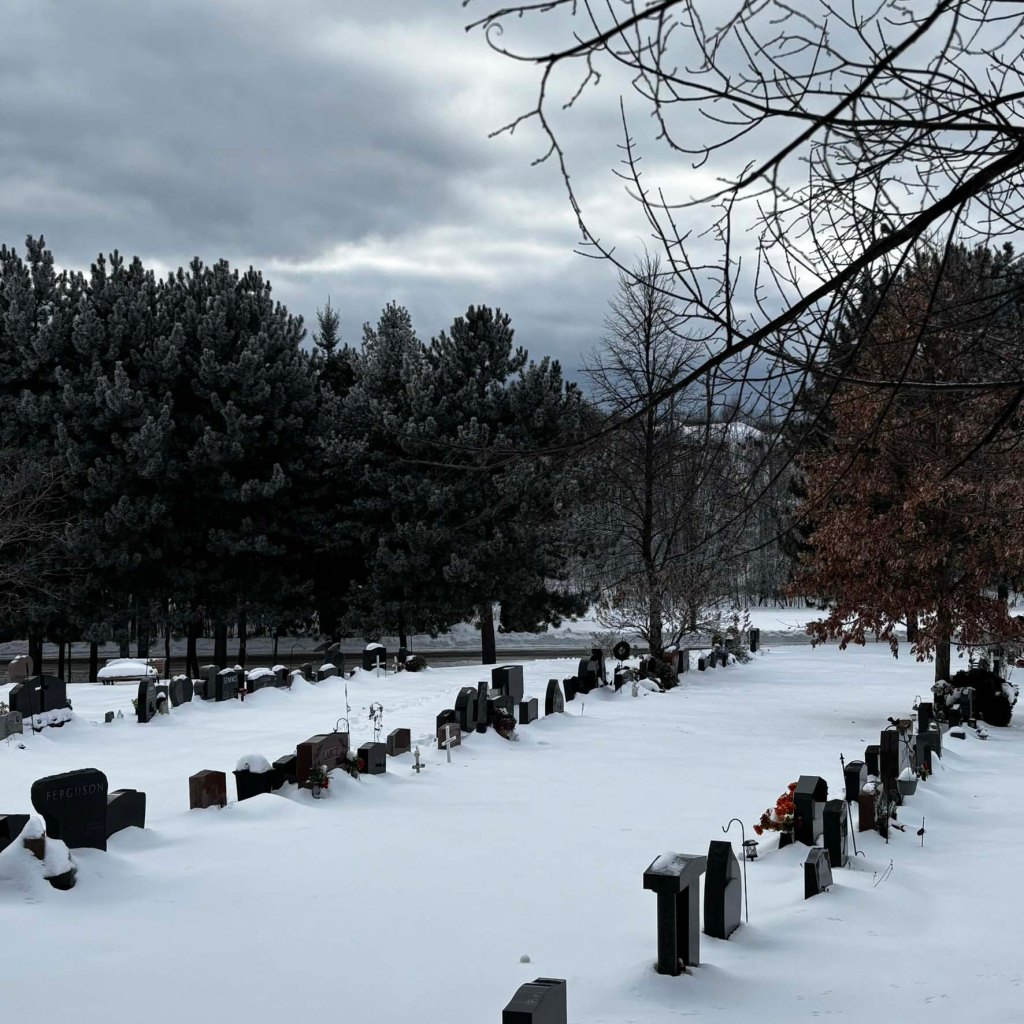
The bare trees against a pale sky, and the contrast between the dark gravestones against white snow, create a mood that’s both peaceful and a bit mysterious. It’s the kind of scene that makes you stop for a moment.

Even though this isn’t the time I usually seek out cemeteries, I made an effort this weekend to stop in to one, to appreciate the unique atmosphere it creates.

One interesting thing I found about cemeteries in the winter is the light. With the sun being lower in the sky, the light creates long and dramatic shadows, adding texture and depth to the landscape. I find the gravestones just look different in the winter light.

The unique angles of the light during winter do make it a great time to play around with shadows and textures. For anyone interested in photography, winter cemeteries offer a chance to capture the landscape in a new way.

As I think about how winter enhances the beauty of cemeteries, I realize that the symbolism of the season offers us an important reminder of the ongoing cycle of life. Winter is a time of rest and reflection, but it’s also a time to prepare for what comes next.

So will you be visiting any cemeteries this winter? Whether you’re stopping by to honor a loved one or just take in the beauty of the season, cemeteries in the winter do have a lot to offer.

Thanks for reading!

A Collection of Urns

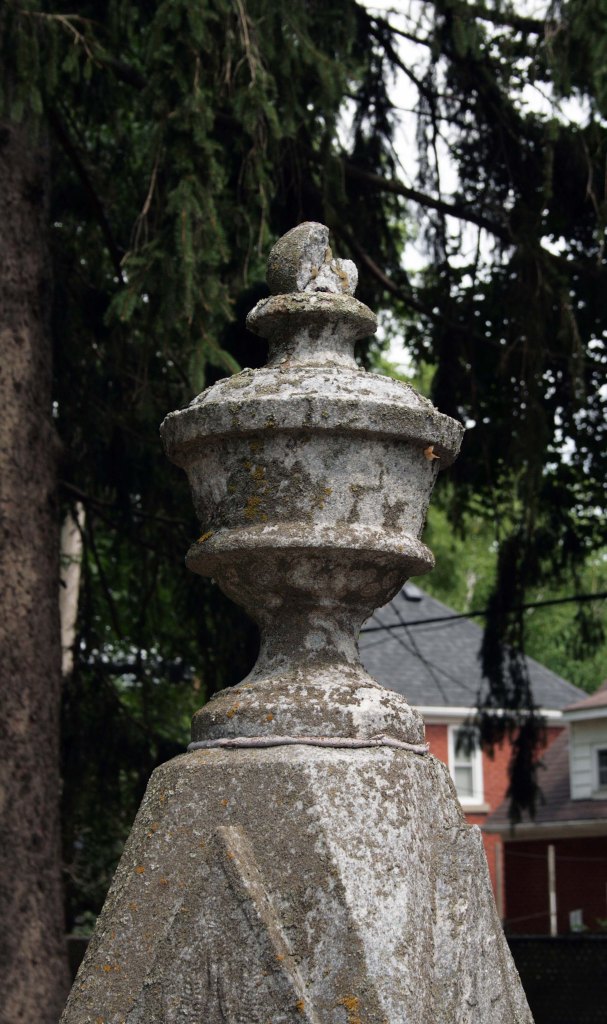
If you spend a lot of time in cemeteries you will often start to notice the repetition of certain cemetery symbols and motifs. In Ontario, more so in southern Ontario, urns tend to be a common gravestone symbol.

Although cremation was rarely practiced in North America at the time, the urn became a popular symbol in the Victorian era. Urns as a funerary symbol were adapted from Ancient Greece. Cremation was commonly practiced by the Ancient Greeks, who used ceremonial urns. As a gravestone symbol, the urn represents the body reduced to its most basic elements and the ascension of the spirit to heaven. Today cremation is a common practice, having started its climb to popularity in the 1980s.

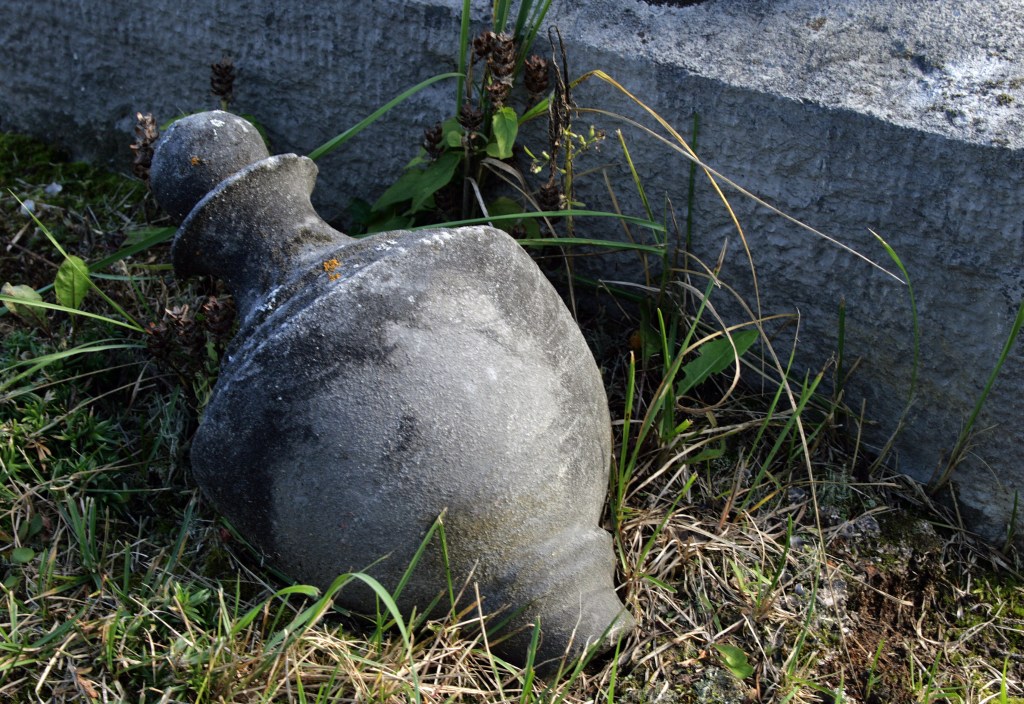
I have found and photographed many urns during my cemetery walks, so today I wanted to share some of them with you.

Like many graveyard symbols, the urn can be found depicted in a variety of ways. Each version of the symbol has a slightly different meaning. This is one of the reasons I find cemetery symbolism so interesting. It is a language unto itself. 

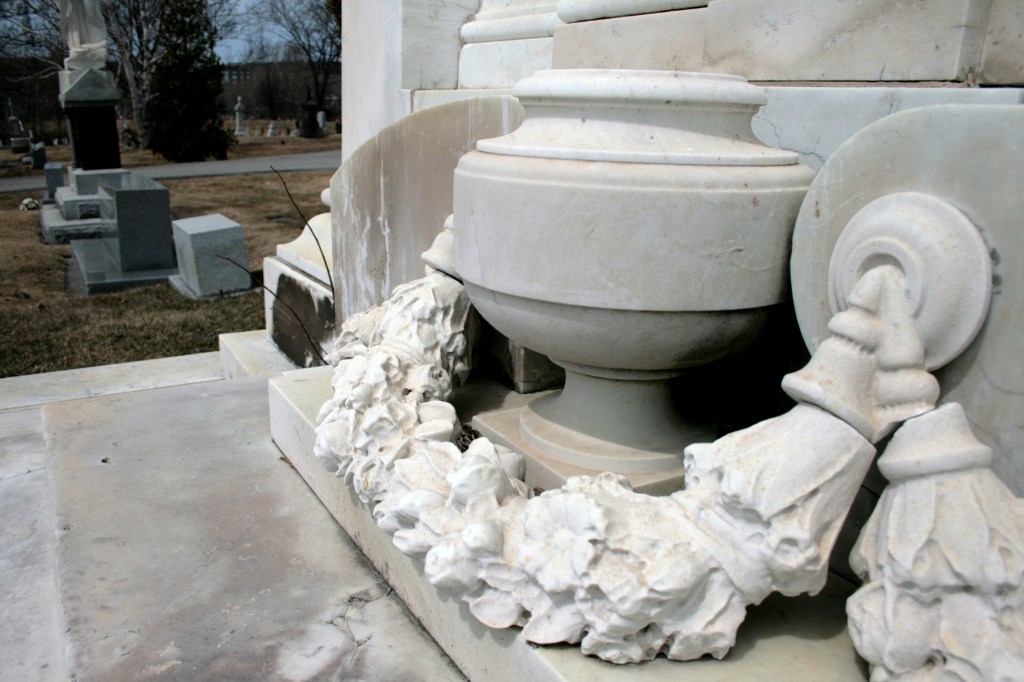
The Victorians were very fond of drapery, and you might come across what looks to be a fabric made of stone draped over an urn. Fabric draped over a gravestone is often thought to symbolize the veil between life and death. The fabric might also represent the shedding of earthly clothes as the deceased moves from this life to the afterlife. 

Have you ever found a unique version of an urn symbol? I would love to read about your finds in the comments. 

Thanks for reading!


References:

  • The History of Cremation in North America | Une Belle Vie Memorial Urns
  • Understanding Cemetery Symbols: A Field Guide for Historic Graveyards by Tui Snider 
  • Stories in Stone: The Complete Guide to Cemetery Symbolism by Douglas Keister

Cemetery Book Review: Gone to the Grave

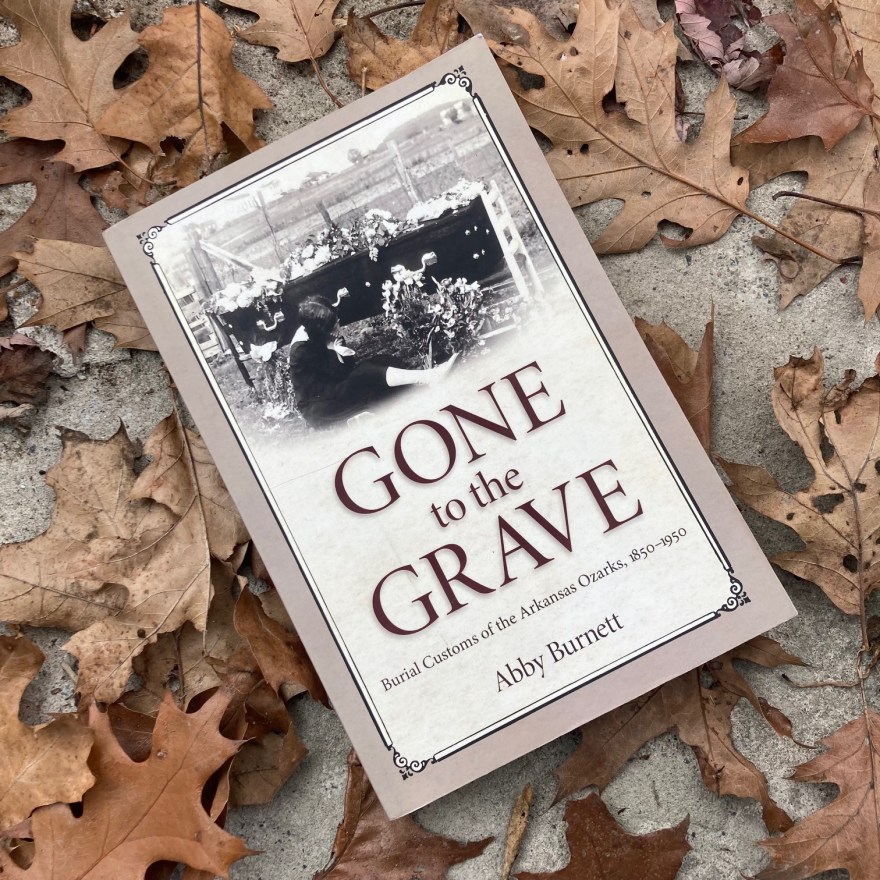
Being a Canadian, I am not 100% familiar with American history and customs. Luckily, there are MANY books written about it, and I do love to read. This month’s cemetery book review is Gone to the Grave: Burial Customs of the Arkansas Ozarks, 1850—1950 by Abby Burnett. I first learned about this book through the AGS Book Club, as this book was the pick for July 2023.

Published in 2014 by University Press of Mississippi, Gone to the Grave is written by Abby Burnett, a former freelance newspaper reporter and columnist for The Springdale News. At one time, her writing was food-focused, about understanding food and learning how to cook. Over time, her focus has shifted to death and burial practices.1 In an article for the Arkansas Democrat-Gazette Burnett said, 

I’ve always loved cemeteries, and started seriously exploring ones in the Arkansas Ozarks about 25 years ago.”

Gone to the Grave is a collected work, the culmination of years of lectures, short newspaper articles, historical society journals, Arkansas Encyclopedia entries, and Gravestone Studies publications.1 It’s a very well-researched look into not only the burial customs of the residents of the Arkansas Ozarks, but also an in-depth look into deathcare and undertaking practices, health, and community life between 1850—1950. 

Here is part of the book synopsis, from Goodreads:

Gone to the Grave, a meticulous autopsy of this now vanished way of life and death, documents mourning and practical rituals through interviews, diaries and reminiscences, obituaries, and a wide variety of other sources. Abby Burnett covers attempts to stave off death; passings that, for various reasons, could not be mourned according to tradition; factors contributing to high maternal and infant mortality; and how loss was expressed through obituaries and epitaphs. A concluding chapter examines early undertaking practices and the many angles funeral industry professionals worked to convince the public of the need for their services.”

This book is fairly dense, but not the heaviest read I have come across recently. I am not going to lie, it did take me some time to work my way through it. It’s filled with black and white photos, including some post-mortem photographs. A big part of the author’s research includes diaries and interviews, with snippets printed verbatim to reveal what it was like to be a part of the funerals and burials at the time. I found these first-hand accounts fascinating. Death is a part of life, and reading about how a community would come together to sit up with the sick and dying, and everything that comes after a passing is eye-opening. Today, death is such a taboo that it’s not talked about, and we forget that it’s something that everyone goes through.

Learning more about these practices emphasizes how much things have changed. My uncle passed away in his home a few years ago. He had cancer and was spending his last days at home with his family. Two of my aunts went over to visit him, unknowingly on the day that he passed away. They knocked on his door, and his wife told them that he had just passed. They stayed to console his wife and visit with him one last time. Both of my aunts found the whole experience very surreal, as they had only ever visited deceased loved ones in a funeral home. But, that’s how wakes and funerals were done in the past, set up in the parlor of the deceased’s own home.

The practices discussed in the book are associated very specifically with the Arkansas Ozarks, it would be interesting to compare how different the practices are from other parts of the world. I often wondered as I read, if the customs described would have been much different than what customs were like here in Ontario around the same time. 

Overall, I enjoyed this book. It covers a lot of information, but I found it was well-connected and flowed together well. This book is a deep dive, and as such might be too heavy for a casual reader. I read some reviews where people compared it to a textbook, which understandably might not be for everyone. I wouldn’t go that far, but it does get close to that territory. So, if you are looking for that kind of in-depth, high-level information, this may be the perfect book for you.

Have you read Gone to the Grave? What did you think? I would love to read your thoughts in the comments.

Thanks for reading!


I am always on the hunt for cemetery-related book recommendations. Please feel free to share yours in the comments. If you are an author and have a cemetery-related book you would like me to review, please reach out at hello@chantallarochelle.ca. I would love to hear from you.


References:

  1. Gone (Back) To The Grave: Author Abby Burnett studies Buffalo River cemeteries | Arkansas Democrat-Gazette

Cemetery Stories: Greenwood Cemetery

A cemetery is filled with many interesting stories, stories of the souls that are laid to rest within its gates. But often the cemetery itself has an interesting story to tell. 

Today on the blog I want to introduce a new series called Cemetery Stories. For these blog posts, I plan to focus on the story of individual cemeteries. I have visited a lot of cemeteries over the years, and many of them have interesting stories and historical significance. So for this series, I want to look a little deeper into history, geography, notable graves, and all the different elements that make them unique.

For today’s cemetery story, I thought I would look at Greenwood Cemetery in Owen Sound. 

History

Greenwood Cemetery was created in 1858 when land surveyor Charles Rankin submitted a plan to the town council for a new public cemetery. At the time the plan was for 5 acres of land, divided into 27 blocks, including space for vaults.1 Today the cemetery is quite large, sitting on approximately 40 acres of land.2 Greenwood is also sometimes called “The People’s Cemetery” because, in those early days, the land was purchased using the people’s money.1 The cemetery contains 26,700+ burials.1

The oldest home in Owen Sound can be found in Greenwood Cemetery. The house is dated from the 1840s1 and is used as the cemetery office.2 There is also a red brick burial chapel on the cemetery grounds. Built-in 1905, it served as both a chapel and a receiving vault. There is a trap door built into the floor that a coffin could be lowered through, into the storage racks below, to rest until the Spring when the remains could be interred. The chapel stopped being used for burials in the 1930s when the mausoleum opened. The chapel was converted and used as an office space for a time, until the early 90s. Today the building looks to be mostly empty.3

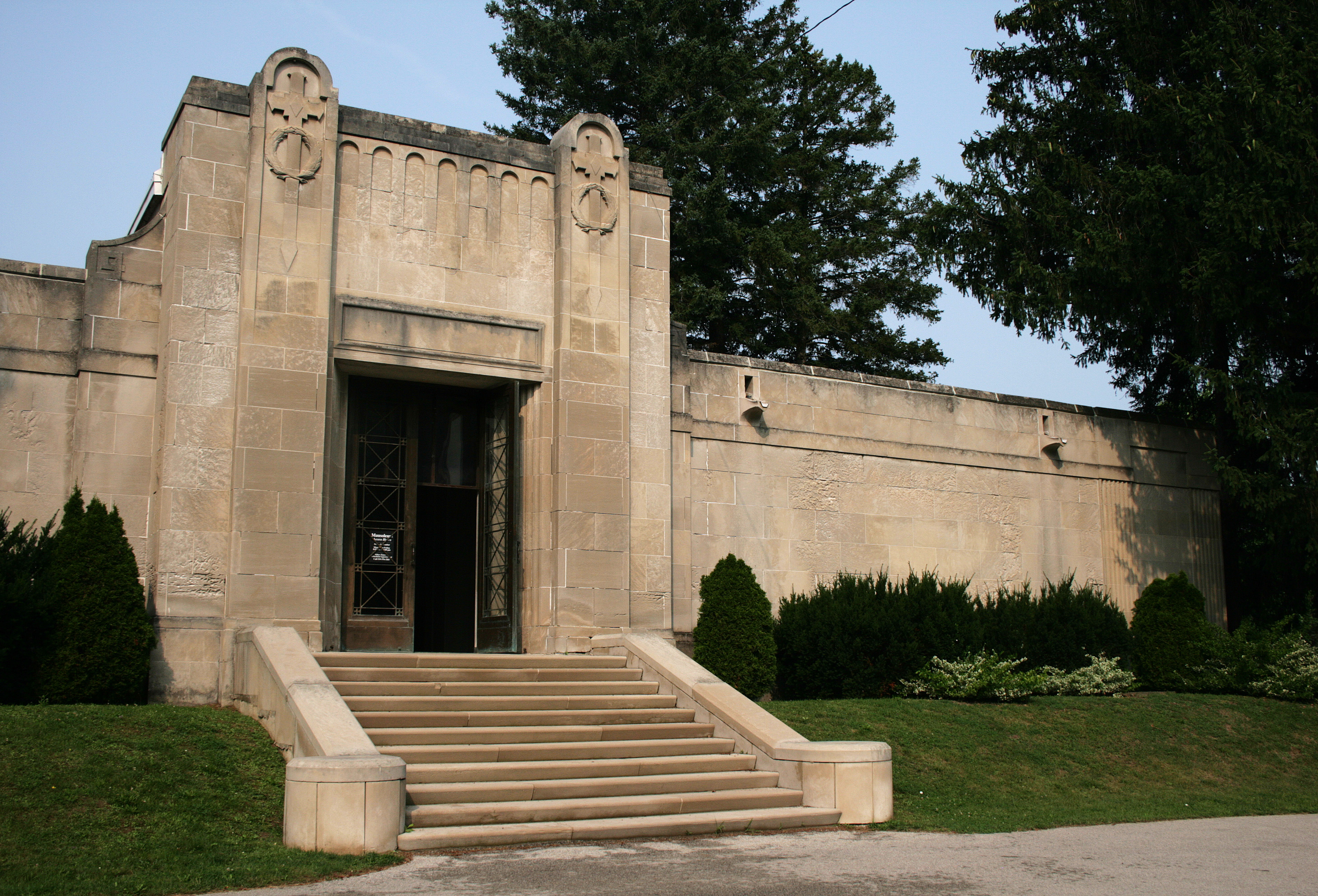
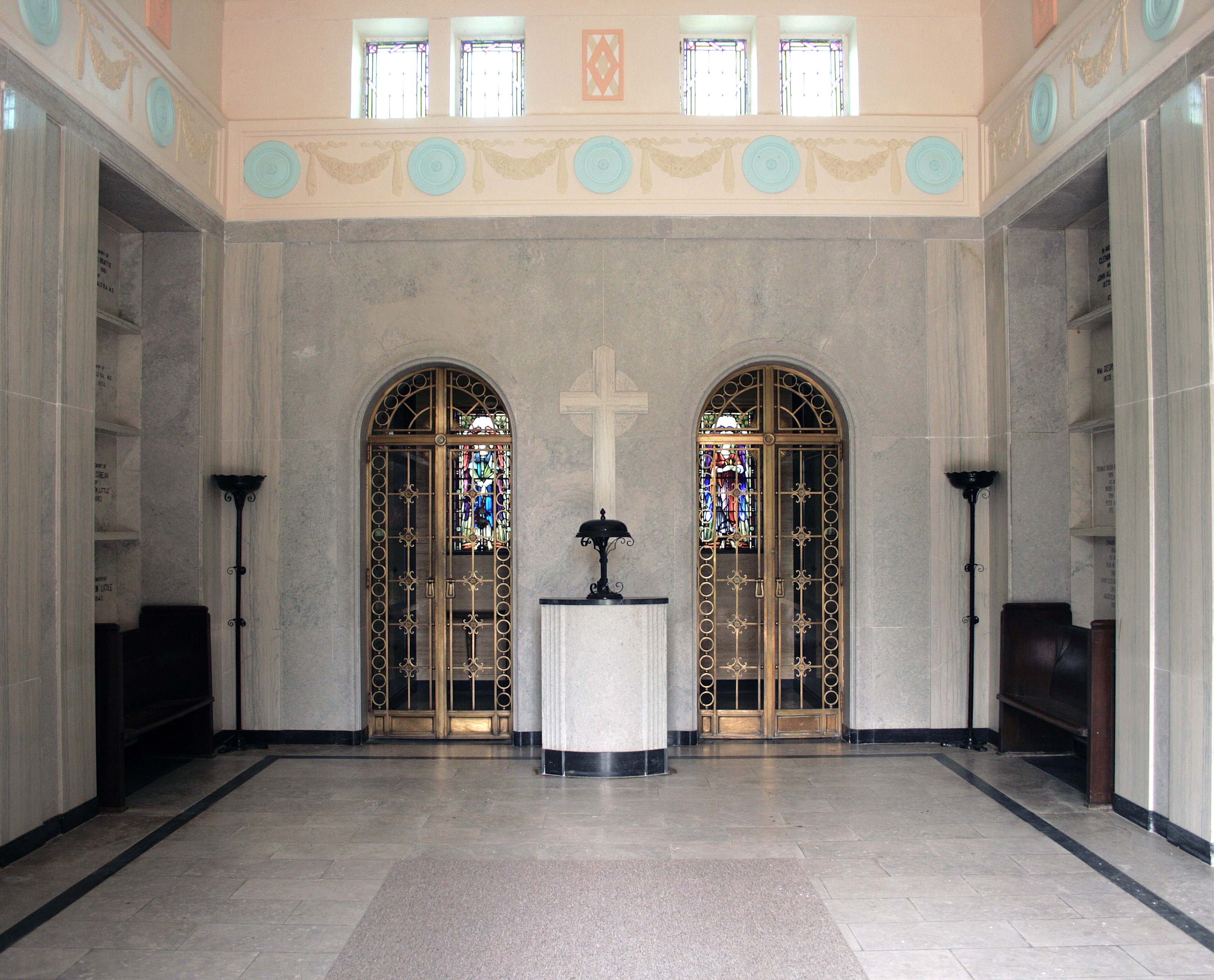
Greenwood is also home to a beautiful mausoleum. Construction of the large mausoleum began in 1927. The Art Deco-inspired exterior is covered in Indiana limestone, while the interior is finished with Italian marble. It also features some lovely stained glass windows and has a large central chapel that is used year-round.1

The cemetery is dotted with a variety of gravestone styles, and there are three memorial garden sections. It also has a section for members of the fraternal organization, The Independent Order of Odd Fellows (IOOF), that features a large stone cairn with IOOF symbolism.

Greenwood also has a Potter’s Field and memorial. The memorial honors the more than 1,000 women, children, and men who were buried in unmarked graves between 1858 and 1989. A potter’s field, also known as poor grounds, stranger’s plot, or indigent plot, is a section of a cemetery where those who are impoverished are buried.4 1,242 people are thought to be buried in Greenwood’s potter’s field4, all unmarked aside from the memorial and one lonely gravestone that sits close to the tree line at the back of the indigent plot. According to an article in the Northern Terminus: The African Canadian History Journal, many of the unknown graves are Black pioneers. Only a small few have been identified.

Among the unidentified graves lies an infant, who in 1889 was found in Victoria Park, wrapped in white cloth. The transcription in the cemetery records, simply reads “Unknown, child found dead”.4

Notable Graves

Greenwood Cemetery is the final resting place of a few notable memorials. William Avery “Billy” Bishop, Canada’s World War I Flying Ace rests here. There are also two other Victoria Cross recipients buried here; LTC David Vivian Currie (World War II) and Thomas Holmes (World War I). 

Speedskater and world-record holder Lela Brooks is also laid to rest here, as well as professional hockey player, Harry “Apple Cheeks” Lumley. Margaret and John Thomson, parents of famous Canadian painter Tom Thomson, are also buried here. 

There are many more notable pioneers and local celebrities buried here, like Charles Rankin, who submitted the cemetery plan and helped bring the cemetery into reality. The best way to pay your respects is with a self-guided walking tour. The cemetery offers three tours that take you to different areas within the large cemetery and highlights all the notable members of the community who are laid to rest at Greenwood. You can pick up the printed tour guides at the cemetery office. The guides include a map, directions, and a little history for each stop on the tour. 

We visited the cemetery twice on our trip to Owen Sound. Because it’s so large we felt we had to. Our first visit was late in the day, so the mausoleum had been locked up for the night. We were losing light quickly, and every turn on the winding paths revealed new sections I wanted to explore further. We visited again the next morning and were able to explore the Mausoleum and walk the sections at our leisure.

Greenwood was full of life during both our visits. In the evening we saw folks paying respects at graves, but also saw families taking advantage of the safe, paved pathways. Two young children were learning to ride their bikes between the rows. 

The next day, we saw many walkers enjoying the scenery, both young and old. We also saw folks walking their dogs and running into others they knew who were doing the same. It was lovely to see a green space in use but also used respectfully.

Thanks for reading!


References:

  1. Greenwood Cemetery Walking Tour “The People’s Cemetery” | Print brochure
  2. Greenwood Cemetery | Owen Sound
  3. The Chapel, Historical Owen Sound | Plaque on the cemetery grounds
  4. Owen Sound’s Greenwood Cemetery “A Land for the Living” | Terri Jackson