Stone Stories: The Voice of the Great Lakes

“They might have split up or they might have capsized
They may have broke deep and took water
And all that remains is the faces and the names
Of the wives and the sons and the daughters”1

These lyrics from Gordon Lightfoot’s iconic song The Wreck of the Edmund Fitzgerald have long been etched in the minds of listeners, who like me, have found themselves enthralled by Lightfoot’s masterful storytelling.

This song, along with many of his other hits, like If You Could Read My Mind and Sundown, have created the soundtrack for countless Canadians, evoking the beauty, melancholy, and vastness of our Canadian landscape.

Today on the blog, I want to share my experience from this past September. I had the opportunity to visit the Gordon Lightfoot Sculpture Park and his final resting place in his hometown of Orillia, Ontario.

Gordon Lightfoot

Gordon Meredith Lightfoot was born on November 17, 19382 in the small town of Orillia, the gateway to the Muskokas.3 From an early age, Lightfoot showed a natural talent for music, learning the piano, teaching himself to play drums, and later picking up the guitar.2 In 1957, Lightfoot left Canada, going to Los Angeles to study jazz orchestration at Westlake College of Music.2 After returning to Canada in the late 1950s, he began to sing folk songs and play guitar around Toronto.2

It didn’t take long for Lightfoot to make his mark on the Canadian music scene. His folk-infused ballads quickly captured the essence of the Canadian spirit. Throughout his career, Lightfoot released over 20 albums and was known for his blend of folk, country, and soft rock—a style uniquely his.2

Lightfoot received numerous prestigious awards throughout his music career, including multiple Juno awards, and was inducted into the Canadian Music Hall of Fame in 1986.2 He also earned honours like the Order of Canada, Order of Ontario, and a Governor General’s Performing Arts Awards.2 Lightfoot was recognized in the Canadian Songwriters Hall of Fame and received a Lifetime Achievement award from SOCAN and the Toronto Music Awards.2

One of my favorite Lightfoot songs is based on a real-life event, the tragic sinking of the S.S. Edmund Fitzgerald. The Wreck of the Edmund Fitzgerald, in my opinion, is one of his most famous and most haunting ballads.

The song is a tribute to all the lives lost in the shipwreck, on November 10, 1975. It’s estimated that between 7:20 and 7:30 p.m. on that fateful day, the ship vanished and sank with 29 men onboard.4

Gordon Lightfoot Sculpture Park

I knew my visit to Orillia would not be complete without a visit to the Gordon Lightfoot Sculpture Park and walking trail. We visited in late September, and the trees were just beginning to change. A perfect day for a walk.

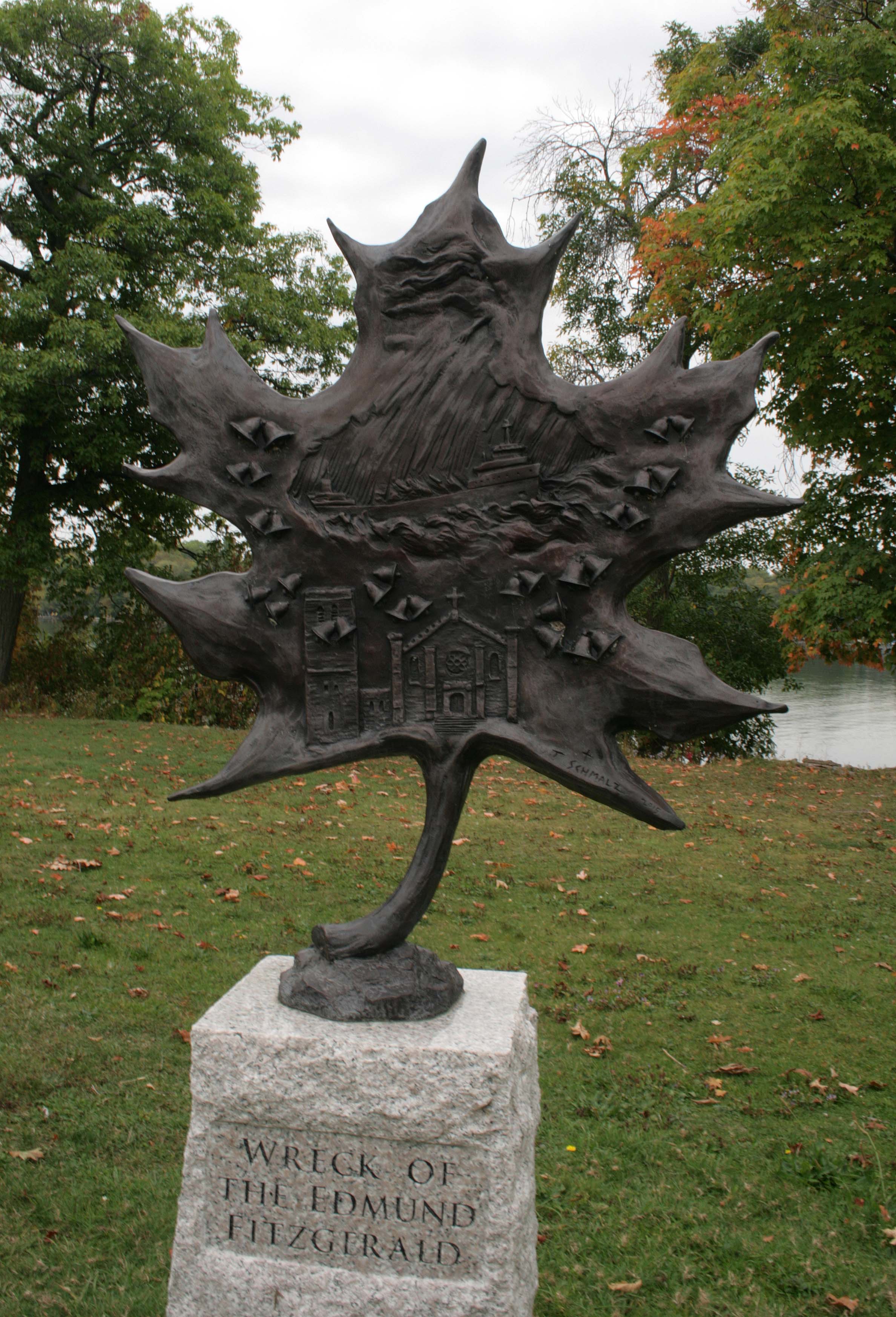
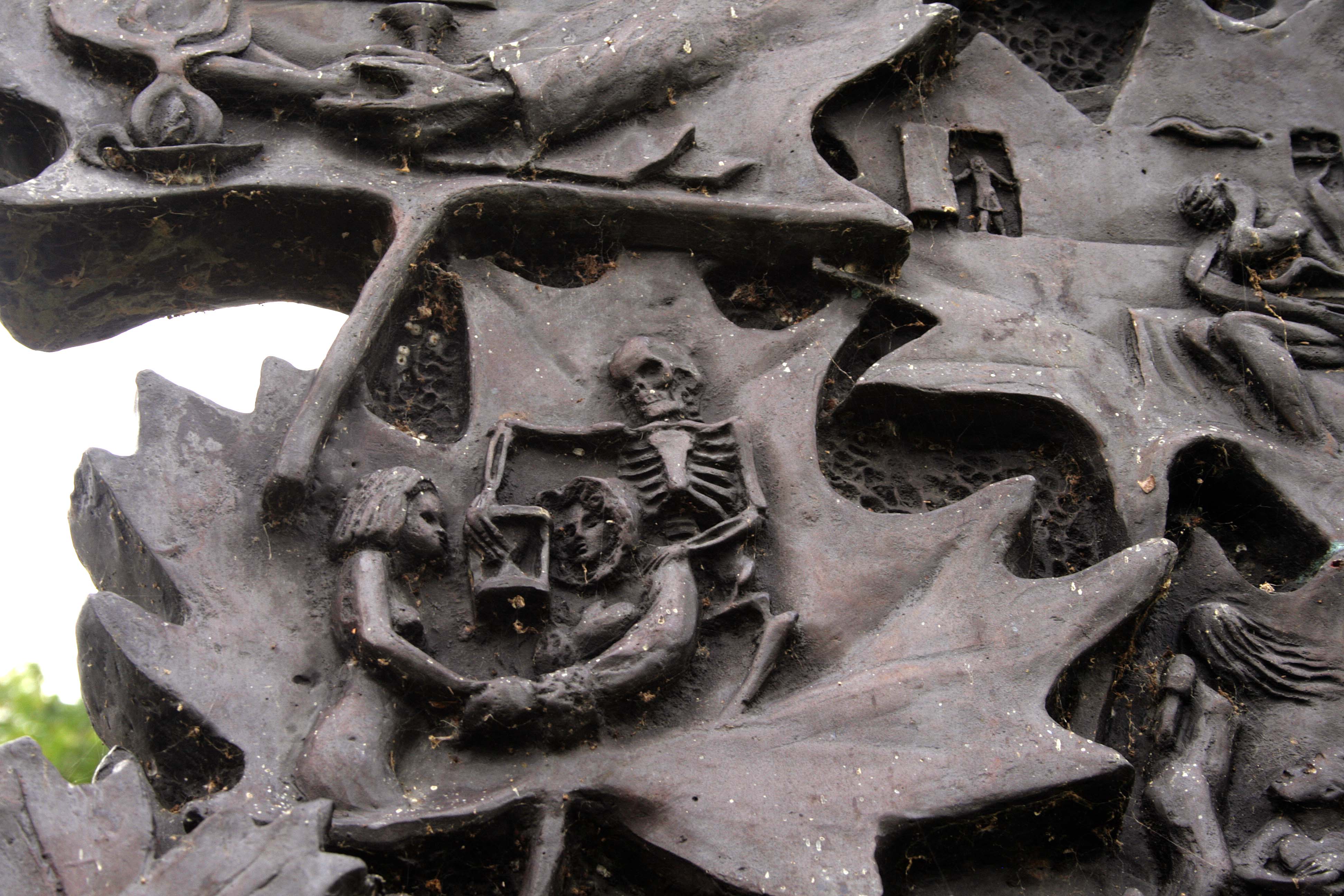
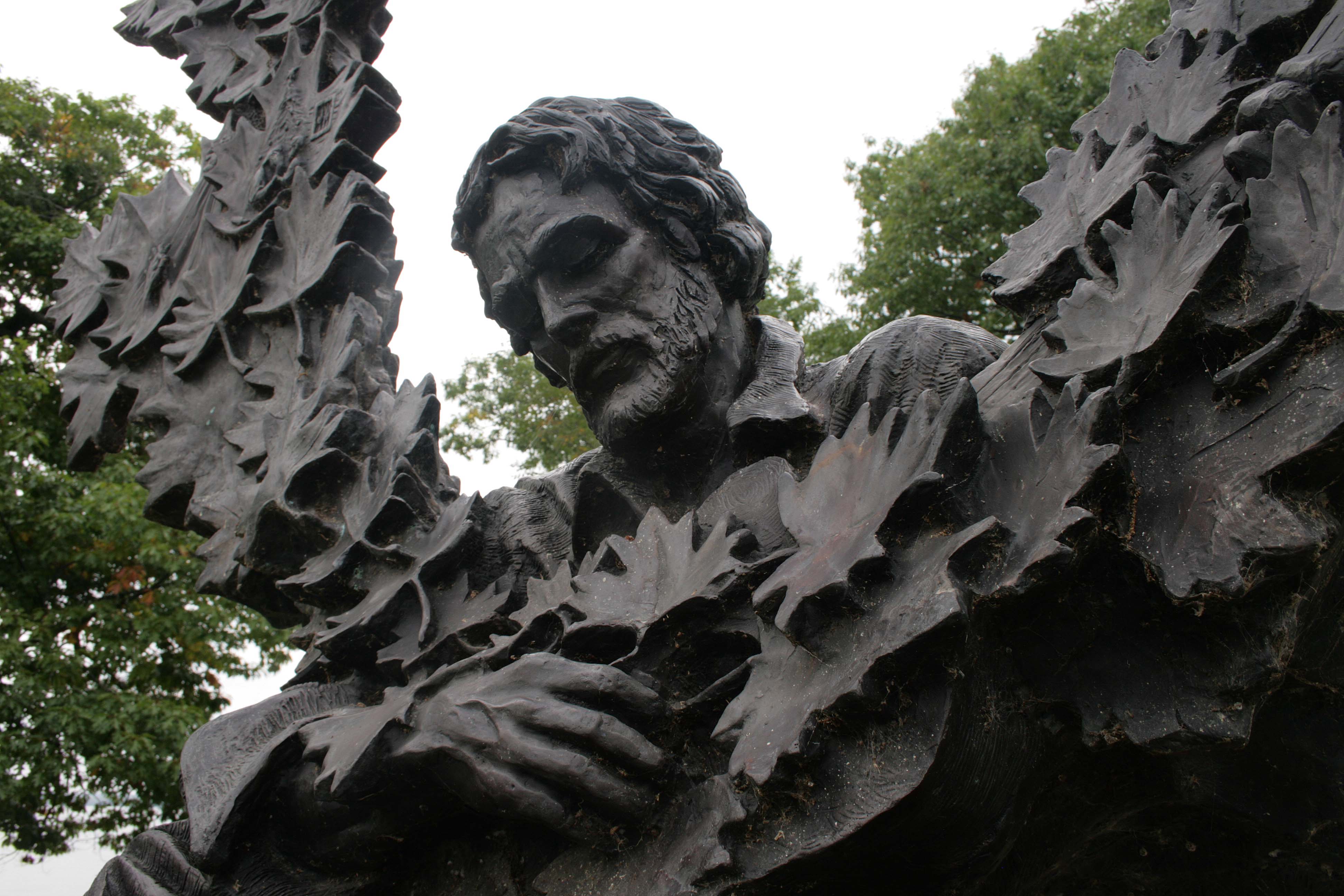
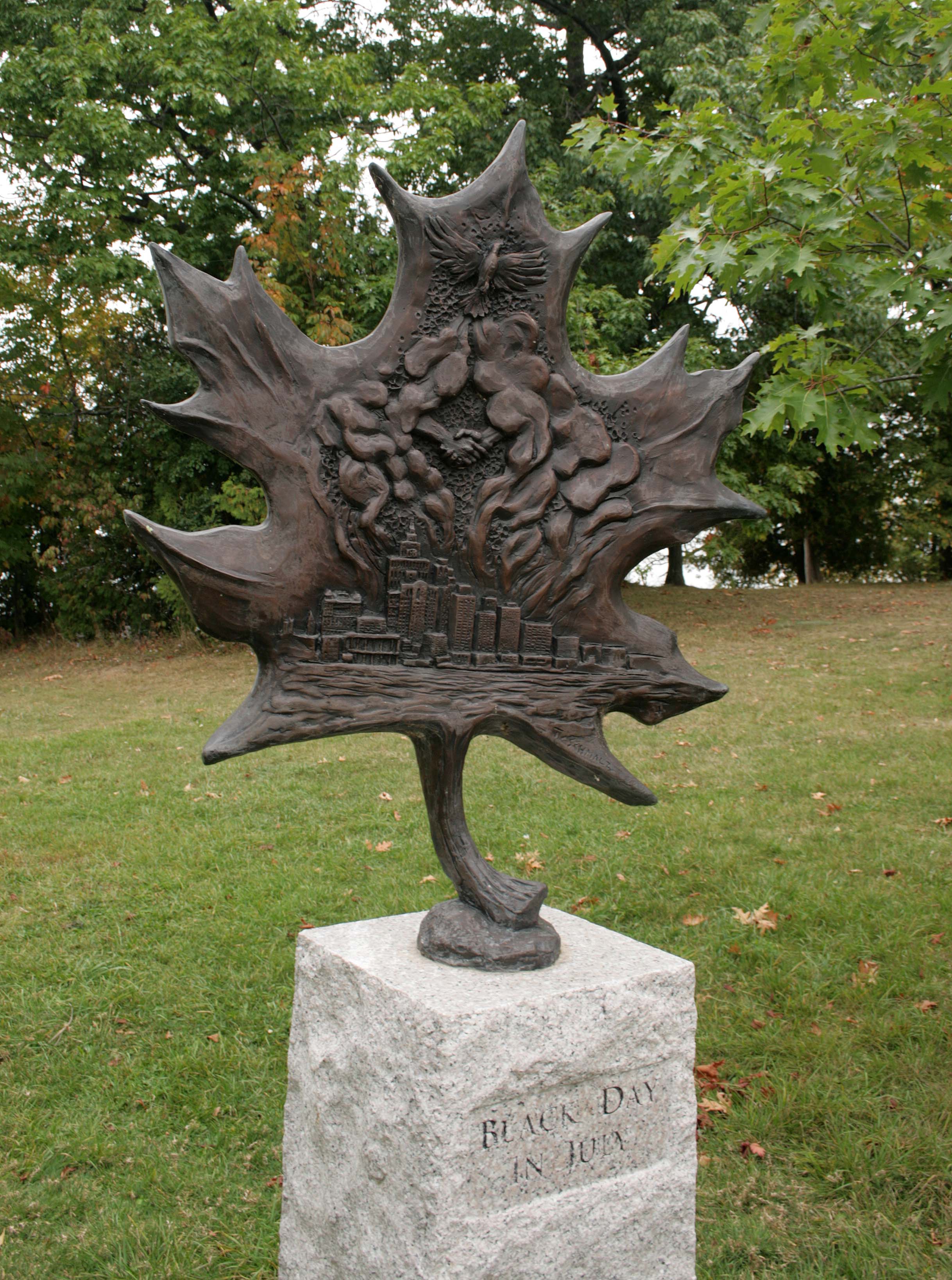
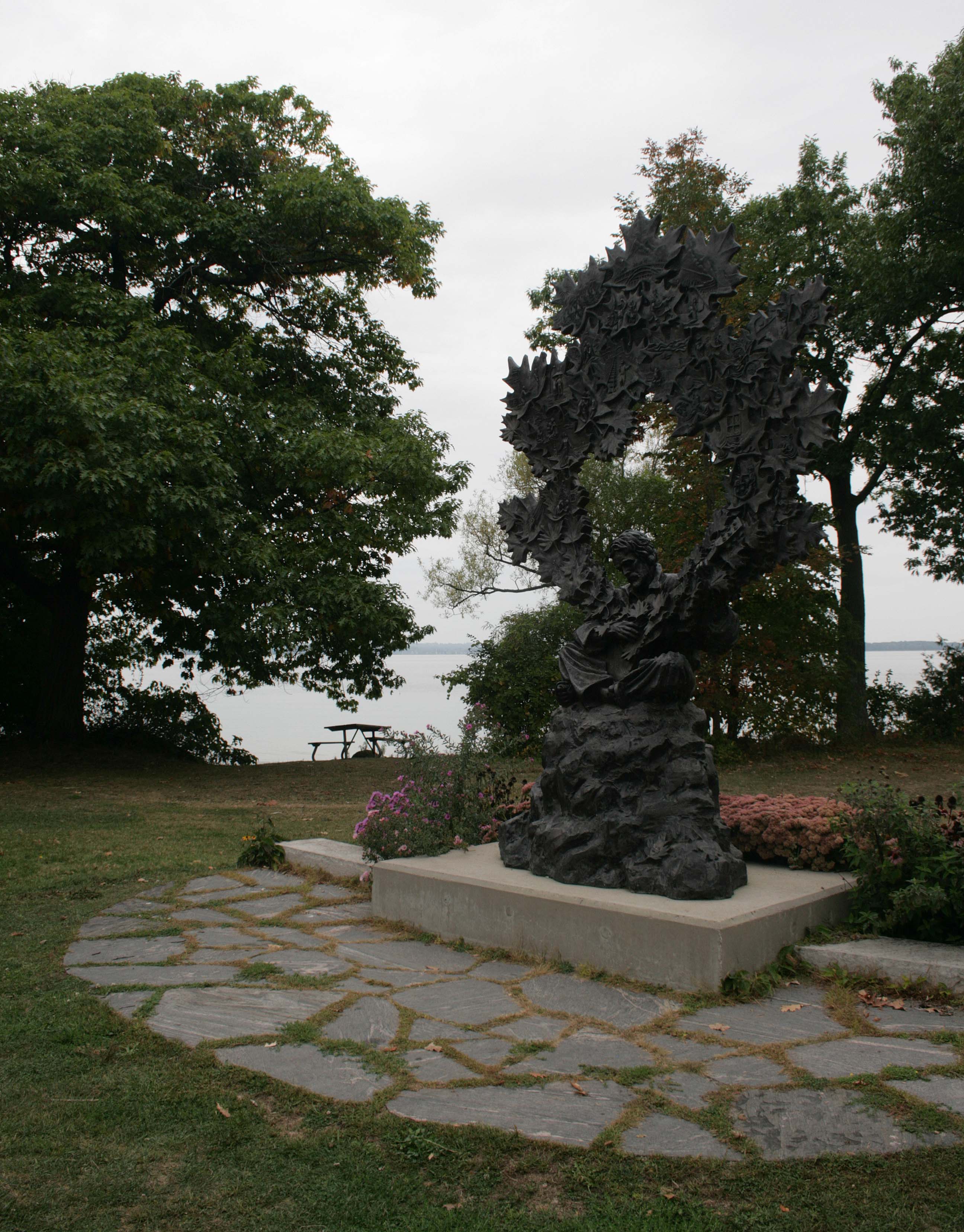
The sculpture park is a beautiful and artistic tribute to Lightfoot’s music and legacy, celebrating both his achievements and his connection to the area. The park’s centerpiece is a striking, larger-than-life bronze sculpture of Lightfoot, sitting cross-legged with his guitar in hand. It captures him in his element, mid-song as his music comes alive around him, depicted on maple leaves that encircle him.
I took some time to reflect while standing before the statue. The park is not just a collection of art pieces, but a reflection of Lightfoot’s connection to the land, his music, and the people who grew up listening to his songs.

My mother and I were not the only visitors to the park that day. There were throngs of people walking the trails, many with large cameras in hand. I noticed they all took some time to admire the beautiful sculpture work and reflect on Lightfoot’s life and work as well.

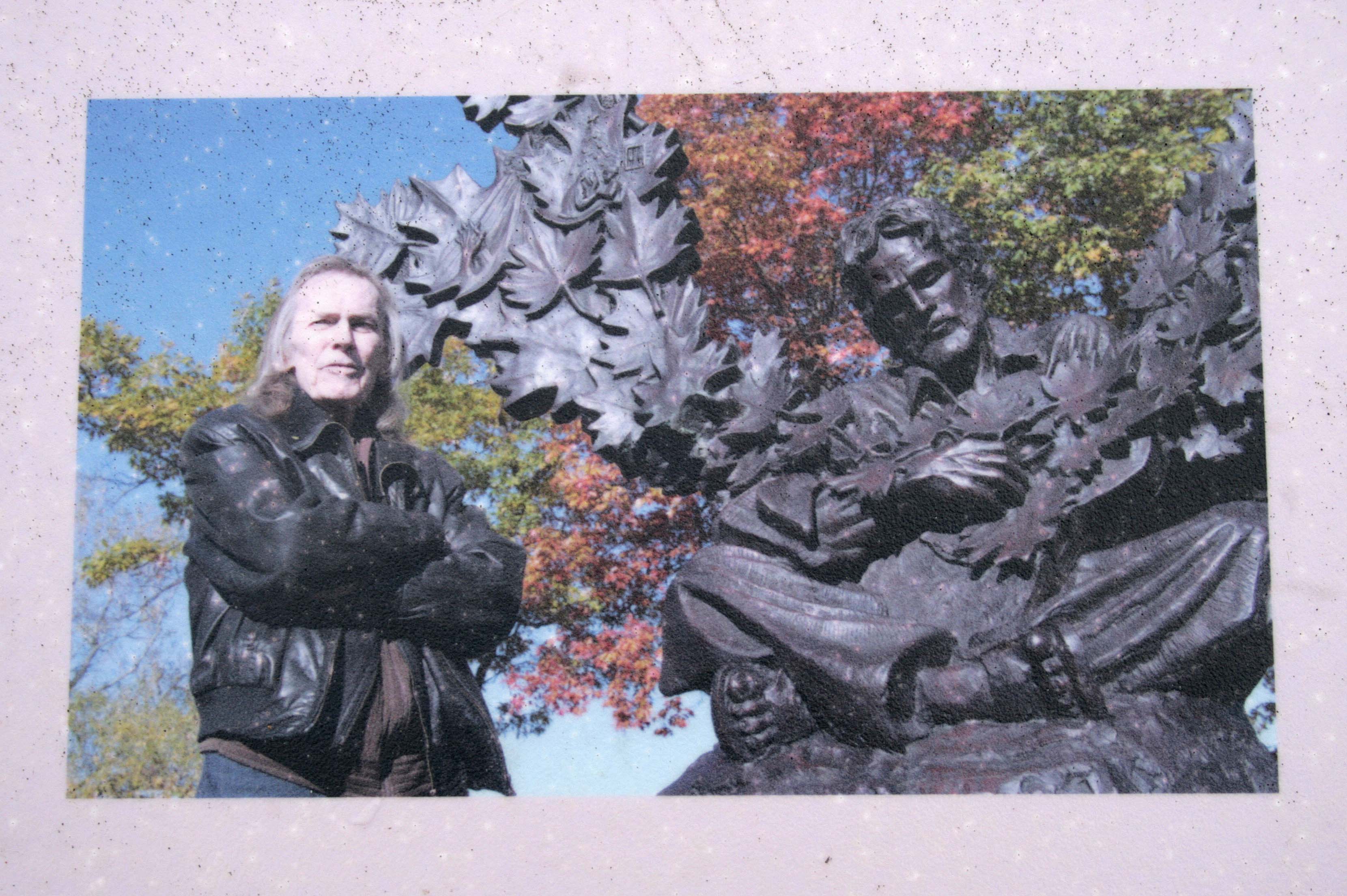
I wondered if Lightfoot himself had known about this sculpture park. I was pleasantly surprised to see a large plaque that showed Lightfoot smiling as he stood beside his younger, bronze self. He was in attendance for the unveiling in 2015, and said humbly “I’m honoured, much more so than any of the honours I’ve received up to this point in time.”5
St. Andrews and St. James Cemetery

After walking the entirety of the walking trail loop, my mother and I made our way back to the car. We decided since the area was so nice that we would have our picnic lunch in the sculpture park, before heading to our next destination—the cemetery.

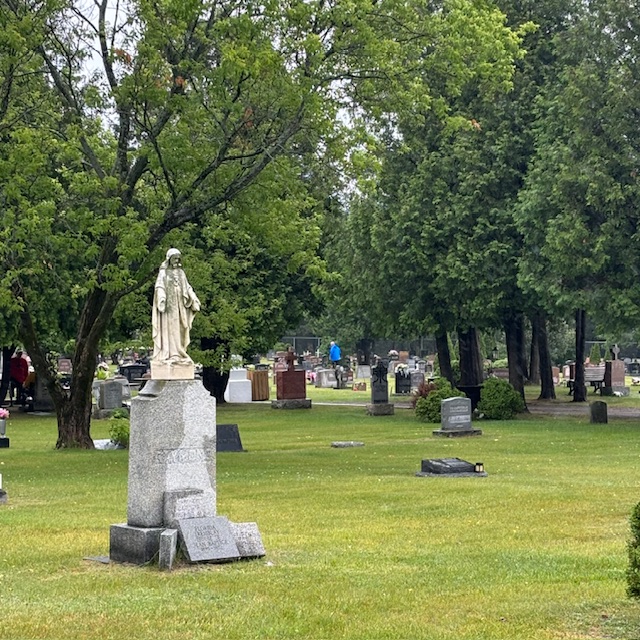
It was a short drive from the park to St. Andrews and St. James Cemetery. The cemetery was quiet and serene, offering beautiful views of the surrounding forest, although we were not the only living souls visiting the cemetery that day. There was an older couple who were also meandering through the cemetery paths.

Gordon Lightfoot passed away of natural causes, in a hospital in Toronto, at the age of 84.6 He was laid to rest in St. Andrews and St. James Cemetery in May of 2023, beside his mother and father. His mother, Jessie Vick Trill Lightfoot passed away in 1998 at the age of 88.7 His father, Gordon Meredith Lightfoot Sr. passed away in 1974 at the age of 63.8

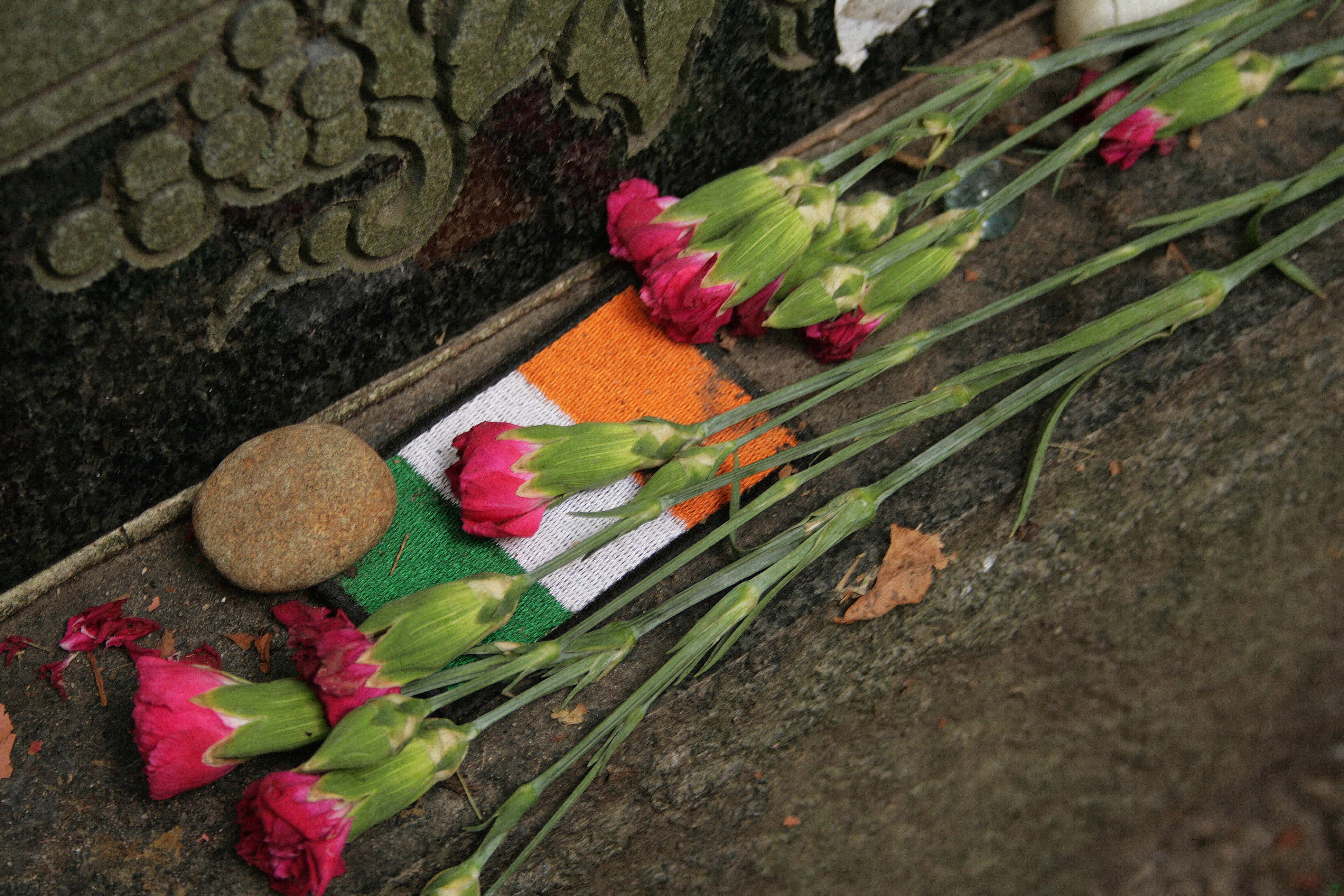
The gravestone is simple, yet elegant—a testament to the quiet humility Lightfoot always embodied, despite his fame. The inscription simply reads “Together Forever”.

Visiting Gordon Lightfoot’s grave and walking the trails at the Sculpture Park in Orillia was a beautiful and memorable experience. I couldn’t help but think about how his music had been woven into the fabric of Canada’s history. More than just melodies, they’re stories that often capture the essence of the Canadian experience.

There is something special about visiting the final resting place of someone whose music has shaped the soundtrack of a country.

What is your favorite Gordon Lightfoot song?

Thanks for reading!


References:

  1. The Wreck of the Edmund Fitzgerald by Gordon Lightfoot | S.S. Edmund Fitzgerald Online
  2. Gordon Lightfoot | The Canadian Encyclopedia
  3. Location | City of Orillia
  4. The Tragedy | S.S. Edmund Fitzgerald Online
  5. Gordon Lightfoot sculpture unveiled in Orillia | Orillia
  6. Canadian singer-songwriter Gordon Lightfoot dead at 84 | NBC News
  7. Jessie Vick Trill Lightfoot | Find a Grave
  8. Gordon Meredith Lightfoot Sr. | Find a Grave
BBQ in a Cemetery

I have picnicked in a cemetery, had a snack in a graveyard, and even enjoyed breakfast there. But I have never had a BBQ in one before. Last Sunday I had the chance to check this off my bucket list!

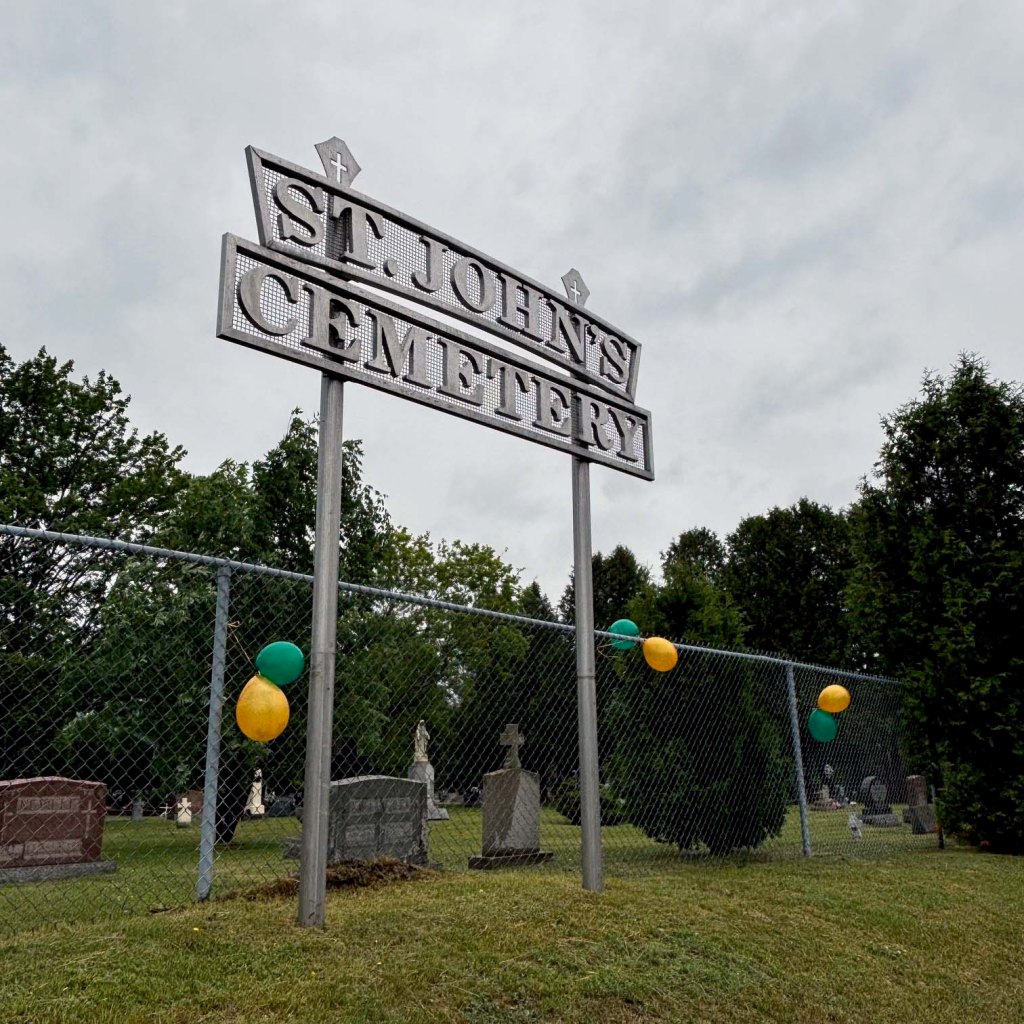
On June 23, the St. John’s Cemetery Volunteer Group held their 8th Annual Cemetery BBQ. This unique fundraiser is held in St. John’s Cemetery in Garson, Ontario—rain or shine.

I have often read about interesting and different events happening in cemeteries, but I have always been too far away to attend. I was very excited when I learned this cool event was happening close to home. I first heard about this fun event a few years ago. I had hoped to attend since I read about it, but it never worked out. This year, I was finally able to check out this neat event.

St. John’s Cemetery was established in 1907. The earliest recorded burial is thought to be Gladys O’Brien, dated May 24, 1907.1 Find a Grave currently lists 3,521 memorials, including one famous grave. St. John’s is the final resting place of professional Hockey player Randy Boyd. Boyd was a defensemen in the NHL for various teams, including the Pittsburgh Penguins, Chicago Blackhawks and the Vancouver Canucks.2 Boyd passed away in 2022, due to a heart attack while out playing golf, just four days before his 60th birthday.2

ST. JOHN’S CEMETERY VOLUNTEER GROUP

The St. John’s Cemetery Volunteer Group was founded in 1993, and for the last three decades has taken great care of the cemetery.3 There are over 20 volunteers in the group and they have completed a multitude of projects to beautify and maintain the cemetery over the years. Their goal is to make the cemetery a welcoming place for those who visit and pay their respects to loved ones.3 Some of their completed projects include rebuilding the cremation gardens and installing benches and greenery.3

The volunteers come from numerous backgrounds and include electricians, mechanics, construction workers, and carpenters.4 They use this expertise in every project they complete. In 2023, the City of Greater Sudbury celebrated the volunteer group by awarding them the Civic Award for Volunteerism in recognition of all their good works.4

The barbecue has become an annual event and invites the community to visit the cemetery and see for themselves all the work the volunteer group has done. It’s also a great fundraising opportunity. This year, all the proceeds will go to the Sudbury and Garson food banks. 

When we arrived we were greeted by green and gold balloons decorating the cemetery entrance. There was a bustle of activity as the volunteers got ready for the crowds. At the entrance was an information table where you could pick up a cemetery map and make a donation.

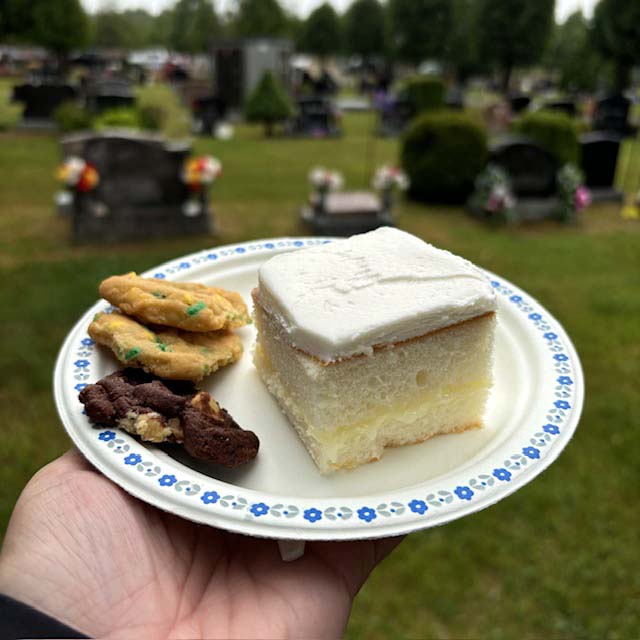
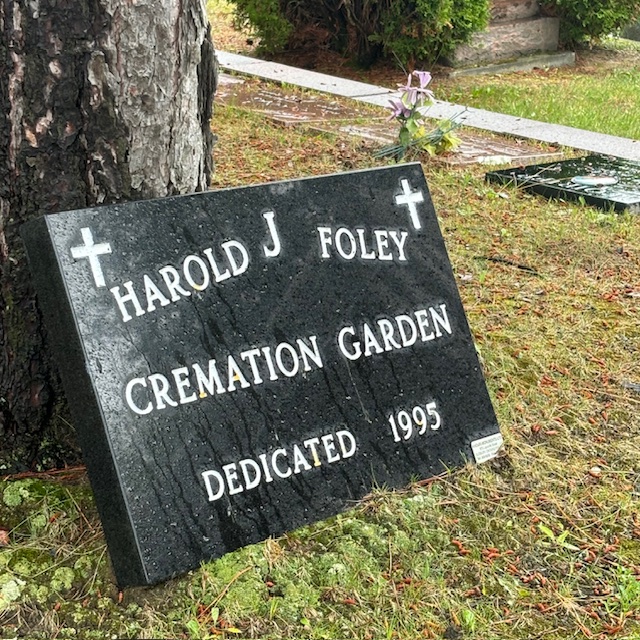
On the grill, they served up hamburgers and hot dogs, with a small bag of chips on the side. They also had some beverages available, as well as some cake for dessert. My mother and I got our lunch from the lovely volunteers manning the grill and then headed to the Harold J Foley Cremation Garden to sit and eat our lunch. 

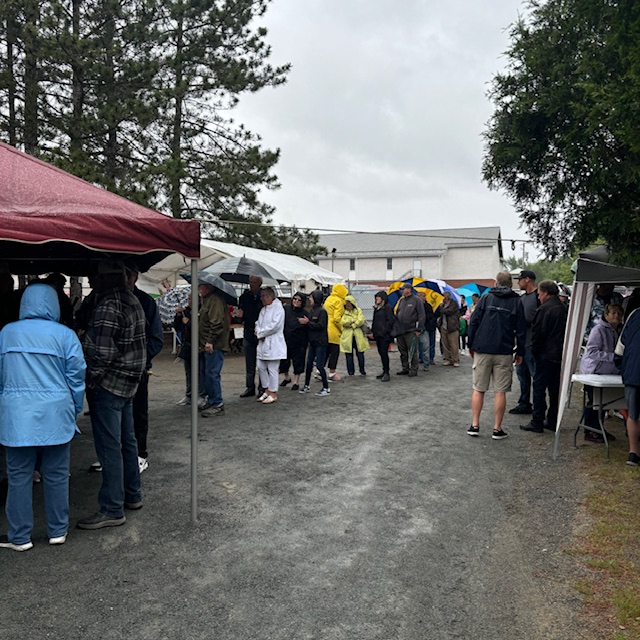
They had a nice set-up under some tents for folks to stay dry while they ate. My friend and her daughter also joined us for the barbecue and ate with us at the table. The long tables encouraged people to sit together and eat, creating community and conversation. 

The conversation mainly focused on the weather though. Unfortunately, the rain would not let up, which led to a chilly and soggy afternoon in the cemetery. But people did not let that stop them. By 1 p.m. there was a long line up at the grill.

After we finished our meal and stopped in at the prize table to buy some tickets, we decided to stroll through the cemetery. We were not the only ones walking the paths that curved through the cemetery grounds. 

I noticed many folks sticking to the paths as they walked the cemetery. I tend to walk directly among the gravestones, so I can get a close look at symbolism or better read inscriptions and epitaphs. It’s also better for taking photos. I was not used to seeing so many people in the cemetery. Normally when taking cemetery photos, I try to avoid getting anyone in the shot, waiting till they move, or trying different angles. There was no avoiding it here, as there were many groups of people exploring the cemetery. 

Shortly after, the cold and wet was making us uncomfortable so we decided to start heading back to the car. There was still a long lineup at the grill, and many folks gathered around chatting. Spirits were high even though the rain was coming down. It would have been a much more enjoyable event if the weather had cooperated, but there was still a great turnout, despite the rain.  

I really enjoyed the cemetery BBQ and am happy there was a good turnout. It was fun to share a meal among the gravestones with friends and to wander the rows with so many people. It was a lively event, despite its setting. I hope the St. John’s Cemetery Volunteer Group is also happy with the turnout, and collected a big sum to donate to charity. 

If I can attend again next year, I will be there! Have you ever had a BBQ in a cemetery before? Or maybe you have been to a different kind of cemetery event? I would love to read about it in the comments.

Thanks for reading!


References:

  1. Garson St Johns Cemetery (Updated 2018) | Ontario Ancestors
  2. Randy Boyd | Find a Grave
  3. Volunteers host Garson cemetery barbecue June 23 | Sudbury.com
  4. St. John’s Cemetery Volunteer Improvement Group celebrates 31 years of dedication, prepares for annual BBQ | Sudbury Star

Stone Stories: A Tap Dancing Legend

Earlier this month, two friends and I traveled to Oakville, Ontario for another birthday cemetery road trip. It was a bit ambitious, with us hitting the road at the crack of dawn. We planned to beat the traffic, but also to get a head start on the day since it would be a four-hour drive, each way.

Since it would be such a long drive, we wanted to give ourselves as much time as possible to tour the town and sight-see. And yes, of course, visit cemeteries. There was one stop that was very high on our list—the final resting place of American actor and tap-dancing legend, Gregory Hines.

Gregory Hines

Gregory Oliver Hines was born February 14, 1946, in New York, New York. Hines began tap lessons at the age of four and would spend much of his childhood practicing and performing alongside his older brother, Maurice Hines.1 

The Hines Brothers performed their song-and-dance act all over the United States. In 1963, their father joined them, turning the duo into a trio. They continued to make a name for themselves, making countless TV appearances.1 But in 1973, Hines recognized that tap dancings popularity was declining and left the act to pursue a musical career and start a band. This was short-lived though, and Hines soon returned to New York and the stage.1

In the early 80’s, Hines made the transition to Television and film actor. His first feature film credit is his portrayal of Josephus in the comedy/musical Mel Brook’s History of the World Part I (1981). Known for his accomplished choreography and tap dancing, many of Hines’ films showcase his dancing. He starred alongside veteran tap dancer Sammy Davis Jr. in the 1989 film Tap. Credited with 49 acting roles, Hines was a successful and versatile actor. Some of his most successful films are Running Scared (1986), Renaissance Man (1994), and Waiting to Exhale (1995). I would be remiss if I didn’t also list his cameo in the fan favorite, The Muppets Take Manhattan (1984).2

In 2002, Hines was diagnosed with liver cancer. He kept his diagnosis private, sharing his health struggle with only family and close friends. A year later, Hines succumbed to the illness en route to the hospital, from his home in Los Angeles.3 Gregory Hines passed away on August 9, 2003, he was 57.  

Hines is remembered by his two children, a son, and daughter, from two previous marriages. His memorial service took place on August 13, 2003, at Saint Monica’s Catholic Church in California. Based on the photographs I found online, it looks like it was an emotional service, with many Hollywood stars in attendance. Hines is laid to rest in Saint Volodymyr Ukrainian Cemetery in Oakville, Ontario, beside his fiancé Negrita Maria Truszyk Jayde.

Saint Volodymyr Ukrainian Cemetery

Saint Volodymyr Ukrainian Cemetery, also known as West Oak Memorial Gardens, is owned and operated by St. Volodymyr Cathedral. It was founded in 1984, and sits on 100 acres of property that overlooks Sixteen Mile Creek. Today, it’s thought to be the largest Ukrainian cemetery in Canada.4 

It was a beautiful sunny day when we visited Saint Volodymyr. Right away, we noticed how busy the cemetery was. Many people were visiting loved ones, cleaning gravesites, and paying their respects.

I knew before we arrived that the cemetery was a large one, so I had come prepared. I wanted to make sure we had plenty of time to pay our respects and wouldn’t spend all our time searching. With coordinates in hand, we were able to drive directly to the grave of Gregory Hines. 

I’m not sure if it was done on purpose, or if it is just because of the sheer size of the cemetery, but there was a perfect parking space just off the path. Just big enough for one vehicle, across from the famous grave. 

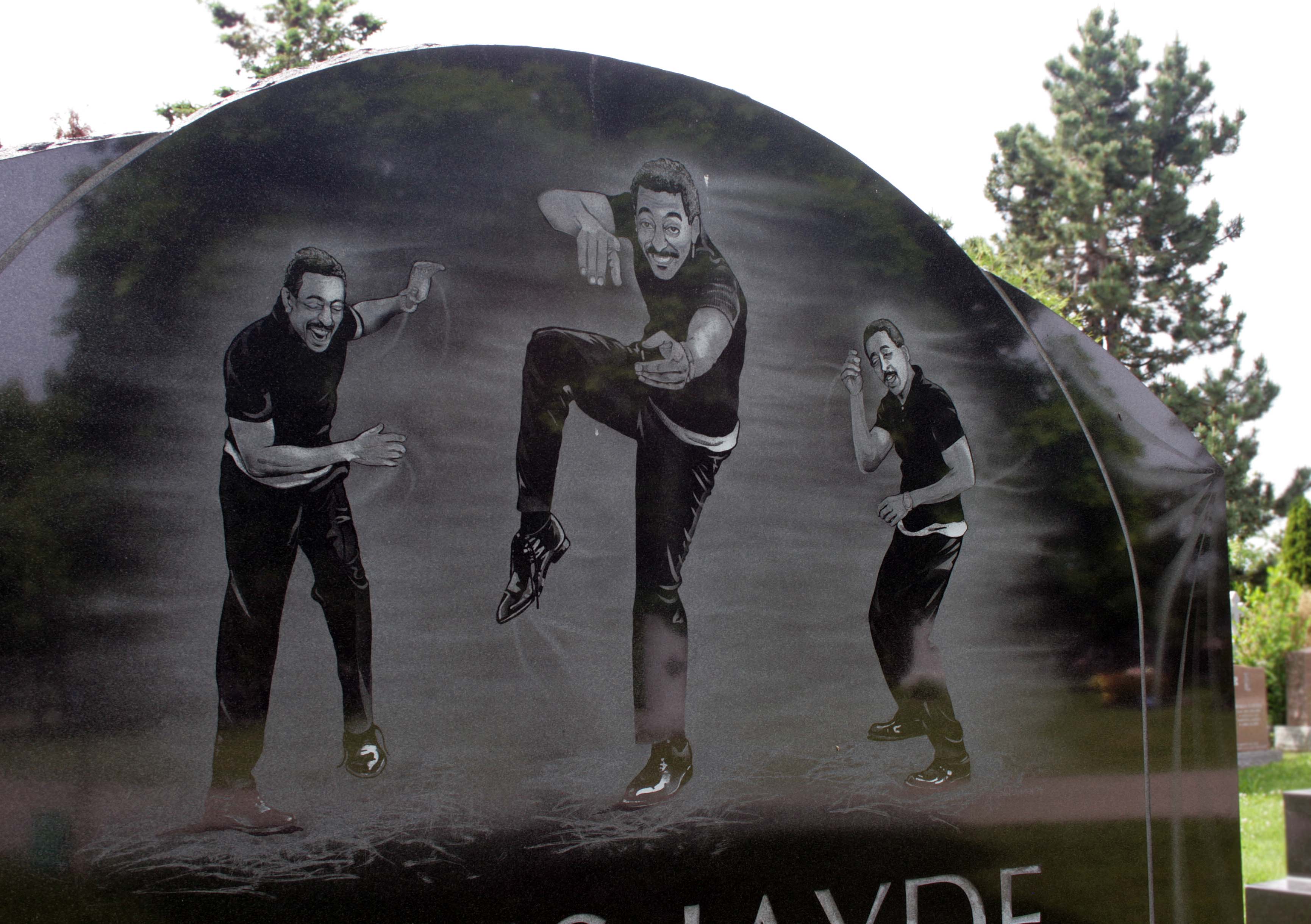
The Hines-Jayde gravestone is a beautiful monument, made from black granite. At the top of the stone is a sandblasted engraving of Hines dancing, framed by what looks like curtains on either side of the stone. He is depicted with a look of joy and happiness on his face. It’s a lovely representation of what he is best known for, and what was such a large part of his life. 

“Hines Jayde / Gregory Oliver / Hines / Feb. 14, 1946 / Aug. 9, 2003 / Together Forever / Negrita Maria / Hines Jayde / July 5, 1958 / Aug. 28, 2009 / So all sing in their festive dance. / “Within you is my true home” Psalms 87:7”

It was easy to tell that we were not the only ones who had made a trip to visit this gravesite. There were many grave goods left behind on the day we visited. These included stones, candles, and oil lamps. There was also a heel and toe plate placed at the base of the gravestone. These plates are mounted to the bottom of a shoe and used to tap dance. 

After paying our respects we wandered the cemetery a little bit, exploring the meandering paths. It’s a beautiful cemetery with its trees creating some beautiful dappled light across the gravestones. I noticed that there were many black granite stones, in some sections that were even the same style. 

I also noticed many oil lamps left at graves. It reminded me of the Jewish practice of leaving pebbles on top of gravestones. Some graves had only one of two oil lamps, while others had handfuls of them surrounding the stones. I can just imagine how beautiful they would look at night with all of the lamps lit up. 

You might be asking yourself how an American-born actor came to be buried in a Canadian cemetery. I had the same question. 

It looks like the reason is because of Hines’ fiancé Negrita Jayde, who is Canadian. A celebrity in her own right, Jayde was an athlete and an author. She was an award-winning professional bodybuilder from Toronto, Ontario, and wrote two books about the subject. She was also an actor, having starred in the action/sci-fi film Safety Zone in 1996.5

Although Hines and Jayde did not get the chance to get legally married before his death, Jayde did take Hines’ last name.6 When Jayde passed away six years, later in 2009 from cancer, she she was laid to rest beside him.

I’m very happy I was able to help one of my best friends pay her respects to one of her favorite actors. I’m also happy that I had the chance to pay my respects as well. Visiting famous graves is always an interesting experience because so often we feel so connected to them, even though we don’t know them on a personal level. TV and film actors, in particular, can feel like our best friends because of how invested we can get into their characters or their careers. So getting the chance to pay our respects at their gravestone can sometimes be a surreal experience.  

Have you ever visited a famous grave? I would love to read about your experience in the comments.

Thanks for reading!


References: 

  1. Gregory Hines | Britannica
  2. Gregory Hines | IMDB
  3. Gregory Hines | Wikipedia
  4. Saint Volodymyr Ukrainian Cemetery | Find a Grave
  5. Negrita Maria Truszyk Jayde | Find a Grave 
  6. Negrita Jayde Trivia | IMDB

Stone Stories: Chasing Tom Thomson Part II

If you’re a long-time reader of my blog, you may remember a post I wrote last year about searching for the first grave of Tom Thomson

Yes, this famous Canadian painter has two final resting places. Although there is speculation on where he actually rests in peace. Last August, my mother and I went on a camping trip in Algonquin Park, to find the spot of his first burial. This August, we wanted to pay our respects at his second, and supposedly final resting place.

Tom Thomson is one of Canada’s most notable painters and a forefather of the Group of Seven. To this day, his death remains a mystery. He was last seen alive on July 8, 1917. He was setting out on a solo trip on Canoe Lake in his signature dove-grey canoe. Eight days later, on July 16th, his body was found floating in the lake. The story goes that he was hastily buried in Mowat Cemetery, on Canoe Lake. When his family found out, they had his remains exhumed and brought to Leith, Ontario to be buried in the Leith United Churchyard.1 Many questions remain; What happened to Thomson? Was his body really moved? This is where the details get muddy, and almost immediately rumors swirled about how Thomson died, and where his resting place truly lies. Over the years there have been many attempts to find out the truth, but nothing conclusive has been determined. Maybe we will never know… 

Since my mother and I had made the trip to visit Canoe Lake last year, we thought it only fitting to make a trip to Owen Sound this summer to pay our respects at Thomson’s second gravesite. Visiting Owen Sound and Leith also gave us the chance to see Thomson’s artwork in person. Our first stop when we arrived in Owen Sound, was to visit the Tom Thomson Art Gallery, lovingly referred to as The TOM.

The TOM, of course, is named after the iconic Canadian landscape artist. It has a nationally significant collection of contemporary and historical art, including artifacts and important works by Tom Thomson and the Group of Seven.2 

My mother and I were both excited to see Thomson’s original paintings, having only seen prints at the art centre in Algonquin Park the summer before. The small collection of his works on display at the time we visited was beautiful. It’s easy to see why he was sometimes called the Canadian Van Gogh. The thing that struck me right away was how small these canvases’ were, small enough to be packed up into a canoe. It was easy to imagine Thomson sitting on the shores of Canoe Lake, bringing these small canvases’ to life. 

Along with seeing Thomson’s beautiful work, we also had the chance to see life as Thomson saw it, through photographs he had taken himself. The exhibit Tom Thomson: Field of Vision presents 40 photographs that were taken by Thomson. His niece Jessie Fisk, discovered a small bundle of photo negatives that were captured by the artist, supposedly taken during the last seven years of his life. This collection of photographs presents an intimate look into Thomson’s life, and experiences, through his own lens.3

It was an interesting experience to look at these photos and to see through Thomson’s eyes, in a way. The photo that stood out to me the most was of a gravestone. It’s the gravestone of James Watson, thought to be the first person buried at Mowat Cemetery. That means that Thomson had visited his future resting place while he was alive. I wonder if he ever thought that he would one day be buried there? It’s interesting to note how legible the stone was at that time. Today, the stone is barely legible, with just a faint indication that it was ever inscribed. 

While visiting the gallery, we had an interesting encounter with another fan of Thomson’s work, a woman visiting all the way from California. She was very interested in Thomson’s life and death and was on a special birthday trip to visit historic Thomson locations. The week before, she had gone with a guide to visit Mowat Cemetery, by canoe. During our conversations, the question of where we thought his final resting place was came up. She seemed relieved when I said I agreed with her and believed he still rests in Mowat Cemetery.

Yes, I think there is strong evidence that he still lies in Mowat. Funny enough, before really knowing Thomson’s full story, when my mother and I left Mowat Cemetery last year, she said that she felt like he was still there. Regardless of our feelings, we still wanted to visit his second grave in Leith, Ontario. 

Leith is a small hamlet, about 13 minutes from Owen Sound. In this beautiful part of Grey County, you can find gorgeous views of Georgian Bay, the Coffin Ridge Boutique Winery, and the historic Leith United Church and graveyard. Unfortunately, I didn’t get a chance to stop into Coffin Ridge, but there is always next time. 

Leith United Church, located on Tom Thomson Lane, was built in 1865, and is considered “one of the finest examples of pre-Confederation architecture in Ontario’s Sydenham Township”.4 The church was closed in 1969, but since 1992, the Friends of Leith Church continue to preserve and restore the building by holding fundraisers and special events, like concerts.4

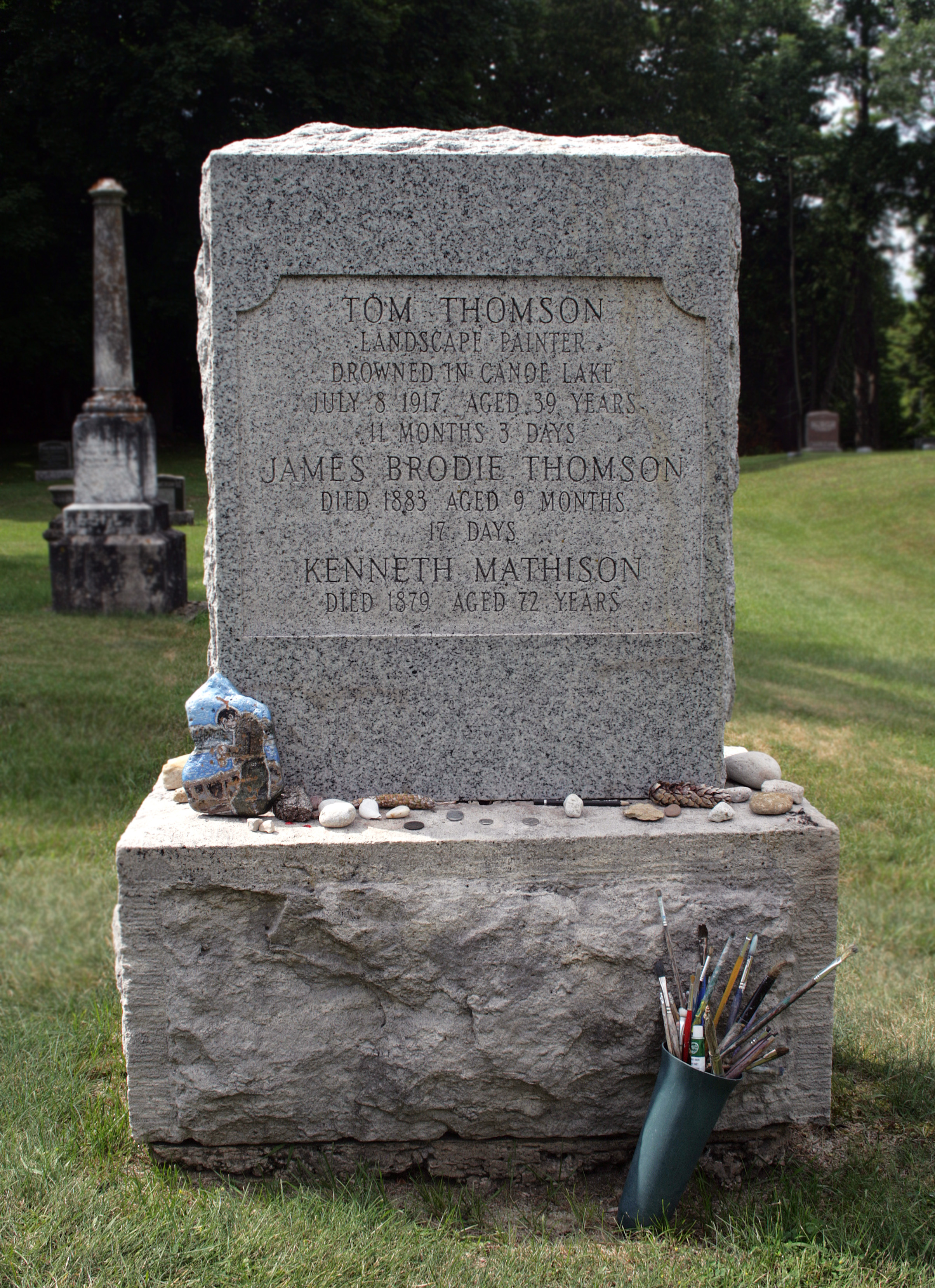
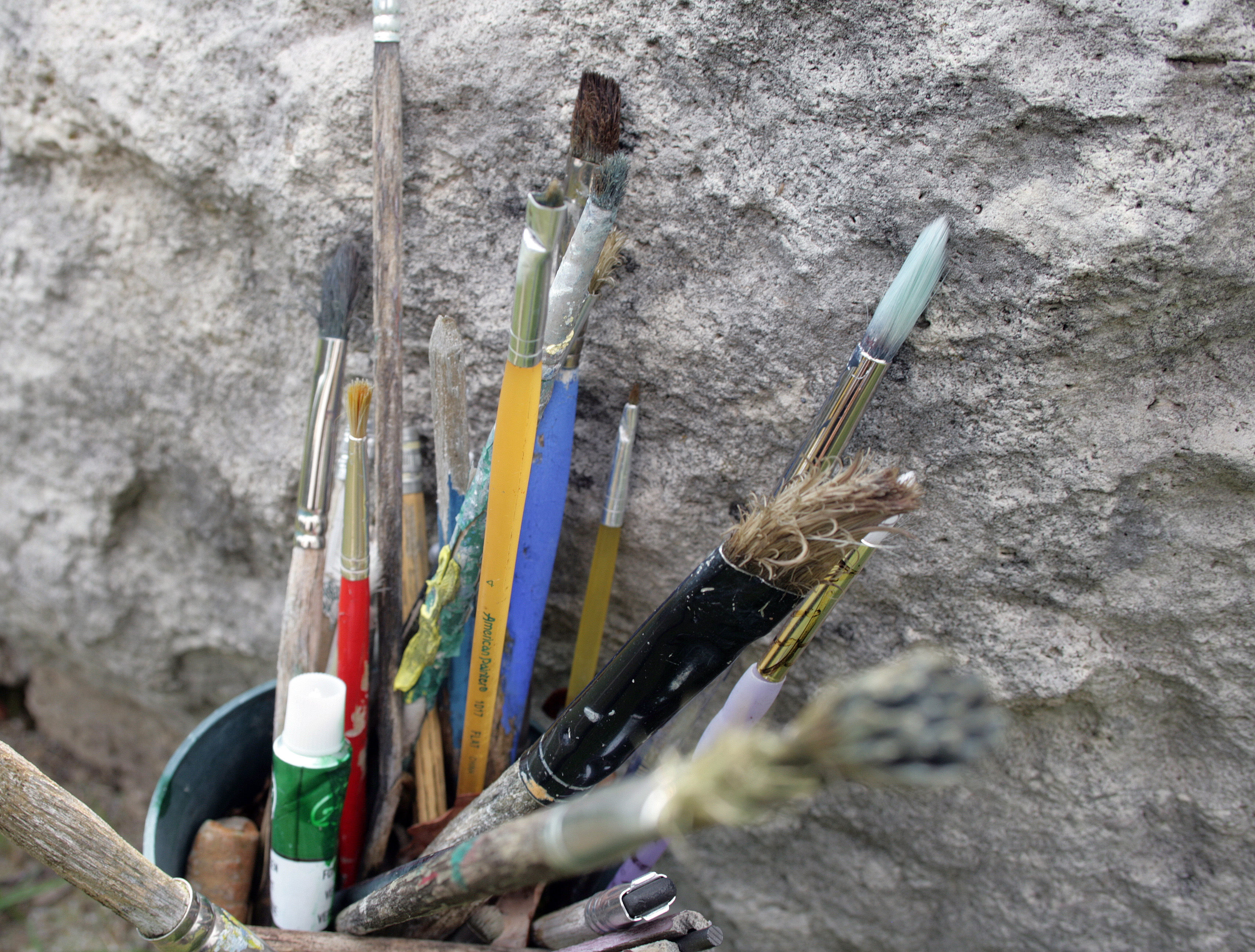
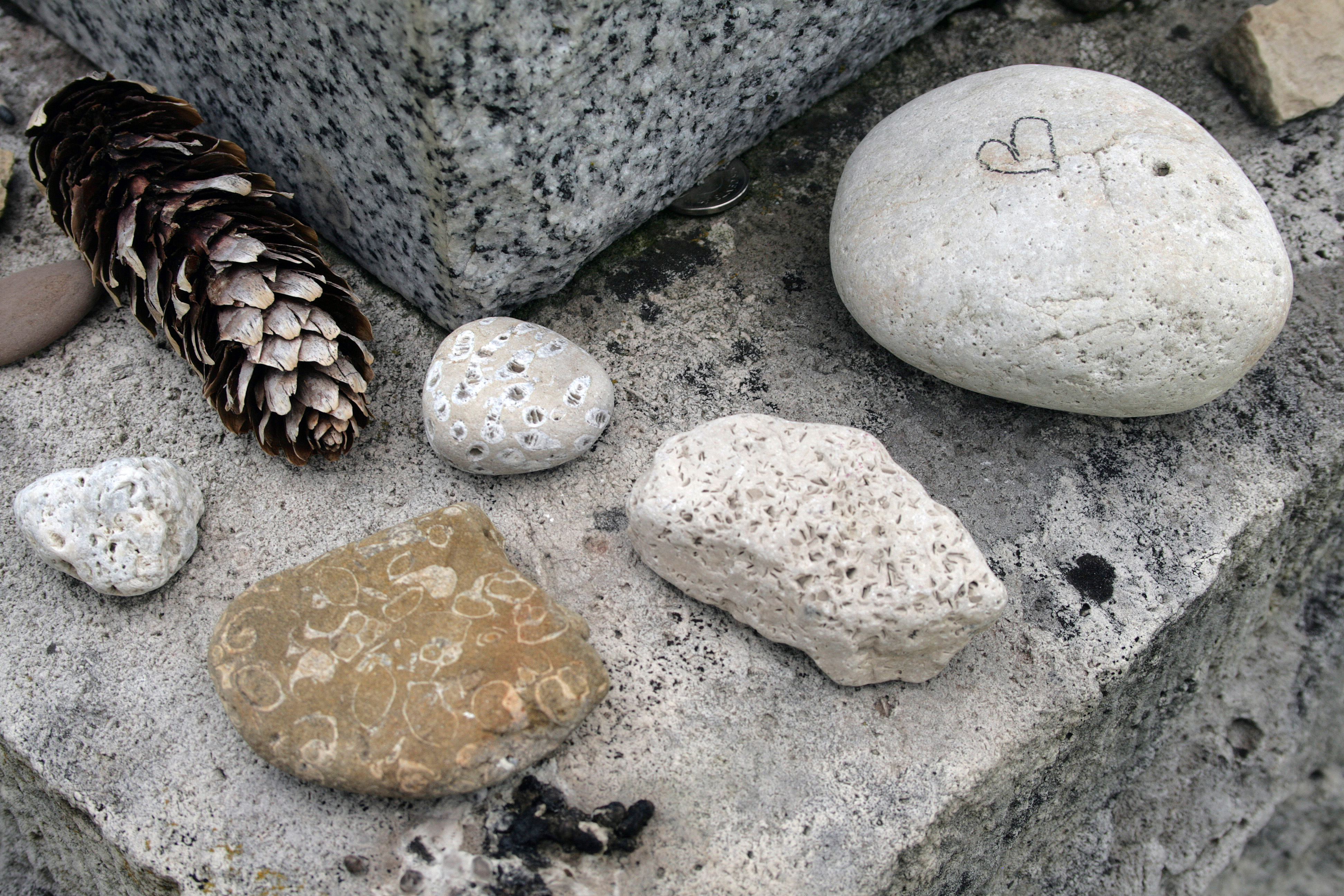
We had a beautiful day for a graveyard stroll, the day we visited the churchyard. It wasn’t hard to find the Thomson family plot at all. There are historical plaques and signs to direct you right to it. The graveyard itself is a decent size, but not big enough to get lost in. We could see right away that Thomson was still very popular as there were many grave goods left at his graveside, including a cup filled with paintbrushes, and a lovely rock painting of Thomson. The base of his gravestone is filled with stones, coins, and other items left by those who have come to pay their respects. 

According to the gravestone, Thomson’s third youngest brother, James Brodie Thomson, who sadly passed away very young, in 1883 also lies here. Along with his maternal grandfather Kenneth Mathison, a member of the Free Masons who passed away in 1879 at the age of 72. Thomson’s oldest brother George Thomson also is laid to rest in the Leith United Church graveyard, with his wife. 

I was curious as to where Thomson’s parents are buried. After some searching on Find A Grave, I found that they are both laid to rest in Greenwood Cemetery in Owen Sound. I did visit Greenwood Cemetery on this trip, but didn’t know to search for them. Thomson’s father, John Thomson, is buried with his first wife, Margaret Mathison, and his sister-in-law turned second wife Henrietta Mathison. 

I love wandering cemeteries and graveyards, but being able to connect a life and legacy to a name makes it even more rewarding. Viewing original artwork, and photographs that Thomson created, built a connection that deepened the experience of visiting his gravesite and paying our respects. And making these connections all started in a cemetery! I loved learning new aspects of Canadian history and how this trip brought us to places we had never visited before. Owen Sound is a beautiful little city and I look forward to having the chance to visit again. I had so much fun on this trip and look forward to where cemeteries will bring me next.

Thanks for reading! 


References:

  1. Death on a painted lake: The Tom Thomson tragedy | Canadian Mysteries.ca
  2. About Tom Thomson Art Gallery | City of Owen Sound
  3. Tom Thomson: Field of Vision | City of Owen Sound
  4. Leith Church | Grey County

Stone Stories: Visiting the Dionne Quintuplets

On my vacation, my Mother and I took a road trip to North Bay, Callander, and Corbeil Ontario to explore and experience the story of Canadian folk figures, the Dionne Quintuplets.

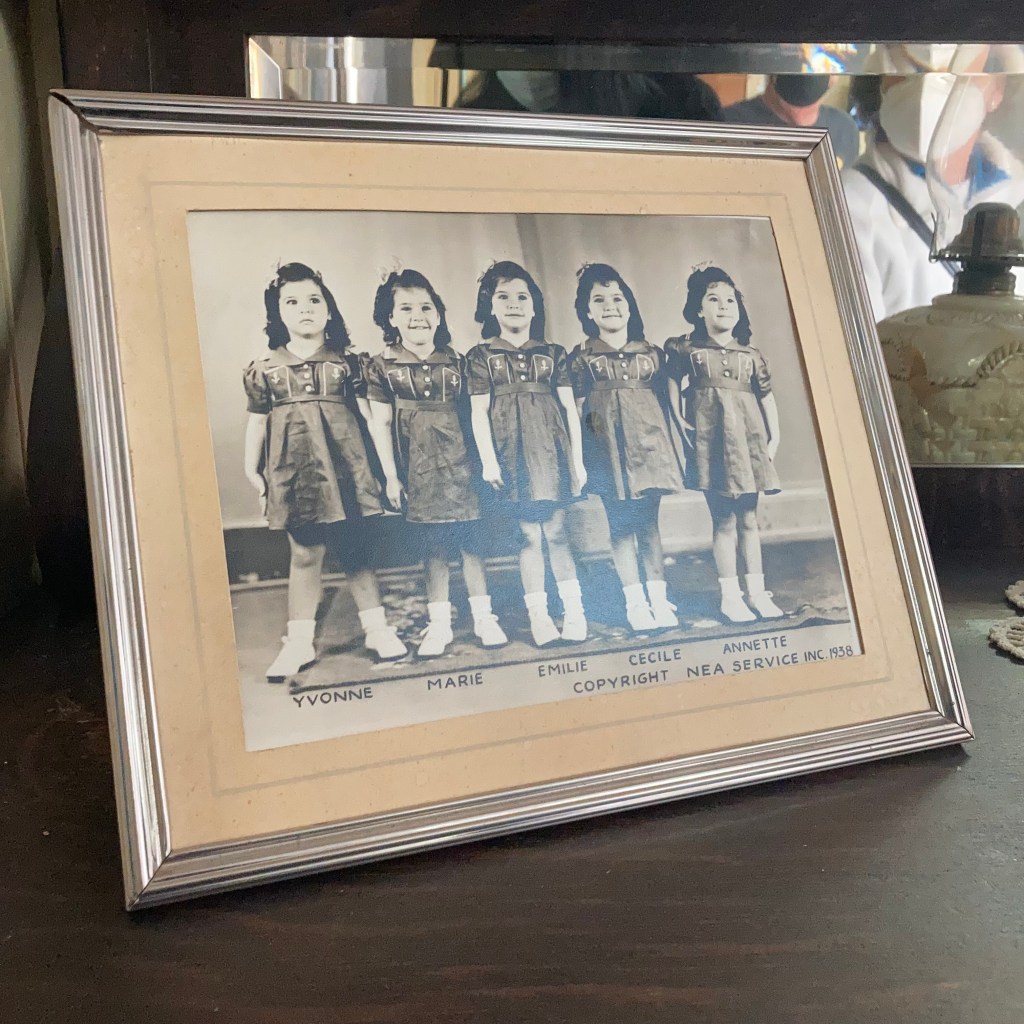
“On May 28, 1934, five identical girls were born to Oliva and Elzire Dionne, a Franco-Ontario family in the tiny community of Corbeil, Ontario. Their births were a miracle of its time during the difficult Depression, the only quintuplets to survive more than a few days. Midwives Douilda (Donalda) Legros and Mary-Jeanne Lebel delivered the first 3 of the quintuplets, and Dr. Allan Roy Dafoe assisted with the final 2 births. The five girls – Yvonne, Annette, Cécile, Émilie, and Marie – became a “good news” story in this challenging time, drawing worldwide attention to the area, and attracting 3 million people to “Quintland” to see and hear the girls at play. Hollywood told their story in 3 movies, while endorsements for commercial products became commonplace.” – Dionne Quints Heritage Board website

In North Bay, we visited the Quint House Museum. This was the actual family home where the quintuplets were born. It houses a lot of original artifacts; such as the bed where they were born, cribs, children’s beds, children’s clothing, and their baby carriages. It also contains a lot of original photos of when the children were born, while they were growing up at Quintland, and also a lot of the advertising that was created using their image. Everything from baby food to GM motors was advertised using the Dionne Quintuplets. Dr. Dafoe profited from the twin’s fame. At the Quint house museum, we were given a tour of the house and memorabilia by an actual relative of the quintuplets, their nephew. His mother was one of the siblings of the quintuplets, making Elzire Dionne his grandmother. He spoke about the quintuplets and what happened to them as a tragedy and preferred to not mention the doctor, as he sees him as a villain in their story.

The Dionne Quintuplets were separated from their family and exploited by the “good” Doctor. As well as extensive advertising using the girl’s image, Quintland was built. A large building complex where people from all over the world came to see the quintuplet girls. The courtyard of Quintland was encircled by two-way mirrors, where visitors could pay a fee to watch the girls as they played. After about 9 years, the girls left Quintland and returned to live with their parents. They had other siblings, as the Dionne’s had had 14 children in total. The quints were essentially strangers to their own family, after having been separated from them for so long. It must have been just as strange for their siblings, hearing about their famous sisters, but not knowing them at all. I can only imagine the strain that would put on the family.

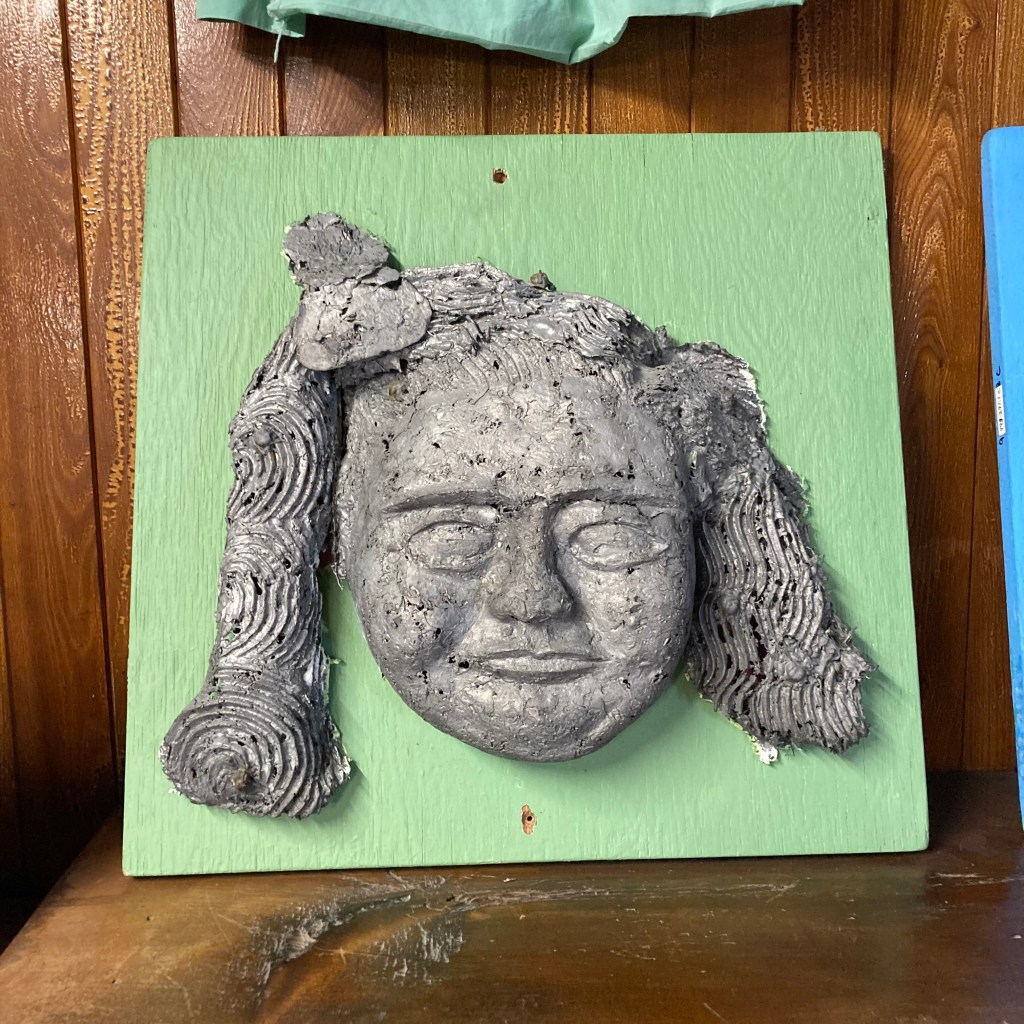
After visiting the Quint House Museum, we traveled a little bit down the road to Callander to visit the Callander Bay Heritage Museum and Alex Dufresne Gallery. This museum is housed in what was once the office of Dr. Alan Roy Dafoe. A turnstile that was used to admit and count attendees to Quintland sits outside. The Quint House Museum also has one of these turnstiles. The house is very rustic and feels like a home office. It would be really interesting if they had a floor plan of what the office looked like when it was in use. This museum also contains a lot of memorabilia of the quintuplets. Some of the more interesting items include lead sculptures of the quintuplet’s faces that were mounted on a clock tower. The sculptures are quite terrifying. There are other exhibits at this museum as well, such as a 1920s barbershop, some military items, as well as logging and mining history.

Visiting the Quint House Museum first made walking around Dr. Dafoe’s office a little awkward. Knowing the pain and strife he had put the family through, made the experience a tad unpleasant. The Callander Bay Heritage Museum also holds an art gallery. We took a little detour from the quintuplet exploration and looked at the beautiful artwork they had on display. We also visited the gift shop and purchased a few things; in particular a recent book on the history of the quintuplets called The Miracle & Tragedy of the Dionne Quintuplets by Sara Miller.

After grabbing some lunch at a delicious little chip stand in Callander, we made our way to Corbeil to visit the Sacred Heart cemetery. As we traveled down a little dirt road and came to the entrance of what looked like the driveway to a farm, I started to realize something.

I had been to this cemetery before!

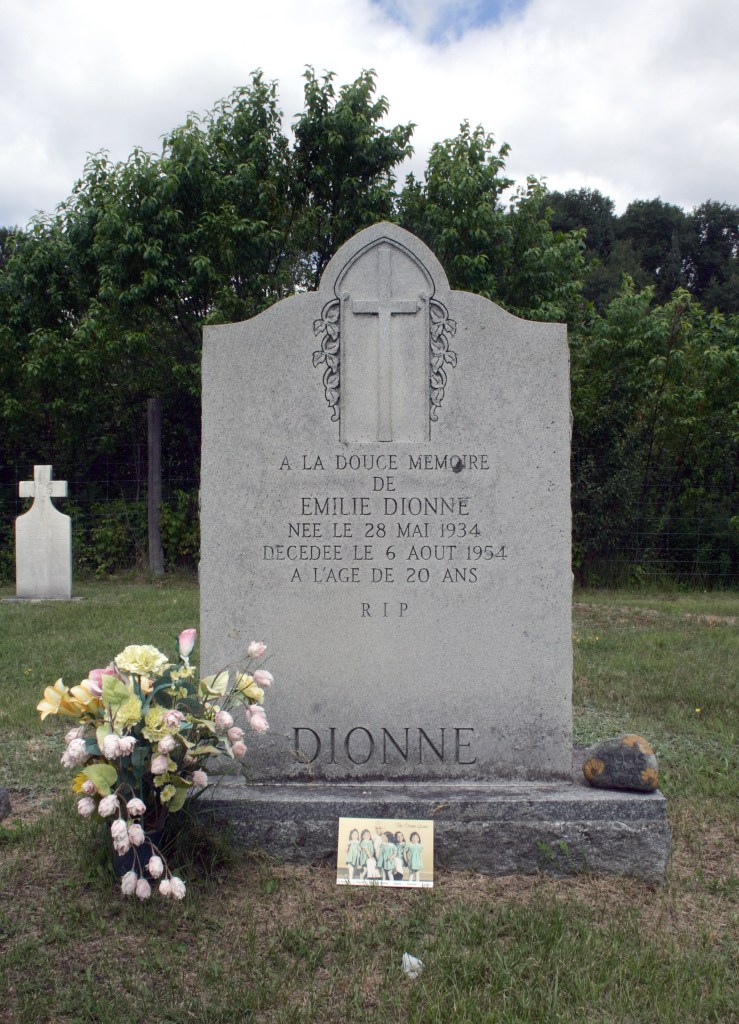
The cemetery is on farm land. Next to the chicken coops and tractors is a fenced-in cemetery with a bright orange diamond sign that says “cemetery entrance”. As we drove up, a man was outside working on his tractor. I rolled down my window and asked if it would be OK if we visited the cemetery. He smiled and nodded, saying that it was fine, so we proceeded to go in. It’s a medium-sized cemetery with a mix of older and newer stones. It looks like it is still an active cemetery as well. The Dionne’s have a small family plot. Oliva and Elzire, the Father and Mother of the quintuplets are buried there. Along with four of their children, one of which is one of the quintuplets Emilie. FindaGrave.com lists two of the quintuplets as being buried here, but I was only able to find the headstone of Emilie.

I have photographed this cemetery before. In 2019 some friends and I did a road trip to North Bay and the area, where we visited the local cemeteries. I’ve even taken pictures of Emilie’s stone. At the time, I recognized the name Dionne, which is why I took the photo. But I never made the connection between the two.

This time I had a postcard with me from the Callander Bay Heritage Museum that showed the quintuplets with Dr. Dafoe. I took photos of the postcard with Emilie’s stone, with no issue. I attempted to take a photo with the postcard on the tombstone for Oliva and Elzire Dionne. The wind was not cooperating and blew the postcard away. After several attempts of trying to get a shot with the postcard, I put it away. Maybe it was the wind, whipping up at an in-opportune moment, or maybe it was the spirit of Oliva and Elzire, refusing to take a photo with an image of the man who took their children away.

There are only two of the quintuplets still living, Annette and Cécile. Emilie and (supposedly) Yvonne are the only quintuplets buried in Corbeil, their home town. The rest of the quintuplets are buried in Montreal. I was curious as to where Dr. Dafoe was laid to rest—he is buried in Toronto.

This was a very educational trip. It was interesting to dive a little deeper into the true story of the Dionne quintuplets. Being able to speak to a blood relative and learn how the family was affected by what happened was truly heart-wrenching and eye opening. The Dionne Quintuplets still draw a crowd, but now for a different reason. In the 1930s it was seen as a miracle and amazing, and no one batted an eye at the fact that these children were taken away from their parents. Today, people are still interested in the Dionne Quintuplets, but the narrative is much different.

If you are interested in learning more about the story of the Dionne Quintuplets, you can visit these links below: