
You expect to find recipes in a cookbook, but sometimes you can find them carved into a gravestone.
That’s what makes cemetery recipes so interesting to me. They’re not just instructions for making something tasty. They’re also a little piece of someone’s life, preserved in stone for anyone who happens to come across it.
This month, I am trying a recipe for Fried Ripe Tomatoes that belongs to Whanitta Sheetz, whose gravestone can be found in Buck Street Cemetery in Pembroke, New Hampshire.
Whanitta (Parry) Sheetz was born in Vermont on September 26, 1941, and spent many years living in Pembroke, New Hampshire.1 She and her husband, Marshall, owned and operated M & W Seafood Co. and the Maple Grove Campground.1 She also worked as a mental health aide at the New Hampshire State Hospital and as a Disaster Team Member for FEMA.1
Family was important to Whanitta. Her obituary describes her as someone who loved spending time with her family, especially cooking and playing games together. She was also an avid Red Sox fan, a nature lover, and an excellent cribbage player.1
Whanitta died on January 16, 2015, at the age of 73. Her obituary notes that she was buried in Buck Street Cemetery that spring.1
What makes her memorial especially interesting is the recipe for Fried Ripe Tomatoes engraved on her gravestone.
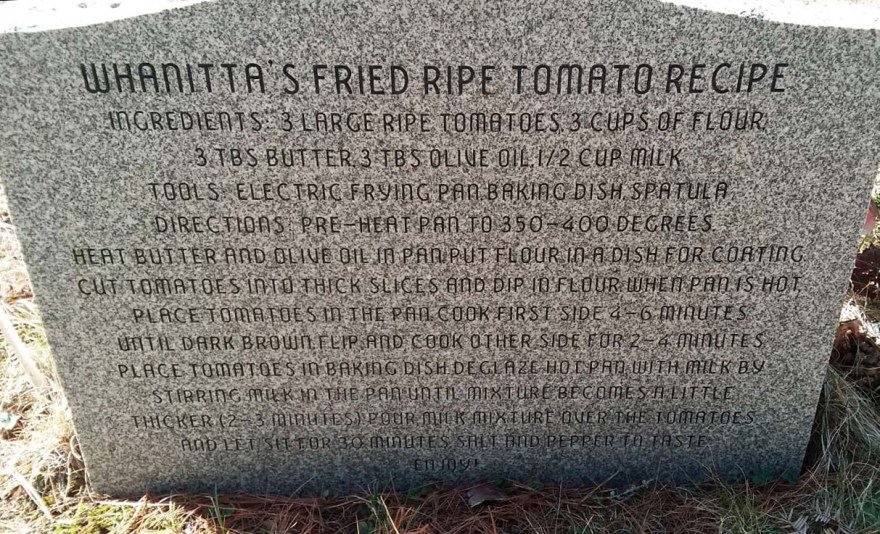
Whanitta’s Fried Ripe Tomato gravestone recipe. Buck Street Cemetery, Pembroke NH. Photo by Find a Grave contributor Randy Cummings.
It’s a simple recipe, and I think that’s part of what makes it a good one. Instead of a traditional epitaph, there’s a little piece of something Whanitta enjoyed making, left behind for others to discover.
The recipe, as engraved on the headstone:
Whanitta’s Fried Ripe Tomato Recipe
Ingredients: 3 large ripe tomatoes. 3 cups of flour. 3 tbs butter. 3 tbs olive oil. 1/2 cup milk.
Tools: Electric frying pan. Baking dish. Spatula.
Directions: Pre-heat pan to 350-400 degrees. Heat butter and olive oil in pan. Put flour in a dish for coating. Cut tomatoes into thick slices and dip in flour. When pan is hot, place tomatoes in the pan. Cook first side 4-6 minutes until dark brown. Flip and cook other side for 2-4 minutes. Place tomatoes in baking dish. Deglaze hot pan with milk by stirring milk in the pan until mixture becomes a little thicker (2-3 minutes). Pour milk mixture over the tomatoes and let it sit for 30 minutes. Salt and pepper to taste. Enjoy.
In the Kitchen
This simple recipe calls for just a handful of ingredients and has clear, straightforward instructions. I picked up a few nice, plump, ripe tomatoes at the grocery store, and that was really all I needed to buy. Or so I thought.
Once I got home and started getting everything together, I realized I didn’t have any milk. Luckily, my mom lives upstairs, so I borrowed some from her. She’s vegan though, which meant I ended up using almond milk instead. It seemed like a reasonable substitute, and luckily, it worked just fine.
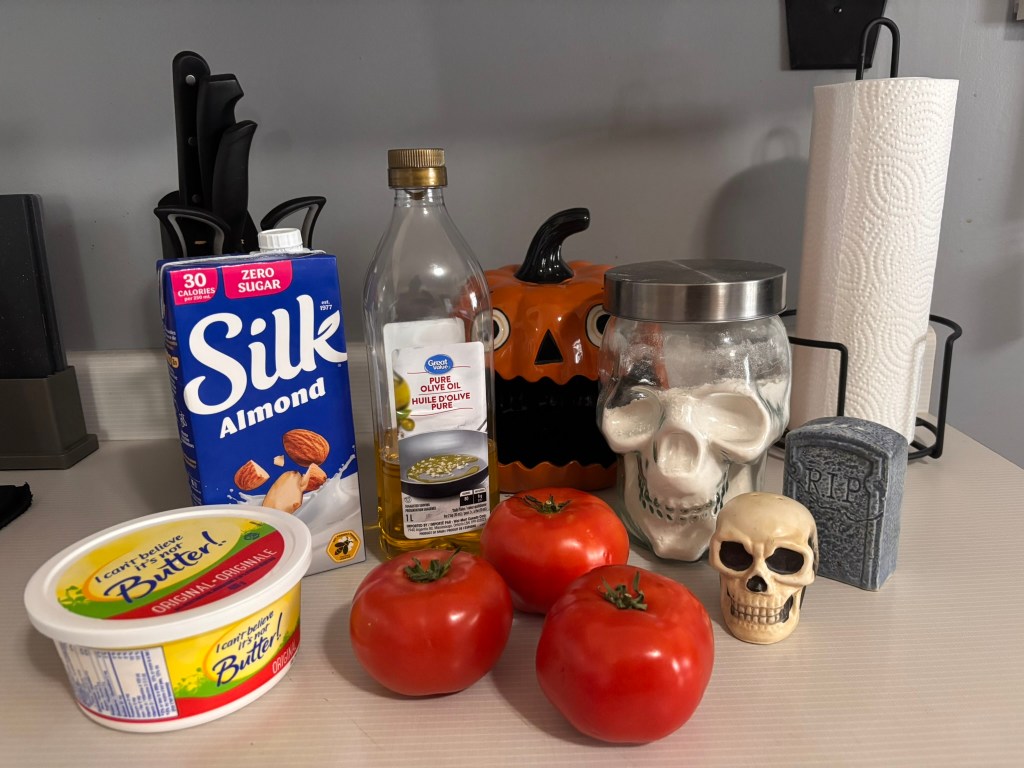
There was one other change I had to make. The recipe specifically calls for an electric frying pan, and I don’t have one of those. So, I used a regular frying pan over medium-high heat and hoped for the best.
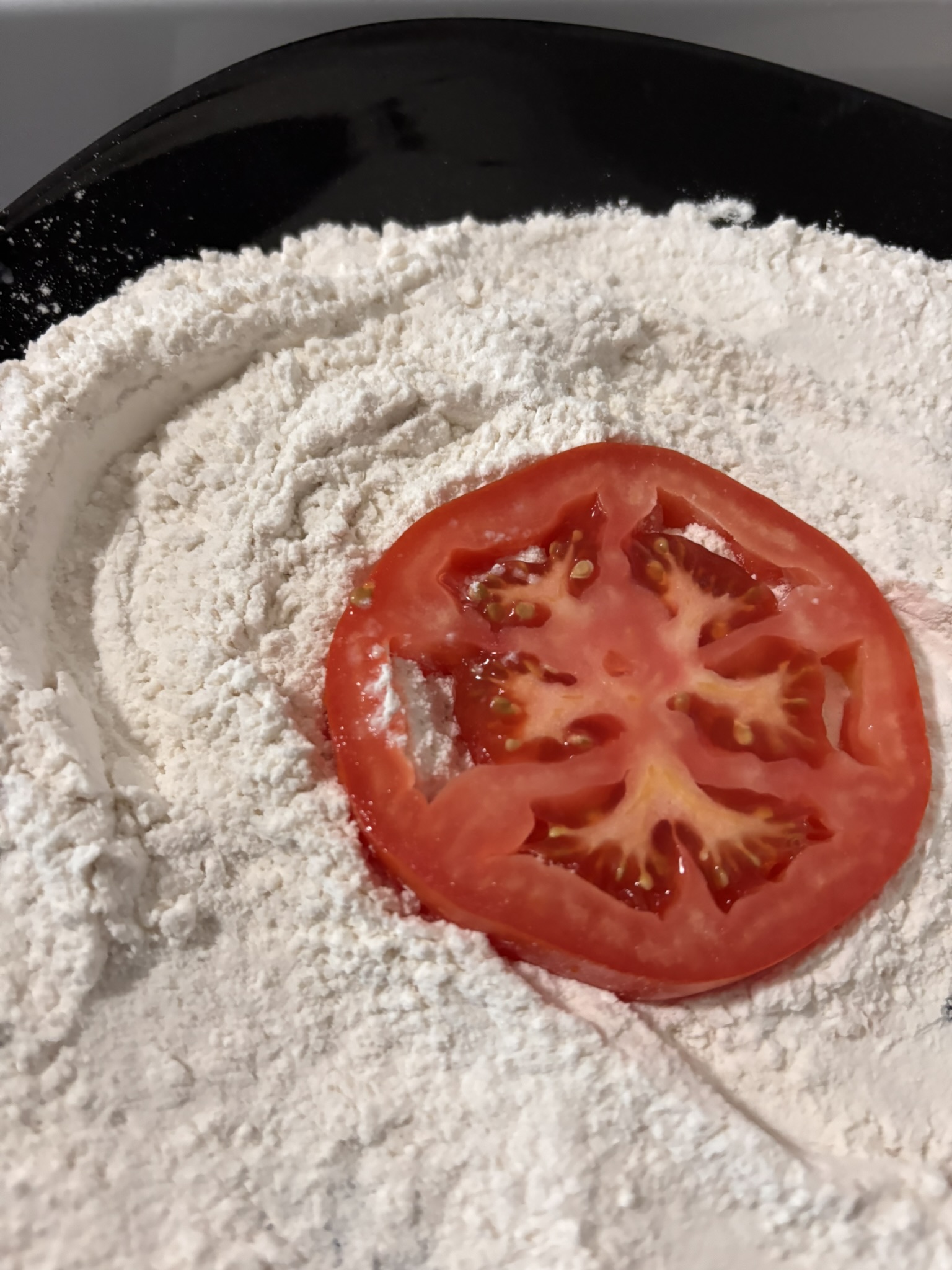
The recipe itself couldn’t be easier. I sliced up the tomatoes and put the flour on a dinner plate to give me a large enough surface to coat each slice. It was fun, although a little messy. I fried the tomatoes for the recommended amount of time and ended up having to cook them in two batches. Once they were done, I transferred them to a baking dish.
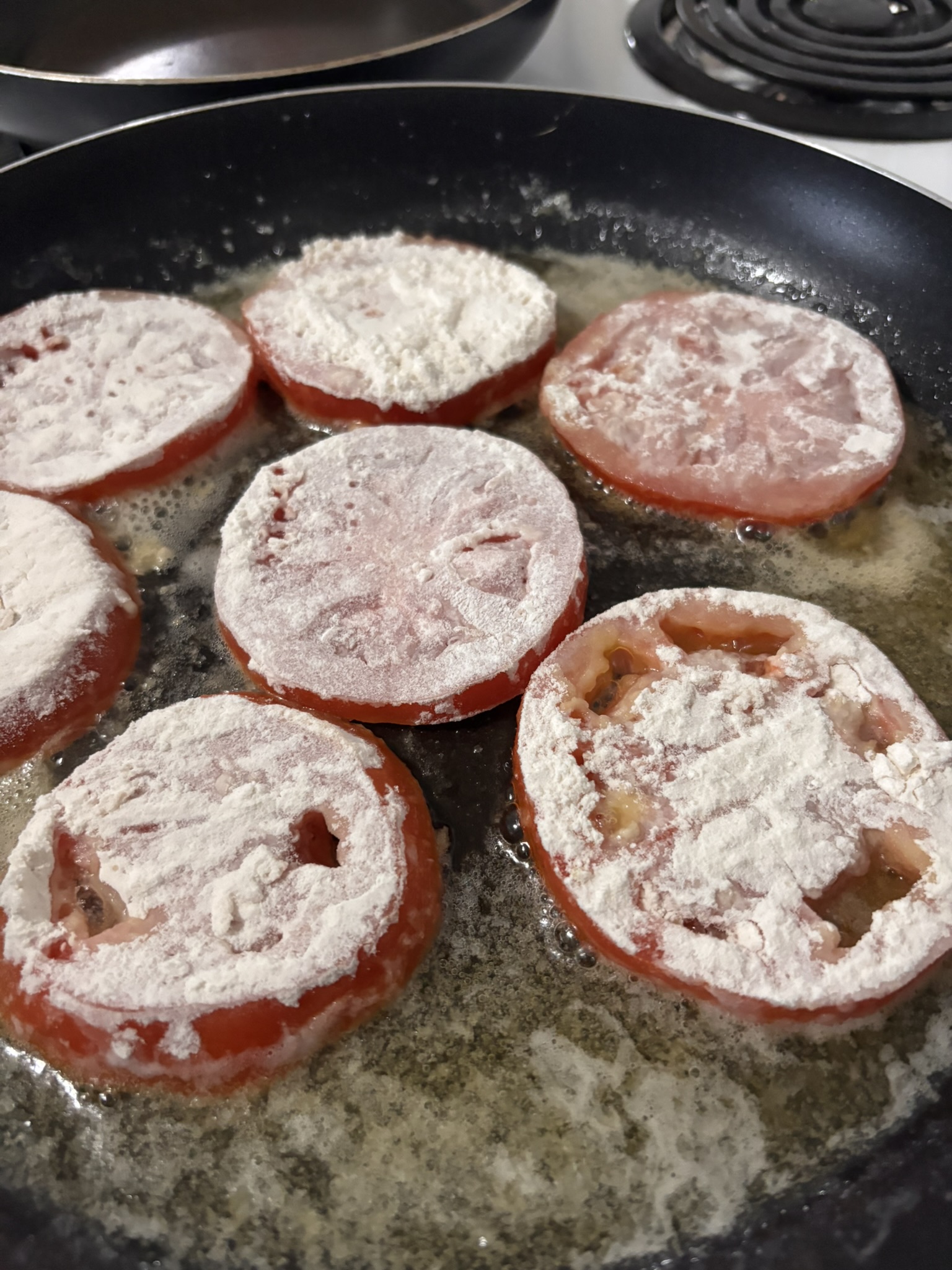
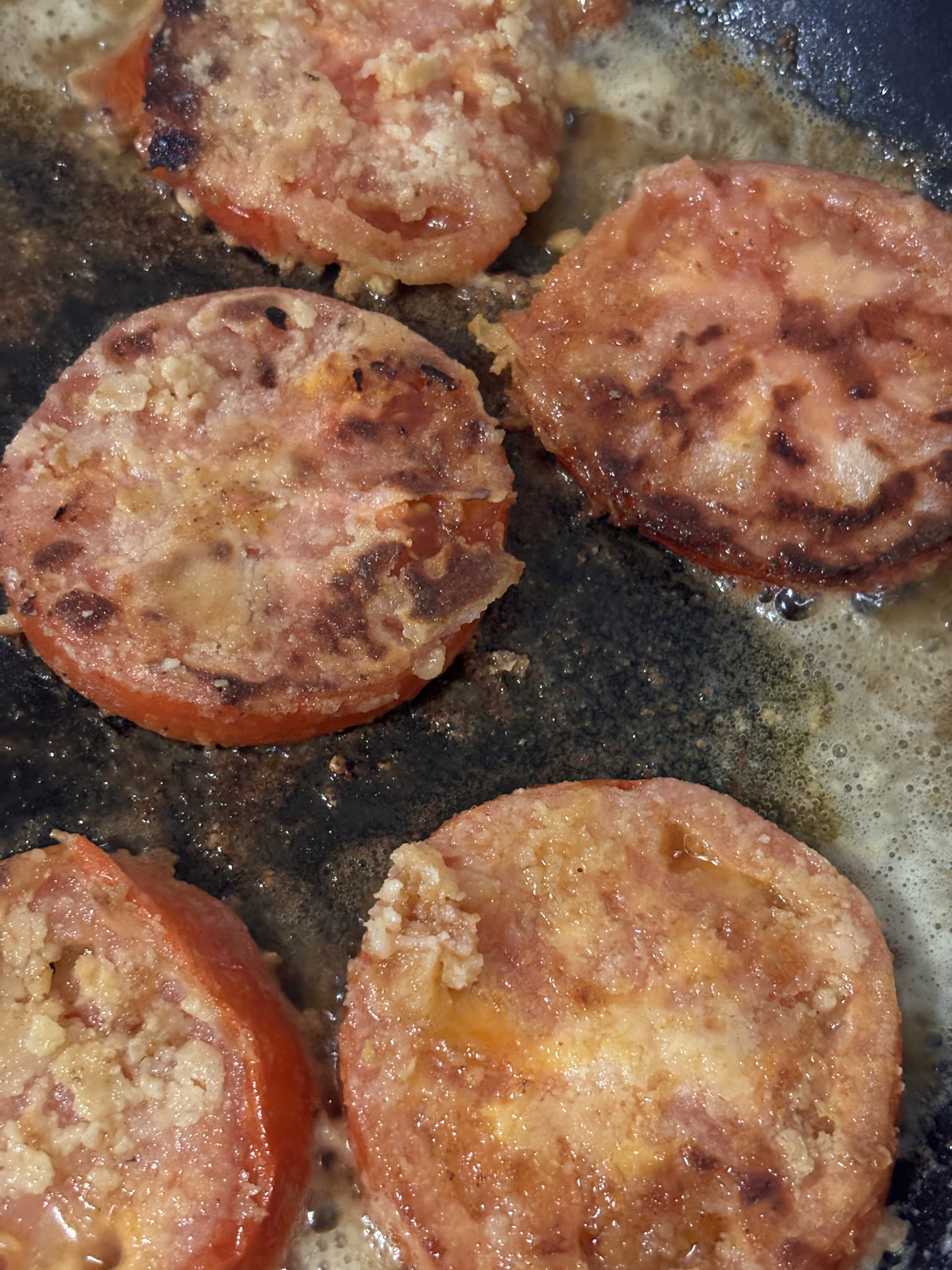
I then deglazed the frying pan with the almond milk and poured the mixture over the fried tomatoes. While they sat, I pan-seared a small steak to go with them.
I will admit I didn’t let them sit for a full 30 minutes. Once my steak was ready, I plated everything and dug in.
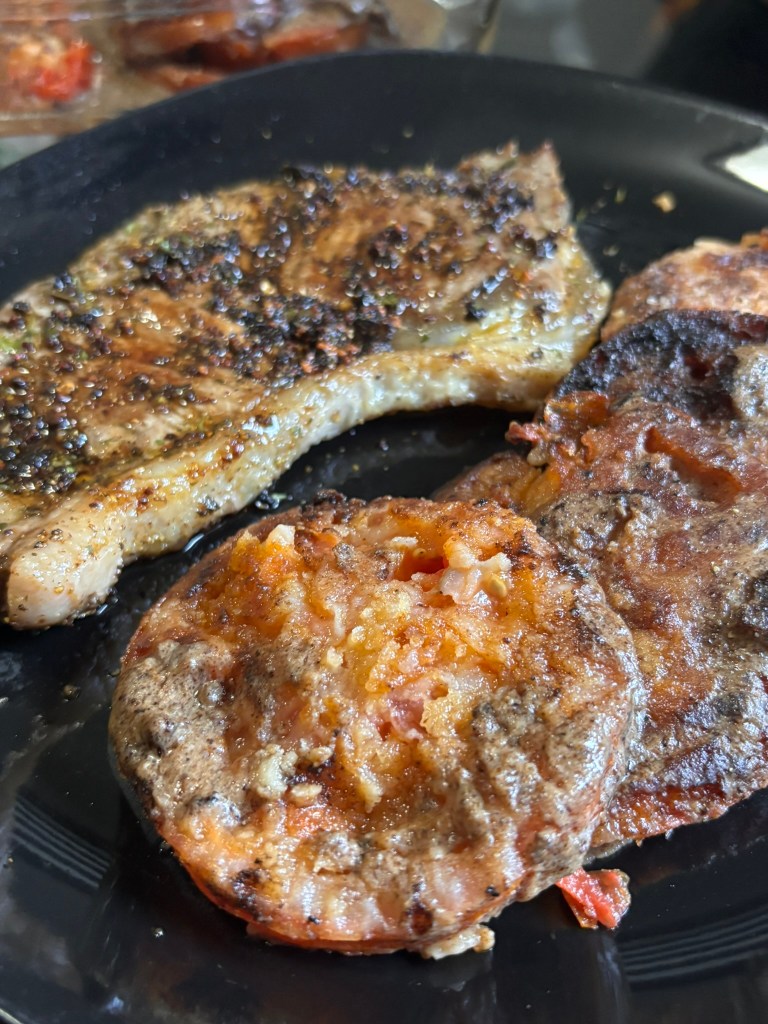
I have to admit, cooking tomatoes this way felt a little foreign to me. I’d never had them fried growing up, and I don’t remember ever seeing them on a menu, so these were completely new to me. But that’s exactly why I enjoy making these recipes.
These were good! They made a really easy side dish and would be a great addition to a summer BBQ.
I love that Whanitta’s recipe is still being made and shared years after her death. A recipe can be such a personal thing, especially when it’s connected to family, and putting one on a gravestone is certainly one way to make sure it’s never forgotten.
For me, that’s what makes these cemetery recipes so much fun. I get to learn a little about the person behind the recipe, and then I get to bring a small piece of their story into my own kitchen.
Thanks for reading!
References:
- Whanitta Sheetz (Obituary) | Concord Monitor

