Cemetery Recipes: Grandma Mary’s Fruit Cake

As the holiday season settles in, certain foods start appearing on tables everywhere. Fruit cake is one of those dishes that shows up year after year, especially around Christmas. Love it or hate it, fruit cake has become deeply tied to the season. Because of that, this month’s cemetery recipe feels especially fitting. It’s a recipe connected to family, tradition, and a time of year when food and memories tend to go hand in hand.

Mary Ann Rapp was someone whose life revolved lovingly around family. Her obituary speaks to a woman who was deeply loved and loved right back through the everyday things that matter most. She was a wife, mother, grandmother, sister, and friend, all roles that shaped much of her life and how she spent her time.1

Food and cooking were part of how Mary Ann showed care for the people around her. Her love of cooking and feeding others lives on with a recipe carved into her gravestone.1 It’s easy to imagine her in the kitchen, preparing meals for family gatherings, holidays, or just regular days when food brought everyone together.

Mary Ann passed away on March 16, 2021, after a courageous battle with metastatic breast cancer.1 She was laid to rest in Shipley Cemetery in Bristol, Tennessee, where her gravestone now shares a piece of her legacy through an engraved recipe.

Here is the recipe, as engraved on here tombstone:

Grandma Mary’s Fruit Cake

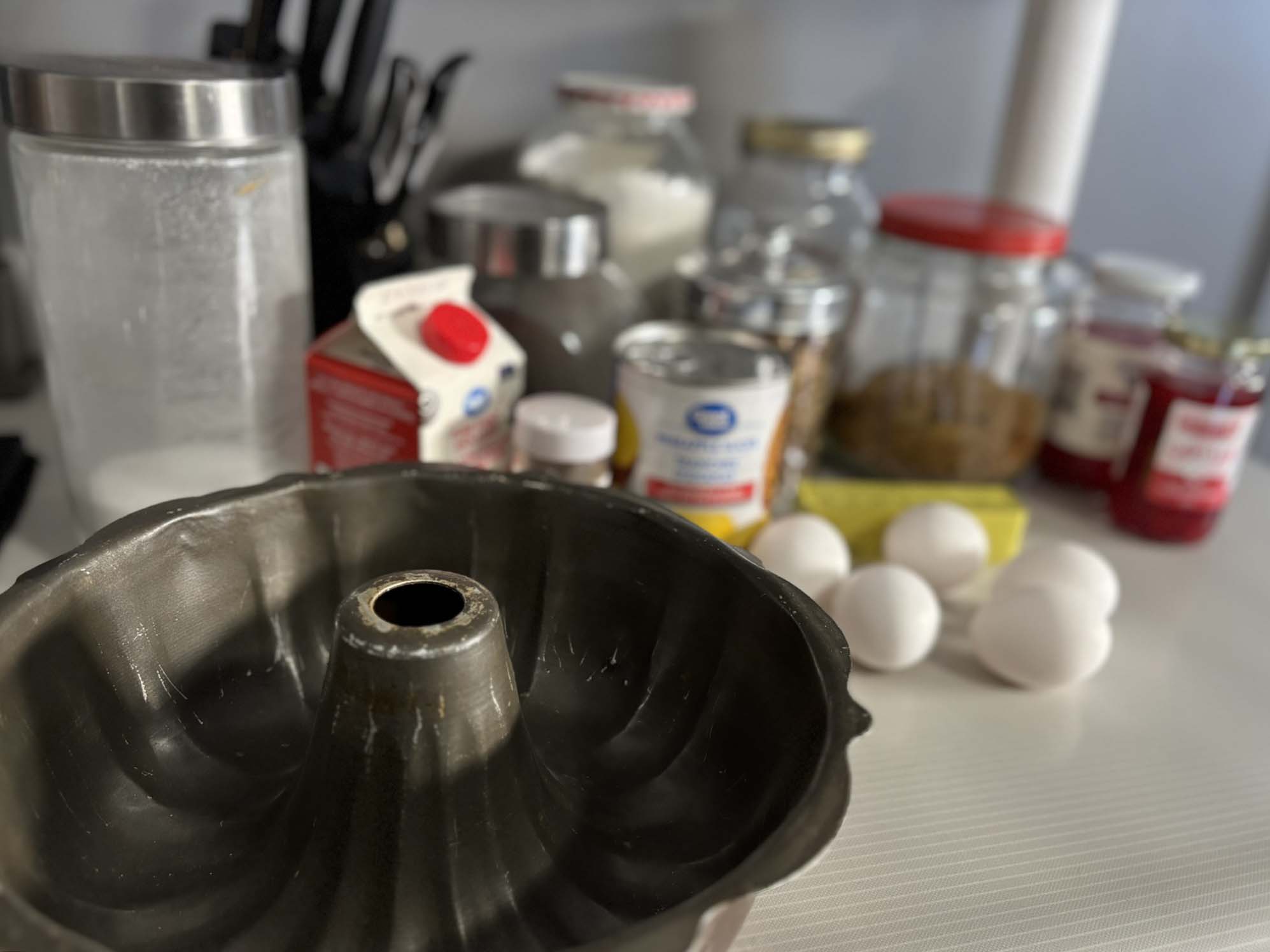
8 oz Pineapple wedges
8 oz Red cherries
8 oz Green cherries
1 C Raisins
1 C Walnuts
1 C Pecans
1/2 C Butter soften
3/4 C Brown sugar
3/4 C White sugar
5 Eggs
2 Tsp Dark molasses
1 Tsp Ground cinnamon
1 1/2 C Self rising flour

Mix in large bowl
Mix on low speed for 3 minutes
Spread in a bundt pan. Spray pan
Oven 250 degrees for 1 hour or
Until done
If the middle is brown

In the kitchen

Fruit cake has a surprisingly long history. Versions of fruit-filled cakes can be traced back to ancient times, when dried fruits, nuts, and sweeteners were mixed to create food that would last without refrigeration.2 Over time, these dense cakes have become associated with celebrations and special occasions.2

Fruit cake’s strong connection to Christmas comes from practicality as much as tradition. Dried fruits and nuts were ways to preserve harvests for winter, making fruit cake a natural choice for holiday feasts. Over time, it has become a symbol of abundance, hospitality, and sharing during the Christmas season.3

For me, there is also another special connection to this controversial treat. My mother loves fruit cake, and every Christmas she would receive one as a gift from my sister-in-law’s parents, who joined us every year for our family Christmas dinner. They have both passed on now, and their presence is still missed at our family gatherings. My mother often reminisces about her fruit cake Christmas gift tradition, so I thought bringing one to Christmas dinner this year might make her smile.

Honestly, this recipe is so simple and easy to make that it might become a new yearly addition to our dessert table.

I was a little intimidated at first by the number of ingredients, but that feeling quickly faded once I started mixing everything. I did have to make one substitution, though. After a few unsuccessful searches for green cherries, I finally gave up and doubled up on red cherries instead. I combined everything in the order listed in the recipe, and as I sprinkled in the cinnamon, I couldn’t help but think that it already looked like Christmas in a bowl.

Because the recipe called for mixing on low for three minutes, I pulled out my little hand mixer and followed the instructions exactly. I was a bit worried that the fruit and nuts might get completely pulverized, but they seemed to hold together for the most part. Once the mixing was done, I was left with a lovely caramel-coloured batter that was a bit chunky, but smelled wonderful.

I borrowed the fanciest bundt pan my mother owns for this bake. I did notice that the directions seemed slightly out of order, as they read, “Spread in a bundt pan. Spray pan.” I’m pretty sure the pan should be sprayed first, so that’s what I did before carefully spreading the batter inside. I then used a spatula to smooth out the top and wiped away any drips along the edge of the pan. I then placed it into the oven, which had been preheating since I started putting all the ingredients together.

After one hour in the oven, I took a peek to see how things were going. The kitchen smelled warm and sweet, with hints of cinnamon. The cake had turned a darker brown, but when I looked more closely, I could tell the batter was still a little too soft and still slightly liquid in a few spots. I slid it back into the oven for another five minutes, then another five, then another five. I had to remind myself that patience is part of baking, too.

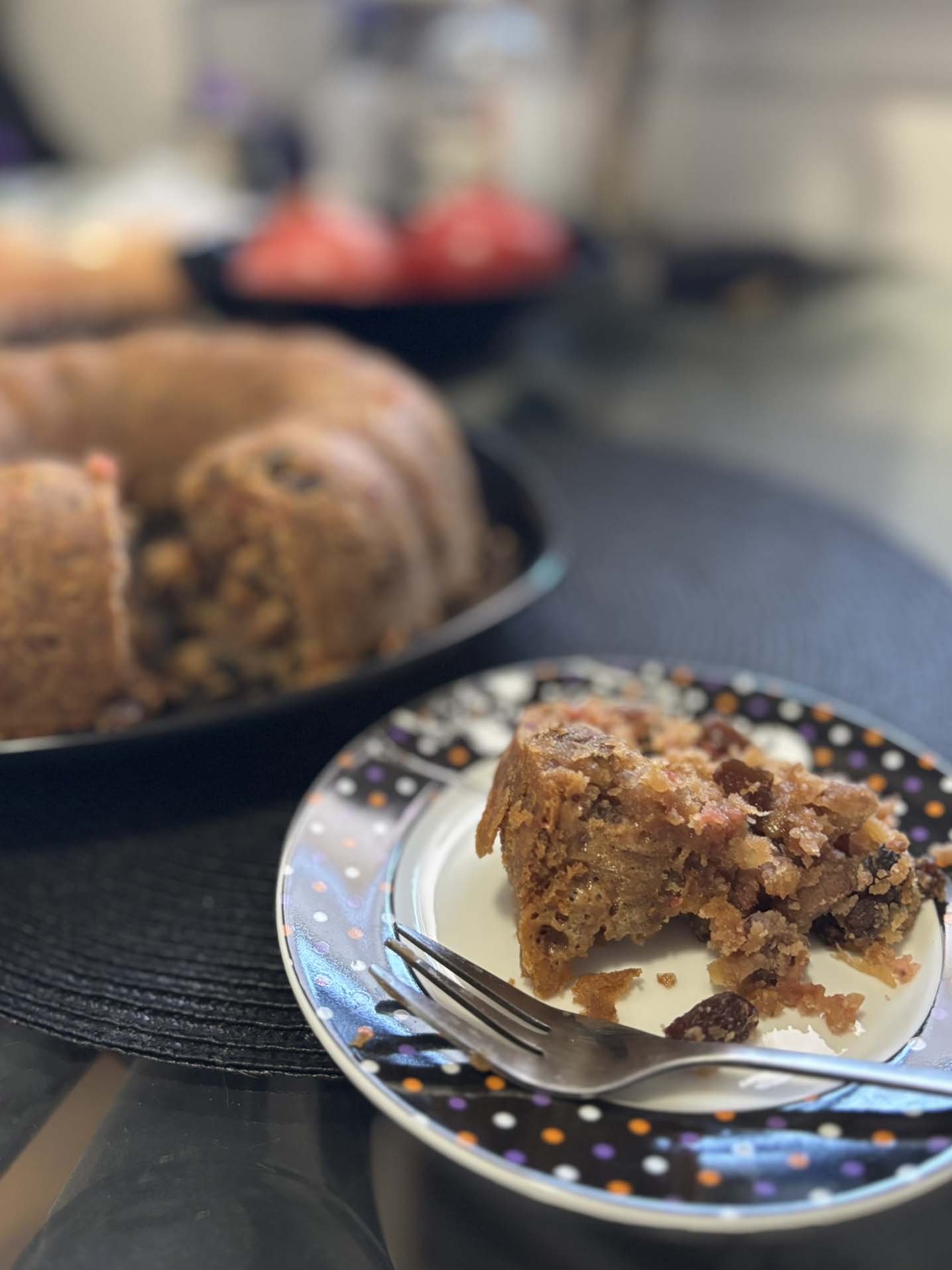
After letting the cake cool, I flipped it upside down on a plate and gently released it from the pan. Using a fancy bundt pan turned out to be a great decision, as the finished cake looks beautiful with all of its facets clearly defined. The dark brown colour of the cake, combined with the fruit and nuts peeking through, makes it a genuinely pretty dessert. It really is a nice-looking cake, which is always a bonus.

Of course, the real test is the taste. The cake is dense and sweet, and the combination of fruit, nuts, and cinnamon truly does taste like Christmas. It’s the kind of dessert meant to be sliced thin and shared, which feels exactly right for a recipe meant to carry so much history and meaning.

There’s something especially touching about a gravestone recipe when you know how important cooking was to the person it belonged to. Grandma Mary’s fruit cake isn’t just a holiday dessert. It’s a reflection of how she cared for others and how she brought people together.

Baking this recipe to share with my own family feels a little like continuing that tradition. Even years later, Mary Ann’s love of food, family, and togetherness still finds a place at the table, especially during the holidays.

Thanks for reading!


References:

  1. Mary Ann Rapp Obituary | Oakley-Cook Funeral Home and Crematory
  2. The History of Fruitcake | Collin Street Bakery
  3. Why Do We Eat Fruit Cake at Christmas Time? | Christmas Central

Cemetery Book Review: To Die For

October is full of gatherings. Friends, family, and food, all come together this time of year, with Thanksgiving feasts and Halloween parties aplenty. And what better spooky treat to bring to a fall party than a recipe made from a gravestone?

That’s exactly what Rosie Grant’s new book, To Die For: A Cookbook of Gravestone Recipes, is all about. As someone who often tries out gravestone recipes, I knew this cookbook had to be added to my collection and, of course, reviewed on the blog!

Rosie Grant is a digital archivist and cemetery enthusiast known as @GhostlyArchive on social media. While interning at Washington, D.C.’s Congressional Cemetery, she began to notice the unique things people had engraved on their gravestones.1 After some digging, she discovered that some even included recipes.1 That discovery sparked her project of cooking gravestone recipes and sharing the stories behind them, which eventually led to her new book, To Die For.1

Published in 2025 by HarperCollins, To Die For includes 40 recipes collected from gravestones around the world. Each recipe comes with beautiful full-colour photographs, stories about the people behind the dishes, and even tips on how to document your own family recipes.

Here is a bit of the synopsis from Goodreads:

“For so many, food is a touching, nostalgic thing that brings us together. So much so that some families choose to remember their loved ones through the dishes they made and the food that brought comfort to those around them by immortalizing their recipes on their gravestones.

Thoughtfully and respectfully explored, Rosie has documented this connection between food, legacy, and family, remembering the deceased through the recipes they most loved, and giving their families a platform to share their loved one’s story and cherished dish with the world.”

This is a gorgeous book. The cover illustrations are lovely, and the glossy photos that accompany each recipe are beautiful. The recipes are organized into familiar categories like cookies & brownies, pies & cobblers, and also includes a few savoury dishes too. One of my favourite touches is the inclusion of sample menus at the back of the book. They show how to create an entire meal using only gravestone recipes, which I thought was a fun addition.

What really makes To Die For special though, are the stories. Grant includes personal notes and memories from the families, showing how food connects generations. The stories are touching and heartfelt, reminding us that a recipe is more than just a list of ingredients. It can be a memory, a legacy, and a link to those we’ve lost.

To Die For is a must-read for anyone who loves cemeteries, cooking, or the idea of keeping memories alive through food. It’s a perfect October read, and it would make a great addition to any cookbook shelf. I’ve already tried about half of the recipes in this book, but I’m looking forward to trying out more.

Whether you bake something from its pages or just enjoy the stories, this book captures the sweetness of remembrance in such a unique way.

Thanks for reading! 


I am always on the hunt for cemetery-related book recommendations. If you are an author and have a cemetery-related book you would like me to review, please reach out at hello@chantallarochelle.ca. I would love to hear from you!


References:

  1. How making recipes etched on gravestones changed this student’s perspective on death | CBC

Cemetery Recipes: Red Lantern Cheese Dip

For this month’s cemetery recipe, I am stepping away from baked goods and trying out something savory. When I came across this simple dip recipe, I knew it had to be my next kitchen adventure.

This recipe comes from the gravestone of Debra Ann Nelson, who is buried in Dow City Cemetery in Iowa.

Nelson passed away on March 8, 2021, at the age of 56. She was a beloved wife, and community member, known for her warm personality and her love of cooking.1 She had a passion for bringing people together, whether through scouting, teaching water aerobics, or sharing her famous homemade pickles.1

One of the many places where Nelson left her mark, was the Red Lantern Steakhouse in Denison, where she worked and made large batches of their well-loved Red Lantern Cheese Dip.

Now, thanks to this recipe etched in stone, her legacy continues for future generations to enjoy.

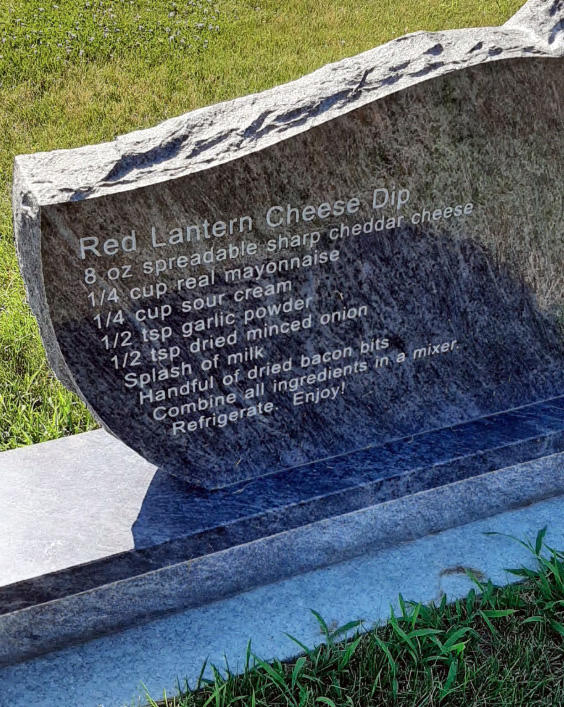
Here is the recipe, as engraved on the tombstone:

Red Lantern Cheese Dip

  • 8 oz spreadable sharp cheddar cheese
  • 1/4 cup real mayonnaise
  • 1/4 cup sour cream
  • 1/2 tsp garlic powder
  • 1/2 tsp dried minced onion
  • Splash of milk
  • Handful of dried bacon bits

Combine all ingredients in mixer. Refrigerate. Enjoy!

In the Kitchen

My first attempt at making this dip came with a bit of a challenge. I had trouble finding the exact spreadable sharp cheddar cheese called for in the recipe.

It’s an issue I have run into before. Being in Canada, our products and brands are a bit different from what can be found in the United States, where most of the recipes I have tried come from. I have made do so far, but for this one, I scouted the grocery store to no avail.

I settled on a spreadable aged cheddar, which was all I could find, and hoped it would be a close match.


The process itself was incredibly simple—just a quick mix of ingredients and into the fridge it went! However, the consistency turned out to be a little runnier than I had expected, likely due to the cheese substitution. While the flavours were delicious, the aged cheddar had a much stronger taste, that overpowered the garlic and onion flavours. I had a feeling that it wasn’t quite the taste that Nelson had intended.

Since I didn’t think I had done this recipe justice, I put it aside until I could try again with better success.

And that’s when I got the idea. Could Cheese Whiz be the answer? It’s definitely more in line with the smooth spreadable consistency I was looking for.

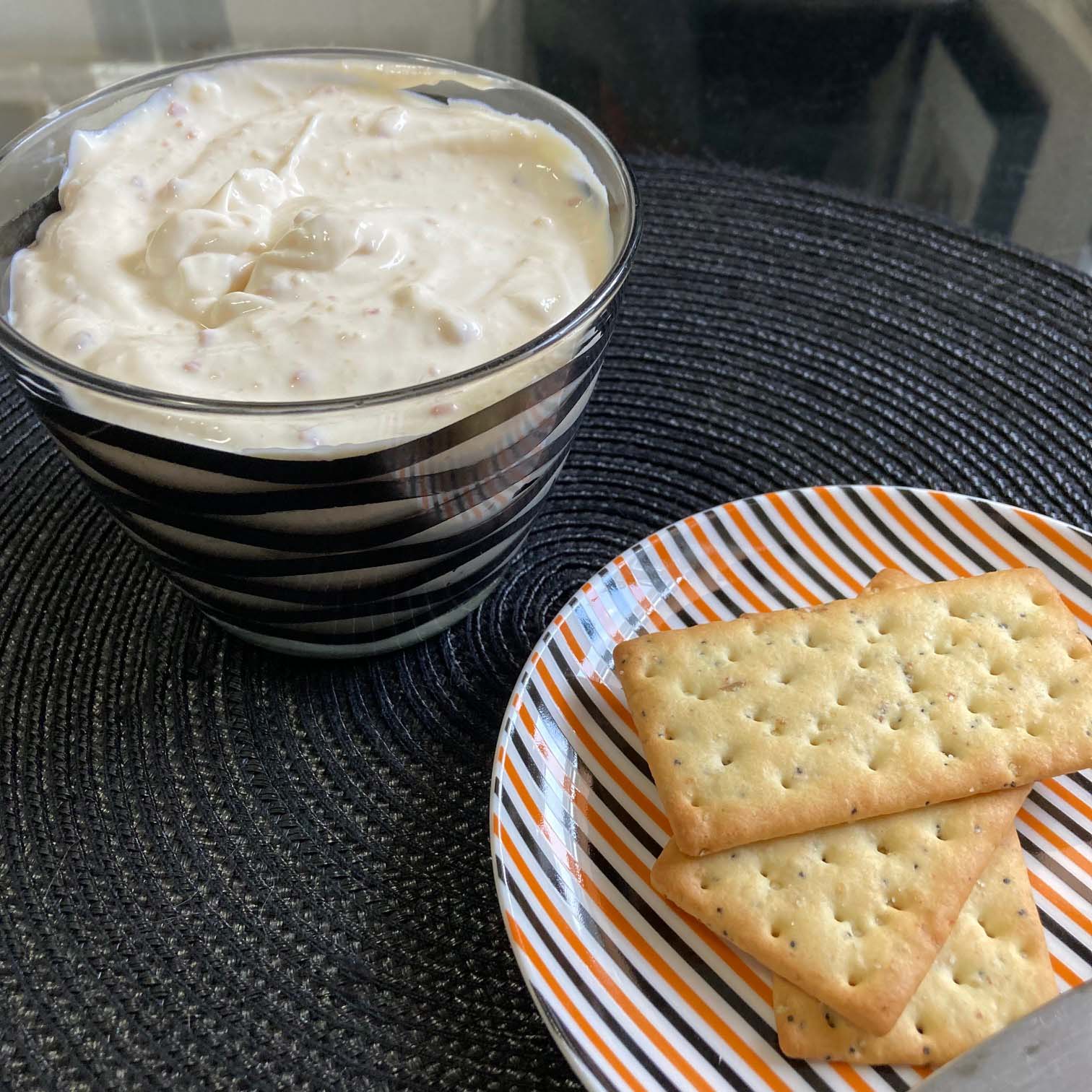
My second attempt at making this recipe went just as quickly as the first, thanks to its simplicity. I gathered my ingredients, this time using a cup of Cheese Whiz in place of the spreadable sharp cheddar cheese. I then mixed them together in a bowl and set the dip aside. This time, I decided to make something special to go with it—I didn’t have any crackers or chips on hand, so I made my own!

Using a pizza cutter, I sliced up two flour tortillas, then coated them in some avocado oil, salt, and pepper before baking them in the oven at 350°F for about 10 minutes. I kept a close eye on them to prevent them from burning, and once they were golden and crisp, they were ready to go.

Excited to taste the dip, I scooped up a bite with one of my freshly baked chips—only to realize I had skipped an important step: refrigerating it! My initial taste was overwhelmingly Cheese Whiz-forward, without the blended flavours I was hoping for. So, I saved some of my homemade chips, and let the dip chill overnight.

The extra time made a big difference. By the next day, the flavours had blended nicely, mellowing out the strong processed cheese taste and bringing out the garlic and onion flavours. This version felt much closer to what I imagined the original dip would taste like.

I would definitely make this recipe again, especially for a family gathering or cozy movie night—it makes a great snack!

There’s something special about making a recipe like this, one tied to a person’s life and memories, and in this case a restaurant. Whether served up at a steakhouse or shared around a family table, this dip is a nice reminder of how cooking is community.

Will you give this recipe a try? I would love to hear how it turned out for you!

Thanks for reading!


References:

  1. Deb Nelson Obituary | Tribute Archive

Cemetery Recipes: Texas Sheet Cake

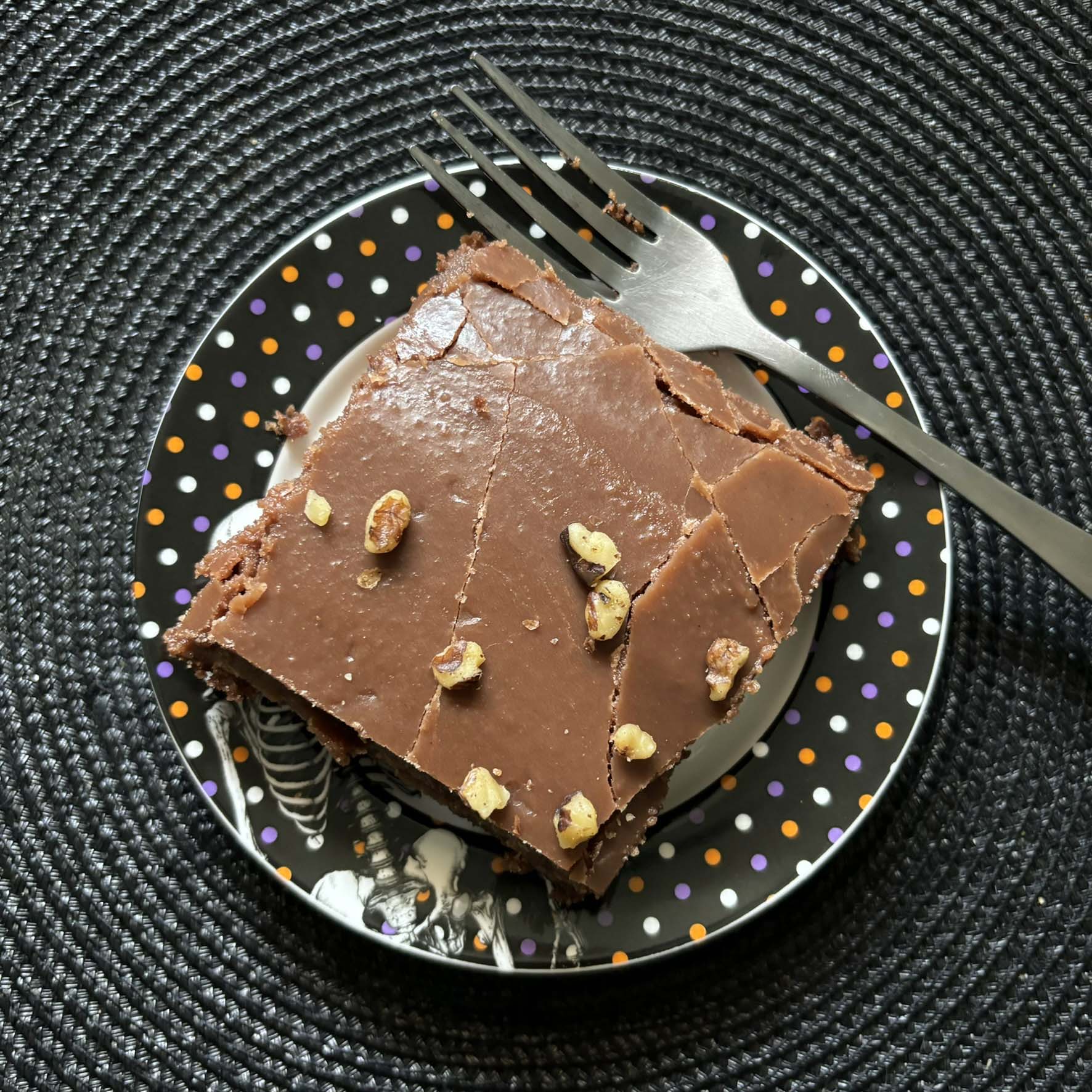
With my birthday coming up at the end of the month, I thought it would be fun to try out a cake recipe for this month’s gravestone recipe. I found the perfect fit with this Texas Sheet Cake.

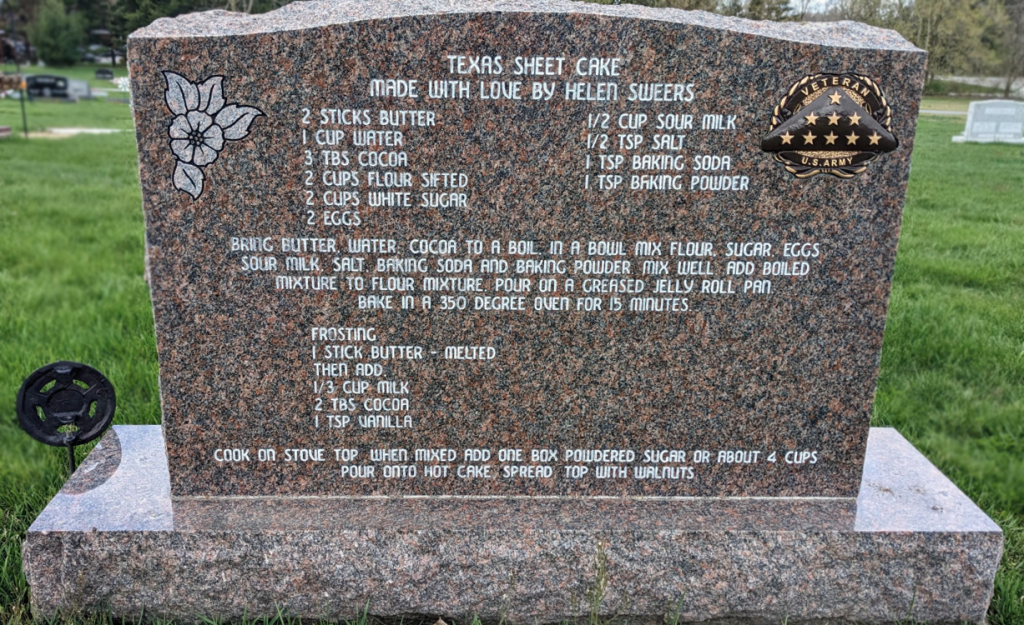
This recipe can be found on the gravestone of Helen Rose (Keathley) Sweers, who is laid to rest in Blain Cemetery in Cutlerville, Michigan.

Sweers passed away on December 30, 2017, at the age of 77. Her brief obituary describes her as a wife, mother, and grandmother, who deeply loved God, her family, and everyone in her life.1

While her obituary doesn’t mention a passion for baking, the recipe engraved on the back of her gravestone tells a different story.

“Made with Love by Helen Sweers”

Texas Sheet Cake

(As inscribed on the gravestone of Helen Sweers)

Made with Love by Helen Sweers

  • 2 Sticks Butter
  • 1 Cup Water
  • 3 Tbs Cocoa
  • 2 Cups Flour, Sifted
  • 2 Cups White Sugar
  • 2 Eggs
  • 1/2 Cup Sour Milk
  • 1/2 Tsp Salt
  • 1 Tsp Baking Soda
  • 1 Tsp Baking Powder

Bring butter, water, cocoa to a boil. In a bowl mix flour, sugar, eggs, sour milk, salt, baking soda and baking powder. Mix well. Add boiled mixture to flour mixture. Pour on a greased jelly roll pan. Bake in a 350 degree oven for 15 minutes.

Frosting

1 stick butter – melted
Then add:
⦁ 1/3 cup milk
⦁ 1 Tbs cocoa
⦁ 1 Tsp vanilla

Cook on stove top. When mixed add one box powdered sugar or about 4 cups. Pour onto hot cake. Spread. Top with walnuts.

In the Kitchen

I had never heard of Texas Sheet Cake before, so I did learn something new with this recipe. A Texas Sheet Cake is a chocolate cake, baked in a jelly roll pan (which is a pan similar to a cookie sheet, but deeper). This gives the cake its signature large, thin shape.

I ended up purchasing a jelly roll pan specifically to make this recipe. It could double as a cookie sheet if needed, but I think I’ll use it again for future baking, so I will get some use out of it either way.

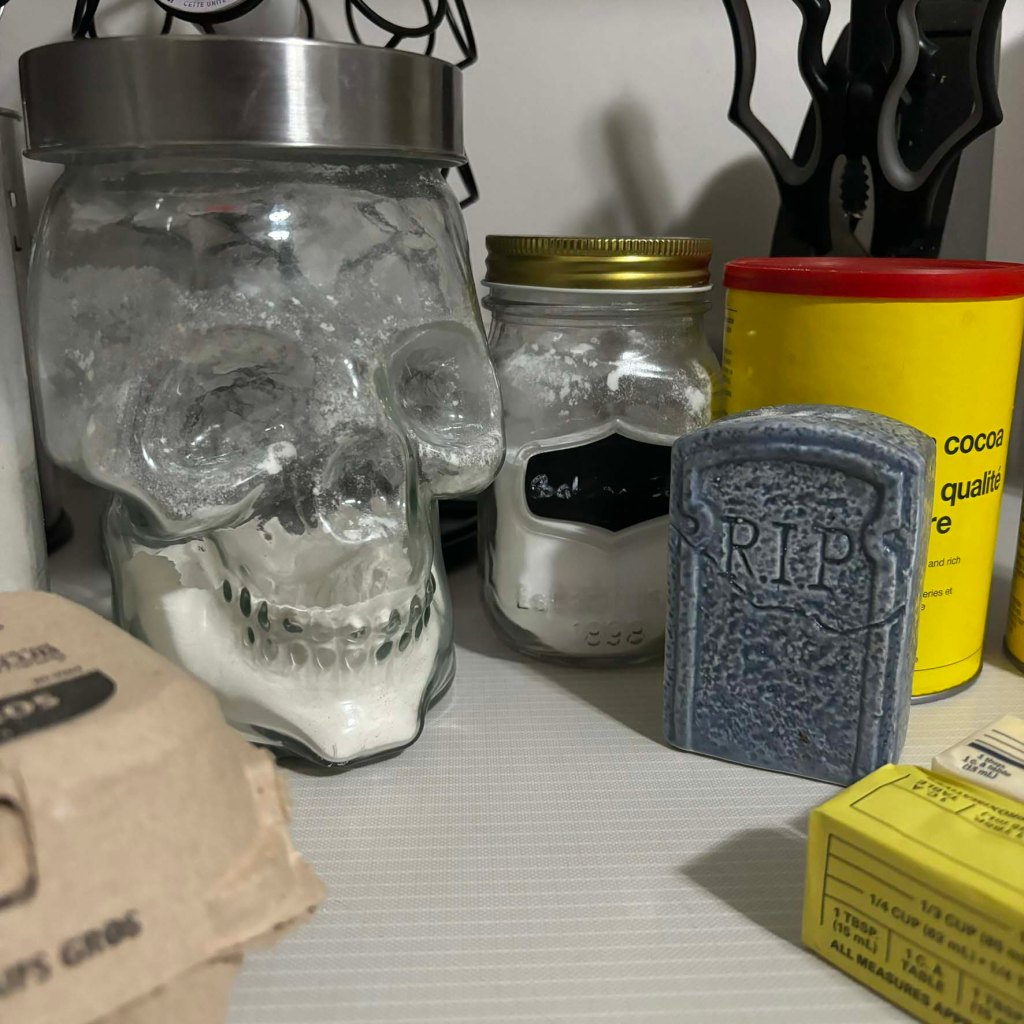
The ingredients for this recipe are mostly staples, so I didn’t need to make an extra grocery trip. However, I did have questions about the sour milk.

Sour milk has a tart taste, either because it’s just starting to spoil or because it was soured on purpose.2 This made me think that this might be a Depression-era recipe, as many recipes of that time were designed to avoid food waste and used sour milk.2 Buttermilk could be a good substitute for sour milk, but I opted to make my own. I found sour milk recipes online that called for 1 tablespoon vinegar or lemon juice, for 1 cup of milk. This recipe only calls for a 1/2 cup of sour milk, so I used a 1/2 tablespoon of vinegar.

I let the sour milk sit for a few minutes to curdle while I gathered the rest of my ingredients and preheated the oven.

The recipe instructions are clear so I didn’t have any trouble mixing everything together. I was a bit concerned when it came time to pour the batter into the jelly roll pan. I voiced those concerns to Helen, while I poured in the batter. Talking to the person whose recipe I’m following makes me feel like they’re with me in the kitchen. It can sometimes be a comforting reminder to trust the process.

The pan was quite full, but I had faith that it would work out. And it did—well, sort of. I put the pan in the oven and let it bake for the full 15 minutes. I used the classic toothpick test to see if it was ready, but ended up needing to bake it for 5 more minutes, and then another 5 minutes after that. The center was quite thick and needed a bit more time to bake all the way through.

While the cake baked, I worked on the frosting. Since I had to bake the cake a little longer, I kept the frosting on low heat so it would be ready when the cake was done.

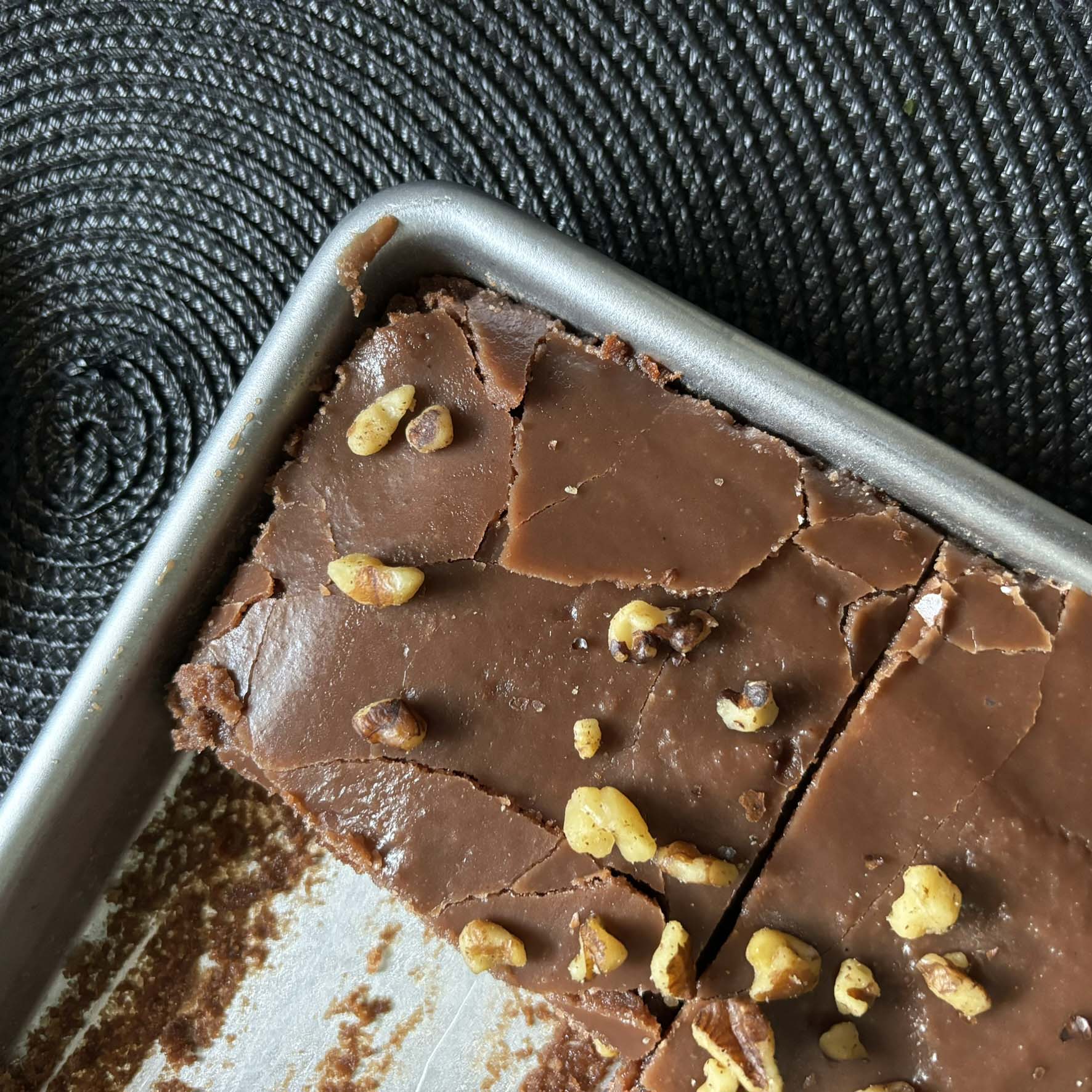
The recipe says to pour the frosting onto the hot cake. The cake didn’t rise, but it didn’t have a lot of room for icing either and I was afraid it would spill over the sides and make a big mess. To avoid that, I used a spatula to carefully spread small amounts at a time. In the end, I was able to cover the whole cake without any issues. I then topped it with a handful of walnuts.

After it cooled, the frosting firmed up a bit, creating a nice crackle when you sliced through the cake.

I love the way this Texas Sheet Cake turned out!

It’s chocolatey and moist, but the real highlight is the frosting. It adds just the right sweetness, although I’ll warn you—it’s really sweet, so a little slice goes a long way.

This cake is big, making it perfect for sharing at a family gathering or other special occasion. I made it to celebrate my birthday, and it was perfect for sharing with loved ones.

Recreating these gravestone recipes has become a meaningful way for me to connect with those whose stories live on in such a personal way. It’s a comforting reminder that food has a power that can bring us together, even across time. I always say that recreating these gravestone recipes really is the sweetest way to remember someone.

Will you be giving this recipe a try? I’d love to hear your thoughts, and experiences in the comments.

Thanks for reading!


References:

  1. Helen Sweers Obituary | Grand Rapids Press
  2. What Is Sour Milk — And Is It Safe To Use? | All Recipes

Cemetery Recipes: Annabell’s Snickerdoodles

Today’s gravestone recipe is another one I have seen floating around on the internet pretty frequently. Since the success of last month’s cookie recipe, I thought it might be time to try another one, this time with some baking involved. 

I am pretty sure I have had a snickerdoodle before, but I don’t recall when. I asked my mother if she had ever made them before, and she said yes, quite often actually. So for today’s gravestone recipe, I try my hand at making Annabell’s Snickerdoodles.

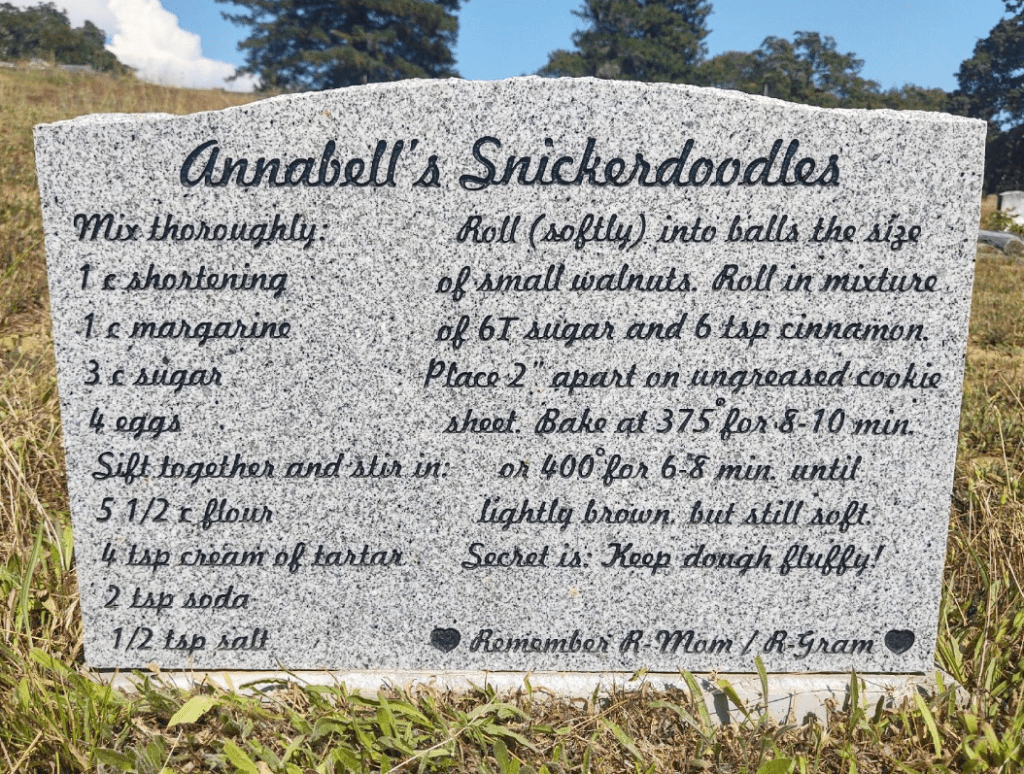
This tombstone treat comes from the gravestone of Annabell R. Gunderson of Willits, California. Found in Willits Cemetery, this gravestone recipe takes up the entire backside of Gunderson’s grey granite gravestone.

Annabell Gunderson passed away at the age of 87, in 2007 after a battle against an unidentified illness.1 In life Gunderson was very active in her community, volunteering her time to multiple organizations. In particular with the St. Anthony’s Ladies Guild.1 Gunderson was known to especially love helping with the yearly enchilada feed—a fundraiser where trays upon trays of enchiladas are made and sold.1 

She is lovingly remembered as a great cook and for her hugely popular snickerdoodles. A recipe that now lives on, etched in stone.

Here is the recipe as engraved on the tombstone:

Annabell’s Snickerdoodles

Mix thoroughly:

  • 1 c shortening
  • 1 c margarine
  • 3 c sugar
  • 4 eggs

Sift together and stir in:

  • 5 1/2 c flour
  • 4 tsp cream of tartar
  • 2 tsp soda
  • 1/2 tsp salt

Roll (softly) into balls the size of small walnuts.

Roll in mixture of 6T sugar and 6 tsp cinnamon.

Place 2” apart on ungreased cookie sheet.

Bake at 375° for 8-10 min. or 400° for 6-8 min. until lightly brown, but still soft.

Secret is: Keep dough fluffy!

Making the Recipe

I spoke to my mom about making this recipe, and right away she was surprised at how much this recipe makes. She suggested I cut the recipe in half to make a smaller batch. Normally I do try to make the recipe as it is written, but I thought making half of this recipe would be more manageable for me in my small kitchen. After learning about Gunderson’s love of community and cooking, I think I understand why this recipe makes such a big batch. 

So after getting out my ingredients and figuring out the new measurements on my kitchen blackboard, I got started on mixing up a batch of Annabell’s Snickerdoodles.

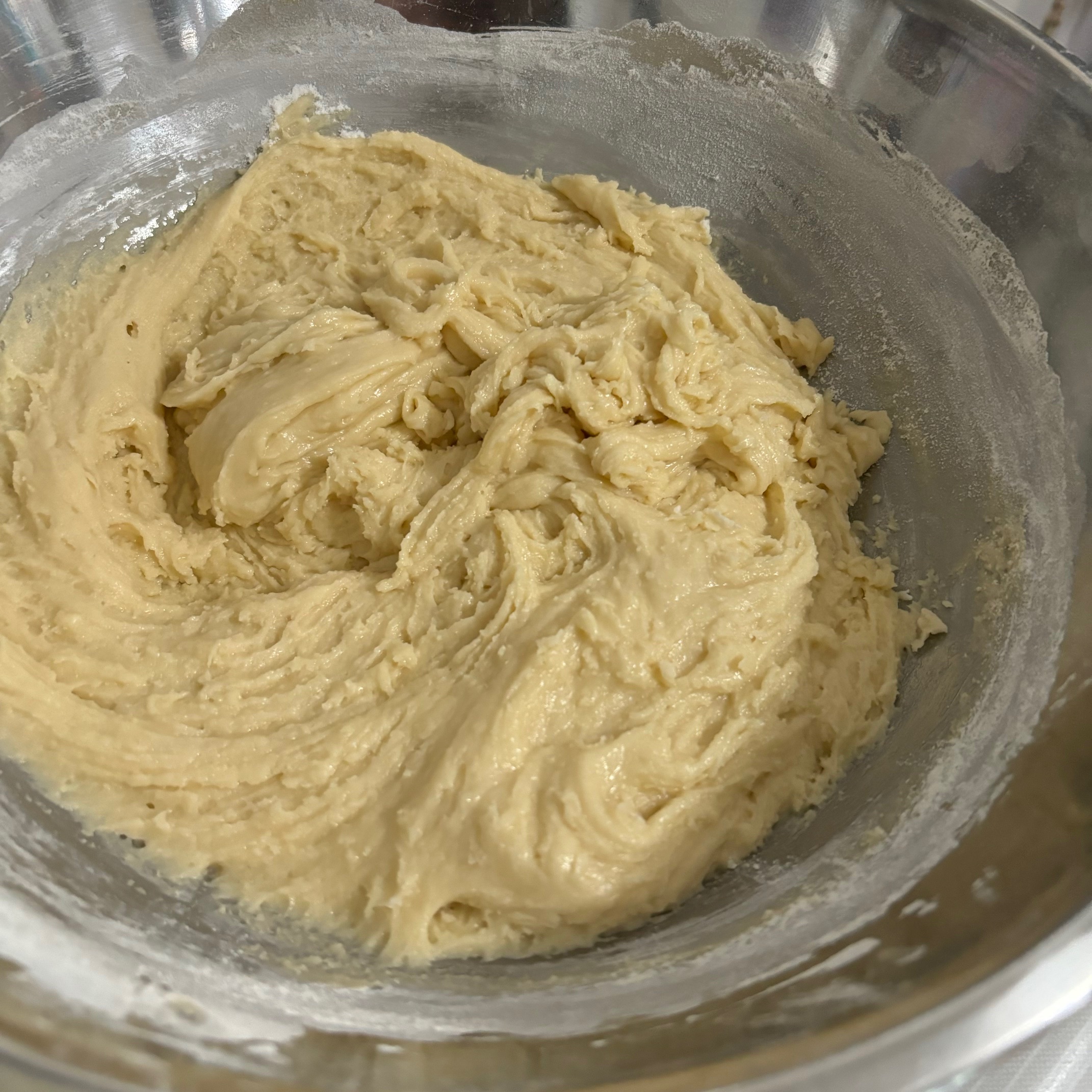
The recipe is very easy to follow, and is very well written. I did have to soften my margarine and shortening in the microwave a bit so it would combine nicely with the sugar and then the eggs. I made sure not to heat them too much though, as I didn’t want to cook the egg at all. 

After that, I sifted in the dry ingredients till the mixture was well combined. I tried my best to not overwork the dough, keeping Annabell’s secret in mind.

Now came the fun part! 

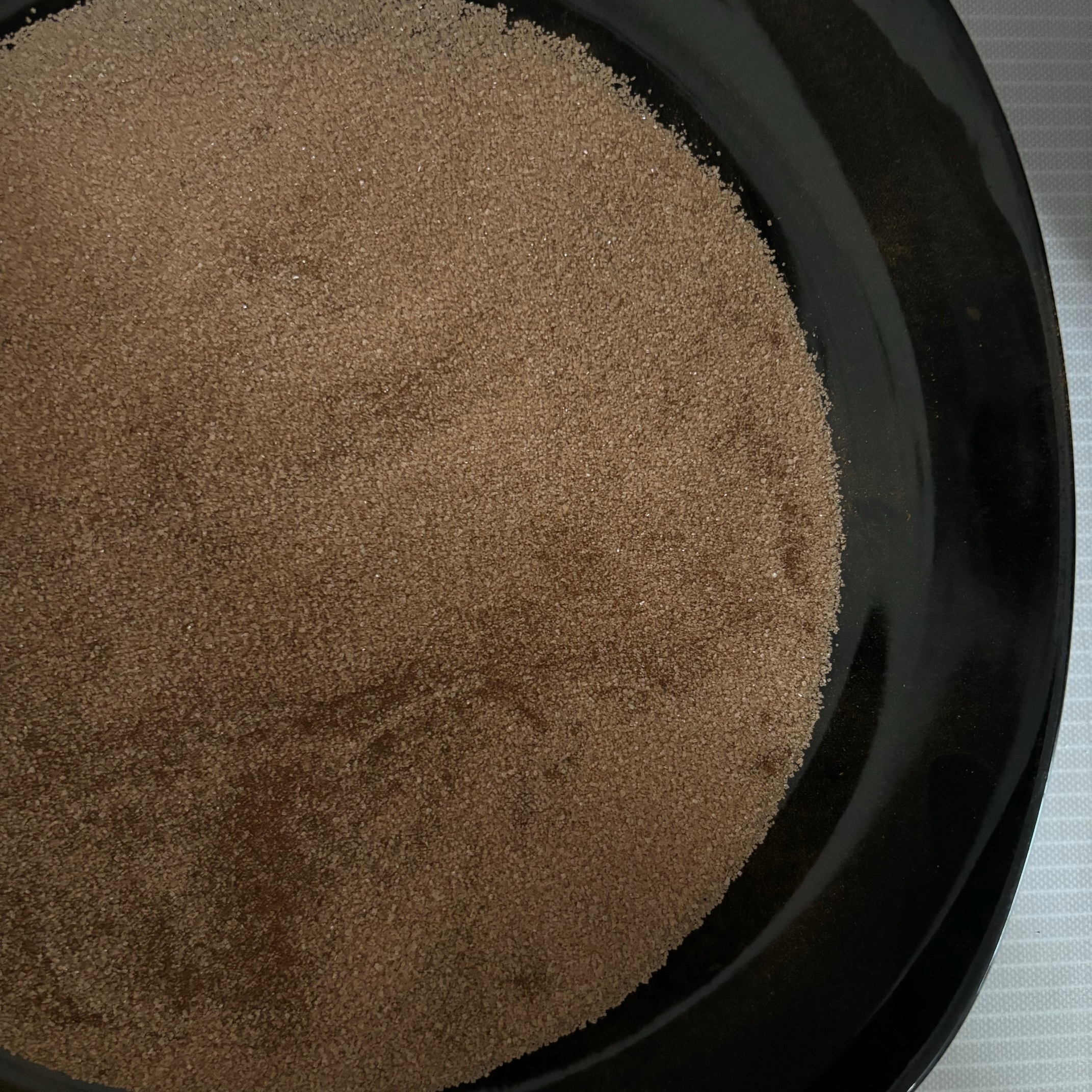
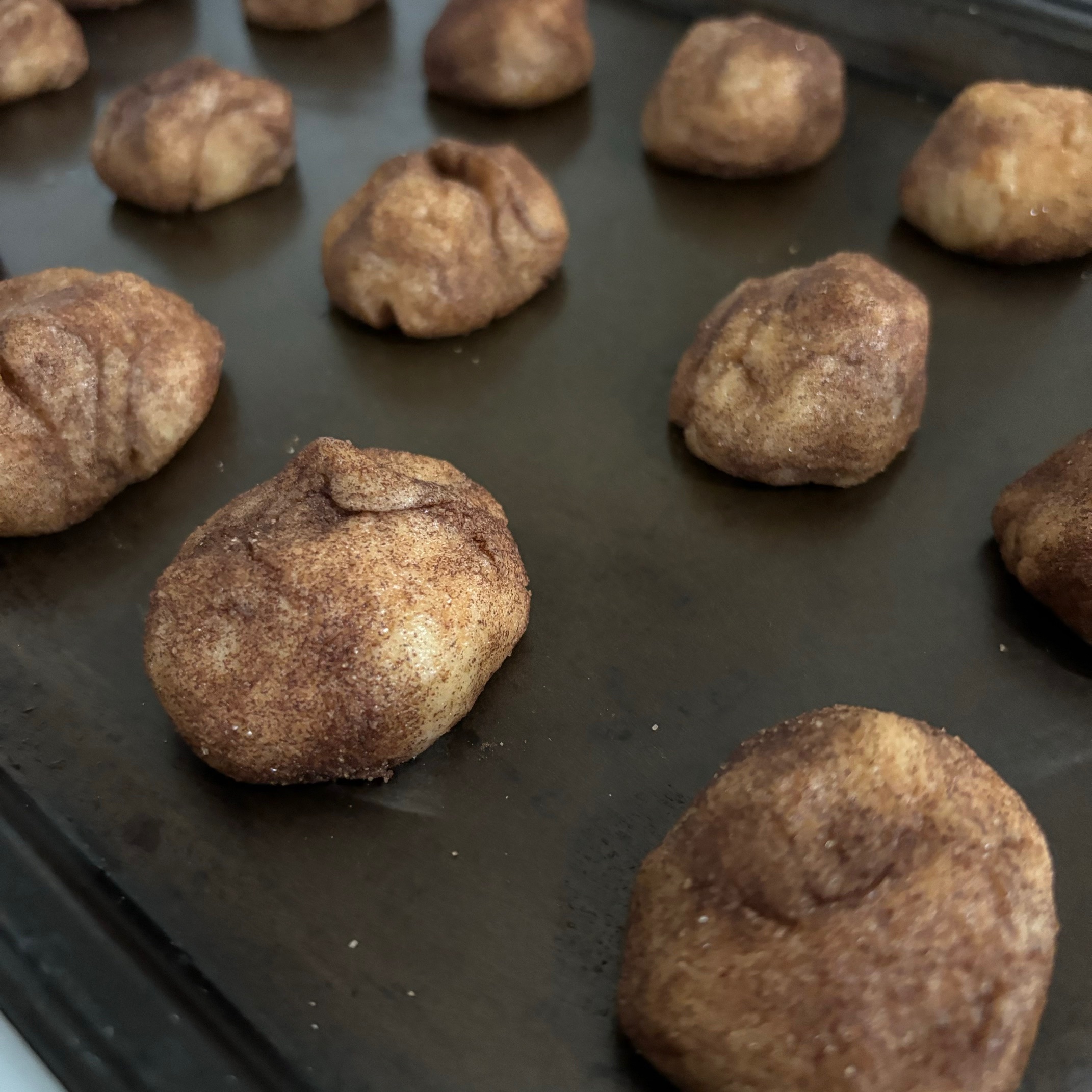
I made sure to mix the sugar and cinnamon very well and put the mixture into a dinner plate so I had lots of surface to roll the dough around. To form the cookies, I pinched off small parts of dough, rolling them between my hands into a ball and then rolled them in the sugar and cinnamon mixture. Then I shaped them a little more with my hands before placing them on the ungreased cookie sheet.

I did flour my hands now and then while rolling the dough to try and stop it from sticking to my hands. I tried my best to space the cookies out evenly between two cookie sheets. I didn’t realize that the cookies would spread, so if I made them again, I would space them out a little more between multiple cookie sheets instead of only using two sheets.

I then placed both cookie sheets in the oven to bake at 375° for 10 minutes. I did a bit of washing up while I waited for them to turn a golden brown. 

Even though they did spread out a bit on the cookie sheet, it wasn’t terrible. After cooling on top of the stove for 10 minutes I was easily able to break them apart without ruining their shape too much. 

These cookies turned out amazing! I was a little bit daunted by the amount of work that had to go into these. But, it turned out to be not as intimidating as I thought, and the result are some of the best cookies I’ve ever tried—especially right out of the oven.

They are soft and buttery, sweet with a hint of cinnamon. I don’t think they will last too long in my house, as I couldn’t eat just one. I love how they turned out and will definitely be making these again!

This recipe would be great for someone looking for the perfect cookie for a bake sale or cookie exchange. They would also be a fun cookie to make in the kitchen with kids, as I am sure they would love rolling the dough around into the sugar and cinnamon. 

Have you tried this recipe before? Do you have a favorite snickerdoodle recipe? I would love to read about it in the comments!

Thanks for reading!


References:

  1. Annabell Gunderson obituary | The Ukiah Daily Journal