Stone Stories: Let’s Remember Adam

Back-to-school season is here in Northern Ontario. Summer break is over, and children are returning to the classroom. As parents get their young ones ready for another school year, school buses are also preparing to get back on the road.

Around this time, messaging starts about road and bus safety. It often makes me think of a big yellow and black billboard I would sometimes see on my travels. Although the billboard on Old Highway 69 is in bad shape and peeling now, I still remember when it had the smiling face of a young boy, imploring drivers to STOP for the school bus.
 
It’s time to remember Adam.

Little Adam Ranger has become the face of school bus safety. How that came to be is a sad and tragic story.

On February 11, 2000, Ranger was struck and killed getting off the school bus in Mattawa. The school bus had stopped on the highway to let 5-year-old Adam and his older brother Alex off the bus at the end of the school day.

A pick-up truck tried to pass the school bus, even though the bus was fully stopped with its lights flashing and its stop arm fully extended. The truck swerved and missed Ranger and his brother, but the trailer that the truck was towing made contact, hitting Adam and killing him. This devasting scene happened just steps away from his home.1
 
Since that tragic day, Pierre Ranger, Adam’s older brother, has fought for amendments to the regulations for school bus safety.
 
2024 marks the 24th anniversary of Ranger’s death. 

Mattawa

Mattawa has never forgotten Adam. When my mother and I visited Mattawa last fall, we explored the Mattawa Museum which has a small exhibit about Ranger. It included the well-known billboard image and postcards that carry the bus safety message.

Ranger is laid to rest in Saint Annes Cemetery, also known as Saint Annes Catholic Cemetery. My mother and I paid our respects at the cemetery, admiring his lovely headstone. It’s a loving tribute to a life taken too soon.

Ranger’s black granite gravestone features a beautiful portrait of Adam, a small etching of the cartoon mouse Stewart Little, and an epitaph that reads “Playing with Pépère”. The base of his gravestone is cluttered with stones, tokens from those who have visited to pay their respects.

One gravegood stands out among the rest—a skull. It’s worn from the elements, it’s white paint chipped away. Deb Ranger, Adam’s mother, has said that Halloween was Adam’s favorite holiday. He loved it more than Christmas.2

Adam’s Legacy

Putting their grief and anger to work, the Ranger family created the Let’s Remember Adam campaign. Its mission is to ensure that all children travel to and from school safely each day and to remind motorists to STOP for the school bus.3

Ontario drivers illegally pass school buses more than 30,000 times per day, according to the statistics.4 There is a lot of work to be done, but Pierre Ranger is undaunted.

Let’s Remember Adam has been a big contributor to the success of the Safer School Buses Act, 2021 which has officially become law.5 As of the 2022-2023 school year, Ontario requires all school buses manufactured after 2005 to have the amber-red warning system installed.5 This system, which Ranger had been advocating for, for years, consists of a new lighting system that lets drivers know when a school bus is approaching its next stop. A set of amber lights will flash when the school bus is approaching its stop, signaling that it is slowing down to stop. The red lights then activate when the bus has come to a complete stop.5

The group has also successfully lobbied for stop-arm cameras to be installed on school buses, to identify those who don’t stop and pass illegally. Mattawa was the first community to have this camera system mounted on 19 buses in their fleet.6 This free system is available to any municipality that wants the added security.6 The ultimate goal is to have these stop-arm safety systems installed on all school buses in the province.7

The Ranger family has been a strong contributor to bus and road safety, while at the same time keeping the memory of little Adam alive. Adam’s story is an important and timely one. I hope by sharing and remembering Adam, I can do a small part in spreading more awareness about bus safety and all the good work the Let’s Remember Adam campaign has accomplished.

I hope it will also be a good reminder to drivers as this year’s school season begins, to please STOP for the school bus.

Thanks for reading!


References:

  1. Twenty years after Adam’s Ranger’s death, family still fighting dangerous drivers | CBC
  2. Comment | Let’s Remember Adam STOP FOR THE SCHOOL BUS !! Facebook group
  3. Mission statement | Let’s Remember Adam
  4. Let’s Remember Adam
  5. Ranger ‘beyond frustrated’ by more incidents involving drivers who ignore school bus safety | Bay Today
  6. All municipalities can choose to outfit local school buses with no-cost smart cameras | Bay Today
  7. Ranger family remembers Adam on his birthday — and every day | Bay Today

Stone Stories: Mattawa’s Master Painter

One of my favorite things to do on cemetery road trips is visit small local museums. They are often filled with beautiful antique artifacts as well as fascinating stories. Brimming with local history, they often lead me down interesting research rabbit holes. They are great places to learn about interesting local figures to seek out while visiting cemeteries.

For today’s stone story, I want to talk about another Mattawa local that I learned about while visiting the Mattawa Museum, Mattawa’s own Master Painter, Gordon Dufoe.

The Artist

Gordon Dufoe was born in Mattawa in October 1891. You could say that artistic talent runs in his family. His father would often draw animals to the delight of Gordon and his brothers.1 Although Dufoe never had any formal art training, he would go on to be known as the “Master Painter of the Ottawa Valley”.2

Dufoe did a tour of duty in Europe, during World War I, where he was sometimes moved from the lines and given orders to sketch the cathedrals, historic buildings, and other locations—to document them in case they were destroyed.3

In 1919, Dufoe returned to Mattawa and married Irene Leclaire. They would go on to have nine children together, seven sons and two daughters. Frank, the oldest of the Dufoe children, inherited his father’s artistic talent. Talent that was also passed down to Frank’s son Gordon, named after his Grandfather.2 

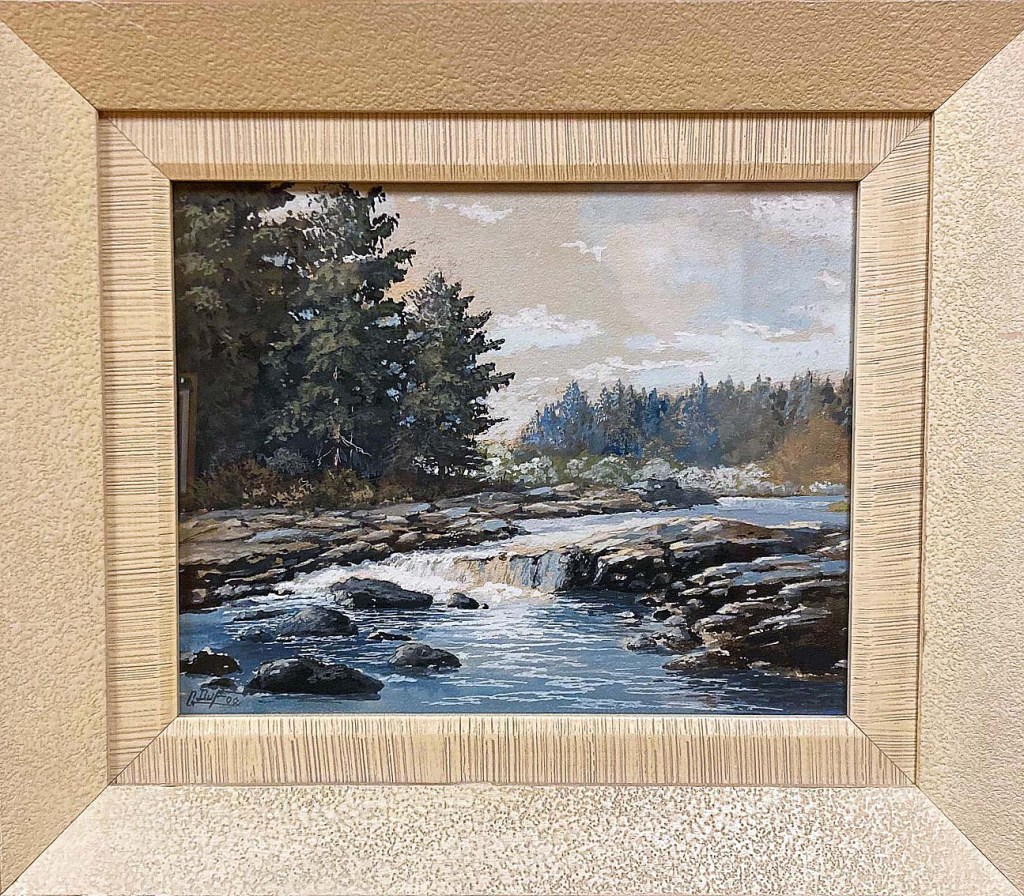
Dufoe eventually set up a home studio and began to paint professionally.1 His background as a trapper and guide shines through his work, which is largely focused on landscapes and animals. He had a beautiful eye for capturing the essence and movement of his subjects. 

The Mattawa Museum exhibit includes a Ricohflex – Model VI camera that was used by Dufoe. An avid photographer, he would often take photos that he would reference when creating his paintings. He also dabbled in building his own cameras, as well as building radios and telescopes.2 

His paintings can be found in North America, and around the world.1 Today, a painting can sell for more than Dufoe made in his lifetime as a living painter. He was known to give his paintings away or even throw them away if he was not happy with them.2 After his death in 1975, many of his works were donated to the Mattawa Museum2, and are on display for all to see.

In 1993, Dufoe’s family worked with Douglas Pollard at the Highway Book Shop to posthumously publish a book Dufoe had written. Canadian Animals I Have Known by Gordon Dufoe is a collection of stories from Dufoes life in the bush and contains many of his animal sketches.2 Today, the book is now out of print. 

Visiting the Cemetery

After visiting the museum, my mother and I made our way to the cemetery to pay our respects.

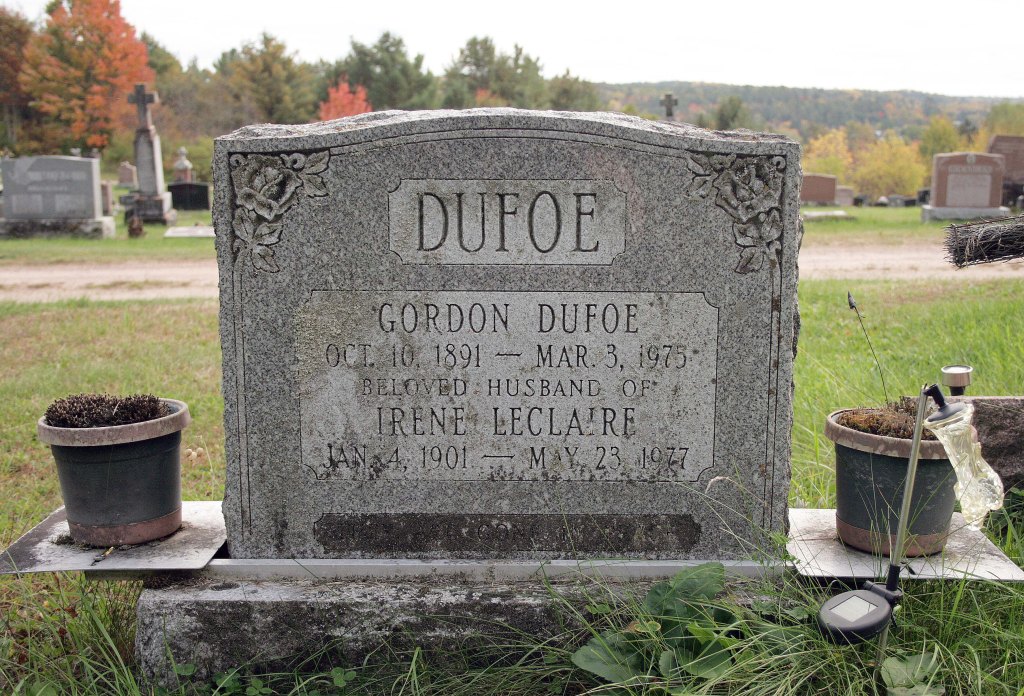
Dufoe passed away on March 3, 1975, at the age of 83. He is laid to rest in Saint Annes Cemetery beside his wife, Irene who passed away in May of 1977. Beside a large grey granite tombstone for both Gordon and his wife, stands a Canadian military grave marker, in honor of Dufoe’s military service. 

It reads: “ Gordon E. Dufoe / Private / 130 Battn. C E F / 3 March 1975 / Aged 83”

The Dufoe family plot is also the final resting place of Albert and Norman Dufoe, and Stella Dufoe Brunette, children of Gordon and Irene. 

It took my mother and I some time to find Dufoe’s plot as the cemetery is quite large. Saint Annes Cemetery, also known as Saint Annes Catholic Cemetery was established in 1883 and has approximately 2,246 memorials according to Find a Grave. The cemetery has not been fully photographed yet, and it is still an active cemetery. 

If we had not visited the Mattawa Museum before visiting the cemetery, we would not have known that this simple grey marker was the final resting place of one of Mattawa’s finest painters. 

The Museum and cemetery are not the only places in Mattawa where you can find a memorial to Dufoe. There is a park that sits between 10th and 11th streets that was dedicated to the local painter many years ago.1 In 2016, a new sign and a memorial bench that lists the names of all of his children was installed.4

The inscription on the memorial park sign reads: 

“Gordon Dufoe (1891-1975) an outstanding artist, craftsman, outdoorsman, soldier, family man, and friend is hereby remembered for the beauty and pleasure he brought to many and for his contributions as an exemplary citizen.”1

Thanks for reading!


References:

  1. Gordon Dufoe | Mattawa Museum
  2. Mattawa’s ‘Renaissance Man’ Remembered | Past Forward Heritage Limited
  3. Mattawa Park bench and sign honours artist | Bay Today
  4. Park bench will honour local painter | Bay Today

Stone Stories: Canada’s First Black Mayor

Last October, My mother and I took a little road trip to Mattawa. We planned on doing some hiking, visiting cemeteries, and enjoying the fall colors. We always like to visit local museums when we visit new places, and the Mattawa Museum did not disappoint. We had a great time touring the grounds and learned a lot about the history of the city, including that it has the distinction of having Canada’s first elected Black mayor. 

Mattawa, located in northeastern Ontario is a little over two hours drive from me. Mattawa is located where the Mattawa and Ottawa Rivers merge, in Nipissing District. The name Mattawa means “Meeting of the Waters” in Ojibwa.1 It is the oldest settlement in the Nipissing District, and today showcases that historic past with beautiful wooden sculptures. Many wooden sculptures of historic figures, important to Mattawa’s history, can be found scattered throughout the town.1

It was an overcast day when we visited Mattawa, but it didn’t deter us from exploring. We admired the two wooden sculptures on the museum grounds and looked for the three white crosses, that stand high on Québec Hill across the Mattawa river. The three crosses were erected in 1686 by missionary priests to mark the place where the two rivers meet.2

Inside the museum, we found a treasure trove of artifacts; paintings by a well-known Mattawa painter, many indigenous artifacts, and a large exhibit about Canada’s first Black Mayor, Dr. S. F. Monestime. The exhibit features large panels with many photos and a history of what brought Monestime to Mattawa, and how he changed the community for the better. The exhibit also includes some of his personal items, like his signature fedora and a medical skull used in his practice. My Mother and I were both interested in this exhibit the most, and were surprised that we had never heard of him before. We made it a point to pay our respects at the cemetery.

Dr. Saint Firmin Monestime

Saint Firmin Monestime was born in Cape Haitian, Haiti in December of 1909. Monestime grew up during the United States occupation of Haiti, which took place from 1916 to 1935. He graduated with a medical degree from the University of Haiti Medical School, and after graduation was named Medical Officer for the International Route between Haiti and the Dominican Republic.3 He experienced a lot during his medical career in Haiti, living through mass casualty events. He received the Knight of the National Order of Honor and Merit, awarded to those of distinguished excellence. He wrote four books around this time, about rural medicine.3

After becoming frustrated with the politics and what he called “deplorable conditions”, Monestime quietly left Haiti for Quebec. He was part of the first small group of Haitian professionals to come to Quebec in the 1940s. Unfortunately, this meant starting over as he had to train and intern for several years to get his full Canadian medical accreditation.3

Monestime found his way to Mattawa almost by chance. He and another colleague were traveling through Mattawa on their way to Timmins to see about setting up a medical practice. They stopped in for lunch at Chez Francois in Mattawa, and it just so happened that the restaurant owner recognized Dr. Monestime, as he had been operated on by the Doctor in Ottawa. The timing was right. The long-standing doctor in Mattawa had recently passed away and the town needed a new doctor. The restaurant also had a vacant room to rent and office space. Monestime agreed to stay, temporarily, but ended up staying indefinitely.3

Monestime found the community to be very welcoming and their generosity encouraged him to stay. His medical practice was booming with a busy office as well as on-call work with the hospital. That’s not to say that he didn’t experience racism in his time there.3 In 1972, he was asked by a reporter if race ever came into play, Monestime replied:

“My practice was booming in no time and from then until now I’ve had no serious problems. You might find a very few—and not the most intelligent—who may say they won’t come to see me because of my race. But very few.”3

Three months after Dr. Martin Luther King gave his “I Have a Dream” speech in 1963, Dr. St. F. Monestime also made history by being elected the first Black mayor in Canada. An active political figure in good standing within the community, regarded for his sense of justice and equality, he was elected mayor nine times.3 Today, the legacy of Dr. Monestime continues and is still felt vibrantly within the community as his family continues to do good works. The most notable of these works is the Algonquin Nursing Home, a project championed by Monestime in his last years.

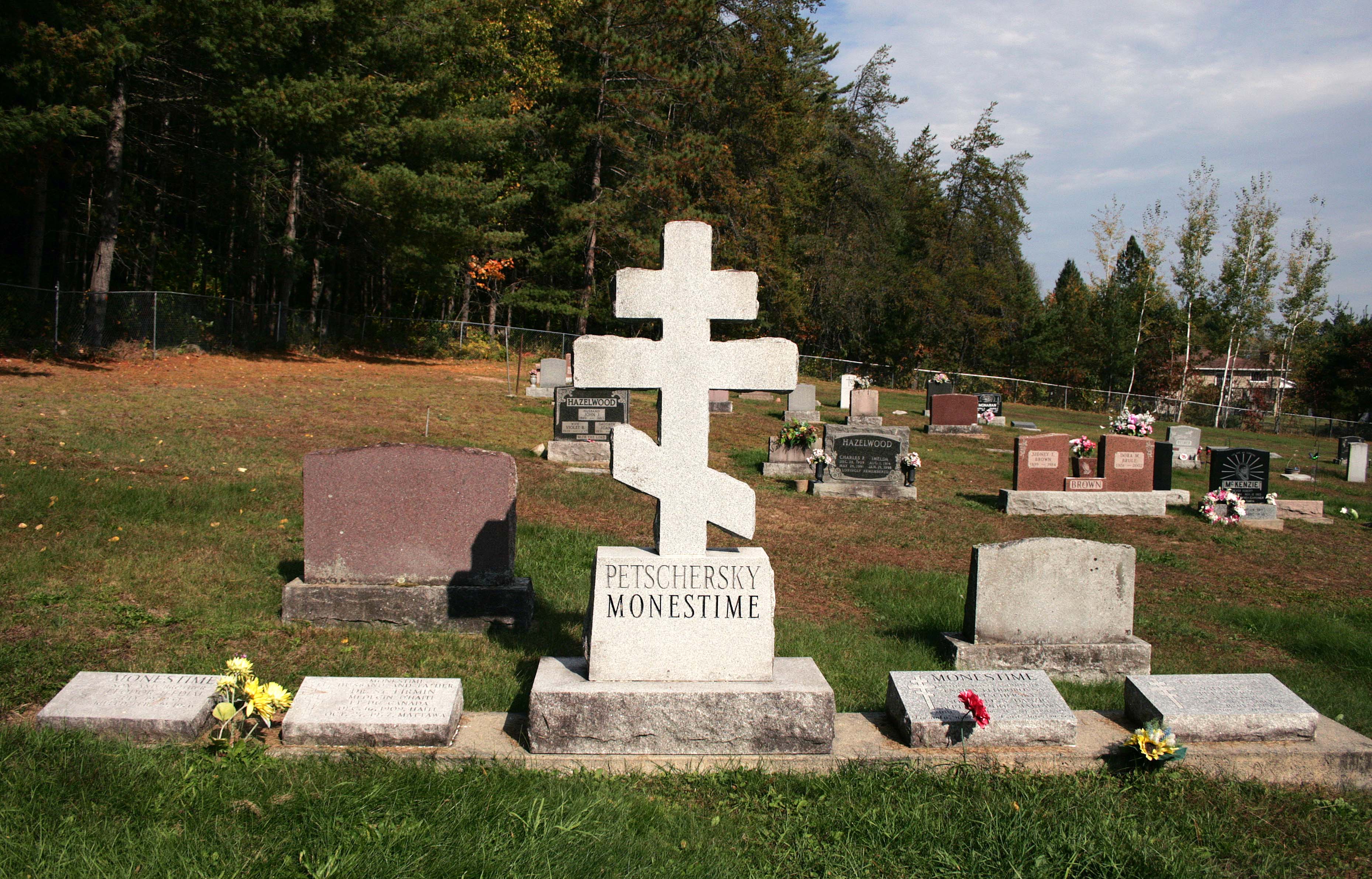
On October 27, 1977, Dr. Monestime passed away at the age of 67, most likely from pancreatic cancer, which he battled multiple times throughout his life. His Russian Orthodox funeral service took place at St. Anne’s Roman Catholic Church in Mattawa.3 He is buried in the Petschersky Monestime family plot at Pine Hill Union cemetery.

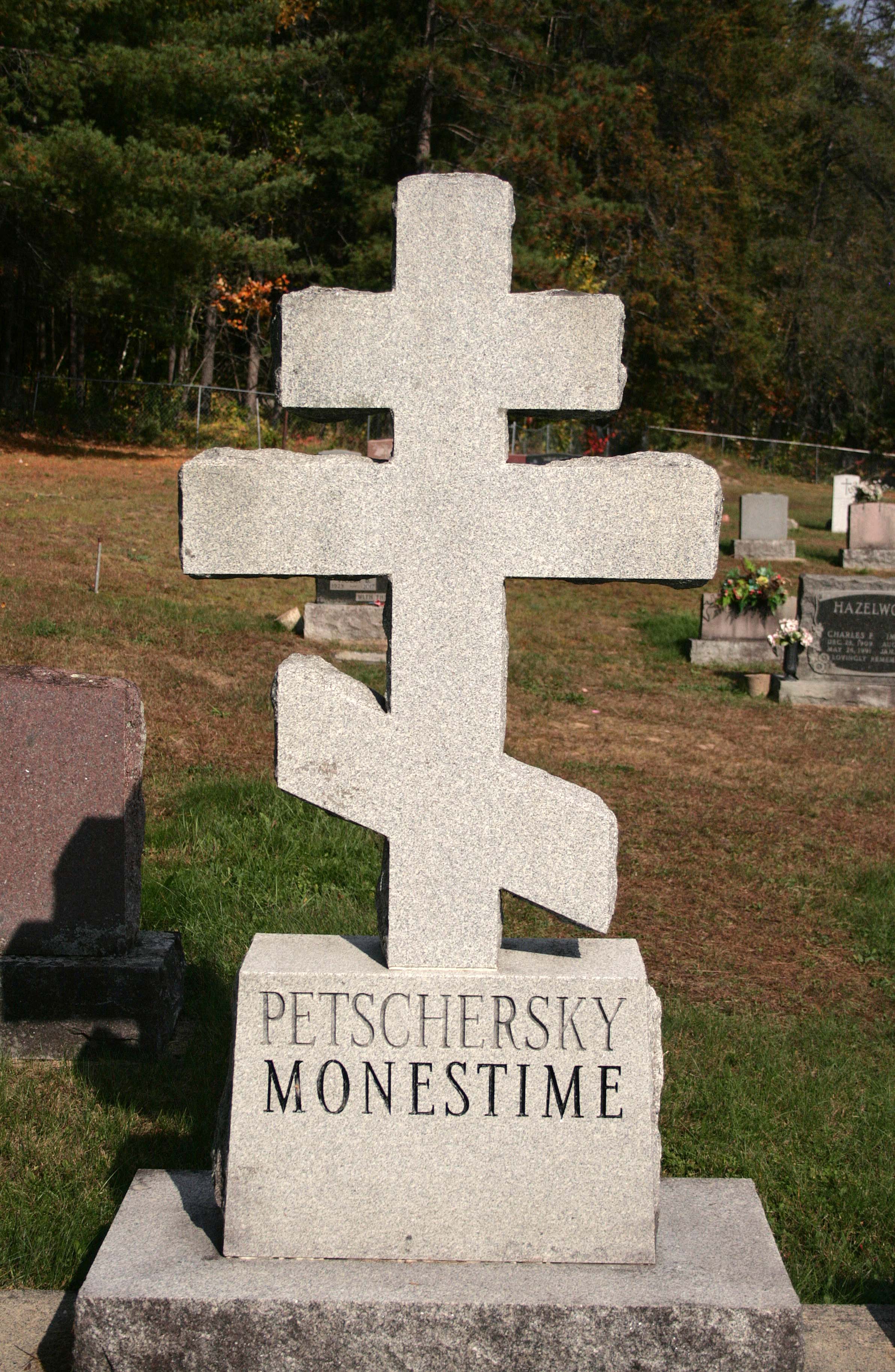
He is laid to rest beside his son Fedeor, who sadly was accidentally shot and killed a year earlier on February 29, during an altercation outside of Chez Francois.3 Monestimes’ wife, Zena, and her mother are also laid to rest in the family plot, which features a large Eastern Cross. The Eastern Cross or Orthodox Cross has a tilted bar at the base of the cross; a tilted footrest. This is meant to illustrate that the thief crucified on the left side of Christ, thought to be the wise thief, went up to heaven, while the thief crucified on the right side was thought to be unrepentant, and went down to hell.4

My visit to Mattawa was an eye-opening trip. After exploring the exhibit at the museum, we stopped at the gift shop and spoke with the museum curator after buying a few things. We had a great conversation about the museum contents and how sometimes history is hidden in plain sight. 

If you’re interested in learning more about Dr. Monestime, I highly recommend a visit to the Mattawa Museum and also picking up a copy of Where Rivers Meet by Doug Mackey. It’s a well-researched look at the life of Dr. Monestime and also explores life in Haiti as well as Black history in Canada. 

Thanks for reading!


References:

  1. What About Mattawa? | Town of Mattwa
  2. The Three Crosses | Mattawa Museum
  3. Where rivers Meet: The Story of Dr. S. F. Monestime, Canada’s First Black Mayor by Doug Mackey | Book
  4. Understanding Cemetery Symbols: A Field Guide for Historic Graveyards by Tui Snider | Book