Cemetery Stories: Greenwood Cemetery

A cemetery is filled with many interesting stories, stories of the souls that are laid to rest within its gates. But often the cemetery itself has an interesting story to tell. 

Today on the blog I want to introduce a new series called Cemetery Stories. For these blog posts, I plan to focus on the story of individual cemeteries. I have visited a lot of cemeteries over the years, and many of them have interesting stories and historical significance. So for this series, I want to look a little deeper into history, geography, notable graves, and all the different elements that make them unique.

For today’s cemetery story, I thought I would look at Greenwood Cemetery in Owen Sound. 

History

Greenwood Cemetery was created in 1858 when land surveyor Charles Rankin submitted a plan to the town council for a new public cemetery. At the time the plan was for 5 acres of land, divided into 27 blocks, including space for vaults.1 Today the cemetery is quite large, sitting on approximately 40 acres of land.2 Greenwood is also sometimes called “The People’s Cemetery” because, in those early days, the land was purchased using the people’s money.1 The cemetery contains 26,700+ burials.1

The oldest home in Owen Sound can be found in Greenwood Cemetery. The house is dated from the 1840s1 and is used as the cemetery office.2 There is also a red brick burial chapel on the cemetery grounds. Built-in 1905, it served as both a chapel and a receiving vault. There is a trap door built into the floor that a coffin could be lowered through, into the storage racks below, to rest until the Spring when the remains could be interred. The chapel stopped being used for burials in the 1930s when the mausoleum opened. The chapel was converted and used as an office space for a time, until the early 90s. Today the building looks to be mostly empty.3

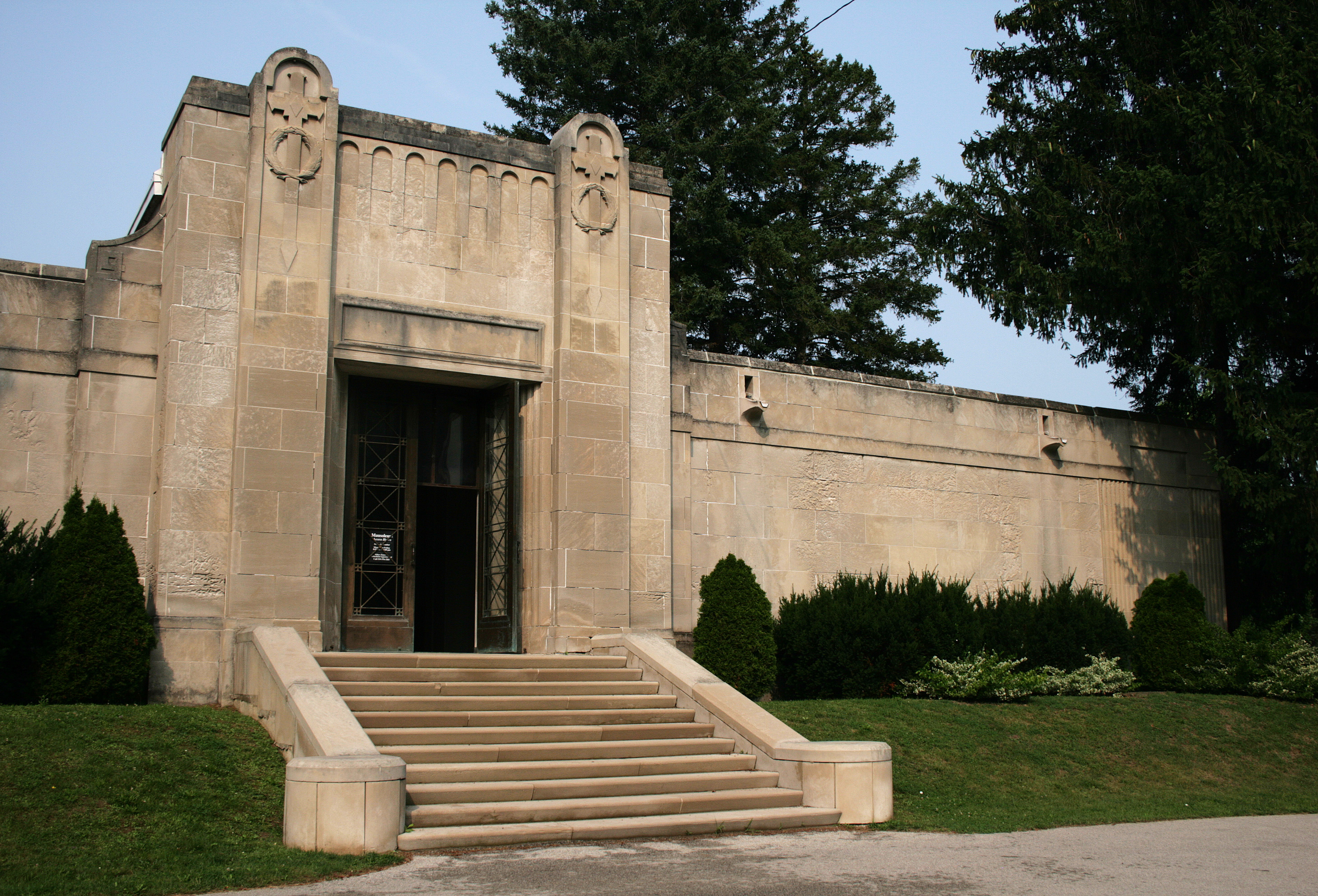
Greenwood is also home to a beautiful mausoleum. Construction of the large mausoleum began in 1927. The Art Deco-inspired exterior is covered in Indiana limestone, while the interior is finished with Italian marble. It also features some lovely stained glass windows and has a large central chapel that is used year-round.1
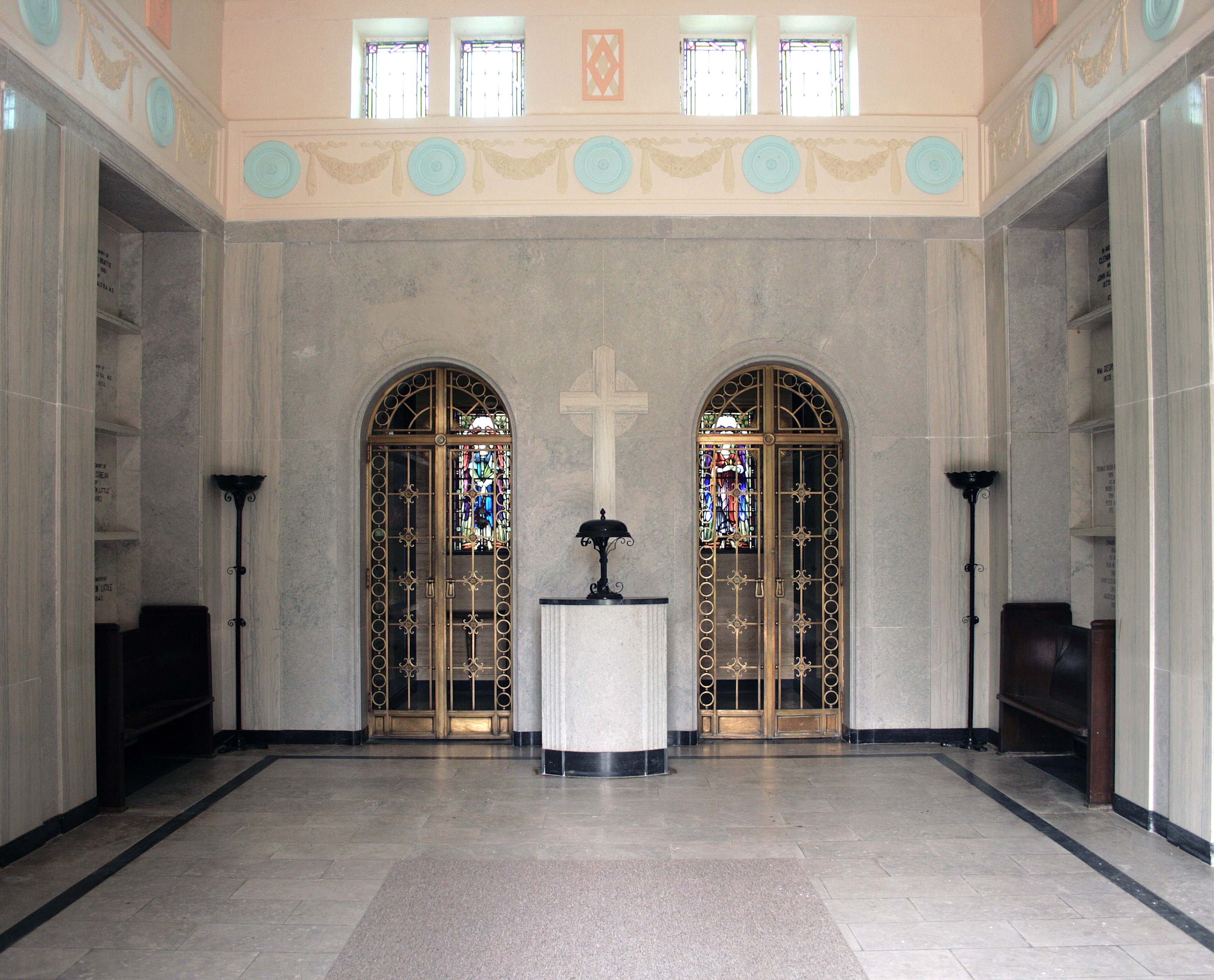
The cemetery is dotted with a variety of gravestone styles, and there are three memorial garden sections. It also has a section for members of the fraternal organization, The Independent Order of Odd Fellows (IOOF), that features a large stone cairn with IOOF symbolism.

Greenwood also has a Potter’s Field and memorial. The memorial honors the more than 1,000 women, children, and men who were buried in unmarked graves between 1858 and 1989. A potter’s field, also known as poor grounds, stranger’s plot, or indigent plot, is a section of a cemetery where those who are impoverished are buried.4 1,242 people are thought to be buried in Greenwood’s potter’s field4, all unmarked aside from the memorial and one lonely gravestone that sits close to the tree line at the back of the indigent plot. According to an article in the Northern Terminus: The African Canadian History Journal, many of the unknown graves are Black pioneers. Only a small few have been identified.

Among the unidentified graves lies an infant, who in 1889 was found in Victoria Park, wrapped in white cloth. The transcription in the cemetery records, simply reads “Unknown, child found dead”.4

Notable Graves

Greenwood Cemetery is the final resting place of a few notable memorials. William Avery “Billy” Bishop, Canada’s World War I Flying Ace rests here. There are also two other Victoria Cross recipients buried here; LTC David Vivian Currie (World War II) and Thomas Holmes (World War I). 

Speedskater and world-record holder Lela Brooks is also laid to rest here, as well as professional hockey player, Harry “Apple Cheeks” Lumley. Margaret and John Thomson, parents of famous Canadian painter Tom Thomson, are also buried here. 

There are many more notable pioneers and local celebrities buried here, like Charles Rankin, who submitted the cemetery plan and helped bring the cemetery into reality. The best way to pay your respects is with a self-guided walking tour. The cemetery offers three tours that take you to different areas within the large cemetery and highlights all the notable members of the community who are laid to rest at Greenwood. You can pick up the printed tour guides at the cemetery office. The guides include a map, directions, and a little history for each stop on the tour. 

We visited the cemetery twice on our trip to Owen Sound. Because it’s so large we felt we had to. Our first visit was late in the day, so the mausoleum had been locked up for the night. We were losing light quickly, and every turn on the winding paths revealed new sections I wanted to explore further. We visited again the next morning and were able to explore the Mausoleum and walk the sections at our leisure.

Greenwood was full of life during both our visits. In the evening we saw folks paying respects at graves, but also saw families taking advantage of the safe, paved pathways. Two young children were learning to ride their bikes between the rows. 

The next day, we saw many walkers enjoying the scenery, both young and old. We also saw folks walking their dogs and running into others they knew who were doing the same. It was lovely to see a green space in use but also used respectfully.

Thanks for reading!


References:

  1. Greenwood Cemetery Walking Tour “The People’s Cemetery” | Print brochure
  2. Greenwood Cemetery | Owen Sound
  3. The Chapel, Historical Owen Sound | Plaque on the cemetery grounds
  4. Owen Sound’s Greenwood Cemetery “A Land for the Living” | Terri Jackson

Stone Stories: Coniston Train Crash Memorial

Last February, I learned about a local tragedy that has left a hole in the community of Coniston. A heart-felt roadside memorial was erected, to ensure that the men who were lost that day are never forgotten. This monument sits at the train crossing where the tragic events took place. Last spring, my mother and I visited the memorial to pay our respects. 

This past Thursday, February 9th, marked the 72nd anniversary of the train crash in Coniston.

The monument reads: “This monument has been / erected to remember the / nine men who lost their / lives, and the many who were / injured at the train / crossing in the tragic / bus and train accident / on February 9, 1951. / Primo Creama / Herbert Conlon / Alex Beauparlant / David Martin / Eugene Leclair / Joseph Tremblay / Paul Sharko / Ernie Cooper / Never to be forgotten”

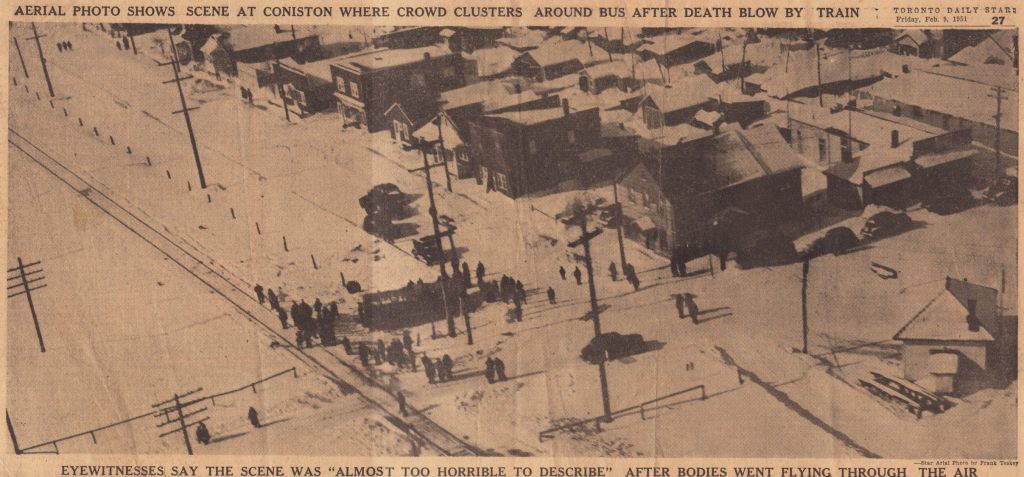
The early morning, of February 9th, had been incredibly cold. According to the Coniston Historical Group, the temperature had dropped to 48 degrees below zero that morning, which caused low visibility. The passenger train was also running late that morning.1 Between 8 and 8:15 a.m. tragedy struck—a CPR passenger train collided with a local bus at the railway crossing in Coniston. 31 people were injured, and 9 were dead.2 The bus had been carrying residents as well as smelter workers on their way home from a graveyard shift. The 9 men who lost their lives that day were from the same shift at the INCO smelter.1 

The monument sits beside the railway tracks on the corner of Government Road and Edward Avenue, at the site where the horrific accident took place. I haven’t been able to determine exactly when the monument was erected, but from what I have read it was possibly erected by the Lions Club, in the early 2000s, and is now maintained by the Coniston Historical Group.

On the anniversary of the accident, a candlelight vigil is erected in the early morning at the monument. A custom-made INCO triangle candle holder, holds nine lit candles, one for each of the men who sadly lost their lives that day. 

Alex Beauparlant 

Herbert Conlon 

Ernie Cooper 

Primo Crema 

Lucien Landriault 

Eugene Leclair 

David Martin 

Paul Sharko 

Joseph Tremblay 

At the peak of the triangle is a 10th candle, that is lit in memory of the 31 who survived the crash, and for those in the community who were left behind, to mourn their friends’ families, and colleagues. It’s a beautiful memorial, that brings the community together, to share memories of their loved ones and make sure that they will never be forgotten. 

My mother and I visited the memorial in late May of 2022. It was a very sunny and beautiful day. As we drove to Coniston, only a short drive away from our home, I remember wondering why I had never heard of this tragic event before. I had only learned about it after having seen a Facebook post from the Coniston Historical Group, earlier that year. 

The monument sits very close to the railway tracks, if you didn’t know it was there—you might miss it. There is a small parking area right next to the monument, with a little walkway that leads up to the memorial. The site is very well taken care of, and you can feel the love the community has for this memorial and what it symbolizes. I think what makes this memorial a bit surreal, is the fact that it sits right next to the train tracks where the accident happened so many years ago. I know it must have looked a lot different then, but it’s a very somber feeling to look at the railway tracks just behind the monument and know that that is where it happened.

This monument is a cenotaph, a marker where the deceased have been laid to rest elsewhere. As I read and researched I became curious as to where these 9 men now rest. I have been able to locate the resting place of three of them; Alex Beauparlant, David Martin, and Paul Sharko. I hope to find the other 6 and visit them this summer to pay my respects.

I always find roadside memorials incredibly moving. This was a tragic accident that changed the fabric of the small town of Coniston forever, but it will never be forgotten. I’d like to thank the Coniston Historical Group for all the good work they do to maintain this memorial, and for their educational posts on Facebook, as they continue to share the history and story of Coniston. So much history could be lost if it wasn’t for groups like theirs.

Thanks for reading.


References:

  1. Canadian Disaster Database | Government of Canada
  2. Facebook post | Coniston Historical Group
  3. Toronto Star
  4. Madera Tribune

Stone Stories: The Dyer Memorial

Winter is slowly starting to tighten its grip on us here in Northern Ontario. My road trips are done for the year, now that it’s getting colder and the snow is getting deeper. I like to take this time to sort through my photos, update my photography portfolios and upload images to Find a Grave. I also like to reminisce on all the cemeteries I have visited during the year. Today, I wanted to share my experience visiting the Dyer Memorial Nature Reserve.

Every October I take some time off to enjoy the crispy weather and changing colors in Ontario. Hiking and visiting cemeteries in the fall are my absolute favorite. This past October, my mother, and hiking buddy visited Huntsville to do some leaf peeping and hiking with some cemetery visits along the way. One of the must-do’s on this trip was visiting the Dyer Memorial. I had read online that this memorial site and nature reserve was a monument of love, in memory of a loving Wife. When we arrived at the site, I was surprised to find out that the Dyer Memorial is also the final resting place of Betsy and Clifton Dyer.

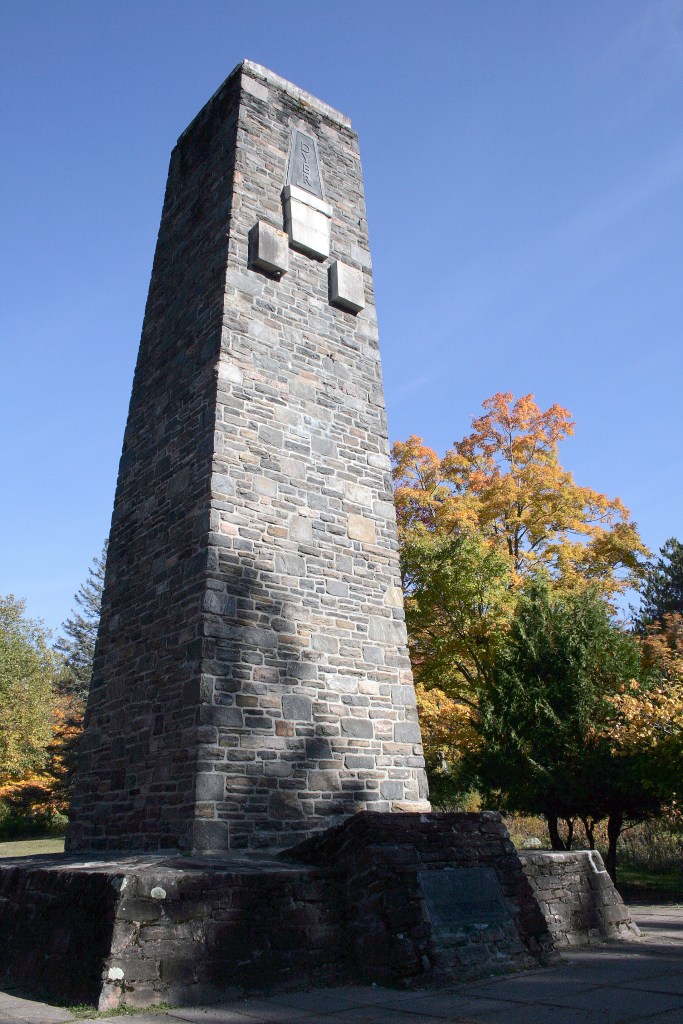
This beautiful monument was erected in 1956 by Clifton G. Dyer, a Detroit lawyer, for his wife Betsy Browne Dyer.1 It sits about 10 minutes outside of Huntsville, in the small hamlet of Williamsport. They were frequent visitors to the area, having first honeymooned in the Muskokas in 1916. They loved the outdoors and would often tent or stay in a cabin above the Big East River, close to the spot where the memorial now sits. In the 1940s they had a permanent cottage built and visited every summer.2 Betsy passed away in 1956, and Clifton, in his mourning, had the memorial built so Betsy could be laid to rest in the place she loved so much.1 Her ashes were placed in a copper urn at the top of the memorial.2 Clifton passed away 3 years later, and his ashes were also placed within the monument.1  

The road to the monument site is not paved and snakes its way up to a small car park area. There is some signage but it might be missed if you’re not paying close attention. The trail from the car park to the monument doesn’t seem like much, but once you turn the corner on the flagstone path and see the monument come into view, it’s quite impressive.

The obelisk stretches high into the sky, with a plaque near the top that reads “Dyer”. The monument is surrounded by footpaths leading every which way around the monument. Some small wooden bridges extend over a small pond with trails that curve around small clumps of trees. The lone monument stands like a sentinel in the center of it all. 

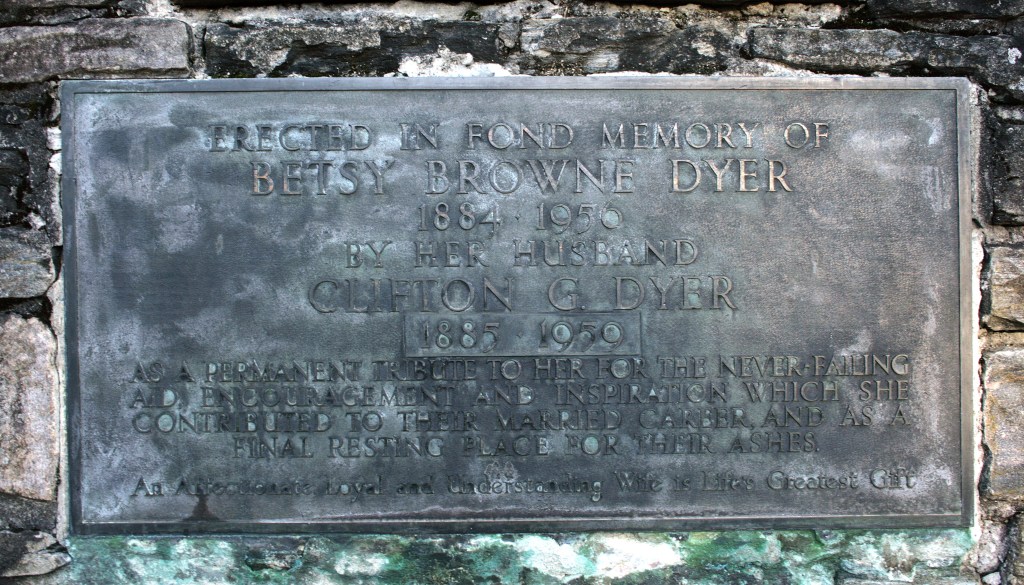
At the base of the monument there is a plaque that reads:  

“ERECTED IN FOND MEMORY OF / BETSY BROWNE DYER / 1884-1956 / BY HER HUSBAND / CLIFTON G. DYER / 1885-1959 / AS A PERMANENT TRIBUTE TO HER FOR THE NEVER-FAILING / AID, ENCOURAGEMENT AND INSPIRATION WHICH SHE / CONTRIBUTED TO THEIR MARRIED CAREER AND AS A / FINAL RESTING PLACE FOR THEIR ASHES. / An Affectionate, Loyal and Understanding Wife is Life’s Greatest Gift”

We were the only ones on the grounds when we visited, so we took our time to explore the area. There was no trail map to show how far the trails went, so we kept our bearings and didn’t stray too far from the monument. We crossed a small bridge and wandered around the small pond, reflecting the bright fall colors. We also explored a small clump of trees on the other side of the monument, again deciding to stay close to the stone obelisk and not walk too far down the trails. 

I circled the obelisk a few times, in awe of its stature and what it represents. It was first built as a loving tribute but now stands as a memorial to both Husband and Wife.

It’s lovely to see this site so well taken care of, not just the memorial, but also the surrounding trails. I love the idea that this nature reserve preserves the area so others can experience the beauty of it, just as the Dyers did in their lifetimes. 

Thanks for reading!

References: 

  1. Muskoka’s Hidden Gems – Dyer Memorial, Huntsville | CLRM
  2. Dyer Memorial | Huntsville Adventures