October Stone Stories: The Bird Family and Woodchester Villa

Even though Halloween has just passed, it still feels like a perfect time to share another ghost story.

One that stands out is the tale of the Bird family of Bracebridge, Ontario, and the mysterious history of Woodchester Villa. A house known for both its striking architecture and its lingering ghostly rumours.

In April of 2024, my mother and I took a trip to Bracebridge to explore this unique historic site. It was Easter weekend and our first road trip of the season. The Spring thaw had come early, but spring itself hadn’t quite arrived yet. The trees were bare, and the grass was still brown, giving the whole day an autumn feel.

It was fitting, since we were there to visit ghosts.

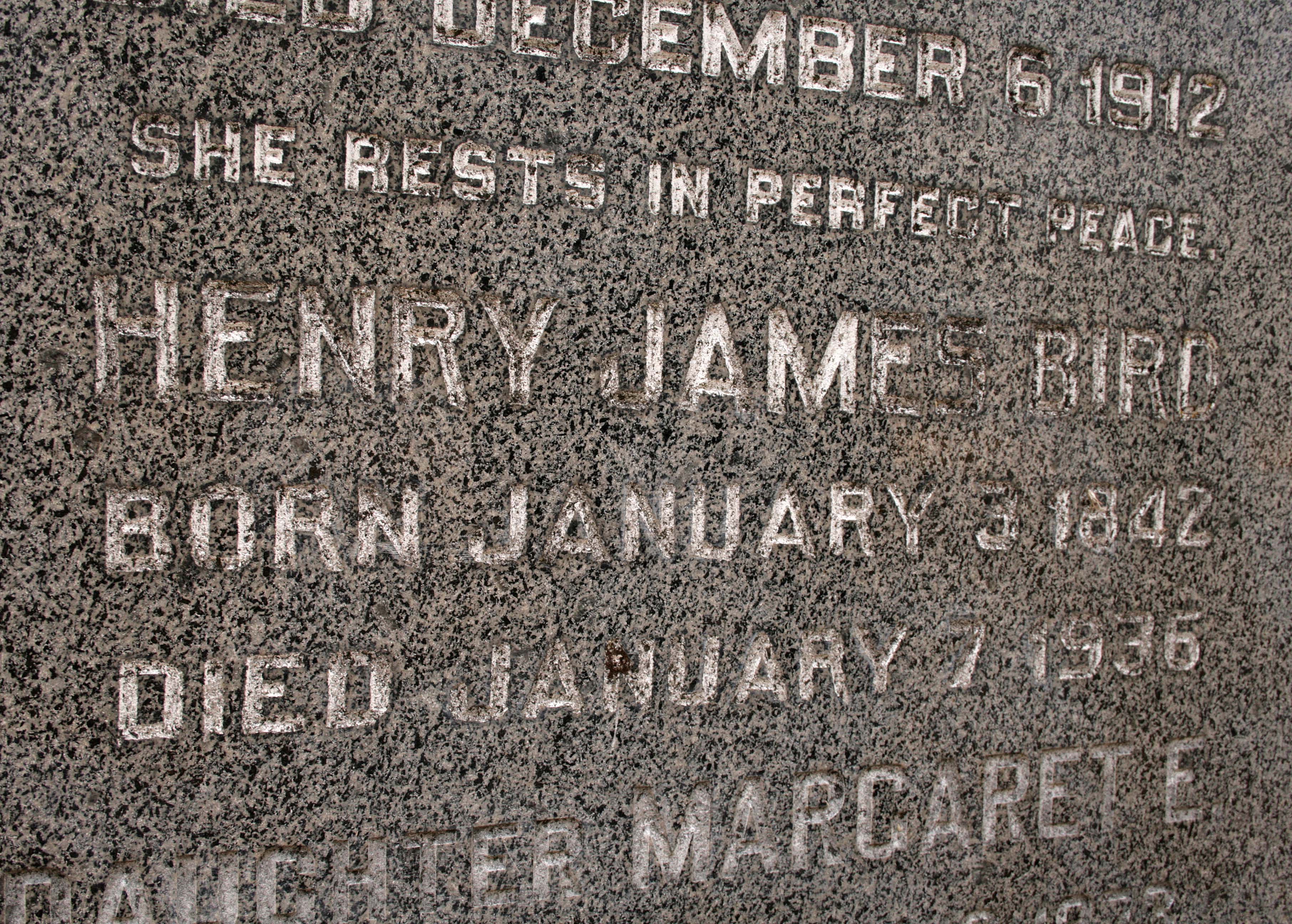
Henry James Bird

Built in 1882, Woodchester Villa was the dream home of Henry James Bird, a successful wool mill owner who made his mark in Bracebridge, Ontario.1 Henry was born on January 3, 1842, in Woodchester, England, the youngest of eleven children.2 He learned the wool trade in his home country before spending time in Australia and the United States, eventually settling in Canada in 1867.2

Before finding his footing in Bracebridge, Henry worked for the Rosamond Woollen Company in Lanark County.2 A few years later, he bought a mill in Glen Allan, but after a terrible flood damaged the property, he decided it was time for a change.2 Tragically, before he could make the move north, his first wife, Sarah Jane Fraser, and their two young children died of tuberculosis.2 In 1872, Henry moved to Bracebridge, where he opened the Bird Woollen Mill beside the falls.2

Henry quickly became a respected businessman and community leader. He served on the town council and helped bring new public utilities to the growing town, including its first water and fire protection systems.2 His success and civic pride eventually led him to build his grand home, naming it “Woodchester” after the village where his story began.2

Woodchester Villa

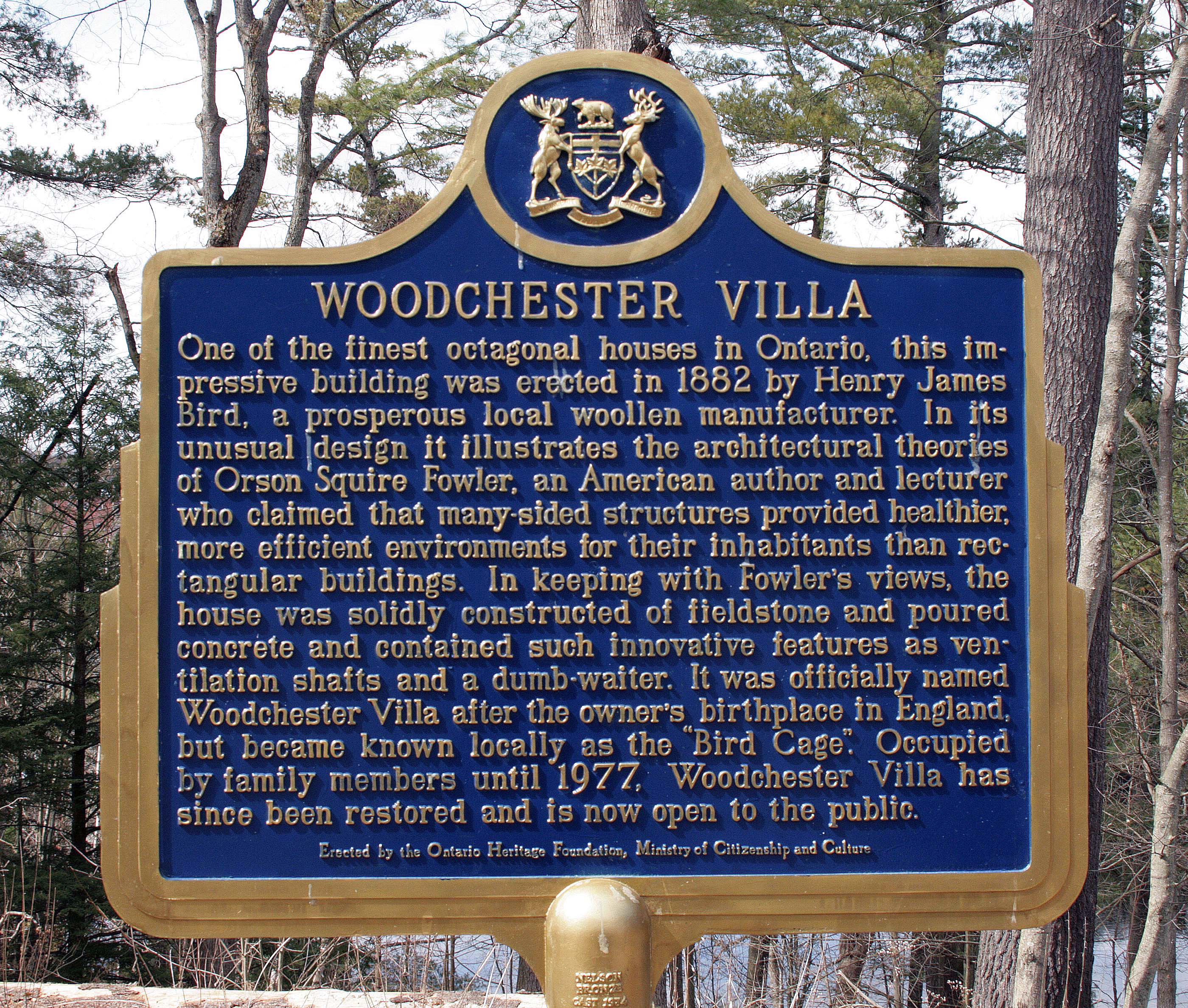
Although Woodchester Villa was ahead of its time, it’s also long been tied to strange happenings that add to its eerie charm. The house was closed during our visit, but we spent plenty of time admiring its design and reading the educational panels scattered around the property. They helped us picture what life might have been like for the Bird family living within those walls.

I wandered around the grounds with my camera, hoping to catch a flicker of movement from inside. We didn’t see any spirits, but the landscape itself felt charged, as if the past still lingered quietly on that secluded hilltop.

Woodchester Villa is one of Ontario’s finest examples of an Octagonal house.1 The eight-sided design was inspired by Orson Squire Fowler, an American phrenologist and author who believed octagon homes were healthier and more efficient than traditional square houses.1 Bird fully embraced this philosophy, creating a three-storey home that blended innovation with comfort.2

Inside, the villa featured some impressive amenities for the late 1800s, like indoor plumbing supplied by rainwater tanks on the second floor, a ventilation system that circulated air throughout the house, and even electric lighting, which was rare for the time.2

For all its beauty and history, Woodchester Villa has a reputation for being one of the most haunted spots in Bracebridge. Behind its restored walls, many believe something otherworldly lingers.3

Stories tell of a spectral woman and two ghostly children who seem to wander the rooms.3 Visitors and staff have reported hearing the soft cries of a baby, the quick steps of little feet on the upper floors, and the faint sound of a woman’s voice singing somewhere in the distance.3 Cold spots are often felt throughout the house, especially near the basement stairs. Some have also described the air growing so cold they could see their breath, even in the middle of summer.3

While no one can say for sure who these spirits are, many believe the ghostly woman could be Henry Bird’s first wife, Sarah Jane, accompanied by their two young children.3 All three died of tuberculosis before Henry moved to Bracebridge. Perhaps, as Andrew Hind suggests in Muskoka’s Most Haunted 2, their sudden, tragic deaths left them unable to rest, and they followed Bird north to the home he would later build.3

The idea is both eerie and oddly touching. If the spirits truly belong to Henry’s lost family, Woodchester may represent the life they were meant to share, their love quietly echoing through the halls, long after death.

Bracebridge United Cemetery

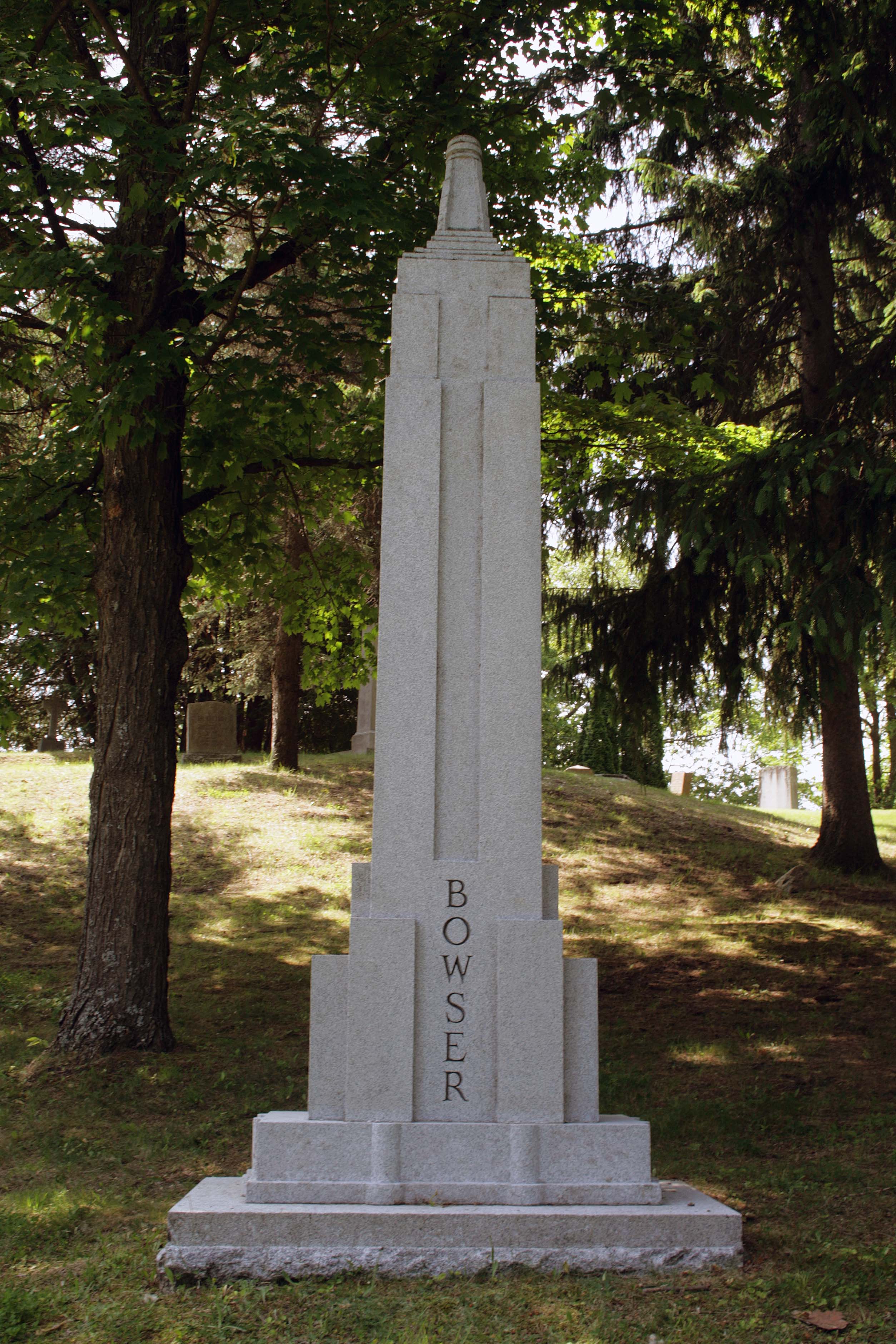
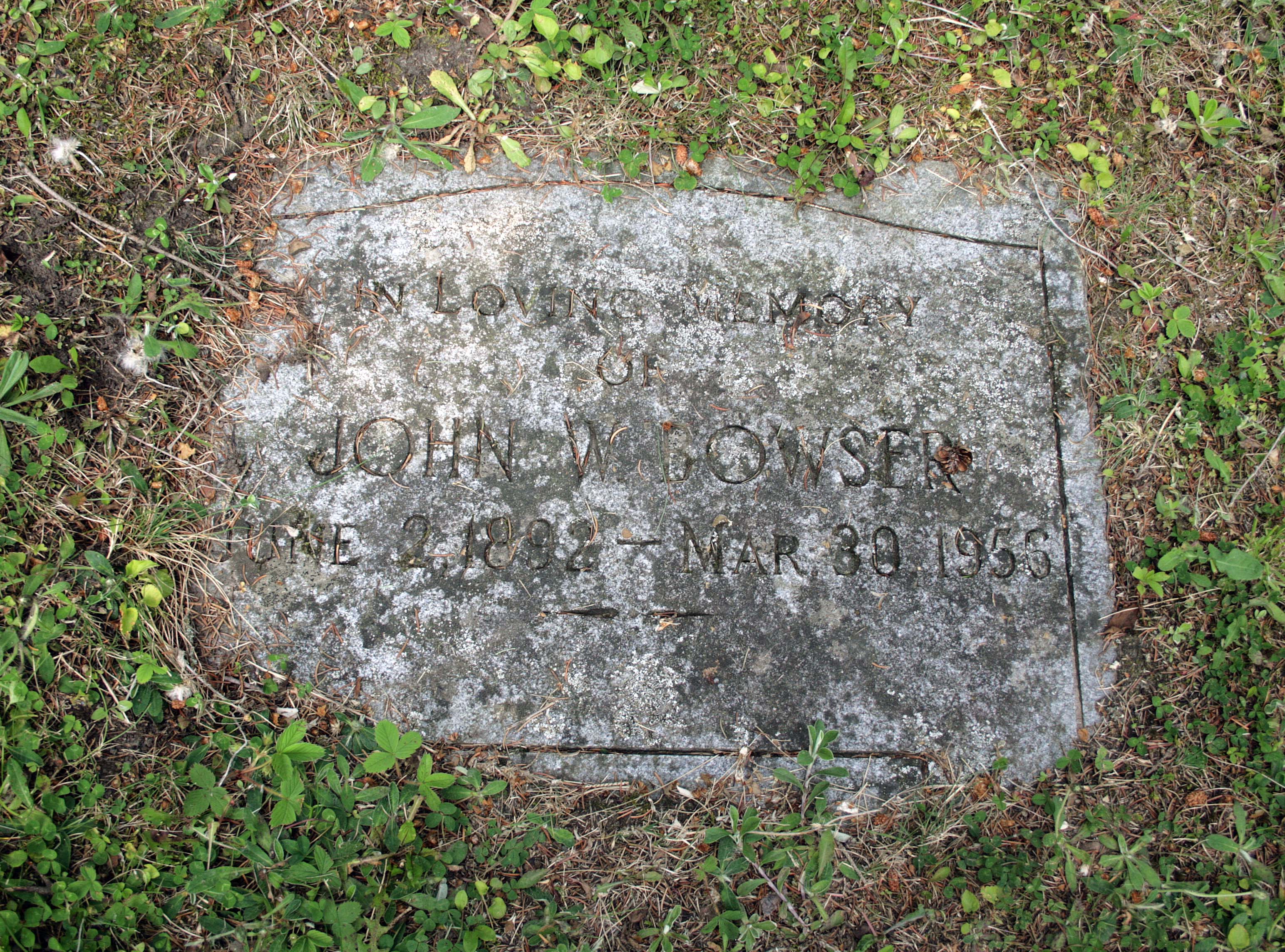
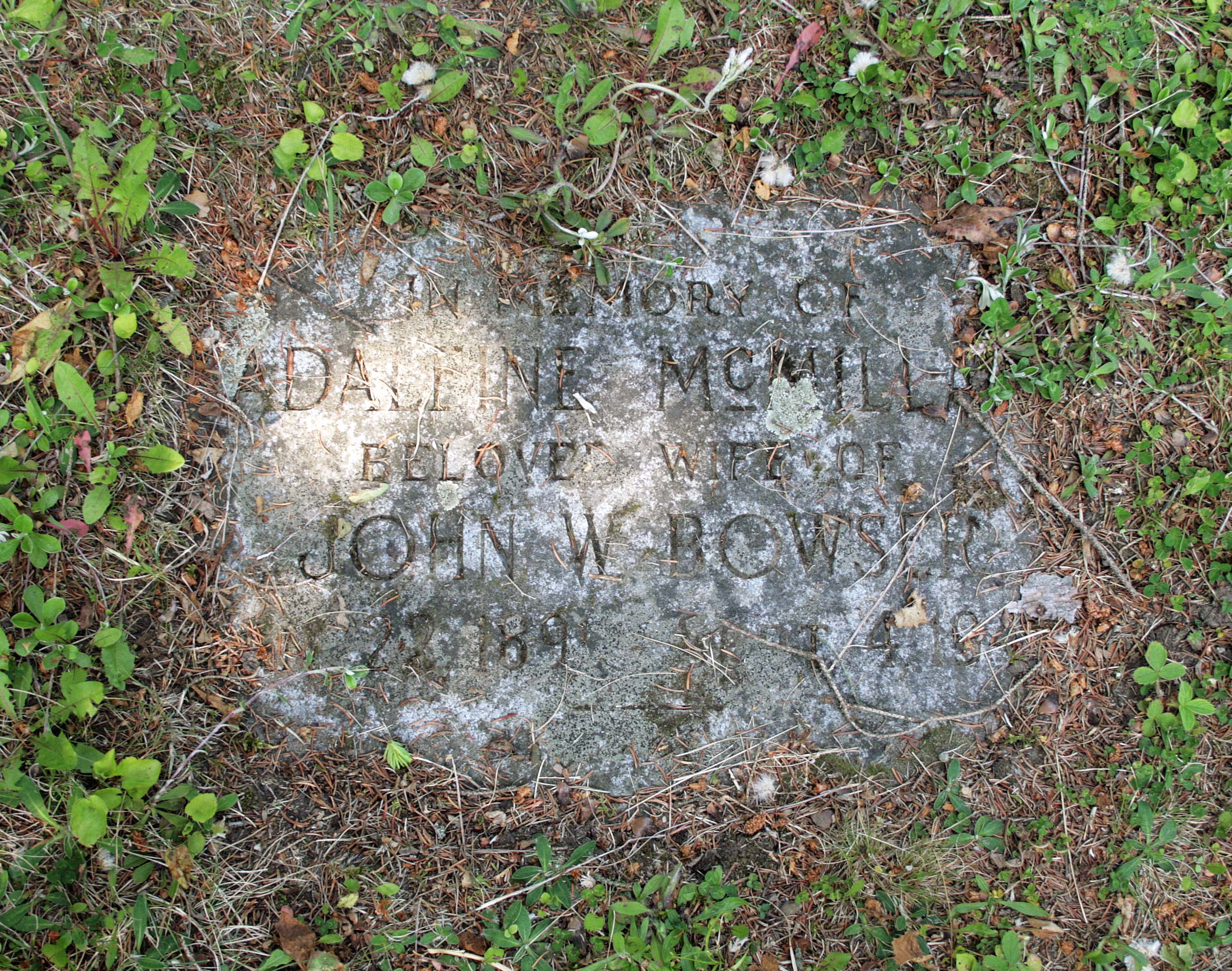
After exploring the villa grounds, we visited the nearby Bracebridge United Cemetery, where Henry James Bird and his family are buried.

After some searching, we found the graves of Henry, his second wife Mary Matilda Bird, and several of their children, including Margaret Elizabeth and Catherine.

The cemetery was quiet and calm, yet the connection between the villa and the family’s final resting place added an eerie layer to our visit. Standing at Henry’s grave, I felt surrounded by history and maybe something more. Whether it’s the family’s hardships or the strange energy tied to their home, the Bird story seems to linger beyond the grave.

The Bird family’s story and their haunted home remind us how easily history and mystery can intertwine. Whether or not you believe in ghosts, there’s something about Woodchester Villa that still feels alive with the past.

For anyone interested in cemetery tourism or dark local history, this hauntingly beautiful site is well worth the visit.

Thanks for reading!


References:

  1. Woodchester Villa, Bracebridge | Ontario Heritage Trust
  2. Woodchester History | Bracebridge The heart of Muskoka
  3. Muskoka’s Most Haunted 2 by Andrew Hind | Book

October Cemetery Stories: Canada’s Most Haunted Cemetery

Some cemeteries feel alive with history, and sometimes with something else entirely!

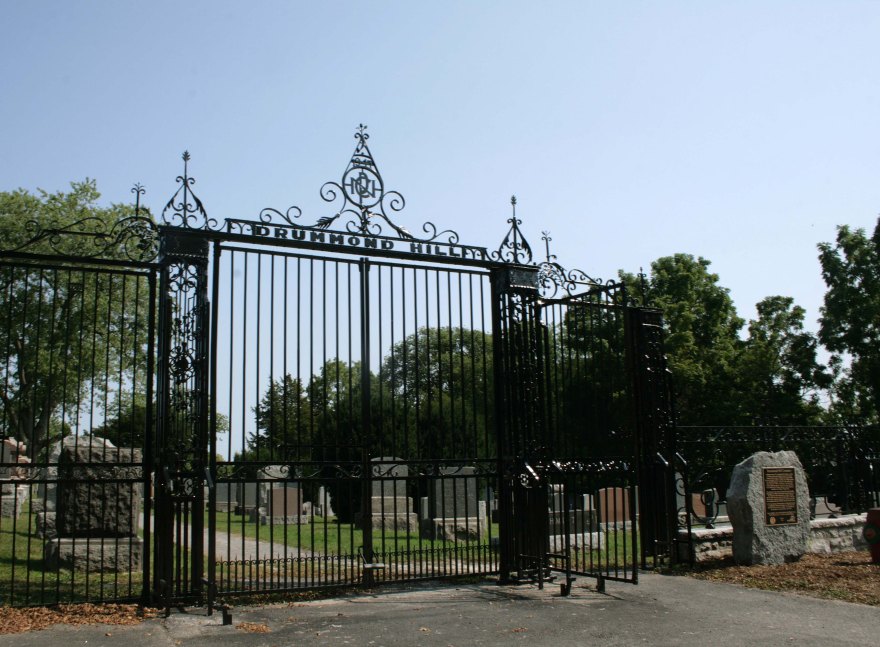
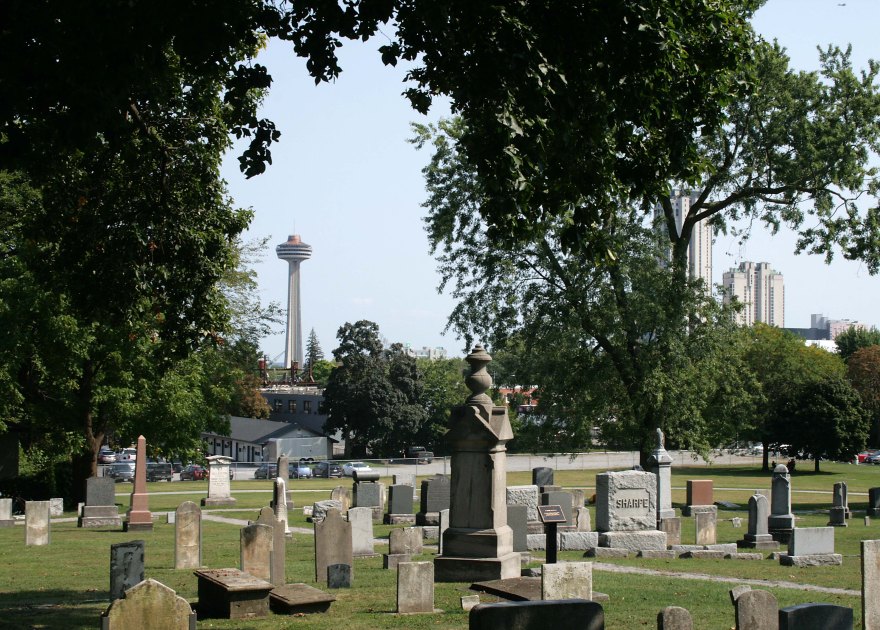
Drummond Hill Cemetery in Niagara Falls is one of those places. Known as the site of one of the fiercest battles of the War of 1812, it’s also considered Canada’s most haunted cemetery.

Long before its haunted reputation took hold, Drummond Hill was a popular tourist stop, even rivalling Niagara Falls. Visitors came for battlefield tours led by veterans eager to share their stories.1

Drummond Hill Cemetery

Drummond Hill was once farmland, but on July 25, 1814, it became the site of the Battle of Lundy’s Lane, one of the bloodiest conflicts of the War of 1812.2 The hill’s high ground made it strategically important, and the fighting went on for six hours before darkness and heavy losses brought it to an end.2 Both sides lost more than 800 men, and although each claimed victory, the Americans withdrew the next day, ending their advance into Upper Canada.2

Today, a large stone monument stands on the hill to honour those who fought and to mark the battlefield.3 Beneath it lies a vault containing the remains of 22 British soldiers.3

The first recorded burial at Drummond Hill is John Burch. He was originally buried on his farm in 1797 and re-interred here in 1799.3 That means this ground was already being used as a burial place well before the battle. Over time, the cemetery grew to roughly 4 acres and now contains more than 25,000 burials.4 The site is managed by the City of Niagara Falls and remains semi-active, though plots are no longer for sale.3

Among those buried here are veterans, Loyalist settlers, and many early Niagara families. One of the most visited graves belongs to Laura Secord, the woman who warned British forces of an American attack during the War of 1812.4 Another notable grave is that of Karel Soucek, the daredevil who famously survived his barrel plunge over Niagara Falls.5 You will also find markers and monuments for soldiers and local leaders from the region’s early days.3

Haunted

With its violent past and long history, it’s no surprise Drummond Hill has a haunted reputation. Many stories connect back to the battle, where soldiers were killed and buried on the grounds.6 Visitors and locals have reported seeing ghostly soldiers walking among the gravestones, or appearing at a distance before fading away.6

It’s said that the cemetery is haunted by two distinct groups of soldiers.1 One group is a troop of five soldiers dressed in Royal Scots uniforms, limping across the former battlefield before vanishing.1 The second group is said to consist of three British Soldiers in red coats, slowly making their way up the hill and settling into a steady march, before disappearing.1

Laura Secord’s monument, which features a lifelike bust, has also been linked to supernatural occurrences. Some visitors say that her statue seems to watch them as they walk by, as if she’s still keeping a watchful eye on things.1 These reports, combined with the age of the cemetery and its battlefield history, make Drummond Hill a place where history and the supernatural feel closely connected.1

When I visited Drummond Hill, I made sure to stop at Laura Secord’s grave. Standing in front of her stone was moving, knowing her bravery has become such a lasting part of Canadian history.

During my visit, I did have one unsettling experience, but it had nothing to do with the supernatural.

I came across someone under the influence, wandering through the cemetery. For the first time in all my cemetery visits, I felt unsafe. It was a harsh reminder of how deeply the opioid crisis has reached into our communities, even historic sites like this. That moment pulled me out of the past and reminded me of the struggles happening right now.

Drummond Hill Cemetery is layered with stories. It carries the weight of the War of 1812, the lives of pioneers and heroes, and the ghostly legends of soldiers who never left. It’s a place where history and mystery meet, and where the past feels close. Visiting left me reflecting not only on the history that shaped this ground, but also on the realities of the present.

Haunted or not, Drummond Hill remains one of Canada’s most fascinating and important cemeteries.

Thanks for reading!


References:

  1. Haunted Cemeteries: True Tales From Beyond the Grave by Edrick Thay | Book
  2. Battle of Lundy’s Lane National Historic Site of Canada | Government of Canada
  3. Drummond Hill Cemetery | City of Niagara Falls
  4. Drummond Hill Cemetery | Find a Grave
  5. Karel Soucek | Find a Grave
  6. The Most Haunted Cemetery in Canada is Drummond Hill | Ghost Walks

October Stone Stories: The Haunting of Bell Mansion

Some places just have a presence.

You can’t help but notice them. The Bell Mansion in Sudbury, Ontario, is one of those places. It’s grand, full of history, and, if the stories are true, maybe even haunted.

Despite its spooky reputation, it’s also been a popular spot for wedding photos, with its striking architecture offering a mix of romance and a touch of haunted charm.

But while the mansion still stands for now, its future is uncertain, and its past lingers in more ways than one.

The Bell Family

William Joseph Bell, better known as Willie Joe, was born in Pembroke, Ontario, in 1858.1 He started in the lumber industry at just 18, working as a scaler and lumberjack in Quebec.1 By the time he moved to Northern Ontario in 1896, he had already made a name for himself.1 He quickly climbed the ranks, becoming Vice-President and General Manager of the Spanish River Lumber Company in 1901.1 His influence didn’t stop there; he also ran a hardware company and sat on the board of National Grocers Ltd.1

In 1886, he married Katherine Skead, the daughter of an Ottawa senator, and the couple eventually settled in Sudbury.1 Beyond business, they were generous community builders. Their greatest gift may be Bell Park, a beautiful green space on Ramsey Lake, which they donated in 1926.2 A gift that continues to benefit Sudbury today.

The park remains one of the city’s most beloved gathering spots, offering accessible recreation for people of all ages. Just as Bell Park connects residents with nature, the Bell Mansion connects them with the city’s past, standing as a reminder of the Bells’ influence and Sudbury’s early growth.

The Bell Mansion

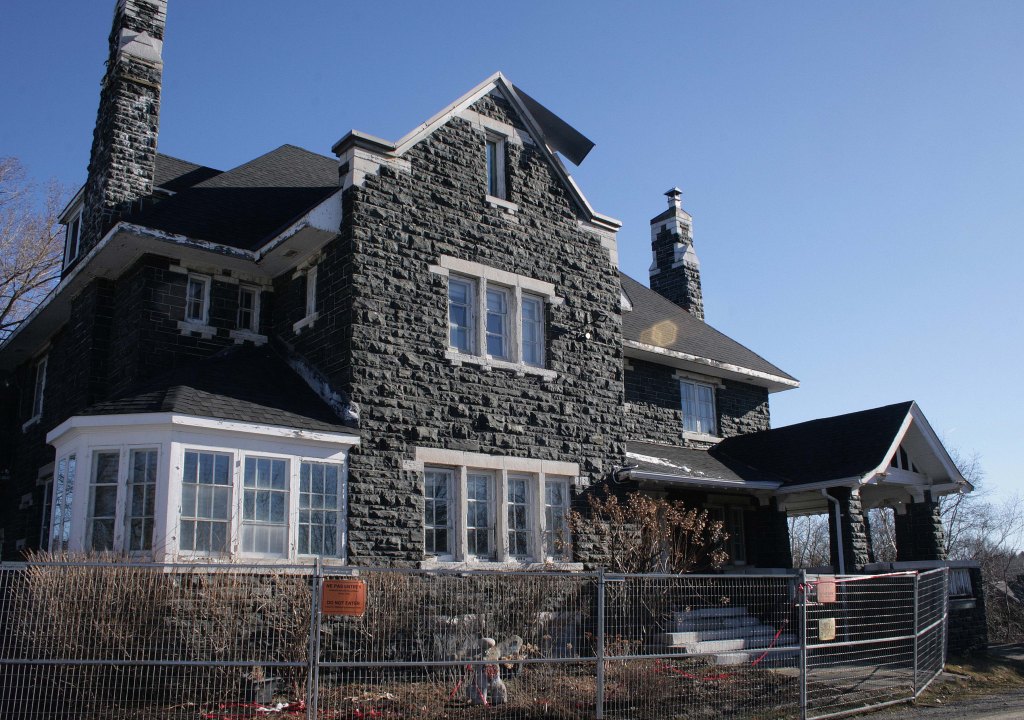
Built in 1907, the Bell Mansion, also known as Belrock, is beautiful. Made from local stone in the Arts and Crafts style, the house once sat on 155 acres, stretching from Elizabeth Street down to Ramsey Lake.3,4 That land is now Bell Park, but back then it was all part of the Bell’s massive estate. The mansion itself is a 6,000-square-foot beauty, complete with a coach house, greenhouse, and a separate house for the servants.4

On December 3, 1955, disaster struck when a fire gutted the home, leaving little more than stone walls standing.5 Only one room survived—the conservatory.5 The Nickel Lodge Masons bought the property, but their rebuilding plans never came to life.5 For more than a decade, the mansion sat empty until the Centennial Committee of the Chamber of Commerce led renovations in 1966.5 Two years later, ownership was transferred to Laurentian University, which leased the space to the Art Gallery of Sudbury.5

For decades, the gallery displayed countless exhibits within the mansion’s walls. But what fascinates people just as much as the art are the ghost stories.

Over the years, people have reported eerie sounds such as rustling skirts, heels clicking across the floor, and even ghostly horses neighing outside.6 Many believe Katherine Bell still keeps watch over her home.6 Staff and security have both described phantom footsteps, loud crashes with nothing disturbed, and objects disappearing only to reappear days later.5

The most memorable stories involve a woman’s voice that can be heard eerily singing throughout the house. It’s seems to be loudest in the conservatory, the only room spared by the fire.5 Some say Katherine is still rehearsing for one last ghostly concert.5

She may not be alone. Visitors claim William Bell also makes his presence known, through heavy footsteps and sightings of a tall figure in a dark suit and top hat, quietly watching over the gallery.5

Another mystery once puzzled visitors: the sound of children laughing and playing inside the house, even though the Bells never had children of their own.5 The voices eventually faded, but the questions remain. Who were they, and what tied them to the mansion?5

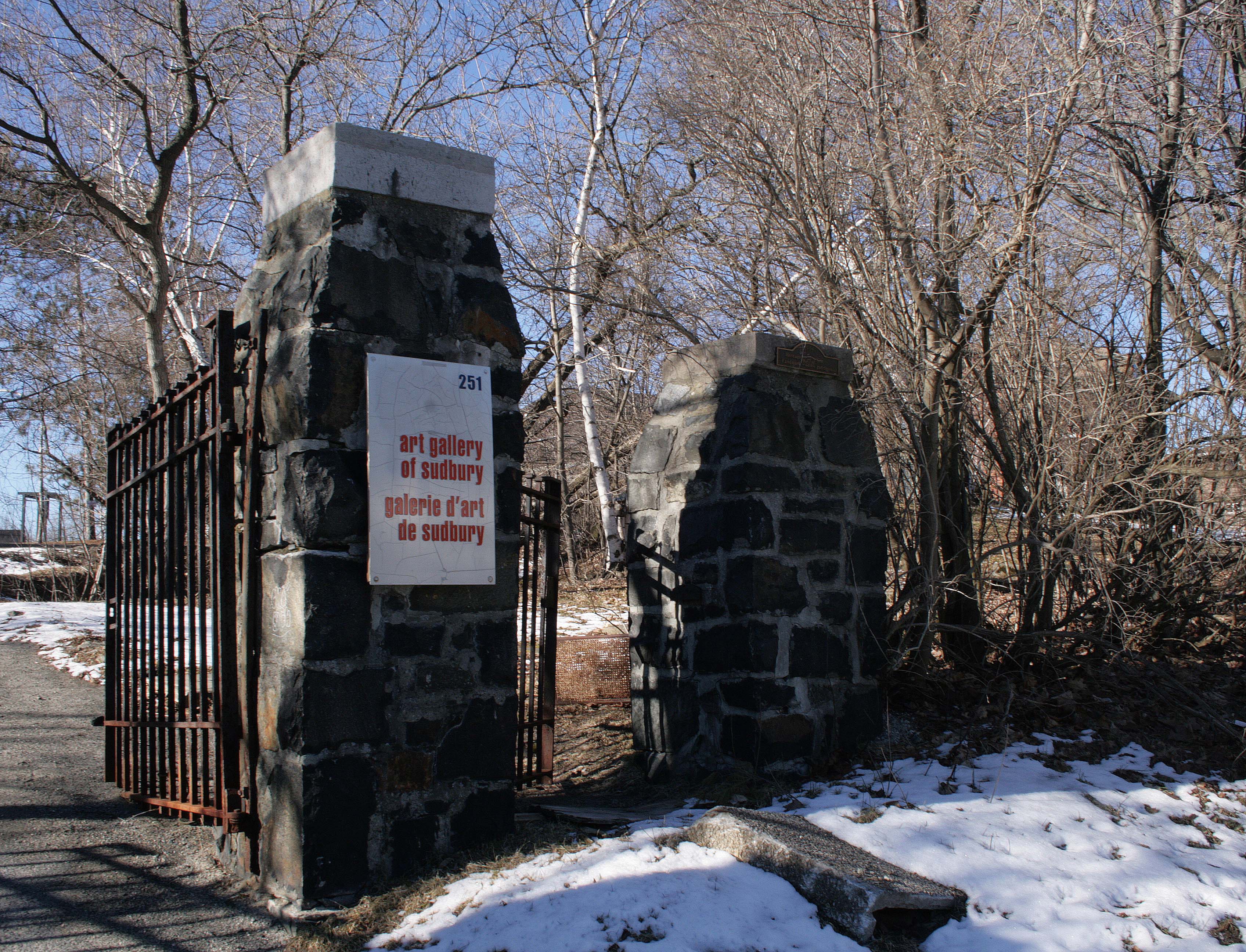
In 2024, I visited to photograph the exterior. Though currently closed to the public and sadly in visible disrepair, the mansion still has an undeniable elegance, and definitely still has stories to tell.

Calvin United Church Cemetery

For all their ties to Sudbury, the Bells aren’t buried there.

Instead, they rest in Calvin United Church Cemetery in Pembroke, Ontario, a peaceful spot along Boundary Road East where six cemeteries line the street.

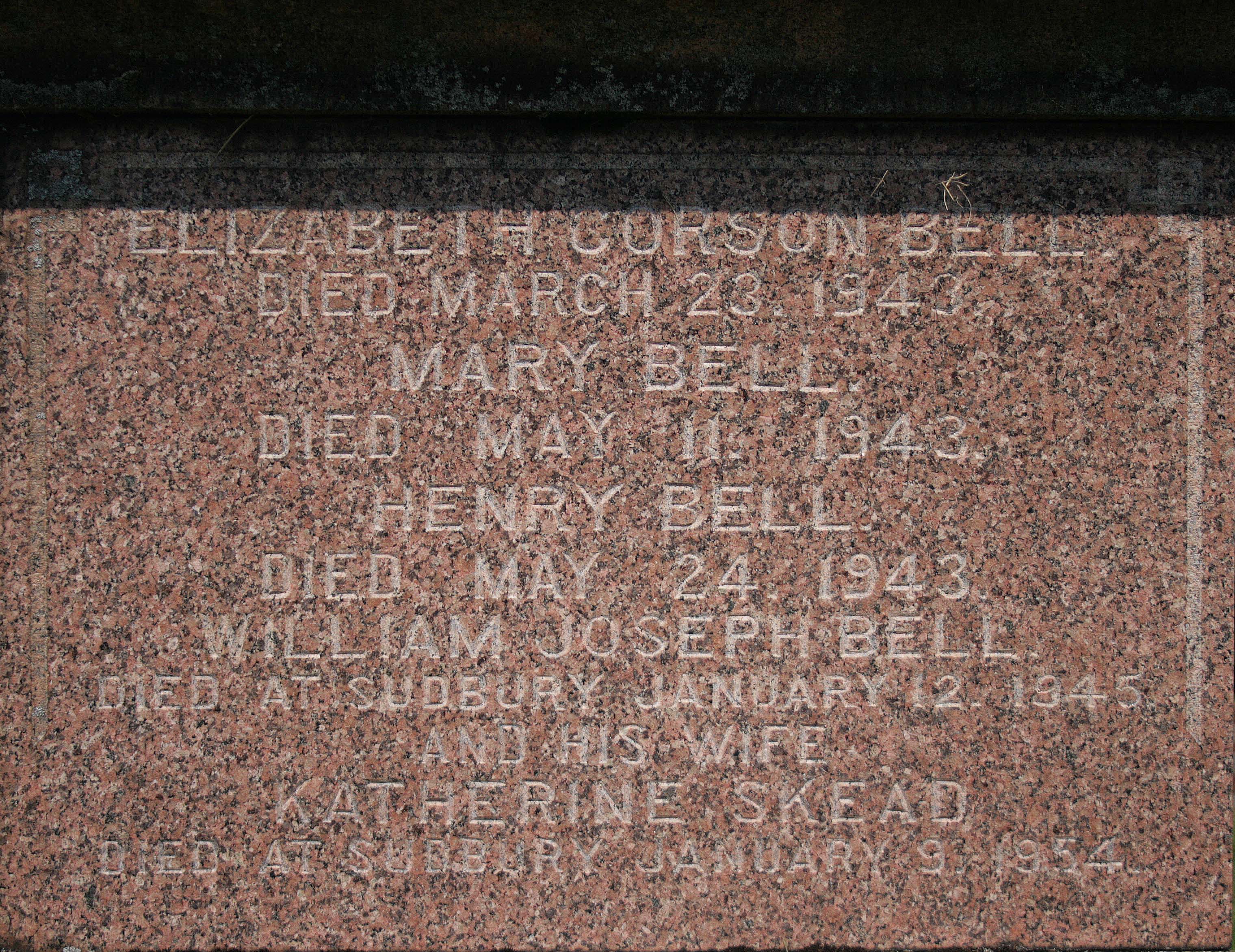
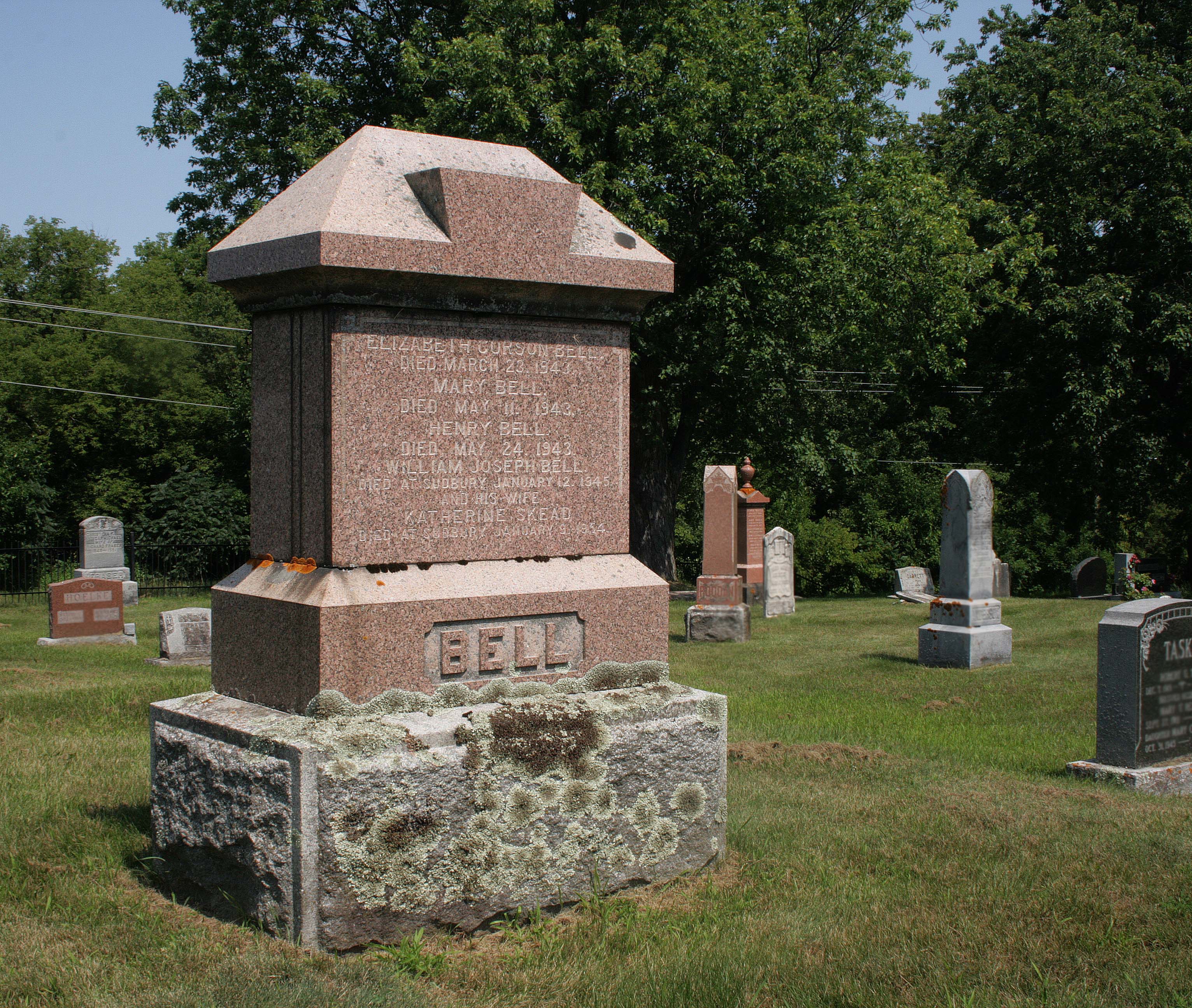
William Joseph Bell died in January 1945 at the age of 87 from complications of a leg injury, and was buried in the family plot.5 When Katherine Bell passed away in her home at age 90 in 1954, she was laid to rest beside him.7 William’s parents and three siblings are also buried in the family plot. Their large pink granite monument is simple and understated. It’s a sharp contrast to the grandeur of the mansion they left behind.

On my way back from Ottawa in 2024, I stopped in to visit their graves. Despite their prominence in Sudbury, I was surprised they weren’t buried there. With the help of reference photos, I eventually found their gravestone and was able to pay my respects.

Today, the fate of the Bell Mansion is uncertain.

In late 2024, Laurentian University announced it would list the property for sale, saying repairs were too costly.8 The Art Gallery of Sudbury, which had long occupied the mansion, has already relocated as part of Laurentian’s insolvency process.8

In response, local advocates launched a petition urging that the grounds remain open to the public and that the heritage designation be respected.9 Many argue the mansion is too important a piece of Sudbury’s history to lose.10 That is one of the reasons I felt it was important to photograph it and share its story.

Whether you believe in ghosts or not, there’s no denying that this house has a past worth remembering.

Thanks for reading!


References:

  1. The History of Bell Rock | Local Color
  2. Appreciating the legacy of Bell Park | Sudbury.com
  3. Bell Mansion provides touch of elegance | Northern Ontario Business
  4. Turning Bell Mansion into a historical teaching tool | Sudbury.com
  5. Haunted Museums & Galleries of Ontario by Andrew Hind | Book
  6. Ten haunted habitations and spooky sites in Greater Sudbury | Sudbury.com
  7. The History of The Bell Mansion | Art Gallery of Sudbury
  8. Historic Bell Mansion in Sudbury, Ont., listed for $1M | CBC
  9. Sale shouldn’t limit access to Bell Mansion grounds, petition states | Sudbury.com
  10. Bell Mansion’s heritage should be protected, local history buffs say | Sudbury.com

Cemetery Road Trip: The Walkerton Water Tragedy

I rarely stop to think about where our drinking water comes from, let alone whether it’s safe.

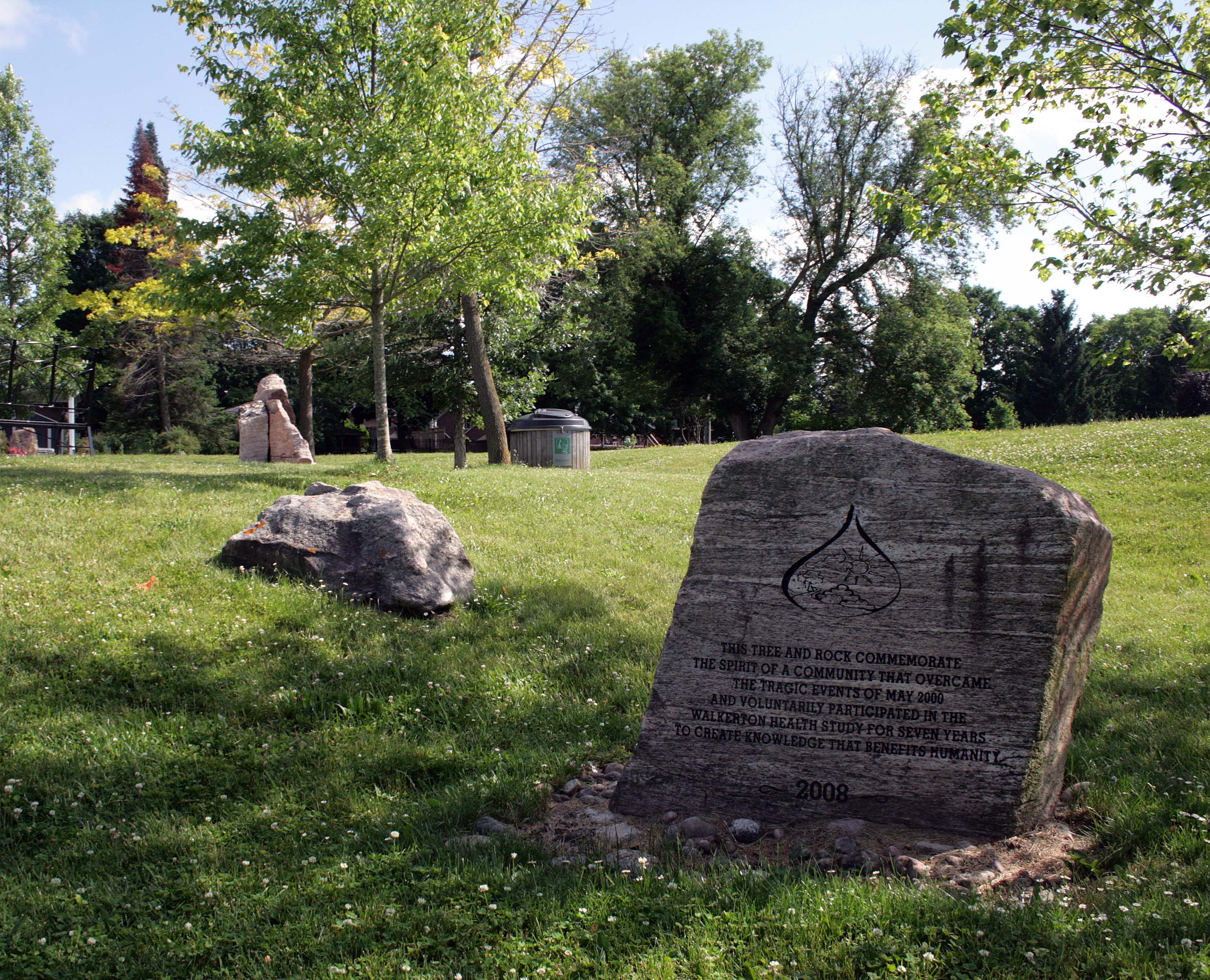
In May 2000, the small town of Walkerton, Ontario, faced one of Canada’s worst public health disasters. Contaminated water led to the deaths of seven people and made more than 2,300 people sick.1

Walkerton is about a four-hour drive from where I live, and this year marks the 25th anniversary of that tragedy. In June, my mother and I took a road trip there to visit some of the sites connected to the outbreak and to pay our respects to the lives that were lost.

What Happened in Walkerton

You might remember hearing about this on the news. Walkerton’s drinking water became contaminated with E.coli.1 The source of the contamination was traced back to Well #5, where runoff from a nearby farm had entered the groundwater. Heavy rainfall in early May 2000 carried manure into the well, and the danger was made worse by human error and poor safety practices at the time.1

For days, residents kept drinking the water, completely unaware of the risk. Once it was realized what was happening, it was too late. Within weeks, seven people had died and more than 2,300 others became seriously ill.1 Many survivors continue to live with lasting health problems even today.

The Walkerton Inquiry, led by the Honourable Dennis R. O’Connor, later showed that this wasn’t just one bad well—but a series of failures. Training was inadequate, oversight was weak, and protocols weren’t followed the way they should have been. Out of this tragedy came stricter water safety regulations for Ontario, which eventually shaped how drinking water is managed across Canada.2

Visiting Walkerton

When we arrived in Walkerton, our first stop was the Walkerton Clean Water Centre. It first opened in 2004, and since then has trained over 23,000 water system operators.3 The new state-of-the-art building, which we visited, was opened in 2010. It features a demonstration water distribution system for hands-on training, more room to host seminars, and space to conduct research.3

In May of this year, they offered tours of the facility, close to the anniversary of the tragedy. The timing didn’t work out for us to take a tour, but I still wanted to take a look at the building.

It’s a modern building, with a lovely koi pond just outside its main doors. The large windows have a nice view of the pond, and let in a lot of natural light. There is also a small pond across from the entrance, overgrown with tall grass and cattails, that is surrounded by a little trail loop. I imagine the staff take advantage of that little walking trail on their lunch breaks. I think the water features, while also being pretty, act as little reminders of how important water is to our ecosystem and us.

Our next stop brought us to a small cemetery that wasn’t connected to the tragedy. I am not one to pass up a cemetery visit though, so we made our way to visit. It just so happened to be very close to the Walkerton water tower. After that, we decided to visit a few more cemeteries, the last one of the day being Calvary Cemetery.

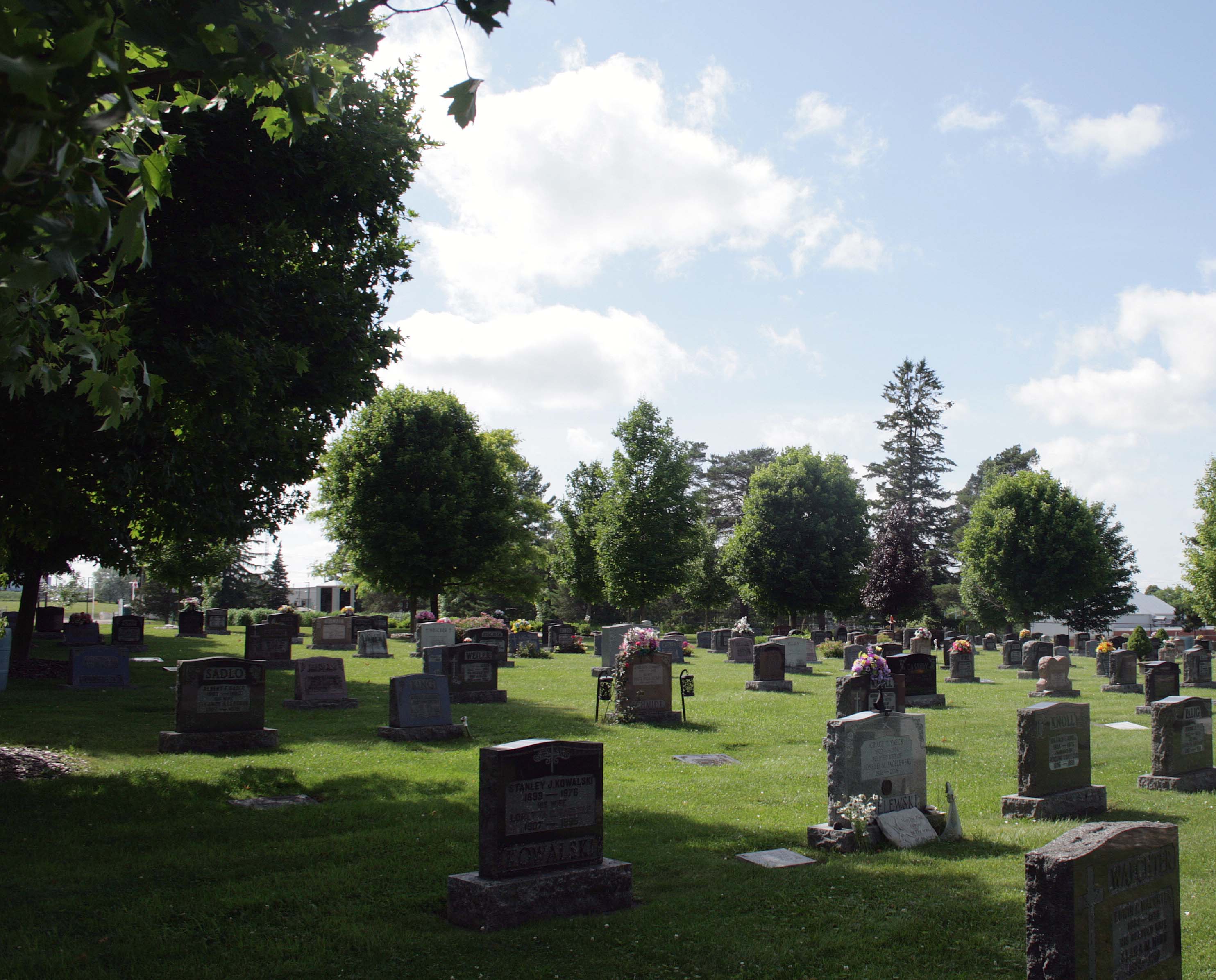
Calvary Cemetery is on the outskirts, just south of the town. This cemetery visit was important for our journey, as it is the final resting place of two people who died in the water tragedy.

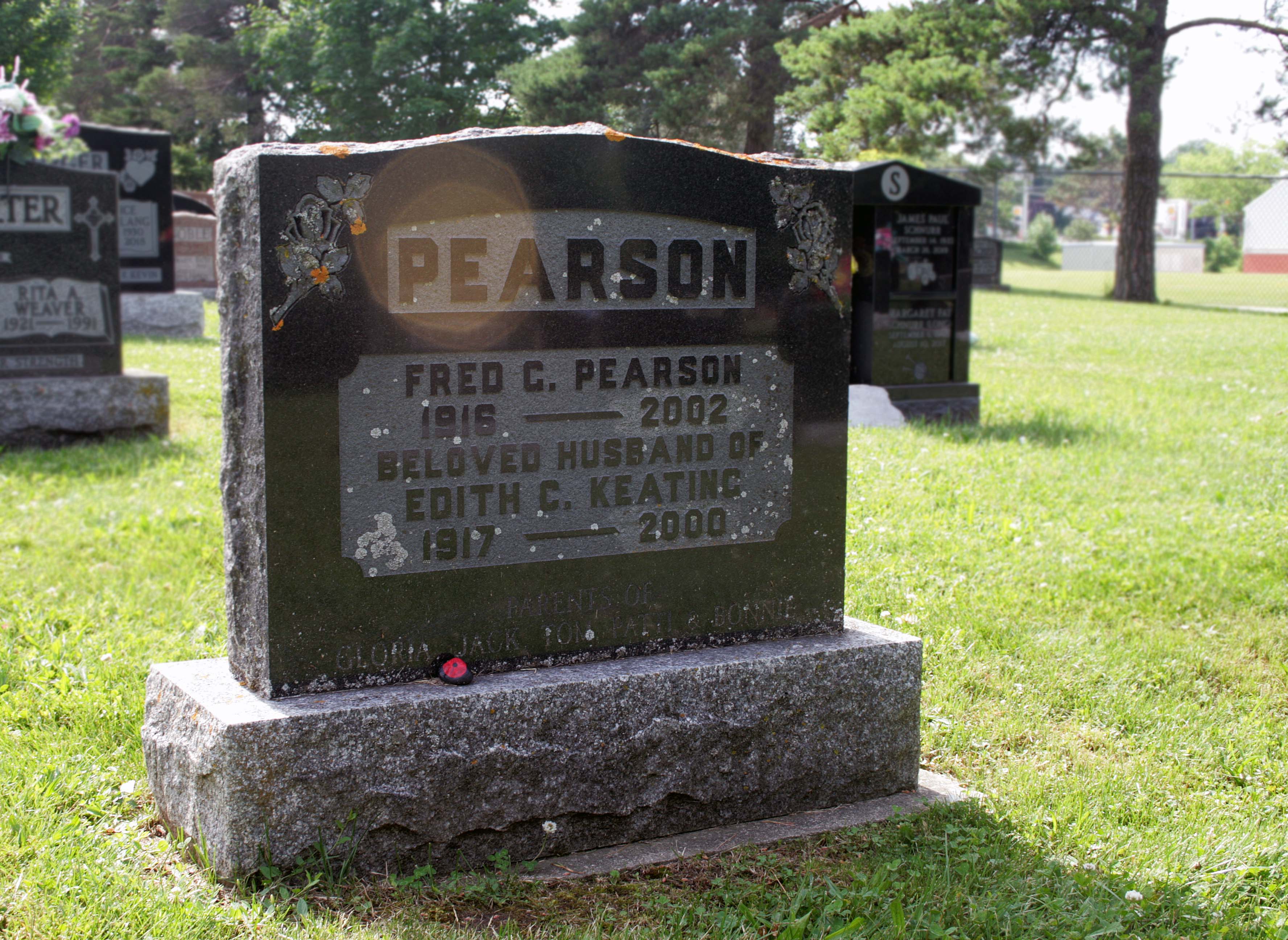
Edith Pearson, a mother of five and a grandmother of 13, passed away at the age of 82.4 Not far from her rests Lenore Al, a retired part-time librarian, who passed away at the London Health Sciences Centre at the age of 66.4 Their memorial services were held both during the same week.5

It was a very reflective visit, as my mother and I walked the rows searching for these specific graves. It was a scary thought to think what could happen by just drinking a glass of water. Standing in front of their graves also made their story real, bringing it off the page and into reality.

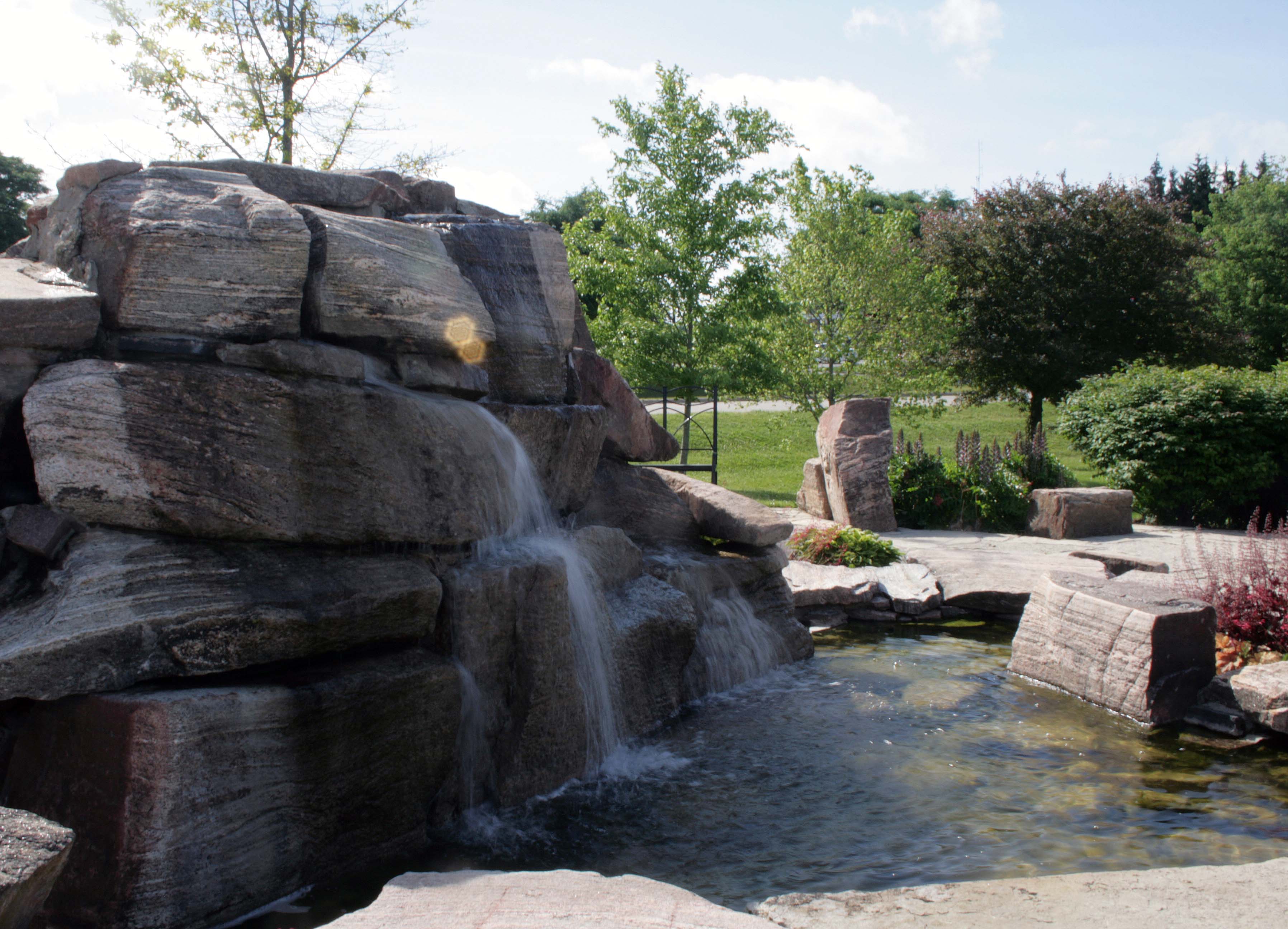
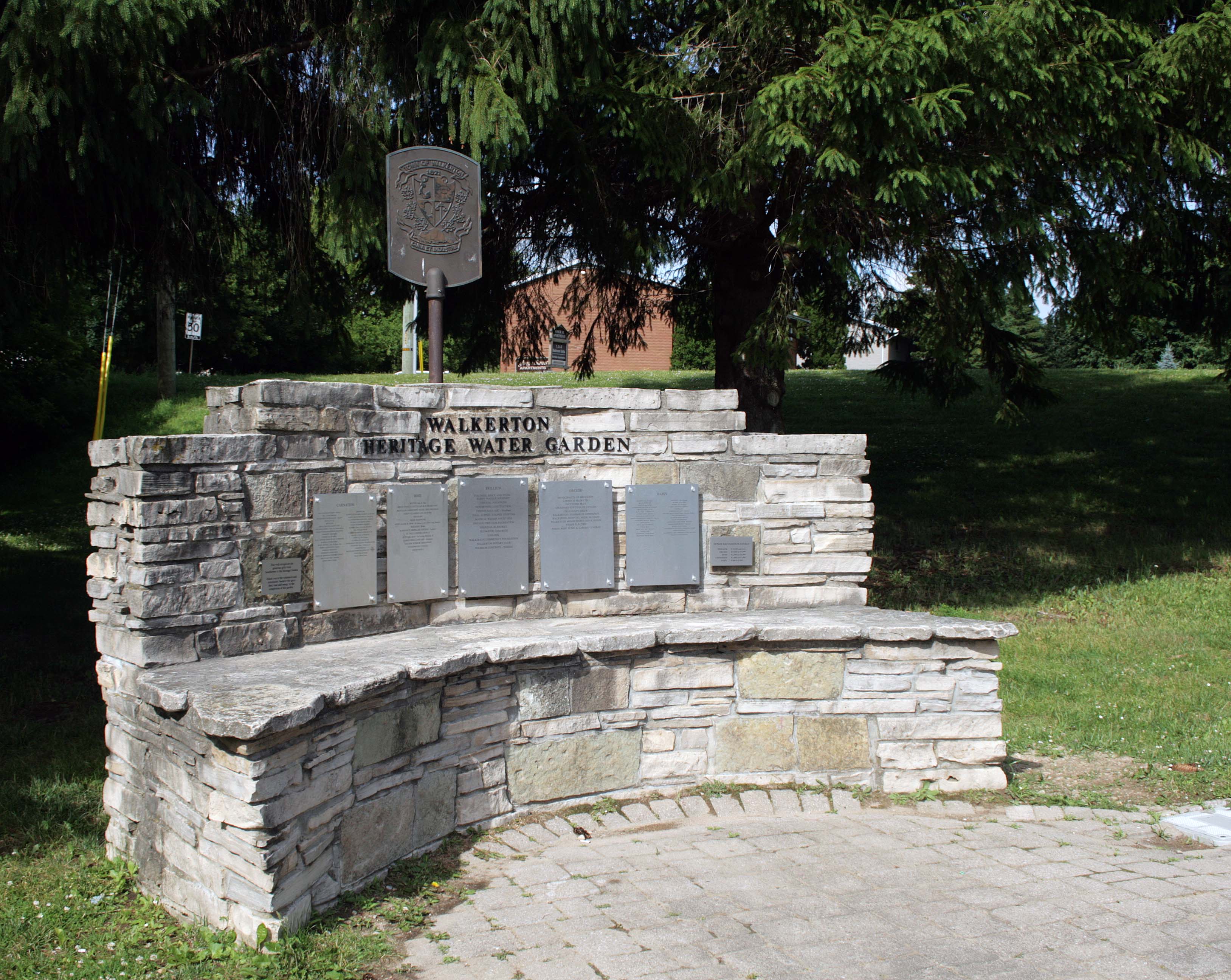
After that somber visit, I thought it might be a good idea to visit something a little more hopeful. The Walkerton Heritage Water Garden features a waterfall that gushes out from a crack in a large rock formation. It’s inspired by the biblical story of Moses, who struck a rock in the desert to bring water to the Israelites.6 It represents water as a positive symbol of life, healing and renewal. The waterfall pours into a small pond that is surrounded by a larger walking trail. There are benches and small clusters of flowers and tall grass that dot the path that leads you back to the memorial fountain.

It was a hot day when we visited, so the occasional cool spray from the waterfall was very welcome. It was a nice little spot for a small walk, but the constant running water made it hard to forget why it was there.

Our first day in Walkerton was a long one. Shortly after our walk, we found something to eat and then settled in to our motel for the night. We had one more site we had to visit.

The next morning, after a good breakfast, I wanted to find Well #5.

Sometimes while planning and researching, it can be tricky to find exact locations, even in this digital age. But I thought we have to give it a try. So with only a street name in my GPS we headed out.

Slowly driving down the dirt road, we kept our eyes peeled for signs of the well. I was getting worried as we reached the end of the road, but I caught the glimmer of what looked like a silver plaque.

We found the well, which has since been capped off, tucked in behind a small building on the edge of a farmer’s field. Today, it’s just a large cement pad with a small silver plaque. If you didn’t know what you were looking at, you may think nothing of it, but the plaque tells the whole story.

“Well 5 Memorial / This plaque marks the location of Walkerton’s former Well 5 / which supplied a portion of the town’s drinking water from / 1978 into the spring of 2000. In mid May of the year 2000, / extremely heavy rains washed a toxic blend of biological / pathogens through the soils and into the vulnerable shaft of / Well 5 and ultimately into Walkerton’s Municipal drinking / water system. The resulting contamination of the town’s / drinking water system lead to the deaths of seven people and / caused thousands of others to fall ill. It is hoped that all those / who visit this location will reflect upon the multiple causes of / this tragedy and will be filled with a renewed reverence for the / comprehensive stewardship of the waters that sustain us all.”

Finding the well was a moving moment, and as the plaque suggested, my mother and I took some time to reflect as we looked into the farmer’s field and at the old well.

Lasting Impact

The story of Walkerton didn’t end in 2000. For many survivors, the contamination left behind long-term health complications that they will carry for the rest of their lives. One of those people was Robbie Schnurr, who became seriously ill during the outbreak.7 The illness damaged his kidneys and digestive system, leaving him to cope with constant pain and health struggles for nearly two decades.7

In May of 2018, Robbie made the heartbreaking decision to end his life through Medical Assistance in Dying (MAID).7 He was just 51 years old. The illness caused by Walkerton’s poisoned water was just too heavy a toll.7 Robbie’s story is a reminder that the impact of what happened in Walkerton wasn’t confined to the weeks of the outbreak. It rippled out for years, forever altering lives and families.

Moving Forward

One of the outcomes of the Walkerton Inquiry was a complete overhaul of Ontario’s drinking water regulations. New laws were brought in to ensure public accountability, proper testing, and better training for those operating municipal water systems—all with the goal of making sure something like this never happens again.2

And yet, even in 2025, not every community in Canada can count on that promise. Some First Nation reserves continue to struggle with unsafe drinking water, some living under boil-water advisories that have lasted for years.8

It’s a frustrating and heartbreaking reality. Safe drinking water should be a basic human right, not a privilege.

Visiting Walkerton was an educational and somber experience. Standing at the memorial fountain, walking through the cemetery, and pausing at Well #5 all carried more weight than just stops on a road trip. It was a chance to reflect on a tragedy that forever shaped this small town, and to see how its lessons continue to make Ontario’s communities safer today.

Twenty-five years later, the Walkerton water tragedy remains a powerful reminder of what’s at stake when safety is ignored. It also reminds us of the resilience of a community that continues to honour those lost, while moving forward with a commitment to never forget.

Thanks for reading!


References:

  1. Inside Walkerton: Canada’s worst-ever E. coli contamination | CBC
  2. Commemorating Walkerton – 20 Years Later | Drinking Water Source Protection Quinte Region
  3. New Walkerton Clean Water Centre Opens | Ontario.ca
  4. The Walkerton Tragedy | Globe and Mail
  5. Second funeral held in town with tainted water | CBC
  6. Walkerton Heritage Water Garden | Bruce Grey Simcoe
  7. In 2000, Walkerton’s poisoned water ruined his life. He decided it was time to end it | Toronto Star
  8. 30 years under longest boil-water advisory in Canada, Neskantaga First Nation pushes for new treatment plant | CBC

Cemetery Stories: Burwash Industrial Prison Farm Graveyard

In 2010, a friend and I visited a place that felt frozen in time—an abandoned prison cemetery hidden deep in the Northern Ontario wilderness. Thirteen years later, we went back.

What we found was both familiar and completely changed.

The Burwash Industrial Prison Farm isn’t just an old correctional centre—it’s a strange and haunting mix of history, decay, and memory. The prison is long closed, the buildings are crumbling, and the cemetery tucked away in the forest has become almost forgotten.

But pieces of the past still linger there, if you know where to look.

Burwash Industrial Prison Farm

The Burwash Industrial Farm opened in 1914, about 30 minutes south of Sudbury, Ontario. It was designed to be a self-sufficient correctional facility—almost like a village tucked away in the forest. At its peak, the property stretched across 35,000 acres and included a farm, a lumber operation and mill, a 20-bed hospital, and even a tailor shop.1

Burwash Industrial Farm housed between 180 and 820 minimum- and medium-security inmates, who typically served sentences of three months to two years, less a day.1 They spent their days working on the prison farm or doing maintenance around the property. The idea was that routine and hard work could help with rehabilitation. Over the years, the prison grew to include three permanent camps, and several temporary ones. It also became home to a small town of staff and their families, with a population between 600 and 1,000 people.1

The prison was remote by design—difficult to escape from, and just as difficult to reach unless you knew where you were going.

Over time, the facility became known as Camp Bison. The name comes from the herd of wood bison that once lived on the property.2 These animals roamed the land while the prison was active, and the nickname stuck even long after both the prison and bison were gone.

At the time Burwash was slated for closure in 1974, it was the largest industrial farm and the second-largest reformatory in Ontario’s correctional system.1 But the facility was considered too expensive to operate. That July, it was announced that Burwash would be shut down to save money.3 The staff were told they had to leave, and the inmates were relocated to other institutions. After that, the province began looking at alternative uses for the remaining buildings and the massive piece of land.3

What’s left today is a patchwork of wilderness, ruins, and stories.

Abandoned

After the prison shut down in 1975, most of the buildings were left to the elements. Over time, nature began to reclaim the site. The once-bustling correctional community turned into a ghost town.

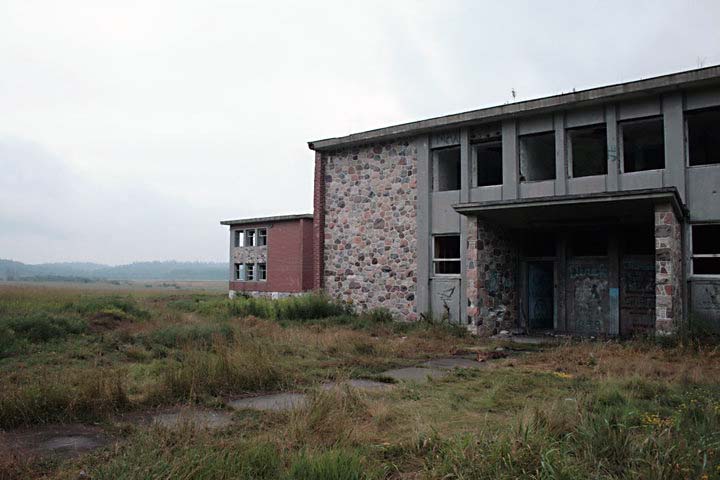
Some structures were demolished, but a few—including the main cell block—were left standing, crumbling slowly in the woods. The site became a magnet for urban explorers, ghost hunters, photographers, and curious hikers.4

When we visited in 2010, it was quiet—eerily so. There were no signs, no official routes, and no other people around. Just long trails, wilderness, and the remains of buildings just barely holding on.

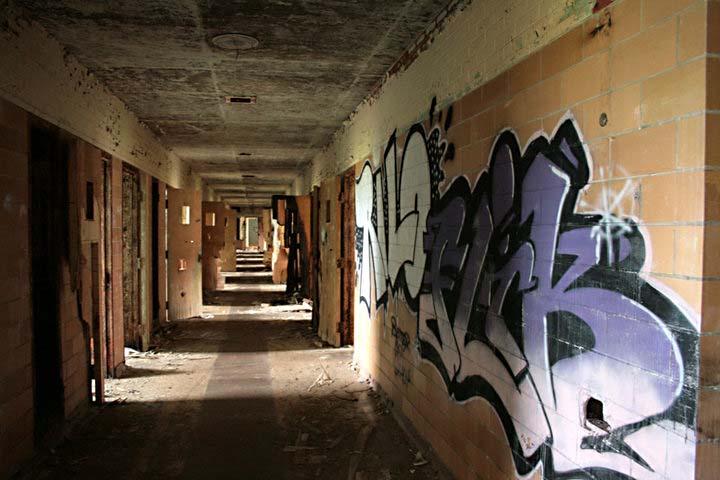
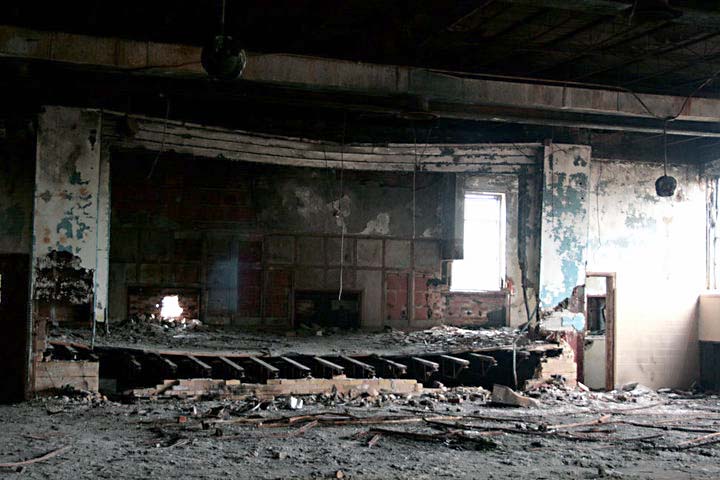
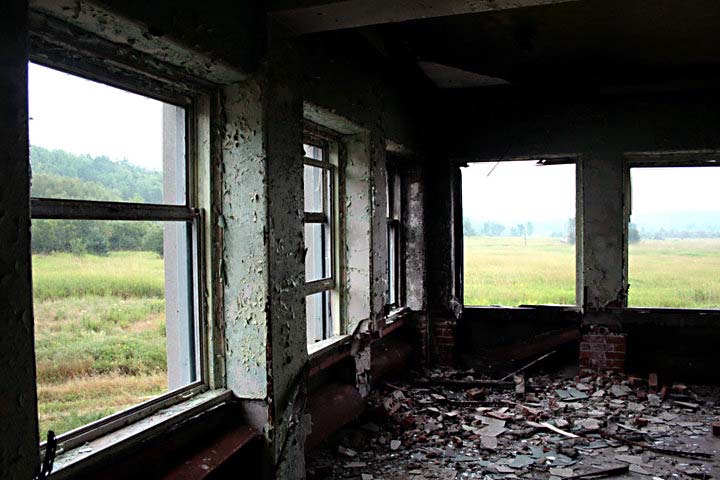
It was very surreal how, after driving through the wilderness on an ATV, the main cell block emerged out from the forest. The cracked windows, peeling paint, and eerie silence gave the place a haunted feel, even in broad daylight.

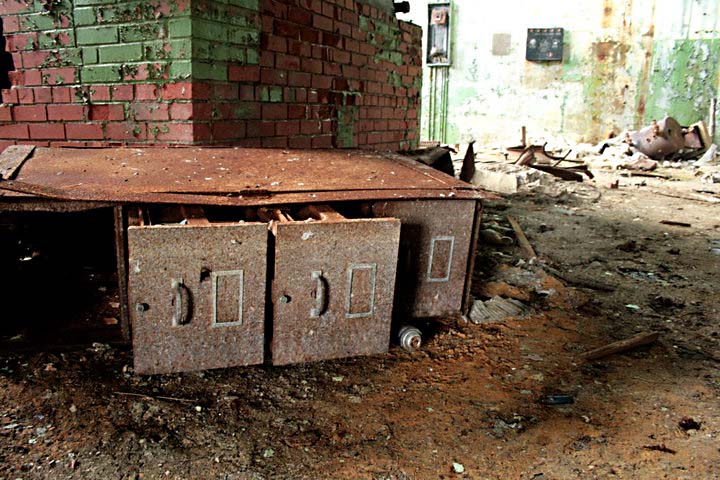
There was graffiti everywhere. Some of it was creepy, but a lot was just tagging and random vandalism. It was clear the site gets a lot of visitors—who weren’t always careful. Broken glass and porcelain, rusted metal, and signs of fires made it obvious that time, weather, and people had all left their marks.

Despite the damage, I found the experience strangely moving. It felt like walking through a lost chapter of history. There was a heaviness to the place, but also a sense that stories were still lingering in the walls.

It’s no surprise that Burwash has picked up a haunted reputation over the years. Visitors have reported strange noises, shadowy figures, and an overwhelming feeling of being watched. A prison guard supposedly haunts the prison, after having hanged himself when he learned that the place was closing. People say you can hear his nightstick tapping the metal bars, especially in the basement.5

Burwash Industrial Prison Farm Graveyard

Tucked away in the trees, at the edge of Cemetery Lake, is the Burwash Industrial Prison Farm Graveyard. This was the first prison graveyard I had ever visited, and I wasn’t sure what to expect. Its the final resting place of inmates who died while serving their prison sentences.

Most of the people buried here were prisoners who had no family to claim their remains. Between 12 to 20 inmates are believed to be buried in the cemetery, their graves marked only by simple wooden crosses.6 When the prison closed in 1975, no attempt was made to move them—the cemetery was simply abandoned.4

Records show that during the Spanish Flu epidemic in 1918, more than 30 people died at Burwash; including inmates, a nurse sent in from Toronto, and the wife of one prisoner who had come to visit.7 We don’t know for sure if any of these victims were buried in the cemetery, but it’s possible.

When we first visited in 2010, the cemetery was surprisingly accessible, although still hidden. The road was maintained, and I remember we were able to drive right up to it. The grass had been maintained, and though the markers were few, the space felt quietly cared for.

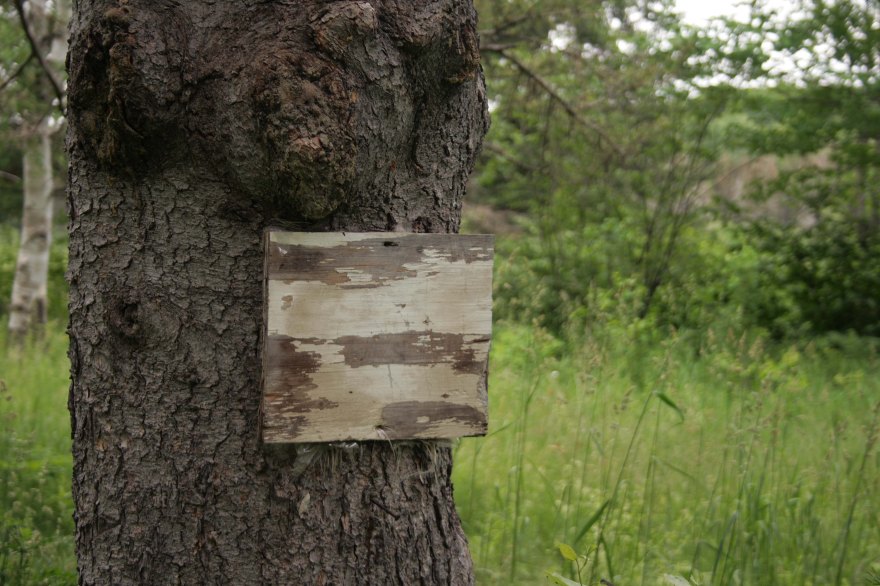
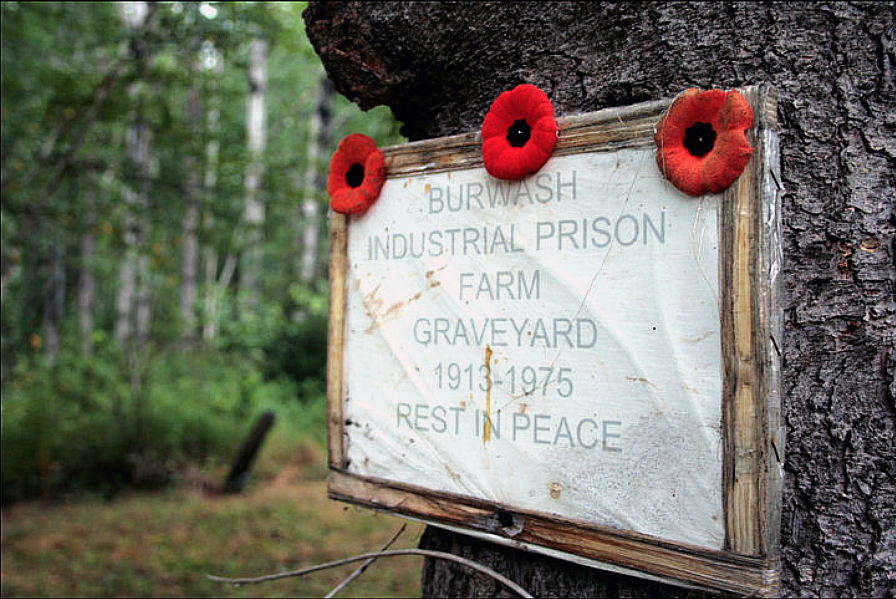
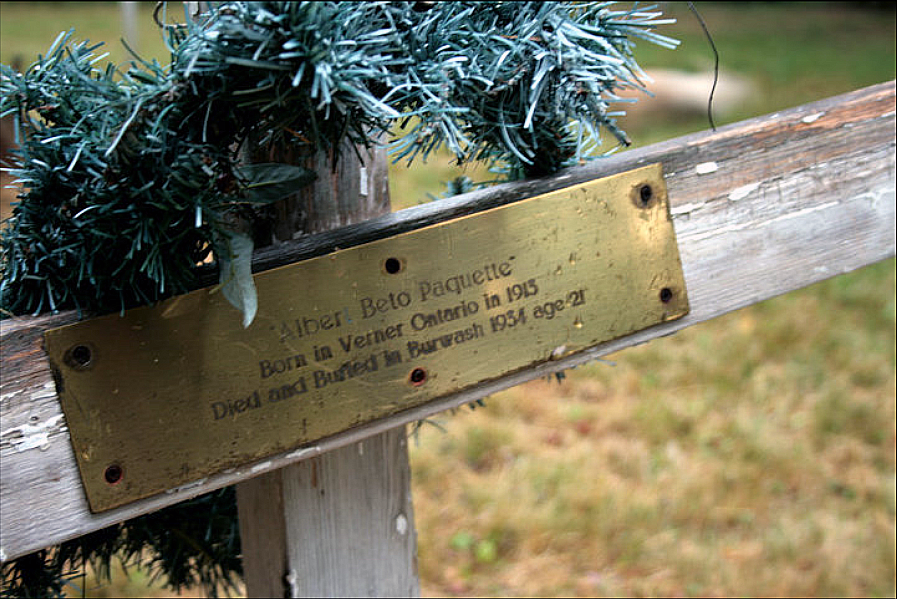
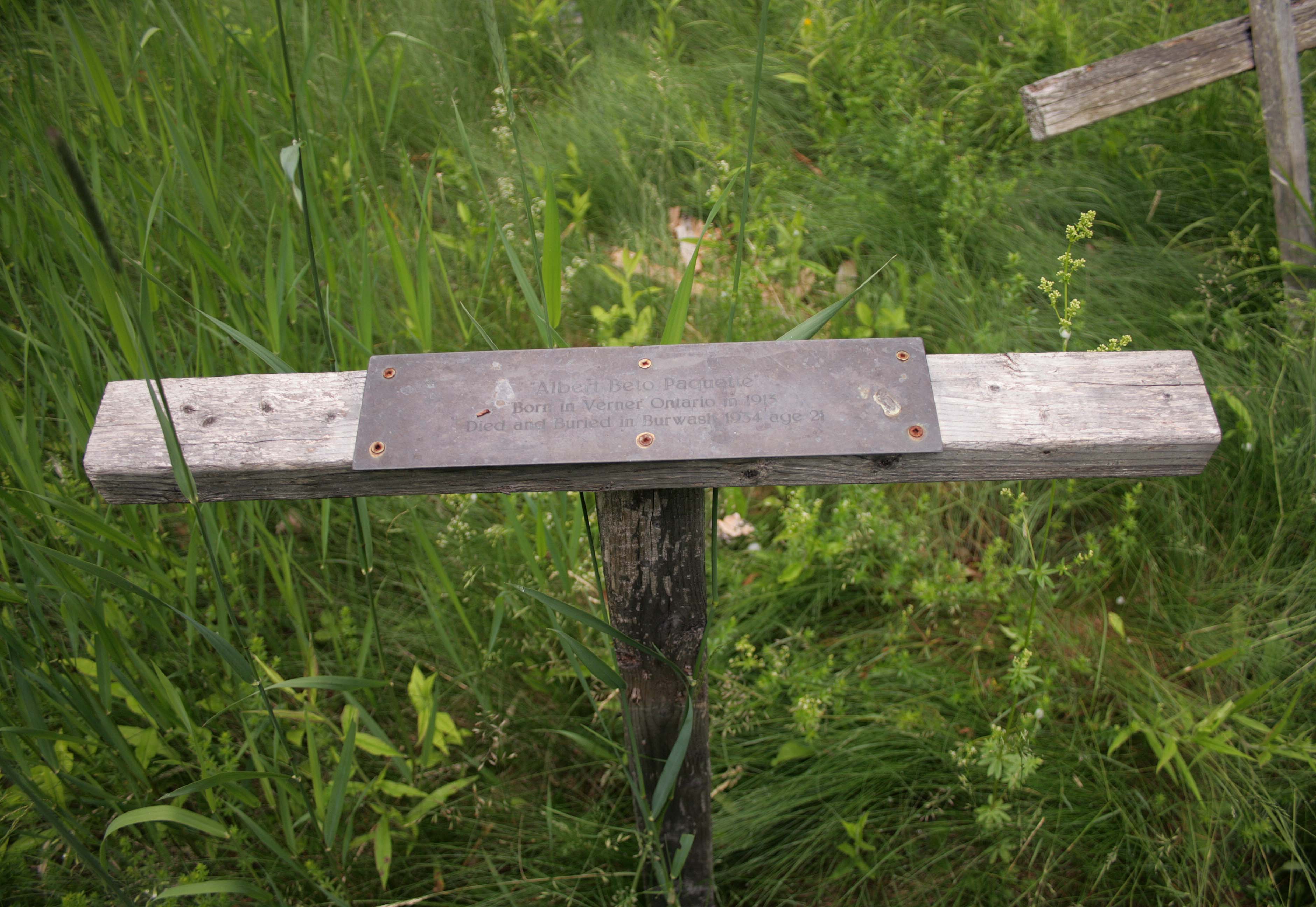
No polished stones or statues. Just plain wooden crosses. A few had small metal plaques. There was no formal cemetery sign, but a small framed sign hung on a tree near the entrance, quietly marking the space.

Thirteen years later, I came back. This time, the road was gone, and the cemetery was nearly unrecognizable.

It’s strange how a place can change so much.

In 2010, I remembered smooth roads and a tidy clearing. But in 2024, the gravel road was now a rugged, overgrown path—winding downhill, with deep ruts carved into the ground.

We parked in a grassy clearing nearby and walked into the forest. The bugs found us instantly, swarming like we were fresh meat. We followed what looked like a path through thick brush and knee-high grass.

Eventually, we reached a small clearing at the edge of the lake, the end of the road. I knew we had arrived—but it didn’t feel like the same place.

The cemetery was completely overgrown. Tall grass had swallowed the crosses whole. Most of the wooden markers were now broken or fallen. Any names or numbers that may have once been visible were long faded. Even the small frame marking the cemetery had been bleached by years of sun and rain, and was now blank.

It felt more like a ghost of a cemetery than a resting place. And yet, standing there, surrounded by wild grass and silence, I was reminded again why places like this matter.

They can be forgotten—but they shouldn’t be.

Burwash Today

Today, Burwash is a mix of forest, forgotten history, and scattered ruins.

If you’re planning to visit the prison, do your research and be prepared for an adventure. The site is on private land, and trespassers can be prosecuted. That said, Avalon Eco Resort offers a legal way to access the property, via a waiver and a small fee.3

There’s a small parking area near the train tracks, close to the start of a 4.5 km hike to the site. The road is no longer open to vehicles—only foot traffic, bikes, and ATVs. Parts of the trail are flooded, and while ATVs can get through, hikers and cyclists may have to get creative to find “alternative” paths.3

Visiting the cemetery is a different story. It’s not on private land, so there’s no need for special permission. But it’s still easy to miss in the forest, and it’s a bit of a hike.

Today, only fragments of Burwash remain. Most of the buildings are gone, but the land still whispers its stories. The cemetery is especially easy to miss if you don’t know it’s there. But for those who make the trip—who follow the overgrown path and brave the bugs to stand among the fallen crosses—it’s a place that stays with you.

Even in decay, Burwash reminds us how quickly places—and people—can disappear. But it also reminds us that memory lingers—in the rust, the rubble, and the wild grass growing where names once stood.

Thanks for reading!


References:

  1. Burwash Industrial Farm | Ontario Heritage Trust
  2. The History – Burwash and a Town Within | History of Burwash Industrial Farm
  3. Burwash Correctional Center | Atlas Obscura
  4. The sole reminder of a long-vanished town – Abandoned Ontario jail a favourite among urban explorers | Canadian Military History
  5. This Haunted Prison in Burwash, Ontario | Reddit
  6. Burwash Industrial Prison Farm Graveyard | Find a Grave
  7. Who died at Burwash? When the 1918 flu epidemic collided with Canada’s ‘enemy aliens’ policy | Sudbury.com

Tiny Tombstones and Big Stories: Visiting Little Canada

A few weeks ago, I took a trip to Little Canada in Toronto. While most people go there to see the miniature landmarks, I was there with a slightly different goal in mind: finding the cemeteries!

Little Canada is a truly unique attraction that shrinks down the Great White North into incredibly detailed miniature scenes. Using intricate models and lighting effects, this ever-growing miniature world brings Canadian landmarks, cities, and culture to life. It’s a love letter to the country, built on a foundation of storytelling.

On our visit, my fiancé and I were lucky enough to get a personal tour from Heidi, a senior leader in marketing, who shared behind-the-scenes insights that made the experience even more special.

The story behind Little Canada is charming in its own right. On our tour, we met the founder, Jean-Louis Brenninkmeijer who was inspired to start this project after helping his son with a school assignment about Canada. That seed of an idea grew into the sprawling, detailed world you can visit today. Everything in the exhibit—from the fishing boats in Little East Coast to the recognizable Parliament buildings in Little Ottawa—is designed with storytelling in mind. Even the hidden details, like the many Easter Eggs scattered throughout each scene, tell their own whimsical stories.

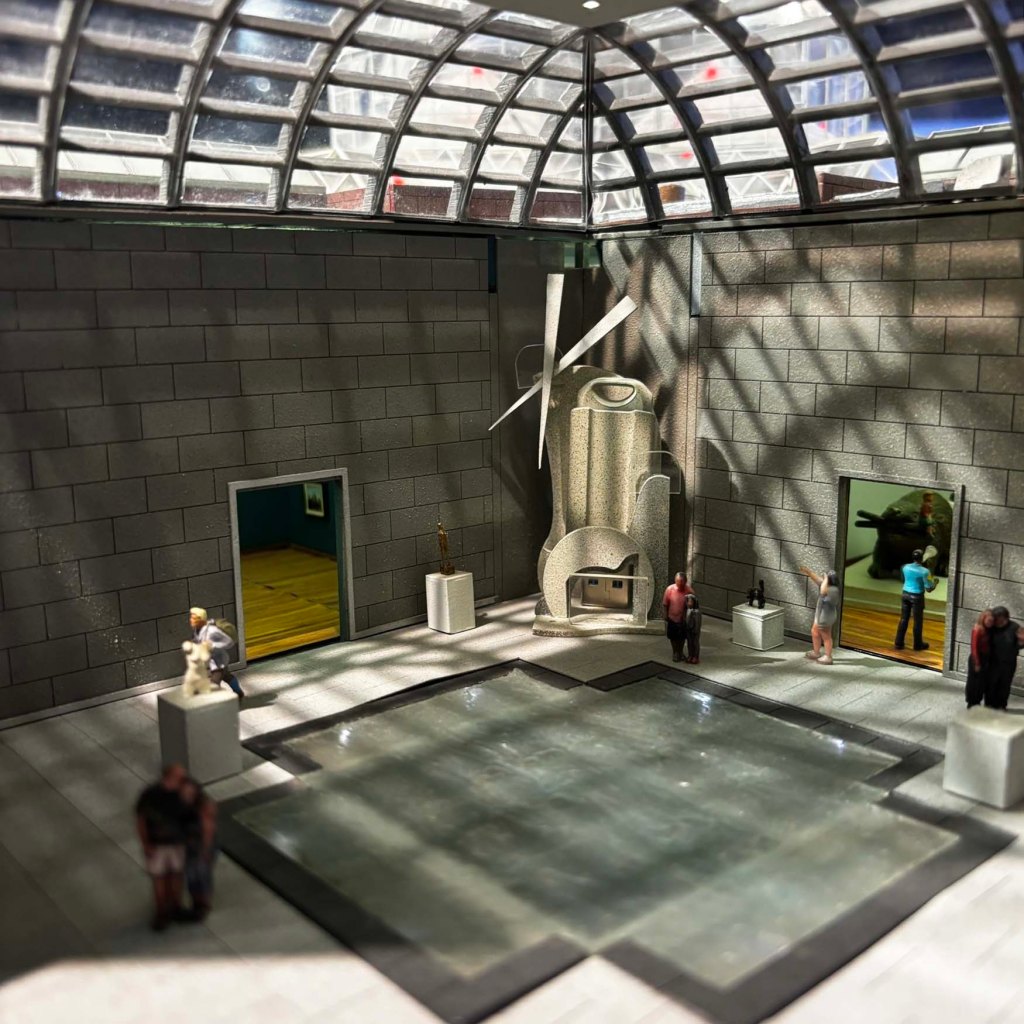
What’s my favourite Easter Egg? Besides Bigfoot? (Look for him in Little Quebec!) I’d have to say the time capsule that is hidden in the National Gallery in Little Ottawa. Jean-Louis shared the story behind this Easter Egg with me.

The day before Little Canada opened its doors, the entire team contributed something to a USB stick, and sealed it away in this tiny gallery space, masquerading as a sculpture. The plan is to open this tiny time capsule when the building lease is up—20 to 30 years from now! I love the idea of a time capsule, it’s a moment frozen in time, much like a cemetery is.

Speaking of cemeteries, Heidi was very kind, making sure to point them out as we travelled through all the exhibits.

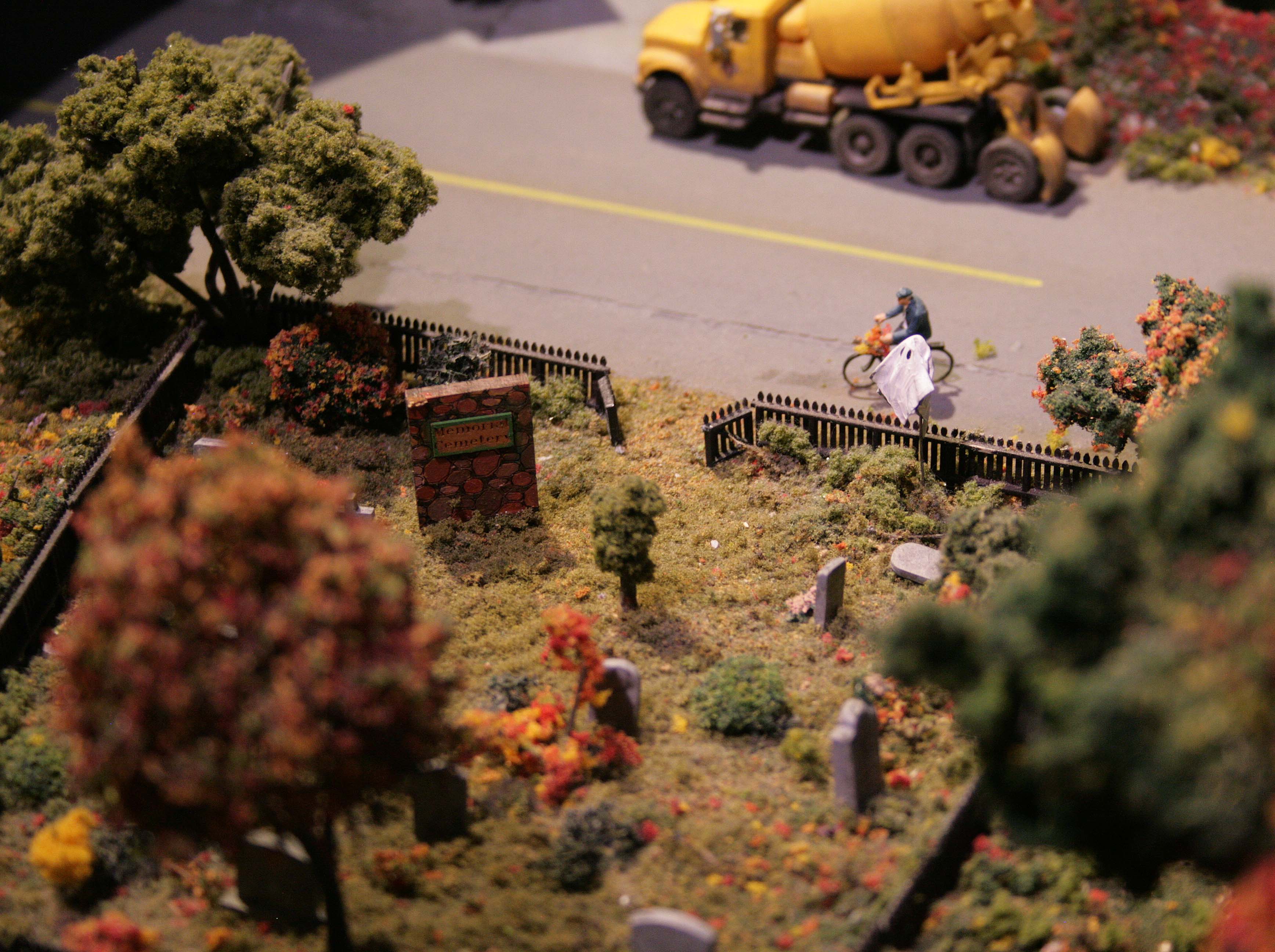
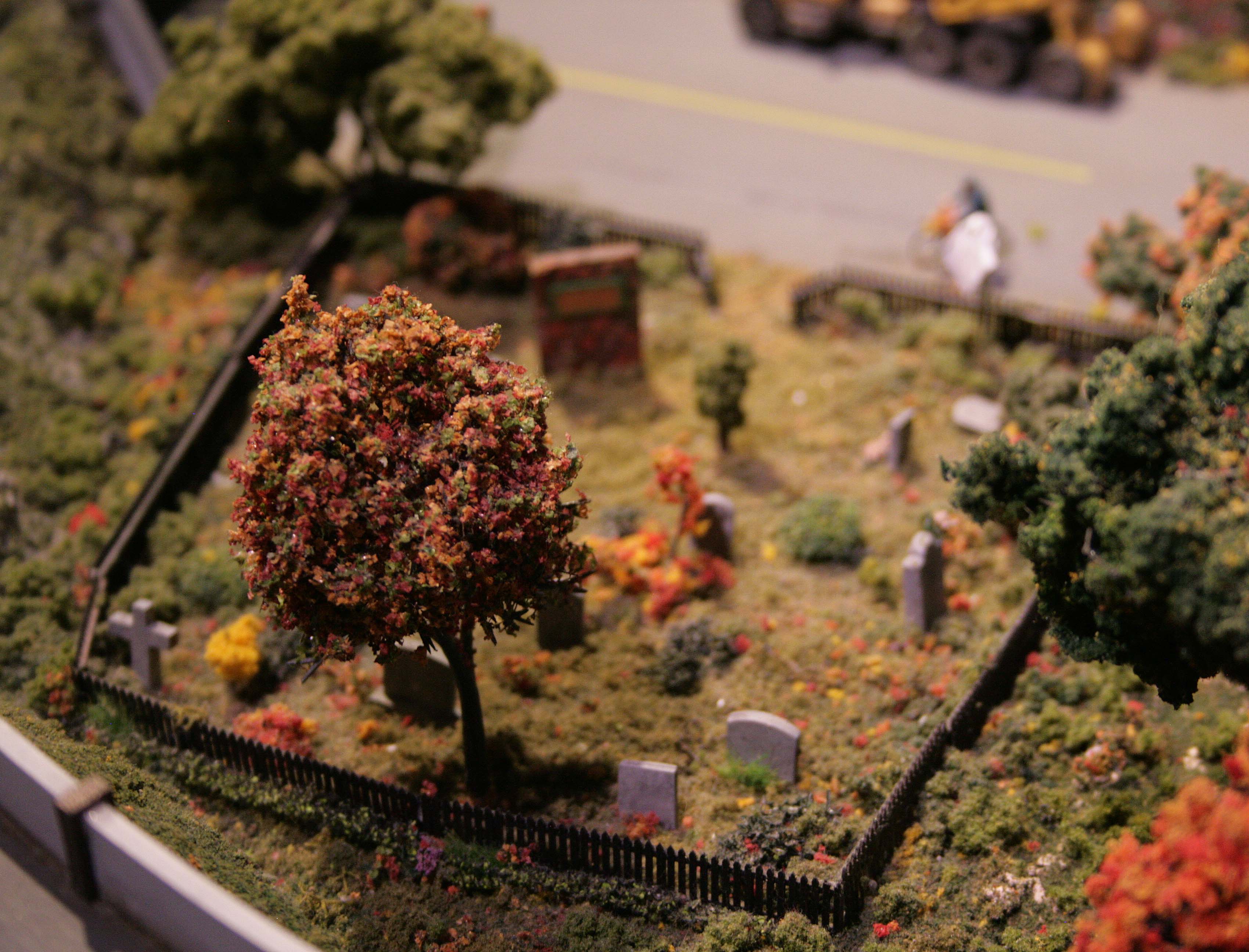
The first cemetery was tucked in among the highway in the Little Golden Horseshoe. A little stone cairn sits at the entrance, with the name Memory Cemetery carved into it. A handful of gravestones sit within a fence, surrounded by trees in full autumn colours. This little cemetery is not based on any real-world cemetery but is an example of a small rural cemetery, with its own resident ghost that sits on one of the fence posts. A good example of some of the whimsy that can be found throughout Little Canada.

The second cemetery we found was in Little East Coast. This rural cemetery is based on Cavendish Community Cemetery, in Prince Edward Island. It features a replica gravestone of Lucy Maud Montgomery, the Canadian author best known for her Anne of Green Gables book series. Surrounded by fall colours and marked by a replica cemetery sign, that even includes “Resting Place of L.M. Montgomery” in impossibly small type. This cemetery is also a busy one, with some people paying their respects, and others having what I first thought was a picnic—until I looked closer at my photos and realized it was a Ouija board session! Another example of the unexpected storytelling hidden in these tiny scenes.

Both of the cemeteries were small, but incredibly detailed—down to the engraved names and the uneven ground. I can’t say I ever photographed a cemetery in a 1:87 scale before!

Scattered throughout all the little scenes were also tiny monuments and war memorials, similar to what you would find while wandering a small town or city. It’s interesting to note how prevalent these places of memorial and remembrance really are.

As we explored the display wall, where some of the 5-inch Little Me figures are displayed, there is also a small section devoted entirely to the Vimy Ridge Memorial. Even scaled down, it’s a striking memorial. Designed to commemorate Canadians who fought and died in World War I, the real Vimy Ridge Memorial in France is a place of reflection and national pride. I was struck by the thought that cemeteries and monuments—no matter their size—inspire memory, honour, and connection.

It’s easy to see how much heart goes into every scene and detail. At the Maker’s Window, we had the chance to speak to some of the lovely women who bring these miniature scenes to life. The attention to detail, and at such a small scale, is amazing! Talking to them made me realize that this isn’t just about scale and architecture. It’s about the people behind the scenes, pouring care, creativity, and pride into every tiny building, street, and story.

Of course, I couldn’t visit Little Canada without getting Littlized!

The Littlization process allows you to have a 3D scan of yourself turned into a miniature figurine, a Little Me, to take home or be placed somewhere in the display. It’s a fun nod to personal storytelling and a reminder that all these little pieces make up something much bigger.

We spent about three hours exploring the exhibits, and I could easily see myself going back again and still not spotting every detail. There’s history, humour, sentimentality, and a strong sense of community behind it all.

Little Canada may be small in scale, but its message is big: Canadian stories matter. Whether that’s the story of a national battle memorial, a hidden USB time capsule, or a tiny cemetery, each piece tells us something about who we are, and what we value.

And, if you’re someone like me, drawn to hidden stories, Little Canada has no shortage of tiny wonders to explore.

Thanks for reading!

Cemetery Stories: House of Industry & Refuge Cemetery

Last Summer, my mother and I took a trip to Wellington County, thanks to a surprise road trip from Guess Where Trips. You might remember the blog post I wrote about the whole experience last year.

One of the most memorable stops on our adventure was the Wellington County Museum and Archives, a place that doesn’t just preserve history, but really brings it to life. Nestled between the charming towns of Fergus and Elora, this museum isn’t just a collection of artifacts—it’s a storyteller, sharing the life stories of the people who once walked its halls.

But the museum wasn’t the only thing that left an impact on us. Today, I want to share a bit more about our experience—both visiting the museum, and the cemetery were some of the House of Industry and Refuge residents were laid to rest.

Wellington County Museum and Archives

The Wellington County Museum and Archives is housed in a building with a fascinating and, at times heartbreaking history.

Designated as a National Historic Site, this building holds the title of the oldest remaining rural House of Industry and Refuge in Canada.1 Established in 1877, it originally provided a home for the poor, homeless, and destitute of Wellington County. Over the years, approximately 1,400 men, women, and children sought refuge within these walls.1

Today, the museum has taken on a whole new role. Instead of providing shelter, it now shares knowledge, offering programs, exhibits, and resources that dive into local history, art, and culture.2

And the grounds? Well, they have their own stories to tell.

When my mother and I visited, we started exploring the top floor and made our way down. Although there were many exhibits at the time, including one about 19th-century fashion, I was most drawn to the history of the Poor House itself and the people who had lived there.

Wellington County Poor House

Back in the 19th century, poverty was seen as a moral failing rather than an unfortunate circumstance. That’s where places like the Wellington County House of Industry and Refuge came in.3 Also known as the Poor House, it was one of several institutions across Ontario designed to provide shelter and work for those in need. Life here wasn’t easy, but the goal was to make the Poor House as self-sufficient as possible.3

The facility operated as an industrial farm, with thirty acres of land used to grow oats, turnips, wheat, and even apples from a 100-tree orchard.3 Livestock provided eggs, meat, and fresh butter, while any surplus goods were sold in town to help cover the cost of necessities like sugar, coffee, and bread.3

Life in the Poor House was structured and demanding. Residents—often referred to as “inmates”—had to work to earn their keep.3 The strict rules and expectations reflected the era’s attitudes toward poverty and self-sufficiency. It wasn’t until 1947 when the facility was renamed the Wellington County Home for the Aged, that things started to shift.3 The term “inmate” was finally dropped and replaced with “resident”—a small but important change.3

The Home remained in operation until 1971 when its last residents were moved to Wellington Terrace, a new senior home in Elora.3 Just a few years later, in 1975, the building reopened as the Wellington County Museum.3

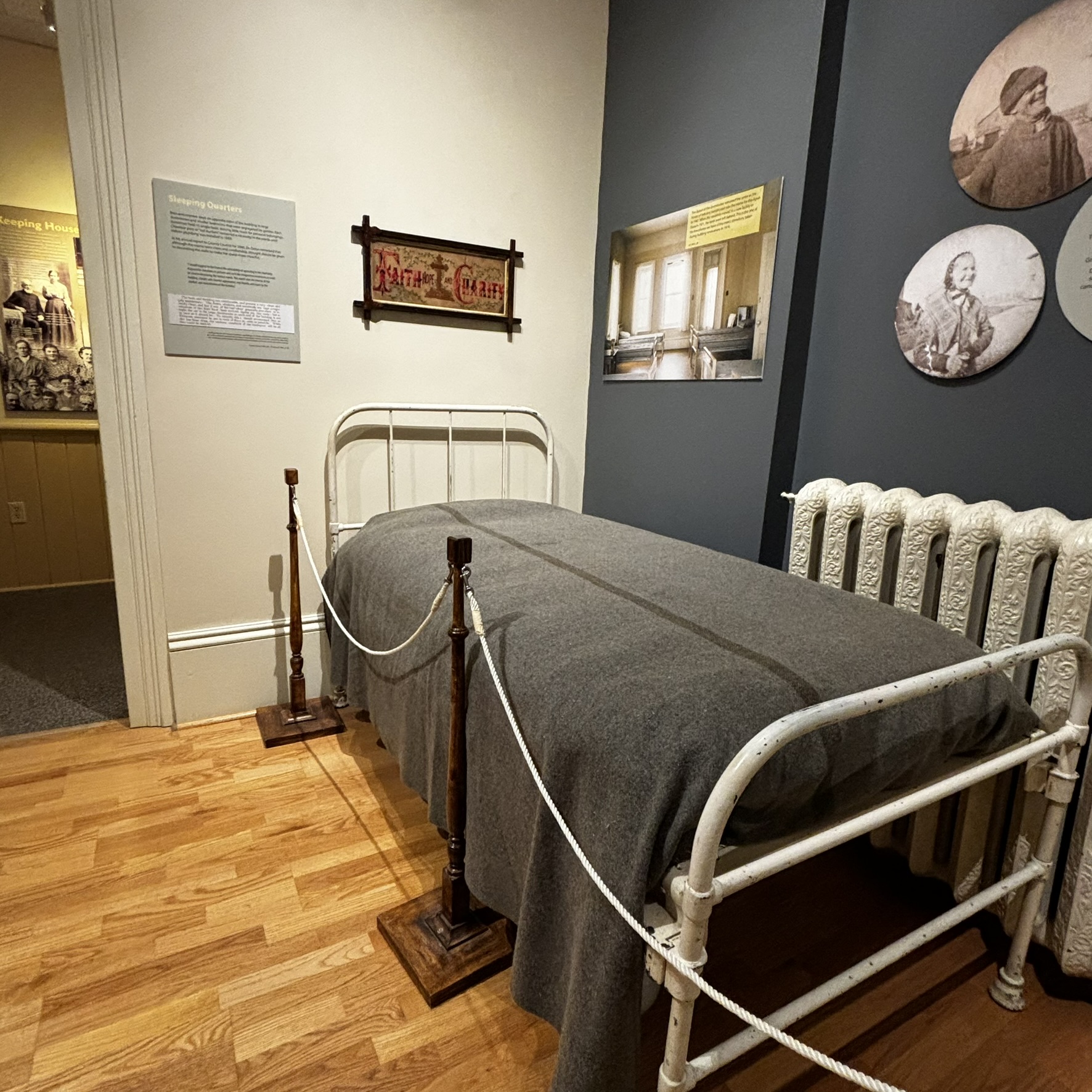
Walking through the museum, I couldn’t help but feel the weight of its history. Panels line the walls, sharing stories of past residents, and exhibits display artifacts that once belonged to them. Although the items were simple—a worn bed, an old suitcase—they evoked so much emotion. These weren’t just objects, they were pieces of someone’s life.

Considering the hardships experienced by its former residents, it’s no surprise that some people believe the museum is haunted. Visitors and staff alike have reported seeing shadowy figures, hearing unexplained footsteps, and even witnessing elevators moving on their own.4

The most well-known spirit is said to be that of a former resident named Anna. People have claimed to hear women arguing in empty rooms, or furniture being rearranged.4 Is it just an old building settling? Or is history lingering in more ways than one?

House of Industry and Refuge Cemetery

When the museum closed for the day, my mother and I made our way to the cemetery—a quiet but powerful reminder of the lives that once filled the Poor House.

A short drive took us to a small parking lot near the cemetery entrance. From there, a scenic trail led to a repurposed train bridge that spans the highway. It was a beautiful day, and the surrounding forest was lush and green. After crossing the bridge, we descended a staircase with informational panels that peeked out from behind the foliage. The staircase led us down to a clearing, where tall trees provided shade over a few gravestones.

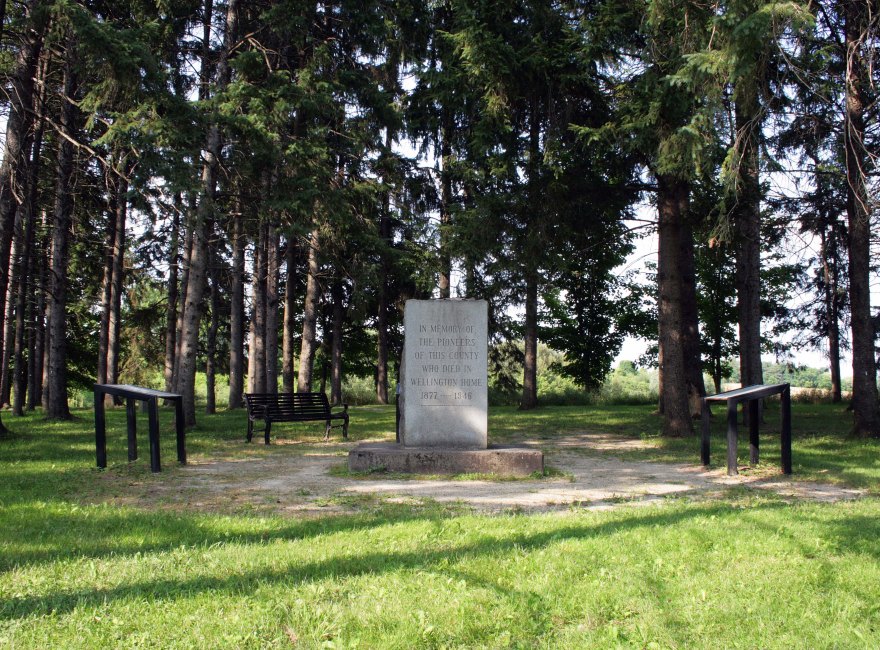
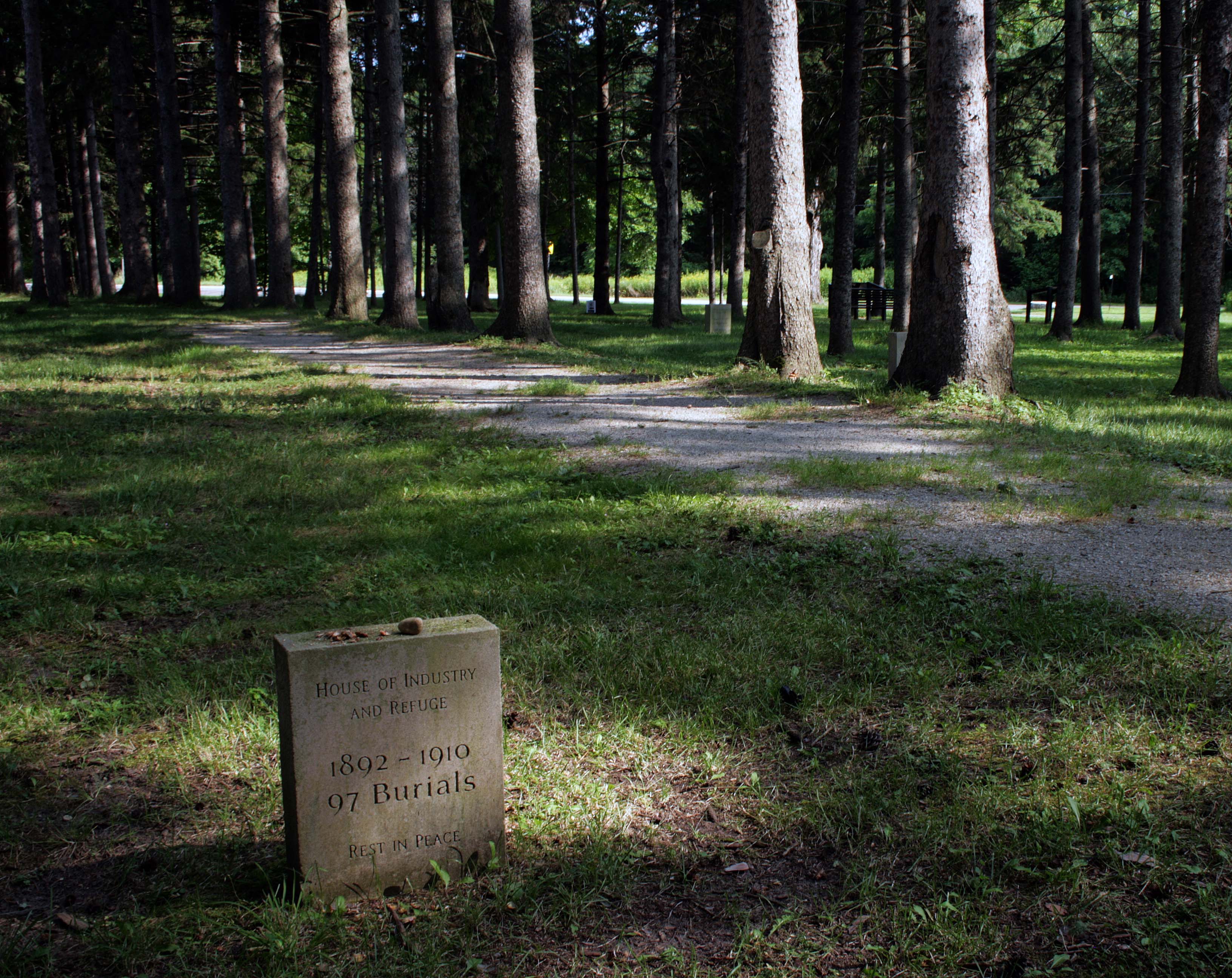
The cemetery is the final resting place for 271 men, women, and children who had no family to claim them.5 Originally, the graves were marked with simple wooden crosses, but over time, those markers deteriorated and disappeared. Today, small gravestones mark the sections of the cemetery, and a larger central monument lists the names of those buried here.

James Burk was the first to be buried in the cemetery on December 21, 1877.5 Often only the gravedigger, clergyman, and undertaker were present for the burials.5 The oldest person to be buried in the cemetery was 106 years old, while the youngest was under a year old.5 The last burial to take place here was for Samuel Nichols who passed away on December 14, 1946.5

Standing in that clearing, surrounded by the names of those who had lived and died here was quite moving. The stories of some of these individuals might have been lost to time, but the community has worked hard to ensure that they are remembered.

Visiting the Wellington County Museum and the House of Industry and Refuge Cemetery was like stepping back in time. It gave me a glimpse into a world where life was unimaginably hard, but also where people persevered against the odds.

The transformation of the Poor House into a museum and cultural hub is a great example of how we can honour the past while also moving forward. History isn’t always easy to confront, but it’s essential to remember—because it shapes who we are today.

Have you ever visited a historic site that really stuck with you? I’d love to hear your thoughts in the comments. If you’re ever in Wellington County, I highly recommend stopping by this museum and its cemetery. It’s a place that truly brings history to life.

Thanks for reading!


References:

  1. About Us | Wellington County Museum and Archives
  2. Plan a Visit | Wellington County Museum and Archives
  3. The Poor House Story | Wellington County Museum and Archives
  4. Historic Haunts Tour | Guess Where Trips
  5. House of Industry & Refuge Cemetery | Find a Grave

Stone Stories: The Youngest Member of the Group of Seven

After visiting both of Tom Thomson’s graves, I was inspired to visit the graves of all the members of the Group of Seven.

As a graphic designer, I have a little background in art history and I have long admired their work. Standing at Thomson’s first resting place at Canoe Lake sparked a desire to pay my respects to the others who also helped shape Canadian art.

So today on the blog, I want to share my visit to the grave of Franklin Carmichael in Orillia, Ontario.

Franklin Carmichael

Born in 1890 in Orillia, Franklin Carmichael showed early signs of artistic talent, which his mother quickly nurtured by enrolling him in music and art lessons.1 In his teenage years, he worked in his father’s carriage-making shop, where he honed his skills as a designer, striper, and painter.1 By 1910, Carmichael moved to Toronto to attend the Ontario College of Art, where he studied under renowned instructors.1

In April of 1920, Carmichael found his place within the emerging Group of Seven, joining artists like A.Y. Jackson, Lawren Harris, and J.E.H. MacDonald in their mission to capture Canada’s untamed wilderness.1 Despite being the youngest member of the group, Carmichael’s work, particularly his depictions of Ontario’s northern landscapes, were just as striking and bold as those of his peers.1 His travels to Lake Superior and the La Cloche Mountains were the backdrop for some of his most celebrated works, where watercolors became the defining feature of his style.1

Carmichael would go on to teach at the Ontario College of Art and later founded the Canadian Group of Painters, after the Group of Seven disbanded in 1933.1

Orillia Museum of Art & History

The Orillia Museum of Art & History sits in the heart of downtown Orillia and is housed in the historic Sir Samuel Steele Memorial Building. My mother and I parked the car on a side street and slowly walked along the sidewalk to the museum as we took in the views of the downtown core. It was a beautiful fall day when we visited, so the streets were bustling with activity.

We began our museum visit on the top floor and slowly made our way back down, through the myriad of exhibits. The museum’s collection intertwines local history with artistic expression.

When we visited, the Teachers and Their Enduring Impact—The Legacy of Jose Salas exhibit had just opened. This exhibit featured artwork by Jose Salas, an art teacher at the local college, as well as artwork from of his students.2 It was a lovely exhibit that showcased the profound influence a teacher can have on their student’s creative journeys.

While viewing this exhibit, I couldn’t help but think about Carmichael and what kind of influence he had on his students when he taught at the Ontario College of Art. Having taken quite a few art classes myself, I wondered what it may have been like to be taught by one of the famous Group of Seven.

The museum also has a permanent exhibit that features some of the more prominent figures from Orilla, like Gordon Lightfoot, Stephen Leacock, and of course—Franklin Carmichael.

After taking in everything the museum had to offer, it was time to make our way to the cemetery to pay our respects.

St. Andrews and St. James Cemetery

Franklin Carmicheal passed away in Toronto, on October 24, 1945, following a regular day of teaching classes. As he began his drive home, he suffered a heart attack in his car; he was only 55 years old.3

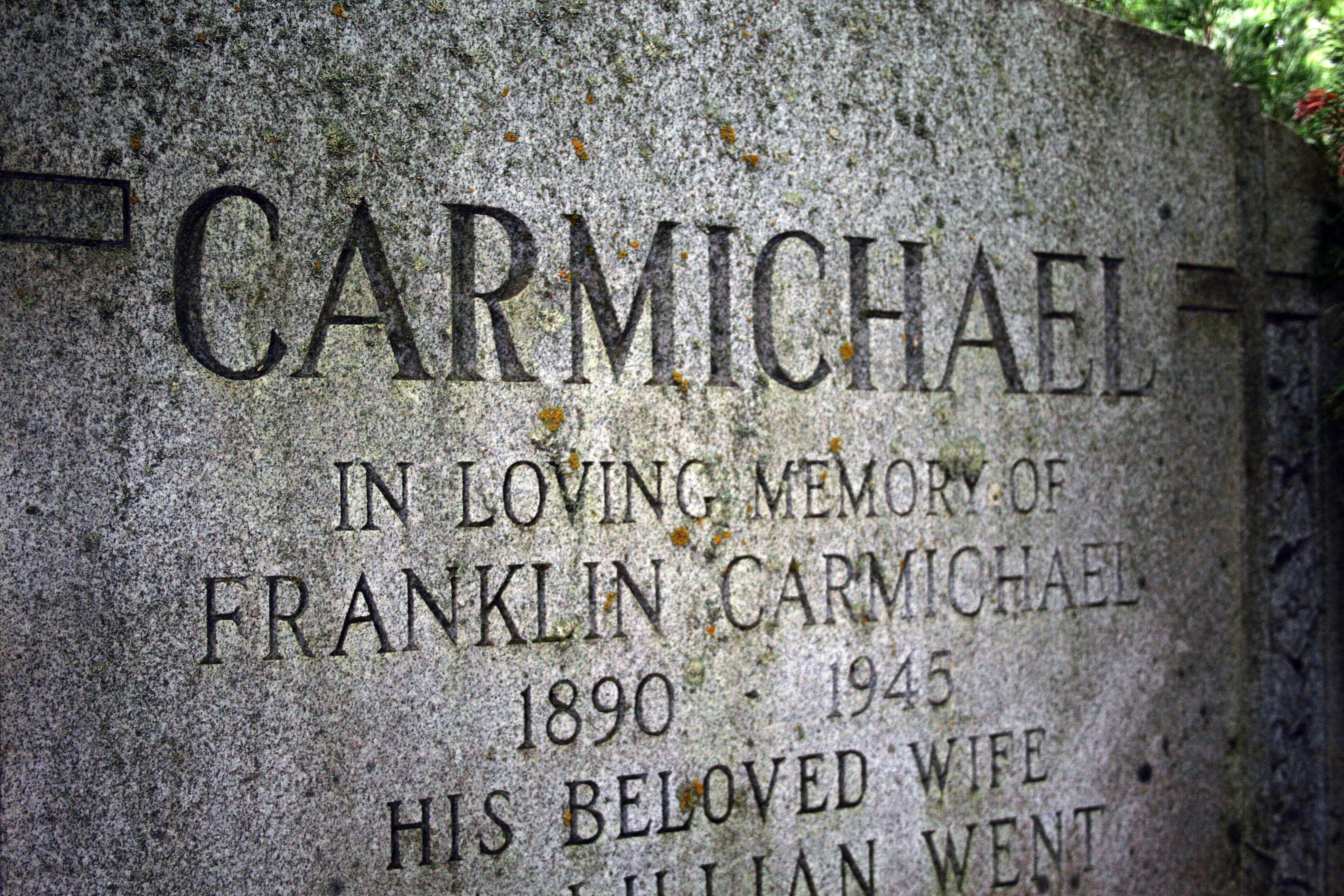
Carmichael is laid to rest in St. Andrews and St. James Cemetery in his hometown of Orilla. His final resting place is marked with an elegant grey granite stone, that is engraved with ivy and crosses. He is laid next to his beloved wife, Ada Lillian Went Carmichael, who passed away in 1964.

Buried alongside Carmichael in the family plot, are his daughter Mary Franklin Carmichael Mastin, and her husband. Mary dedicated much of her life to preserving her famous father’s legacy.4 She was also a writer and journalist, writing about nature and conservation.4 She passed away in 2012, at the age of 91 at St. Gabriel’s Villa, in Chelmsford, Ontario.4

In contrast to the busy streets, the cemetery was very quiet. My mother and I were the only visitors. As I stood at Carmichael’s graveside, I reflected on how his contributions to the art world have influenced and inspired countless generations of Canadian artists. I was a little surprised, though, to find that no flowers or grave goods had been left at his grave, something I had expected for an artist of his caliber. It made me think about how a person’s life story can sometimes be quietly forgotten, and the importance of remembrance.

I really enjoyed my visit to Orillia. Exploring Franklin Carmichael’s legacy was a unique opportunity to reflect on the power of art and how it connects us to the land and each other. From the Orillia Museum of Art & History to his gravesite, it was a lovely trip that gave me a deeper appreciation for Carmichael’s work and the lasting impact he had on Canadian art.

Thanks for reading!


References:

  1. Franklin Carmichael | The Group of Seven
  2. Teachers and Their Enduring Impact—The Legacy of Jose Salas | Orillia Museum of Art & History
  3. Franklin Carmichael | Roberts Gallery
  4. Mary Franklin Carmichael Mastin | Find a Grave
Stone Stories: The Voice of the Great Lakes

“They might have split up or they might have capsized
They may have broke deep and took water
And all that remains is the faces and the names
Of the wives and the sons and the daughters”1

These lyrics from Gordon Lightfoot’s iconic song The Wreck of the Edmund Fitzgerald have long been etched in the minds of listeners, who like me, have found themselves enthralled by Lightfoot’s masterful storytelling.

This song, along with many of his other hits, like If You Could Read My Mind and Sundown, have created the soundtrack for countless Canadians, evoking the beauty, melancholy, and vastness of our Canadian landscape.

Today on the blog, I want to share my experience from this past September. I had the opportunity to visit the Gordon Lightfoot Sculpture Park and his final resting place in his hometown of Orillia, Ontario.

Gordon Lightfoot

Gordon Meredith Lightfoot was born on November 17, 19382 in the small town of Orillia, the gateway to the Muskokas.3 From an early age, Lightfoot showed a natural talent for music, learning the piano, teaching himself to play drums, and later picking up the guitar.2 In 1957, Lightfoot left Canada, going to Los Angeles to study jazz orchestration at Westlake College of Music.2 After returning to Canada in the late 1950s, he began to sing folk songs and play guitar around Toronto.2

It didn’t take long for Lightfoot to make his mark on the Canadian music scene. His folk-infused ballads quickly captured the essence of the Canadian spirit. Throughout his career, Lightfoot released over 20 albums and was known for his blend of folk, country, and soft rock—a style uniquely his.2

Lightfoot received numerous prestigious awards throughout his music career, including multiple Juno awards, and was inducted into the Canadian Music Hall of Fame in 1986.2 He also earned honours like the Order of Canada, Order of Ontario, and a Governor General’s Performing Arts Awards.2 Lightfoot was recognized in the Canadian Songwriters Hall of Fame and received a Lifetime Achievement award from SOCAN and the Toronto Music Awards.2

One of my favorite Lightfoot songs is based on a real-life event, the tragic sinking of the S.S. Edmund Fitzgerald. The Wreck of the Edmund Fitzgerald, in my opinion, is one of his most famous and most haunting ballads.

The song is a tribute to all the lives lost in the shipwreck, on November 10, 1975. It’s estimated that between 7:20 and 7:30 p.m. on that fateful day, the ship vanished and sank with 29 men onboard.4

Gordon Lightfoot Sculpture Park

I knew my visit to Orillia would not be complete without a visit to the Gordon Lightfoot Sculpture Park and walking trail. We visited in late September, and the trees were just beginning to change. A perfect day for a walk.

The sculpture park is a beautiful and artistic tribute to Lightfoot’s music and legacy, celebrating both his achievements and his connection to the area. The park’s centerpiece is a striking, larger-than-life bronze sculpture of Lightfoot, sitting cross-legged with his guitar in hand. It captures him in his element, mid-song as his music comes alive around him, depicted on maple leaves that encircle him.
I took some time to reflect while standing before the statue. The park is not just a collection of art pieces, but a reflection of Lightfoot’s connection to the land, his music, and the people who grew up listening to his songs.

My mother and I were not the only visitors to the park that day. There were throngs of people walking the trails, many with large cameras in hand. I noticed they all took some time to admire the beautiful sculpture work and reflect on Lightfoot’s life and work as well.

I wondered if Lightfoot himself had known about this sculpture park. I was pleasantly surprised to see a large plaque that showed Lightfoot smiling as he stood beside his younger, bronze self. He was in attendance for the unveiling in 2015, and said humbly “I’m honoured, much more so than any of the honours I’ve received up to this point in time.”5

St. Andrews and St. James Cemetery

After walking the entirety of the walking trail loop, my mother and I made our way back to the car. We decided since the area was so nice that we would have our picnic lunch in the sculpture park, before heading to our next destination—the cemetery.

It was a short drive from the park to St. Andrews and St. James Cemetery. The cemetery was quiet and serene, offering beautiful views of the surrounding forest, although we were not the only living souls visiting the cemetery that day. There was an older couple who were also meandering through the cemetery paths.

Gordon Lightfoot passed away of natural causes, in a hospital in Toronto, at the age of 84.6 He was laid to rest in St. Andrews and St. James Cemetery in May of 2023, beside his mother and father. His mother, Jessie Vick Trill Lightfoot passed away in 1998 at the age of 88.7 His father, Gordon Meredith Lightfoot Sr. passed away in 1974 at the age of 63.8

The gravestone is simple, yet elegant—a testament to the quiet humility Lightfoot always embodied, despite his fame. The inscription simply reads “Together Forever”.

Visiting Gordon Lightfoot’s grave and walking the trails at the Sculpture Park in Orillia was a beautiful and memorable experience. I couldn’t help but think about how his music had been woven into the fabric of Canada’s history. More than just melodies, they’re stories that often capture the essence of the Canadian experience.

There is something special about visiting the final resting place of someone whose music has shaped the soundtrack of a country.

What is your favorite Gordon Lightfoot song?

Thanks for reading!


References:

  1. The Wreck of the Edmund Fitzgerald by Gordon Lightfoot | S.S. Edmund Fitzgerald Online
  2. Gordon Lightfoot | The Canadian Encyclopedia
  3. Location | City of Orillia
  4. The Tragedy | S.S. Edmund Fitzgerald Online
  5. Gordon Lightfoot sculpture unveiled in Orillia | Orillia
  6. Canadian singer-songwriter Gordon Lightfoot dead at 84 | NBC News
  7. Jessie Vick Trill Lightfoot | Find a Grave
  8. Gordon Meredith Lightfoot Sr. | Find a Grave

Stone Stories: The Tomb of the Unknown Soldier

In honor of Remembrance Day this year, Monday, November 11th, I want to take a moment to reflect on the significance of this solemn occasion and the powerful symbol of sacrifice that is the Tomb of the Unknown Soldier.

This day, which marks the end of hostilities during the First World War and honors all who have served in times of conflict, holds deep meaning for Canadians. While Remembrance Day has been observed since 1919, its evolution over the years—from its origins as Armistice Day to the shift in date and name in 1931—demonstrates its lasting importance in our collective memory.1 In this week’s post, I want to delve into the history behind the Tomb of the Unknown Soldier, a tribute that today stands as a symbol of the many soldiers who gave their lives without recognition.

The Unknown Soldier

The tomb of the unknown soldier lies in front of the National War Memorial at Parliament Hill. The large monument, a cenotaph, was unveiled in 1939 to commemorate the Canadian response to the First World War. It has grown to symbolize the sacrifice of all Canadians who have served in times of war.2

The Royal Canadian Legion, with help from Veteran’s Affairs Canada, began work to bring the Unknown Soldier home in the spring of 1998.3 As a Millenium project, this undertaking was not an easy task and many veterans were anxious to see this tomb built, as a reminder for new generations of the cause and consequences of war.3,4

Exhaustive work was completed to choose the remains that would be repatriated. The remains were selected from among 6,846 unknown soldiers of the First World War.5 The set of remains that now lie at rest in the sarcophagus at the base of the war memorial comes from Cabaret-Rouge British Cemetery, in Souchez, France.4

The Unknown Soldier’s remains were exhumed on May 25, 2000, by the Commonwealth War Graves Commission. The remains were then repatriated to Canada in a Canadian Forces aircraft, where they would lay in state for three days in the Hall of Honor in the Centre Block of Parliament.5 On May 28, 2000, the remains were laid to rest in a sarcophagus made of granite, during an interment ceremony. Soil from each Canadian province and territory was placed on the casket. They also included some soil from France.6

The inscription on the tomb reads “The Unknown Soldier / Le Soldat inconnu”. There is also a brass plaque embedded in the ground in front of the tomb which reads: “Here lie the remains / of Canada’s Unknown Soldier. / Please treat this grave / with respect.”

The tombstone marking the first resting place of our unknown soldier, in France, was also brought to Canada and now hangs in the Memorial Hall of the Canadian War Museum in Ottawa.

The inscription reads: “A Soldier / of the Great War / A Canadian Regiment / Known Unto God”

The Memorial Hall of the Canadian War Museum has a unique design feature, where every year on November 11th, at 11 a.m. the sun filters through a window in the hall, directly illuminating the headstone.7

A new gravestone was placed to mark the original burial site, now empty, in Cabaret-Rouge British Cemetery. The stone, similar in appearance to the original gravestone, is engraved with a maple leaf and the following epitaph, “The Former Grave Of An / Unknown Canadian Soldier / Of The First World War. / His Remains Were Removed / On 25 May 2000 And Now / Lie Interred At The / National War Memorial / In Ottawa Canada.”4

The Changing of the Guard

This summer, while I was visiting family in Ottawa, I had the opportunity to visit the Tomb of the Unknown Soldier and witness the changing of the guard.

Since 2007, the Canadian Armed Forces have posted sentries to stand guard at the tomb, with a rotation of personnel from the Royal Canadian Navy, Canadian Army, Royal Canadian Air Force, and Canadian Ranger units from across the country.8 During the summer months, the changing of the guard ceremony occurs every hour, on the hour, between 9 a.m. and 5 p.m.

The ceremony is a somber occasion that reflects respect for Canada’s fallen soldiers. As the sentries execute their precise and disciplined movements, the atmosphere was heavy with reverence. The ceremony serves as a powerful reminder of the sacrifices made in the name of freedom and those who gave their lives in service.

While visiting the tomb, I was struck by the weight of history and felt the significance of honoring those whose identities may be lost, but whose sacrifices will never be forgotten.
We will never know the identity of the Unknown Soldier—but that’s the point.

In war, the remains of soldiers may be badly damaged, or destroyed. Even though a great effort was made to find and identify remains, many were not found at all. Almost 20,000 Canadians who died in the First World War have no identifiable graves.4 Some could only be identified as Canadians, by uniform buttons or badges, and were buried with a simple military marker, like our unknown soldier.4

So this Remembrance Day, as we pause to honor the sacrifices of those who served, remember also the unknown soldier—the many who gave their lives, whose identities are now lost to history.

Lest we forget.


References:

  1. Remembrance Day| Canadian War Museum
  2. National War Memorial | Veterans Affairs Canada
  3. Bringing the Unknown Soldier Home | Legion
  4. Questions and Answers | Veterans Affairs Canada
  5. The Unknown Soldier | Canadian War Museum
  6. Tomb of the Unknown Soldier | Government of Canada
  7. Canadian History Ehx’s Post | Facebook
  8. National Sentry Program | Government of Canada