Did you know that May is Cemetery Appreciation Month?
I first learned about it in 2021, and I have been celebrating every year since. Cemeteries are often seen as taboo and they are not often the first place someone would think to visit, but I believe that cemeteries are for the living. They are filled with history, art, and architecture, and are wonderful places to go for a stroll, or bird watching, among other things. Yes, they are resting places for our loved ones and should be respected, but that doesn’t mean we can’t enjoy their beauty as well. Cemeteries were the blueprints for today’s public parks, after all.
So how do you celebrate? In 2021, I created a mini bucket list of things to do during the month to foster an appreciation for cemeteries. It was a nice excuse to spend more time outside. I had a lot of fun completing everything on my list. Some activities on my list included visiting a cemetery I had not visited before, and re-visiting a favorite local cemetery.
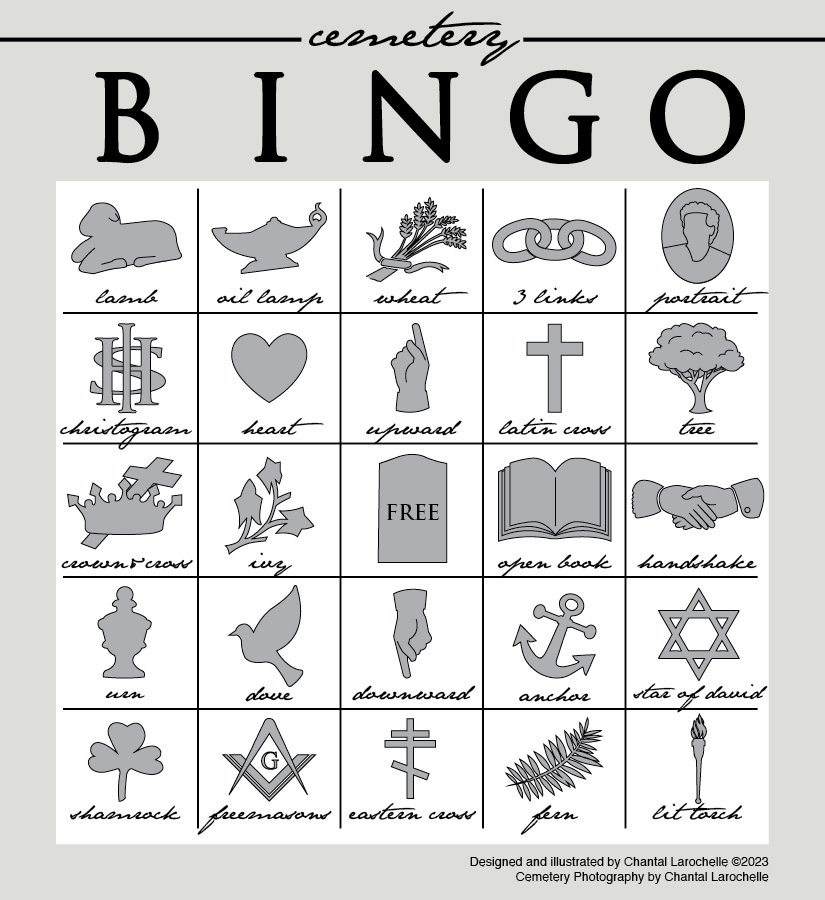
This year I wanted to do something a little different. I’m a graphic designer by trade and wanted to create something that would bring my two loves together—design and cemeteries. I was also inspired by a cemetery scavenger hunt I took part in last October. I thought it would be really fun to do something similar with my group of friends.
So I thought why not design a Cemetery Bingo card?
It’s a great activity to do in a group or solo and lets you explore the world of cemetery symbols. I created my cards using my cemetery photographs as a reference. I illustrated 40 symbols that are commonly found on gravestones. I included the name beneath the symbol as well, to help identify common motifs you might find while walking in a cemetery.
To play, all you need to do is print out a copy, bring something to mark your cards, and go for a walk in your local cemetery. Match the symbols on the card to what you find on the gravestones. The first one to get a full line wins! You can make that two lines, or even a full card to make it a bit more challenging. I can see this being a fun tool to introduce your friends and family to cemeteries and help explore gravestone symbolism. It could also be a fun activity for kids.
Please remember to be respectful when visiting your local cemeteries. For a guide on cemetery etiquette, you can read a previous blog post I wrote about the rules I follow when visiting a cemetery here.
My friends and I will be going on a cemetery road trip very soon, and I think it will be a great opportunity to try out the bingo cards. We have a lot planned already, but I think we can fit in a round of Cemetery bingo. I’ll be sharing how our cemetery bingo plays out in my stories on Instagram on May 6th.
For best results, send this print-ready file to a local print shop, or you can print them at home on your home printer. Just be careful when you are trimming the pages. Then all you need are some markers, stickers, or bingo dabbers to mark off your finds and have fun! Make sure to tag me in your photos or stories on Instagram and Facebook.
While working on an upcoming project, I was going through my photo archive and found myself frequently stopping on the images of weeping willows. I have captured an interesting variety in the last few years. I love weeping willows, they have a very unique look. They are not common in my area, in the forests, or on graves.
So for today’s collection, I wanted to take a closer look at this cemetery symbol and share some of the different versions I have found and photographed during my cemetery walks.
As the name implies, weeping willows commonly symbolize grief and mourning. They are a very common Victorian-era cemetery symbol. Adopted from the Ancient Greeks, the weeping willow can represent immortality and life after death. Weeping willows are sometimes associated with the Underworld because, in Greek mythology, Orpheus brought with him a willow branch on his travels to the Underworld to save Eurydice from Hades.1 The symbolism of immortality stems from the fact that willow trees are very hardy, and can survive heavy damage.
A variety of the weeping willow motif you might find is a weeping willow standing beside a gravestone. I love the idea of a gravestone on a gravestone.
Another variation you might come across is of a weeping willow and urn. The urn represents death itself, and the willow again symbolizes grief.2 This motif was a popular gravestone symbol of the late eighteenth and early nineteenth century. You might also see weeping willows paired with a lamb or a cross.3 I have yet to come across these variations.
I noticed that the majority of the ones I found were in Southern Ontario. As I explore more Ontario cemeteries this summer, I hope I will come across a few more to photograph. I would love to find some more variations on the symbol. If you have any suggestions for where I might look, I would love to hear about them in the comments.
Thanks for reading!
References:
Understanding Cemetery Symbols: A Field Guide for Historic Graveyards by Tui Snider
I feel like a broken record lately, always talking about the snow. But it’s finally melting! We have been having some consistent warm weather so the snow has been disappearing quickly. I have been getting ready for the warmer weather by planning and mapping some upcoming cemetery walks. It’s exciting that the weather is finally warming up. I have some great future road trips planned and am looking forward to some fun cemetery adventures. All this planning has got me thinking about some of last year’s trips.
My mother and I did some exploring of St. Jospeh’s Island last year, home to Fort St. Joseph National Historic Site and bird sanctuary. We spent the night at a quaint little motel on the island and explored everything the island had to offer. I wrote a little about our adventure and finding a pet cemetery, but there are many more stories to tell from that trip.
So today, I wanted to share another experience from that cemetery road trip and talk about our visit to Fort St. Joseph, and the Historic Fort St. Joseph Cemetery.
I first learned about Fort St. Joseph when I stumbled onto a trail map while going down an internet rabbit hole. The cemetery trail piqued my interest and I redirected my Google search to learn more. Fort St. Joseph is a National Historic Site of Canada that features the ruins of an archaeological site and is filled with history about the War of 1812. “History that saw a powerful alliance struck between the British and the First Nations People of the western Great Lakes region.”1
The historic site has an interactive visitor center with a walk-through exhibit as well as an educational short film that tells you more about the history and discovery of the site. There is also a trail system that takes you through and around the ruins and includes the Cemetery Trail, Rains Point Trail, and the Lapointe Point Trail. Visiting cemeteries and hiking are two of my favorite things and often go hand in hand. I thought they would be a perfect destination for a summer road trip. My mother was on board right away when I asked her if she wanted to come. She is an avid bird watcher and was excited to visit the bird sanctuary. More than 200 species have been spotted in the area.1
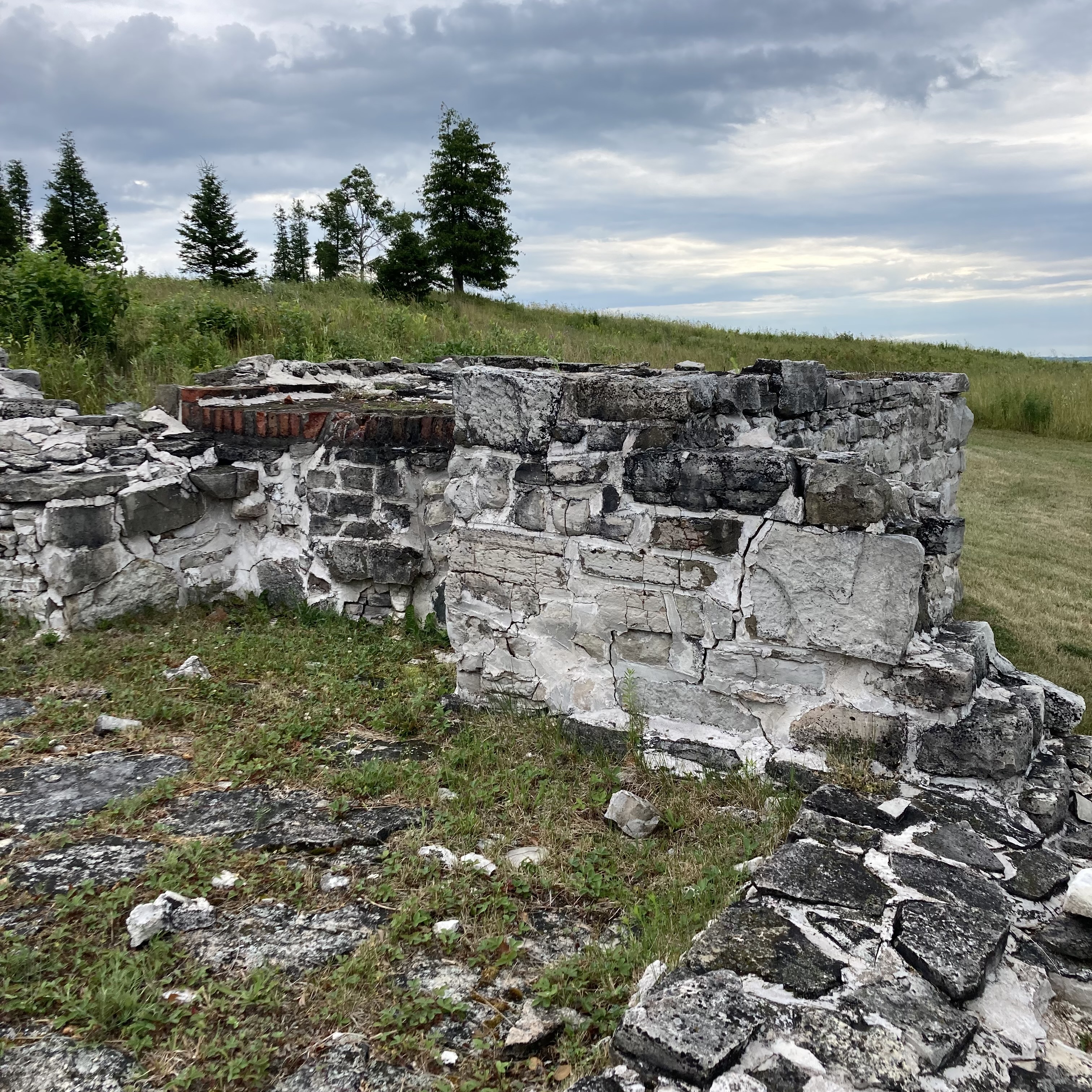
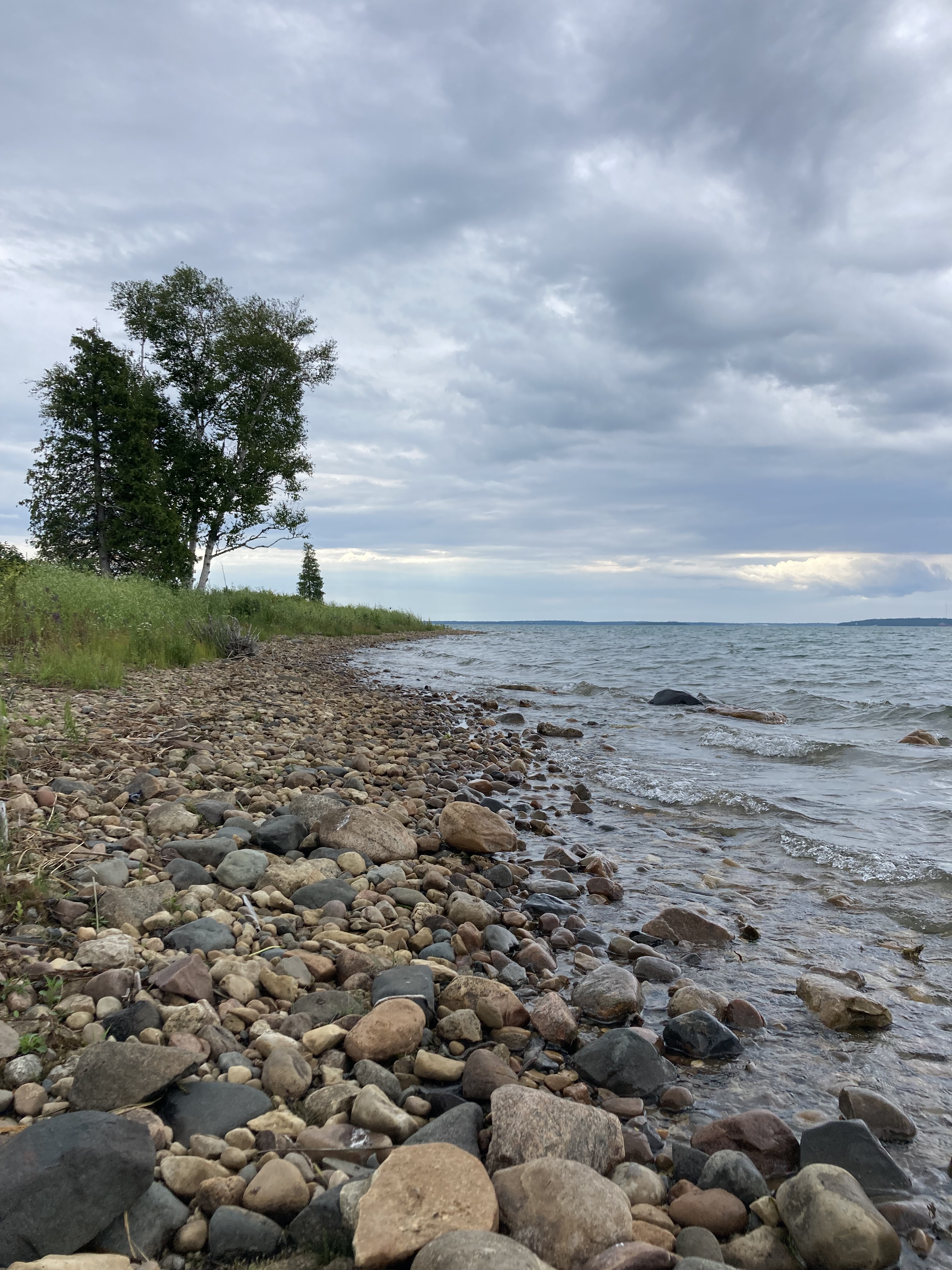
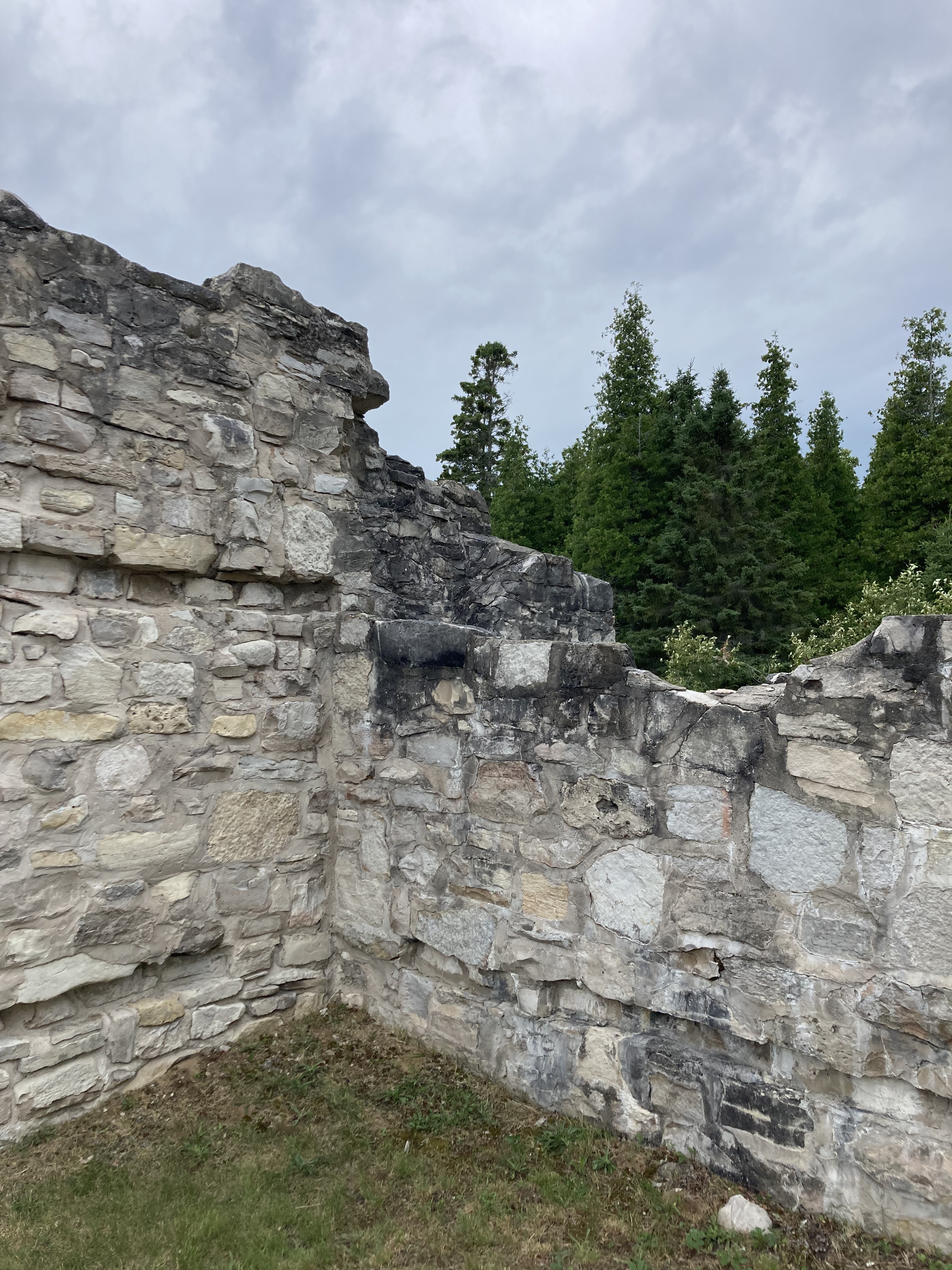
After taking our time exploring the interactive exhibits and watching the film my mother and I headed outside to explore the ruins. Fort St. Joseph was once the most westerly fort in Upper Canada.1 All that is left today are the foundations, ruins, and surviving artifacts. It was very windy the day we went to explore the ruins, and rain was on the way. We took a chance and tried to beat the rain by going as soon as the site opened. We toured the ruins, reading the plaques and taking in the history laid out before us. I found it a little hard to imagine these small foundations housing a community, but the helpful diagrams and maps of the area helped visualize what the layout of the fort would have looked like in its time. Because we got there so early we had the place to ourselves and took our time exploring. Even with the strong winds, we spent some time at the shoreline, examining the horizon. Unfortunately, we didn’t see any birds or wildlife while we were there. I think we can blame the stormy weather on that.
As we were finishing up at the ruins, the rain started to come down and visitors started to trickle in. When the rain started to pour down harder we took shelter in the visitor center and gift shop and tried to wait out the storm. They have a cozy little gift shop filled with most of the typical things you would expect from a historic site; postcards, magnets, pins, sweatshirts. One of the more interesting items they had was chocolate, more specifically heritage chocolate. Using a recipe and ingredients authentic to the colonial era, you can try a chocolatey treat that was commonly consumed at the time. They had chocolate sticks and hot chocolate mix at the time of our visit, and I regret not picking up the hot chocolate mix along with the couple of chocolate sticks I did purchase.
After the rain finally eased up, we made our way to the car. There was one more stop to make. The Cemetery Trail turns off the main road to and from the historic site. A small green sign with a hiking symbol and the word “Cemetery” mark the turnoff. My mother was a bit tired at that point and didn’t want to walk the trail. I didn’t have any idea where the cemetery was on this trail loop so I wasn’t sure how far I would need to walk to find it. She decided to stay in the car and wait.
At the trailhead, there is a trail map, along with a description of the cemetery. It reads “The cemetery at Fort St. Joseph contains graves established between 1796 and 1812. While there were only 10 recorded deaths during the occupancy of the fort, such as those of Jessie Crawford’s twins who died in 1807 shortly after birth, there are probably others who rest here eternally, their identities unknown. Those that died at Fort St. Joseph usually suffered from illness or their deaths were as a result of tragic events or accidents like that of Private Antoine Gazzinel who was killed May 9, 1803 when a loaded musket went off as he was placing it into a bateau. A cairn was erected in 1954 to recognize the final resting place of these individuals and stands today as a reminder of the community that once existed at Fort St. Joseph.”
The Cemetery is located right at the beginning of the trail, with a clearing opening up on the right side of the trail. The rain held out for me as I examined the large cairn and took photographs. The cairn reads, in English and French, ”This cairn marks the site of Fort St. Joseph cemetery in which are the graves of soldiers and fur traders who died here between the years 1796 and 1812.” There are about a dozen white crosses here, with no names. One grave looks to also be marked with stones surrounding it. It’s a peaceful spot, surrounded by the lush green forest, but it is also a place of sorrow. I was very sad to see the blank white crosses, marking lives that are now unknown, and who knows how many more lie there unmarked.
My mother and I really enjoyed our time visiting Fort. St. Joseph, even though the weather wasn’t ideal. Exploring the historic ruins and cemetery was an interesting look at the past, even when at times it was a somber one. It was my first time exploring a ruin site, and I look forward to the chance to visit more.
Have you visited Fort St. Joseph? Will you be adding it to your travel plans? I would love to read your thoughts in the comments.
The winter weather seems to be dragging on this year. We got a lot of snow this winter in Northern Ontario, which I think is adding to this feeling. It feels like it will never all melt. I am trying to be optimistic, and am hoping to be hiking and visiting cemeteries soon. For the last couple of weeks, I have been focused on planning cemetery road trips, near and far. I am ready to get outside, it’s supposedly Spring after all!
The official first day of Spring was March 20th, so I wanted to share something a bit more colorful to help ring in the Spring season. Flower arrangements are often found on gravestones, in plastic, or made of fresh blooms. You might also find bright and vibrant cemetery flowers planted on graves or cemetery grounds. Each variety of flower holds a special meaning, that also varies by color. So for today’s collection, I wanted to share some cemetery flowers I have photographed over the years and take a look at what they might symbolize.
These delicate light blue hydrangeas symbolize regret, apology, and forgiveness.1 Seeing them at a graveside or planted on a grave intensifies that meaning for me.
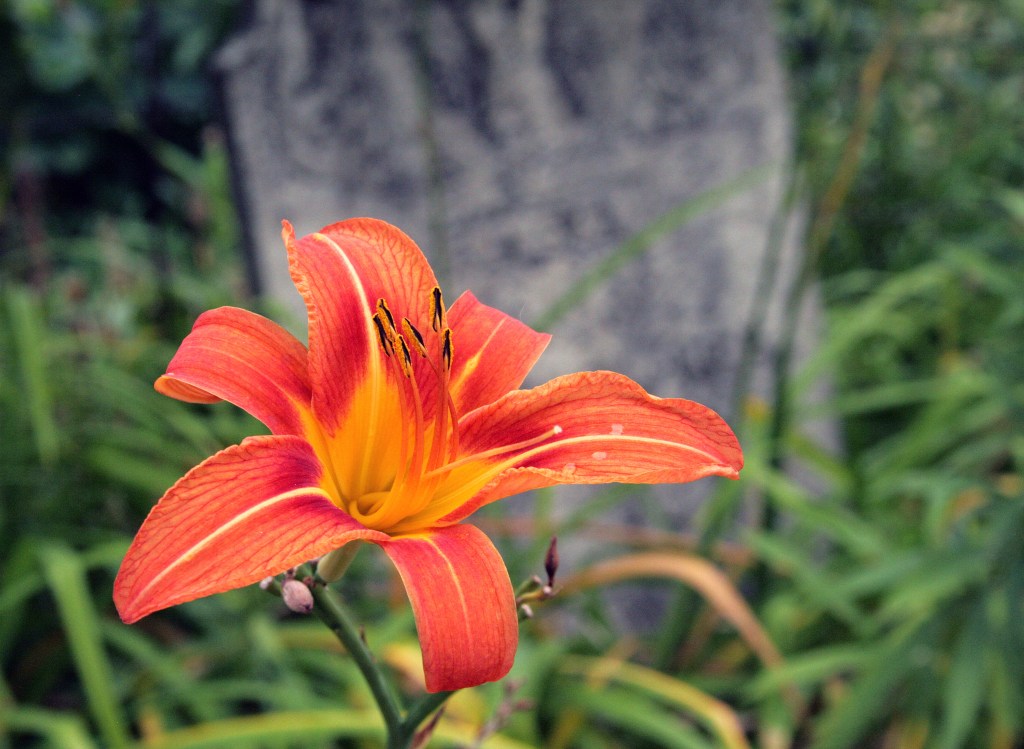
Daylilies bloom during the day and close up at night. Orange or yellow daylilies commonly symbolize love and devotion, as well as joy, beauty, and courage. A dark orange, or redder daylily like the one pictured, may symbolize a deep passion.2
Lilac shrubs are one of the earliest plants to bloom in the Spring, and because of this, are thought to symbolize a fresh start and renewal.3 Pink lilacs commonly symbolize first love.4 I was able to capture this yellow swallowtail visiting this lilac bush. Yellow swallowtail butterflies represent grace and the free nature of the soul.5 Fitting since this photo was taken in a cemetery.
Black-eyed Susans are a common sight here in Northern Ontario. They are also sometimes called brown-eyed Susans because of their dark brown-to-black centers. Black-eyed Susans are thought to symbolize resilience and endurance as well as justice and truth.6
Begonias have a lot of symbolism tied to them, but are commonly seen as a symbol of uniqueness, gratitude, and harmony, but can also be a symbol of caution. Yellow begonias are thought to be a representation of hope, kindness, or friendship.7
I am still working on learning to identify different types of plants, in bloom and on gravestones. I find it fascinating that there is a meaning for practically everything! Looking at all these colorful blooms has got me excited to be visiting cemeteries and enjoying the sunshine soon.
I hope wherever you are, you will be enjoying the sunshine soon as well if you’re not already. Happy Spring!
Last February, I learned about a local tragedy that has left a hole in the community of Coniston. A heart-felt roadside memorial was erected, to ensure that the men who were lost that day are never forgotten. This monument sits at the train crossing where the tragic events took place. Last spring, my mother and I visited the memorial to pay our respects.
This past Thursday, February 9th, marked the 72nd anniversary of the train crash in Coniston.
The monument reads: “This monument has been / erected to remember the / nine men who lost their / lives, and the many who were / injured at the train / crossing in the tragic / bus and train accident / on February 9, 1951. / Primo Creama / Herbert Conlon / Alex Beauparlant / David Martin / Eugene Leclair / Joseph Tremblay / Paul Sharko / Ernie Cooper / Never to be forgotten”
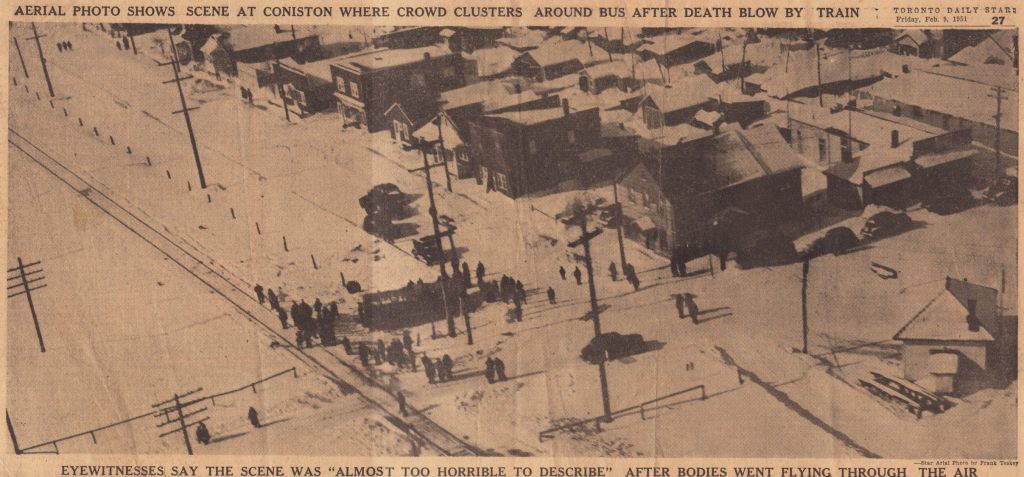
The early morning, of February 9th, had been incredibly cold. According to the Coniston Historical Group, the temperature had dropped to 48 degrees below zero that morning, which caused low visibility. The passenger train was also running late that morning.1 Between 8 and 8:15 a.m. tragedy struck—a CPR passenger train collided with a local bus at the railway crossing in Coniston. 31 people were injured, and 9 were dead.2 The bus had been carrying residents as well as smelter workers on their way home from a graveyard shift. The 9 men who lost their lives that day were from the same shift at the INCO smelter.1
“Aerial photo shows scene at Coniston where crowd clusters around bus after death blow by train. / Eyewitnesses say the scene was “almost too horrible to describe” after bodies went flying through the air. -Star Aerial photo by Frank Teskey. Toronto Daily Star (now The Toronto Star), Friday, Feb. 9, 1951.
“Train, Bus Smash Kills 9 Canadians” Madera Tribune, Volume 59, Number 265, 9 February 1951.
The monument sits beside the railway tracks on the corner of Government Road and Edward Avenue, at the site where the horrific accident took place. I haven’t been able to determine exactly when the monument was erected, but from what I have read it was possibly erected by the Lions Club, in the early 2000s, and is now maintained by the Coniston Historical Group.
On the anniversary of the accident, a candlelight vigil is erected in the early morning at the monument. A custom-made INCO triangle candle holder, holds nine lit candles, one for each of the men who sadly lost their lives that day.
Alex Beauparlant
Herbert Conlon
Ernie Cooper
Primo Crema
Lucien Landriault
Eugene Leclair
David Martin
Paul Sharko
Joseph Tremblay
At the peak of the triangle is a 10th candle, that is lit in memory of the 31 who survived the crash, and for those in the community who were left behind, to mourn their friends’ families, and colleagues. It’s a beautiful memorial, that brings the community together, to share memories of their loved ones and make sure that they will never be forgotten.
My mother and I visited the memorial in late May of 2022. It was a very sunny and beautiful day. As we drove to Coniston, only a short drive away from our home, I remember wondering why I had never heard of this tragic event before. I had only learned about it after having seen a Facebook post from the Coniston Historical Group, earlier that year.
The monument sits very close to the railway tracks, if you didn’t know it was there—you might miss it. There is a small parking area right next to the monument, with a little walkway that leads up to the memorial. The site is very well taken care of, and you can feel the love the community has for this memorial and what it symbolizes. I think what makes this memorial a bit surreal, is the fact that it sits right next to the train tracks where the accident happened so many years ago. I know it must have looked a lot different then, but it’s a very somber feeling to look at the railway tracks just behind the monument and know that that is where it happened.
This monument is a cenotaph, a marker where the deceased have been laid to rest elsewhere. As I read and researched I became curious as to where these 9 men now rest. I have been able to locate the resting place of three of them; Alex Beauparlant, David Martin, and Paul Sharko. I hope to find the other 6 and visit them this summer to pay my respects.
I always find roadside memorials incredibly moving. This was a tragic accident that changed the fabric of the small town of Coniston forever, but it will never be forgotten. I’d like to thank the Coniston Historical Group for all the good work they do to maintain this memorial, and for their educational posts on Facebook, as they continue to share the history and story of Coniston. So much history could be lost if it wasn’t for groups like theirs.
I realize I owe you all a blog post after missing last Sunday, but I don’t have anything that is quite ready to share with you yet. I have a few posts that I have been working on, but more research is needed. So instead, this will be an update, to share what I have been working on and what you can look forward to on the blog in the coming months.
Most recently, I have been working on a piece inspired by Death’s Garden Revisited, edited by Loren Rhoads. My piece is about my own personal connection to cemeteries. After speaking with my Mother about the subject, it created more questions than answers. As we chatted we uncovered our own little family cemetery mystery, which sent me down yet another research rabbit hole. I’m sure you all will find that story very interesting.
I have also been saving a cemetery story, especially for this month, as February is the anniversary of this local tragedy. I need a little more time to work through the research and sort through my photos from last summer’s road trip. That will be another post to look forward too.
Along with writing and creating content for the blog, I have also been taking an online course to sharpen my writing skills. The course is through Atlas Obscura and is called Historical Nonfiction: Research-based writing with Hadley Meares. This 4-week course promises to help you write historical essays using a research-based lens. I am on week 3 of the course and it has already solidified the good writing habits I already had while introducing new habits, methods, and resources to my writer’s toolbox. I look forward to sharing the article that comes from completing the course.
Amidst all this writing I have also been updating the portfolio section of my website. I have posted many additions to my existing web portfolios and have added some new ones entirely. Sorting through, editing, and posting my archive of cemetery photos has been a great way to look back at all the cemetery adventures I have had over the years.
I have also been working on researching some new areas and cemeteries to visit. I have some great cemetery road trips already planned for this summer and can’t wait to get back on the road and photographing. I plan on visiting Owen Sound, for part two of Chasing Tom Thomson, while also stopping in at some fun interesting spots along the way. I also have another trip planned for early spring which will include my first visit to a loyalist cemetery, and seeing table stones in person. I’m pretty excited about that trip.
I have also been busy getting some submissions ready for a local photography contest, and a gallery showing. I am not quite sure how my cemetery work will be received, but I think they could be great opportunities to get my work out there, regardless of the outcome.
Hopefully, some of these upcoming posts sound interesting and will have you coming back to read more. As always, if you have any book or cemetery recommendations, or cemetery stories of your own to share, please leave me a comment or send me an email at hello@chantallarochelle.ca
This week, I had originally planned on posting a cemetery recipe for Red Lantern Cheese dip, from the gravestone of Debra Ann Nelson. But, I had some issues finding the correct ingredients and the recipe didn’t turn out as expected. So I will continue my hunt for the elusive ingredients.
Instead, this week I will share a collection of Dove’s. If you have been following this blog for a little while, you may have noticed that I sometimes like to share collections of my favorite photos of some of the cemetery symbols I find on my cemetery walks. I have been photographing cemeteries for over 15 years, and in that time I have noticed some repetition of certain symbols and motifs. I find cemetery symbolism so interesting and love looking at what the different variations of a symbol mean.
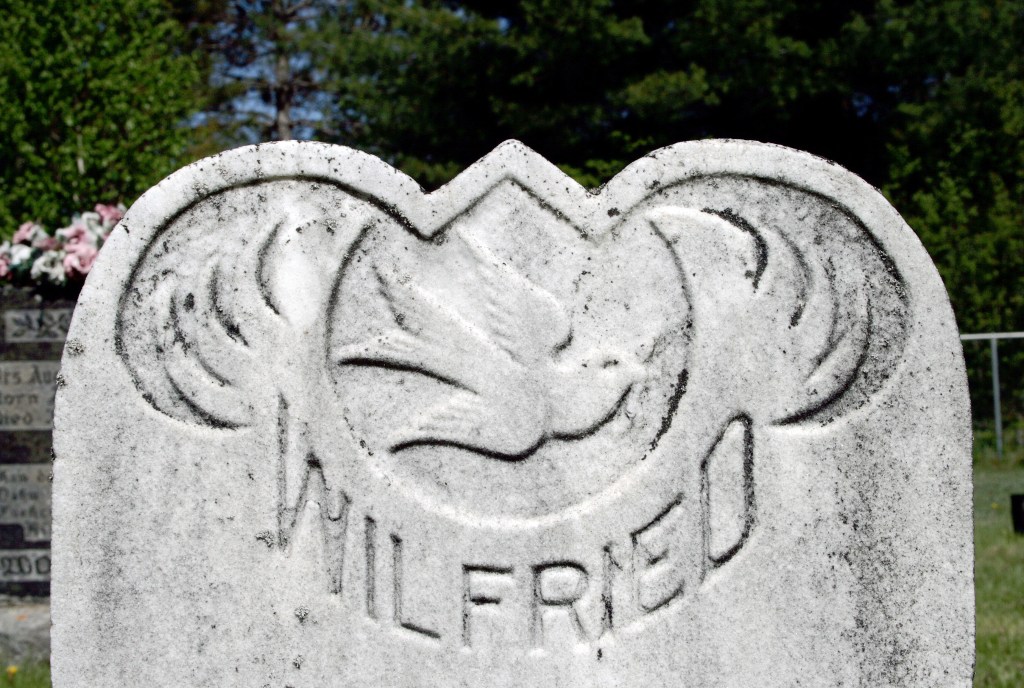
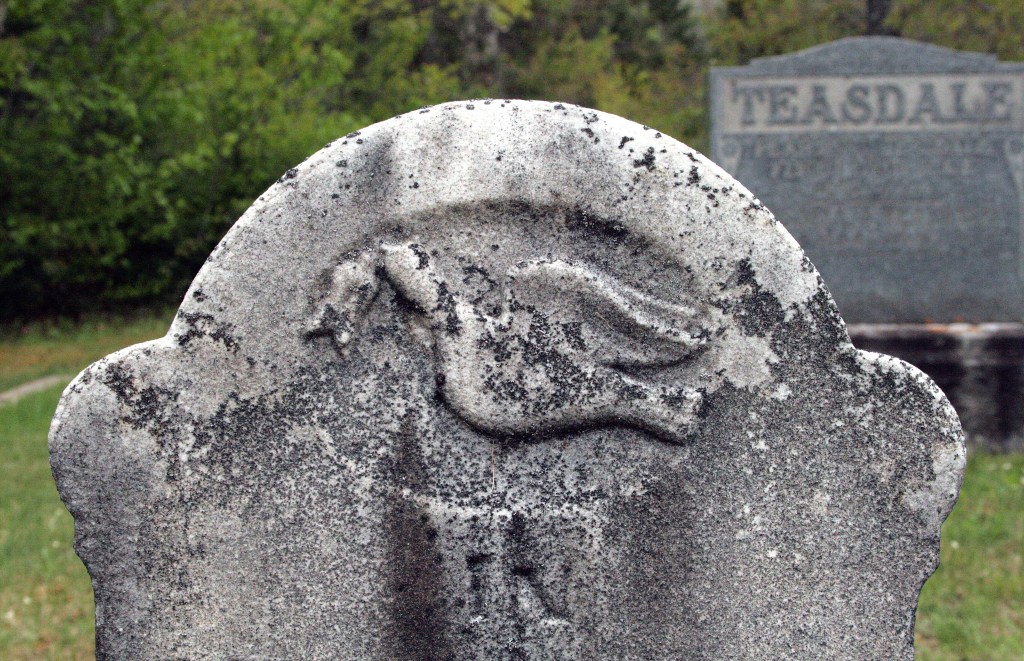
Doves are not as common a symbol as lambs in Northern Ontario, but they represent similar ideas. Doves commonly are a symbol of peace, but when used in funerary art, they also represent innocence and the Holy Spirit. Doves may appear in many forms, such as sculpture or bas-relief. There are also different variations of doves, and each carries additional meaning.
Sometimes a dove may be depicted carrying something in its mouth. A dove with an olive branch in its mouth may represent peace. This symbolism also can be traced to Ancient Greece. A dove carrying a broken flower bud in its mouth often symbolizes a life cut short.
The position and angle of the dove may have some significance as well. A dove flying downward is thought to represent the Holy Spirit coming down from heaven.
Another variation of a dove you might find, is a dove that looks like it might be dead. A dead dove sadly represents a life cut short. This variation may also be found lying in front of, or on top of a tree stump; which is also a symbol of a life cut short.
Today on the blog, I wanted to share a cemetery road trip from Autumn 2022. I have been thinking about this place a lot lately and wanted to share my experience. Visiting the Asylum Point Cemetery was high on my to-do list when my fiancé and I visited Penetanguishene for our haunted holiday. I talked Chris’s ear off on the drive up about what I could remember of its history. My interest in the place was even more peaked when we got to our Airbnb. On one of the white boards in the main entranceway, someone had written in red marker; “Visit the Asylum Cemetery!”
Asylum Point Cemetery is located on the grounds of what is known today as the Regional Division of the Waypoint Centre for Mental Health Care.1 Over the years it has seen many different forms. It began as a Reformatory for Boys in 1859 and operated for 44 years.2 In 1904 it saw new life as the Asylum for the Insane.3 1933 saw the addition of Oak Ridge, also referred to at the time as the Criminally Insane building.4 All the buildings are fairly close together, creating a small campus. As we toured the campus in search of the cemetery, I noticed a few white houses lining the road to the cemetery. One was directly across from it. I’m not sure what these buildings had once been used for, but now they looked abandoned and boarded up.
Many of the original buildings are no longer standing, as the center has modernized its facilities. But, there are still some remnants from the Asylum’s past that can be found; like the cemetery, and the original Oak Ridge gates. The gates now open to an empty road, that leads I’m not sure where. I didn’t have much time to explore the grounds on our visit, aside from the cemetery, but I did get a chance to stop and admire the entrance gates, which are said to have been built by the patients themselves.
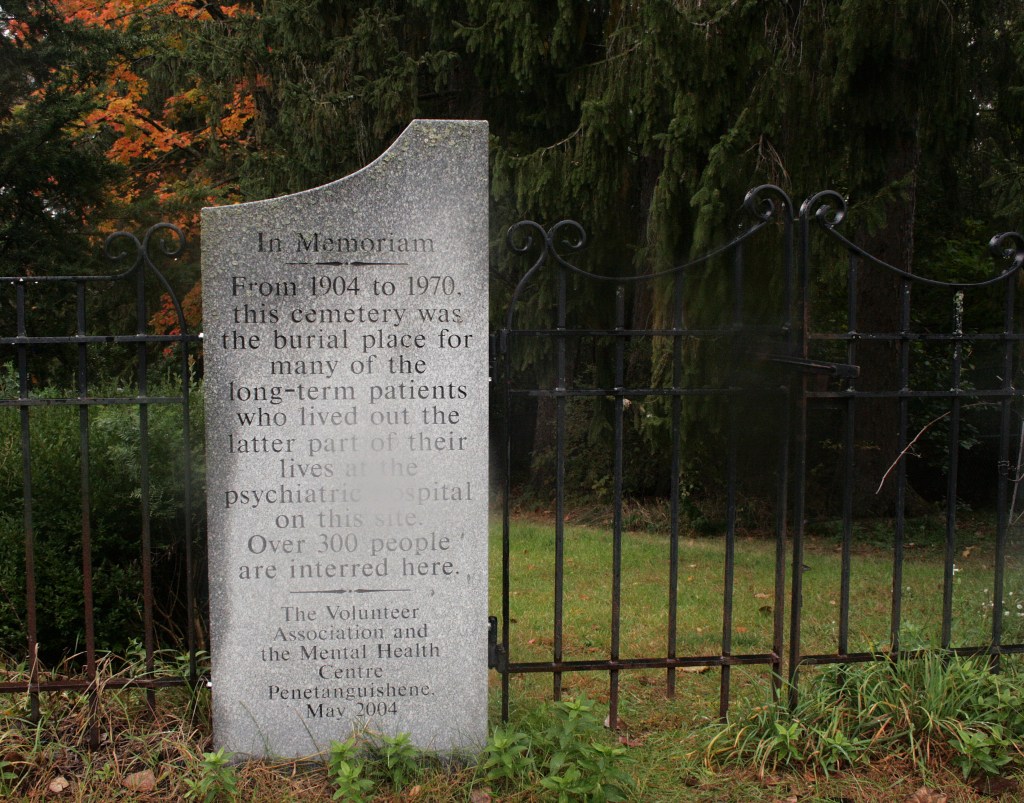
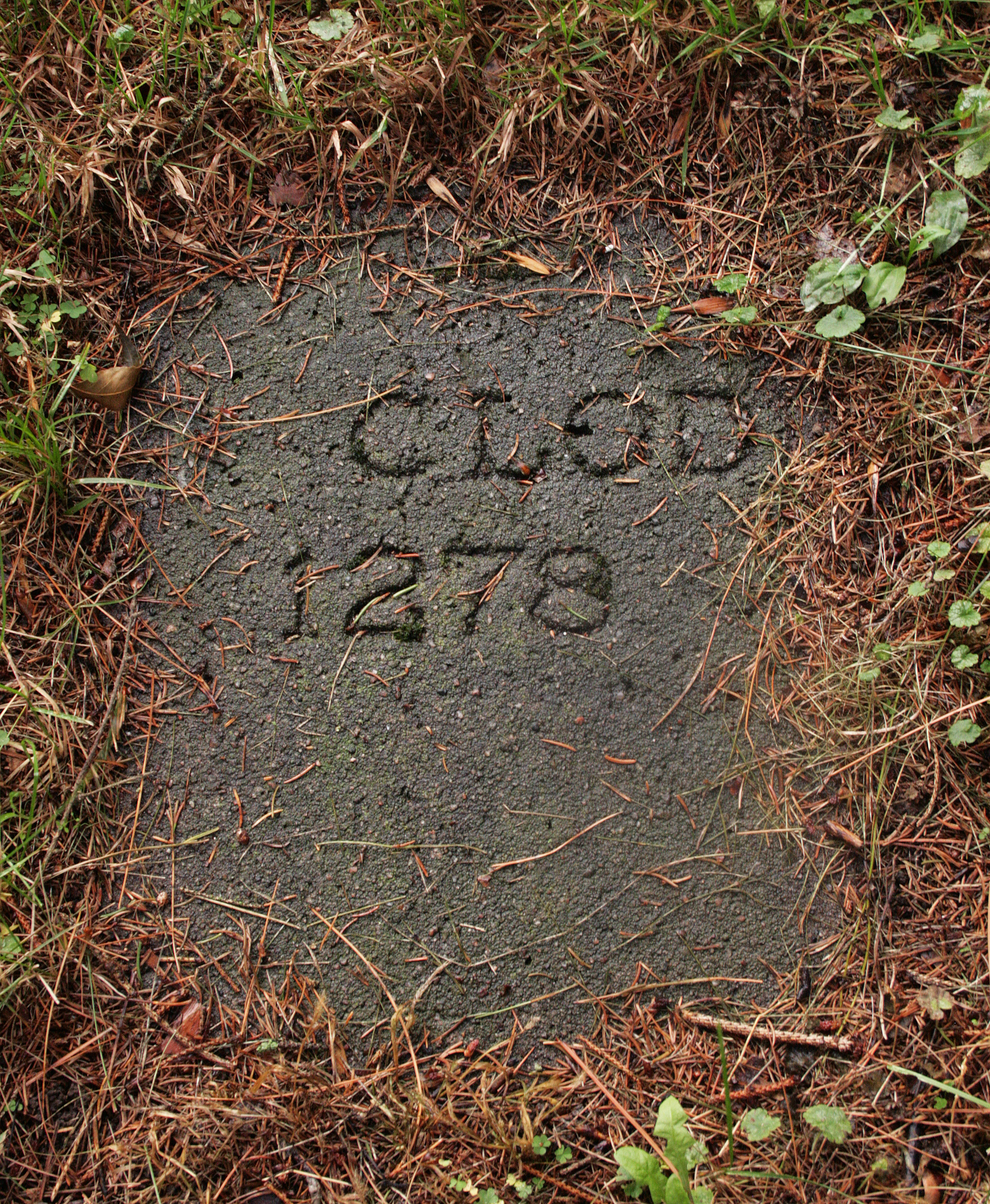
According to the inscription on the gate of Asylum Point Cemetery, the cemetery was in operation from 1904 to 1970 and is the final resting place of over 300 long-term patients. Commemorative stones were erected at the cemetery detailing its history in 2004, the 100th anniversary of the Psychiatric Hospital and its cemetery.
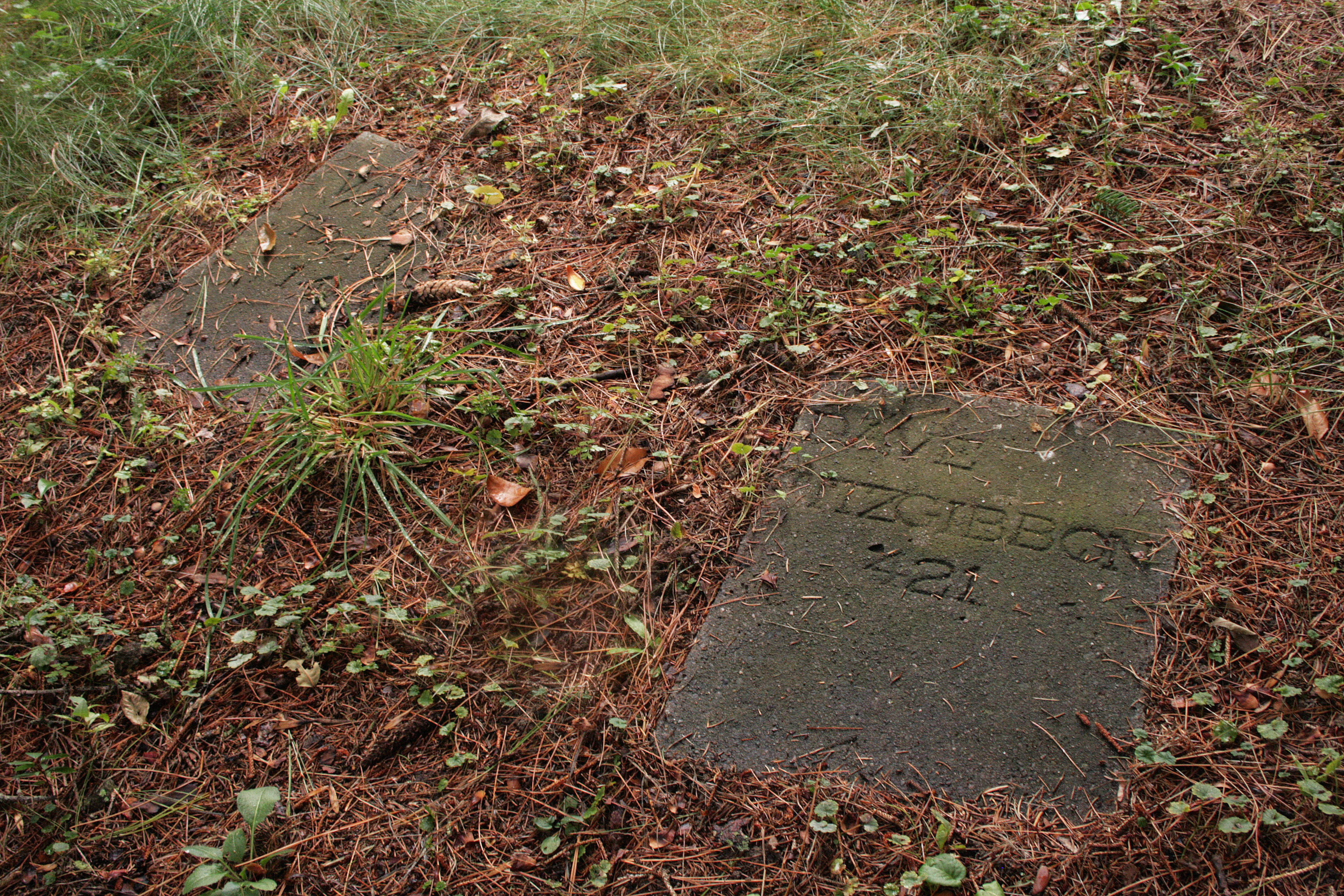
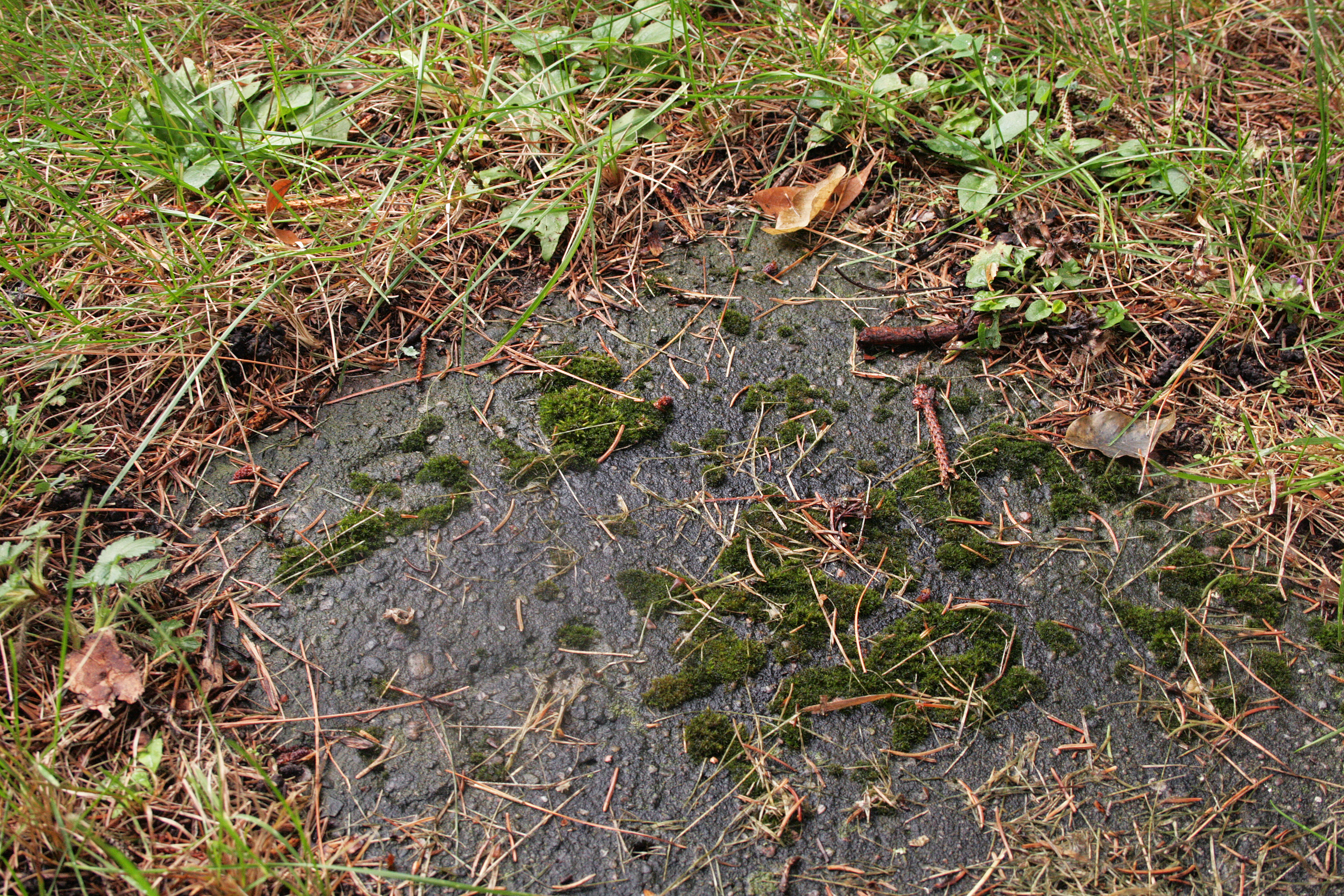
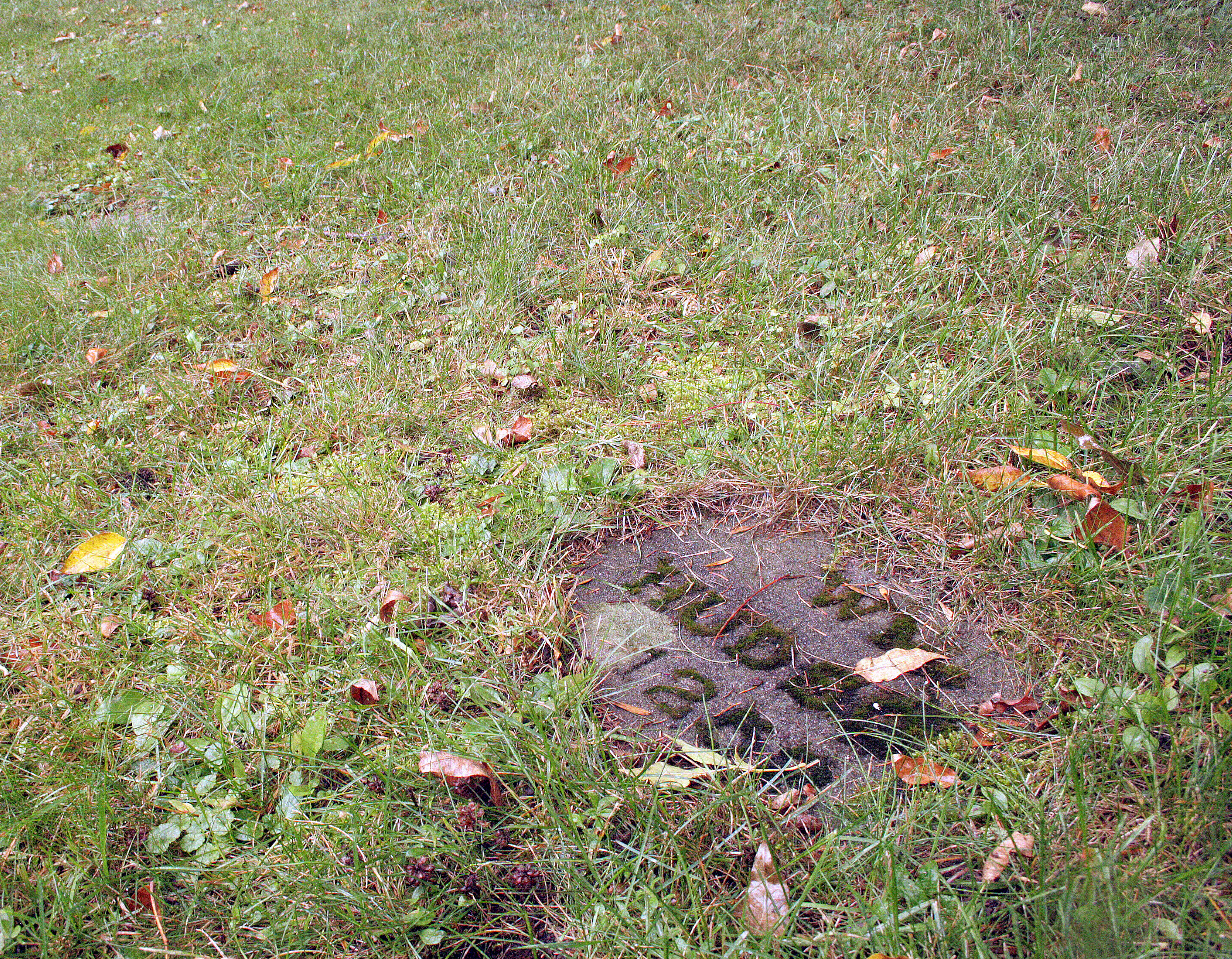
It was a grey and dreary day when I visited the cemetery, but I didn’t let that deter me. When I walked through the gates, after stopping to read the inscription, I was a little surprised by what I found. The cemetery seemed to be just a sprawling green lawn, with no markers aside from the stone at the entrance that bares the cemetery name. There is a large weeping willow tree on the right side of the cemetery, so I walked underneath it to stay out of the drizzling rain. I scanned the grass for anything that might resemble a grave marker. I had read that the grave markers in this cemetery, in the early years, had been created by the patients using wood and brass stamps to mark the names and dates.5 I was about to start making my way back to the car when I noticed a small slab of cement covered in leaves and debris. It wasn’t an empty green space after all. After I spotted one, I was able to spot them more clearly and found more and more small rectangular grave markers dotting the lawn. The rain had darkened the cement making them blend in with the autumn leaves. Many markers were becoming overgrown with moss, while others were slowly being swallowed up by the earth.
This was my first time visiting an Asylum cemetery, and I was very touched by the handmade markers. I tried to put myself in the place of the patients that would have been making these gravestones. I was very mindful as I made my way back to the car.
I have only briefly touched on the history of Oak Ridge here, but if you are interested in some further reading, there is a great resource curated by Jennifer L. Bazar. It’s called the Remembering Oak Ridge Digital Archive and Exhibit. It features in-depth looks at the history and timeline of Oak Ridge, and includes photos. I would highly recommend checking it out if you are interested in this side of Canadian history.
Thanks for reading!
References:
Origins | Remembering Oak Ridge Digital Archive and Exhibit
2022 was a year full of adventure! I visited 78 cemeteries this year and was able to break my record for the number of cemeteries visited in one day—15. A personal best! I visited my first pet cemetery and went on many fun and fascinating cemetery road trips. There are a few that stand out, like hiking through Algonquin Provincial Park and finding the first grave of Tom Thomson. That was a bucket list trip for me, and one of my biggest adventures so far. A lot of planning and research went into that trip, and the journey was incredibly worth it. Spending the night at the haunted Beck House was another highlight for me. Haunted holidays with my fiancé are always my favorite, but this year will be hard to top. This beautiful victorian style mansion is beautiful on its own, but its history makes it even more interesting. We had an amazing visit and made sure to pay our respects to the Becks, at their family mausoleum. I look forward to sharing more cemetery road trip adventures from 2022 but I am excited to see what 2023 will bring.
I am amazed at the following I have been able to foster on my social media channels. Over 2 000 followers on Instagram! Wow, what a milestone! Thank you to everyone who has liked, followed, commented, and shared my social and website posts. It means the world to me. I am so proud to be part of the online cemetery community, and love connecting with like-minded taphophiles. Because of this, I have branched out from Facebook and Instagram to Flickr and Pinterest as well.
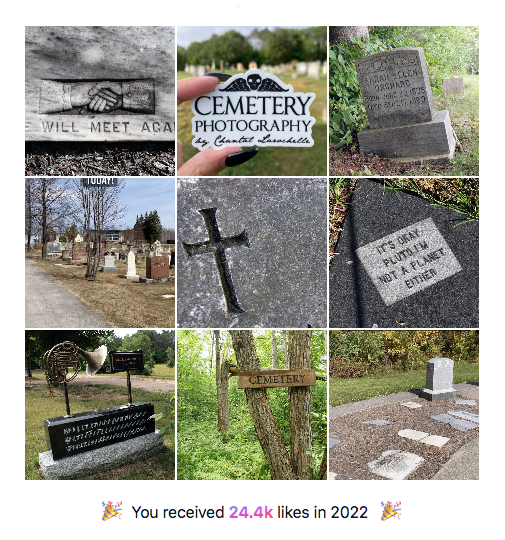
Cemetery Photography by Chantal Larochelle, Top Nine images on Instagram for 2022
I feel that I am continuing to grow in my writing and am slowly finding my voice. I love sharing my cemetery adventures and am so happy that I have found an audience. I hope to continue my growth as a writer into the new year, by honing my skills and sharing even more stone stories and insights.
Thank you to everyone who has followed along with me on this journey! Sharing my passion for cemeteries with you all has been an amazing experience. I look forward to continuing to share my photography and adventures with you and seeing what 2023 will bring.
The holidays are almost upon us! We’ve been blanketed by a lot of snow recently, here in Northern Ontario, so it definitely looks and feels like a winter wonderland. My neighborhood has been transformed into a little Christmas village with many of my neighbors decorating their front lawns with holiday blow-up characters, red and green candy canes, and twinkling lights galore. I am not one for Christmas decorations, I haven’t put up a Christmas tree in years, but I do enjoy the twinkling lights.
I don’t have a long post for you today, as I’m thick in the middle of that holiday hustle and bustle that always seems to hit immediately before the holidays. So for my last blog post before Christmas, I thought I would share some of the Christmas-themed grave goods I have found while wandering my local cemeteries.
If you have been following me on social media at all, you most likely have seen me talk about grave goods. I often share some of the more unique things I have found on my cemetery travels.
Grave goods is a term used to describe items that have been left at a graveside by mourners.
I always find it heartwarming when I see Christmas spirit spread to a cemetery. Although seeing candy canes and Christmas trees in July is always a surprise.
























 Cemetery Photography by Chantal Larochelle