Cemetery Stories: Greenwood Cemetery

A cemetery is filled with many interesting stories, stories of the souls that are laid to rest within its gates. But often the cemetery itself has an interesting story to tell. 

Today on the blog I want to introduce a new series called Cemetery Stories. For these blog posts, I plan to focus on the story of individual cemeteries. I have visited a lot of cemeteries over the years, and many of them have interesting stories and historical significance. So for this series, I want to look a little deeper into history, geography, notable graves, and all the different elements that make them unique.

For today’s cemetery story, I thought I would look at Greenwood Cemetery in Owen Sound. 

History

Greenwood Cemetery was created in 1858 when land surveyor Charles Rankin submitted a plan to the town council for a new public cemetery. At the time the plan was for 5 acres of land, divided into 27 blocks, including space for vaults.1 Today the cemetery is quite large, sitting on approximately 40 acres of land.2 Greenwood is also sometimes called “The People’s Cemetery” because, in those early days, the land was purchased using the people’s money.1 The cemetery contains 26,700+ burials.1

The oldest home in Owen Sound can be found in Greenwood Cemetery. The house is dated from the 1840s1 and is used as the cemetery office.2 There is also a red brick burial chapel on the cemetery grounds. Built-in 1905, it served as both a chapel and a receiving vault. There is a trap door built into the floor that a coffin could be lowered through, into the storage racks below, to rest until the Spring when the remains could be interred. The chapel stopped being used for burials in the 1930s when the mausoleum opened. The chapel was converted and used as an office space for a time, until the early 90s. Today the building looks to be mostly empty.3

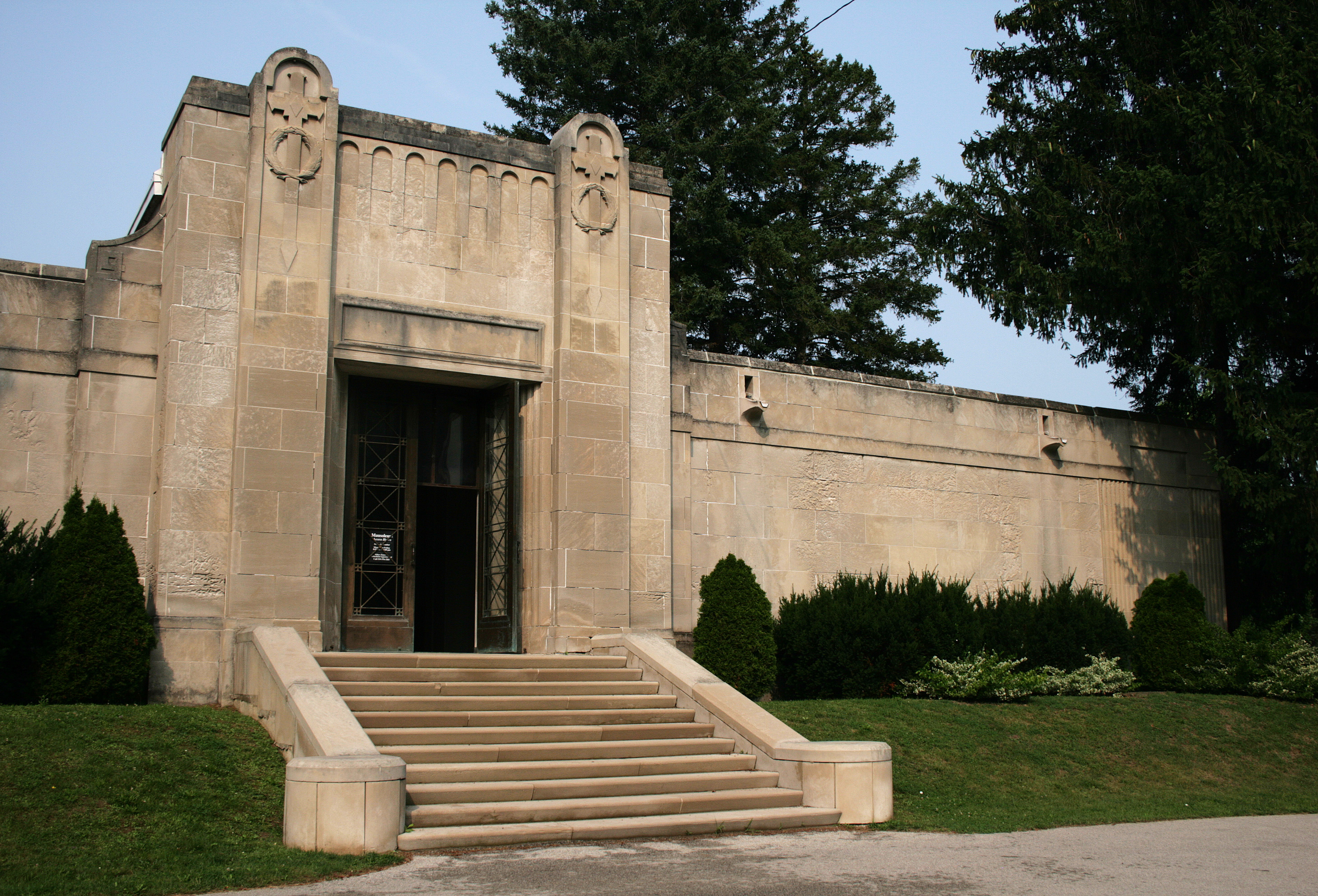
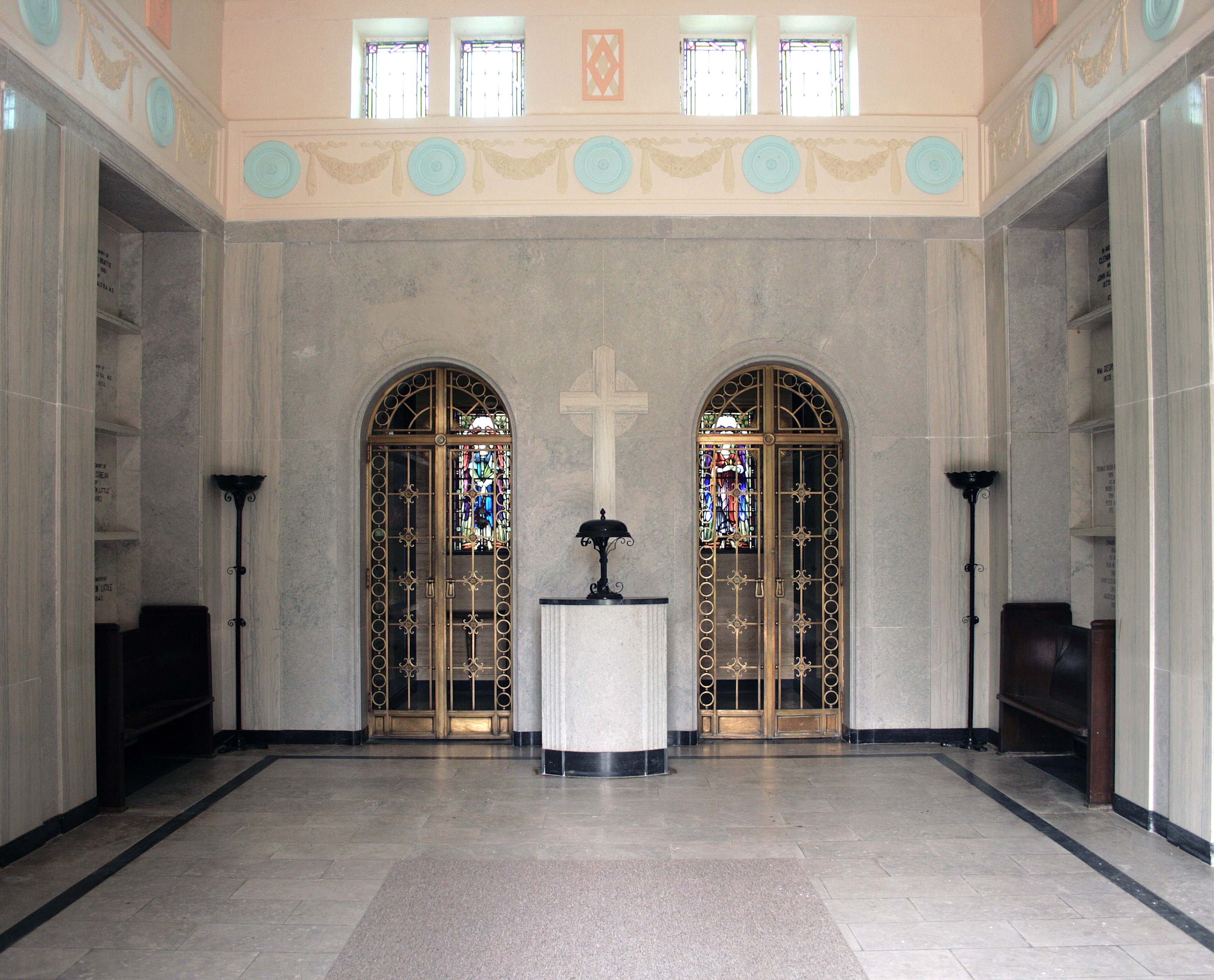
Greenwood is also home to a beautiful mausoleum. Construction of the large mausoleum began in 1927. The Art Deco-inspired exterior is covered in Indiana limestone, while the interior is finished with Italian marble. It also features some lovely stained glass windows and has a large central chapel that is used year-round.1
The cemetery is dotted with a variety of gravestone styles, and there are three memorial garden sections. It also has a section for members of the fraternal organization, The Independent Order of Odd Fellows (IOOF), that features a large stone cairn with IOOF symbolism.

Greenwood also has a Potter’s Field and memorial. The memorial honors the more than 1,000 women, children, and men who were buried in unmarked graves between 1858 and 1989. A potter’s field, also known as poor grounds, stranger’s plot, or indigent plot, is a section of a cemetery where those who are impoverished are buried.4 1,242 people are thought to be buried in Greenwood’s potter’s field4, all unmarked aside from the memorial and one lonely gravestone that sits close to the tree line at the back of the indigent plot. According to an article in the Northern Terminus: The African Canadian History Journal, many of the unknown graves are Black pioneers. Only a small few have been identified.

Among the unidentified graves lies an infant, who in 1889 was found in Victoria Park, wrapped in white cloth. The transcription in the cemetery records, simply reads “Unknown, child found dead”.4

Notable Graves

Greenwood Cemetery is the final resting place of a few notable memorials. William Avery “Billy” Bishop, Canada’s World War I Flying Ace rests here. There are also two other Victoria Cross recipients buried here; LTC David Vivian Currie (World War II) and Thomas Holmes (World War I). 

Speedskater and world-record holder Lela Brooks is also laid to rest here, as well as professional hockey player, Harry “Apple Cheeks” Lumley. Margaret and John Thomson, parents of famous Canadian painter Tom Thomson, are also buried here. 

There are many more notable pioneers and local celebrities buried here, like Charles Rankin, who submitted the cemetery plan and helped bring the cemetery into reality. The best way to pay your respects is with a self-guided walking tour. The cemetery offers three tours that take you to different areas within the large cemetery and highlights all the notable members of the community who are laid to rest at Greenwood. You can pick up the printed tour guides at the cemetery office. The guides include a map, directions, and a little history for each stop on the tour. 

We visited the cemetery twice on our trip to Owen Sound. Because it’s so large we felt we had to. Our first visit was late in the day, so the mausoleum had been locked up for the night. We were losing light quickly, and every turn on the winding paths revealed new sections I wanted to explore further. We visited again the next morning and were able to explore the Mausoleum and walk the sections at our leisure.

Greenwood was full of life during both our visits. In the evening we saw folks paying respects at graves, but also saw families taking advantage of the safe, paved pathways. Two young children were learning to ride their bikes between the rows. 

The next day, we saw many walkers enjoying the scenery, both young and old. We also saw folks walking their dogs and running into others they knew who were doing the same. It was lovely to see a green space in use but also used respectfully.

Thanks for reading!


References:

  1. Greenwood Cemetery Walking Tour “The People’s Cemetery” | Print brochure
  2. Greenwood Cemetery | Owen Sound
  3. The Chapel, Historical Owen Sound | Plaque on the cemetery grounds
  4. Owen Sound’s Greenwood Cemetery “A Land for the Living” | Terri Jackson

Stone Stories: Canada’s World War I Flying Ace

Have you ever flown out of the Billy Bishop airport, in Toronto? Were you curious as to who the airport was named after? I was, but I never got around to looking into it, not until I stumbled upon the grave of William Avery “Billy” Bishop.

In the Summer of 2023, My mother and I stumbled across the Bishop family plot, while visiting Greenwood Cemetery in Owen Sound. We had come to Owen Sound to search for the second grave of Tom Thomson, but the trip ended up being just as much about Bishop.

Billy Bishop

William Avery “Billy” Bishop was born in 1894, in Owen Sound, Ontario. During his stint as a cadet at the Royal Military College in Kingston, World War I broke out. He enrolled in the 9th Mississauga Horse, Canadian Expedition Force and later transferred to the Royal Flying Corps.1 He received his pilot’s certificate in 1917, although some considered him a mediocre pilot, he was an expert shot with great shooting skill and extraordinary eyesight.2

Bishop became the first Canadian Airman to be awarded the Victoria Cross, the highest award for acts of bravery in wartime. Bishop was awarded the cross for his solo early morning attack on an enemy airfield in June, 1917.1 He single-handedly attacked a German aerodrome, destroying seven airplanes on the ground and shooting an additional four airplanes down, before running out of ammunition.2 Billy Bishop was the British Empire’s second-highest-scoring flying ace, with 72 official victories.1

Greenwood Cemetery

When we visited Greenwood Cemetery, we didn’t have any specific graves we wanted to see. I visited the cemetery office when we first arrived, as I had read online that they offered a self-guided walking tour. They were very friendly in the office and gave me a brochure with the walking tour details. There are a couple of different tours to choose from, that take you to different areas in the cemetery. 

Greenwood is quite large, covering approximately 40 acres of land in the southwestern part of the city. It also has a long history, having opened to the public in 1854. It’s a traditional cemetery, with both upright and flat markers, a large mausoleum, memorial gardens, and a potter’s field memorial.3 

We unexpectedly came upon the Bishop family plot after getting out of the car. I had parked in the heart of the cemetery. A small Canadian flag marked the grave, the flag blowing in the wind had caught our eye. There is a large upright stone that lists the family members buried there, with names on both sides of the stone. There are smaller flat markers laid in the earth surrounding it, marking where each family member is laid to rest. There is also a Canadian military marker for Bishop that stands apart from the rest. The upright grey granite marker lists his military designations alongside the emblem for the Royal Canadian Air Force and the Victoria Cross.

Bishop passed away at the age of 62, on September 11, 1956, in Palm Beach, Florida. His funeral service was held at the Timothy Eaton Memorial Church in Toronto, the same church that he was married in. 25,000 people lined up outside the church to pay their respects. He was cremated, and his ashes were buried in the family plot, in Greenwood.4 He is laid to rest with his family; including both his parents, his sister Mary, and his brothers Hiram, and Reginald Bishop.

Bishop’s wife Margaret remarried after his death, and is buried with her second husband in Beachwood Cemetery in Ottawa. She passed away in 1981 at the age of 83.5 

The Billy Bishop House

The next morning, we decided at breakfast to visit one more thing before we left Owen Sound. My mother loves history, so I figured she would enjoy touring a historic home, The Billy Bishop House. She loved the suggestion, it seemed only appropriate to stop since we had already paid our respects at his grave. 

The house, built in 1884, is the childhood home of Bishop and has been preserved as a historic site and museum. The first floor has been decorated with period-appropriate antiques and items owned by the Bishops. It looks very similar to what it would have looked like when Bishop was growing up. There is a timeline in the parlor that details all the major milestones in Bishop’s life. I found this floor to be the most interesting. There is a lot of information to take in, but also lots to look at; like Bishop’s uniform, personal items, and a copy of Winged Warfare, a book Bishop wrote in 1918 that details his experiences in the air.2

The second floor looks more modern and houses changing exhibits. When we visited there was an exhibit of interviews with veterans from the war in Afghanistan. In what would have been Bishop’s boyhood room, there is a wooden framed airplane for children to explore, and the room is decorated with film posters and other memorabilia.

The staff are incredibly knowledgeable and friendly. I had a nice chat with them about Bishop, as well as the haunted history of the house. I can’t help but ask when I visit a historic location! They were not phased by my line of questioning at all, and I’m sure it’s something they get asked often. The museum runs a ghost walk in the summer months.

Unfortunately, I wasn’t able to attend one of the walks, but I did get to hear some of the stories. The house is reportedly haunted by two spirits, an older woman and a young child. The spirit of the young child is thought to be Hiram Kilbourn Bishop, who died of diphtheria at the age of 4 years old, in 1892.6 People say they have seen a small child wandering the house, wearing what looks like a dress. Young children, regardless of gender, often wore dresses during that time period, which leads the staff to think it is the spirit of young Hiram. 

We didn’t experience anything paranormal on our visit, but we did enjoy exploring the house and learning more about life in that era, Bishop’s personal life, and his legacy.

My mother and I both love history and getting to explore Bishop’s childhood home was a great way to end our Owen Sound adventure. We traveled to Owen Sound to learn more about art, but we ended up also learning more about our Canadian Military history. That’s one of the reasons why I love road trips, you can plan as much as you want but it’s often the spontaneous finds that end up being the most interesting. What do you think?

Thanks for reading!


References:

  1. Billy Bishop Toronto City Airport | Government of Canada
  2. William Avery “Billy” Bishop | Find a Grave 
  3. Greenwood Cemetery | Owensound.ca
  4. Billy Bishop, VC by W.D. Mathieson | Goodreads
  5. Margaret Eaton Burden Hughson | Find a Grave
  6. Hiram Kilbourn Bishop (1887 – 1892) | WikiTree

Stone Stories: Chasing Tom Thomson Part II

If you’re a long-time reader of my blog, you may remember a post I wrote last year about searching for the first grave of Tom Thomson

Yes, this famous Canadian painter has two final resting places. Although there is speculation on where he actually rests in peace. Last August, my mother and I went on a camping trip in Algonquin Park, to find the spot of his first burial. This August, we wanted to pay our respects at his second, and supposedly final resting place.

Tom Thomson is one of Canada’s most notable painters and a forefather of the Group of Seven. To this day, his death remains a mystery. He was last seen alive on July 8, 1917. He was setting out on a solo trip on Canoe Lake in his signature dove-grey canoe. Eight days later, on July 16th, his body was found floating in the lake. The story goes that he was hastily buried in Mowat Cemetery, on Canoe Lake. When his family found out, they had his remains exhumed and brought to Leith, Ontario to be buried in the Leith United Churchyard.1 Many questions remain; What happened to Thomson? Was his body really moved? This is where the details get muddy, and almost immediately rumors swirled about how Thomson died, and where his resting place truly lies. Over the years there have been many attempts to find out the truth, but nothing conclusive has been determined. Maybe we will never know… 

Since my mother and I had made the trip to visit Canoe Lake last year, we thought it only fitting to make a trip to Owen Sound this summer to pay our respects at Thomson’s second gravesite. Visiting Owen Sound and Leith also gave us the chance to see Thomson’s artwork in person. Our first stop when we arrived in Owen Sound, was to visit the Tom Thomson Art Gallery, lovingly referred to as The TOM.

The TOM, of course, is named after the iconic Canadian landscape artist. It has a nationally significant collection of contemporary and historical art, including artifacts and important works by Tom Thomson and the Group of Seven.2 

My mother and I were both excited to see Thomson’s original paintings, having only seen prints at the art centre in Algonquin Park the summer before. The small collection of his works on display at the time we visited was beautiful. It’s easy to see why he was sometimes called the Canadian Van Gogh. The thing that struck me right away was how small these canvases’ were, small enough to be packed up into a canoe. It was easy to imagine Thomson sitting on the shores of Canoe Lake, bringing these small canvases’ to life. 

Along with seeing Thomson’s beautiful work, we also had the chance to see life as Thomson saw it, through photographs he had taken himself. The exhibit Tom Thomson: Field of Vision presents 40 photographs that were taken by Thomson. His niece Jessie Fisk, discovered a small bundle of photo negatives that were captured by the artist, supposedly taken during the last seven years of his life. This collection of photographs presents an intimate look into Thomson’s life, and experiences, through his own lens.3

It was an interesting experience to look at these photos and to see through Thomson’s eyes, in a way. The photo that stood out to me the most was of a gravestone. It’s the gravestone of James Watson, thought to be the first person buried at Mowat Cemetery. That means that Thomson had visited his future resting place while he was alive. I wonder if he ever thought that he would one day be buried there? It’s interesting to note how legible the stone was at that time. Today, the stone is barely legible, with just a faint indication that it was ever inscribed. 

While visiting the gallery, we had an interesting encounter with another fan of Thomson’s work, a woman visiting all the way from California. She was very interested in Thomson’s life and death and was on a special birthday trip to visit historic Thomson locations. The week before, she had gone with a guide to visit Mowat Cemetery, by canoe. During our conversations, the question of where we thought his final resting place was came up. She seemed relieved when I said I agreed with her and believed he still rests in Mowat Cemetery.

Yes, I think there is strong evidence that he still lies in Mowat. Funny enough, before really knowing Thomson’s full story, when my mother and I left Mowat Cemetery last year, she said that she felt like he was still there. Regardless of our feelings, we still wanted to visit his second grave in Leith, Ontario. 

Leith is a small hamlet, about 13 minutes from Owen Sound. In this beautiful part of Grey County, you can find gorgeous views of Georgian Bay, the Coffin Ridge Boutique Winery, and the historic Leith United Church and graveyard. Unfortunately, I didn’t get a chance to stop into Coffin Ridge, but there is always next time. 

Leith United Church, located on Tom Thomson Lane, was built in 1865, and is considered “one of the finest examples of pre-Confederation architecture in Ontario’s Sydenham Township”.4 The church was closed in 1969, but since 1992, the Friends of Leith Church continue to preserve and restore the building by holding fundraisers and special events, like concerts.4

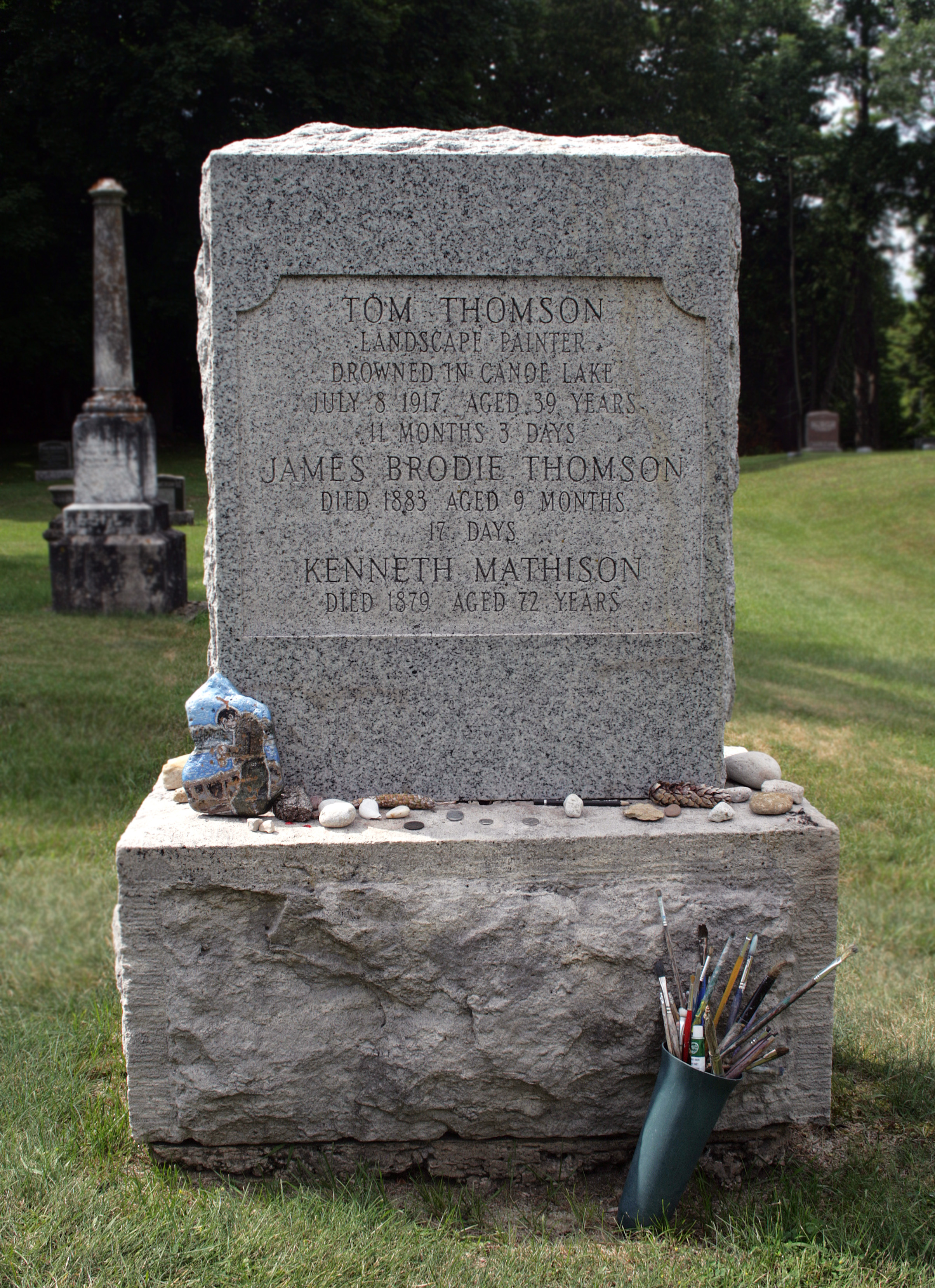
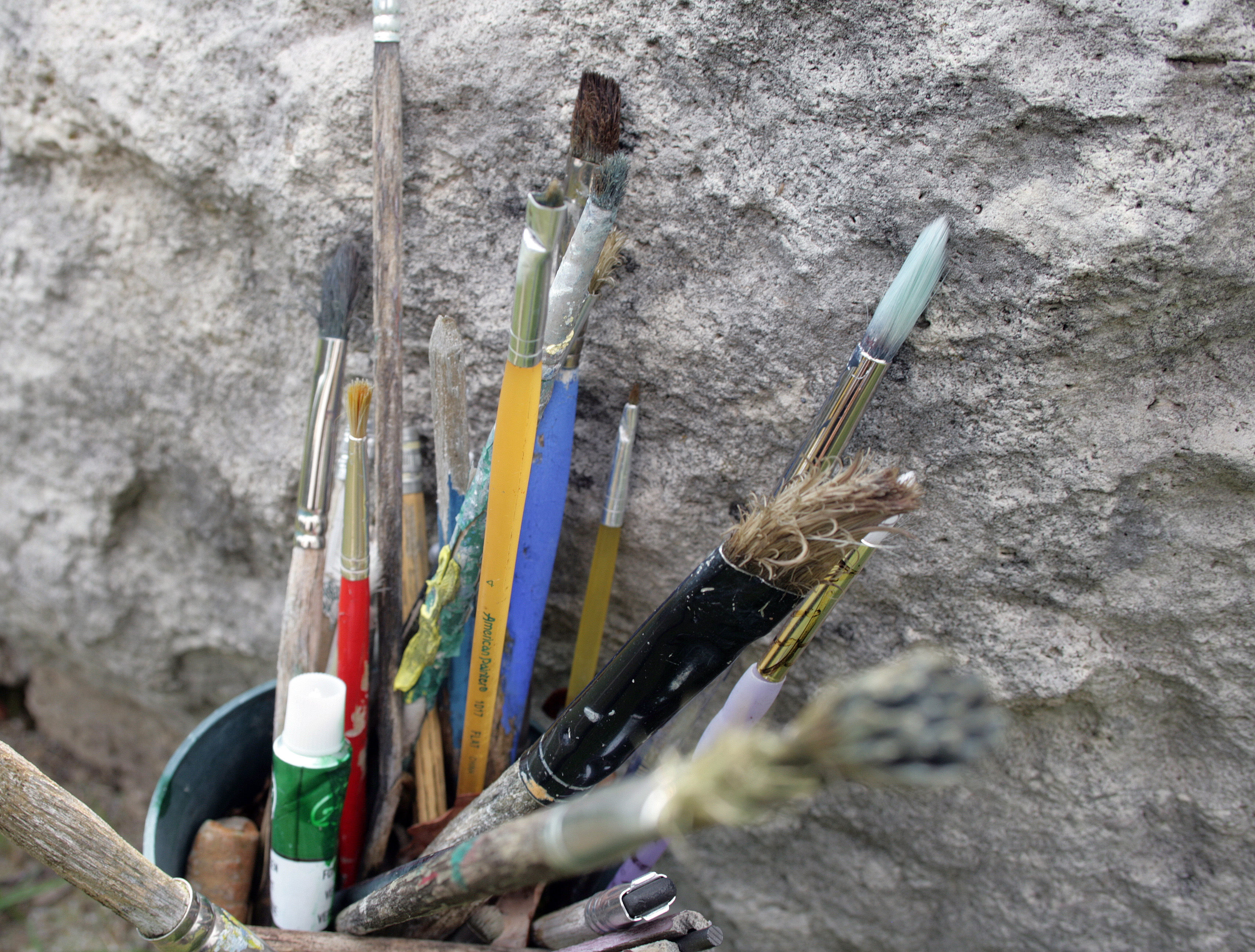
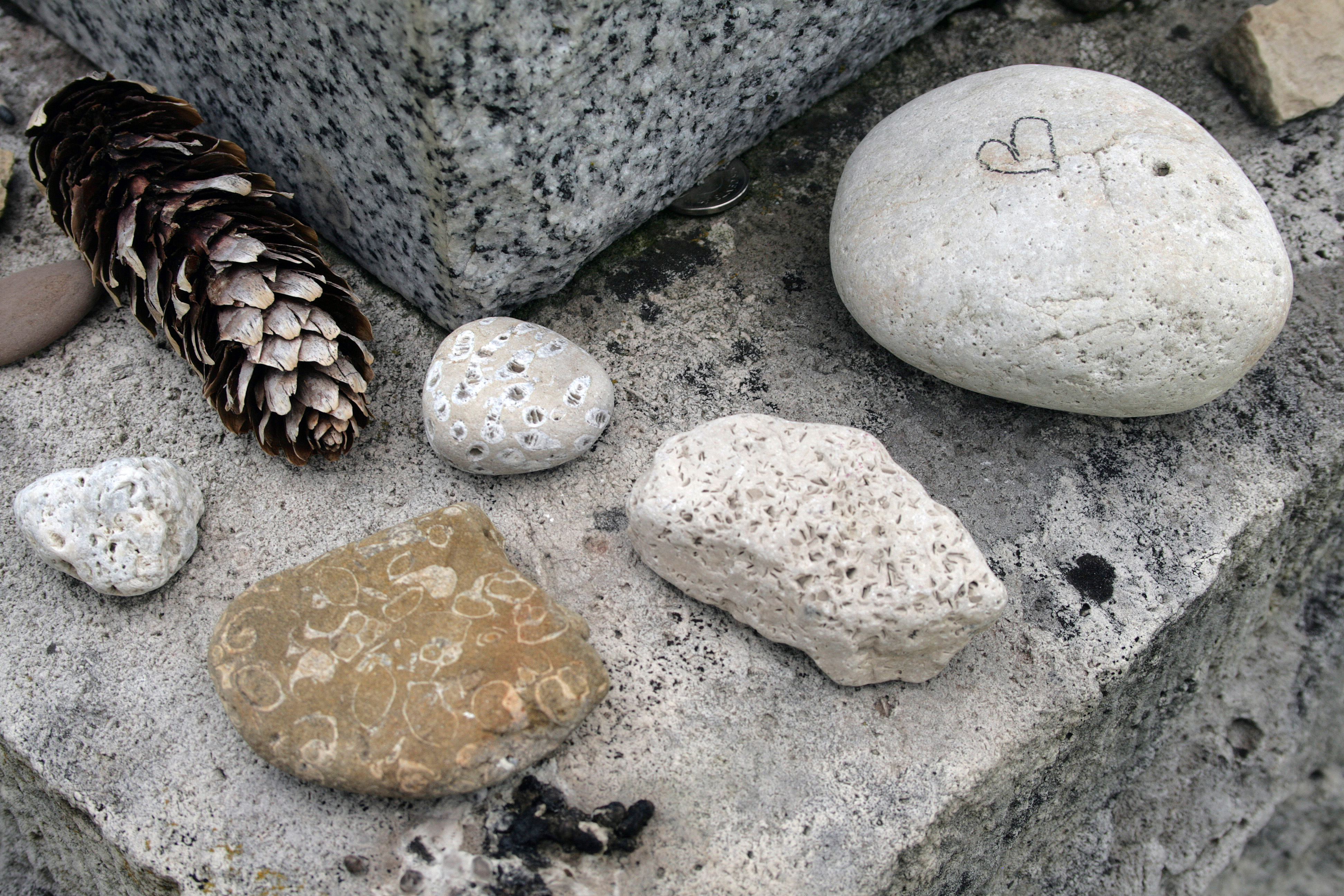
We had a beautiful day for a graveyard stroll, the day we visited the churchyard. It wasn’t hard to find the Thomson family plot at all. There are historical plaques and signs to direct you right to it. The graveyard itself is a decent size, but not big enough to get lost in. We could see right away that Thomson was still very popular as there were many grave goods left at his graveside, including a cup filled with paintbrushes, and a lovely rock painting of Thomson. The base of his gravestone is filled with stones, coins, and other items left by those who have come to pay their respects. 

According to the gravestone, Thomson’s third youngest brother, James Brodie Thomson, who sadly passed away very young, in 1883 also lies here. Along with his maternal grandfather Kenneth Mathison, a member of the Free Masons who passed away in 1879 at the age of 72. Thomson’s oldest brother George Thomson also is laid to rest in the Leith United Church graveyard, with his wife. 

I was curious as to where Thomson’s parents are buried. After some searching on Find A Grave, I found that they are both laid to rest in Greenwood Cemetery in Owen Sound. I did visit Greenwood Cemetery on this trip, but didn’t know to search for them. Thomson’s father, John Thomson, is buried with his first wife, Margaret Mathison, and his sister-in-law turned second wife Henrietta Mathison. 

I love wandering cemeteries and graveyards, but being able to connect a life and legacy to a name makes it even more rewarding. Viewing original artwork, and photographs that Thomson created, built a connection that deepened the experience of visiting his gravesite and paying our respects. And making these connections all started in a cemetery! I loved learning new aspects of Canadian history and how this trip brought us to places we had never visited before. Owen Sound is a beautiful little city and I look forward to having the chance to visit again. I had so much fun on this trip and look forward to where cemeteries will bring me next.

Thanks for reading! 


References:

  1. Death on a painted lake: The Tom Thomson tragedy | Canadian Mysteries.ca
  2. About Tom Thomson Art Gallery | City of Owen Sound
  3. Tom Thomson: Field of Vision | City of Owen Sound
  4. Leith Church | Grey County

Time for a Vacation

It’s that time of year again! 

For the next two weeks I will be taking some time to step away from my computer and work life to enjoy the waning summer weather. I am hoping to disconnect, step out of routine, and explore with friends and family. 

I plan on visiting quite few cemeteries while I am away, like Canadas largest cemetery in Montreal. I also plan to pay my respects at the second resting place of Tom Thomson. So keep an eye out for some upcoming blog posts about those adventures. 

That being said, I will not be monitoring my social media channels while I am away, and I will reply to all questions and comments on my return. Regularly scheduled social posts will continue to go up as normal, except for my weekly blog posts. 

I hope everyone takes some time for themselves this summer to relax and recharge!

Thanks for reading! 

Cemetery Tours in Ontario

It’s my favorite time of year again, October! I love crisp sweater weather and crunchy leaves on the ground. Dead leaves are one of my absolute favorite smells. It’s also the best time for leaf peeping, and of course, visiting cemeteries. 

This is also the time that you will see Cemetery Tours being advertised. The gorgeous fall colors are a lovely contrast to the beautiful grey tombstones. Cemetery Tours are a great opportunity to photograph a new cemetery, learn about local history and take a nice cemetery stroll. You may even hear a ghost story or two.

Cemetery Tours are usually put on by local Museums or Historical Groups. The tour guide will lead you through the cemetery, explaining the history of the place as well as highlighting the stories of historical figures buried within it. Sometimes they will also talk about famous and infamous graves. Some tours have guides that dress up and use a lantern to light the way, while other tours have actors dressed in period clothing that will tell the life stories from the deceased’s graveside. Some tours are self-guided. On this type of tour, you will be provided with a map with points of interest marked on it. You can do these tours at your own pace. 

I love cemetery tours! You can learn a lot about the history of your local cemeteries, and notable graves and may even learn some obscure trivia along the way. It’s also lots of fun to meet people with similar interests on these tours. 

So for today’s blog post, I wanted to share some Cemetery Tours that are happening this fall in Ontario.

Fergus: Wellington County House of Industry and Refuge (Poorhouse) Cemetery Tour

October 21, 22, 28 and 29 at 7 p.m. and 9 p.m.

$15 +HST a ticket

It’s that time of the year where everyone loves hearing scary stories, but real history holds some of the scariest and unnerving stories. Join us as we take a trip through the real history of the House of Industry and Refuge and explore some of the more unsettling stories of inmates and staff that called this place home.

The Museum which is housed in the Old Poorhouse building still looks after the graves and these tours are an opportunity to tell the stories of those that lived, died, and still remain on the site.

Enjoy a lantern lit tour of the Wellington County House of Industry and Refuge (or Poorhouse) Cemetery. Between 1877-1947 the building was the Wellington County Poorhouse and over 600 people died on site during those years. Those that had no family or friends to claim their body were buried here, and 271 burials took place over those years.

Please be aware there are no accessibility routes for this tour. This tour is designed for a 14+ audience.

Tours begin at 7:00 pm and 9:00 pm on the front steps of the Wellington County Museum. 

Grimsby: Queen’s Lawn Cemetery Tour

Tour Queen’s Lawn Cemetery by lantern light and hear true eerie stories of past Grimsby residents.
3 tour dates available:

  • Wednesday, October 5 at 7 p.m.
  • Wednesday, October 12 at 7 p.m.
  • Wednesday, October 19 at 7 p.m.

Pre-registration is required and limited space is available. Groups are kept small to ensure a quality tour. Tours are approximately 1 to 1.5 hours and are recommended for ages 12+.

Tours will be held rain or shine. The tour will be canceled in the case of extreme weather and refunds will be sent if the museum does have to cancel.

Please contact the Grimsby Museum for any questions you may have at museum-public@grimsby.ca or 905-945-5292. *This event is subject to a minimum registration.

Hamilton: Stories in the Stones

The Stories in the Stones Tours tell fascinating stories through free guided walking tours at Hamilton Cemetery each Saturday between May to November.

Local historian and storyteller Robin McKee guides you through historic Hamilton Cemetery with various themed tours he has created. Themed tours will include early settlers such as Robert Land and George Hamilton, victims of the Desjardins Railway Disaster.

Tours start at 11 a.m. at the Cemetery Gatehouse (777 York Blvd.) across from Dundurn Castle and run for approximately 1.5 hours. Tours take place rain or shine and tours and dates are subject to change.

They also offer a History Unearthed historical walking tour.

Kenora: Lake of the Woods Cemetery Walking Tour

$11.62 per person

Come and explore the dark side of Kenora’s past in the largest graveyard in Northern Ontario— the Lake of the Woods Cemetery.

The tour looks at Kenora’s history through the lens of true crime tales, and murder mysteries, the Ontario-Manitoba border war, sickness and disease, and one of the most famous (and grisliest) bank robberies in Canadian history. These true stories of real people combine to give a history of Kenora like you’ve never heard before.

We’ll explore these topics and more on this guided tour in Kenora’s silent city of the dead.

London: Mount Pleasant Cemetery Tour

Takes place on Saturday, October 8 and Sunday, October 9.

1 p.m., 2 p.m. and 3 p.m. start times. $15 / person

Join us at the historic Mount Pleasant Cemetery for a tour diving into the history of the cemetery’s architecture and the unique ecosystem that make the grounds beautiful and serene. Learn details about the culture of death during the Victorian era, and the art and architecture carved into the monuments and gravestones at the Mount Pleasant site.

Niagara Falls: Drummond Hill Cemetery Tours

October 15, 16, 22, 23 at 2 p.m., 3 p.m., and 4 p.m.

These tours offer a unique opportunity to discover Niagara Falls through a visit to one of the most historic cemeteries in Canada. Led by a costumed guide, the human drama unfolds as guests wander the grounds and happen upon theatrical performances that provide a glimpse into the lives of some of the people from our City’s history.

Ticket price $12 per person or $10 per museum member. Tickets must be purchased in advance; rain or shine and they are non-refundable. 

Post tour refreshments and open house are offered at Battle Ground Hotel Museum just across the street.

Niagara-on-the-Lake: Niagara’s Dark History Tour

This tour features only dark history and strange stories of Canada’s Prettiest Town, Niagara-on-the-Lake.

Featuring the true villain of the 1813 burning, a disgruntled British politician. With a disappearance that almost ended Freemasonry, the lover’s public execution and standing up to slavery with violence. This tour includes a leisurely walk through Ontario’s oldest cemetery, stories of Niagara’s daredevils and a hidden historic fort.

Owen Sound: Self-guided Cemetery tours

Greenwood Cemetery, “The People’s Cemetery,” is home to many of Owen Sound’s luminaries, from political leaders, ship captains, and Victoria Cross winners to remarkable women, African Americans, athletes, pioneers, and religious, business, and medical leaders. It was established in 1858.

The four self-guided walking tours available are Tour 1, 2, and 3 in Greenwood Cemetery and The People’s Cemetery tour. 

Ottawa: The Beechwood Stroll

The Beechwood Cemetery Stroll is a guided historical tour through Beechwood, the National Cemetery of Canada. 

Tours are given on the last Sunday of each month, rain or shine, and begin at 1 p.m. Tours start from the Beechwood National Memorial Centre, located just off the Beechwood Avenue entrance.

The Beechwood Cemetery Stroll is led by trained volunteers and focuses on local history and notable features and sections within this National Historic Site. The tour is free of charge, and is family friendly. The route for the Stroll is a gentle 1.5 hour walk and is wheelchair accessible.

Penetanguishene: Meet the Spirits of St. James on the Lines

Tour St. James on the Lines Cemetery by lantern encountering many spirits of Penetanguishene’s past. Discover the significant history of the church. Light refreshments to be served after your tour.

Tickets are $10 per person for this one-night-only event, happening October 14. There are two start times to choose from; 7 p.m. and 8 p.m. At the time of this writing, the 8 p.m. tour is sold out, but there are a few tickets left for the 7 p.m. tour.

Toronto: Toronto Cemetery Tours

Re-living history through guided tours of Toronto’s beautiful, historic cemeteries. Cemetery tours are announced regularly on their Facebook page. 


This is just a small selection of the cemetery tours being offered this year in Ontario. Some events will be announced closer to their event date and may be a one-night-only affair. I would recommend searching often for cemeteries near you so you don’t miss out on a fun opportunity. The other option is to do your own self-guided tour, by doing the research beforehand on historical, infamous, and famous graves. 

Have you been on a cemetery walking tour? What was your experience? I would love to read about it in the comments.

Thanks for reading!