
If you have ever wandered through a cemetery with me, you already know I tend to slow right down. I look at everything. The lettering, the symbols, the little details that most people walk right past. It’s one part curiosity, and one part appreciation.
Gravestone rubbing is one of those things I have heard about for years but never actually tried, and after looking into it more, I don’t think I will. It always sounded kind of fun in theory. A little bit of history, a little bit of art. But once I started digging into it, I realized it might not be as harmless as it seems.
Gravestone rubbing is the process of placing paper over a headstone and gently rubbing it with charcoal, crayon, or graphite to capture the inscription and design underneath.1 The raised lettering and carvings transfer onto the paper, and the results can be surprisingly detailed.
The practice has been around for a long time and really took off in the 19th and 20th centuries as a way to record older or hard-to-read stones.2 It was especially popular with historians and genealogists trying to preserve inscriptions before they faded away.
One of the most well-known examples comes from Daniel and Jessie Lie Farber.3 Over several decades, they created thousands of gravestone rubbings between 1938 and 1969, documenting early American gravestone art in incredible detail. The Farber Gravestone Collection is still referenced today, and even without seeing the stones in person, you can get a real sense of how intricate and expressive these carvings can be. Some of the rubbings feel almost like artwork on their own, capturing not just names and dates, but patterns and symbolism that would otherwise be easy to miss.
Know Better, Do Better
This is where things get a little tricky.
Even though gravestone rubbing was once seen as helpful, it’s now widely frowned upon.
The biggest reason is pretty simple: it can cause damage.
Even a gentle rubbing puts pressure on the surface of a stone. Many older stones, especially ones made of slate, sandstone, or marble, are already fragile after years of weather exposure.4 When you add repeated rubbing into the mix, it can lead to flaking, cracking, or losing those fine details altogether.
A really good example of this is the Bean Puzzle Tombstone. It’s a unique and popular stone that has had a lot of hands on it over the years, including people doing rubbings.5 You can actually see how all that attention has added up over time.
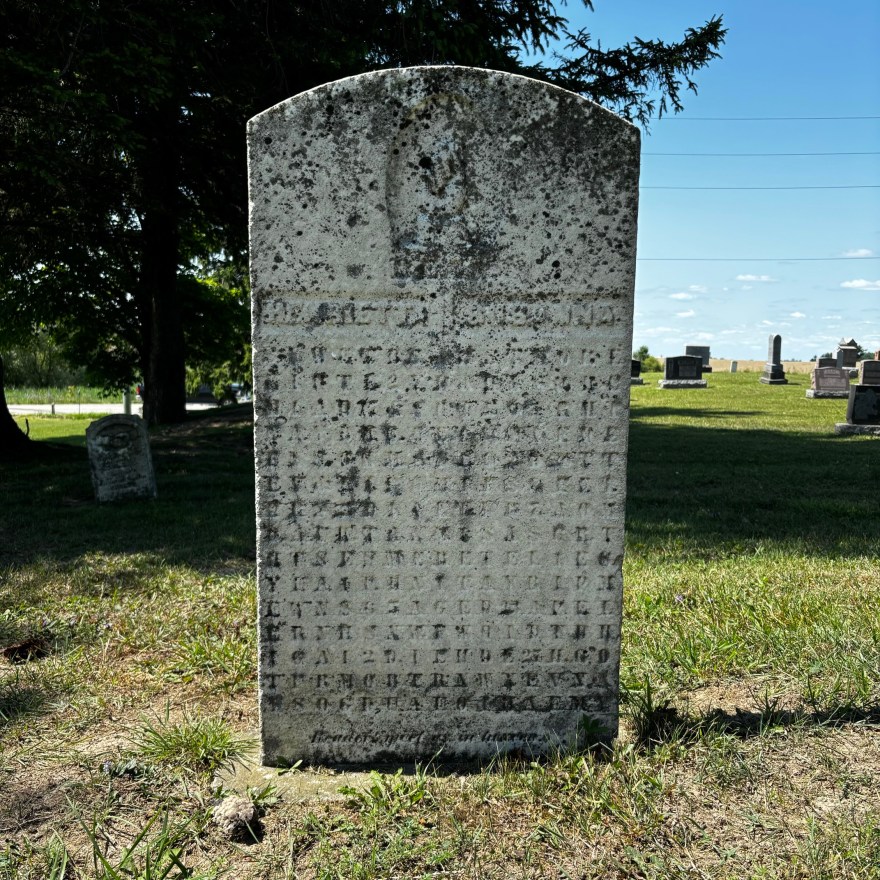
The Bean Puzzle Tombstone. Rushes Cemetery, Wellesley ON ©2024
Because of concerns like this, gravestone rubbing is now illegal in some U.S. states and restricted in others.6 In Canada, it’s not outright illegal, but many cemeteries have their own rules against it or require permission first.
Groups like Cemetery Conservators for United Standards have also spoken out about it.7 Their focus is on protecting these stones for the long term, which usually means limiting physical contact as much as possible.
Alternatives
The good news is you don’t have to miss out on those details.
One method I always find kind of clever is the mirror method. You use a mirror to reflect sunlight across the surface of the stone at an angle, which helps bring out the lettering and carvings.7 It’s simple, but it works. If you don’t have a mirror handy, even a flashlight can do the trick.
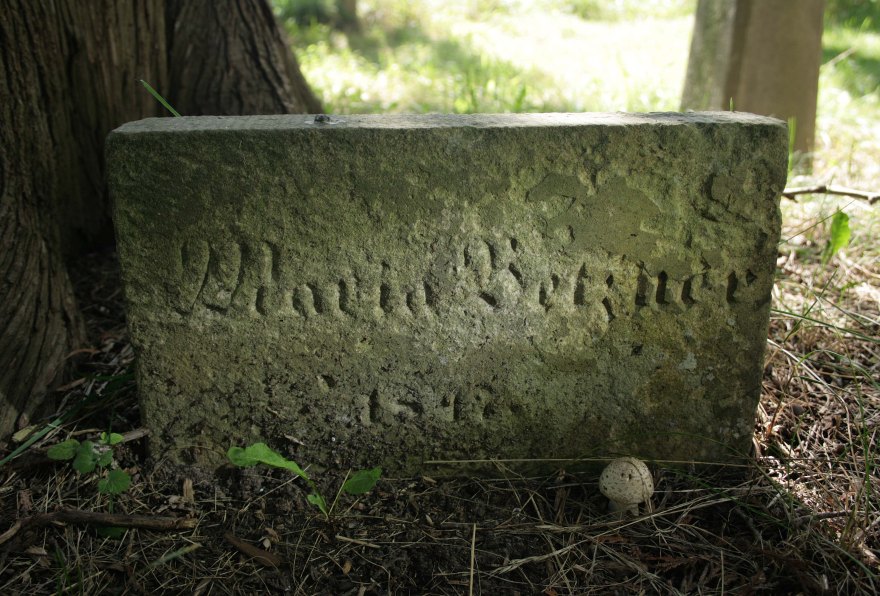
Doon Pioneer Cemetery also known as Schoerg_Betzner Family Cemetery, Kitchener ON ©2024
And of course, there is photography.
This is my go-to. You can capture everything you need without ever touching the stone. Changing your angle or adjusting the lighting can reveal details you might not have noticed at first glance.
The more I learn about cemetery practices, the more I realize how much things change over time. What once seemed like a good idea does not always hold up, especially when preservation is involved.
As much as I love the idea of gravestone rubbings, it’s not something I see myself trying.
For me, it always comes back to that same mindset I bring into every visit: respect the space and leave it as you found it. Do no harm.
There are so many ways to document and share these stories without causing damage. Sometimes all it takes is a little patience and a different way of looking at things.
Thanks for reading!
References:
- How To Do A Proper Monument Rubbing | Summit Memorials
- Headstone Rubbing: Can It Preserve History? | Legacy Headstones
- About | The Farber Gravestone Collection
- Gravestone Rubbings | Connecticut Gravestone Network
- Bean Puzzle Tombstone | Atlas Obscura
- Grave Rubbings: Etiquette, Permission, and Technique to Protect Historic Stones | Funeral.com
- Reading Stones Basics | Cemetery Conservators for United Standards

