The Beauty and Symbolism of Cemeteries in the Spring

Spring is finally here! After months of snow and cold, it’s so refreshing to feel the sun again and hear the birds singing. Everything is starting to wake up—even cemeteries.

There’s something calming about walking through a cemetery while the trees are budding and the flowers are in bloom. The air smells fresher, and the world feels full of new beginnings. It’s a gentle reminder that life keeps going, even after loss.
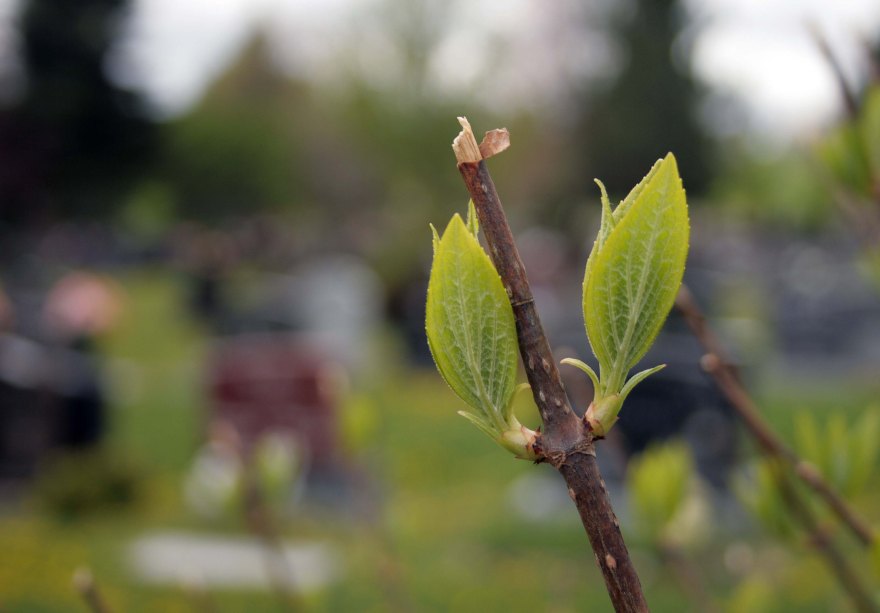
Spring is all about growth and change. Trees grow new leaves, flowers bloom, and the grass turns green again. In cemeteries, this feels extra meaningful. You’re surrounded by the past, but everywhere you look there are also signs of new life. Even in places of rest, life still finds a way to come back.

You can often find flowers carved into gravestones, each carrying their own special meaning. Roses are one of the most common, with a variety of meanings based on how they are depicted. A full rose usually represents love or beauty, while a rose with a broken stem is thought to symbolize a life cut down in their prime. A rosebud with a broken stem, on the other hand, represents a young life cut short.1

Tulips are the only flower that continues to grow after they have been cut from the bulb. This might be why tulips as a gravestone symbol, are thought to represent eternal life.1

My first cemetery road trip of the season happened at the end of April, when my Mom and I headed to Bracebridge to explore the area. We visited four cemeteries that day, a little library, and a Rotary garden that hadn’t started blooming yet.

An ice storm had hit the area a few weeks earlier, and there was still a lot of damage in the cemeteries. Branches were down, trees had snapped, and the usual spring cleanup hadn’t happened yet.
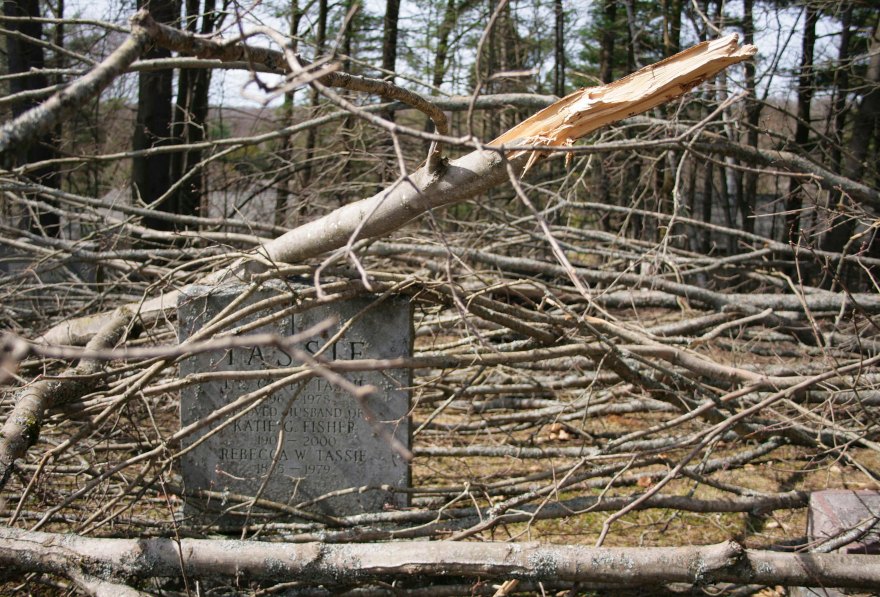
Still, even with the mess left behind by the storm, I could see signs of spring trying to break through. The birds were singing again in places that had been silent all winter.

Spring doesn’t always arrive quickly, and it’s not always neat and pretty. My trip to Bracebridge reminded me of that. But just like the cycle of life and death, the seasons keep moving forward. Even after hard times, beauty does return. Cemeteries in the spring shows us that healing happens, growth is always possible, and memories live on in every blooming flower and standing stone.

So whether you’re out for a peaceful walk, taking photos, or just enjoying the sunshine, take a few minutes to breathe in some of that fresh air, and enjoy the flowers around you. Cemeteries in spring are full of quiet beauty and gentle reminders that life is blooming all around us—if we take the time to look.

Thanks for reading!


References:

  1. Understanding Cemetery Symbols: A Field Guide for Historic Graveyards by Tui Snider

A Collection of Cemetery Flowers

The winter weather seems to be dragging on this year. We got a lot of snow this winter in Northern Ontario, which I think is adding to this feeling. It feels like it will never all melt. I am trying to be optimistic, and am hoping to be hiking and visiting cemeteries soon. For the last couple of weeks, I have been focused on planning cemetery road trips, near and far. I am ready to get outside, it’s supposedly Spring after all!

The official first day of Spring was March 20th, so I wanted to share something a bit more colorful to help ring in the Spring season. Flower arrangements are often found on gravestones, in plastic, or made of fresh blooms. You might also find bright and vibrant cemetery flowers planted on graves or cemetery grounds. Each variety of flower holds a special meaning, that also varies by color. So for today’s collection, I wanted to share some cemetery flowers I have photographed over the years and take a look at what they might symbolize.

These delicate light blue hydrangeas symbolize regret, apology, and forgiveness.1 Seeing them at a graveside or planted on a grave intensifies that meaning for me. 

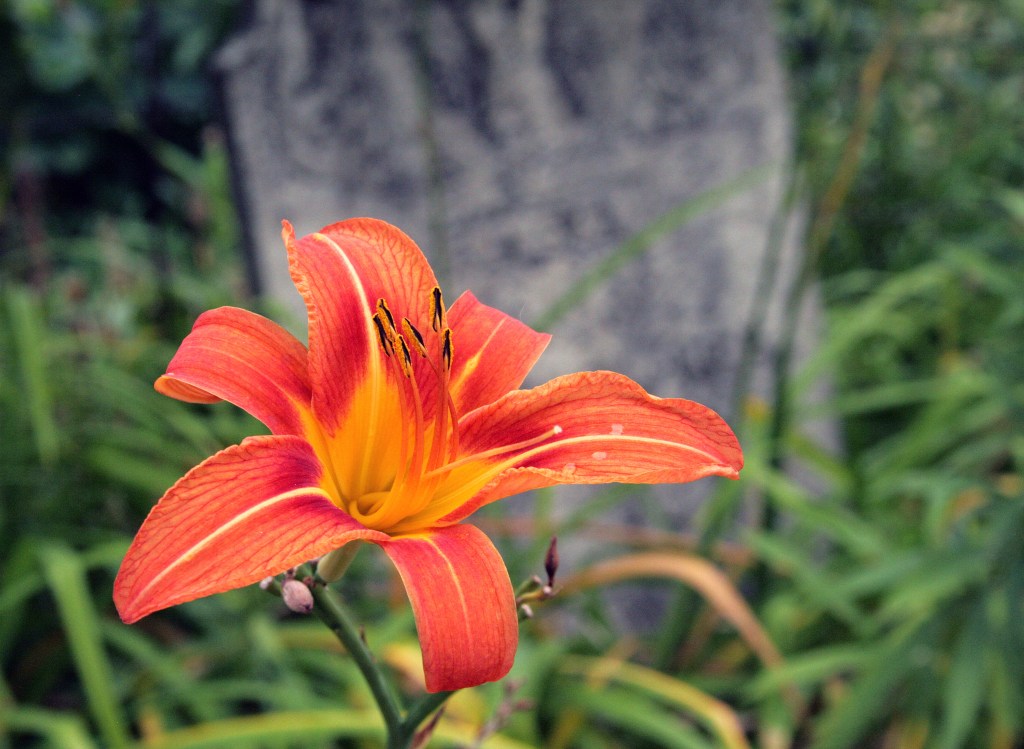
Daylilies bloom during the day and close up at night. Orange or yellow daylilies commonly symbolize love and devotion, as well as joy, beauty, and courage. A dark orange, or redder daylily like the one pictured, may symbolize a deep passion.2

Lilac shrubs are one of the earliest plants to bloom in the Spring, and because of this, are thought to symbolize a fresh start and renewal.3 Pink lilacs commonly symbolize first love.4 I was able to capture this yellow swallowtail visiting this lilac bush. Yellow swallowtail butterflies represent grace and the free nature of the soul.5 Fitting since this photo was taken in a cemetery. 

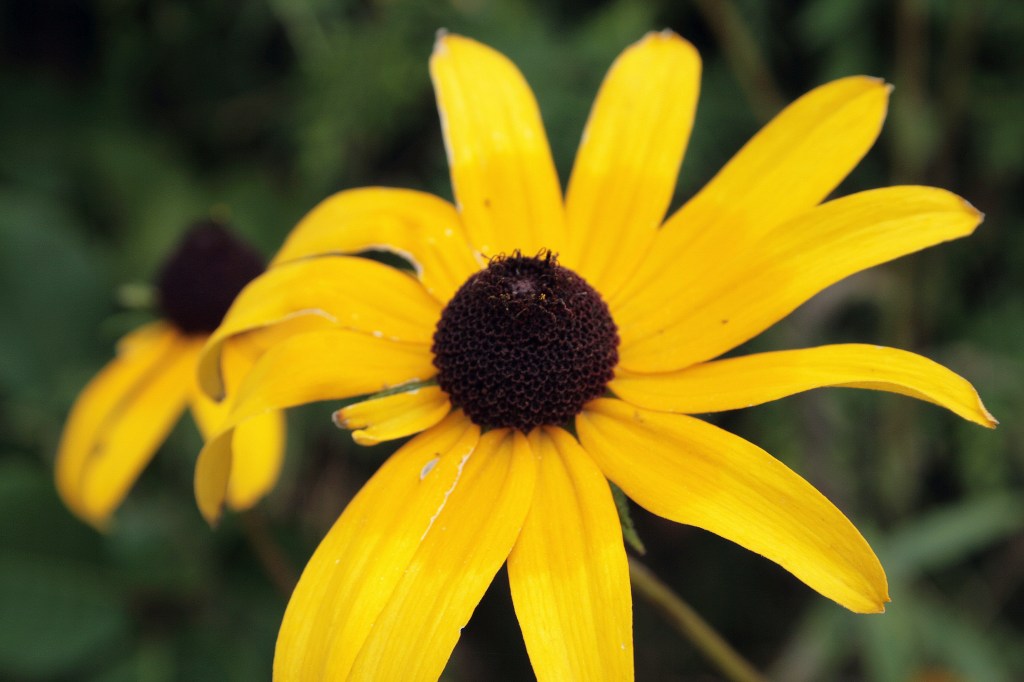
Black-eyed Susans are a common sight here in Northern Ontario. They are also sometimes called brown-eyed Susans because of their dark brown-to-black centers. Black-eyed Susans are thought to symbolize resilience and endurance as well as justice and truth.6

Begonias have a lot of symbolism tied to them, but are commonly seen as a symbol of uniqueness, gratitude, and harmony, but can also be a symbol of caution. Yellow begonias are thought to be a representation of hope, kindness, or friendship.7

I am still working on learning to identify different types of plants, in bloom and on gravestones. I find it fascinating that there is a meaning for practically everything! Looking at all these colorful blooms has got me excited to be visiting cemeteries and enjoying the sunshine soon. 

I hope wherever you are, you will be enjoying the sunshine soon as well if you’re not already. Happy Spring! 

Thanks for reading!


References:

  1. Hydrangea Meaning and Symbolism | Fresh Trimming
  2. Interesting Daylily Flower Meaning And Symbolism You Want To Know | Florgeous
  3. Lilac Flower Meaning And Symbolism | Florgeous
  4. Language, Significance And Symbolism Of The Beautiful Lilacs For Sale | Agriforest Bio-Technologies Ltd.
  5. Swallowtail Butterfly Natural History | Bug Under Glass 
  6. Black-eyed Susan Symbolism and Meaning | Symbolsage
  7. Ultimate Guide to Begonia Flower Meaning and Symbolism | Petal Republic