For this month’s cemetery book review, I wanted to talk about Stories in Stone: A Field Guide to Cemetery Symbolism and Iconography by Douglas Keister. I have been meaning to share this one for a while now. This is one of my favorite cemetery books, and one of my go-to reference books when it comes to looking up symbolism. I see it pop up now and then on the cemetery side of Instagram and Facebook and thought I should finally share my thoughts on it.
This book has been on my bookshelf for a very long time and it is something I go back to over and over again. It is a great resource for explaining the meaning and history behind most of the symbolism and iconography you will come across in a cemetery. Every symbol has a meaning, and the descriptions can range from simple to quite in-depth. The book itself is compact, so it’s easy to slip it into your hiking or camera bag if you want to take it with you on your cemetery travels. It’s filled with full-color photos as well to help identify all the variety of symbols you might come across.
Here is a snippet of the book synopsis from Goodreads.com: “Stories in Stone provides history along with images of a wide variety of common and not-so-common cemetery symbols and offers an in-depth examination of stone relics and the personal and intimate details they display; flora and fauna, religious icons, society symbols, and final impressions of how the deceased wished to be remembered. Douglas Keister has created a practical field guide that is compact and portable, perfect for those interested in family histories and genealogical research.”
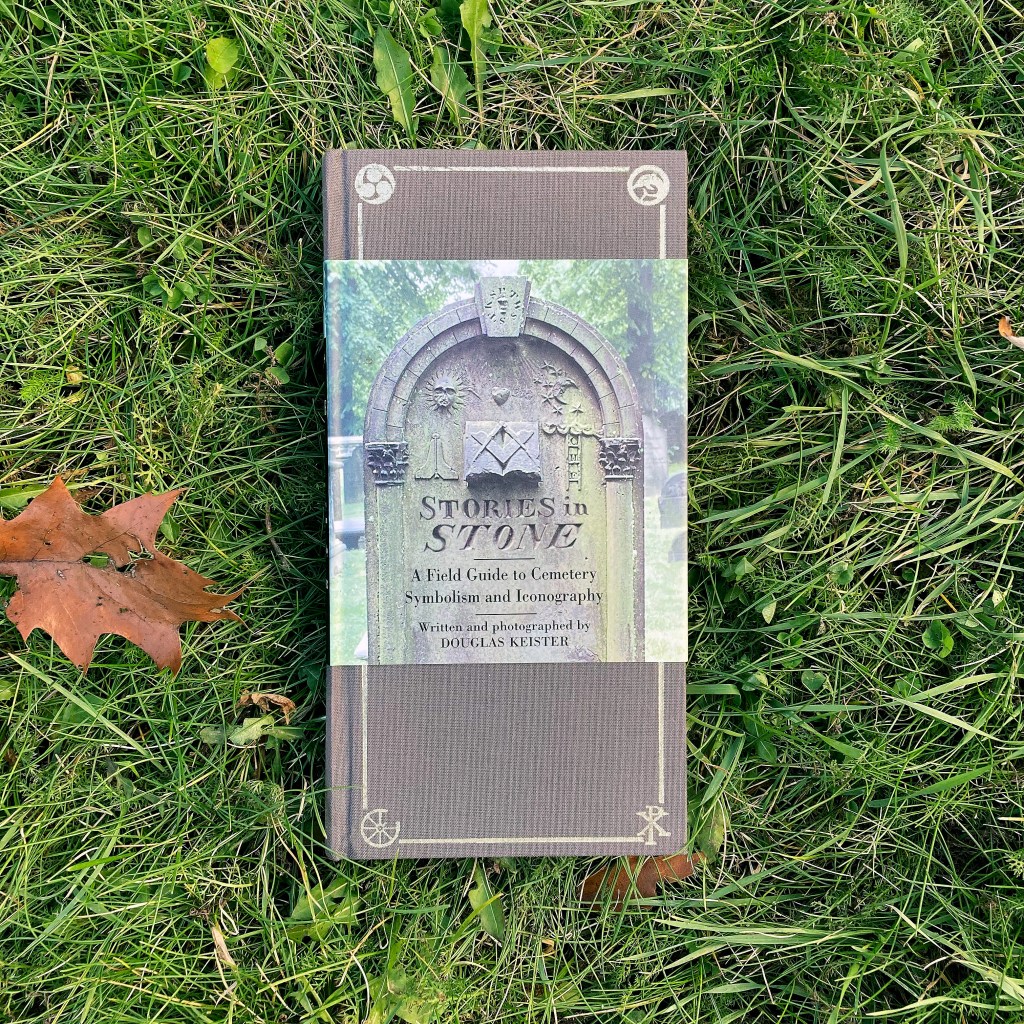
I don’t recall where I picked up my copy, but it is a reference I use often. I never bring mine with me on my cemetery travels, but my cloth-bound hardcover copy has a special place at my desk for easy access when I need to look something up. This book covers iconography from A to Z, as well as the different art styles and architecture that can be found in cemeteries. It covers everything from religious and military symbols to fraternal organizations and secret societies. Douglas Keister is also an amazing photographer and his beautiful color photos of detailed gravestone symbols add depth to the descriptions. It also has a very thorough index at the back, which is very handy for moving back and forth throughout the book.
The name Douglas Keister may sound familiar to you. This is not the first book of his that I have reviewed. Back in July 2022, I reviewed his book Going out in Style: The Architecture of Eternity. You can read that review here. Douglas is no stranger to cemeteries and has written quite a few books about them. He is a photographer, author, and co-author of forty-five critically acclaimed books, twenty-five of which are on architecture.2
I highly recommend this book to any budding taphophiles and those interested in learning more about cemetery symbolism and history. This book would be a handy tool for genealogists as well, as many interesting and thoughtful things can be learned about the deceased based on what is on their gravestone.
This book has been an invaluable resource for me. I have always loved learning more about the stories that gravestones can tell us, and finding new symbols to research and learn about is one of my favorite things. It’s a beautiful, high quality book, that I think is an essential addition to any taphophiles library.
Have your read Stories in Stone? I would love to read your thoughts in the comments.
Thanks for reading!
I am always on the hunt for cemetery-related book recommendations. Please feel free to share yours in the comments. If you are an author and have a cemetery-related book you would like me to review, please reach out at hello@chantallarochelle.ca. I would love to hear from you.
References:
- Stories in Stone: A Field Guide to Cemetery Symbolism and Iconography | Goodreads.com
- About Douglas Keister | DouglasKeister.com


 Cemetery Photography by Chantal Larochelle