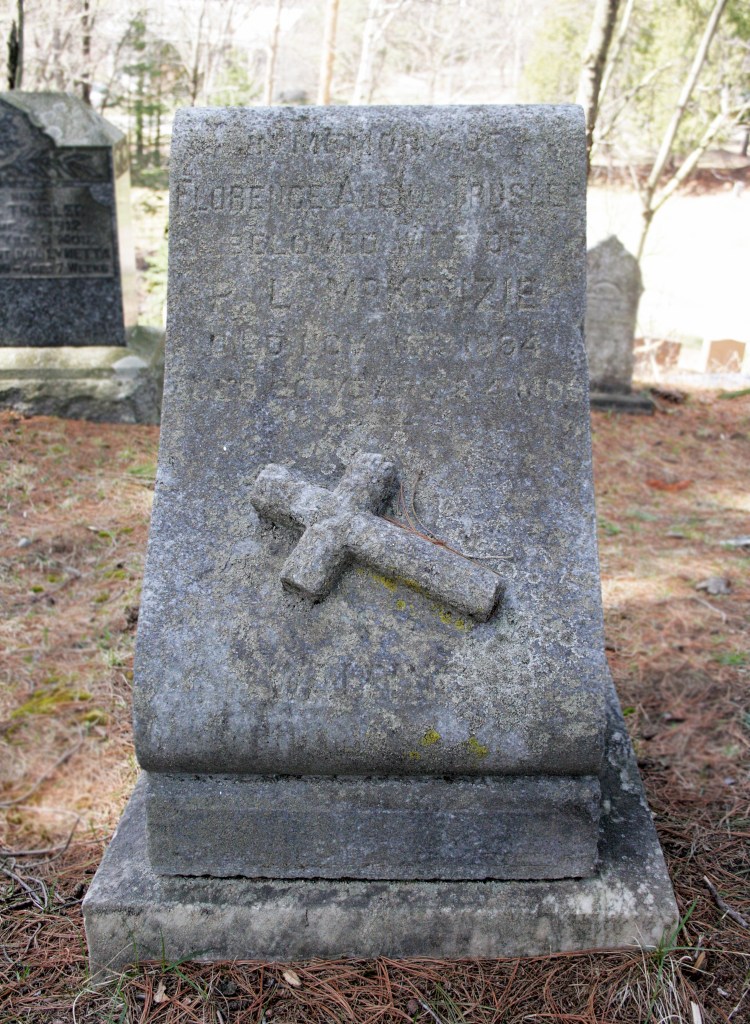
Tapho-what?

Are you a taphophile?

If you’re a regular reader of my blog, you very well might be!

You may have noticed that I use this term a lot, and often refer to myself and others in the cemetery community as taphophiles. For today’s blog post, the first of the new year, I wanted to take a closer look at the word, and what it means to be a taphophile.
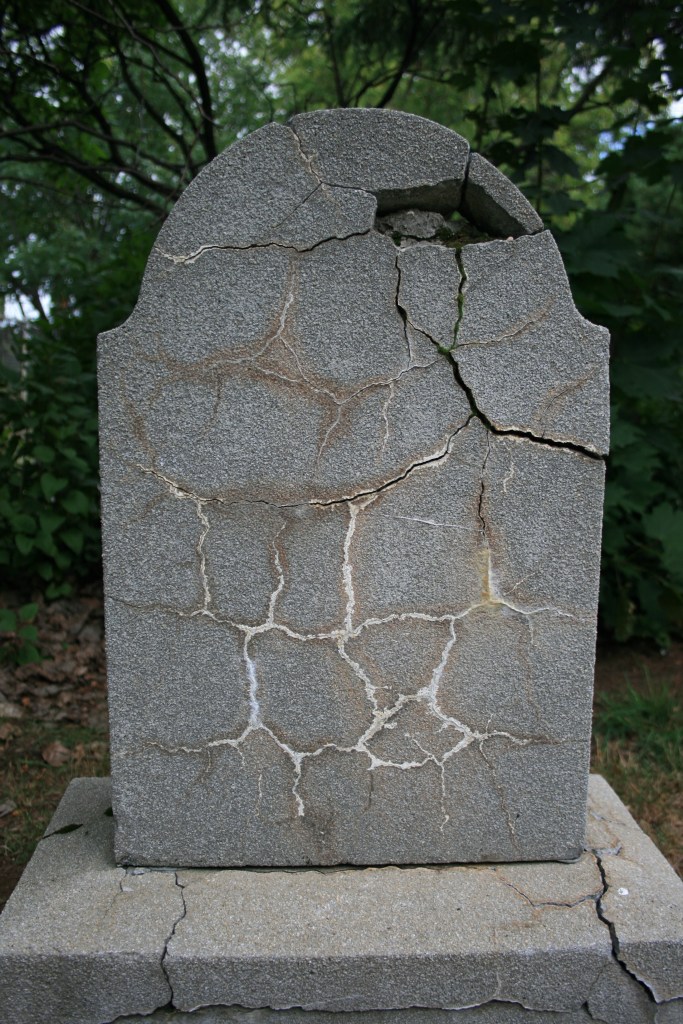
The origin of the word taphophile comes from the Ancient Greek word taphos and phileTaphos meaning funeral rites, burial, wake, or grave, and phile meaning dear or beloved.1 Curiously, if you look up the word in the Oxford English dictionary or Merriam-Webster online, the word does not come up. Although the latter did bring up the word typophile, similar but not quite right. 

Taphophile is defined as a person who is interested in cemeteries, funerals, and gravestones.2 To me that is a very flat and vague definition, as there is so much it entails. I was curious as to how others in the cemetery community would define the term, so I reached out to a few friends. The responses I received were very mindful and thought-provoking.

Tui Snider, speaker and author of Understanding Cemetery Symbols shared this thoughtful reflection:

“To me, being a taphophile means understanding that cemeteries are for the living. Not only do burial grounds provide a place for grieving, cultural expression, and contemplation, but they offer a direct connection to nature, something that is often missing from people’s lives.

Visiting graveyards throughout the year exposes us to cycles of life and death that are the foundation of our world. Many cemeteries are wildlife corridors that nurture vital pollinators as well as migrating birds and other animals. By visiting cemeteries, taphophiles gain a unique appreciation for all that burial grounds offer, not just to humans but to the plants and animals they sustain as well.”

Tasha Westby Tietz, also known as Graveyard Girl on Facebook shared this insight:

“Being a taphophile means to me, an unusual intense interest in cemeteries and all that is related. A way to remember and respect those that have gone on before. Endless adventures.”

Loren Rhoads, cemetery traveler and author of 199 Cemeteries To See Before You Die shared this interesting perspective:

I don’t really think of myself as a taphophile, because the word seems academic and cold to me.

I’ve always thought of myself as a cemetery aficionado, because my love of burial places is much more about appreciating their beauty and ambience as a whole than it is about studying the stones individually.

To be honest, I love that everyone defines taphophile for themselves.”

I couldn’t agree more! Each of these responses showcases the many reasons why visiting cemeteries is so important. I really appreciate Loren, Tasha, and Tui taking the time, and want to thank them for sharing their thoughts with us.

It makes sense that everyone who would call themselves a taphophile has their own definition of the word since we all have our own unique interests and reasons for visiting cemeteries.

For me, the term taphophile names that connection I feel to those who have come before me and are now laid to rest. It means they will not be forgotten, and that there is still much that they can teach us. It means that I love the experience of wandering through beautiful cemeteries and reading the names out loud. I love to admire the uniqueness and craftsmanship of gravestones, while also learning more about art, architecture, and symbolism. I am curious about the person below the gravestone. I also love the adventure of finding and exploring cemeteries.

I always say that cemeteries are for the living, that they are open-air art galleries and museums, and that they should be explored.

Do you call yourself a taphophile? What is your definition? I would love to keep the discussion going in the comments.

Thanks for reading!

References:

  1. Taphophile | Wikipedia
  2. Taphophile Definition | Your Dictionary

A Collection of White Bronze

Last weekend, some friends and I went on a cemetery road trip in the Burks Falls area. I was really surprised at the amount of white bronze markers that we found. Almost every cemetery we visited had 1 or more zinkys. I had never come across that many before. They are not a common sight in my local Sudbury cemeteries. 

So for today’s blog post, I thought I would share a collection of white bronze markers. 

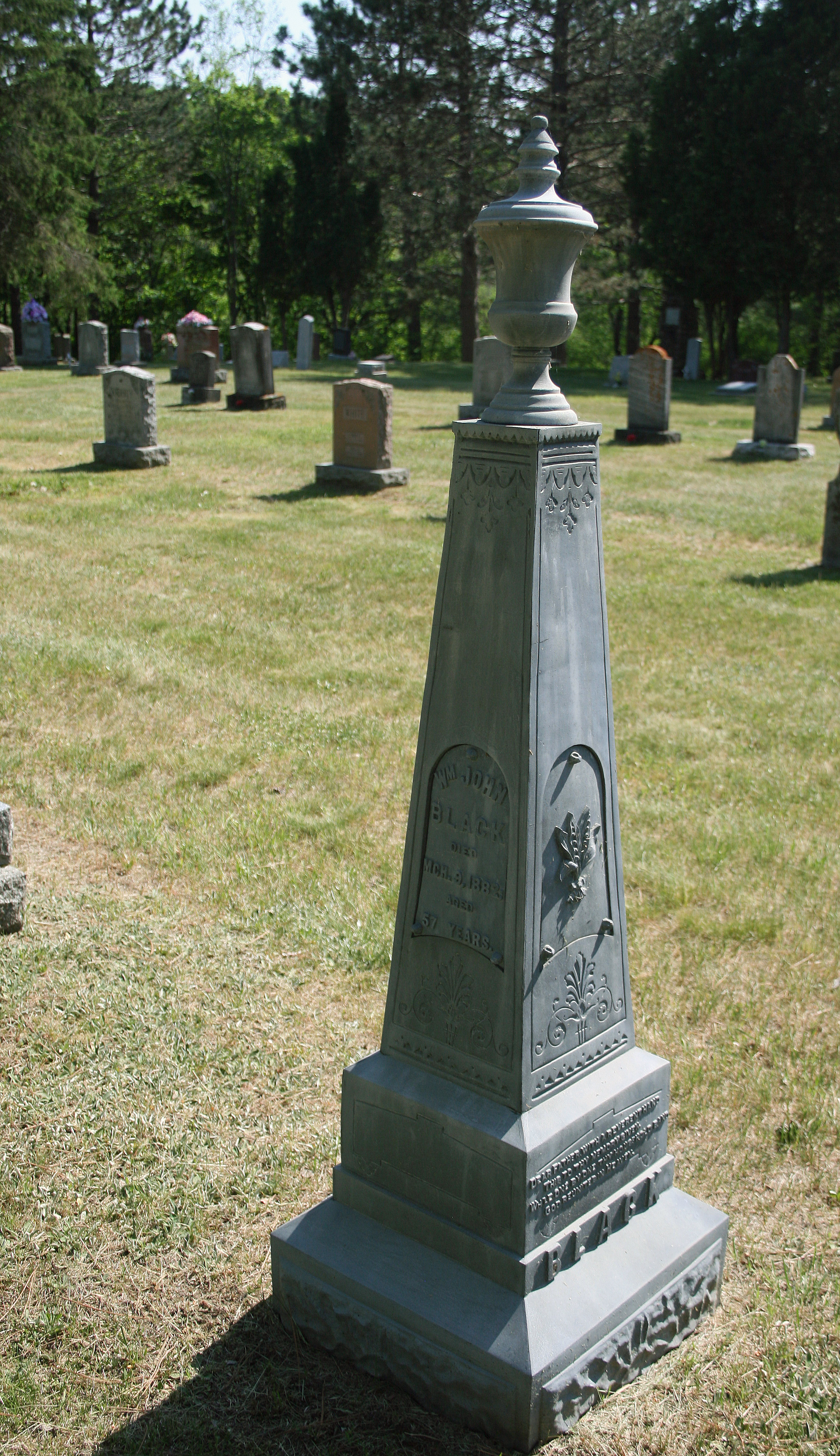
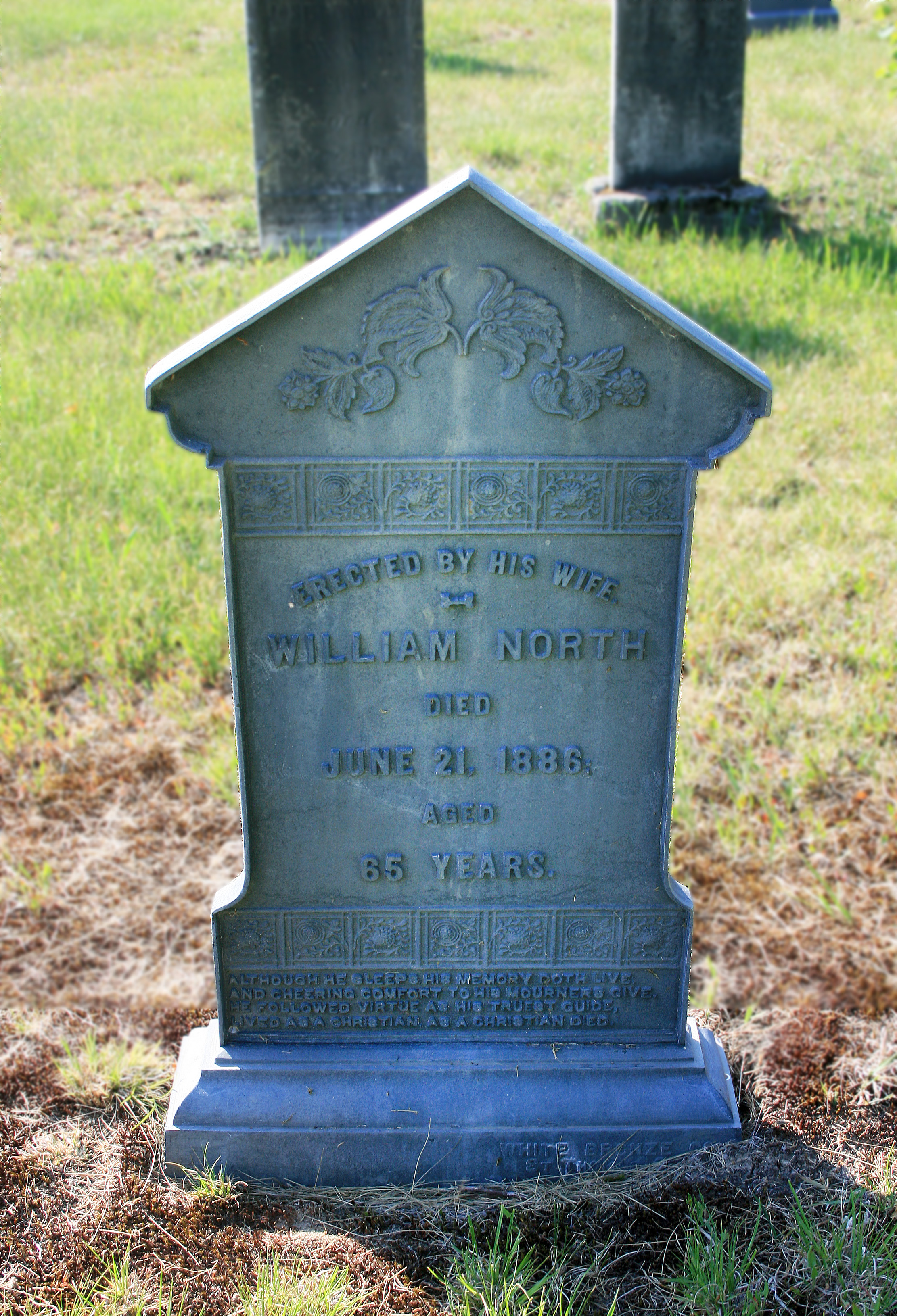
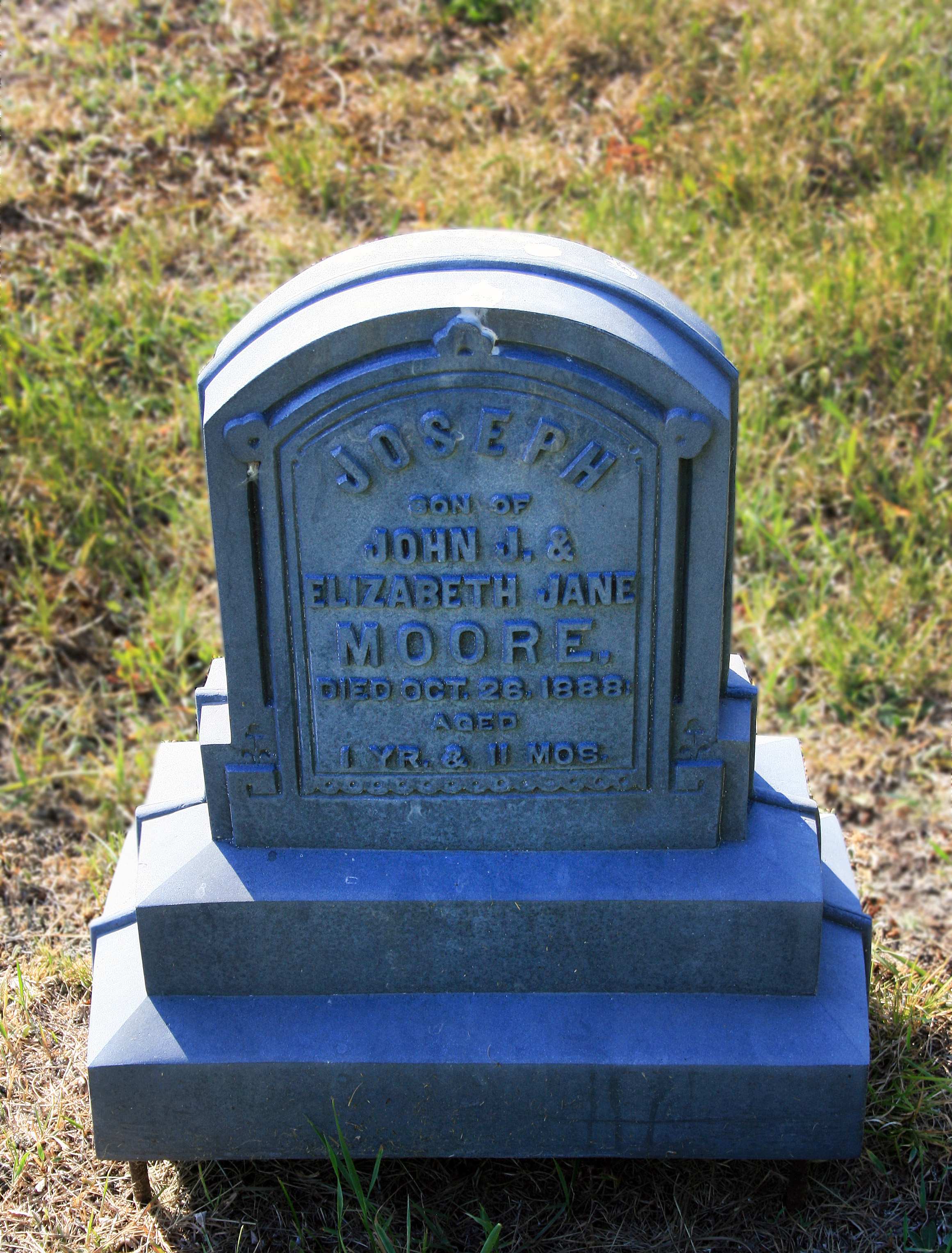
In January 2022, I wrote a post that looked more into the history of these unique gravestones. Zinkys as they are lovingly referred to, are also known as white bronze. You can recognize these types of headstones by their bluish-grey color, and if you give them a gentle tap, it should produce a hollow metallic sound.

These types of gravestones never came back into fashion after World War I, but because of their durability, you can still find them in great condition.

Spence Cemetery, Magnetawan ON ©2023

Fairholme Cemetery also known as Dunchurch-Fairholme Cemetery, Dunchurch ON ©2023

Although these markers are very durable, they do sometimes get damaged. According to Understanding Cemetery Symbols by Tui Snider, in the United States during the prohibition era, it was claimed that bootleggers would pry the panels off of these monuments to hide their contraband booze. I am curious if this was also a practice in Canada, as I have found some markers with their panels pried off. 

Have you found some of these unique gravestones in your local cemeteries? Do you have a favorite design? I would love to read about it in the comments. 

Thanks for reading!


References:

  1. Understanding Cemetery Symbols: A Field Guide for Historic Graveyards by Tui Snider

A Collection of Crosses

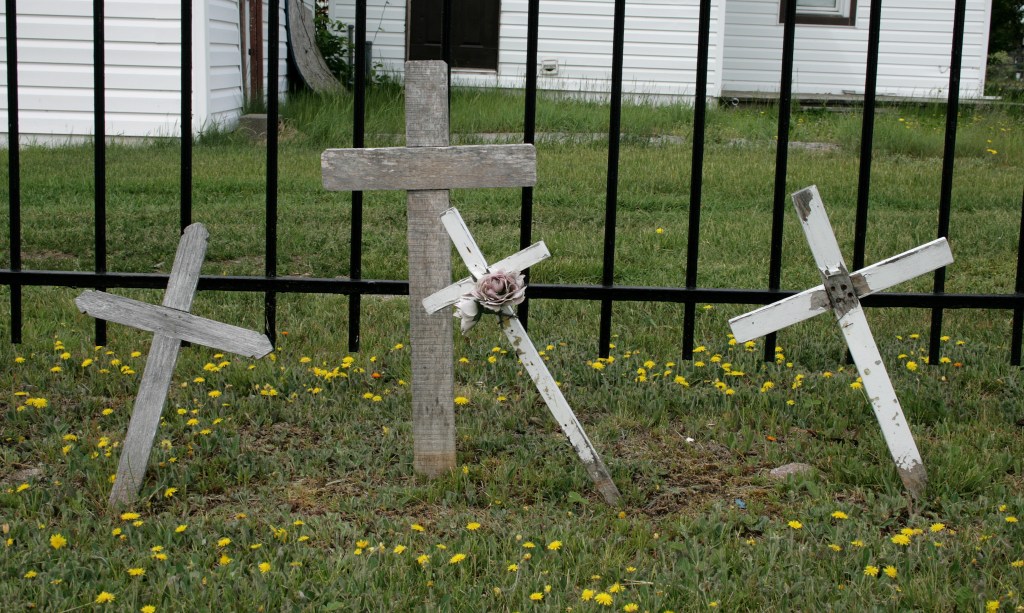
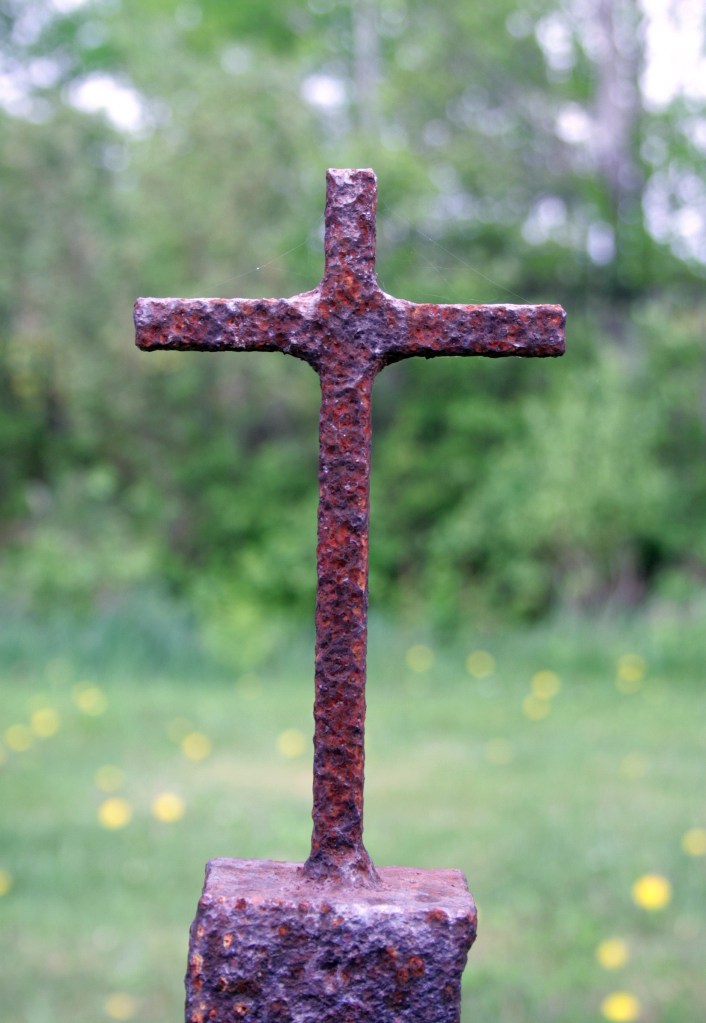
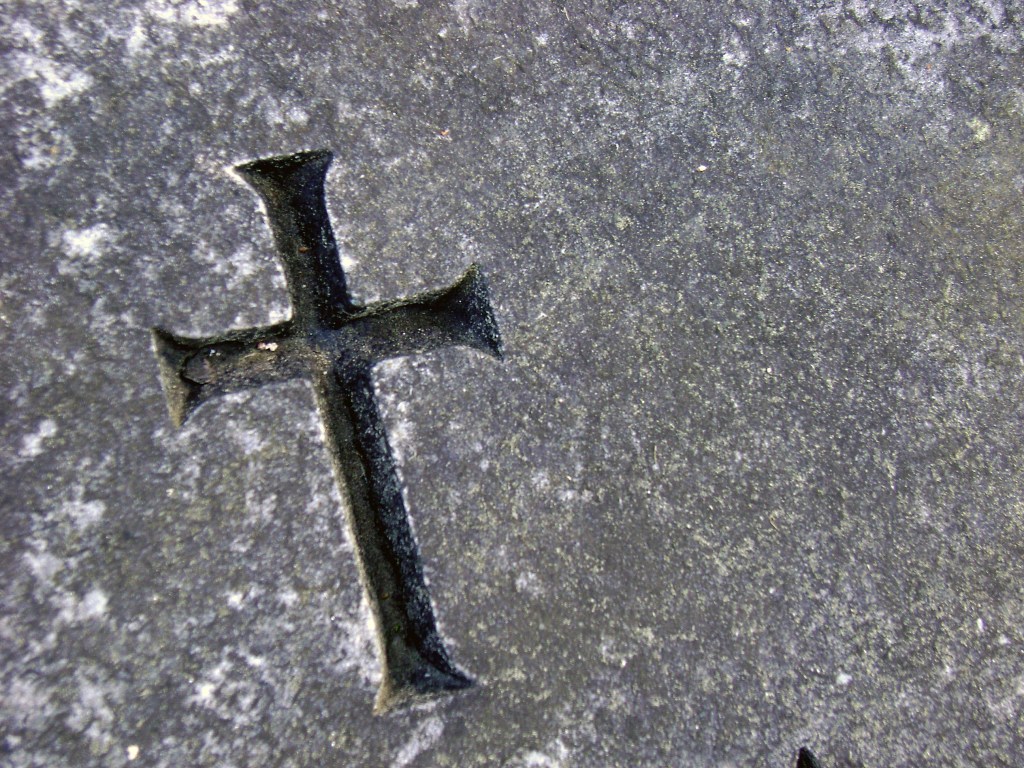
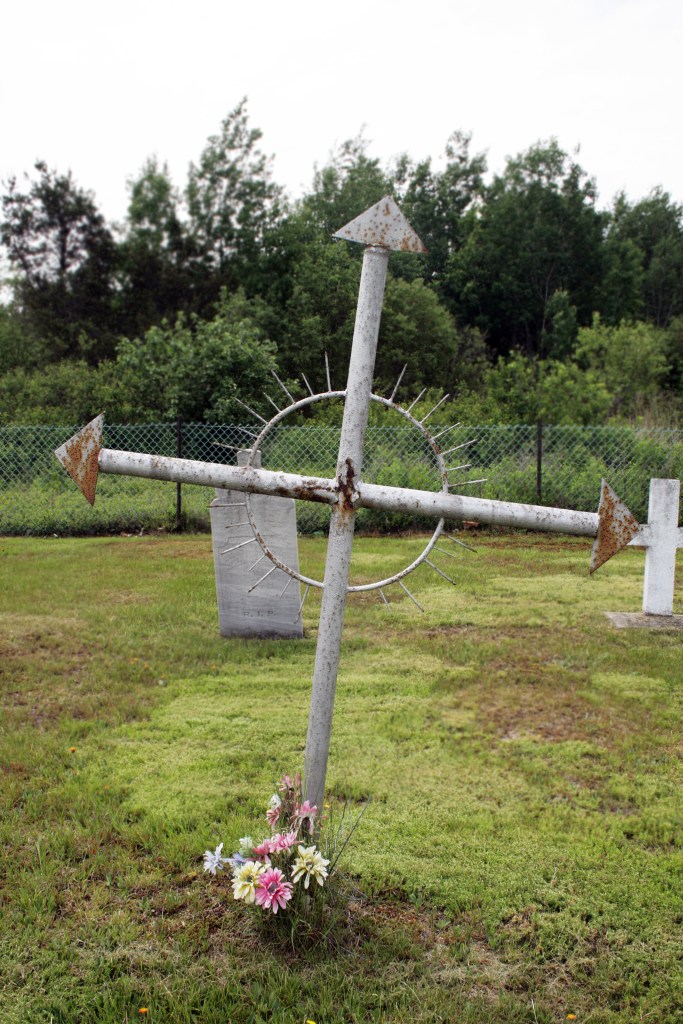
Crosses have to be the most easily recognizable and common symbol found in cemeteries and funerary art. There are so many variations of this Christian religious symbol. Since crosses are so common, you may think if you have seen one, you’ve seen them all—but I would beg to differ!

Today I wanted to take a closer look at this funerary symbol and share some of the many crosses I have photographed over the years.

First off, let’s look at the difference between a cross and a crucifix, as they are not the same thing. A crucifix shows the body of Jesus nailed to it, while a cross does not.

A Latin cross is probably the most common cross found in cemeteries. This cross has no embellishments. It is sometimes called a Protestant cross, because it can represent Jesus as risen, instead of focusing on his suffering on the cross.

A Botonee cross has a trefoil, three lobes, at each end that symbolizes the holy trinity.

A Celtic cross is easily recognizable. It usually has a Celtic knot pattern engraved on it and also includes a nimbus, a distinctive circle that represents the union of heaven and earth. These crosses are often found at the graves of those with Irish heritage.

In the example below you can also see the letters IHS in the center. This is sometimes called a Christogram. There are a couple of different theories about what the letters IHS stand for. One theory is that it is an abbreviation of the Latin phrase “in hoc signs vines” (In this sign you will conquer), another line of thought is that it’s an abbreviation of the Latin phrase “Jesus Hominum Salvator” (Jesus, Saviour of Men). According to Doug Keister’s book Stories in Stone: A field guide to cemetery symbolism and iconography, these letters are the first three letters of Jesus’ name using the Greek alphabet.

A Congé cross is a variation of the Latin cross, where the ends of the arms flare out slightly.

A Glory cross, sometimes called a Rayed cross, has rays emanating from its center that symbolize the glory of God.

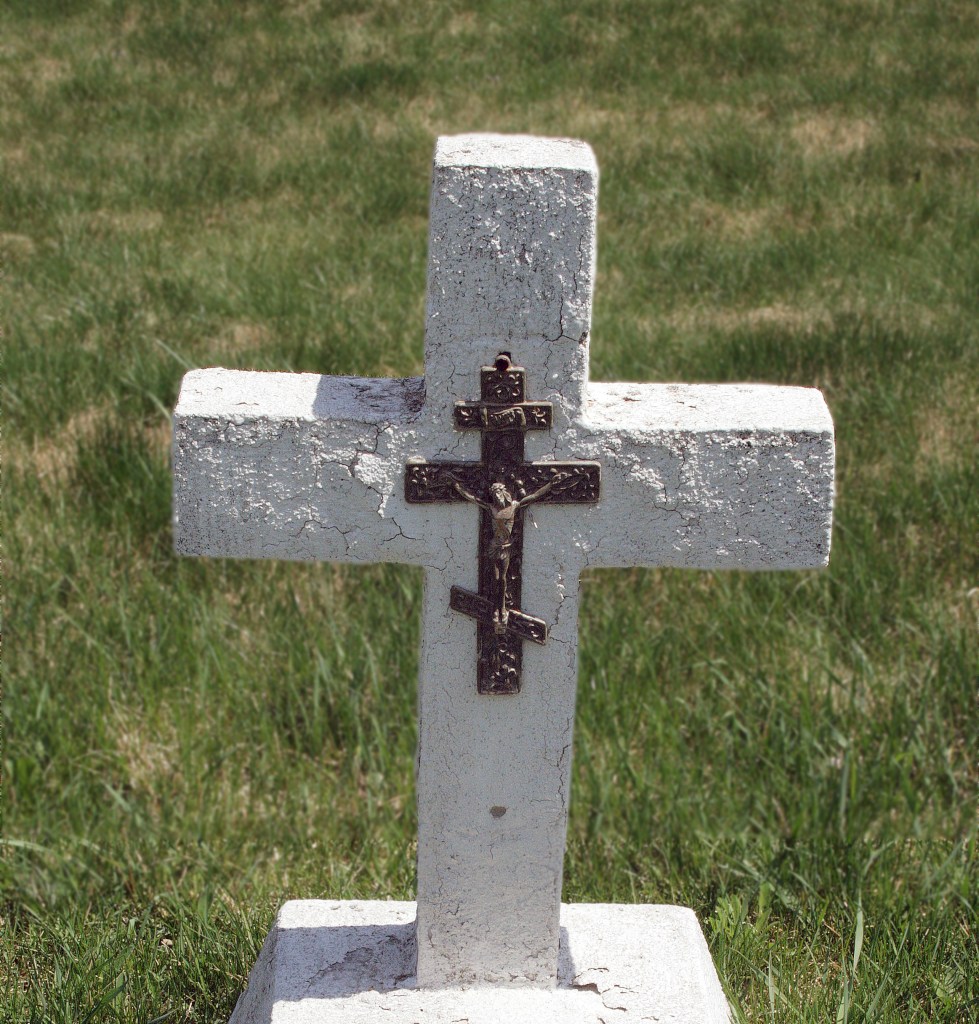
Below is an example of an Eastern crucifix on a white Latin cross. The Eastern cross is easily recognizable by its two horizontal cross bars, and one slanted one. This cross is a symbol of Eastern Orthodox religions. This one would be considered a crucifix, as it has the tortured body of Jesus nailed to it.

An Agony cross has sharp points at the end of each arm. This is said to represent the suffering or agony, that Jesus endured. This cross is sometimes called a pointed cross or a cross of suffering.

A Portate cross is a cross that is angled diagonally. It’s angled the way someone would carry it over their shoulder to drag it.


References:

White bronze, also known as Zinkys

Have you ever heard of Zinkys? You may have come across one or two in your cemetery travels. I know I have, but it has only been until recently that I discovered what these beautiful gravestones are. That is one of the many things I love about my cemetery community, I am always learning new things from my fellow taphophiles.

Zinkys as they are lovingly referred to, is also known as white bronze. They look very similar to carved stone headstones, but they are made from a zinc alloy and are hollow. These monuments were generally less expensive than carved stone, and are a lot more durable. You will often find intricate designs on white bronze headstones, that are still perfectly legible. You can recognize a white bronze headstone by its bluish-grey color, and giving it a gentle tap should produce a hollow sound.

According to Understanding Cemetery Symbols by Tui Snider, in the United States during the prohibition era, it was claimed that bootleggers would sometimes pry the panels off of these metal monuments to hide their booze.

Here in Canada, the White Bronze Company of St. Thomas, Ontario produced zinkys from 1883 to 1900. It was a child company of Monumental Bronze Co. of Bridgeport, Connecticut.1 According to Connecticuthistory.org, Monumental Bronze Co. only produced white bronze between 1874 and 1914. In 1914, World War I saw the facilities turn from creating pure zinc tombstones to creating gun mounts and munitions.2 After the war, it seemed that tastes had changed, and public demand shifted to other natural materials for grave markers.

These blue-grey markers are truly beautiful in person. They range in size and detail, but I always find myself fascinated by how perfectly intact they are. I have come across a couple of broken ones, where a cross or spire has been broken off, but the names of the deceased are always legible.

Since learning about them, I have kept an eye out for them in my cemetery travels, and have been rewarded a few times this summer. I look forward to finding more in my travels.

Have you come across and zinkys in your cemetery travels? I would love to read about it in the comments.

Thanks for reading!


References:

  1. The St. Thomas White Bronze Company: A Diffusion of Innovations Perspective | ResearchGate
  2. Monumental Bronze Company | Connecticut History

Cemetery Book Review: Understanding Cemetery Symbols by Tui Snider

I mentioned in a previous post, that I wanted to add book reviews to the blog. I am an avid reader, of both fiction and non-fiction, and I think this platform will be a great way for me to share some of my favorite cemetery-related books. I am hoping to share some great resources, and good reads that you may want to add to your own book collections. 

Understanding Cemetery Symbols: A field guide for historic graveyards by Tui Snider

I discovered Tui Snider through another blog that I follow – Spooky Little Halloween. Tui had done a guest article: 5 common cemetery symbols and what the mean. I wanted to read more of her work and found her book Understanding Cemetery Symbols.

This book is a great resource for learning more about symbols that you may find in your local cemeteries. It’s filled with photos to help you visualize the symbols for easy recognition. It also goes in-depth on a variety of symbols that can be found; like the different meanings for hands, and the many varieties of statues. The book is also laid out in a way that makes referencing it very easy.

I only purchased this book this year, but it has become a go-to when trying to decipher the symbols I come across.

You can read more from Tui at her website. She also puts out a weekly newsletter every Sunday, detailing new articles and what’s new on her youtube channel. 

I look forward to reading some of her other works in the future! 

Have you read this book? Let me know your thoughts in the comments.

Thanks for reading!  

Symbolism and Iconography

Cemeteries are full of symbolism.

I find it fascinating and love trying to decipher the symbols and iconography I find. Symbolism can be found adorning tombstones and mausoleums. These symbols can range from simple designs to very elaborate ones. The meaning of symbols is a language in itself, and you can tell a lot about a person by what is on their tombstone. Religion, hobbies, clubs, and organizations can all be found represented, among other things, by symbols and icons within a cemetery.

Whenever I spot a symbol I have not seen before, I always turn to my handy reference books. If I can’t find what I am looking for there, the internet is the next best place to look. My go-to reference book is Stories in Stone: A field guide to cemetery symbolism and iconography by Douglas Keister. I have had this book forever, and always go back to it when I see something new. It’s a very in-depth look at what can be found in a cemetery. It covers architecture, sculpture, symbols, as well as acronyms and initials. I highly recommend it!

I recently added another reference book to my library, Understanding Cemetery Symbols: A field guide for historic graveyards by Tui Snider. I have just started getting into this one and I can tell right away it will be a great resource. It has some really in-depth sections on hand symbolism as will as crosses and even statuary.

So what kind of symbols and iconography can you find in your local cemeteries? For the most part religious symbolism is very common. Below are some examples of some common and not-so-common symbols you can find in Canadian cemeteries:

I love finding hands on a tombstone. Hands are shown in many different forms; pointing downward, pointing up, shaking hands, etc. the list goes on! And all of these different positions have different meanings. One of my favorite examples of hands was found in Terrace Lawn Cemetery in North Bay. These stones have weathered beautifully. This hand is pointed downward, with a finger extended which can symbolize God reaching down to collect a soul. The extended finger can mean a sudden or unexpected death. This hand below, is also holding a chain. A broken link in the chain can represent a family or marriage broken by death.

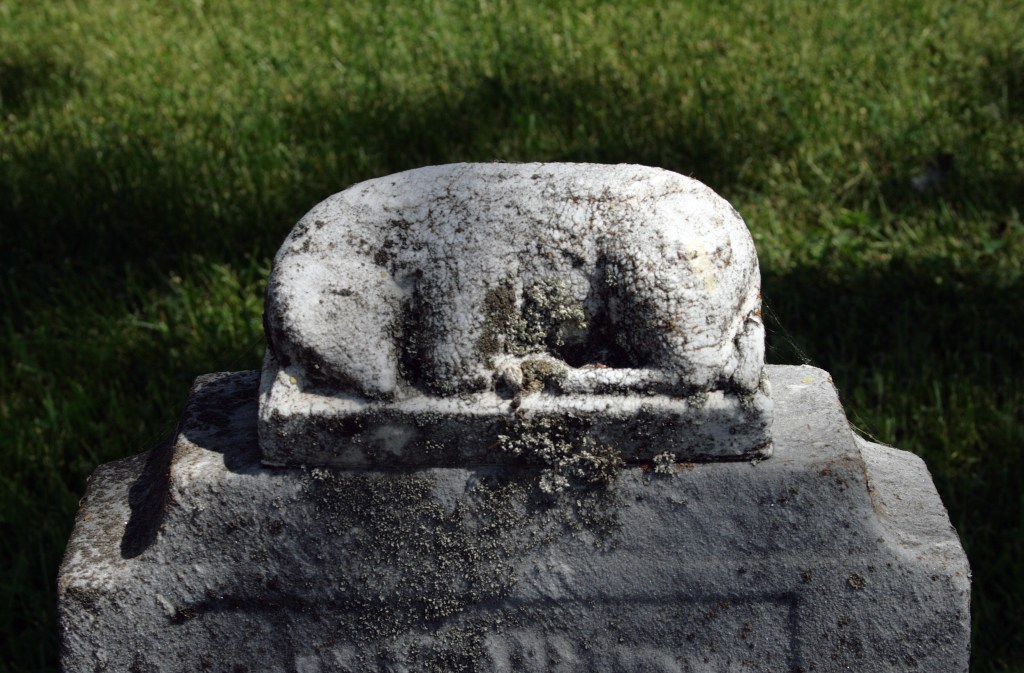
Lambs are a very common sight in cemeteries. These are sometimes accompanied by a tree stump, implying a life cut short. The Lamb itself represents “the lamb of God” and innocence. Sadly, lambs are most often found at the grave of a young child or infant.

Skulls are very rare to come by in my local Canadian cemeteries. I have only found two in all of my local travels, but I am always on the look out for them. They are more commonly found in other places of the world, like the United States and Europe. Most obviously a skull represents death. A skull found at the base of a cross is thought to be symbolic of the skull of Adam.

I have many great examples of symbols and iconography in my photography. If you are interested in seeing more and learning about their meanings, I share them every Friday on Instagram and Facebook.

I would also love to hear about the symbols you have found on your cemetery travels. Do you have a favorite? I would love to read about them in the comments.

Thanks for reading!


References:

  1. Understanding Cemetery Symbols: A field guide to historic cemeteries by Tui Snider
  2. Storie in Stone: A field guide to cemetery symbolism and iconography by Douglas Keister