Stone Stories: Remembering Cole Howard Through Art

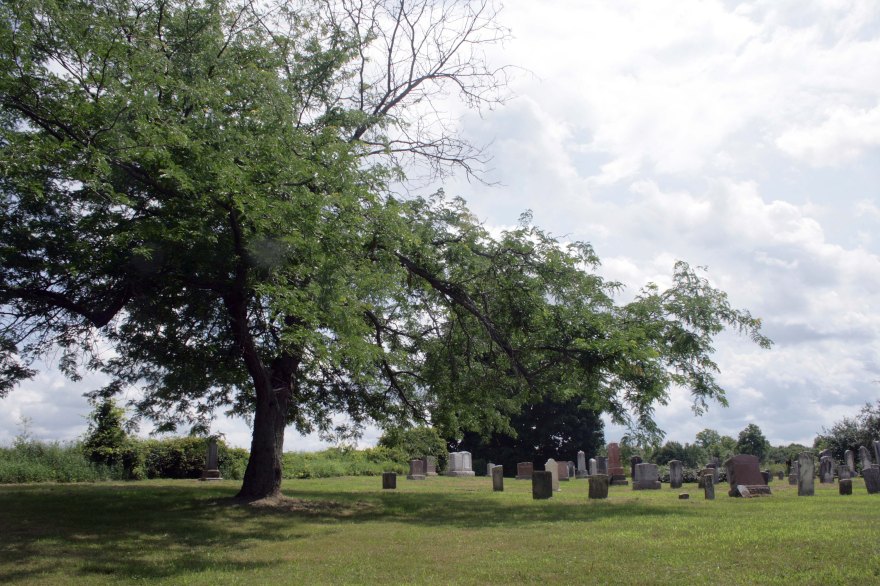
Last Summer, while I was on my way to visit some cemeteries in Southern Ontario, we made a special stop along Highway 69. Not for a gravestone, but for a different kind of memorial.

The Cole Howard Memorial Sculpture is a roadside landmark that’s both beautiful and deeply moving.

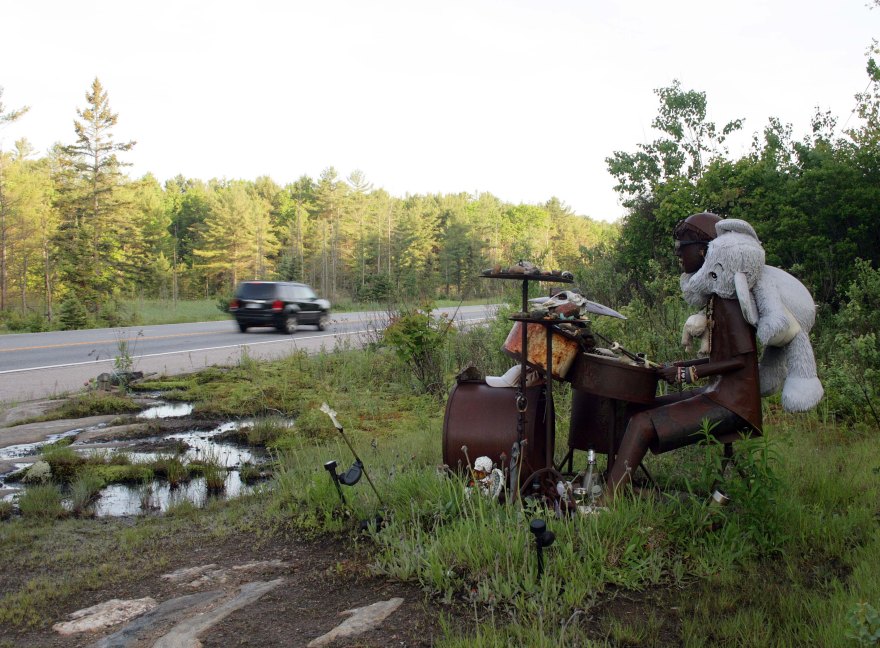
We had started our day early, and the road was relatively quiet when we got close to the sculpture. Taking advantage of the slow traffic, we pulled over, and I was able to hop out and cross the highway to photograph this beautiful and artistic memorial.

Though I didn’t know Howard personally, this is a memorial I always look out for when I’m travelling down Highway 69. It’s my small way of saying ‘hello’ to Cole, a gesture of remembrance for a young life lost too soon.

Cole Howard was only 19 years old when he was killed in a car crash on January 3, 2012.1 He was a passenger in a vehicle that crashed due to icy road conditions.1 The accident also claimed the lives of Jessica Chamberland, Alyssa McKeown, and Torry McIntyre.1

It’s important to also remember the others who tragically lost their lives in the same accident. Howard, Chamberland, McKeown and McIntyre were all taken far too soon. Each of them left a lasting impact on their families, friends, and community. The grief of such a loss has reverberated through the lives of all who knew them, and their legacies are now forever intertwined.

In the wake of this tragic accident, Howards family wanted to create a lasting tribute that would not only honour Cole’s life but also reflect his love of music. The result is a life-sized sculpture, crafted from steel and placed on the side of the highway, at the site of the accident.

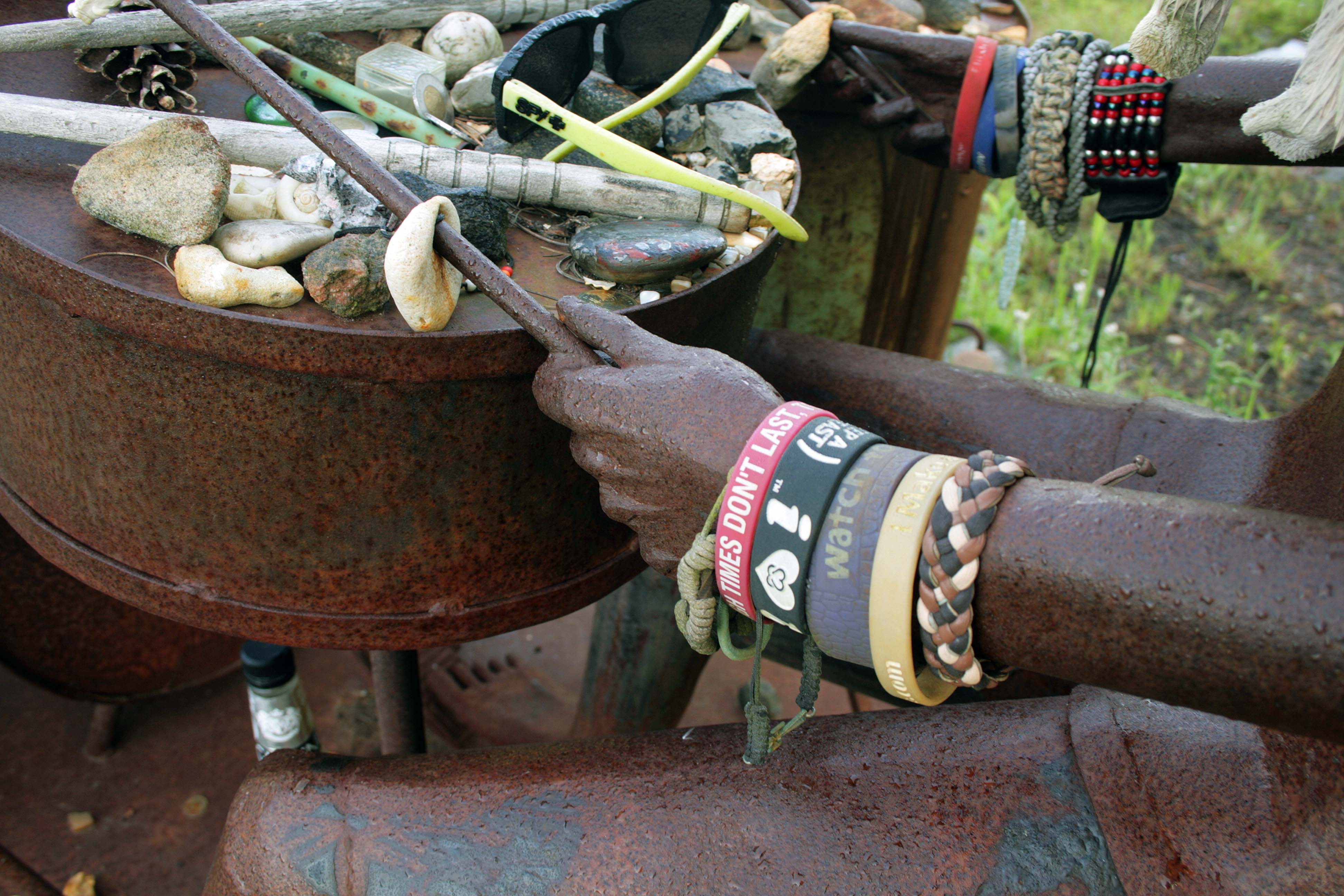
Sculptor and welder, Laval Bouchard created the image of Howard with remarkable accuracy.1 He is depicted sitting behind his drums, barefoot, wearing a backward hat—just as he often did in life. Howard had been the drummer for the local metal band Sanctuaries, and his sculpture even features him wearing one of their band shirts.1

The memorial sculpture was installed at the crash site the day after what would have been Howard’s 22nd birthday, in 2014.1 For his family, it must have been a deeply emotional moment—transforming a place of tragedy into one of remembrance. Unlike many who have a traditional grave marker in a cemetery, Howard was cremated, and his ashes were not buried in one place. Some were spread at Abbey Road in London, England—an iconic location for music lovers.2 The rest of his ashes remain in a drum-style urn in his family’s home.2

Without a conventional grave site to visit, this roadside memorial serves as a place where friends, family, and even strangers can stop to pay their respects and remember Cole. In a way, it acts as both his monument and gathering place for those who continue to hold him in their hearts.

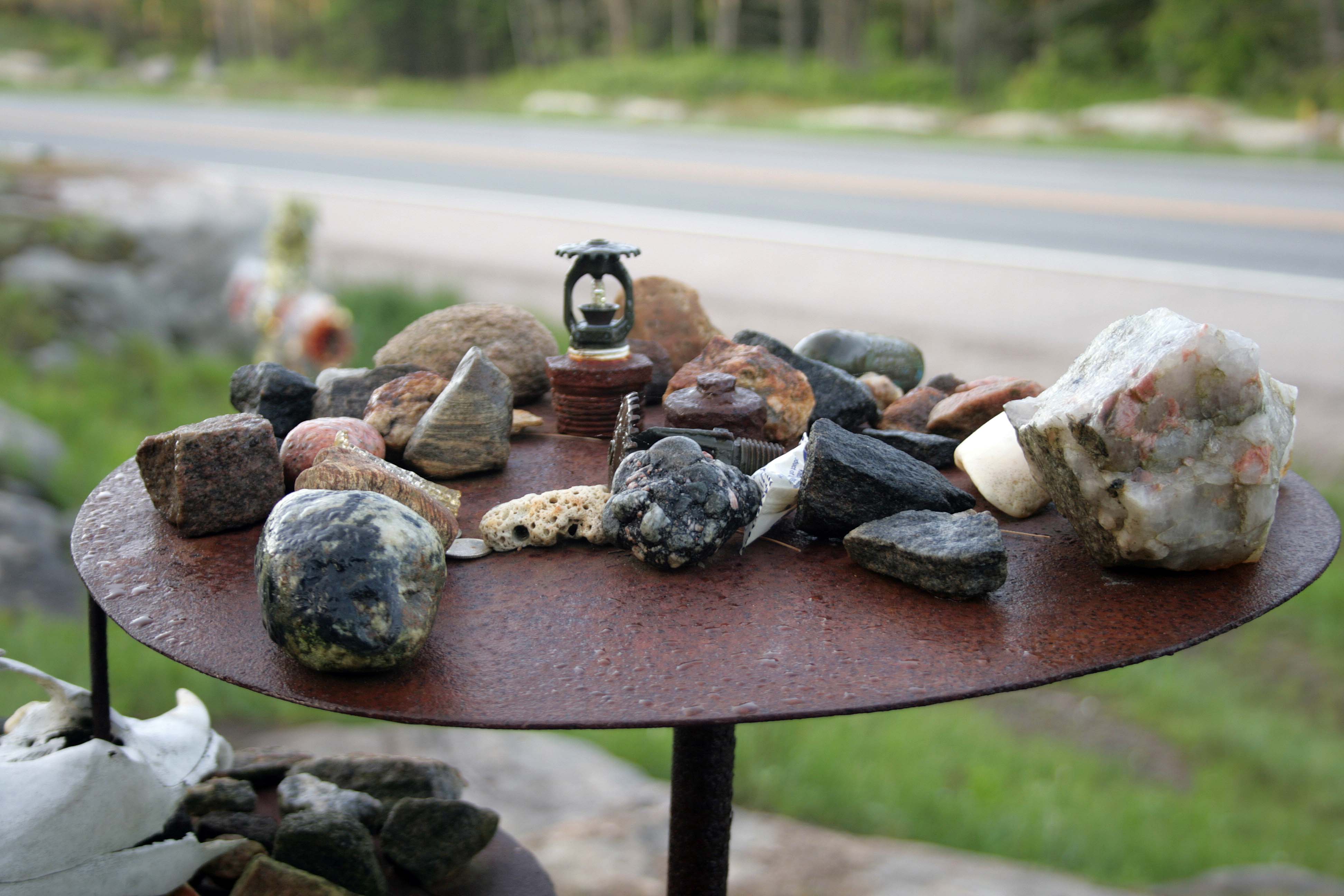
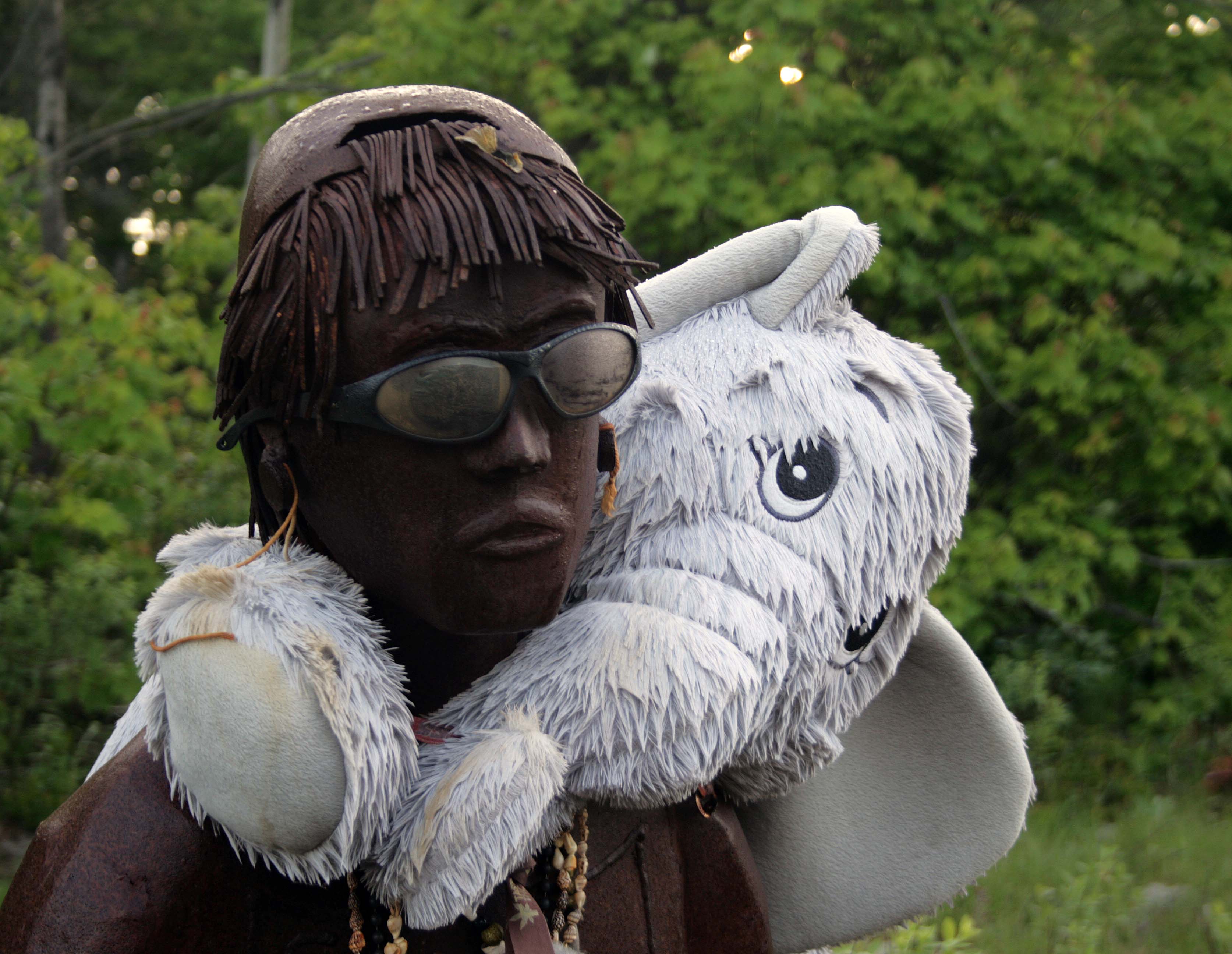
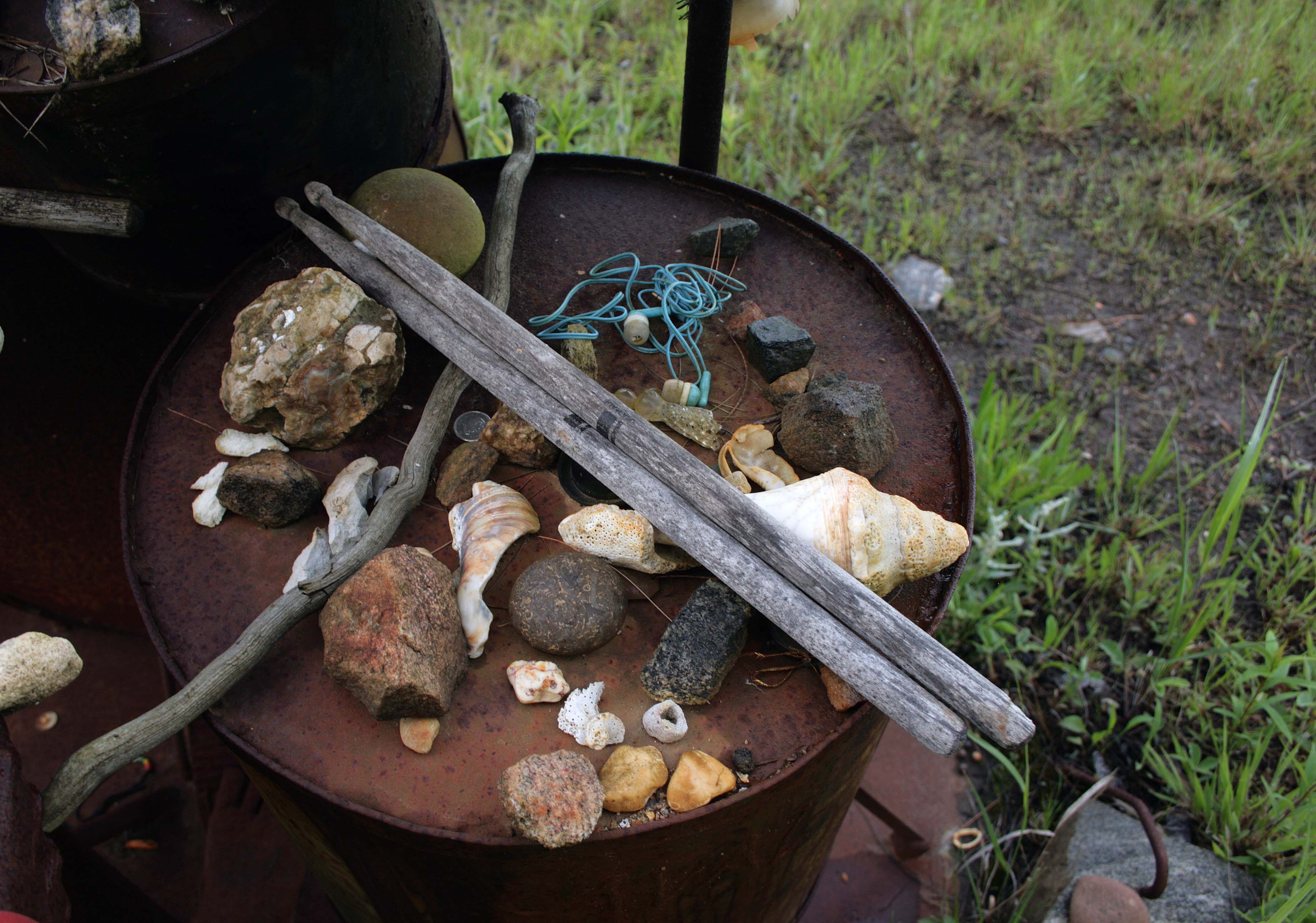
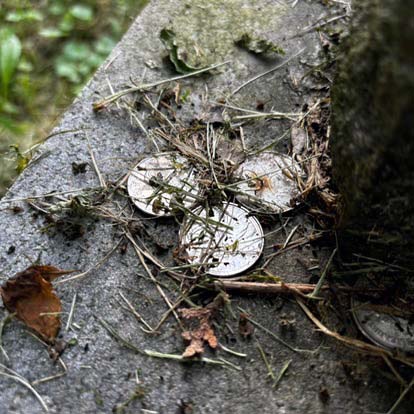
When I visited, the sculpture was wearing a pair of sunglasses, and its shoulders were draped with a large stuffed elephant. There were so many grave goods left around the memorial, including stones, beer cans, and even a couple of drumsticks. It was a moving reminder of just how much Howard is still loved.

What I love about roadside memorials like this is that they’re not just a spot for remembrance—they’re a statement. They’re a way for families to make sure their loved one is never forgotten, even as time goes on. For Howard’s family, the sculpture was a way to turn their grief into something positive, something that would last. It’s clear from the visitors and mementos left at the sculpture that the community feels the same way. Even years after the accident, the memorial continues to be a place for people to honour him.2

The Cole Howard Memorial isn’t just a tribute—it invites you to pause and reflect on life, loss, and the power of music. Roadside memorials like this also serve as powerful reminders of the dangers of the road and raise awareness about the importance of road safety.

Have you ever passed by a roadside memorial that made you stop and reflect? I’d love to hear your experiences in the comments.

Thanks for reading!


References:

  1. Sudbury family honours beloved son | Sudbury Star
  2. Remembering Cole Howard | Sudbury.com

Stone Stories: The Youngest Member of the Group of Seven

After visiting both of Tom Thomson’s graves, I was inspired to visit the graves of all the members of the Group of Seven.

As a graphic designer, I have a little background in art history and I have long admired their work. Standing at Thomson’s first resting place at Canoe Lake sparked a desire to pay my respects to the others who also helped shape Canadian art.

So today on the blog, I want to share my visit to the grave of Franklin Carmichael in Orillia, Ontario.

Franklin Carmichael

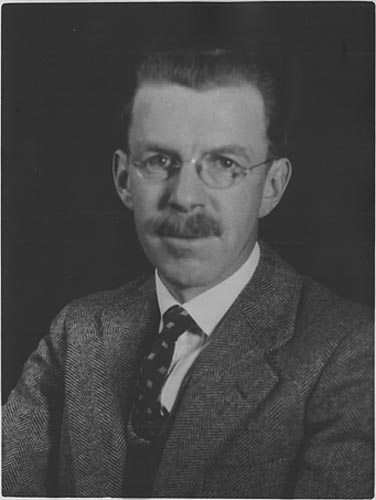
Born in 1890 in Orillia, Franklin Carmichael showed early signs of artistic talent, which his mother quickly nurtured by enrolling him in music and art lessons.1 In his teenage years, he worked in his father’s carriage-making shop, where he honed his skills as a designer, striper, and painter.1 By 1910, Carmichael moved to Toronto to attend the Ontario College of Art, where he studied under renowned instructors.1

In April of 1920, Carmichael found his place within the emerging Group of Seven, joining artists like A.Y. Jackson, Lawren Harris, and J.E.H. MacDonald in their mission to capture Canada’s untamed wilderness.1 Despite being the youngest member of the group, Carmichael’s work, particularly his depictions of Ontario’s northern landscapes, were just as striking and bold as those of his peers.1 His travels to Lake Superior and the La Cloche Mountains were the backdrop for some of his most celebrated works, where watercolors became the defining feature of his style.1

Carmichael would go on to teach at the Ontario College of Art and later founded the Canadian Group of Painters, after the Group of Seven disbanded in 1933.1

Orillia Museum of Art & History

The Orillia Museum of Art & History sits in the heart of downtown Orillia and is housed in the historic Sir Samuel Steele Memorial Building. My mother and I parked the car on a side street and slowly walked along the sidewalk to the museum as we took in the views of the downtown core. It was a beautiful fall day when we visited, so the streets were bustling with activity.

We began our museum visit on the top floor and slowly made our way back down, through the myriad of exhibits. The museum’s collection intertwines local history with artistic expression.

When we visited, the Teachers and Their Enduring Impact—The Legacy of Jose Salas exhibit had just opened. This exhibit featured artwork by Jose Salas, an art teacher at the local college, as well as artwork from of his students.2 It was a lovely exhibit that showcased the profound influence a teacher can have on their student’s creative journeys.

While viewing this exhibit, I couldn’t help but think about Carmichael and what kind of influence he had on his students when he taught at the Ontario College of Art. Having taken quite a few art classes myself, I wondered what it may have been like to be taught by one of the famous Group of Seven.

The museum also has a permanent exhibit that features some of the more prominent figures from Orilla, like Gordon Lightfoot, Stephen Leacock, and of course—Franklin Carmichael.

After taking in everything the museum had to offer, it was time to make our way to the cemetery to pay our respects.

St. Andrews and St. James Cemetery

Franklin Carmicheal passed away in Toronto, on October 24, 1945, following a regular day of teaching classes. As he began his drive home, he suffered a heart attack in his car; he was only 55 years old.3

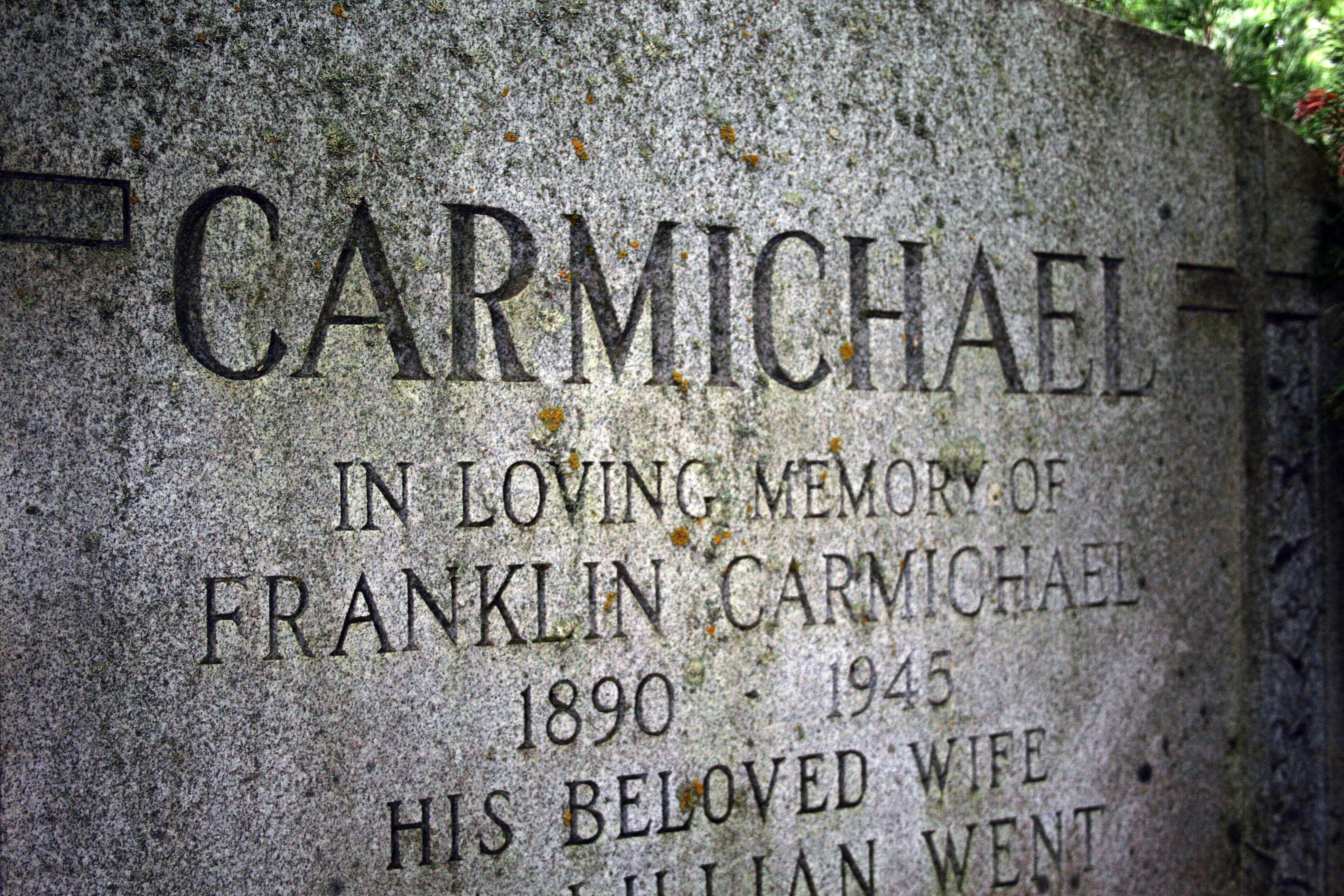
Carmichael is laid to rest in St. Andrews and St. James Cemetery in his hometown of Orilla. His final resting place is marked with an elegant grey granite stone, that is engraved with ivy and crosses. He is laid next to his beloved wife, Ada Lillian Went Carmichael, who passed away in 1964.

Buried alongside Carmichael in the family plot, are his daughter Mary Franklin Carmichael Mastin, and her husband. Mary dedicated much of her life to preserving her famous father’s legacy.4 She was also a writer and journalist, writing about nature and conservation.4 She passed away in 2012, at the age of 91 at St. Gabriel’s Villa, in Chelmsford, Ontario.4

In contrast to the busy streets, the cemetery was very quiet. My mother and I were the only visitors. As I stood at Carmichael’s graveside, I reflected on how his contributions to the art world have influenced and inspired countless generations of Canadian artists. I was a little surprised, though, to find that no flowers or grave goods had been left at his grave, something I had expected for an artist of his caliber. It made me think about how a person’s life story can sometimes be quietly forgotten, and the importance of remembrance.

I really enjoyed my visit to Orillia. Exploring Franklin Carmichael’s legacy was a unique opportunity to reflect on the power of art and how it connects us to the land and each other. From the Orillia Museum of Art & History to his gravesite, it was a lovely trip that gave me a deeper appreciation for Carmichael’s work and the lasting impact he had on Canadian art.

Thanks for reading!


References:

  1. Franklin Carmichael | The Group of Seven
  2. Teachers and Their Enduring Impact—The Legacy of Jose Salas | Orillia Museum of Art & History
  3. Franklin Carmichael | Roberts Gallery
  4. Mary Franklin Carmichael Mastin | Find a Grave

Stone Stories: The Voice of the Great Lakes

“They might have split up or they might have capsized
They may have broke deep and took water
And all that remains is the faces and the names
Of the wives and the sons and the daughters”1

These lyrics from Gordon Lightfoot’s iconic song The Wreck of the Edmund Fitzgerald have long been etched in the minds of listeners, who like me, have found themselves enthralled by Lightfoot’s masterful storytelling.

This song, along with many of his other hits, like If You Could Read My Mind and Sundown, have created the soundtrack for countless Canadians, evoking the beauty, melancholy, and vastness of our Canadian landscape.

Today on the blog, I want to share my experience from this past September. I had the opportunity to visit the Gordon Lightfoot Sculpture Park and his final resting place in his hometown of Orillia, Ontario.

Gordon Lightfoot

Gordon Meredith Lightfoot was born on November 17, 19382 in the small town of Orillia, the gateway to the Muskokas.3 From an early age, Lightfoot showed a natural talent for music, learning the piano, teaching himself to play drums, and later picking up the guitar.2 In 1957, Lightfoot left Canada, going to Los Angeles to study jazz orchestration at Westlake College of Music.2 After returning to Canada in the late 1950s, he began to sing folk songs and play guitar around Toronto.2

It didn’t take long for Lightfoot to make his mark on the Canadian music scene. His folk-infused ballads quickly captured the essence of the Canadian spirit. Throughout his career, Lightfoot released over 20 albums and was known for his blend of folk, country, and soft rock—a style uniquely his.2

Lightfoot received numerous prestigious awards throughout his music career, including multiple Juno awards, and was inducted into the Canadian Music Hall of Fame in 1986.2 He also earned honours like the Order of Canada, Order of Ontario, and a Governor General’s Performing Arts Awards.2 Lightfoot was recognized in the Canadian Songwriters Hall of Fame and received a Lifetime Achievement award from SOCAN and the Toronto Music Awards.2

One of my favorite Lightfoot songs is based on a real-life event, the tragic sinking of the S.S. Edmund Fitzgerald. The Wreck of the Edmund Fitzgerald, in my opinion, is one of his most famous and most haunting ballads.

The song is a tribute to all the lives lost in the shipwreck, on November 10, 1975. It’s estimated that between 7:20 and 7:30 p.m. on that fateful day, the ship vanished and sank with 29 men onboard.4

Gordon Lightfoot Sculpture Park

I knew my visit to Orillia would not be complete without a visit to the Gordon Lightfoot Sculpture Park and walking trail. We visited in late September, and the trees were just beginning to change. A perfect day for a walk.

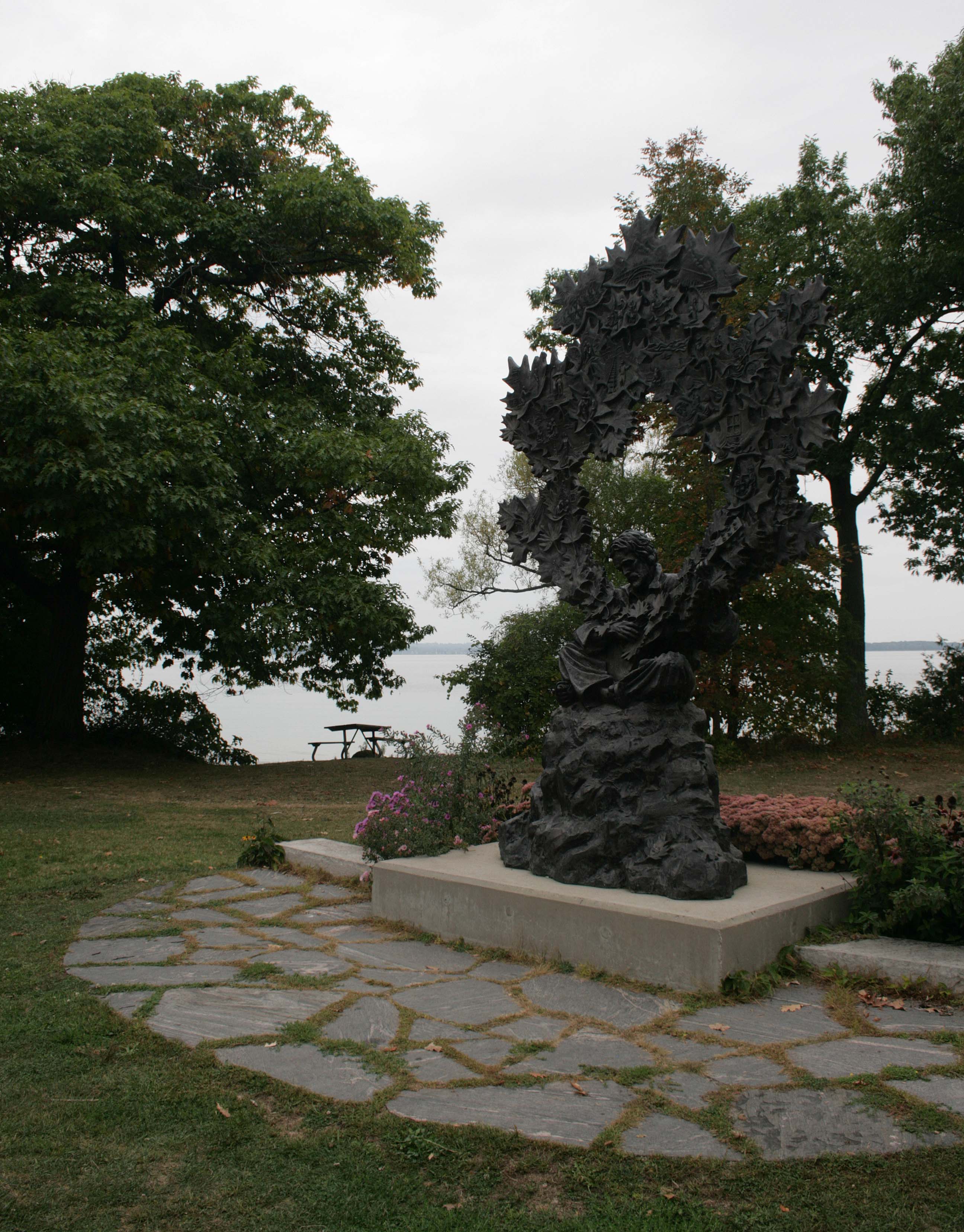
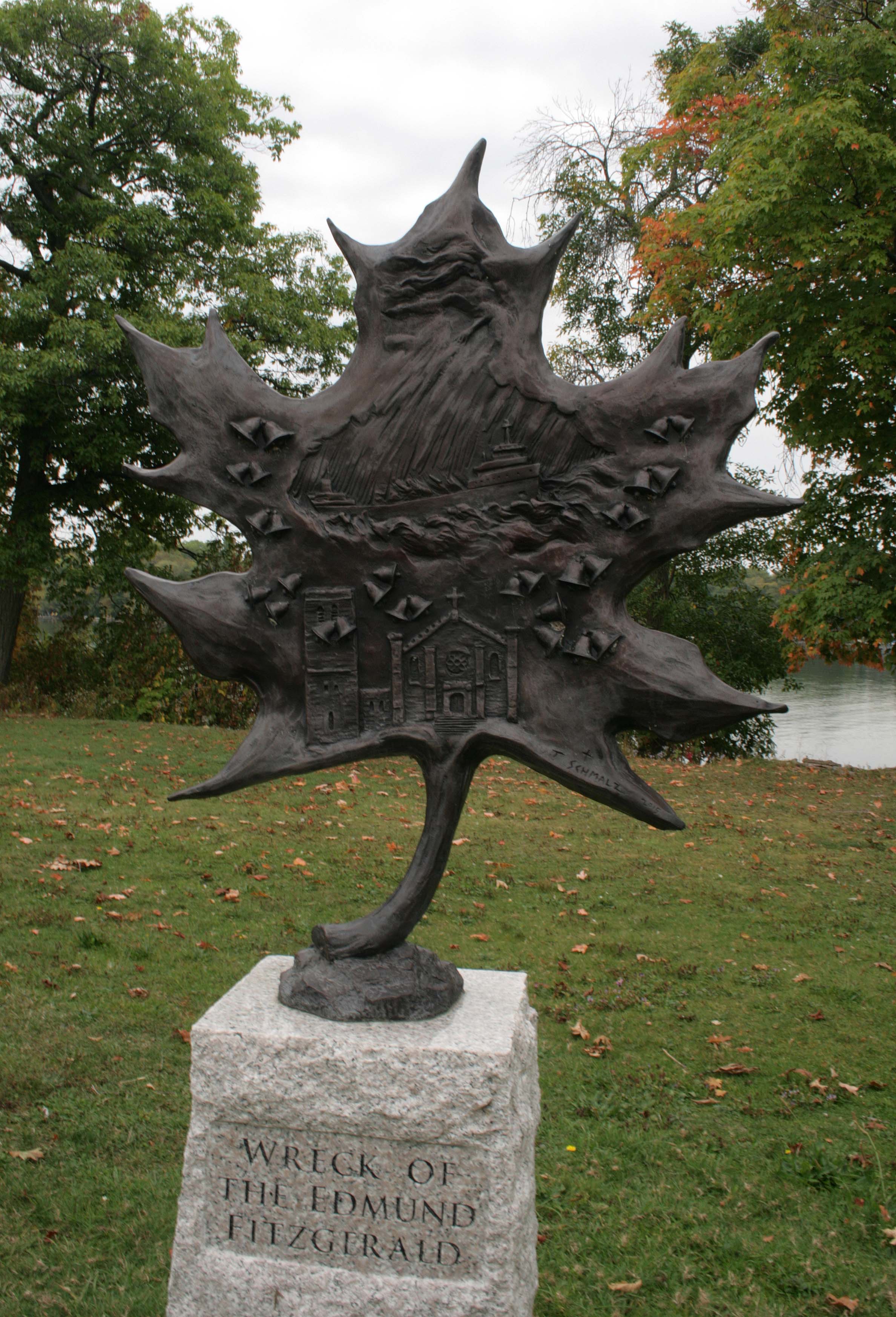
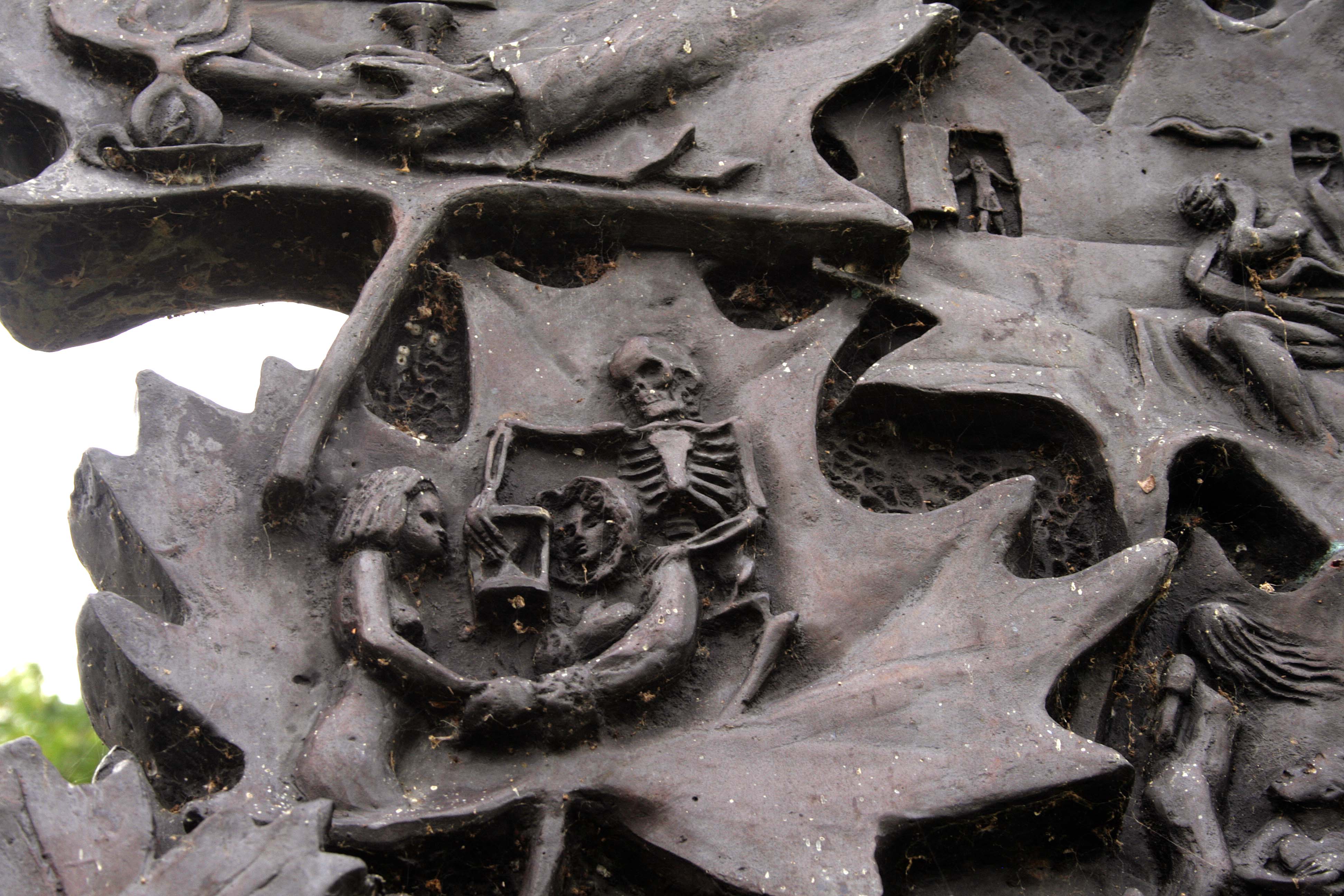
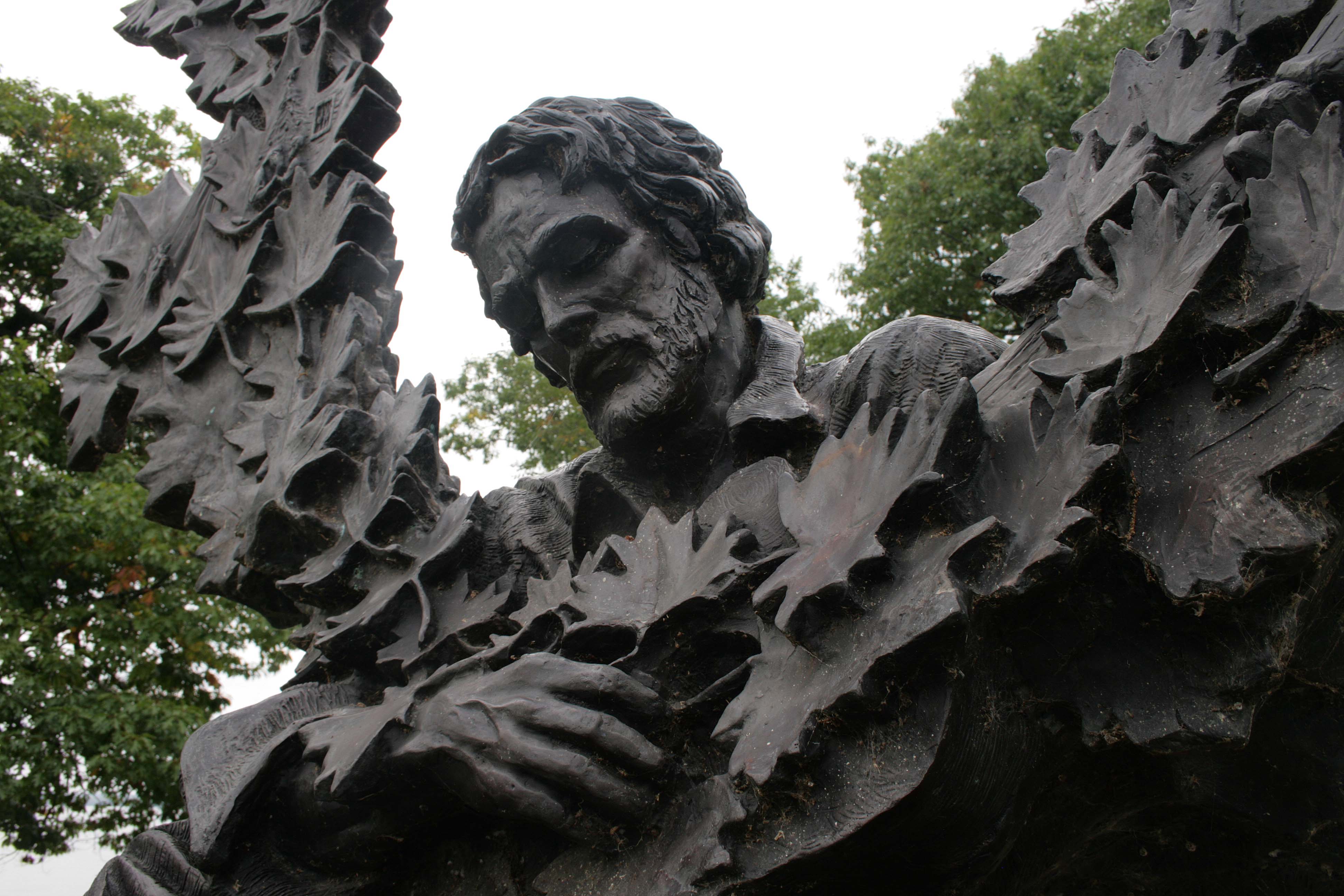
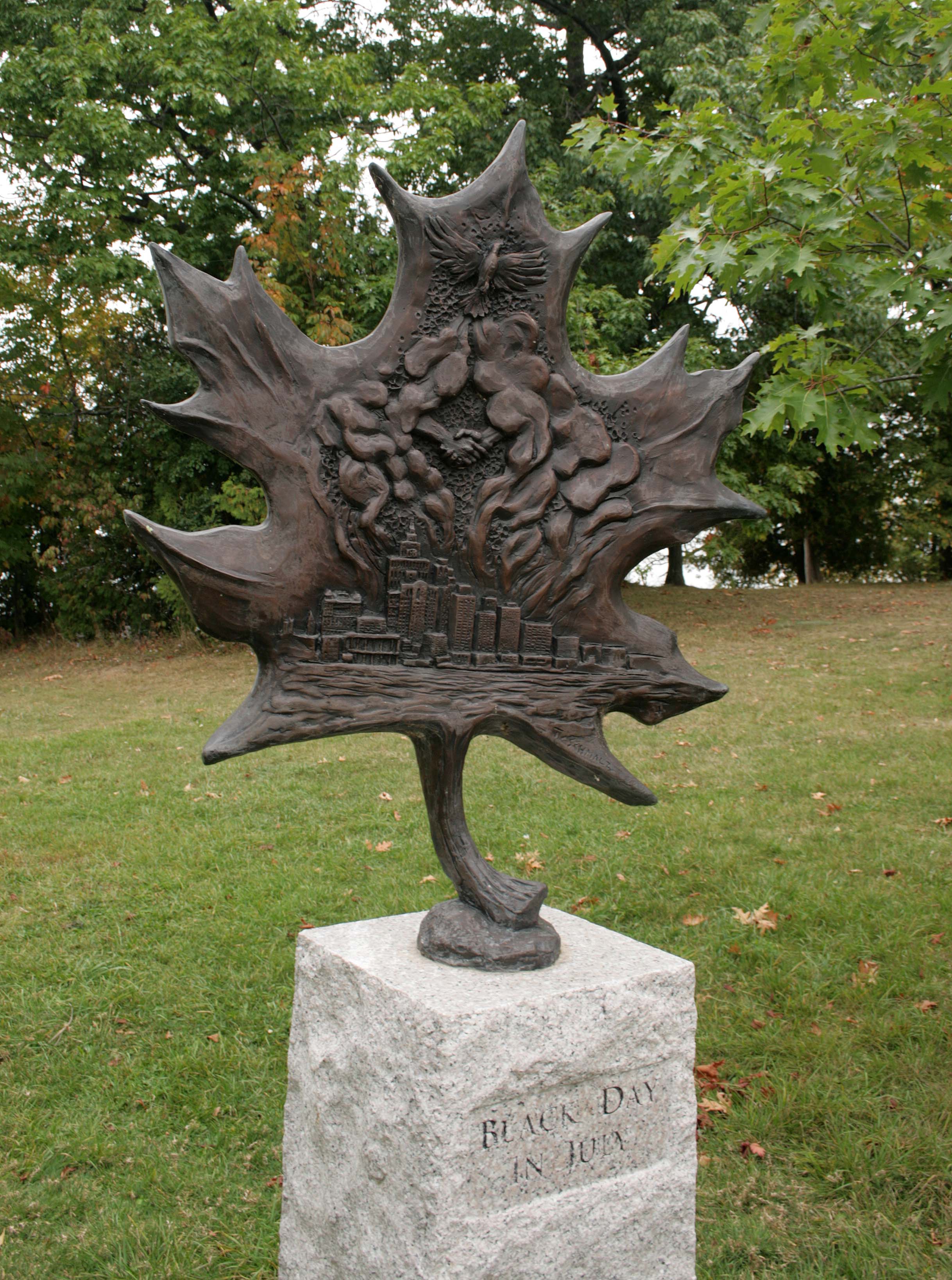
The sculpture park is a beautiful and artistic tribute to Lightfoot’s music and legacy, celebrating both his achievements and his connection to the area. The park’s centerpiece is a striking, larger-than-life bronze sculpture of Lightfoot, sitting cross-legged with his guitar in hand. It captures him in his element, mid-song as his music comes alive around him, depicted on maple leaves that encircle him.
I took some time to reflect while standing before the statue. The park is not just a collection of art pieces, but a reflection of Lightfoot’s connection to the land, his music, and the people who grew up listening to his songs.

My mother and I were not the only visitors to the park that day. There were throngs of people walking the trails, many with large cameras in hand. I noticed they all took some time to admire the beautiful sculpture work and reflect on Lightfoot’s life and work as well.

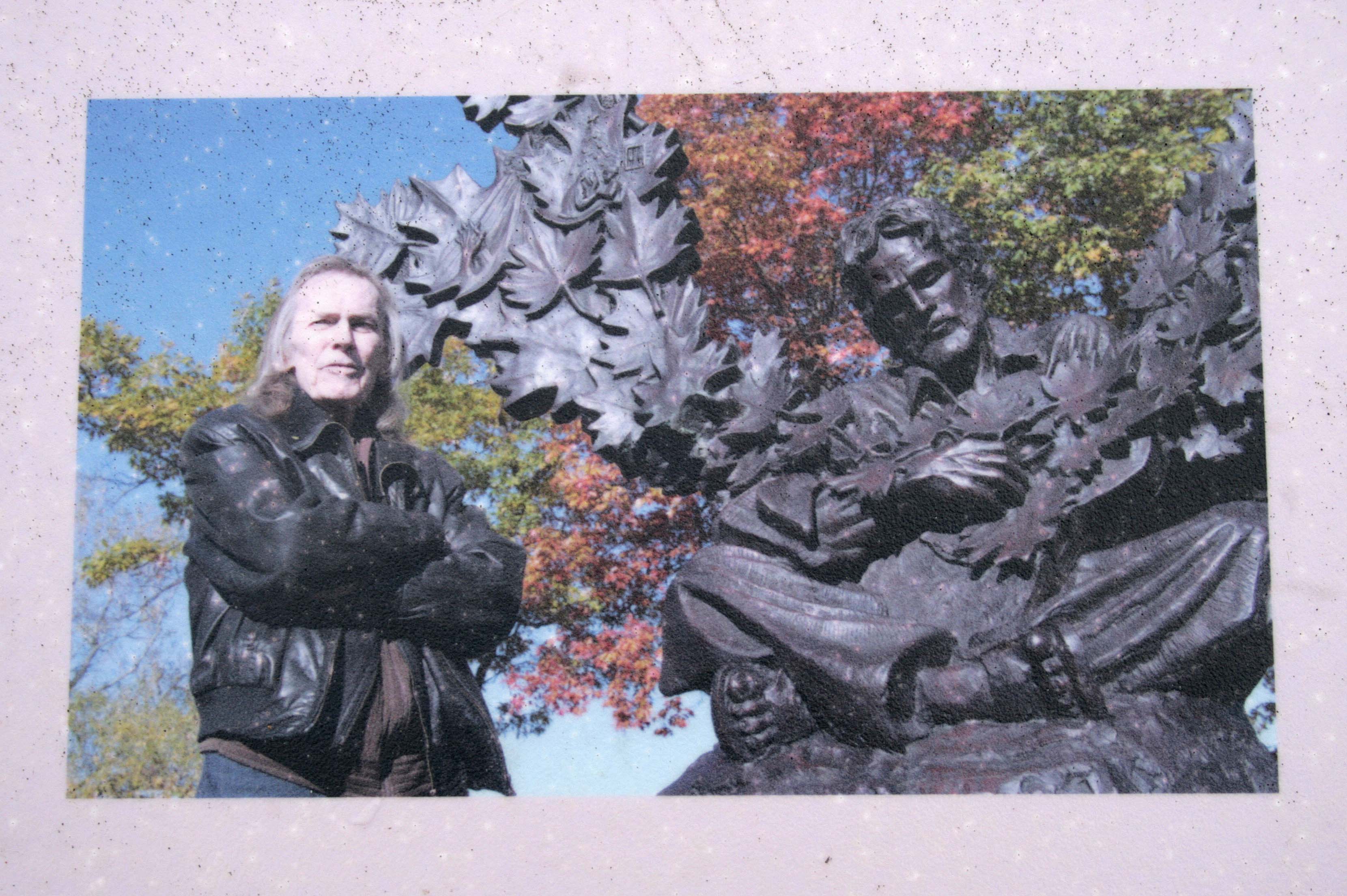
I wondered if Lightfoot himself had known about this sculpture park. I was pleasantly surprised to see a large plaque that showed Lightfoot smiling as he stood beside his younger, bronze self. He was in attendance for the unveiling in 2015, and said humbly “I’m honoured, much more so than any of the honours I’ve received up to this point in time.”5

St. Andrews and St. James Cemetery

After walking the entirety of the walking trail loop, my mother and I made our way back to the car. We decided since the area was so nice that we would have our picnic lunch in the sculpture park, before heading to our next destination—the cemetery.

It was a short drive from the park to St. Andrews and St. James Cemetery. The cemetery was quiet and serene, offering beautiful views of the surrounding forest, although we were not the only living souls visiting the cemetery that day. There was an older couple who were also meandering through the cemetery paths.

Gordon Lightfoot passed away of natural causes, in a hospital in Toronto, at the age of 84.6 He was laid to rest in St. Andrews and St. James Cemetery in May of 2023, beside his mother and father. His mother, Jessie Vick Trill Lightfoot passed away in 1998 at the age of 88.7 His father, Gordon Meredith Lightfoot Sr. passed away in 1974 at the age of 63.8

The gravestone is simple, yet elegant—a testament to the quiet humility Lightfoot always embodied, despite his fame. The inscription simply reads “Together Forever”.

Visiting Gordon Lightfoot’s grave and walking the trails at the Sculpture Park in Orillia was a beautiful and memorable experience. I couldn’t help but think about how his music had been woven into the fabric of Canada’s history. More than just melodies, they’re stories that often capture the essence of the Canadian experience.

There is something special about visiting the final resting place of someone whose music has shaped the soundtrack of a country.

What is your favorite Gordon Lightfoot song?

Thanks for reading!


References:

  1. The Wreck of the Edmund Fitzgerald by Gordon Lightfoot | S.S. Edmund Fitzgerald Online
  2. Gordon Lightfoot | The Canadian Encyclopedia
  3. Location | City of Orillia
  4. The Tragedy | S.S. Edmund Fitzgerald Online
  5. Gordon Lightfoot sculpture unveiled in Orillia | Orillia
  6. Canadian singer-songwriter Gordon Lightfoot dead at 84 | NBC News
  7. Jessie Vick Trill Lightfoot | Find a Grave
  8. Gordon Meredith Lightfoot Sr. | Find a Grave

Stone Stories: The Tomb of the Unknown Soldier

In honor of Remembrance Day this year, Monday, November 11th, I want to take a moment to reflect on the significance of this solemn occasion and the powerful symbol of sacrifice that is the Tomb of the Unknown Soldier.

This day, which marks the end of hostilities during the First World War and honors all who have served in times of conflict, holds deep meaning for Canadians. While Remembrance Day has been observed since 1919, its evolution over the years—from its origins as Armistice Day to the shift in date and name in 1931—demonstrates its lasting importance in our collective memory.1 In this week’s post, I want to delve into the history behind the Tomb of the Unknown Soldier, a tribute that today stands as a symbol of the many soldiers who gave their lives without recognition.

The Unknown Soldier

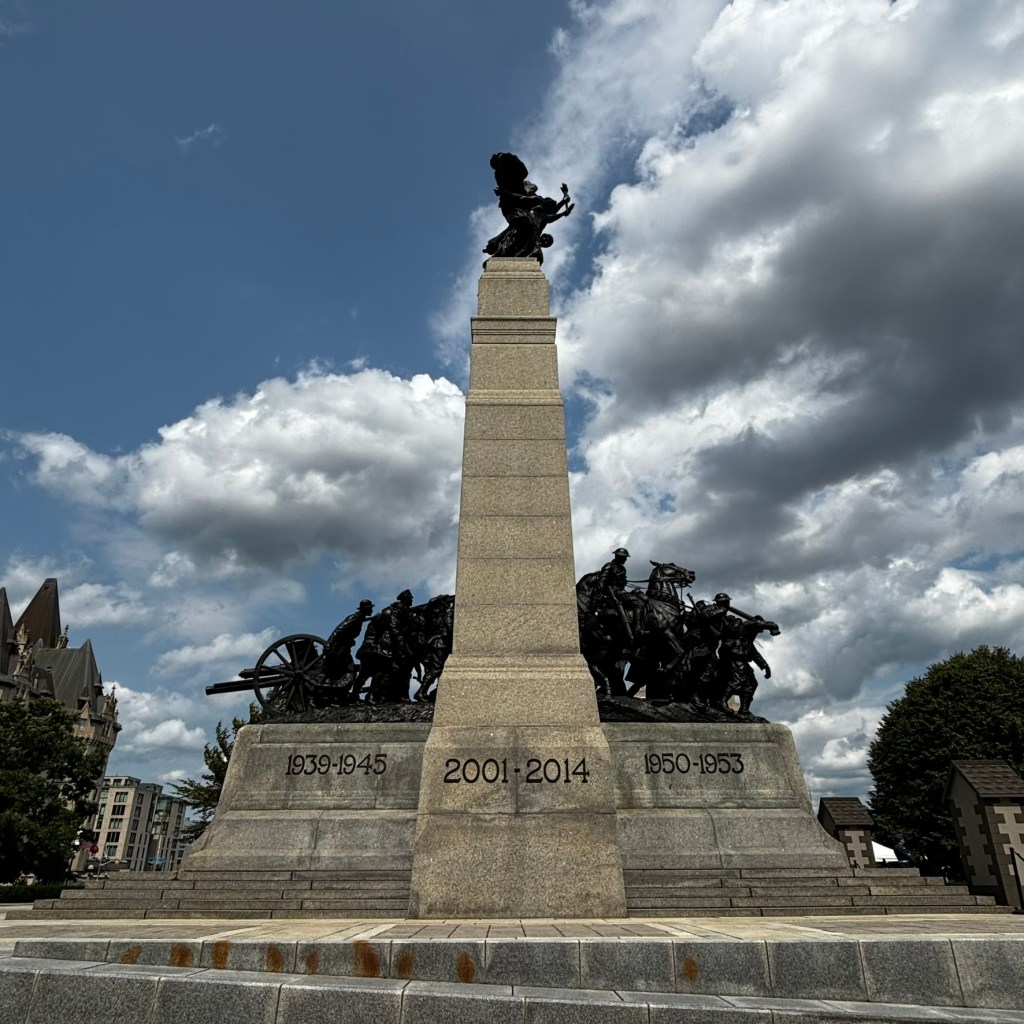
The tomb of the unknown soldier lies in front of the National War Memorial at Parliament Hill. The large monument, a cenotaph, was unveiled in 1939 to commemorate the Canadian response to the First World War. It has grown to symbolize the sacrifice of all Canadians who have served in times of war.2

The Royal Canadian Legion, with help from Veteran’s Affairs Canada, began work to bring the Unknown Soldier home in the spring of 1998.3 As a Millenium project, this undertaking was not an easy task and many veterans were anxious to see this tomb built, as a reminder for new generations of the cause and consequences of war.3,4

Exhaustive work was completed to choose the remains that would be repatriated. The remains were selected from among 6,846 unknown soldiers of the First World War.5 The set of remains that now lie at rest in the sarcophagus at the base of the war memorial comes from Cabaret-Rouge British Cemetery, in Souchez, France.4

The Unknown Soldier’s remains were exhumed on May 25, 2000, by the Commonwealth War Graves Commission. The remains were then repatriated to Canada in a Canadian Forces aircraft, where they would lay in state for three days in the Hall of Honor in the Centre Block of Parliament.5 On May 28, 2000, the remains were laid to rest in a sarcophagus made of granite, during an interment ceremony. Soil from each Canadian province and territory was placed on the casket. They also included some soil from France.6

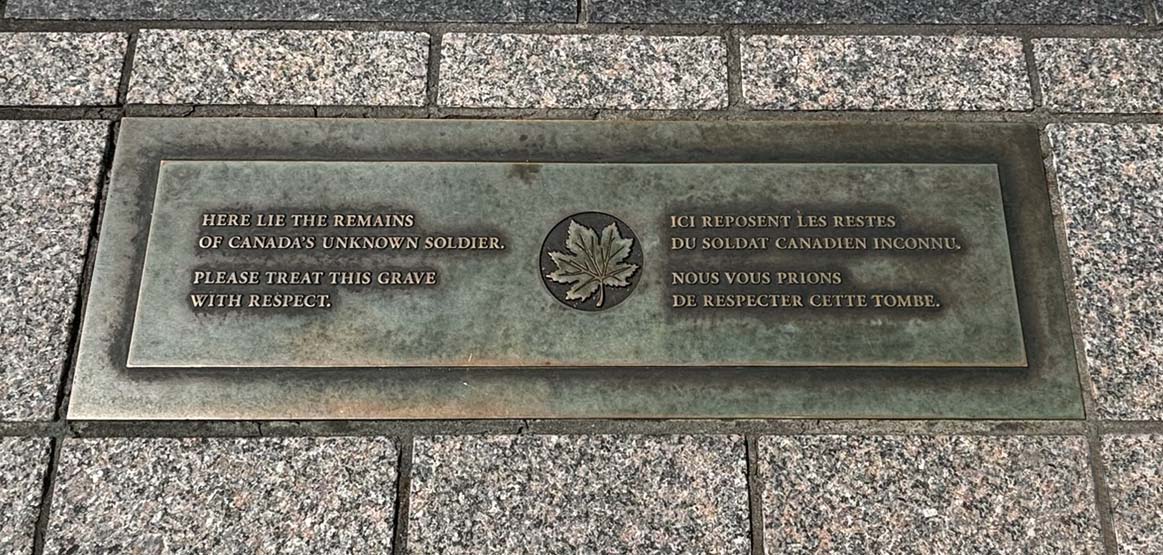
The inscription on the tomb reads “The Unknown Soldier / Le Soldat inconnu”. There is also a brass plaque embedded in the ground in front of the tomb which reads: “Here lie the remains / of Canada’s Unknown Soldier. / Please treat this grave / with respect.”

The tombstone marking the first resting place of our unknown soldier, in France, was also brought to Canada and now hangs in the Memorial Hall of the Canadian War Museum in Ottawa.

The inscription reads: “A Soldier / of the Great War / A Canadian Regiment / Known Unto God”

The Memorial Hall of the Canadian War Museum has a unique design feature, where every year on November 11th, at 11 a.m. the sun filters through a window in the hall, directly illuminating the headstone.7

A new gravestone was placed to mark the original burial site, now empty, in Cabaret-Rouge British Cemetery. The stone, similar in appearance to the original gravestone, is engraved with a maple leaf and the following epitaph, “The Former Grave Of An / Unknown Canadian Soldier / Of The First World War. / His Remains Were Removed / On 25 May 2000 And Now / Lie Interred At The / National War Memorial / In Ottawa Canada.”4

The Changing of the Guard

This summer, while I was visiting family in Ottawa, I had the opportunity to visit the Tomb of the Unknown Soldier and witness the changing of the guard.

Since 2007, the Canadian Armed Forces have posted sentries to stand guard at the tomb, with a rotation of personnel from the Royal Canadian Navy, Canadian Army, Royal Canadian Air Force, and Canadian Ranger units from across the country.8 During the summer months, the changing of the guard ceremony occurs every hour, on the hour, between 9 a.m. and 5 p.m.

The ceremony is a somber occasion that reflects respect for Canada’s fallen soldiers. As the sentries execute their precise and disciplined movements, the atmosphere was heavy with reverence. The ceremony serves as a powerful reminder of the sacrifices made in the name of freedom and those who gave their lives in service.

While visiting the tomb, I was struck by the weight of history and felt the significance of honoring those whose identities may be lost, but whose sacrifices will never be forgotten.

We will never know the identity of the Unknown Soldier—but that’s the point.

In war, the remains of soldiers may be badly damaged, or destroyed. Even though a great effort was made to find and identify remains, many were not found at all. Almost 20,000 Canadians who died in the First World War have no identifiable graves.4 Some could only be identified as Canadians, by uniform buttons or badges, and were buried with a simple military marker, like our unknown soldier.4

So this Remembrance Day, as we pause to honor the sacrifices of those who served, remember also the unknown soldier—the many who gave their lives, whose identities are now lost to history.

Lest we forget.


References:

  1. Remembrance Day| Canadian War Museum
  2. National War Memorial | Veterans Affairs Canada
  3. Bringing the Unknown Soldier Home | Legion
  4. Questions and Answers | Veterans Affairs Canada
  5. The Unknown Soldier | Canadian War Museum
  6. Tomb of the Unknown Soldier | Government of Canada
  7. Canadian History Ehx’s Post | Facebook
  8. National Sentry Program | Government of Canada

October Stone Stories: The Witch of Plum Hollow

Did you know that not all Witches are found in Salem?

Folktales and legends of witches can be found worldwide, even in small towns in Ontario. This truth led me down a few rabbit holes that uncovered some fascinating stories about a darker side of Canada’s history—a history of stigma, politics, and strong women.

One such strong woman was Jane Elizabeth Martin Barnes, also known as Mother Barnes. This summer, I was fortunate to visit her homestead and pay my respects at her final resting place.

Elizabeth Barnes

Every good witch legend exists in mystery, and the Witch of Plum Hollow is no different. Some details of her story are uncertain, like the date of her birth. Some sources note her date of birth as 1794, as engraved on her tombstone, while others note November 15, 1800.

What we do know, is that she was born in Cork, Ireland. Her father was an Irish landowner, and her mother was of Spanish Gypsy descent.1 Facing an arranged marriage, Elizabeth and her lover, a military man, left for North America where they would elope.1

The young couple would have one child together before misfortune struck. Elizabeth’s husband passed away tragically, leaving the young mother alone to raise their child.1 Four years later, she would marry David Barnes, a shoemaker. Together they had nine children, six sons and three daughters.1

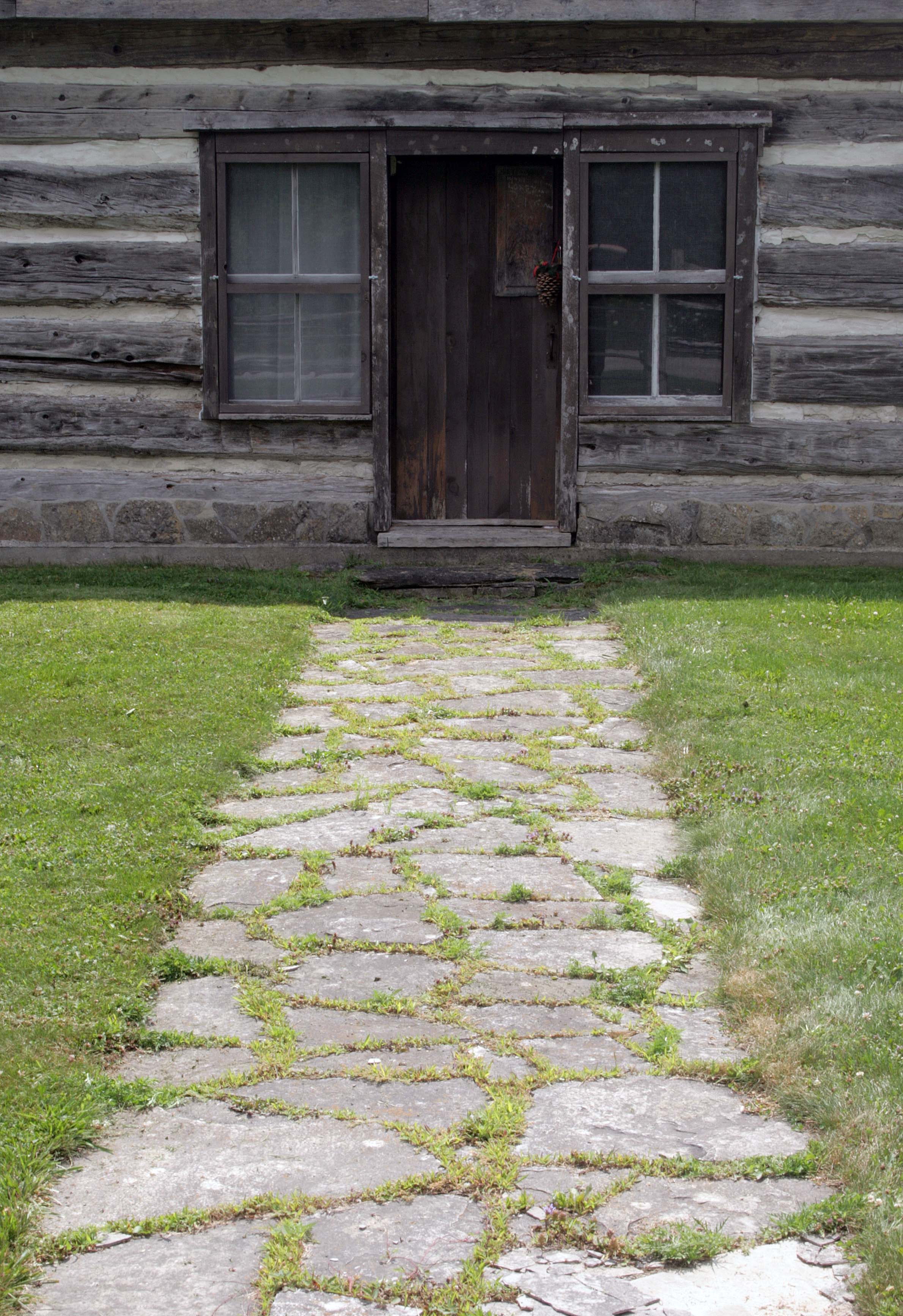
In 1843, the Barnes family moved to Sheldon’s Corners, near Athens, Ontario.1 They raised seven of their children in the small wood cabin, that today is known as the Mother Barnes Homestead. Eventually, Elizabeth’s husband grew tired of farm life and left, taking their youngest son with him.1 Elizabeth was left with a house full of children to mind on her own.

To support her family, Elizabeth turned to fortune-telling.

She credited her Spanish Gypsy ancestry and the fact that she was the seventh daughter of a seventh daughter as the source of her second sight.2 She charged 25 cents for a reading and soon became well known for her accuracy.2

At this time, she began to be known as the Witch of Plum Hollow, respected by some and feared by others.1 People visited from everywhere for a reading from Mother Barnes. She became increasingly involved with local lost & found cases, finding lost items and missing livestock.2 She was also instrumental in a disappearance case, directing the searchers straight to the missing body.2

Her most famous visitor was a Kingston lawyer with political aspirations. Mother Barnes foretold that this man would become the leader of a new country and that its capital would be in Bytown.2

Today, Bytown is known as Ottawa and is the capital of Canada. That lawyer was John A. Macdonald, who became the first Prime Minister of Canada in 1867.2

Mother Barnes Homestead

The small log cabin that had so many visitors in the past sat for a time in utter disrepair. Over time, the wood rotted, and the roof sagged, the derelict state made worse by vandals’ damage.

The property, which includes; two acres, the original cabin, an abandoned well, and a deteriorating barn, was eventually purchased by descendants of Mother Barnes in the 1980s. They worked hard to try and bring the little cabin back to life.3

Today the log cabin has been restored by new owners. A green sign with large gold script declares the site as the “Mother Barnes Homestead”. Beside the sign sits a large boulder with an indent suggesting there was once something attached to it. This once commemorative boulder had a sign that read “Home of Mother Barnes”. The sign was removed to preserve it from further damage, as it had been used as target practice.1

The property is now well maintained and sits behind a wooden fence, that is dotted with no trespassing signs.

The day I visited the Mother Barnes Homestead I was hoping there would be someone on the property to talk to, and maybe get a tour of this historic house. Unfortunately, the property was deserted. The no-trespassing signs were enough of a deterrent to keep me from trying to sneak a peek inside the windows.

I would have loved to be able to explore the attic, where Elizabeth was known to perform her tea readings. I hope one day the property will be opened as a historic house and museum.

Sheldon Cemetery

Jane Elizabeth Martin Barnes died on February 4th, 1891 at the age of 90 after falling ill with pneumonia.5 She is laid to rest in Sheldon Cemetery, not far from her homestead.

Originally her grave was unmarked, that is until local Cheesemakers Claude and Ella Flood decided to erect a monument in her memory. Curiously, the dates on the stone are incorrect, listing her year of death as 1886.5

The stone itself was not placed on her actual gravesite either, I would learn. The stone sits beneath the cemetery sign arch near the cemetery entrance. When I visited, the arch was completely overgrown and obscured with vines. The gravestone reads: “Burial Place / of / Mother Barnes / 1794—1886”

While visiting another cemetery in the area, I met two women who pointed out some interesting graves for me to photograph. After showing me the graves, they asked if I had been to visit the Witch of Plum Hollow. I said yes, to which they replied that she wasn’t buried beneath the stone.

The unmarked grave of Mother Barnes lies at the back of the cemetery on the left-hand side.

The woman also shared that there is a pipe sticking out of the ground in that area, very close to the grave. They continued to tell me a story about the pipe, and how it was plugged for a very long time, to keep the witch’s spirit in. But, sometime in the 1980s, the pipe was unplugged and the spirit of the Witch was released. I was surprised to hear a negative tone in the woman’s voice as she told the story, and how she thought the pipe should have remained plugged.

It was interesting to see that the stigma behind the term witch was still alive, well over 100 years later.

But was Elizabeth Barnes really a witch?

By all accounts she was just a single mother, using kind advice and honest predictions to provide for her family. Predictions that very often came true.

Thanks for reading!


References:

  1. Elizabeth Barnes: The Witch of Plum Hollow | Pinecone
  2. Meet Mother Barnes, the “Witch” of Plum Hollow, Ontario | NCPR
  3. Plum Hollow Witch still casts spell |The Ottawa Citizen, Thursday, October 28, 1982, page 23
  4. The Plum Hollow Witch | Ottawa Rewind
  5. The Witch of Plum Hollow | Arlene Stafford Wilson

October Stone Stories: The Father of Zombies

“They’re coming to get you, Barbra”

This is one of my favorite movie quotes, and it comes from the 1968, black-and-white independent horror classic, Night of the Living Dead. I even have a small piece of the Evans City Chapel framed on my wall. The chapel sits in Evans City Cemetery, which is where the opening scene of the film was shot.

This horror classic was written and directed by George Romero, the father of zombie films. This summer, I had the chance to visit the final resting place of this iconic director.

George A. Romero

George Andrew Romero was born in New York City on February 4, 1940, and grew up in the Bronx. His interest in film began at an early age and he would go on to enroll at Carnegie Mellon University, in Pittsburgh.1

After graduating in 1960, Romero began shooting short films and TV commercials, including an early short for the popular children’s show Mister Rogers Neighborhood.1

Romero’s break-out film Night of the Living Dead was revolutionary for the horror genre, and today is a staple of any horror film addict’s collection. This film completely reinvented the image of one of today’s most popular movie monsters.

Romero created the rules for a new kind of zombie. Now portrayed as reanimated corpses who hunger for living flesh. They are slow and shambling, with only one purpose. Silent, aside from their eerie moaning as they get closer to their prey. There is only one way to stop them—a violent strike to the head.

The film’s explicit violence and gore garnered negative reviews at its release, but today the film has amassed a cult following. In 1999, the film was deemed culturally and historically significant by the Library of Congress and has been preserved by the National Film Registry.2 In part for its social commentary during the 1960’s.

Romero would go on to write and direct other films, even directing a romantic comedy, but he always gravitated back toward the undead. He would go on to create a whole series of films set in the Dead universe; Dawn of the Dead, Day of the Dead, Land of the Dead, Diary of the Dead, and Survival of the Dead—his last film.

After falling in love with the city, Romero moved to Toronto, Ontario in 2004. He would shoot a lot of his later films in the city. In 2009, he acquired his Canadian citizenship, becoming a dual Canadian-American citizen.

In 2017, George Romero died in his Toronto home of lung cancer. He was 77.3 Romero is laid to rest in Toronto Necropolis Cemetery and Crematorium.

Toronto Necropolis Cemetery

The Toronto Necropolis Cemetery and Crematorium is one of the city’s oldest and most historic cemeteries, dating back to 1850.4 The fully restored cemetery entrance features high Victorian Gothic architecture which also makes it one of the most scenic cemeteries in the area.4

I was enthralled the minute we stepped out of the Uber. The grand cemetery entrance sets the tone for the beautifully forested cemetery within. It was my first time visiting this enchanting cemetery. Being unfamiliar with its layout, I used Google Maps to lead us. Of course, I was easily distracted by the elaborate and historic gravestones we passed along our route.

As we approached a densely forested section, we heard the screeching of a hawk. It sounded close and didn’t seem to like us encroaching on its territory. Luckily the grave we were searching for was a bit farther back in the cemetery. My fiancé stuck to the meandering paths that snaked around the grounds while I ventured into the rows to read the graves.

Although not quite accurate, Google Maps led me to the general area we were searching for. Surrounded by tablet stones and obelisks, sits the mirror-like black granite stone of George A. Romero.

The epitaph reads, “George A. Romero / 1940 – 2017 / He Loved, / And Was Loved.”

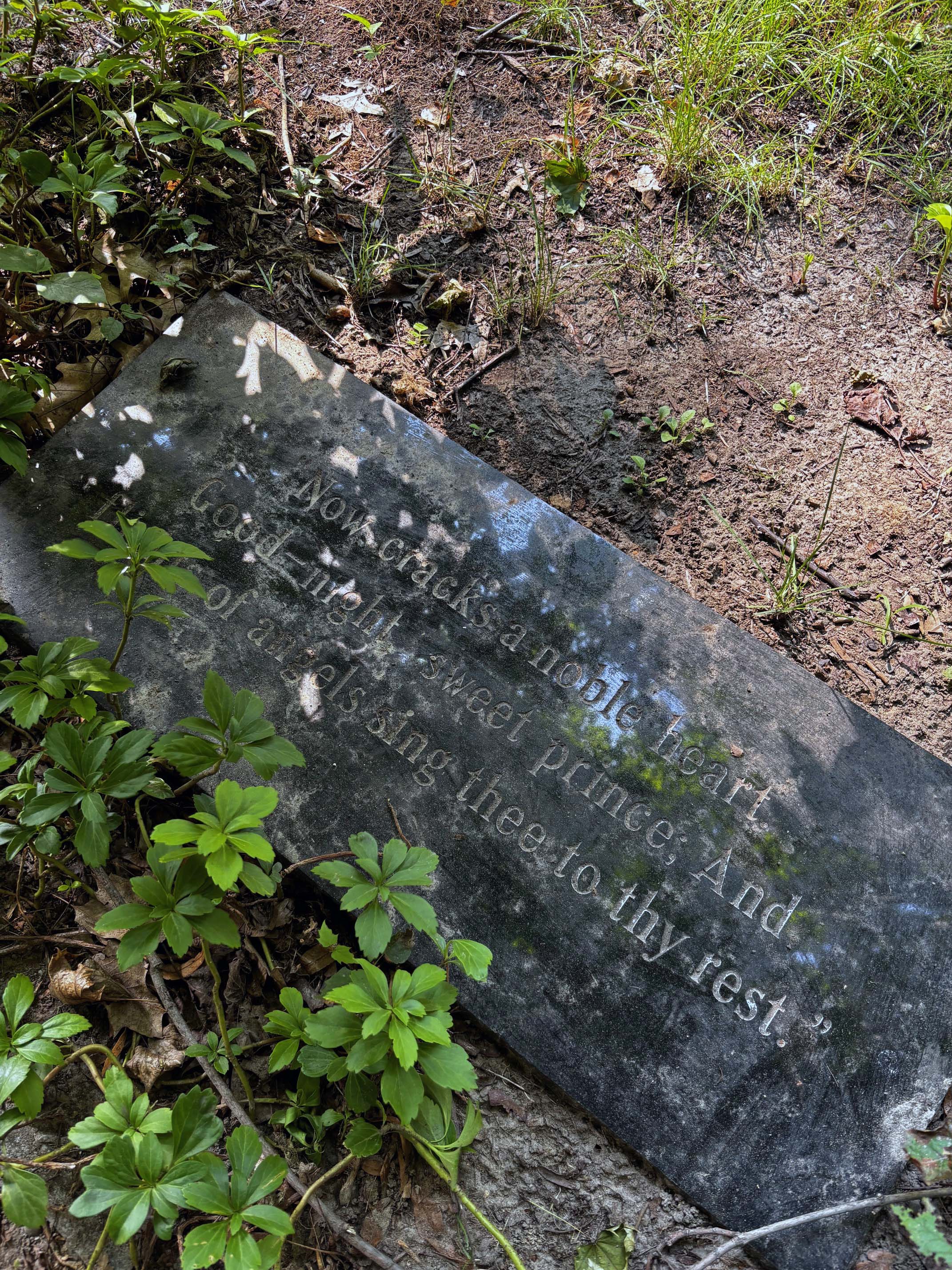
On the footstone is inscribed a quote from Shakespeare’s Hamlet, “Now cracks a noble heart. / Good-night sweet prince; And / flights of angels sing thee to thy rest.”

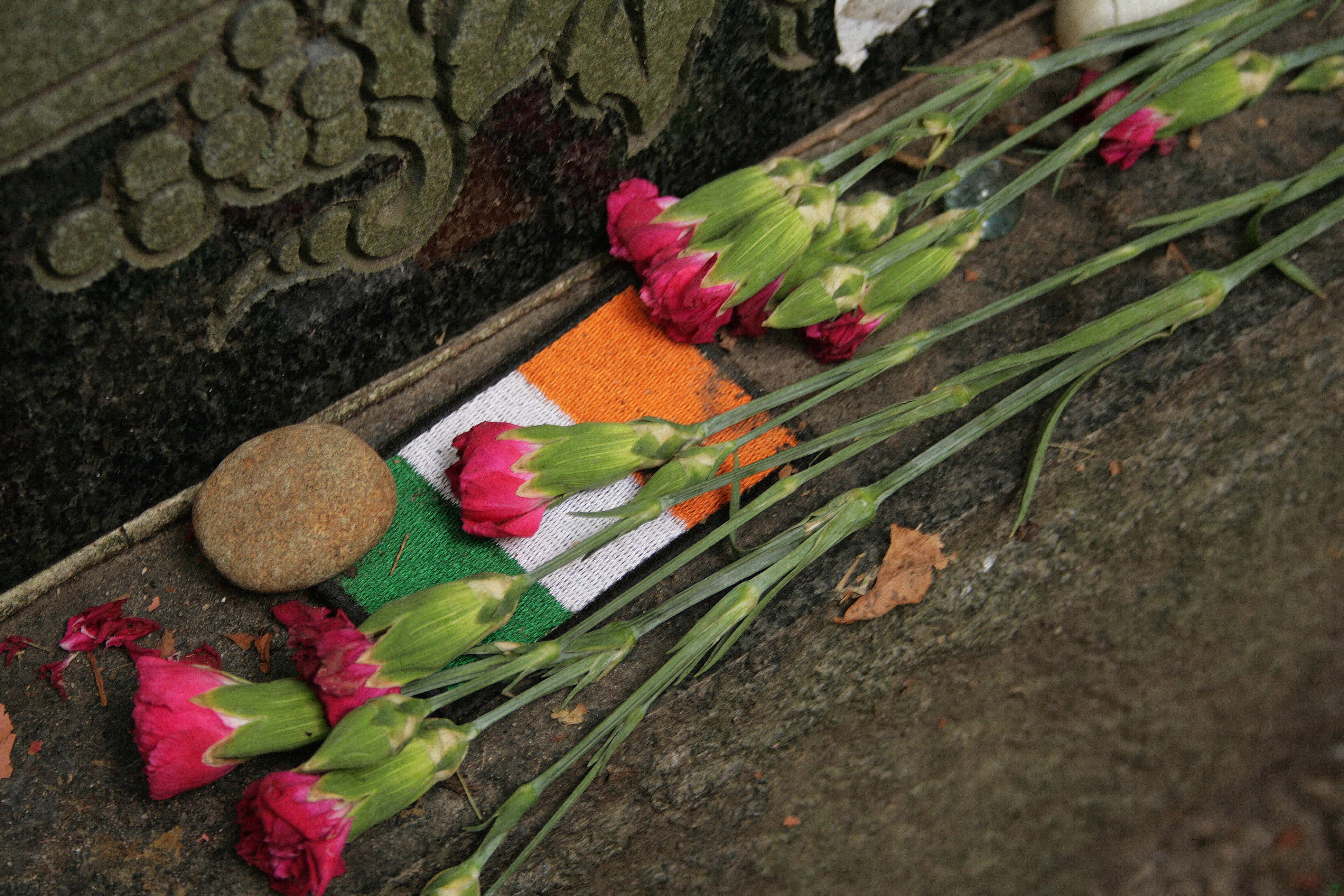
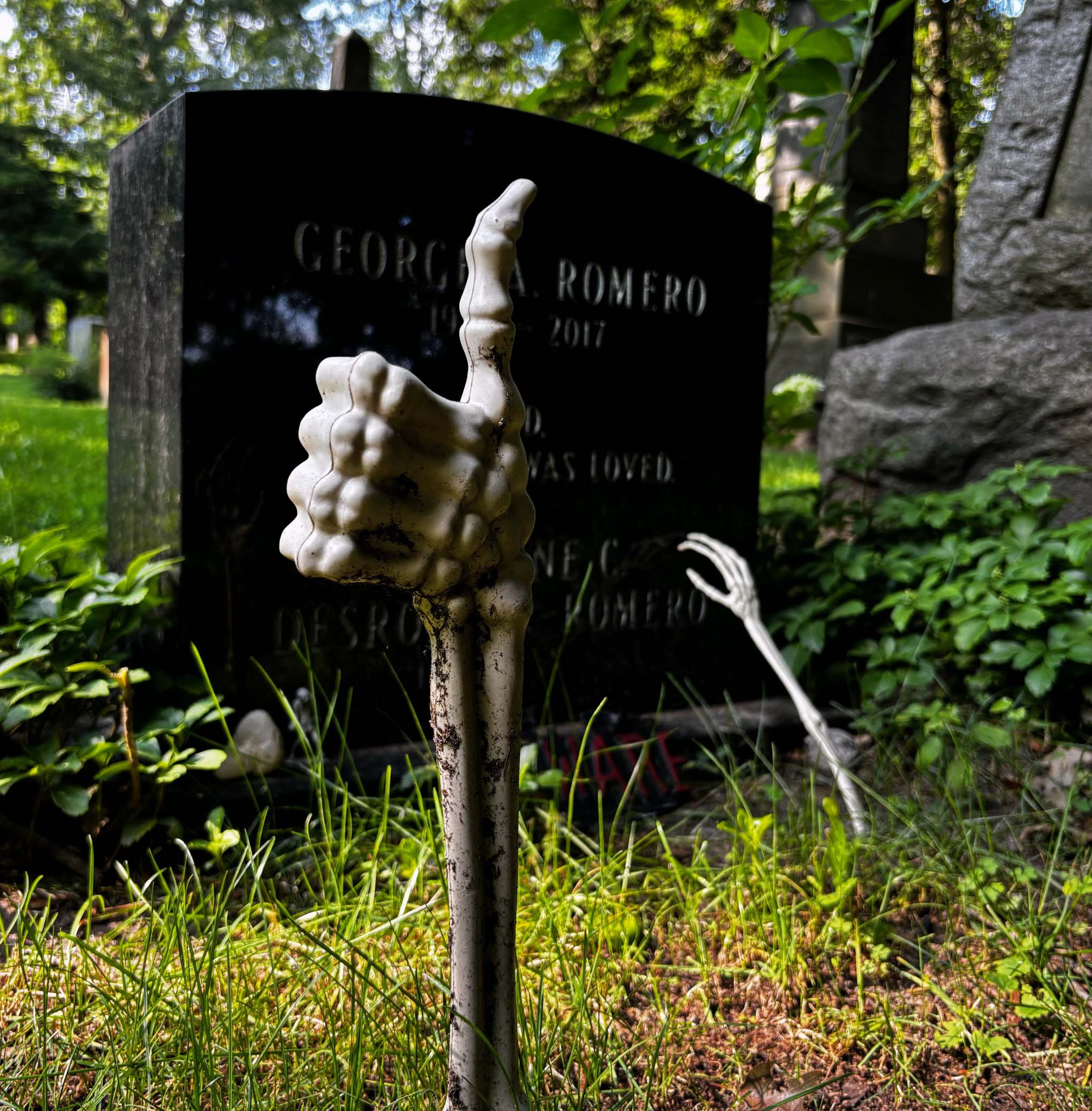
Although the cemetery was quiet that day, we could tell that many had come before us to pay their respects. Someone had planted two skeleton hands at the base of the grave, reaching up towards the inscription. Another skeleton hand, giving a thumbs up was also planted near the gravestone. Someone also left a little miniature zombie figure. The gravesite looked decorated for Halloween, even though we visited at the end of July!

Years ago, while collaborating with a community group dedicated to screening cult classics for charity, I envisioned hosting an event that would bring Romero to my small Northern Ontario town for a screening of one of his legendary films. Unfortunately, that dream never came true.

Although I never had the chance to meet him in person, to thank him for all the scares, visiting his grave and paying my respects was a profound and memorable experience for me.

Thanks for reading!


References:

  1. George A. Romero | Find a Grave
  2. Preserving the Silver Screen | Library of Congress
  3. Fans say final goodbye to ‘Godfather of zombies’ George Romero at visitation | CBC
  4. Toronto Necropolis Cemetery and Crematorium | Find a Grave

Stone Stories: Let’s Remember Adam

Back-to-school season is here in Northern Ontario. Summer break is over, and children are returning to the classroom. As parents get their young ones ready for another school year, school buses are also preparing to get back on the road.

Around this time, messaging starts about road and bus safety. It often makes me think of a big yellow and black billboard I would sometimes see on my travels. Although the billboard on Old Highway 69 is in bad shape and peeling now, I still remember when it had the smiling face of a young boy, imploring drivers to STOP for the school bus.
 
It’s time to remember Adam.

Little Adam Ranger has become the face of school bus safety. How that came to be is a sad and tragic story.

On February 11, 2000, Ranger was struck and killed getting off the school bus in Mattawa. The school bus had stopped on the highway to let 5-year-old Adam and his older brother Alex off the bus at the end of the school day.

A pick-up truck tried to pass the school bus, even though the bus was fully stopped with its lights flashing and its stop arm fully extended. The truck swerved and missed Ranger and his brother, but the trailer that the truck was towing made contact, hitting Adam and killing him. This devasting scene happened just steps away from his home.1
 
Since that tragic day, Pierre Ranger, Adam’s older brother, has fought for amendments to the regulations for school bus safety.
 
2024 marks the 24th anniversary of Ranger’s death. 

Mattawa

Mattawa has never forgotten Adam. When my mother and I visited Mattawa last fall, we explored the Mattawa Museum which has a small exhibit about Ranger. It included the well-known billboard image and postcards that carry the bus safety message.

Ranger is laid to rest in Saint Annes Cemetery, also known as Saint Annes Catholic Cemetery. My mother and I paid our respects at the cemetery, admiring his lovely headstone. It’s a loving tribute to a life taken too soon.

Ranger’s black granite gravestone features a beautiful portrait of Adam, a small etching of the cartoon mouse Stewart Little, and an epitaph that reads “Playing with Pépère”. The base of his gravestone is cluttered with stones, tokens from those who have visited to pay their respects.

One gravegood stands out among the rest—a skull. It’s worn from the elements, it’s white paint chipped away. Deb Ranger, Adam’s mother, has said that Halloween was Adam’s favorite holiday. He loved it more than Christmas.2

Adam’s Legacy

Putting their grief and anger to work, the Ranger family created the Let’s Remember Adam campaign. Its mission is to ensure that all children travel to and from school safely each day and to remind motorists to STOP for the school bus.3

Ontario drivers illegally pass school buses more than 30,000 times per day, according to the statistics.4 There is a lot of work to be done, but Pierre Ranger is undaunted.

Let’s Remember Adam has been a big contributor to the success of the Safer School Buses Act, 2021 which has officially become law.5 As of the 2022-2023 school year, Ontario requires all school buses manufactured after 2005 to have the amber-red warning system installed.5 This system, which Ranger had been advocating for, for years, consists of a new lighting system that lets drivers know when a school bus is approaching its next stop. A set of amber lights will flash when the school bus is approaching its stop, signaling that it is slowing down to stop. The red lights then activate when the bus has come to a complete stop.5

The group has also successfully lobbied for stop-arm cameras to be installed on school buses, to identify those who don’t stop and pass illegally. Mattawa was the first community to have this camera system mounted on 19 buses in their fleet.6 This free system is available to any municipality that wants the added security.6 The ultimate goal is to have these stop-arm safety systems installed on all school buses in the province.7

The Ranger family has been a strong contributor to bus and road safety, while at the same time keeping the memory of little Adam alive. Adam’s story is an important and timely one. I hope by sharing and remembering Adam, I can do a small part in spreading more awareness about bus safety and all the good work the Let’s Remember Adam campaign has accomplished.

I hope it will also be a good reminder to drivers as this year’s school season begins, to please STOP for the school bus.

Thanks for reading!


References:

  1. Twenty years after Adam’s Ranger’s death, family still fighting dangerous drivers | CBC
  2. Comment | Let’s Remember Adam STOP FOR THE SCHOOL BUS !! Facebook group
  3. Mission statement | Let’s Remember Adam
  4. Let’s Remember Adam
  5. Ranger ‘beyond frustrated’ by more incidents involving drivers who ignore school bus safety | Bay Today
  6. All municipalities can choose to outfit local school buses with no-cost smart cameras | Bay Today
  7. Ranger family remembers Adam on his birthday — and every day | Bay Today

Stone Stories: A Tap Dancing Legend

Earlier this month, two friends and I traveled to Oakville, Ontario for another birthday cemetery road trip. It was a bit ambitious, with us hitting the road at the crack of dawn. We planned to beat the traffic, but also to get a head start on the day since it would be a four-hour drive, each way.

Since it would be such a long drive, we wanted to give ourselves as much time as possible to tour the town and sight-see. And yes, of course, visit cemeteries. There was one stop that was very high on our list—the final resting place of American actor and tap-dancing legend, Gregory Hines.

Gregory Hines

Gregory Oliver Hines was born February 14, 1946, in New York, New York. Hines began tap lessons at the age of four and would spend much of his childhood practicing and performing alongside his older brother, Maurice Hines.1 

The Hines Brothers performed their song-and-dance act all over the United States. In 1963, their father joined them, turning the duo into a trio. They continued to make a name for themselves, making countless TV appearances.1 But in 1973, Hines recognized that tap dancings popularity was declining and left the act to pursue a musical career and start a band. This was short-lived though, and Hines soon returned to New York and the stage.1

In the early 80’s, Hines made the transition to Television and film actor. His first feature film credit is his portrayal of Josephus in the comedy/musical Mel Brook’s History of the World Part I (1981). Known for his accomplished choreography and tap dancing, many of Hines’ films showcase his dancing. He starred alongside veteran tap dancer Sammy Davis Jr. in the 1989 film Tap. Credited with 49 acting roles, Hines was a successful and versatile actor. Some of his most successful films are Running Scared (1986), Renaissance Man (1994), and Waiting to Exhale (1995). I would be remiss if I didn’t also list his cameo in the fan favorite, The Muppets Take Manhattan (1984).2

In 2002, Hines was diagnosed with liver cancer. He kept his diagnosis private, sharing his health struggle with only family and close friends. A year later, Hines succumbed to the illness en route to the hospital, from his home in Los Angeles.3 Gregory Hines passed away on August 9, 2003, he was 57.  

Hines is remembered by his two children, a son, and daughter, from two previous marriages. His memorial service took place on August 13, 2003, at Saint Monica’s Catholic Church in California. Based on the photographs I found online, it looks like it was an emotional service, with many Hollywood stars in attendance. Hines is laid to rest in Saint Volodymyr Ukrainian Cemetery in Oakville, Ontario, beside his fiancé Negrita Maria Truszyk Jayde.

Saint Volodymyr Ukrainian Cemetery

Saint Volodymyr Ukrainian Cemetery, also known as West Oak Memorial Gardens, is owned and operated by St. Volodymyr Cathedral. It was founded in 1984, and sits on 100 acres of property that overlooks Sixteen Mile Creek. Today, it’s thought to be the largest Ukrainian cemetery in Canada.4 

It was a beautiful sunny day when we visited Saint Volodymyr. Right away, we noticed how busy the cemetery was. Many people were visiting loved ones, cleaning gravesites, and paying their respects.

I knew before we arrived that the cemetery was a large one, so I had come prepared. I wanted to make sure we had plenty of time to pay our respects and wouldn’t spend all our time searching. With coordinates in hand, we were able to drive directly to the grave of Gregory Hines. 

I’m not sure if it was done on purpose, or if it is just because of the sheer size of the cemetery, but there was a perfect parking space just off the path. Just big enough for one vehicle, across from the famous grave. 

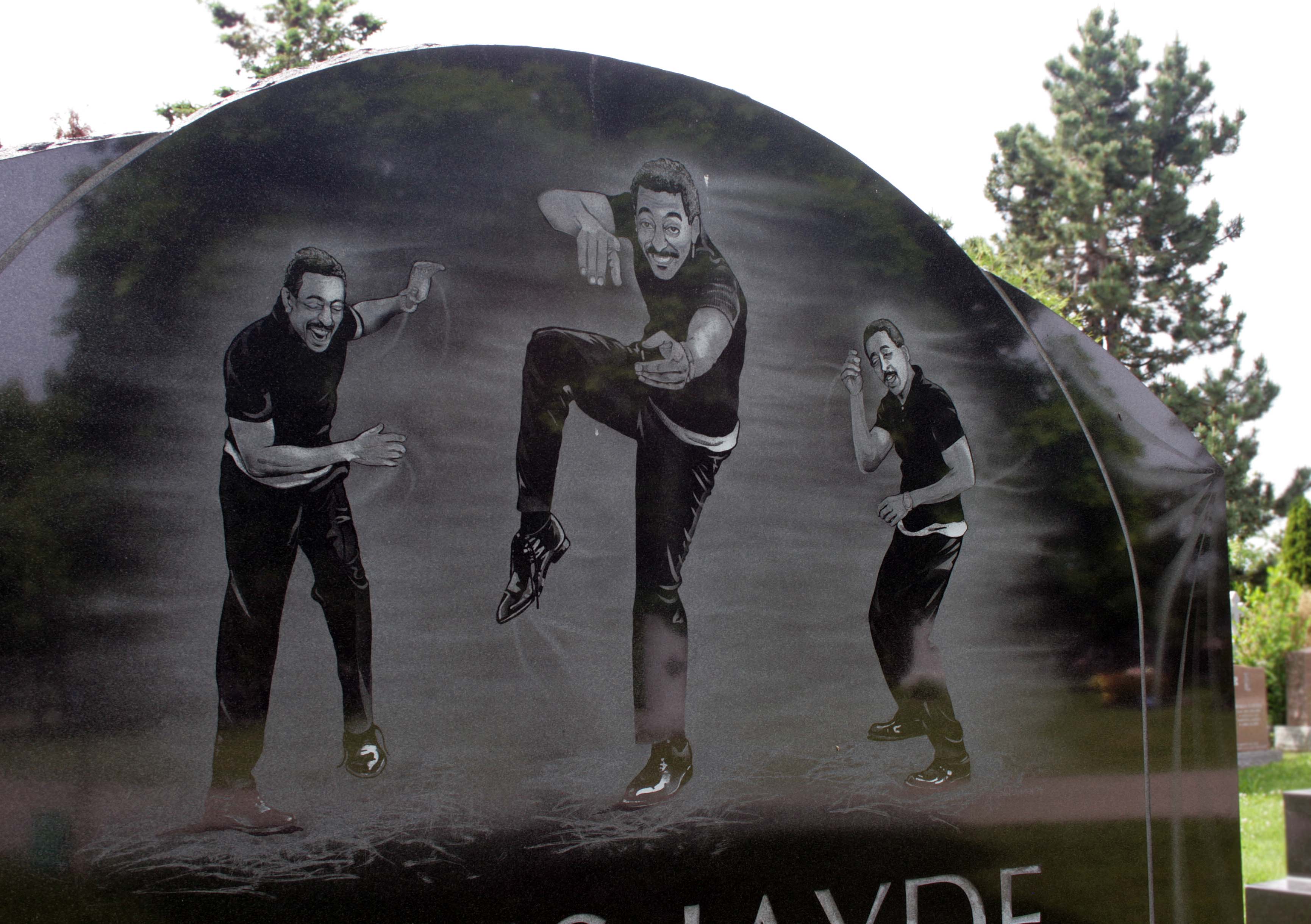
The Hines-Jayde gravestone is a beautiful monument, made from black granite. At the top of the stone is a sandblasted engraving of Hines dancing, framed by what looks like curtains on either side of the stone. He is depicted with a look of joy and happiness on his face. It’s a lovely representation of what he is best known for, and what was such a large part of his life. 

“Hines Jayde / Gregory Oliver / Hines / Feb. 14, 1946 / Aug. 9, 2003 / Together Forever / Negrita Maria / Hines Jayde / July 5, 1958 / Aug. 28, 2009 / So all sing in their festive dance. / “Within you is my true home” Psalms 87:7”

It was easy to tell that we were not the only ones who had made a trip to visit this gravesite. There were many grave goods left behind on the day we visited. These included stones, candles, and oil lamps. There was also a heel and toe plate placed at the base of the gravestone. These plates are mounted to the bottom of a shoe and used to tap dance. 

After paying our respects we wandered the cemetery a little bit, exploring the meandering paths. It’s a beautiful cemetery with its trees creating some beautiful dappled light across the gravestones. I noticed that there were many black granite stones, in some sections that were even the same style. 

I also noticed many oil lamps left at graves. It reminded me of the Jewish practice of leaving pebbles on top of gravestones. Some graves had only one of two oil lamps, while others had handfuls of them surrounding the stones. I can just imagine how beautiful they would look at night with all of the lamps lit up. 

You might be asking yourself how an American-born actor came to be buried in a Canadian cemetery. I had the same question. 

It looks like the reason is because of Hines’ fiancé Negrita Jayde, who is Canadian. A celebrity in her own right, Jayde was an athlete and an author. She was an award-winning professional bodybuilder from Toronto, Ontario, and wrote two books about the subject. She was also an actor, having starred in the action/sci-fi film Safety Zone in 1996.5

Although Hines and Jayde did not get the chance to get legally married before his death, Jayde did take Hines’ last name.6 When Jayde passed away six years, later in 2009 from cancer, she she was laid to rest beside him.

I’m very happy I was able to help one of my best friends pay her respects to one of her favorite actors. I’m also happy that I had the chance to pay my respects as well. Visiting famous graves is always an interesting experience because so often we feel so connected to them, even though we don’t know them on a personal level. TV and film actors, in particular, can feel like our best friends because of how invested we can get into their characters or their careers. So getting the chance to pay our respects at their gravestone can sometimes be a surreal experience.  

Have you ever visited a famous grave? I would love to read about your experience in the comments.

Thanks for reading!


References: 

  1. Gregory Hines | Britannica
  2. Gregory Hines | IMDB
  3. Gregory Hines | Wikipedia
  4. Saint Volodymyr Ukrainian Cemetery | Find a Grave
  5. Negrita Maria Truszyk Jayde | Find a Grave 
  6. Negrita Jayde Trivia | IMDB

Stone Stories: Mattawa’s Master Painter

One of my favorite things to do on cemetery road trips is visit small local museums. They are often filled with beautiful antique artifacts as well as fascinating stories. Brimming with local history, they often lead me down interesting research rabbit holes. They are great places to learn about interesting local figures to seek out while visiting cemeteries.

For today’s stone story, I want to talk about another Mattawa local that I learned about while visiting the Mattawa Museum, Mattawa’s own Master Painter, Gordon Dufoe.

The Artist

Gordon Dufoe was born in Mattawa in October 1891. You could say that artistic talent runs in his family. His father would often draw animals to the delight of Gordon and his brothers.1 Although Dufoe never had any formal art training, he would go on to be known as the “Master Painter of the Ottawa Valley”.2

Dufoe did a tour of duty in Europe, during World War I, where he was sometimes moved from the lines and given orders to sketch the cathedrals, historic buildings, and other locations—to document them in case they were destroyed.3

In 1919, Dufoe returned to Mattawa and married Irene Leclaire. They would go on to have nine children together, seven sons and two daughters. Frank, the oldest of the Dufoe children, inherited his father’s artistic talent. Talent that was also passed down to Frank’s son Gordon, named after his Grandfather.2 

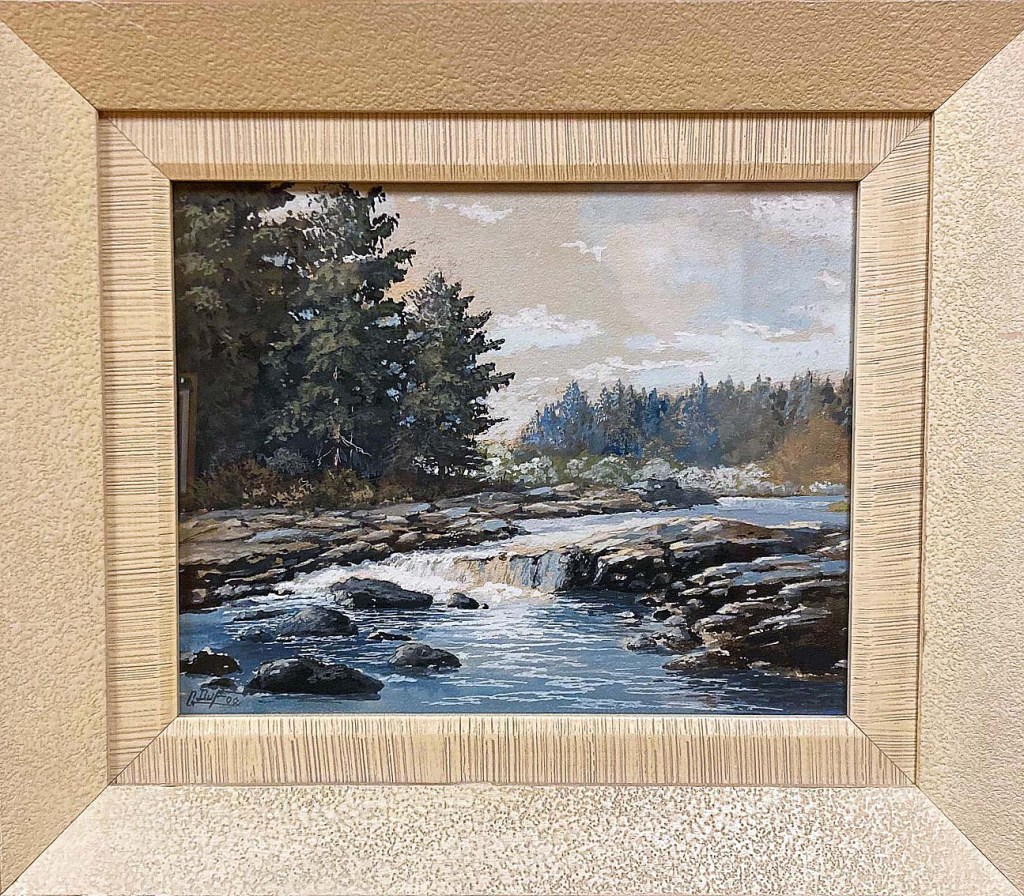
Dufoe eventually set up a home studio and began to paint professionally.1 His background as a trapper and guide shines through his work, which is largely focused on landscapes and animals. He had a beautiful eye for capturing the essence and movement of his subjects. 

The Mattawa Museum exhibit includes a Ricohflex – Model VI camera that was used by Dufoe. An avid photographer, he would often take photos that he would reference when creating his paintings. He also dabbled in building his own cameras, as well as building radios and telescopes.2 

His paintings can be found in North America, and around the world.1 Today, a painting can sell for more than Dufoe made in his lifetime as a living painter. He was known to give his paintings away or even throw them away if he was not happy with them.2 After his death in 1975, many of his works were donated to the Mattawa Museum2, and are on display for all to see.

In 1993, Dufoe’s family worked with Douglas Pollard at the Highway Book Shop to posthumously publish a book Dufoe had written. Canadian Animals I Have Known by Gordon Dufoe is a collection of stories from Dufoes life in the bush and contains many of his animal sketches.2 Today, the book is now out of print. 

Visiting the Cemetery

After visiting the museum, my mother and I made our way to the cemetery to pay our respects.

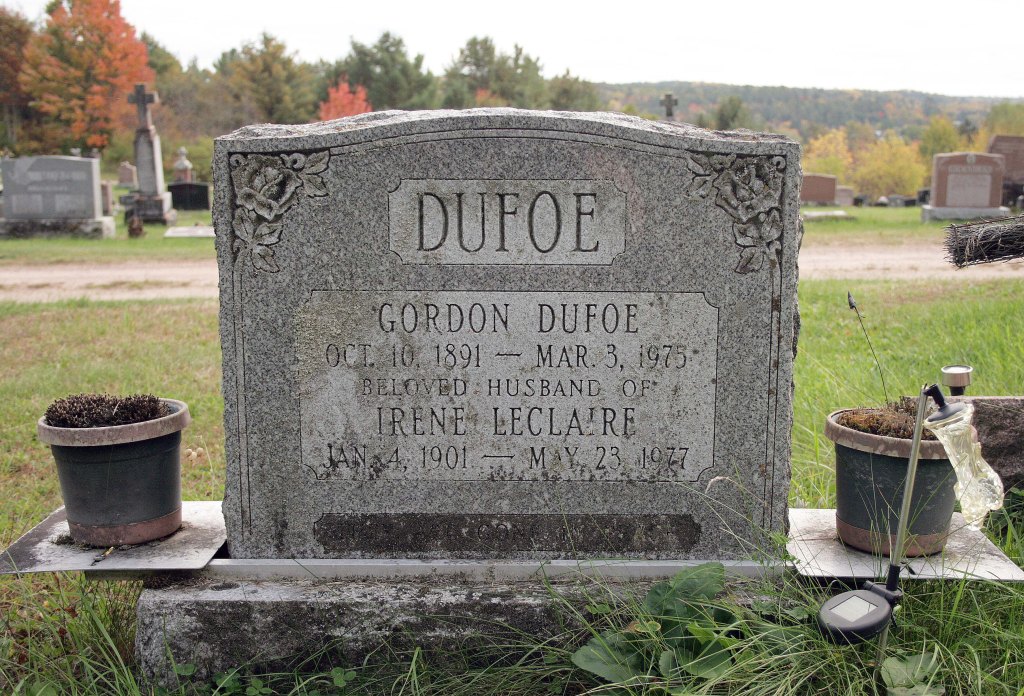
Dufoe passed away on March 3, 1975, at the age of 83. He is laid to rest in Saint Annes Cemetery beside his wife, Irene who passed away in May of 1977. Beside a large grey granite tombstone for both Gordon and his wife, stands a Canadian military grave marker, in honor of Dufoe’s military service. 

It reads: “ Gordon E. Dufoe / Private / 130 Battn. C E F / 3 March 1975 / Aged 83”

The Dufoe family plot is also the final resting place of Albert and Norman Dufoe, and Stella Dufoe Brunette, children of Gordon and Irene. 

It took my mother and I some time to find Dufoe’s plot as the cemetery is quite large. Saint Annes Cemetery, also known as Saint Annes Catholic Cemetery was established in 1883 and has approximately 2,246 memorials according to Find a Grave. The cemetery has not been fully photographed yet, and it is still an active cemetery. 

If we had not visited the Mattawa Museum before visiting the cemetery, we would not have known that this simple grey marker was the final resting place of one of Mattawa’s finest painters. 

The Museum and cemetery are not the only places in Mattawa where you can find a memorial to Dufoe. There is a park that sits between 10th and 11th streets that was dedicated to the local painter many years ago.1 In 2016, a new sign and a memorial bench that lists the names of all of his children was installed.4

The inscription on the memorial park sign reads: 

“Gordon Dufoe (1891-1975) an outstanding artist, craftsman, outdoorsman, soldier, family man, and friend is hereby remembered for the beauty and pleasure he brought to many and for his contributions as an exemplary citizen.”1

Thanks for reading!


References:

  1. Gordon Dufoe | Mattawa Museum
  2. Mattawa’s ‘Renaissance Man’ Remembered | Past Forward Heritage Limited
  3. Mattawa Park bench and sign honours artist | Bay Today
  4. Park bench will honour local painter | Bay Today

Stone Stories: The Abandoned Highway Bookshop

When I was a child, my family often made trips to Quebec to visit extended family. My father loved to use the shortcut through Field, as it cut about 30 miles off our five-hour drive to Val d’Or. We always stopped for a meal at the McDonald’s beside Ms. Claybelt, the 12-foot-tall Holstein cow. 

On the way back from our family visits we would add another stop to our route, which also became a road trip tradition. That was stopping at a small unassuming Book Shop that sits beside Highway 11. 

I have many fond memories of this little highway book shop, that today sits abandoned. Just like the many books that have sat on the now neglected shelves, the Book Shop has its own interesting story to tell.

The Highway Book shop

When Douglas Pollard opened his small print shop, called Pollard Press in 1957, I don’t think he ever imagined how big it would become. What started as a small commercial print shop in his garage, printing general office stationary eventually turned into a Northern cultural landmark.1

The story goes that one of Pollard’s customers asked to barter used books instead of cash to pay his bills. From then on the demand for books became greater and the shop expanded many times over the years to accommodate the growing collection of books.1 

Being originally a print shop, it was a natural move for Pollard to start printing and publishing books in the 1970s2. 467 original titles were published through the Highway Book Shop, focusing on local history and Canadian literature.1

What started as a 20’ x 25’ wooden building eventually expanded into a 10,000 square footprint, consisting of building add-ons and even three highway trailers that were used to store nothing but books.2 No wonder so many people made it a mandatory stop in their travels, sometimes just to experience the sheer size of its collection. 

I remember as a young girl getting lost among the stacks of books. It was so mind-blowing to me that the staff could find anything in that sea of books. However, the inventory was well maintained and kept very up-to-date. The Book Shop even maintained a list for those looking for specific titles. You could add your name to the list with your desired title and eventually, you might get a call that your book was found. Naturally, this could take some time, even years!2 

Pollard, and his first wife Jean Ririe Hope, spent a lot of time at book fairs and conventions, always on the hunt for good books to add to their shop. Pollard even purchased lots of discarded Library books, that were sometimes hit-or-miss for quality. 

After Pollard’s first wife passed away, he eventually remarried and brought his second wife into the fold of the Highway Book Shop. Mary Lois Williams was a Librarian with a Master of Library Science from the University of Toronto. She left the Librarian life trading it to work in the Book Shop when she married Pollard in 1986.3  

After Pollard died in 2009, Lois worked to keep the Book Shop running. It was a valiant effort, but she ultimately decided to close the shop in 2011. At 87 years old, her heart was just not in the same way anymore.1 

Visiting Cobalt

I visited Cobalt in October of 2022 with my mother. We wanted to take advantage of the fall colors and visit some local historical sites. We also wanted to visit Douglas and Lois Pollard in the cemetery, to pay our respects.

We spent most of our time in Cobalt visiting the Heritage Silver Trail, a self-guided trail system that takes you to 14 locations throughout the small town, that highlights the history of the silver mining rush. Unfortunately, when we visited, a lot of places were closed. This was also the case of the bookstore we had hoped to visit, White Mountain Publications.

White Mountain Publications was high on our list to visit as it houses some books that were rescued from the Highway Book Shop after it closed. I was hoping to speak to someone about how many books were rescued and if there were plans to rescue more. White Mountain also published a book that I was hoping to purchase on this trip, called Highway Book Shop: Northern Ontario’s Unexpected Treasure written by Lois Pollard. I ended up purchasing the book through White Mountain’s website instead. 

Of course, there were many cemetery stops planned for this trip, but the one we wanted to visit most was the Cobalt Veterans Cemetery. This cemetery is located in Haileybury, a small town adjacent to Cobalt. The cemetery sits beside two other cemeteries; directly beside Mount Pleasant Cemetery, and across the road from the Haileybury Catholic Cemetery. 

The Cobalt Veterans Cemetery is the smallest of the three, although Find a Grave lists 332 memorials. I would not have thought there were that many laid to rest there based on the cemetery’s small size. It did make finding the Pollards less of a challenge. 

Douglas Pollard passed away on November 25, 2009, at the age of 84. His obituary states that he passed away suddenly at Temiskaming Hospital4, but in her book Highway Book Shop, Lois briefly touches on that fateful night. Like any other normal day, after closing time Pollard went upstairs to retire for the night, as they lived in a small apartment above the book shop. When she followed him upstairs, only ten minutes later, she found that he had “quietly passed away”. Doctors confirmed that he had died of cardiac arrest.2 

Douglas is laid to rest beside his second wife, Lois Pollard who passed away on January 3, 2020, at the age of 98. Their gravestone reads: “Pollard / Douglas C. Pollard. C.M. / March 18, 1925 — Nov. 25, 2009 / Beloved Husband of / Mary Lois Williams / July 21, 1922 — Jan. 3, 2020”

Douglas’s first wife, Jean Pollard is laid to rest in Valleyview Cemetery in New Liskeard. Jean passed away in October of 1979, unexpectedly on the operating table during a planned second open-heart surgery.2

The Book Shop Today

The Book Shop closed its doors forever on May 29, 2011. In 2012 it was purchased by new owners, but the Book Shop never re-opened.5 Rumour has it that the inventory of approximately one million books1 was left behind on the shelves. As noted above, White Mountain Publishers did rescue some of the books, but is it true that the large majority were left behind? 

When we visited the Highway Book Shop on our way back home from visiting Cobalt, we took some time to walk around the building outside. The large sign that stands by the road that once welcomed visitors is slowly deteriorating. The building facade has peeled and faded over the years, and the grass is now growing wild. 

We were hoping to catch a glimpse of the stacks of books inside, instead, we got a whiff of the strong musty smell of old books. Depending on where you stand outside the front of the building, you can catch that unmistakable smell. I can just imagine what it must smell like inside the building.

While touring the grounds we chatted about our memories of visiting the Book Shop. My mother remembers speaking with Lois on our many visits over the years. We also talked about the books—about all the books that were left behind, and wondering about what types of books we could find given the chance. Both of us are not brave enough to cross into urban exploration territory, but luckily we are not the only curious ones.

The good people over at Freaktography have ventured inside to document what the Book Shop looks like today and prove once and for all that the rumor is true, they did leave the books behind. You can watch their video Exploring a HUGE Abandoned Book Store over on their YouTube channel. 

Their video and photos show a time capsule, and books in rows upon rows of bookshelves for as far as the eye can see. It looks just like I remember. I am not the only one who has tried to imagine what an abandoned building full of molding and rotting books might smell like. The folks at Freaktography have been asked the question before:

“I have been asked by people, “What did it smell like in there?”, it smells exactly like you would think it does – like old books. It has warm, thick air and the rows upon rows of books give a muffled sensation when talking, there is no echo and it is eerily silent.”6

I can only imagine how surreal it would be to walk through those stacks again. Watching the walk-through video does make me a bit sad though. So many books left behind. I wonder what unique and rare finds there might be, what treasure could be found. I mean a lot of those books might be dated and useless now, such as the maps and tech manuals. But just imagine what old and out-of-print finds there might be buried in there as well. 

Maybe one day someone will be given the go-ahead to slowly pour through those lost tomes, and bring some of them back into the light. I know I would love to, given the chance. 

It was really interesting looking into the backstory of this abandoned landmark, and a piece of my childhood. Learning about the lives and passions of the people who brought the Book Shop to life highlights the fact that there are so many interesting stories out there. 

Thanks for reading!


References:

  1. A Short History | Highway Books
  2. Highway Book Shop: Northern Ontario’s Unexpected Treasure by Lois Pollard | Book
  3. Mary Lois Williams Pollard | Find a Grave
  4. Dr. Douglas Charles Neil Pollard | Find a Grave
  5. Home | Highway Books
  6. Exploring a HUGE Abandoned Book Store | Freaktography Youtube Channel