Puddingstone

Have you ever heard of Puddingstone?

I first came across puddingstone while visiting cemeteries on St. Joseph Island. My mother and I visited the island in 2022, with plans to visit every cemetery on the island. We started to notice many gravestones made out of this unique stone. We also found large pieces of it left at gravesites, and in one instance possibly used as a temporary marker. I wanted to learn more about this peculiar stone.

During our visit to the island, we had a private tour of Adcock’s Woodland Gardens. The gardens, that sprawl for acres, are filled with beautiful trails and ponds, and hundreds of varieties of plants and flowers. My mother was in heaven. At the end of the tour, as we were heading back to the car, I noticed a cute little wishing well that looked to be made out of the same spotted stone we found in the cemeteries. I asked our tour guide about it. Grant, the owner of Adcock’s Woodland Gardens, was happy to share that this type of rock, native to the St. Joseph Island area is called Puddingstone. 

Puddingstone is everywhere on the island. When we visited Historic Fort St. Joseph, we were greeted by a large boulder of puddingstone at the entrance of the Visitor Centre. Since puddingstone is native to the area, when my mother and I toured the ruins, we spent some time at the water’s edge to see what we could find. Although we did find a few interesting rocks and pebbles, we didn’t find any puddingstone. There was also a sign at the waterfront asking that nothing be taken from the area. It is an archaeological site after all. 

On our way out, we of course checked out the little gift shop. Alas, no puddingstone for sale. I was a little disappointed because there was a beautiful piece of puddingstone sitting at their front desk. It was a baseball-sized chunk, that was mostly all natural and rough except for a smooth clean cut, showing the inside of the stone. 

We left the island without a sample of the stone, but I never forgot about it. I found it curious that it seemed like such a common material on the island, with countless gravestones made from it. I also found it curious that it was also a common grave good on the island. I wanted a little piece of my own.

What is Puddingstone? 

Puddingstone is a jasper conglomerate, a form of sedimentary rock composed of rounded cobblestone and other pebble-sized fragments. Conglomerates are formed by river and ocean wave movement.1 In Canada, puddingstone is commonly found on St. Joseph Island and in Bruce Mines, Ontario.2 It is unique to this part of Algoma.

The name Puddingstone comes from British settlers who were stationed in the area, they thought the pale sedimentary rock, dotted with red and brown jasper, looked like “boiled suet pudding with berries”.3

The Last Spike Stone Cairn, a cairn marking the location of where the last spike was driven for the Canadian Pacific Railway, includes rocks from across Canada. Can you guess what stone was sent from Ontario?

That’s right, it was a piece of puddingstone from Bruce Mines.4

The search continues

I checked in with my local gem and mineral shops to see if they carried puddingstone. Surprisingly, they didn’t know what it was. My next thought was to look at any upcoming gem and mineral shows or fairs.

I stopped in at the Galaxy Psychic & Crystal Fair. This weekend event happens annually in the Spring and Fall, but this was my first time attending. I thought there might be some gem and crystal vendors who might be able to help me. Again, no one knew what puddingstone was. One vendor was curious as to what puddingstone was used for. With a Google search, we discovered that it’s thought to have many metaphysical properties and benefits, with dream recall being one.5 She suggested that may be why I was searching for it. Maybe? I was more interested in its use in cemeteries. 

I decided it might be time to visit Bruce Mines again. I planned a cemetery road trip for the summer of 2023. The plan was to visit a few cemeteries, check out some antique shops, have a chip truck lunch, and visit the Bruce Mines Museum. I had read a well-timed Back Roads Bill article about some of the oldest graves in Northern Ontario, and there just so happened to be one in Bruce Mines. According to the article, the Bruce Mines Museum has in its collection, a wooden grave marker that is dated October 6th, 1850, and March 20th, 1851, for two victims of the 1849 cholera epidemic.6

Unfortunately, the Museum was closed when we arrived. I did double-check the operating hours before going, but I found out later that the Museum was short-staffed that summer, and didn’t always follow their posted hours. But we did get to see more Puddingstone. There are a few large pieces of puddingstone decorating the museum grounds.

My mother and I were both a bit disappointed that we didn’t get to visit the museum, but it wasn’t the end of our trip. We still had some antique shops to visit. We saw a lot of interesting items in the shops, but no puddingstone for sale. I did make sure to ask. At the last shop we visited, my mother found a couple of interesting books, so while she was cashing out I asked the clerk if they had any puddingstone. At this point, I didn’t expect them to have any, and they didn’t. 

But they knew where I could find some!

I was directed to a small artists workshop, that doubles as a gift shop called S&S Creations. To my surprise, the shop was full of puddingstone! The shop features beautiful stained glass artwork, that uses traditional stained glass, but also very thinly cut puddingstone. There was puddingstone in all shapes and forms—from book ends and coasters to large stone pieces and jewelry.

The shop belongs to artist Stephanie and her husband and stone cutter, Steve. With over ten years of experience, they take on projects of all sizes, from furniture and custom work to more delicate art pieces and home accessories. No one up to this point had any idea what puddingstone was, so I was so happy to talk to Stephanie. She told me that she had encountered the same thing, and found it as strange as I did. I guess Puddingstone is a hidden gem!

She asked me how I learned about puddingstone and I told her about my passion for visiting cemeteries, and how the gravestones had piqued my curiosity. It turns out that Stephanie and her shop were responsible for the creation of a lot of the puddingstone markers I had visited. We had a very good conversation, and I was able to finally get my own piece of Puddingstone.

I always find it interesting where cemeteries take me, and this was a fun example of that. There is always something new to be learned. I wonder where cemeteries will take me next?

Thanks for reading!


References:

  1. Sedimentary Rocks | Oregon State University
  2. Puddingstone (rock) | Wikipedia
  3. Puddingstones | Drummond Island Tourism Association
  4. Alex knows Puddingstone | Parks Canada
  5. Puddingstone | All Crystal
  6. Back Roads Bill takes us to the oldest graves in Ontario | Sudbury.com

Cemetery Road Trip: Visiting Historic Fort St. Joseph Cemetery

I feel like a broken record lately, always talking about the snow. But it’s finally melting! We have been having some consistent warm weather so the snow has been disappearing quickly. I have been getting ready for the warmer weather by planning and mapping some upcoming cemetery walks. It’s exciting that the weather is finally warming up. I have some great future road trips planned and am looking forward to some fun cemetery adventures. All this planning has got me thinking about some of last year’s trips. 

My mother and I did some exploring of St. Jospeh’s Island last year, home to Fort St. Joseph National Historic Site and bird sanctuary. We spent the night at a quaint little motel on the island and explored everything the island had to offer. I wrote a little about our adventure and finding a pet cemetery, but there are many more stories to tell from that trip.

So today, I wanted to share another experience from that cemetery road trip and talk about our visit to Fort St. Joseph, and the Historic Fort St. Joseph Cemetery.

I first learned about Fort St. Joseph when I stumbled onto a trail map while going down an internet rabbit hole. The cemetery trail piqued my interest and I redirected my Google search to learn more. Fort St. Joseph is a National Historic Site of Canada that features the ruins of an archaeological site and is filled with history about the War of 1812. “History that saw a powerful alliance struck between the British and the First Nations People of the western Great Lakes region.”1 

The historic site has an interactive visitor center with a walk-through exhibit as well as an educational short film that tells you more about the history and discovery of the site. There is also a trail system that takes you through and around the ruins and includes the Cemetery Trail, Rains Point Trail, and the Lapointe Point Trail. Visiting cemeteries and hiking are two of my favorite things and often go hand in hand. I thought they would be a perfect destination for a summer road trip. My mother was on board right away when I asked her if she wanted to come. She is an avid bird watcher and was excited to visit the bird sanctuary. More than 200 species have been spotted in the area.1 

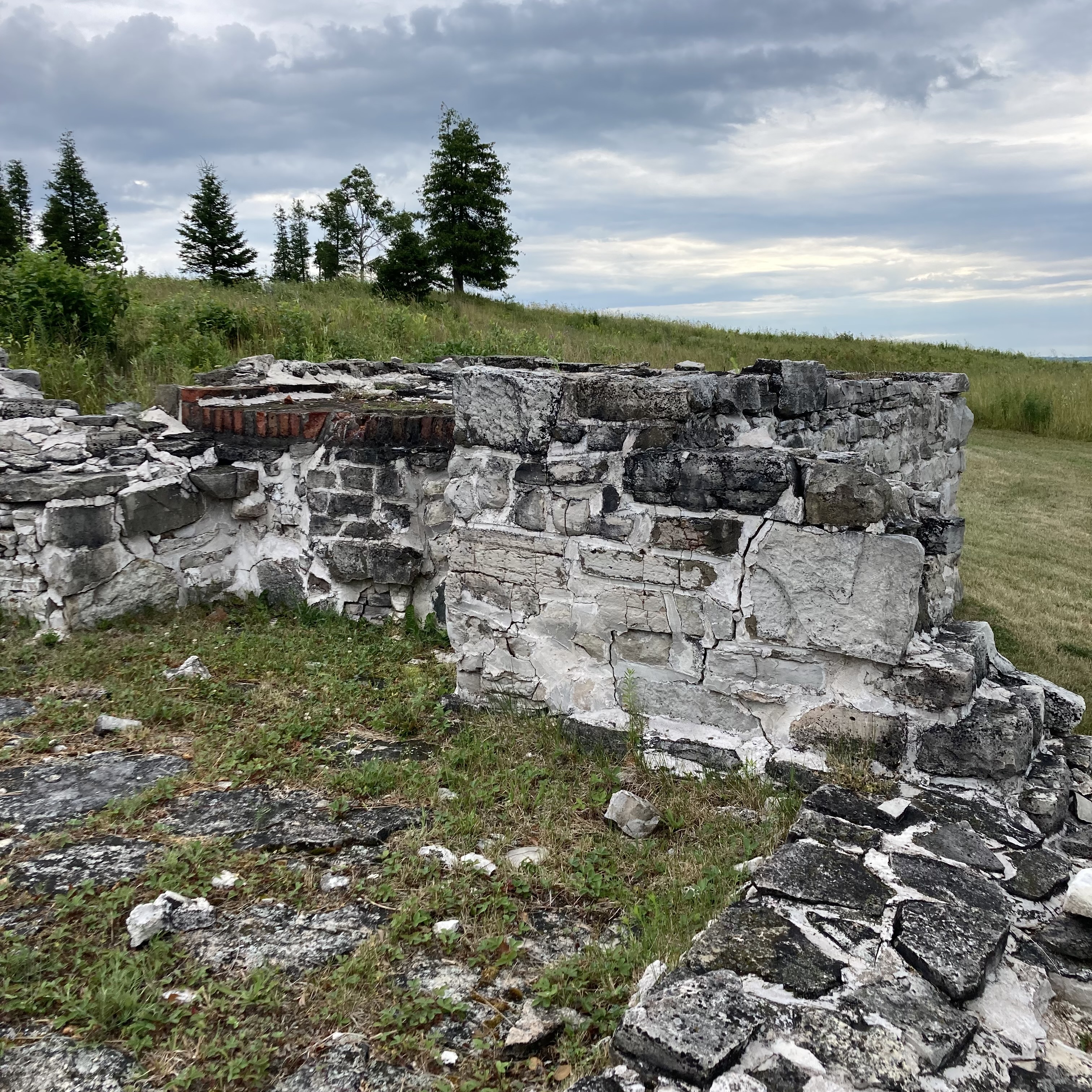
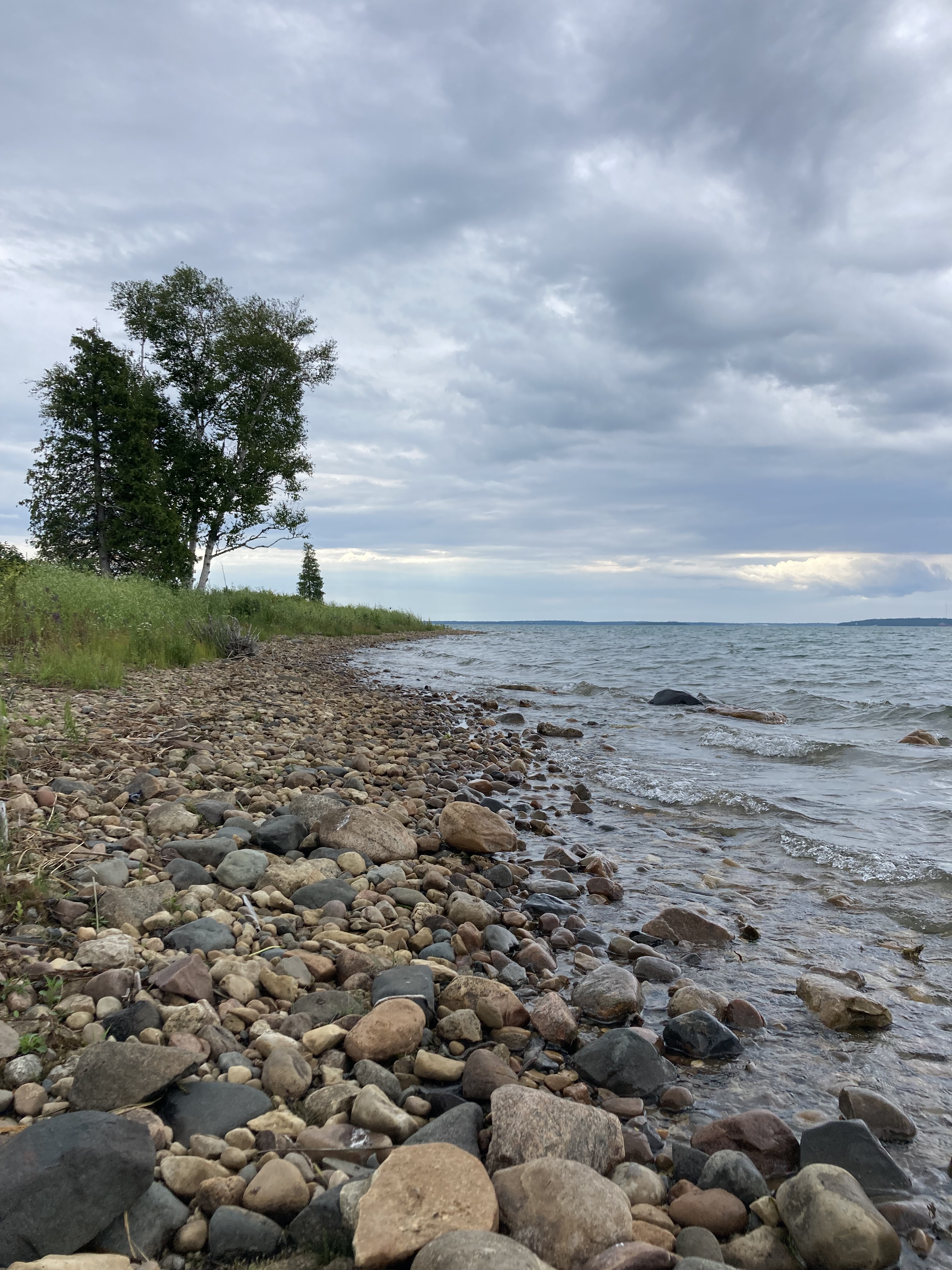
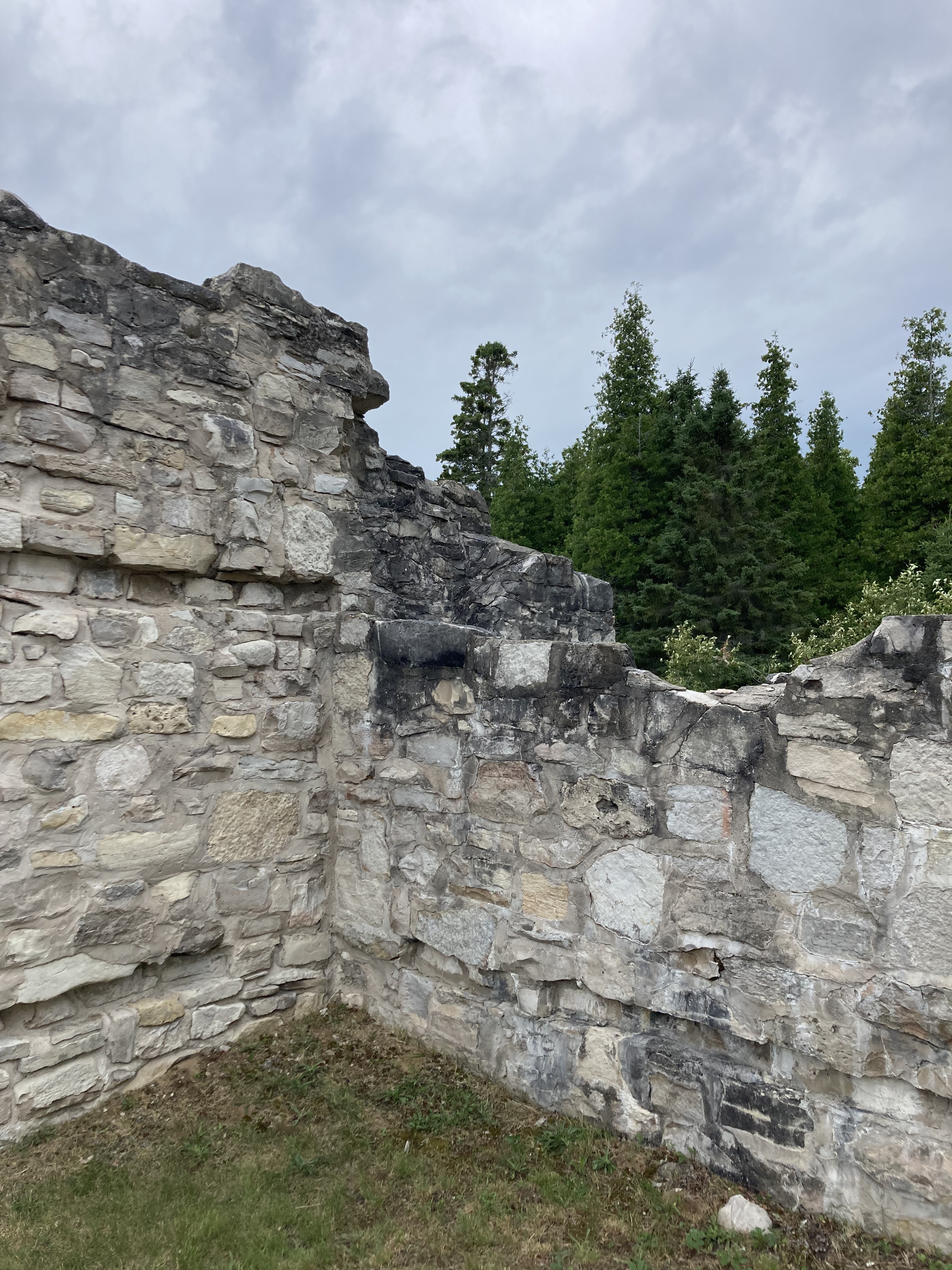
After taking our time exploring the interactive exhibits and watching the film my mother and I headed outside to explore the ruins. Fort St. Joseph was once the most westerly fort in Upper Canada.1 All that is left today are the foundations, ruins, and surviving artifacts. It was very windy the day we went to explore the ruins, and rain was on the way. We took a chance and tried to beat the rain by going as soon as the site opened. We toured the ruins, reading the plaques and taking in the history laid out before us. I found it a little hard to imagine these small foundations housing a community, but the helpful diagrams and maps of the area helped visualize what the layout of the fort would have looked like in its time. Because we got there so early we had the place to ourselves and took our time exploring. Even with the strong winds, we spent some time at the shoreline, examining the horizon. Unfortunately, we didn’t see any birds or wildlife while we were there. I think we can blame the stormy weather on that. 

Fort St. Joseph National Historic Site, St. Joseph Island ON ©2022

As we were finishing up at the ruins, the rain started to come down and visitors started to trickle in. When the rain started to pour down harder we took shelter in the visitor center and gift shop and tried to wait out the storm. They have a cozy little gift shop filled with most of the typical things you would expect from a historic site; postcards, magnets, pins, sweatshirts. One of the more interesting items they had was chocolate, more specifically heritage chocolate. Using a recipe and ingredients authentic to the colonial era, you can try a chocolatey treat that was commonly consumed at the time. They had chocolate sticks and hot chocolate mix at the time of our visit, and I regret not picking up the hot chocolate mix along with the couple of chocolate sticks I did purchase.

After the rain finally eased up, we made our way to the car. There was one more stop to make. The Cemetery Trail turns off the main road to and from the historic site. A small green sign with a hiking symbol and the word “Cemetery” mark the turnoff. My mother was a bit tired at that point and didn’t want to walk the trail. I didn’t have any idea where the cemetery was on this trail loop so I wasn’t sure how far I would need to walk to find it. She decided to stay in the car and wait.

At the trailhead, there is a trail map, along with a description of the cemetery. It reads “The cemetery at Fort St. Joseph contains graves established between 1796 and 1812. While there were only 10 recorded deaths during the occupancy of the fort, such as those of Jessie Crawford’s twins who died in 1807 shortly after birth, there are probably others who rest here eternally, their identities unknown. Those that died at Fort St. Joseph usually suffered from illness or their deaths were as a result of tragic events or accidents like that of Private Antoine Gazzinel who was killed May 9, 1803 when a loaded musket went off as he was placing it into a bateau. A cairn was erected in 1954 to recognize the final resting place of these individuals and stands today as a reminder of the community that once existed at Fort St. Joseph.”

The Cemetery is located right at the beginning of the trail, with a clearing opening up on the right side of the trail. The rain held out for me as I examined the large cairn and took photographs. The cairn reads, in English and French, ”This cairn marks the site of Fort St. Joseph cemetery in which are the graves of soldiers and fur traders who died here between the years 1796 and 1812.” There are about a dozen white crosses here, with no names. One grave looks to also be marked with stones surrounding it. It’s a peaceful spot, surrounded by the lush green forest, but it is also a place of sorrow. I was very sad to see the blank white crosses, marking lives that are now unknown, and who knows how many more lie there unmarked.

Fort St. Joseph Cemetery, St. Joseph Island ON ©2022

My mother and I really enjoyed our time visiting Fort. St. Joseph, even though the weather wasn’t ideal. Exploring the historic ruins and cemetery was an interesting look at the past, even when at times it was a somber one. It was my first time exploring a ruin site, and I look forward to the chance to visit more.

Have you visited Fort St. Joseph? Will you be adding it to your travel plans? I would love to read your thoughts in the comments. 

Thanks for reading!


References:

  1. Fort St. Joseph National Historic Site | Parks Canada

A Collection of Obelisks

I am in the midst of working on a blog post about my adventures searching for the grave of Tom Thomson in Algonquin Park. I’m hoping to have it up in the next week or two. In the meantime, I thought I would take a look at some Egyptian revival architecture that can sometimes be found in cemeteries, more specifically—obelisks.

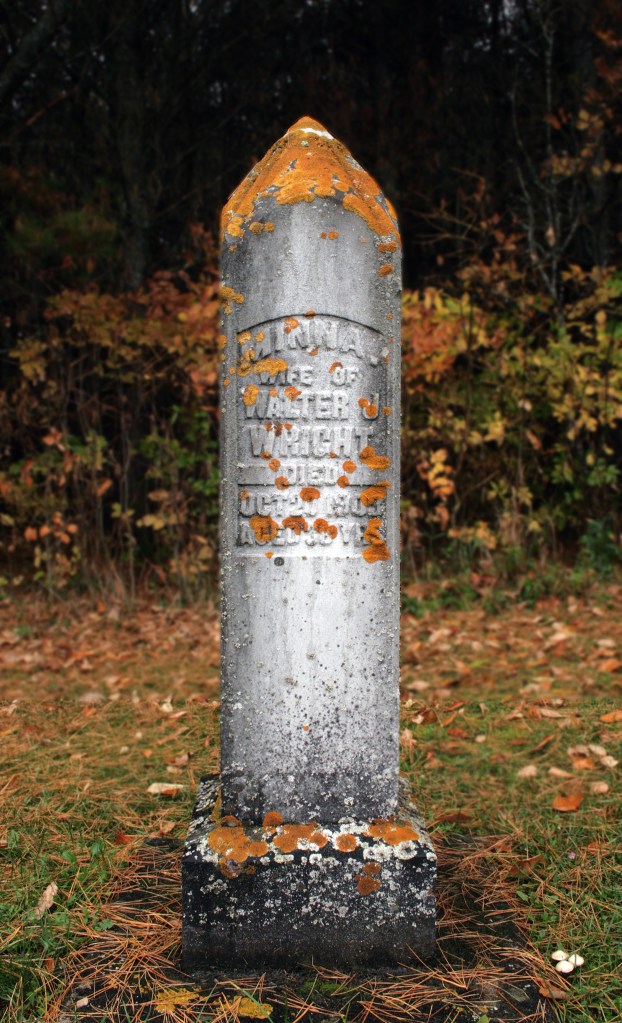
Obelisks are Egyptian in origin, but became a popular Christian funerary symbol. They are now a common sight in most cemeteries. I have found quite a few in my cemetery travels and wanted to share some of them with you today. 

In Understanding Cemetery Symbols, Tui Snider notes that obelisks became popular symbols after Napoleon invaded Egypt in the late 1700s. An obelisk is thought to represent a ray of light, but it can also symbolize focused spiritual goals, with the wide base narrowing to a point, symbolizing the deceased reuniting with God at death, and the two becoming one. 

Different variations of obelisks can be found throughout a cemetery. For example, Truncated obelisks do not come to a sharp point at the top, but are flat or topped with another symbol like a cross, urn or an orb. 

Obelisks can sometimes be found at the center of a family plot, representing the family’s connection to God. They are particularly well suited for this, as there is generally a lot of room on all four sides of the stone to inscribe the names of family members. 

You might also find vaulted obelisks. These stones have points on all four sides at the top instead of coming to one point.


References:

  1. Understanding Cemetery Symbols: A Field Guide for Historic Graveyards by Tui Snider
  2. Stories in Stone: The Complete Guide to Cemetery Symbolism by Douglas Keister

Cemetery Road Trip: Pet Cemetery

During my two-week vacation, something unexpected happened. While touring around the winding roads of St. Joseph’s Island, I found a Pet Cemetery.

I had researched the area before my trip and had marked off every cemetery on the island, with the hopes of visiting them all. I had not read anything about a pet cemetery, so I was very surprised when I noticed a large stone with the words “Wm. Wright Memorial Pet Cemetery” engraved on it. I quickly pulled over to the side of the road and made a three-point turn. My mother, who was traveling with me, was just as surprised as I was when she saw the cemetery sign.

The William Wright Memorial Pet Cemetery sits on land that was once the site of a Presbyterian Church. The Church suffered a fire, and from my understanding, the cemetery behind this church was moved to a cemetery further down the road. The land was inherited by William’s great-grandson, David Wright, who started the Pet Cemetery and named it after his Great Grandfather, in 1985. Today, the cemetery is cared for by the St. Joseph Lions Club.1

This beautiful cemetery is surrounded by large maple trees. It has a little chapel and even its own little receiving vault, also known as a dead house. When the Lions Club took over the care of the cemetery, they converted a shed to accommodate two freezers for winter storage.1

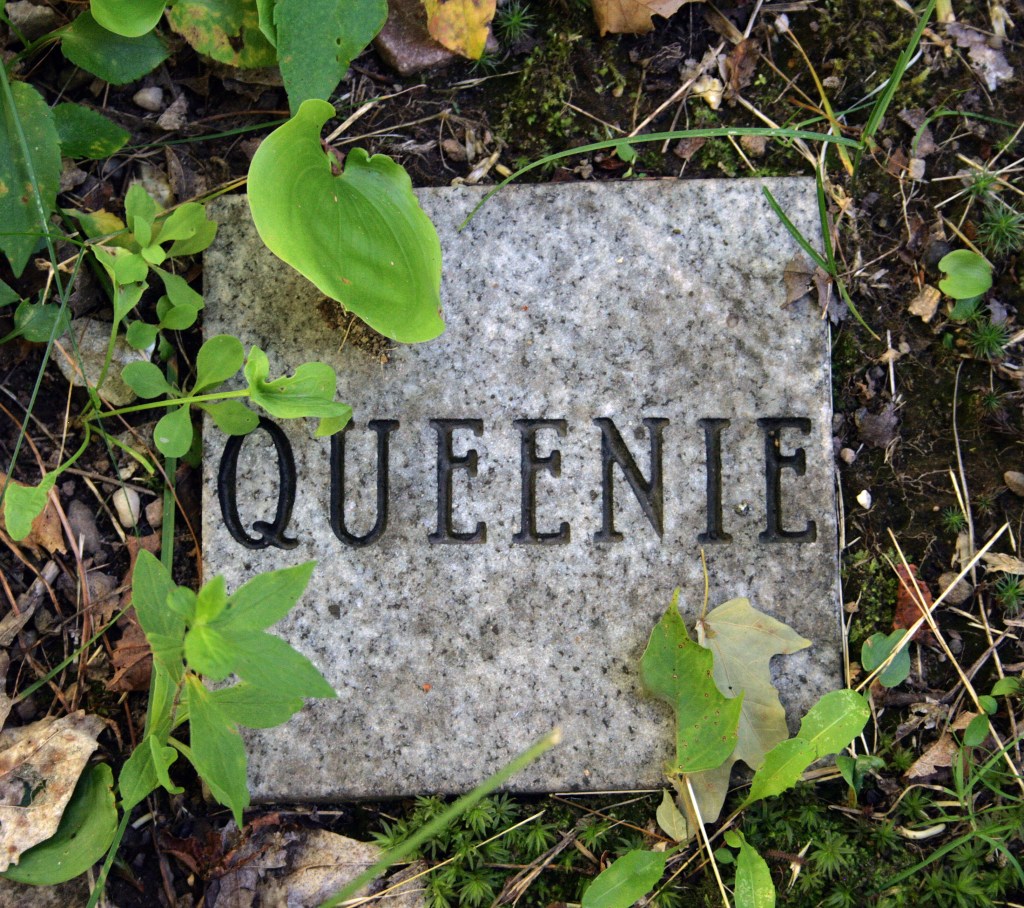
This was my first time visiting a pet cemetery. There is a mix of flat grave markers, homemade crosses, and other types of homemade gravestones that looked to be laid out in sections. I was affected immediately by the love and care that was taken to memorialize these animals. They were not just animals, but furry family members and beloved pets. 

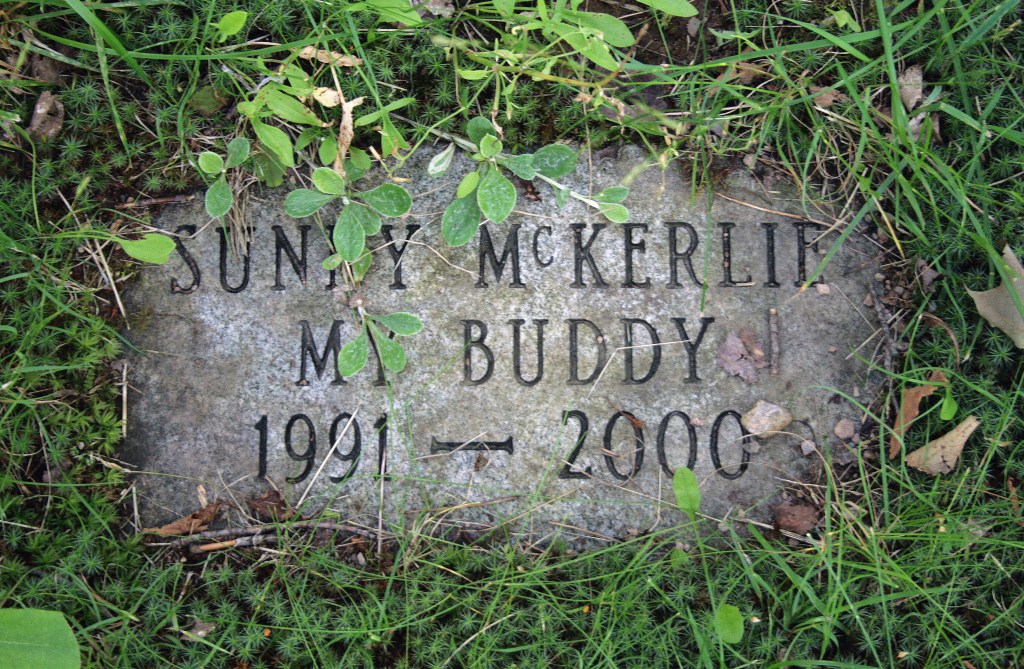
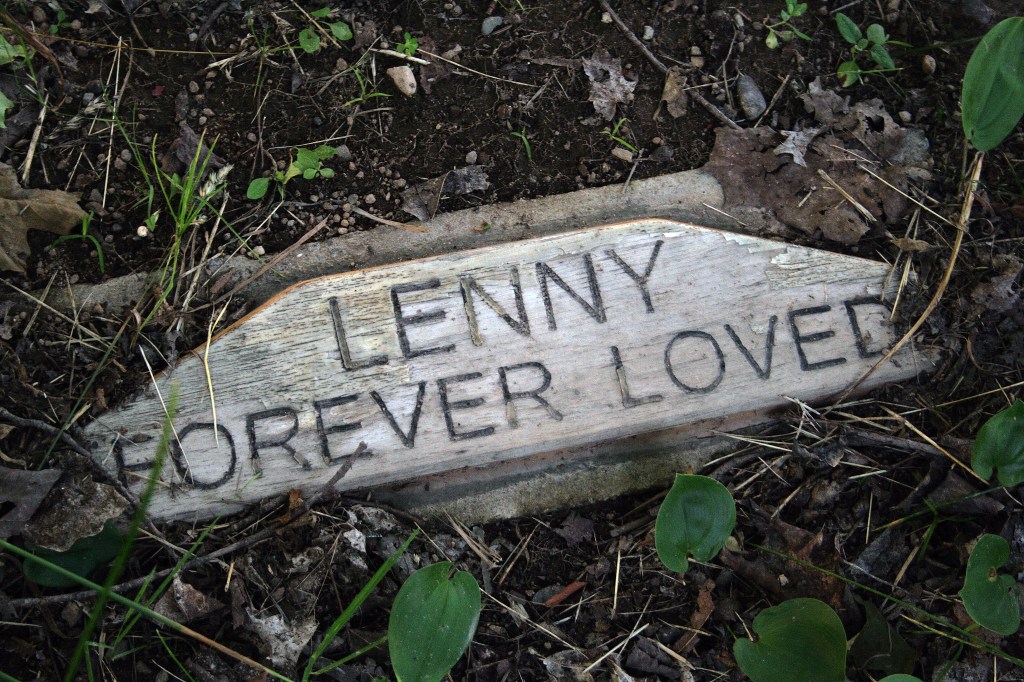
Some of the markers only bared names, while others had etched portraits or had loving epitaphs inscribed on them. The epitaphs got to me the most —things like “My Buddy” and “Forever loved”. Seeing these kinds of things inscribed on a tombstone for a pet, some of which were only in this world for a short time, was incredibly heartbreaking. I don’t usually have this sort of response in cemeteries and was a little surprised at how hard it was for me to read each stone.

Although it was an emotional experience for me, I was thrilled to be able to visit a pet cemetery. I think that they are growing in popularity, but they are still a fairly rare thing. After a little research, I only found information for eleven of them in Ontario, including the one I visited. I did try to visit a pet cemetery a few years ago, in Sault Ste Marie. But, we were unable to find it, and I have since been able to find out very little more about it. I would love to be able to visit more in the future. They are incredibly beautiful places. 

Have you been to a pet cemetery before? What was your experience like? I would love to read about your experiences in the comments!

Thanks for reading! 


References:

  1. WM Wright Memorial Pet Cemetery | Waymarking

Cemetery Road Trips: Sault Ste Marie edition

I have been thinking about road trips a lot lately.

During a normal year, my friends and I would be discussing plans for our next one. I have been itching to research locations and plan travel routes. But alas, just like last year, it looks like it will not be happening this year.

Cemetery road trips are one of my favorite things to do in the summer months. We all would pile into one vehicle, chit-chat, and listen to music while cruising along to our cemetery spots. We usually pick a city or town and stop at all the cemeteries along the way. After visiting the cemeteries within that city’s limits we would also explore the outskirts, sometimes finding hidden cemeteries that we didn’t find in our research. These are great ways to spend time together, make memories and explore our backyard!

The last road trip we did was in 2019. We visited Sault Ste Marie. Normally this trip would only be about a 3-hour drive, but it took us a whopping 6 hours! We made so many stops along the way and took our time exploring. We visited some very old cemeteries, full of the history of the town, as well as some newer ones. Lots of discoveries were made, including one of the largest cemeteries I have ever visited before! We visited 11 cemeteries in total that day. We didn’t beat our record, but it was a very good attempt. Our record so far is 13!

We also took time to do some sightseeing, and visit some of the historic museums there; the Canadian Bushplane Heritage Centre and the Ermatinger Old Stone House. We heard some interesting ghost stories from the staff at the Old Stone house and it prompted some interesting discussion and exploration while we were there. We did not find any ghosts though. It’s a beautiful house with some really interesting history. Getting in some sightseeing was a bonus for that trip.

We have also gotten into the tradition of visiting any Starbucks that we can find, and always end the day at the local Casey’s for supper. A favorite restaurant that we no longer have in our own city. It’s a great cap to the day, followed by a much quicker drive home while we debrief on the fun and experiences of the day.

So for this year, instead of grand travel plans, I will stick close to home and visit my local cemeteries. Re-visit my favorites and take more time to explore those that I have not been to for a while. There is always something new to find and photograph! 

Update: After writing this blog post I did just that! I had a mini road trip adventure this weekend. I’ll have a new post coming soon with some new photos.

Thanks for reading!