2024 is coming to a close, and I can’t help but feel incredibly thankful for all the opportunities, experiences, and connections this year has brought. From cemetery explorations to unexpected shoutouts, 2024 has been a year of gratitude, growth, and gravestone recipes!
So today on the blog, I want to reflect on some highlights that have made this year so memorable. From shoutouts and collaborations, here’s a look back at why I consider 2024 an exciting year.
Cemetery Adventures
This year, I was able to visit 117 new cemeteries, and revisited 9, bringing my total for this year to 126. Every cemetery visit is always an adventure, uncovering hidden stories and beautiful gravestones. One cemetery visit that stands out this year, was visiting the gravesite of Elizabeth Barnes, the Witch of Plum Hollow. Exploring the folklore and history surrounding this incredible woman was eye-opening. These experiences continue to remind me of the powerful connection between memory and place.
One of my favorite projects this year was contributing a guest post to The Haunted Walk’s blog, titled Beyond the Headstones: 5 Surprising Secrets to Discover in Cemeteries. Writing this post gave me the chance to share some of the hidden stories and unexpected gems you can uncover in these places of rest.
Another exciting milestone was being interviewed for American Cemetery and Cremation Magazine. Being featured in their June issue, and sharing my passion for cemeteries and the stories they hold was such a rewarding experience.
Trying out gravestone recipes and sharing these experiences has been an ongoing passion project for me, and this year, it gained attention far beyond what I could imagine.
Cemetery Recipes: O’Neal’s Peach Cobbler
My gravestone recipe posts were referenced in the Bust article Take it to the Grave: Rosie Grant Went Viral for Recreating Gravetsone Recipes. Although the article features fellow taphophile Rosie Grant’s amazing work, it also linked to my Peach Cobbler and Chicken Soup recipe posts, connecting people to my blog. Seeing my blog posts highlighted as part of a broader cultural conversation about food, memory, and legacy feels a bit surreal.
Other press highlights included Funeral Basics linking to my blog post about Connie’s Date & Nut Bread, and the New York Post directing readers to the cemetery recipes on my website. These moments are heartwarming reminders of how food can connect us to the past in meaningful ways.
The international attention has been just as exciting! An Italian article explored the growing trend of gravestone recipes and referenced my work, while the Czech publication Neviditelny Pes also referenced my work and highlighted the charm of these recipes carved in stone.
Maybe the most thrilling moment for me though, was receiving a shoutout from Rhett and Link on their Good Mythical Morning episode, We Try Cemetery Food. Watching them discuss my work was an unforgettable moment that brought a whole new audience to my blog, and I am very grateful for their support.
Collaborations
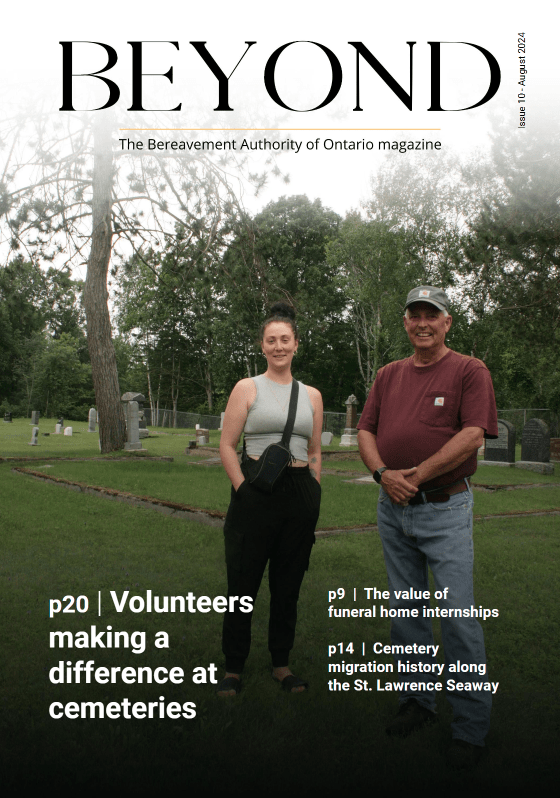
This year, I loved working with my friends over at the Bereavement Authority of Ontario. I had the pleasure of contributing some freelance photography to the August issue of Beyond magazine. Their publication is filled with educational and thought-provoking content and seeing my work featured in their layout is a great milestone.
I am truly appreciative for all this recognition. None of which would be possible without the incredible community of readers, collaborators, and supporters who’ve been with me on this journey. Whether you have followed along for the recipes, the cemetery exploring, or the stone stories, thank you for being a part of this adventure.
Looking ahead to 2025, I’m excited to continue exploring, writing, and sharing these unique experiences. Here’s to another year of meaningful connections and unexpected discoveries!
How was your 2024? I’d love to hear about your highlights and plans for the coming year in the comments.
As winter settles in, it’s hard to ignore the changing of the seasons. The chilly air, shorter days, and the snow-covered gravestones mark the end of field season for me. I have always seen snow-covered cemeteries as just too risky to explore—both for me and the gravestones.
While the cold usually keeps me indoors for the next couple of months, it brings something special to the cemeteries I love so much. There is a stillness in the air, and cemeteries in winter do offer something unique that cemeteries in the warmer months just don’t have.
Winter is often seen as a time for rest and renewal. Nature takes a break during these colder months, and cemeteries seem to do the same. The chill in the air makes everything feel still.
For me, the winter season is a time to focus on rest and recharging, while also refocusing on photo editing and research. Nothing is more relaxing to me than being curled up on the couch with a good book. But winter is also a time for reflection on life’s cycles. The season reminds us that life, like death, is all part of the same cycle. Nature’s rhythms, whether still still or full of growth are always changing, just like us.
I’ll be honest, winter is not my favorite season, and I don’t have a lot of experience visiting cemeteries in the snow. The bitter cold and early darkness does not appeal to me. But I will admit that cemeteries in winter have an almost haunting beauty that I can’t ignore.
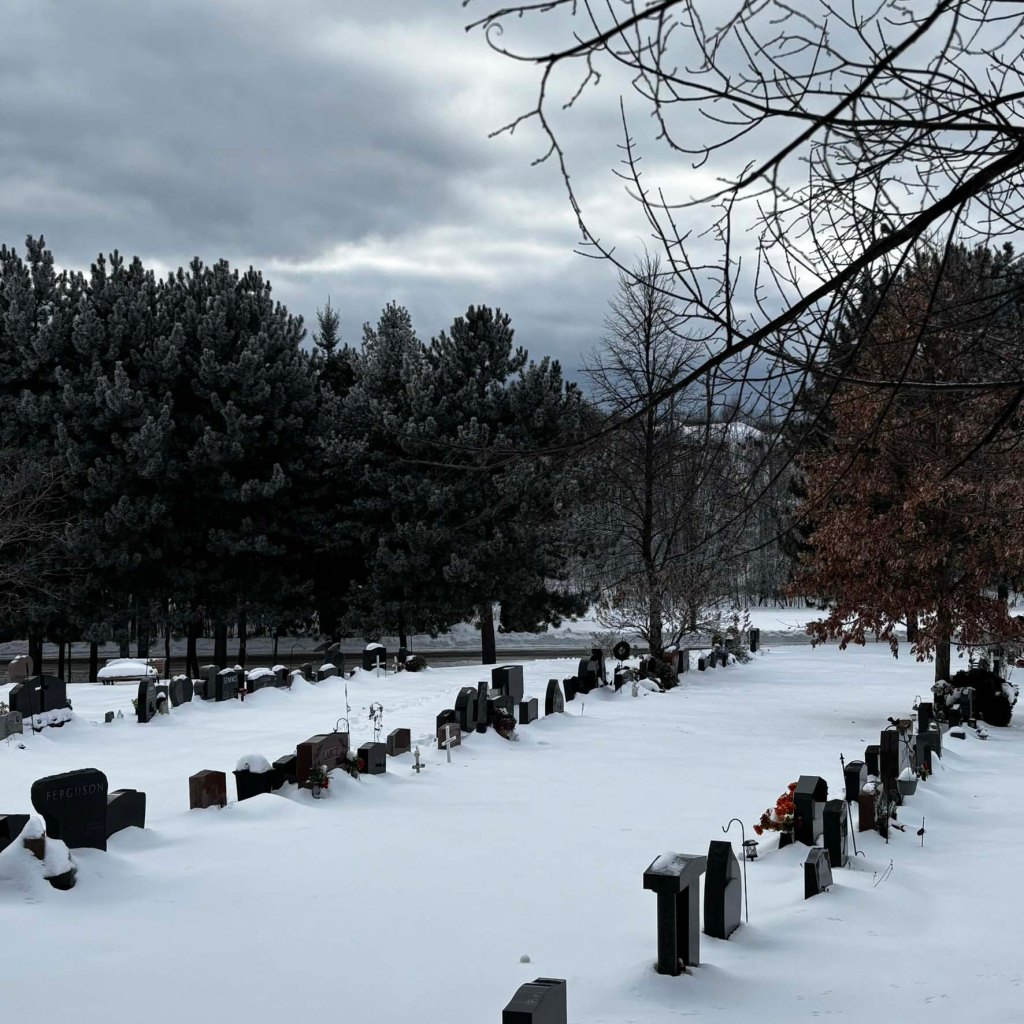
The bare trees against a pale sky, and the contrast between the dark gravestones against white snow, create a mood that’s both peaceful and a bit mysterious. It’s the kind of scene that makes you stop for a moment.
Even though this isn’t the time I usually seek out cemeteries, I made an effort this weekend to stop in to one, to appreciate the unique atmosphere it creates.
One interesting thing I found about cemeteries in the winter is the light. With the sun being lower in the sky, the light creates long and dramatic shadows, adding texture and depth to the landscape. I find the gravestones just look different in the winter light.
The unique angles of the light during winter do make it a great time to play around with shadows and textures. For anyone interested in photography, winter cemeteries offer a chance to capture the landscape in a new way.
As I think about how winter enhances the beauty of cemeteries, I realize that the symbolism of the season offers us an important reminder of the ongoing cycle of life. Winter is a time of rest and reflection, but it’s also a time to prepare for what comes next.
So will you be visiting any cemeteries this winter? Whether you’re stopping by to honor a loved one or just take in the beauty of the season, cemeteries in the winter do have a lot to offer.
In honor of Remembrance Day this year, Monday, November 11th, I want to take a moment to reflect on the significance of this solemn occasion and the powerful symbol of sacrifice that is the Tomb of the Unknown Soldier.
This day, which marks the end of hostilities during the First World War and honors all who have served in times of conflict, holds deep meaning for Canadians. While Remembrance Day has been observed since 1919, its evolution over the years—from its origins as Armistice Day to the shift in date and name in 1931—demonstrates its lasting importance in our collective memory.1 In this week’s post, I want to delve into the history behind the Tomb of the Unknown Soldier, a tribute that today stands as a symbol of the many soldiers who gave their lives without recognition.
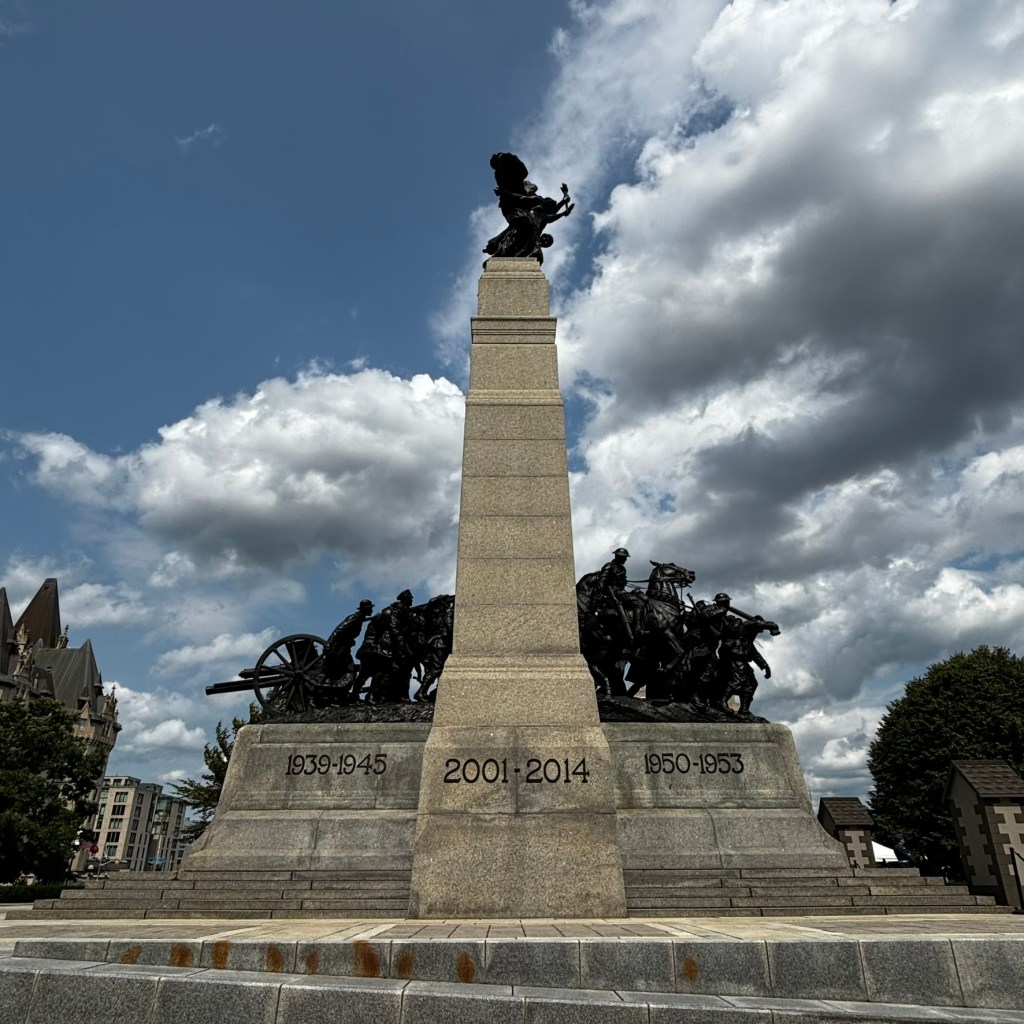
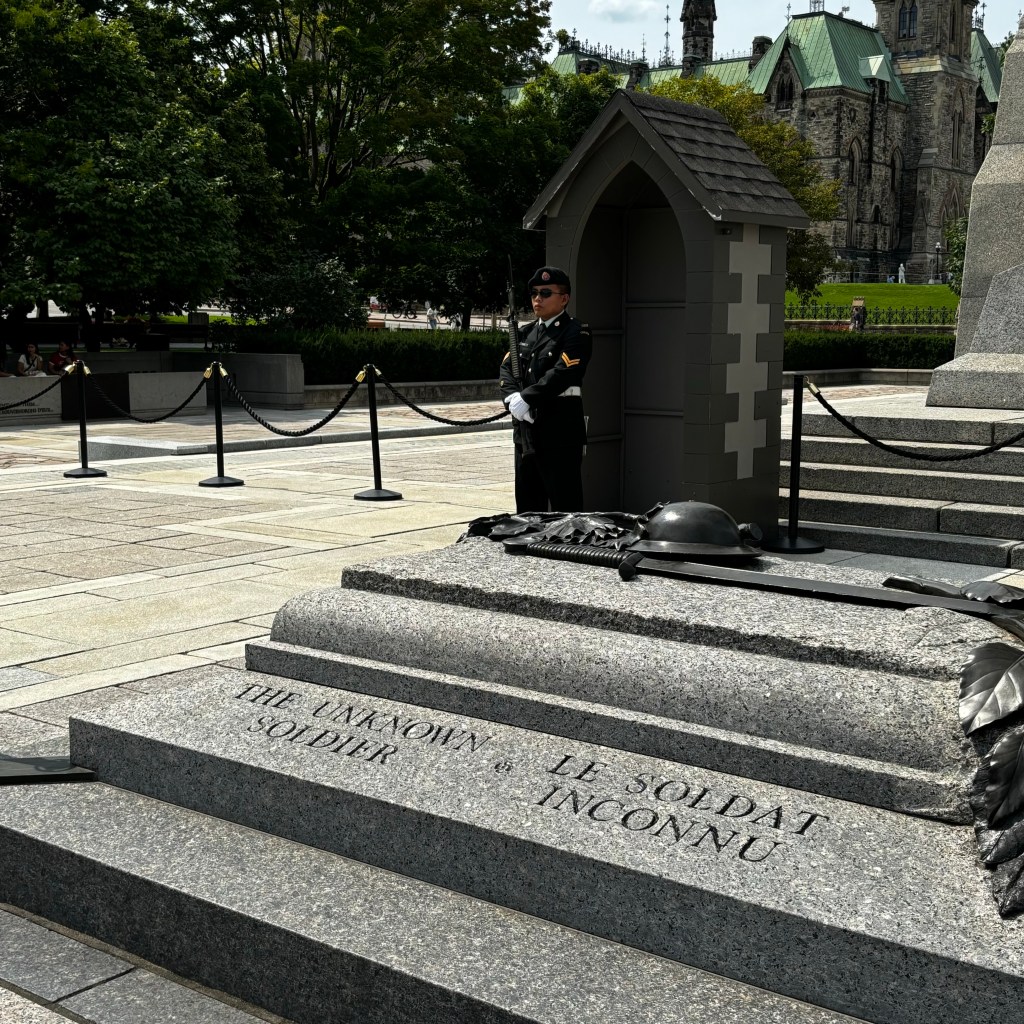
The tomb of the unknown soldier lies in front of the National War Memorial at Parliament Hill. The large monument, a cenotaph, was unveiled in 1939 to commemorate the Canadian response to the First World War. It has grown to symbolize the sacrifice of all Canadians who have served in times of war.2
The Royal Canadian Legion, with help from Veteran’s Affairs Canada, began work to bring the Unknown Soldier home in the spring of 1998.3 As a Millenium project, this undertaking was not an easy task and many veterans were anxious to see this tomb built, as a reminder for new generations of the cause and consequences of war.3,4
Exhaustive work was completed to choose the remains that would be repatriated. The remains were selected from among 6,846 unknown soldiers of the First World War.5 The set of remains that now lie at rest in the sarcophagus at the base of the war memorial comes from Cabaret-Rouge British Cemetery, in Souchez, France.4
The Unknown Soldier’s remains were exhumed on May 25, 2000, by the Commonwealth War Graves Commission. The remains were then repatriated to Canada in a Canadian Forces aircraft, where they would lay in state for three days in the Hall of Honor in the Centre Block of Parliament.5 On May 28, 2000, the remains were laid to rest in a sarcophagus made of granite, during an interment ceremony. Soil from each Canadian province and territory was placed on the casket. They also included some soil from France.6
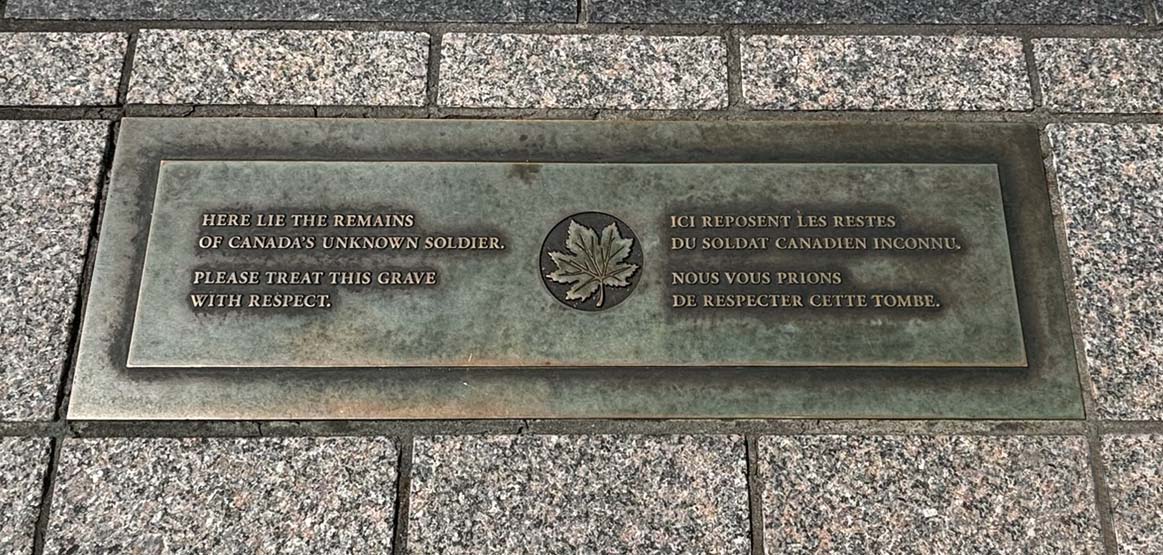
The inscription on the tomb reads “The Unknown Soldier / Le Soldat inconnu”. There is also a brass plaque embedded in the ground in front of the tomb which reads: “Here lie the remains / of Canada’s Unknown Soldier. / Please treat this grave / with respect.”
The tombstone marking the first resting place of our unknown soldier, in France, was also brought to Canada and now hangs in the Memorial Hall of the Canadian War Museum in Ottawa.
The inscription reads: “A Soldier / of the Great War / A Canadian Regiment / Known Unto God”
Original gravestone of the Unknown Soldier, Canadian War Museum. Photo by Craig Baird, Canadian History Ehx https://canadaehx.com/ Photo used with permission.
The Memorial Hall of the Canadian War Museum has a unique design feature, where every year on November 11th, at 11 a.m. the sun filters through a window in the hall, directly illuminating the headstone.7
A new gravestone was placed to mark the original burial site, now empty, in Cabaret-Rouge British Cemetery. The stone, similar in appearance to the original gravestone, is engraved with a maple leaf and the following epitaph, “The Former Grave Of An / Unknown Canadian Soldier / Of The First World War. / His Remains Were Removed / On 25 May 2000 And Now / Lie Interred At The / National War Memorial / In Ottawa Canada.”4
The Changing of the Guard
This summer, while I was visiting family in Ottawa, I had the opportunity to visit the Tomb of the Unknown Soldier and witness the changing of the guard.
Since 2007, the Canadian Armed Forces have posted sentries to stand guard at the tomb, with a rotation of personnel from the Royal Canadian Navy, Canadian Army, Royal Canadian Air Force, and Canadian Ranger units from across the country.8 During the summer months, the changing of the guard ceremony occurs every hour, on the hour, between 9 a.m. and 5 p.m.
The ceremony is a somber occasion that reflects respect for Canada’s fallen soldiers. As the sentries execute their precise and disciplined movements, the atmosphere was heavy with reverence. The ceremony serves as a powerful reminder of the sacrifices made in the name of freedom and those who gave their lives in service.
While visiting the tomb, I was struck by the weight of history and felt the significance of honoring those whose identities may be lost, but whose sacrifices will never be forgotten.
We will never know the identity of the Unknown Soldier—but that’s the point.
In war, the remains of soldiers may be badly damaged, or destroyed. Even though a great effort was made to find and identify remains, many were not found at all. Almost 20,000 Canadians who died in the First World War have no identifiable graves.4 Some could only be identified as Canadians, by uniform buttons or badges, and were buried with a simple military marker, like our unknown soldier.4
So this Remembrance Day, as we pause to honor the sacrifices of those who served, remember also the unknown soldier—the many who gave their lives, whose identities are now lost to history.
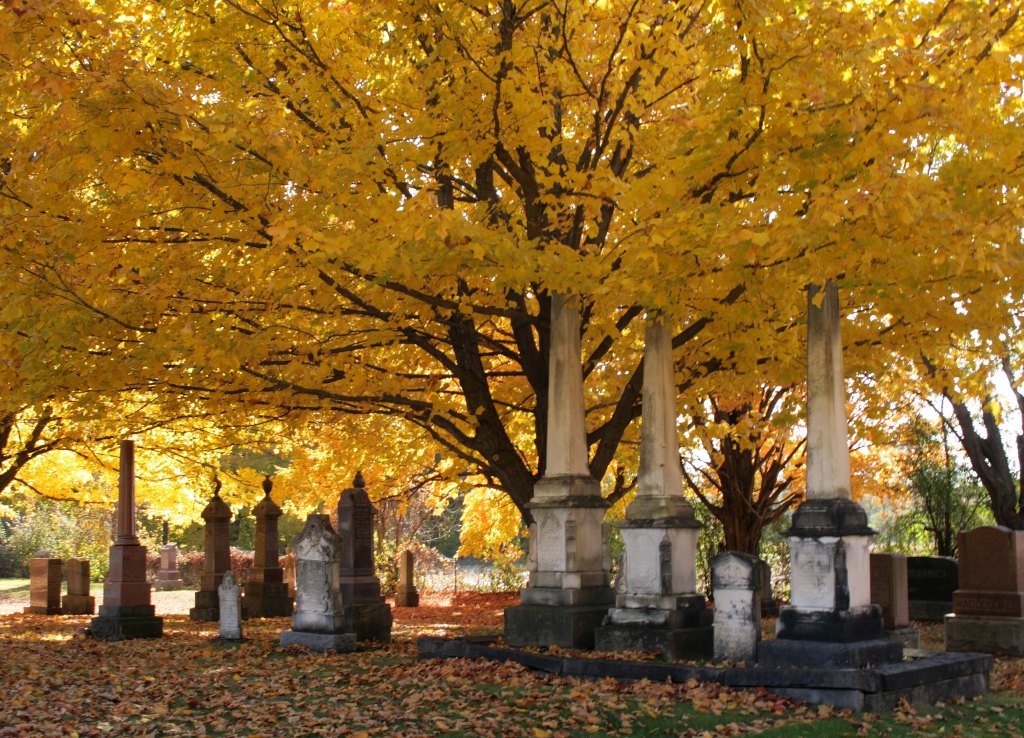
There is just something magical about wandering through a cemetery bathed in the warm colors of autumn. So today on the blog, I explore how the crunch of leaves underfoot and the cool breeze tousling your hair as you walk among the headstones, creates a uniquely reflective experience.
The stunning yellows, oranges, and reds herald the changing of the seasons and mark the transition from verdant green to withered rotting leaves. The falling leaves remind us of the cycle of life and that everything dies.
Autumn begins on the fall equinox, usually on September 22 or 23. The equinox happens twice a year in the Northern Hemisphere, occurring between the summer and winter solstices.1 It marks the point where the sun crosses the equator’s path and becomes positioned exactly between the Northern and Southern hemispheres.1 On the equinox, day and night are approximately the same length, but the fall equinox marks the beginning of longer nights and shorter days.1
As we lose daylight earlier, the yellow glow during the golden hour is intensified, creating a golden light that beautifully bathes the gravestones. It’s a photographer’s dream!
Gravestone symbolism draws heavily from Greek mythology, so it seems only fitting to share the Greek story of Persephone’s return, an anecdote used to explain why the seasons work the way they do.
In the story, Persephone was abducted by Hades and forced to live in the Underworld. Demeter, Persephone’s mother, searched far and wide for her daughter. Demeter threatened to make the earth a barren place until her daughter was returned to her.2
A deal was struck: because Persephone had eaten four pomegranate seeds while in the Underworld, she would return to Hades and live with him for four months out of the year.2
So when Persephone traveled to the Underworld to fulfill her four-month stay, Demeter’s sadness at being separated from her daughter was expressed by the barrenness of autumn and the winter cold.2
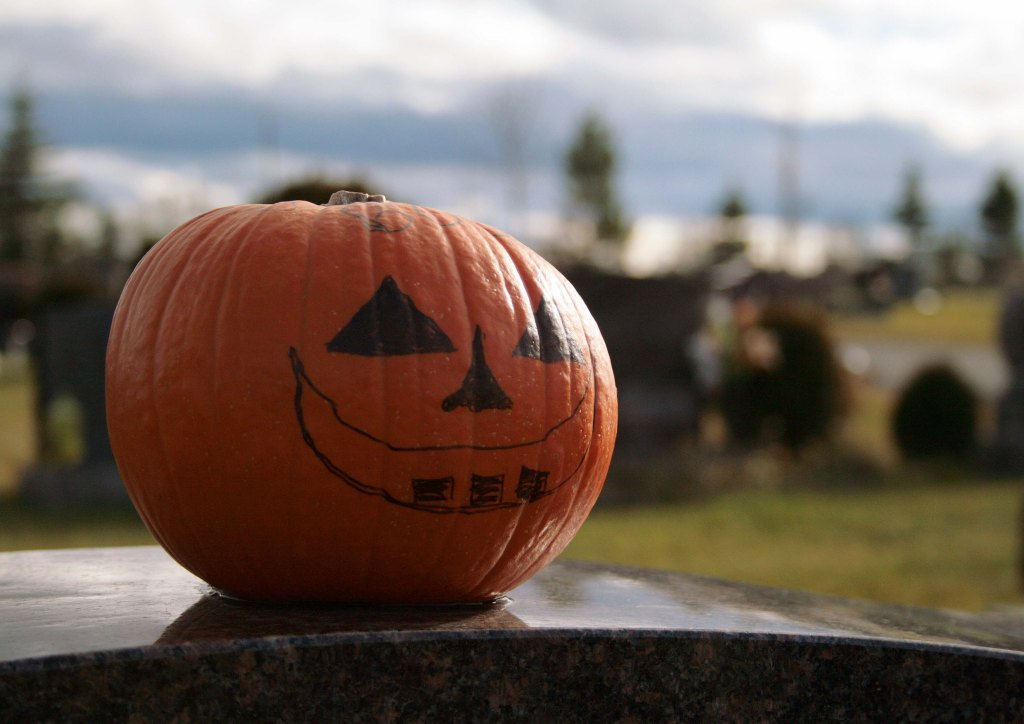
The month of October can be considered the peak of autumn, with the fall colors reaching their most vibrant, usually during the first couple of weeks. The beginning of October is also considered by many to be the start of the spooky season, which culminates on October 31st, Halloween.
Halloween night is said to be when the veil between the living and the dead is the thinest. This is thought to mean that it is the one night when spirits can cross over the easiest to communicate with loved ones.
The idea of a veil between life and death can sometimes be found in cemetery art.
A draped urn, for instance, is a popular Victorian-era motif, borrowed from Ancient Greece. The Ancient Greeks commonly cremated their dead, and the symbol of a ceremonial urn was adapted to represent the idea of the body being reduced to its barest elements while the soul ascends to heaven. Often draped in a cloth, this drapery is thought to symbolize the veil between the living and the dead.3
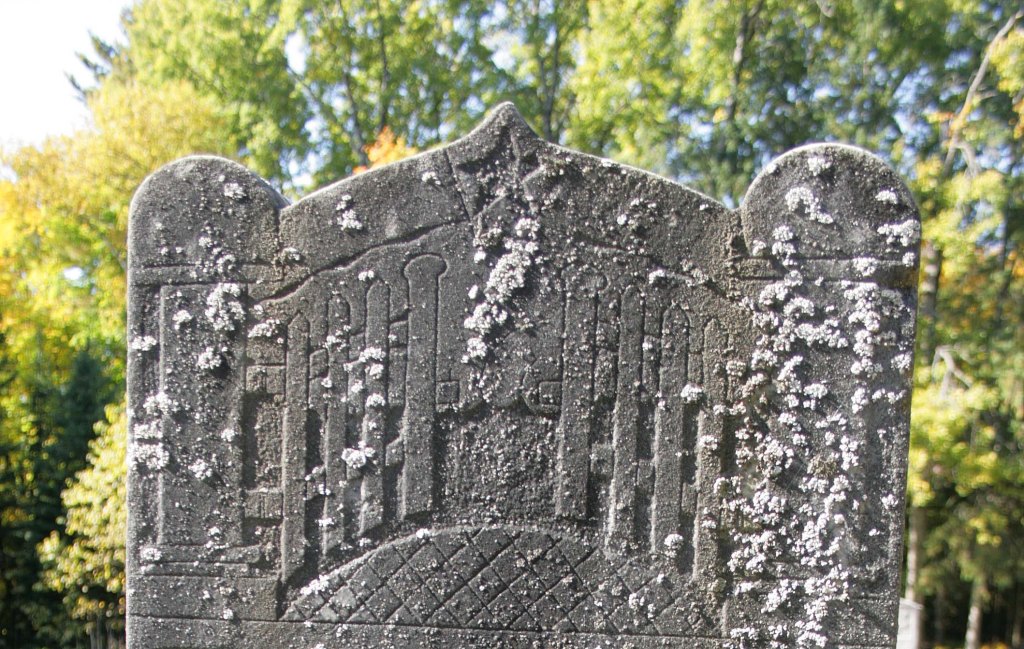
Another symbol that symbolizes this concept is the gates ajar. This grave symbol was popularized by author Elizabeth Stuart Phelps in her 1868 book The Gates Ajar. The story follows a woman coming to terms with the death of her brother, who died in the Civil War. This symbol features an open gate, symbolizing that the gates to Heaven are not closed, and that departed souls can pass back and forth.3
As you might expect Halloween is celebrated all over the world. It is one of the oldest holidays after all. There are many ways to celebrate, the most obvious being donning a scary costume and going door-to-door for tricks or treats. But there are other Halloween traditions, older traditions that are practiced in all parts of the world.
It’s not surprising that some of them involve cemeteries!
In France, All Saints Day and All Souls Day are celebrated by children going house to house collecting flowers that they use to decorate graveyards and churches.4
To celebrate Dia De Los Muertos, also known as Day of the Dead, in Mexico families will have picnics in graveyards at the graveside of their loved ones, to remember and celebrate their life.4
In Portugal, wine and chestnuts are brought to feast on, in the cemetery.4
And in Rome, they celebrate Feralia, which is similar to the Day of the Dead in many ways. Families visit loved ones in the cemetery and also bring offerings for the spirits of their loved ones who linger at their graveside.4
The symbolism of gravestones, like the draped urn and gates ajar, echoes the stories of Persephone and the thinning veil between the living and the dead. As Halloween approaches, traditions around the world invite us to remember and celebrate our loved ones in these revered spaces.
So, this fall, take some time to wander through a cemetery, and let the beauty and tranquility inspire some reflection on the spirit of Halloween—the connections we hold with those who have passed, the stories they leave behind, and the traditions that keep their memory alive.
Did you know that not all Witches are found in Salem?
Folktales and legends of witches can be found worldwide, even in small towns in Ontario. This truth led me down a few rabbit holes that uncovered some fascinating stories about a darker side of Canada’s history—a history of stigma, politics, and strong women.
One such strong woman was Jane Elizabeth Martin Barnes, also known as Mother Barnes. This summer, I was fortunate to visit her homestead and pay my respects at her final resting place.
Every good witch legend exists in mystery, and the Witch of Plum Hollow is no different. Some details of her story are uncertain, like the date of her birth. Some sources note her date of birth as 1794, as engraved on her tombstone, while others note November 15, 1800.
What we do know, is that she was born in Cork, Ireland. Her father was an Irish landowner, and her mother was of Spanish Gypsy descent.1 Facing an arranged marriage, Elizabeth and her lover, a military man, left for North America where they would elope.1
The young couple would have one child together before misfortune struck. Elizabeth’s husband passed away tragically, leaving the young mother alone to raise their child.1 Four years later, she would marry David Barnes, a shoemaker. Together they had nine children, six sons and three daughters.1
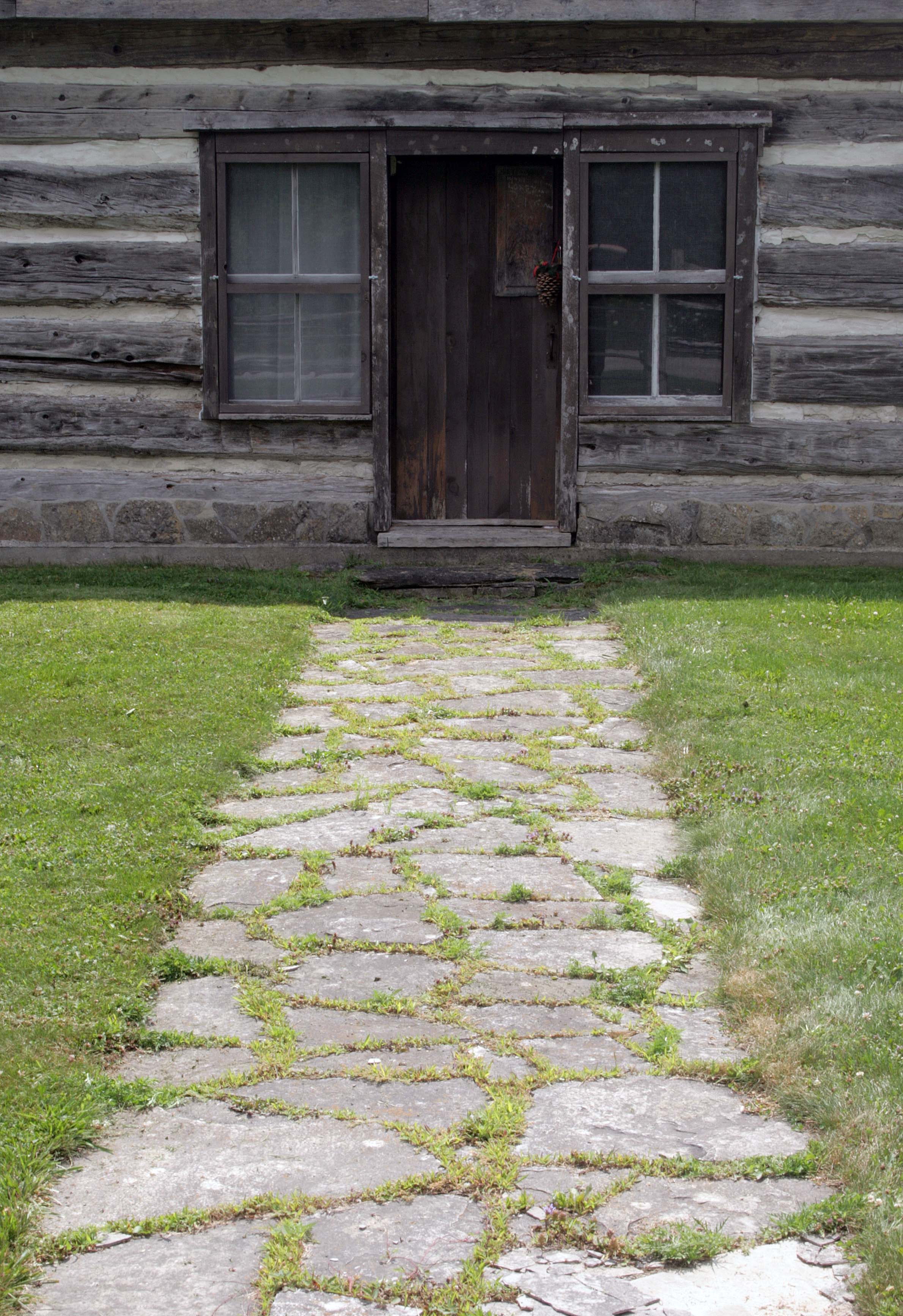
In 1843, the Barnes family moved to Sheldon’s Corners, near Athens, Ontario.1 They raised seven of their children in the small wood cabin, that today is known as the Mother Barnes Homestead. Eventually, Elizabeth’s husband grew tired of farm life and left, taking their youngest son with him.1 Elizabeth was left with a house full of children to mind on her own.
To support her family, Elizabeth turned to fortune-telling.
She credited her Spanish Gypsy ancestry and the fact that she was the seventh daughter of a seventh daughter as the source of her second sight.2 She charged 25 cents for a reading and soon became well known for her accuracy.2
At this time, she began to be known as the Witch of Plum Hollow, respected by some and feared by others.1 People visited from everywhere for a reading from Mother Barnes. She became increasingly involved with local lost & found cases, finding lost items and missing livestock.2 She was also instrumental in a disappearance case, directing the searchers straight to the missing body.2
Her most famous visitor was a Kingston lawyer with political aspirations. Mother Barnes foretold that this man would become the leader of a new country and that its capital would be in Bytown.2
Today, Bytown is known as Ottawa and is the capital of Canada. That lawyer was John A. Macdonald, who became the first Prime Minister of Canada in 1867.2
Mother Barnes Homestead
The small log cabin that had so many visitors in the past sat for a time in utter disrepair. Over time, the wood rotted, and the roof sagged, the derelict state made worse by vandals’ damage.
The property, which includes; two acres, the original cabin, an abandoned well, and a deteriorating barn, was eventually purchased by descendants of Mother Barnes in the 1980s. They worked hard to try and bring the little cabin back to life.3
Newspaper clipping, The Ottawa Citizen, Thursday, October 28, 1982, page 23
Today the log cabin has been restored by new owners. A green sign with large gold script declares the site as the “Mother Barnes Homestead”. Beside the sign sits a large boulder with an indent suggesting there was once something attached to it. This once commemorative boulder had a sign that read “Home of Mother Barnes”. The sign was removed to preserve it from further damage, as it had been used as target practice.1
The property is now well maintained and sits behind a wooden fence, that is dotted with no trespassing signs.
The day I visited the Mother Barnes Homestead I was hoping there would be someone on the property to talk to, and maybe get a tour of this historic house. Unfortunately, the property was deserted. The no-trespassing signs were enough of a deterrent to keep me from trying to sneak a peek inside the windows.
I would have loved to be able to explore the attic, where Elizabeth was known to perform her tea readings. I hope one day the property will be opened as a historic house and museum.
Jane Elizabeth Martin Barnes died on February 4th, 1891 at the age of 90 after falling ill with pneumonia.5 She is laid to rest in Sheldon Cemetery, not far from her homestead.
Originally her grave was unmarked, that is until local Cheesemakers Claude and Ella Flood decided to erect a monument in her memory. Curiously, the dates on the stone are incorrect, listing her year of death as 1886.5
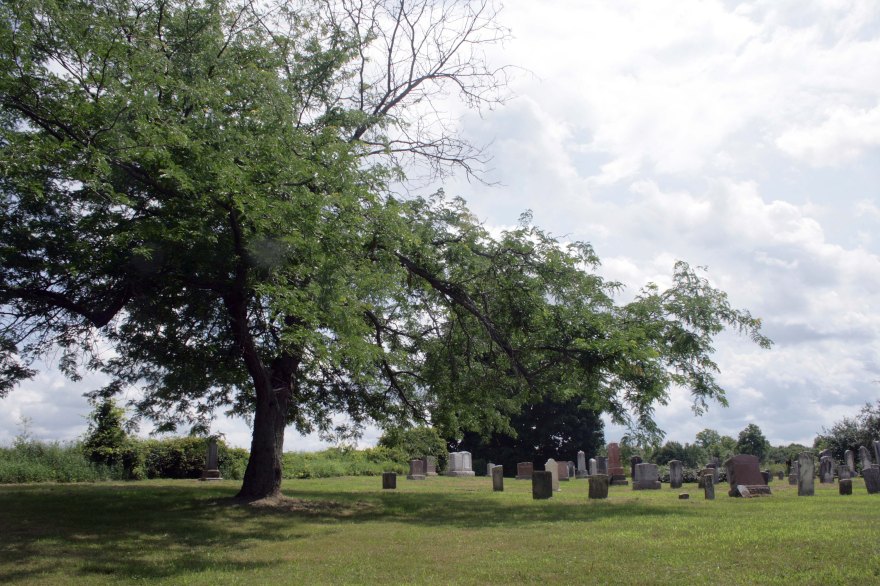
The stone itself was not placed on her actual gravesite either, I would learn. The stone sits beneath the cemetery sign arch near the cemetery entrance. When I visited, the arch was completely overgrown and obscured with vines. The gravestone reads: “Burial Place / of / Mother Barnes / 1794—1886”
While visiting another cemetery in the area, I met two women who pointed out some interesting graves for me to photograph. After showing me the graves, they asked if I had been to visit the Witch of Plum Hollow. I said yes, to which they replied that she wasn’t buried beneath the stone.
The unmarked grave of Mother Barnes lies at the back of the cemetery on the left-hand side.
The woman also shared that there is a pipe sticking out of the ground in that area, very close to the grave. They continued to tell me a story about the pipe, and how it was plugged for a very long time, to keep the witch’s spirit in. But, sometime in the 1980s, the pipe was unplugged and the spirit of the Witch was released. I was surprised to hear a negative tone in the woman’s voice as she told the story, and how she thought the pipe should have remained plugged.
It was interesting to see that the stigma behind the term witch was still alive, well over 100 years later.
But was Elizabeth Barnes really a witch?
By all accounts she was just a single mother, using kind advice and honest predictions to provide for her family. Predictions that very often came true.
I have a lot of upcoming October content planned, so I thought I would officially kick off the Halloween season on the blog by sharing a spooky cemetery book review. It’s called Haunted Cemeteries: True Tales From Beyond the Grave by Edrick Thay.
Earlier this summer, I wrote a guest post for The Haunted Walk, titled Beyond the Headstones: 5 Surprising Secrets to Discover in Cemeteries. So when I was in Ottawa this summer visiting family, I made it a point to pop into the Haunted Walk office, on Sparks Street, to say hello. While there, I browsed their spooky-cute gift shop and this book jumped out. I thought it was a pretty fitting purchase.
Haunted Cemeteries was first published in 2004 by Ghost House Books, a part of Lone Pine Publishing. Ghost House has published a large series of books all focusing on local legends, ghosts, hauntings, and other unexplained phenomenon.1Haunted Cemeteries is a collection of stories about the world’s most notoriously haunted cemeteries and graveyards. The majority of the cemetery stories come from the United States, but the book does feature two cemeteries that are located in Ontario; Drummond Hill Cemetery in Niagara Falls and Burkholder Cemetery in Hamilton.
“Cemeteries are places of quiet repose where the dead are left to eternal rest. But some spirits refuse to rest in peace. Join Edrick Thay as he explores some of the world’s most notoriously haunted graveyards, both past and present, and interviews ghost hunters to discover how these eerie sites become charged with paranormal energy.
Plagued by nightmares, a mother has her daughter exhumed from Mount Carmel Cemetery in Chicago, only to make a shocking discovery paranormal researchers encounter spirits of wounded soldiers in Ontario’s Drummond Hill Cemetery, once the site of bloody conflagration when an archaeologist discovers a sealed tomb in Egypt’s Valley of the Kings, he awakens a terrifying ancient curse at Hollywood Forever Cemetery, ghosts of celebrities from another era float among the decrepit tombstones Anomalous Luminous Phenomena, or mysterious lights that defy explanation, illuminate Silver Cliff Cemetery in Colorado Ohio ghosthunters descend on Camp Chase Cemetery in Columbus, hoping to come across the captivating Lady in Gray a high school girl, fascinated with the paranormal, encounters a particularly irritable ghost at Bachelor’s Grove in Chicago in Salem, Massachusetts, site of the infamous witch trails, a ghost materializes, still mourning his inhuman death”
Haunted Cemeteries: True Tales From Beyond the Grave by Edrick Thay.
Haunted Cemeteries features 19 stories and a handful of black-and-white cemetery photos. The short stories made this an easy book to pick up when I had a few minutes to read. I appreciate those types of books.
The book includes some more well-known cemetery hauntings, like Bachelor’s Grove in Chicago and the Egyptian curse of King Tut’s tomb, but also highlights some lesser-known hauntings and folklore. As an avid reader of cemeteries and the supernatural, discovering these new unfamiliar stories was a lot of fun.
Overall, this was a fun and easy read, and I enjoyed the ghostly tales that can sometimes surround cemeteries. Reading about ghost stories, legends and reputed curses from beyond the grave is always a great way to ease into the Halloween season—especially when it also involves exploring the rich history of cemeteries.
Thanks for reading!
I am always on the hunt for cemetery-related book recommendations. If you are an author and have a cemetery-related book you would like me to review, please reach out at hello@chantallarochelle.ca. I would love to hear from you.
This summer, I decided to download the Pokémon GO app on my smartphone to see if anything had changed in the game. I thought it might be fun to see if the game was still as popular today as it was when it first came out in 2016. I was also curious to see what I could find in the game while out visiting cemeteries.
Pokémon GO, the augmented reality game based on the popular kids cartoon, launched in early July 2016. The free-to-play mobile game quickly took off with kids, and adults, taking to the streets to try and catch’em all.
Using GPS and Google Maps the game points out local landmarks near you and encourages users to go outside, be active, and explore. Using the phone’s camera and augmented reality, the game makes it possible to see Pokémon within whatever background you point your camera at. Adding to the experience, the type of Pokémon you can find depends on the time of day, weather, and the landscape. You will more likely find water-type Pokémon near lakes and rivers, plant types in parks or forests, and ghost types in—you guessed it—cemeteries.
Pokémon GO screenshot
Controversy
Along with many Pokémon to catch, the game also features Poké Stops and Poké Gyms. Players, or trainers as they are called in the game, can visit these locations to stock up on free in-game items to aid in their Pokémon collecting or to strengthen their Pokémon.
These virtual locations are found at the sites of real-world landmarks; like murals, historic plaques, and memorials. This created some controversy from the beginning, as players who were keen to catch stronger and rarer Pokémon began getting themselves into some trouble.
There were many reports of some folks accidentally getting locked in cemeteries after hours, and large mobs of players congregating loudly in cemeteries, among other things. Some cemeteries and historic sites, such as the Holocaust Museum and Arlington National Cemetery have banned Pokémon GO on their grounds. Other cemeteries have followed suit, contacting Niantic, the makers of the game, to remove the Poké Stops and gyms from their grounds. Others have also placed warning signs, making it clear that playing on the grounds is not allowed.
Pokémon GO was a fairly divisive topic when it was first released. Some argued that the game could be beneficial, bringing more people into cemeteries and historic places, and encouraging people to learn more about their surroundings and history. It was also argued that playing Pokémon GO in cemeteries allowed players to explore and talk about their feelings regarding death.
On the other hand, people argued that it was disrespectful and not proper behavior for a cemetery. The large gatherings were deemed to be disruptive, and those who ignored their surroundings were potentially causing damage or possible injury.
I believe these are all valid points. Cemeteries are the precursors to today’s public parks and were once the place to go for a picnic or a meandering walk in nature. I often say that cemeteries are for the living and should be visited and enjoyed.
Of course, it can’t be forgotten that these are also places of mourning and remembrance and should be treated as such. I have spoken before about cemetery etiquette and how you should always be respectful of your surroundings.
Are Gamers still Haunting Cemetery Grounds?
So are gamers still haunting cemetery grounds to catch elusive Pokémon? In my experience, no.
In the 100 cemeteries I visited this Spring and Summer, I was the only one who was trying to catch’em all. I don’t usually bring my smartphone with me on cemetery walks unless I am working on creating video content for Instagram. Otherwise, I only have my trusty DLSR with me. I did try to make a point to have my phone with me this Summer, specifically to play Pokémon GO. I was not always successful at remembering though. Though I did try, it never became a huge part of my time in the cemetery. I would open the app, catch one or two Pokémon, and then put it away to focus the rest of my time on photographing the gravestones.
I did make some observations though while scanning the game. Smaller cemeteries usually didn’t have any Poké Stops, but some of the larger cemeteries did. Larger cemeteries often have multiple meandering walking paths that would be suitable for walking routes. Routes are a new feature in the game, that was introduced in 2023. These routes are just small walking trails that vary in length. The idea is to encourage players to be active by offering free items on completion of the route.
The Poké Stops I came across were located at large commemorative memorials, or the entrance of a cemetery. I didn’t find any that were connected to individual memorials.
Although it was a fun experiment, Pokémon GO will not become a regular part of my cemetery visits. I already have a long list of things I look for when visiting cemeteries. I found myself being more drawn to the game when I was traveling, especially when traveling by train. It was a fun distraction to pass the time.
I do think Pokémon GO could be a fun activity to encourage people to get more interested in history and the story of their community. As long as it’s done respectfully of course.
What do you think? Do you still play, or do you think you may download the app. I would love to read your thoughts in the comments.
Back-to-school season is here in Northern Ontario. Summer break is over, and children are returning to the classroom. As parents get their young ones ready for another school year, school buses are also preparing to get back on the road.
Around this time, messaging starts about road and bus safety. It often makes me think of a big yellow and black billboard I would sometimes see on my travels. Although the billboard on Old Highway 69 is in bad shape and peeling now, I still remember when it had the smiling face of a young boy, imploring drivers to STOP for the school bus.
Little Adam Ranger has become the face of school bus safety. How that came to be is a sad and tragic story.
On February 11, 2000, Ranger was struck and killed getting off the school bus in Mattawa. The school bus had stopped on the highway to let 5-year-old Adam and his older brother Alex off the bus at the end of the school day.
A pick-up truck tried to pass the school bus, even though the bus was fully stopped with its lights flashing and its stop arm fully extended. The truck swerved and missed Ranger and his brother, but the trailer that the truck was towing made contact, hitting Adam and killing him. This devasting scene happened just steps away from his home.1
Since that tragic day, Pierre Ranger, Adam’s older brother, has fought for amendments to the regulations for school bus safety.
2024 marks the 24th anniversary of Ranger’s death.
Mattawa
Mattawa has never forgotten Adam. When my mother and I visited Mattawa last fall, we explored the Mattawa Museum which has a small exhibit about Ranger. It included the well-known billboard image and postcards that carry the bus safety message.
Ranger is laid to rest in Saint Annes Cemetery, also known as Saint Annes Catholic Cemetery. My mother and I paid our respects at the cemetery, admiring his lovely headstone. It’s a loving tribute to a life taken too soon.
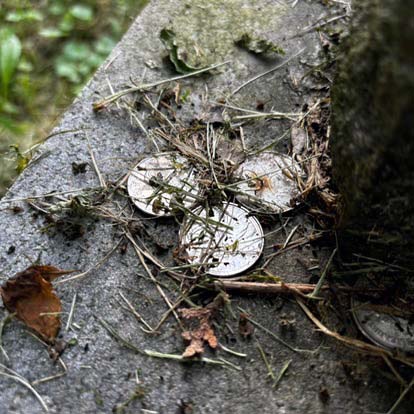
Ranger’s black granite gravestone features a beautiful portrait of Adam, a small etching of the cartoon mouse Stewart Little, and an epitaph that reads “Playing with Pépère”. The base of his gravestone is cluttered with stones, tokens from those who have visited to pay their respects.
One gravegood stands out among the rest—a skull. It’s worn from the elements, it’s white paint chipped away. Deb Ranger, Adam’s mother, has said that Halloween was Adam’s favorite holiday. He loved it more than Christmas.2
Putting their grief and anger to work, the Ranger family created the Let’s Remember Adam campaign. Its mission is to ensure that all children travel to and from school safely each day and to remind motorists to STOP for the school bus.3
Ontario drivers illegally pass school buses more than 30,000 times per day, according to the statistics.4 There is a lot of work to be done, but Pierre Ranger is undaunted.
Let’s Remember Adam has been a big contributor to the success of the Safer School Buses Act, 2021 which has officially become law.5 As of the 2022-2023 school year, Ontario requires all school buses manufactured after 2005 to have the amber-red warning system installed.5 This system, which Ranger had been advocating for, for years, consists of a new lighting system that lets drivers know when a school bus is approaching its next stop. A set of amber lights will flash when the school bus is approaching its stop, signaling that it is slowing down to stop. The red lights then activate when the bus has come to a complete stop.5
The group has also successfully lobbied for stop-arm cameras to be installed on school buses, to identify those who don’t stop and pass illegally. Mattawa was the first community to have this camera system mounted on 19 buses in their fleet.6 This free system is available to any municipality that wants the added security.6 The ultimate goal is to have these stop-arm safety systems installed on all school buses in the province.7
Let’s Remember Adam bumper sticker. Photo: Let’s Remember Adam Facebook Page.
The Ranger family has been a strong contributor to bus and road safety, while at the same time keeping the memory of little Adam alive. Adam’s story is an important and timely one. I hope by sharing and remembering Adam, I can do a small part in spreading more awareness about bus safety and all the good work the Let’s Remember Adam campaign has accomplished.
I hope it will also be a good reminder to drivers as this year’s school season begins, to please STOP for the school bus.
Who doesn’t love a road trip; especially one that is pre-planned for you? All you need is your sense of adventure, a full tank of gas, and someone to share it with!
I mentioned last week that I would share more details about the Guess Where Trips adventure that my mom and I did during our summer vacation. So, today on the blog, I wanted to introduce you to this fun company, if you haven’t already heard of them, and share a little bit more about how our adventure played out.
Marilu, the Travel Support Specialist at Guess Where Trips, gave me a Historic Haunts tour to try out for free, in return for an honest review. The Historic Haunts tour includes a couple of cemetery stops, so it was a perfect fit! This trip is a round-up of spooky and unusual attractions, leading you on a route full of haunted history and ghostly stories. My favorite kind of road trip!
Guess Where Trips
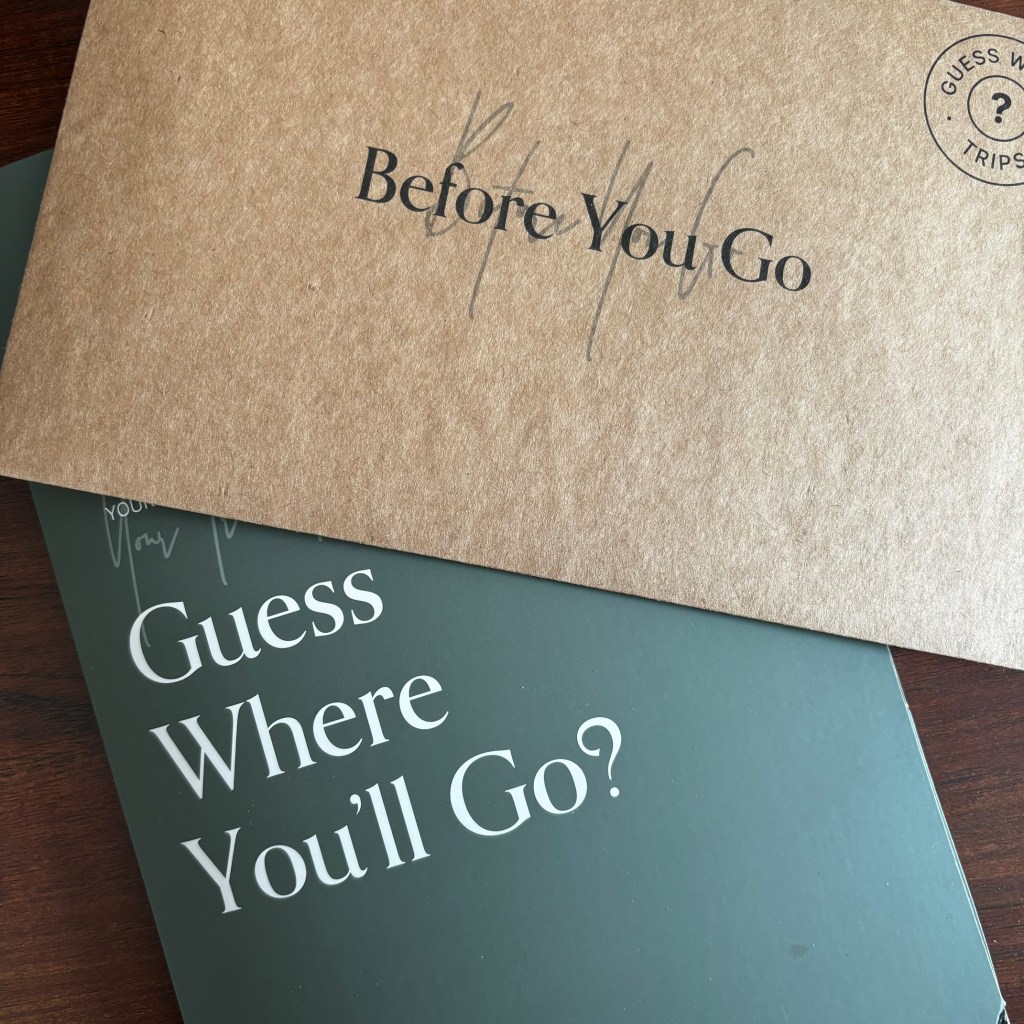
Guess Where Trips offers beautifully packaged, one-day surprise road trips that will take you to all manner of hidden gems in Canada and the United States. Inspired after creating a scavenger hunt-style road trip as a gift to her parents, Jess Off founded Guess Where Trips in January of 2020.1 These curated road trips encourage you to explore the road less traveled, while also supporting small businesses and communities along the way.1
Lots of meticulous planning and research goes into all 135 available trips. And they are working on creating new adventures all the time. On June 20th of this year, they released 13 new trips that feature Michigan, Ohio, and Indiana.
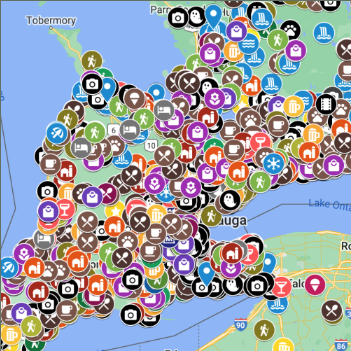
In a recent email, the Guess Where Trips team shared all the intricate work and planning that goes into designing their trips. A big part of their planning revolves around what they call their “magic map”, an evolving map filled with pinned locations that serve as a foundation for outlining their growing list of surprise road trips.
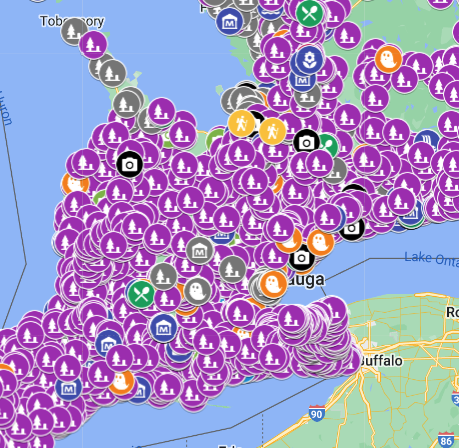
I thought their magic map looked pretty similar to my master map of Ontario cemeteries. Although mine focuses on cemetery locations, there are a few hiking trails, and museums pinned on there. I use my map a bit differently, using it to track visited sites (the grey pins) and as a starting point for creating location-specific maps for my cemetery road trips.
The Guess Where Trips Magic Map and the left, my master map of Ontario cemeteries on the right.
The Historic Haunts tour was the first ghostly trip created by Jess Off and her team and was initially most popular around the Halloween season. Today, all their haunted trips have become popular regardless of the season. Some of the other spooky trips they offer in Ontario are Weird and Wonderful Things, Spooky Sights & Ghostly Tales, Beautifully Haunted, and Hidden Gems of Huronia.
They offer an adventure for everyone! If haunted hidden gems are not your thing, you might enjoy one of their other themed trips. They have trips that feature wineries, and breweries, romantic getaways, scenic drives, and outdoorsy adventures.
My Guess Where Adventure
The Historic Haunts tour begins in Cambridge, Ontario which is about a 4-and-a-half-hour drive from me. So, my mother and I packed up the car and took advantage of the nice summer weather to make an overnight trip. We drove up to the tri-city on Thursday, with plans to follow the surprise road trip all day on Friday. Then we would drive home on the Saturday. This gave us some extra time to explore the area, so I found some other things for us to do as well.
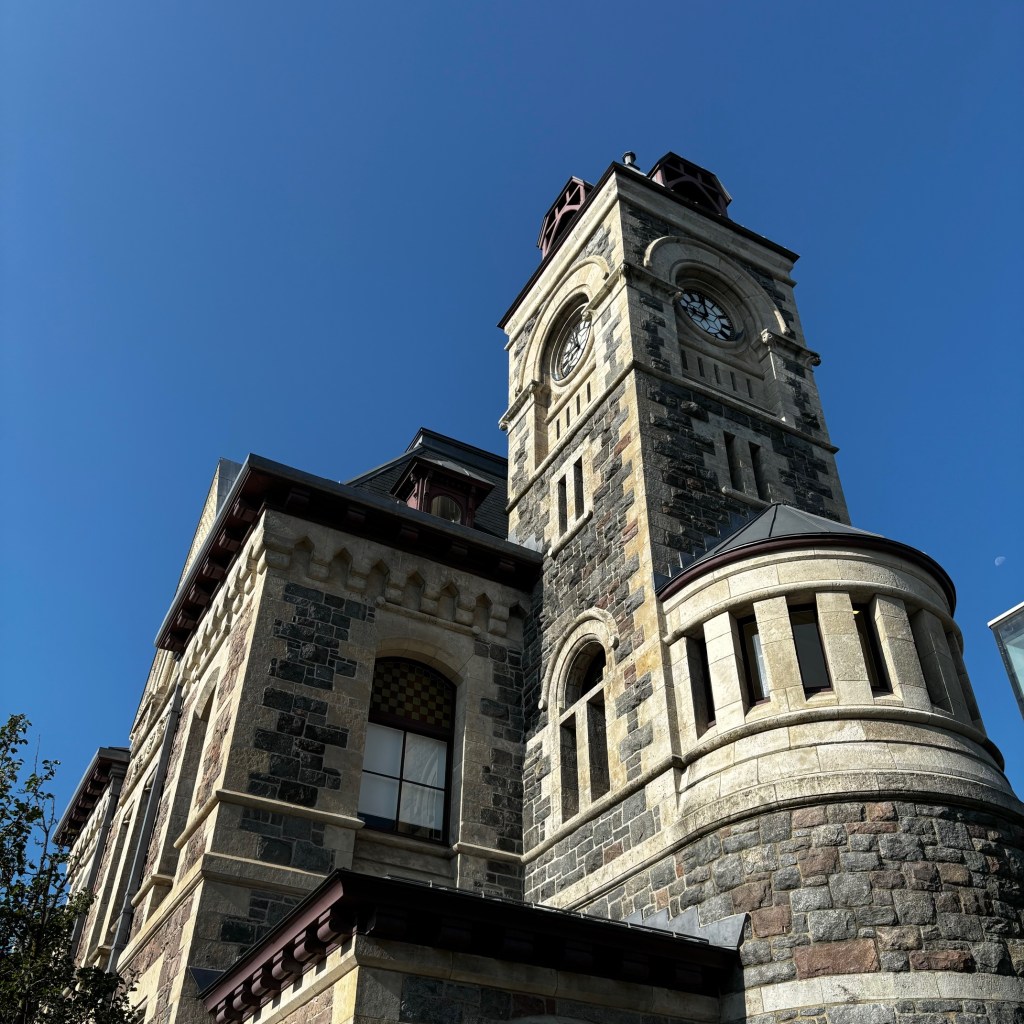
Friday morning, after a nice breakfast, we opened our first envelope to see where our first stop would take us. It brought us to downtown Cambridge to explore the architecture and haunted history of some of its older buildings. With coffee in hand, we sat outside the beautiful stone building that was once a Post Office, and read the tragic tale of a torrid love affair that ended in suicide. Even though it was a bright sunny morning, it was still a bit spooky to be looking up at so much dark history.
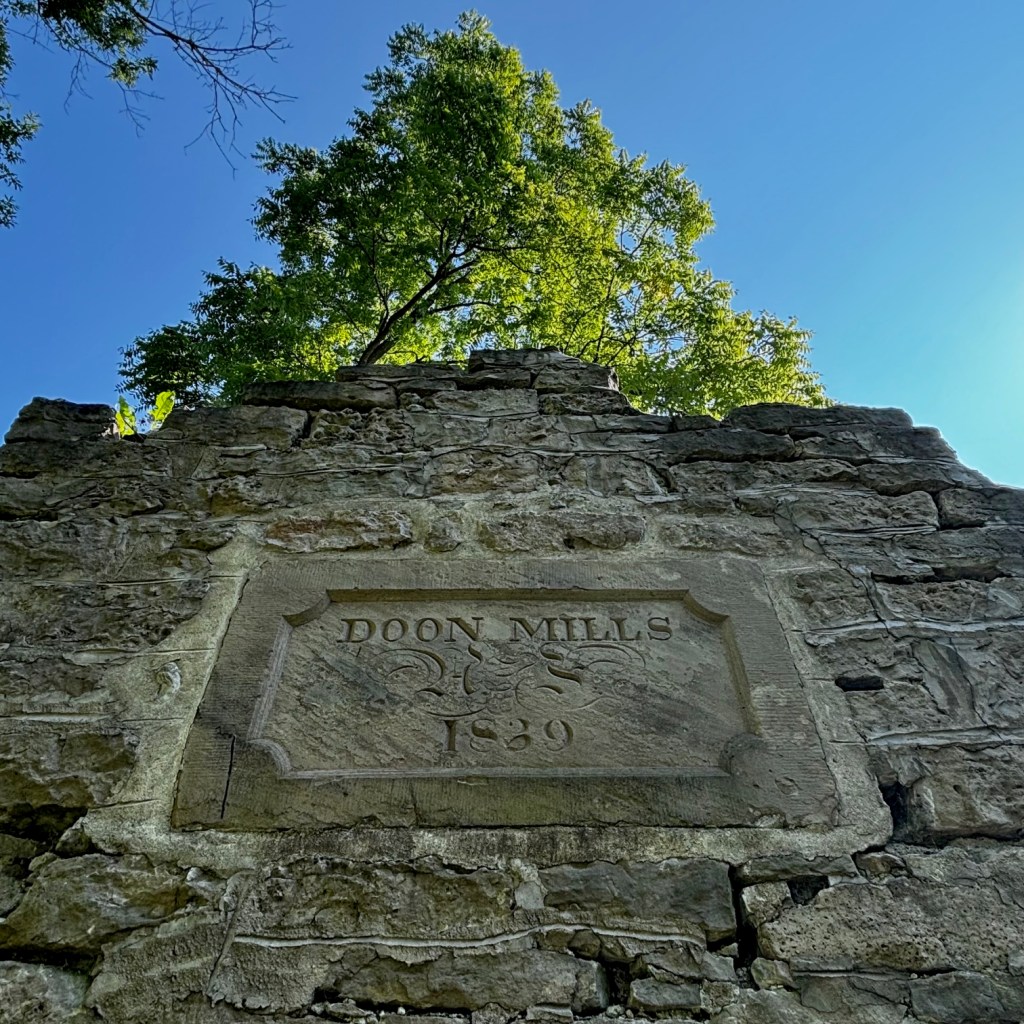
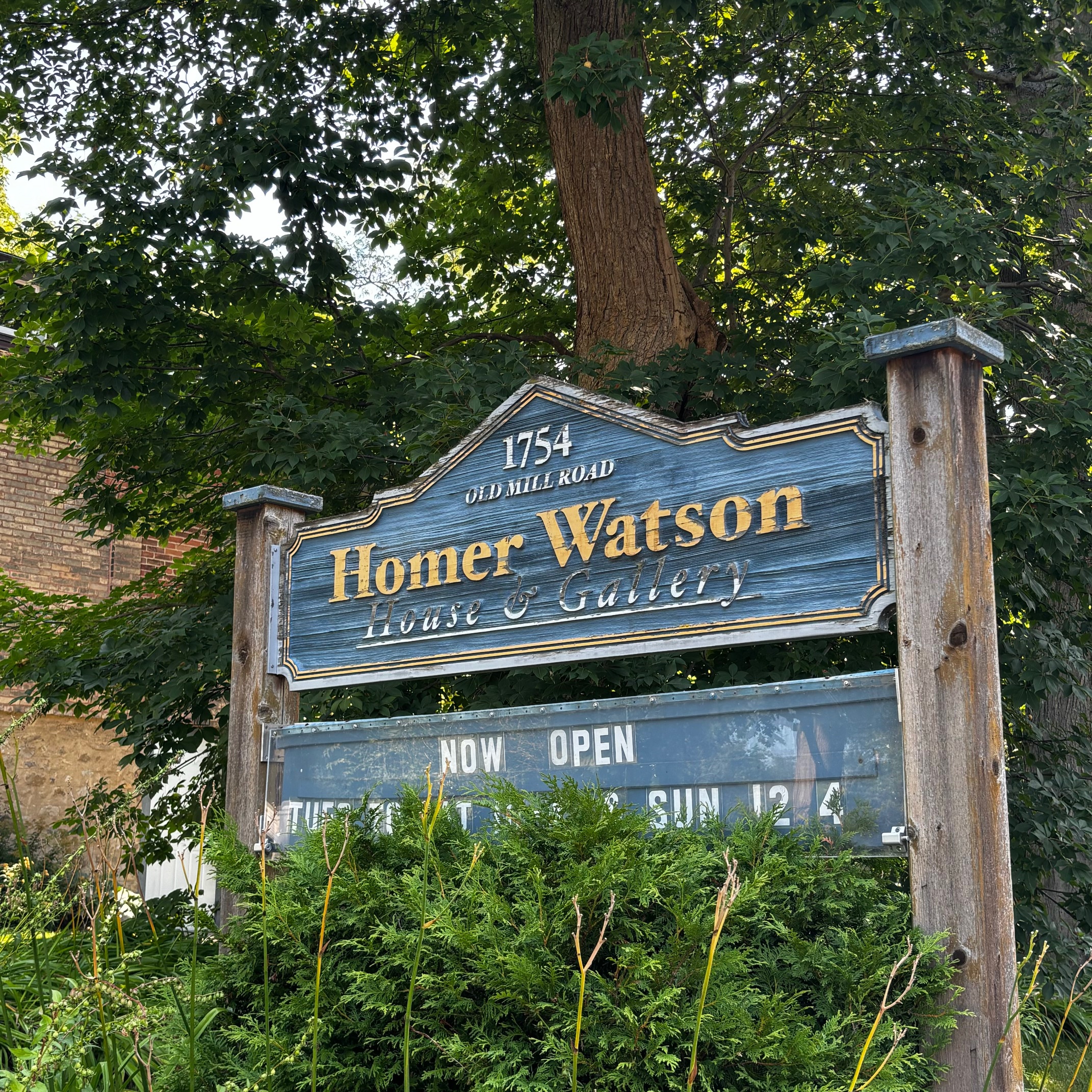
Our second stop brought us to a beautiful historic house and art gallery. We were a little early, arriving before they opened for the day, so we decided to explore the optional spooky abandoned spot that was just around the corner—The Doon Mills Ruins.
Things got a little interesting at this point. The Doon Mills, originally built in 1834 have seen many tragedies, having burned in a fire not once, but twice! Today, many people report ghostly occurrences at this small section of ruins that sit at the trailhead. People claim to have heard ghostly footsteps or even heard their name called. Almost as soon as we arrived at the ruins, my mother complained of a burning wood smell. I didn’t smell anything though. My mom got a little creeped out when I reminded her that smelling burning wood was something many people experienced when visiting the ruins.
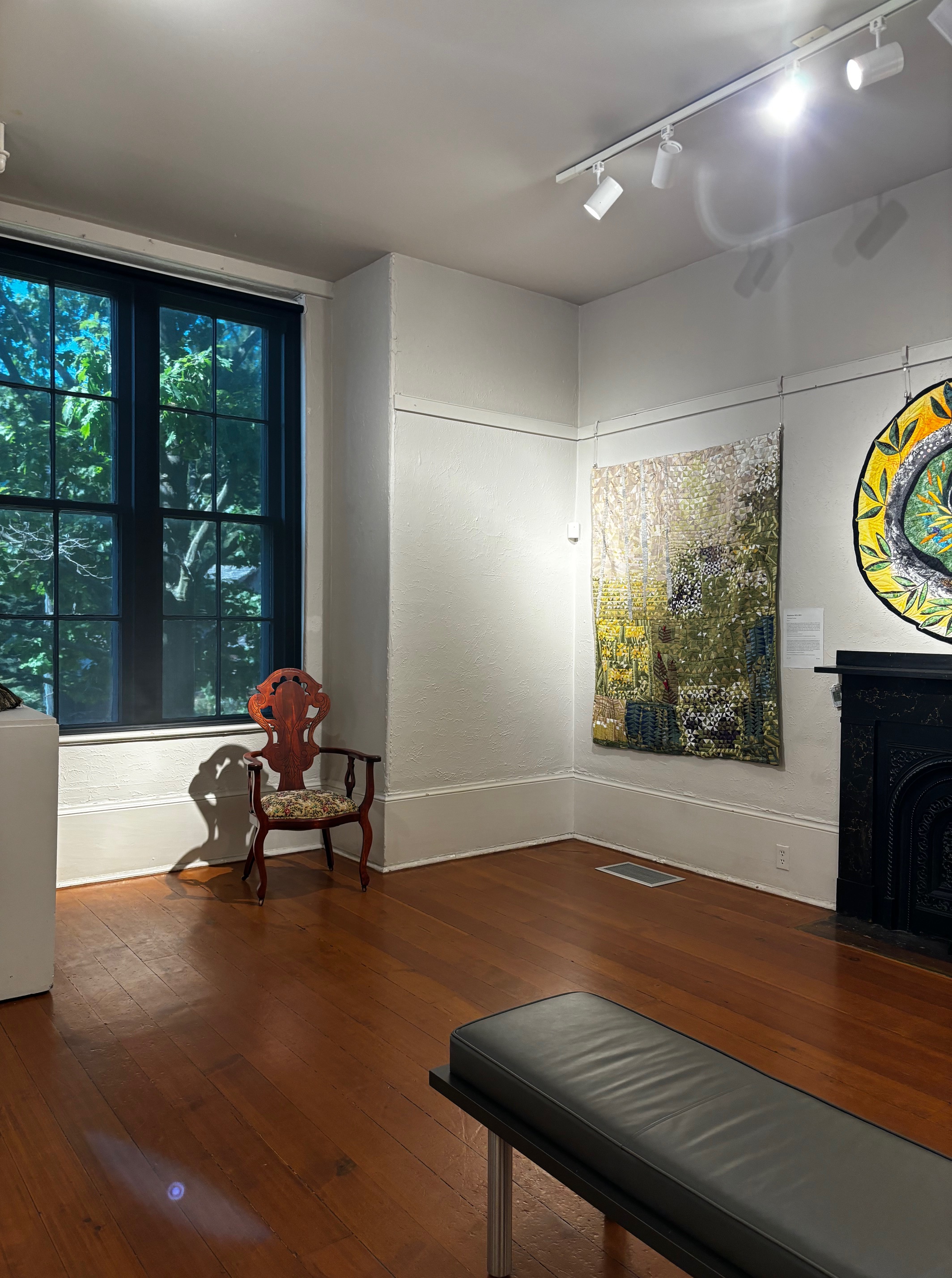
We made our way back to the Homer Watson House & Gallery once it had opened for the day, and was given a lovely tour by the staff. They made sure to tell us the haunted history of the place when we told them we were on the Haunted History tour. It is a beautiful house with a very interesting history. After exploring the house, I just had to ask where Homer Watson might be buried. It just so happens that he is laid to rest in the cemetery just down the road from the historic house, so my mother and I made an extra stop to visit his grave and pay our respects.
Remember how I mentioned I had found some other things for us to visit while we were in Cambridge for the tour? Well, that ended up mucking up our surprise road trip a little bit. The third stop on our road trip directed us to a haunted tower and an ancient cemetery. Well, it just so happens that my mother and I had visited this location the day before. It was a perfect evening activity as it checked a lot of boxes for us; a historic site, a cemetery, and a walking trail. At the time of our visit though, we had no idea the tower was haunted.
By this time it was also the lunch hour, so instead of visiting that location again, we decided to try one of the recommended restaurant stops. We visited the Borealis Grille & Bar to have some lunch and read through some of the haunted history of the tower we visited the evening before. After that nice rest, we opened our next envelope.
Our fourth envelope presented a choose-your-own-adventure opportunity. So it worked out that we had already visited the previous stop. This gave us more time to visit multiple locations on this leg of our road trip adventure.
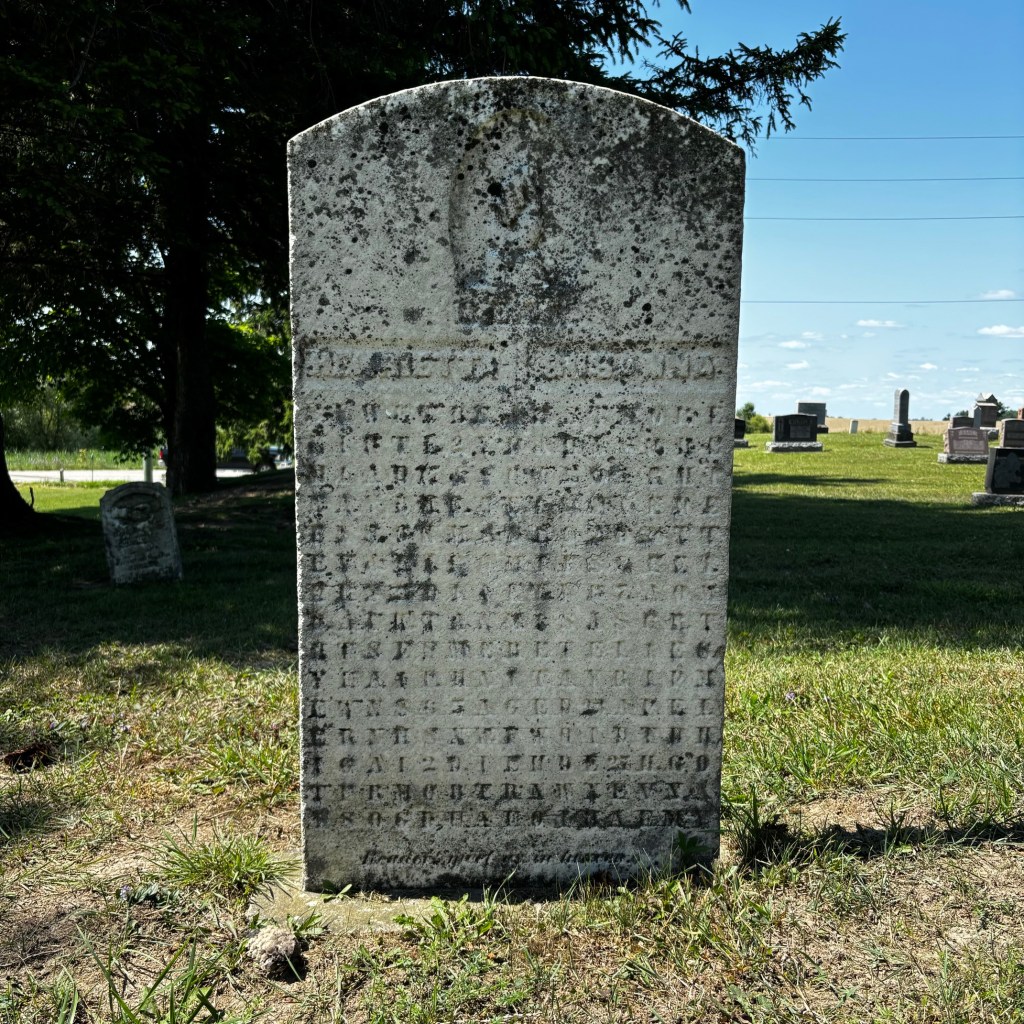
We chose to visit Rushes Cemetery in Wellesley first. I was pretty excited to see this listed as the first optional stop. There is a very interesting gravestone in this cemetery, and it has been on my cemetery bucket list for a while. This cemetery is the final resting place of Henrietta and Susanna, the first and second wives of Dr. Samuel Bean. What makes this stone so unique is the fact that this tombstone is written in a crossword code, and it took over 100 years to decode it.
After I took some time to photograph the cemetery we made our way to Fergus to visit the Wellington Museum & Archives. By the time we got there, we would have just enough time for a quick tour before they closed for the day.
Once known as the Wellington County House of Industry and Refuge, built in 1877, this beautiful building now houses a permanent display of the Institution’s history, as well as a few changing exhibits. The permanent exhibit “If These Walls Could Speak” explores the lives of the people who lived, worked, and died within the walls of the Poor House. It’s not surprising this National Historic site is also home to a few ghosts.
After we toured the building, taking in all the interesting exhibits and history we made our way down the road to visit the Poorhouse Cemetery. This cemetery sits at the edge of the property and was established for those who had no family to claim them. After we paid our respects at the cemetery, we headed back to Cambridge to have some supper and rest at the hotel.
Our Historic Haunts tour was a great success. My mother and I had a lot of fun exploring and learning about the community and local history. It was a great mix of haunted history, museums, and cemeteries. Although we did add a couple of cemetery stops to our trip, it made sense to stop in and pay our respects after learning so much about their history.
I also loved the surprise element and the choose-your-own-adventure style. Opening each envelope was a fun addition that created a sense of anticipation. The multiple options also gave you the freedom to choose how your route was going to unfold. The restaurant and cafe options were also great additions, taking into account that you may get hungry or need a coffee break during all the exploring. It is so well thought out!
I asked my mom what she thought of the trip and she loved that all the planning is done for you and that it was really easy to follow. She also loved all the history that is provided for each stop, her favorite being the tragic tale of love and loss at the Old Post Office. She loved the beautiful architecture but noted that we would have never known about its tragic history, just by looking at the building. She said it was a great adventure!
We had a great time, and we both would recommend these trips to anyone looking for a unique adventure. So if you are looking for road trip ideas, definitely check out Guess Where Trips and let them lead you to some fun and fascinating destinations!
I have been slowly getting back into my regular routine after a fun two-week vacation. For today’s blog post, I wanted to provide a little recap of my holidays and give you a sneak peek of some upcoming blog posts based on my summer cemetery adventures.
I did quite a bit of traveling during the last two weeks, getting the chance to explore the Ottawa Valley and some of Southern Ontario. My fiancé and I spent some time in Ottawa visiting family and touring a bit of the city. Of course, I tried to fit in as many cemetery visits as I could. I had the chance to visit the grave of the Unknown Soldier on Parliament Hill and witness the changing of the guard. We popped into the lobby of the haunted Chateau Laurier to look at its beautiful architecture, and I even had the chance to stop in at the office of Haunted Walk to say hello and browse their gift shop.
After Ottawa, we made our way to Perth to visit some friends and explore a bit more. We explored the quaint little town and had to stop in at the Mammoth Cheese for a quick photo – I do love a fun roadside attraction. One of my favorite things we did while in Perth was take a short road trip to visit the Mother Barnes Homestead and the grave of the Witch of Plum Hollow. When I was planning our trip and saw how close we would be to Plum Hollow, I knew we had to take the opportunity to visit. The story of Mother Barnes is a very interesting one, full of folklore, politics, and witchcraft. The stigma of which can still be felt today. I look forward to sharing her story and my visit with you in an upcoming blog post.
Another fun thing I did on vacation was take my mom on a Guess Where Trips adventure. They sent me the Historic Haunts tour to try out, which just so happens to have some cemetery stops! We had a great time exploring Kitchener, Cambridge, and Waterloo and its outskirts. I don’t want to get into too much detail here about our trip because I will be writing a full post about our adventures soon, but I will say it was a super fun experience!
Guess Where Trips
If you’re not familiar with Guess Where Trips, I highly recommend you check them out! They offer fun road trip itineraries that will take you to lots of hidden gems. They include interesting facts and stories about each location and great restaurant suggestions. Our trip took us to a haunted historic house and art gallery, mill ruins, a unique tombstone, and a haunted museum. We learned a lot on our trip, and I have a lot to write about for upcoming blog posts.
The last leg of our summer vacation took my fiancé and I to Toronto. We were there for the Sammy Hagar Best of All Worlds Tour. It was a great show, with Lover Boy opening for Hagar. While we were in town, we took the opportunity to hang out with some friends and do some exploring in the downtown core. We checked out a few board game stores, visited our favorite brewery, popped into the new location of the Prehistoria Museum & Store, visited the Monkey’s Paw, and tried an amazing new Mexican place. My favorite stop though, was our visit to the Toronto Necropolis.
The Toronto Necropolis has been on my cemetery bucket list for a while. Can you believe I had never visited any Toronto cemeteries before? This cemetery was high on my list because it is the final resting place of the father of zombie movies – George A. Romero. It’s also a gorgeous cemetery and one of my new favorites. This cemetery also holds some other notable graves and, I look forward to sharing my visit with you.
In total, I made 19 cemetery visits on my holidays and collected a lot of content for upcoming posts on the blog. It was a great vacation and one that made me reconsider my career. If only I could make traveling, photographing cemeteries, and writing about them a full-time job!
I hope I piqued your interest with all the upcoming stories. Don’t forget to subscribe to my blog if you haven’t already, to get new cemetery posts straight to your inbox every Sunday. Stay tuned for next week’s post about my Guess Where Trips adventure.
I hope you also got to enjoy some time off this summer to explore, relax, and reconnect with friends and family. The season is so short you need to fit in the summer fun where you can.























 Cemetery Photography by Chantal Larochelle