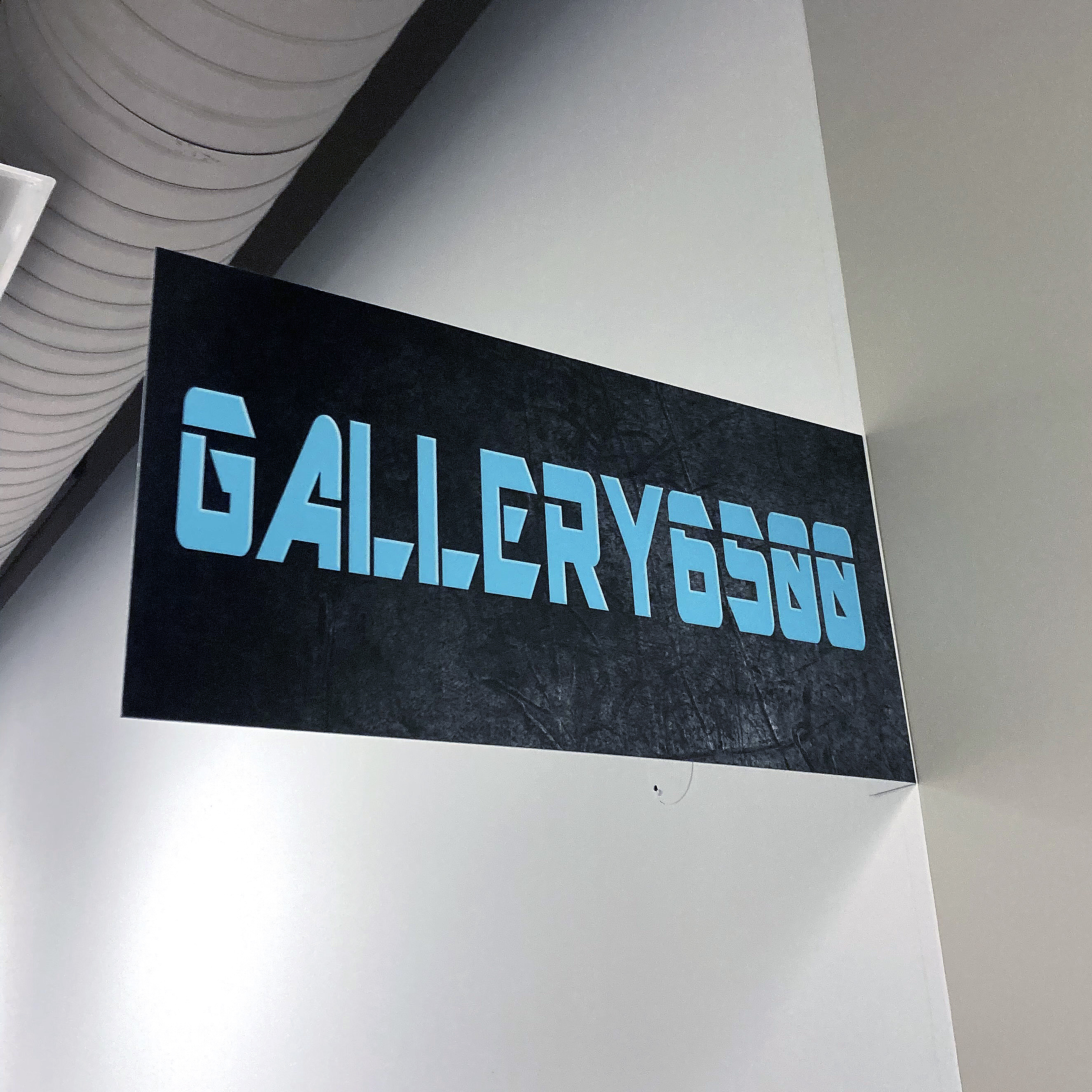
Recently, I was very excited to learn that my work had been selected for a group photography show. If you follow me on Facebook or Instagram, you may have seen a few posts about it. Gallery 6500 had put out a request for submissions from local photographers, looking for contemporary black and white photographs.
They asked photographers to submit works that commented on social, political, economic, and environmental issues within our community. COVID-19 was a focal point of many submissions, including mine. There was a very nice Sudbury.com article written about the show, that highlights the theme as well as some of the other amazing photographers in the exhibit.
The 5 photographers exhibiting are: Caio Higa, Debbie Anzinger Mckay, Debb Trahan-Pero, Rita Vanderhooft, and myself.
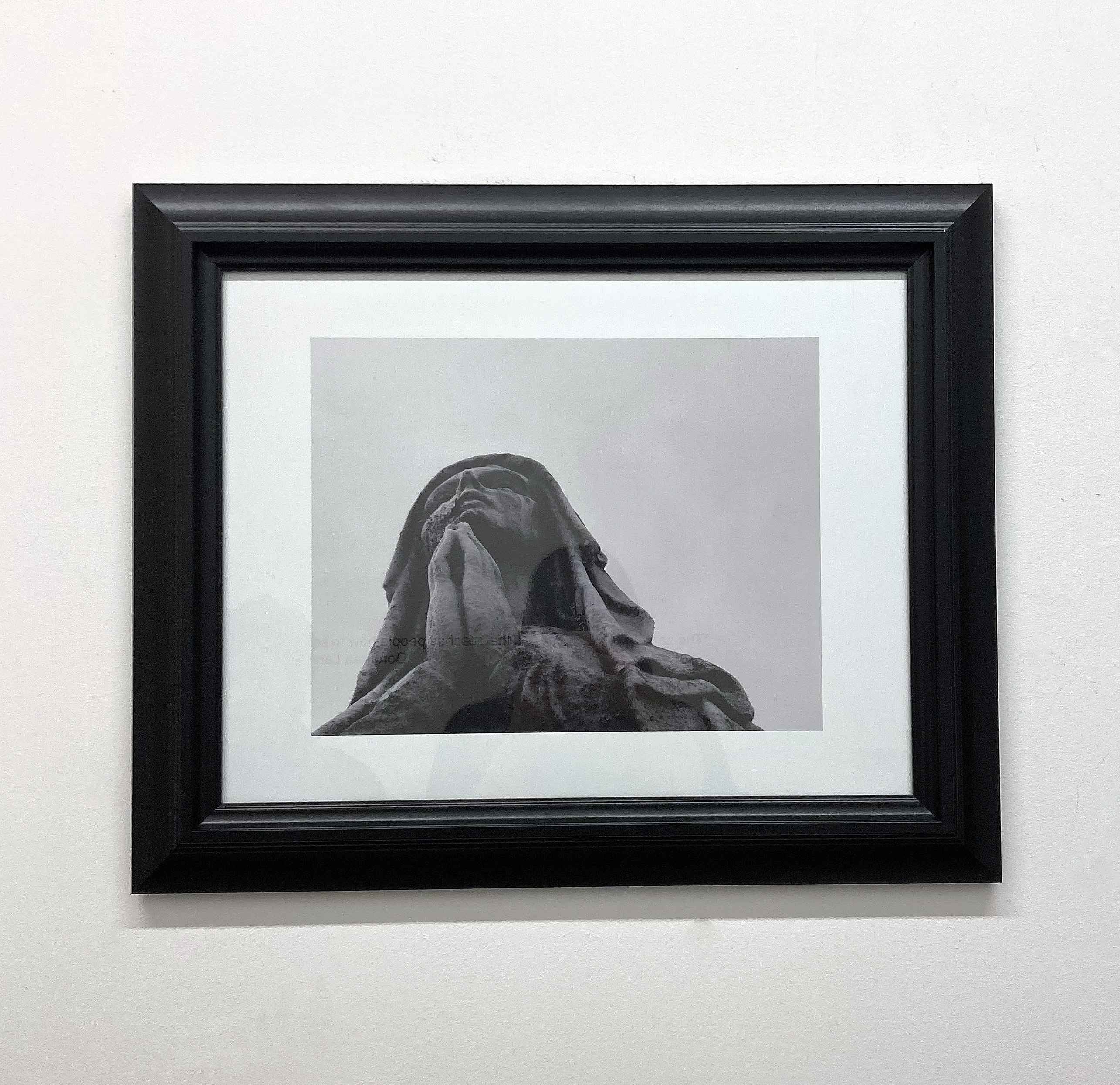
I was thrilled when I got an email saying my cemetery photographs had been chosen. This is my first time exhibiting in a gallery, and I was a little uncertain as to how my photography would be received. I have been in one other group photography show, that was more of a market or craft show style. It’s been a great experience working with the Gallery and organizers to bring this show to life.
Last Sunday, April 30th, was the opening of the exhibit. It was a great event! There was a great turnout of friends and family of each featured photographer. It was so nice to see so many people come through to enjoy the photographs. Personally, seeing so many of my friends and family come out to support me made my heart full. I sometimes feel like my work goes unnoticed and I am creating content just for myself, so seeing so many people come out to support me and overhearing conversations surrounding my work was such a thrill!
Our Story in Black and White: Photography Exhibit, at Gallery 6500
I am very excited and honored to be exhibiting alongside such great photographers. There are a variety of subjects presented, each in the photographer’s own unique style. I am sure there is something there for everyone to connect with. There is some very powerful work on display.
If you were not able to attend the opening, there is still time to visit this great exhibit. Gallery 6500, at 66 Brady Street, in the Steel Workers Hall is open for viewing on weekdays from 8:30 a.m. to 4:30 p.m. Our Story in Black and White is running until June 30th, and is dedicated to the memory of Don Kuyek. Don’t forget to sign the guest book and share your thoughts.
A couple of weekends ago I was able to cross something off my cemetery bucket list—visiting all 25 cemeteries in the care of the City of Greater Sudbury. For today’s blog post, I thought it might be interesting to take a closer look at some of these cemeteries.
The City of Greater Sudbury is centrally located in Northeastern Ontario. It sits on the Canadian Shield in the Great Lakes Basin and is composed of a combination of urban, suburban, rural, and wilderness environments. Greater Sudbury is 3,627 square kilometers in area, making it the largest municipality in Ontario, geographically.1 Making up this municipality are many small communities that over time, have been amalgamated into the City of Greater Sudbury. Almost all of these little communities have their own cemeteries, that now fall under the care of the city.2
Each of these cemeteries has their own charm and has been very interesting to visit. Some are newer cemeteries with very modern stones, that are still very active, like Valley East and Park Lawn cemeteries. Some of them have tombstones marking persons who are still living. Those always make me think—do the owners visit their gravestones? Other cemeteries are pioneer cemeteries, like Ruff Pioneer Cemetery. Those types of cemeteries hold a lot of history. I wrote about my visit to the Ruff Pioneer Cemetery, you can read it here.
Two of the oldest of these cemeteries, I believe, are the Eyre and Anglican cemeteries. They are directly beside each other, and there is no distinct line to separate the two. The earliest grave is from 1890.3 Both of these cemeteries can tell you a lot about our city. You can find the namesakes for the Gatchell and Lockerby areas of town, as well as the grave of Frederick J. Eyre, who discovered one of the first mines for the Canadian Copper Company.3 Sudbury, at its roots is a mining and railroad town.
Some of these cemeteries were a challenge to find and can be hard to access. Ruff Pioneer Cemetery would be more easily accessible with a four-wheeler. Make sure you have plenty of water with you for that adventure in the woods. The Coniston Cemetery is a little bit more accessible now, as a cemetery trail has been created, linking it to the Jean Tellier hiking trail. The first time I visited that one, we searched for a while before deciding to ask for directions from some locals at a convenience store. They were more than happy to help and even drew me a map. They also shared some stories from their childhood, of how they would play in the cemetery and nearby woods. Coniston Cemetery is particularly interesting because there are no more headstones. There may have originally been wooden markers or fieldstones there that have since deteriorated or have been moved. It was an active cemetery from 1914 to 1926, when the parish that was taking care of the cemetery announced they could no longer do so.4In 1997 a memorial plaque was installed honoring the deceased known to have been buried there. Another hard-to-find cemetery is the Wahnapitae Public Cemetery. This one is located on a hillside with seemingly hidden access. I tried to find it again recently, but with no luck.
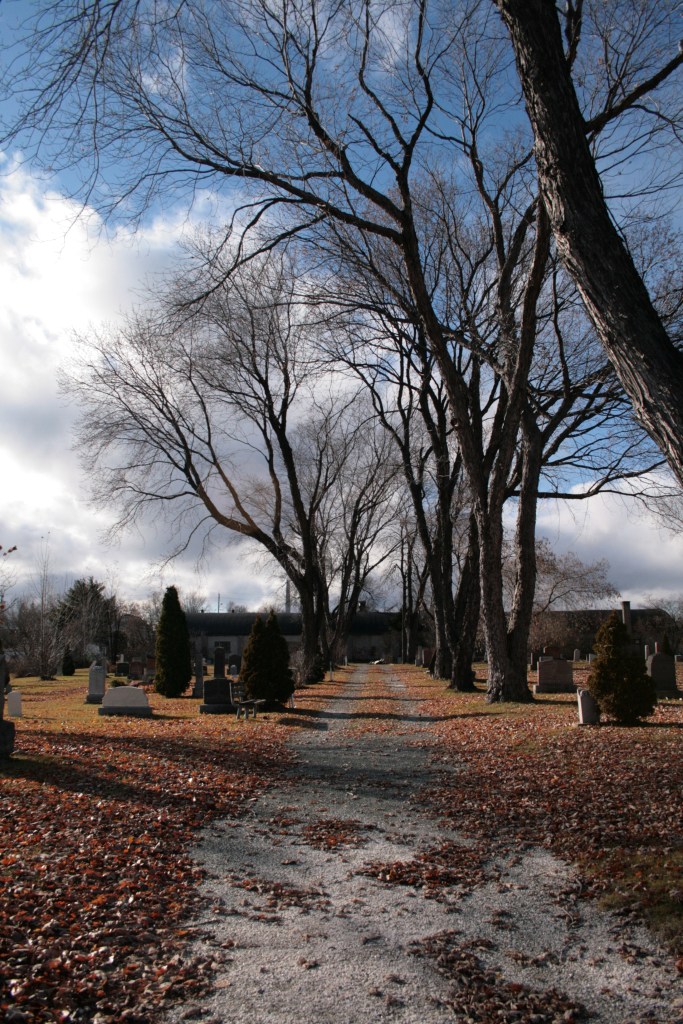
There are a few cemeteries on this list that I have visited many times, either due to their size or proximity to me. Lasalle Cemetery for instance is one of the largest cemeteries in the area. So large in fact that every time I have visited I have focused on a different section to photograph. Another large one, that just so happens to be down the street from me, is Civic Cemetery. This is an active cemetery, and I think has changed the most over time. It has a large columbarium, as well as some lovely winding paths. It’s a lovely rural cemetery. I have many friends of the family that are buried here.
I have enjoyed seeking out all these cemeteries. I feel like I can now say that I have truly explored my city. All these cemeteries hold small threads, connections, that all lead to the creation and growth of my hometown. I have learned a lot about the history of Sudbury, like the stories of some of its founders, the history behind street names, and much more. I would love to spend more time in some of them, to fully explore the grounds, look for specific graves and to see what else I can learn.
Thanks for joining me, as I look back on this bucket list milestone. Do you have a bucket list? What’s on your list? I would love to read about it in the comments.
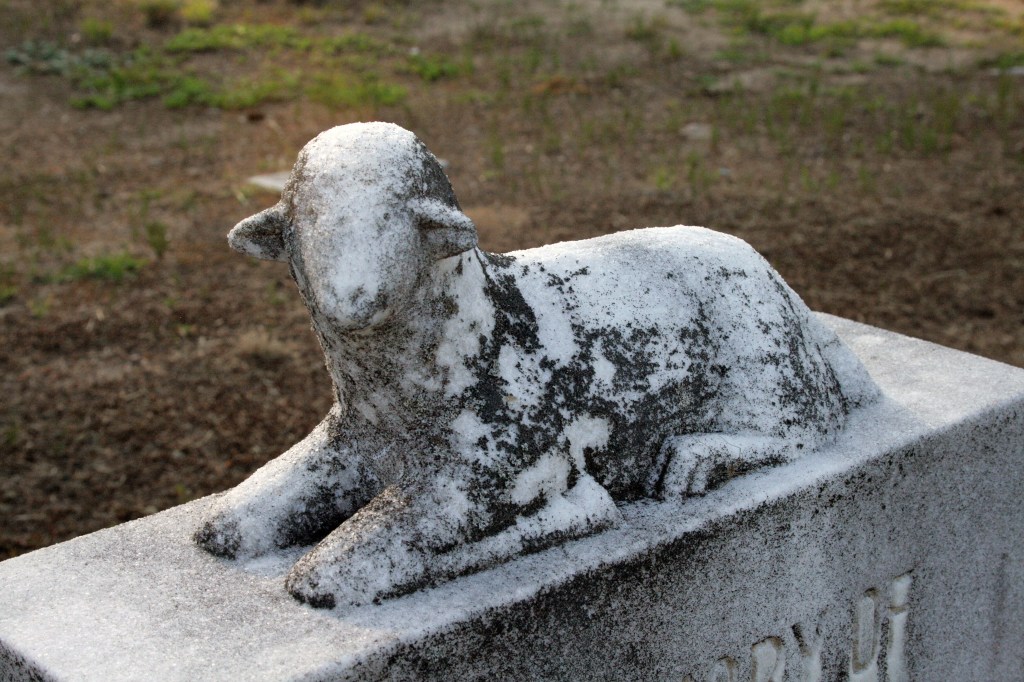
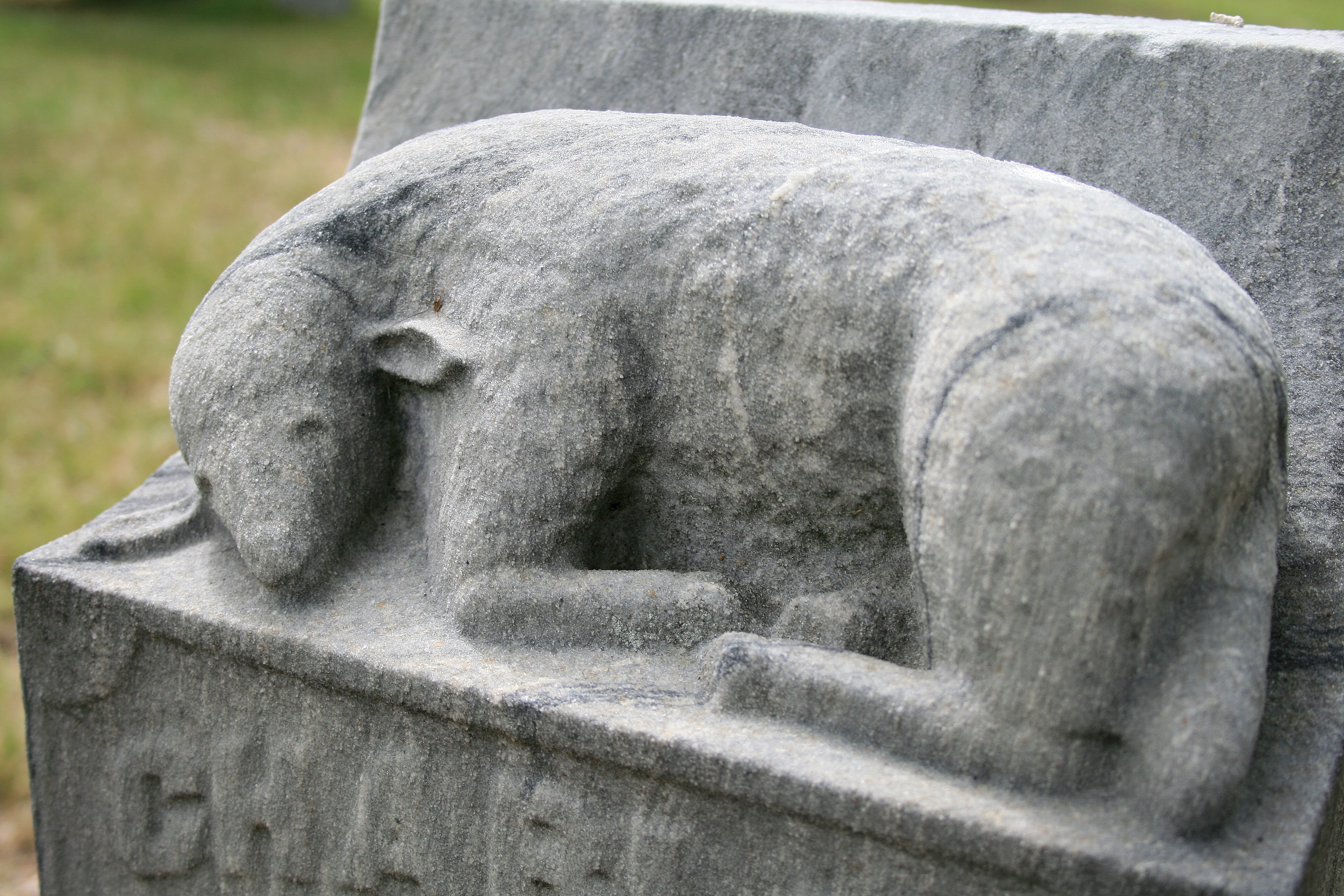
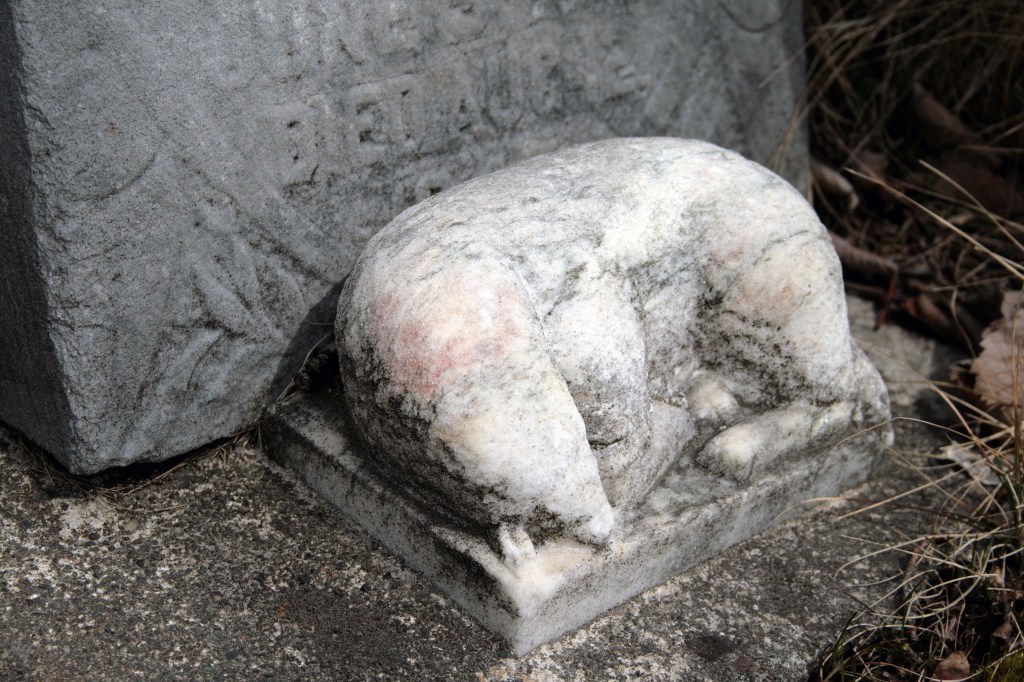
I love exploring cemeteries and looking at the different symbols used on tombstones. If you spend a lot of time in cemeteries, especially in Northern Ontario, you will start to notice the repetition of certain symbols and motifs. One of the most common symbols I find, is the lamb.
Lambs represent innocence and sacrifice, as they were often used in sacrificial ceremonies in ancient times1. Most often you will find lambs on the gravestones of infants and children, as Jesus is often depicted as a Shepherd, and also known as the “lamb of God”. Some variations can be found with lamb symbolism. A robed figure with a standing lamb beside it most often represents John the Baptist, who had called Jesus the “lamb of God”1. A lamb with a cross is known to represent the Lamb of God or Agnus Dei2, symbolizing the suffering of Christ as he sacrificed himself for the sins of mankind. Several other symbols may be found with a lamb to symbolize the lamb of God – such as a banner, halo, shepherds crook, and alpha and/or omega symbols2. A single seated lamb symbolizes an innocent soul. A seated lamb can sometimes be found sitting in front of a tree stump, this often symbolizes a life cut short.
Finding lambs is often sad, but they are a beautiful symbol. I have photographed many over the years and wanted to share some of them with you today.












 Cemetery Photography by Chantal Larochelle