Summer is winding down, but everything still feels full of life.
Trees are lush with green leaves, flowers are in full bloom, and the bees are buzzing all around. Cemeteries reflect that same energy. It’s the time of year when nature is at it’s fullest—and in cemeteries, that adds an extra layer of meaning.
Even in these quiet places, there’s life all around. It reminds me that cemeteries aren’t only about endings—they’re also about remembering lives that were full, loved, and meaningful.
Sometimes, it’s not just the greenery that brings cemeteries to life; it’s the wildlife too, and summer can be the best time to spot them.
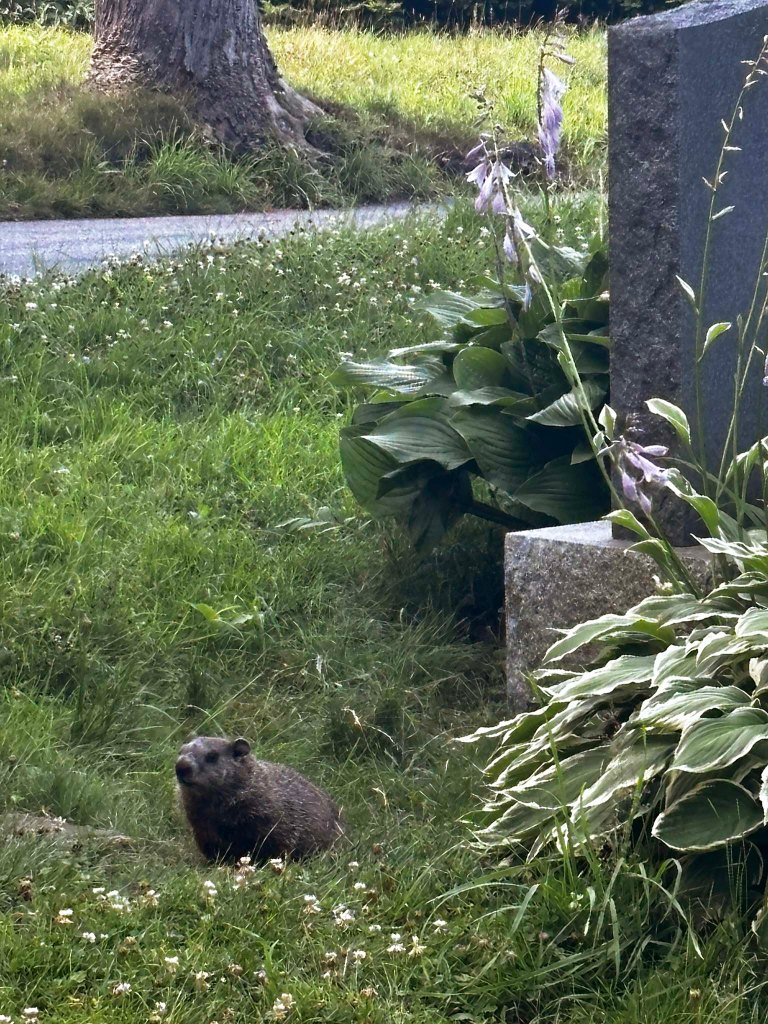
On a recent visit to Notre-Dame-des-Neiges Cemetery in Montréal, I spotted a couple of groundhogs throughout the cemetery who froze in place when they saw me. Like little furry statues, they stared me down until I had passed by. Moments like that make cemeteries feel even more alive, with nature and memory sharing the same space.
Of course, summer cemetery visits do have their challenges. The noonday sun can be intense, and without shade, it can be easy to overheat. On summer road trips, sunscreen and water are a must! Sometimes I’ll even sit down to rest under a tree—a chance to slow down for a minute and also take it all in.
Another thing I love about graving in the summer—especially here in Northern Ontario—is the longer daylight hours. Around this time of year, the sun usually sets between 8:30 and 9 p.m., which gives me lots of time to explore and take photos.
This post wraps up my series exploring how cemeteries change throughout the seasons. If you missed the earlier posts, you can still read about cemeteries in the Fall, Winter, and Spring. Each season really does bring its own mood.
What’s your favourite season to visit cemeteries?
Mine is still Fall. I can’t resist the crunchy leaves, cooler air, and all the moody vibes that come with Halloween season. But honestly, every season has something beautiful to offer, and I’ve enjoyed exploring them all.
But recently, I became curious about what kind of cemetery podcasts might exist. As someone who has always been fascinated by the history, culture, and stories buried within cemeteries, I figured it was time to explore what podcasts had to offer.
From eerie tales of haunted burial sites to deep dives into sustainable burial practices, there’s a whole world of interesting cemetery content out there.
Here are 13 cemetery podcasts you should check out this year.
This short podcast series explores the many ways people have commemorated their dead—whether through gravestones, memorials, or historical markers. Unfortunately, there haven’t been any new episodes since 2019.
Hosted by the Necro Tourist this podcast covers famous graves, infamous hauntings, and all the graveyard gossip. Although there have not been any new episodes since 2023, the early episodes are filled with interesting cemetery stories.
Hosts Lori, Hannah, and Sheena casually chat and share cemetery stories that are sometimes incredible, sometimes eerie, and always interesting. Fair warning though, it can take a while for them to get into the good stuff.
Hosted by Caitlin Howe and Frances Ferland, Grave Escapes brings the voices of the departed back to life. Each episode uncovers a new life story, offering a deep dive into the lives of those now at rest.
Grave Matters dives into the complex connections between death, cemeteries, and culture. Episodes cover sustainable burial practices, the rise of natural burial grounds, and shifts in how we think about death care with thought-provoking discussions.
For those who enjoy a good historical ghost story, The Grim offers well-researched spine-chilling tales of haunted cemeteries and eerie graveyard legends from around the world.
Hosts Jennie and Dianne explore old cemeteries, their preservation, and the lives of those buried there. Their deep dives into these sometimes forgotten histories are both fascinating and informative.
This podcast explores cemeteries and burials worldwide, uncovering the inspiring stories and eerie legends that have grown from these final resting places.
Hosted by Liz Clappin, Tomb With A View offers an insightful exploration of American cemeteries, focusing on their history, preservation, and cultural significance.
This podcast is primarily focused on the funeral industry, Undertaking regularly explores topics involving cemeteries and burial practices. Filled with insightful interviews with industry professionals, each episode offers a unique and cultural look at death.
While these next three podcasts aren’t solely focused on cemeteries, each features episodes that delve into cemetery-related topics or are closely related to cemeteries and graveyards.
Created by The Order of the Good Death, this podcast explores the history of death, burial, and mourning practices across different cultures and eras. While not specifically focused on cemeteries, it often touches on fascinating stories and histories that are closely connected to them.
The official podcast of The Haunted Walk, Haunted Talks explores the paranormal, dark history, and ghostly tales. Some episodes venture into haunted cemeteries and the eerie legends that surround them.
Author J.W. Ocker is all about visiting strange and unusual places. Cemeteries and burial grounds sometimes make their way into episodes, as Ocker visits and explores the stories behind odd and interesting sites.
Whether it’s the history, the stories, or the spooky tales—there’s sure to be a podcast on this list to satisfy your curiosity.
Is there a podcast I should add to the list? Let me know in the comments.
As winter settles in, it’s hard to ignore the changing of the seasons. The chilly air, shorter days, and the snow-covered gravestones mark the end of field season for me. I have always seen snow-covered cemeteries as just too risky to explore—both for me and the gravestones.
While the cold usually keeps me indoors for the next couple of months, it brings something special to the cemeteries I love so much. There is a stillness in the air, and cemeteries in winter do offer something unique that cemeteries in the warmer months just don’t have.
Winter is often seen as a time for rest and renewal. Nature takes a break during these colder months, and cemeteries seem to do the same. The chill in the air makes everything feel still.
For me, the winter season is a time to focus on rest and recharging, while also refocusing on photo editing and research. Nothing is more relaxing to me than being curled up on the couch with a good book. But winter is also a time for reflection on life’s cycles. The season reminds us that life, like death, is all part of the same cycle. Nature’s rhythms, whether still still or full of growth are always changing, just like us.
I’ll be honest, winter is not my favorite season, and I don’t have a lot of experience visiting cemeteries in the snow. The bitter cold and early darkness does not appeal to me. But I will admit that cemeteries in winter have an almost haunting beauty that I can’t ignore.
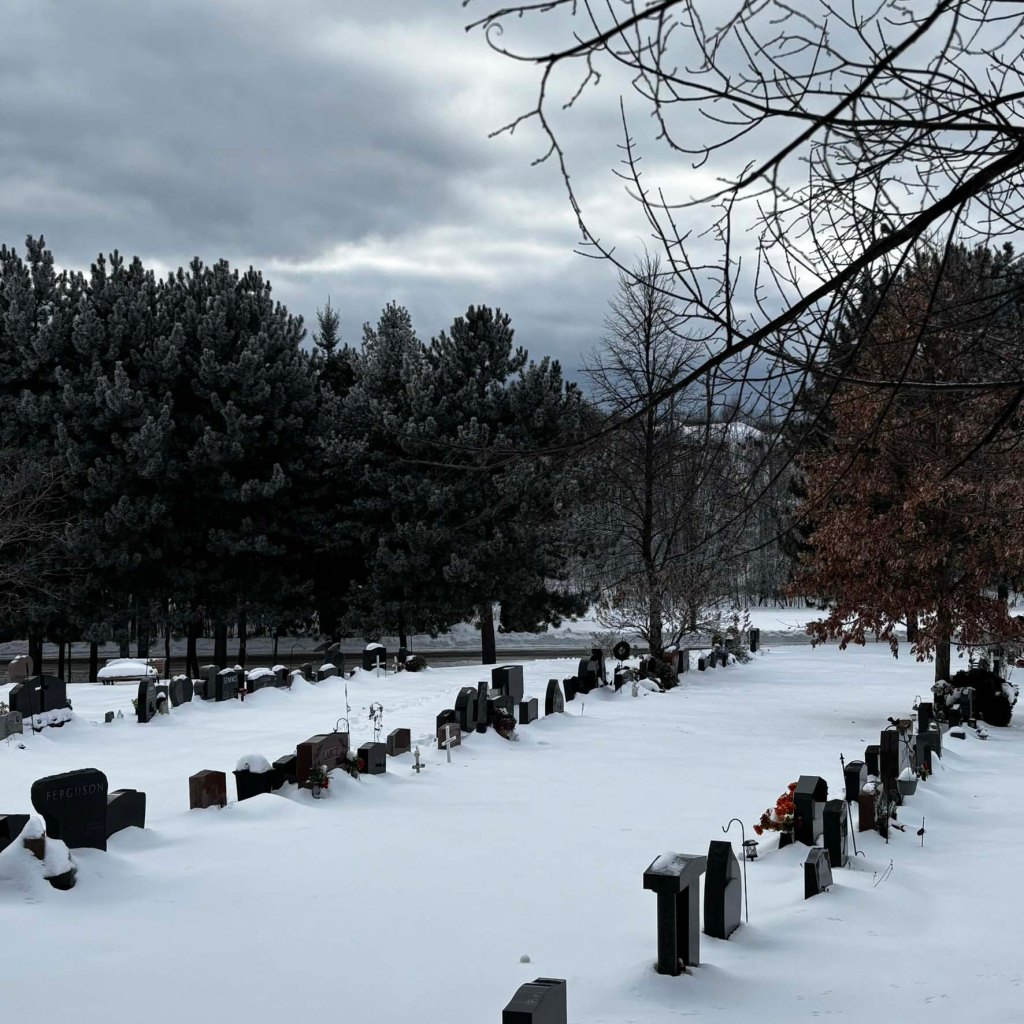
The bare trees against a pale sky, and the contrast between the dark gravestones against white snow, create a mood that’s both peaceful and a bit mysterious. It’s the kind of scene that makes you stop for a moment.
Even though this isn’t the time I usually seek out cemeteries, I made an effort this weekend to stop in to one, to appreciate the unique atmosphere it creates.
One interesting thing I found about cemeteries in the winter is the light. With the sun being lower in the sky, the light creates long and dramatic shadows, adding texture and depth to the landscape. I find the gravestones just look different in the winter light.
The unique angles of the light during winter do make it a great time to play around with shadows and textures. For anyone interested in photography, winter cemeteries offer a chance to capture the landscape in a new way.
As I think about how winter enhances the beauty of cemeteries, I realize that the symbolism of the season offers us an important reminder of the ongoing cycle of life. Winter is a time of rest and reflection, but it’s also a time to prepare for what comes next.
So will you be visiting any cemeteries this winter? Whether you’re stopping by to honor a loved one or just take in the beauty of the season, cemeteries in the winter do have a lot to offer.
A few years ago, my fiancé and I started a new October tradition. We were engaged in October, and to celebrate we planned a cute weekend getaway at a haunted hotel. We visited a haunted pub and enjoyed the small-town charm and fall weather.
We had so much fun that we started thinking about other haunted hotels we could visit—and the tradition was born!
This year, our Haunted Holiday took us to Toronto.
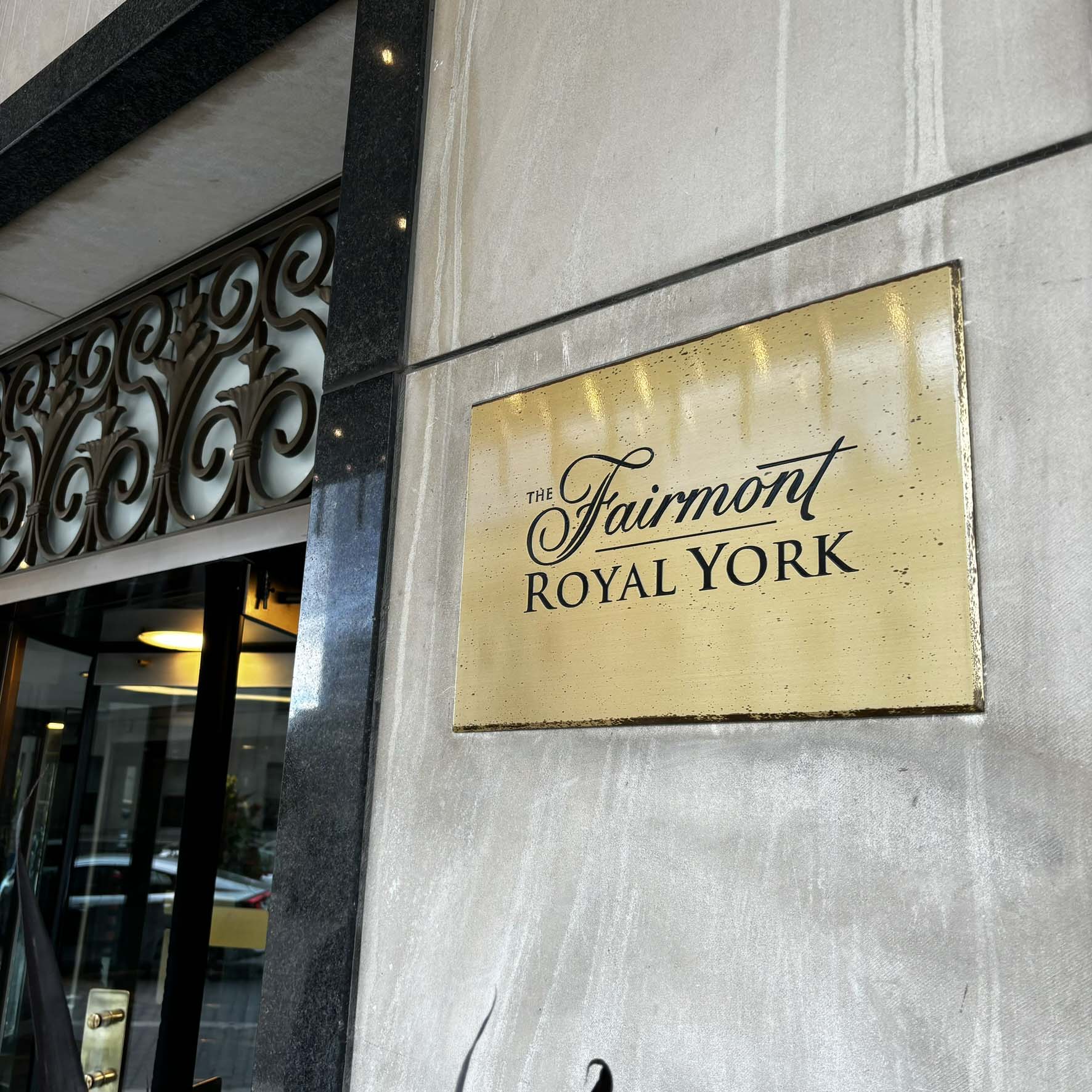
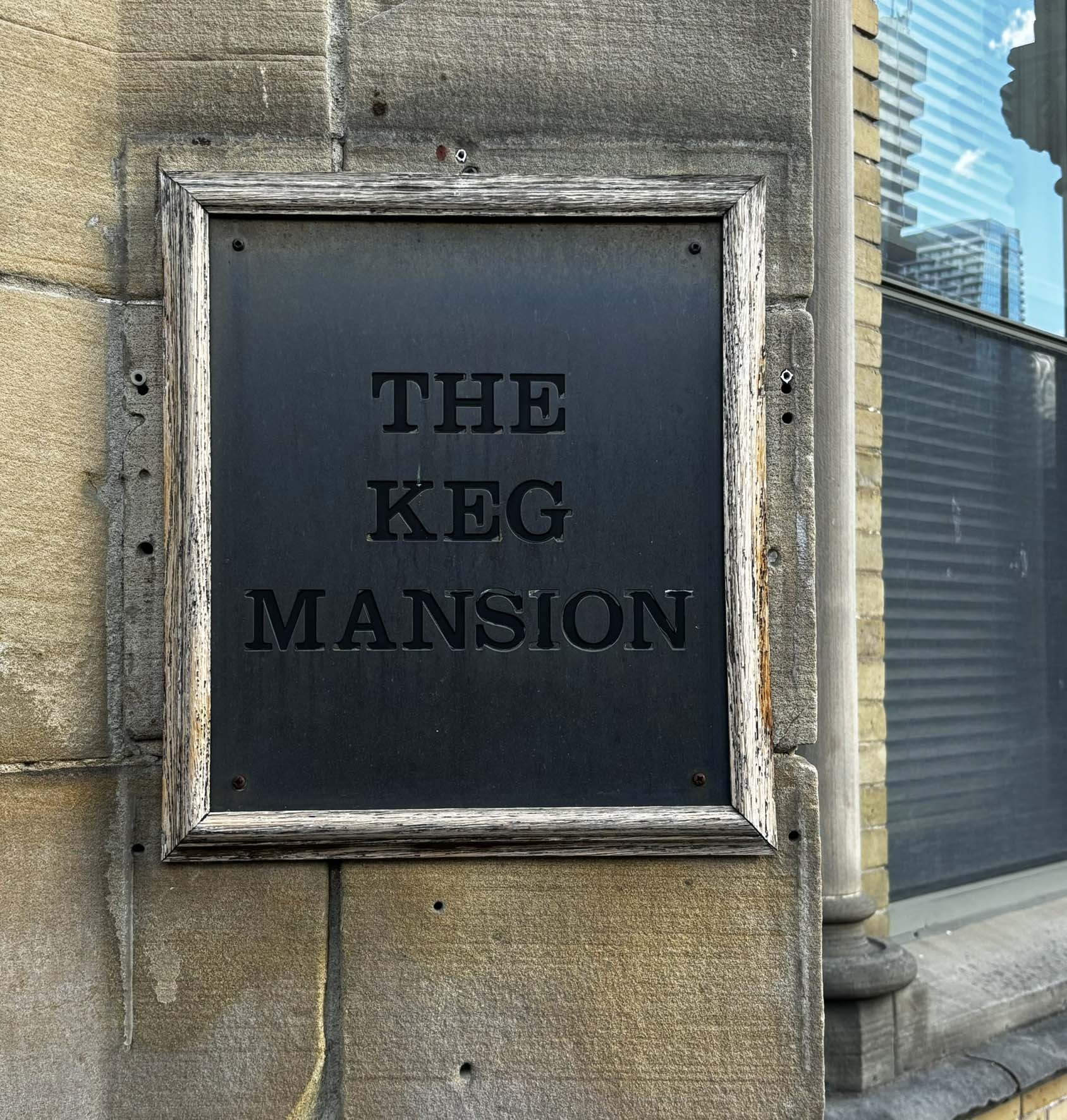
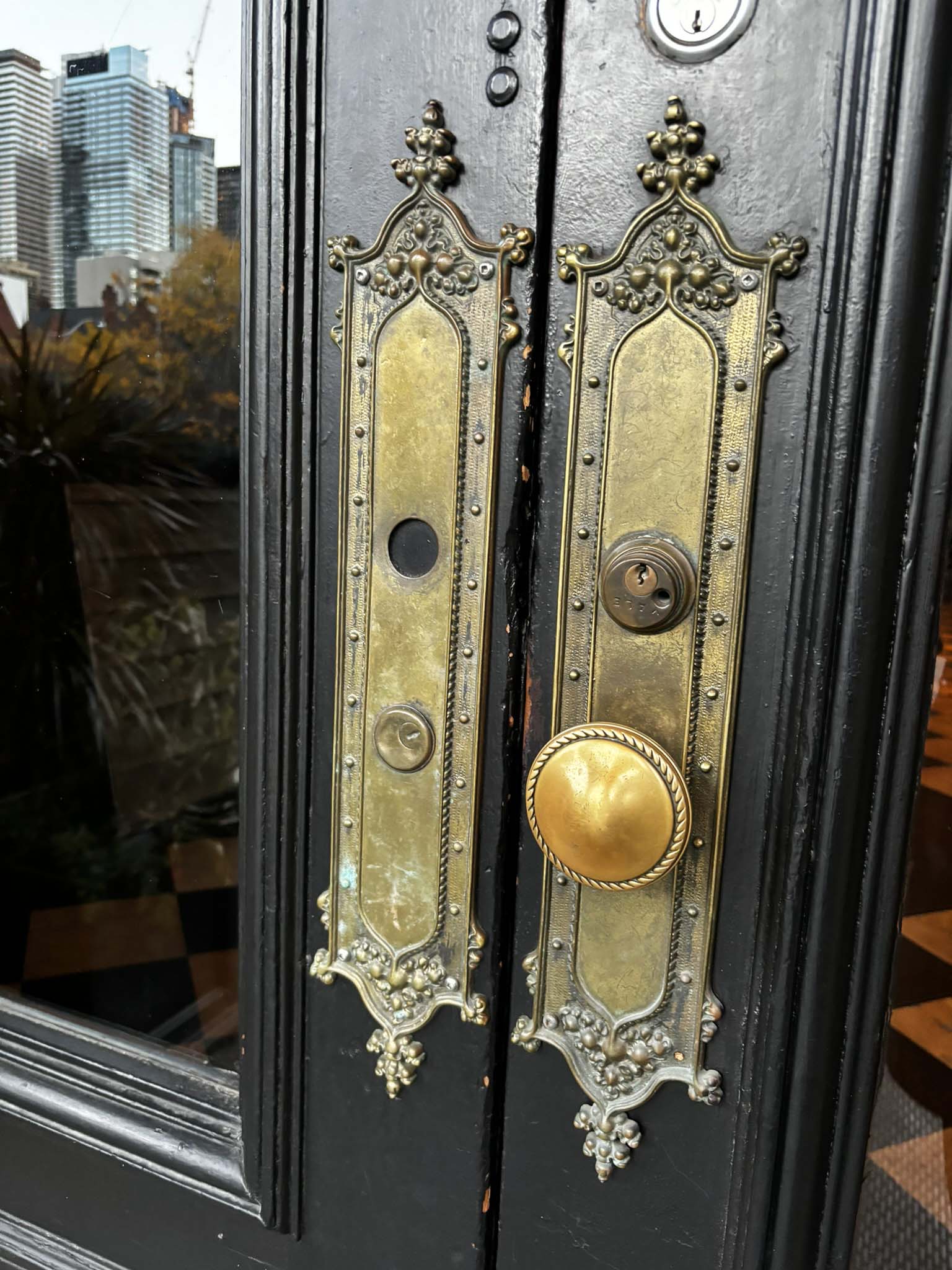
We had tickets to see the iconic heavy metal band Iron Maiden at the Scotia Bank Centre at the end of October, so it made sense to make a weekend trip. I did a bit of research into haunted locations in the city and booked us a room at the Fairmount Royal York. We also made reservations for a romantic dinner at a 157-year-old historic building known today as the Keg Mansion.
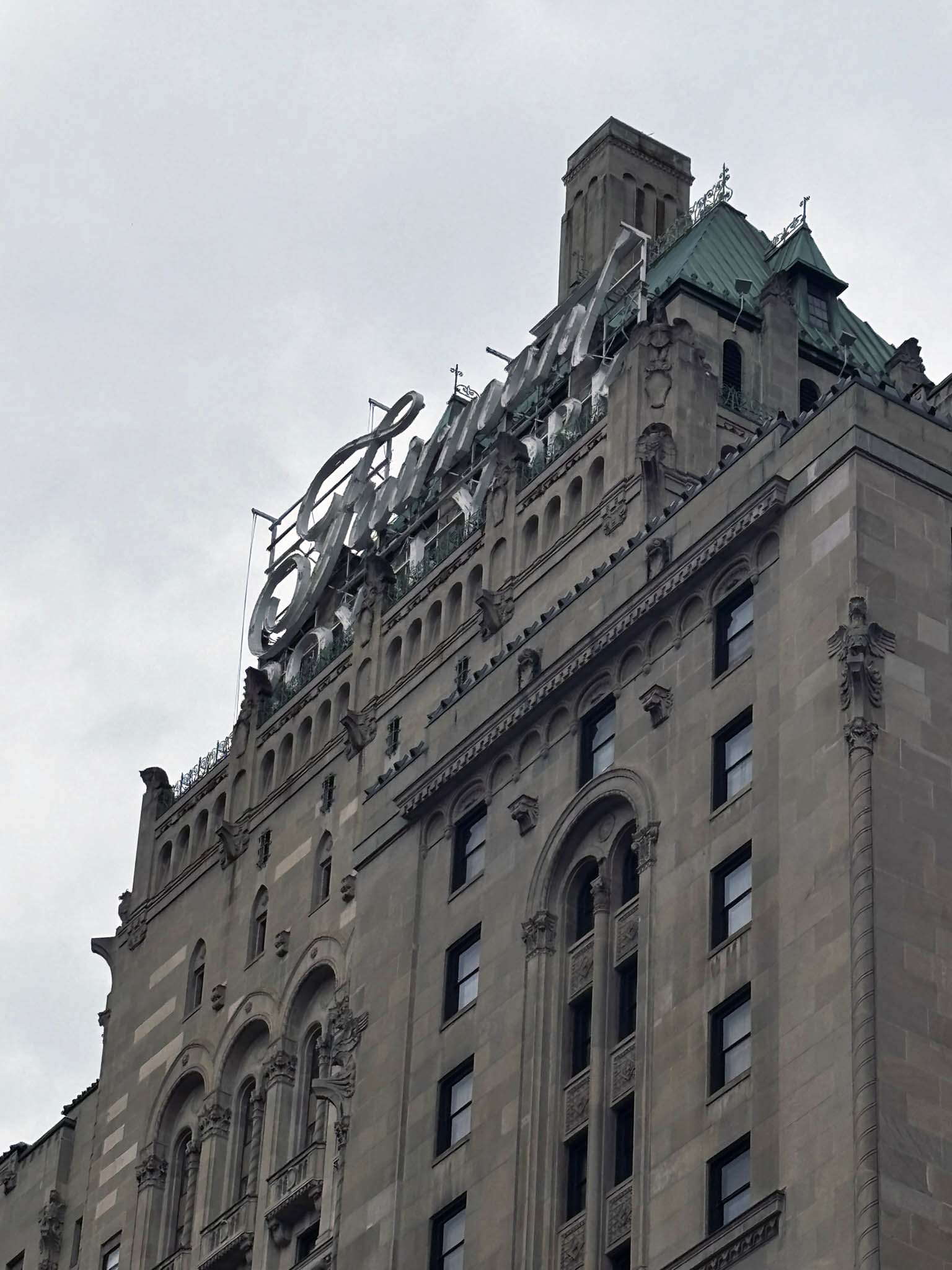
The Royal York Hotel was built in 1928-1929, by the Canadian Pacific Railway as part of its coast-to-coast chain of grand hotels. The skyscraper hotel was the tallest in the British Commonwealth at that time and dramatically altered the Toronto skyline.1
Today it’s one of Toronto’s most famous landmarks.
This stately hotel has played host to many celebrities and dignitaries over the years, such as Louis Armstrong, Ella Fitzgerald, and the Royal family.2 With such a storied past, it’s no surprise that it might also hosts a few ghosts.
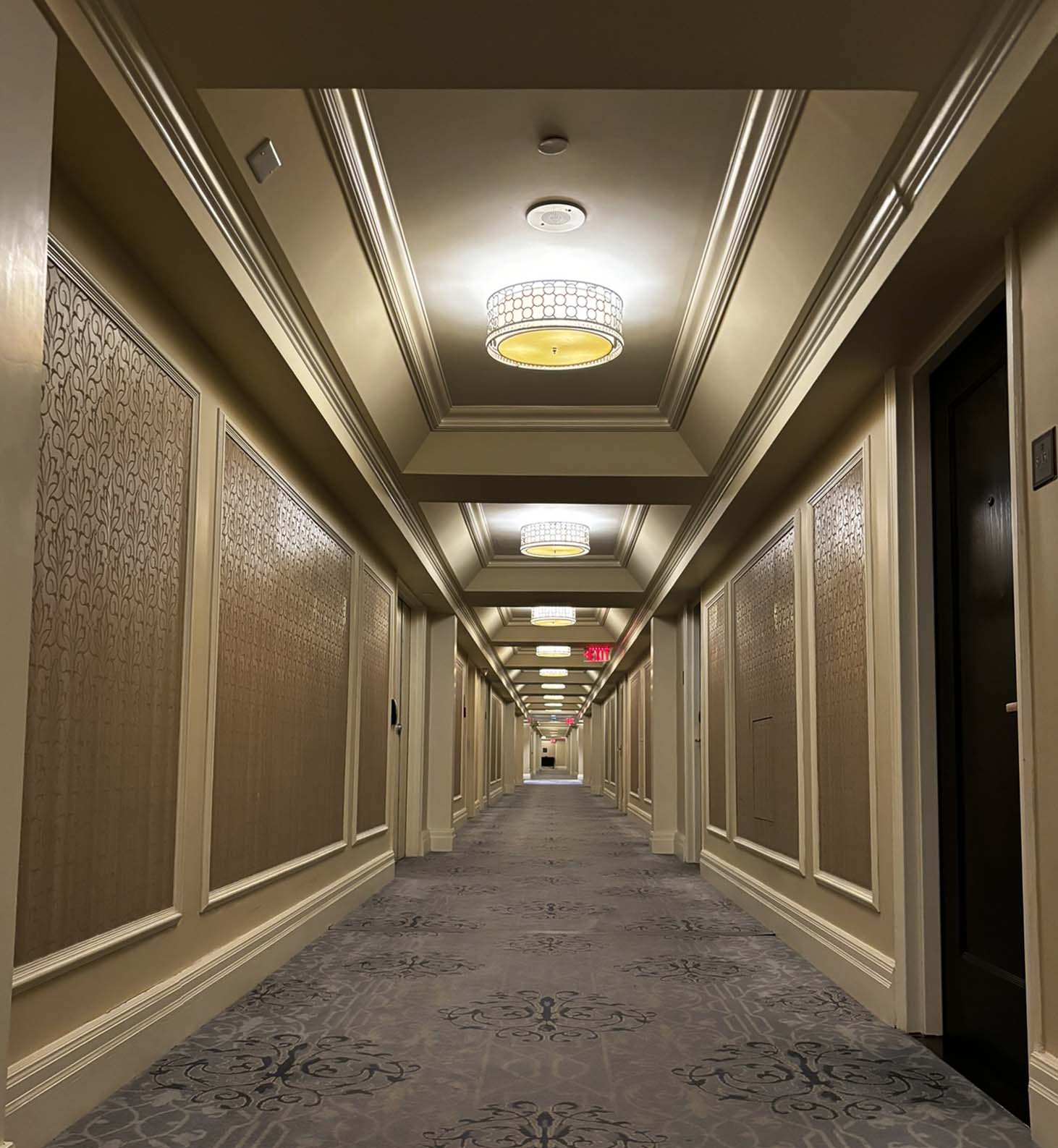
The most reported haunting is that of a gentleman who wanders the halls on the 8th floor. He is said to be wearing a purple jacket. This ghostly figure is sometimes seen accompanied by the sounds of children running up and down the halls while laughing. Those who have heard the ghostly children have peeked outside their chamber door to see an empty hallway and find silence. Some have peeked out to see the man in the purple jacket.3
My fiancé and I were eager to chat with someone about the supposed hauntings when we checked in. Unfortunately, we didn’t meet anyone who had any stories to share with us, either being recent hires or as one put it, worked only during the day when nothing spooky happens.
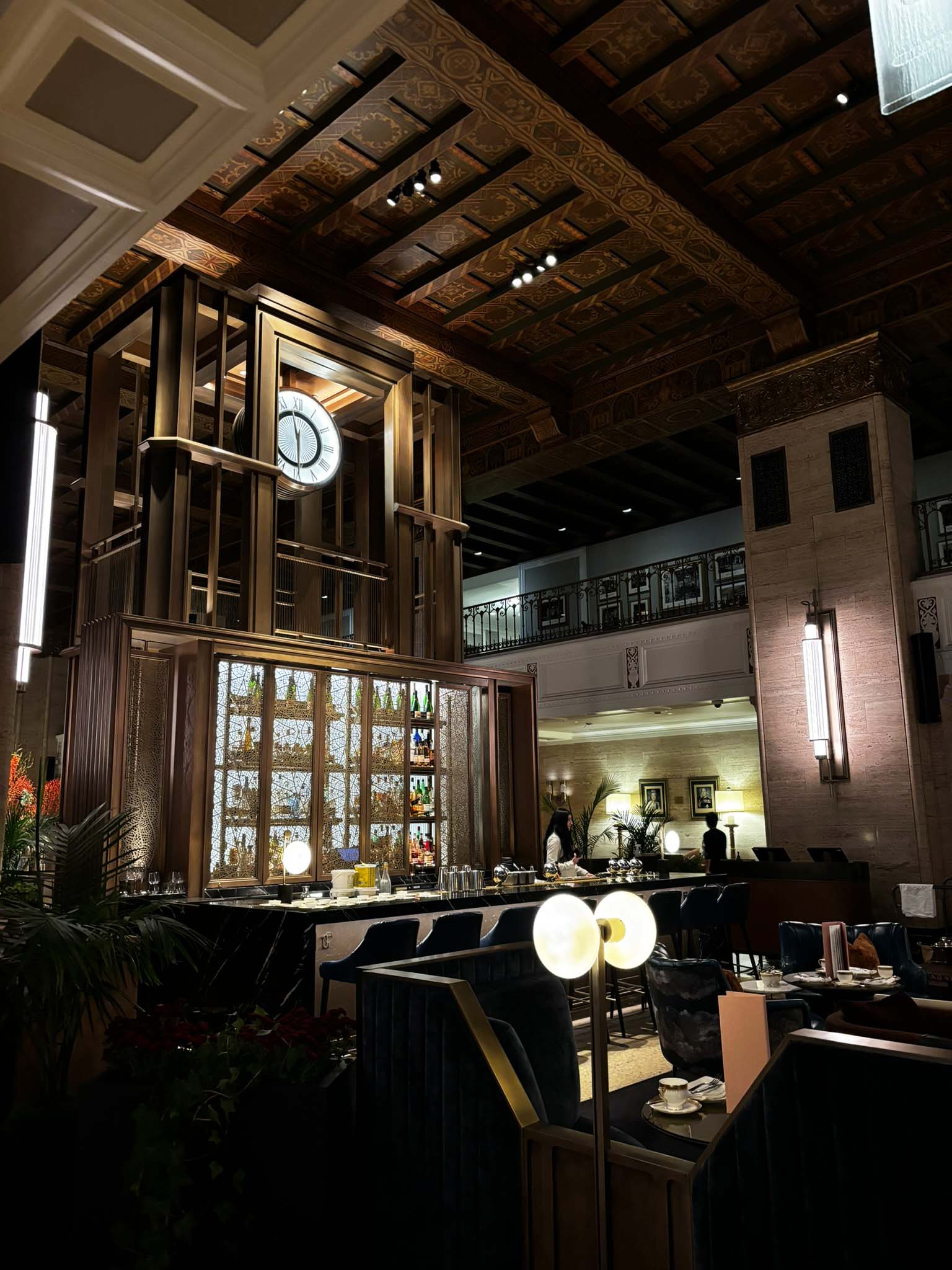
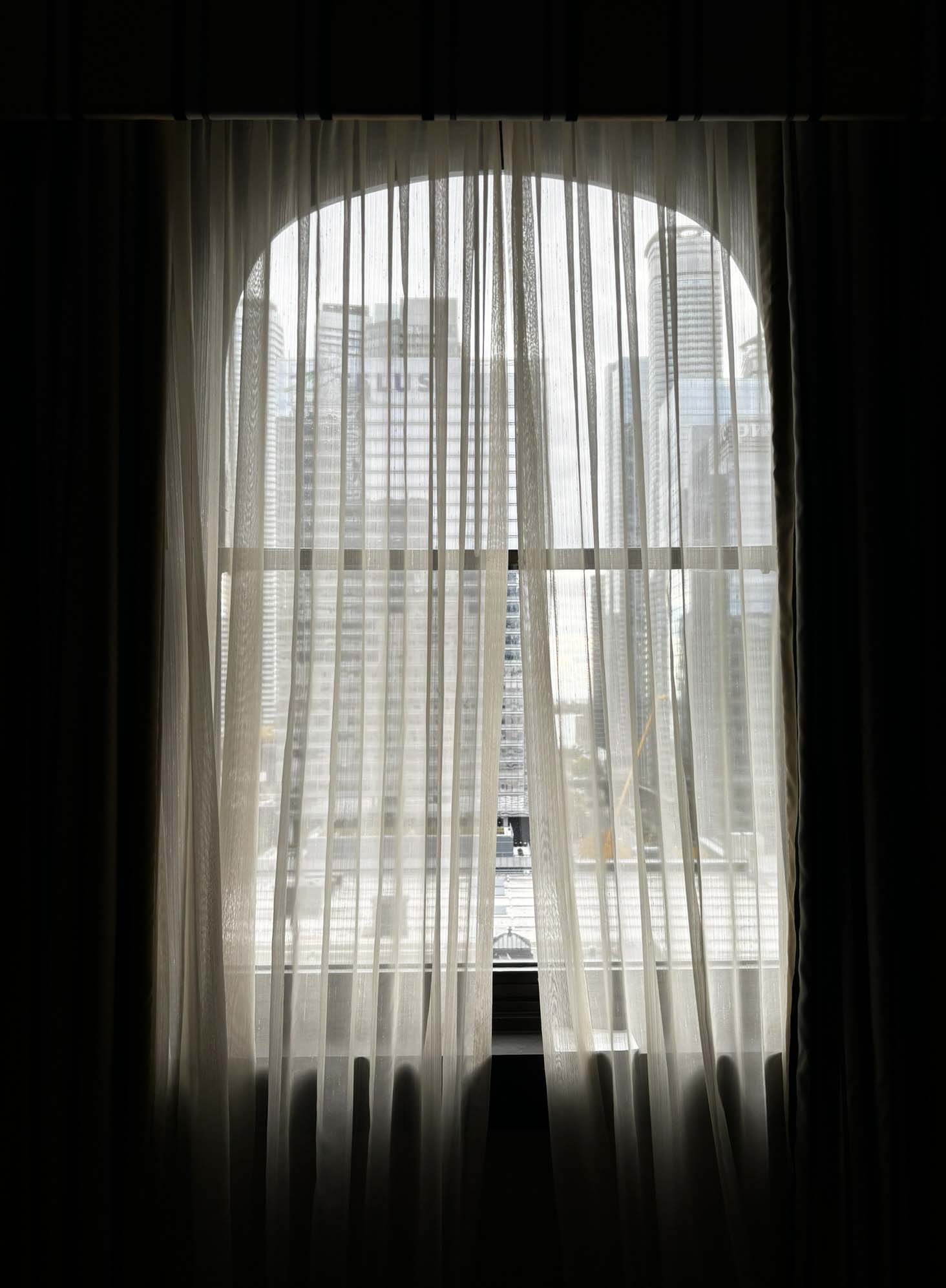
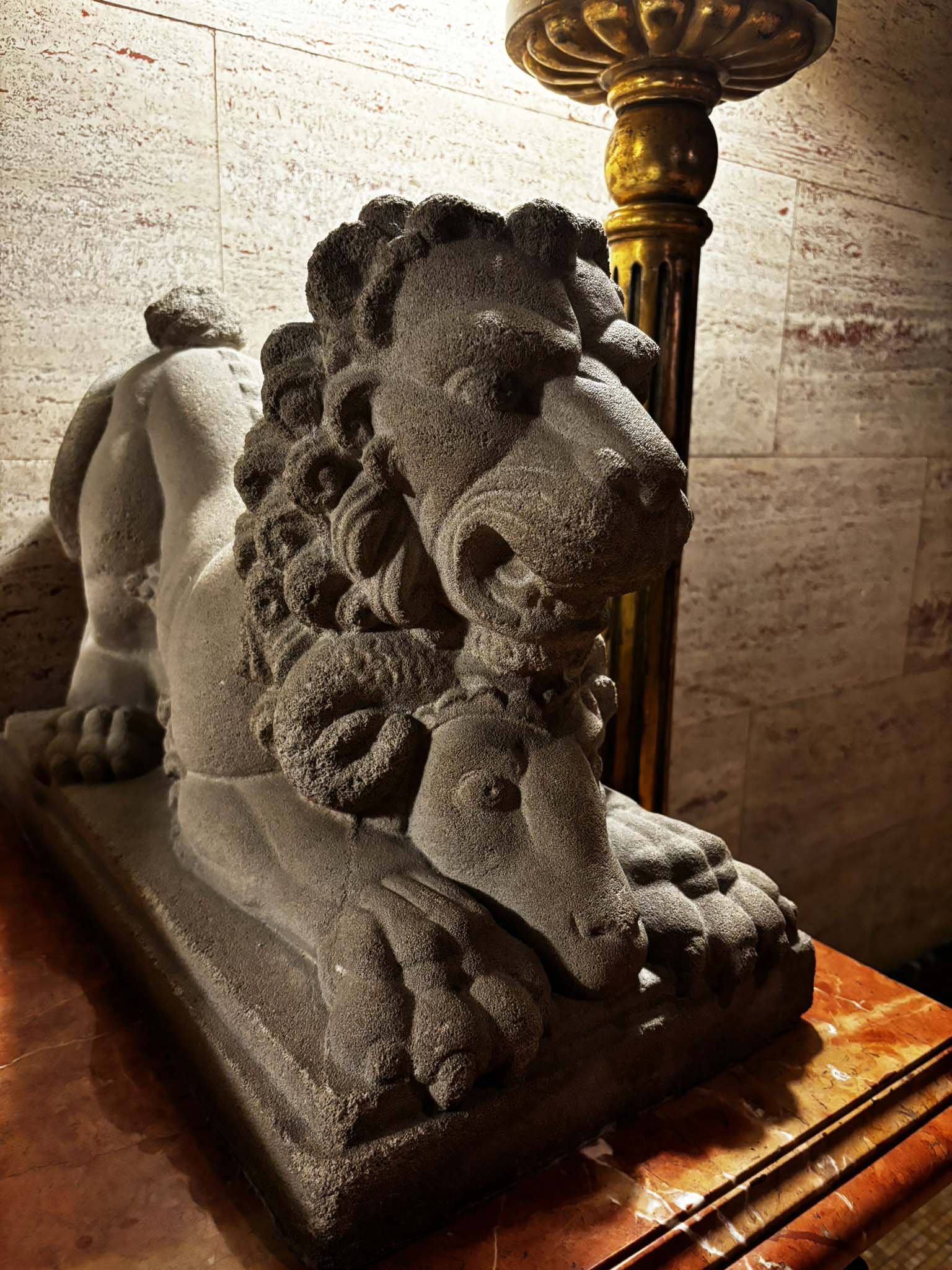
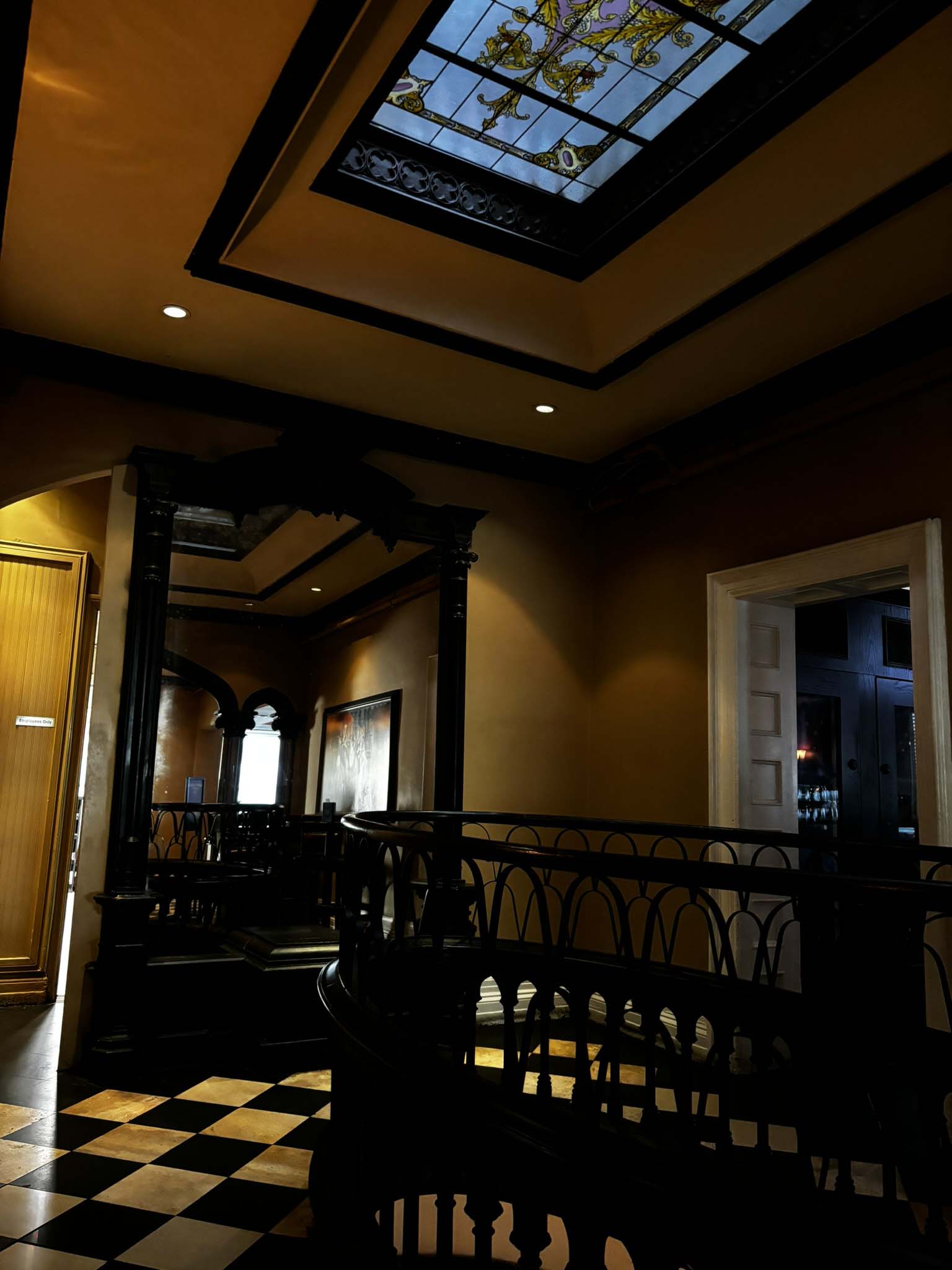
The hotel is immense and beautiful, so we took a bit of time to explore our surroundings while making our way up to our room on the 9th floor.
After dropping off our things and settling into our new home for the night, we had some free time before our dinner reservation. We had just enough time for a cemetery visit, some window shopping, and a drink or two at a pub.
Mount Pleasant Cemetery
Opened in 1876, Mount Pleasant Cemetery is considered one of Canada’s most historic cemeteries. It was designed by Henry Adolph Engelhardt and is a beautiful example of landscape design, inspired by the European and American garden cemeteries of the 19th century.4
Spanning 83 hectares in the middle of the city, the many winding paths provide picturesque views of the park-like landscape.4 Mount Pleasant features one of the finest tree collections in North America and walking and running trails that span 1 km, 3 km, and 5 km routes.5
Mount Pleasant is the final resting place of many prominent Canadians, including former Prime Minister William Lyon Mackenzie King, Nobel Prize winner Frederick Banting, founder of the Eaton’s department store Timothy Eaton, and renowned pianist Glenn Gould.6
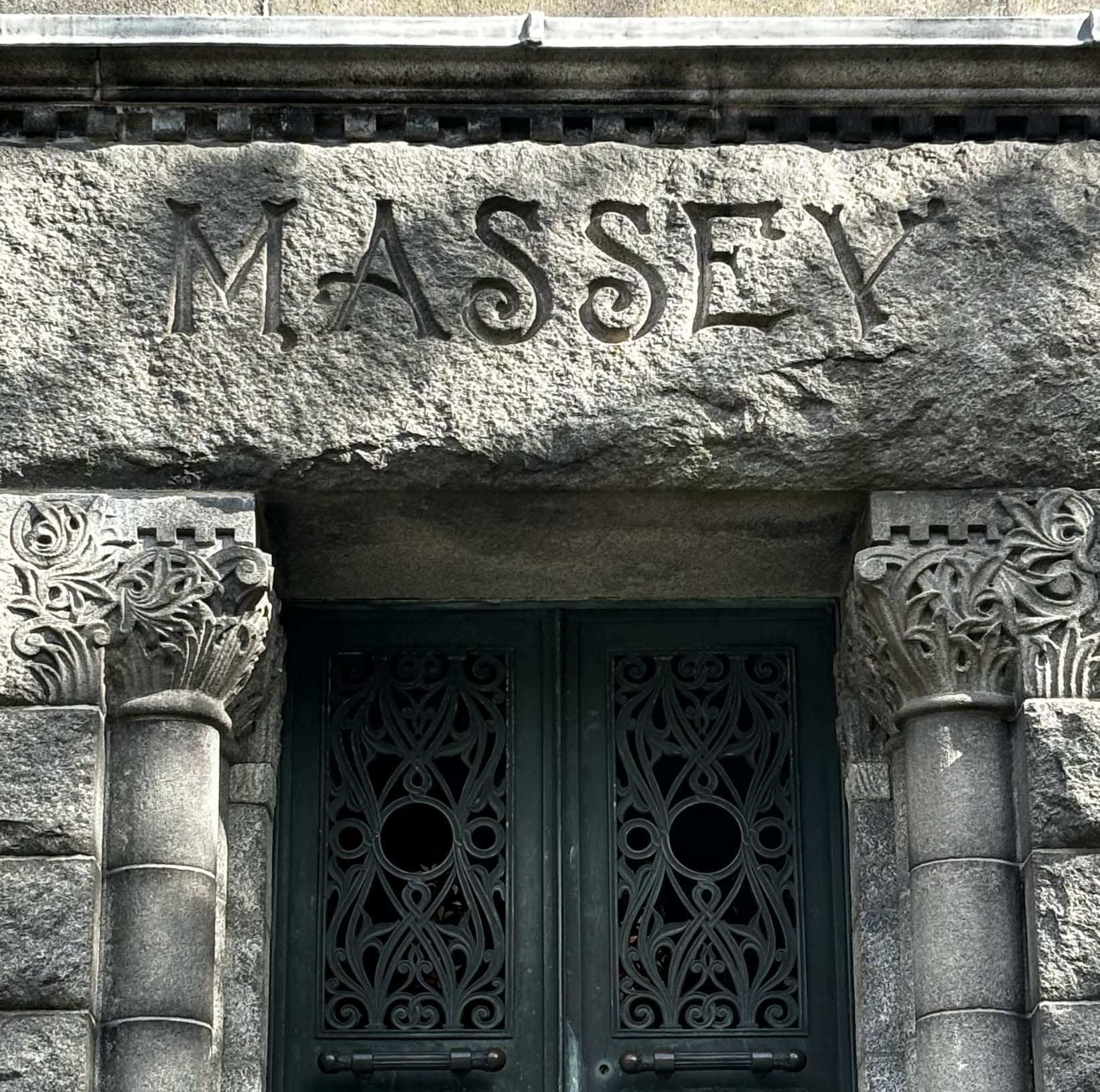
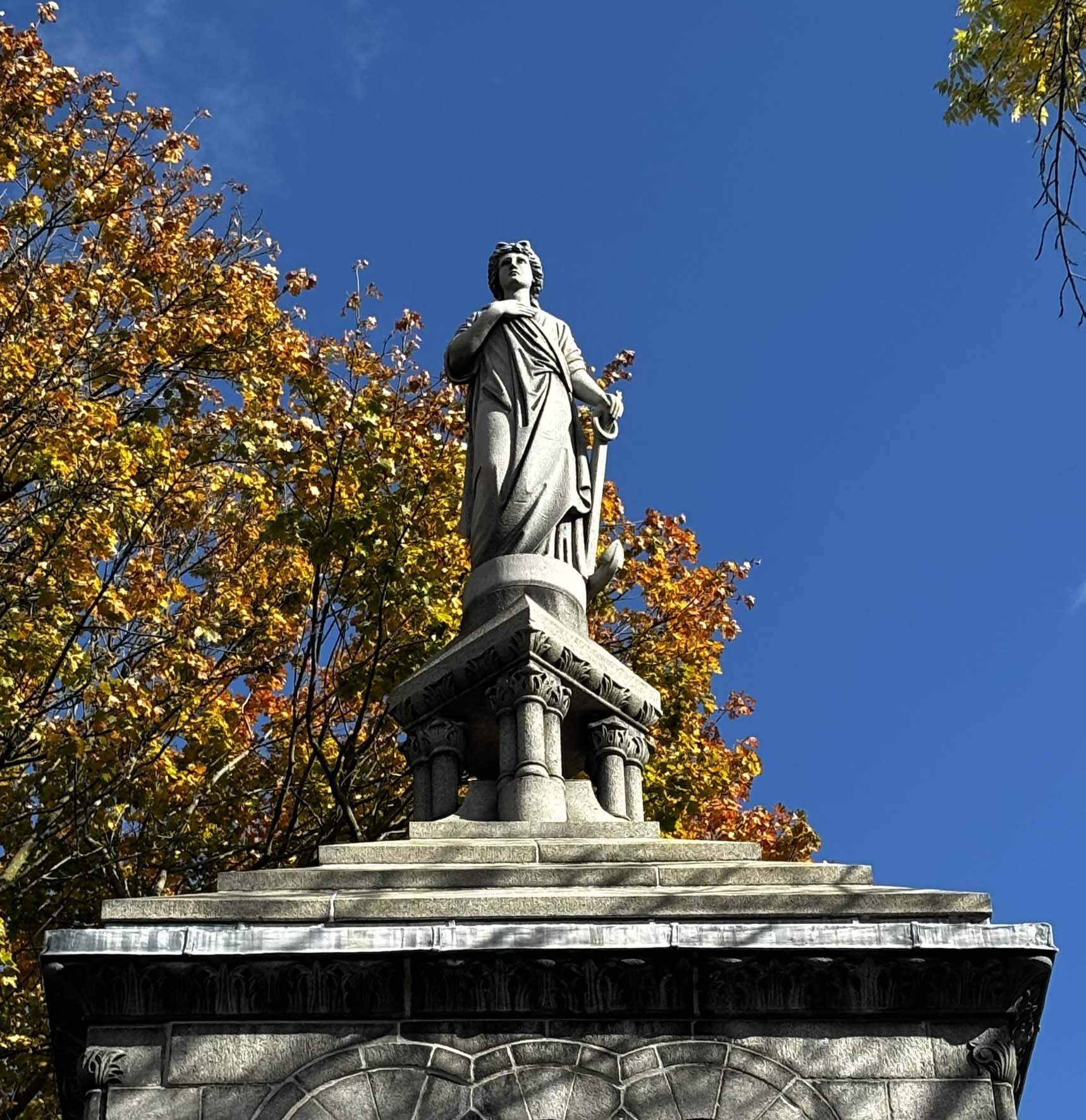
It’s also the final resting place of many members of the prominent Massey Family. The Massey Mausoleum was built in 1891. Designed in the Romanesque style, the family crypt features a tower, a below-grade crypt, and a statue of Hope, one of the seven virtues perched on top of its roof.7 Industrialist and philanthropist Hart Massey rests within the walls of this mausoleum, as well as his wife Eliza Ann Phelps Massey, and some of their children, like Lillian Frances Massey Treble.
I was particularly interested in visiting the final resting place of Lillian, as we would be dining with her ghost later that evening.
The Massey Mausoleum is massive and was easy to spot once I was pointed in the right direction. I will admit I did need to get directions from a groundskeeper as the cemetery is quite large and easy to get lost in. Especially when you are easily distracted by gravestones, like me.
Standing in front of the immense family crypt, I was in awe of the wealth and stature of this family, which I assume is one of the reasons for building such a massive final resting place.
I peeked inside and admired the beautiful stained glass, in the small sepulchre. The shaft of light coming from the stained glass windows in the ceiling lit the inside of the tomb just enough to make out the nameplates marking the shelves within the crypt. It felt like a special privilege to be able to see inside this final resting place of such a prominent Toronto family.
After paying my respects and taking a few more photos, I made my way back to my waiting fiancé. I excitedly showed him my photos as I described everything I saw during my short walk in the cemetery.
After a short rest and an iced pumpkin spice latte, we continued on our walk down Yonge Street stopping in at a shop here and there. We eventually sat down at a nice little pub called The Quail, where we enjoyed a few drinks and chatted with the owner. Now that I think about it, we completely forgot to ask the owner if he had any ghost stories to share.
But not to worry, we would get our fill of ghost stories at supper time!
The Keg Mansion
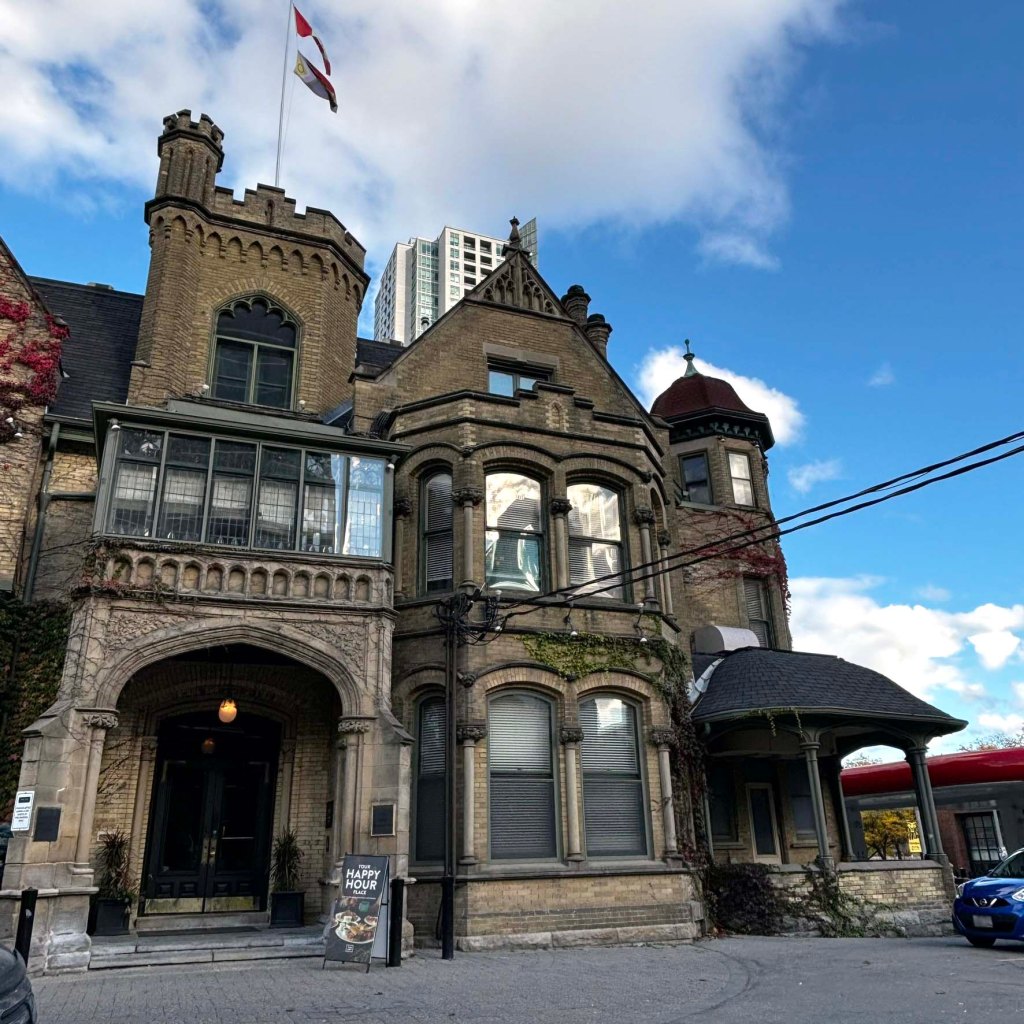
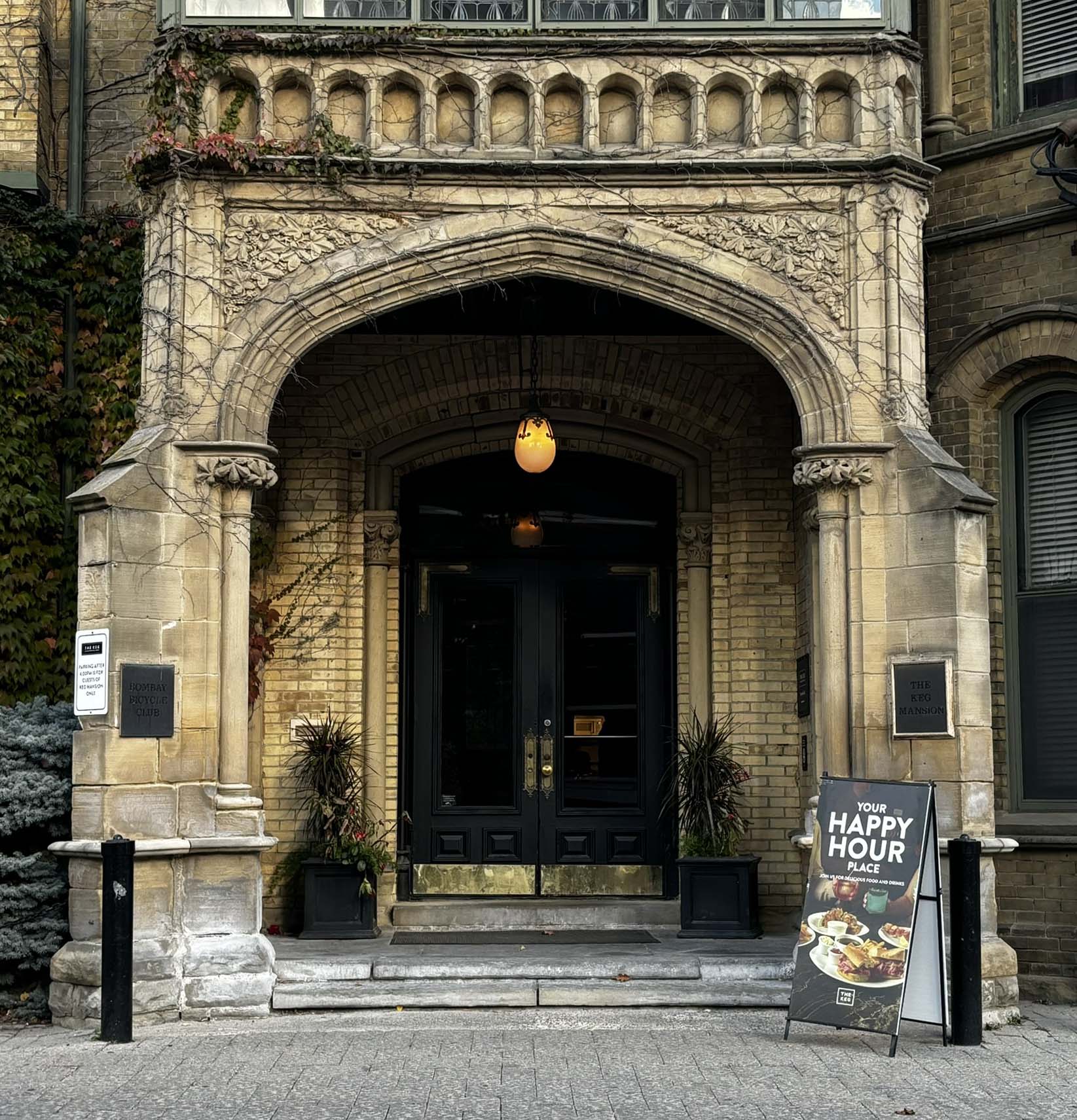
Our dinner reservation brought us to the Keg Mansion, a former home of the Massey family. Built in 1867, this elaborate mansion housed 26 different rooms and 17 fireplaces.8 The home was purchased in 1882 by Hart Massey, a Cleveland agricultural equipment salesman, and his wife. They would make additions to the ornate mansion by adding a turret, verandah, and a greenhouse.8
After Hart Massey passed away in 1896, at the age of 72, the estate was taken over by his daughter Lillian Massey. She would name the Mansion Euclid Hall, and reside there until her death. After her passing, the house was entrusted to the University of Toronto, serving as the home for many different establishments over the years. In 1975, the building received heritage status, and in 1976 became the home of The Keg Steakhouse + Bar. Today, it’s known as the Keg Mansion.8
The Keg Mansion does not shy away from its ghostly history. When we arrived for our reservations we were quietly seated on the second floor. Of course, we asked right away if our server had had any ghostly encounters to share. She didn’t have any stories of her own to tell, but she kindly offered to bring over the “ghost book”, a collection of reported hauntings by staff and restaurant patrons.
I was happy to peruse the reported hauntings while they brought out our drinks. Some of the stories I was familiar with, like the story of Lillian Massey and her maid. Lillian passed away in the house in 1915, at the age of 61. Lillian was beloved by her staff, and her maid in particular took her death very hard. The story goes that after learning of Lillian’s death, her maid, distraught with grief brought a length of rope with her upstairs to the oval vestibule, where she fashioned a noose and hung herself.9
The vestibule is still a feature in the Mansion today, just outside the washrooms on the second floor. People have reported seeing Lillian’s spirit as well as the spirit of her maid, in various rooms throughout the house. The washrooms, in particular the women’s washroom, are thought to be one of the most haunted areas in the Mansion. Patrons have reported feeling cold spots, and even capturing ghostly images in photographs taken in a mirror above the fireplace in that washroom.
The stories I found most fascinating though were the sightings of the ghost of a young boy.
Throughout our meal, my fiancé and I couldn’t help eavesdropping on the conversations happening around us. The ghostly phenomenon happening at the Mansion is well known, and we were not the only ones asking questions about ghosts.
One server stopped by our table and told us a story about a mother and son who had come to the Mansion for supper. The little boy went to the bathroom, and on his return told his mother that there had been another little boy in the bathroom, all alone. Worried, the mother told her server who in turn told a manager. The manager went to the bathroom right away to see if the little boy needed help, but there was no one there.
We would learn later in the evening that there had been a young Massey boy, who also died in the house, who was around 10 years old. His playful ghost is also often reported.
Geoff, the Bar Manager stopped by our table after our meal and told us about his encounter with the child ghost. He had been walking with a tray of drinks past the front door area, where the large staircase is when he overheard a little girl telling her mother she wanted to play with the trains. The mother, confused, asked her daughter what she meant. In response, the little girl pointed to the empty staircase and said she wanted to play trains with the little boy. She was quite emphatic saying that he was playing with the trains and that she wanted to play too.
Except there was no one on the stairs, no little boy, and no toy trains!
Geoff assured us that even though the ghosts were very active, no one had experienced anything malicious. My fiancé and I hoped we would have an encounter of our own, but alas we didn’t experience anything. We both made it a point to visit the washrooms, and I did take a few selfies in the bathroom mirror, but I didn’t capture anything.
What we did have was a lovely evening of good wine, good food, and ghost stories.
After dinner we made our way back to the hotel to freshen up, then it was off to the Scotia Bank Centre for an evening of heavy metal. Iron Maiden put on an excellent show!
After a couple of hours of rocking out, we walked back to our hotel, stopping on the 8th floor to take a look around. It was quiet on that floor, so we returned to our own room for the night.
Although we didn’t get to experience any hauntings ourselves, we both agreed that it was a great weekend. You can’t go wrong with romance, ghost stories, and heavy metal. It was definitely a haunted holiday for the books.
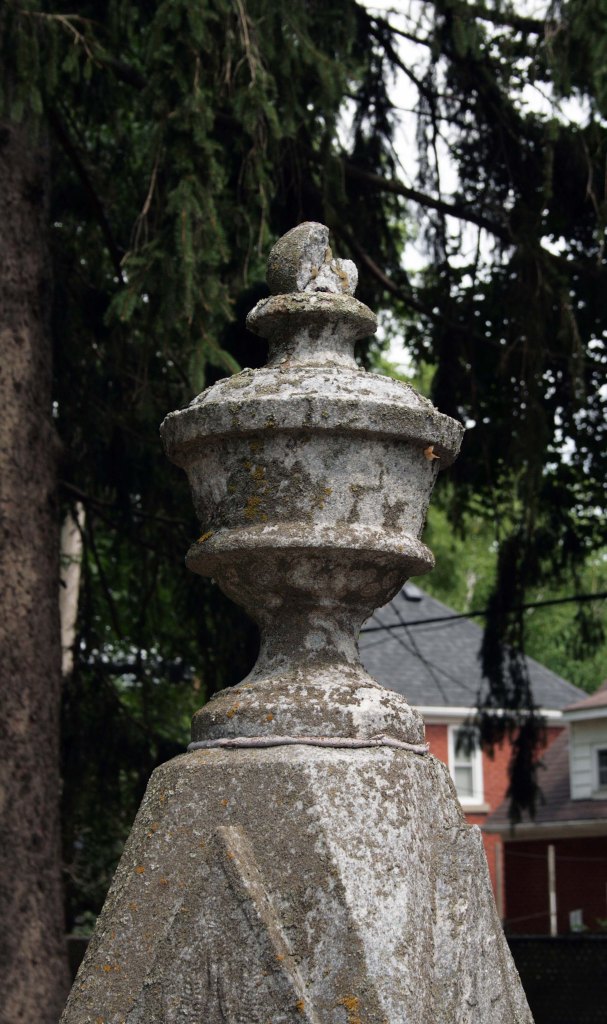
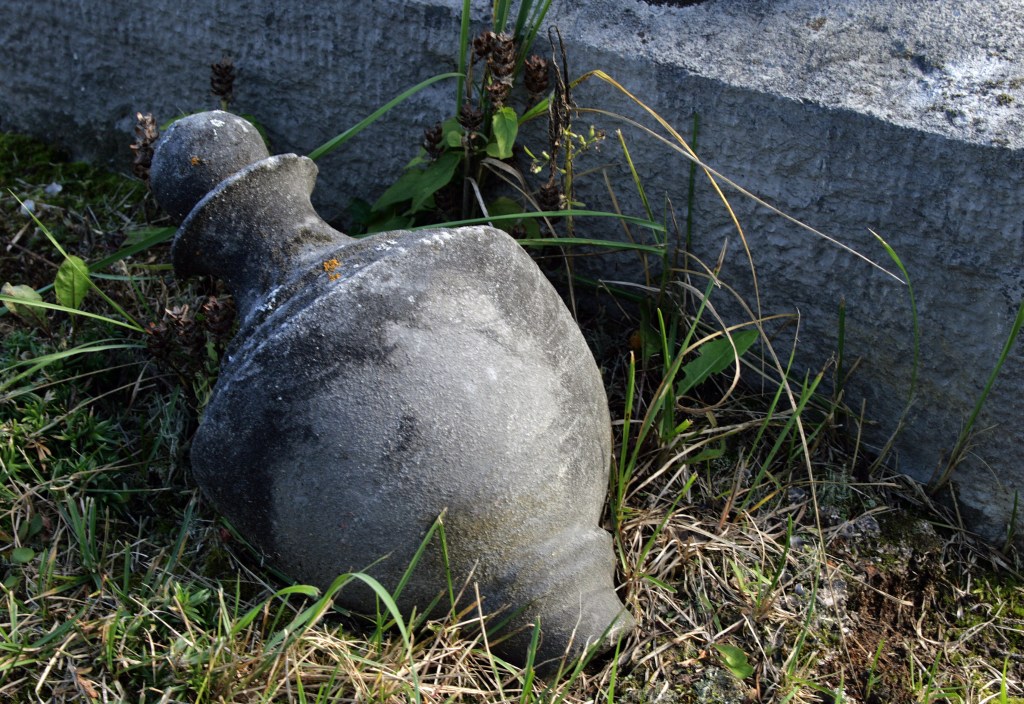
If you spend a lot of time in cemeteries you will often start to notice the repetition of certain cemetery symbols and motifs. In Ontario, more so in southern Ontario, urns tend to be a common gravestone symbol.
Although cremation was rarely practiced in North America at the time, the urn became a popular symbol in the Victorian era. Urns as a funerary symbol were adapted from Ancient Greece. Cremation was commonly practiced by the Ancient Greeks, who used ceremonial urns. As a gravestone symbol, the urn represents the body reduced to its most basic elements and the ascension of the spirit to heaven. Today cremation is a common practice, having started its climb to popularity in the 1980s.
I have found and photographed many urns during my cemetery walks, so today I wanted to share some of them with you.
Like many graveyard symbols, the urn can be found depicted in a variety of ways. Each version of the symbol has a slightly different meaning. This is one of the reasons I find cemetery symbolism so interesting. It is a language unto itself.
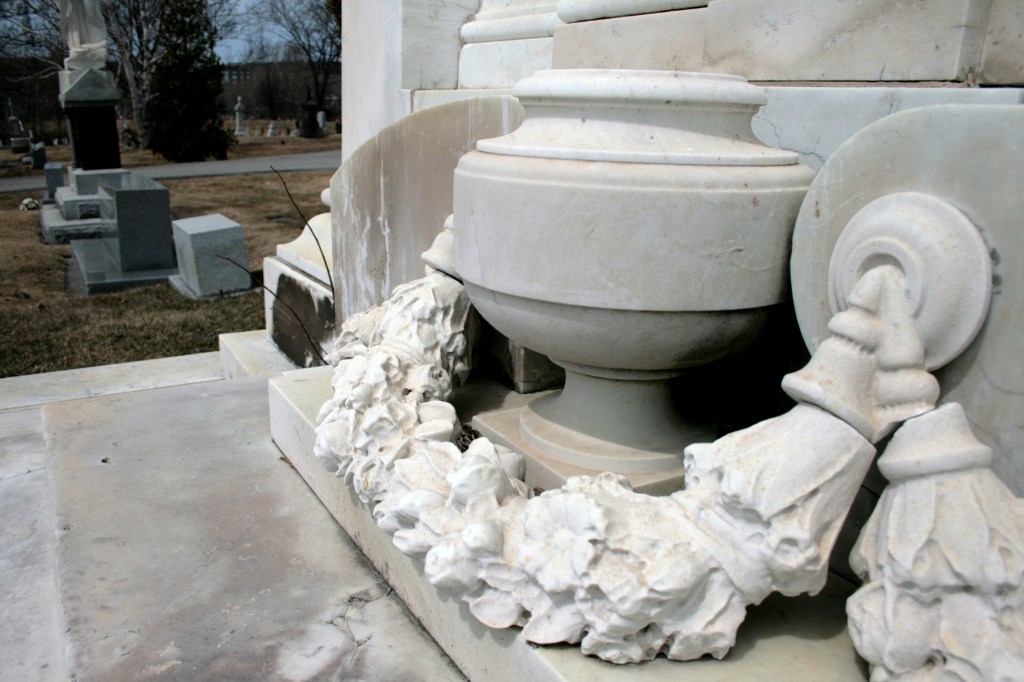
The Victorians were very fond of drapery, and you might come across what looks to be a fabric made of stone draped over an urn. Fabric draped over a gravestone is often thought to symbolize the veil between life and death. The fabric might also represent the shedding of earthly clothes as the deceased moves from this life to the afterlife.
A cemetery is filled with many interesting stories, stories of the souls that are laid to rest within its gates. But often the cemetery itself has an interesting story to tell.
Today on the blog I want to introduce a new series called Cemetery Stories. For these blog posts, I plan to focus on the story of individual cemeteries. I have visited a lot of cemeteries over the years, and many of them have interesting stories and historical significance. So for this series, I want to look a little deeper into history, geography, notable graves, and all the different elements that make them unique.
For today’s cemetery story, I thought I would look at Greenwood Cemetery in Owen Sound.
Greenwood Cemetery was created in 1858 when land surveyor Charles Rankin submitted a plan to the town council for a new public cemetery. At the time the plan was for 5 acres of land, divided into 27 blocks, including space for vaults.1Today the cemetery is quite large, sitting on approximately 40 acres of land.2Greenwood is also sometimes called “The People’s Cemetery” because, in those early days, the land was purchased using the people’s money.1The cemetery contains 26,700+ burials.1
The oldest home in Owen Sound can be found in Greenwood Cemetery. The house is dated from the 1840s1and is used as the cemetery office.2There is also a red brick burial chapel on the cemetery grounds. Built-in 1905, it served as both a chapel and a receiving vault. There is a trap door built into the floor that a coffin could be lowered through, into the storage racks below, to rest until the Spring when the remains could be interred. The chapel stopped being used for burials in the 1930s when the mausoleum opened. The chapel was converted and used as an office space for a time, until the early 90s. Today the building looks to be mostly empty.3
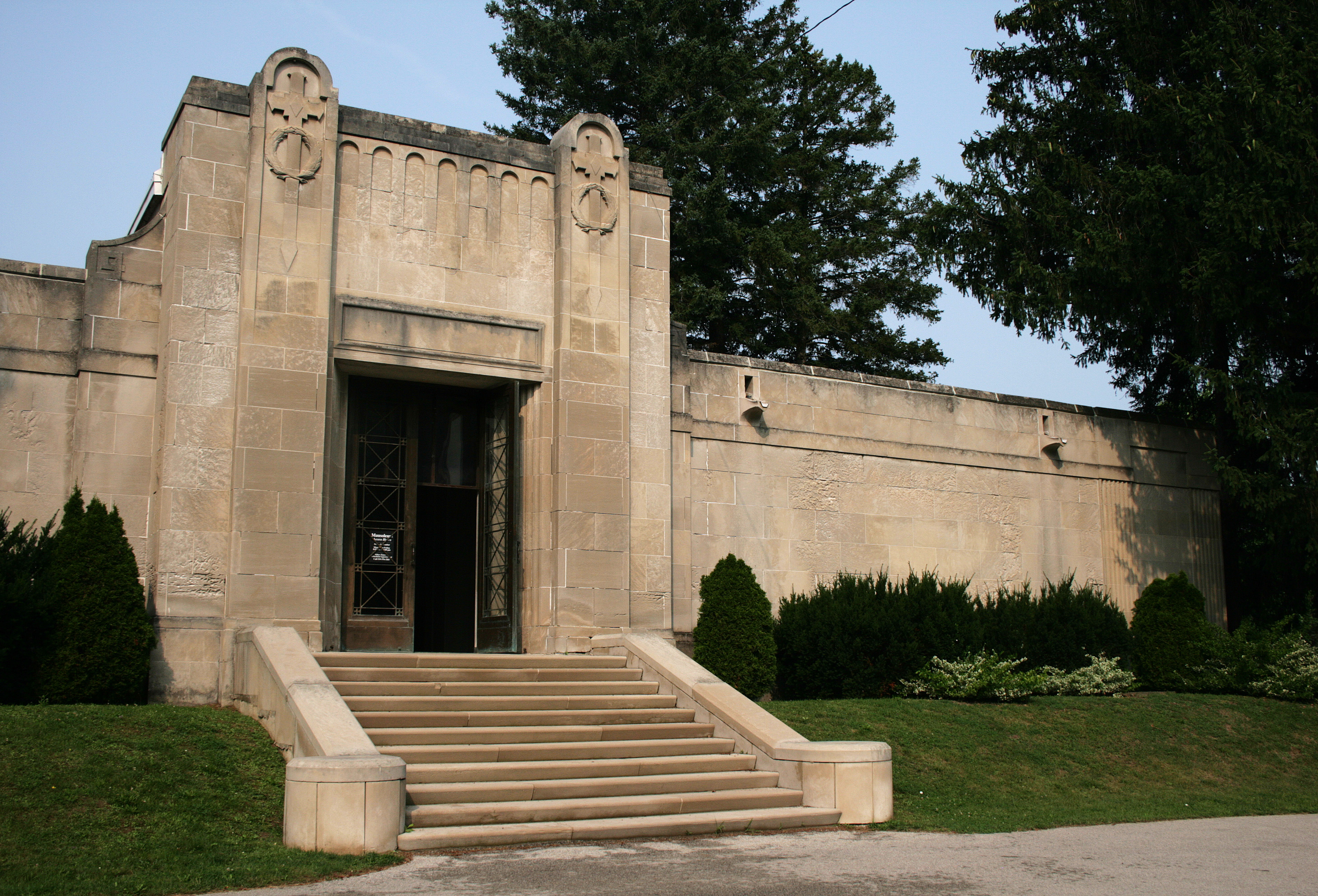
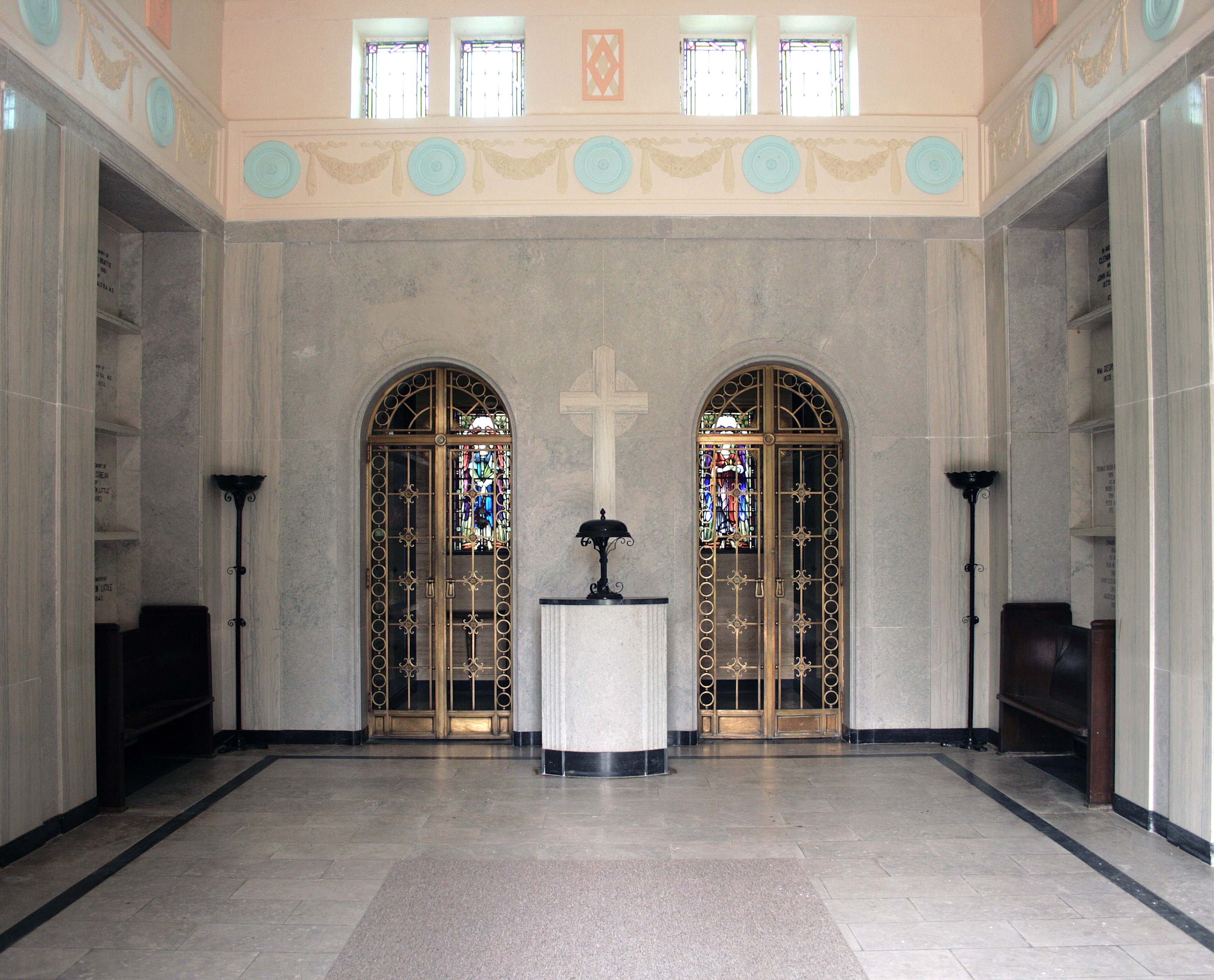
Greenwood is also home to a beautiful mausoleum. Construction of the large mausoleum began in 1927. The Art Deco-inspired exterior is covered in Indiana limestone, while the interior is finished with Italian marble. It also features some lovely stained glass windows and has a large central chapel that is used year-round.1
The cemetery is dotted with a variety of gravestone styles, and there are three memorial garden sections. It also has a section for members of the fraternal organization, The Independent Order of Odd Fellows (IOOF), that features a large stone cairn with IOOF symbolism.
Greenwood also has a Potter’s Field and memorial. The memorial honors the more than 1,000 women, children, and men who were buried in unmarked graves between 1858 and 1989. A potter’s field, also known as poor grounds, stranger’s plot, or indigent plot, is a section of a cemetery where those who are impoverished are buried.4 1,242 people are thought to be buried in Greenwood’s potter’s field4, all unmarked aside from the memorial and one lonely gravestone that sits close to the tree line at the back of the indigent plot. According to an article in the Northern Terminus: The African Canadian History Journal, many of the unknown graves are Black pioneers. Only a small few have been identified.
Among the unidentified graves lies an infant, who in 1889 was found in Victoria Park, wrapped in white cloth. The transcription in the cemetery records, simply reads “Unknown, child found dead”.4
Greenwood Cemetery is the final resting place of a few notable memorials. William Avery “Billy” Bishop, Canada’s World War I Flying Ace rests here. There are also two other Victoria Cross recipients buried here; LTC David Vivian Currie (World War II) and Thomas Holmes (World War I).
Speedskater and world-record holder Lela Brooks is also laid to rest here, as well as professional hockey player, Harry “Apple Cheeks” Lumley. Margaret and John Thomson, parents of famous Canadian painter Tom Thomson, are also buried here.
There are many more notable pioneers and local celebrities buried here, like Charles Rankin, who submitted the cemetery plan and helped bring the cemetery into reality. The best way to pay your respects is with a self-guided walking tour. The cemetery offers three tours that take you to different areas within the large cemetery and highlights all the notable members of the community who are laid to rest at Greenwood. You can pick up the printed tour guides at the cemetery office. The guides include a map, directions, and a little history for each stop on the tour.
We visited the cemetery twice on our trip to Owen Sound. Because it’s so large we felt we had to. Our first visit was late in the day, so the mausoleum had been locked up for the night. We were losing light quickly, and every turn on the winding paths revealed new sections I wanted to explore further. We visited again the next morning and were able to explore the Mausoleum and walk the sections at our leisure.
Greenwood was full of life during both our visits. In the evening we saw folks paying respects at graves, but also saw families taking advantage of the safe, paved pathways. Two young children were learning to ride their bikes between the rows.
The next day, we saw many walkers enjoying the scenery, both young and old. We also saw folks walking their dogs and running into others they knew who were doing the same. It was lovely to see a green space in use but also used respectfully.
Have you ever flown out of the Billy Bishop airport, in Toronto? Were you curious as to who the airport was named after? I was, but I never got around to looking into it, not until I stumbled upon the grave of William Avery “Billy” Bishop.
In the Summer of 2023, My mother and I stumbled across the Bishop family plot, while visiting Greenwood Cemetery in Owen Sound. We had come to Owen Sound to search for the second grave of Tom Thomson, but the trip ended up being just as much about Bishop.
William Avery “Billy” Bishop was born in 1894, in Owen Sound, Ontario. During his stint as a cadet at the Royal Military College in Kingston, World War I broke out. He enrolled in the 9th Mississauga Horse, Canadian Expedition Force and later transferred to the Royal Flying Corps.1 He received his pilot’s certificate in 1917, although some considered him a mediocre pilot, he was an expert shot with great shooting skill and extraordinary eyesight.2
Bishop became the first Canadian Airman to be awarded the Victoria Cross, the highest award for acts of bravery in wartime. Bishop was awarded the cross for his solo early morning attack on an enemy airfield in June, 1917.1 He single-handedly attacked a German aerodrome, destroying seven airplanes on the ground and shooting an additional four airplanes down, before running out of ammunition.2 Billy Bishop was the British Empire’s second-highest-scoring flying ace, with 72 official victories.1
Major William Avery “Billy” Bishop VC, DSO and Bar, MC, RFC 1917
Greenwood Cemetery
When we visited Greenwood Cemetery, we didn’t have any specific graves we wanted to see. I visited the cemetery office when we first arrived, as I had read online that they offered a self-guided walking tour. They were very friendly in the office and gave me a brochure with the walking tour details. There are a couple of different tours to choose from, that take you to different areas in the cemetery.
Greenwood is quite large, covering approximately 40 acres of land in the southwestern part of the city. It also has a long history, having opened to the public in 1854. It’s a traditional cemetery, with both upright and flat markers, a large mausoleum, memorial gardens, and a potter’s field memorial.3
We unexpectedly came upon the Bishop family plot after getting out of the car. I had parked in the heart of the cemetery. A small Canadian flag marked the grave, the flag blowing in the wind had caught our eye. There is a large upright stone that lists the family members buried there, with names on both sides of the stone. There are smaller flat markers laid in the earth surrounding it, marking where each family member is laid to rest. There is also a Canadian military marker for Bishop that stands apart from the rest. The upright grey granite marker lists his military designations alongside the emblem for the Royal Canadian Air Force and the Victoria Cross.
Bishop passed away at the age of 62, on September 11, 1956, in Palm Beach, Florida. His funeral service was held at the Timothy Eaton Memorial Church in Toronto, the same church that he was married in. 25,000 people lined up outside the church to pay their respects. He was cremated, and his ashes were buried in the family plot, in Greenwood.4 He is laid to rest with his family; including both his parents, his sister Mary, and his brothers Hiram, and Reginald Bishop.
Bishop’s wife Margaret remarried after his death, and is buried with her second husband in Beachwood Cemetery in Ottawa. She passed away in 1981 at the age of 83.5
The Billy Bishop House
The next morning, we decided at breakfast to visit one more thing before we left Owen Sound. My mother loves history, so I figured she would enjoy touring a historic home, The Billy Bishop House. She loved the suggestion, it seemed only appropriate to stop since we had already paid our respects at his grave.
The house, built in 1884, is the childhood home of Bishop and has been preserved as a historic site and museum. The first floor has been decorated with period-appropriate antiques and items owned by the Bishops. It looks very similar to what it would have looked like when Bishop was growing up. There is a timeline in the parlor that details all the major milestones in Bishop’s life. I found this floor to be the most interesting. There is a lot of information to take in, but also lots to look at; like Bishop’s uniform, personal items, and a copy of Winged Warfare, a book Bishop wrote in 1918 that details his experiences in the air.2
The second floor looks more modern and houses changing exhibits. When we visited there was an exhibit of interviews with veterans from the war in Afghanistan. In what would have been Bishop’s boyhood room, there is a wooden framed airplane for children to explore, and the room is decorated with film posters and other memorabilia.
The Billy Bishop House & Museum
The staff are incredibly knowledgeable and friendly. I had a nice chat with them about Bishop, as well as the haunted history of the house. I can’t help but ask when I visit a historic location! They were not phased by my line of questioning at all, and I’m sure it’s something they get asked often. The museum runs a ghost walk in the summer months.
Unfortunately, I wasn’t able to attend one of the walks, but I did get to hear some of the stories. The house is reportedly haunted by two spirits, an older woman and a young child. The spirit of the young child is thought to be Hiram Kilbourn Bishop, who died of diphtheria at the age of 4 years old, in 1892.6 People say they have seen a small child wandering the house, wearing what looks like a dress. Young children, regardless of gender, often wore dresses during that time period, which leads the staff to think it is the spirit of young Hiram.
We didn’t experience anything paranormal on our visit, but we did enjoy exploring the house and learning more about life in that era, Bishop’s personal life, and his legacy.
My mother and I both love history and getting to explore Bishop’s childhood home was a great way to end our Owen Sound adventure. We traveled to Owen Sound to learn more about art, but we ended up also learning more about our Canadian Military history. That’s one of the reasons why I love road trips, you can plan as much as you want but it’s often the spontaneous finds that end up being the most interesting. What do you think?
For the last two weeks, I have been virtually attending the 2022 AGS conference. This was my first time attending this annual conference and I wanted to share a little about my experience. I am kicking myself for waiting so long to attend one!
If you’re not familiar with the Association for Gravestone Studies (AGS), they are an international organization that was created to further the study and preservation of gravestones. They promote the study of gravestones, expand public awareness and encourage gravestone preservation. AGS offers many cemetery-related publications, like Markers and the AGS Quarterly, as well as holding numerous workshops, exhibits, and the annual AGS conference. I wrote about AGS earlier this year, you can read more about them here.
The annual AGS conference takes place in a different location each year. It features events like field trips, conservation workshops, hands-on sessions, panels, evening lectures, and late-night presentations. It’s often referred to as Cemetery Camp. Last year’s conference was held entirely virtually, due to the pandemic. This year, the conference was a hybrid of virtual and in-person attendance. The in-person portion was held at Endicott College in Beverly, Massachusetts. The in-person portion was also broadcast live and recorded where possible for those attending virtually. The virtual portions were all done over Zoom and Slack.
This logo for the 2022 AGS Conference was designed by AGS member, Lynne Baggett.
Fun fact: This year’s AGS conference logo (above) is from the gravestone of Josiah E. Woodberry in Central Cemetery in Beverly, Massachusetts. The heart-in-hand symbol represents “charity given with an open heart”. You can also see the three rings of the Independent Order of Odd Fellows on the cuff.
I enjoyed this year’s conference, and hope to attend in person, in the future. I regret not attending previous conferences! Everyone I met and chatted with was very welcoming and friendly. It was a great experience meeting like-minded people. There was a great variety of topics presented, along with opportunities spread throughout for attendees to mingle and connect. The topics ranged from histories and overviews of specific cemeteries and cemetery mysteries to how to use Kickstarter and similar platforms to fund cemetery-related projects. Some workshops went into detail on how to preserve gravestones. That’s something that has piqued my interest lately, so I was very interested in that session.
In addition to the interesting presentations and workshops, there were also bus tours offered. I was not able to watch those live, but I am looking forward to watching the recordings. I was able to see some of the photos that attendees took on the tour, and I have to say I was a little jealous. Those tours look like so much fun! As someone who often visits cemeteries with only a friend or two, being able to visit with a large group of taphophiles looks like it would be so much fun! The cemeteries that they visited also looked beautiful. That is very much a bonus to having the conference in a new location every year—new and different cemetery tours!
A great aspect of the conference, especially for virtual attendees was the sessions that encouraged more open discussion and socializing, like the Gabbing at the Gravestone meet and greet and the Cemetery Swirl cocktail hour, which included cemetery-themed cocktails. I love that the cocktail recipes were provided, and they even had a mixologist join us to lead us in a mixology course of sorts. These kinds of opportunities are great to foster new relationships within the cemetery community—and they are super fun!
A Monument Mojito. I may have over did it on the mint.
I hope that the AGS considers making the virtual aspect of the conference a mainstay, even though there were some technical difficulties. Unfortunately, there will always be technical difficulties. The benefit of the virtual component is that members from all over the world are given a more accessible avenue to attend. I know it’s not the same as being there in person though. I hope within the next few years I will be able to attend and meet everyone in person. That may be a little ways off, considering the state of travel at the moment, but I hope things will return to a more normal level soon.
Have you ever been to an AGS conference, or thought about attending? Do you know a good cemetery-themed cocktail? I would love to exchange recipes in the comments.
A couple of weekends ago I was able to cross something off my cemetery bucket list—visiting all 25 cemeteries in the care of the City of Greater Sudbury. For today’s blog post, I thought it might be interesting to take a closer look at some of these cemeteries.
The City of Greater Sudbury is centrally located in Northeastern Ontario. It sits on the Canadian Shield in the Great Lakes Basin and is composed of a combination of urban, suburban, rural, and wilderness environments. Greater Sudbury is 3,627 square kilometers in area, making it the largest municipality in Ontario, geographically.1 Making up this municipality are many small communities that over time, have been amalgamated into the City of Greater Sudbury. Almost all of these little communities have their own cemeteries, that now fall under the care of the city.2
Each of these cemeteries has their own charm and has been very interesting to visit. Some are newer cemeteries with very modern stones, that are still very active, like Valley East and Park Lawn cemeteries. Some of them have tombstones marking persons who are still living. Those always make me think—do the owners visit their gravestones? Other cemeteries are pioneer cemeteries, like Ruff Pioneer Cemetery. Those types of cemeteries hold a lot of history. I wrote about my visit to the Ruff Pioneer Cemetery, you can read it here.
Two of the oldest of these cemeteries, I believe, are the Eyre and Anglican cemeteries. They are directly beside each other, and there is no distinct line to separate the two. The earliest grave is from 1890.3 Both of these cemeteries can tell you a lot about our city. You can find the namesakes for the Gatchell and Lockerby areas of town, as well as the grave of Frederick J. Eyre, who discovered one of the first mines for the Canadian Copper Company.3 Sudbury, at its roots is a mining and railroad town.
Some of these cemeteries were a challenge to find and can be hard to access. Ruff Pioneer Cemetery would be more easily accessible with a four-wheeler. Make sure you have plenty of water with you for that adventure in the woods. The Coniston Cemetery is a little bit more accessible now, as a cemetery trail has been created, linking it to the Jean Tellier hiking trail. The first time I visited that one, we searched for a while before deciding to ask for directions from some locals at a convenience store. They were more than happy to help and even drew me a map. They also shared some stories from their childhood, of how they would play in the cemetery and nearby woods. Coniston Cemetery is particularly interesting because there are no more headstones. There may have originally been wooden markers or fieldstones there that have since deteriorated or have been moved. It was an active cemetery from 1914 to 1926, when the parish that was taking care of the cemetery announced they could no longer do so.4In 1997 a memorial plaque was installed honoring the deceased known to have been buried there. Another hard-to-find cemetery is the Wahnapitae Public Cemetery. This one is located on a hillside with seemingly hidden access. I tried to find it again recently, but with no luck.
There are a few cemeteries on this list that I have visited many times, either due to their size or proximity to me. Lasalle Cemetery for instance is one of the largest cemeteries in the area. So large in fact that every time I have visited I have focused on a different section to photograph. Another large one, that just so happens to be down the street from me, is Civic Cemetery. This is an active cemetery, and I think has changed the most over time. It has a large columbarium, as well as some lovely winding paths. It’s a lovely rural cemetery. I have many friends of the family that are buried here.
I have enjoyed seeking out all these cemeteries. I feel like I can now say that I have truly explored my city. All these cemeteries hold small threads, connections, that all lead to the creation and growth of my hometown. I have learned a lot about the history of Sudbury, like the stories of some of its founders, the history behind street names, and much more. I would love to spend more time in some of them, to fully explore the grounds, look for specific graves and to see what else I can learn.
Thanks for joining me, as I look back on this bucket list milestone. Do you have a bucket list? What’s on your list? I would love to read about it in the comments.
The beautiful summer weather has finally arrived in my area and I am very excited to be able to go on some cemetery adventures once again. I have many road trips planned out for the upcoming weekends and my summer vacation. I’ve mapped out lots of fun sightseeing spots and new cemeteries to visit, that are surprisingly close to home. It should make for some fun road trip stories. So while I continue to plan for those, I thought it might be fun to share a road trip adventure from last year.
Last October, in 2021, I took advantage of some time off and took a little road trip to Manitoulin Island. Manitoulin Island, or the island as some locals call it, is a large island in Lake Huron. It’s also home to Canada’s first European settlement, the town of Manitowaning, and the historic Anishinaabe settlement.1 It’s a beautiful place to explore the outdoors and of course, cemeteries.
My mother came with me on this trip and got to experience what a real cemetery road trip is like. We visited 9 cemeteries that day. Not all of them were located on the island though. We left fairly early in the morning, and after stopping for our Tim Horton’s coffee, we were on our way. We stopped at 5 cemeteries on our way to and from the island, while visiting 4 cemeteries directly on the Island.
We weren’t very lucky with the weather on our trip as it was quite rainy for the majority of the day, but it did make for some nice photos. Of the 9 cemeteries that we’re on my itinerary, we only ended up stopping at 7 of them, due to some bouts of heavy rain. But, it worked out as we happened to find 2 more cemeteries that were not on my list when the sun did decide to show itself. One of those cemeteries was in Cold Springs and turned out to be a very nice find. It’s technically a graveyard because sitting in the middle of it is a century-old log Presbyterian Church, that is dated A.D. 1887. The building was locked, but we could look inside the little one-room church through some windows.
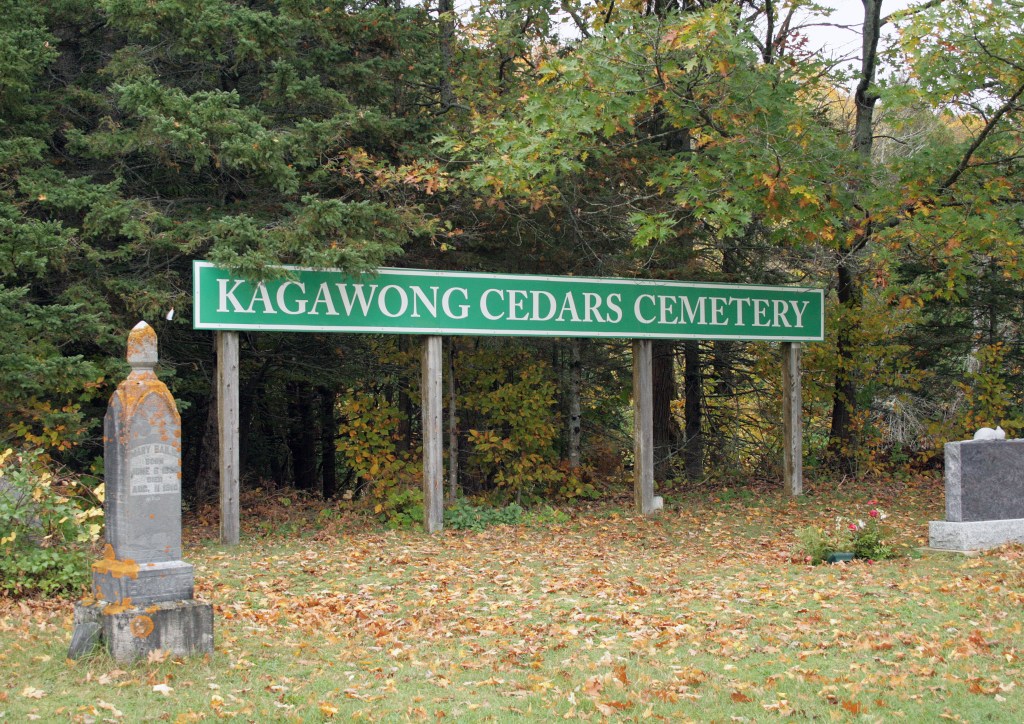
We stopped for lunch at Main St. Express in Kagawong. They have a great little drive-thru set-up. We brought our lunches to the waterfront, just across from the Old Mill Heritage Centre. We took advantage of some nice covered picnic tables. It was quiet on the waterfront, as the tourist season was at its end. 1 or 2 couples were walking around, enjoying the sights. If we had gone during peak summer hours, the waterfront would have been bustling. I think we went a good time, even though it was rainy. There was another advantage to having our lunch on the waterfront—it was also next to Kagawong Cedars Cemetery. After our lunch, we took some time to visit that cemetery and take some photos.
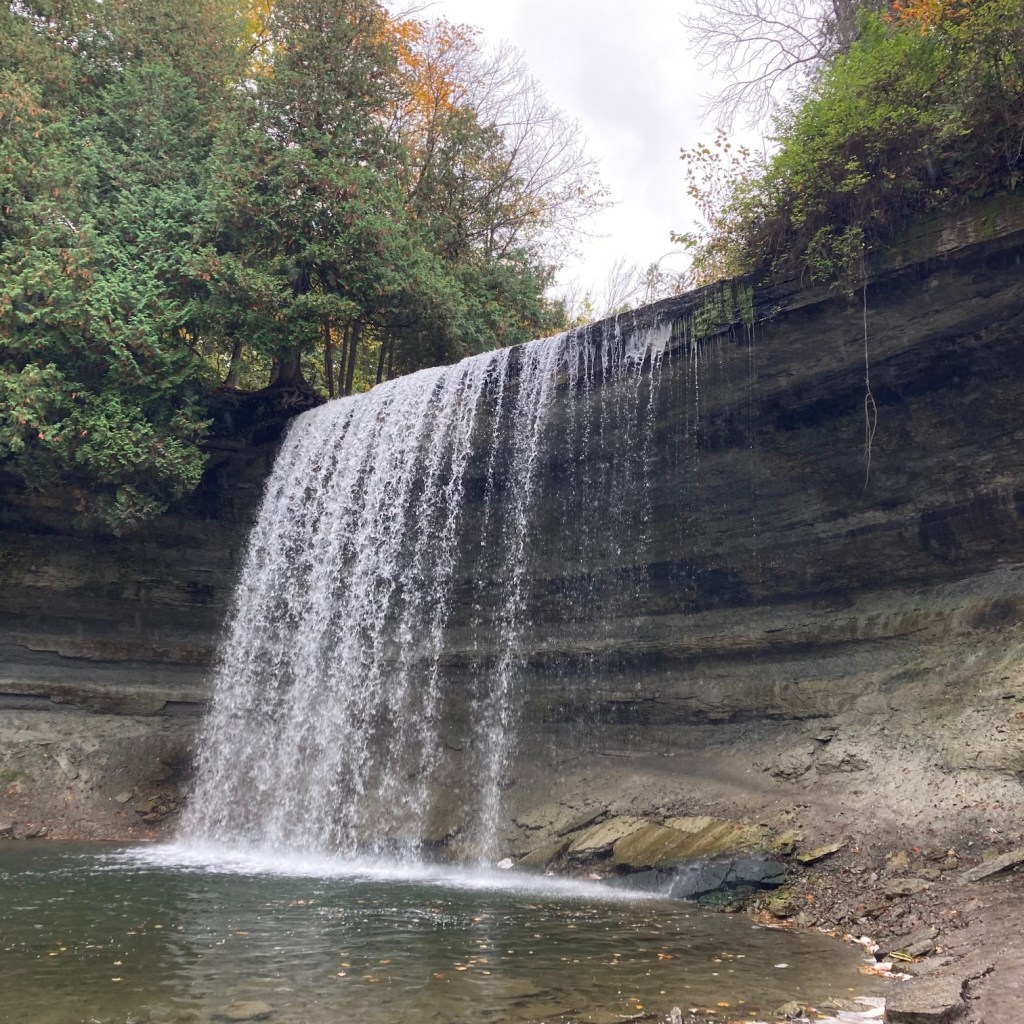
Kagawong is also home to the Kagawong River Trail. It’s a beautiful trail, running beside the river’s edge the whole time. There are some lovely sculptures scattered throughout the trail as well. These sculptures and heritage plaques were installed as part of the Billings Canada 150 project.2 The crown jewel of this trail is Bridal Veil falls! In nicer weather, you can walk behind the falls, and even take a dip.
Because tourist season was done, we did miss out on a few things, like visiting the Old Mill Heritage Centre and the Manitoulin Chocolate Works. I was disappointed when we found the doors locked to the chocolate shop. I will make sure to stop in there the next time we are on the island. There were some things we did get a chance to visit though, like the East Bluff Lookout, that was somewhat close to Gordon Cemetery in Gore Bay. The East Bluff Lookout offers some amazing views, and we also happened to see some wildlife; a red squirrel and some white-tail deer.
Even though I did have to cut my time short at a couple of the cemeteries due to heavy rain, I would say it was a great trip. We enjoyed the beautiful fall scenery, ate some delicious food, and visited some lovely cemeteries. I enjoy exploring the island and look forward to making another trip out there this summer to explore more of it.
Have you visited Manitoulin Island? I would love to hear about your visit in the comments.






















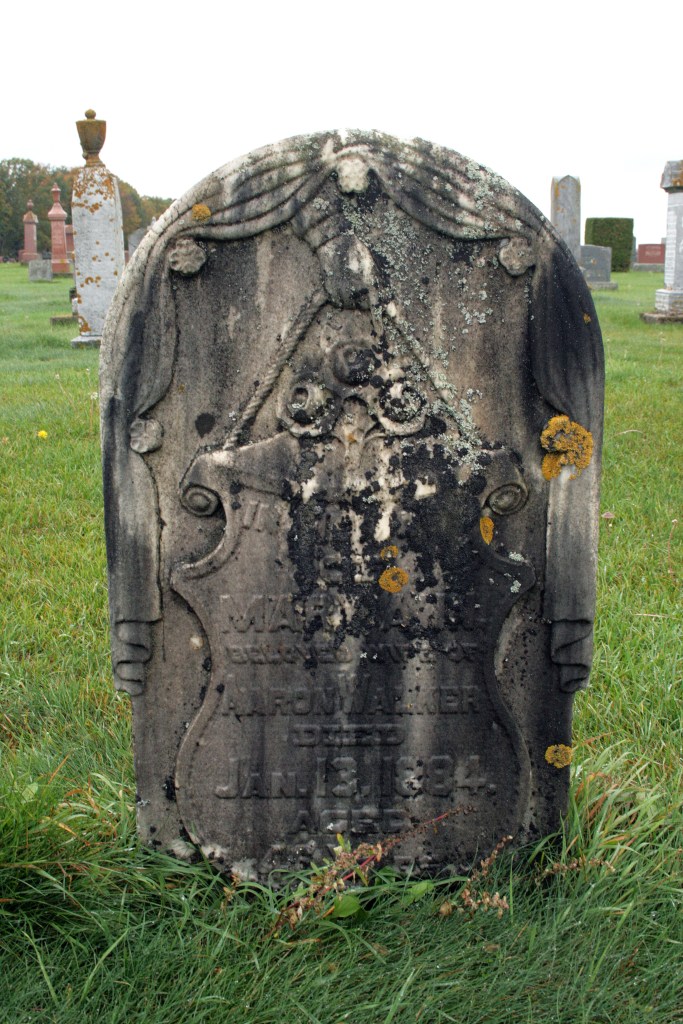


 Cemetery Photography by Chantal Larochelle