Did you know that May is Cemetery Appreciation Month?
I first learned about it in 2021, and I have been celebrating every year since. Cemeteries are often seen as taboo and they are not often the first place someone would think to visit, but I believe that cemeteries are for the living. They are filled with history, art, and architecture, and are wonderful places to go for a stroll, or bird watching, among other things. Yes, they are resting places for our loved ones and should be respected, but that doesn’t mean we can’t enjoy their beauty as well. Cemeteries were the blueprints for today’s public parks, after all.
So how do you celebrate? In 2021, I created a mini bucket list of things to do during the month to foster an appreciation for cemeteries. It was a nice excuse to spend more time outside. I had a lot of fun completing everything on my list. Some activities on my list included visiting a cemetery I had not visited before, and re-visiting a favorite local cemetery.
This year I wanted to do something a little different. I’m a graphic designer by trade and wanted to create something that would bring my two loves together—design and cemeteries. I was also inspired by a cemetery scavenger hunt I took part in last October. I thought it would be really fun to do something similar with my group of friends.
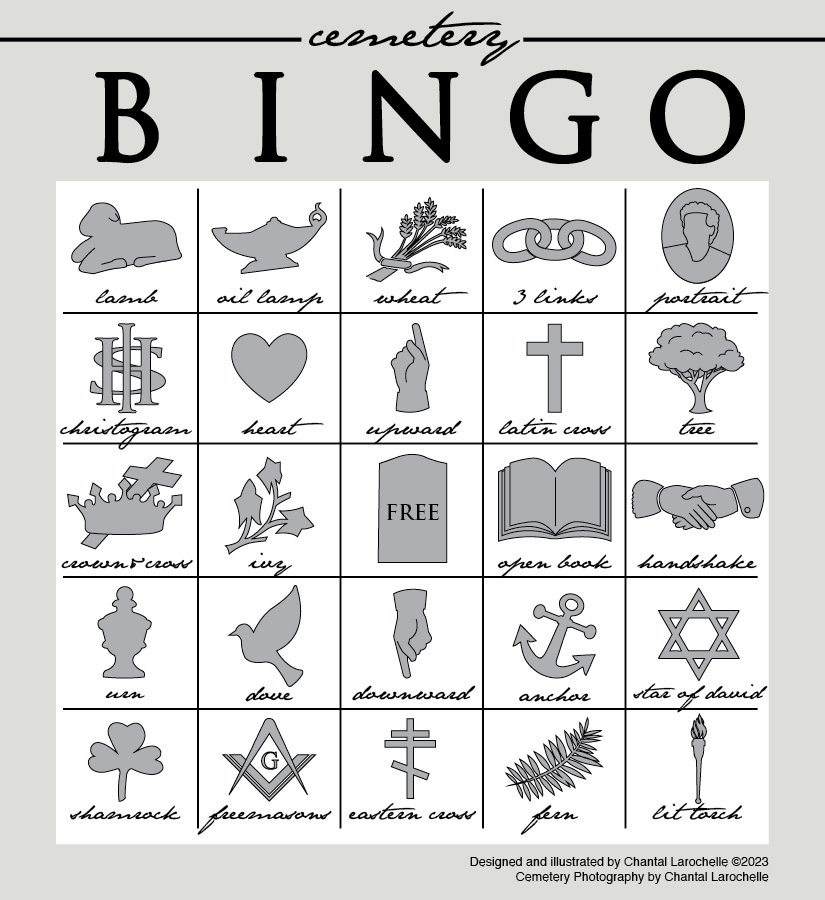
So I thought why not design a Cemetery Bingo card?
It’s a great activity to do in a group or solo and lets you explore the world of cemetery symbols. I created my cards using my cemetery photographs as a reference. I illustrated 40 symbols that are commonly found on gravestones. I included the name beneath the symbol as well, to help identify common motifs you might find while walking in a cemetery.
To play, all you need to do is print out a copy, bring something to mark your cards, and go for a walk in your local cemetery. Match the symbols on the card to what you find on the gravestones. The first one to get a full line wins! You can make that two lines, or even a full card to make it a bit more challenging. I can see this being a fun tool to introduce your friends and family to cemeteries and help explore gravestone symbolism. It could also be a fun activity for kids.
Please remember to be respectful when visiting your local cemeteries. For a guide on cemetery etiquette, you can read a previous blog post I wrote about the rules I follow when visiting a cemetery here.
My friends and I will be going on a cemetery road trip very soon, and I think it will be a great opportunity to try out the bingo cards. We have a lot planned already, but I think we can fit in a round of Cemetery bingo. I’ll be sharing how our cemetery bingo plays out in my stories on Instagram on May 6th.
For best results, send this print-ready file to a local print shop, or you can print them at home on your home printer. Just be careful when you are trimming the pages. Then all you need are some markers, stickers, or bingo dabbers to mark off your finds and have fun! Make sure to tag me in your photos or stories on Instagram and Facebook.
I realize I owe you all a blog post after missing last Sunday, but I don’t have anything that is quite ready to share with you yet. I have a few posts that I have been working on, but more research is needed. So instead, this will be an update, to share what I have been working on and what you can look forward to on the blog in the coming months.
Most recently, I have been working on a piece inspired by Death’s Garden Revisited, edited by Loren Rhoads. My piece is about my own personal connection to cemeteries. After speaking with my Mother about the subject, it created more questions than answers. As we chatted we uncovered our own little family cemetery mystery, which sent me down yet another research rabbit hole. I’m sure you all will find that story very interesting.
I have also been saving a cemetery story, especially for this month, as February is the anniversary of this local tragedy. I need a little more time to work through the research and sort through my photos from last summer’s road trip. That will be another post to look forward too.
Along with writing and creating content for the blog, I have also been taking an online course to sharpen my writing skills. The course is through Atlas Obscura and is called Historical Nonfiction: Research-based writing with Hadley Meares. This 4-week course promises to help you write historical essays using a research-based lens. I am on week 3 of the course and it has already solidified the good writing habits I already had while introducing new habits, methods, and resources to my writer’s toolbox. I look forward to sharing the article that comes from completing the course.
Amidst all this writing I have also been updating the portfolio section of my website. I have posted many additions to my existing web portfolios and have added some new ones entirely. Sorting through, editing, and posting my archive of cemetery photos has been a great way to look back at all the cemetery adventures I have had over the years.
I have also been working on researching some new areas and cemeteries to visit. I have some great cemetery road trips already planned for this summer and can’t wait to get back on the road and photographing. I plan on visiting Owen Sound, for part two of Chasing Tom Thomson, while also stopping in at some fun interesting spots along the way. I also have another trip planned for early spring which will include my first visit to a loyalist cemetery, and seeing table stones in person. I’m pretty excited about that trip.
I have also been busy getting some submissions ready for a local photography contest, and a gallery showing. I am not quite sure how my cemetery work will be received, but I think they could be great opportunities to get my work out there, regardless of the outcome.
Hopefully, some of these upcoming posts sound interesting and will have you coming back to read more. As always, if you have any book or cemetery recommendations, or cemetery stories of your own to share, please leave me a comment or send me an email at hello@chantallarochelle.ca
This week, I had originally planned on posting a cemetery recipe for Red Lantern Cheese dip, from the gravestone of Debra Ann Nelson. But, I had some issues finding the correct ingredients and the recipe didn’t turn out as expected. So I will continue my hunt for the elusive ingredients.
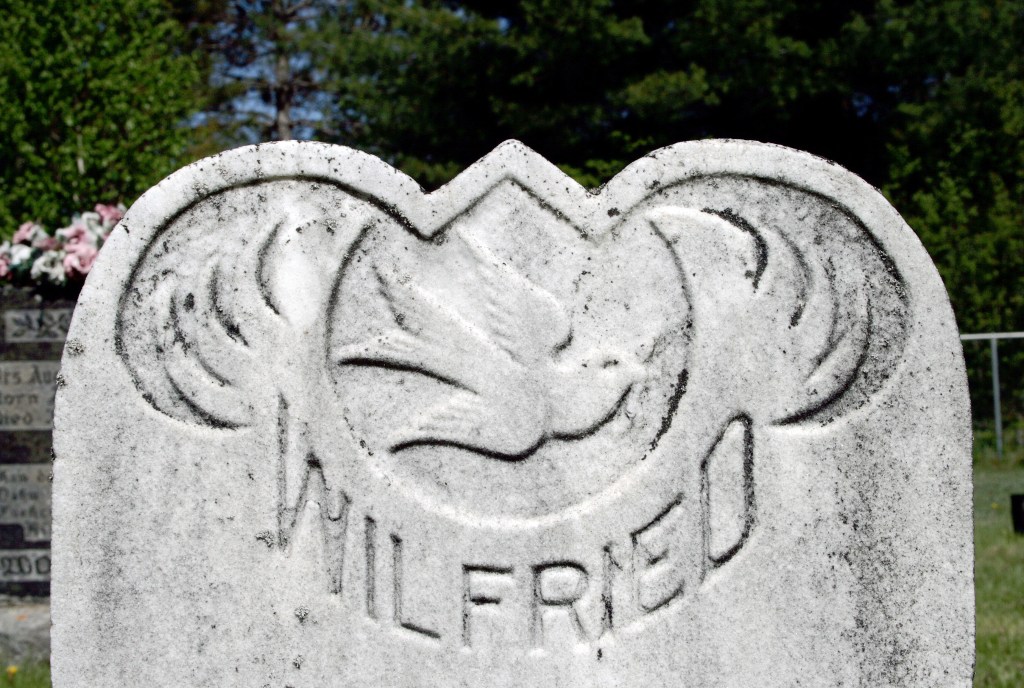
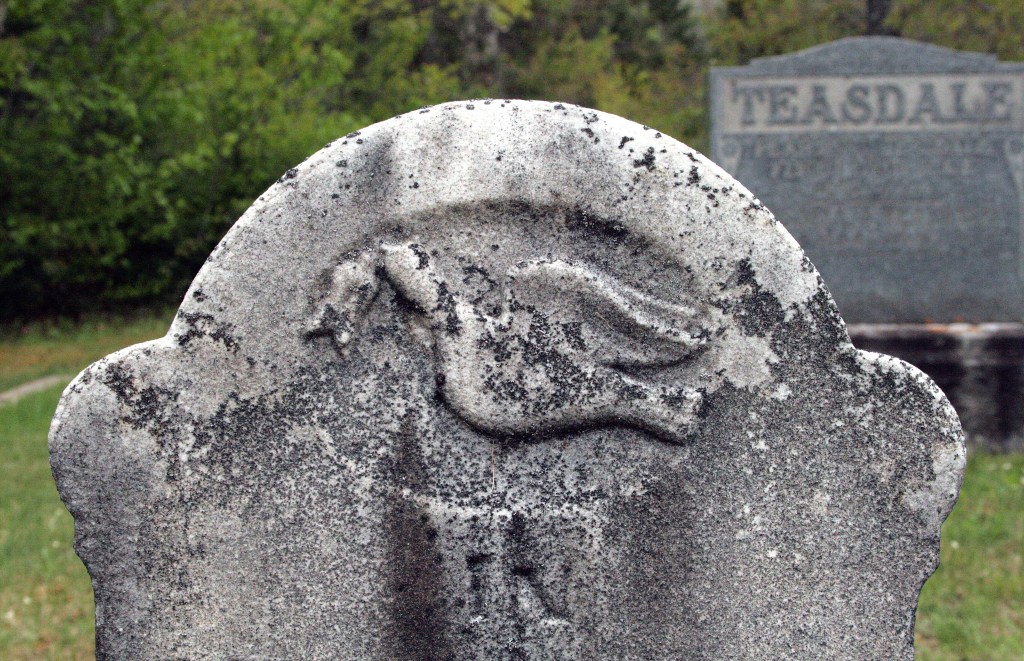
Instead, this week I will share a collection of Dove’s. If you have been following this blog for a little while, you may have noticed that I sometimes like to share collections of my favorite photos of some of the cemetery symbols I find on my cemetery walks. I have been photographing cemeteries for over 15 years, and in that time I have noticed some repetition of certain symbols and motifs. I find cemetery symbolism so interesting and love looking at what the different variations of a symbol mean.
Doves are not as common a symbol as lambs in Northern Ontario, but they represent similar ideas. Doves commonly are a symbol of peace, but when used in funerary art, they also represent innocence and the Holy Spirit. Doves may appear in many forms, such as sculpture or bas-relief. There are also different variations of doves, and each carries additional meaning.
Sometimes a dove may be depicted carrying something in its mouth. A dove with an olive branch in its mouth may represent peace. This symbolism also can be traced to Ancient Greece. A dove carrying a broken flower bud in its mouth often symbolizes a life cut short.
The position and angle of the dove may have some significance as well. A dove flying downward is thought to represent the Holy Spirit coming down from heaven.
Another variation of a dove you might find, is a dove that looks like it might be dead. A dead dove sadly represents a life cut short. This variation may also be found lying in front of, or on top of a tree stump; which is also a symbol of a life cut short.
Today on the blog, I wanted to share a cemetery road trip from Autumn 2022. I have been thinking about this place a lot lately and wanted to share my experience. Visiting the Asylum Point Cemetery was high on my to-do list when my fiancé and I visited Penetanguishene for our haunted holiday. I talked Chris’s ear off on the drive up about what I could remember of its history. My interest in the place was even more peaked when we got to our Airbnb. On one of the white boards in the main entranceway, someone had written in red marker; “Visit the Asylum Cemetery!”
Asylum Point Cemetery is located on the grounds of what is known today as the Regional Division of the Waypoint Centre for Mental Health Care.1 Over the years it has seen many different forms. It began as a Reformatory for Boys in 1859 and operated for 44 years.2 In 1904 it saw new life as the Asylum for the Insane.3 1933 saw the addition of Oak Ridge, also referred to at the time as the Criminally Insane building.4 All the buildings are fairly close together, creating a small campus. As we toured the campus in search of the cemetery, I noticed a few white houses lining the road to the cemetery. One was directly across from it. I’m not sure what these buildings had once been used for, but now they looked abandoned and boarded up.
Many of the original buildings are no longer standing, as the center has modernized its facilities. But, there are still some remnants from the Asylum’s past that can be found; like the cemetery, and the original Oak Ridge gates. The gates now open to an empty road, that leads I’m not sure where. I didn’t have much time to explore the grounds on our visit, aside from the cemetery, but I did get a chance to stop and admire the entrance gates, which are said to have been built by the patients themselves.
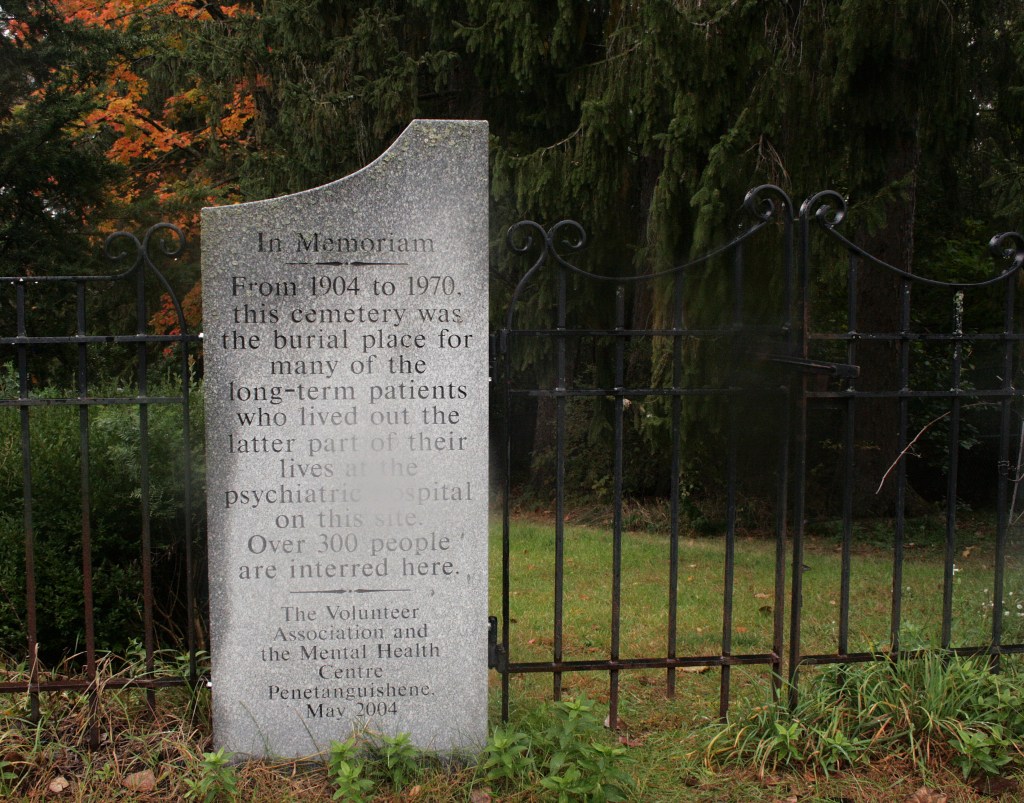
According to the inscription on the gate of Asylum Point Cemetery, the cemetery was in operation from 1904 to 1970 and is the final resting place of over 300 long-term patients. Commemorative stones were erected at the cemetery detailing its history in 2004, the 100th anniversary of the Psychiatric Hospital and its cemetery.
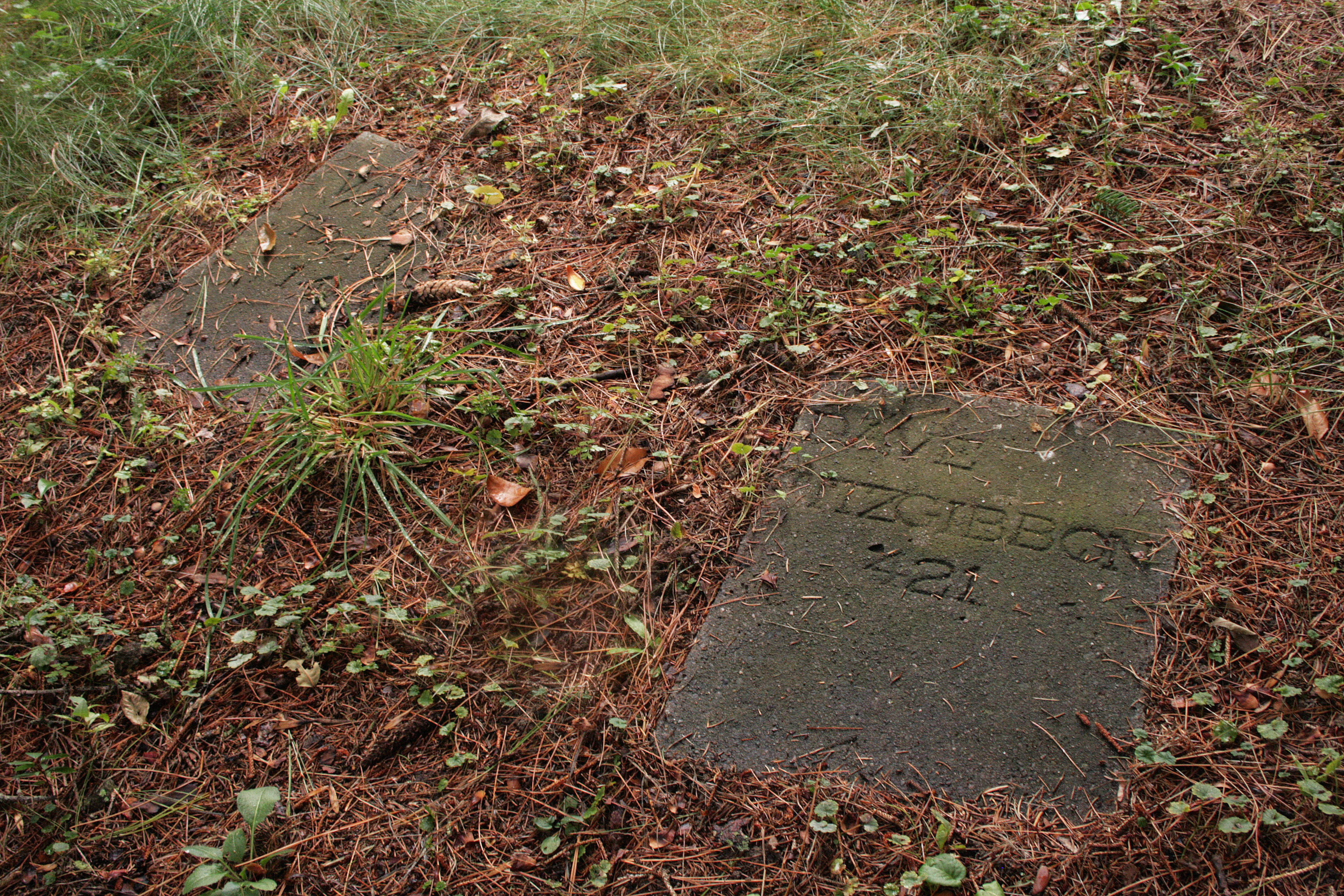
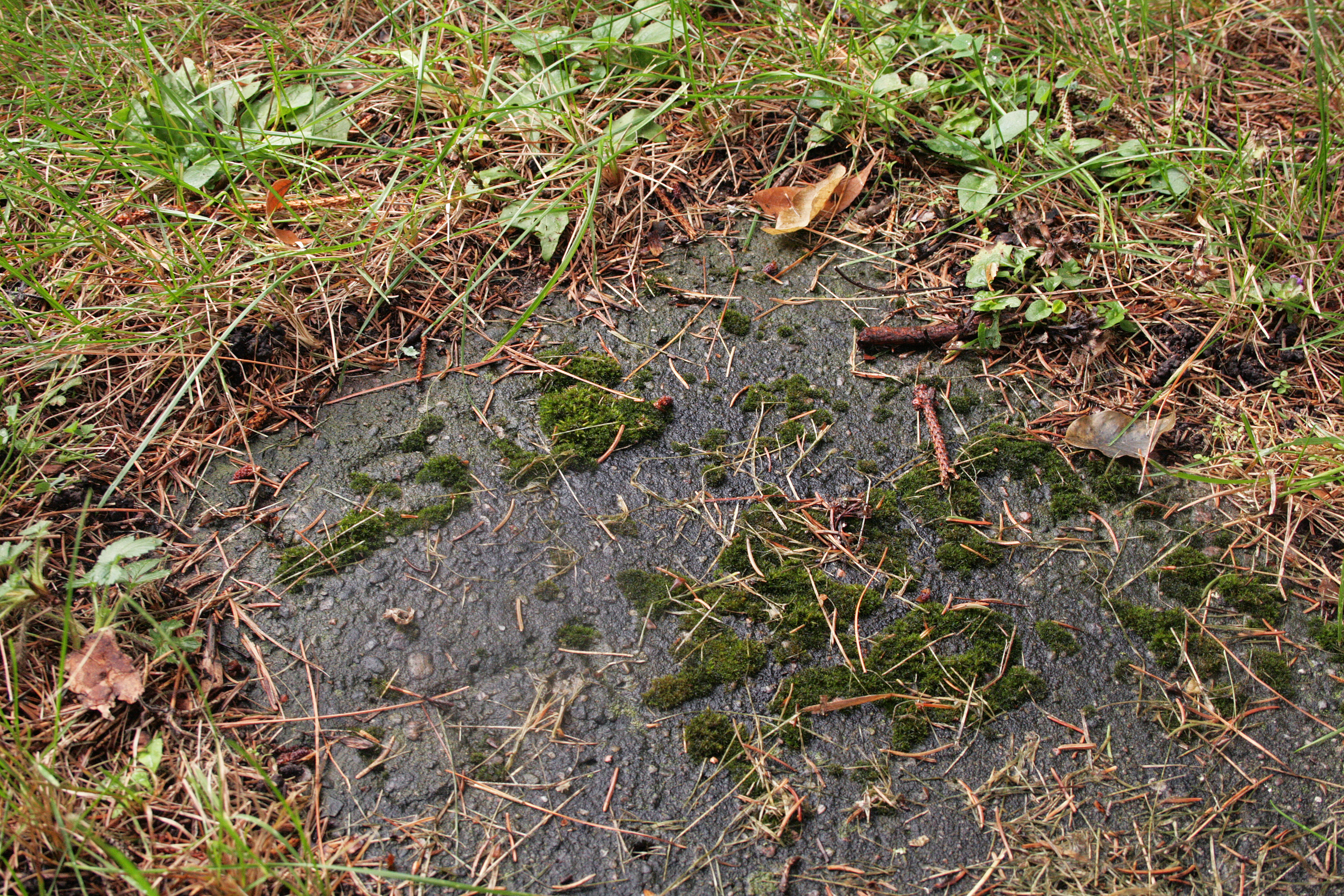
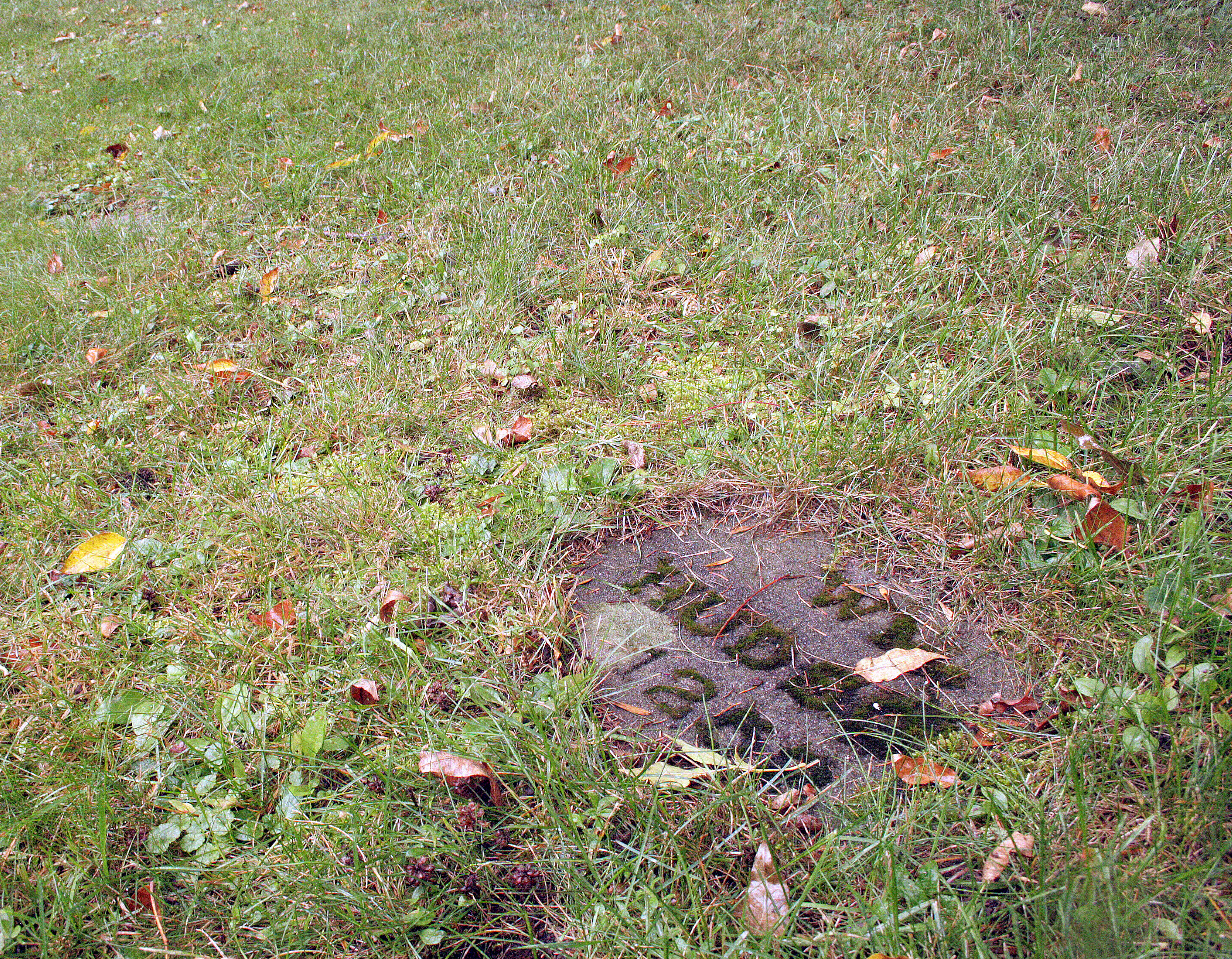
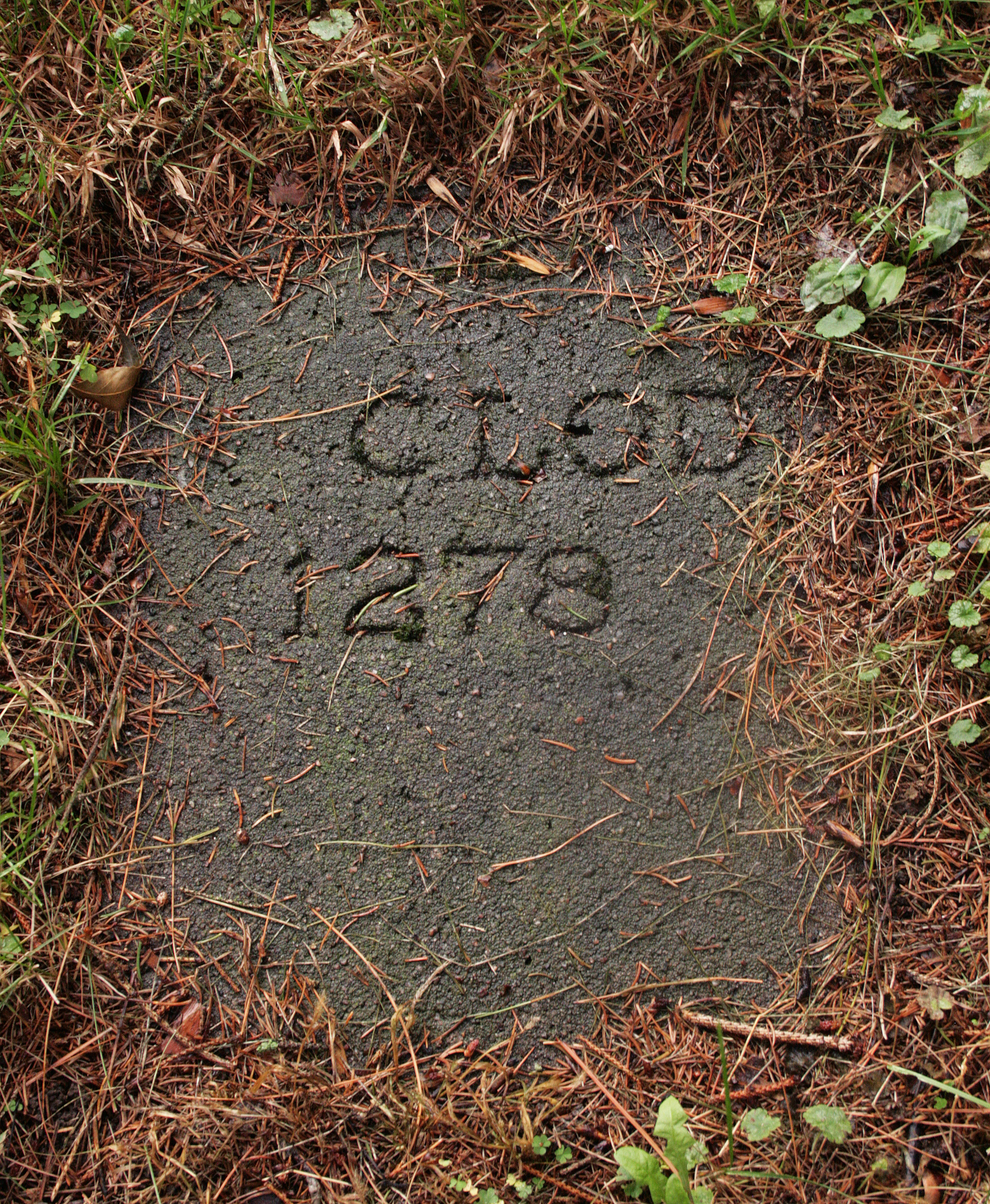
It was a grey and dreary day when I visited the cemetery, but I didn’t let that deter me. When I walked through the gates, after stopping to read the inscription, I was a little surprised by what I found. The cemetery seemed to be just a sprawling green lawn, with no markers aside from the stone at the entrance that bares the cemetery name. There is a large weeping willow tree on the right side of the cemetery, so I walked underneath it to stay out of the drizzling rain. I scanned the grass for anything that might resemble a grave marker. I had read that the grave markers in this cemetery, in the early years, had been created by the patients using wood and brass stamps to mark the names and dates.5 I was about to start making my way back to the car when I noticed a small slab of cement covered in leaves and debris. It wasn’t an empty green space after all. After I spotted one, I was able to spot them more clearly and found more and more small rectangular grave markers dotting the lawn. The rain had darkened the cement making them blend in with the autumn leaves. Many markers were becoming overgrown with moss, while others were slowly being swallowed up by the earth.
This was my first time visiting an Asylum cemetery, and I was very touched by the handmade markers. I tried to put myself in the place of the patients that would have been making these gravestones. I was very mindful as I made my way back to the car.
I have only briefly touched on the history of Oak Ridge here, but if you are interested in some further reading, there is a great resource curated by Jennifer L. Bazar. It’s called the Remembering Oak Ridge Digital Archive and Exhibit. It features in-depth looks at the history and timeline of Oak Ridge, and includes photos. I would highly recommend checking it out if you are interested in this side of Canadian history.
Thanks for reading!
References:
Origins | Remembering Oak Ridge Digital Archive and Exhibit
2022 was a year full of adventure! I visited 78 cemeteries this year and was able to break my record for the number of cemeteries visited in one day—15. A personal best! I visited my first pet cemetery and went on many fun and fascinating cemetery road trips. There are a few that stand out, like hiking through Algonquin Provincial Park and finding the first grave of Tom Thomson. That was a bucket list trip for me, and one of my biggest adventures so far. A lot of planning and research went into that trip, and the journey was incredibly worth it. Spending the night at the haunted Beck House was another highlight for me. Haunted holidays with my fiancé are always my favorite, but this year will be hard to top. This beautiful victorian style mansion is beautiful on its own, but its history makes it even more interesting. We had an amazing visit and made sure to pay our respects to the Becks, at their family mausoleum. I look forward to sharing more cemetery road trip adventures from 2022 but I am excited to see what 2023 will bring.
I am amazed at the following I have been able to foster on my social media channels. Over 2 000 followers on Instagram! Wow, what a milestone! Thank you to everyone who has liked, followed, commented, and shared my social and website posts. It means the world to me. I am so proud to be part of the online cemetery community, and love connecting with like-minded taphophiles. Because of this, I have branched out from Facebook and Instagram to Flickr and Pinterest as well.
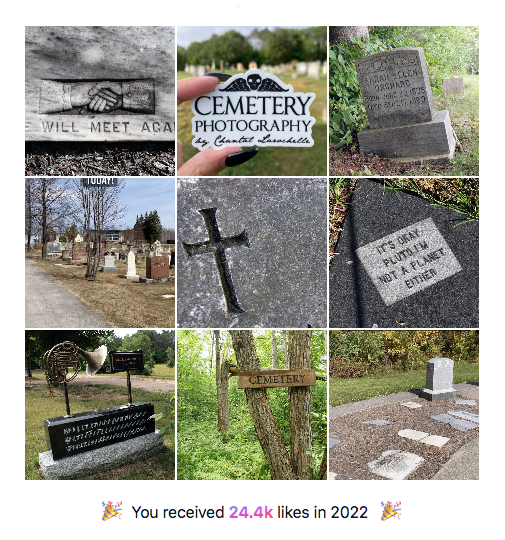
Cemetery Photography by Chantal Larochelle, Top Nine images on Instagram for 2022
I feel that I am continuing to grow in my writing and am slowly finding my voice. I love sharing my cemetery adventures and am so happy that I have found an audience. I hope to continue my growth as a writer into the new year, by honing my skills and sharing even more stone stories and insights.
Thank you to everyone who has followed along with me on this journey! Sharing my passion for cemeteries with you all has been an amazing experience. I look forward to continuing to share my photography and adventures with you and seeing what 2023 will bring.
The holidays are almost upon us! We’ve been blanketed by a lot of snow recently, here in Northern Ontario, so it definitely looks and feels like a winter wonderland. My neighborhood has been transformed into a little Christmas village with many of my neighbors decorating their front lawns with holiday blow-up characters, red and green candy canes, and twinkling lights galore. I am not one for Christmas decorations, I haven’t put up a Christmas tree in years, but I do enjoy the twinkling lights.
I don’t have a long post for you today, as I’m thick in the middle of that holiday hustle and bustle that always seems to hit immediately before the holidays. So for my last blog post before Christmas, I thought I would share some of the Christmas-themed grave goods I have found while wandering my local cemeteries.
If you have been following me on social media at all, you most likely have seen me talk about grave goods. I often share some of the more unique things I have found on my cemetery travels.
Grave goods is a term used to describe items that have been left at a graveside by mourners.
I always find it heartwarming when I see Christmas spirit spread to a cemetery. Although seeing candy canes and Christmas trees in July is always a surprise.
Winter is slowly starting to tighten its grip on us here in Northern Ontario. My road trips are done for the year, now that it’s getting colder and the snow is getting deeper. I like to take this time to sort through my photos, update my photography portfolios and upload images to Find a Grave. I also like to reminisce on all the cemeteries I have visited during the year. Today, I wanted to share my experience visiting the Dyer Memorial Nature Reserve.
Every October I take some time off to enjoy the crispy weather and changing colors in Ontario. Hiking and visiting cemeteries in the fall are my absolute favorite. This past October, my mother, and hiking buddy visited Huntsville to do some leaf peeping and hiking with some cemetery visits along the way. One of the must-do’s on this trip was visiting the Dyer Memorial. I had read online that this memorial site and nature reserve was a monument of love, in memory of a loving Wife. When we arrived at the site, I was surprised to find out that the Dyer Memorial is also the final resting place of Betsy and Clifton Dyer.
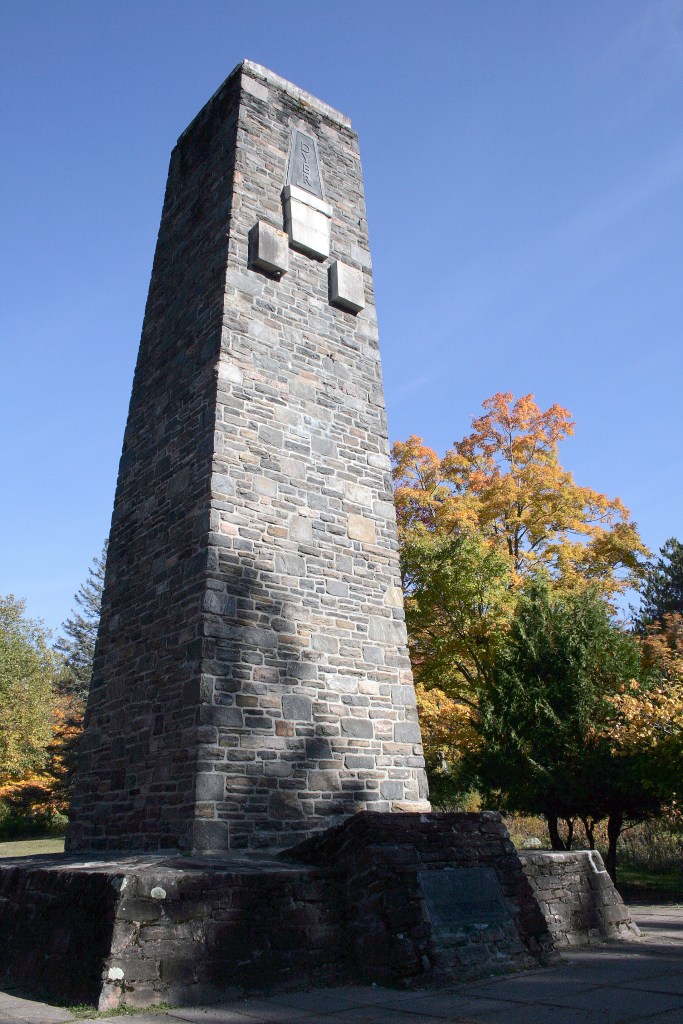
This beautiful monument was erected in 1956 by Clifton G. Dyer, a Detroit lawyer, for his wife Betsy Browne Dyer.1 It sits about 10 minutes outside of Huntsville, in the small hamlet of Williamsport. They were frequent visitors to the area, having first honeymooned in the Muskokas in 1916. They loved the outdoors and would often tent or stay in a cabin above the Big East River, close to the spot where the memorial now sits. In the 1940s they had a permanent cottage built and visited every summer.2Betsy passed away in 1956, and Clifton, in his mourning, had the memorial built so Betsy could be laid to rest in the place she loved so much.1Her ashes were placed in a copper urn at the top of the memorial.2 Clifton passed away 3 years later, and his ashes were also placed within the monument.1
The road to the monument site is not paved and snakes its way up to a small car park area. There is some signage but it might be missed if you’re not paying close attention. The trail from the car park to the monument doesn’t seem like much, but once you turn the corner on the flagstone path and see the monument come into view, it’s quite impressive.
The obelisk stretches high into the sky, with a plaque near the top that reads “Dyer”. The monument is surrounded by footpaths leading every which way around the monument. Some small wooden bridges extend over a small pond with trails that curve around small clumps of trees. The lone monument stands like a sentinel in the center of it all.
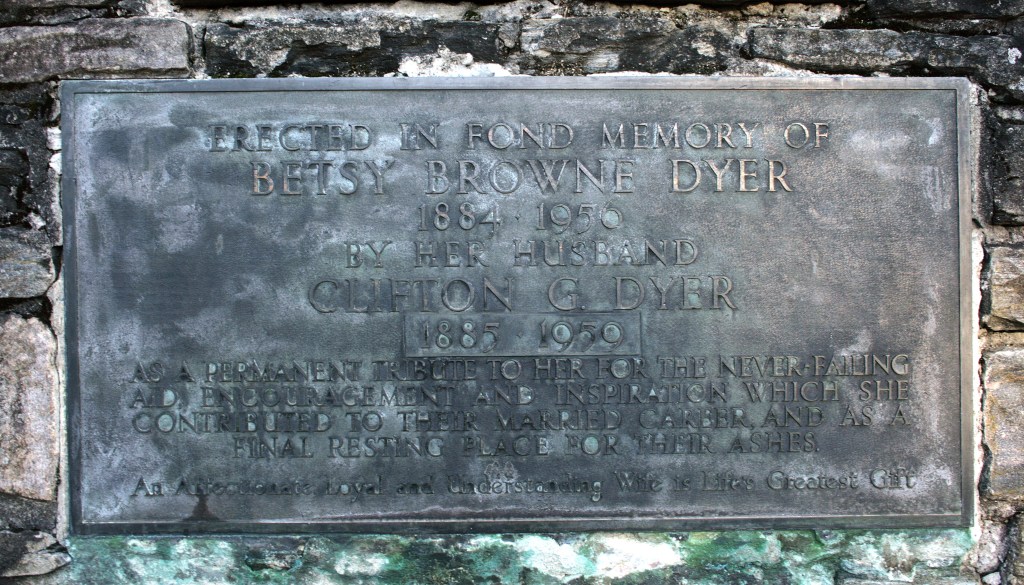
At the base of the monument there is a plaque that reads:
“ERECTED IN FOND MEMORY OF / BETSY BROWNE DYER / 1884-1956 / BY HER HUSBAND / CLIFTON G. DYER / 1885-1959 / AS A PERMANENT TRIBUTE TO HER FOR THE NEVER-FAILING / AID, ENCOURAGEMENT AND INSPIRATION WHICH SHE / CONTRIBUTED TO THEIR MARRIED CAREER AND AS A / FINAL RESTING PLACE FOR THEIR ASHES. / An Affectionate, Loyal and Understanding Wife is Life’s Greatest Gift”
We were the only ones on the grounds when we visited, so we took our time to explore the area. There was no trail map to show how far the trails went, so we kept our bearings and didn’t stray too far from the monument. We crossed a small bridge and wandered around the small pond, reflecting the bright fall colors. We also explored a small clump of trees on the other side of the monument, again deciding to stay close to the stone obelisk and not walk too far down the trails.
I circled the obelisk a few times, in awe of its stature and what it represents. It was first built as a loving tribute but now stands as a memorial to both Husband and Wife.
It’s lovely to see this site so well taken care of, not just the memorial, but also the surrounding trails. I love the idea that this nature reserve preserves the area so others can experience the beauty of it, just as the Dyers did in their lifetimes.
October is coming to an end. This post-pandemic Halloween season has felt a bit more normal because of all the fun spooky activities happening. It’s been a whirlwind of a month for me, between pumpkin patch activities, a haunted holiday, watching way too many horror films, and visiting cemeteries. I even put up my own little front lawn cemetery for the trick-or-treaters on Halloween night.
This year, I was able to visit some cemeteries a little farther away from me, in Cobalt, Haileybury, Huntsville, and Penetanguishene. I am looking forward to sharing more about those visits in upcoming posts. You can read about my visit to the Beck House and the Presbyterian Cemetery here.
I also had a chance to participate in this year’s Cemetery Scavenger hunt, put on by TalkDeath. I wrote a bit about TalkDeath and their annual event last week. You can read it here, in case you missed it. This cemetery scavenger hunt takes place globally, so you can participate from anywhere. All you have to do is visit a local cemetery. In some areas, you can participate with TalkDeath members in person. This year there were members at Graceland Cemetery in Chicago, Green-Wood Cemetery in Brooklyn, Mount Royal Cemetery in Montreal, and General Protestant Cemetery in St. John’s, Newfoundland.
My mother and I joined in from Park Lawn Cemetery in Sudbury, Ontario. It was so much fun! Although we were the only ones in the cemetery searching for clues, it was still a nice way to spend some time on a Sunday afternoon. Park Lawn Cemetery is not the oldest cemetery in the city, as it was established in 1924. But it is a large one, which I thought would be an advantage to searching for clues. I may have been half right. We started strong, finding a few clues pretty quickly, but we started getting stumped. We fanned out and as I searched I fell into my normal cemetery photography mode, which is a little bit slower-paced. I did eventually manage to find 12 of the 20 clues, but it was way too late to place in the top 5. I think the fastest time may have been 12 minutes!
I was no where close to that time, but that’s ok! It was a great opportunity to get outside, enjoy one of the last beautiful weekends of October, visit a cemetery and spend some time with my mother. We spent about an hour in the cemetery. After I submitted my photos, we wandered around a little bit, enjoying the weather and looking at the beautiful stones. We also found some interesting epitaphs that I think will require some research, later on, to learn their story.
I think this years Scavenger Hunt was a success! I can’t wait to participate again next year! It was a really fun way to close the cemetery season for me.
If you are not aware, November usually brings with it some pretty cold weather here in Northern Ontario, and that means lots of snow. I’m not fond of winter, so I tend to stay indoors during the colder months. That means my cemetery visits are pretty much done for this year.
That doesn’t mean that you will stop seeing content from me!
In the colder months, I focus on editing the monstrous number of photos taken over the summer. I’ll be doing portfolio updates in the coming months, adding to what’s currently on the website. I’ll also be doing more work uploading memorials to Find a Grave, helping clean up their cemetery map information for Ontario, and transcribing photos. I’ll also be sharing more cemetery road trip stories from over the summer, and cemetery book reviews. I’ll also be taking some time to bake and share some more tombstone recipes. I don’t think I have made one since the spring!
That being said, I hope that you have had a wonderful October, were able to enjoy some fun activities throughout the month, and got to visit a cemetery or two! I would love to hear about your October adventures in the comments.
I haven’t posted a road trip story in a little bit, so today I wanted to share my adventure of finding a cemetery via railroad tracks!
It was back in 2020, amid the COVID-19 pandemic. Social bubbles were very much in place and almost everything was shut down. There was not a lot to do that summer. BUT visiting cemeteries is always a viable option! My fiancé and I, and our close friends whom we had been bubbling with (that’s an odd to say), decided to go on a little adventure to try and find two cemeteries in Spragge, Ontario.
The little town of Spragge found its beginnings in 1882 but was originally named Cook’s Mills. It was a self-sufficient town of about 350 residents all built around the sawmill. In 1895 the whole operation was sold, and the village was renamed Spragge, after the township. When the depression hit, the mill closed in 1932. That same year, there was a devastating fire that burned almost the entire village to the ground. This caused a lot of folks to leave town, although a few remained and tried to rebuild. The mill never did re-open, and now there only sit about a dozen homes within the small village limits of Spragge.1 Two cemeteries remain, the Spragge Catholic cemetery and the Spragge Protestant cemetery.
This adventure would take us a little over an hour and a half on the road to get to Spragge. Our little group made a day trip out of it. We stopped at a diner and safely had lunch outside on the patio. We asked some of the locals about the cemetery. The stories we heard were pretty interesting. We were told that the owners of the property where the cemetery sits, do not like visitors and consider them trespassers. They talked about how this causes some tension between the townsfolk who want to visit their relatives, but are barred from doing so. The community was trying to get free access to the cemeteries. We were also told that the property owner was known to brandish a shotgun! We were a little put-off by the stories, but we were determined to take a look for ourselves.
After our slightly uncomfortable lunch, we continued on our way with directions by Google Maps. We turned off the main road onto a side road and what looked like a parking area. My fiancé was completely put-off by the stories we were told, he was also not as enthusiastic about visiting the cemeteries as we were, so he waited in the car and played look-out.
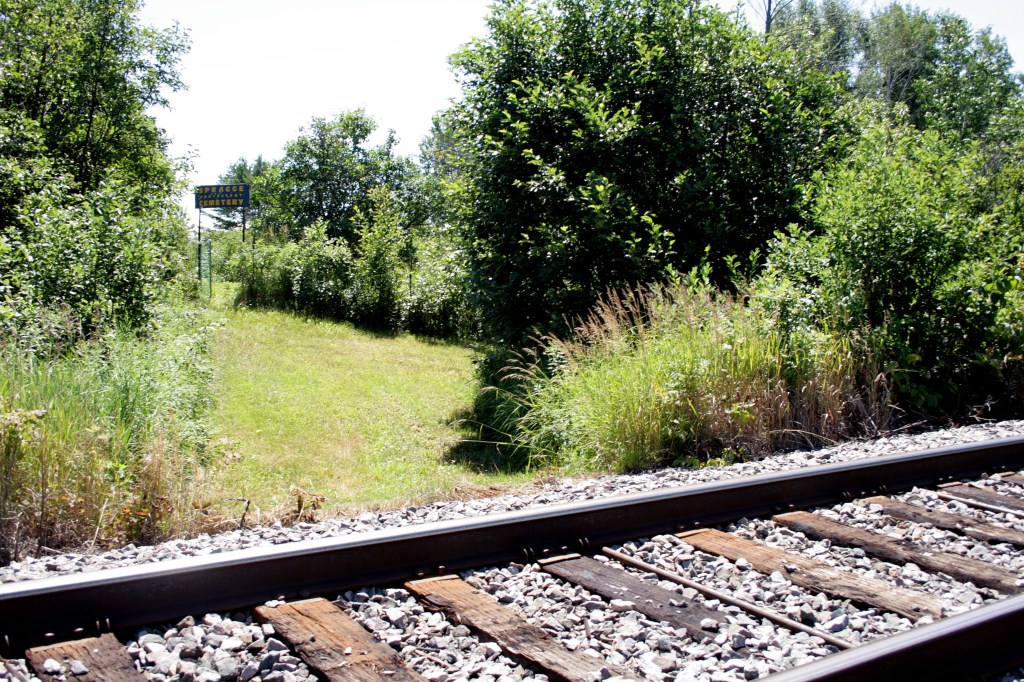
The rest of us began tentatively walking down the dirt road. When it opened up and we could see it was a driveway leading directly to a house, we decided to turn around and try a different approach. We had crossed a set of train tracks, that ran parallel with the main highway. After consulting Google Maps, it looked like we might be able to access the cemetery at a clearing just off the train tracks. We decided to try that. We chose a hot day to walk along the train tracks, but it ended up only being a short walk. On our left, a little clearing opened up which lead into the cemetery.
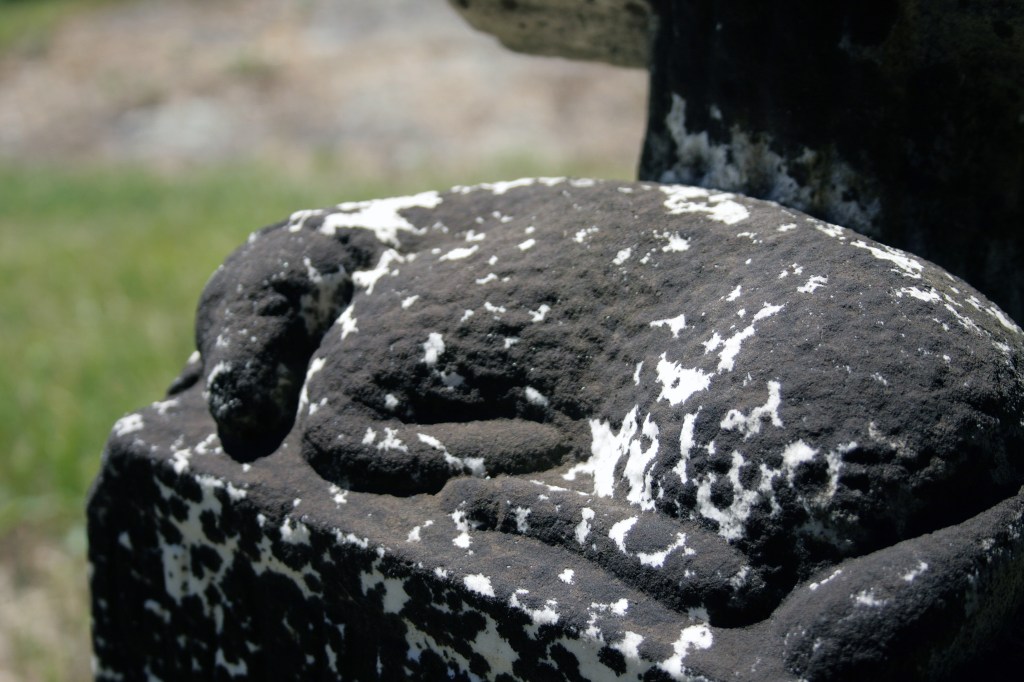
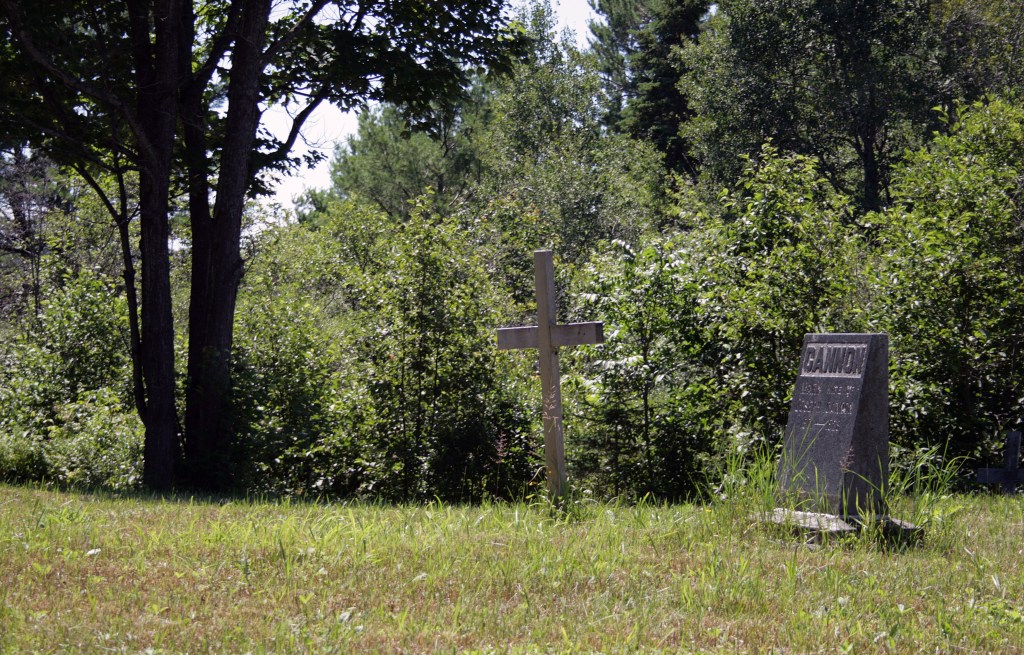
We had found the Spragge Protestant cemetery! We took some time to wander the grounds and look at the beautiful stones. It was a smaller cemetery and looked to be well-maintained. Not at all what we had pictured in our minds. We had been under the impression that the cemetery was abandoned and in disrepair. Some of the stones were too worn to be read, but some others were still in great condition. Some of the common cemetery symbols we found were clasped hands, obelisks, and little lambs.
After we explored a little bit, we tried to find the Spragge Catholic cemetery. According to my friend’s research, it should have been very close to where we were. We branched out a little, exploring the oddly well-kept lawn that snaked in between clumps of trees. We were nervous about getting too close to the house or going in full view of it. After a little more wandering, with no luck, we decided to turn back and reunite with my fiancé, who was patiently waiting in the car.
We were very happy to have at least found one of the cemeteries, and we vowed to do a little more digging and return in the future to find the elusive cemetery. It was still a fun adventure, after all exploring is half the fun.
But that’s not the end of the story!
This past winter I was busy uploading photos to Find a Grave and uploaded some of my photos from Spragge. A woman reached out to me, looking for coordinates for the Spragge Catholic cemetery, as she has family there. I passed on all I knew, and let her know we were not able to find it. She had also heard about the access issues, but since she was a relative was hoping the property owner would be understanding. She later contacted me and gave me an update. She was able to locate both cemeteries and visit her family. It turns out the town of Spragge did not want the expense of maintaining the cemeteries, and a private owner requested to take it over and purchased the property. When he is not in town, he has entrusted maintenance and upkeep to another property owner in the immediate area—who also happens to have loved ones buried in the cemeteries.
I also had another person reach out about these cemeteries. They have turned out to be pretty popular locations. This time, the person who reached out was searching for the location of the Spragge Protestant cemetery. He had visited the Spragge Catholic cemetery but did not find the other. We exchanged information. I shared everything I knew about the one I had visited. In return, he shared the exact coordinates of the Spragge Catholic cemetery and the contact information of the property owners. If we had searched closer to the water’s edge when we were there, we would have found it. So close!
I’m still a little confused about the stories that the folks at the diner told us, about the owners brandishing shotguns. From what I heard from both people who reached out, the owners seem very kind and willing to allow visitors into the cemetery. Although one had also heard about the access issues. Were there issues at one time? A misunderstanding maybe? Or maybe it was just some locals trying to scare away visitors? That mystery still remains…
Armed with all this new information, I will have to make another trip out to Spragge to visit the elusive Catholic cemetery. I love how this little adventure turned out because it showcases how interesting cemeteries can be. Cemetery mysteries are very much a part of the fun, and the fact that the cemetery community is so willing to share information and come together to solve these little mysteries is heartwarming.
Have you ever visited the cemeteries in Spragge? Do you have a cemetery mystery you would like to share? I would love to read about it in the comments.


















 Cemetery Photography by Chantal Larochelle