Hauntingly Popular: The Appeal of Cemetery Tourism

With spooky season creeping up, you’re probably seeing more buzz about local cemetery happenings—ghost walks, guided tours, and seasonal events popping up in town newsletters and social feeds.

It’s not just about thrills!

Cemetery tourism is quietly becoming a meaningful way to explore history, art, and community all in one place.

What is Cemetery Tourism?

Cemetery tourism is the growing practice of visiting burial grounds for more than just remembrance. They are places to explore history, architecture, storytelling, and culture. As I wrote in a previous post, the pandemic reminded us that cemeteries can be quiet green spaces where people could safely wander and reflect. I think this sparked a renewed appreciation for cemeteries as more than somber places. I have always said that they are open-air museums, rich with stories and art!

Of course, there are mixed opinions. Some argue that cemetery tours and events can feel disrespectful, but many see them as a way to honour the past and keep history alive.

There are different ways to enjoy cemetery tourism—lantern-lit ghost walks, daytime history tours, and seasonal events—each offering something unique.

Ghost Walks

If you’ve never been on a ghost walk, they are guided evening tours that mix local legends, folklore, and real history. Although they usually don’t only take place in cemeteries, you can often find a cemetery or two on the walking route.

While they became especially popular in the 1990s, the idea goes all the way back to the Victorian era, when people were fascinated by spiritualism and mourning traditions. Today, ghost walks let us enjoy spooky storytelling while also learning about the past.

This fall, several Canadian cities are offering atmospheric ghost walks. In Ottawa, The Haunted Walk is running its Tales from the Mausoleum at Beechwood Cemetery, which takes visitors through the cemetery and into its grand mausoleum. In Niagara-on-the-Lake, Ghost Walks share eerie tales in one of Canada’s most haunted towns. Out west, Ghostly Walks in Victoria lead visitors through narrow streets and historic cemeteries filled with legends.

Cemetery Tours

Unlike ghost walks, cemetery tours are usually held during the day and focus more on the history, art, and people buried there. Sometimes these walks will also feature actors who portray the people buried in the cemetery, bringing the stories to life.

You could speculate that this tradition dates back to the 19th century, when garden cemeteries like Mount Auburn in Massachusetts or Père Lachaise in Paris were popular Sunday destinations. People picnicked, strolled, and learned from the monuments. A mix of education, leisure, and remembrance.

That spirit continues today in Canada. In Hamilton, The Cemetery Chronicles series at Hamilton Cemetery offers free themed walks from May through November, led by knowledgeable volunteers. Toronto Cemetery Tours offers rich daytime walks throughout the year at Mount Pleasant Cemetery, the Toronto Necropolis, and Prospect Cemetery.

Cemetery Events

Cemetery events can include a variety of activities, but usually combine storytelling with seasonal or cultural themes, often blending heritage and atmosphere. They’re especially popular around Halloween time, but it’s possible to find events happening year-round in more and more communities.

This year, Ruthven Park National Historic Site in Cayuga, Ontario, is holding Mansion in Mourning. This event, happening in October, recreates Victorian mourning traditions before ending with a lantern-lit cemetery walk.
Cemetery tourism is growing!

Not because we’re haunted by ghosts, but because we’re drawn to the rich stories and connections cemeteries offer. Whether you’re up for a ghostly evening, a curious stroll, or an interactive event, there’s something for everyone to explore.

For your next adventure, check to see what’s happening at a cemetery near you—you might be surprised at what you’ll find!

Thanks for reading!

Tiny Tombstones and Big Stories: Visiting Little Canada

A few weeks ago, I took a trip to Little Canada in Toronto. While most people go there to see the miniature landmarks, I was there with a slightly different goal in mind: finding the cemeteries!

Little Canada is a truly unique attraction that shrinks down the Great White North into incredibly detailed miniature scenes. Using intricate models and lighting effects, this ever-growing miniature world brings Canadian landmarks, cities, and culture to life. It’s a love letter to the country, built on a foundation of storytelling.

On our visit, my fiancé and I were lucky enough to get a personal tour from Heidi, a senior leader in marketing, who shared behind-the-scenes insights that made the experience even more special.

The story behind Little Canada is charming in its own right. On our tour, we met the founder, Jean-Louis Brenninkmeijer who was inspired to start this project after helping his son with a school assignment about Canada. That seed of an idea grew into the sprawling, detailed world you can visit today. Everything in the exhibit—from the fishing boats in Little East Coast to the recognizable Parliament buildings in Little Ottawa—is designed with storytelling in mind. Even the hidden details, like the many Easter Eggs scattered throughout each scene, tell their own whimsical stories.

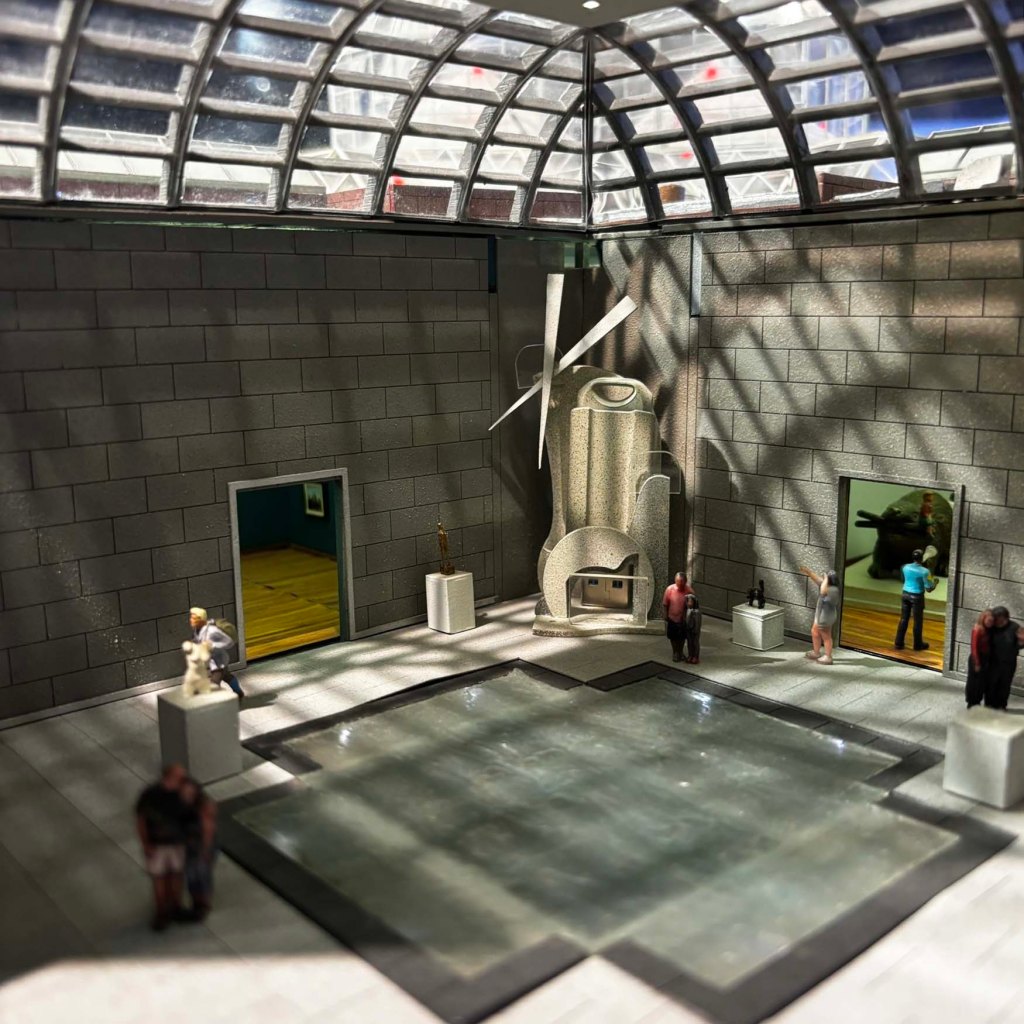
What’s my favourite Easter Egg? Besides Bigfoot? (Look for him in Little Quebec!) I’d have to say the time capsule that is hidden in the National Gallery in Little Ottawa. Jean-Louis shared the story behind this Easter Egg with me.

The day before Little Canada opened its doors, the entire team contributed something to a USB stick, and sealed it away in this tiny gallery space, masquerading as a sculpture. The plan is to open this tiny time capsule when the building lease is up—20 to 30 years from now! I love the idea of a time capsule, it’s a moment frozen in time, much like a cemetery is.

Speaking of cemeteries, Heidi was very kind, making sure to point them out as we travelled through all the exhibits.

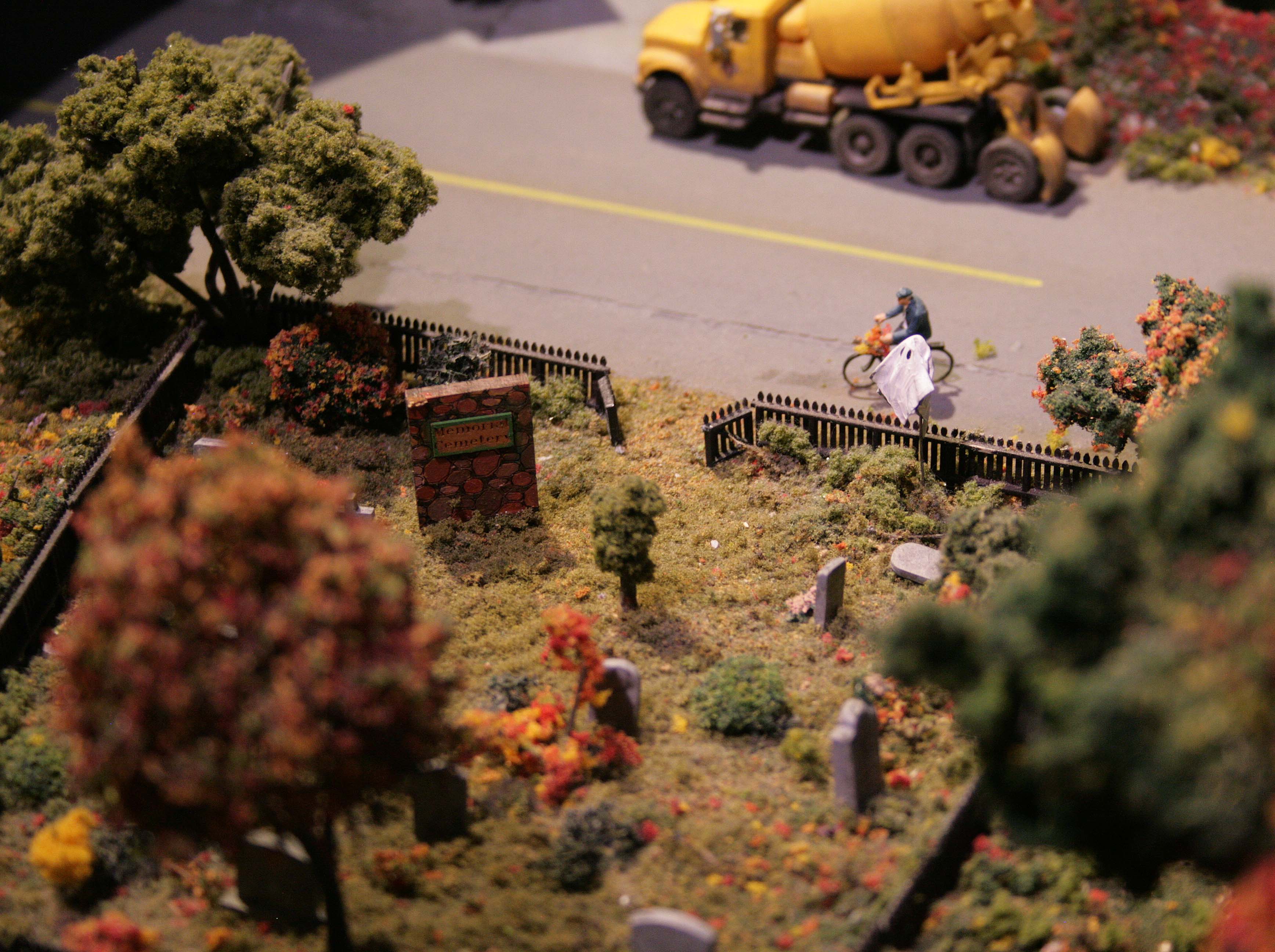
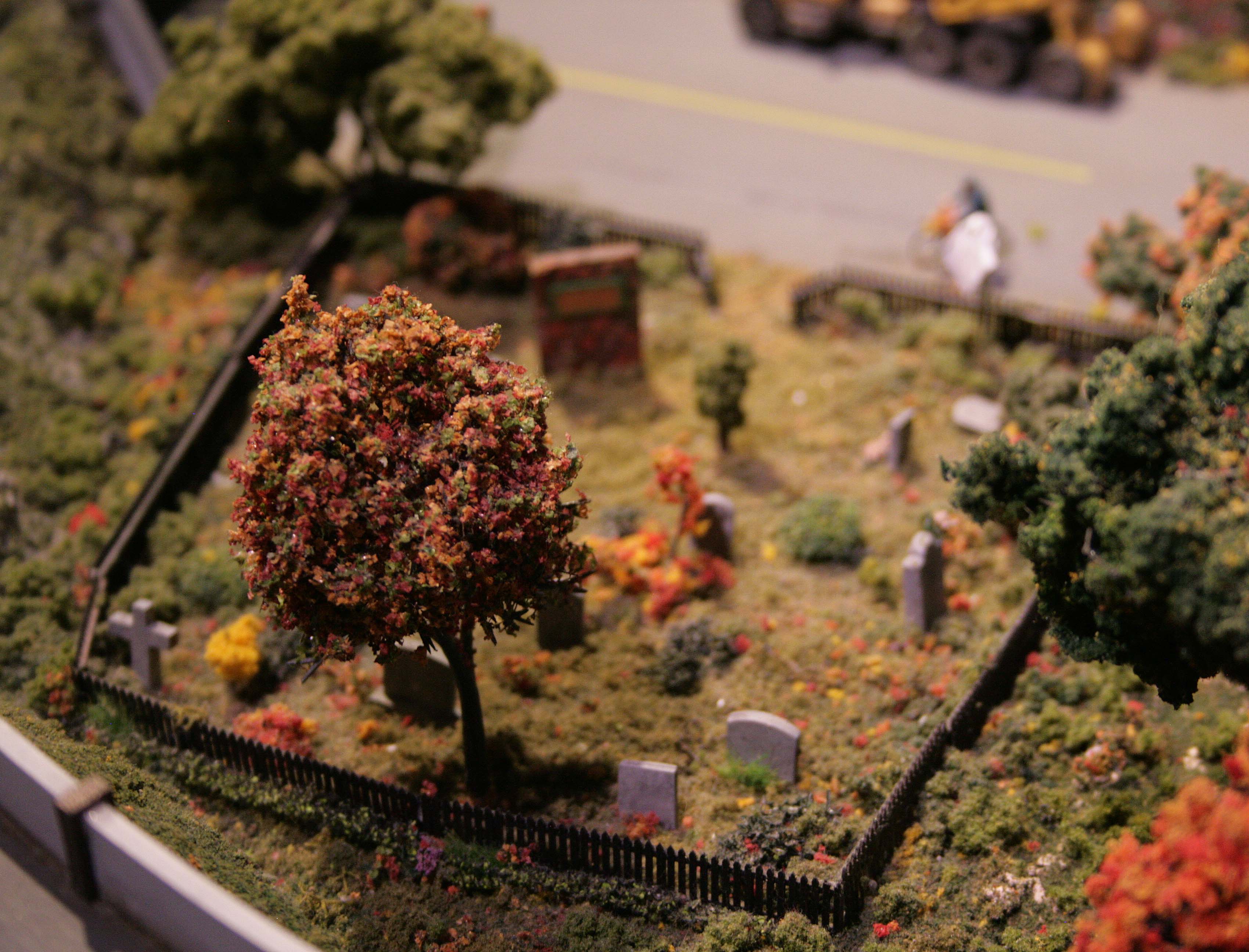
The first cemetery was tucked in among the highway in the Little Golden Horseshoe. A little stone cairn sits at the entrance, with the name Memory Cemetery carved into it. A handful of gravestones sit within a fence, surrounded by trees in full autumn colours. This little cemetery is not based on any real-world cemetery but is an example of a small rural cemetery, with its own resident ghost that sits on one of the fence posts. A good example of some of the whimsy that can be found throughout Little Canada.

The second cemetery we found was in Little East Coast. This rural cemetery is based on Cavendish Community Cemetery, in Prince Edward Island. It features a replica gravestone of Lucy Maud Montgomery, the Canadian author best known for her Anne of Green Gables book series. Surrounded by fall colours and marked by a replica cemetery sign, that even includes “Resting Place of L.M. Montgomery” in impossibly small type. This cemetery is also a busy one, with some people paying their respects, and others having what I first thought was a picnic—until I looked closer at my photos and realized it was a Ouija board session! Another example of the unexpected storytelling hidden in these tiny scenes.

Both of the cemeteries were small, but incredibly detailed—down to the engraved names and the uneven ground. I can’t say I ever photographed a cemetery in a 1:87 scale before!

Scattered throughout all the little scenes were also tiny monuments and war memorials, similar to what you would find while wandering a small town or city. It’s interesting to note how prevalent these places of memorial and remembrance really are.

As we explored the display wall, where some of the 5-inch Little Me figures are displayed, there is also a small section devoted entirely to the Vimy Ridge Memorial. Even scaled down, it’s a striking memorial. Designed to commemorate Canadians who fought and died in World War I, the real Vimy Ridge Memorial in France is a place of reflection and national pride. I was struck by the thought that cemeteries and monuments—no matter their size—inspire memory, honour, and connection.

It’s easy to see how much heart goes into every scene and detail. At the Maker’s Window, we had the chance to speak to some of the lovely women who bring these miniature scenes to life. The attention to detail, and at such a small scale, is amazing! Talking to them made me realize that this isn’t just about scale and architecture. It’s about the people behind the scenes, pouring care, creativity, and pride into every tiny building, street, and story.

Of course, I couldn’t visit Little Canada without getting Littlized!

The Littlization process allows you to have a 3D scan of yourself turned into a miniature figurine, a Little Me, to take home or be placed somewhere in the display. It’s a fun nod to personal storytelling and a reminder that all these little pieces make up something much bigger.

We spent about three hours exploring the exhibits, and I could easily see myself going back again and still not spotting every detail. There’s history, humour, sentimentality, and a strong sense of community behind it all.

Little Canada may be small in scale, but its message is big: Canadian stories matter. Whether that’s the story of a national battle memorial, a hidden USB time capsule, or a tiny cemetery, each piece tells us something about who we are, and what we value.

And, if you’re someone like me, drawn to hidden stories, Little Canada has no shortage of tiny wonders to explore.

Thanks for reading!
Cemetery Tourism

Have you ever heard the term cemetery tourism before? Visiting cemeteries may not be at the top of your list when on vacation, but it should be!

In recent years cemetery tourism has become more and more popular. But, I would argue that it has always been. In today’s blog post, I wanted to talk a little bit about cemetery tourism and share a few upcoming cemetery tours happening in Ontario.

During the COVID-19 pandemic, some of the only open places around were cemeteries. They afforded people an outdoor space to take walks and get fresh air, revealing their importance alongside parks and other green spaces. This also gave people a chance to appreciate cemeteries as more than just places of sorrow and remembrance, but also places of art, history, and culture. 

Since then, visiting cemeteries and graveyards has become an increasingly popular trend, not only among taphophiles and genealogists but also among general tourists. Wandering around cemeteries in new places is a great way to learn about the history and heritage of an area, and to also see examples of local art and architecture.

But cemetery tourism really isn’t anything new!

For decades people have been traveling the world specifically to visit tombs and mausoleums. The pyramids of Giza see over 14 million visitors each year, making them one of the most popular tombs in the world.1 Granted, the Pyramids are one of the seven wonders of the world, they are also tombs that were built over 4500 years ago by the ancient Egyptians to honor their dead.2 

Another popular example is the Taj Mahal, a white marble mausoleum that was built in memory of an emperor’s wife.3 It sees approximately 7 to 8 million visitors per year.4 Visitors flock to this site, not only to experience the exquisite architecture but to also experience the reverence this tomb represents. 

Closer to home, I find it’s common to see cemetery stops marked along motorcycle and cycling routes. Not only are cemeteries and graveyards perfect places to stop and stretch your legs on a long bike trip, but they also make interesting points of interest where you can learn more about the history of an area. 

Another way cemetery tourism is becoming more prevalent is the creation of cemetery tours. I see more tours offered every year in local or nearby city cemeteries. Not only are they great ways for cemeteries to fundraise, and bring more people into the cemetery. It’s a perfect way to highlight the cemetery’s history, showcase important people, and make history come alive. 

Generally, cemetery tours can be done at any time of year. You can often find them happening in the summer months. But, I find October is the best time of year for a cemetery walk. The atmosphere is perfect, with the crisp air and crunchy leaves. It’s a beautiful backdrop to explore history and learn about the past. October cemetery tours can be a fun activity to do if you are looking for something different to do for Halloween. Often, some of the history shared is on the darker side, creating an eerie atmosphere as you stroll among the graves.

Want to add a cemetery walk to your list of activities this month? Here is a small round-up of cemetery tours that are happening in Ontario. I would suggest booking your tickets fast as October is almost over! 

Upcoming cemetery tours

Fergus: Wellington County Museum & Archives Cemetery Tour 

Friday, October 27 from 7 to 10 p.m. Tickets are $15 per person.

This tour takes place outside on the museum grounds, and at the Poor House Cemetery where over 200 inmates were laid to rest.

You can purchase tickets at this link.

Hamilton: War of 1812 Cemetery Tour

Saturday, October 28 at 11 a.m. This is a free event. Roughly 2 hours in duration.

A lively, informative tour of selected grave sites in historic Hamilton Cemetery. Each tour will introduce you to some of Hamilton’s more interesting personalities and its rich history.

Visit their website for more information. 

Mississauga: Haunted Mississauga 2023 Heritage Tour

Friday, October 27. Tickets are $5 for adults and $3 for children.

Tours run at 7 p.m., 7:20 p.m., 7:40 p.m., 8 p.m., 8:20 p.m., 8:40 p.m. and 9 p.m. Tours take approximately 45 minutes.

This event includes a guided heritage tour around a dimly lit historic cemetery with actors retelling stories from the darker side of the past.

You can purchase your tickets at Eventbrite.

Ottawa: Tales from the Mausoleum at Beechwood Cemetery

Monday, October 23 to Monday, October 30. Tours run at 8 p.m. and 8:15 p.m. every night. There is an extra tour time of 8:45 p.m. on Saturday, October 28. Tours are roughly 75 minutes in duration.

A one-of-a-kind evening filled with storytelling and chills.  Experience the darker history of the cemetery’s early days and the ghost stories connected to some who rest there—including strange reports from staff that continue to this day. 

You can purchase tickets at this link.

Toronto: The People of Park Lawn Cemetery Tour

Saturday, October 28 at 1 p.m. and Sunday, October 29 at 1 p.m. Both tours are identical and will be roughly 2 hours in duration. This is a free event.

Park Lawn Cemetery is considered an oasis in the West End of Toronto; complete with lush greenery and winding walking paths. Its grounds also contain the earthly remains of some notable—and less notable—Toronto residents whose stories helped shape the city and the country.

Visit the Facebook event page to mark yourself as going.

Self-guided tours

If the above dates don’t work for you, or you would rather wander the cemetery at your own pace, some cemeteries offer self-guided cemetery tours. These types of tours can be done at any time of year. You can sometimes find handouts for self-guided tours at the cemeteries office, that include maps, directions, and information about the more notable or interesting things found in the cemetery. There are also sometimes resources online at the cemetery’s website that can be downloaded onto your phone for a mobile-guided experience.

Have you been on a cemetery tour before? Will you include one on your bucket list the next time you are on vacation? I would love to hear about your bucket list destinations or any cemetery tours you would recommend.

Thanks for reading!

References:

  1. Opening Hours | Giza Pyramid
  2. History | Giza Pyramid
  3. Taj Mahal | Unesco World Heritage Convention
  4. Views of the Taj Mahal | Taj Mahal

Stone Stories: The Screaming Heads

Writing these weekly blog posts, I often feel like a travel writer. Cemetery tourism is one of my favorite things! For this week’s blog post I wanted to share another cemetery road trip destination—The Screaming Heads.

At the beginning of June, I went on another Birthday weekend road trip. This trip was a mix of cemetery visits, museums, and attractions. We visited 15 cemeteries, played a game of Cemetery Bingo, and visited the Wiseman’s Corner Schoolhouse Heritage Centre, which happened to have a gravestone on its grounds. 

The main attraction of this trip, and the whole reason we visited Burk’s Falls, was to finally visit and experience The Screaming Heads, in Midlothian. We had talked about visiting for about the last 2 years but never managed to make our way there. So this year we made a special birthday trip to visit this unique resting place. You never know where you might find a cemetery.

The Screaming Heads is an ever-growing art installation created by Peter Camani, a Canadian artist, sculptor, and retired art teacher. This public open-air art gallery dots the landscape of his 310-acre property.Living among his artwork, Peter lives in the Midlothian Castle, which was built upon a 19th-century derelict farmhouse. 

There is a giant spider web gate made of stone and rebar that surrounds the castle. If the gate is open, you may get a chance to look inside and visit the artist’s studio and living space. Everywhere you look there are interesting details to admire, from the metallic dragon that breathes smoke when the fireplace is lit, to a giant head that houses a studio space within it, to the rows of smaller screaming heads that line the top wall of the gate. 

Located on Midlothian Road, near the small town of Burks’s Falls, The Screaming Heads is an off-the-beaten-path roadside attraction. You know you are getting close if you start spotting smaller screaming heads; like at the Burk’s Falls visitor center and the Wiseman’s Corner Schoolhouse Heritage Centre. Peter opens his property to tourists year-round, from dawn till dusk. You’ll find much more at this attraction than just amazing artwork. The property is also home to about 300 species of birds, including peacocks. Their eerie calls can be heard all around you as you hike through the open fields and bush. There is a small gift shop that has some neat Screaming Heads merch, and on weekends you might also find a small farmers market.

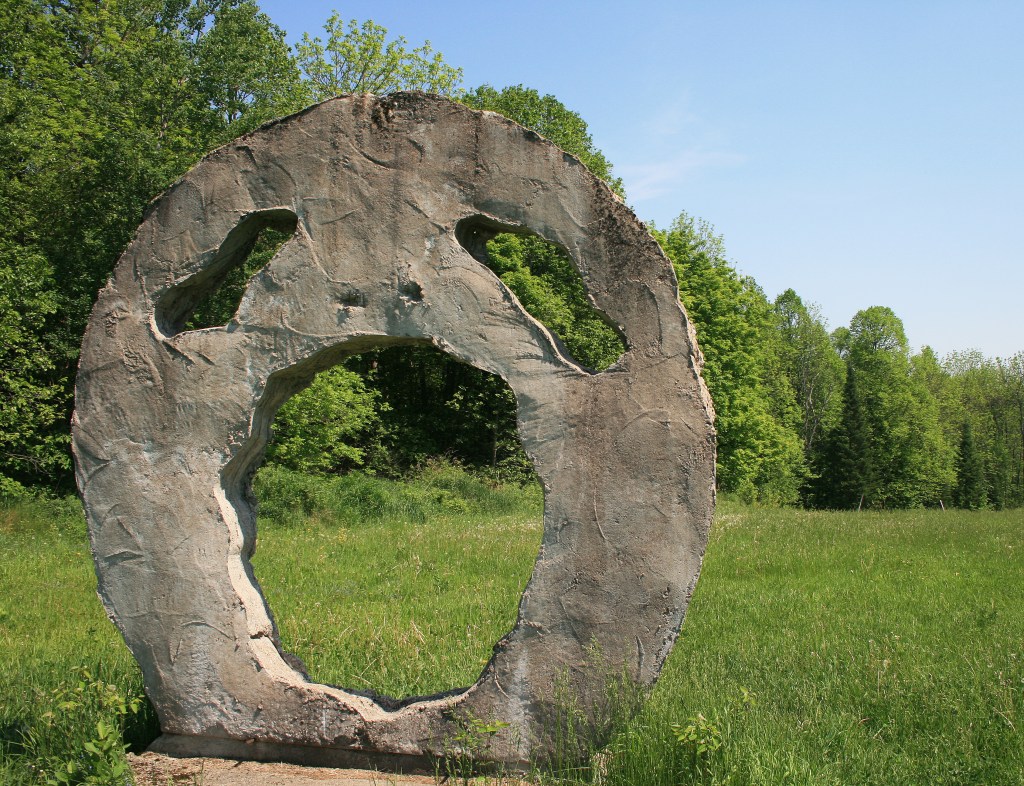
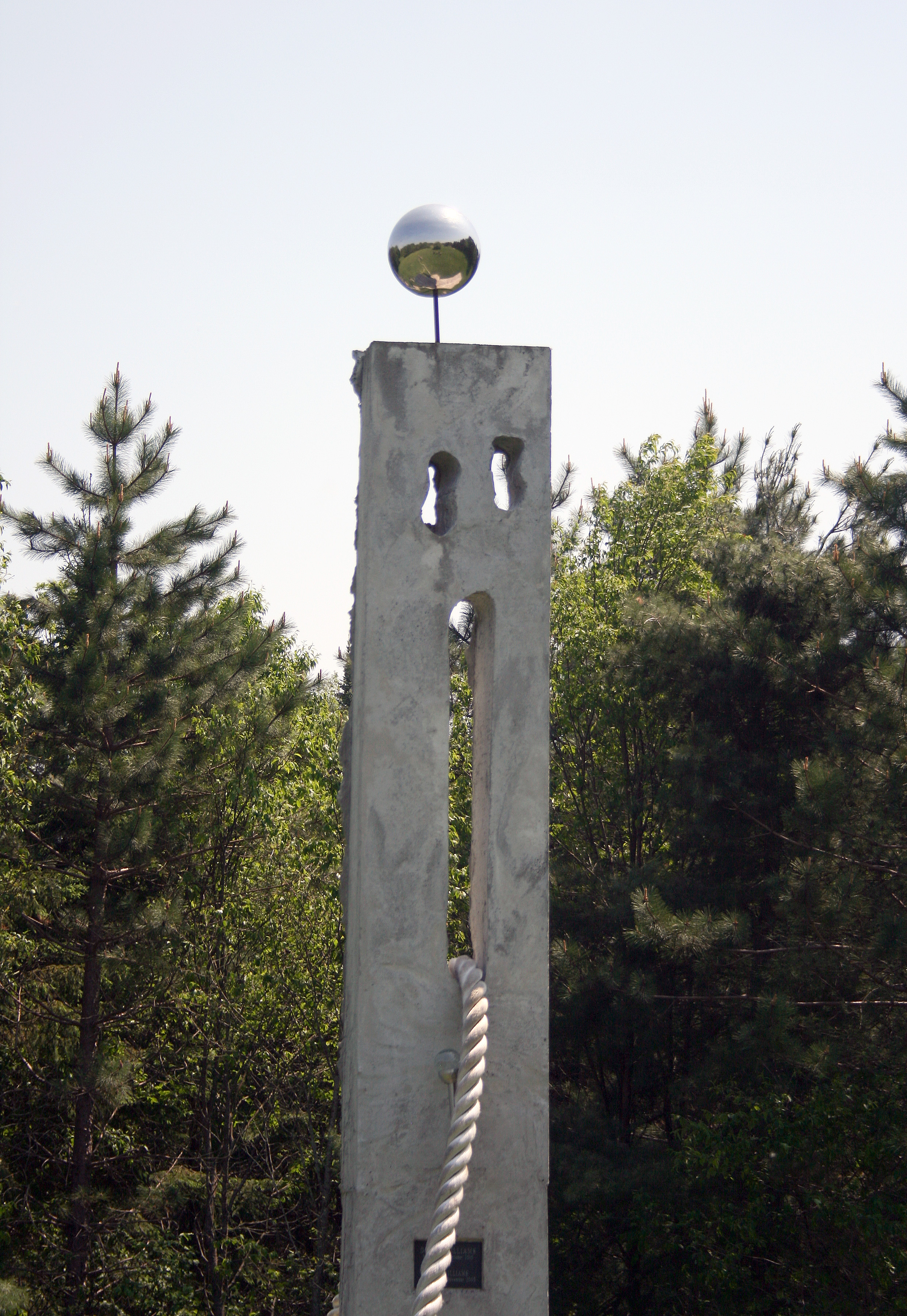
The main attraction is of course The Screaming Heads. The artist has described these 20-foot-tall concrete sculptures as a warning against environmental degradation, “the earth rebelling against what we’re doing to the land.”2 Peter has transformed this once barren farmland, by planting many of the trees on his property and propagating spring-fed ponds. His large concrete structures are arranged in such a way that they form the shape of a dragon when viewed from the air, although today the trees are so large they obscure some of the statues.2

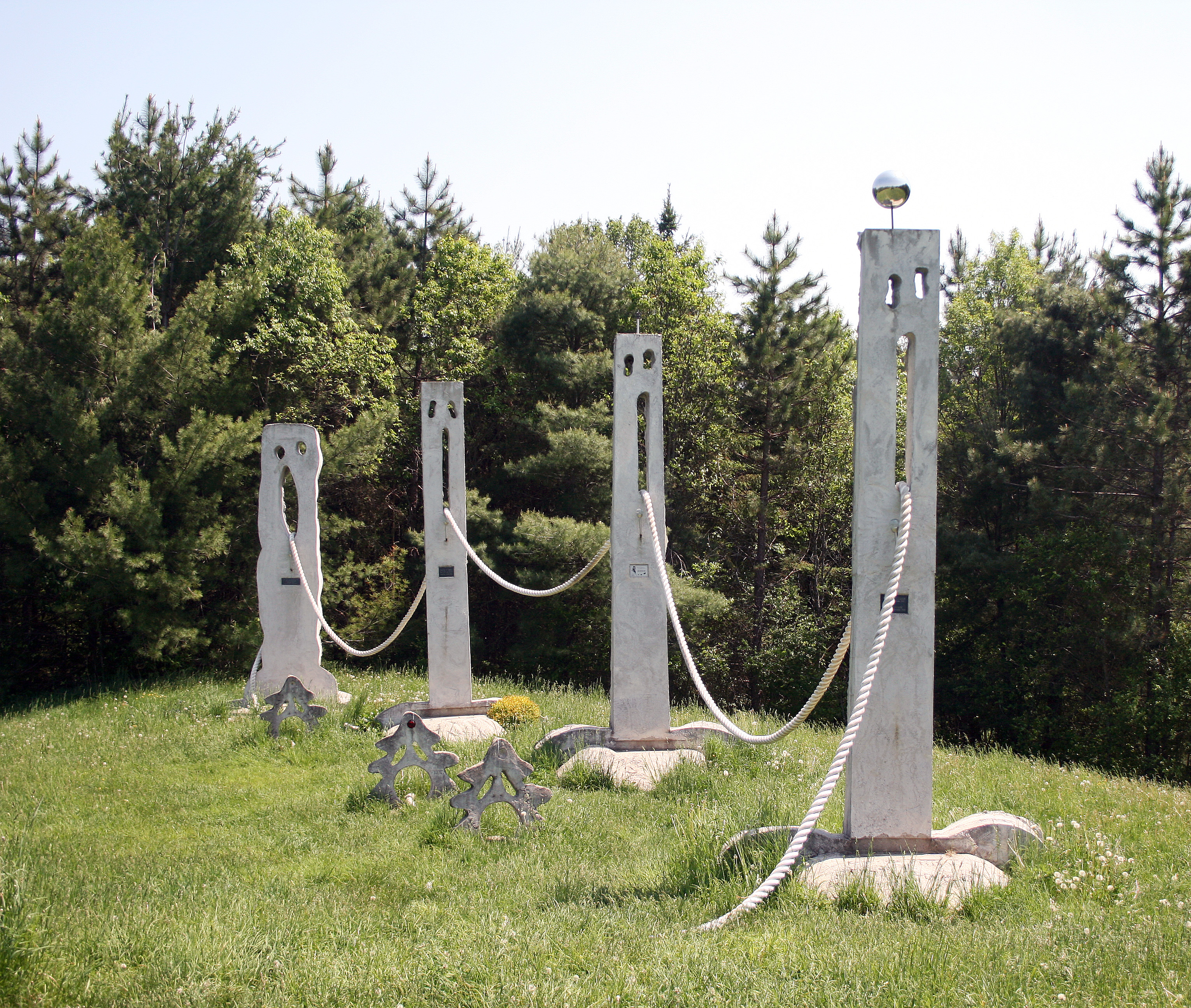
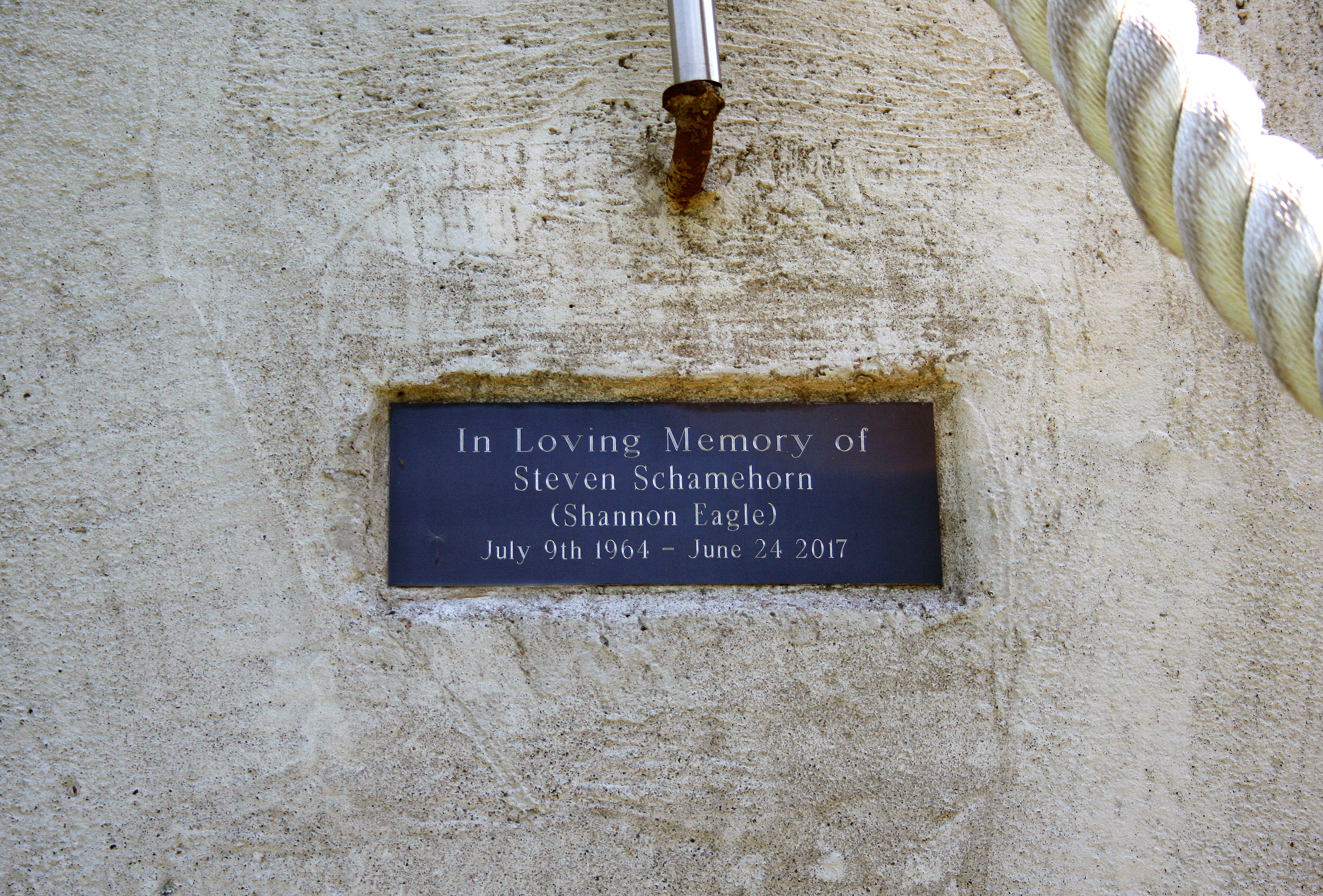
Along with being a unique roadside attraction, The Screaming Heads can also be considered a cemetery. A small grouping of Screaming Heads stand out among the other round Edvard Munch-like sculptures. These tall narrow creations have cremated remains mixed into the concrete. On his website, which now seems to be defunct, the artist had a creative suggestion for where your final resting place could be when you pass away; “Why settle for a small underground plot in the suburbs, when you have the option of joining a vibrant creation that fills the landscape?”3 At one time, If you wanted to be memorialized in this open-air art gallery, you would need $10,000 to reserve your spot.3 Since the website is now gone, I am uncertain if this option still exists.

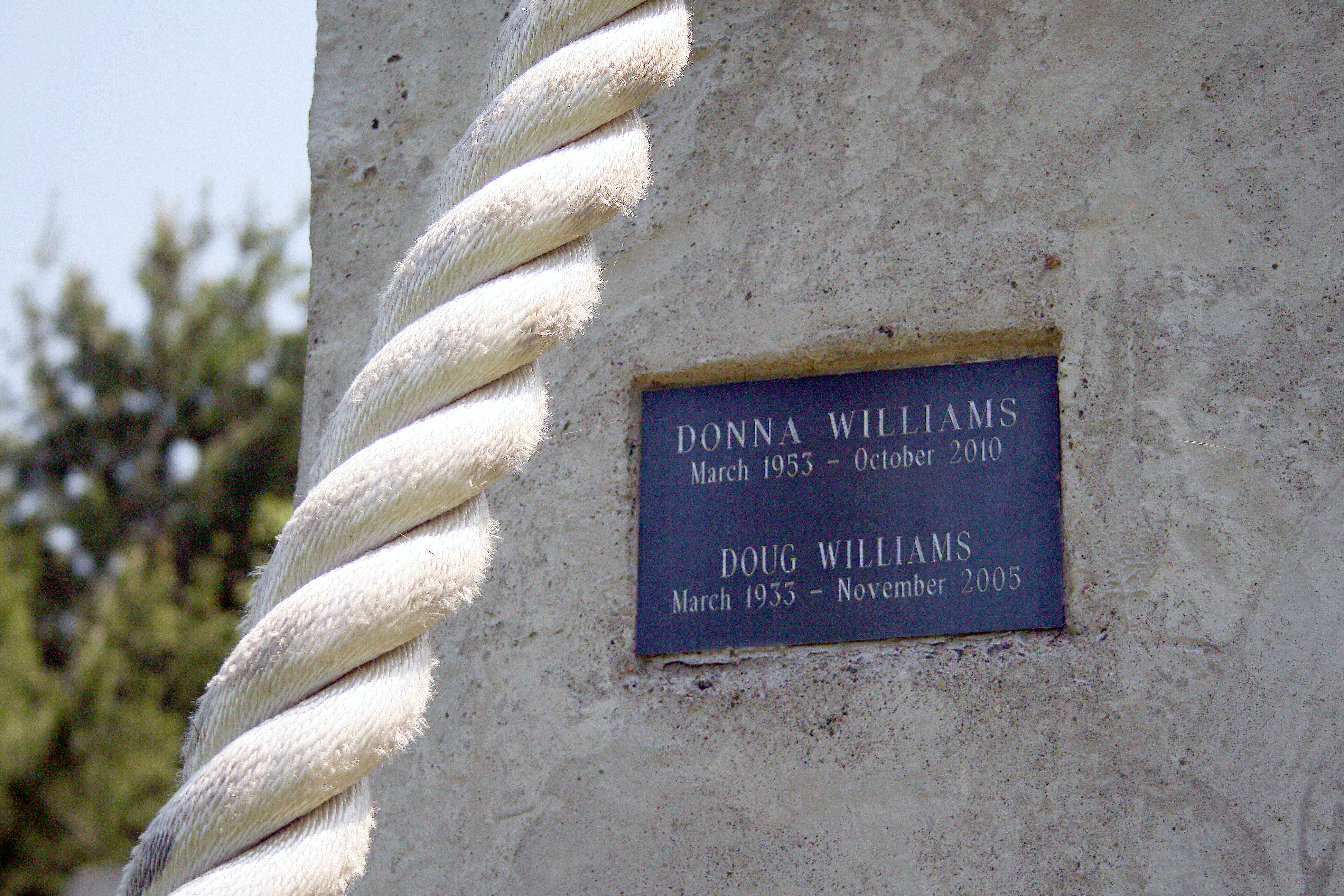
At the time of our visit, there were 4 human ash sculptures, with memorial plaques for 5 people.

“Gone but not forgotten” Memorial sculptures created with cremated remains. Artist: Peter Camani. Midlothian ON ©2023

Everyone’s experience with the Screaming Heads will be different, as there is no set way to explore the grounds. There is no trail map, and there are a few trailheads to choose from. When we visited, on an exceptionally warm day, we managed to come upon the memorial sculptures first. The photos don’t do them justice, as they are larger than life! We asked ourselves many times as we wandered the grounds, about the process of making these immense sculptures and what that might look like. 

There is something magical about this place. As you walk among these enormous, whimsical sculptures, it’s easy to feel like you are in a magical forest, where strange creatures may reveal themselves at any moment. I was filled with a sense of wonder as we walked through the woods and fields, discovering hidden sculptures as we got closer to them. The eerie sound of the peacocks also added to the experience. Their cries always seemed to surround us, and just when we thought we were close enough to see one, we would hear their scream from another direction. 

I can understand why someone would want their final resting place to be in such a magical place. The idea of becoming art, becoming part of something larger than yourself, to instill a sense of awe in others; that guarantees you will always be remembered.

Do you want to plan your own trip to visit The Screaming Heads? They are located in Midlothian, Ontario, close to the small town of Burk’s Falls. The grounds are open year-round, from dawn till dusk, and admission is by donation. Make sure to bring your camera, your water bottle, and LOTS of bug spray. Have you already visited? I would love to hear about your experience in the comments.

Thanks for reading! 


References:

  1. The Screaming Heads North of Muskoka | The Great Canadian Wilderness
  2. Peter Camani | Wikipedia
  3. How to Be Posthumously Transformed Into an 18-Foot Screaming Head | Slate

Additional Links: