I love a good spooky story, especially in October. So for today’s blog post, I want to share another October cemetery story—this time coming from the Muskokas.
Earlier this year I planned a cemetery road trip that would take me around Lake Muskoka; visiting Bala, Torrance, Gravenhurst, Bracebridge, and Port Carling. I had quite a few cemetery stops planned as well as some other picturesque stops. At that same time, Canadian author Andrew Hind was coming out with a new book called Muskoka’s Most Haunted 2.
Hind is a freelance writer specializing in history, travel, lifestyle, and the paranormal. He has written quite a few books about hauntings in Ontario. So, I was pleasantly surprised when I read the book and discovered it has a chapter on Torrance Cemetery!

Whiting Family mausoleum. Torrance Cemetery, Torrance ON ©2024
Torrance Cemetery
The small hamlet of Torrance was settled in 1870 by three families; Torrance, Coulter, and Jestin, all originally from Eramosa, Ontario.1 They had traveled to the area to explore a free land grant offered by the Government of Canada.1 The community was named after William Torrance, who was the first postmaster.1 The Torrance Union Cemetery, also known as Whiting Family and Church Cemetery, is located on the site of the first school that was erected in the township, in 1875.2
Today, the Township of Muskoka Lakes operates and maintains Torrance Cemetery, along with 11 other cemeteries in cottage country.3 They state that they offer a “peaceful” resting place for loved ones of all faiths, but Torrance Cemetery has a long history of being anything but peaceful.3
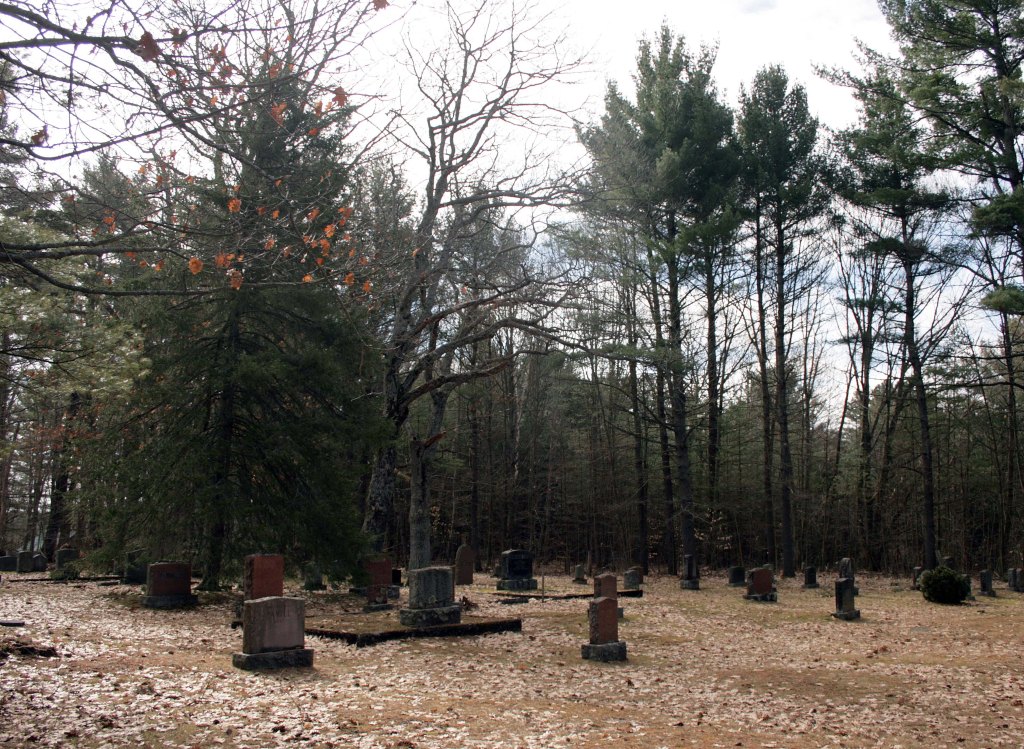
Torrance Cemetery, Torrance ON ©2024
Haunted Family Mausoleum
The lone, stone mausoleum belongs to the Whiting family. Their story is one fraught with tragedy. William O’Dell Darling Pine Whiting was born in 1857, in England.4 Whiting came to Canada in the late 1870s and briefly served in the Riel Rebellion as a member of the Northwest Grenadiers militia regiment in 1885, which is when he fell in love with the Muskokas.4,5
In 1892, he would return to the area, this time with his wife Clara Margaret Cronkite and their young family.5 Whiting purchased a large piece of waterfront property on Lake Muskoka, with dreams of building the finest resort in Ontario.5 He would call it Brighton Beach Hotel, reminiscent of a similar hotel back in Brighton Beach, England.4 Unfortunately, Whiting’s dream would never bear fruit. Only a week after the official opening, in July 1895, the grand hotel burned to the ground. Luckily, no one was injured.5
In 1898, Whiting revived his dream, this time on a smaller scale.5 The second incarnation of the hotel, Brighton Beach II4, had more success. It welcomed vacationers for two decades, before tragedy struck a second time in 1917.4,5 Sadly, this fire had one casualty. It claimed the life of Whiting’s infant granddaughter.5
Whiting never rebuilt, and never recovered after the loss of his granddaughter.5 Whiting passed away in 1937, and was laid to rest in the Whiting Family mausoleum in Torrance Cemetery. His wife Clara is also laid to rest within the stone crypt, alongside two of their children—and it seems their spirits are not at rest.5

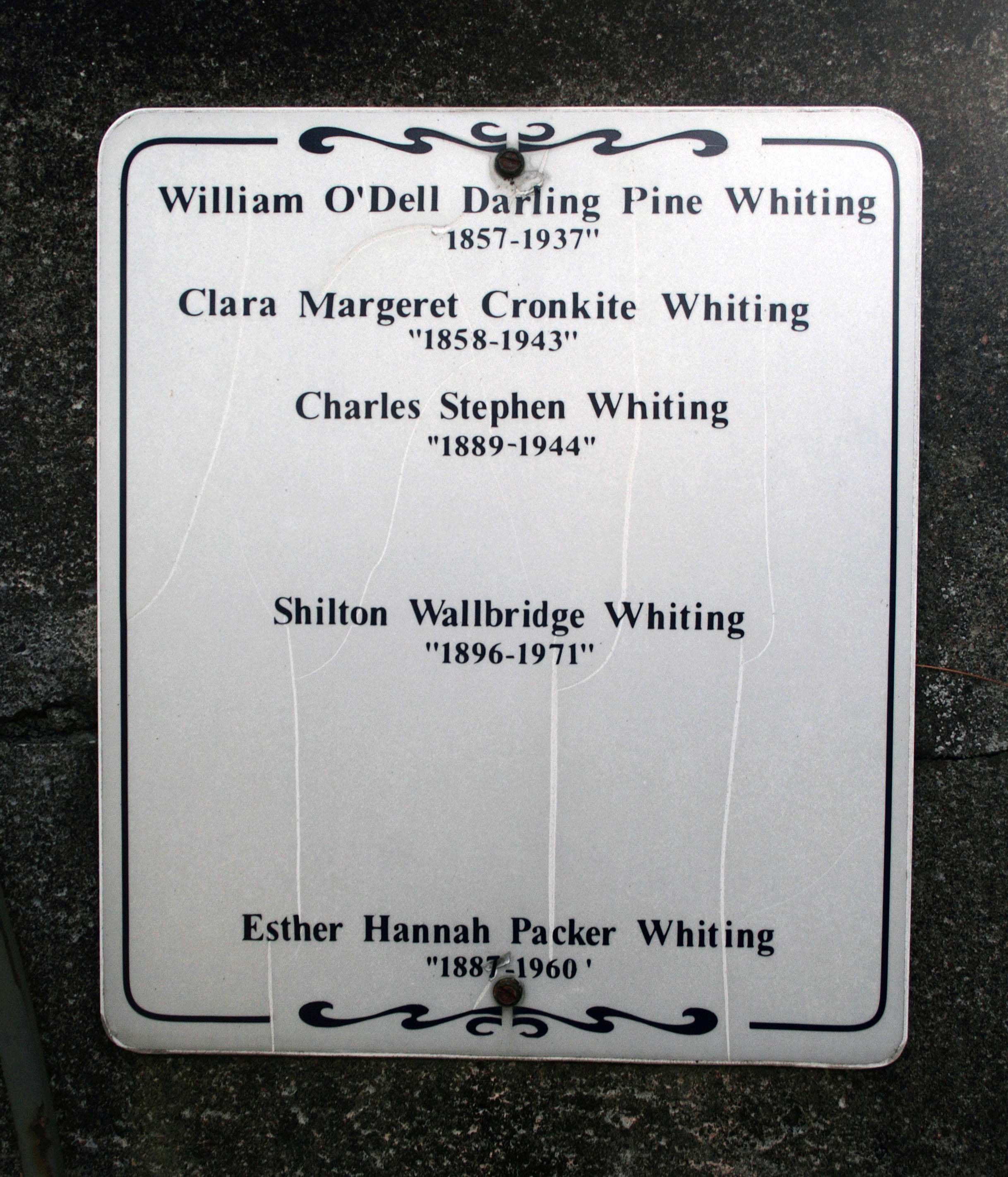


Whiting Family mausoleum. Torrance Cemetery, Torrance ON ©2024
There have been many reports over the years of paranormal activity taking place in and around the crypt. Ghost lights have been reportedly spotted, as well as full-bodied apparitions and disembodied voices.5 Are the spirits restless or were they awakened by something more sinister?
There is a particularly terrifying story of vandalism and desecration of the family vault. The crypt was broken into, and a coffin smashed open.5 The dead did not rest in peace that night.
The haunted reputation of the cemetery has garnered some attention as various ghost hunters and paranormal investigators have visited the cemetery. All trying to capture proof of ghostly phenomenon.

Whiting Family mausoleum. Torrance Cemetery, Torrance ON ©2024
My mother and I visited Torrance Cemetery in early April. The spring thaw left the ground littered with brown leaves, giving off heavy fall vibes. The trees were also bare, their new growth still dormant. It was a perfect, faux-fall day to be wandering a haunted cemetery.
I had read the book before our visit, so visions of ghosts were swimming in my head as we wandered the cemetery. It was interesting to stand before the family mausoleum and think about the vandalism, the desecration, and the sightings.
I examined the gated door, peering into the dark screened windows. But, I didn’t see anything, nor did I hear anything. My mother on the other hand had her own experience.
As we normally do when visiting cemeteries, we each go our separate ways, drawn to different things. She told me afterward, that while she wandered the cemetery rows she suddenly felt cold. Not from a cool breeze, but like she had been suddenly “dipped in cold water” from her head to her toes. The sensation didn’t last long, and she didn’t think anything more of it. That is until she read the stories.
My mother read the book after our visit, with the experience of visiting the mausoleum still fresh in her mind. She reacted quite differently than I did when I read the stories of Torrance Cemetery. It terrified her! She was briefly paralyzed with fear, while cozied up on the couch to read.
Then she remembered the pinecones!
My mother had picked up two rather large pine cones while we were in the cemetery. She thought that they would each make a nice natural bird feeder if smeared with peanut butter and coated with seeds. She suddenly became fearful that she had brought a piece of the cemetery home, maybe even bringing a spirit home with her.
Thankfully, nothing strange has happened since bringing the pinecones home. And they are still hanging in the tree in the backyard, months later.

A pinecone from Torrance Cemetery. ©2024
Do you believe in ghosts? Could the Torrance Cemetery be haunted?
To read more about Torrance Cemetery, and other haunted locations in the Muskokas, I highly recommend the Muskoka’s Most Haunted series by Andrew Hind.
Thanks for reading!
References:
- Torrance | Muskoka Lakes Chamber of Commerce
- Torrance Union Cemetery | Muskoka, Parry Sound Genealogy Group
- Cemeteries | Township of Muskoka Lakes
- The History of the Old Stone Crypt | Muskoka Blog
- Muskoka’s Most Haunted 2 by Andrew Hind | Book









 Cemetery Photography by Chantal Larochelle