I have a lot of upcoming October content planned, so I thought I would officially kick off the Halloween season on the blog by sharing a spooky cemetery book review. It’s called Haunted Cemeteries: True Tales From Beyond the Grave by Edrick Thay.
Earlier this summer, I wrote a guest post for The Haunted Walk, titled Beyond the Headstones: 5 Surprising Secrets to Discover in Cemeteries. So when I was in Ottawa this summer visiting family, I made it a point to pop into the Haunted Walk office, on Sparks Street, to say hello. While there, I browsed their spooky-cute gift shop and this book jumped out. I thought it was a pretty fitting purchase.
Haunted Cemeteries was first published in 2004 by Ghost House Books, a part of Lone Pine Publishing. Ghost House has published a large series of books all focusing on local legends, ghosts, hauntings, and other unexplained phenomenon.1Haunted Cemeteries is a collection of stories about the world’s most notoriously haunted cemeteries and graveyards. The majority of the cemetery stories come from the United States, but the book does feature two cemeteries that are located in Ontario; Drummond Hill Cemetery in Niagara Falls and Burkholder Cemetery in Hamilton.
“Cemeteries are places of quiet repose where the dead are left to eternal rest. But some spirits refuse to rest in peace. Join Edrick Thay as he explores some of the world’s most notoriously haunted graveyards, both past and present, and interviews ghost hunters to discover how these eerie sites become charged with paranormal energy.
Plagued by nightmares, a mother has her daughter exhumed from Mount Carmel Cemetery in Chicago, only to make a shocking discovery paranormal researchers encounter spirits of wounded soldiers in Ontario’s Drummond Hill Cemetery, once the site of bloody conflagration when an archaeologist discovers a sealed tomb in Egypt’s Valley of the Kings, he awakens a terrifying ancient curse at Hollywood Forever Cemetery, ghosts of celebrities from another era float among the decrepit tombstones Anomalous Luminous Phenomena, or mysterious lights that defy explanation, illuminate Silver Cliff Cemetery in Colorado Ohio ghosthunters descend on Camp Chase Cemetery in Columbus, hoping to come across the captivating Lady in Gray a high school girl, fascinated with the paranormal, encounters a particularly irritable ghost at Bachelor’s Grove in Chicago in Salem, Massachusetts, site of the infamous witch trails, a ghost materializes, still mourning his inhuman death”
Haunted Cemeteries: True Tales From Beyond the Grave by Edrick Thay.
Haunted Cemeteries features 19 stories and a handful of black-and-white cemetery photos. The short stories made this an easy book to pick up when I had a few minutes to read. I appreciate those types of books.
The book includes some more well-known cemetery hauntings, like Bachelor’s Grove in Chicago and the Egyptian curse of King Tut’s tomb, but also highlights some lesser-known hauntings and folklore. As an avid reader of cemeteries and the supernatural, discovering these new unfamiliar stories was a lot of fun.
Overall, this was a fun and easy read, and I enjoyed the ghostly tales that can sometimes surround cemeteries. Reading about ghost stories, legends and reputed curses from beyond the grave is always a great way to ease into the Halloween season—especially when it also involves exploring the rich history of cemeteries.
Thanks for reading!
I am always on the hunt for cemetery-related book recommendations. If you are an author and have a cemetery-related book you would like me to review, please reach out at hello@chantallarochelle.ca. I would love to hear from you.
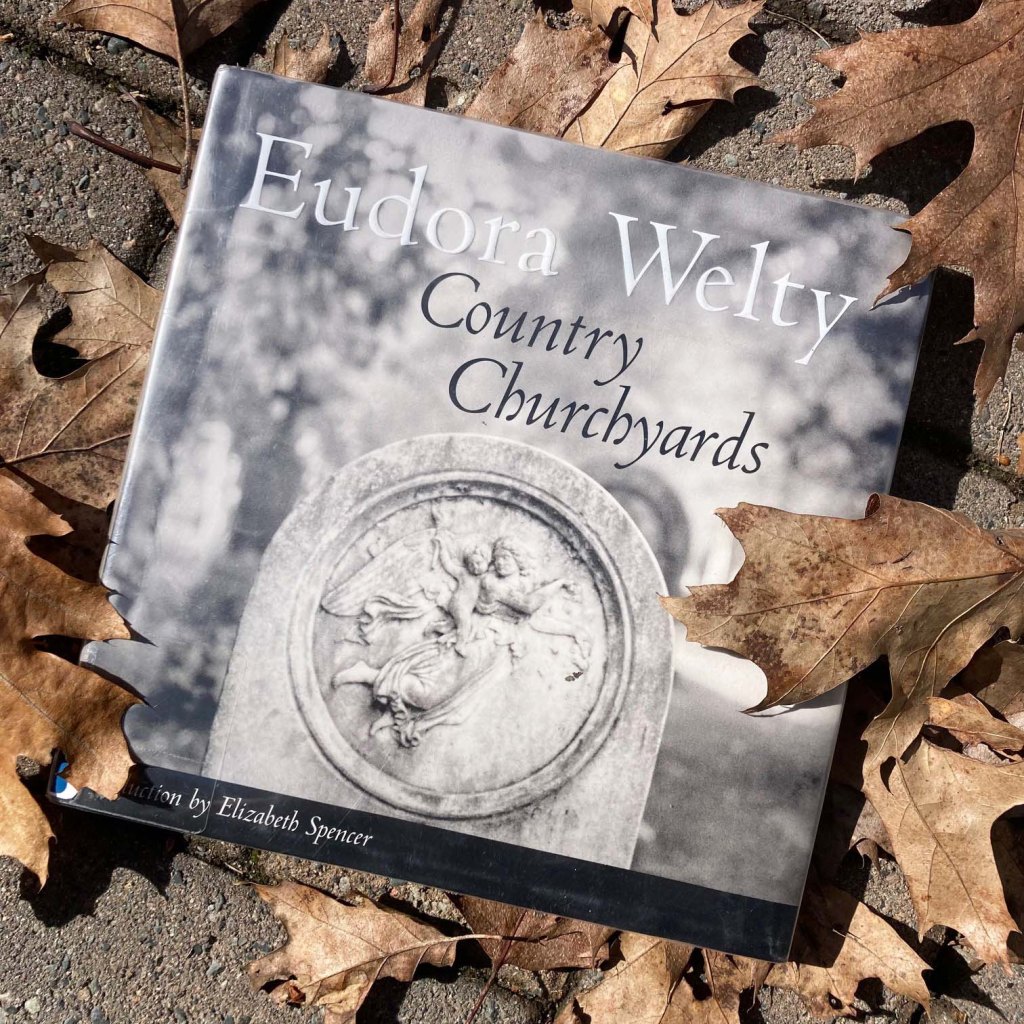
For this month’s cemetery book review, I wanted to talk about Country Churchyards by Eudora Welty. I first heard about this book through the Association for Gravestone Studies book club. I was not familiar with Welty’s work, but this book was a nice introduction.
Eudora Welty is a Pulitzer Prize-winning author, known for her short stories and novels that are focused primarily on the American South during the mid-20th century. Some of her works include the short story Death of a Traveling Salesman and the novel, The Optimist’s Daughter1.
Welty had long wished to produce a photography book about country churchyards, and at the age of 91, this dream project came to fruition.2 In July 2001 at the age of 92, she passed away due to natural causes at her family home in Jackson, Mississippi. She is buried in Greenwood Cemetery in Jackson.1
Her grey granite gravestone reads:
“Eudora Alice / Welty / April 13, 1909 / July 23, 2001 / Daughter of / Christian & Chestina Welty / For her life, any life she had / to believe, was nothing but the / continuity of its love. / The Optimist’s Daughter”
Country Churchyards features 90 photographs captured by Welty in Mississippi. Accompanying these beautiful black and white photos are Welty’s memories and impressions of her time visiting these cemeteries in the 1930s and 40s. The book also features select passages about cemeteries and funerals from her short stories and novels.
Country Churchyards by Eudora Welty
My copy of Country Churchyards, purchased from Thrift Books is a well-loved library book from Topeka, Kansas. Even with the well-worn cover, and light water stains, the beauty of this book shines through.
The book is filled with gorgeous black-and-white photos showcasing unique gravestones, symbolism, and cemetery landscapes. The introductions by Hunter Cole and Elizabeth Spencer paint a lovely picture of Eudora Welty and her underlying passion for cemeteries. This, accompanied by excerpts of Welty’s writing, highlights how influenced she was by the heartfelt sentiment found in cemeteries.
I find cemetery symbols fascinating, and it’s interesting to see what common and unique cemetery motifs are found throughout the book. I often found myself comparing my area’s common symbols to those within the pages as I read through it. I did take my time with this book, really examining the photos and all of the details.
It’s a beautiful little book and a nice break from the heavier reading I have been doing lately. This is a book I would leave out on my coffee table.
Have you read Country Churchyards? Are you familiar with Eudora Welty’s work? I would love to read your thoughts in the comments.
Thanks for reading!
I am always on the hunt for cemetery-related book recommendations. Please feel free to share yours in the comments. If you are an author and have a cemetery-related book you would like me to review, please reach out at hello@chantallarochelle.ca. I would love to hear from you.
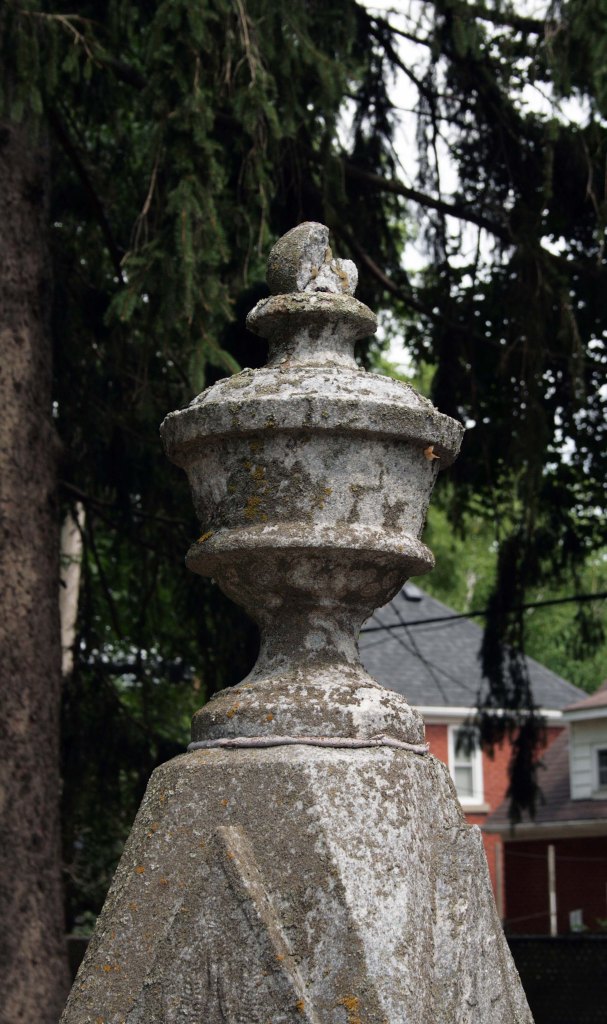
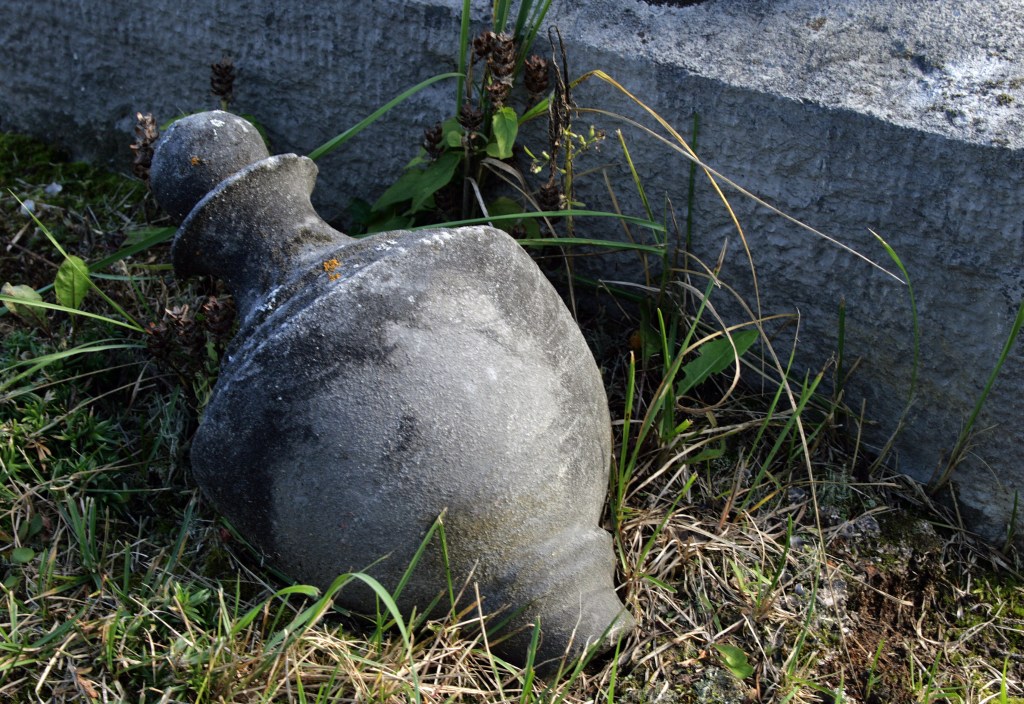
If you spend a lot of time in cemeteries you will often start to notice the repetition of certain cemetery symbols and motifs. In Ontario, more so in southern Ontario, urns tend to be a common gravestone symbol.
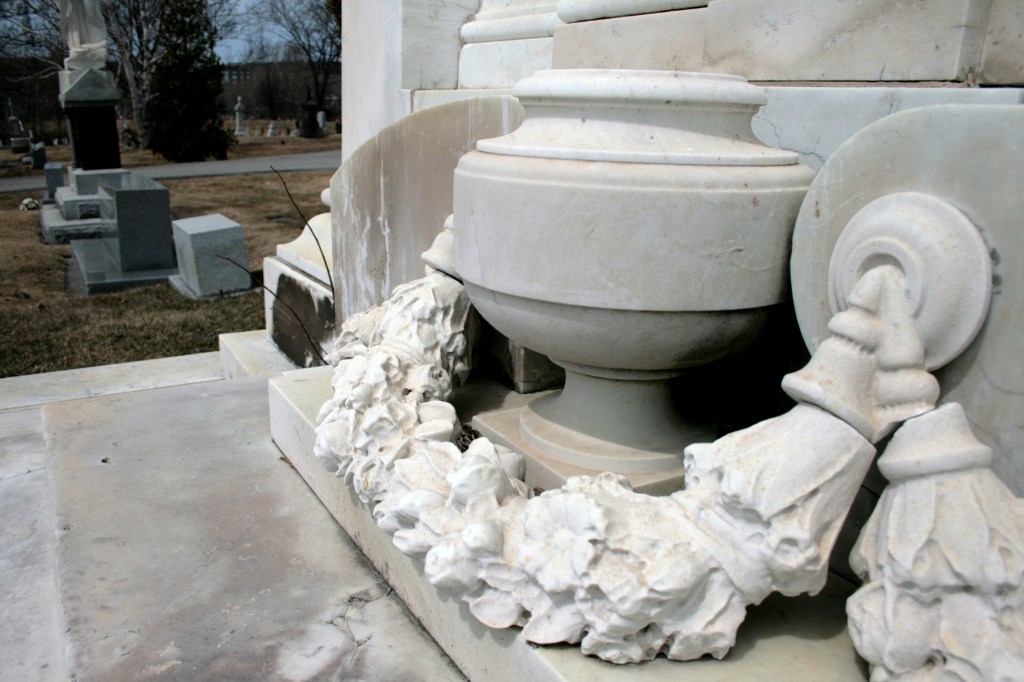
Although cremation was rarely practiced in North America at the time, the urn became a popular symbol in the Victorian era. Urns as a funerary symbol were adapted from Ancient Greece. Cremation was commonly practiced by the Ancient Greeks, who used ceremonial urns. As a gravestone symbol, the urn represents the body reduced to its most basic elements and the ascension of the spirit to heaven. Today cremation is a common practice, having started its climb to popularity in the 1980s.
I have found and photographed many urns during my cemetery walks, so today I wanted to share some of them with you.
Like many graveyard symbols, the urn can be found depicted in a variety of ways. Each version of the symbol has a slightly different meaning. This is one of the reasons I find cemetery symbolism so interesting. It is a language unto itself.
The Victorians were very fond of drapery, and you might come across what looks to be a fabric made of stone draped over an urn. Fabric draped over a gravestone is often thought to symbolize the veil between life and death. The fabric might also represent the shedding of earthly clothes as the deceased moves from this life to the afterlife.
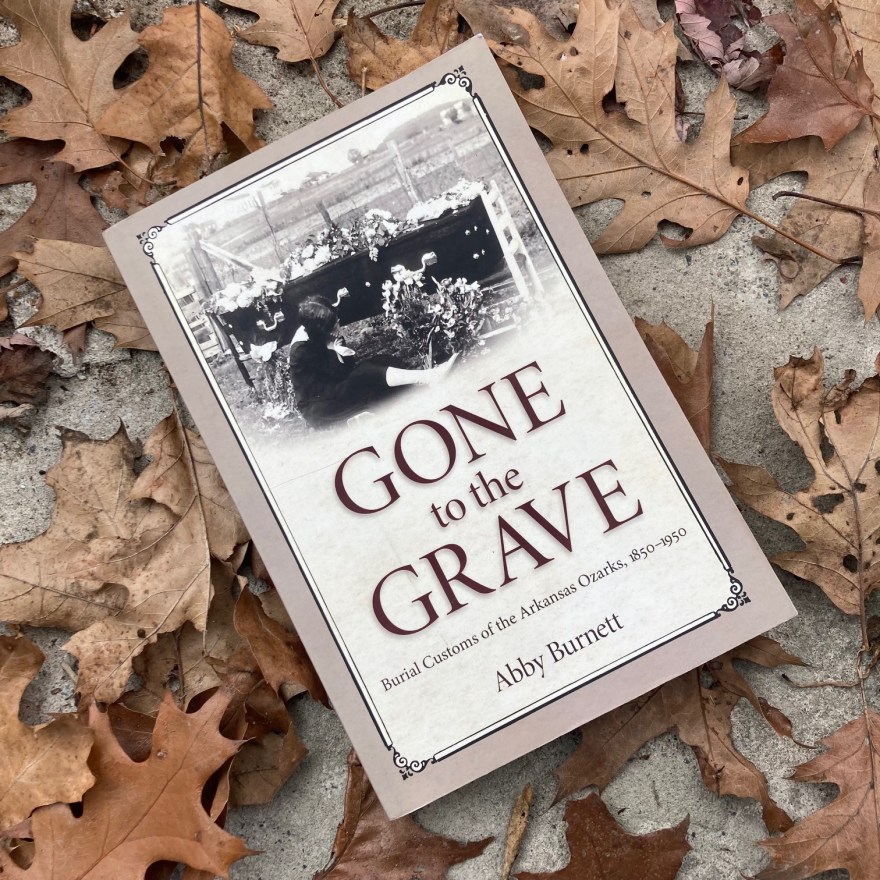
Being a Canadian, I am not 100% familiar with American history and customs. Luckily, there are MANY books written about it, and I do love to read. This month’s cemetery book review is Gone to the Grave: Burial Customs of the Arkansas Ozarks, 1850—1950 by Abby Burnett. I first learned about this book through the AGS Book Club, as this book was the pick for July 2023.
Published in 2014 by University Press of Mississippi, Gone to the Grave is written by Abby Burnett, a former freelance newspaper reporter and columnist for The Springdale News. At one time, her writing was food-focused, about understanding food and learning how to cook. Over time, her focus has shifted to death and burial practices.1In an article for the Arkansas Democrat-Gazette Burnett said,
“I’ve always loved cemeteries, and started seriously exploring ones in the Arkansas Ozarks about 25 years ago.”
Gone to the Grave is a collected work, the culmination of years of lectures, short newspaper articles, historical society journals, Arkansas Encyclopedia entries, and Gravestone Studies publications.1 It’s a very well-researched look into not only the burial customs of the residents of the Arkansas Ozarks, but also an in-depth look into deathcare and undertaking practices, health, and community life between 1850—1950.
Here is part of the book synopsis, from Goodreads:
“Gone to the Grave, a meticulous autopsy of this now vanished way of life and death, documents mourning and practical rituals through interviews, diaries and reminiscences, obituaries, and a wide variety of other sources. Abby Burnett covers attempts to stave off death; passings that, for various reasons, could not be mourned according to tradition; factors contributing to high maternal and infant mortality; and how loss was expressed through obituaries and epitaphs. A concluding chapter examines early undertaking practices and the many angles funeral industry professionals worked to convince the public of the need for their services.”
Gone to the Grave: Burial Customs of the Arkansas Ozarks, 1850-1950 by Abby Burnett
This book is fairly dense, but not the heaviest read I have come across recently. I am not going to lie, it did take me some time to work my way through it. It’s filled with black and white photos, including some post-mortem photographs. A big part of the author’s research includes diaries and interviews, with snippets printed verbatim to reveal what it was like to be a part of the funerals and burials at the time. I found these first-hand accounts fascinating. Death is a part of life, and reading about how a community would come together to sit up with the sick and dying, and everything that comes after a passing is eye-opening. Today, death is such a taboo that it’s not talked about, and we forget that it’s something that everyone goes through.
Learning more about these practices emphasizes how much things have changed. My uncle passed away in his home a few years ago. He had cancer and was spending his last days at home with his family. Two of my aunts went over to visit him, unknowingly on the day that he passed away. They knocked on his door, and his wife told them that he had just passed. They stayed to console his wife and visit with him one last time. Both of my aunts found the whole experience very surreal, as they had only ever visited deceased loved ones in a funeral home. But, that’s how wakes and funerals were done in the past, set up in the parlor of the deceased’s own home.
The practices discussed in the book are associated very specifically with the Arkansas Ozarks, it would be interesting to compare how different the practices are from other parts of the world. I often wondered as I read, if the customs described would have been much different than what customs were like here in Ontario around the same time.
Overall, I enjoyed this book. It covers a lot of information, but I found it was well-connected and flowed together well. This book is a deep dive, and as such might be too heavy for a casual reader. I read some reviews where people compared it to a textbook, which understandably might not be for everyone. I wouldn’t go that far, but it does get close to that territory. So, if you are looking for that kind of in-depth, high-level information, this may be the perfect book for you.
Have you read Gone to the Grave? What did you think? I would love to read your thoughts in the comments.
Thanks for reading!
I am always on the hunt for cemetery-related book recommendations. Please feel free to share yours in the comments. If you are an author and have a cemetery-related book you would like me to review, please reach out at hello@chantallarochelle.ca. I would love to hear from you.
If you’re a regular reader of my blog, you very well might be!
You may have noticed that I use this term a lot, and often refer to myself and others in the cemetery community as taphophiles. For today’s blog post, the first of the new year, I wanted to take a closer look at the word, and what it means to be a taphophile.
The origin of the word taphophile comes from the Ancient Greek word taphos and phile. Taphos meaning funeral rites, burial, wake, or grave, and phile meaning dear or beloved.1Curiously, if you look up the word in the Oxford English dictionary or Merriam-Webster online, the word does not come up. Although the latter did bring up the word typophile, similar but not quite right.
Taphophile is defined as a person who is interested in cemeteries, funerals, and gravestones.2 To me that is a very flat and vague definition, as there is so much it entails. I was curious as to how others in the cemetery community would define the term, so I reached out to a few friends. The responses I received were very mindful and thought-provoking.
Tui Snider, speaker and author of Understanding Cemetery Symbols shared this thoughtful reflection:
“To me, being a taphophile means understanding that cemeteries are for the living. Not only do burial grounds provide a place for grieving, cultural expression, and contemplation, but they offer a direct connection to nature, something that is often missing from people’s lives.
Visiting graveyards throughout the year exposes us to cycles of life and death that are the foundation of our world. Many cemeteries are wildlife corridors that nurture vital pollinators as well as migrating birds and other animals. By visiting cemeteries, taphophiles gain a unique appreciation for all that burial grounds offer, not just to humans but to the plants and animals they sustain as well.”
Tasha Westby Tietz, also known as Graveyard Girl on Facebook shared this insight:
“Being a taphophile means to me, an unusual intense interest in cemeteries and all that is related. A way to remember and respect those that have gone on before. Endless adventures.”
Loren Rhoads, cemetery traveler and author of 199 Cemeteries To See Before You Die shared this interesting perspective:
“I don’t really think of myself as a taphophile, because the word seems academic and cold to me.
I’ve always thought of myself as a cemetery aficionado, because my love of burial places is much more about appreciating their beauty and ambience as a whole than it is about studying the stones individually.
To be honest, I love that everyone defines taphophile for themselves.”
I couldn’t agree more! Each of these responses showcases the many reasons why visiting cemeteries is so important. I really appreciate Loren, Tasha, and Tui taking the time, and want to thank them for sharing their thoughts with us.
It makes sense that everyone who would call themselves a taphophile has their own definition of the word since we all have our own unique interests and reasons for visiting cemeteries.
For me, the term taphophile names that connection I feel to those who have come before me and are now laid to rest. It means they will not be forgotten, and that there is still much that they can teach us. It means that I love the experience of wandering through beautiful cemeteries and reading the names out loud. I love to admire the uniqueness and craftsmanship of gravestones, while also learning more about art, architecture, and symbolism. I am curious about the person below the gravestone. I also love the adventure of finding and exploring cemeteries.
I always say that cemeteries are for the living, that they are open-air art galleries and museums, and that they should be explored.
Do you call yourself a taphophile? What is your definition? I would love to keep the discussion going in the comments.
Can you believe that we made it through another year? 2023 just flew by! I feel like just yesterday it was Halloween, but here we are! It’s been an interesting year, full of ups and downs. So for this week’s blog post, I wanted to carry on the tradition from last year and take a look back at what happened throughout the year.
2023 was unfortunately the year of COVID for me. I managed to catch it twice, first suffering through two and half weeks of the worst head cold of my life. The second time I caught it, it was mild like a light cold. Unfortunately, the second time I caught COVID, I was also suffering through my first bout of poison ivy.
Catching poison ivy, from a cemetery visit (of course), was quite the learning experience for me. It was a hard reminder that you should always dress appropriately when out in the field, especially when exploring overgrown cemeteries. Dealing with my bad case of poison ivy put me out of commission for about a month, in the middle of summer. It was not an opportune time and had me itching to get back in the field.
Even though I had more downtime this year, I still managed to have a successful field season, visiting 113 cemeteries. 103 of those cemeteries were first-time visits. I didn’t take a count of how many new photos I added to my archives, but there is a lot to sift through and edit this winter. I can’t wait to share them on my portfolio page, and also add them to Find a Grave.
This year also marked another new record for the number of cemeteries visited in one day! A friend and I incredibly visited 25 cemeteries during a day trip to Midland. At the time it didn’t feel like we had visited that many, but the photos don’t lie. We’ll see if we can break this new record in 2024.
Highlights
In April of 2023, I had a great opportunity to participate in a juried photography show, Our Story in Black and White. My cemetery photography was proudly hung beside other great works by local photographers; Caio Higa, Debbie Anzinger Mckay, Debby Trahan-Pero, and Rita Vanderhooft at Gallery 6500. The exhibit ran from April 30th to June 30th. After this initial run, the photography show was moved to the South End Pubic Library and ran for another month. Being part of a group show was such a great experience! I hope I can participate in more photography shows in the future.
Another highlight of 2023 was getting published!
I was contacted by the Bereavement Authority of Ontario (BAO) which was interested in my photography for their online, quarterly magazine, Beyond. A condensed version of my articles about visiting the graves of Tom Thomson was published as the cover story of their October issue, along with some of my photography. That was incredibly exciting, and I hope to work with Beyond and the BAO again the future.
Cover of Beyond Magazine, Issue 7 – October 2023.
Statistics
This year was also a great year for growth. On the website, I had 6,805 visitors this year, with 12,793 views. That’s the highest count, since starting this website in 2018. I will note that I didn’t start consistently posting till 2021. Speaking of blog posts, I posted 42 times this year, with a word count of 29.3k. I have been very weary about calling myself a writer, but after seeing that word count I might have to change my mind. There is still work to be done to upgrade my writing skills, but it is kind of fun to think of myself as a cemetery tourism writer.
I often write articles that I would like to find and read. My favorite articles to write are cemetery tourism pieces, where I talk about visiting cemeteries and related sites. I also really enjoy researching so these pieces are really fun for me to write. I also feel more connected to these sites after learning about them and visiting them in person.
I also have a lot of fun writing cemetery recipe posts. These posts seem to resonate with readers as well, as they are often the most searched-for articles. I do enjoy experimenting with cooking and baking and these posts encourage me to do that, while also having a research element to connect the recipe to the gravestone.
This year the top viewed blog posts are a bit varied, with one post from last year ranking in second place.
On social media, my Instagram account is growing as well. At 2,754 followers, it’s my favorite place to interact with followers and share my photos.
Overall it has been an excellent year, full of growth and adventures. As I settle in for the winter, I will put my hiking boots away and focus more on research and photo editing. The winter break is an excellent opportunity for me to update my portfolio, as well as research and write more in-depth blog posts about this year’s cemetery travels. I am currently working on a few stone stories and have plans to start a new blog series of cemetery stories. I also would like to catch up on my reading and post some more cemetery book reviews.
Of course, I have already started thinking about next year’s cemetery adventures as well, and have started some maps and travel plans. I hope to visit some more unique grave sites, cemeteries, and famous graves next year. Maybe even exploring out of province. The possibilities are endless, and I am always finding new and interesting places to visit when I go down the research rabbit hole.
I want to finish this 2023 recap by thanking every one of you for your support and encouragement.
All the comments, likes and shares do not go unnoticed. I love being part of this cemetery community and have met so many amazing new people because of it. I appreciate all of you, and wish you all the best in the coming new year.
Here is to another year full of curiosity and adventure!
If you’re a long-time reader of my blog, you may remember a post I wrote last year about searching for the first grave of Tom Thomson.
Yes, this famous Canadian painter has two final resting places. Although there is speculation on where he actually rests in peace. Last August, my mother and I went on a camping trip in Algonquin Park, to find the spot of his first burial. This August, we wanted to pay our respects at his second, and supposedly final resting place.
Tom Thomson is one of Canada’s most notable painters and a forefather of the Group of Seven. To this day, his death remains a mystery. He was last seen alive on July 8, 1917. He was setting out on a solo trip on Canoe Lake in his signature dove-grey canoe. Eight days later, on July 16th, his body was found floating in the lake. The story goes that he was hastily buried in Mowat Cemetery, on Canoe Lake. When his family found out, they had his remains exhumed and brought to Leith, Ontario to be buried in the Leith United Churchyard.1 Many questions remain; What happened to Thomson? Was his body really moved? This is where the details get muddy, and almost immediately rumors swirled about how Thomson died, and where his resting place truly lies. Over the years there have been many attempts to find out the truth, but nothing conclusive has been determined. Maybe we will never know…
Since my mother and I had made the trip to visit Canoe Lake last year, we thought it only fitting to make a trip to Owen Sound this summer to pay our respects at Thomson’s second gravesite. Visiting Owen Sound and Leith also gave us the chance to see Thomson’s artwork in person. Our first stop when we arrived in Owen Sound, was to visit the Tom Thomson Art Gallery, lovingly referred to as The TOM.
The TOM, of course, is named after the iconic Canadian landscape artist. It has a nationally significant collection of contemporary and historical art, including artifacts and important works by Tom Thomson and the Group of Seven.2
My mother and I were both excited to see Thomson’s original paintings, having only seen prints at the art centre in Algonquin Park the summer before. The small collection of his works on display at the time we visited was beautiful. It’s easy to see why he was sometimes called the Canadian Van Gogh. The thing that struck me right away was how small these canvases’ were, small enough to be packed up into a canoe. It was easy to imagine Thomson sitting on the shores of Canoe Lake, bringing these small canvases’ to life.
Along with seeing Thomson’s beautiful work, we also had the chance to see life as Thomson saw it, through photographs he had taken himself. The exhibit Tom Thomson: Field of Vision presents 40 photographs that were taken by Thomson. His niece Jessie Fisk, discovered a small bundle of photo negatives that were captured by the artist, supposedly taken during the last seven years of his life. This collection of photographs presents an intimate look into Thomson’s life, and experiences, through his own lens.3
It was an interesting experience to look at these photos and to see through Thomson’s eyes, in a way. The photo that stood out to me the most was of a gravestone. It’s the gravestone of James Watson, thought to be the first person buried at Mowat Cemetery. That means that Thomson had visited his future resting place while he was alive. I wonder if he ever thought that he would one day be buried there? It’s interesting to note how legible the stone was at that time. Today, the stone is barely legible, with just a faint indication that it was ever inscribed.
While visiting the gallery, we had an interesting encounter with another fan of Thomson’s work, a woman visiting all the way from California. She was very interested in Thomson’s life and death and was on a special birthday trip to visit historic Thomson locations. The week before, she had gone with a guide to visit Mowat Cemetery, by canoe. During our conversations, the question of where we thought his final resting place was came up. She seemed relieved when I said I agreed with her and believed he still rests in Mowat Cemetery.
Yes, I think there is strong evidence that he still lies in Mowat. Funny enough, before really knowing Thomson’s full story, when my mother and I left Mowat Cemetery last year, she said that she felt like he was still there. Regardless of our feelings, we still wanted to visit his second grave in Leith, Ontario.
Leith is a small hamlet, about 13 minutes from Owen Sound. In this beautiful part of Grey County, you can find gorgeous views of Georgian Bay, the Coffin Ridge Boutique Winery, and the historic Leith United Church and graveyard. Unfortunately, I didn’t get a chance to stop into Coffin Ridge, but there is always next time.
Leith United Church, located on Tom Thomson Lane, was built in 1865, and is considered “one of the finest examples of pre-Confederation architecture in Ontario’s Sydenham Township”.4 The church was closed in 1969, but since 1992, the Friends of Leith Church continue to preserve and restore the building by holding fundraisers and special events, like concerts.4
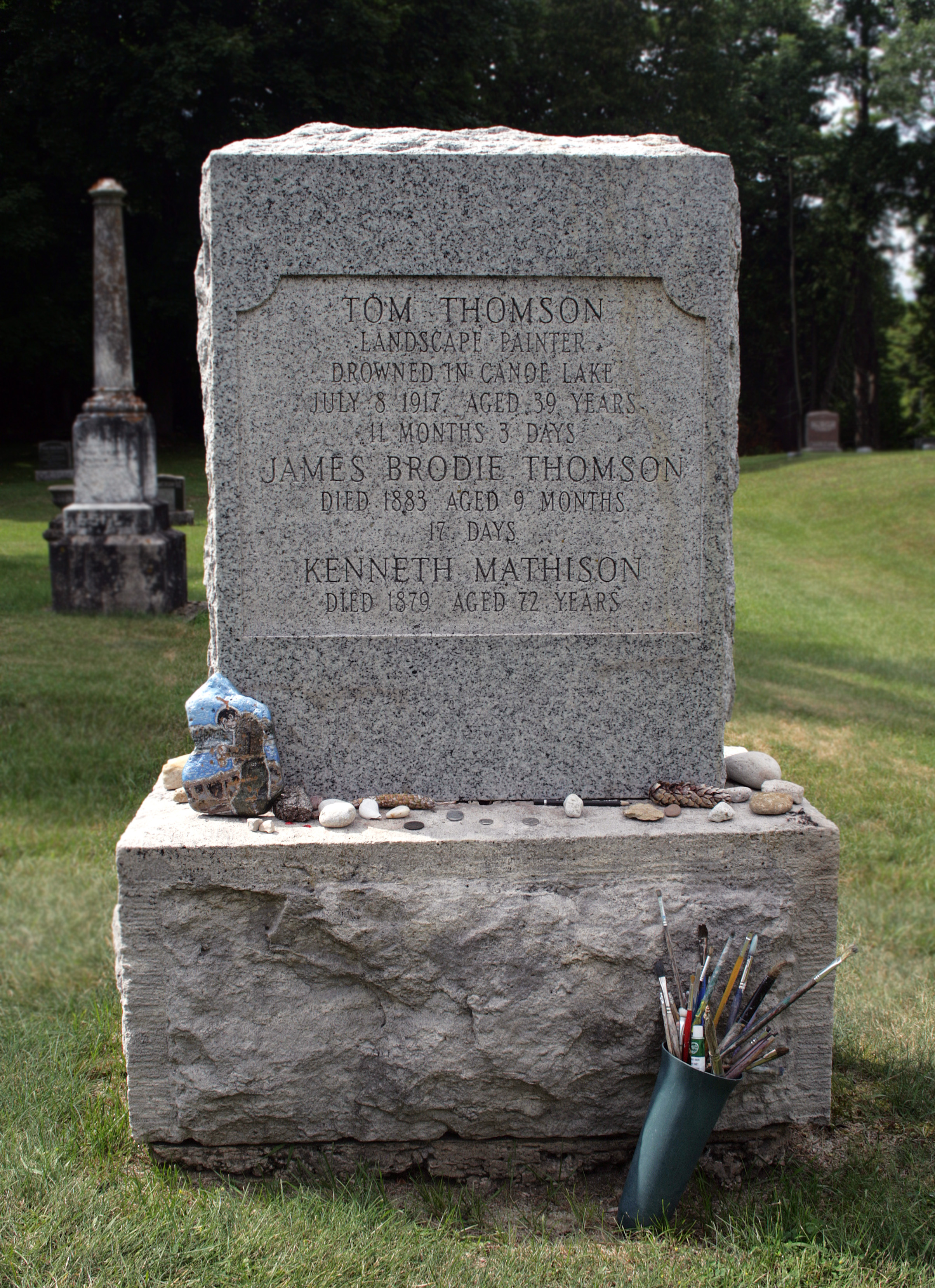
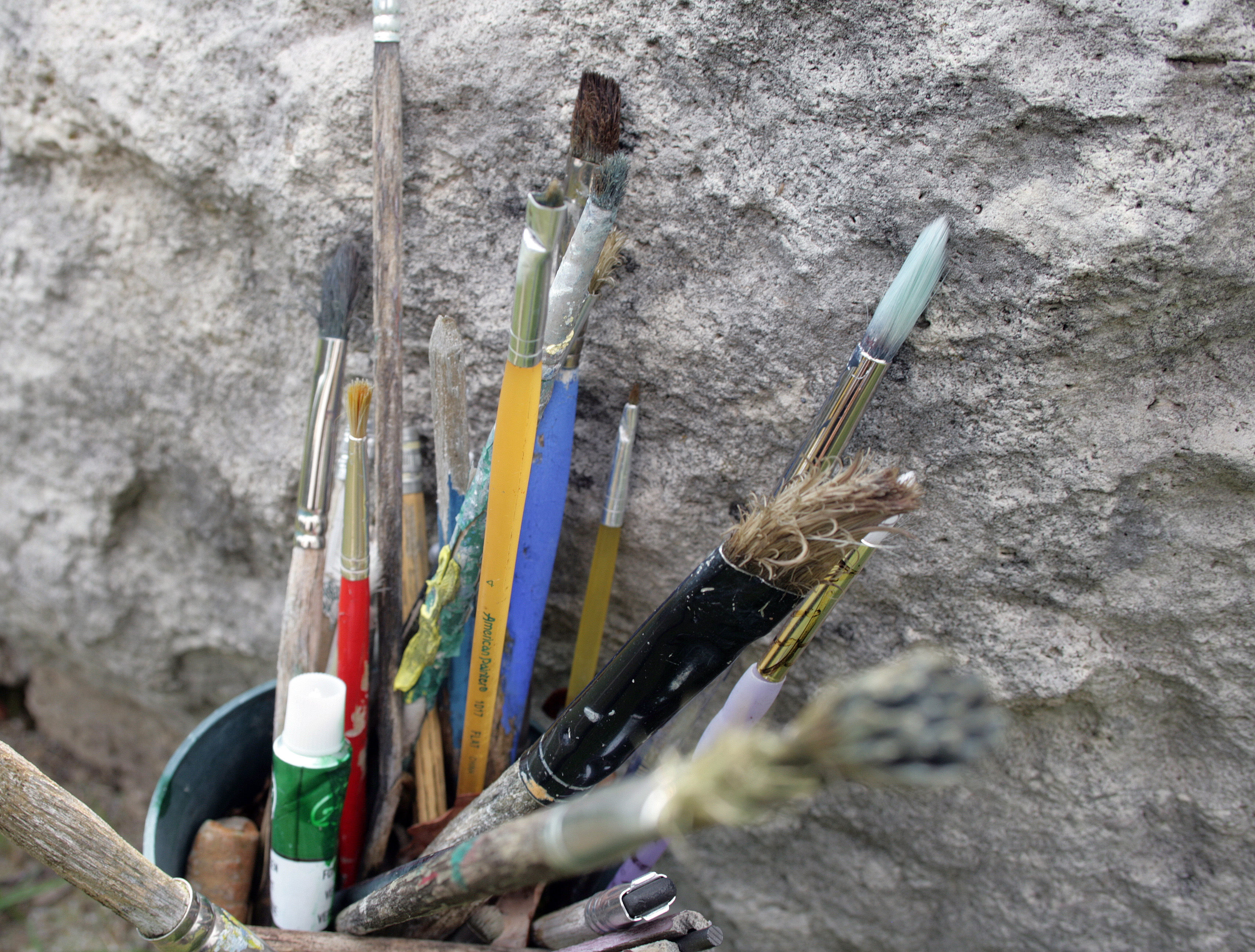
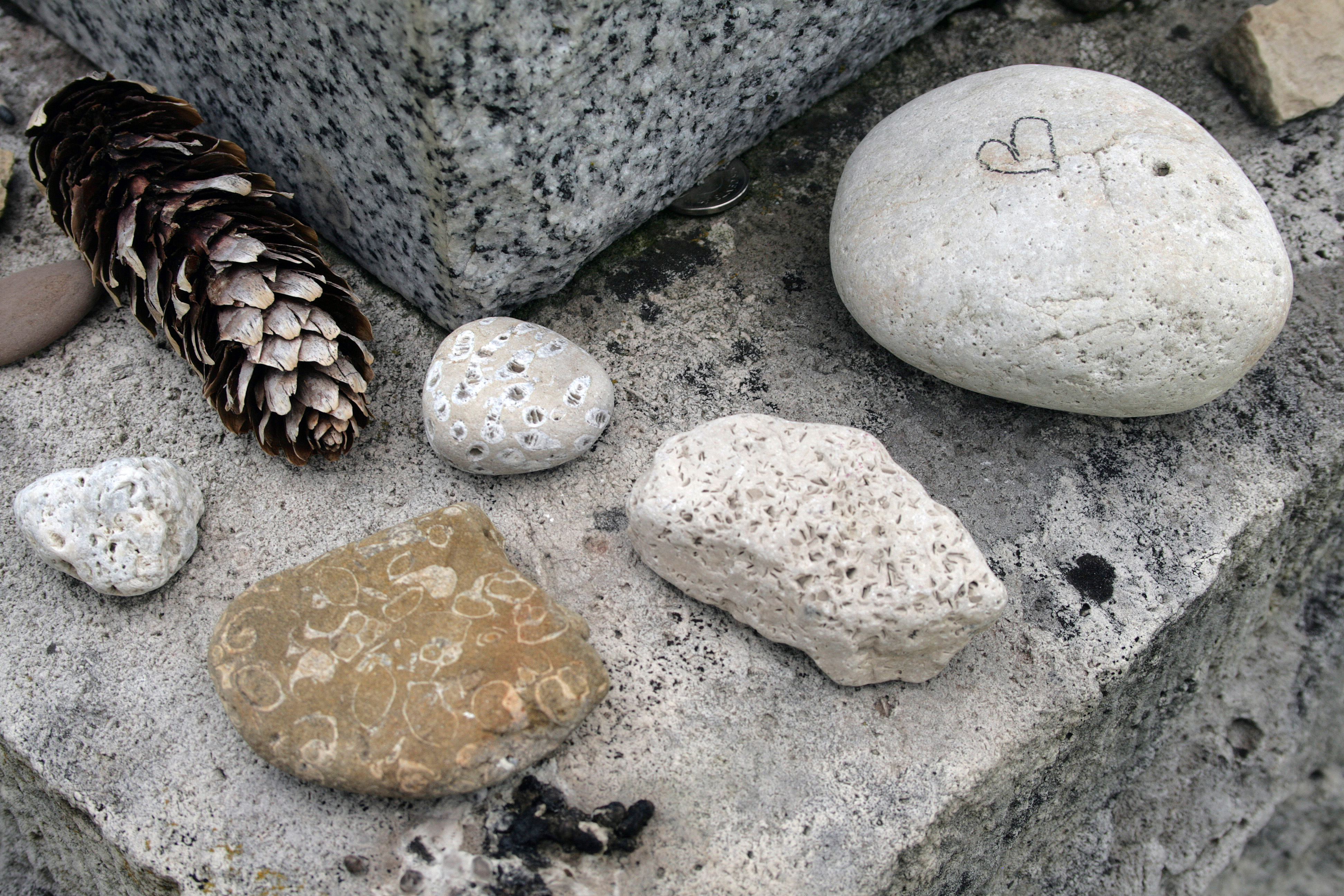
We had a beautiful day for a graveyard stroll, the day we visited the churchyard. It wasn’t hard to find the Thomson family plot at all. There are historical plaques and signs to direct you right to it. The graveyard itself is a decent size, but not big enough to get lost in. We could see right away that Thomson was still very popular as there were many grave goods left at his graveside, including a cup filled with paintbrushes, and a lovely rock painting of Thomson. The base of his gravestone is filled with stones, coins, and other items left by those who have come to pay their respects.
According to the gravestone, Thomson’s third youngest brother, James Brodie Thomson, who sadly passed away very young, in 1883 also lies here. Along with his maternal grandfather Kenneth Mathison, a member of the Free Masons who passed away in 1879 at the age of 72. Thomson’s oldest brother George Thomson also is laid to rest in the Leith United Church graveyard, with his wife.
I was curious as to where Thomson’s parents are buried. After some searching on Find A Grave, I found that they are both laid to rest in Greenwood Cemetery in Owen Sound. I did visit Greenwood Cemetery on this trip, but didn’t know to search for them. Thomson’s father, John Thomson, is buried with his first wife, Margaret Mathison, and his sister-in-law turned second wife Henrietta Mathison.
I love wandering cemeteries and graveyards, but being able to connect a life and legacy to a name makes it even more rewarding. Viewing original artwork, and photographs that Thomson created, built a connection that deepened the experience of visiting his gravesite and paying our respects. And making these connections all started in a cemetery! I loved learning new aspects of Canadian history and how this trip brought us to places we had never visited before. Owen Sound is a beautiful little city and I look forward to having the chance to visit again. I had so much fun on this trip and look forward to where cemeteries will bring me next.
Today on the blog I wanted to share a little bit about my first cemetery road trip of the year! A couple of weekends ago, two of my best friends and I went on a fun-filled day of adventures to celebrate a birthday. We traveled over 900 km to visit Grimsby Ontario, in the Niagara Region—and it did not disappoint!
A month or so ago, my friend had asked to visit a graveyard for her birthday, as she had never visited one before. There are closer graveyards we could have visited, but since this was a special occasion I took some time to try and find the perfect spot. Weirdly enough, the internet provided the solution. Randomly, or not so randomly if you believe that technology listens to us, a video popped up in my Youtube feed by Canadian Cemetery History. I took the bait and watched the video. It showed a visit to Saint Andrew’s Anglican graveyard. This beautiful graveyard was just what we were looking for!
Not only does Saint Andrew’s Anglican Churchyard boast the 4th oldest church in the province, but it also has a lychgate and table stones. Both of which we have never seen before in person. So I began looking into what else we could visit in Grimsby; other cemeteries, museums, attractions, haunted locations, and of course interesting places to eat. I pitched the idea to the group, and they were as excited as I was to explore this beautiful little town.
I continued to research things for us to do and managed to book us a private tour of the Nelles Manor Museum. We would be visiting the resting place of the Nelles family at Saint Andrew’s, so it made sense to visit their historic home and learn more about this prominent family.
The day of the trip started bright and early. After picking up our first Starbucks of the day, we left Sudbury a little after 6 a.m. The plan was to drive straight to the graveyard, with a Starbucks stop along the way, to make the best time. Then we would take our time exploring, and visit the Nelles Manor at 3 p.m. for our private tour.
We arrived at Saint Andrew’s Anglican graveyard at about 11 a.m. and got out to stretch our legs and explore. The graveyard was absolutely beautiful. As was the weather, we had a beautiful day for exploring. Right away we noticed the prominence of the Nelles family as they had their own family plot, as well as family members scattered throughout the graveyard. We would learn more about the Nelles family when we toured the Museum later in the day.
Saint Andrews Anglican Church and graveyard is located a stone’s throw away from the Nelles Manor. The current church building dates back to 1825. The graveyard is well-maintained and has a large number of historically important grave markings. The land for the church was originally donated by Colonel Robert Nelles.1 The Nelles family plot is closest to the church on the left side of the churchyard, enclosed by a chain with small cast iron tassels hanging from it.
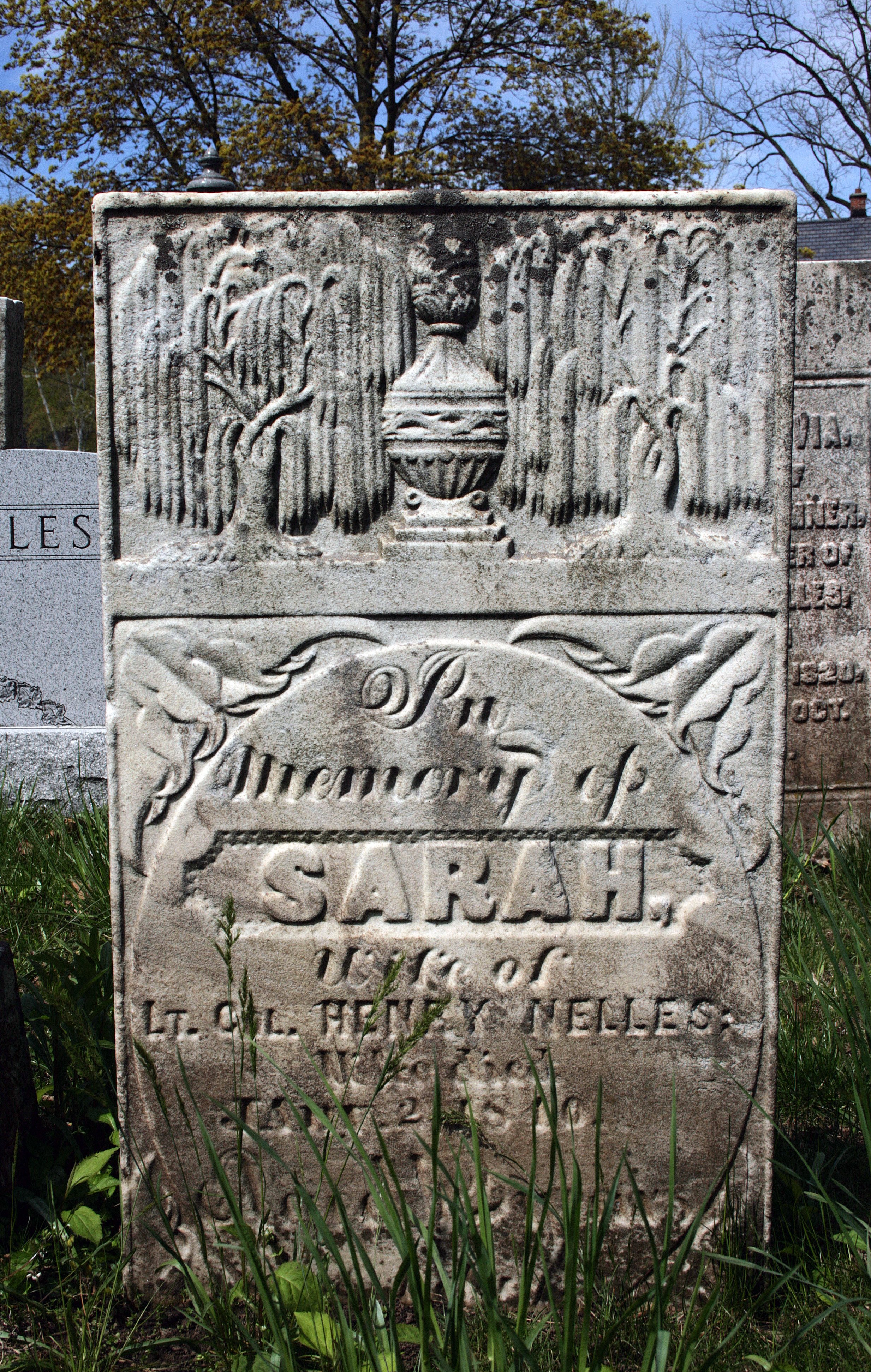
This graveyard also acts as an arboretum of sorts, with beautiful examples of different varieties of trees. Many were in full bloom when we visited. There is a lovely variety of gravestones to be found there as well, many of which I had not seen in person before, like the willow and urn motif, broken column symbolism, and closed books covered in cloth. It was curious to see the difference in popular cemetery symbols that we found. In the Sudbury area, lambs, doves, and hands are very common. There also stand the tallest tablet stones I have ever seen. They are taller than I am! The gravestones I was most looking forward to seeing in this graveyard were the table stones. I have not had the chance to see one in person yet, and I find them so unique and fascinating.
Table stones have an elevated ledger top, that provide space for a longer inscription, and is supported by four to six columns. This type of gravestone was popular during the first part of the 19th century.2These types of stones were used for prominent people and were sometimes installed many years after the person’s death. In that instance, these stones would sometimes cover the original gravestone. These tabletop stones are often more worn, like the ones we saw, due to larger surface erosion, making the stones barely legible.3
After we wandered the entire graveyard, we took a break for lunch and then made our way back toward the Nelles Manor. We were a little bit early for our tour, but luckily there were a few points of interest in and around the Nelles Manor for us to explore while we waited. We visited the Trinity United graveyard, and the Grimsby Museum and grounds where we discovered more interesting Grimsby history. When it was time, we made our way a couple of houses over to visit the historic Nelles Manor Museum for our private tour.
The Nelles Manor was built from 1788 to 1798, well before the American invasions in the War of 1812. The house was fully built and lived in by the Nelles family by the time the Americans declared war on the British. The Niagara Peninsula became a gateway for American fighting forces to work their way from the American frontier on the East side of the Niagara River as they reached for Burlington, York, and Kingston. Nelles Manor was occupied by British and local militia during the War of 1812, but on at least two occasions was also occupied by American forces that had moved up from Niagara.1
We received a very warm welcome when we arrived at the Nelles Manor. Our tour guide Kate, and two other guides, were finely dressed in period clothing, which added to the authenticity of the experience. We started our tour outside, taking in the magnificent architecture of the building, as well as the warm weather. Our guide talked about the land where the Nelles Manor sits, and its connections to its surroundings. Our group found it very helpful that we had visited Saint Andrew’s, as well as the Grimsby Museum grounds before our tour.
After moving inside, we were treated to a walking tour of the house; starting at the front door, touring through the sitting room parlor, and making our way upstairs. Every room is beautifully decorated for the time period, with great attention to detail. Along with period-specific furnishings, the house is decorated with some original pieces that belonged to the Nelles family, as well as original art from the period. It felt like we were stepping back in time.
The guides are incredibly versed in the history of the house, the Grimsby area, and the Nelles family. They had no trouble answering our many questions. We had explained that we were in the area to visit the cemeteries and graveyards, and they kindly pointed out artifacts and related tidbits as they took us along the tour. At the end of our tour, they asked if we would also be interested to hear some of the haunted history of the house. We of course said yes!
They shared stories of experiencing odd smells when there shouldn’t have been any, such as smelling a delicious roast or floral perfume, which was a favorite of Mrs. Nelles. They also shared some stories from paranormal investigations that have taken place in the manor. Paranormal teams have reported their fresh equipment batteries dying quickly and suddenly. They have also captured some eerie electronic voice phenomena (EVP). The staff now use some of these EVPs during their Halloween events, wherein they tell the haunted stories of the house. I would love to attend one someday. As we were discussing the spooky happenings, my friend happened to check her Apple Watch and noticed the battery was dead. Were the Nelles spirits letting us know they were with us?
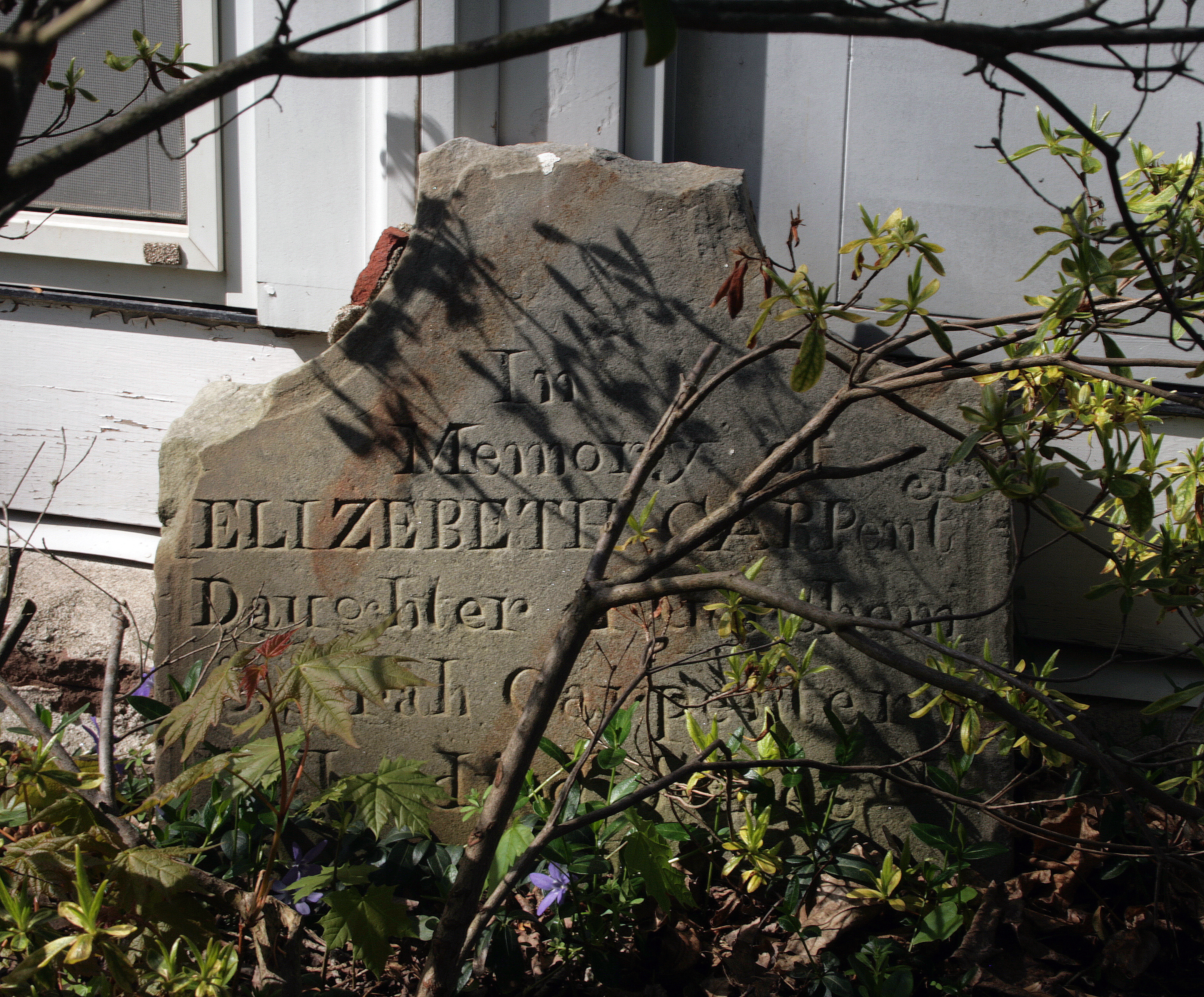
We thanked our tour guides for an amazing tour and made our way outside. They had one last interesting piece of history to point out as we were leaving. In the garden, leaning up against the house are two small gravestones, that are still very legible. Kate explained that these stones were originally at a graveyard close to the water’s edge, which has since eroded away. A cenotaph was erected at Saint Andrew’s Churchyard in memory of the souls that were washed away, and the original gravestones were moved; some ended up at the manor and used as flagstones for the walking paths. These two were preserved and now sit in the garden. You never know where you might find a gravestone.
There was so much we explored and experienced that day. As well as exploring the Nelles Manor Museum, we visited two graveyards, one cemetery, and one burial ground. We also stopped in at the Grimsby Museum and quickly visited the Grimsby Gingerbread houses. I’m sure I will write some more in the future about those visits. It was a very long day, but it was worth it.
If you ever get the chance to visit Grimsby, I highly recommend the Nelles Manor Museum. It’s a beautiful place to learn more about the history of the Niagara region and the War of 1812, and you might also have a paranormal experience. Don’t forget to also pay your respects to the Nelles family at Saint Andrews’s Churchyard.
While working on an upcoming project, I was going through my photo archive and found myself frequently stopping on the images of weeping willows. I have captured an interesting variety in the last few years. I love weeping willows, they have a very unique look. They are not common in my area, in the forests, or on graves.
So for today’s collection, I wanted to take a closer look at this cemetery symbol and share some of the different versions I have found and photographed during my cemetery walks.
As the name implies, weeping willows commonly symbolize grief and mourning. They are a very common Victorian-era cemetery symbol. Adopted from the Ancient Greeks, the weeping willow can represent immortality and life after death. Weeping willows are sometimes associated with the Underworld because, in Greek mythology, Orpheus brought with him a willow branch on his travels to the Underworld to save Eurydice from Hades.1 The symbolism of immortality stems from the fact that willow trees are very hardy, and can survive heavy damage.
A variety of the weeping willow motif you might find is a weeping willow standing beside a gravestone. I love the idea of a gravestone on a gravestone.
Another variation you might come across is of a weeping willow and urn. The urn represents death itself, and the willow again symbolizes grief.2 This motif was a popular gravestone symbol of the late eighteenth and early nineteenth century. You might also see weeping willows paired with a lamb or a cross.3 I have yet to come across these variations.
I noticed that the majority of the ones I found were in Southern Ontario. As I explore more Ontario cemeteries this summer, I hope I will come across a few more to photograph. I would love to find some more variations on the symbol. If you have any suggestions for where I might look, I would love to hear about them in the comments.
Thanks for reading!
References:
Understanding Cemetery Symbols: A Field Guide for Historic Graveyards by Tui Snider
What do you think of when you hear the word cemetery? Is it different than what you picture when you hear the word graveyard? Today these words are used interchangeably to describe a place where we bury our dead, but a cemetery and graveyard are not really the same thing.
When you hear the word graveyard, you might picture traditionally shaped gravestones, overgrown with ivy, that are just barely visible through a mist. That’s what I picture anyway. I can thank TV and movies for that imagery.
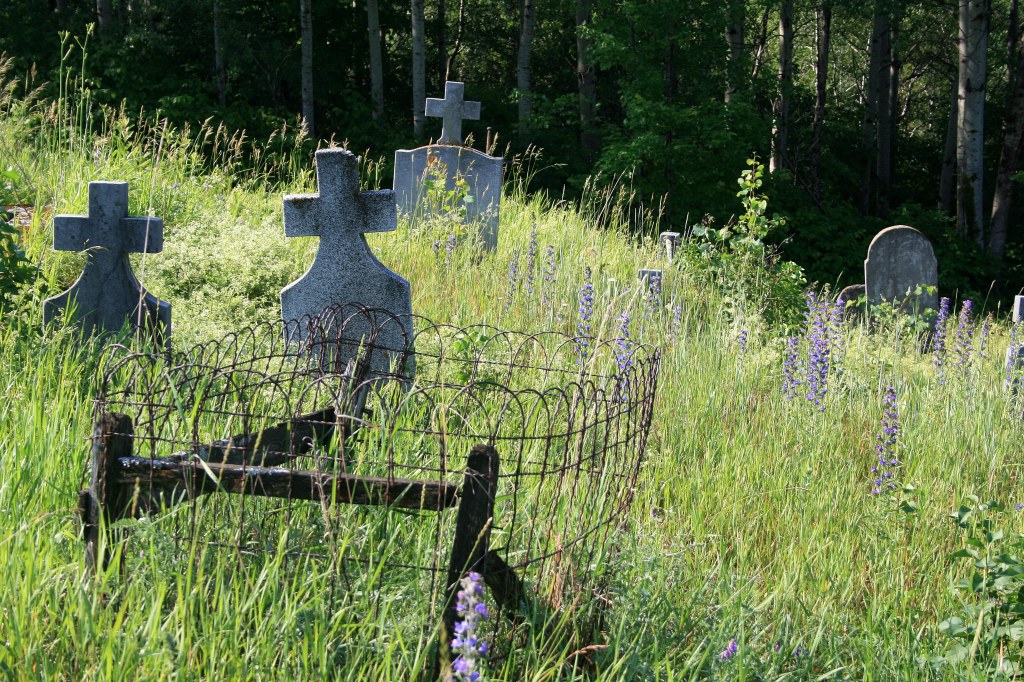
The term graveyard was first recorded in 1765-75 and is quite literally, a yard filled with graves, attached to a small rural church.1 As defined, graveyards are small and located directly next to a church, usually with not a lot of property room to expand. You might also hear them called churchyards, burial grounds, or burying grounds. Usually, only those members or parishioners of that specific church are allowed burial in its churchyard. Very rarely were exceptions made.
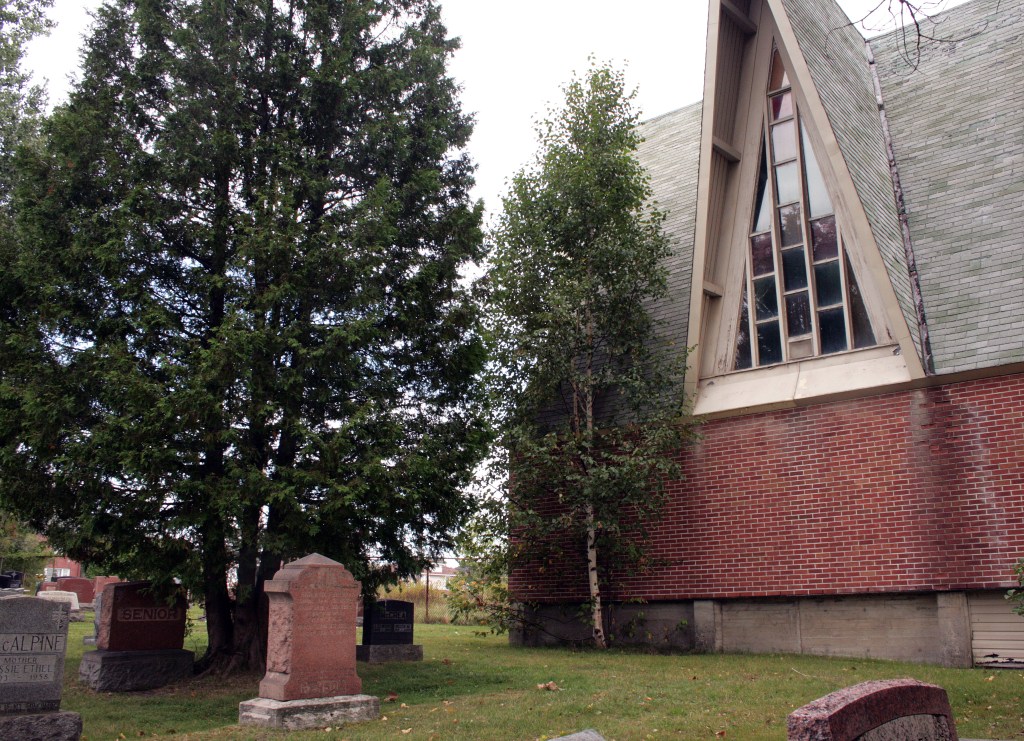
I have visited a few graveyards over the years. In my experience, they are generally well-kept and maintained. I have yet to find one like the movie version I described above. The ones I have visited were bright, usually sitting next to a little white chapel with stained glass. I have rarely been able to visit inside the churches at these graveyards, but there is the odd time that you will find the door unlocked.
A cemetery is defined as an area set apart specifically for graves, that is not adjacent to a church. It is interesting to note that the term cemetery was first recorded in 1375-1425, and is Greek for “a sleeping place”.2This is a reference you might come across often in a cemetery. I have come across many epitaphs that read along the lines of “He is not dead, but sleepeth”. Both religious and non-religious people are buried in cemeteries. Cemeteries are often quite large, and can sometimes contain sections for different religions and denominations. There are such things as public or community cemeteries, and also religious-specific cemeteries, not connected to any particular church. These are often found on the outskirts of cities and towns, but more and more are now within city limits due to urban sprawl.
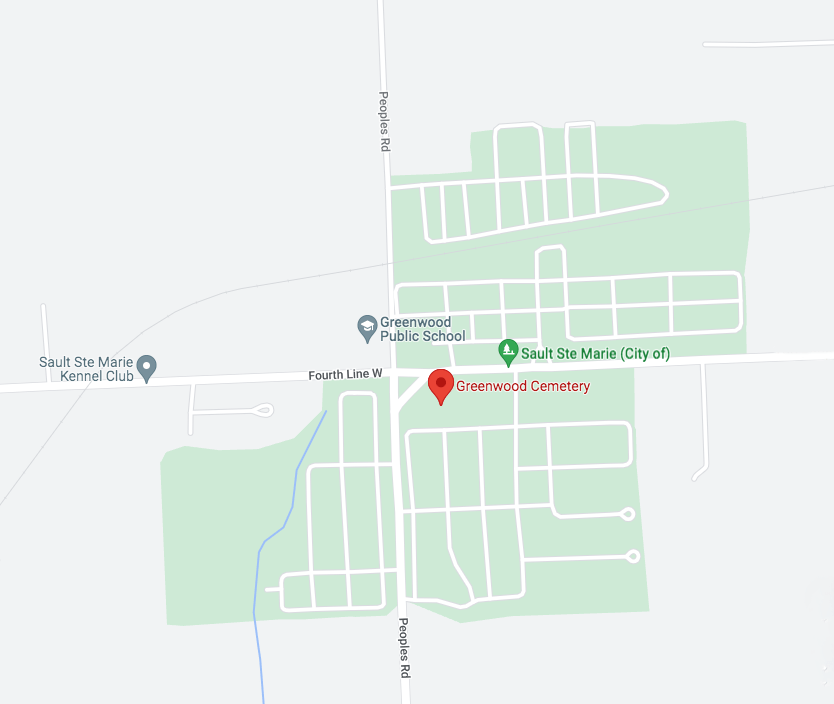
At this point, I have visited more cemeteries than graveyards as they are much more common in my area. They are often so large that I will visit them multiple times to photograph them a section at a time, like Lasalle Cemetery. The largest cemetery I have ever visited is Greenwood Cemetery in Sault Ste Marie. That cemetery is so large it crosses two streets! I only had a chance to visit a small portion of it, but I hope to go back in a year or two.
The terms cemetery and graveyard will continue to be used interchangeably, and you will always be understood regardless of which term you use. But now you can be a little bit more specific when talking about a cemetery or graveyard, or you can pull out this little tidbit of information if the need ever arises.

















 Cemetery Photography by Chantal Larochelle