Cemeteries in the fall are my favorite.
There is just something magical about wandering through a cemetery bathed in the warm colors of autumn. So today on the blog, I explore how the crunch of leaves underfoot and the cool breeze tousling your hair as you walk among the headstones, creates a uniquely reflective experience.
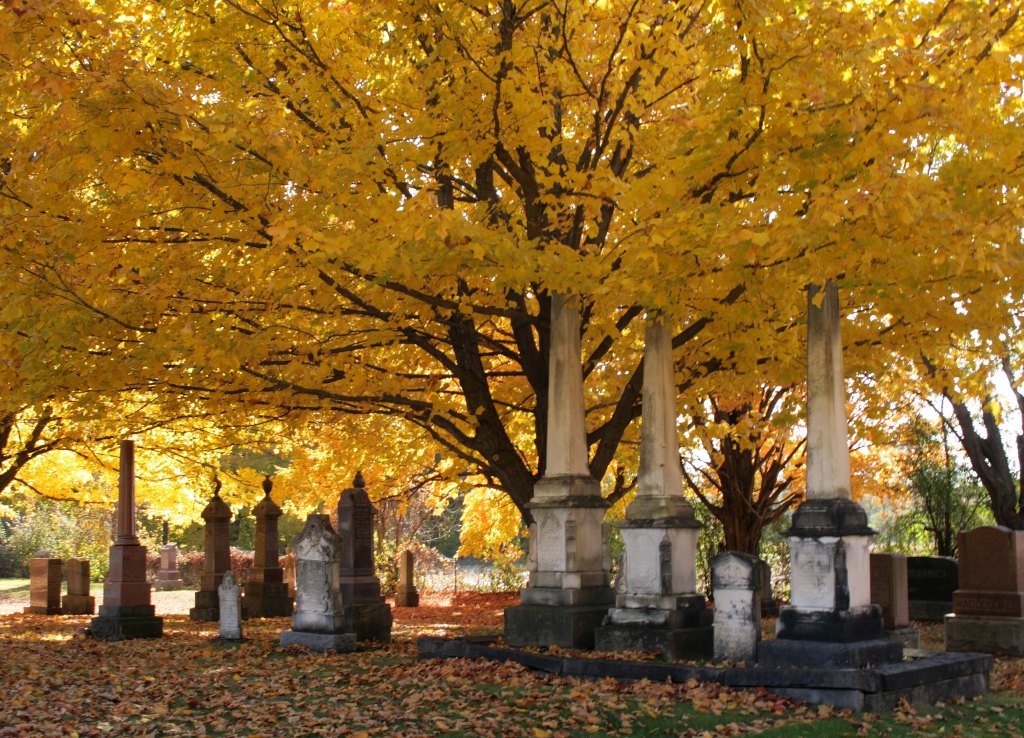
Old Stone Church Cemetery also known as Saint Andrew’s Presbyterian Church Cemetery, Beaverton ON ©2024
The Autumn Equinox
The stunning yellows, oranges, and reds herald the changing of the seasons and mark the transition from verdant green to withered rotting leaves. The falling leaves remind us of the cycle of life and that everything dies.
Autumn begins on the fall equinox, usually on September 22 or 23. The equinox happens twice a year in the Northern Hemisphere, occurring between the summer and winter solstices.1 It marks the point where the sun crosses the equator’s path and becomes positioned exactly between the Northern and Southern hemispheres.1 On the equinox, day and night are approximately the same length, but the fall equinox marks the beginning of longer nights and shorter days.1
As we lose daylight earlier, the yellow glow during the golden hour is intensified, creating a golden light that beautifully bathes the gravestones. It’s a photographer’s dream!
Gravestone symbolism draws heavily from Greek mythology, so it seems only fitting to share the Greek story of Persephone’s return, an anecdote used to explain why the seasons work the way they do.
In the story, Persephone was abducted by Hades and forced to live in the Underworld. Demeter, Persephone’s mother, searched far and wide for her daughter. Demeter threatened to make the earth a barren place until her daughter was returned to her.2
A deal was struck: because Persephone had eaten four pomegranate seeds while in the Underworld, she would return to Hades and live with him for four months out of the year.2
So when Persephone traveled to the Underworld to fulfill her four-month stay, Demeter’s sadness at being separated from her daughter was expressed by the barrenness of autumn and the winter cold.2

Knox United Church Cemetery, Sutton ON ©2024
Thinning of the Veil
The month of October can be considered the peak of autumn, with the fall colors reaching their most vibrant, usually during the first couple of weeks. The beginning of October is also considered by many to be the start of the spooky season, which culminates on October 31st, Halloween.
Halloween night is said to be when the veil between the living and the dead is the thinest. This is thought to mean that it is the one night when spirits can cross over the easiest to communicate with loved ones.
The idea of a veil between life and death can sometimes be found in cemetery art.
A draped urn, for instance, is a popular Victorian-era motif, borrowed from Ancient Greece. The Ancient Greeks commonly cremated their dead, and the symbol of a ceremonial urn was adapted to represent the idea of the body being reduced to its barest elements while the soul ascends to heaven. Often draped in a cloth, this drapery is thought to symbolize the veil between the living and the dead.3

Draped urn. Riverside Cemetery also known as Union Cemetery, Beaverton ON ©2024
Another symbol that symbolizes this concept is the gates ajar. This grave symbol was popularized by author Elizabeth Stuart Phelps in her 1868 book The Gates Ajar. The story follows a woman coming to terms with the death of her brother, who died in the Civil War. This symbol features an open gate, symbolizing that the gates to Heaven are not closed, and that departed souls can pass back and forth.3
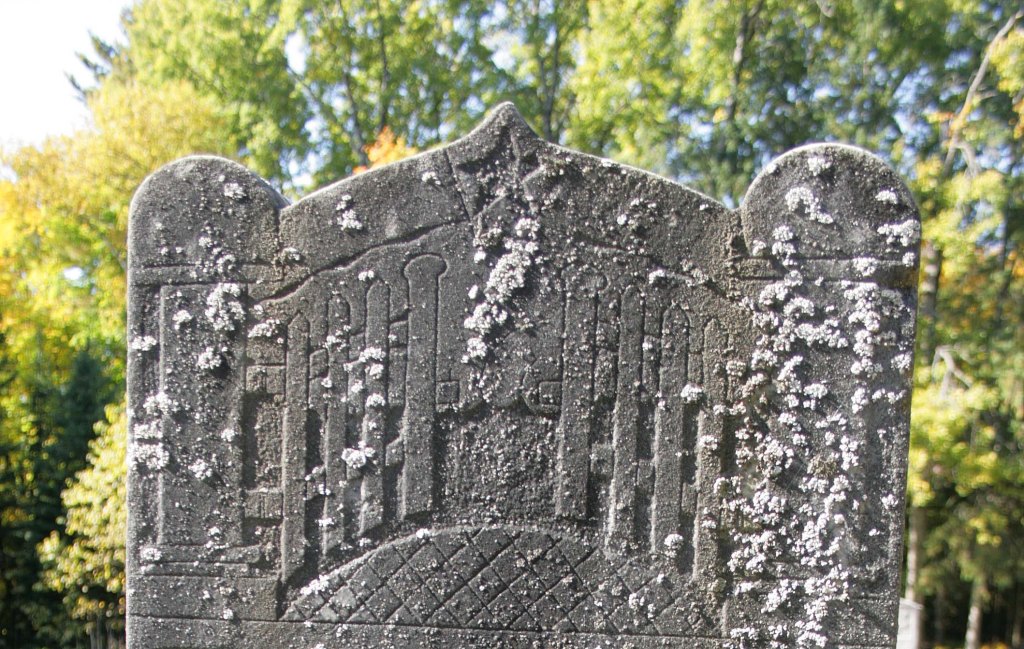
The gates ajar. Williamsport Cemetery also known as United Brethren in Christ Cemetery, Williamsport ON ©2022
Halloween Traditions
As you might expect Halloween is celebrated all over the world. It is one of the oldest holidays after all. There are many ways to celebrate, the most obvious being donning a scary costume and going door-to-door for tricks or treats. But there are other Halloween traditions, older traditions that are practiced in all parts of the world.
It’s not surprising that some of them involve cemeteries!
In France, All Saints Day and All Souls Day are celebrated by children going house to house collecting flowers that they use to decorate graveyards and churches.4
To celebrate Dia De Los Muertos, also known as Day of the Dead, in Mexico families will have picnics in graveyards at the graveside of their loved ones, to remember and celebrate their life.4
In Portugal, wine and chestnuts are brought to feast on, in the cemetery.4
And in Rome, they celebrate Feralia, which is similar to the Day of the Dead in many ways. Families visit loved ones in the cemetery and also bring offerings for the spirits of their loved ones who linger at their graveside.4
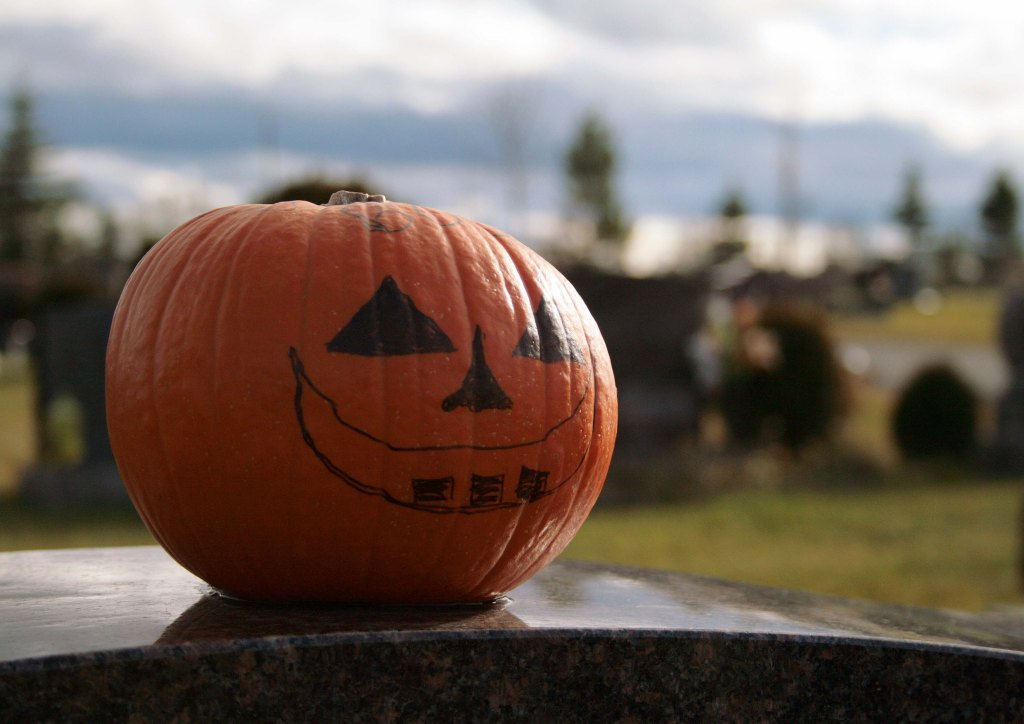
St. Stanislaus Cemetery, Lively ON ©2008
The symbolism of gravestones, like the draped urn and gates ajar, echoes the stories of Persephone and the thinning veil between the living and the dead. As Halloween approaches, traditions around the world invite us to remember and celebrate our loved ones in these revered spaces.
So, this fall, take some time to wander through a cemetery, and let the beauty and tranquility inspire some reflection on the spirit of Halloween—the connections we hold with those who have passed, the stories they leave behind, and the traditions that keep their memory alive.
Thanks for reading!
References:
- The Equinox and Solstice | Met Office
- Persephone and the Seasons | Hellenic Museum
- Understanding Cemetery Symbols: A Field Guide for Historic Graveyards by Tui Snider | Book
- Halloween Traditions: How the World Celebrates Halloween | Medium



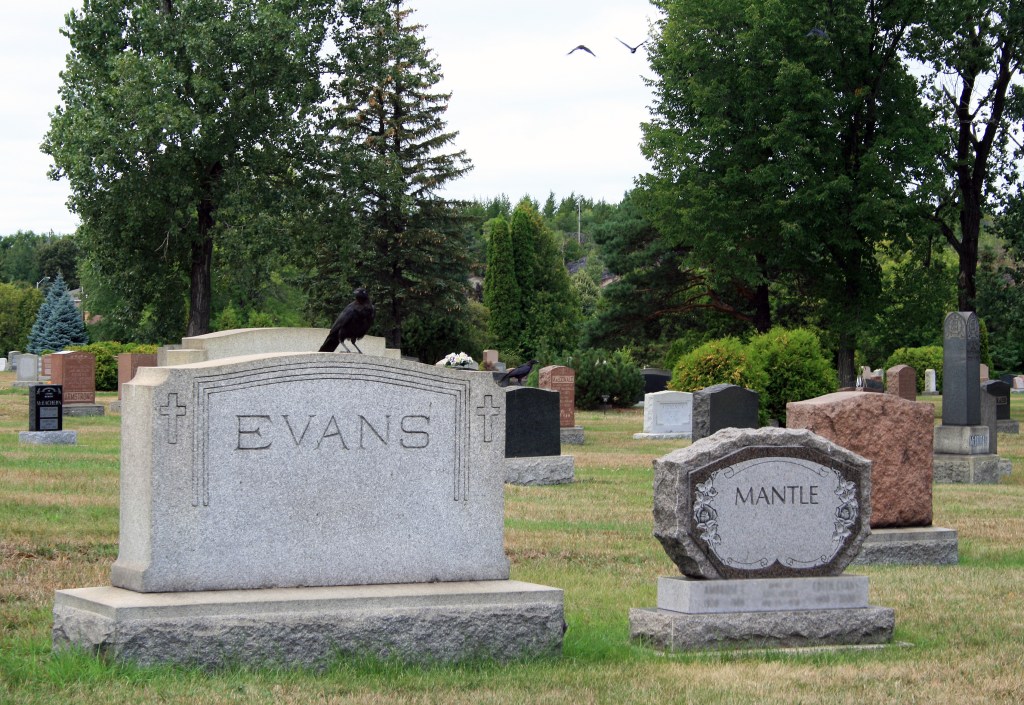







 Cemetery Photography by Chantal Larochelle