Cemetery Book Review: Stories in Stone

For this month’s cemetery book review, I wanted to talk about Stories in Stone: A Field Guide to Cemetery Symbolism and Iconography by Douglas Keister. I have been meaning to share this one for a while now. This is one of my favorite cemetery books, and one of my go-to reference books when it comes to looking up symbolism. I see it pop up now and then on the cemetery side of Instagram and Facebook and thought I should finally share my thoughts on it. 

This book has been on my bookshelf for a very long time and it is something I go back to over and over again. It is a great resource for explaining the meaning and history behind most of the symbolism and iconography you will come across in a cemetery. Every symbol has a meaning, and the descriptions can range from simple to quite in-depth. The book itself is compact, so it’s easy to slip it into your hiking or camera bag if you want to take it with you on your cemetery travels. It’s filled with full-color photos as well to help identify all the variety of symbols you might come across. 

Here is a snippet of the book synopsis from Goodreads.com: “Stories in Stone provides history along with images of a wide variety of common and not-so-common cemetery symbols and offers an in-depth examination of stone relics and the personal and intimate details they display; flora and fauna, religious icons, society symbols, and final impressions of how the deceased wished to be remembered. Douglas Keister has created a practical field guide that is compact and portable, perfect for those interested in family histories and genealogical research.”
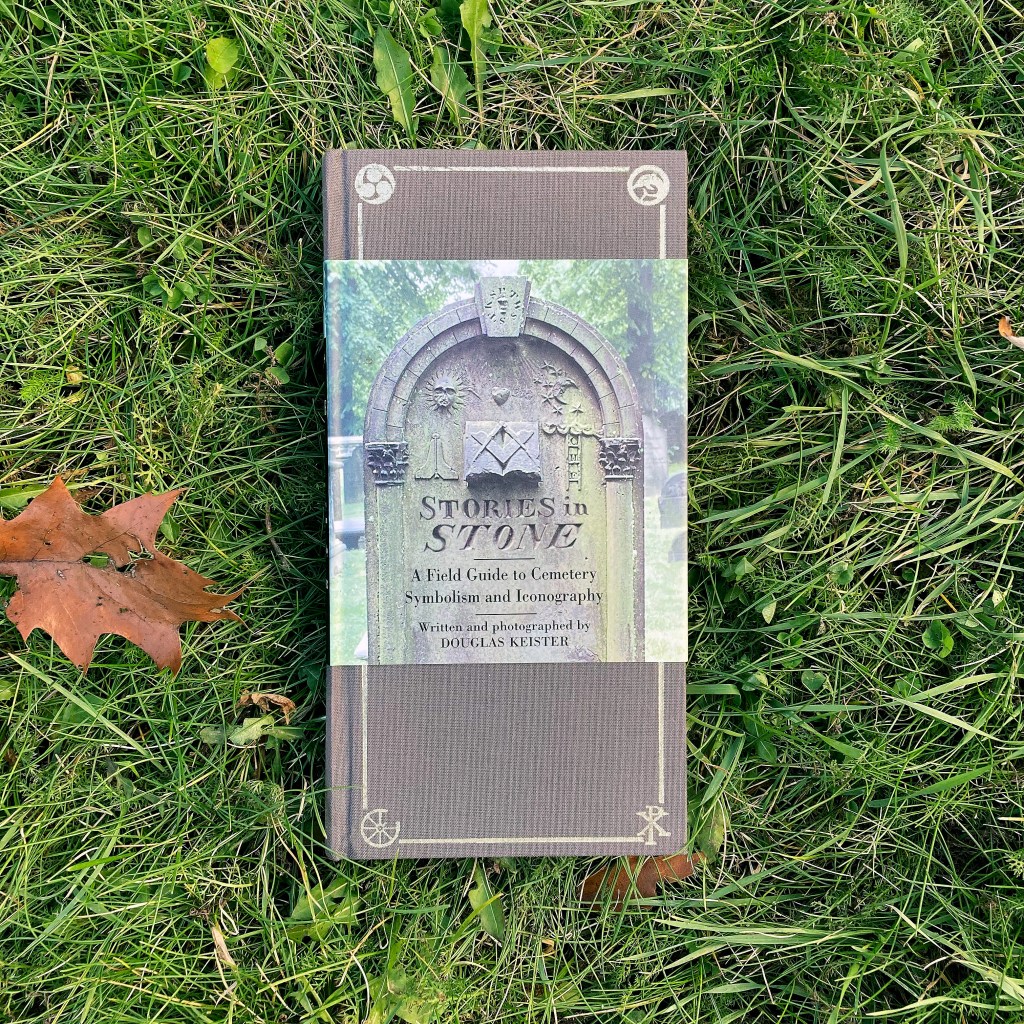
I don’t recall where I picked up my copy, but it is a reference I use often. I never bring mine with me on my cemetery travels, but my cloth-bound hardcover copy has a special place at my desk for easy access when I need to look something up. This book covers iconography from A to Z, as well as the different art styles and architecture that can be found in cemeteries. It covers everything from religious and military symbols to fraternal organizations and secret societies. Douglas Keister is also an amazing photographer and his beautiful color photos of detailed gravestone symbols add depth to the descriptions. It also has a very thorough index at the back, which is very handy for moving back and forth throughout the book. 

The name Douglas Keister may sound familiar to you. This is not the first book of his that I have reviewed. Back in July 2022, I reviewed his book Going out in Style: The Architecture of Eternity. You can read that review here. Douglas is no stranger to cemeteries and has written quite a few books about them. He is a photographer, author, and co-author of forty-five critically acclaimed books, twenty-five of which are on architecture.2

I highly recommend this book to any budding taphophiles and those interested in learning more about cemetery symbolism and history. This book would be a handy tool for genealogists as well, as many interesting and thoughtful things can be learned about the deceased based on what is on their gravestone.

This book has been an invaluable resource for me. I have always loved learning more about the stories that gravestones can tell us, and finding new symbols to research and learn about is one of my favorite things. It’s a beautiful, high quality book, that I think is an essential addition to any taphophiles library. 

Have your read Stories in Stone? I would love to read your thoughts in the comments.

Thanks for reading! 


I am always on the hunt for cemetery-related book recommendations. Please feel free to share yours in the comments. If you are an author and have a cemetery-related book you would like me to review, please reach out at hello@chantallarochelle.ca. I would love to hear from you.


References:

  1. Stories in Stone: A Field Guide to Cemetery Symbolism and Iconography | Goodreads.com
  2. About Douglas Keister | DouglasKeister.com
A Collection of Tree Stones

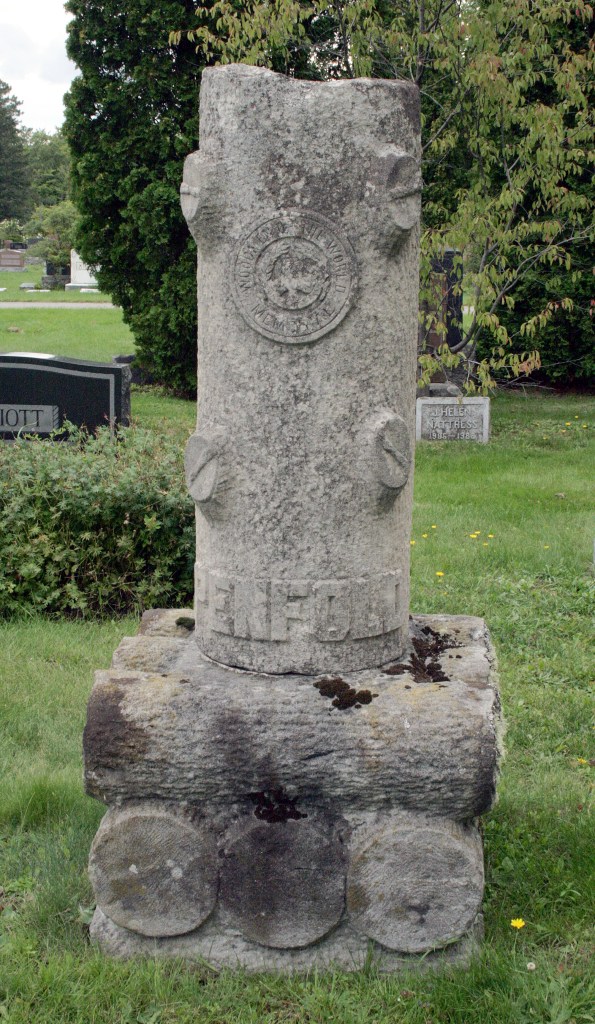
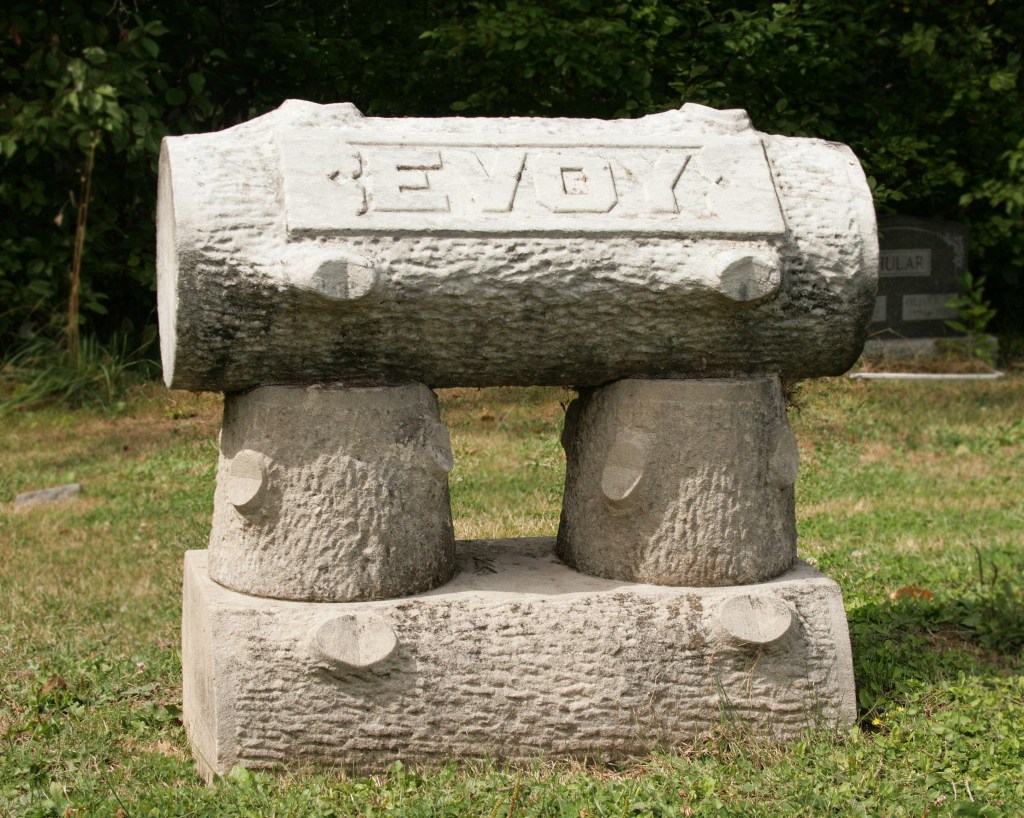
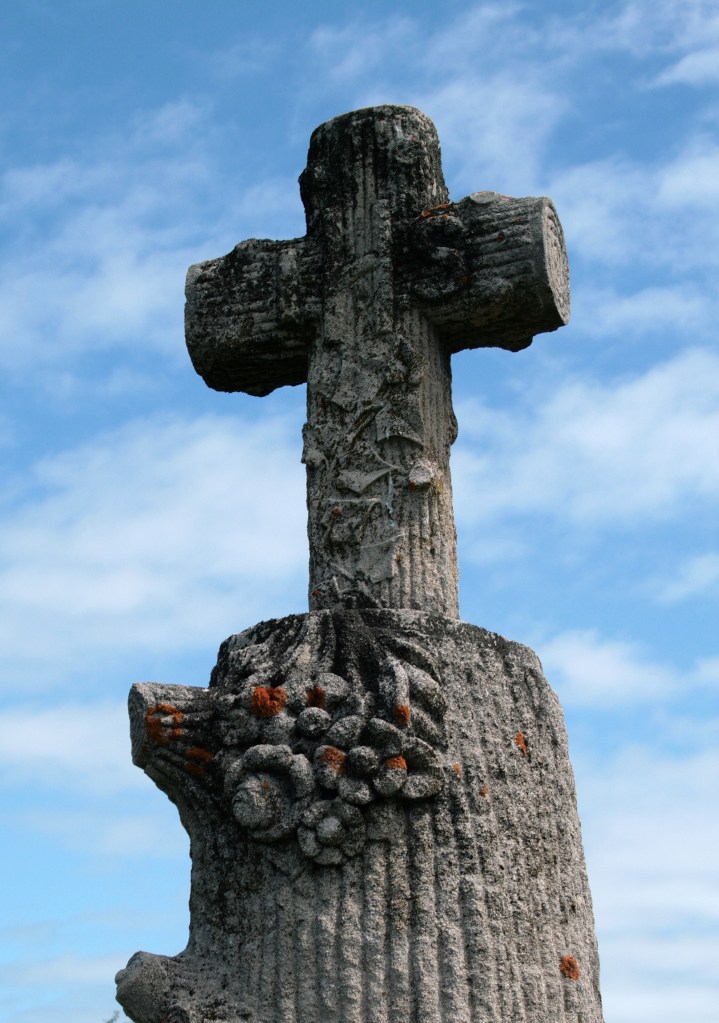
While wandering a cemetery, have you ever come across a monument that is shaped and textured to look like a tree? Today, I want to take a closer look at these types of grave markers, called tree stones. Although they are a bit harder to come by in Northern Ontario, you can find them, and they are usually very easy to spot since they are so unique!

Tree stones are often used as memorials for members of the Woodmen of the World, a fraternal organization. This fraternal order was started in 1890, and membership included those who worked in particularly dangerous professions. The organization offered health insurance and death benefits to its members, which included a tree stone tombstone.1

Woodmen of the World tree stones, often bare the Woodmen crest, as well the tools of the trades like an axe and sledgehammer, representing the works of man. You may also find other symbols on tree stones like ivy or doves, representing friendship and peace, respectively.

The severed branches or tree stump of a tree stone, Woodmen of the World or otherwise, often represents a life cut short. We often see this combined with other symbolism, like a lamb or dove laying in front of a stump. Lambs and doves are often found on the graves of small children, symbolizing innocence and purity.

Sometimes the number of logs on a tree stone can be symbolic of the number of children the deceased had. A tree stone can also be seen as a representation of the tree of life, symbolizing knowledge. 

Have you ever come across a tree stone? Or maybe a Woodmen of the world memorial? I would love to hear about your finds, in the comments. 

Thanks for reading! 


References:

  1. Understanding Cemetery Symbols: A Field Guide for Historic Graveyards by Tui Snider

A Collection of Crosses

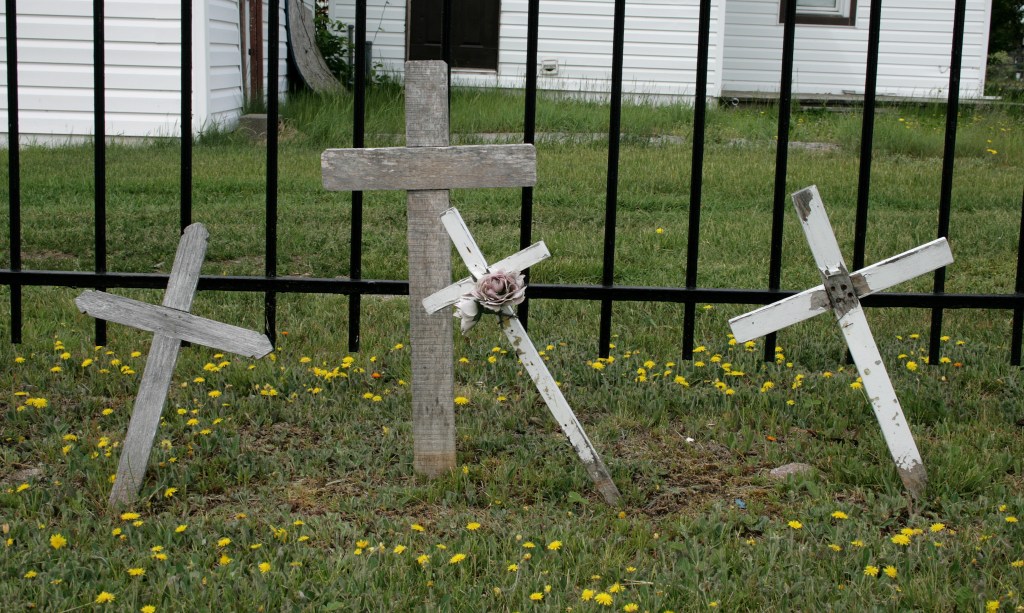
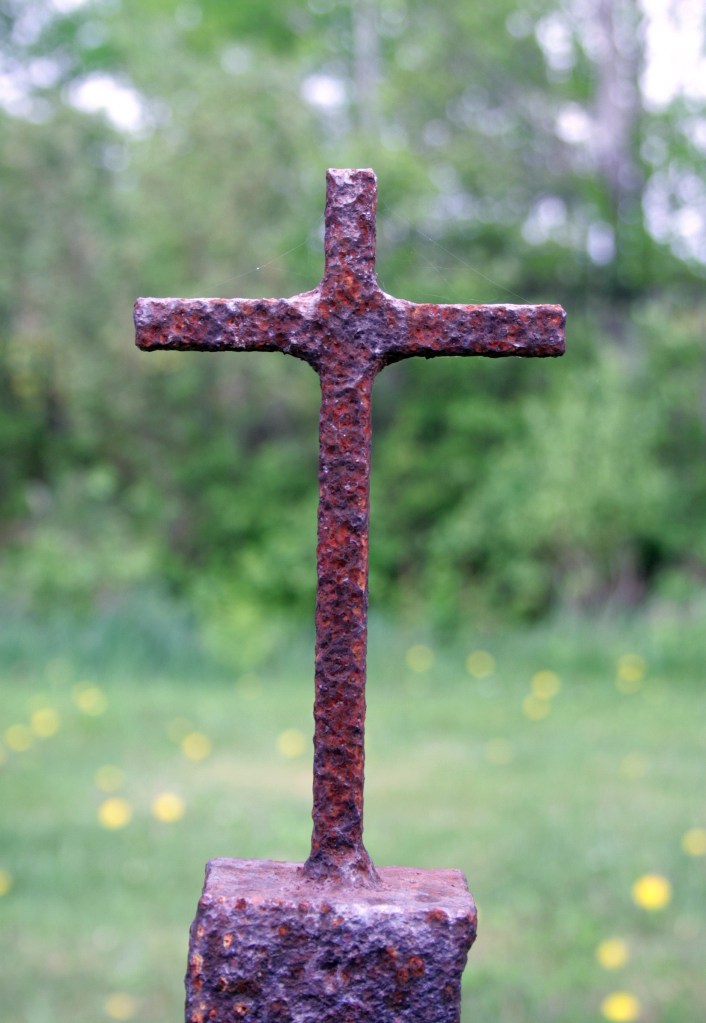
Crosses have to be the most easily recognizable and common symbol found in cemeteries and funerary art. There are so many variations of this Christian religious symbol. Since crosses are so common, you may think if you have seen one, you’ve seen them all—but I would beg to differ!

Today I wanted to take a closer look at this funerary symbol and share some of the many crosses I have photographed over the years.

First off, let’s look at the difference between a cross and a crucifix, as they are not the same thing. A crucifix shows the body of Jesus nailed to it, while a cross does not.

A Latin cross is probably the most common cross found in cemeteries. This cross has no embellishments. It is sometimes called a Protestant cross, because it can represent Jesus as risen, instead of focusing on his suffering on the cross.

A Botonee cross has a trefoil, three lobes, at each end that symbolizes the holy trinity.

A Celtic cross is easily recognizable. It usually has a Celtic knot pattern engraved on it and also includes a nimbus, a distinctive circle that represents the union of heaven and earth. These crosses are often found at the graves of those with Irish heritage.

In the example below you can also see the letters IHS in the center. This is sometimes called a Christogram. There are a couple of different theories about what the letters IHS stand for. One theory is that it is an abbreviation of the Latin phrase “in hoc signs vines” (In this sign you will conquer), another line of thought is that it’s an abbreviation of the Latin phrase “Jesus Hominum Salvator” (Jesus, Saviour of Men). According to Doug Keister’s book Stories in Stone: A field guide to cemetery symbolism and iconography, these letters are the first three letters of Jesus’ name using the Greek alphabet.

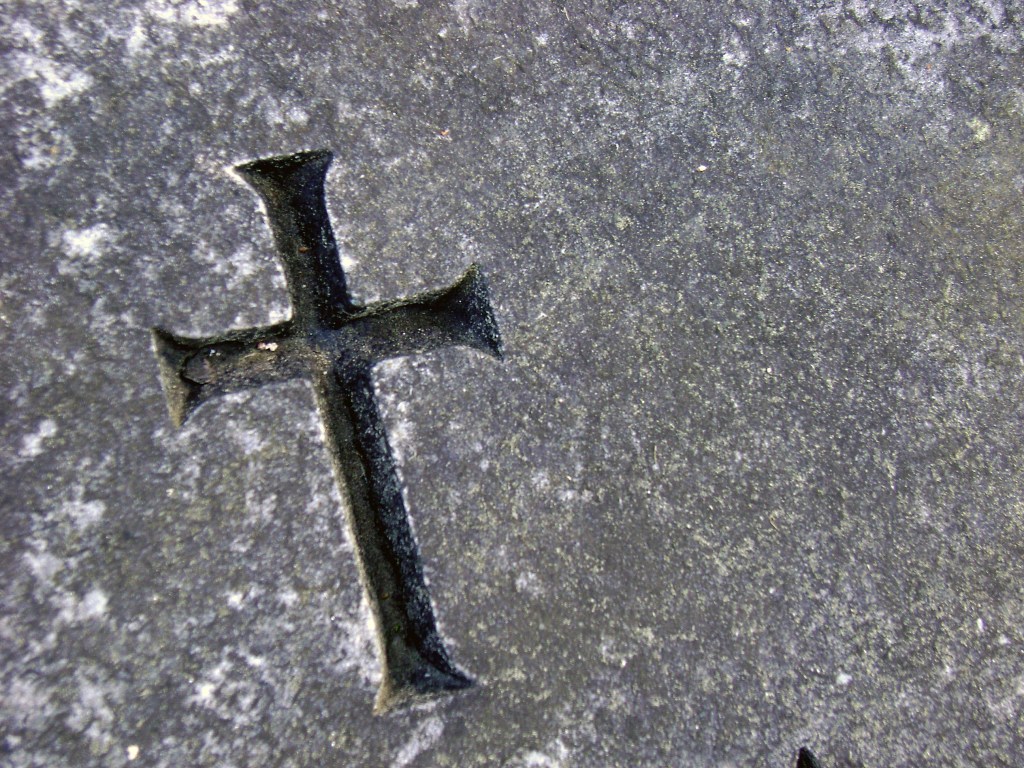
A Congé cross is a variation of the Latin cross, where the ends of the arms flare out slightly.

A Glory cross, sometimes called a Rayed cross, has rays emanating from its center that symbolize the glory of God.

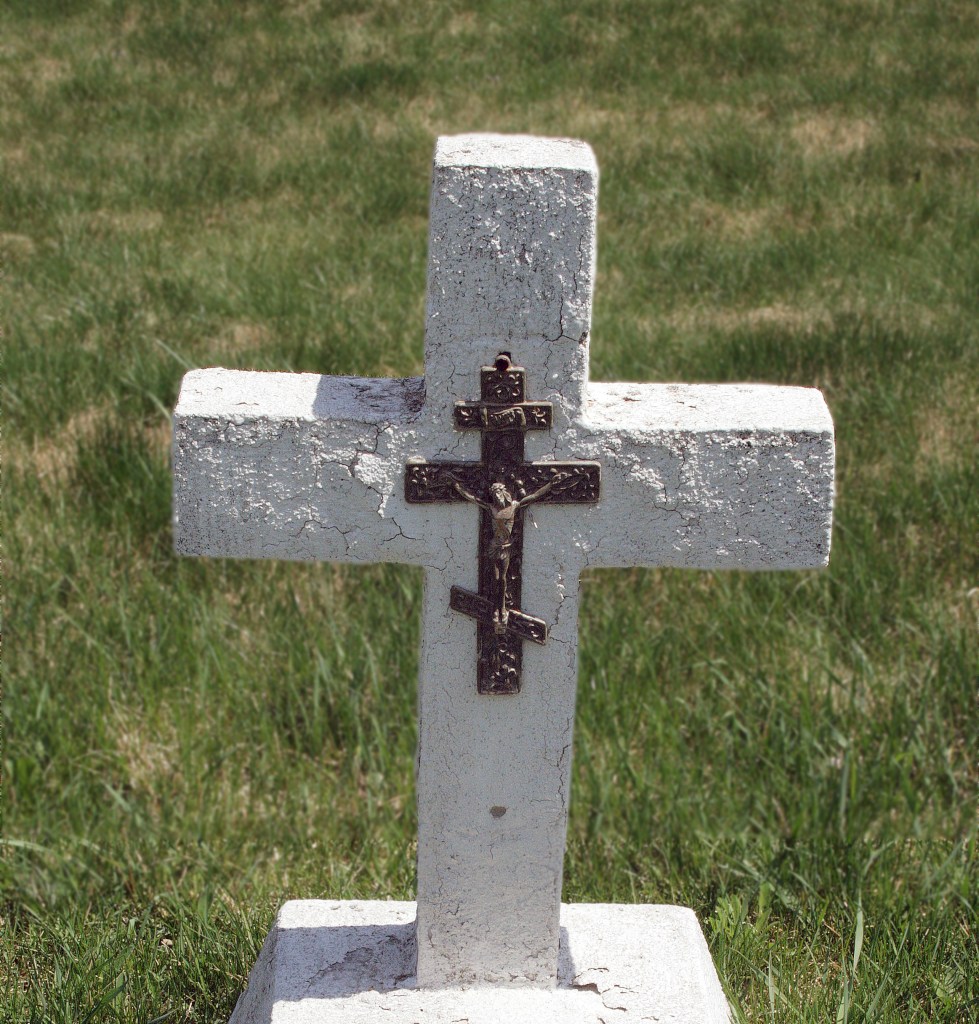
Below is an example of an Eastern crucifix on a white Latin cross. The Eastern cross is easily recognizable by its two horizontal cross bars, and one slanted one. This cross is a symbol of Eastern Orthodox religions. This one would be considered a crucifix, as it has the tortured body of Jesus nailed to it.

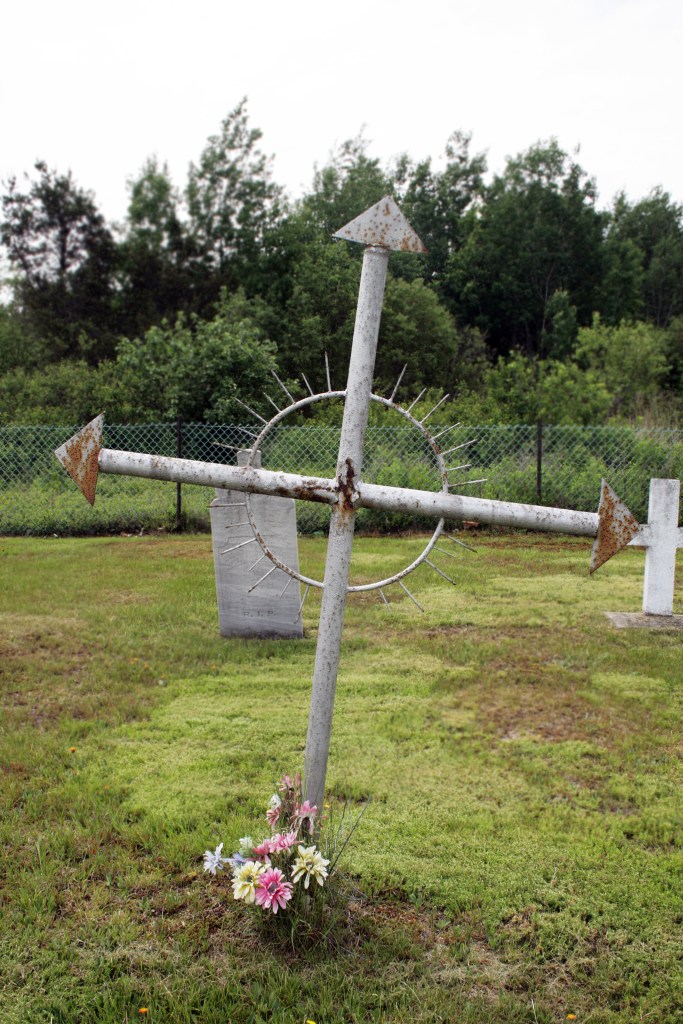
An Agony cross has sharp points at the end of each arm. This is said to represent the suffering or agony, that Jesus endured. This cross is sometimes called a pointed cross or a cross of suffering.

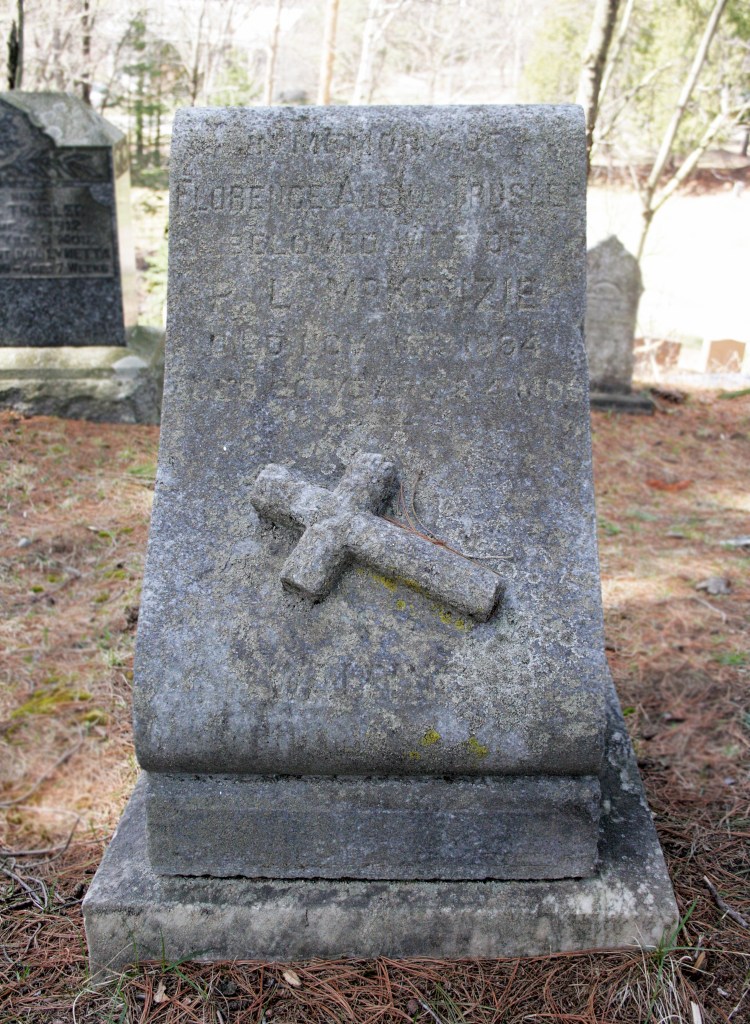
A Portate cross is a cross that is angled diagonally. It’s angled the way someone would carry it over their shoulder to drag it.


References:

A Collection of Books

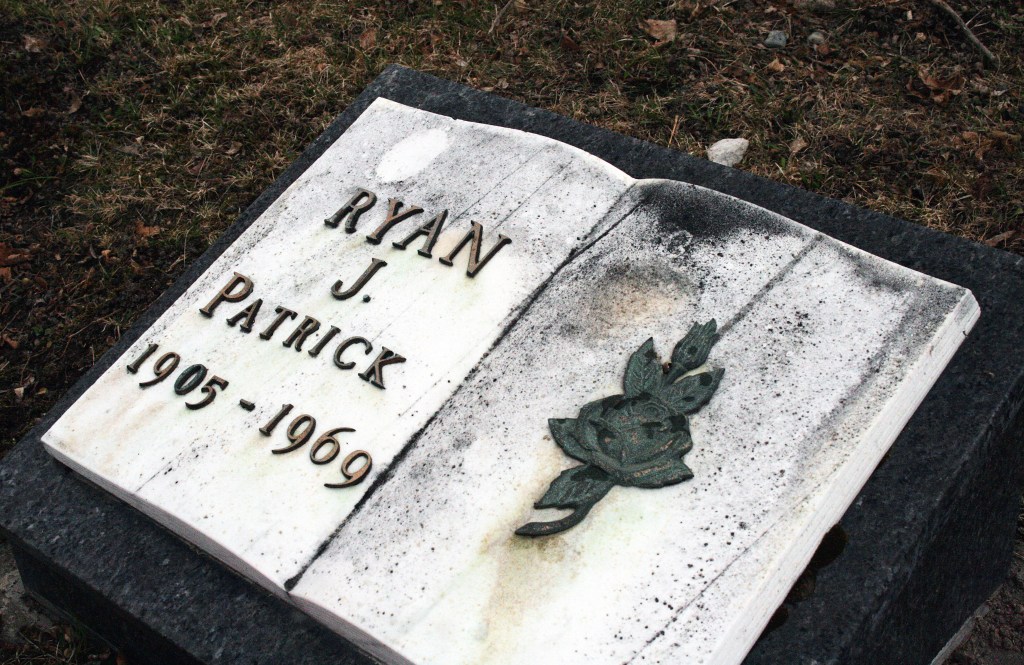
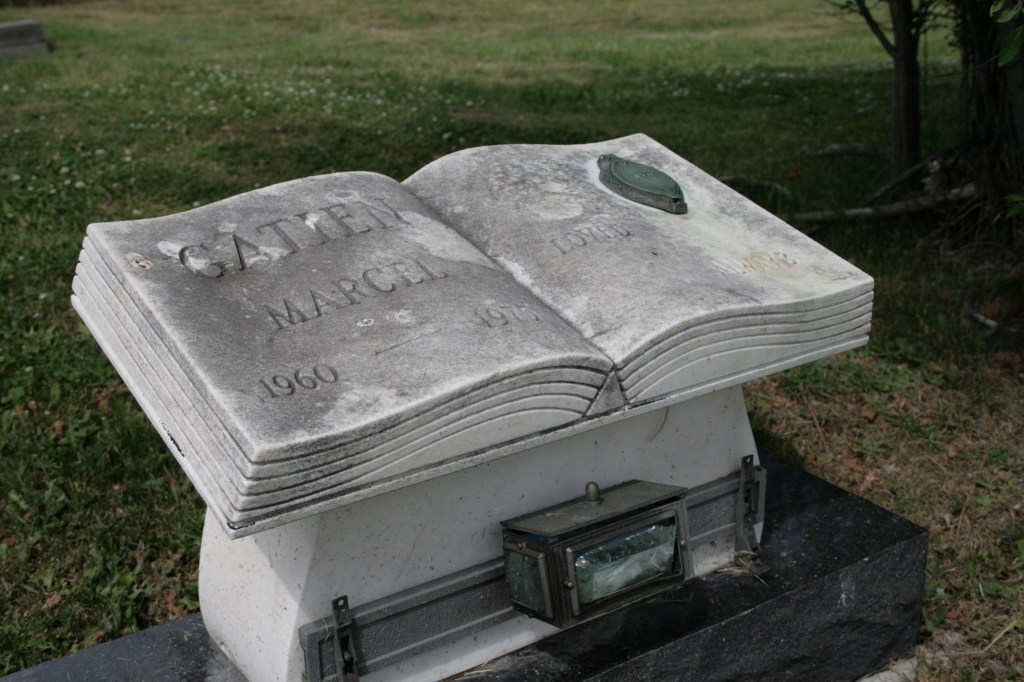
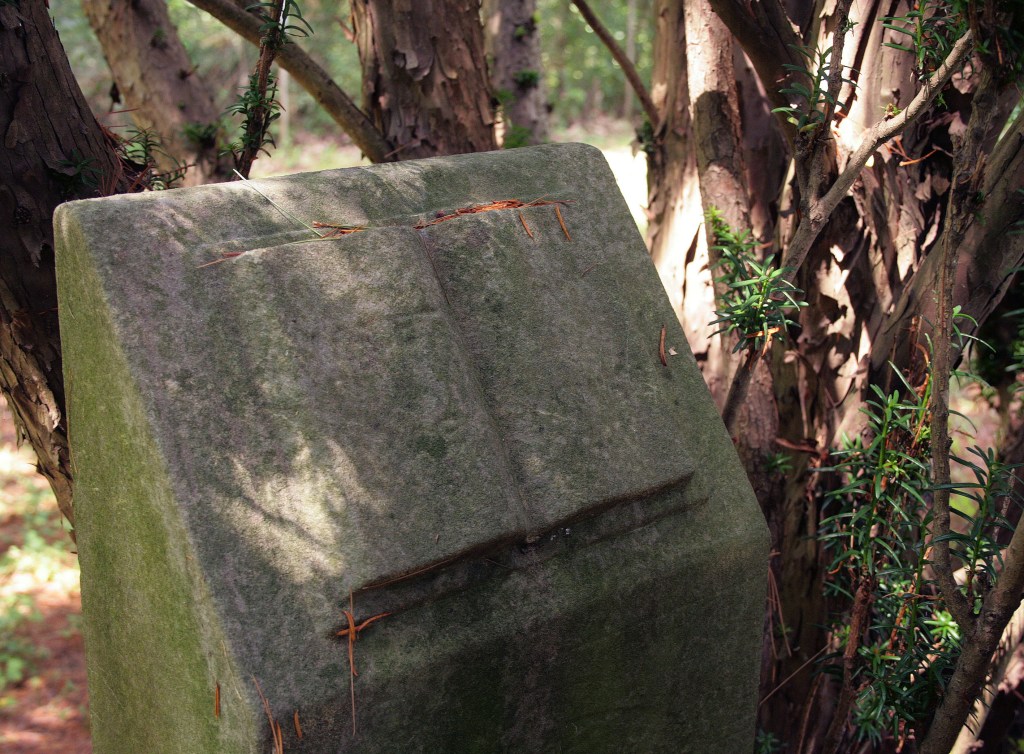
I love books! I am a big reader and have a large book collection at home, but I love finding stone books among the tombstones while wandering a cemetery. I find them very interesting and love trying to interpret what they mean.

Books can be both decorative or a representation of something. You can sometimes find a book being used as a decorative device to display the name of the deceased along with the birth and death dates. An open book can sometimes represent the human heart, as in it’s emotions are open to the world. An open book may also symbolize a life that has been cut short, before getting to the last page. Another variation of this is an open book with a cloth draped across it. This also represents a life cut short, the veil of death having bookmarked the person’s last chapter before the book is finished being written. A closed book might represent a long life, lived to the last chapter.

Any book found in a cemetery may represent the bible. Sometimes you may even find the words “Holy Bible” engraved on the book.

In my experience, books are not as common as some other funerary symbols, like hands and lambs. I love to photograph them when I do find them. I wanted to share some of my favorites with you today.


References:

  1. Understanding Cemetery Symbols: A Field Guide for Historic Graveyards by Tui Snider
  2. Stories in Stone: The Complete Guide to Cemetery Symbolism by Douglas Keister

A Collection of Lambs

I love exploring cemeteries and looking at the different symbols used on tombstones. If you spend a lot of time in cemeteries, especially in Northern Ontario, you will start to notice the repetition of certain symbols and motifs. One of the most common symbols I find, is the lamb.

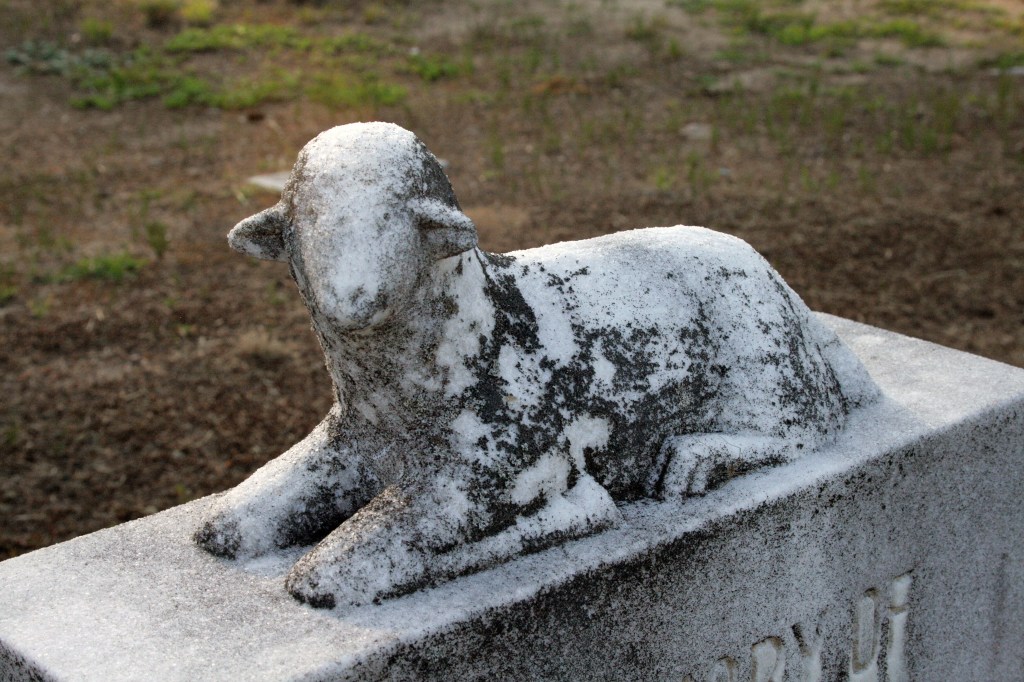
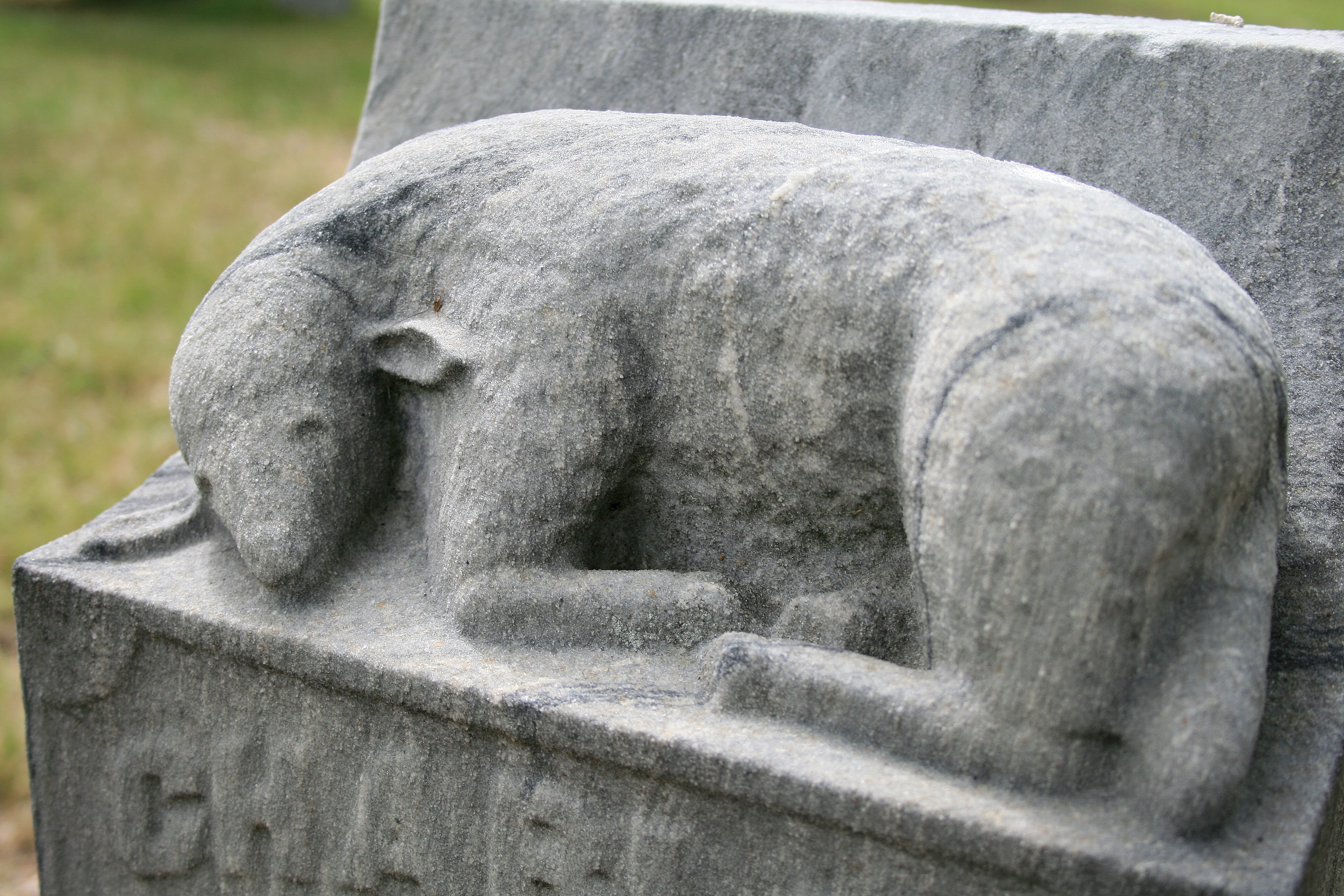
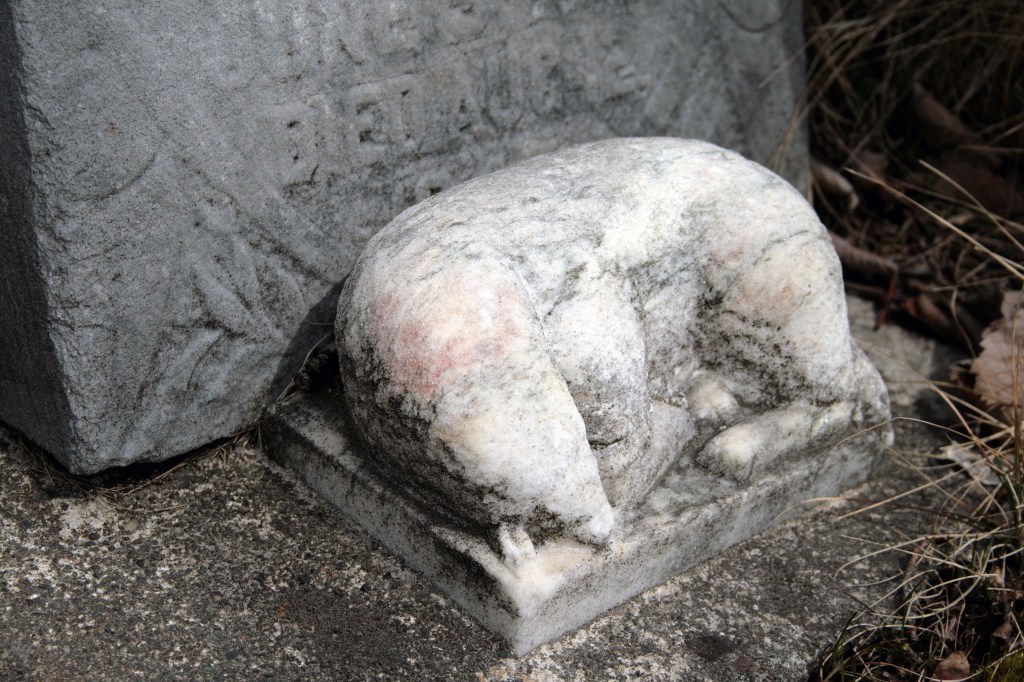
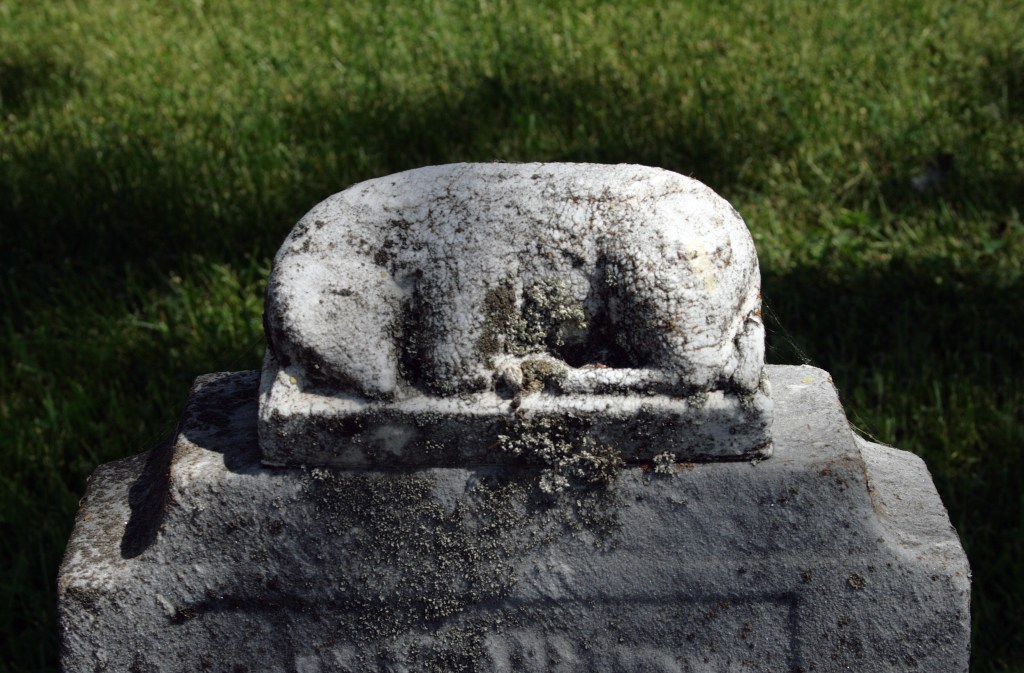
Lambs represent innocence and sacrifice, as they were often used in sacrificial ceremonies in ancient times1. Most often you will find lambs on the gravestones of infants and children, as Jesus is often depicted as a Shepherd, and also known as the “lamb of God”. Some variations can be found with lamb symbolism. A robed figure with a standing lamb beside it most often represents John the Baptist, who had called Jesus the “lamb of God”1. A lamb with a cross is known to represent the Lamb of God or Agnus Dei2, symbolizing the suffering of Christ as he sacrificed himself for the sins of mankind. Several other symbols may be found with a lamb to symbolize the lamb of God – such as a banner, halo, shepherds crook, and alpha and/or omega symbols2. A single seated lamb symbolizes an innocent soul. A seated lamb can sometimes be found sitting in front of a tree stump, this often symbolizes a life cut short. 

Finding lambs is often sad, but they are a beautiful symbol. I have photographed many over the years and wanted to share some of them with you today. 

Eyre Cemetery, Sudbury ON ©2011


References:

  1. Understanding Cemetery Symbols: A Field Guide for Historic Graveyards by Tui Snider
  2. Stories in Stone: A Field Guide to Cemetery Symbolism and Iconography by Douglas Keister

Symbolism and Iconography

Cemeteries are full of symbolism.

I find it fascinating and love trying to decipher the symbols and iconography I find. Symbolism can be found adorning tombstones and mausoleums. These symbols can range from simple designs to very elaborate ones. The meaning of symbols is a language in itself, and you can tell a lot about a person by what is on their tombstone. Religion, hobbies, clubs, and organizations can all be found represented, among other things, by symbols and icons within a cemetery.

Whenever I spot a symbol I have not seen before, I always turn to my handy reference books. If I can’t find what I am looking for there, the internet is the next best place to look. My go-to reference book is Stories in Stone: A field guide to cemetery symbolism and iconography by Douglas Keister. I have had this book forever, and always go back to it when I see something new. It’s a very in-depth look at what can be found in a cemetery. It covers architecture, sculpture, symbols, as well as acronyms and initials. I highly recommend it!

I recently added another reference book to my library, Understanding Cemetery Symbols: A field guide for historic graveyards by Tui Snider. I have just started getting into this one and I can tell right away it will be a great resource. It has some really in-depth sections on hand symbolism as will as crosses and even statuary.

So what kind of symbols and iconography can you find in your local cemeteries? For the most part religious symbolism is very common. Below are some examples of some common and not-so-common symbols you can find in Canadian cemeteries:

I love finding hands on a tombstone. Hands are shown in many different forms; pointing downward, pointing up, shaking hands, etc. the list goes on! And all of these different positions have different meanings. One of my favorite examples of hands was found in Terrace Lawn Cemetery in North Bay. These stones have weathered beautifully. This hand is pointed downward, with a finger extended which can symbolize God reaching down to collect a soul. The extended finger can mean a sudden or unexpected death. This hand below, is also holding a chain. A broken link in the chain can represent a family or marriage broken by death.

Lambs are a very common sight in cemeteries. These are sometimes accompanied by a tree stump, implying a life cut short. The Lamb itself represents “the lamb of God” and innocence. Sadly, lambs are most often found at the grave of a young child or infant.

Skulls are very rare to come by in my local Canadian cemeteries. I have only found two in all of my local travels, but I am always on the look out for them. They are more commonly found in other places of the world, like the United States and Europe. Most obviously a skull represents death. A skull found at the base of a cross is thought to be symbolic of the skull of Adam.

I have many great examples of symbols and iconography in my photography. If you are interested in seeing more and learning about their meanings, I share them every Friday on Instagram and Facebook.

I would also love to hear about the symbols you have found on your cemetery travels. Do you have a favorite? I would love to read about them in the comments.

Thanks for reading!


References:

  1. Understanding Cemetery Symbols: A field guide to historic cemeteries by Tui Snider
  2. Storie in Stone: A field guide to cemetery symbolism and iconography by Douglas Keister