Stone Stories: Mattawa’s Master Painter

One of my favorite things to do on cemetery road trips is visit small local museums. They are often filled with beautiful antique artifacts as well as fascinating stories. Brimming with local history, they often lead me down interesting research rabbit holes. They are great places to learn about interesting local figures to seek out while visiting cemeteries.

For today’s stone story, I want to talk about another Mattawa local that I learned about while visiting the Mattawa Museum, Mattawa’s own Master Painter, Gordon Dufoe.

The Artist

Gordon Dufoe was born in Mattawa in October 1891. You could say that artistic talent runs in his family. His father would often draw animals to the delight of Gordon and his brothers.1 Although Dufoe never had any formal art training, he would go on to be known as the “Master Painter of the Ottawa Valley”.2

Dufoe did a tour of duty in Europe, during World War I, where he was sometimes moved from the lines and given orders to sketch the cathedrals, historic buildings, and other locations—to document them in case they were destroyed.3

In 1919, Dufoe returned to Mattawa and married Irene Leclaire. They would go on to have nine children together, seven sons and two daughters. Frank, the oldest of the Dufoe children, inherited his father’s artistic talent. Talent that was also passed down to Frank’s son Gordon, named after his Grandfather.2 
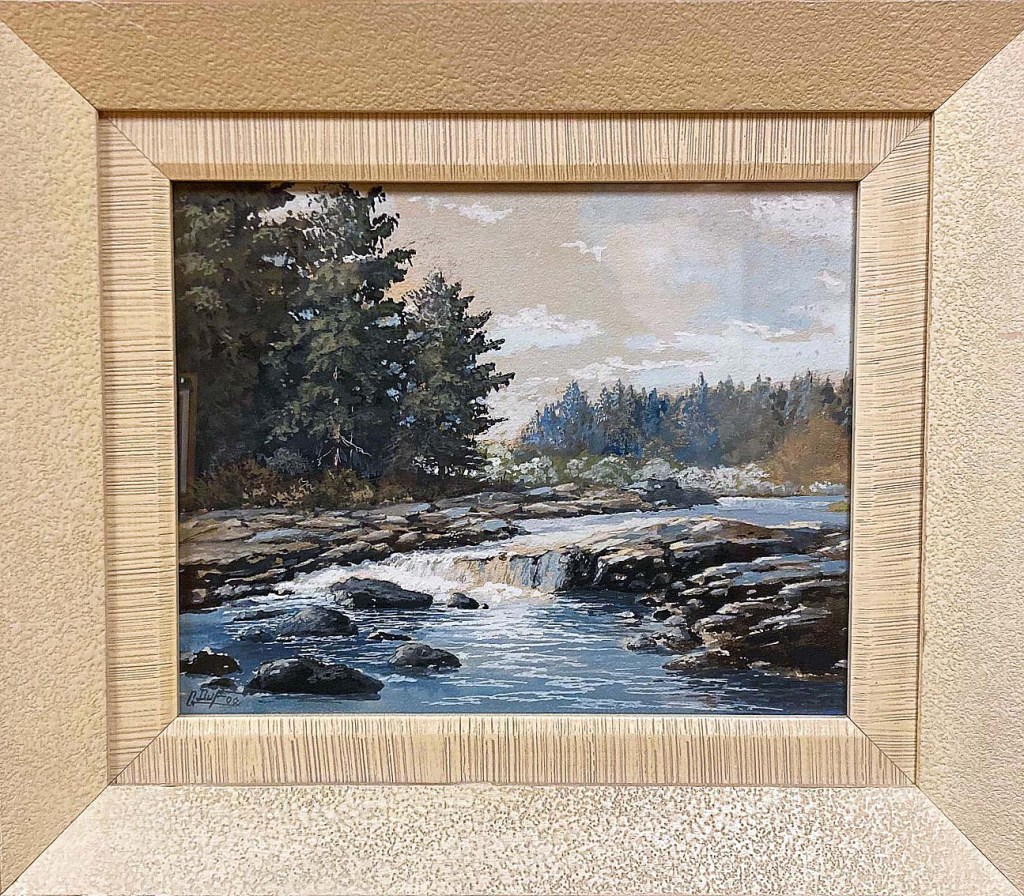
Dufoe eventually set up a home studio and began to paint professionally.1 His background as a trapper and guide shines through his work, which is largely focused on landscapes and animals. He had a beautiful eye for capturing the essence and movement of his subjects. 

The Mattawa Museum exhibit includes a Ricohflex – Model VI camera that was used by Dufoe. An avid photographer, he would often take photos that he would reference when creating his paintings. He also dabbled in building his own cameras, as well as building radios and telescopes.2 

His paintings can be found in North America, and around the world.1 Today, a painting can sell for more than Dufoe made in his lifetime as a living painter. He was known to give his paintings away or even throw them away if he was not happy with them.2 After his death in 1975, many of his works were donated to the Mattawa Museum2, and are on display for all to see.

In 1993, Dufoe’s family worked with Douglas Pollard at the Highway Book Shop to posthumously publish a book Dufoe had written. Canadian Animals I Have Known by Gordon Dufoe is a collection of stories from Dufoes life in the bush and contains many of his animal sketches.2 Today, the book is now out of print. 

Visiting the Cemetery

After visiting the museum, my mother and I made our way to the cemetery to pay our respects.

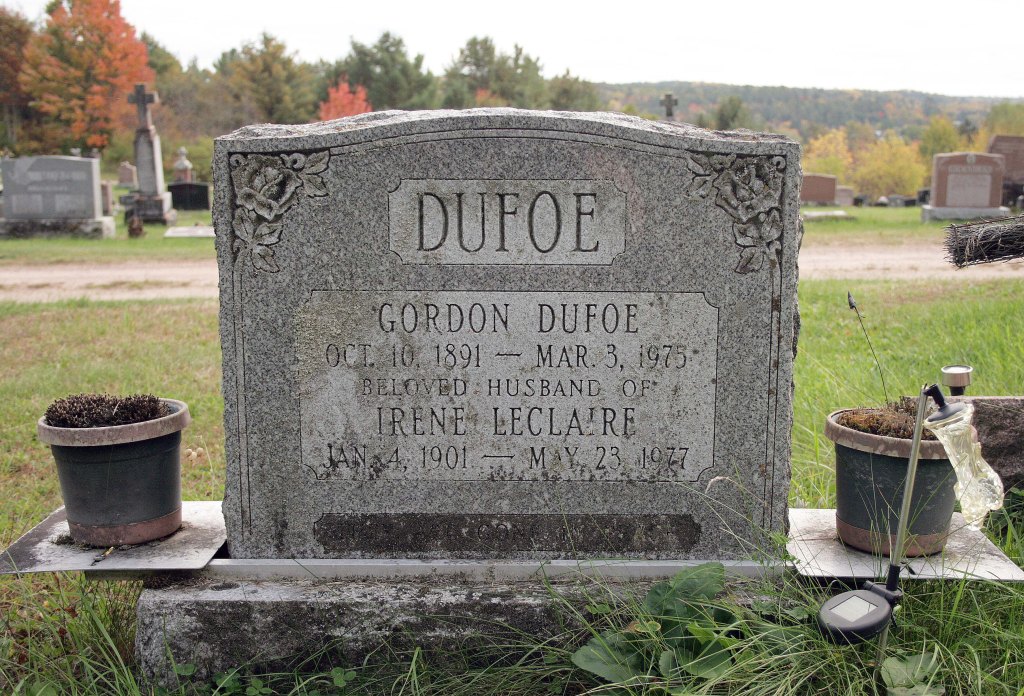
Dufoe passed away on March 3, 1975, at the age of 83. He is laid to rest in Saint Annes Cemetery beside his wife, Irene who passed away in May of 1977. Beside a large grey granite tombstone for both Gordon and his wife, stands a Canadian military grave marker, in honor of Dufoe’s military service. 

It reads: “ Gordon E. Dufoe / Private / 130 Battn. C E F / 3 March 1975 / Aged 83”

The Dufoe family plot is also the final resting place of Albert and Norman Dufoe, and Stella Dufoe Brunette, children of Gordon and Irene. 

It took my mother and I some time to find Dufoe’s plot as the cemetery is quite large. Saint Annes Cemetery, also known as Saint Annes Catholic Cemetery was established in 1883 and has approximately 2,246 memorials according to Find a Grave. The cemetery has not been fully photographed yet, and it is still an active cemetery. 

If we had not visited the Mattawa Museum before visiting the cemetery, we would not have known that this simple grey marker was the final resting place of one of Mattawa’s finest painters. 
The Museum and cemetery are not the only places in Mattawa where you can find a memorial to Dufoe. There is a park that sits between 10th and 11th streets that was dedicated to the local painter many years ago.1 In 2016, a new sign and a memorial bench that lists the names of all of his children was installed.4

The inscription on the memorial park sign reads: 

“Gordon Dufoe (1891-1975) an outstanding artist, craftsman, outdoorsman, soldier, family man, and friend is hereby remembered for the beauty and pleasure he brought to many and for his contributions as an exemplary citizen.”1

Thanks for reading!


References:

  1. Gordon Dufoe | Mattawa Museum
  2. Mattawa’s ‘Renaissance Man’ Remembered | Past Forward Heritage Limited
  3. Mattawa Park bench and sign honours artist | Bay Today
  4. Park bench will honour local painter | Bay Today
Stone Stories: The Abandoned Highway Bookshop

When I was a child, my family often made trips to Quebec to visit extended family. My father loved to use the shortcut through Field, as it cut about 30 miles off our five-hour drive to Val d’Or. We always stopped for a meal at the McDonald’s beside Ms. Claybelt, the 12-foot-tall Holstein cow. 

On the way back from our family visits we would add another stop to our route, which also became a road trip tradition. That was stopping at a small unassuming Book Shop that sits beside Highway 11. 

I have many fond memories of this little highway book shop, that today sits abandoned. Just like the many books that have sat on the now neglected shelves, the Book Shop has its own interesting story to tell.

The Highway Book shop

When Douglas Pollard opened his small print shop, called Pollard Press in 1957, I don’t think he ever imagined how big it would become. What started as a small commercial print shop in his garage, printing general office stationary eventually turned into a Northern cultural landmark.1

The story goes that one of Pollard’s customers asked to barter used books instead of cash to pay his bills. From then on the demand for books became greater and the shop expanded many times over the years to accommodate the growing collection of books.1 

Being originally a print shop, it was a natural move for Pollard to start printing and publishing books in the 1970s2. 467 original titles were published through the Highway Book Shop, focusing on local history and Canadian literature.1

What started as a 20’ x 25’ wooden building eventually expanded into a 10,000 square footprint, consisting of building add-ons and even three highway trailers that were used to store nothing but books.2 No wonder so many people made it a mandatory stop in their travels, sometimes just to experience the sheer size of its collection. 

I remember as a young girl getting lost among the stacks of books. It was so mind-blowing to me that the staff could find anything in that sea of books. However, the inventory was well maintained and kept very up-to-date. The Book Shop even maintained a list for those looking for specific titles. You could add your name to the list with your desired title and eventually, you might get a call that your book was found. Naturally, this could take some time, even years!2 

Pollard, and his first wife Jean Ririe Hope, spent a lot of time at book fairs and conventions, always on the hunt for good books to add to their shop. Pollard even purchased lots of discarded Library books, that were sometimes hit-or-miss for quality. 

After Pollard’s first wife passed away, he eventually remarried and brought his second wife into the fold of the Highway Book Shop. Mary Lois Williams was a Librarian with a Master of Library Science from the University of Toronto. She left the Librarian life trading it to work in the Book Shop when she married Pollard in 1986.3  

After Pollard died in 2009, Lois worked to keep the Book Shop running. It was a valiant effort, but she ultimately decided to close the shop in 2011. At 87 years old, her heart was just not in the same way anymore.

Visiting Cobalt

I visited Cobalt in October of 2022 with my mother. We wanted to take advantage of the fall colors and visit some local historical sites. We also wanted to visit Douglas and Lois Pollard in the cemetery, to pay our respects.

We spent most of our time in Cobalt visiting the Heritage Silver Trail, a self-guided trail system that takes you to 14 locations throughout the small town, that highlights the history of the silver mining rush. Unfortunately, when we visited, a lot of places were closed. This was also the case of the bookstore we had hoped to visit, White Mountain Publications.

White Mountain Publications was high on our list to visit as it houses some books that were rescued from the Highway Book Shop after it closed. I was hoping to speak to someone about how many books were rescued and if there were plans to rescue more. White Mountain also published a book that I was hoping to purchase on this trip, called Highway Book Shop: Northern Ontario’s Unexpected Treasure written by Lois Pollard. I ended up purchasing the book through White Mountain’s website instead. 

Of course, there were many cemetery stops planned for this trip, but the one we wanted to visit most was the Cobalt Veterans Cemetery. This cemetery is located in Haileybury, a small town adjacent to Cobalt. The cemetery sits beside two other cemeteries; directly beside Mount Pleasant Cemetery, and across the road from the Haileybury Catholic Cemetery. 

The Cobalt Veterans Cemetery is the smallest of the three, although Find a Grave lists 332 memorials. I would not have thought there were that many laid to rest there based on the cemetery’s small size. It did make finding the Pollards less of a challenge. 

Douglas Pollard passed away on November 25, 2009, at the age of 84. His obituary states that he passed away suddenly at Temiskaming Hospital4, but in her book Highway Book Shop, Lois briefly touches on that fateful night. Like any other normal day, after closing time Pollard went upstairs to retire for the night, as they lived in a small apartment above the book shop. When she followed him upstairs, only ten minutes later, she found that he had “quietly passed away”. Doctors confirmed that he had died of cardiac arrest.2 

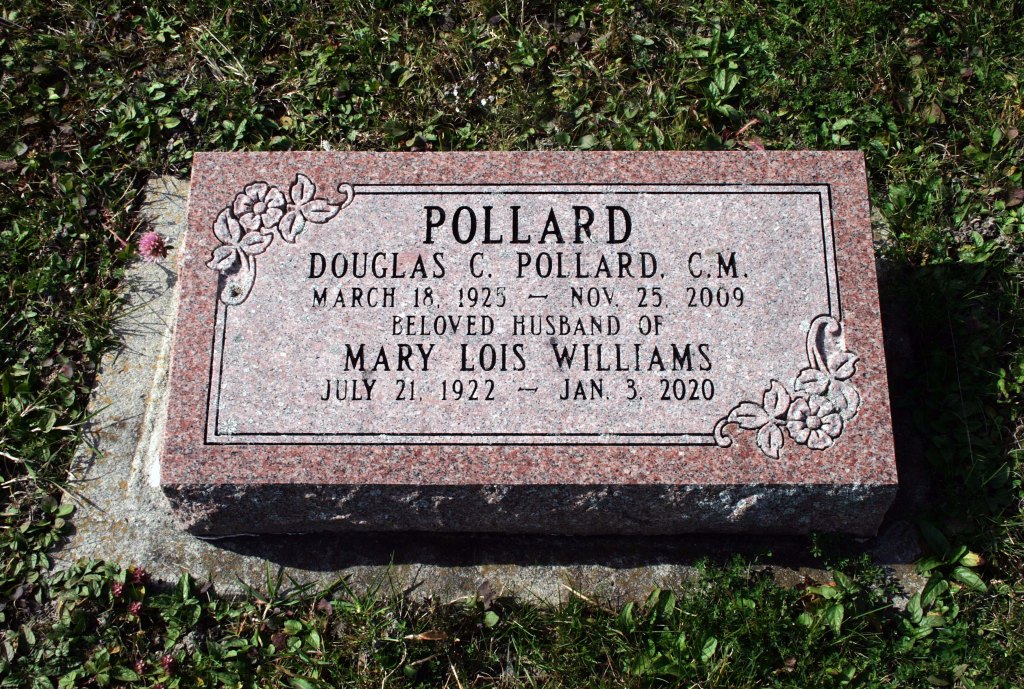
Douglas is laid to rest beside his second wife, Lois Pollard who passed away on January 3, 2020, at the age of 98. Their gravestone reads: “Pollard / Douglas C. Pollard. C.M. / March 18, 1925 — Nov. 25, 2009 / Beloved Husband of / Mary Lois Williams / July 21, 1922 — Jan. 3, 2020”

Douglas’s first wife, Jean Pollard is laid to rest in Valleyview Cemetery in New Liskeard. Jean passed away in October of 1979, unexpectedly on the operating table during a planned second open-heart surgery.2

The Book Shop Today

The Book Shop closed its doors forever on May 29, 2011. In 2012 it was purchased by new owners, but the Book Shop never re-opened.5 Rumour has it that the inventory of approximately one million books1 was left behind on the shelves. As noted above, White Mountain Publishers did rescue some of the books, but is it true that the large majority were left behind? 

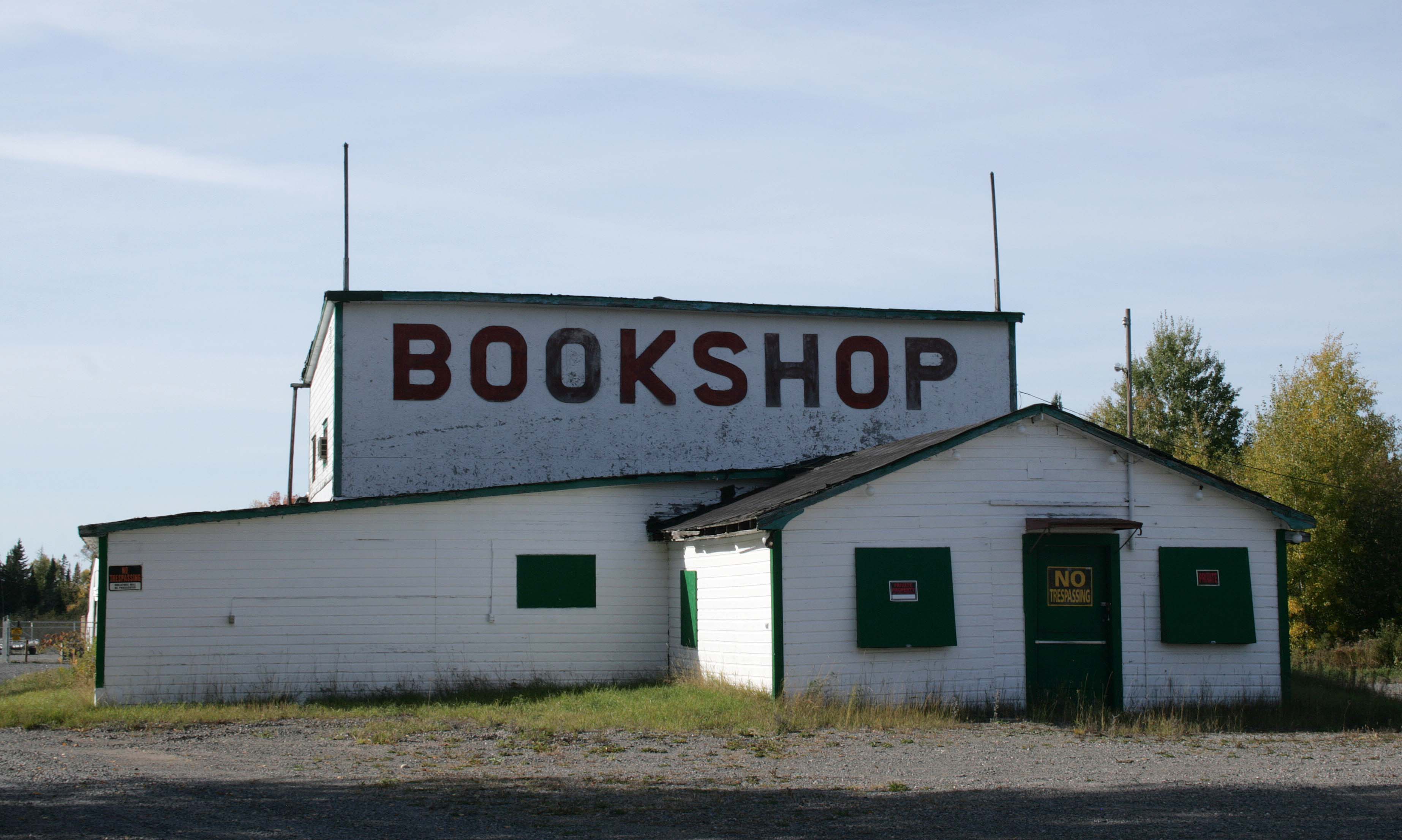
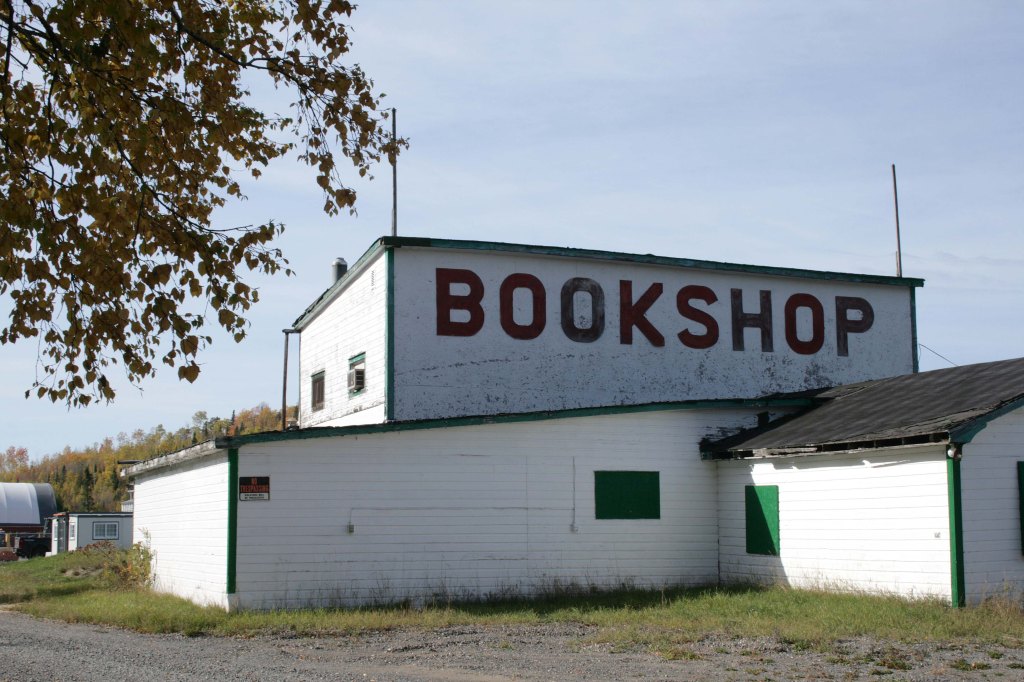
When we visited the Highway Book Shop on our way back home from visiting Cobalt, we took some time to walk around the building outside. The large sign that stands by the road that once welcomed visitors is slowly deteriorating. The building facade has peeled and faded over the years, and the grass is now growing wild. 

We were hoping to catch a glimpse of the stacks of books inside, instead, we got a whiff of the strong musty smell of old books. Depending on where you stand outside the front of the building, you can catch that unmistakable smell. I can just imagine what it must smell like inside the building.

While touring the grounds we chatted about our memories of visiting the Book Shop. My mother remembers speaking with Lois on our many visits over the years. We also talked about the books—about all the books that were left behind, and wondering about what types of books we could find given the chance. Both of us are not brave enough to cross into urban exploration territory, but luckily we are not the only curious ones.

The good people over at Freaktography have ventured inside to document what the Book Shop looks like today and prove once and for all that the rumor is true, they did leave the books behind. You can watch their video Exploring a HUGE Abandoned Book Store over on their YouTube channel

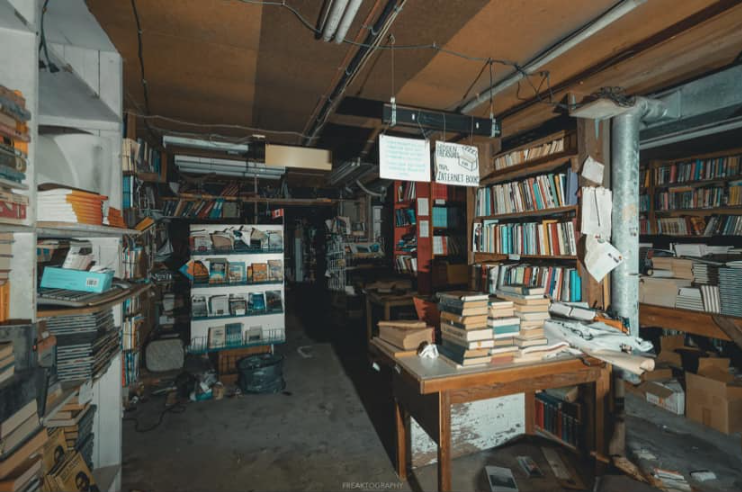
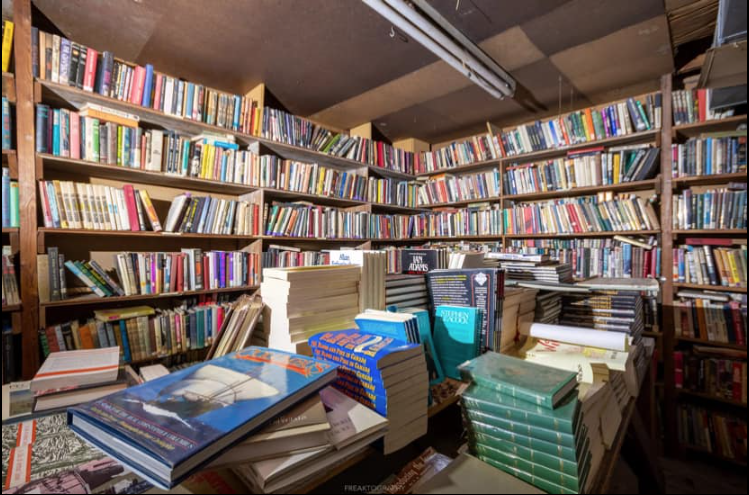
Their video and photos show a time capsule, and books in rows upon rows of bookshelves for as far as the eye can see. It looks just like I remember. I am not the only one who has tried to imagine what an abandoned building full of molding and rotting books might smell like. The folks at Freaktography have been asked the question before:

“I have been asked by people, “What did it smell like in there?”, it smells exactly like you would think it does – like old books. It has warm, thick air and the rows upon rows of books give a muffled sensation when talking, there is no echo and it is eerily silent.”6

I can only imagine how surreal it would be to walk through those stacks again. Watching the walk-through video does make me a bit sad though. So many books left behind. I wonder what unique and rare finds there might be, what treasure could be found. I mean a lot of those books might be dated and useless now, such as the maps and tech manuals. But just imagine what old and out-of-print finds there might be buried in there as well. 

Maybe one day someone will be given the go-ahead to slowly pour through those lost tomes, and bring some of them back into the light. I know I would love to, given the chance. 

It was really interesting looking into the backstory of this abandoned landmark, and a piece of my childhood. Learning about the lives and passions of the people who brought the Book Shop to life highlights the fact that there are so many interesting stories out there. 

Thanks for reading!


References:

  1. A Short History | Highway Books
  2. Highway Book Shop: Northern Ontario’s Unexpected Treasure by Lois Pollard | Book
  3. Mary Lois Williams Pollard | Find a Grave
  4. Dr. Douglas Charles Neil Pollard | Find a Grave
  5. Home | Highway Books
  6. Exploring a HUGE Abandoned Book Store | Freaktography Youtube Channel

2023 Cemetery Scavenger Hunt

What are you up to this Halloweekend? 

That’s right, it’s the last weekend in October before Halloween. Time to get in those last autumn days enjoying some seasonal activities, and getting ready for the ghouls and boils to come knocking on your door for treats.

I have a pretty full weekend planned of pumpkin carving, horror movies, and of course one last visit to a cemetery. 

This Sunday is the fourth annual Halloween Cemetery Scavenger Hunt, organized by Talk Death. If you are not familiar with Talk Death, they are a death-positive collective, whose mission is to encourage positive and constructive conversations around death and dying. 

This annual cemetery scavenger hunt is designed to bring together communities, families, cemetery lovers, and history enthusiasts. It’s a fun way to get outdoors and learn about your local history and art and architecture of different eras.

Want to join the fun?

It’s easy to play along! On Sunday, October 29th, at 2:30 p.m. ET/11:30 a.m. PT visit your favorite local cemetery and tune in to Talk Deaths Instagram page.

Then follow the clues provided to search for gravestones that match the clues, like symbolism, names, and dates. Take a selfie with the stones and submit your finds using the link in their bio. The first 3 people to fill out the form completely, win!

You can visit the TalkDeath 2023 Halloween Cemetery Scavenger Hunt webpage for the full details! 

Although this is meant to be a fun event, please be mindful when visiting any cemetery. Be respectful, and do not disturb the gravestones or grave goods.

That being said, I had a great time participating last year, and l look forward to playing again this year. Last year I visited Park Lawn Cemetery with my Mom. We were the only ones in the cemetery that day, but we still had a lot of fun!

This year, my cemetery of choice is Lasalle Cemetery. It’s a fairly large cemetery and has some older stones. Feel free to join me, if you are in the area!

Regardless of what you get up to this weekend, I hope you have a great one and take some time for a little Halloween fun. 

Happy Halloweekend, and thanks for reading! 

Spooky Grave Goods

In honor of the Spooky season, I wanted to do a sort of spooky show-and-tell. For today’s blog post, I want to talk about some of the creepier grave goods I have come across while exploring and photographing cemeteries.

Grave goods is a term used for items left behind at a grave. I have always found it fascinating what people leave behind. There are a variety of reasons someone might leave grave goods; to pay their respects, to honor their loved one, this list goes on.

The most common grave goods I see in my cemetery travels are flowers, but I have also found coins, toys, figurines, and pieces of clothing such as hats or gloves. I have even found alcohol and cigarettes left on gravestones.

But there have been a couple of times where I have found some pretty creepy things. I would say maybe even sinister grave goods.

A Horse Skull

One of the first creepy grave goods I ever came across was a skull hanging from a tree. I believe this is a horse skull, although I don’t know for certain. A horse skull would make sense for the area where it was found, in Verner Public Cemetery. Verner is a rural area, dotted with farmland.

How the skull ended up in the tree is another question entirely. I remember it was hanging on a tree at the edge of the tree line. Was it found in the forested area? Was it brought from an adjoining farm?

The questions will always remain…

A Creepy Doll

I never expected to come across a creepy doll, the day I entered Blezard Valley Cemetery. It was in late May, that I discovered this one.

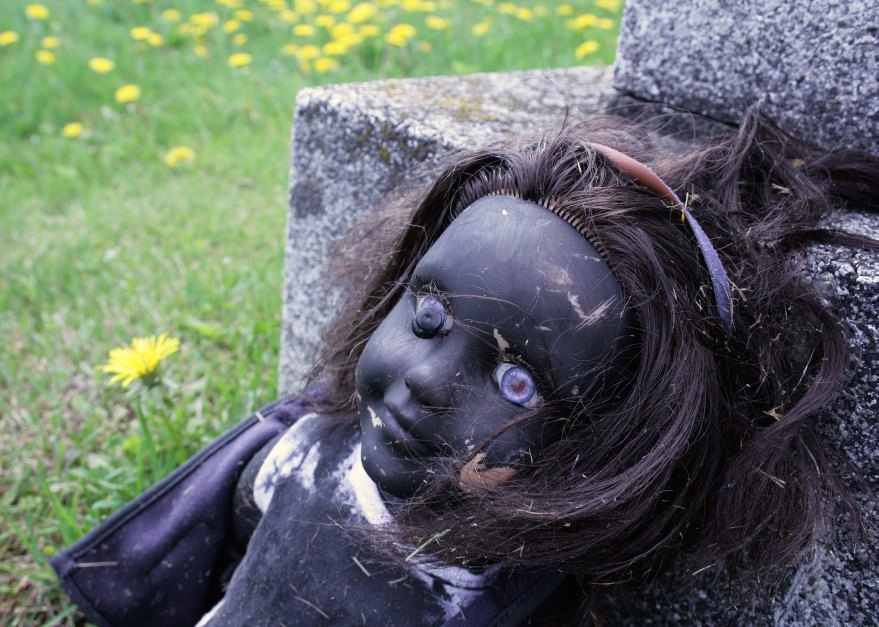
A creepy plastic doll, the kind where the eyes close when you tilt it backward. Except this one has a push pin pushed into its plastic eyeball. It was also painted black. I found it leaning up against the backside of a granite gravestone.

How it ended up there, I can’t even speculate. Was it bored teenagers? Or was it left behind with more sinister intentions? I took many photos but left the doll where I found it.

A Ouija Board

I think this is one of my favorite spooky finds! Technically my mom found it. We had gone off on our own, in separate directions, meandering among the gravestones. She called me over when she spotted this unique grave good.

Laying above a small flat stone marker was this hand-made ouija board. It was painted by hand onto a small canvas. I wasn’t able to locate what had been used as a planchette. My guess is they used a glass or cup of some sort, and made sure to return it to where it came from. 

From the looks of it, this hand-made board had been sitting outside for some time. Being an avid Ouija board collector myself, I enjoyed finding this one. But of course, I left it where it was found.

I have written in the past about the cemetery etiquette I follow when visiting cemeteries. I do sometimes clear away debris to get a clearer picture or stand-up fallen grave goods that have been knocked over. But, I would never remove anything from a gravestone, or cemetery for that matter. 

Did you enjoy my round-up of the top three spookiest grave goods I have found in a cemetery? It’s one of my favorite things about cemeteries, you never know what you might find!

Have you ever found anything strange left behind in a cemetery? I would love to read about it in the comments.

Thanks for reading!

Stone Stories: The U.F.O. Gravestone

In early July, my friends and I went on a cemetery road trip, up through Hailybury and New Liskeard to Kirkland Lake. We made quite a few stops along the way, not only at cemeteries. We stopped at a couple of roadside attractions to stretch our legs and take in the sights. 

We did have a few points of interest that we were determined to visit that day. One was the grave of Charles Bélanger, son of famous Canadian sculptor Rose-Aimée Bélanger. You may remember that story, as I wrote about our visit in a blog post called Stone Stories: Art in a Cemetery

The other point of interest, high on our list to see was a gravestone with an epitaph about U.F.O.s.

One of my favorite things about visiting cemeteries is finding unique gravestones. I love gravestones that stand out, that showcase a sense of humor, or something specific about their life story. I love stones that give you a glimpse of who the person was. Sometimes these peculiar gravestones also present a mystery! 

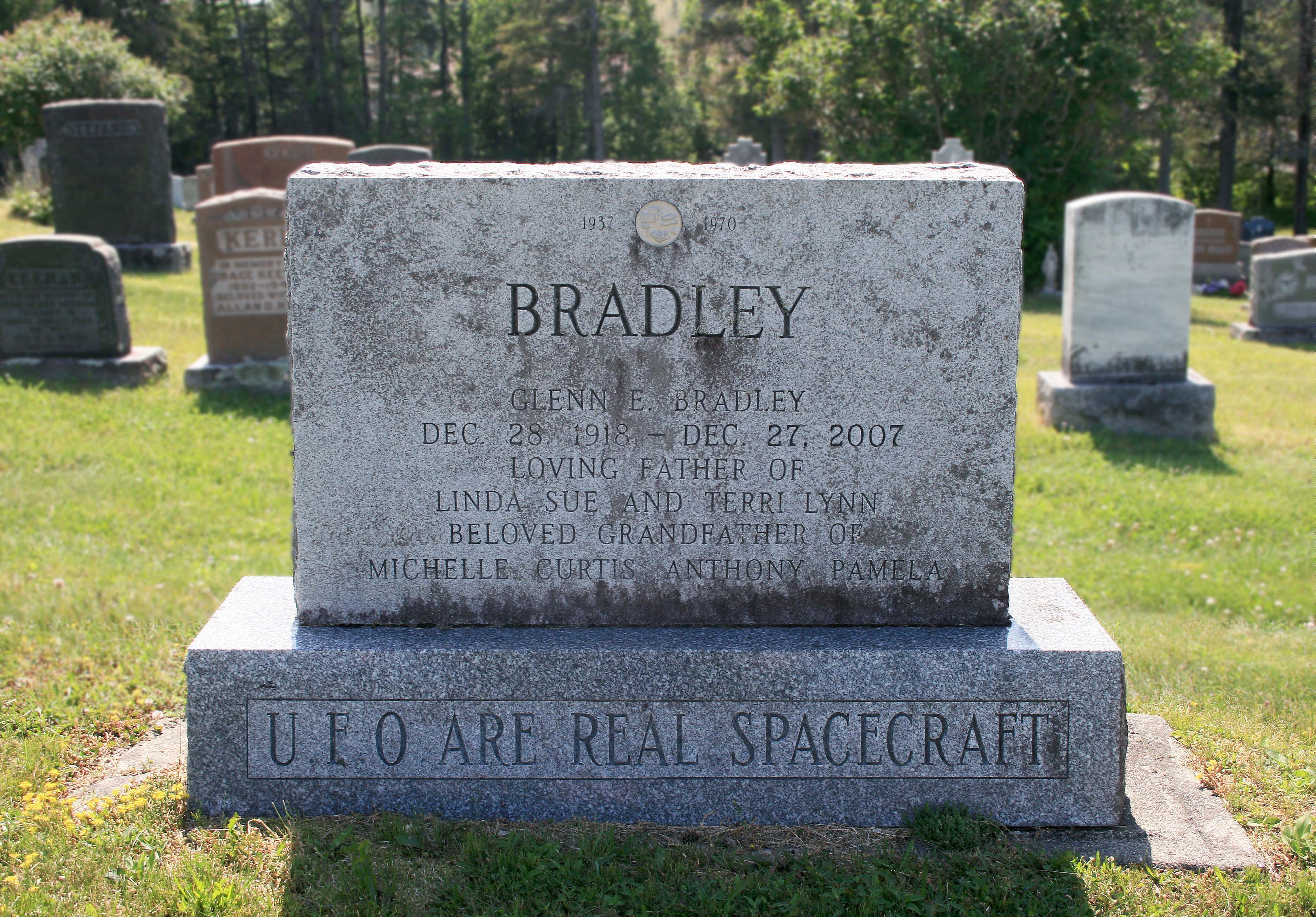
Like this gravestone in Kirkland Lake Cemetery that reads “U.F.O. Are Real Spacecraft.”

This is the gravestone of Glenn Bradley, who passed away on December 27, 2007. A day before what would have been his 89th birthday. From far away, his gravestone doesn’t seem to stand out. It’s a classic style headstone, in grey granite. But upon closer inspection, the epitaph jumps out at you.

It reads: “Bradley / Glenn E. Bradley / Dec. 28, 1918 — Dec. 27, 2007 / Loving Father of / Linda Sue and Terri Lynn / Beloved Grandfather of / Michelle, Curtis, Anthony, Pamela / U.F.O. Are Real Spacecraft.”

The epitaph continues on the backside of the stone: “Spinning Objects Vanquish Gravity / Spinning Objects Levitate / Spin to Exceed the Earths / Relative Feet Per Second / Honorable 60th C.B. Service / 1942 U.S. Navy 1945”

What does it mean? 

I am not the only one fascinated with this gravestone. Bill Steer, also known as Back Roads Bill, wrote an interesting article about this peculiar stone. In it, he shares an interesting tidbit found in Bradley’s obituary. It reads: “He will be remembered for his scientific work such as antigravity and his belief in UFOs.”1

Bradley’s gravestone tells us that he was a veteran of World War II with the U.S. Navy, having served from 1942 to 1945. Is that where he worked on antigravity? Had he seen a U.F.O.?

Recently, NASA revealed a report on UFO sightings, confirming that they are actively monitoring and collecting evidence. In the report, they state that unidentified anomalous phenomena (UAP) are not definitively connected to alien life, but what they are remains uncertain.2 You can read the 33-page report here.

It was on a particularly hot day, that we chose to visit the cemetery. It was the final cemetery on our list, having stopped at many cemeteries along the way. This meant that we were fairly tired when we arrived at the Kirkland Lake Cemetery, also known as Swastika Cemetery. 

Kirkland Lake Cemetery is actually located in Swastika, Ontario, a former mining and railroad town. It sits within the Kirkland Lake municipal boundaries.3 Swastika was originally a railway station along the Temiskaming and Northern Ontario Railway in the early 1900s. The town grew into a small mining community in 1907. It became known for its abundance of gold, which led the company, and officially the town itself, to name themselves after the Sanskrit symbol for “good luck” in 1908.4 

I don’t think we were prepared for how large this cemetery is! I was a little disheartened when we arrived, thinking we may not be able to find the fabled UFO stone. Find a Grave lists 7,871 memorials for this cemetery, and it’s marked as only 83% photographed. It’s quite large! 

After a brief distraction of falling into my regular photographer’s routine of stopping at gravestones that caught my eye, I remembered our objective. I regrouped with my companions and checked out Google one more time to point us in the right direction. In the end, we used some online photos to help us triangulate the stone’s location by matching up unique stones and markers in the background of the photos.

BINGO!

As mentioned previously, the stone from a distance is fairly nondescript. At the top of the gravestone, there is a coin embedded into it, with the dates 1937 — 1970. The coin reads: “E.W. Bliss Company / Bliss since 1857 / From Ingot to Finished Product”. According to the Military Wiki page, E.W. Bliss was an American company based in Brooklyn, New York. Among other things, they produced a line of special sheet metal work presses, power stamping machines, car parts, torpedoes, shrapnel, and armor-piercing projectiles.5

We spent time circling Bradley’s gravestone, pondering his curious epitaph. Without more background information, and as a layperson it did make me scratch my head in curiosity.

Maybe one day, answers will come forth as to what Bradley was talking about with his cryptically scientific epitaph. For now, it makes for a curious extraterrestrial mystery!

Have you ever seen a U.F.O. mentioned on a gravestone before? What do you think? Do you want to believe?

Thanks for reading!


References:

  1. A most unusual epitaph | Bay Today
  2. NASA reveals results of highly anticipated report into UFO sightings | CTV News
  3. Kirkland Lake Cemetery | Find a Grave
  4. Swastika, Ontario | Town of Swastika
  5. E. W. Bliss Company | Military Wiki

A Collection of Wooden Grave Markers

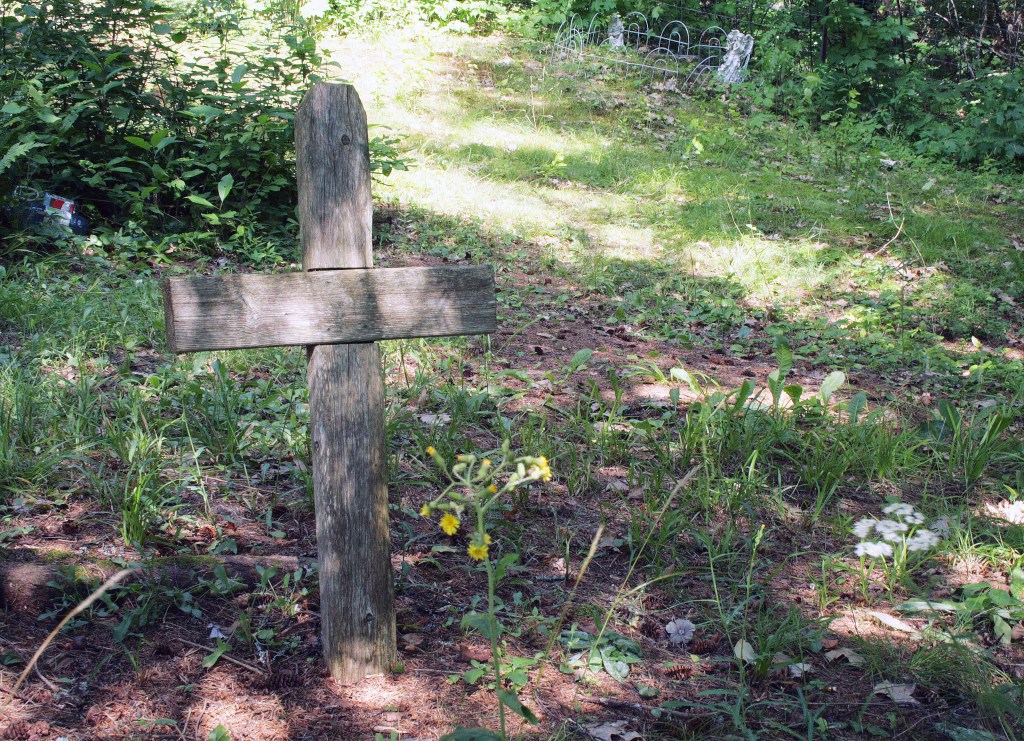
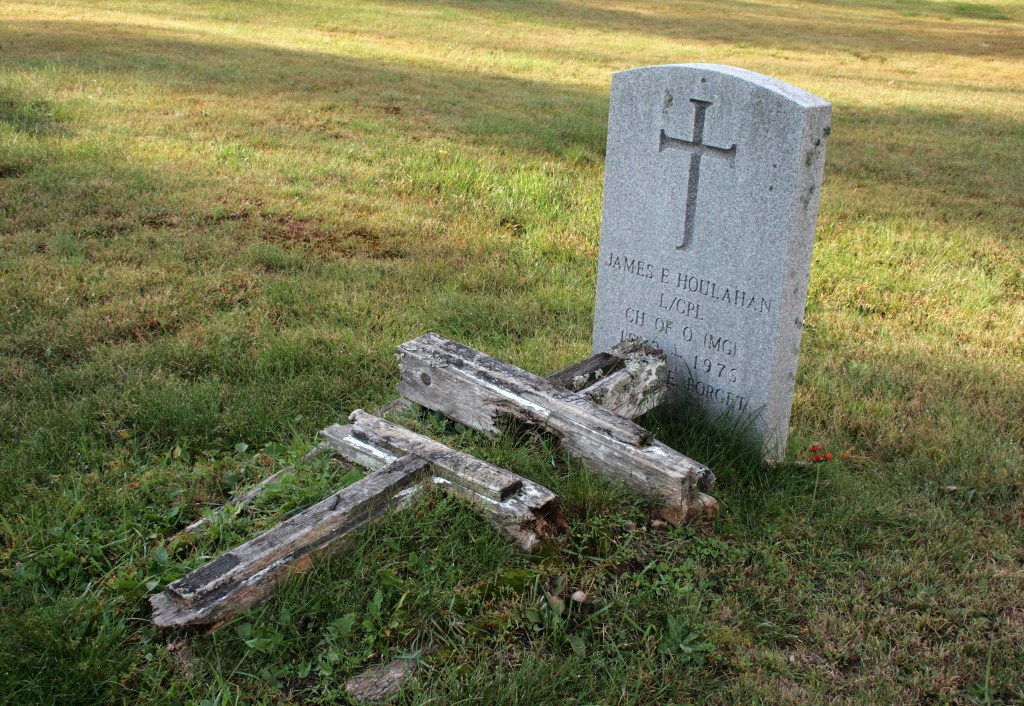
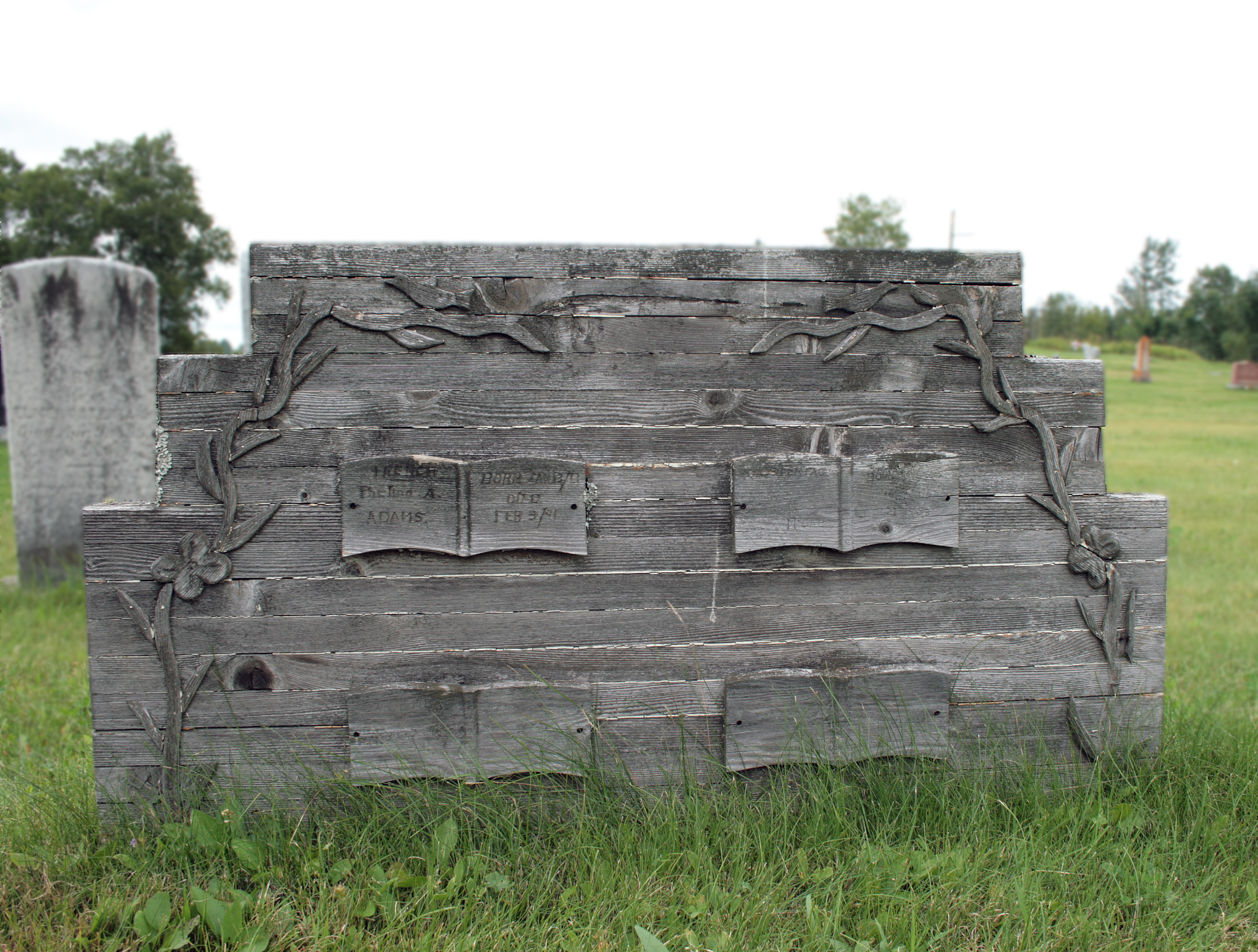
I had the idea for this collection when I was wandering through Maple Ridge Cemetery in Thessalon. I found some very interesting wood markers there, and it reminded me of some other interesting wood markers I have found in the past. So, for today’s blog post, I wanted to share a collection of wooden grave markers.

In North America, there was a time when wooden markers were more common. Between 1861 and 1873, wood markers would have been common for graves of Civil War soldiers, but over time marble became more favorable because of its durability.1 Due to the nature of the material, wood is more susceptible to natural decomposition and wood-boring insects. Over a long period of time, the wood just rots away. 

Today, wood markers are not a very common sight in Northern Ontario cemeteries. They often tug at the heartstrings, as wooden markers are usually handmade, and you can see they were made with love. Unfortunately, if they are not used as a temporary marker the wood can become hard to read, and eventually falls apart.

I would argue that this is one of the best reasons why photographing gravestones is important. Over time, these wooden grave markers will be lost to time, so documenting them helps preserve the memory of the deceased. It creates records for those looking to piece together their family history and become great resources. 

Have you found wooden grave markers in your local cemeteries? I would love to read about your finds, in the comments.

Thanks for reading!


References:

  1. The History of Headstones Across Cultures and Religions | Milano Monuments

Our Story in Black and White: Photography Exhibit

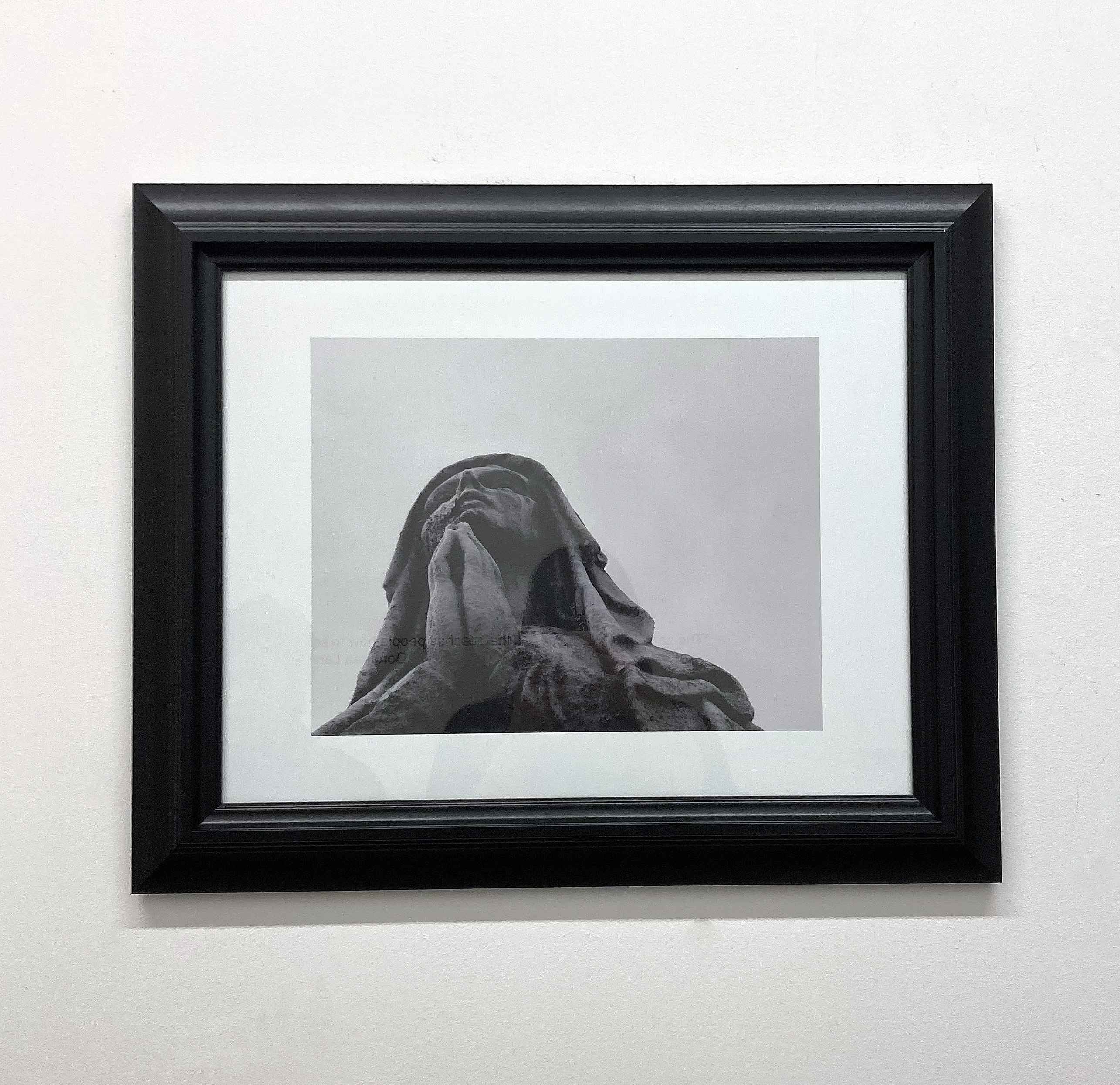
Recently, I was very excited to learn that my work had been selected for a group photography show. If you follow me on Facebook or Instagram, you may have seen a few posts about it. Gallery 6500 had put out a request for submissions from local photographers, looking for contemporary black and white photographs. 

They asked photographers to submit works that commented on social, political, economic, and environmental issues within our community. COVID-19 was a focal point of many submissions, including mine. There was a very nice Sudbury.com article written about the show, that highlights the theme as well as some of the other amazing photographers in the exhibit. 

The 5 photographers exhibiting are: Caio Higa, Debbie Anzinger Mckay, Debb Trahan-Pero, Rita Vanderhooft, and myself. 

I was thrilled when I got an email saying my cemetery photographs had been chosen. This is my first time exhibiting in a gallery, and I was a little uncertain as to how my photography would be received. I have been in one other group photography show, that was more of a market or craft show style. It’s been a great experience working with the Gallery and organizers to bring this show to life. 

Last Sunday, April 30th, was the opening of the exhibit. It was a great event! There was a great turnout of friends and family of each featured photographer. It was so nice to see so many people come through to enjoy the photographs. Personally, seeing so many of my friends and family come out to support me made my heart full. I sometimes feel like my work goes unnoticed and I am creating content just for myself, so seeing so many people come out to support me and overhearing conversations surrounding my work was such a thrill!

Our Story in Black and White: Photography Exhibit, at Gallery 6500

I am very excited and honored to be exhibiting alongside such great photographers. There are a variety of subjects presented, each in the photographer’s own unique style. I am sure there is something there for everyone to connect with. There is some very powerful work on display. 

If you were not able to attend the opening, there is still time to visit this great exhibit. Gallery 6500, at 66 Brady Street, in the Steel Workers Hall is open for viewing on weekdays from 8:30 a.m. to 4:30 p.m. Our Story in Black and White is running until June 30th, and is dedicated to the memory of Don Kuyek. Don’t forget to sign the guest book and share your thoughts.

Thanks for reading!

Year in Review – 2022

2022 has been a very good year for Cemetery Photography by Chantal Larochelle!

I wanted to take this opportunity to look back at some of the highlights and achievements from this past year.

My biggest goal for 2022 was consistency. It has been an issue that I have struggled with for years. I finally found myself working and maintaining a consistent posting schedule on the blog. The top 5 most viewed posts on the blog this year were: Haunted Cemetery Road Trip – The Beck HouseA Gift Guide for TaphophilesMy Local Haunted CemeteryFinding the abandoned Happy Valley cemetery, and 25 Cemeteries in the City of Greater Sudbury. It’s an amazing feeling to share these stories with you, and grow this passion project of mine.

2022 was a year full of adventure! I visited 78 cemeteries this year and was able to break my record for the number of cemeteries visited in one day—15. A personal best! I visited my first pet cemetery and went on many fun and fascinating cemetery road trips. There are a few that stand out, like hiking through Algonquin Provincial Park and finding the first grave of Tom Thomson. That was a bucket list trip for me, and one of my biggest adventures so far. A lot of planning and research went into that trip, and the journey was incredibly worth it. Spending the night at the haunted Beck House was another highlight for me. Haunted holidays with my fiancé are always my favorite, but this year will be hard to top. This beautiful victorian style mansion is beautiful on its own, but its history makes it even more interesting. We had an amazing visit and made sure to pay our respects to the Becks, at their family mausoleum. I look forward to sharing more cemetery road trip adventures from 2022 but I am excited to see what 2023 will bring.

I am amazed at the following I have been able to foster on my social media channels. Over 2 000 followers on Instagram! Wow, what a milestone! Thank you to everyone who has liked, followed, commented, and shared my social and website posts. It means the world to me. I am so proud to be part of the online cemetery community, and love connecting with like-minded taphophiles. Because of this, I have branched out from Facebook and Instagram to Flickr and Pinterest as well. 

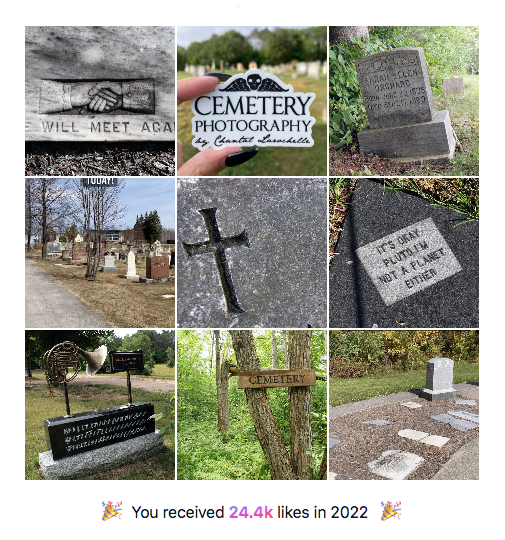
Cemetery Photography by Chantal Larochelle, Top Nine images on Instagram for 2022

This year has also been one of recognition! I am so thankful to all those who have shared my posts and photos. Not only was I featured in the March 2022 Ancestor Hunting newsletter, under Links we like. I was also asked by the Sudbury Branch of the Ontario Genealogical Society to write something for their newsletter. My post Cemetery Symbolism in Sudbury District Cemeteries was published in the December issue of Ancestor Hunting. My Gift Guide for Taphophiles also garnered some attention and was shared in the Association for Gravestone Studies November e-newsletter. 

I feel that I am continuing to grow in my writing and am slowly finding my voice. I love sharing my cemetery adventures and am so happy that I have found an audience. I hope to continue my growth as a writer into the new year, by honing my skills and sharing even more stone stories and insights.

Thank you to everyone who has followed along with me on this journey! Sharing my passion for cemeteries with you all has been an amazing experience. I look forward to continuing to share my photography and adventures with you and seeing what 2023 will bring.

Happy New Year Everyone! 

Christmas Grave Goods

The holidays are almost upon us! We’ve been blanketed by a lot of snow recently, here in Northern Ontario, so it definitely looks and feels like a winter wonderland. My neighborhood has been transformed into a little Christmas village with many of my neighbors decorating their front lawns with holiday blow-up characters, red and green candy canes, and twinkling lights galore. I am not one for Christmas decorations, I haven’t put up a Christmas tree in years, but I do enjoy the twinkling lights. 

I don’t have a long post for you today, as I’m thick in the middle of that holiday hustle and bustle that always seems to hit immediately before the holidays. So for my last blog post before Christmas, I thought I would share some of the Christmas-themed grave goods I have found while wandering my local cemeteries.
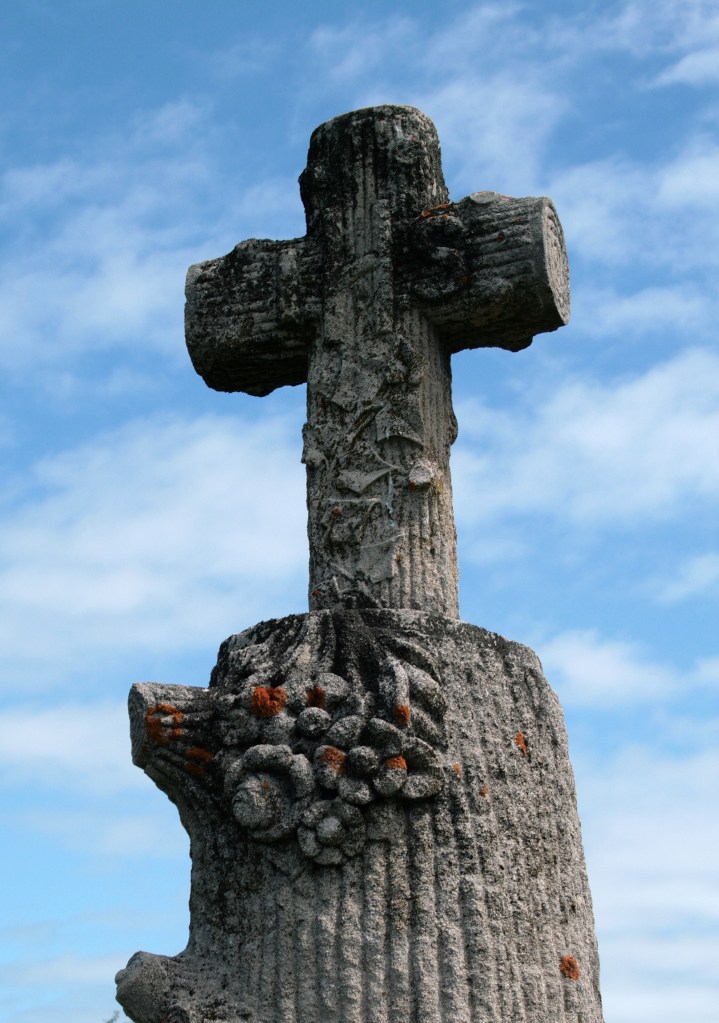
If you have been following me on social media at all, you most likely have seen me talk about grave goods. I often share some of the more unique things I have found on my cemetery travels.

Grave goods is a term used to describe items that have been left at a graveside by mourners. 

I always find it heartwarming when I see Christmas spirit spread to a cemetery. Although seeing candy canes and Christmas trees in July is always a surprise. 

Happy Holidays, and Thanks for reading!

A Collection of Tree Stones

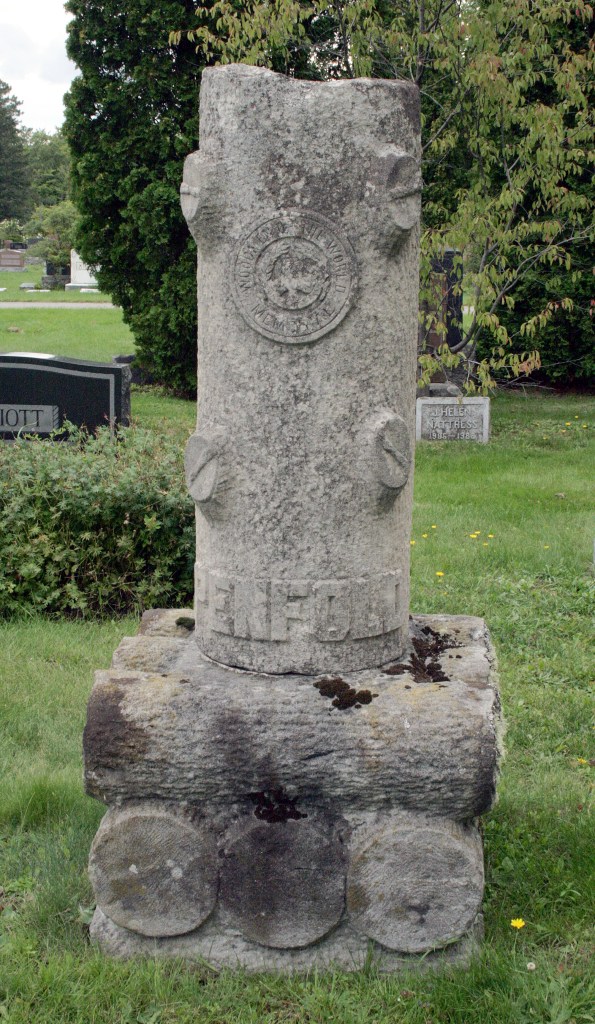
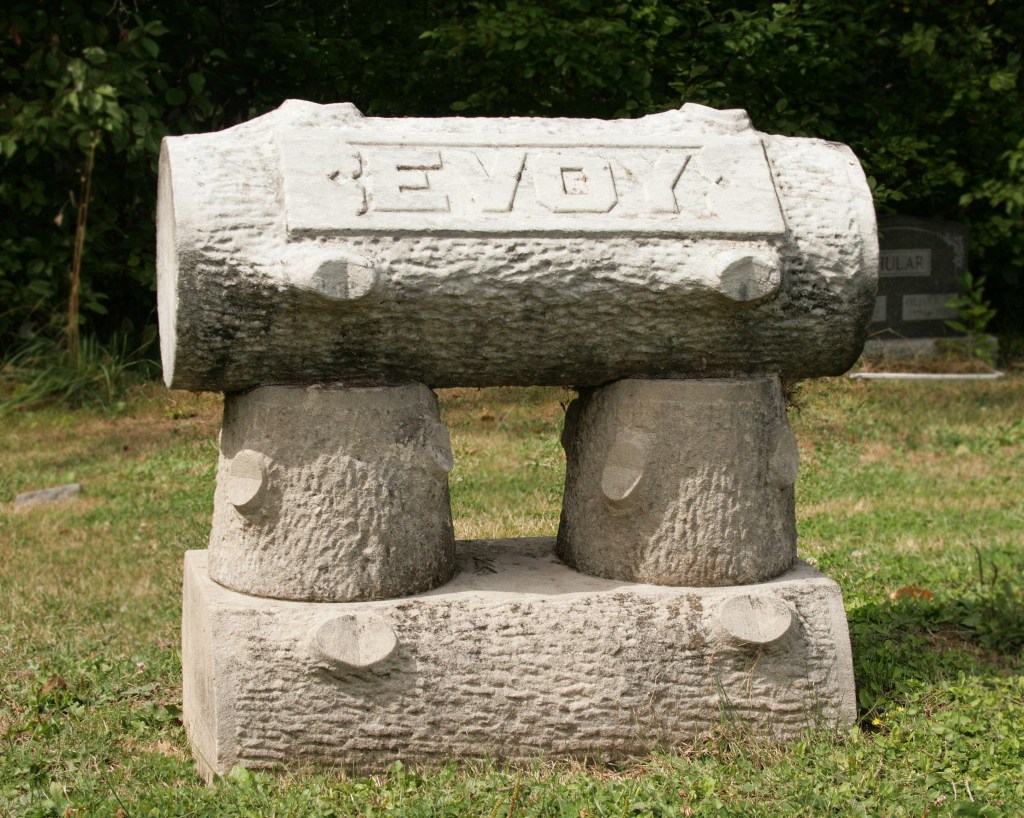
While wandering a cemetery, have you ever come across a monument that is shaped and textured to look like a tree? Today, I want to take a closer look at these types of grave markers, called tree stones. Although they are a bit harder to come by in Northern Ontario, you can find them, and they are usually very easy to spot since they are so unique!

Tree stones are often used as memorials for members of the Woodmen of the World, a fraternal organization. This fraternal order was started in 1890, and membership included those who worked in particularly dangerous professions. The organization offered health insurance and death benefits to its members, which included a tree stone tombstone.1

Woodmen of the World tree stones, often bare the Woodmen crest, as well the tools of the trades like an axe and sledgehammer, representing the works of man. You may also find other symbols on tree stones like ivy or doves, representing friendship and peace, respectively.

The severed branches or tree stump of a tree stone, Woodmen of the World or otherwise, often represents a life cut short. We often see this combined with other symbolism, like a lamb or dove laying in front of a stump. Lambs and doves are often found on the graves of small children, symbolizing innocence and purity.

Sometimes the number of logs on a tree stone can be symbolic of the number of children the deceased had. A tree stone can also be seen as a representation of the tree of life, symbolizing knowledge. 

Have you ever come across a tree stone? Or maybe a Woodmen of the world memorial? I would love to hear about your finds, in the comments. 

Thanks for reading! 


References:

  1. Understanding Cemetery Symbols: A Field Guide for Historic Graveyards by Tui Snider