One of my favorite things about cemeteries is the variety of symbolism you can find. After so many years wandering cemeteries, I have noticed some common motifs. An interesting thing I have also noticed is that depending on where you are in Northern Ontario, those common symbols will be different. I’d wager that the same could be said for other parts of the world as well.
On some recent cemetery road trips in Simcoe County and the Muskokas, I noticed many different forms of mourning figures. This symbol is not very common in my local cemeteries. So today on the blog, I wanted to look deeper at this symbol and share some of the examples I have come across so far this year.
Grief and mourning were popular grave motifs in the Victorian era. As death was such a big part of life in that time, it affected everything from fashion and jewelry to of course funeral practices and gravestones.1
One of the many ways that grief was expressed was through the use of mourning or weeping figures. These figures were often depicted as kneeling or standing over a grave in a display of deep grief and mourning. Sometimes a mourning figure can also symbolize an early or sudden death.1
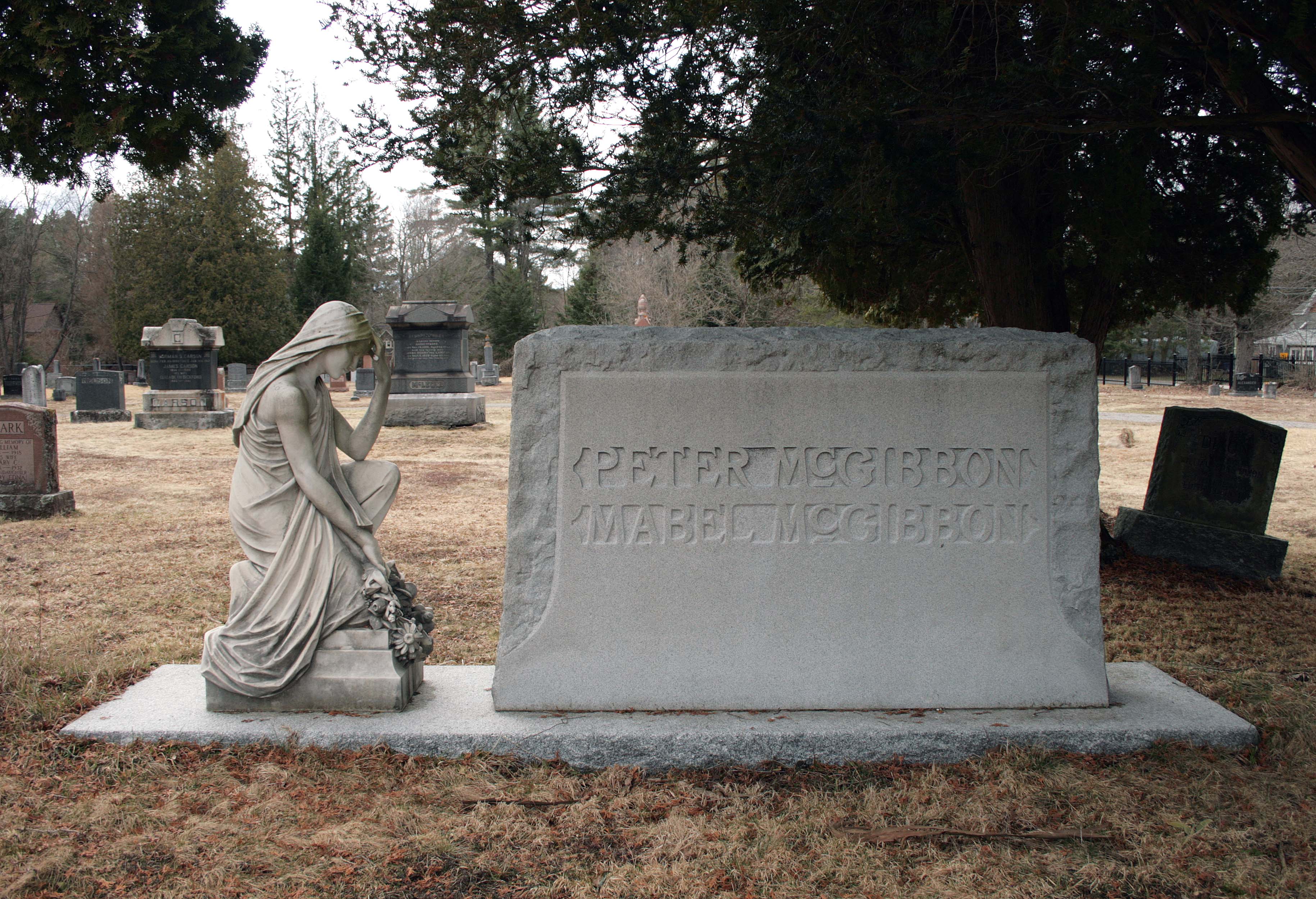

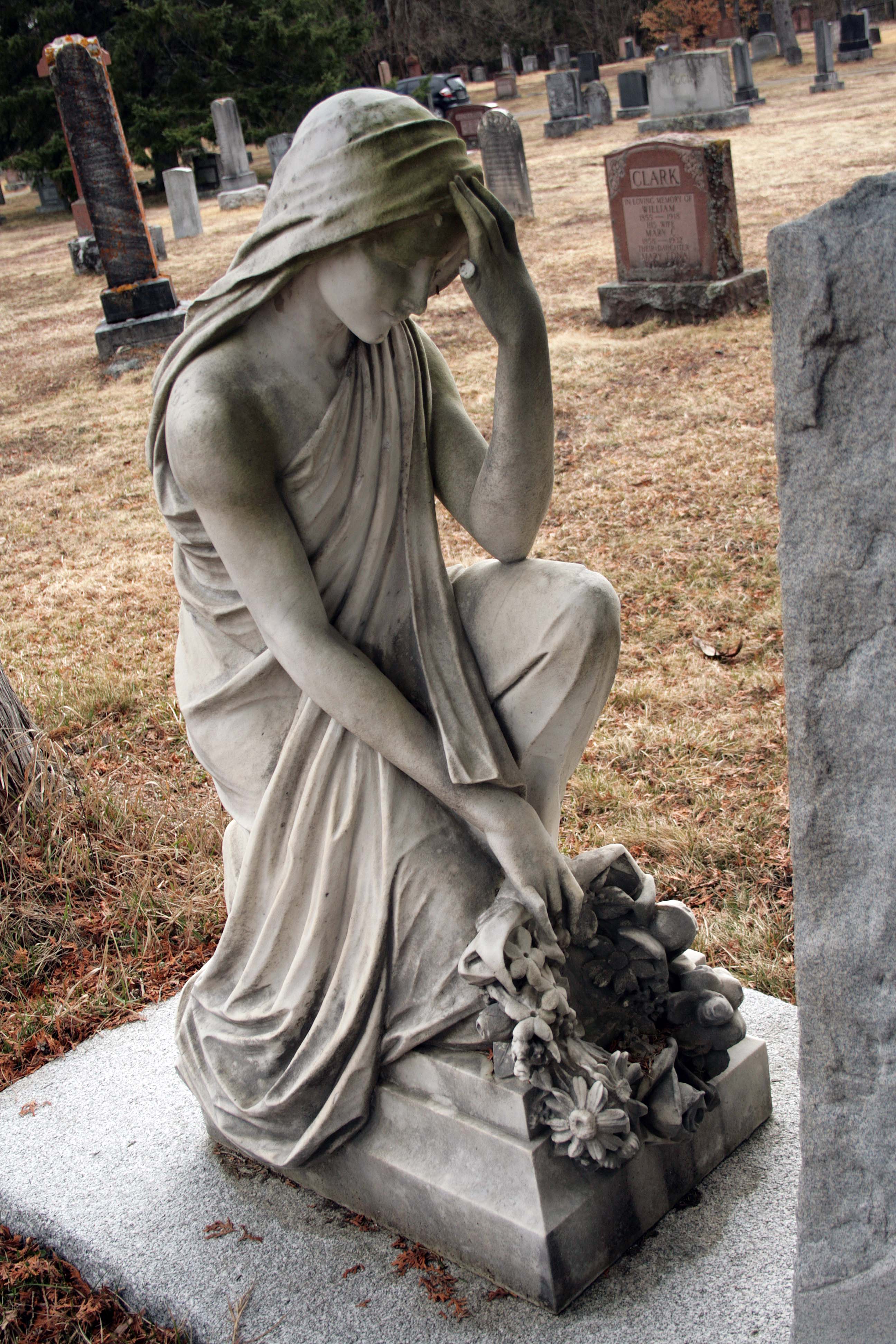
Bracebridge United Cemetery, Bracebridge ON ©2024
Mourning figures are sometimes depicted holding wreaths or flowers. Flowers are thought to represent that life is fleeting, while the circular wreath is thought to symbolize eternal memory and immortality.2


Bracebridge United Cemetery, Bracebridge ON ©2024
Urns are another common Victorian grave symbol that sometimes accompanies a mourning figure. Borrowed from the Ancient Greeks who often cremated their deceased, urns represent the physical body being reduced to its barest elements as the soul ascends to Heaven.2

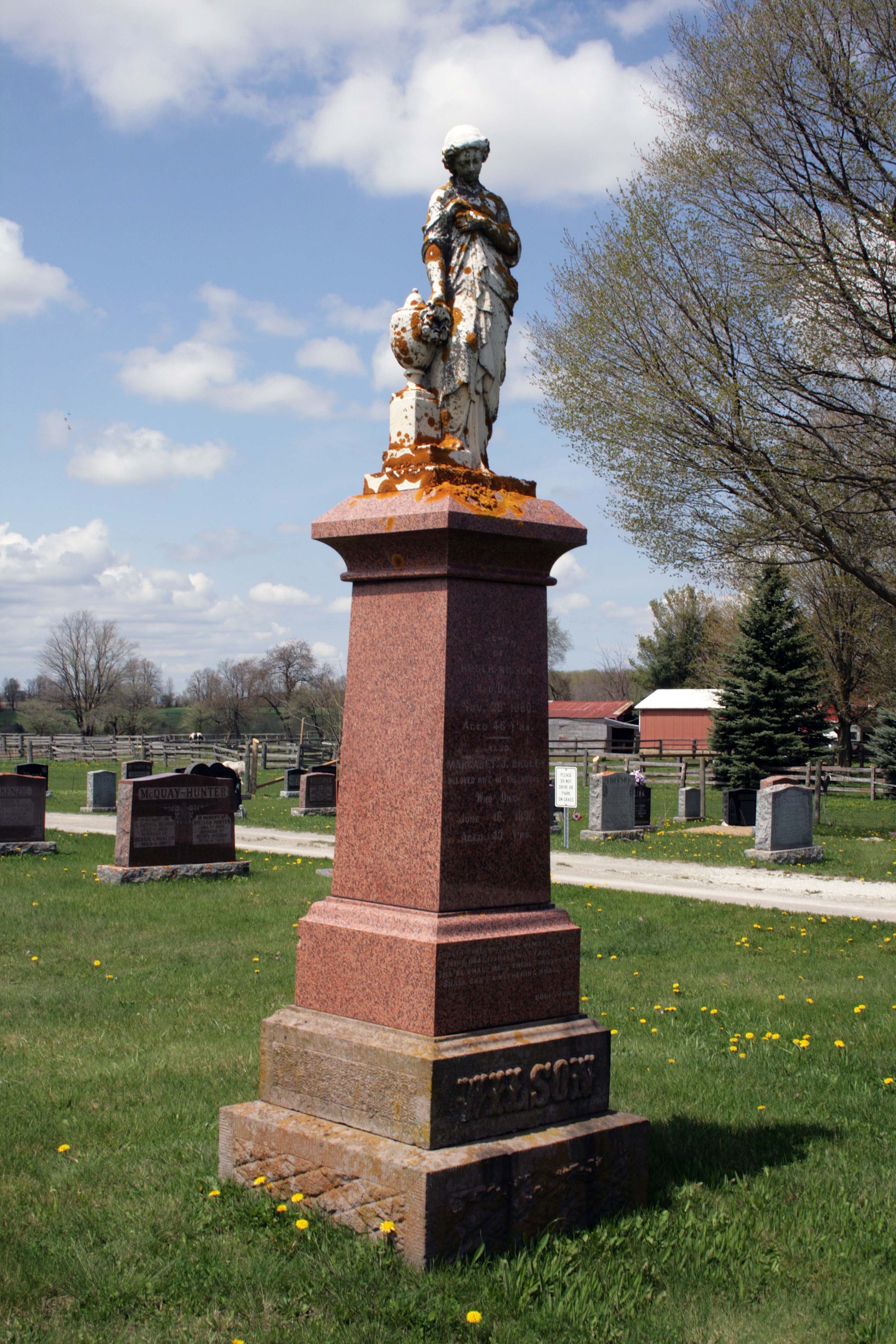
Thornton Union Cemetery, Thornton ON ©2024

St. Paul’s Cemetery, Innisfil ON ©2024
Sometimes weeping willows also appear with mourning figures. Weeping willows are strongly associated with grief and mourning, as their name suggests. They are another grave symbol adapted from the Ancient Greeks.2

Thornton Union Cemetery, Thornton ON ©2024


Knox Presbyterian Church Cemetery, Oro ON ©2024
I am always in awe and inspired by the art I find in cemeteries. It’s one of the reasons I love walking among the gravestones.
Have you come across any similar mourning figures in your local cemeteries? I would love to read about your findings in the comments.
Thanks for reading!
References:
- Cemetery Symbolism: What Do Those Mysterious Monuments Mean? | Laurel Hill
- Understanding Cemetery Symbols: A Field Guide for Historic Graveyards by Tui Snider


 Cemetery Photography by Chantal Larochelle