Some stories stay with you for a long time. Pamela Harvey’s story was one of those, for me.
For decades, Pamela was one of Sudbury’s missing persons. Her name appeared on lists of unsolved cases and in newspaper articles. Her family spent years wondering what happened and hoping that one day they would finally know the truth.
After 47 years, that answer finally came.
Who Was Pamela Harvey?
Before Pamela Harvey became known as one of Sudbury’s missing persons, she was a daughter, a sister, a mother, and someone who loved adventure.
Pam, as her family called her, was born and raised in McKellar, Ontario. She was independent, headstrong, and always looking for new adventures.1 Shortly after turning 18, she moved west to British Columbia, where she met Richard “Rick” Rousseau.1 The couple later welcomed their son, Ricky, but after their relationship ended, Pam returned to Ontario to raise her son closer to family.1
Back in Ontario, Pam worked as a waitress in Parry Sound before moving to Sudbury in 1977.1 Her family described her as bright, full of personality, and easy to befriend.1 She worked hard to support her young son and build a life for the two of them.1
In Sudbury, Pam lived with little Ricky in an apartment on Lloyd Street and worked at the Kingsway Hotel.1 She was a devoted mother, so when her sister Cate received a call that Ricky had been left in someone else’s care and that Pam was gone, the family immediately knew something was wrong.1
Pam’s family travelled to Sudbury to bring Ricky home and try to figure out what had happened. When they entered her apartment, they found her clothing, jewellery, and other personal belongings still there.1 To them, it did not look like Pam had simply walked away from her life.1
Pam was officially reported missing by her father, Gerald Harvey, on Christmas Day, 1978.1 She was only 23 years old.
For decades, her family lived with unanswered questions about what had happened to her.
Unsolved
Over the years, questions remained about whether Pam may have known something connected to a violent incident that happened in Sudbury around the same time she disappeared.1 There were also questions about whether Pam may have witnessed a murder. Without knowing what happened to her, it remained one of the many unanswered questions surrounding her case.1
I had the opportunity to work with local author Sarah May on her book Unsolved Sudbury, which featured Pam’s story. At the book launch, her son and other family members attended. It was amazing to have them there, but it was also heartbreaking. It was clear how much Pam was missed, and how large a space she had left behind in their family and their hearts.
One of the hopes behind the book was that by continuing to share these stories, new information might come forward and help bring answers to families who had been waiting for them.
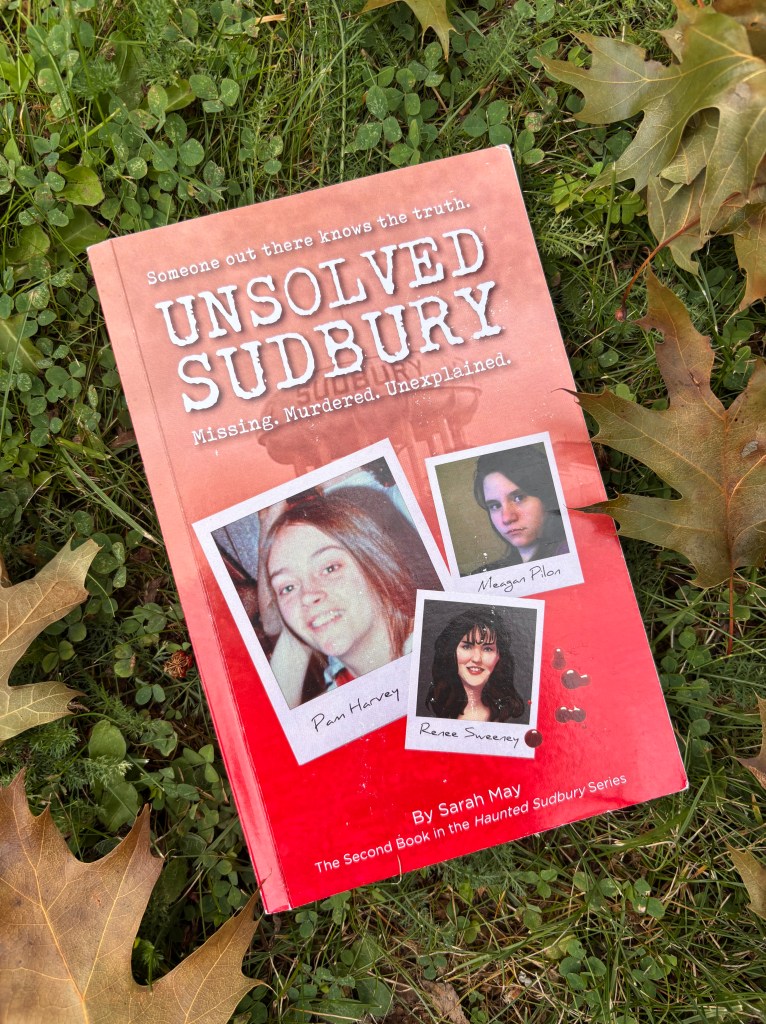
Unsolved Sudbury: Missing, Murdered, Unexplained. by Sarah May.
Identified
After nearly five decades of questions and uncertainty, there was finally a breakthrough in the case.
In March 1979, the body of an unidentified woman was discovered in St-Eustache, Quebec.2 Investigators determined that she had been the victim of a homicide, but her identity had remained unknown for decades.2
Although forensic technology was limited at the time, evidence collected during the original investigation was carefully preserved.2 In 2026, a collaborative effort between the Sûreté du Québec, the Greater Sudbury Police Service, the Québec Coroner’s Office, and the Laboratoire de sciences judiciaires et de médecine légale used modern forensic methods, including DNA analysis, to identify the woman as Pamela Harvey.2
After decades of uncertainty, Pam’s family finally had some answers.
Although 47 years had passed, the evidence that helped identify Pam had been carefully preserved. It is a powerful reminder that preserving stories matters. The details we save today can help bring someone’s story back into the light years later.
When I read the news, I immediately thought back to that book launch and to Pam’s family. I thought about all the years they had spent hoping and looking for answers. Nothing can undo that kind of loss, but there is something meaningful about finally being able to give a name back to a person who had been unknown for so long.

Lakeview Cemetery, McKellar ON ©2026
Lakeview Cemetery
It was a bright and sunny day when I visited Lakeview Cemetery. The rural cemetery was quiet, and I wasn’t exactly sure where Pam was buried, so I walked the rows of headstones. I knew I was looking for a grey marker with two ceramic portraits on it.
After searching for a while, I spotted the stone in the distance. There was Pam’s face looking back at me.
Pam shares a gravestone with her father, Gerald, who passed away in 2015. Her mother, Yvonne, also has a place in the family plot and is still living. A ceramic portrait of Gerald and Yvonne sits beside the Harvey family name, while a portrait of Pam sits above her epitaph. It is the same portrait that was often used in the media when talking about her disappearance.
“Pamela Orlean
Mar. 7, 1955
Always loved. Never forgotten”
Her death date is still blank.
If I had walked up the left side of the cemetery first, I would have seen the Harvey name engraved on the back of the stone. Instead, I came upon Pam’s portrait first.
It was really moving to visit her gravestone in person. For the longest time, the stone had been a cenotaph, a memorial to someone whose final resting place was unknown.
I don’t know if Pam will eventually be brought home to rest beside her father. I hope she will. But there’s something comforting about knowing where she is now, even if many questions about what happened to her, still remain.
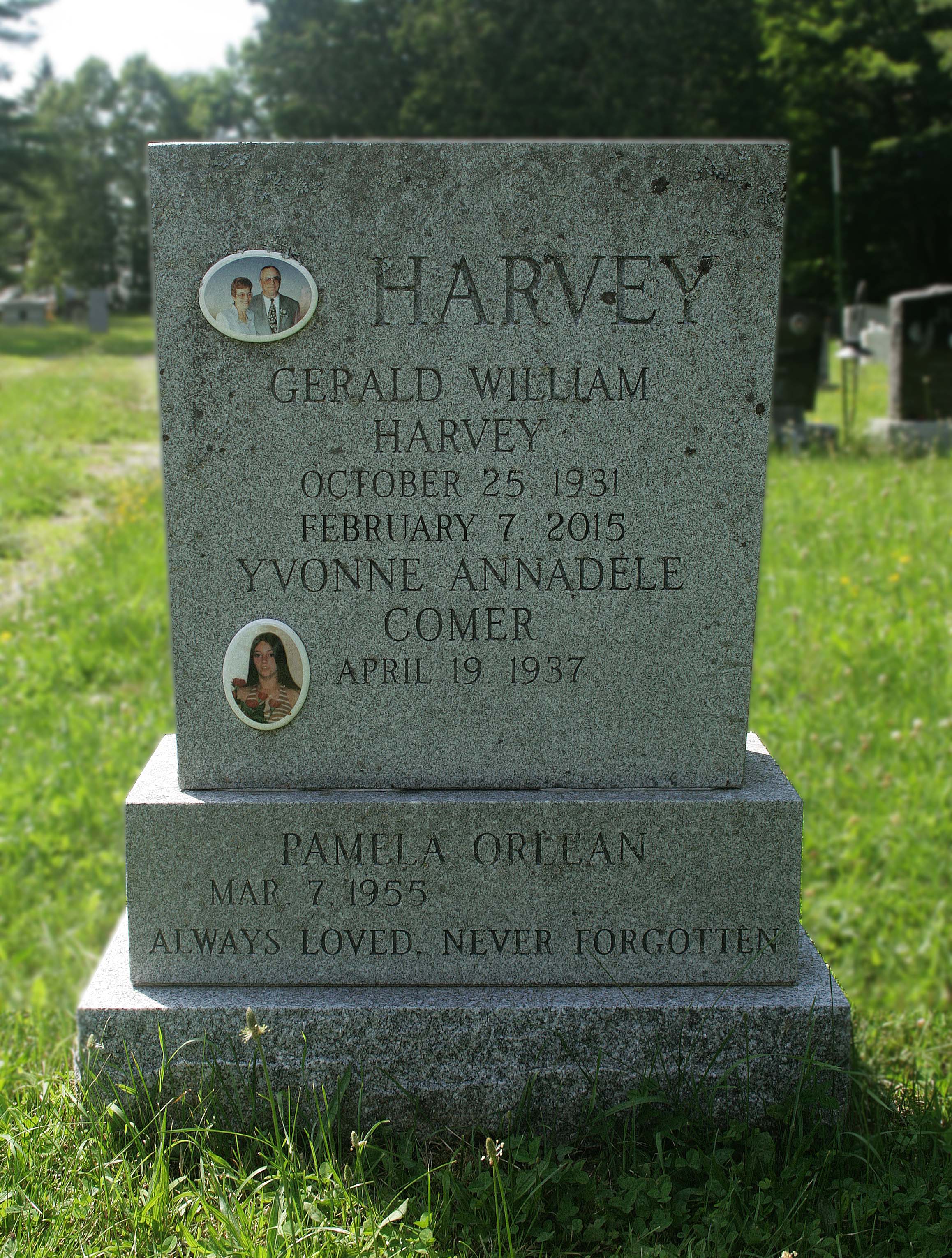
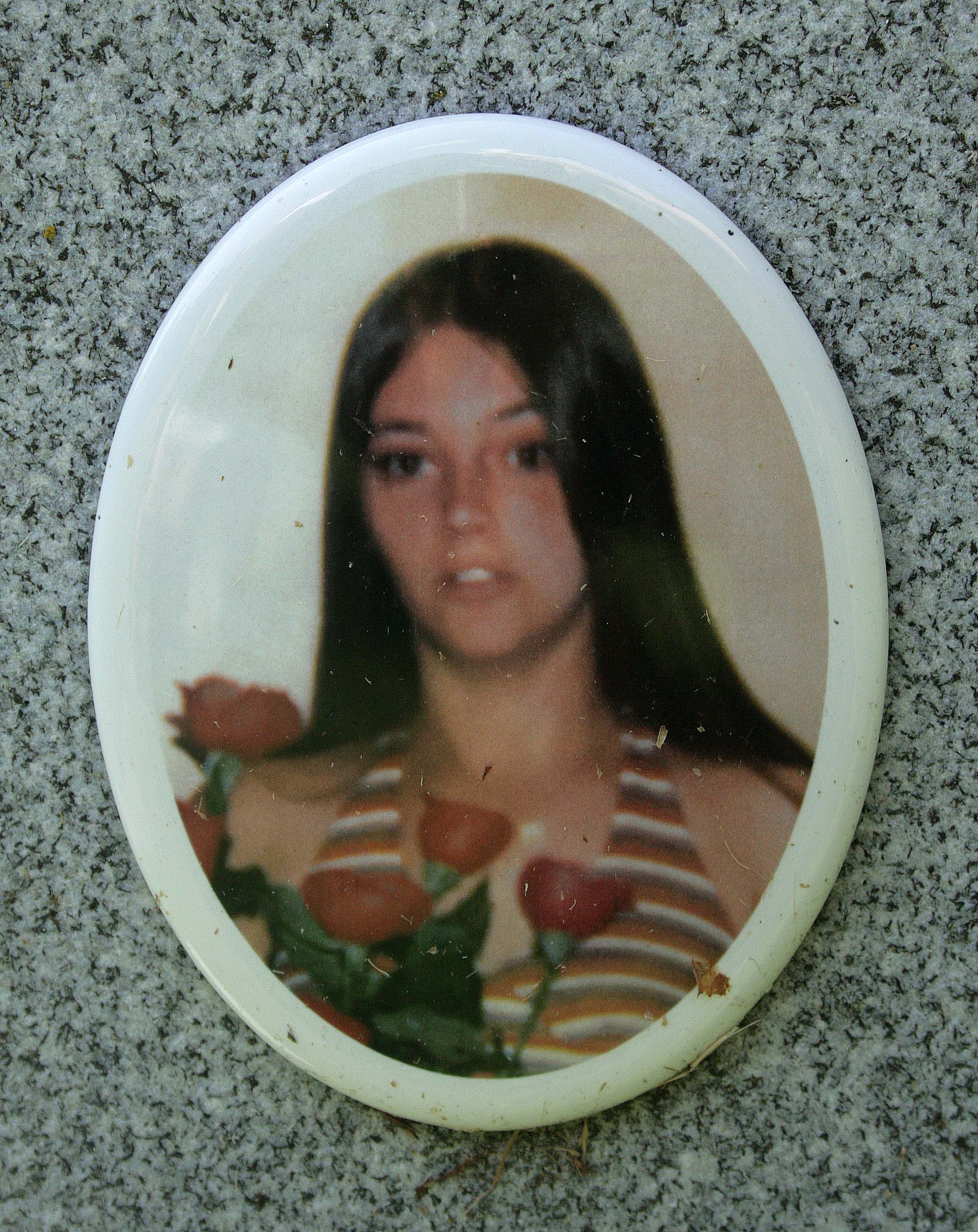
Gravestone of Pamela Harvey. Lakeview Cemetery, McKellar ON ©2026
There was one thought I couldn’t shake as I stood there. Pam had been found nearly fifty years ago, but no one knew it was her.
The advances in forensic technology are pretty amazing.
Evidence that was collected nearly 50 years ago was still there, waiting for the technology that could finally give Pam her name back. I hope we continue to hear more stories like this, where missing people are identified, and families finally get the chance to bring their loved ones home, and find some closure.
Thanks for reading!
References:
- Unsolved Sudbury by Sarah May | Book
- Collaborative effort leads to identification of Missing Person, Pamela Harvey (1978 Greater Sudbury) | GSPS