The Association for Gravestone Studies

I found out about The Association for Gravestone Studies years ago, while doing some online shopping. I was looking at gravestone rubbing kits at Pushin Daisies, the mortuary novelty shop. Each kit comes with information on becoming a member of AGS. I was curious. I didn’t end up purchasing a rubbing kit, but I did end up getting myself a membership for AGS. After being a member for a few years, I let my membership lapse due to financial reasons. I missed being part of the Association and missed receiving gravestone-related mail though.

When I decided to focus more on my cemetery photography a couple of years ago, one of the first things I did was renew my membership. I am very happy to be a member again! 

“The Association for Gravestone Studies (AGS) was founded in 1977 for the purpose of furthering the study and preservation of gravestones. AGS is an international organization with an interest in grave markers of all periods and styles. Through its publications, conferences, workshops and exhibits, AGS promotes the study of gravestones from historical and artistic perspectives, expands public awareness of the significance of historic grave markers, and encourages individuals and groups to record and preserve gravestones. At every opportunity, AGS cooperates with groups that have similar interests.” – gravestonestudies.org

What drew me to the Association, was finding other like-minded individuals, and all the resources they offer. There are quite a few AGS chapters throughout the United States, and when I first joined there were a couple of Canadian chapters. Unfortunately, none were close to me, and those chapters have since closed. There are lots of opportunities to get to know your fellow members and taphophiles though, like the AGS Conference for example. This annual conference takes place in a different location each year and features events like field trips, conservation workshops, hands-on sessions as well as panels, evening lectures, and late-night presentations. Last year the conference went virtual! I think it was a great approach. It’s mindful of the current pandemic, and a great way for those of us that are far away, to attend. I do hope they continue to offer some virtual events for the conference.

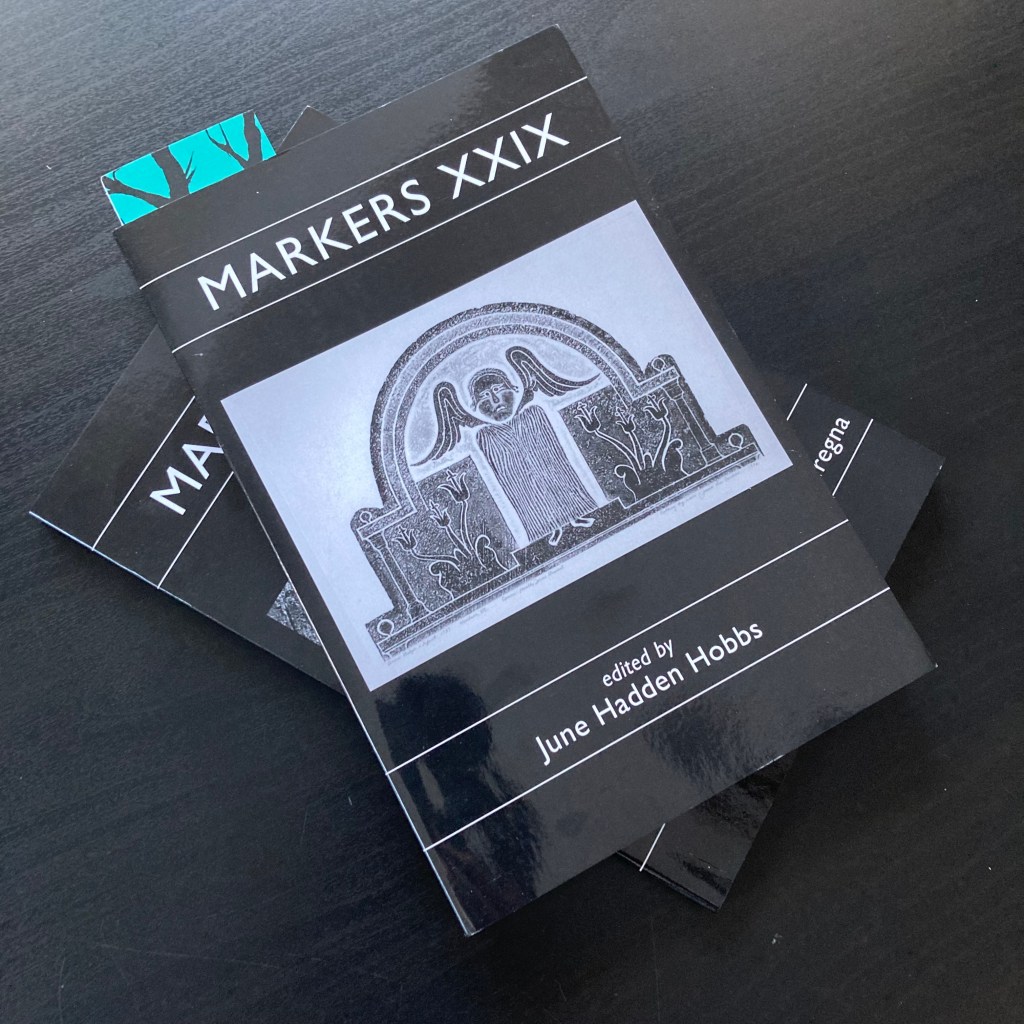
In addition to that, there are a lot of publications available. The AGS Quarterly is the bulletin of the Association for Gravestone Studies. It’s published 4 times a year and is delivered right to your door if you are a member. The Quarterly features articles, and regular columns on conservation and International gravestone studies. I love the articles in the Quarterly, they are always fascinating. Another publication AGS offers is Markers, the annual journal of AGS. During the winter months, what I consider my off-season for cemetery photography, I have been diving into the back issues of Markers, reading them cover to cover. It’s a beautiful perfect-bound journal that features definitive illustrated articles on cemetery and gravestone topics. It’s very in-depth and very informative. It also features international content. A bonus of AGS membership is that now you can read and download past issues of Markers online. They offer a lot of other online resources as well, in their knowledge centre. There you can find information on symbolism and the archives of past Markers and AGS Quarterly issues, as well as past e-newsletters. They also have a database of websites that pertain to the preservation of gravestones.
New this year, AGS has added a virtual book club. Starting in January, the book club meets on the third Sunday of each month and focuses on books about cemeteries, gravestones, mourning customs, funerary practices, and death and dying. The book for January was 199 Cemeteries to See Before You Die by Loren Rhoads. I attended the first meeting and had a great time. There were about 30 participants, including the books author. We were split up into 2 smaller groups for discussions. In virtual break-out rooms, the moderators inspired conversation by asking questions about elements of the book. There was a great range of participants from all over the world. It was really interesting to hear everyone’s thoughts. Having Loren in attendance was a pleasant surprise. It was really interesting to get some extra insights from her. I’m looking forward to February’s meeting, where we will be discussing City of Immortals: Père-Lachaise Cemetery, Paris by Carolyn Campbell.

I highly recommend joining the Association for Gravestone Studies if you have an interest in cemeteries, and gravestone preservation. It’s a great place to find others with a passion for cemeteries and a great resource to learn more about everything cemetery related.

To learn more about the Association for Gravestone Studies, please visit their website. You can also find AGS on Facebook and Instagram.

Thanks for reading!

White bronze, also known as Zinkys

Have you ever heard of Zinkys? You may have come across one or two in your cemetery travels. I know I have, but it has only been until recently that I discovered what these beautiful gravestones are. That is one of the many things I love about my cemetery community, I am always learning new things from my fellow taphophiles.

Zinkys as they are lovingly referred to, is also known as white bronze. They look very similar to carved stone headstones, but they are made from a zinc alloy and are hollow. These monuments were generally less expensive than carved stone, and are a lot more durable. You will often find intricate designs on white bronze headstones, that are still perfectly legible. You can recognize a white bronze headstone by its bluish-grey color, and giving it a gentle tap should produce a hollow sound.

According to Understanding Cemetery Symbols by Tui Snider, in the United States during the prohibition era, it was claimed that bootleggers would sometimes pry the panels off of these metal monuments to hide their booze.

Here in Canada, the White Bronze Company of St. Thomas, Ontario produced zinkys from 1883 to 1900. It was a child company of Monumental Bronze Co. of Bridgeport, Connecticut.1 According to Connecticuthistory.org, Monumental Bronze Co. only produced white bronze between 1874 and 1914. In 1914, World War I saw the facilities turn from creating pure zinc tombstones to creating gun mounts and munitions.2 After the war, it seemed that tastes had changed, and public demand shifted to other natural materials for grave markers.

These blue-grey markers are truly beautiful in person. They range in size and detail, but I always find myself fascinated by how perfectly intact they are. I have come across a couple of broken ones, where a cross or spire has been broken off, but the names of the deceased are always legible.

Since learning about them, I have kept an eye out for them in my cemetery travels, and have been rewarded a few times this summer. I look forward to finding more in my travels.

Have you come across and zinkys in your cemetery travels? I would love to read about it in the comments.

Thanks for reading!


References:

  1. The St. Thomas White Bronze Company: A Diffusion of Innovations Perspective | ResearchGate
  2. Monumental Bronze Company | Connecticut History

Winding down for Winter

The leaves have almost all fallen and the icy weather is making its cold return. Winter is almost here!

It’s been a great summer and fall season for cemetery visits. I hit my target and surpassed it—visiting over 100 cemeteries! But, I am not a fan of winter and trudging around in the snow, so I mostly hibernate in winter. I plan on taking full advantage of cozy-couch-time to catch up on my reading; the AGS Quarterly, back issues of Markers, and my ever-growing to-be-read-pile of fiction and non-fiction. Now that I have a better handle on my blogging and social media schedule, I want to take advantage of this downtime and introduce some new things on the blog.

For one, I would like to start a book review series, featuring reference material and cemetery-related books. I’ll take a look at some of my favorite past reads and reference books, as well as document what I am currently reading. I am always looking for recommendations as well, so feel free to post them in the comments!

Secondly, I also want to take this time to do some much-needed portfolio updates. I have collected a lot of new photos this year, that need sifting through and editing. I will flag these updates on my social channels when there are new photos up. I may also play with the layout of my portfolio section on the website—we’ll see!

Thirdly, I will be planning more road trips for next year! I have gotten into the habit of using Google’s My Maps to create maps for cemetery road trips. I love researching areas and discovering abandoned and hidden cemeteries, as well as roadside attractions and oddities. All this research may spawn some blog posts along the way as well.

Speaking of which, expect more posts on the blog! I have a lot of posts on the back burner right now. Many were started months ago but were put aside because I was busy with road trips or personal matters. Many posts are half-started, or just bare-bones at the moment. Some are just ideas floating around in my head. I had planned a few spookier posts for the Halloween season, but unfortunately, they never came to be. October is always super busy for me, and those posts just got away from me. I’m hoping to get those specific posts polished and ready for next Halloween season.

If you have any blog topics you would like to see me cover, please send me a note or post in the comments. I am always looking to hear feedback from readers.

Thanks for joining me on my cemetery adventures!

UPDATED! The road so far…

Back in June, I wrote a post about how many cemeteries I have visited so far. You can read it here.

My tally at that time was 85.

After that post I had a goal to reach—hit 100!

This year has not been the best for travel. My cemetery road trips with my friends have had to wait for the current pandemic to end. Luckily, my Mother is very easy going! We have been spending time outside together, and going for hikes locally. She doesn’t mind if we tack on a cemetery visit here or there. 

That being said, I was able to go on some small road trip adventures with her. We visited Manitoulin Island and walked the Bridal Veil Falls trail. We also stopped at a couple cemeteries on our way there, as well as a couple on the island. We also visited Elliot Lake. We walked the Horne Lake trail and visited the Fire Tower lookout, as well as visited a few cemeteries. Keep an eye out for future blog posts about those visits!

So, what’s my tally now?

  • Ontario – 93
  • Quebec – 6 
  • Saskatchewan – 2
  • United States:
    • New York City – 2

A total of 103 cemeteries. I feel like that’s a milestone! 

My record for cemetery visits in one day still remains at 13. Maybe next year that will change.

Time to plan some more cemetery road trips for next year! 

Do you have a running tally of visited cemeteries? I would love to read them in the comments.

Thanks for reading!

My Cemetery Bucket List

I just finished reading 199 Cemeteries to see before you die by Loren Rhoads. It’s a great read, showcasing beautiful and unique cemeteries all over the world. It has me thinking a lot about travel lately. Unfortunately, travel isn’t really in my future at the moment. We are currently in Step 3 of the Ontario Reopening Plan due to COVID-19. Restrictions have lifted a little and life is getting a little bit back to normal. But, I am not quite ready to do any major traveling just yet. This past year and a half have been hard, and my mind has wandered a lot—daydreaming of visiting far-off places and new cemeteries. 

Reading 199 Cemeteries to see before you die has been helping curb that wanderlust. A little bit. It’s been a nice escape, but my bucket list of cemeteries to visit just seems to be getting longer and longer!

Here are my current top 5 cemeteries I want to see before I die:

Sleepy Hollow Cemetery

Located in Sleepy Hollow, New York. This cemetery is 85 acres, and is most notably the resting place of Washington Irving, the author of The Legend of Sleepy Hollow. This cemetery might be best known for its fictional dead people—as the namesakes for characters in The Legend of Sleepy Hollow come from this burial ground. Supposedly even the grave of the Headless horseman can be found here. This cemetery also offers walking tours; The Original Knickerbocker: Washington Irving & The Legend of Sleepy Hollow and The Classic Evening Lantern Tour. You can also pick up a free legal-sized map at the Cemetery office, or purchase a full color 17 x 20 map for self-guided tours.

Website link: Sleepy hollow Cemetery

The Old Burying Point Cemetery

Located in Salem, Massachusetts. It is also known as the Charter Street cemetery. It’s the oldest cemetery in Salem, and holds some connections to the witchcraft trials that took place there in 1692-1693. It has many beautiful slate and sandstone grave markers. I would love to see the detailed deaths heads in person. Some of the more notable people buried here are: Salem witch trial judge John Hathorne, and a passenger on the Mayflower, Capt. Richard More. There is also a memorial to the men and women who were killed during the witch trials. 

Website link: Salem.org

Fairview Lawn Cemetery

Located in Halifax, Nova Scotia. This cemetery holds the graves of over 121 victims of the sinking of the RMS Titanic, that happened on April 15, 1912. They are memorialized with granite markers, laid out in the subtle outline of a ship’s hull. There is also a mass grave for the victims of the Halifax explosion that happened in 1917 and war graves of commonwealth personnel from World War I and World War II.

Website link: Atlasobscurea.com

Toronto Necropolis

Necropolis means “city of the dead” in Greek. This historic cemetery in Toronto Ontario, opened in 1850 and is the final resting place of many notable Canadians such as Toronto’s first Mayor, William Lyon Mackenzie and Dr. Roy Dafoe, of the Dionne Quintuplets fame. It is also the final resting place of George A. Romero, director of the horror movie classic Night of the Living dead. This large cemetery also contains a cremation chapel. The chapel was erected in 1872, with the crematorium added later, in 1933. 

Website link: Mount Pleasant Group

Saint Louis Cemetery No. 1

Located in New Orleans, this cemetery opened in 1789, it’s the oldest and most famous in New Orleans. Most of the graves are above-ground vaults, following Spanish custom due to the area having a high water table. The most notable graves here may be the Voodoo Priestess Marie Laveau, and notorious slave owner Delphine LaLaurie. You can also find the future final resting place of Nicholas Cage here.

Website link: The French Quarter.com

Do you have a cemetery bucket list? Tell me about it in the comments.

Thanks for reading!

World Photography Day

Today is World Photography Day! This annual day of recognition celebrates the art, science, and history of photography.

“A photograph has the ability to capture a place; an experience; an idea; a moment in time. For this reason, it’s said that a picture is worth a thousand words. Photographs can convey a feeling faster than, and sometimes even more effectively than words can. A photograph can make the viewer see the world the way the photographer sees it.” – worldphotographyday.com

I absolutely love photography. It’s been a hobby of mine for quite a while. To me, taking a photo is capturing a moment from my point of view. I have dabbled in many different forms of photography; wedding, portrait, food, landscape, and more. My niche is cemetery photography. I have always been drawn to cemeteries. I love being able to show others how I see them. I love using my lens to showcase minute details, rolling hills dotted with stones, curious creatures who call cemetery’s home and so much more.

So how can you celebrate World Photography Day?

  • Learn a little something about the history of photography
  • Discover some new photographers on Instagram
  • Share your photos
  • Visit worldphotographyday.com

But most importantly – Get out there and shoot!

Discovering a New Cemetery

There is a bit of a thrill in discovering a new cemetery.

While doing some photo editing of some photos I took on my vacation, I discovered a cemetery in Sturgeon Falls that I did not know existed. I noticed in my photo files that I had the name of the Sturgeon Falls cemetery entered incorrectly. While looking into the appropriate cemetery name, I discovered there is another hidden cemetery in Sturgeon Falls—Union Cemetery.

This is super exciting to me because I had thought that I had photographed all of the cemeteries close to me. And this gives me an excuse to go on yet another mini road trip!

By using Google Maps and street view, I was able to locate the entrance and get a glimpse of what the cemetery actually looks like. The cemetery grounds look quite large! The entrance also looks like it’s a little bit tucked away, so it will be very interesting to find this location in person and photograph it.

Images from Google Maps

Discovering a new cemetery can be just as exciting as actually visiting it. I can’t wait till the next time I am in Sturgeon Falls!

Thanks for reading!

Cemetery Etiquette

“Take nothing but pictures, leave nothing but footprints.” – Chief Seattle.

This sentiment embodies my mindset when visiting cemeteries. They are beautiful places to visit. But you must always be mindful that cemeteries are resting places for lost loved ones, and deserve respect. I always keep that in mind when visiting cemeteries. I would never want to intrude on someone’s grieving, interrupt a funeral service or meddle with someone’s memorial items. Because of this, I tend to follow my own set of etiquette rules when visiting a cemetery.

When encountering people I always try to keep my distance

It doesn’t mean that you should turn around and leave if you see mourners. But realize that your presence there might not be understood or wanted. For these reasons, and out of respect of the mourners, I will spend my time in other areas of the cemetery to not bother them. This does not mean you should always stay away from people though. In my travels, I have found the groundskeepers to be very friendly, and will sometimes point out interesting stones. They are very proud of their work maintaining the grounds and some of them love to chat.

Always leave with what you brought in

It’s completely fine to bring food with you for a snack in the graveyard, or to walk your dog. As I’ve said before, cemeteries are a beautiful place for a walk. Just make sure you pick up after yourself and your furry friend! Some cemeteries do have trash bins that are accessible, but when visiting older hidden away locations, there may not be any. I always carry a plastic bag in my camera bag just in case.

Do nothing that would harm or destroy a tombstone or memorial

I would never displace or move around memorial objects or grave goods. I always leave things as they are for my photos. I find that the found objects are more meaningful that way.

Be respectful

I sometimes clear away debris from stones; leaves and dirt that obscure the inscription. I also sometimes pick up over-turned items if they have fallen. If items are far away from a tombstone, I find it better to leave them where they are, just in case you accidentally place them on the wrong grave. I think that cleaning tombstones (with water and chemicals) should be left to professionals. There are resources out there to help you get started in the right way if that is something you are interested in getting into, and ALWAYS get permission before you start.

A note about gravestone rubbings and castings

These seem like a fun idea to get a nice souvenir but some of the methods used for rubbings and castings can be very damaging to stones. If the stone is too fragile it can break. Castings are also dangerous to stones as it can remove pieces of the stone while also leaving stains and residue that is hard to remove. I’m sure there are resources out there on how to do this kind of thing safely, but I would be very cautious and make sure your technique is perfected before trying it in the wild. And again, ALWAYS get permission before you start.

Do you have any questions about cemetery etiquette? Or do you have any unwritten rules that you follow when visiting a cemetery? Please share in the comments!

Thanks for reading!

The road so far…

I recently started reading the book 199 cemeteries to see before you die by Loren Rhoads.

It’s a beautiful book, that can be used as a travelogue, that lists must-see cemeteries all over the world. It highlights the history that makes each of them unique. The descriptions are accompanied by beautiful photos as well. I get wanderlust just looking at them! 

It got me thinking about what my tally actually is for visited cemeteries. When I was younger, in the early days of my cemetery traveling, I did not document my cemetery photos that well, and have actually lost a large amount of those photos. They would have been taken with film cameras and an old digital point-and-shoot camera. I may still have the negatives somewhere. 

I remember getting lost in the large cemetery in Guelph, Ontario, but don’t have the photos to prove it. I also remember chatting with the caretaker at the old cemetery in Amos, Quebec, and how excited he was to show me some of the more interesting stones there. I don’t have the photos from that trip either. That is one I really regret, as my Mother is from Amos. In that cemetery, it was amusing to see her turn around in circles, amazed at all the family that was buried there. I really wish to go back to visit there again someday. 

So based on my folders of properly labeled and dated photos, here is the breakdown of how many cemeteries I have visited, so far:

  • Sudbury – 19
  • Ontario – 56
  • Other Provinces:
    • Quebec – 6 
    • Saskatchewan – 2
  • United States:
    • New York City – 2
  • Total – 85 cemeteries

My record for the number of cemeteries visited in one day is 13. Maybe one day that record will be broken, but it has been standing since 2019.

Thanks to 199 cemeteries to see before you die, I have added a large number of cemeteries to my bucket list. Due to the pandemic though, those won’t be added to my tally anytime soon. For now, I will focus on continuing to visit cemeteries close to me. Maybe by the end of the summer, I will have hit 100?

Do you have a running tally of visited cemeteries? What is your number? 

Thanks for reading!