BBQ in a Cemetery

I have picnicked in a cemetery, had a snack in a graveyard, and even enjoyed breakfast there. But I have never had a BBQ in one before. Last Sunday I had the chance to check this off my bucket list!

On June 23, the St. John’s Cemetery Volunteer Group held their 8th Annual Cemetery BBQ. This unique fundraiser is held in St. John’s Cemetery in Garson, Ontario—rain or shine.

I have often read about interesting and different events happening in cemeteries, but I have always been too far away to attend. I was very excited when I learned this cool event was happening close to home. I first heard about this fun event a few years ago. I had hoped to attend since I read about it, but it never worked out. This year, I was finally able to check out this neat event.
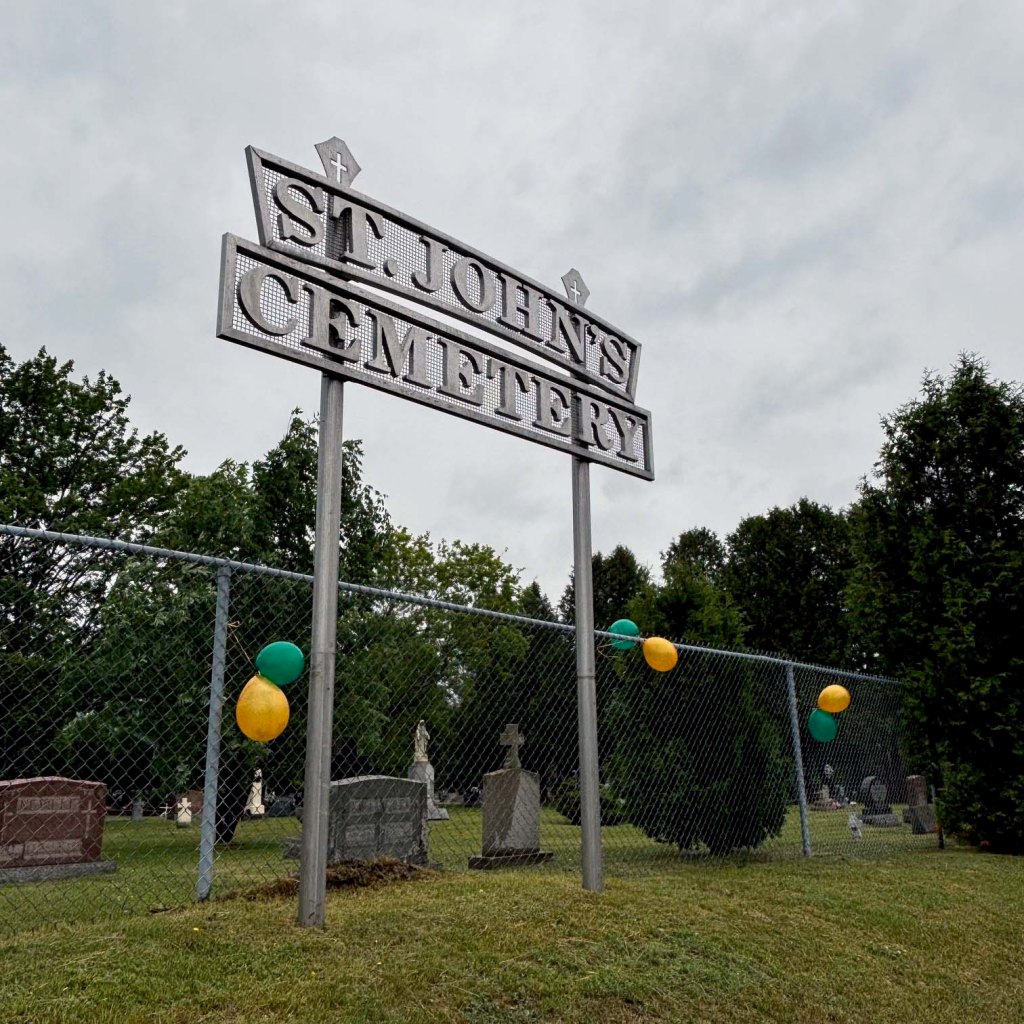
St. John’s Cemetery was established in 1907. The earliest recorded burial is thought to be Gladys O’Brien, dated May 24, 1907.1 Find a Grave currently lists 3,521 memorials, including one famous grave. St. John’s is the final resting place of professional Hockey player Randy Boyd. Boyd was a defensemen in the NHL for various teams, including the Pittsburgh Penguins, Chicago Blackhawks and the Vancouver Canucks.2 Boyd passed away in 2022, due to a heart attack while out playing golf, just four days before his 60th birthday.2

ST. JOHN’S CEMETERY VOLUNTEER GROUP

The St. John’s Cemetery Volunteer Group was founded in 1993, and for the last three decades has taken great care of the cemetery.3 There are over 20 volunteers in the group and they have completed a multitude of projects to beautify and maintain the cemetery over the years. Their goal is to make the cemetery a welcoming place for those who visit and pay their respects to loved ones.3 Some of their completed projects include rebuilding the cremation gardens and installing benches and greenery.3

The volunteers come from numerous backgrounds and include electricians, mechanics, construction workers, and carpenters.4 They use this expertise in every project they complete. In 2023, the City of Greater Sudbury celebrated the volunteer group by awarding them the Civic Award for Volunteerism in recognition of all their good works.4

The barbecue has become an annual event and invites the community to visit the cemetery and see for themselves all the work the volunteer group has done. It’s also a great fundraising opportunity. This year, all the proceeds will go to the Sudbury and Garson food banks. 

When we arrived we were greeted by green and gold balloons decorating the cemetery entrance. There was a bustle of activity as the volunteers got ready for the crowds. At the entrance was an information table where you could pick up a cemetery map and make a donation.

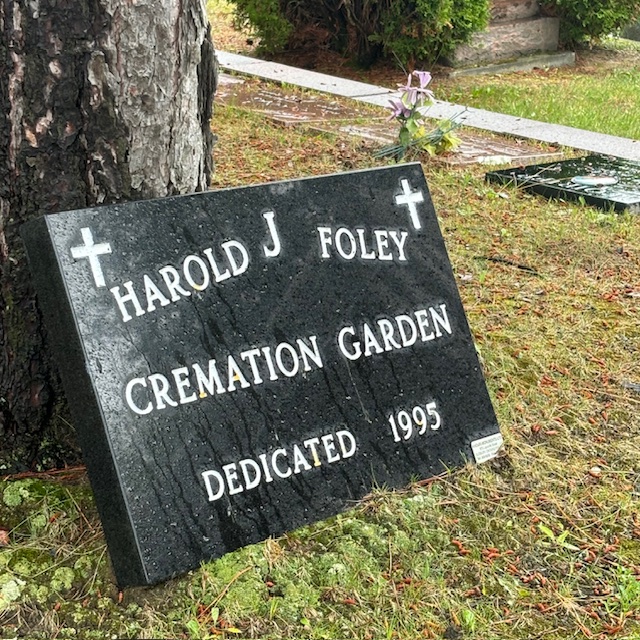
On the grill, they served up hamburgers and hot dogs, with a small bag of chips on the side. They also had some beverages available, as well as some cake for dessert. My mother and I got our lunch from the lovely volunteers manning the grill and then headed to the Harold J Foley Cremation Garden to sit and eat our lunch. 

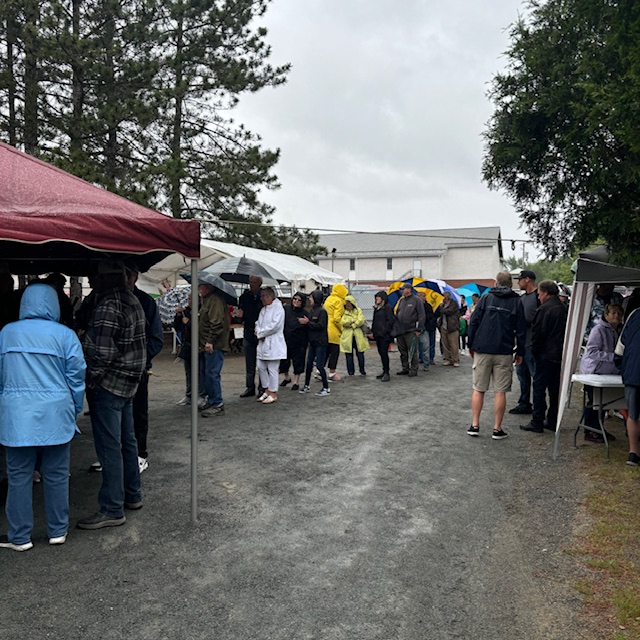
They had a nice set-up under some tents for folks to stay dry while they ate. My friend and her daughter also joined us for the barbecue and ate with us at the table. The long tables encouraged people to sit together and eat, creating community and conversation. 

The conversation mainly focused on the weather though. Unfortunately, the rain would not let up, which led to a chilly and soggy afternoon in the cemetery. But people did not let that stop them. By 1 p.m. there was a long line up at the grill.

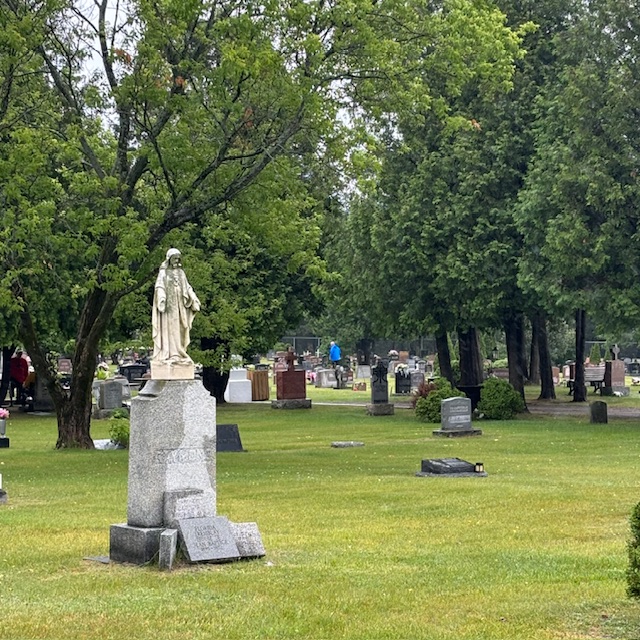
After we finished our meal and stopped in at the prize table to buy some tickets, we decided to stroll through the cemetery. We were not the only ones walking the paths that curved through the cemetery grounds. 

I noticed many folks sticking to the paths as they walked the cemetery. I tend to walk directly among the gravestones, so I can get a close look at symbolism or better read inscriptions and epitaphs. It’s also better for taking photos. I was not used to seeing so many people in the cemetery. Normally when taking cemetery photos, I try to avoid getting anyone in the shot, waiting till they move, or trying different angles. There was no avoiding it here, as there were many groups of people exploring the cemetery. 

Shortly after, the cold and wet was making us uncomfortable so we decided to start heading back to the car. There was still a long lineup at the grill, and many folks gathered around chatting. Spirits were high even though the rain was coming down. It would have been a much more enjoyable event if the weather had cooperated, but there was still a great turnout, despite the rain.  
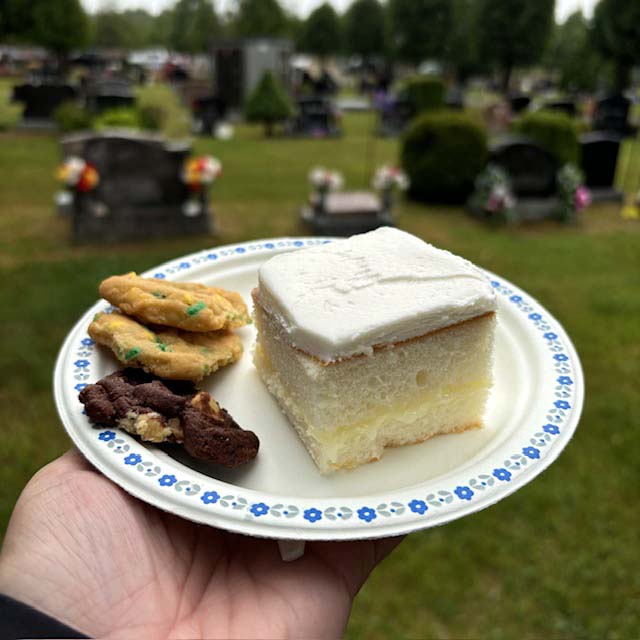
I really enjoyed the cemetery BBQ and am happy there was a good turnout. It was fun to share a meal among the gravestones with friends and to wander the rows with so many people. It was a lively event, despite its setting. I hope the St. John’s Cemetery Volunteer Group is also happy with the turnout, and collected a big sum to donate to charity. 

If I can attend again next year, I will be there! Have you ever had a BBQ in a cemetery before? Or maybe you have been to a different kind of cemetery event? I would love to read about it in the comments.

Thanks for reading!


References:

  1. Garson St Johns Cemetery (Updated 2018) | Ontario Ancestors
  2. Randy Boyd | Find a Grave
  3. Volunteers host Garson cemetery barbecue June 23 | Sudbury.com
  4. St. John’s Cemetery Volunteer Improvement Group celebrates 31 years of dedication, prepares for annual BBQ | Sudbury Star

Stone Stories: A Tap Dancing Legend

Earlier this month, two friends and I traveled to Oakville, Ontario for another birthday cemetery road trip. It was a bit ambitious, with us hitting the road at the crack of dawn. We planned to beat the traffic, but also to get a head start on the day since it would be a four-hour drive, each way.

Since it would be such a long drive, we wanted to give ourselves as much time as possible to tour the town and sight-see. And yes, of course, visit cemeteries. There was one stop that was very high on our list—the final resting place of American actor and tap-dancing legend, Gregory Hines.

Gregory Hines

Gregory Oliver Hines was born February 14, 1946, in New York, New York. Hines began tap lessons at the age of four and would spend much of his childhood practicing and performing alongside his older brother, Maurice Hines.1 

The Hines Brothers performed their song-and-dance act all over the United States. In 1963, their father joined them, turning the duo into a trio. They continued to make a name for themselves, making countless TV appearances.1 But in 1973, Hines recognized that tap dancings popularity was declining and left the act to pursue a musical career and start a band. This was short-lived though, and Hines soon returned to New York and the stage.1

In the early 80’s, Hines made the transition to Television and film actor. His first feature film credit is his portrayal of Josephus in the comedy/musical Mel Brook’s History of the World Part I (1981). Known for his accomplished choreography and tap dancing, many of Hines’ films showcase his dancing. He starred alongside veteran tap dancer Sammy Davis Jr. in the 1989 film Tap. Credited with 49 acting roles, Hines was a successful and versatile actor. Some of his most successful films are Running Scared (1986), Renaissance Man (1994), and Waiting to Exhale (1995). I would be remiss if I didn’t also list his cameo in the fan favorite, The Muppets Take Manhattan (1984).2

In 2002, Hines was diagnosed with liver cancer. He kept his diagnosis private, sharing his health struggle with only family and close friends. A year later, Hines succumbed to the illness en route to the hospital, from his home in Los Angeles.3 Gregory Hines passed away on August 9, 2003, he was 57.  

Hines is remembered by his two children, a son, and daughter, from two previous marriages. His memorial service took place on August 13, 2003, at Saint Monica’s Catholic Church in California. Based on the photographs I found online, it looks like it was an emotional service, with many Hollywood stars in attendance. Hines is laid to rest in Saint Volodymyr Ukrainian Cemetery in Oakville, Ontario, beside his fiancé Negrita Maria Truszyk Jayde.

Saint Volodymyr Ukrainian Cemetery

Saint Volodymyr Ukrainian Cemetery, also known as West Oak Memorial Gardens, is owned and operated by St. Volodymyr Cathedral. It was founded in 1984, and sits on 100 acres of property that overlooks Sixteen Mile Creek. Today, it’s thought to be the largest Ukrainian cemetery in Canada.4 

It was a beautiful sunny day when we visited Saint Volodymyr. Right away, we noticed how busy the cemetery was. Many people were visiting loved ones, cleaning gravesites, and paying their respects.

I knew before we arrived that the cemetery was a large one, so I had come prepared. I wanted to make sure we had plenty of time to pay our respects and wouldn’t spend all our time searching. With coordinates in hand, we were able to drive directly to the grave of Gregory Hines. 

I’m not sure if it was done on purpose, or if it is just because of the sheer size of the cemetery, but there was a perfect parking space just off the path. Just big enough for one vehicle, across from the famous grave. 

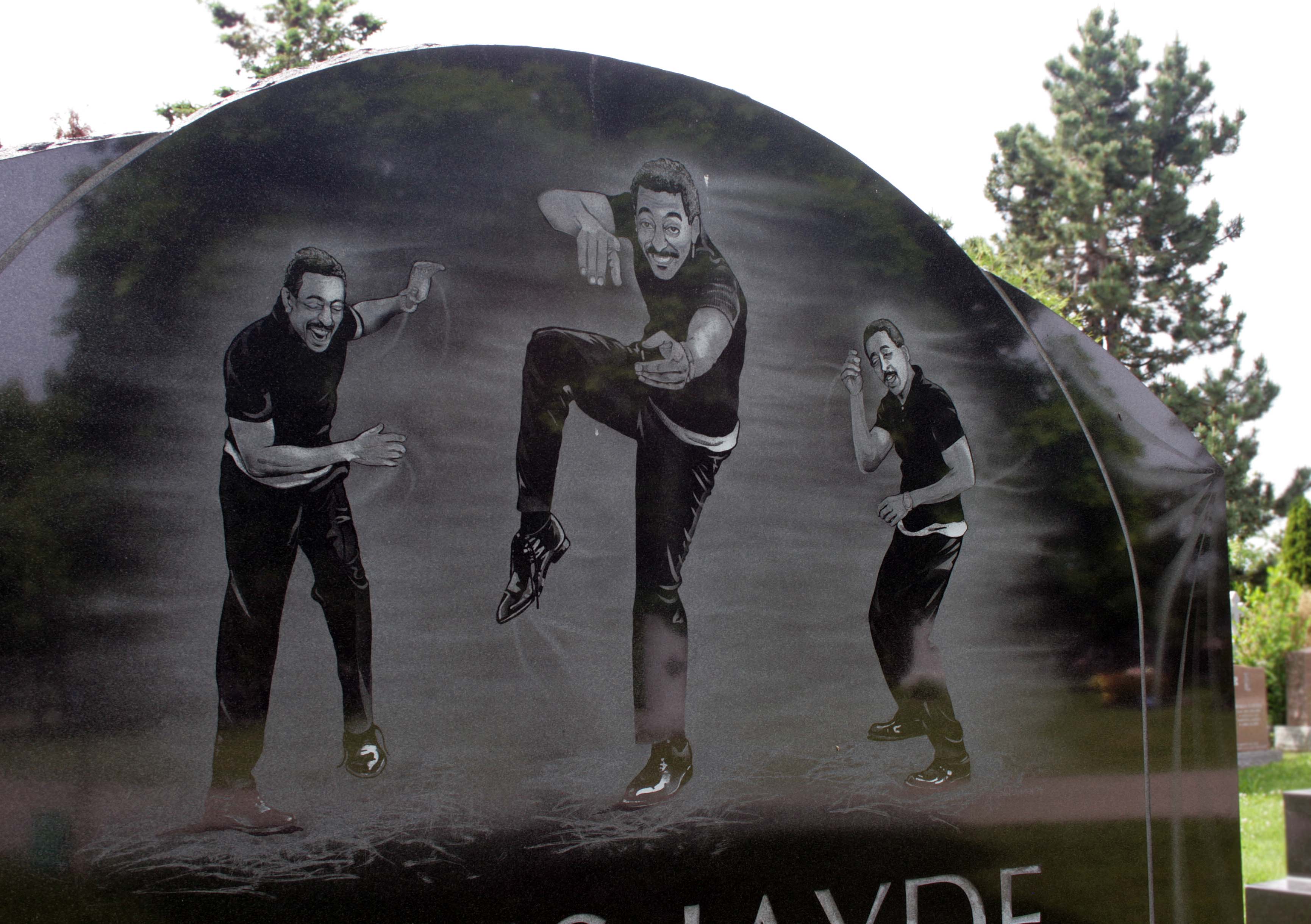
The Hines-Jayde gravestone is a beautiful monument, made from black granite. At the top of the stone is a sandblasted engraving of Hines dancing, framed by what looks like curtains on either side of the stone. He is depicted with a look of joy and happiness on his face. It’s a lovely representation of what he is best known for, and what was such a large part of his life. 

“Hines Jayde / Gregory Oliver / Hines / Feb. 14, 1946 / Aug. 9, 2003 / Together Forever / Negrita Maria / Hines Jayde / July 5, 1958 / Aug. 28, 2009 / So all sing in their festive dance. / “Within you is my true home” Psalms 87:7”

It was easy to tell that we were not the only ones who had made a trip to visit this gravesite. There were many grave goods left behind on the day we visited. These included stones, candles, and oil lamps. There was also a heel and toe plate placed at the base of the gravestone. These plates are mounted to the bottom of a shoe and used to tap dance. 

After paying our respects we wandered the cemetery a little bit, exploring the meandering paths. It’s a beautiful cemetery with its trees creating some beautiful dappled light across the gravestones. I noticed that there were many black granite stones, in some sections that were even the same style. 

I also noticed many oil lamps left at graves. It reminded me of the Jewish practice of leaving pebbles on top of gravestones. Some graves had only one of two oil lamps, while others had handfuls of them surrounding the stones. I can just imagine how beautiful they would look at night with all of the lamps lit up. 

You might be asking yourself how an American-born actor came to be buried in a Canadian cemetery. I had the same question. 

It looks like the reason is because of Hines’ fiancé Negrita Jayde, who is Canadian. A celebrity in her own right, Jayde was an athlete and an author. She was an award-winning professional bodybuilder from Toronto, Ontario, and wrote two books about the subject. She was also an actor, having starred in the action/sci-fi film Safety Zone in 1996.5

Although Hines and Jayde did not get the chance to get legally married before his death, Jayde did take Hines’ last name.6 When Jayde passed away six years, later in 2009 from cancer, she she was laid to rest beside him.

I’m very happy I was able to help one of my best friends pay her respects to one of her favorite actors. I’m also happy that I had the chance to pay my respects as well. Visiting famous graves is always an interesting experience because so often we feel so connected to them, even though we don’t know them on a personal level. TV and film actors, in particular, can feel like our best friends because of how invested we can get into their characters or their careers. So getting the chance to pay our respects at their gravestone can sometimes be a surreal experience.  

Have you ever visited a famous grave? I would love to read about your experience in the comments.

Thanks for reading!


References: 

  1. Gregory Hines | Britannica
  2. Gregory Hines | IMDB
  3. Gregory Hines | Wikipedia
  4. Saint Volodymyr Ukrainian Cemetery | Find a Grave
  5. Negrita Maria Truszyk Jayde | Find a Grave 
  6. Negrita Jayde Trivia | IMDB

Cemetery Recipes: Annabell’s Snickerdoodles

Today’s gravestone recipe is another one I have seen floating around on the internet pretty frequently. Since the success of last month’s cookie recipe, I thought it might be time to try another one, this time with some baking involved. 

I am pretty sure I have had a snickerdoodle before, but I don’t recall when. I asked my mother if she had ever made them before, and she said yes, quite often actually. So for today’s gravestone recipe, I try my hand at making Annabell’s Snickerdoodles.

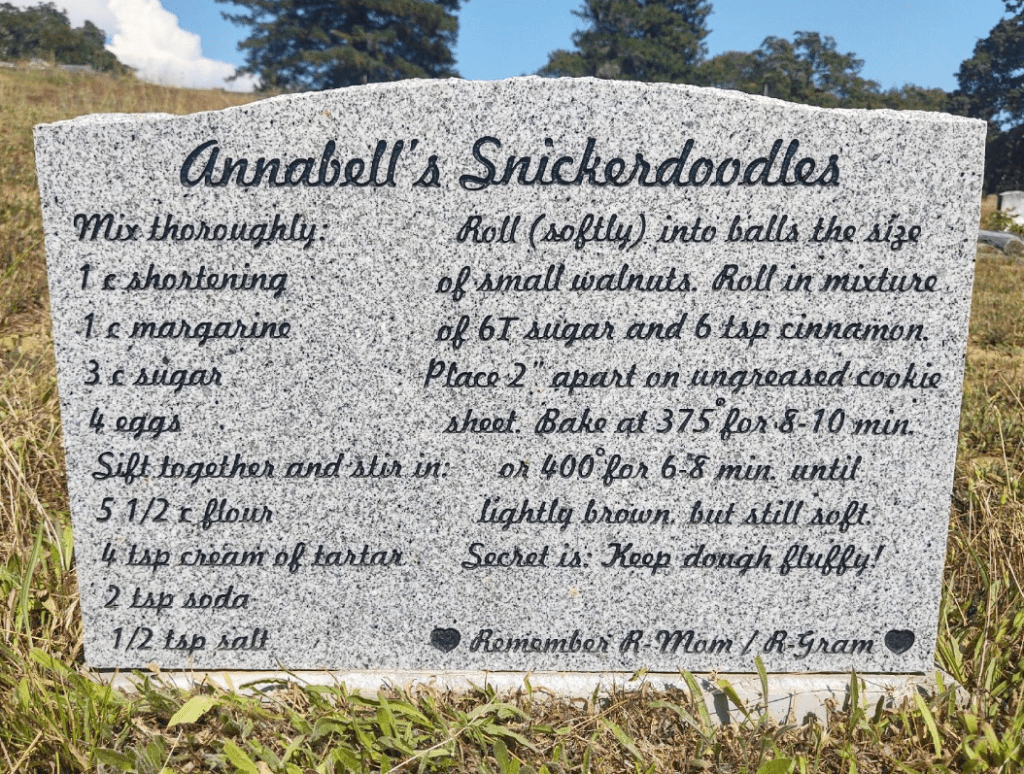
This tombstone treat comes from the gravestone of Annabell R. Gunderson of Willits, California. Found in Willits Cemetery, this gravestone recipe takes up the entire backside of Gunderson’s grey granite gravestone.

Annabell Gunderson passed away at the age of 87, in 2007 after a battle against an unidentified illness.1 In life Gunderson was very active in her community, volunteering her time to multiple organizations. In particular with the St. Anthony’s Ladies Guild.1 Gunderson was known to especially love helping with the yearly enchilada feed—a fundraiser where trays upon trays of enchiladas are made and sold.1 

She is lovingly remembered as a great cook and for her hugely popular snickerdoodles. A recipe that now lives on, etched in stone.

Here is the recipe as engraved on the tombstone:

Annabell’s Snickerdoodles

Mix thoroughly:

  • 1 c shortening
  • 1 c margarine
  • 3 c sugar
  • 4 eggs

Sift together and stir in:

  • 5 1/2 c flour
  • 4 tsp cream of tartar
  • 2 tsp soda
  • 1/2 tsp salt

Roll (softly) into balls the size of small walnuts.

Roll in mixture of 6T sugar and 6 tsp cinnamon.
Place 2” apart on ungreased cookie sheet.

Bake at 375° for 8-10 min. or 400° for 6-8 min. until lightly brown, but still soft.
Secret is: Keep dough fluffy!

Making the Recipe

I spoke to my mom about making this recipe, and right away she was surprised at how much this recipe makes. She suggested I cut the recipe in half to make a smaller batch. Normally I do try to make the recipe as it is written, but I thought making half of this recipe would be more manageable for me in my small kitchen. After learning about Gunderson’s love of community and cooking, I think I understand why this recipe makes such a big batch. 

So after getting out my ingredients and figuring out the new measurements on my kitchen blackboard, I got started on mixing up a batch of Annabell’s Snickerdoodles.

The recipe is very easy to follow, and is very well written. I did have to soften my margarine and shortening in the microwave a bit so it would combine nicely with the sugar and then the eggs. I made sure not to heat them too much though, as I didn’t want to cook the egg at all. 

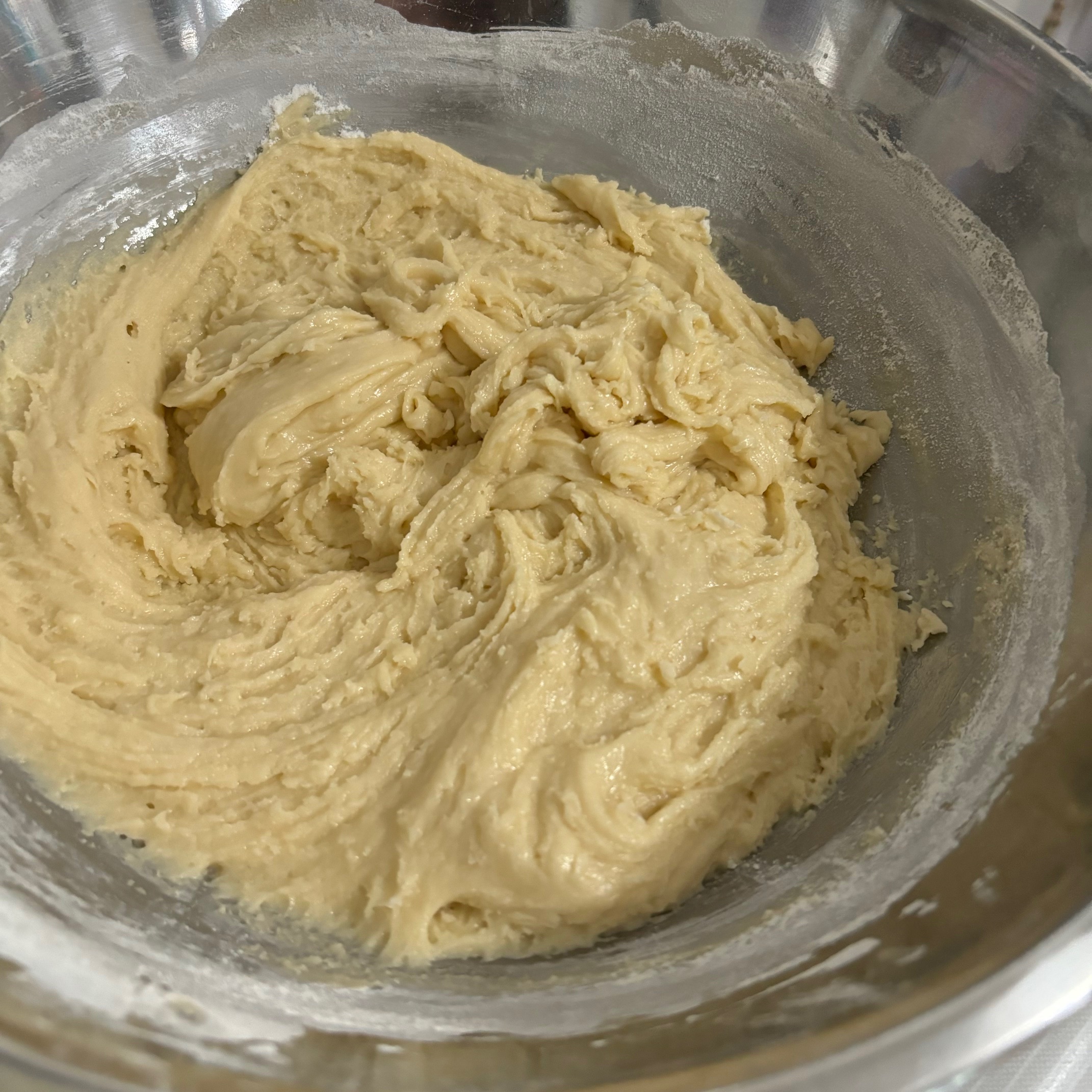
After that, I sifted in the dry ingredients till the mixture was well combined. I tried my best to not overwork the dough, keeping Annabell’s secret in mind.

Now came the fun part! 

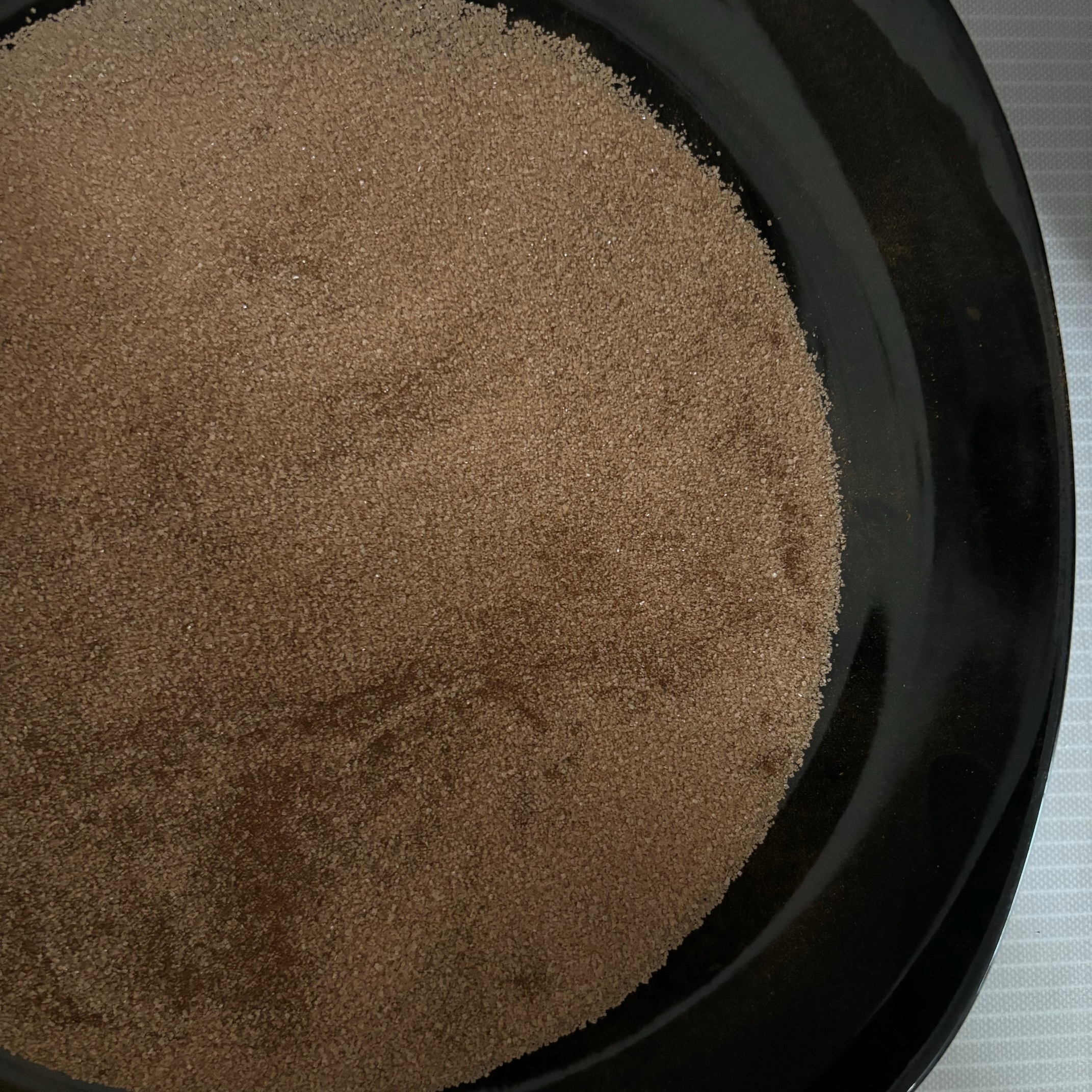
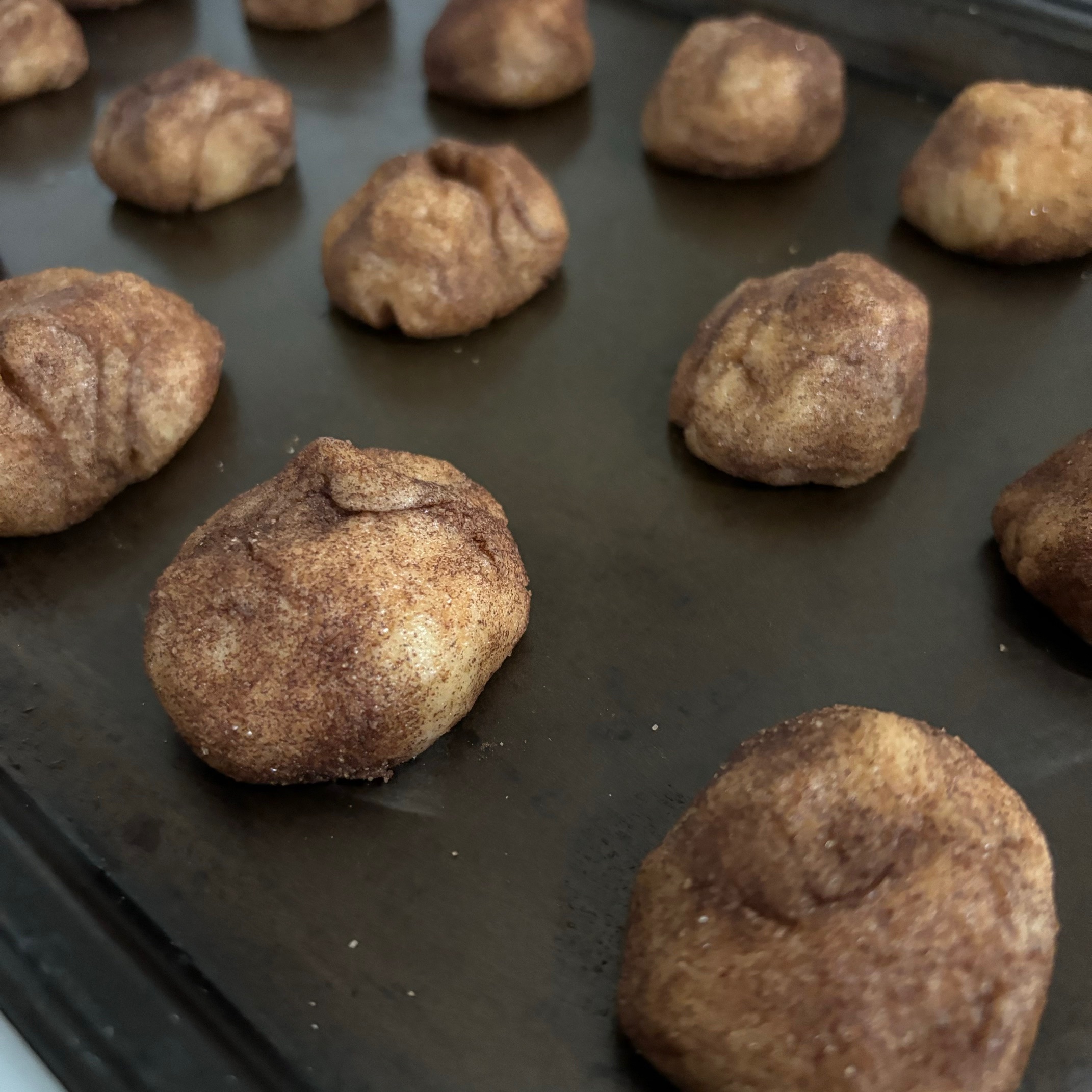
I made sure to mix the sugar and cinnamon very well and put the mixture into a dinner plate so I had lots of surface to roll the dough around. To form the cookies, I pinched off small parts of dough, rolling them between my hands into a ball and then rolled them in the sugar and cinnamon mixture. Then I shaped them a little more with my hands before placing them on the ungreased cookie sheet.

I did flour my hands now and then while rolling the dough to try and stop it from sticking to my hands. I tried my best to space the cookies out evenly between two cookie sheets. I didn’t realize that the cookies would spread, so if I made them again, I would space them out a little more between multiple cookie sheets instead of only using two sheets.

I then placed both cookie sheets in the oven to bake at 375° for 10 minutes. I did a bit of washing up while I waited for them to turn a golden brown. 

Even though they did spread out a bit on the cookie sheet, it wasn’t terrible. After cooling on top of the stove for 10 minutes I was easily able to break them apart without ruining their shape too much. 

These cookies turned out amazing! I was a little bit daunted by the amount of work that had to go into these. But, it turned out to be not as intimidating as I thought, and the result are some of the best cookies I’ve ever tried—especially right out of the oven.

They are soft and buttery, sweet with a hint of cinnamon. I don’t think they will last too long in my house, as I couldn’t eat just one. I love how they turned out and will definitely be making these again!

This recipe would be great for someone looking for the perfect cookie for a bake sale or cookie exchange. They would also be a fun cookie to make in the kitchen with kids, as I am sure they would love rolling the dough around into the sugar and cinnamon. 

Have you tried this recipe before? Do you have a favorite snickerdoodle recipe? I would love to read about it in the comments!

Thanks for reading!


References:

  1. Annabell Gunderson obituary | The Ukiah Daily Journal

Stone Stories: Mattawa’s Master Painter

One of my favorite things to do on cemetery road trips is visit small local museums. They are often filled with beautiful antique artifacts as well as fascinating stories. Brimming with local history, they often lead me down interesting research rabbit holes. They are great places to learn about interesting local figures to seek out while visiting cemeteries.

For today’s stone story, I want to talk about another Mattawa local that I learned about while visiting the Mattawa Museum, Mattawa’s own Master Painter, Gordon Dufoe.

The Artist

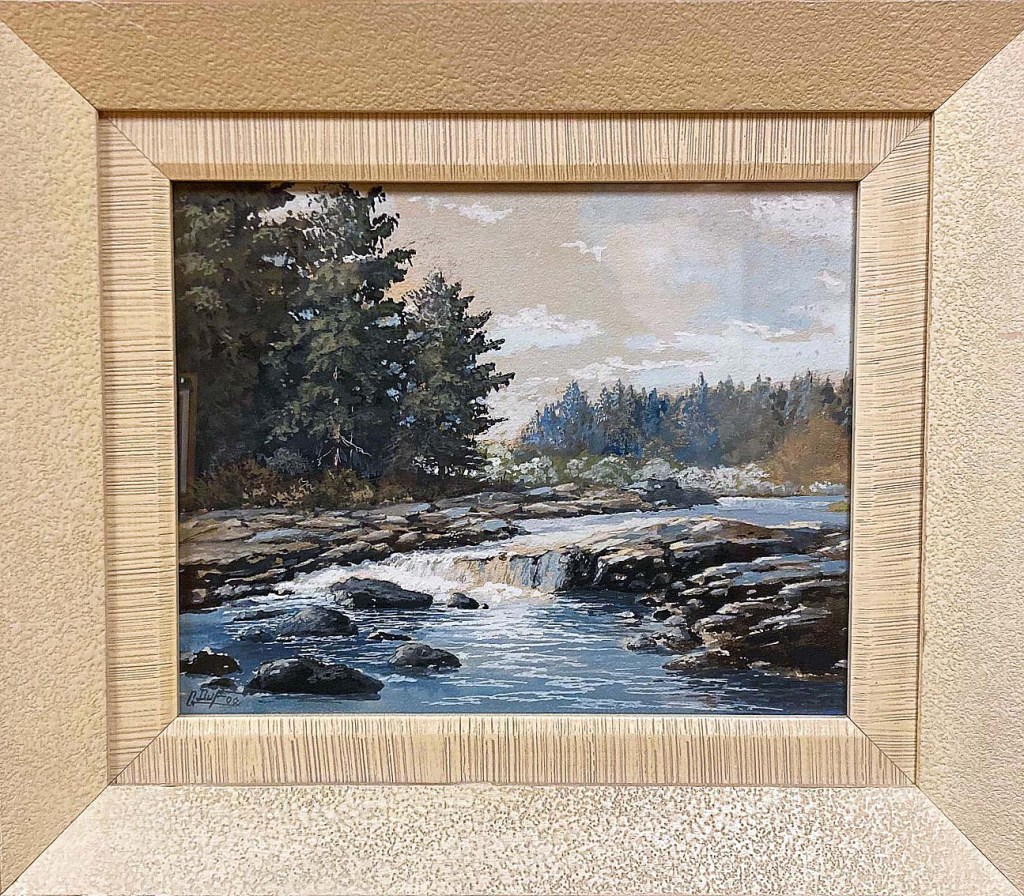
Gordon Dufoe was born in Mattawa in October 1891. You could say that artistic talent runs in his family. His father would often draw animals to the delight of Gordon and his brothers.1 Although Dufoe never had any formal art training, he would go on to be known as the “Master Painter of the Ottawa Valley”.2

Dufoe did a tour of duty in Europe, during World War I, where he was sometimes moved from the lines and given orders to sketch the cathedrals, historic buildings, and other locations—to document them in case they were destroyed.3

In 1919, Dufoe returned to Mattawa and married Irene Leclaire. They would go on to have nine children together, seven sons and two daughters. Frank, the oldest of the Dufoe children, inherited his father’s artistic talent. Talent that was also passed down to Frank’s son Gordon, named after his Grandfather.2 

Dufoe eventually set up a home studio and began to paint professionally.1 His background as a trapper and guide shines through his work, which is largely focused on landscapes and animals. He had a beautiful eye for capturing the essence and movement of his subjects. 

The Mattawa Museum exhibit includes a Ricohflex – Model VI camera that was used by Dufoe. An avid photographer, he would often take photos that he would reference when creating his paintings. He also dabbled in building his own cameras, as well as building radios and telescopes.2 

His paintings can be found in North America, and around the world.1 Today, a painting can sell for more than Dufoe made in his lifetime as a living painter. He was known to give his paintings away or even throw them away if he was not happy with them.2 After his death in 1975, many of his works were donated to the Mattawa Museum2, and are on display for all to see.

In 1993, Dufoe’s family worked with Douglas Pollard at the Highway Book Shop to posthumously publish a book Dufoe had written. Canadian Animals I Have Known by Gordon Dufoe is a collection of stories from Dufoes life in the bush and contains many of his animal sketches.2 Today, the book is now out of print. 

Visiting the Cemetery

After visiting the museum, my mother and I made our way to the cemetery to pay our respects.

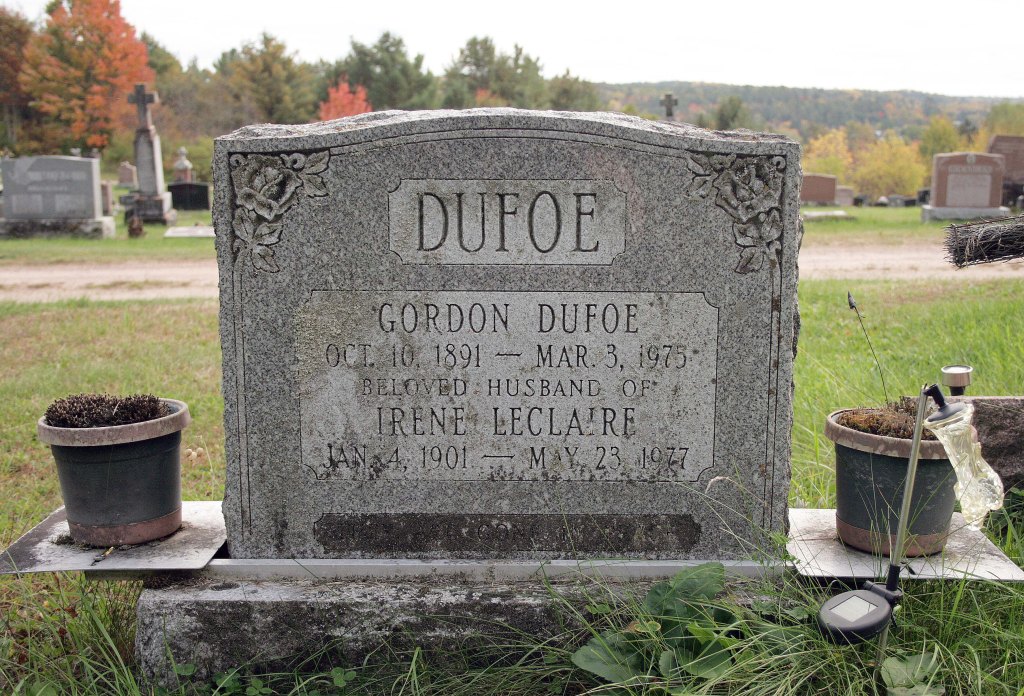
Dufoe passed away on March 3, 1975, at the age of 83. He is laid to rest in Saint Annes Cemetery beside his wife, Irene who passed away in May of 1977. Beside a large grey granite tombstone for both Gordon and his wife, stands a Canadian military grave marker, in honor of Dufoe’s military service. 

It reads: “ Gordon E. Dufoe / Private / 130 Battn. C E F / 3 March 1975 / Aged 83”

The Dufoe family plot is also the final resting place of Albert and Norman Dufoe, and Stella Dufoe Brunette, children of Gordon and Irene. 

It took my mother and I some time to find Dufoe’s plot as the cemetery is quite large. Saint Annes Cemetery, also known as Saint Annes Catholic Cemetery was established in 1883 and has approximately 2,246 memorials according to Find a Grave. The cemetery has not been fully photographed yet, and it is still an active cemetery. 

If we had not visited the Mattawa Museum before visiting the cemetery, we would not have known that this simple grey marker was the final resting place of one of Mattawa’s finest painters. 

The Museum and cemetery are not the only places in Mattawa where you can find a memorial to Dufoe. There is a park that sits between 10th and 11th streets that was dedicated to the local painter many years ago.1 In 2016, a new sign and a memorial bench that lists the names of all of his children was installed.4

The inscription on the memorial park sign reads: 

“Gordon Dufoe (1891-1975) an outstanding artist, craftsman, outdoorsman, soldier, family man, and friend is hereby remembered for the beauty and pleasure he brought to many and for his contributions as an exemplary citizen.”1

Thanks for reading!


References:

  1. Gordon Dufoe | Mattawa Museum
  2. Mattawa’s ‘Renaissance Man’ Remembered | Past Forward Heritage Limited
  3. Mattawa Park bench and sign honours artist | Bay Today
  4. Park bench will honour local painter | Bay Today

Celebrate with a Cemetery Terrarium

Did you know that May is Cemetery Appreciation Month?

I first found out about this observance in 2021 when I saw similar posts circulating on social media from others who frequent cemeteries. I have been celebrating ever since! 

I’m not sure when this celebratory month was first recognized. But, I did learn that in May 2009, the Iowa Governor proclaimed the month of May to be Cemetery Appreciation Month, to honor the importance of cemeteries:

“Whereas, pride and respect for our pioneers leads to an interest in and concern for the future. It is with this thought in mind that we dedicate this month to the care of our pioneer cemeteries:”1

Many others have since followed suit, with other counties, historical societies, and even cemeteries making similar proclamations that apply to all cemeteries. 

In the past, I have celebrated by making myself a bucket list of fun things to do that can be completed during the month. Last year, I created a set of 4 Cemetery Bingo Cards (PDF) that you can print out and take with you on your next cemetery visits.

This year I wanted to do something a little different to celebrate, by making a little cemetery terrarium that I can hopefully keep year-round. 

A cute little reminder of the places I love so much.

A true terrarium is a miniature, self-sustaining garden ecosystem that is usually contained in a small sealable glass jar. Placed in the sun, it becomes self-watering through a cycle of condensation and evaporation. Once sealed, there should be no need to re-open the jar again, although it doesn’t hurt to give it a little spritz if needed.

Things you’ll need:

  • a sealable glass container
  • plants (moss, ferns, etc.)
  • gravel or lava rock
  • sand or activated charcoal
  • mesh screen
  • soil
  • cemetery decor

Tools:

  • tweezers
  • spray bottle filled with water

How to make a Cemetery Terrarium

First things first, you will need to choose the container that will house your little cemetery. 

Look for a sealable glass container that has a wide mouth. This will make it easier to build your cemetery within it. 

I found my container at a local thrift store, but you can also look for the perfect container at your local dollar store as well. If you are going for a specific look, you might get lucky at Michael’s Craft Store, but they can be on the more expensive side, so if you do go that route make sure to check their website for a coupon.

Next, you will need some plants! 

To best mimic the look of a cemetery I am going with moss, but you can go with whatever you like best. Keep in mind that a closed terrarium creates a high-humidity environment, so you want to choose plants that will do well in that setting. Ferns and mosses both do well in a terrarium. 

The benefit of using moss is the ability to build up your little landscape in chunks, to create a more natural-looking terrain. This will come in handy when placing your gravestones and other decor as well.

Now we can start building our terrarium from the bottom up.

First, add about an inch of gravel or lava rock to the bottom of your glass container. This layer will act as your drainage, creating space for any excess water. This will also help prevent root rot. 

Next, fill in the spaces between the gravel with sand or activated charcoal. This will add an extra layer of filtration. 

After that, lay the mesh screen on top. This screen will allow water to pass through but will stop the soil from mixing into the drainage layer. This will also create a barrier to slow down roots, and help prevent root rot. 

Now that we have a strong foundation for our terrarium, it’s time to start adding the soil. 

The type of soil you use is up to you. There are soil mixes made specifically for terrariums, such as ABG mix or Terrarium mix, but potting soil can work just as well. 

You want to add enough soil to contain the plant roots comfortably.

To add dimension to your landscape, and if you have the space in your container, you can create different elevations by adding a slope or valley into your soil layer.

Now it’s time to start building our miniature landscape. 

To start, give the soil a light misting. This will make the soil a bit easier to work with. Now you can start arranging your plants. 

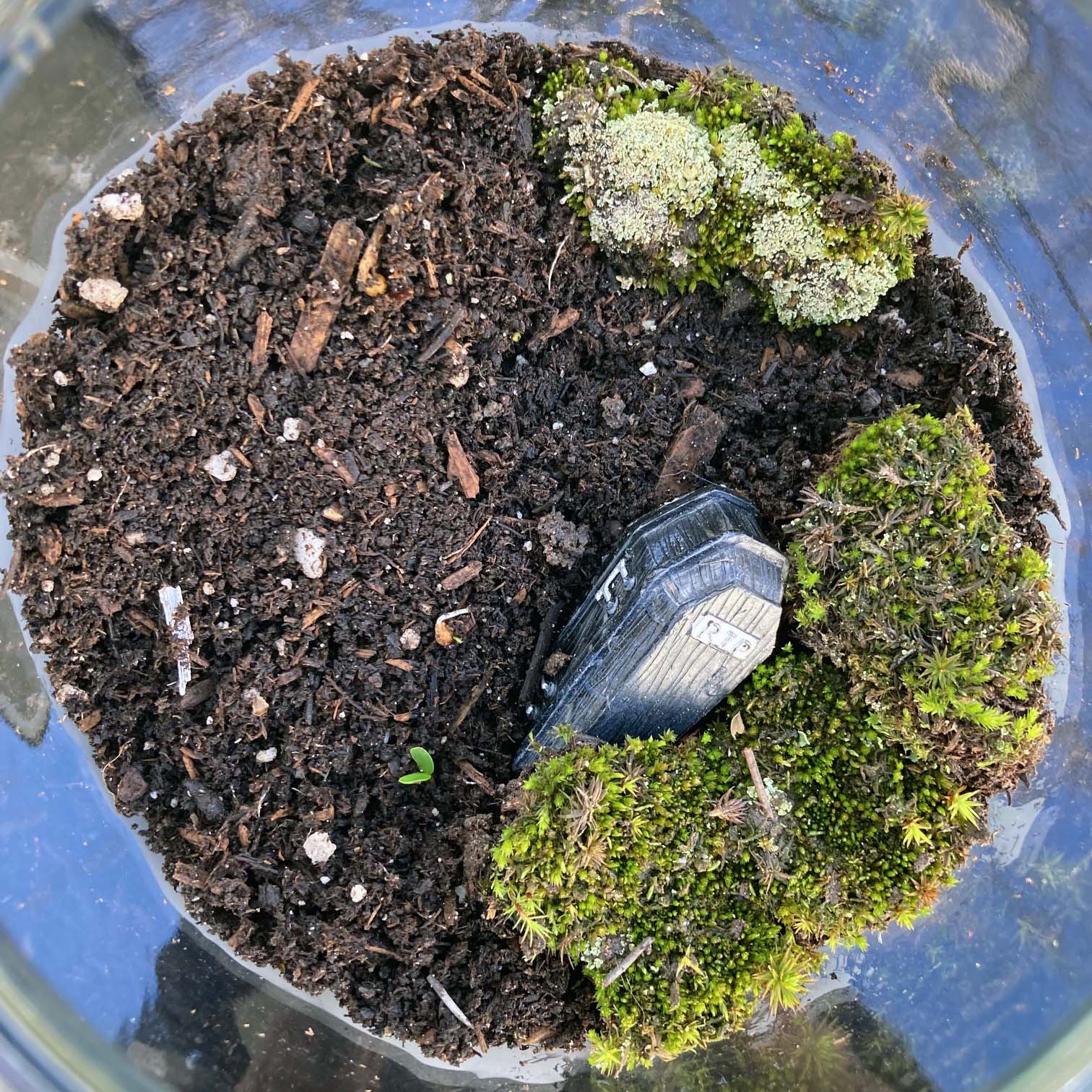
Break apart your moss into manageable chunks. This will help make placement easier, as well as working around your gravestones and other decor. 

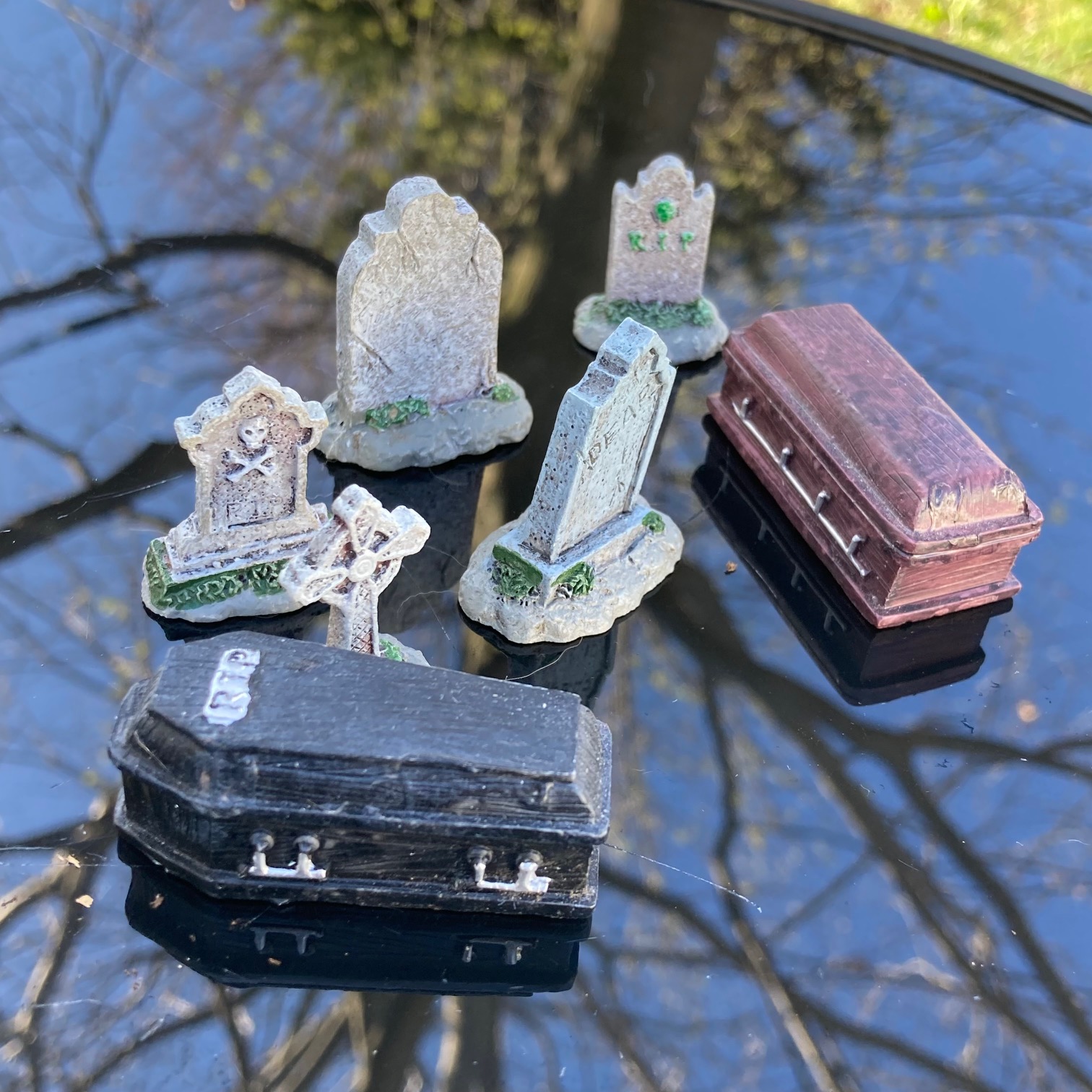
Using the tweezers to place and build up my moss, I incorporated some miniature gravestones and a coffin to flesh out my cemetery.

Add moss until all the soil is covered.

I used gravestones and coffins from the Lemax Spooky Town Collection that I purchased from Michaels a few years ago. These are pre-painted and stand about 1 inch tall. But there are other cemetery sets out there for purchase, some that are 3D printed and unpainted so you can customize your cemetery. 

For an added touch, you can add small branches to your terrarium to create the illusion of trees. 

Now that your cemetery is ready, it’s time to give it one last watering before sealing it up. Give your cemetery a light spray, with just enough water to make the soil damp.

Then go ahead and put the lid on, to seal your container, and admire your new miniature cemetery!

Your new mini cemetery should be pretty self-sustaining, but to get the most life out of your terrarium, make sure to place your terrarium somewhere that gets plenty of bright, indirect sunlight. Infrequent direct sunlight won’t hurt it, but too much direct sunlight can burn your plants. If you notice your cemetery looking too dry, or your plants look wilted—give your terrarium a light watering, making sure not to soak it. 

I hope you enjoyed this little tutorial on how to make your own cemetery terrarium. I had a lot of fun creating mine and putting this little how-to together. It was a little out of my comfort zone, but I had fun experimenting and exploring the world of terrariums.

I found it particularly fun designing my cemetery landscape and thinking about what my favorite elements of a cemetery are and trying to incorporate that into my final design. 

I can’t wait to see what you create! Make sure to tag me on Instagram and Facebook.

Happy Cemetery Appreciation Month! 

Thanks for reading!


References:

  1. May is Cemetery Appreciation Month | Newton News

Stone Stories: The Abandoned Highway Bookshop

When I was a child, my family often made trips to Quebec to visit extended family. My father loved to use the shortcut through Field, as it cut about 30 miles off our five-hour drive to Val d’Or. We always stopped for a meal at the McDonald’s beside Ms. Claybelt, the 12-foot-tall Holstein cow. 

On the way back from our family visits we would add another stop to our route, which also became a road trip tradition. That was stopping at a small unassuming Book Shop that sits beside Highway 11. 

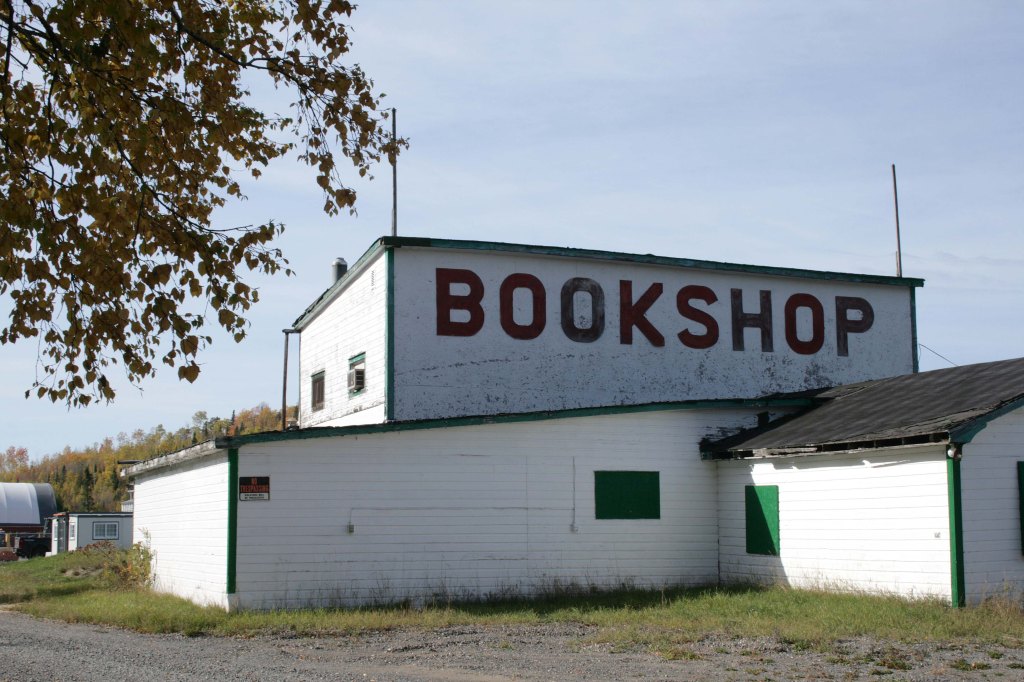
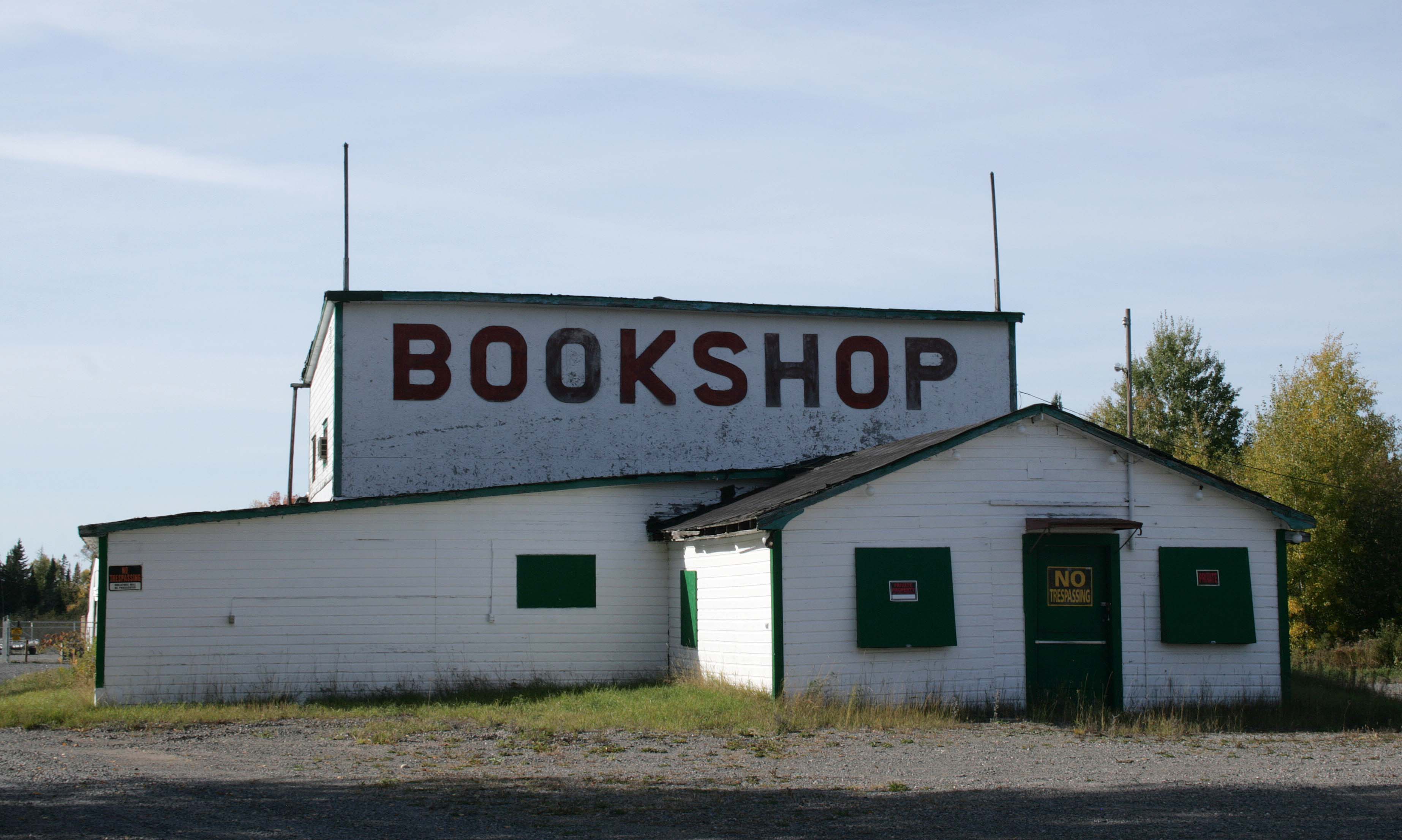
I have many fond memories of this little highway book shop, that today sits abandoned. Just like the many books that have sat on the now neglected shelves, the Book Shop has its own interesting story to tell.

The Highway Book shop

When Douglas Pollard opened his small print shop, called Pollard Press in 1957, I don’t think he ever imagined how big it would become. What started as a small commercial print shop in his garage, printing general office stationary eventually turned into a Northern cultural landmark.1

The story goes that one of Pollard’s customers asked to barter used books instead of cash to pay his bills. From then on the demand for books became greater and the shop expanded many times over the years to accommodate the growing collection of books.1 

Being originally a print shop, it was a natural move for Pollard to start printing and publishing books in the 1970s2. 467 original titles were published through the Highway Book Shop, focusing on local history and Canadian literature.1

What started as a 20’ x 25’ wooden building eventually expanded into a 10,000 square footprint, consisting of building add-ons and even three highway trailers that were used to store nothing but books.2 No wonder so many people made it a mandatory stop in their travels, sometimes just to experience the sheer size of its collection. 

I remember as a young girl getting lost among the stacks of books. It was so mind-blowing to me that the staff could find anything in that sea of books. However, the inventory was well maintained and kept very up-to-date. The Book Shop even maintained a list for those looking for specific titles. You could add your name to the list with your desired title and eventually, you might get a call that your book was found. Naturally, this could take some time, even years!2 

Pollard, and his first wife Jean Ririe Hope, spent a lot of time at book fairs and conventions, always on the hunt for good books to add to their shop. Pollard even purchased lots of discarded Library books, that were sometimes hit-or-miss for quality. 

After Pollard’s first wife passed away, he eventually remarried and brought his second wife into the fold of the Highway Book Shop. Mary Lois Williams was a Librarian with a Master of Library Science from the University of Toronto. She left the Librarian life trading it to work in the Book Shop when she married Pollard in 1986.3  

After Pollard died in 2009, Lois worked to keep the Book Shop running. It was a valiant effort, but she ultimately decided to close the shop in 2011. At 87 years old, her heart was just not in the same way anymore.

Visiting Cobalt

I visited Cobalt in October of 2022 with my mother. We wanted to take advantage of the fall colors and visit some local historical sites. We also wanted to visit Douglas and Lois Pollard in the cemetery, to pay our respects.

We spent most of our time in Cobalt visiting the Heritage Silver Trail, a self-guided trail system that takes you to 14 locations throughout the small town, that highlights the history of the silver mining rush. Unfortunately, when we visited, a lot of places were closed. This was also the case of the bookstore we had hoped to visit, White Mountain Publications.

White Mountain Publications was high on our list to visit as it houses some books that were rescued from the Highway Book Shop after it closed. I was hoping to speak to someone about how many books were rescued and if there were plans to rescue more. White Mountain also published a book that I was hoping to purchase on this trip, called Highway Book Shop: Northern Ontario’s Unexpected Treasure written by Lois Pollard. I ended up purchasing the book through White Mountain’s website instead. 

Of course, there were many cemetery stops planned for this trip, but the one we wanted to visit most was the Cobalt Veterans Cemetery. This cemetery is located in Haileybury, a small town adjacent to Cobalt. The cemetery sits beside two other cemeteries; directly beside Mount Pleasant Cemetery, and across the road from the Haileybury Catholic Cemetery. 

The Cobalt Veterans Cemetery is the smallest of the three, although Find a Grave lists 332 memorials. I would not have thought there were that many laid to rest there based on the cemetery’s small size. It did make finding the Pollards less of a challenge. 

Douglas Pollard passed away on November 25, 2009, at the age of 84. His obituary states that he passed away suddenly at Temiskaming Hospital4, but in her book Highway Book Shop, Lois briefly touches on that fateful night. Like any other normal day, after closing time Pollard went upstairs to retire for the night, as they lived in a small apartment above the book shop. When she followed him upstairs, only ten minutes later, she found that he had “quietly passed away”. Doctors confirmed that he had died of cardiac arrest.2 

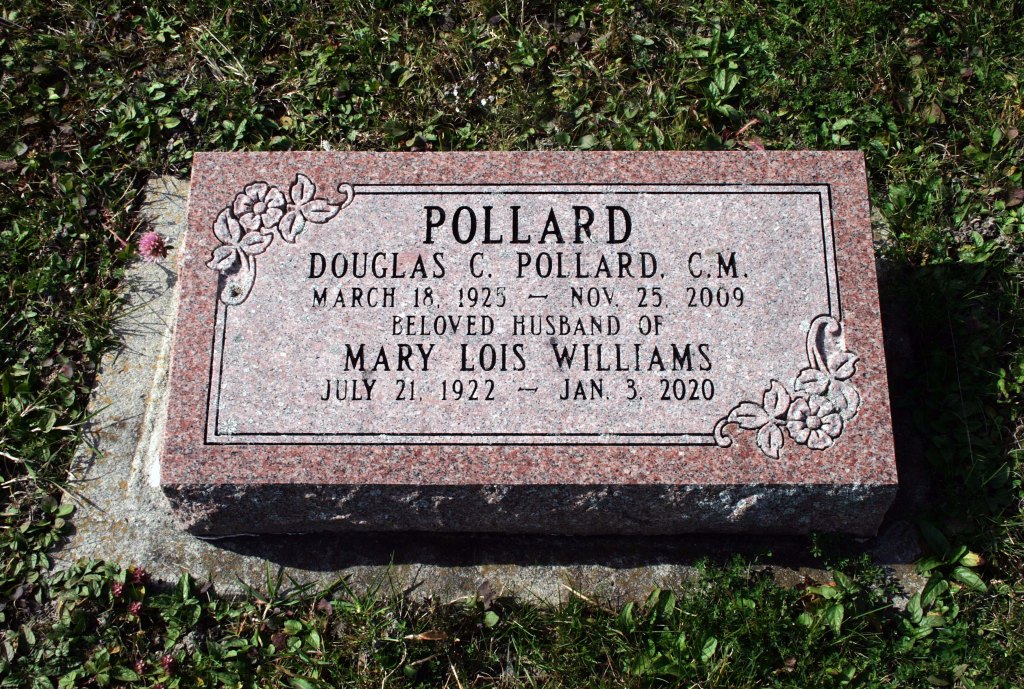
Douglas is laid to rest beside his second wife, Lois Pollard who passed away on January 3, 2020, at the age of 98. Their gravestone reads: “Pollard / Douglas C. Pollard. C.M. / March 18, 1925 — Nov. 25, 2009 / Beloved Husband of / Mary Lois Williams / July 21, 1922 — Jan. 3, 2020”

Douglas’s first wife, Jean Pollard is laid to rest in Valleyview Cemetery in New Liskeard. Jean passed away in October of 1979, unexpectedly on the operating table during a planned second open-heart surgery.2

The Book Shop Today

The Book Shop closed its doors forever on May 29, 2011. In 2012 it was purchased by new owners, but the Book Shop never re-opened.5 Rumour has it that the inventory of approximately one million books1 was left behind on the shelves. As noted above, White Mountain Publishers did rescue some of the books, but is it true that the large majority were left behind? 

When we visited the Highway Book Shop on our way back home from visiting Cobalt, we took some time to walk around the building outside. The large sign that stands by the road that once welcomed visitors is slowly deteriorating. The building facade has peeled and faded over the years, and the grass is now growing wild. 

We were hoping to catch a glimpse of the stacks of books inside, instead, we got a whiff of the strong musty smell of old books. Depending on where you stand outside the front of the building, you can catch that unmistakable smell. I can just imagine what it must smell like inside the building.

While touring the grounds we chatted about our memories of visiting the Book Shop. My mother remembers speaking with Lois on our many visits over the years. We also talked about the books—about all the books that were left behind, and wondering about what types of books we could find given the chance. Both of us are not brave enough to cross into urban exploration territory, but luckily we are not the only curious ones.

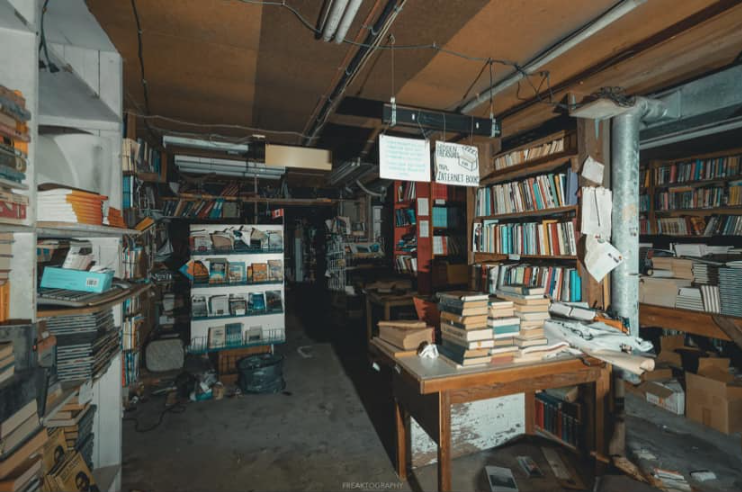
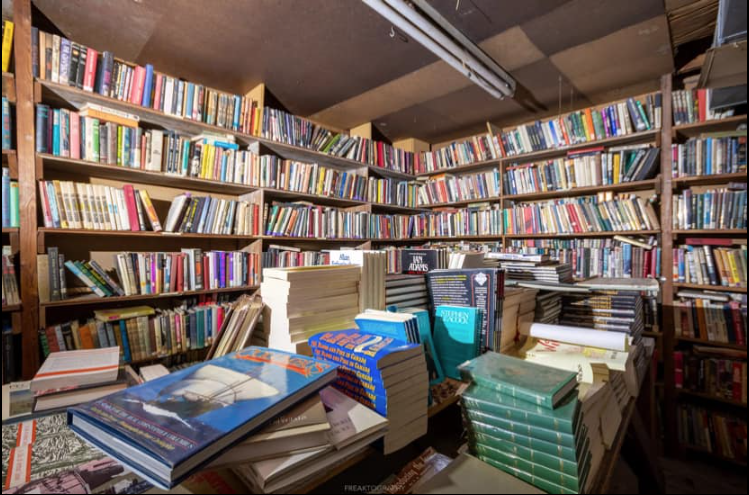
The good people over at Freaktography have ventured inside to document what the Book Shop looks like today and prove once and for all that the rumor is true, they did leave the books behind. You can watch their video Exploring a HUGE Abandoned Book Store over on their YouTube channel

Their video and photos show a time capsule, and books in rows upon rows of bookshelves for as far as the eye can see. It looks just like I remember. I am not the only one who has tried to imagine what an abandoned building full of molding and rotting books might smell like. The folks at Freaktography have been asked the question before:

“I have been asked by people, “What did it smell like in there?”, it smells exactly like you would think it does – like old books. It has warm, thick air and the rows upon rows of books give a muffled sensation when talking, there is no echo and it is eerily silent.”6

I can only imagine how surreal it would be to walk through those stacks again. Watching the walk-through video does make me a bit sad though. So many books left behind. I wonder what unique and rare finds there might be, what treasure could be found. I mean a lot of those books might be dated and useless now, such as the maps and tech manuals. But just imagine what old and out-of-print finds there might be buried in there as well. 

Maybe one day someone will be given the go-ahead to slowly pour through those lost tomes, and bring some of them back into the light. I know I would love to, given the chance. 

It was really interesting looking into the backstory of this abandoned landmark, and a piece of my childhood. Learning about the lives and passions of the people who brought the Book Shop to life highlights the fact that there are so many interesting stories out there. 

Thanks for reading!


References:

  1. A Short History | Highway Books
  2. Highway Book Shop: Northern Ontario’s Unexpected Treasure by Lois Pollard | Book
  3. Mary Lois Williams Pollard | Find a Grave
  4. Dr. Douglas Charles Neil Pollard | Find a Grave
  5. Home | Highway Books
  6. Exploring a HUGE Abandoned Book Store | Freaktography Youtube Channel

Cemetery Road Trip: The Muskokas

It’s graving season again in Northern Ontario!

Two weeks ago, I went on my first cemetery road trip of 2024. I was inspired by a book I read at the end of March, called Muskoka’s Most Haunted 2 by Andrew Hind. I have read a few of Hind’s books that have inspired some cemetery road trips, but this one was a bit serendipitous. I was already planning a trip to the Muskokas this summer and had a few cemeteries mapped out, one of which just so happened to be featured in the book. I took that, and the warmer weather, as a sign it was time to get back in the field. 

The Muskoka District is located north of Lake Simcoe and extends from the southeast shore of Georgian Bay to Algonquin Provincial Park.1 Sometimes referred to as cottage country, the Muskoka area is well known for its beautiful landscapes and rugged shorelines.

The Muskokas are also home to many charming small towns. They dot the landscape among picturesque parks. It is so well known, that many celebrities spend their summer vacations here. In 2023, Shaquille O’Neal, Mark Wahlberg, and Victoria & David Beckham were all spotted in the Muskokas enjoying everything the summer has to offer.2

Small towns are usually accompanied by cemeteries. For this trip, I planned a route that would take us up and around Lake Muskoka. There are many cemeteries in the area, so I was uncertain how many we would actually be able to visit. 

We left bright and early on the morning of Easter Monday, stopping for our obligatory road trip coffee before officially getting on the road. We planned to visit as many cemeteries as we could, while also visiting any attractions that may be open, and of course, stopping for a meal. That second item on the list was a little uncertain as the holiday meant that some places would be closed.

Our first cemetery stop, after enjoying the winding views in Bala, was Torrance Union Cemetery. Since it was so early in the morning, it was a bit chilly out but we still took our time exploring. We spent quite a bit of time at this cemetery, but I don’t want to go into too much detail just yet about our visit. This cemetery has some very interesting stories attached to it that I want to explore a little more in October.

Our next stop was the larger town of Gravenhurst. We made another stop for coffee and then stopped in at the three cemeteries within the city limits. We will have to go back to Gravenhurst sometime in the summer to take in the views of the waterfront and visit some attractions. That’s always the downfall of visits on a statutory holiday—everything is closed.

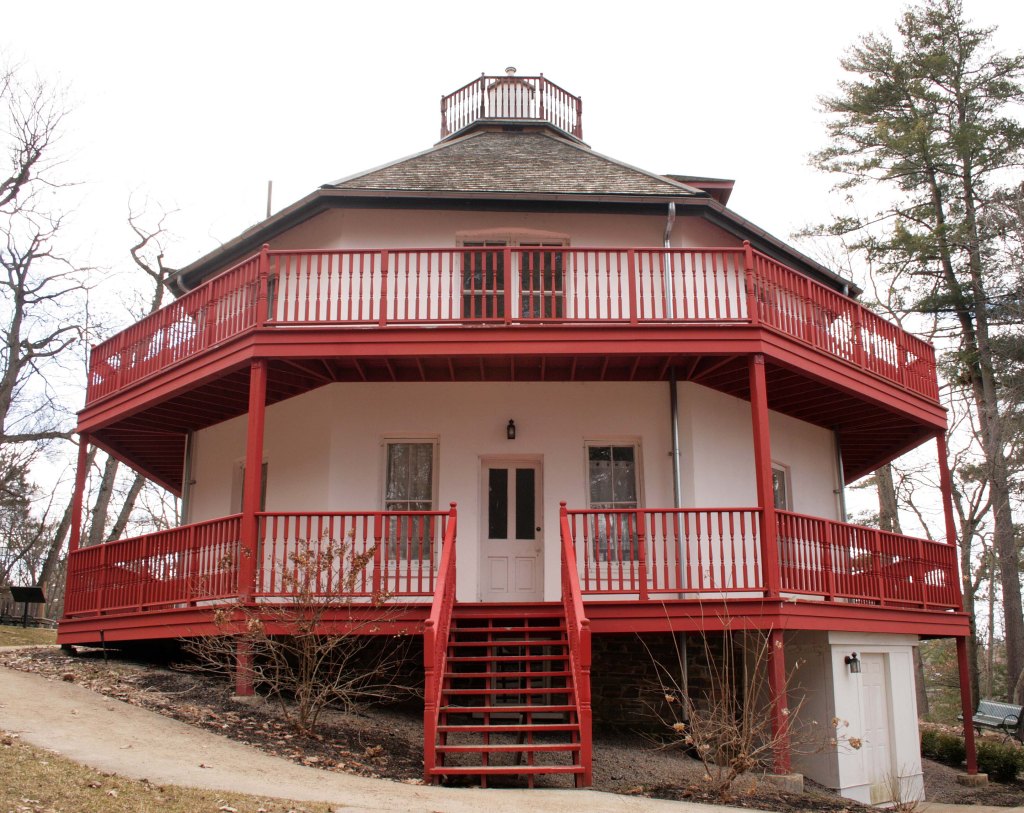
After a leisurely lunch at Chuck’s Roadhouse in Bracebridge, we decided to change things up a bit. Our next stop was the Woodchester. This beautiful octagonal home is a historic site, that is also an event space. It too was closed when we visited, but many walking trails surround it. Some of the trails have historical plaques that tell the story of the house and its previous owners. We were able to walk the circumference of the house and look at building maps that show what the layout of the inside looked like, when it was lived in. 

The Bracebridge walking trails meander alongside the Muskoka River and waterfalls. The waterfalls were strong and thundering when we visited. Unfortunately, part of the trail was closed off, most likely due to possible flooding, so we didn’t get to enjoy the full trail. The views were still lovely though and it was a nice way to break up our day. 

After that little pit stop, we visited three more cemeteries. The Annie Williams Memorial Cemetery was the smallest cemetery we visited that day. Only three people rest in that cemetery, which sits in the middle of a park and playground. This tiny gated cemetery sits under some large trees, only a few feet away from an active playground that often hears the boisterous sounds of children playing. It also sits a foot or two away from a popular little library, that was bursting at the seams with books.

As the day waned, it was time to start making our way back home. But we couldn’t help but stop at one more cemetery. Our last cemetery stop of the day was Port Carling Cemetery. That marked the end of our loop around Lake Muskoka.

This trip was a lot of fun! We ended up visiting a total of eight cemeteries, not bad for a first-time out after the cold of winter. We had beautiful weather that warmed up as the day went on which made our visits comfortable. Which means the weather can only get better from here. I look forward to my next outing and seeing where cemeteries take me. 

Thanks for reading!


References: 

  1. Muskoka | Destination Ontario
  2. This Canadian Town Is A Magnet For A-Listers On Vacation— Here Are 8 Celebs That Were Spotted There This Summer | Buzzfeed

Cemeteries:

  1. Torrance Union Cemetery also known as Whitting Family and Church Cemetery, Torrance
  2. St. James Anglican Cemetery, Gravenhurst
  3. Lakeview Cemetery, Gravenhurst
  4. Mickle Memorial Cemetery, Gravenhurst
  5. Bracebridge United Cemetery, Bracebridge
  6. Annie Williams Memorial Cemetery, Bracebridge
  7. Saint Thomas Cemetery, Bracebridge
  8. Port Carling Cemetery, Port Carling

Puddingstone

Have you ever heard of Puddingstone?

I first came across puddingstone while visiting cemeteries on St. Joseph Island. My mother and I visited the island in 2022, with plans to visit every cemetery on the island. We started to notice many gravestones made out of this unique stone. We also found large pieces of it left at gravesites, and in one instance possibly used as a temporary marker. I wanted to learn more about this peculiar stone.

During our visit to the island, we had a private tour of Adcock’s Woodland Gardens. The gardens, that sprawl for acres, are filled with beautiful trails and ponds, and hundreds of varieties of plants and flowers. My mother was in heaven. At the end of the tour, as we were heading back to the car, I noticed a cute little wishing well that looked to be made out of the same spotted stone we found in the cemeteries. I asked our tour guide about it. Grant, the owner of Adcock’s Woodland Gardens, was happy to share that this type of rock, native to the St. Joseph Island area is called Puddingstone. 

Puddingstone is everywhere on the island. When we visited Historic Fort St. Joseph, we were greeted by a large boulder of puddingstone at the entrance of the Visitor Centre. Since puddingstone is native to the area, when my mother and I toured the ruins, we spent some time at the water’s edge to see what we could find. Although we did find a few interesting rocks and pebbles, we didn’t find any puddingstone. There was also a sign at the waterfront asking that nothing be taken from the area. It is an archaeological site after all. 

On our way out, we of course checked out the little gift shop. Alas, no puddingstone for sale. I was a little disappointed because there was a beautiful piece of puddingstone sitting at their front desk. It was a baseball-sized chunk, that was mostly all natural and rough except for a smooth clean cut, showing the inside of the stone. 

We left the island without a sample of the stone, but I never forgot about it. I found it curious that it seemed like such a common material on the island, with countless gravestones made from it. I also found it curious that it was also a common grave good on the island. I wanted a little piece of my own.

What is Puddingstone? 

Puddingstone is a jasper conglomerate, a form of sedimentary rock composed of rounded cobblestone and other pebble-sized fragments. Conglomerates are formed by river and ocean wave movement.1 In Canada, puddingstone is commonly found on St. Joseph Island and in Bruce Mines, Ontario.2 It is unique to this part of Algoma.

The name Puddingstone comes from British settlers who were stationed in the area, they thought the pale sedimentary rock, dotted with red and brown jasper, looked like “boiled suet pudding with berries”.3

The Last Spike Stone Cairn, a cairn marking the location of where the last spike was driven for the Canadian Pacific Railway, includes rocks from across Canada. Can you guess what stone was sent from Ontario?

That’s right, it was a piece of puddingstone from Bruce Mines.4

The search continues

I checked in with my local gem and mineral shops to see if they carried puddingstone. Surprisingly, they didn’t know what it was. My next thought was to look at any upcoming gem and mineral shows or fairs.

I stopped in at the Galaxy Psychic & Crystal Fair. This weekend event happens annually in the Spring and Fall, but this was my first time attending. I thought there might be some gem and crystal vendors who might be able to help me. Again, no one knew what puddingstone was. One vendor was curious as to what puddingstone was used for. With a Google search, we discovered that it’s thought to have many metaphysical properties and benefits, with dream recall being one.5 She suggested that may be why I was searching for it. Maybe? I was more interested in its use in cemeteries. 

I decided it might be time to visit Bruce Mines again. I planned a cemetery road trip for the summer of 2023. The plan was to visit a few cemeteries, check out some antique shops, have a chip truck lunch, and visit the Bruce Mines Museum. I had read a well-timed Back Roads Bill article about some of the oldest graves in Northern Ontario, and there just so happened to be one in Bruce Mines. According to the article, the Bruce Mines Museum has in its collection, a wooden grave marker that is dated October 6th, 1850, and March 20th, 1851, for two victims of the 1849 cholera epidemic.6

Unfortunately, the Museum was closed when we arrived. I did double-check the operating hours before going, but I found out later that the Museum was short-staffed that summer, and didn’t always follow their posted hours. But we did get to see more Puddingstone. There are a few large pieces of puddingstone decorating the museum grounds.

My mother and I were both a bit disappointed that we didn’t get to visit the museum, but it wasn’t the end of our trip. We still had some antique shops to visit. We saw a lot of interesting items in the shops, but no puddingstone for sale. I did make sure to ask. At the last shop we visited, my mother found a couple of interesting books, so while she was cashing out I asked the clerk if they had any puddingstone. At this point, I didn’t expect them to have any, and they didn’t. 

But they knew where I could find some!

I was directed to a small artists workshop, that doubles as a gift shop called S&S Creations. To my surprise, the shop was full of puddingstone! The shop features beautiful stained glass artwork, that uses traditional stained glass, but also very thinly cut puddingstone. There was puddingstone in all shapes and forms—from book ends and coasters to large stone pieces and jewelry.

The shop belongs to artist Stephanie and her husband and stone cutter, Steve. With over ten years of experience, they take on projects of all sizes, from furniture and custom work to more delicate art pieces and home accessories. No one up to this point had any idea what puddingstone was, so I was so happy to talk to Stephanie. She told me that she had encountered the same thing, and found it as strange as I did. I guess Puddingstone is a hidden gem!

She asked me how I learned about puddingstone and I told her about my passion for visiting cemeteries, and how the gravestones had piqued my curiosity. It turns out that Stephanie and her shop were responsible for the creation of a lot of the puddingstone markers I had visited. We had a very good conversation, and I was able to finally get my own piece of Puddingstone.

I always find it interesting where cemeteries take me, and this was a fun example of that. There is always something new to be learned. I wonder where cemeteries will take me next?

Thanks for reading!


References:

  1. Sedimentary Rocks | Oregon State University
  2. Puddingstone (rock) | Wikipedia
  3. Puddingstones | Drummond Island Tourism Association
  4. Alex knows Puddingstone | Parks Canada
  5. Puddingstone | All Crystal
  6. Back Roads Bill takes us to the oldest graves in Ontario | Sudbury.com

A Collection of Urns

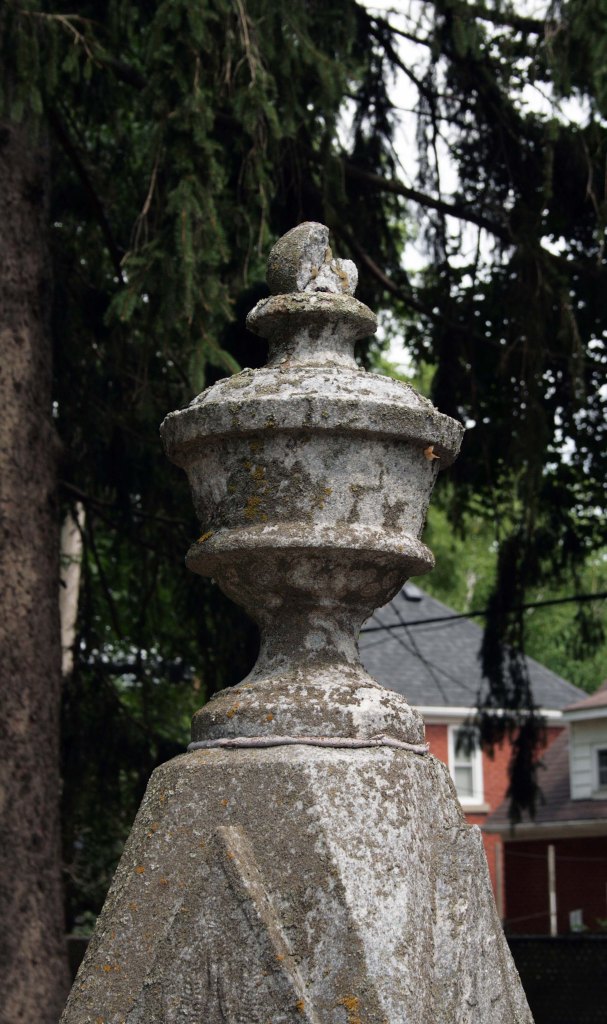
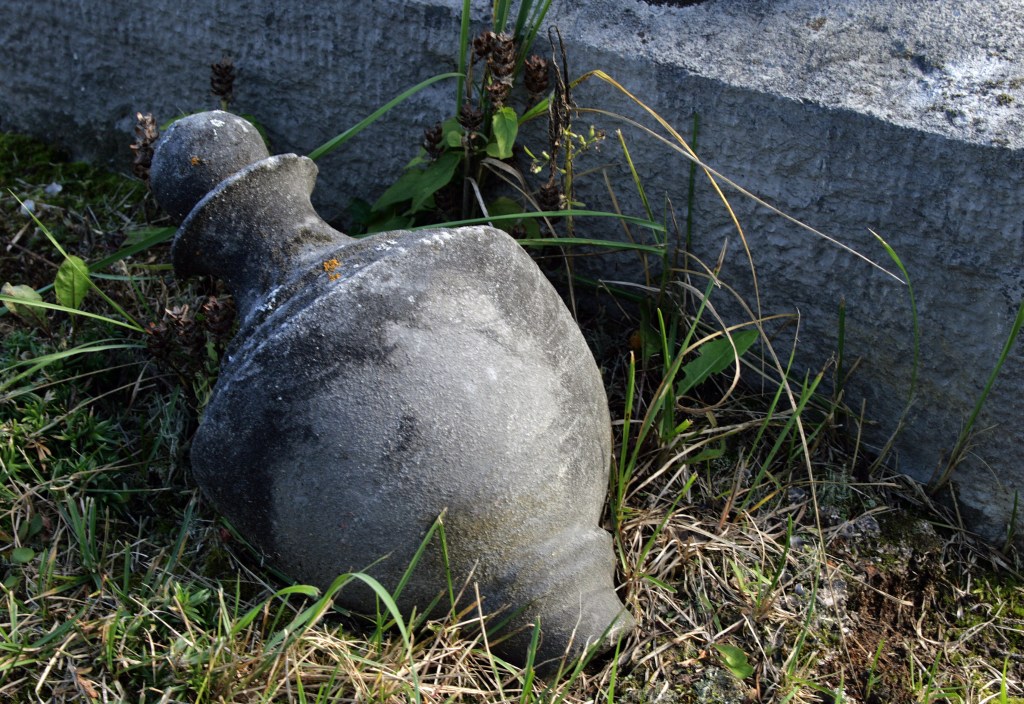
If you spend a lot of time in cemeteries you will often start to notice the repetition of certain cemetery symbols and motifs. In Ontario, more so in southern Ontario, urns tend to be a common gravestone symbol.

Although cremation was rarely practiced in North America at the time, the urn became a popular symbol in the Victorian era. Urns as a funerary symbol were adapted from Ancient Greece. Cremation was commonly practiced by the Ancient Greeks, who used ceremonial urns. As a gravestone symbol, the urn represents the body reduced to its most basic elements and the ascension of the spirit to heaven. Today cremation is a common practice, having started its climb to popularity in the 1980s.

I have found and photographed many urns during my cemetery walks, so today I wanted to share some of them with you.

Like many graveyard symbols, the urn can be found depicted in a variety of ways. Each version of the symbol has a slightly different meaning. This is one of the reasons I find cemetery symbolism so interesting. It is a language unto itself. 

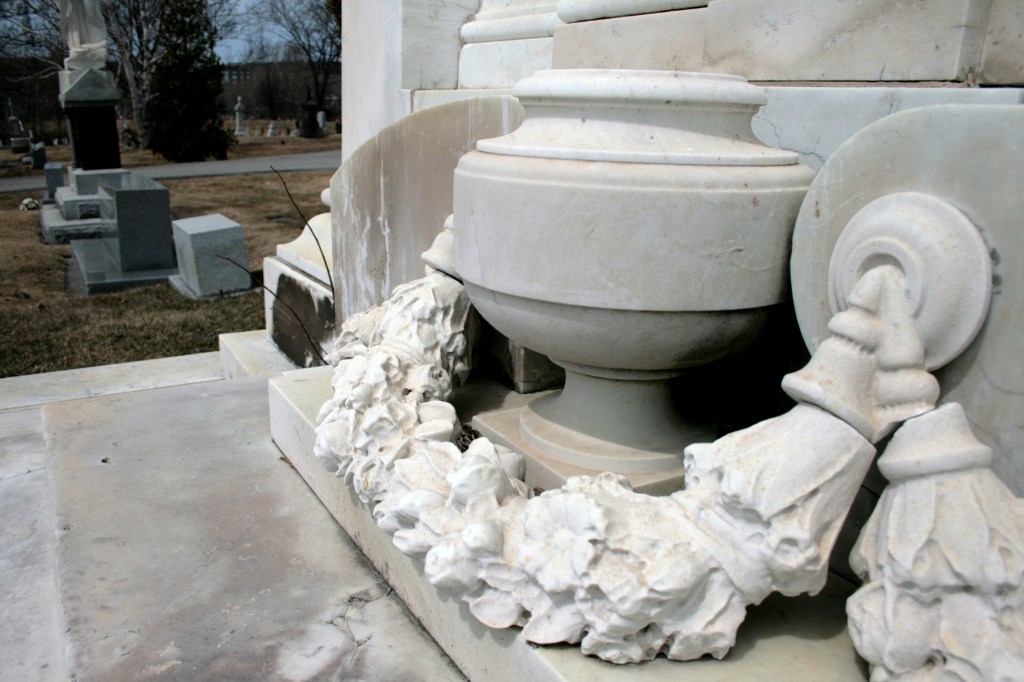
The Victorians were very fond of drapery, and you might come across what looks to be a fabric made of stone draped over an urn. Fabric draped over a gravestone is often thought to symbolize the veil between life and death. The fabric might also represent the shedding of earthly clothes as the deceased moves from this life to the afterlife. 

Have you ever found a unique version of an urn symbol? I would love to read about your finds in the comments. 

Thanks for reading!


References:

  • The History of Cremation in North America | Une Belle Vie Memorial Urns
  • Understanding Cemetery Symbols: A Field Guide for Historic Graveyards by Tui Snider 
  • Stories in Stone: The Complete Guide to Cemetery Symbolism by Douglas Keister

Cemetery Stories: Greenwood Cemetery

A cemetery is filled with many interesting stories, stories of the souls that are laid to rest within its gates. But often the cemetery itself has an interesting story to tell. 

Today on the blog I want to introduce a new series called Cemetery Stories. For these blog posts, I plan to focus on the story of individual cemeteries. I have visited a lot of cemeteries over the years, and many of them have interesting stories and historical significance. So for this series, I want to look a little deeper into history, geography, notable graves, and all the different elements that make them unique.

For today’s cemetery story, I thought I would look at Greenwood Cemetery in Owen Sound. 

History

Greenwood Cemetery was created in 1858 when land surveyor Charles Rankin submitted a plan to the town council for a new public cemetery. At the time the plan was for 5 acres of land, divided into 27 blocks, including space for vaults.1 Today the cemetery is quite large, sitting on approximately 40 acres of land.2 Greenwood is also sometimes called “The People’s Cemetery” because, in those early days, the land was purchased using the people’s money.1 The cemetery contains 26,700+ burials.1

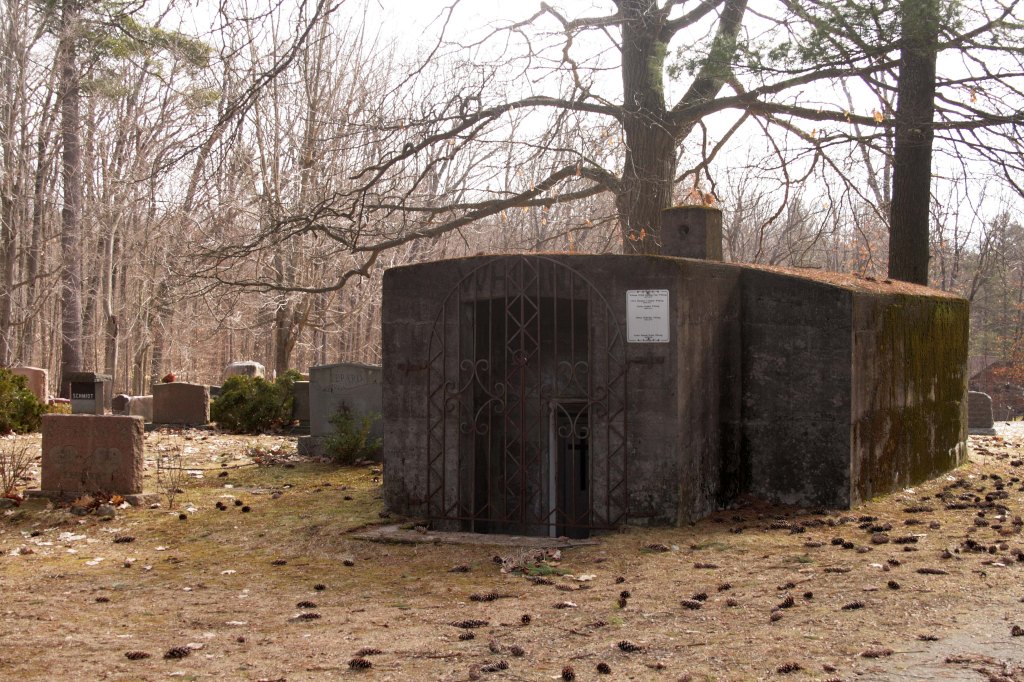
The oldest home in Owen Sound can be found in Greenwood Cemetery. The house is dated from the 1840s1 and is used as the cemetery office.2 There is also a red brick burial chapel on the cemetery grounds. Built-in 1905, it served as both a chapel and a receiving vault. There is a trap door built into the floor that a coffin could be lowered through, into the storage racks below, to rest until the Spring when the remains could be interred. The chapel stopped being used for burials in the 1930s when the mausoleum opened. The chapel was converted and used as an office space for a time, until the early 90s. Today the building looks to be mostly empty.3

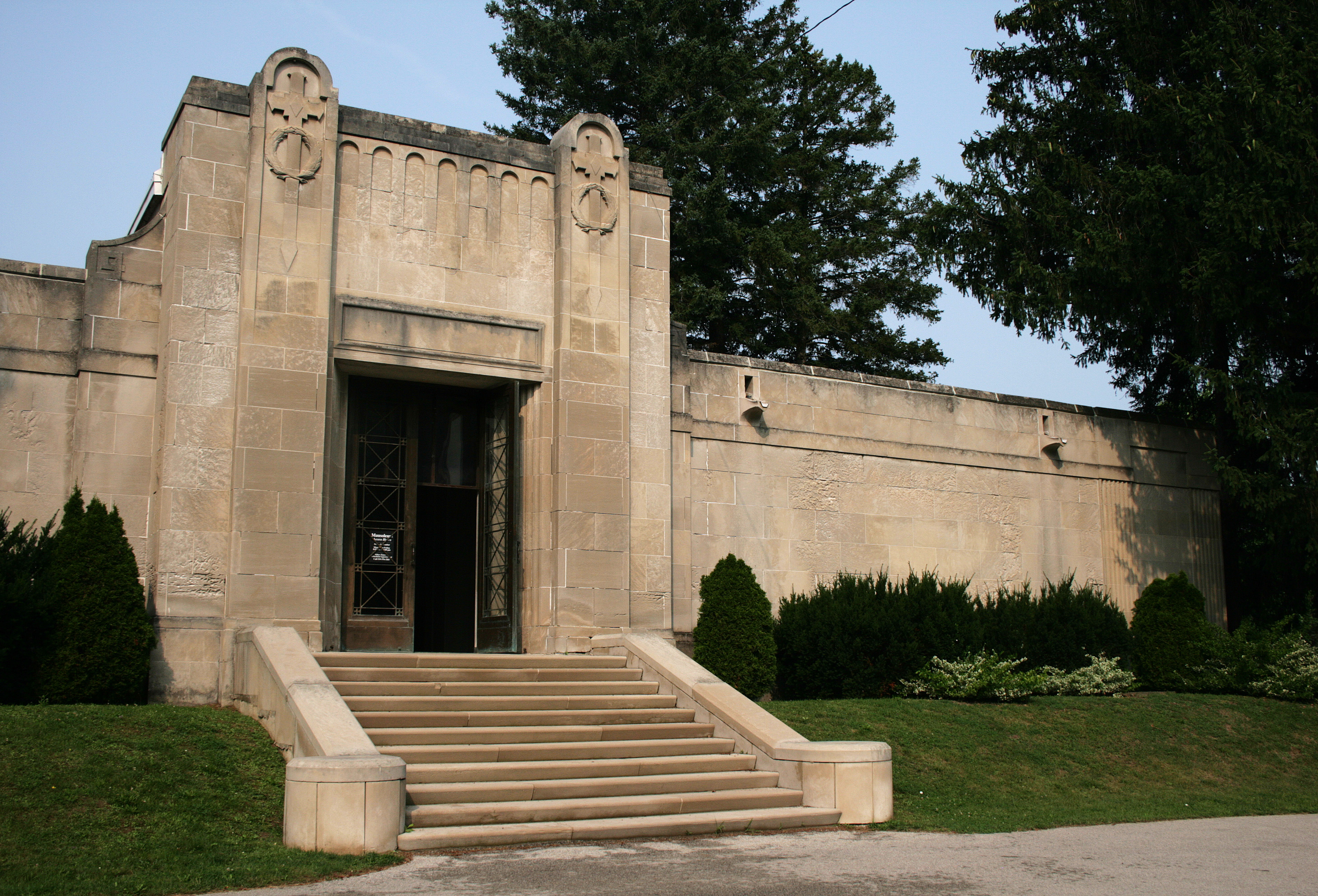
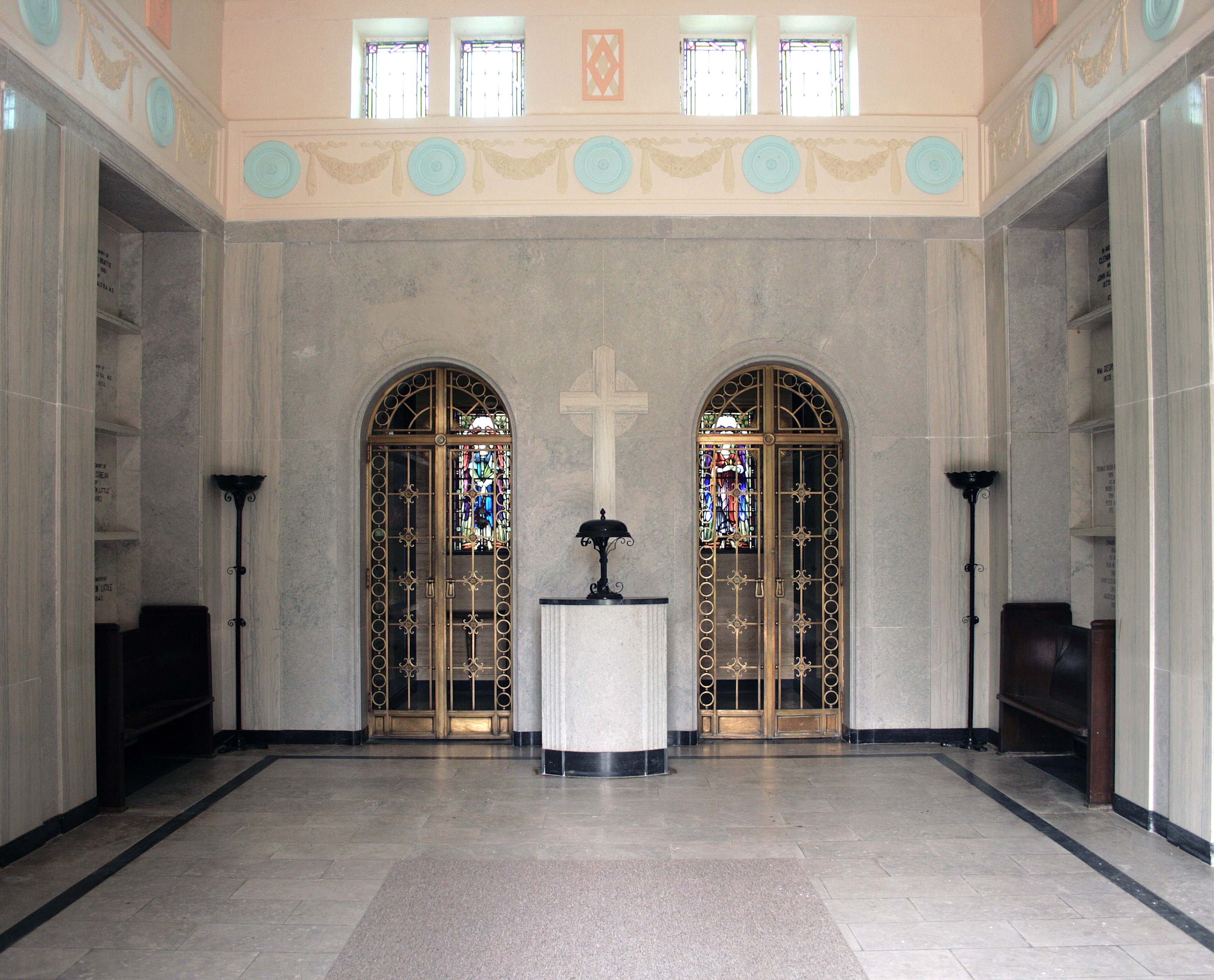
Greenwood is also home to a beautiful mausoleum. Construction of the large mausoleum began in 1927. The Art Deco-inspired exterior is covered in Indiana limestone, while the interior is finished with Italian marble. It also features some lovely stained glass windows and has a large central chapel that is used year-round.1

The cemetery is dotted with a variety of gravestone styles, and there are three memorial garden sections. It also has a section for members of the fraternal organization, The Independent Order of Odd Fellows (IOOF), that features a large stone cairn with IOOF symbolism.

Greenwood also has a Potter’s Field and memorial. The memorial honors the more than 1,000 women, children, and men who were buried in unmarked graves between 1858 and 1989. A potter’s field, also known as poor grounds, stranger’s plot, or indigent plot, is a section of a cemetery where those who are impoverished are buried.4 1,242 people are thought to be buried in Greenwood’s potter’s field4, all unmarked aside from the memorial and one lonely gravestone that sits close to the tree line at the back of the indigent plot. According to an article in the Northern Terminus: The African Canadian History Journal, many of the unknown graves are Black pioneers. Only a small few have been identified.

Among the unidentified graves lies an infant, who in 1889 was found in Victoria Park, wrapped in white cloth. The transcription in the cemetery records, simply reads “Unknown, child found dead”.4

Notable Graves

Greenwood Cemetery is the final resting place of a few notable memorials. William Avery “Billy” Bishop, Canada’s World War I Flying Ace rests here. There are also two other Victoria Cross recipients buried here; LTC David Vivian Currie (World War II) and Thomas Holmes (World War I). 

Speedskater and world-record holder Lela Brooks is also laid to rest here, as well as professional hockey player, Harry “Apple Cheeks” Lumley. Margaret and John Thomson, parents of famous Canadian painter Tom Thomson, are also buried here. 

There are many more notable pioneers and local celebrities buried here, like Charles Rankin, who submitted the cemetery plan and helped bring the cemetery into reality. The best way to pay your respects is with a self-guided walking tour. The cemetery offers three tours that take you to different areas within the large cemetery and highlights all the notable members of the community who are laid to rest at Greenwood. You can pick up the printed tour guides at the cemetery office. The guides include a map, directions, and a little history for each stop on the tour. 

We visited the cemetery twice on our trip to Owen Sound. Because it’s so large we felt we had to. Our first visit was late in the day, so the mausoleum had been locked up for the night. We were losing light quickly, and every turn on the winding paths revealed new sections I wanted to explore further. We visited again the next morning and were able to explore the Mausoleum and walk the sections at our leisure.

Greenwood was full of life during both our visits. In the evening we saw folks paying respects at graves, but also saw families taking advantage of the safe, paved pathways. Two young children were learning to ride their bikes between the rows. 

The next day, we saw many walkers enjoying the scenery, both young and old. We also saw folks walking their dogs and running into others they knew who were doing the same. It was lovely to see a green space in use but also used respectfully.

Thanks for reading!


References:

  1. Greenwood Cemetery Walking Tour “The People’s Cemetery” | Print brochure
  2. Greenwood Cemetery | Owen Sound
  3. The Chapel, Historical Owen Sound | Plaque on the cemetery grounds
  4. Owen Sound’s Greenwood Cemetery “A Land for the Living” | Terri Jackson