I have spoken before about how there are very few books written about Canadian cemeteries. That’s why I jump at the chance to pick up new books on the subject. This month’s cemetery book review is a little different. This is a book that I have had sitting on my bookshelf, well, for years. I finally got around to reading it this past summer and I hate that I waited so long!
Old Canadian Cemeteries: Places of Memory by Jane Irwin and John Visser is a beautiful exploration of Canada’s vast cemeteries and graveyards.
“Canada abounds in historical burial places. Once you begin noticing their presence, old cemeteries seem to be everywhere. But these important links to the past are in danger of disappearing forever. The expansion of cities and roadways reclaim valuable land, and inscriptions are worn away by weather and time. Older cemeteries may be important records of immigration, settlement, armed forces, epidemics, class, and religious schisms, and upward mobility of ethnic groups. In Old Canadian Cemeteries, Jane Irwin invites the reader on a visual tour of historic cemeteries across Canada, examining such diverse topics Old Canadian Cemeteries is a must for anyone interested in Canadian history.”
Old Canadian Cemeteries: Places of Memory by Jane Irwin, photographs by John De Visser
Old Canadian Cemeteries is a beautifully put-together book that takes you on a journey through Canada’s historic graveyards. The hardcover edition is rich with vibrant, full-color images that really bring the cemeteries and their stories to life. I especially enjoyed reading about the places I’ve visited myself—it was exciting to recognize familiar spots and learn more about their history.
This book also explores the meanings behind gravestone symbols found in Canadian cemeteries, as well as how burial practices have evolved over time. It’s so fascinating to think about how cemeteries are so much more than just places where people are laid to rest—they are records of history.
I really wish I had read this book years ago, as it has added so much depth to my understanding of Canadian cemetery history. If you’re at all curious about Canada’s past or the stories cemeteries hold, this book is definitely worth picking up.
Overall, Old Canadian Cemeteries is a must for anyone interested in the history and beauty of Canadian cemeteries. Whether you’re a seasoned taphophile or just curious, this book is sure to inspire a deeper appreciaiton for these important places.
Thanks for reading!
I am always on the hunt for cemetery-related book recommendations. If you are an author and have a cemetery-related book you would like me to review, please reach out at hello@chantallarochelle.ca. I would love to hear from you.
I am someone who has always found beauty in unexpected places. I am also a very curious person and love to uncover hidden stories. That’s why I love sharing my experiences and discoveries with you!
As we step into a new year, I thought it would be a perfect time to reflect on something I am very passionate about—cemeteries.
Whether you’re new to the blog or a long-time reader, please indulge me as I share more about why I find these spaces so fascinating.
For many, cemeteries might seem somber or even eerie places, but to me, they are so much more. They are open-air art galleries and museums. Each gravestone, mausoleum, and statue tells a story. The craftsmanship is often breathtaking, but there is beauty in everything—from the intricately carved angels to the weathered inscriptions that are just barely legible.
Some of my most memorable moments have been spent marveling at unique gravestones and wondering about the lives they represent. I have often come across a heartbreaking epitaph that has made me stop suddenly, creating an instant connection to someone from another time.
Cemeteries are like windows into history, serving as archives etched in stone. They showcase how cultures, traditions, and art have evolved through the years. Walking through an older cemetery really does feel like stepping back in time. You might find names that were once very common, family plots that tell stories of love and loss, or monuments commemorating an important historical event.
Cemeteries aren’t just places for remembering the past—they can also be vibrant spaces for the living.
Many people visit cemeteries for activities like walking, jogging, or bird-watching. The diversity of wildlife, trees, and flowers can also offer a quiet retreat for nature lovers. As an animal lover myself, I treasure the unexpected encounters with wildlife that cemeteries can provide, like watching a red cardinal perched on a gravestone, or hearing the distant gobble of a wild turkey while wandering among the tombstones.
Above all, cemeteries are filled with stories. Stories of those who are laid to rest, but also the stories we create when we visit them. Whether it’s a quiet moment of reflection, an unexpected historical discovery, or unraveling a cemetery mystery, these spaces remind us of the beauty and complexity of life.
So, if you’ve never thought of cemeteries in this way, or you already have an appreciation for them, I hope this post inspires you to see them in a new light. If you are already a seasoned taphophile, I would love to hear about your favorite cemetery experiences in the comments.
Let’s celebrate these unique spaces together as we step into the new year!
2024 is coming to a close, and I can’t help but feel incredibly thankful for all the opportunities, experiences, and connections this year has brought. From cemetery explorations to unexpected shoutouts, 2024 has been a year of gratitude, growth, and gravestone recipes!
So today on the blog, I want to reflect on some highlights that have made this year so memorable. From shoutouts and collaborations, here’s a look back at why I consider 2024 an exciting year.
Cemetery Adventures
This year, I was able to visit 117 new cemeteries, and revisited 9, bringing my total for this year to 126. Every cemetery visit is always an adventure, uncovering hidden stories and beautiful gravestones. One cemetery visit that stands out this year, was visiting the gravesite of Elizabeth Barnes, the Witch of Plum Hollow. Exploring the folklore and history surrounding this incredible woman was eye-opening. These experiences continue to remind me of the powerful connection between memory and place.
One of my favorite projects this year was contributing a guest post to The Haunted Walk’s blog, titled Beyond the Headstones: 5 Surprising Secrets to Discover in Cemeteries. Writing this post gave me the chance to share some of the hidden stories and unexpected gems you can uncover in these places of rest.
Another exciting milestone was being interviewed for American Cemetery and Cremation Magazine. Being featured in their June issue, and sharing my passion for cemeteries and the stories they hold was such a rewarding experience.
Trying out gravestone recipes and sharing these experiences has been an ongoing passion project for me, and this year, it gained attention far beyond what I could imagine.
Cemetery Recipes: O’Neal’s Peach Cobbler
My gravestone recipe posts were referenced in the Bust article Take it to the Grave: Rosie Grant Went Viral for Recreating Gravetsone Recipes. Although the article features fellow taphophile Rosie Grant’s amazing work, it also linked to my Peach Cobbler and Chicken Soup recipe posts, connecting people to my blog. Seeing my blog posts highlighted as part of a broader cultural conversation about food, memory, and legacy feels a bit surreal.
Other press highlights included Funeral Basics linking to my blog post about Connie’s Date & Nut Bread, and the New York Post directing readers to the cemetery recipes on my website. These moments are heartwarming reminders of how food can connect us to the past in meaningful ways.
The international attention has been just as exciting! An Italian article explored the growing trend of gravestone recipes and referenced my work, while the Czech publication Neviditelny Pes also referenced my work and highlighted the charm of these recipes carved in stone.
Maybe the most thrilling moment for me though, was receiving a shoutout from Rhett and Link on their Good Mythical Morning episode, We Try Cemetery Food. Watching them discuss my work was an unforgettable moment that brought a whole new audience to my blog, and I am very grateful for their support.
Collaborations
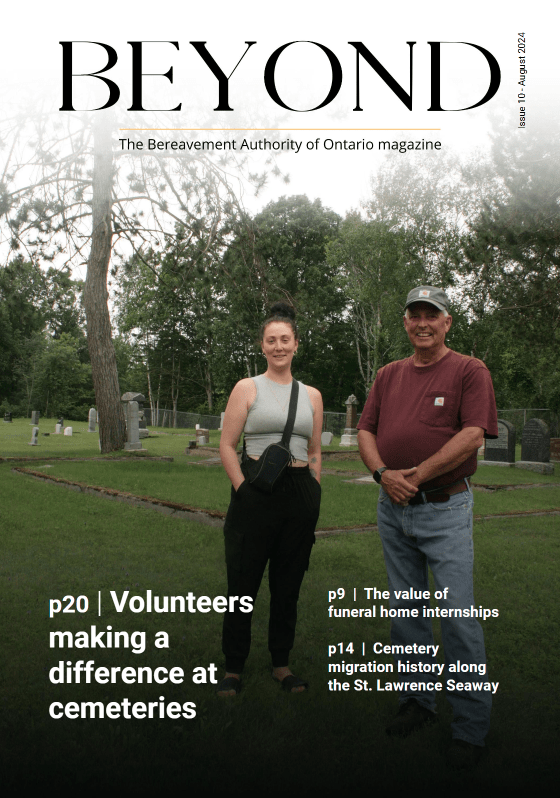
This year, I loved working with my friends over at the Bereavement Authority of Ontario. I had the pleasure of contributing some freelance photography to the August issue of Beyond magazine. Their publication is filled with educational and thought-provoking content and seeing my work featured in their layout is a great milestone.
I am truly appreciative for all this recognition. None of which would be possible without the incredible community of readers, collaborators, and supporters who’ve been with me on this journey. Whether you have followed along for the recipes, the cemetery exploring, or the stone stories, thank you for being a part of this adventure.
Looking ahead to 2025, I’m excited to continue exploring, writing, and sharing these unique experiences. Here’s to another year of meaningful connections and unexpected discoveries!
How was your 2024? I’d love to hear about your highlights and plans for the coming year in the comments.
The holidays are the perfect time for baking, so this month, I wanted to try out another gravestone recipe. This sugar cookie recipe seemed like a perfect fit.
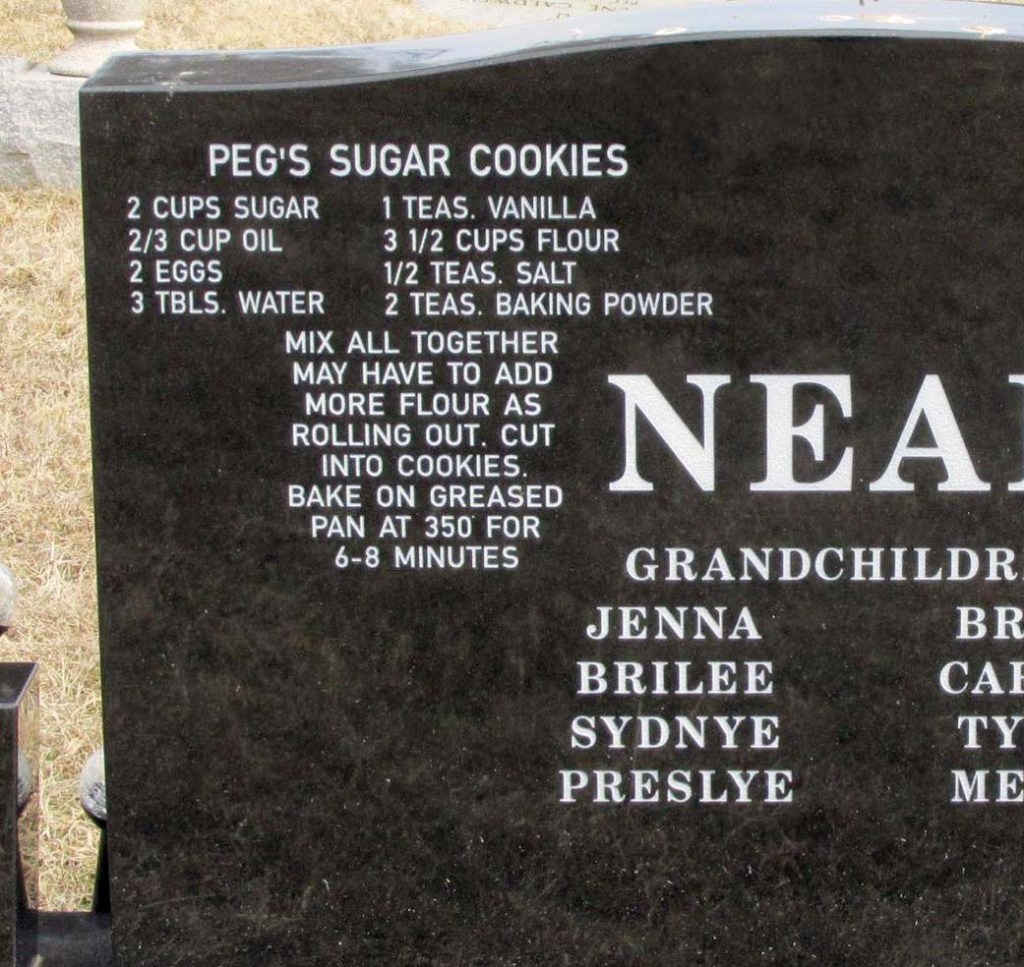
This recipe can be found on Mitchell Edward Neal’s black granite gravestone in the Garden of Memories Cemetery in Charleston, Arkansas. Engraved on the back of the stone is a recipe for Peg’s Sugar Cookies, a sweet tribute from his wife, Peggy Sue Loughridge Neal, who is still living.
Mitchell Edward Neal passed away on March 20, 2019 after a long battle with dementia. An avid outdoorsman, Neal enjoyed hunting, fishing, and gardening.1 Based on the recipe engraved on his tombstone, it’s clear he also loved his wife’s cookie recipe. Neal met his wife Peg in high school, and they were married for 53 years, raising four children together.1 The addition of the cookie recipe is such a heartfelt way to honor their sweet memories.
Peg’s Sugar Cookie recipe on the gravestone of Mitchell Edward Neal. Photo by Rosie Grant.
Here is the recipe as inscribed on the gravestone:
Peg’s Sugar Cookies
2 Cups Sugar
2/3 Cup Oil
2 Eggs
3 Tbls. Water
1 Teas. Vanilla
3 1/2 Cups Flour
1/2 Teas. Salt
2 Teas. Baking Powder
Mix all together. May have to add more flour as rolling out. Cut into cookies. Bake on greased pan at 350 for 6-8 minutes.
In the Kitchen
This was a pretty straightforward recipe. The Ingredients are all staples, so I didn’t have to make an extra trip to the store. I love those kinds of recipes.
After gathering all my ingredients, I mixed them in the order they were engraved on the stone. I was a little worried about the amount of flour, as it seemed like it might have been too much. I did my best to mix everything with a fork, but after adding the last cup of flour, I switched to a small hand mixer, just to make things a bit easier.
This did create a really flaky dough, so I did have to spend some time working it into a smooth ball. The instructions are brief but clear, and I didn’t have any issues following along.
This recipe makes a big batch of dough. I had only prepared two baking sheets, but quickly realized I would need a couple more. I ended up baking three and a half cookie sheets full.
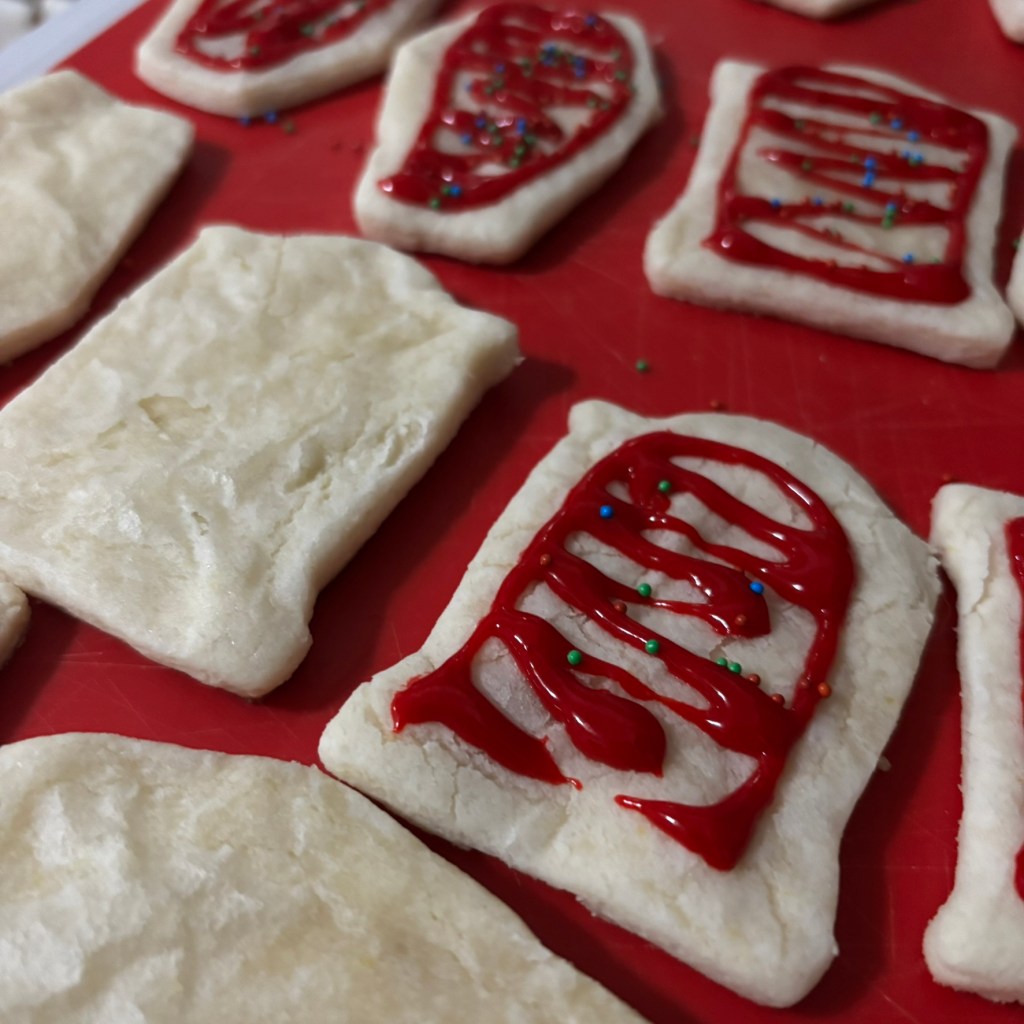
Since I was planning to share these cookies at a Christmas family gathering, I tried my best to make them festive. I was hoping I had some star-shaped cookie cutters, but all my cookie cutters are Halloween-themed. I settled on a gravestone and a coffin shape. Luckily, my family knows me well and probably expects this kind of thing from me by now!
I baked the cookies as instructed, for 6 minutes at 350°F, then checked to see if they were done. They needed an extra minute, so I continued baking the rest for 7 minutes.
Once they were done, I moved them to a cutting board to cool a little before frosting. I went with a red frosting to keep with the festive theme. I had hoped that I had white sprinkles for a nice contrast, but I didn’t. So, I used some colorful nonpareils instead.
I think they turned out quite pretty! They also taste pretty good, too. They did turn out a bit chewy, which I wasn’t expecting, but they still have that sweet sugar cookie taste. The frosting adds a bit of sweetness as well, perfect for pairing with a fresh glass of milk.
Christmas time always calls for something sweet, and what better way to bring a little extra sweetness than by baking cookies with a story? As I baked these sugar cookies in Mitchell’s memory, I couldn’t help but think of the love and tradition behind the recipe.
Trying out this recipe seemed like a fitting way to honor the season of giving—and of course, I’m always up for a delicious sugar cookie!
Will you be giving this recipe a try? Let me know in the comments.
As winter settles in, it’s hard to ignore the changing of the seasons. The chilly air, shorter days, and the snow-covered gravestones mark the end of field season for me. I have always seen snow-covered cemeteries as just too risky to explore—both for me and the gravestones.
While the cold usually keeps me indoors for the next couple of months, it brings something special to the cemeteries I love so much. There is a stillness in the air, and cemeteries in winter do offer something unique that cemeteries in the warmer months just don’t have.
Winter is often seen as a time for rest and renewal. Nature takes a break during these colder months, and cemeteries seem to do the same. The chill in the air makes everything feel still.
For me, the winter season is a time to focus on rest and recharging, while also refocusing on photo editing and research. Nothing is more relaxing to me than being curled up on the couch with a good book. But winter is also a time for reflection on life’s cycles. The season reminds us that life, like death, is all part of the same cycle. Nature’s rhythms, whether still still or full of growth are always changing, just like us.
I’ll be honest, winter is not my favorite season, and I don’t have a lot of experience visiting cemeteries in the snow. The bitter cold and early darkness does not appeal to me. But I will admit that cemeteries in winter have an almost haunting beauty that I can’t ignore.
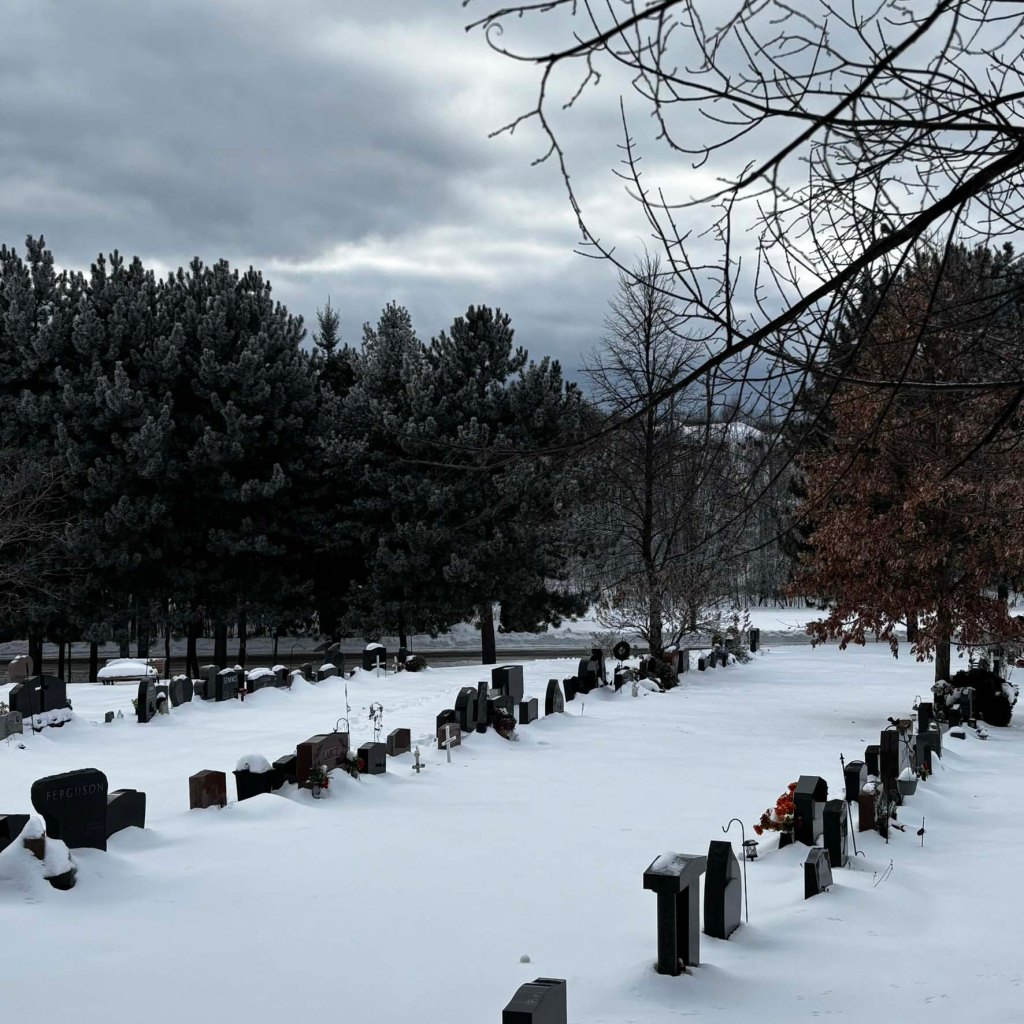
The bare trees against a pale sky, and the contrast between the dark gravestones against white snow, create a mood that’s both peaceful and a bit mysterious. It’s the kind of scene that makes you stop for a moment.
Even though this isn’t the time I usually seek out cemeteries, I made an effort this weekend to stop in to one, to appreciate the unique atmosphere it creates.
One interesting thing I found about cemeteries in the winter is the light. With the sun being lower in the sky, the light creates long and dramatic shadows, adding texture and depth to the landscape. I find the gravestones just look different in the winter light.
The unique angles of the light during winter do make it a great time to play around with shadows and textures. For anyone interested in photography, winter cemeteries offer a chance to capture the landscape in a new way.
As I think about how winter enhances the beauty of cemeteries, I realize that the symbolism of the season offers us an important reminder of the ongoing cycle of life. Winter is a time of rest and reflection, but it’s also a time to prepare for what comes next.
So will you be visiting any cemeteries this winter? Whether you’re stopping by to honor a loved one or just take in the beauty of the season, cemeteries in the winter do have a lot to offer.
For this month’s cemetery book review, I want to share another pick from the Association for Gravestone Studies Book Club. Published in 2023, Over My Dead Body: Unearthing the Hidden History of America’s Cemeteries is a spirited tour through some historic cemeteries in the United States.
Written by Greg Melville, an adventure journalist, and fellow taphophile, Over My Dead Body explores the many facets of how and why we bury our dead. From history, to land use and sustainability, this book covers a little of everything.
“Melville’s Over My Dead Body is a lively (pun intended) and wide-ranging history of cemeteries, places that have mirrored the passing eras in history but have also shaped it. Cemeteries have given birth to landscape architecture and famous parks, as well as influenced architectural styles. They’ve inspired and motivated some of our greatest poets and authors—Emerson, Whitman, and Dickinson. They have been used as political tools to shift the country’s discourse and as important symbols of the United States’ ambition and reach.”
Over My Dead Body: Unearthing the Hidden History of America’s Cemeteries by Greg Melville.
Over My Dead Body is a fun and easy-to-read exploration of some of America’s most historic cemeteries. I have the softcover edition, which is perfect for lounging with on a weekend afternoon. Each chapter focuses on a different cemetery, where Melville shares both the history of the place and his personal experience visiting it. I really enjoyed how each chapter felt like a history lesson and a travelogue rolled into one.
What made the book especially enjoyable for me was how much Melville’s passion for cemeteries mirrored my own. Even though I am exploring cemeteries here in Canada while he is in the U.S., his observations and reflections on the stories these places hold felt familiar. I felt like Melville might be a kindred spirit—someone who gets why we’re drawn to cemeteries in the first place.
The book is lighthearted for the most part, but it does touch on some darker aspects of history. It made me think deeply about how cemeteries not only reflect the past but also shape the way we remember those who came before us.
So if you are fascinated by cemeteries and the stories they hold, I highly recommend Over My Dead Body by Greg Melville. Its unique blend of history, personal reflection, and insightful exploration will appeal to both casual readers and avid taphophiles alike.
Have you read Over My Dead Body? I would love to read your thoughts about it in the comments.
Thanks for reading!
I am always on the hunt for cemetery-related book recommendations. If you are an author and have a cemetery-related book you would like me to review, please reach out at hello@chantallarochelle.ca. I would love to hear from you.
The holiday season is officially upon us, so it’s time to start thinking about the perfect gifts for the taphophiles in your life!
Whether you’re shopping for a friend who has a deep love of cemeteries, or a family member who enjoys the fascinating history of gravestones, this year’s 2024 gift guide has something unique for everyone.
This year, my round-up features 13 unique items from stunning jewelry and a death-positive card game, to cemetery-related books and even a set of crayons for the creatively inclined.
Whether they’re into history, art, or just a bit of cemetery fun, these handpicked items will surely delight all the graveyard enthusiasts in your life!
Perfect for aspiring cemetery explorers and dedicated taphophiles alike, this beautiful guide to the world’s most fascinating and offbeat cemeteries has been freshly updated with 23 new, must-see locations. It is a must-have for any cemetery lover’s bookshelf!
222 Cemeteries to See Before You Die by Loren Rhoads. Photo from Amazon.ca
This 2025 calendar by stonecutter Andrew Carr, also known as Stones Over Bones on Etsy, features 12 stunning photos of intricate gravestones carved by some of the finest New England artisans. It’s a year-round celebration of cemetery symbolism and art. This would make a great gift for anyone who appreciates the beauty of gravestones.
2025 Gravestones Calendar created by stonecutter, Andrew Carr. Photo supplied.
This classic gravestone design by PoisonBlood on Red Bubble, is a simple, yet stylish way to wear your love of cemeteries. Featuring a clean white gravestone print with the iconic R.I.P. message, this shirt is a bold yet subtle statement. Available in a variety of colors, it’s a perfect everyday tee.
Classic Gravestone T-Shirt, design by Poison Blood. Photo from Red Bubble.
This beautifully designed book blends the mindful practice of journaling with the comfort of cooking. Like a gravestone preserves memories, this book helps you honor loved ones by reflecting on shared meals and documenting family recipes. With prompts to guide your memories and blank recipe pages to record treasured dishes, it’s a unique way to keep those connections alive.
Please note that this book currently only ships within the United States.
Cooking with Ghosts: A Grief and Recipe Journal by Mortician in the Kitchen. Photo taken from the Mortician in the Kitchen website.
The Death Deck is the perfect party game to break the taboo around talking about death. With 112 cards full of multiple-choice and open-ended questions, this game will have you, and your family and friends surprising each other with lively conversation about death—and you might even learn something new about yourselves.
The Death Deck. Photo from the Death Deck website.
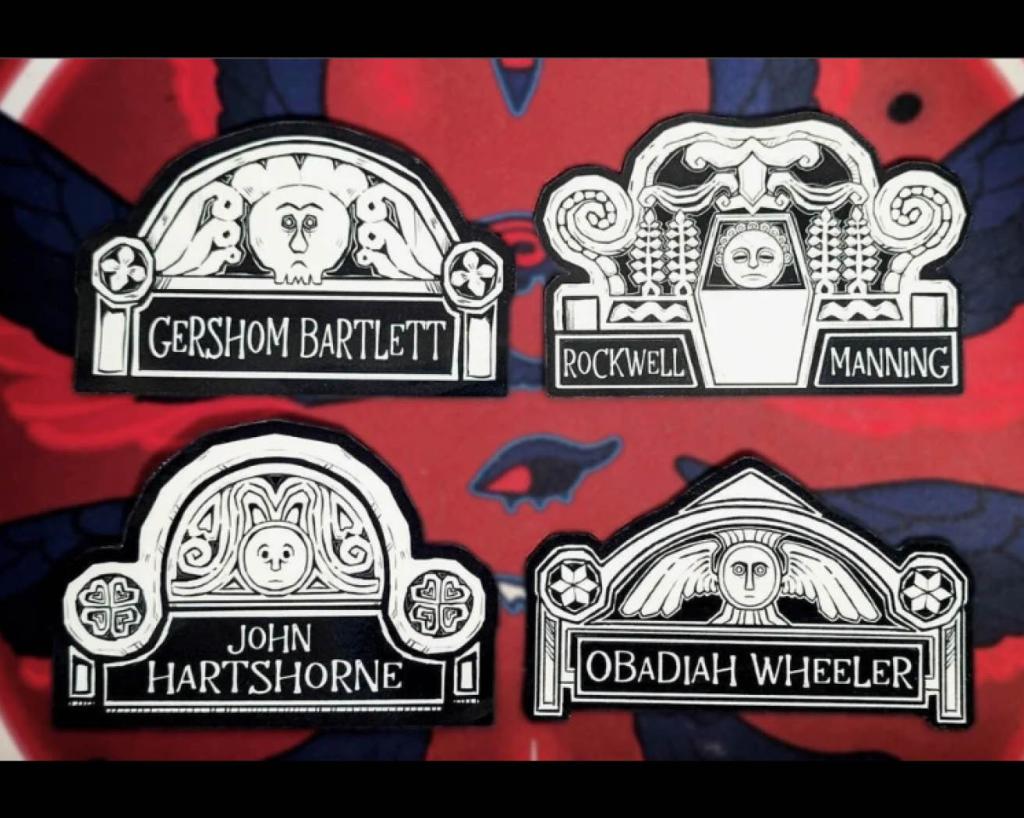
Everybody loves stickers! These Early New England Cemetery Stone stickers by Gh0stBreathArt are inspired by gravestones from the 1600s-1700s. Each sticker showcases a unique design, along with the name of the original stone carver. Perfect for decorating laptops, water bottles, or notebooks.
Early New England Cemetery Stone stickers by Gh0stBreathArt. Photo from Etsy.
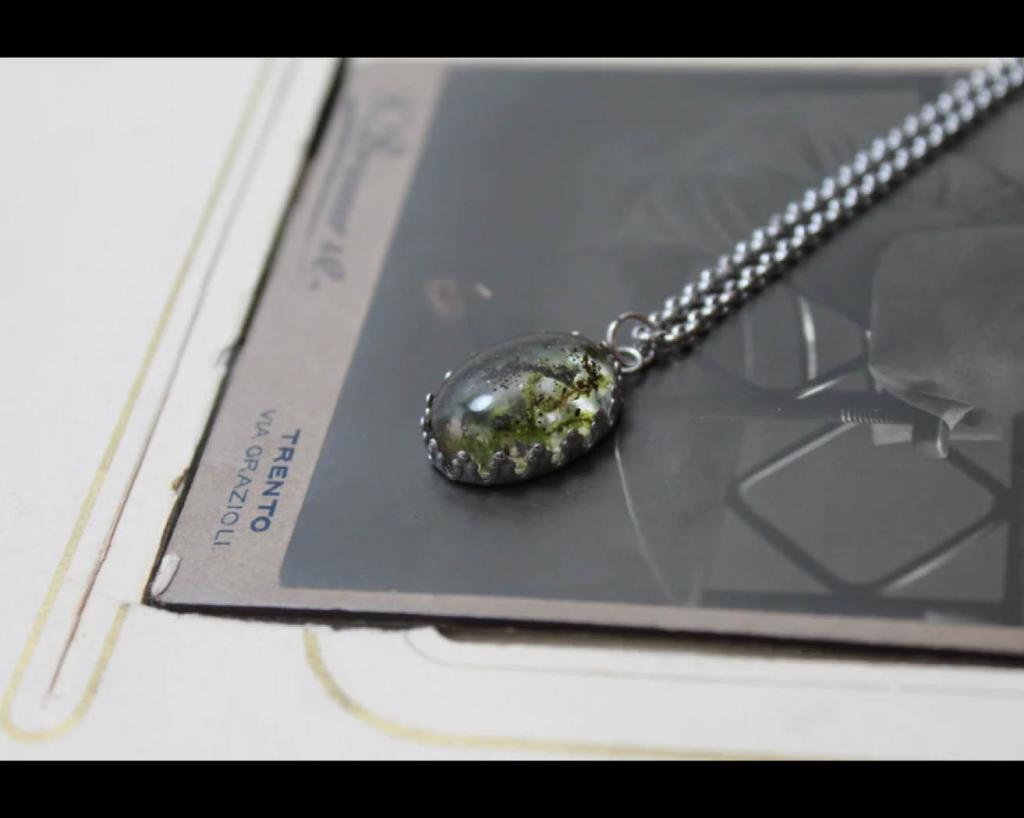
This grave moss pendant, created by Mist Metal and Stone, is a truly unique piece of jewelry, made from real moss carefully collected (with permission) from a late 1800s gravestone. The moss is preserved in eco resin and set in steel, creating a one-of-kind keepsake. Be sure to check out the rest of their Etsy shop, as they offer many other unique and beautiful pieces for sale.
Grave Moss Pendant created by Mist Metal and Stone. Photo from Etsy.
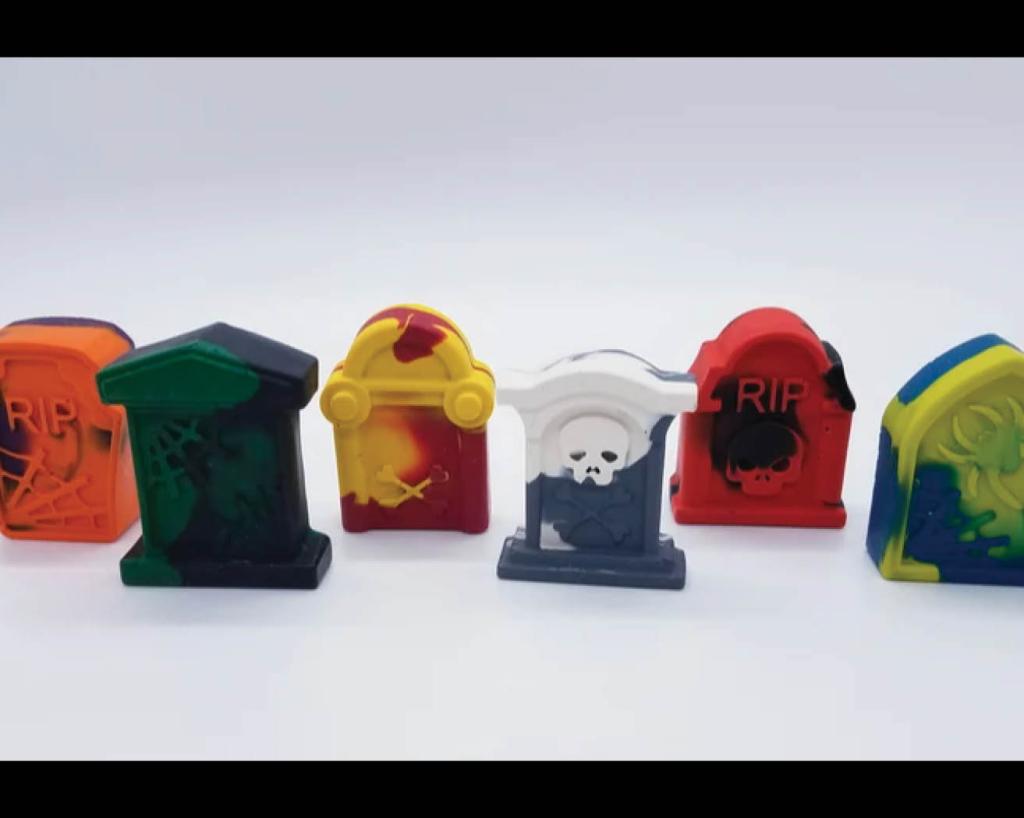
These fun and quirky gravestone-shaped crayons, created by In Wonderment on Etsy, make a unique and playful gift! This set includes 6 multi-colored crayons, each featuring a different gravestone design. Hand-poured from 100% Crayola crayons, they are perfect for art lovers, and creative types.
Gravestone Crayon Set created by In Wonderment. Photo from Etsy.
Guess Where Trips offers a fun and adventurous way to explore new places with a twist of mystery! Each trip includes a Before You Go package and four surprise stops filled with unique destinations, recommendations, and fun facts. You can choose from a variety of day trips based on your interests, but I wanted to highlight two of the trips that feature cemeteries: Historic Hauntsand Beautifully Haunted.
Created by Night Spirit Studio, this beautiful art print titled I Forgot Something is inspired by 1800s mourning watercolor paintings. These mourning paintings were historically created by schoolgirls and featured gravestone symbolism like urns and weeping willows. With its giclée print quality and haunting design, this vintage-inspired piece would make a lovely addition to any art collection.
I Forgot Something 8×10 Art Print created by Night Spirit Studio. Photo from Etsy.
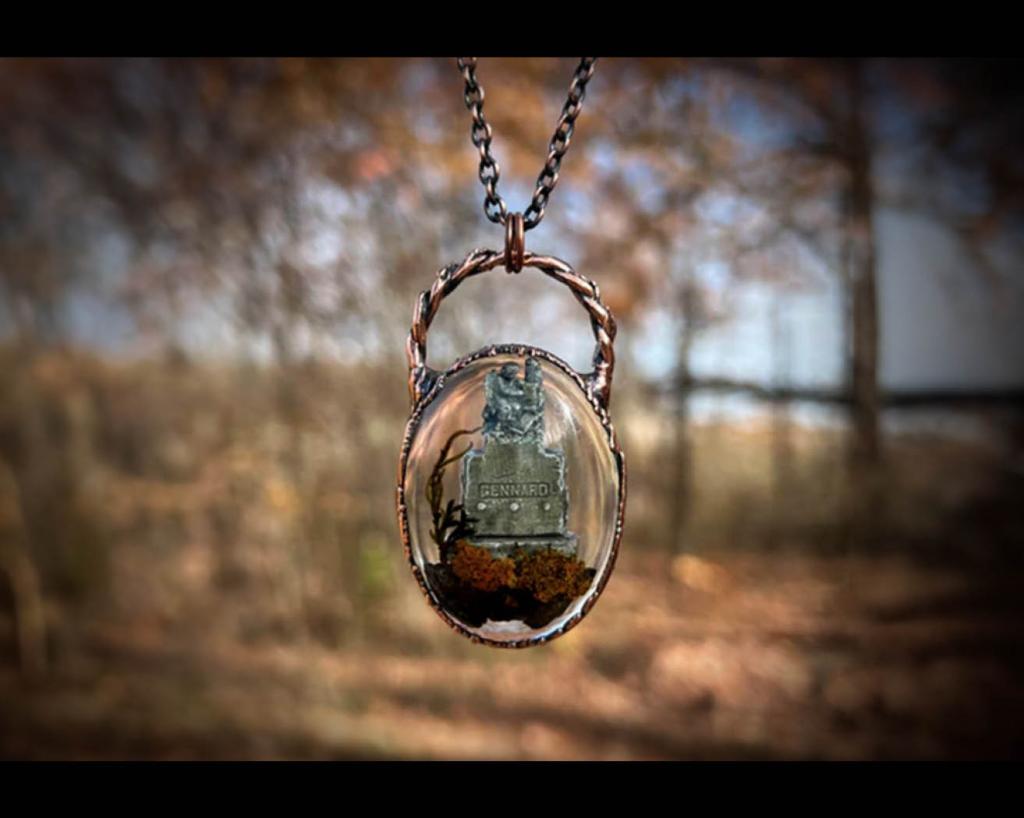
Created by Mockingbird Lane Artistries, this darkly beautiful piece blends together art, history, and nature. Featuring a hand-painted mini gravestone, lichen harvested from a cemetery, and graveyard dirt from the filming location of Night of the Living Dead. This lovely piece would make a perfect addition to any jewelry or film memorabilia collection.
Oval Burial Plot Necklace created by Mockingbird Lane Artistries. Photo from Mockingbird Lane Artistries website.
Pleasure Grounds of Death explores the fascinating history of how rural cemeteries became popular spots for strolls and picnics, and grew to influence American culture, community identity, and social issues of the time. A perfect read for history lovers, cemetery enthusiasts, and anyone curious about the cultural significance of these beautiful resting places.
Pleasure Grounds of Death: The Rural Cemetery in Nineteenth-Century America by Joy M. Giguere. Photo from Amazon.ca
The Support Your Local Cemetery sweatshirt from Everything After Co. on Etsy is a perfect blend of humor and dark aesthetic, making it an ideal gift for any taphophile. Featuring a retro design, it comes in four different colors and is made from a comfortable cotton-polyester blend—perfect for lounging or cemetery exploring.
Support Your Local Cemetery sweatshirt from Everything After Co. Photo from Etsy.
As you navigate the holiday season in search of the perfect gift, remember that it’s the thought behind the gifts that make it truly special. Whether your gifting something spooky, historical or simply unique, these items are sure to spark conversation and bring joy.
Happy gifting, and thanks for reading!
Cemetery Photography by Chantal Larochelle is not affiliated with any of the brands or artists featured in this guide, and I do not receive any compensation or proceeds from sales. I am simply sharing products I love!
With my birthday coming up at the end of the month, I thought it would be fun to try out a cake recipe for this month’s gravestone recipe. I found the perfect fit with this Texas Sheet Cake.
This recipe can be found on the gravestone of Helen Rose (Keathley) Sweers, who is laid to rest in Blain Cemetery in Cutlerville, Michigan.
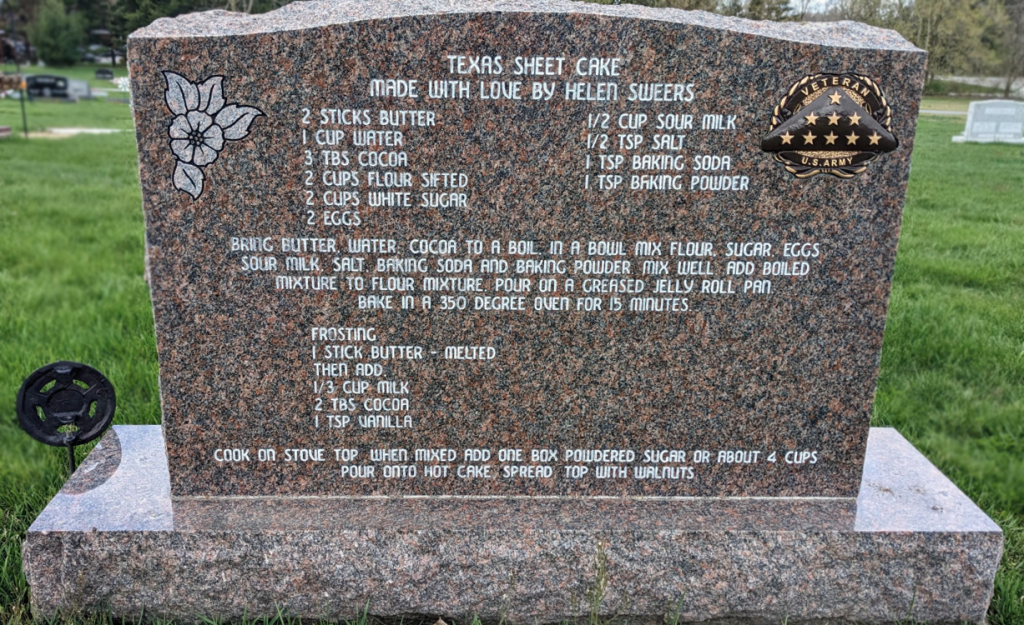
Gravestone of Helen Sweers. Photo by Find a Grave contributor, Photograver Lori.
Sweers passed away on December 30, 2017, at the age of 77. Her brief obituary describes her as a wife, mother, and grandmother, who deeply loved God, her family, and everyone in her life.1
While her obituary doesn’t mention a passion for baking, the recipe engraved on the back of her gravestone tells a different story.
“Made with Love by Helen Sweers”
Texas Sheet Cake Recipe. Photo by Find a Grave contributor, G.
Texas Sheet Cake
(As inscribed on the gravestone of Helen Sweers)
Made with Love by Helen Sweers
2 Sticks Butter
1 Cup Water
3 Tbs Cocoa
2 Cups Flour, Sifted
2 Cups White Sugar
2 Eggs
1/2 Cup Sour Milk
1/2 Tsp Salt
1 Tsp Baking Soda
1 Tsp Baking Powder
Bring butter, water, cocoa to a boil. In a bowl mix flour, sugar, eggs, sour milk, salt, baking soda and baking powder. Mix well. Add boiled mixture to flour mixture. Pour on a greased jelly roll pan. Bake in a 350 degree oven for 15 minutes.
Frosting
1 stick butter – melted Then add: ⦁ 1/3 cup milk ⦁ 1 Tbs cocoa ⦁ 1 Tsp vanilla
Cook on stove top. When mixed add one box powdered sugar or about 4 cups. Pour onto hot cake. Spread. Top with walnuts.
In the Kitchen
I had never heard of Texas Sheet Cake before, so I did learn something new with this recipe. A Texas Sheet Cake is a chocolate cake, baked in a jelly roll pan (which is a pan similar to a cookie sheet, but deeper). This gives the cake its signature large, thin shape.
I ended up purchasing a jelly roll pan specifically to make this recipe. It could double as a cookie sheet if needed, but I think I’ll use it again for future baking, so I will get some use out of it either way.
The ingredients for this recipe are mostly staples, so I didn’t need to make an extra grocery trip. However, I did have questions about the sour milk.
Sour milk has a tart taste, either because it’s just starting to spoil or because it was soured on purpose.2 This made me think that this might be a Depression-era recipe, as many recipes of that time were designed to avoid food waste and used sour milk.2 Buttermilk could be a good substitute for sour milk, but I opted to make my own. I found sour milk recipes online that called for 1 tablespoon vinegar or lemon juice, for 1 cup of milk. This recipe only calls for a 1/2 cup of sour milk, so I used a 1/2 tablespoon of vinegar.
I let the sour milk sit for a few minutes to curdle while I gathered the rest of my ingredients and preheated the oven.
The recipe instructions are clear so I didn’t have any trouble mixing everything together. I was a bit concerned when it came time to pour the batter into the jelly roll pan. I voiced those concerns to Helen, while I poured in the batter. Talking to the person whose recipe I’m following makes me feel like they’re with me in the kitchen. It can sometimes be a comforting reminder to trust the process.
The pan was quite full, but I had faith that it would work out. And it did—well, sort of. I put the pan in the oven and let it bake for the full 15 minutes. I used the classic toothpick test to see if it was ready, but ended up needing to bake it for 5 more minutes, and then another 5 minutes after that. The center was quite thick and needed a bit more time to bake all the way through.
While the cake baked, I worked on the frosting. Since I had to bake the cake a little longer, I kept the frosting on low heat so it would be ready when the cake was done.
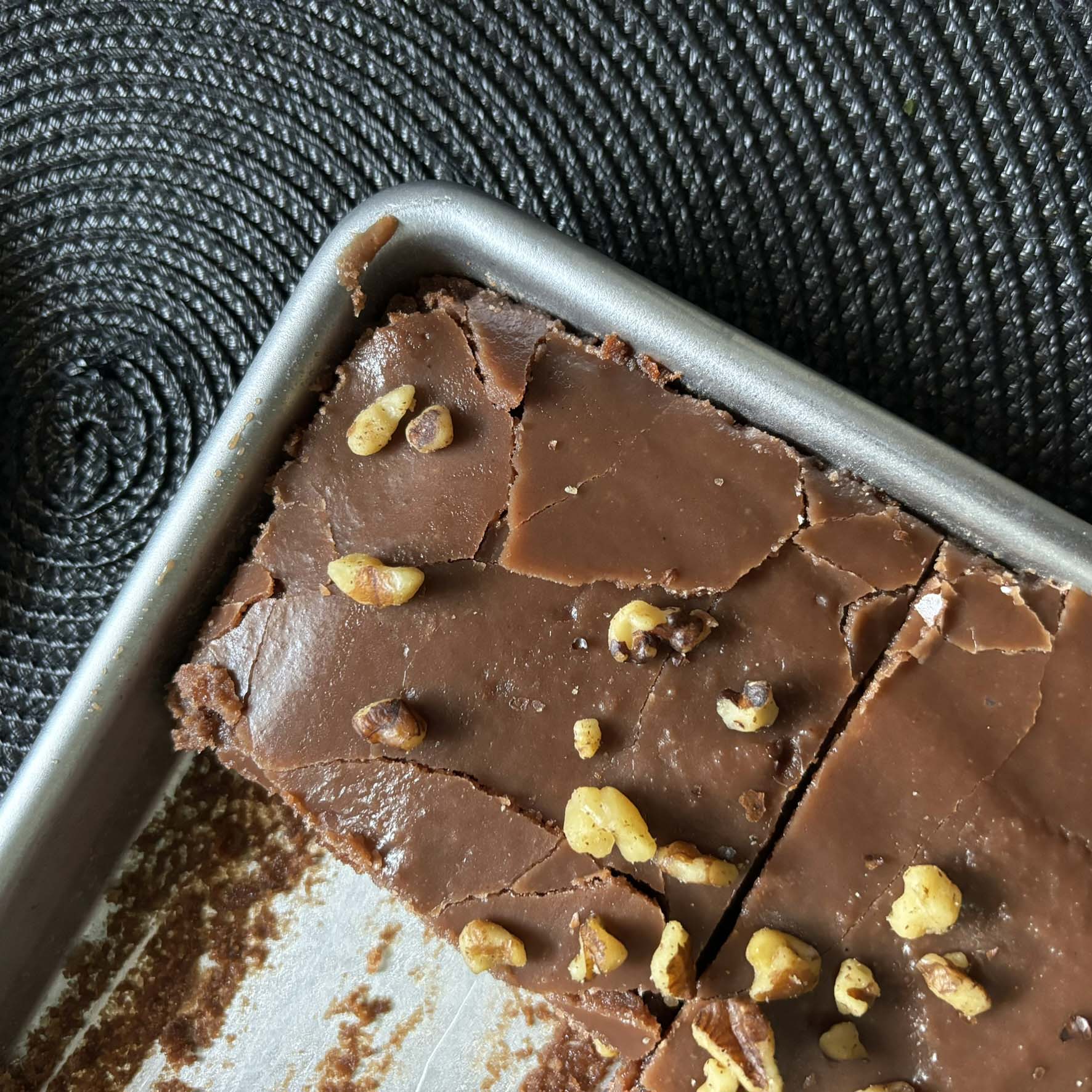
The recipe says to pour the frosting onto the hot cake. The cake didn’t rise, but it didn’t have a lot of room for icing either and I was afraid it would spill over the sides and make a big mess. To avoid that, I used a spatula to carefully spread small amounts at a time. In the end, I was able to cover the whole cake without any issues. I then topped it with a handful of walnuts.
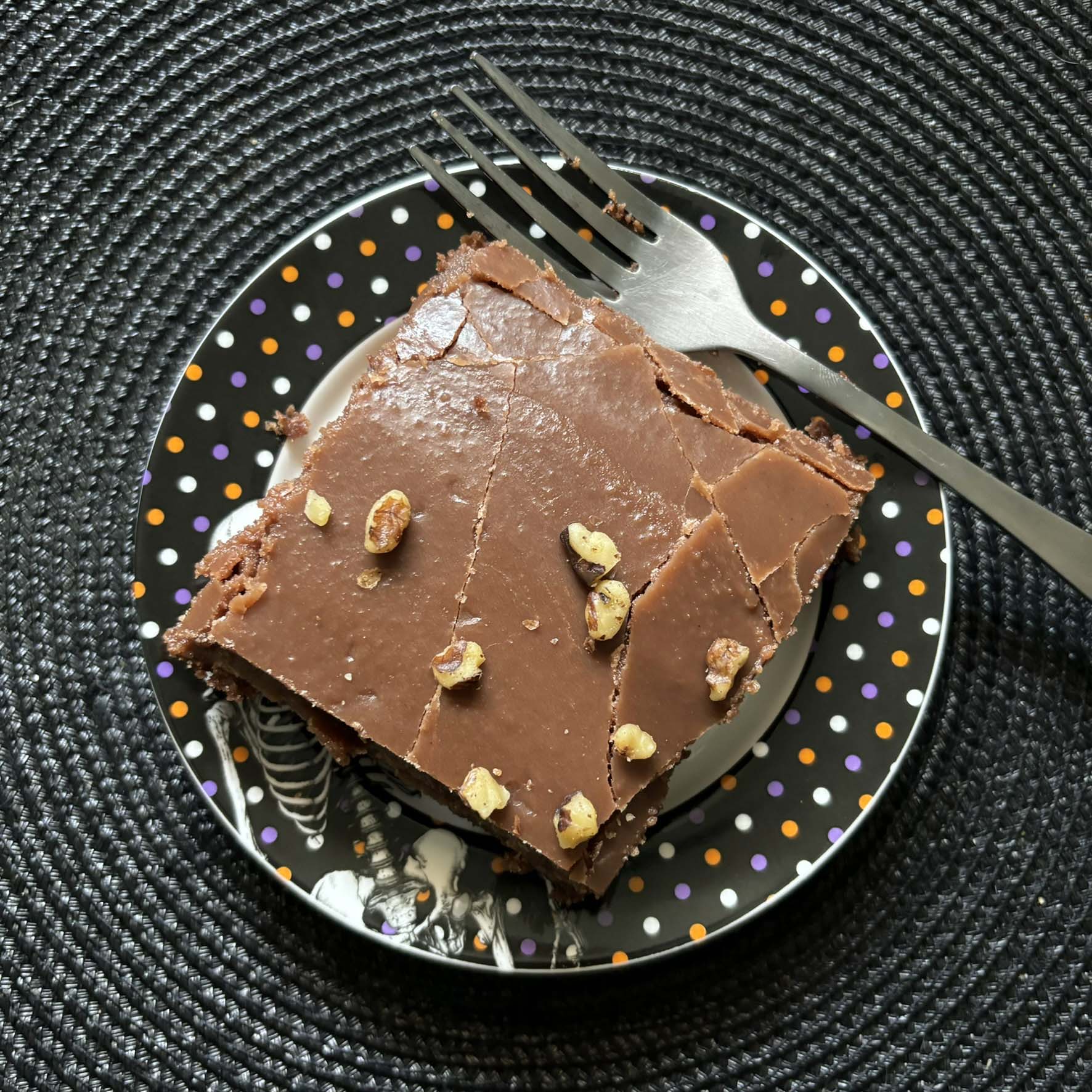
After it cooled, the frosting firmed up a bit, creating a nice crackle when you sliced through the cake.
Texas Sheet Cake, recipe from the gravestone of Helen Sweers.
I love the way this Texas Sheet Cake turned out!
It’s chocolatey and moist, but the real highlight is the frosting. It adds just the right sweetness, although I’ll warn you—it’s really sweet, so a little slice goes a long way.
This cake is big, making it perfect for sharing at a family gathering or other special occasion. I made it to celebrate my birthday, and it was perfect for sharing with loved ones.
Recreating these gravestone recipes has become a meaningful way for me to connect with those whose stories live on in such a personal way. It’s a comforting reminder that food has a power that can bring us together, even across time. I always say that recreating these gravestone recipes really is the sweetest way to remember someone.
Will you be giving this recipe a try? I’d love to hear your thoughts, and experiences in the comments.
In honor of Remembrance Day this year, Monday, November 11th, I want to take a moment to reflect on the significance of this solemn occasion and the powerful symbol of sacrifice that is the Tomb of the Unknown Soldier.
This day, which marks the end of hostilities during the First World War and honors all who have served in times of conflict, holds deep meaning for Canadians. While Remembrance Day has been observed since 1919, its evolution over the years—from its origins as Armistice Day to the shift in date and name in 1931—demonstrates its lasting importance in our collective memory.1 In this week’s post, I want to delve into the history behind the Tomb of the Unknown Soldier, a tribute that today stands as a symbol of the many soldiers who gave their lives without recognition.
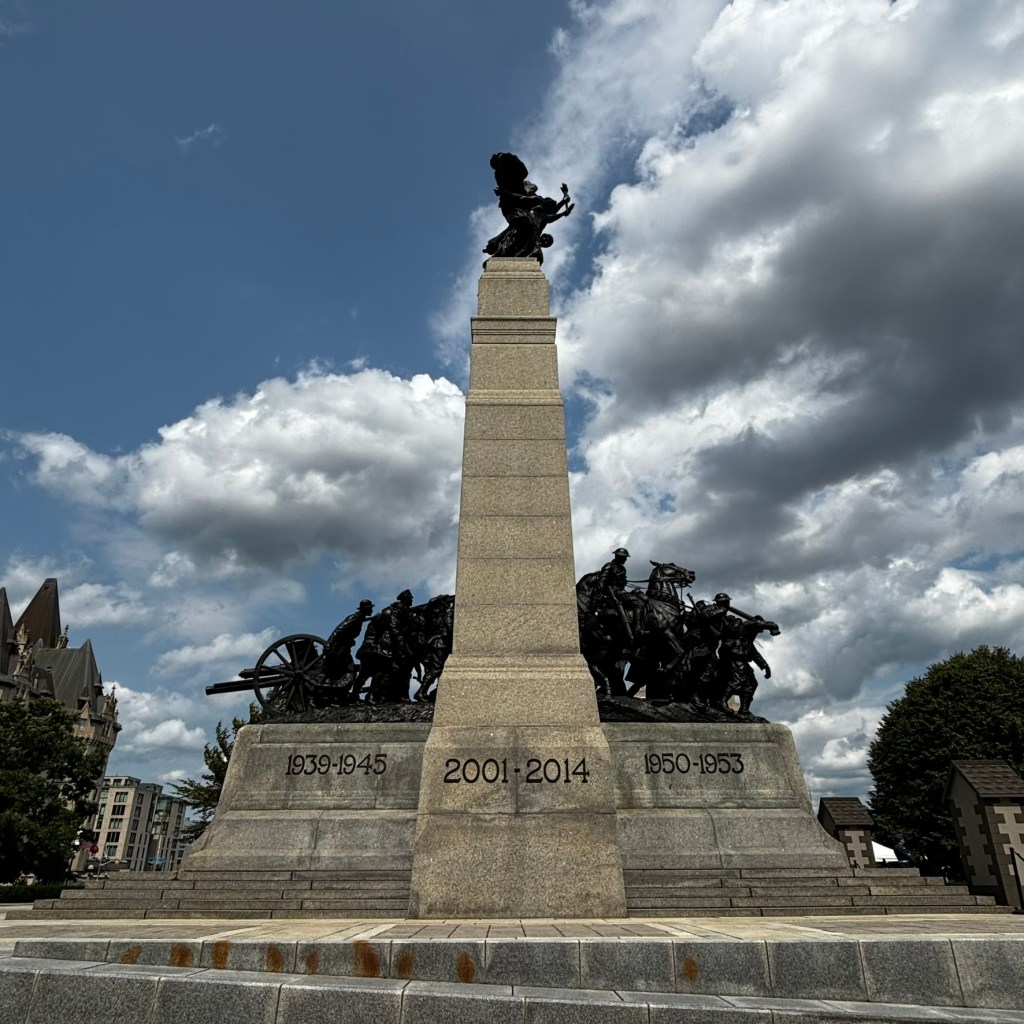
The tomb of the unknown soldier lies in front of the National War Memorial at Parliament Hill. The large monument, a cenotaph, was unveiled in 1939 to commemorate the Canadian response to the First World War. It has grown to symbolize the sacrifice of all Canadians who have served in times of war.2
The Royal Canadian Legion, with help from Veteran’s Affairs Canada, began work to bring the Unknown Soldier home in the spring of 1998.3 As a Millenium project, this undertaking was not an easy task and many veterans were anxious to see this tomb built, as a reminder for new generations of the cause and consequences of war.3,4
Exhaustive work was completed to choose the remains that would be repatriated. The remains were selected from among 6,846 unknown soldiers of the First World War.5 The set of remains that now lie at rest in the sarcophagus at the base of the war memorial comes from Cabaret-Rouge British Cemetery, in Souchez, France.4
The Unknown Soldier’s remains were exhumed on May 25, 2000, by the Commonwealth War Graves Commission. The remains were then repatriated to Canada in a Canadian Forces aircraft, where they would lay in state for three days in the Hall of Honor in the Centre Block of Parliament.5 On May 28, 2000, the remains were laid to rest in a sarcophagus made of granite, during an interment ceremony. Soil from each Canadian province and territory was placed on the casket. They also included some soil from France.6
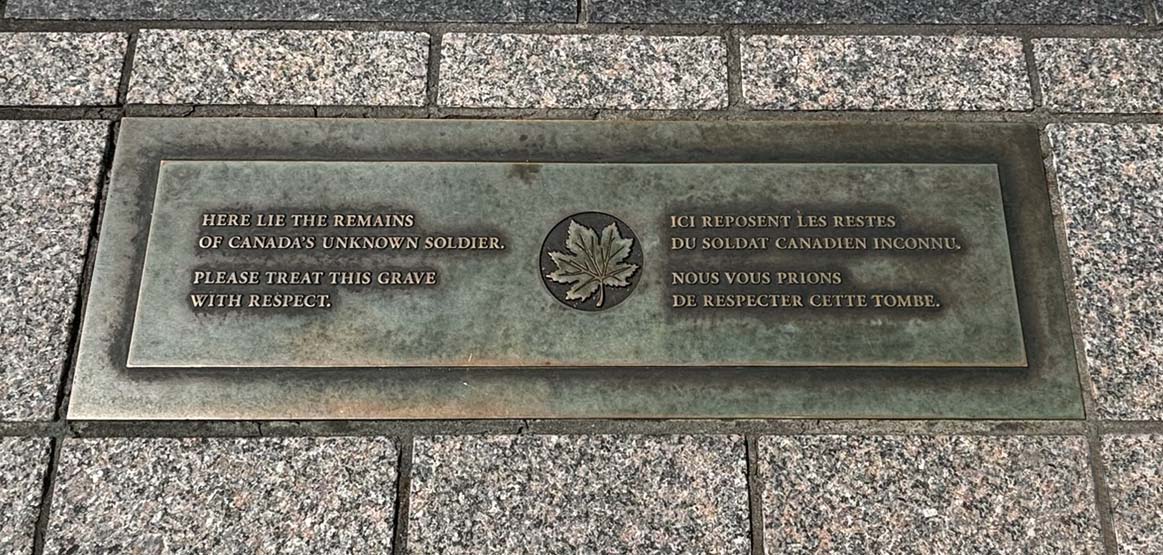
The inscription on the tomb reads “The Unknown Soldier / Le Soldat inconnu”. There is also a brass plaque embedded in the ground in front of the tomb which reads: “Here lie the remains / of Canada’s Unknown Soldier. / Please treat this grave / with respect.”
The tombstone marking the first resting place of our unknown soldier, in France, was also brought to Canada and now hangs in the Memorial Hall of the Canadian War Museum in Ottawa.
The inscription reads: “A Soldier / of the Great War / A Canadian Regiment / Known Unto God”
Original gravestone of the Unknown Soldier, Canadian War Museum. Photo by Craig Baird, Canadian History Ehx https://canadaehx.com/ Photo used with permission.
The Memorial Hall of the Canadian War Museum has a unique design feature, where every year on November 11th, at 11 a.m. the sun filters through a window in the hall, directly illuminating the headstone.7
A new gravestone was placed to mark the original burial site, now empty, in Cabaret-Rouge British Cemetery. The stone, similar in appearance to the original gravestone, is engraved with a maple leaf and the following epitaph, “The Former Grave Of An / Unknown Canadian Soldier / Of The First World War. / His Remains Were Removed / On 25 May 2000 And Now / Lie Interred At The / National War Memorial / In Ottawa Canada.”4
The Changing of the Guard
This summer, while I was visiting family in Ottawa, I had the opportunity to visit the Tomb of the Unknown Soldier and witness the changing of the guard.
Since 2007, the Canadian Armed Forces have posted sentries to stand guard at the tomb, with a rotation of personnel from the Royal Canadian Navy, Canadian Army, Royal Canadian Air Force, and Canadian Ranger units from across the country.8 During the summer months, the changing of the guard ceremony occurs every hour, on the hour, between 9 a.m. and 5 p.m.
The ceremony is a somber occasion that reflects respect for Canada’s fallen soldiers. As the sentries execute their precise and disciplined movements, the atmosphere was heavy with reverence. The ceremony serves as a powerful reminder of the sacrifices made in the name of freedom and those who gave their lives in service.
While visiting the tomb, I was struck by the weight of history and felt the significance of honoring those whose identities may be lost, but whose sacrifices will never be forgotten.
We will never know the identity of the Unknown Soldier—but that’s the point.
In war, the remains of soldiers may be badly damaged, or destroyed. Even though a great effort was made to find and identify remains, many were not found at all. Almost 20,000 Canadians who died in the First World War have no identifiable graves.4 Some could only be identified as Canadians, by uniform buttons or badges, and were buried with a simple military marker, like our unknown soldier.4
So this Remembrance Day, as we pause to honor the sacrifices of those who served, remember also the unknown soldier—the many who gave their lives, whose identities are now lost to history.
A few years ago, my fiancé and I started a new October tradition. We were engaged in October, and to celebrate we planned a cute weekend getaway at a haunted hotel. We visited a haunted pub and enjoyed the small-town charm and fall weather.
We had so much fun that we started thinking about other haunted hotels we could visit—and the tradition was born!
This year, our Haunted Holiday took us to Toronto.
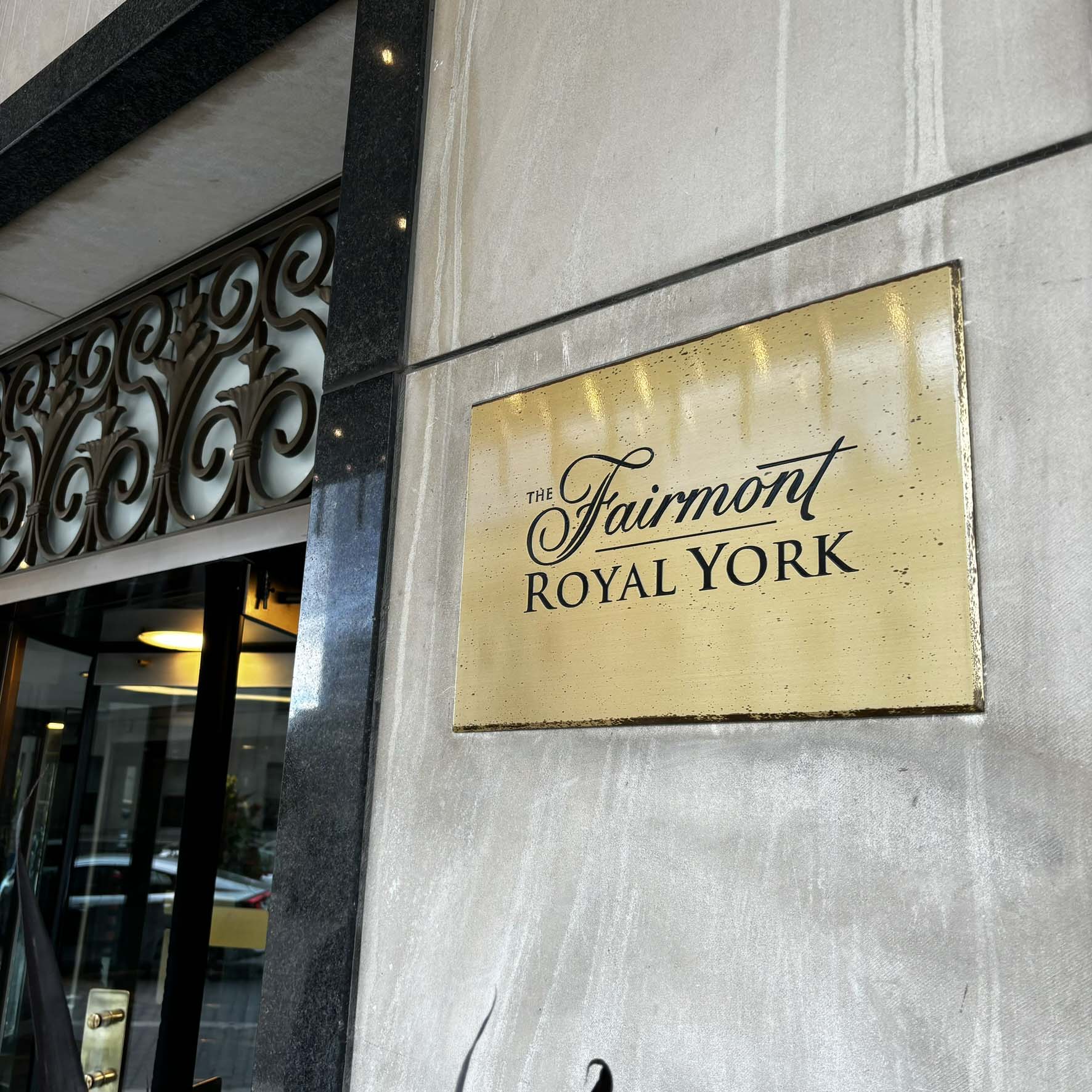
We had tickets to see the iconic heavy metal band Iron Maiden at the Scotia Bank Centre at the end of October, so it made sense to make a weekend trip. I did a bit of research into haunted locations in the city and booked us a room at the Fairmount Royal York. We also made reservations for a romantic dinner at a 157-year-old historic building known today as the Keg Mansion.
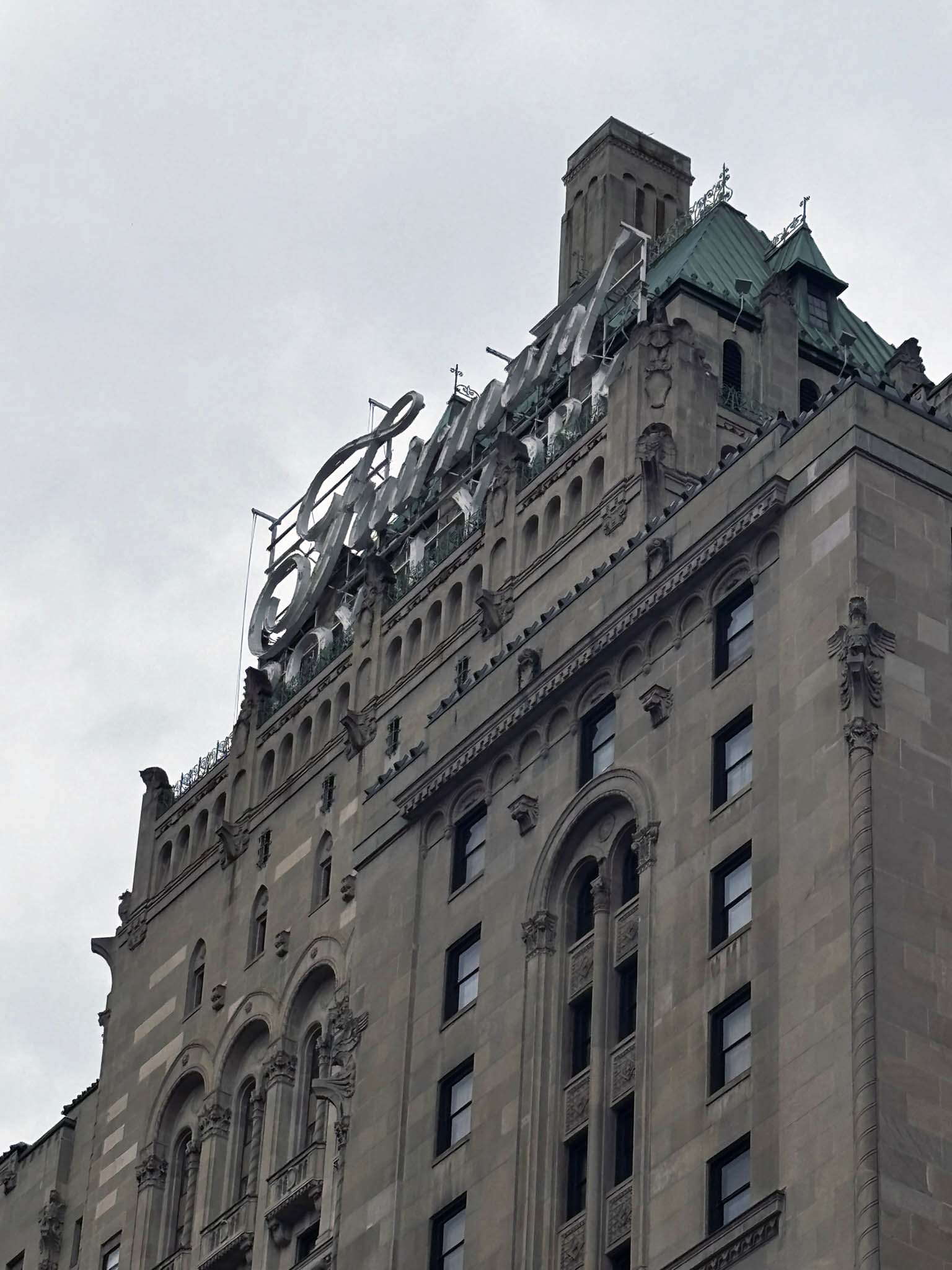
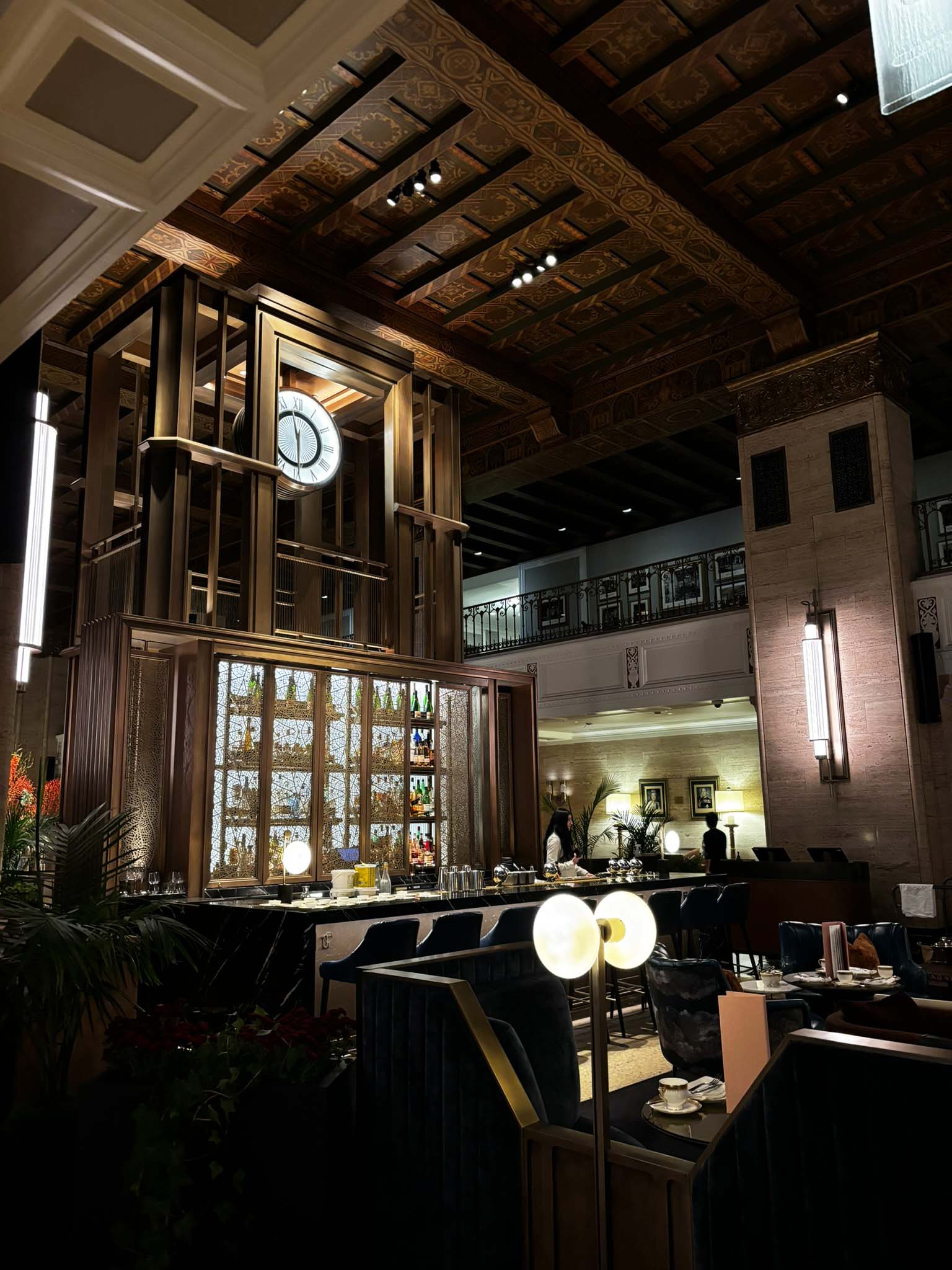
The Royal York Hotel was built in 1928-1929, by the Canadian Pacific Railway as part of its coast-to-coast chain of grand hotels. The skyscraper hotel was the tallest in the British Commonwealth at that time and dramatically altered the Toronto skyline.1
Today it’s one of Toronto’s most famous landmarks.
This stately hotel has played host to many celebrities and dignitaries over the years, such as Louis Armstrong, Ella Fitzgerald, and the Royal family.2 With such a storied past, it’s no surprise that it might also hosts a few ghosts.
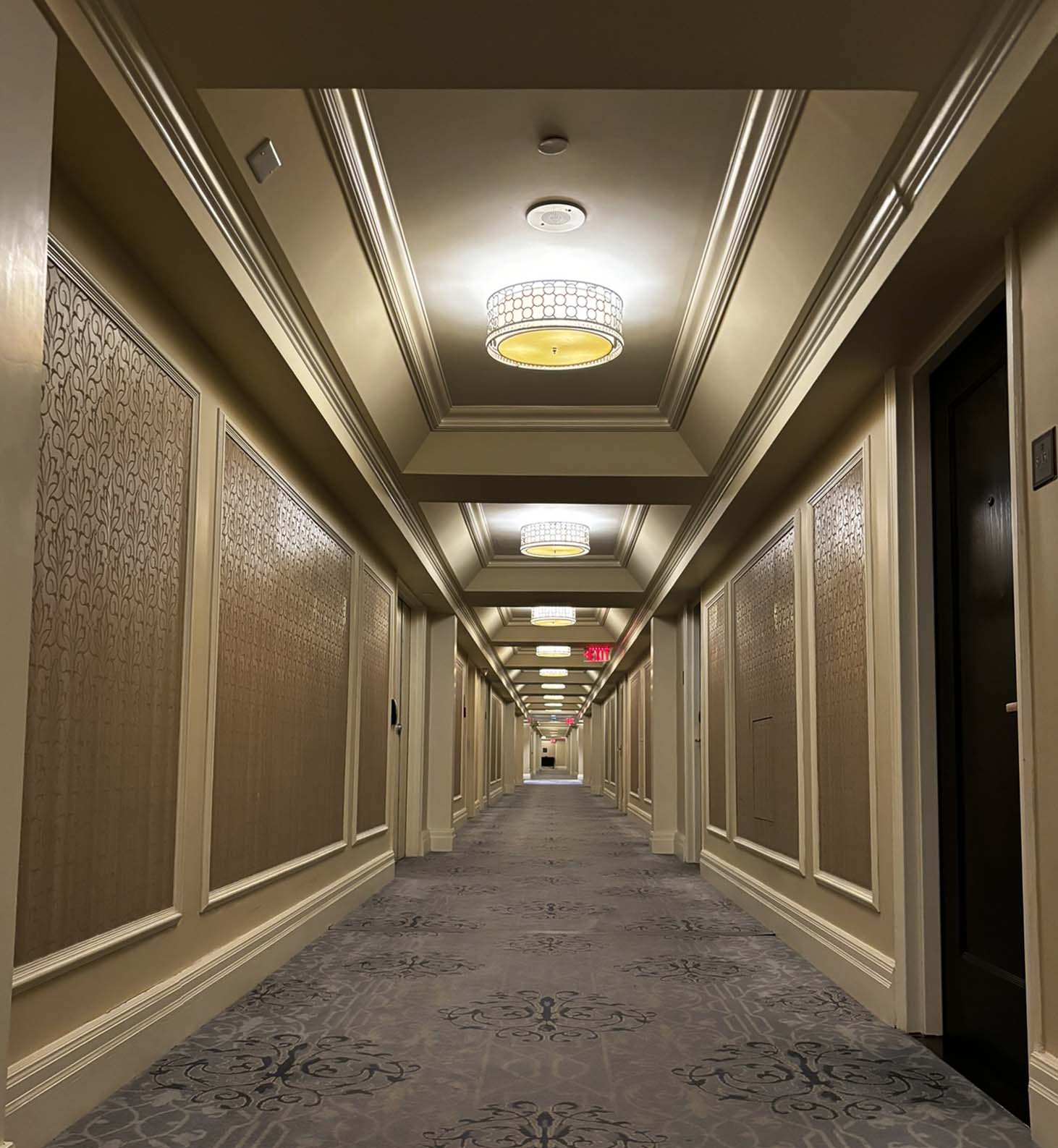
The most reported haunting is that of a gentleman who wanders the halls on the 8th floor. He is said to be wearing a purple jacket. This ghostly figure is sometimes seen accompanied by the sounds of children running up and down the halls while laughing. Those who have heard the ghostly children have peeked outside their chamber door to see an empty hallway and find silence. Some have peeked out to see the man in the purple jacket.3
My fiancé and I were eager to chat with someone about the supposed hauntings when we checked in. Unfortunately, we didn’t meet anyone who had any stories to share with us, either being recent hires or as one put it, worked only during the day when nothing spooky happens.
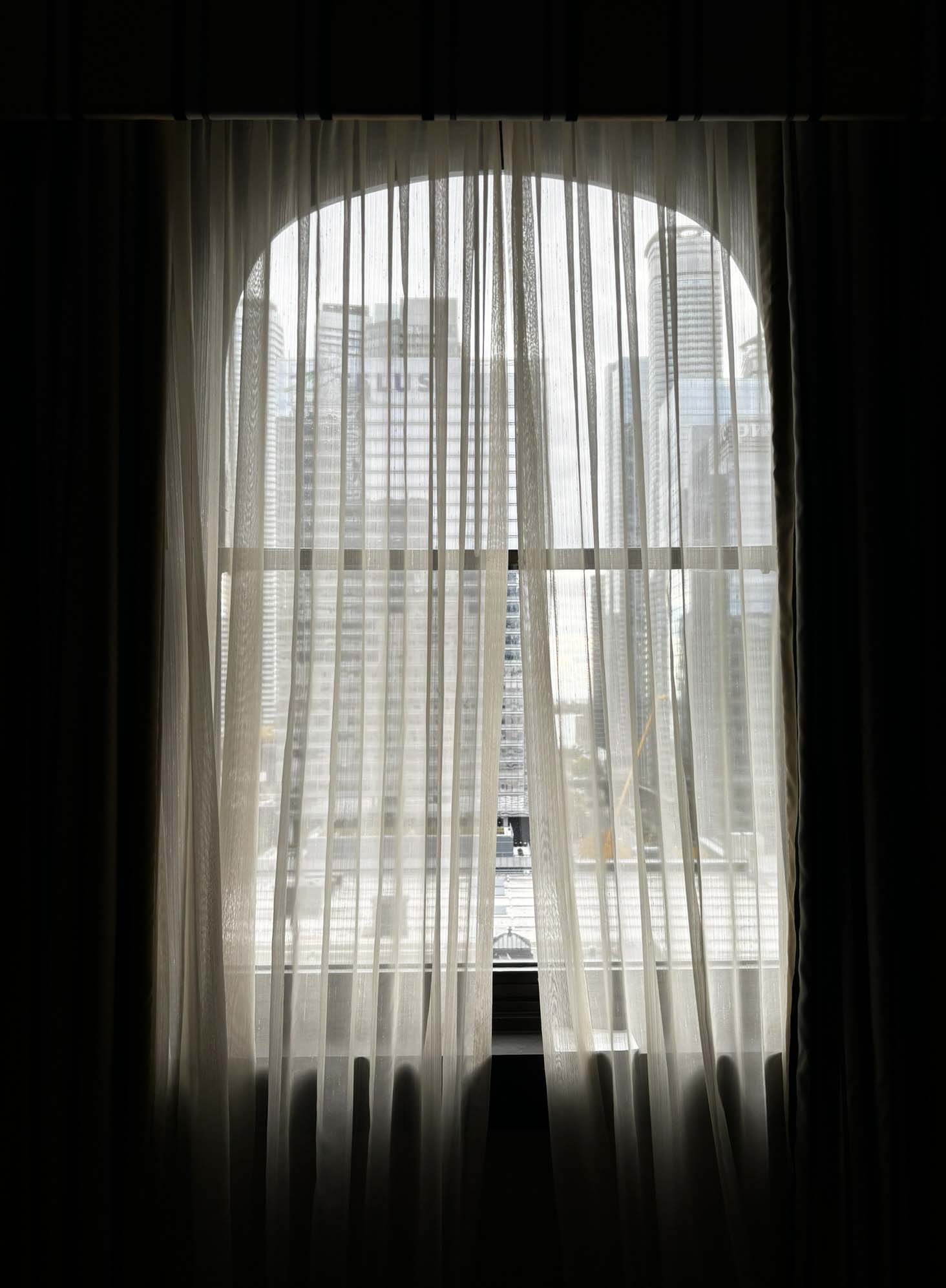
The hotel is immense and beautiful, so we took a bit of time to explore our surroundings while making our way up to our room on the 9th floor.
After dropping off our things and settling into our new home for the night, we had some free time before our dinner reservation. We had just enough time for a cemetery visit, some window shopping, and a drink or two at a pub.
Mount Pleasant Cemetery
Opened in 1876, Mount Pleasant Cemetery is considered one of Canada’s most historic cemeteries. It was designed by Henry Adolph Engelhardt and is a beautiful example of landscape design, inspired by the European and American garden cemeteries of the 19th century.4
Spanning 83 hectares in the middle of the city, the many winding paths provide picturesque views of the park-like landscape.4 Mount Pleasant features one of the finest tree collections in North America and walking and running trails that span 1 km, 3 km, and 5 km routes.5
Mount Pleasant is the final resting place of many prominent Canadians, including former Prime Minister William Lyon Mackenzie King, Nobel Prize winner Frederick Banting, founder of the Eaton’s department store Timothy Eaton, and renowned pianist Glenn Gould.6
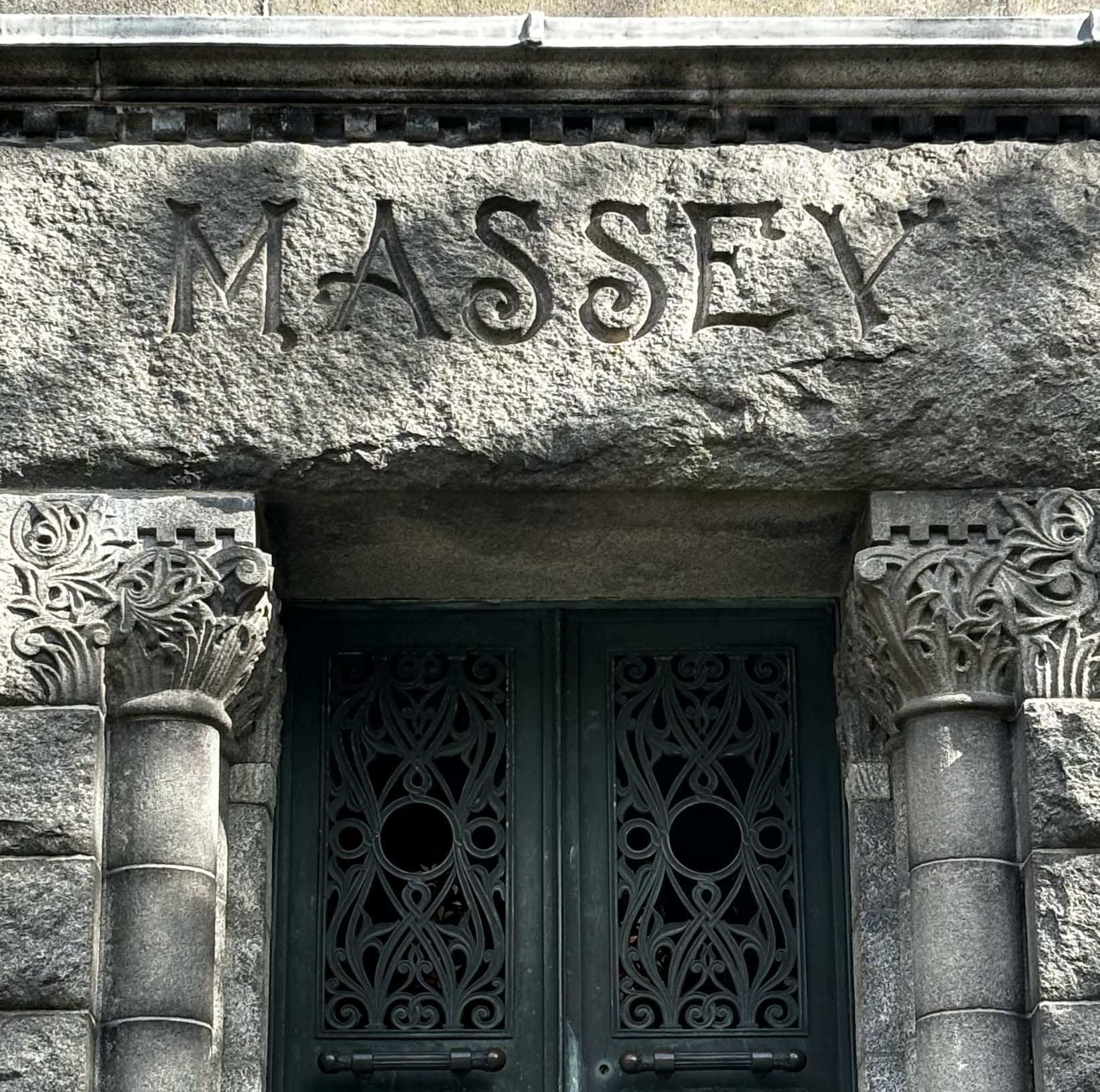
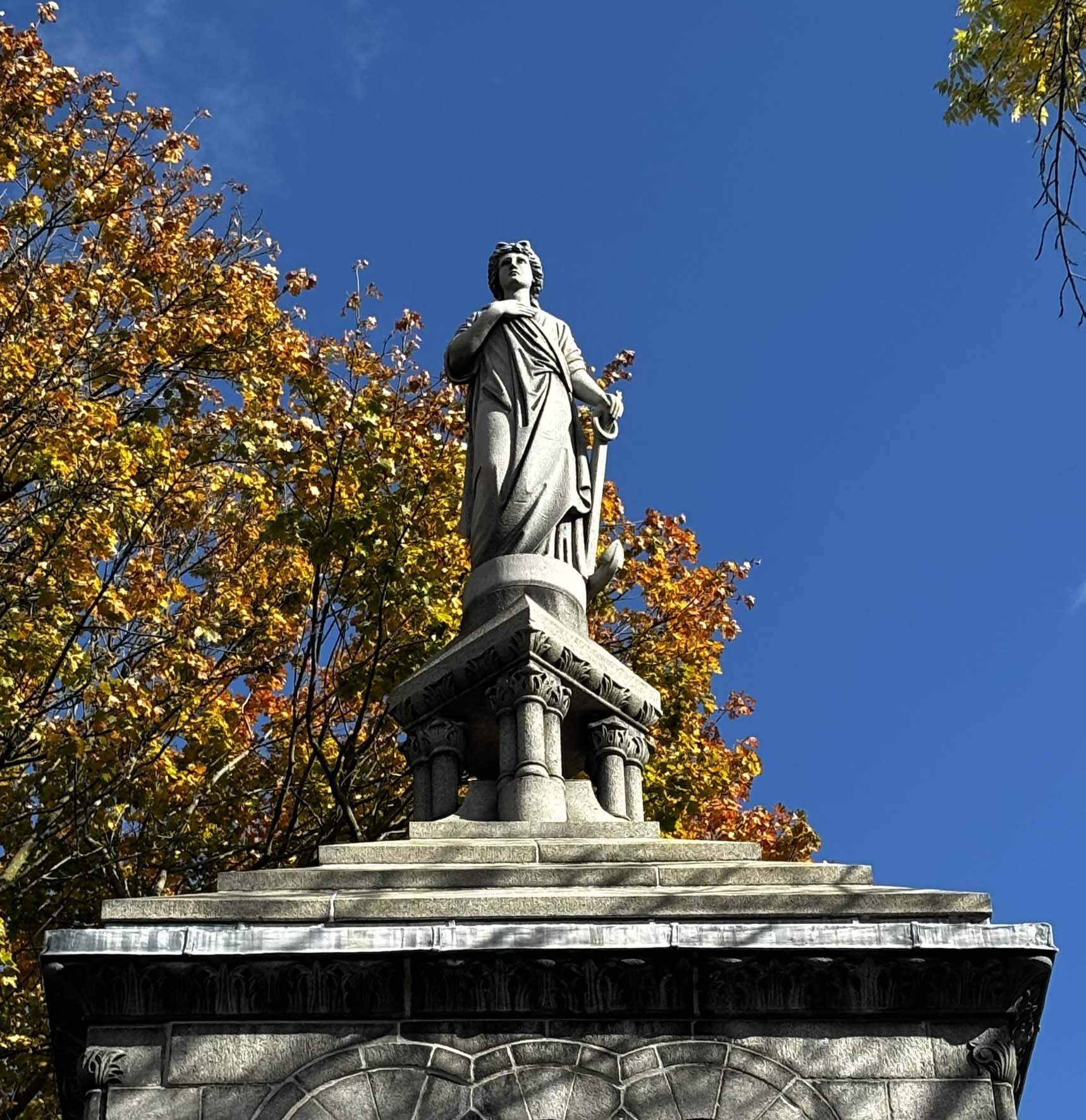
It’s also the final resting place of many members of the prominent Massey Family. The Massey Mausoleum was built in 1891. Designed in the Romanesque style, the family crypt features a tower, a below-grade crypt, and a statue of Hope, one of the seven virtues perched on top of its roof.7 Industrialist and philanthropist Hart Massey rests within the walls of this mausoleum, as well as his wife Eliza Ann Phelps Massey, and some of their children, like Lillian Frances Massey Treble.
I was particularly interested in visiting the final resting place of Lillian, as we would be dining with her ghost later that evening.
The Massey Mausoleum is massive and was easy to spot once I was pointed in the right direction. I will admit I did need to get directions from a groundskeeper as the cemetery is quite large and easy to get lost in. Especially when you are easily distracted by gravestones, like me.
Standing in front of the immense family crypt, I was in awe of the wealth and stature of this family, which I assume is one of the reasons for building such a massive final resting place.
I peeked inside and admired the beautiful stained glass, in the small sepulchre. The shaft of light coming from the stained glass windows in the ceiling lit the inside of the tomb just enough to make out the nameplates marking the shelves within the crypt. It felt like a special privilege to be able to see inside this final resting place of such a prominent Toronto family.
After paying my respects and taking a few more photos, I made my way back to my waiting fiancé. I excitedly showed him my photos as I described everything I saw during my short walk in the cemetery.
After a short rest and an iced pumpkin spice latte, we continued on our walk down Yonge Street stopping in at a shop here and there. We eventually sat down at a nice little pub called The Quail, where we enjoyed a few drinks and chatted with the owner. Now that I think about it, we completely forgot to ask the owner if he had any ghost stories to share.
But not to worry, we would get our fill of ghost stories at supper time!
The Keg Mansion
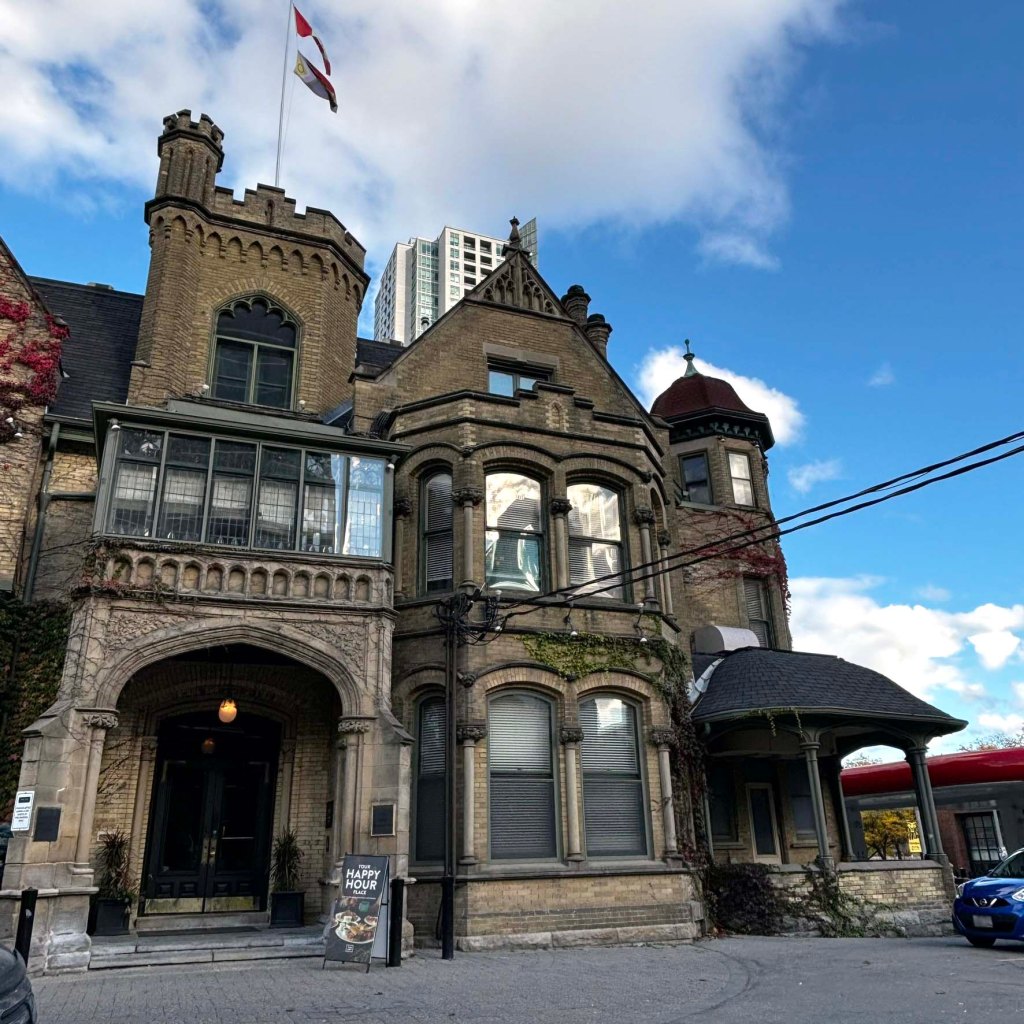
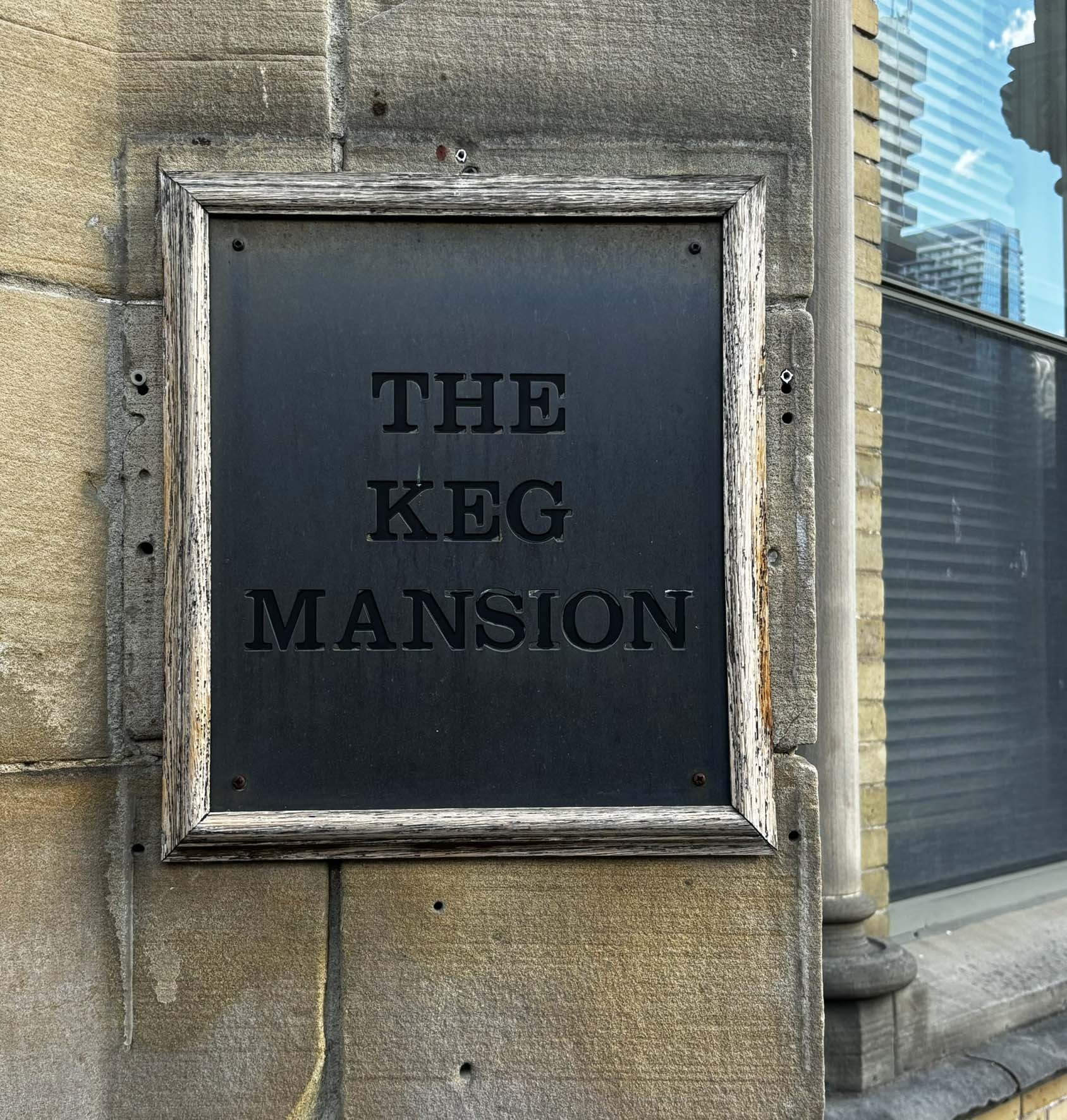
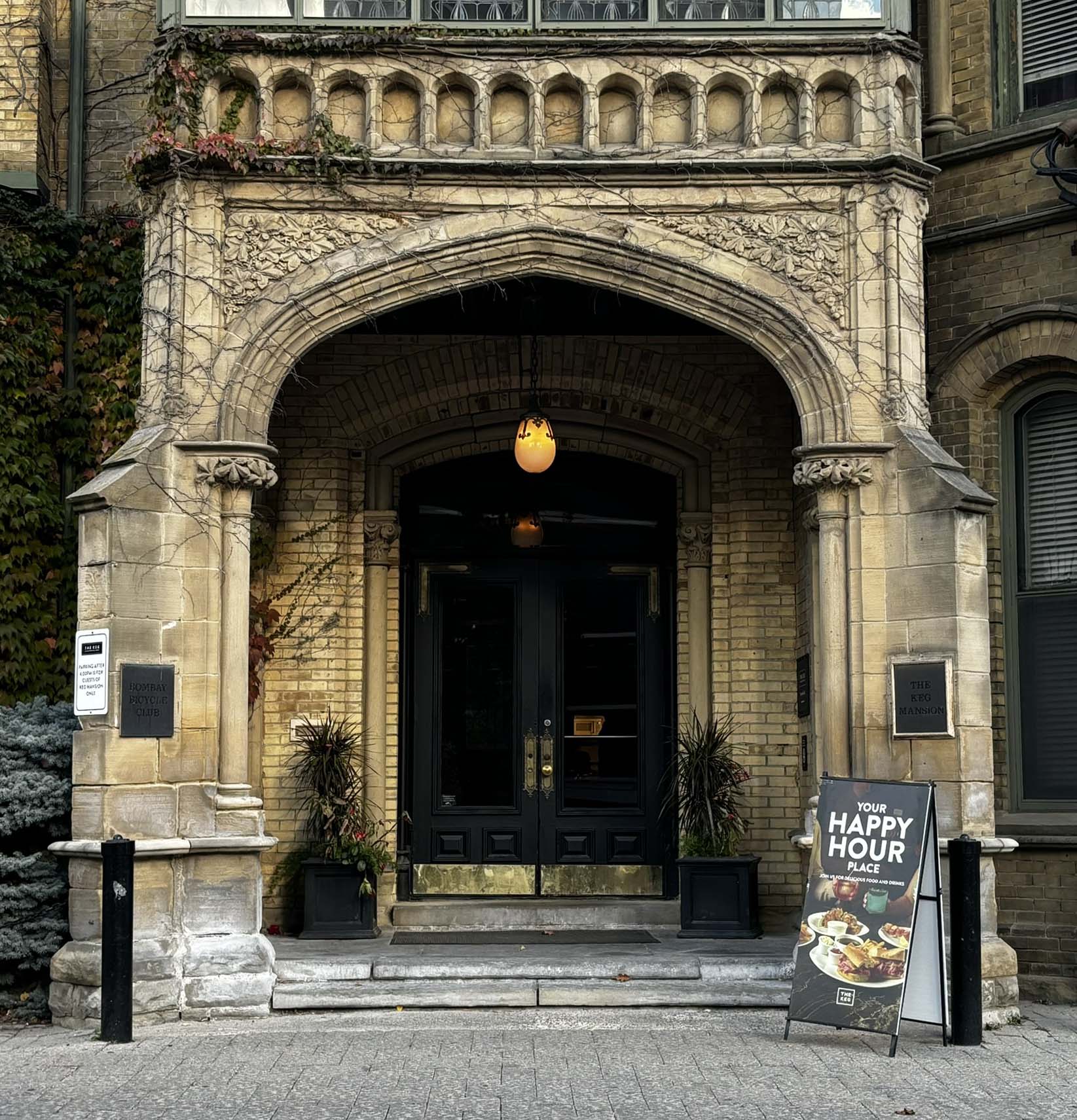
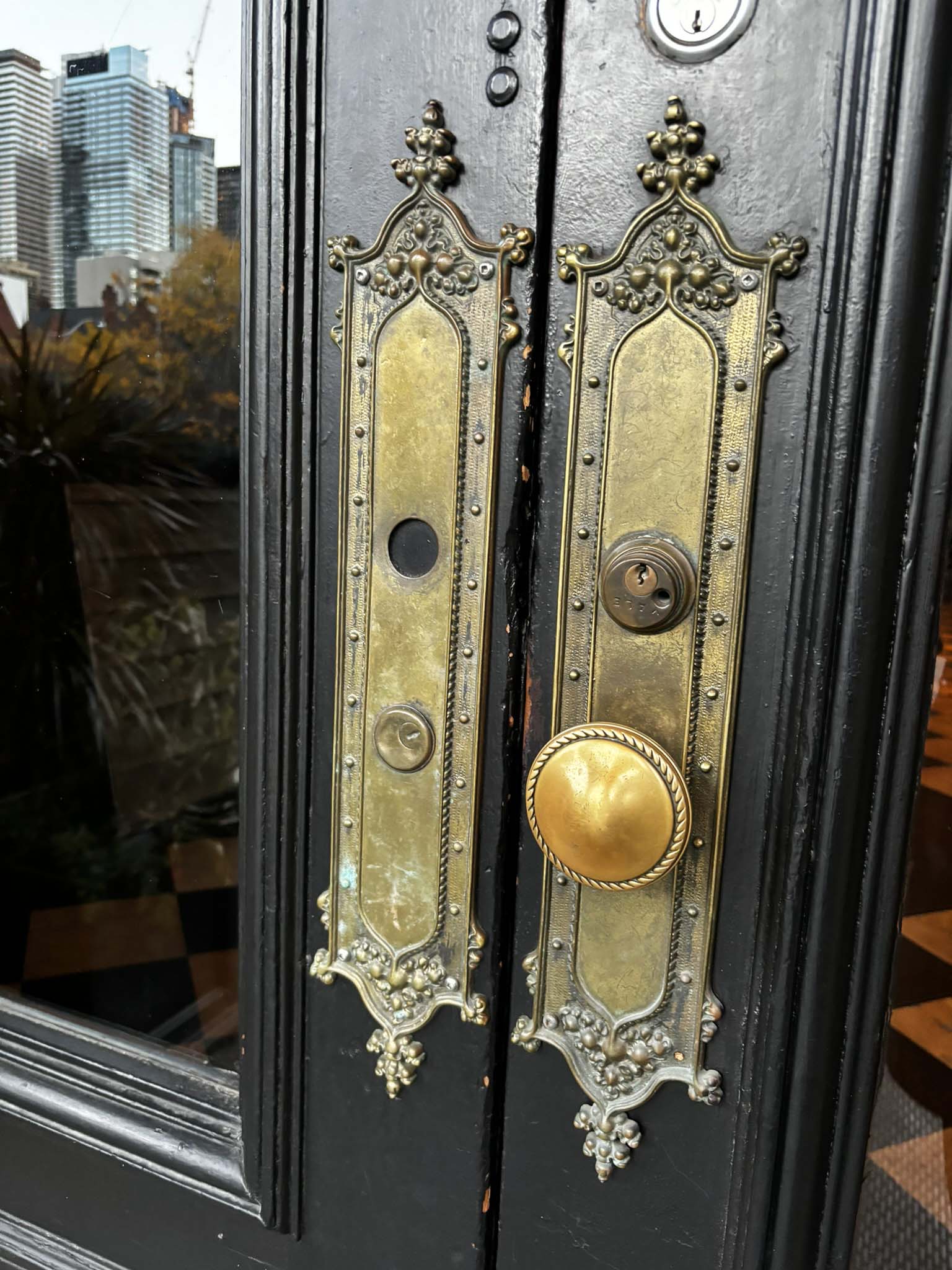
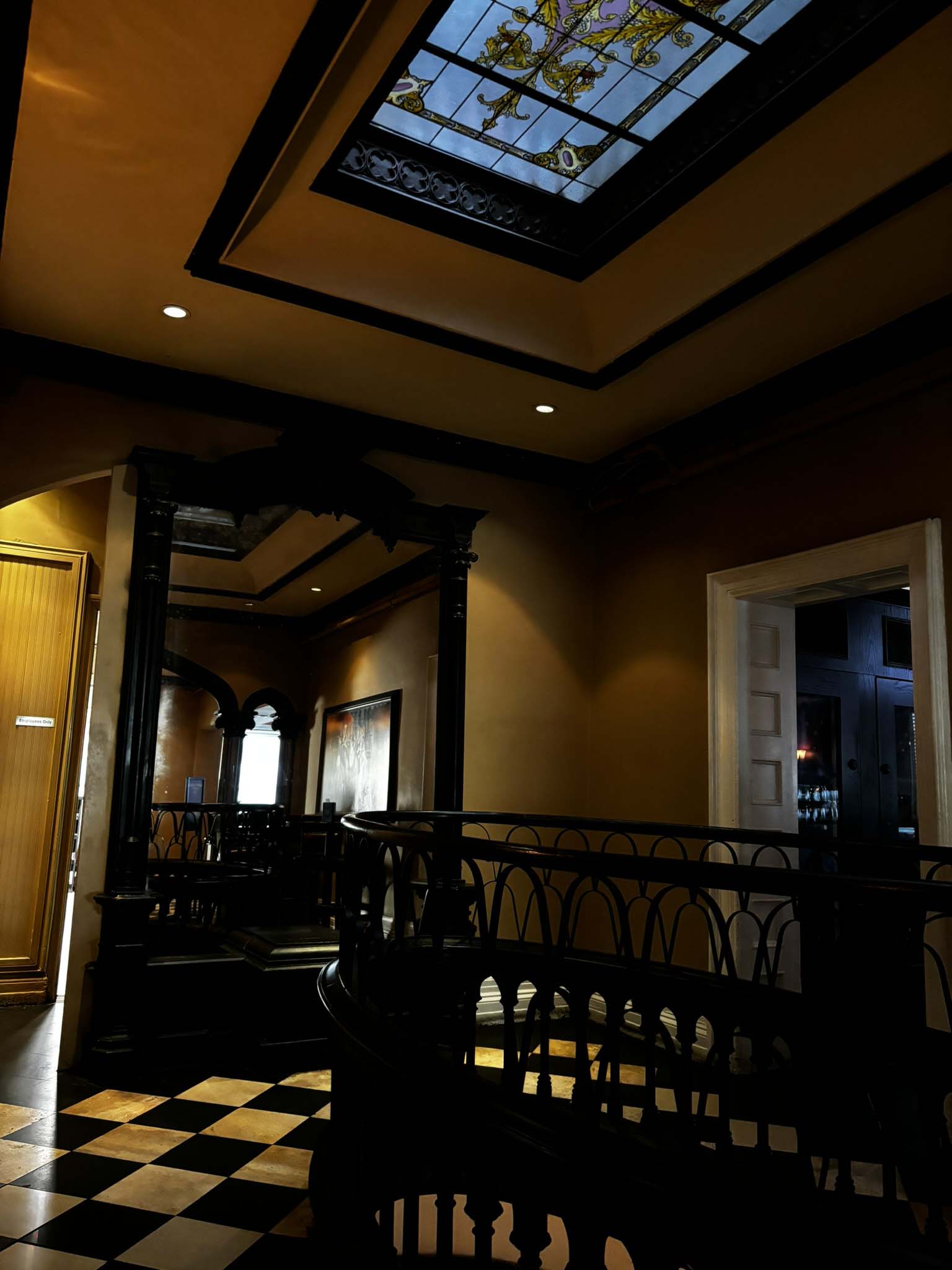
Our dinner reservation brought us to the Keg Mansion, a former home of the Massey family. Built in 1867, this elaborate mansion housed 26 different rooms and 17 fireplaces.8 The home was purchased in 1882 by Hart Massey, a Cleveland agricultural equipment salesman, and his wife. They would make additions to the ornate mansion by adding a turret, verandah, and a greenhouse.8
After Hart Massey passed away in 1896, at the age of 72, the estate was taken over by his daughter Lillian Massey. She would name the Mansion Euclid Hall, and reside there until her death. After her passing, the house was entrusted to the University of Toronto, serving as the home for many different establishments over the years. In 1975, the building received heritage status, and in 1976 became the home of The Keg Steakhouse + Bar. Today, it’s known as the Keg Mansion.8
The Keg Mansion does not shy away from its ghostly history. When we arrived for our reservations we were quietly seated on the second floor. Of course, we asked right away if our server had had any ghostly encounters to share. She didn’t have any stories of her own to tell, but she kindly offered to bring over the “ghost book”, a collection of reported hauntings by staff and restaurant patrons.
I was happy to peruse the reported hauntings while they brought out our drinks. Some of the stories I was familiar with, like the story of Lillian Massey and her maid. Lillian passed away in the house in 1915, at the age of 61. Lillian was beloved by her staff, and her maid in particular took her death very hard. The story goes that after learning of Lillian’s death, her maid, distraught with grief brought a length of rope with her upstairs to the oval vestibule, where she fashioned a noose and hung herself.9
The vestibule is still a feature in the Mansion today, just outside the washrooms on the second floor. People have reported seeing Lillian’s spirit as well as the spirit of her maid, in various rooms throughout the house. The washrooms, in particular the women’s washroom, are thought to be one of the most haunted areas in the Mansion. Patrons have reported feeling cold spots, and even capturing ghostly images in photographs taken in a mirror above the fireplace in that washroom.
The stories I found most fascinating though were the sightings of the ghost of a young boy.
Throughout our meal, my fiancé and I couldn’t help eavesdropping on the conversations happening around us. The ghostly phenomenon happening at the Mansion is well known, and we were not the only ones asking questions about ghosts.
One server stopped by our table and told us a story about a mother and son who had come to the Mansion for supper. The little boy went to the bathroom, and on his return told his mother that there had been another little boy in the bathroom, all alone. Worried, the mother told her server who in turn told a manager. The manager went to the bathroom right away to see if the little boy needed help, but there was no one there.
We would learn later in the evening that there had been a young Massey boy, who also died in the house, who was around 10 years old. His playful ghost is also often reported.
Geoff, the Bar Manager stopped by our table after our meal and told us about his encounter with the child ghost. He had been walking with a tray of drinks past the front door area, where the large staircase is when he overheard a little girl telling her mother she wanted to play with the trains. The mother, confused, asked her daughter what she meant. In response, the little girl pointed to the empty staircase and said she wanted to play trains with the little boy. She was quite emphatic saying that he was playing with the trains and that she wanted to play too.
Except there was no one on the stairs, no little boy, and no toy trains!
Geoff assured us that even though the ghosts were very active, no one had experienced anything malicious. My fiancé and I hoped we would have an encounter of our own, but alas we didn’t experience anything. We both made it a point to visit the washrooms, and I did take a few selfies in the bathroom mirror, but I didn’t capture anything.
What we did have was a lovely evening of good wine, good food, and ghost stories.
After dinner we made our way back to the hotel to freshen up, then it was off to the Scotia Bank Centre for an evening of heavy metal. Iron Maiden put on an excellent show!
After a couple of hours of rocking out, we walked back to our hotel, stopping on the 8th floor to take a look around. It was quiet on that floor, so we returned to our own room for the night.
Although we didn’t get to experience any hauntings ourselves, we both agreed that it was a great weekend. You can’t go wrong with romance, ghost stories, and heavy metal. It was definitely a haunted holiday for the books.




























 Cemetery Photography by Chantal Larochelle