I’ve been reading cemetery-related books for a long time now, so when I spotted this one on Amazon, I was immediately intrigued. The title promised a fascinating dive into graveyards and everything connected to them—a must-read for anyone interested in the eerie, mysterious, and macabre side of cemeteries.
Today, I’m sharing my review of Cemetery Stories: Haunted Graveyards, Embalming Secrets, and the Life of a Corpse After Death by Katherine Ramsland.
Ramsland, a professor of forensic psychology and author, what happens after death—how society deals with it, the process of burial, and what takes place in and around cemeteries. She interviews a range of people in the American death industry, covering topics from embalming and funeral practices to more unusual and supernatural stories.
“Admit it: You’re fascinated by cemeteries. We all die, and for most of us, a cemetery is our final resting place. But how many people really know what goes on inside, around, and beyond them? Enter the world of the dead as Katherine Ramsland talks to mortuary assistants, gravediggers, funeral home owners, and more, and find out about: If you’ve ever scoffed at the high price of burying the dead, or ever wondered how your loved ones are handled when they die, or simply stared at tombstones with morbid fascination, then take a trip with Katherine Ramsland and learn about the booming industry — and strange tales — that surround cemeteries everywhere.”
Despite the title, I found the actual cemetery content surprisingly sparse. The stories and interviews are interesting, but each topic is covered quickly before moving on to the next. The book feels more like a broad overview of the funeral industry, with only a small portion devoted to cemeteries.
If you’re already familiar with the basics of the death industry, you might find it too surface-level to offer anything new. That being said, I think Cemetery Stories would be a good fit for readers who are just starting to explore funeral practices and cemeteries.
One section I struggled with was the final chapter, which discusses necrophilia. In my opinion, it was unnecessarily graphic and didn’t match the tone of the rest of the book. It felt gratuitous and didn’t really add anything meaningful to the overall discussion.
That said, if you’re new to the subject or curious about the behind-the-scenes aspects of death care, this book is a decent introduction. It covers a wide range of topics and provides some memorable glimpses into the industry. Just be aware that it’s not in-depth by any means—and you might want to skip that last chapter if you’d rather avoid reading explicit material.
Thanks for reading!
I am always on the hunt for cemetery-related book recommendations. If you are an author and have a cemetery-related book you would like me to review, please reach out at hello@chantallarochelle.ca. I would love to hear from you!
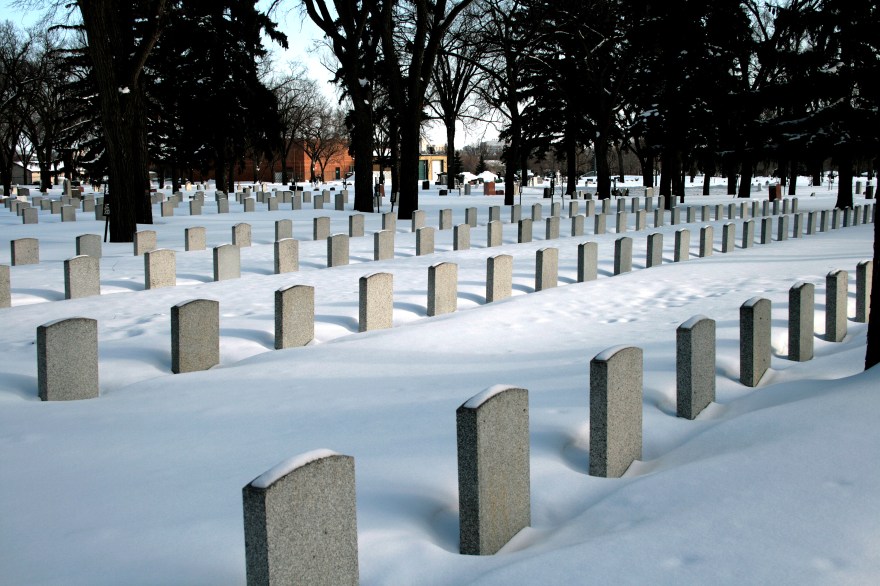
Tuesday, August 19, is World Photography Day, a day to celebrate the art of photography in all its forms.
Over the years, I’ve dabbled in just about every type of photography—product, food, portrait, weddings—but nothing has ever felt as natural or creatively fulfilling as photographing cemeteries and gravestones.
I find there’s something deeply meaningful about capturing the details of an old tombstone, the way the light filters through the trees, or the quiet beauty of a forgotten graveyard. Cemeteries are full of history, and every stone has a story to tell. But stone doesn’t last forever—inscriptions fade, wooden markers break, and time slowly wears away these pieces of the past.
That’s why I believe cemetery photography is more than just an creative hobby, it’s a way of preserving history.
So today, on World Photography Day, I’m celebrating the quiet art of cemetery photography—the way it connects us to the past, sparks curiosity, and ensures that these stories aren’t lost to time.
If you’ve ever thought about bringing your camera (or even just your phone) to a cemetery, I highly recommend it. You never know what history you might capture.
Do you have a favourite cemetery photo you’ve taken? I’d love to see it! Share it with me on Facebook or Instagram and don’t forget to use the tag #WorldPhotographyDay.
Summer is winding down, but everything still feels full of life.
Trees are lush with green leaves, flowers are in full bloom, and the bees are buzzing all around. Cemeteries reflect that same energy. It’s the time of year when nature is at it’s fullest—and in cemeteries, that adds an extra layer of meaning.
Even in these quiet places, there’s life all around. It reminds me that cemeteries aren’t only about endings—they’re also about remembering lives that were full, loved, and meaningful.
Sometimes, it’s not just the greenery that brings cemeteries to life; it’s the wildlife too, and summer can be the best time to spot them.
On a recent visit to Notre-Dame-des-Neiges Cemetery in Montréal, I spotted a couple of groundhogs throughout the cemetery who froze in place when they saw me. Like little furry statues, they stared me down until I had passed by. Moments like that make cemeteries feel even more alive, with nature and memory sharing the same space.
Of course, summer cemetery visits do have their challenges. The noonday sun can be intense, and without shade, it can be easy to overheat. On summer road trips, sunscreen and water are a must! Sometimes I’ll even sit down to rest under a tree—a chance to slow down for a minute and also take it all in.
Another thing I love about graving in the summer—especially here in Northern Ontario—is the longer daylight hours. Around this time of year, the sun usually sets between 8:30 and 9 p.m., which gives me lots of time to explore and take photos.
This post wraps up my series exploring how cemeteries change throughout the seasons. If you missed the earlier posts, you can still read about cemeteries in the Fall, Winter, and Spring. Each season really does bring its own mood.
What’s your favourite season to visit cemeteries?
Mine is still Fall. I can’t resist the crunchy leaves, cooler air, and all the moody vibes that come with Halloween season. But honestly, every season has something beautiful to offer, and I’ve enjoyed exploring them all.
It’s that time of year again—time to unplug, unwind, and hit the road!
I’ll be taking a little break to relax, recharge, and of course, do some sightseeing (because let’s be real, I can’t resist a good road trip).
Naturally, the time off will include a few cemetery visits, because what’s a vacation without a little gravestone hunting? I’ve got some exciting road trips planned, and I’m sure they’ll lead to some interesting stories for future blog posts.
While there won’t be any new blog posts during my break, my regular scheduled social media posts will still be going up.
I’ll be back soon with plenty to share, but in the meantime, I hope you all have a great summer!
It’s rare that a book that’s not focused on cemeteries makes its way onto the blog, but after reading A is for Arsenic: An ABC of Victorian Death, I couldn’t resist sharing it with you.
It’s a quirky, informative, and fun look at the moody and fascinating world of Victorian death rituals, with a good dose of dark humour.
A is for Arsenic is written by Chris Woodyard, a self-titled “Fortean”. If you’re unfamiliar with the term, (like I was) Forteans named themselves after Charles Fort, who researched all things strange and unusual.1
The book covers topics like post-mortem photography, embalming, and funeral attire. And yes, it does cover a couple of cemetery-related topics, like white bronze grave markers, and the gates ajar cemetery symbol.
“A is for Arsenic is a guide to the basics of Victorian mourning with “death-initions,” and stories resurrected from 19th-century newspapers, brought back to life through the evocative art of Landis Blair. Each entry includes a pen and ink illustration along with 19th-century anecdotes ranging from macabre stories to jokes from the Victorian press. (Plus sinister little poems in homage to Edward Gorey.)”
A is for Arsenic: An ABC of Victorian Death by
I read the softcover edition and found this little book to be a fun and engaging read. I particularly enjoyed the quirky poems that open each chapter. Their dark, whimsical tone reminded me of Edward Gorey’s work and added a fun layer to the material. Paired with the lovely illustrations by Landis Blair, the poems and the historical content make for a delightful read.
You might actually recognize Blair’s artwork if you’ve read my very first Gift Guide for Taphophiles—he was one of the 13 artists I featured. It’s wonderful to see his darkly whimsical style bringing Victorian history to life.
The book does also include plenty of serious historical context. Each alphabetical entry is backed up with stories and facts pulled from the headlines of 19th-century newspapers, offering a glimpse into the strange and sometimes sinister happenings surrounding death in the Victorian era.
As I mentioned, it’s not entirely focused on cemeteries, but there are some cemetery-related tidbits throughout the book. Along with topics like post-mortem photography, and the importance of death tokens and mourning fashion—it all ties in to burial customs and practices.
I found this to be a charming little book, that’s both educational and entertaining. While it might not be focused solely on cemeteries, it’s definitely worth the read for anyone interested in the fascinating history of Victorian mourning customs and death rituals.
Thanks for reading!
I am always on the hunt for cemetery-related book recommendations. If you are an author and have a cemetery-related book you would like me to review, please reach out at hello@chantallarochelle.ca. I would love to hear from you!
In 2010, a friend and I visited a place that felt frozen in time—an abandoned prison cemetery hidden deep in the Northern Ontario wilderness. Thirteen years later, we went back.
What we found was both familiar and completely changed.
The Burwash Industrial Prison Farm isn’t just an old correctional centre—it’s a strange and haunting mix of history, decay, and memory. The prison is long closed, the buildings are crumbling, and the cemetery tucked away in the forest has become almost forgotten.
But pieces of the past still linger there, if you know where to look.
The Burwash Industrial Farm opened in 1914, about 30 minutes south of Sudbury, Ontario. It was designed to be a self-sufficient correctional facility—almost like a village tucked away in the forest. At its peak, the property stretched across 35,000 acres and included a farm, a lumber operation and mill, a 20-bed hospital, and even a tailor shop.1
Burwash Industrial Farm housed between 180 and 820 minimum- and medium-security inmates, who typically served sentences of three months to two years, less a day.1 They spent their days working on the prison farm or doing maintenance around the property. The idea was that routine and hard work could help with rehabilitation. Over the years, the prison grew to include three permanent camps, and several temporary ones. It also became home to a small town of staff and their families, with a population between 600 and 1,000 people.1
The prison was remote by design—difficult to escape from, and just as difficult to reach unless you knew where you were going.
Over time, the facility became known as Camp Bison. The name comes from the herd of wood bison that once lived on the property.2 These animals roamed the land while the prison was active, and the nickname stuck even long after both the prison and bison were gone.
At the time Burwash was slated for closure in 1974, it was the largest industrial farm and the second-largest reformatory in Ontario’s correctional system.1 But the facility was considered too expensive to operate. That July, it was announced that Burwash would be shut down to save money.3 The staff were told they had to leave, and the inmates were relocated to other institutions. After that, the province began looking at alternative uses for the remaining buildings and the massive piece of land.3
What’s left today is a patchwork of wilderness, ruins, and stories.
Abandoned
After the prison shut down in 1975, most of the buildings were left to the elements. Over time, nature began to reclaim the site. The once-bustling correctional community turned into a ghost town.
Some structures were demolished, but a few—including the main cell block—were left standing, crumbling slowly in the woods. The site became a magnet for urban explorers, ghost hunters, photographers, and curious hikers.4
When we visited in 2010, it was quiet—eerily so. There were no signs, no official routes, and no other people around. Just long trails, wilderness, and the remains of buildings just barely holding on.
It was very surreal how, after driving through the wilderness on an ATV, the main cell block emerged out from the forest. The cracked windows, peeling paint, and eerie silence gave the place a haunted feel, even in broad daylight.
There was graffiti everywhere. Some of it was creepy, but a lot was just tagging and random vandalism. It was clear the site gets a lot of visitors—who weren’t always careful. Broken glass and porcelain, rusted metal, and signs of fires made it obvious that time, weather, and people had all left their marks.
Despite the damage, I found the experience strangely moving. It felt like walking through a lost chapter of history. There was a heaviness to the place, but also a sense that stories were still lingering in the walls.
It’s no surprise that Burwash has picked up a haunted reputation over the years. Visitors have reported strange noises, shadowy figures, and an overwhelming feeling of being watched. A prison guard supposedly haunts the prison, after having hanged himself when he learned that the place was closing. People say you can hear his nightstick tapping the metal bars, especially in the basement.5
Tucked away in the trees, at the edge of Cemetery Lake, is the Burwash Industrial Prison Farm Graveyard. This was the first prison graveyard I had ever visited, and I wasn’t sure what to expect. Its the final resting place of inmates who died while serving their prison sentences.
Most of the people buried here were prisoners who had no family to claim their remains. Between 12 to 20 inmates are believed to be buried in the cemetery, their graves marked only by simple wooden crosses.6 When the prison closed in 1975, no attempt was made to move them—the cemetery was simply abandoned.4
Records show that during the Spanish Flu epidemic in 1918, more than 30 people died at Burwash; including inmates, a nurse sent in from Toronto, and the wife of one prisoner who had come to visit.7 We don’t know for sure if any of these victims were buried in the cemetery, but it’s possible.
When we first visited in 2010, the cemetery was surprisingly accessible, although still hidden. The road was maintained, and I remember we were able to drive right up to it. The grass had been maintained, and though the markers were few, the space felt quietly cared for.
No polished stones or statues. Just plain wooden crosses. A few had small metal plaques. There was no formal cemetery sign, but a small framed sign hung on a tree near the entrance, quietly marking the space.
Thirteen years later, I came back. This time, the road was gone, and the cemetery was nearly unrecognizable.
It’s strange how a place can change so much.
In 2010, I remembered smooth roads and a tidy clearing. But in 2024, the gravel road was now a rugged, overgrown path—winding downhill, with deep ruts carved into the ground.
We parked in a grassy clearing nearby and walked into the forest. The bugs found us instantly, swarming like we were fresh meat. We followed what looked like a path through thick brush and knee-high grass.
Eventually, we reached a small clearing at the edge of the lake, the end of the road. I knew we had arrived—but it didn’t feel like the same place.
The cemetery was completely overgrown. Tall grass had swallowed the crosses whole. Most of the wooden markers were now broken or fallen. Any names or numbers that may have once been visible were long faded. Even the small frame marking the cemetery had been bleached by years of sun and rain, and was now blank.
It felt more like a ghost of a cemetery than a resting place. And yet, standing there, surrounded by wild grass and silence, I was reminded again why places like this matter.
Today, Burwash is a mix of forest, forgotten history, and scattered ruins.
If you’re planning to visit the prison, do your research and be prepared for an adventure. The site is on private land, and trespassers can be prosecuted. That said, Avalon Eco Resort offers a legal way to access the property, via a waiver and a small fee.3
There’s a small parking area near the train tracks, close to the start of a 4.5 km hike to the site. The road is no longer open to vehicles—only foot traffic, bikes, and ATVs. Parts of the trail are flooded, and while ATVs can get through, hikers and cyclists may have to get creative to find “alternative” paths.3
Visiting the cemetery is a different story. It’s not on private land, so there’s no need for special permission. But it’s still easy to miss in the forest, and it’s a bit of a hike.
Today, only fragments of Burwash remain. Most of the buildings are gone, but the land still whispers its stories. The cemetery is especially easy to miss if you don’t know it’s there. But for those who make the trip—who follow the overgrown path and brave the bugs to stand among the fallen crosses—it’s a place that stays with you.
Even in decay, Burwash reminds us how quickly places—and people—can disappear. But it also reminds us that memory lingers—in the rust, the rubble, and the wild grass growing where names once stood.
On a recent trip to Toronto with my fiancé, we found ourselves with a bit of free time to explore—and for me, that usually means a visit to a cemetery.
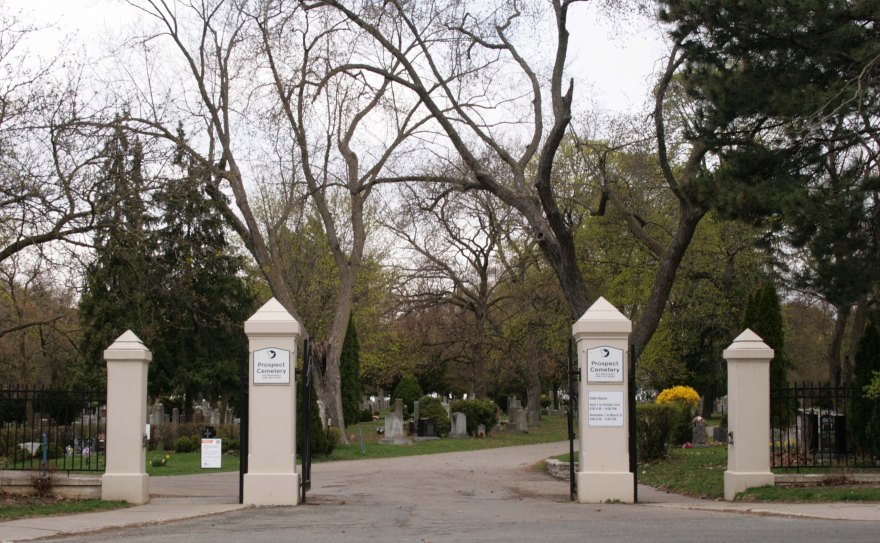
Our friends we were staying with suggested we take a walk to Prospect Cemetery, one of the larger and more historic burial grounds in Toronto. It was a chilly, grey day for late April, but despite the dreary weather, it was perfect for a quiet stroll.
There’s something extra special about sharing my love of cemeteries with others. I pointed out some grave symbolism along the way, and our friend—who used to bring their daughter here to bike ride—showed us some of their favourite gravestones.
But I also had a bit of a personal mission too: to visit the grave of J.E.H. MacDonald, one of the founding members of The Group of Seven.
Portrait of J.E.H. MacDonald. Public domain, via Wikimedia Commons
J.E.H. MacDonald
James Edward Hervey MacDonald was born in Durham, England in 1873 and moved to Canada with his family in 1887.1 He trained in commercial art and landed a job at Grip Ltd., a Toronto design firm that turned out to be a creative hot spot for future Group of Seven artists.2
MacDonald mostly painted with oil, a paint that let him build rich textures and bold, expressive brushwork into his landscapes. He had a special talent for using bright, sometimes unnatural colours to set a mood rather than literal realism. His style focused more toward the feelings and spirit of the landscape rather than detailed realism.2
He was especially inspired by the wild landscapes of Algoma and the Rocky Mountains. His 1916 painting The Tangled Garden shows just how much colour and movement played into his work.2 Besides painting, he also taught art and eventually became the principal of the Ontario College of Art in 1929.2 He helped shape not only Canadian art but also the next generation of artists.
The Tangled Garden, 1916, National Gallery of Canada, Ottawa, Ontario J. E. H. MacDonald, Public domain, via Wikimedia Commons
Controversy
MacDonald made headlines again in late 2023—long after his death—but not for the reasons you’d expect.
The Vancouver Art Gallery had been showing ten oil sketches that were believed to be his work, donated back in 2015. But after some doubts were raised, experts took a closer look—and discovered they were fakes!3
Experts tested the pigments, looked at the brushstrokes, and compared the style to his known works. The materials didn’t match what MacDonald would’ve had during his lifetime, and the way the art was created didn’t quite fit either.4
In a refreshing move, the gallery didn’t just quietly pull the pieces—they created a whole exhibit about the forgery, cleverly called A Tangled Garden.4 The title, a nod to MacDonald’s famous painting, added a bit of irony to the situation.
I respect how the gallery handled it. They used the opportunity to teach people about how art is authenticated and how fakes are detected. In the end, MacDonald’s reputation stayed strong—no copy could ever capture the depth and meaning of his real work.
Prospect Cemetery
J.E.H. MacDonald passed away in 1932 after suffering a stroke. He was only 59. He’s buried in the family plot in Prospect Cemetery in Toronto.5 His grave is simple, tucked away among the rows of headstones. A foot stone with his initials J.E.H.M., and his birth and death dates sits in front of a larger family stone with the MacDonald name. Next to it is another foot stone marked W.H.M. / 1876—1956. I’m not certain, but I believe he might be laid to rest beside his brother, William Henry MacDonald.
There is another foot stone in the MacDonald family plot that is a bit of a mystery. The stone is engraved with the letters J.E.M. and the dates 1920-1926. Unfortunately, I haven’t been able to uncover any details about this child’s grave.
Standing in front of MacDonald’s grave felt like another little win in my personal journey to visit the final resting places of all the Group of Seven artists. This was the third grave I’ve visited so far, and I find it fascinating how different each artist’s marker is.
Despite their fame, none of their gravestones are flashy. Like Franklin Carmichael’s grave, MacDonald’s grave didn’t have any grave goods—no paintbrushes, no small stones, no tiny canvases. But there was something powerful about the peacefulness of the spot.
There’s something grounding about visiting the grave of someone whose work you admire. You see where their story ended, but you also carry part of their legacy with you. That day in Prospect, under grey skies and the hum of city life just beyond the trees, felt like the perfect moment to reflect on MacDonald’s impact.
Whether through his bright, expressive paintings or the recent conversations around art authenticity, J.E.H. MacDonald still shapes how we see Canada. His grave may be modest, but his influence on Canadian art is anything but.
For this month’s cemetery book review, I wanted to share The Speaking Stone: Stories Cemeteries Tell by Michael Griffith. This collection of essays is a celebration of those quiet, curious moments when a stroll through a graveyard leads to more than just reflection—it sparks discovery.
Griffith, a long-time Cincinnati resident, and kindred spirit, spent countless hours wandering Spring Grove Cemetery, allowing his curiosity to guide him to unexpected tales of interesting figures, quirky epitaphs, and forgotten lives.
Here is a snippet from the book synopsis on Goodreads:
“The Speaking Stone is a literary love letter to the joys of wandering graveyards. While working on a novel, author and longtime Cincinnati resident Michael Griffith starts visiting Spring Grove Cemetery and Arboretum, the nation’s third-largest cemetery. Soon he’s taking almost daily jaunts, following curiosity and accident wherever they lead. The result is this fascinating collection of essays that emerge from chance encounters with an interesting headstone, odd epitaph, unusual name, or quirk of memory. Researching obituaries, newspaper clippings, and family legacies, Griffith uncovers stories of race, feminism, art, and death.”
The Speaking Stone: Stories Cemeteries Tell by Michael Griffith
Published in 2021, The Speaking Stone is a newer book that captures Griffith’s daily visits to Spring Grove Cemetery, where his curiosity leads him to discover some really fascinating stories. From famous figures to lesser-known individuals, each essay brings a fresh and unexpected perspective.
What I really enjoyed about the book was the variety of stories the author uncovers. I found it mirrors my own passion for exploring cemeteries—sometimes it’s a random gravestone or quirky detail that sends you down that research rabbit hole. While I may never get to visit Cincinnati, reading about its rich history and unique residents was a real treat.
The paperback version includes both color and black-and-white photos, which add another layer to the stories, though I found myself wishing there were more photos to accompany each essay.
Still, The Speaking Stone is a great read for anyone who loves the unexpected stories cemeteries have to offer. Whether you are a seasoned taphophile or just someone who loves history, this book offers a fascinating mix of surprising tales and historical insights.
Thanks for reading!
I am always on the hunt for cemetery-related book recommendations. If you are an author and have a cemetery-related book you would like me to review, please reach out at hello@chantallarochelle.ca. I would love to hear from you.
Bicycles often represent freedom and joy, but when painted flat white and placed by the roadside, they carry a much heavier meaning.
These “ghost bikes” mark the sites where cyclists have lost their lives, serving as haunting memorials and powerful reminders of the need for safer streets.
Ghost bikes are roadside memorials placed at locations where cyclists have been killed in traffic accidents. The bikes, painted entirely white, serve both as a tribute to the fallen and as a warning to motorists to share the road and drive safely.1
The first documented ghost bike appeared in St. Louis, Missouri, in 2003. A cyclist named Patrick Van Der Tuin witnessed a car hit a fellow rider and decided to take action. He placed an old bicycle at the crash site with a sign reading, “Cyclist Struck Here.”2
The idea spread quickly, and soon cities around the world began installing their own ghost bikes in memory of lost cyclists.
Beyond their role as memorials, ghost bikes have become global symbols for cycling advocacy. They are often installed by local organizations or loved ones who want to honour victims and raise awareness about road safety.2
Sudbury’s Ghost Bike
Ghost bikes aren’t unusual in Canada—they mark the tragic losses in communities just like mine. In my hometown of Sudbury, in 2017, a white bicycle appeared in memory of Dr. Robert Santo “Bob” D’Aloisio, a local cyclist who was struck and killed in a tragic accident.
His death deeply affected the community, sparking conversations about road safety and the need for better cycling infrastructure.3
It was a bit of a dreary day when my mother and I went to visit the ghost bike. It’s secured to a parking lot railing outside of an apartment complex on a busy street. I’ve driven by it many times but only really noticed it recently. The white bike blends into the white of the railing, so unless you’re looking for it, you might miss it entirely. That in itself feels symbolic—how easy it is to overlook something so significant if you’re not paying attention.
We kept our visit short since I didn’t want to take up anyone’s parking spot, but I made sure to take a moment to pause and reflect. While I was taking photos, I looked up at the tall apartment buildings surrounding us and thought about how someone could’ve easily witnessed the accident from their window.
Even after nine years, the ghost bike remains—a quiet, persistent reminder of the loss that took place there.
D’Aloisio’s passing was a devastating loss for his family and the cycling community. His loved ones continue to advocate for greater awareness and protection for cyclists. His story is a haunting reminder of the dangers cyclists face and the responsibility of all road users to ensure their safety.4
Park Lawn Cemetery
After visiting the ghost bike, we headed to our second stop—the cemetery.
Robert D’Aloisio is laid to rest at Park Lawn Cemetery. The cemetery itself is peaceful and tucked away, a contrast to the busy road where his memorial stands. The moment we stepped out of the car, it felt quieter, more reflective. I felt like I needed to visit both sites: the place where his life ended, and the place where he now rests.
The sun was beginning to peek out as we arrived, and the birds were singing. We wandered the gently curving paths for a few minutes before we came upon the D’Aloisio family plot. His gravestone is elegantly simple: polished granite with the family name at the top and a Latin cross separating his name from his wife’s, who is still living.
Visiting his stone, after having just stood at the place where his life was cut short, felt as if the threads of his story had tied together—from tragedy to rest.
Ghost bikes are powerful symbols, but the ultimate goal is to make them unnecessary.
Their presence speaks to the need for safer infrastructure, stricter enforcement of traffic laws, and a cultural shift toward respecting all road users. In Ontario and beyond, cyclists, pedestrians, and drivers must all coexist with caution and compassion.
With the warmer weather returning, more cyclists are hitting the roads. It’s a timely reminder for all of us—whether we’re behind the wheel, on a bike, or on foot—to slow down and share the road.
D’Aloisio’s story, like that of many others, is a call to action. Let’s honour his memory by advocating for safer roads and ensuring that cyclists can ride without fear.
Spring is finally here! After months of snow and cold, it’s so refreshing to feel the sun again and hear the birds singing. Everything is starting to wake up—even cemeteries.
There’s something calming about walking through a cemetery while the trees are budding and the flowers are in bloom. The air smells fresher, and the world feels full of new beginnings. It’s a gentle reminder that life keeps going, even after loss.
Spring is all about growth and change. Trees grow new leaves, flowers bloom, and the grass turns green again. In cemeteries, this feels extra meaningful. You’re surrounded by the past, but everywhere you look there are also signs of new life. Even in places of rest, life still finds a way to come back.
You can often find flowers carved into gravestones, each carrying their own special meaning. Roses are one of the most common, with a variety of meanings based on how they are depicted. A full rose usually represents love or beauty, while a rose with a broken stem is thought to symbolize a life cut down in their prime. A rosebud with a broken stem, on the other hand, represents a young life cut short.1
Tulips are the only flower that continues to grow after they have been cut from the bulb. This might be why tulips as a gravestone symbol, are thought to represent eternal life.1
My first cemetery road trip of the season happened at the end of April, when my Mom and I headed to Bracebridge to explore the area. We visited four cemeteries that day, a little library, and a Rotary garden that hadn’t started blooming yet.
An ice storm had hit the area a few weeks earlier, and there was still a lot of damage in the cemeteries. Branches were down, trees had snapped, and the usual spring cleanup hadn’t happened yet.
Still, even with the mess left behind by the storm, I could see signs of spring trying to break through. The birds were singing again in places that had been silent all winter.
Spring doesn’t always arrive quickly, and it’s not always neat and pretty. My trip to Bracebridge reminded me of that. But just like the cycle of life and death, the seasons keep moving forward. Even after hard times, beauty does return. Cemeteries in the spring shows us that healing happens, growth is always possible, and memories live on in every blooming flower and standing stone.
So whether you’re out for a peaceful walk, taking photos, or just enjoying the sunshine, take a few minutes to breathe in some of that fresh air, and enjoy the flowers around you. Cemeteries in spring are full of quiet beauty and gentle reminders that life is blooming all around us—if we take the time to look.
Thanks for reading!
References:
Understanding Cemetery Symbols: A Field Guide for Historic Graveyards by Tui Snider